 In Vitro propagation and acclimatization of the foliage ornamental plant Alocasia reversa N.E.Br. using microbulb segment explants and bacterial contaminant suppression via ultraviolet-c irradiation
Abstract
The development of an effective in vitro propagation strategy for Alocasia reversa N.E.Br. using microbulb segment explants and the suppression of bacterial contaminants using ultraviolet C (UV-C) light were observed in this research. Several steps were taken, including shoot initiation, adventitious shoot formation from microbulb segment, suppression of bacterial contamination with UV-C, and the enlargement of plantlets until acclimatization. Shoot initiation was optimal on both Murashige Skoog (MS) and ½ MS media supplemented with 1.0 mg L-1 Thidiazuron (TDZ) and 0.5 mg L-1 N6-Benzylaminopurine (BAP). The optimal medium for adventitious shoot induction from microbulb was identified as MS supplemented with 0.75 mg L-1 TDZ and 0.5 mg L-1 BAP. Conversely, the medium containing MS, 0.75 mg L-1 TDZ, and 0.75 mg L-1 BAP resulted in the fastest shoot initiation and the highest adventitious shoot formation. The next step, bacterial suppression in the middle of the in vitro culture, revealed that intermittent 1-hour UV-C irradiation was more effective for eliminating bacterial contaminants than longer irradiation. Plantlet enlargement was recorded; the best shoot was produced on MS with 1 mg L-1 BAP, but for root promotion, ½ MS was sufficient. Finally, the transparent plastic cover treatment acclimatization was observed in high performance using a transparent plastic cover. The protocol series for propagation using microbulb segment in vitro until the handling of bacterial contaminants and simple acclimatization methods can be used as a reference for the cultivation of A. reversa.
Keywords:
Adventitious shoot; benzylaminopurine; plantlet enlargement; thidiazuron; transparent plastic cover
Resumo
Neste estudo, desenvolveu-se uma estratégia eficaz de propagação in vitro para Alocasia reversa N.E.Br. utilizando explantes de segmentos de microbulbos e a supressão de contaminantes bacterianos usando luz ultravioleta C (UV-C). Foram realizados vários passos, incluindo a iniciação de brotos, formação de brotos adventícios a partir de segmentos de microbulbos, supressão da contaminação bacteriana com UV-C e o crescimento das mudas até a aclimatização. A iniciação de brotos foi ótima em ambos os meios Murashige Skoog (MS) e ½ MS suplementados com 1,0 mg L-1 de Thidiazuron (TDZ) e 0,5 mg L-1 de N6-Benzilaminopurina (BAP). O meio ideal para a indução de brotos adventícios a partir de microbulbos foi MS suplementado com 0,75 mg L-1 de TDZ e 0,5 mg L-1 de BAP. Por outro lado, o meio com MS, 0,75 mg L-1 de TDZ e 0,75 mg L-1 de BAP resultou na iniciação de brotos mais rápida e na maior formação de brotos adventícios. Na supressão bacteriana durante a cultura in vitro, a irradiação intermitente de 1 hora com UV-C foi mais eficaz para eliminar contaminantes bacterianos do que irradiações mais longas. Foi registrado o aumento das mudas; o melhor broto foi produzido em MS com 1 mg L-1 de BAP, enquanto, para promoção raízes, ½ MS foi suficiente. Finalmente, a aclimatização com o tratamento de cobertura plástica transparente apresentou alto desempenho. A série de protocolos para propagação usando segmentos de microbulbo in vitro, manejo de contaminantes bacterianos e métodos simples de aclimatização, pode ser usada como referência para o cultivo de A. reversa.
Palavras-chave:
Benzilaminopurina; brotos adventícios; crescimento de mudas; cobertura plástica transparente; thidiazuron
Introduction
Alocasia reversa N.E.Br is a tropical plant found in Southeast Asia’s humid rainforests, including Malaysia and Indonesia (Asih et al., 2022). In recent years, Alocasia has emerged as one of the most popular leafy ornamental plants for trade. As the study by Mubarok et al. (2023) reported, the increased growth of the ornamental plant sector in Indonesia. The export of ornamental plants elevated from 69.7% to about USD 10.77 million in 2021, particularly during and after the COVID-19 pandemic, which is driven by social media trends and lifestyle changes. The increase is especially significant for tropical foliage plants, including genera such as Alocasia, particularly leafy species favored for their aesthetic leaf characteristics. In line with the trend, A. reversa has a distinctive leaf color pattern, with darker colors concentrated around the leaf veins, and glossy angular leaves (Daawia et al., 2025). Distinctive traits enhance their ornamental value and highlight the importance of A. reversa as an ornamental plant.
The growing demand for ornamental Alocasia plants has increased the need for quality seeds. This condition entails prospects for the ornamental business and simultaneously challenges. It is important to improve the quality, quantity, and availability of these seeds. Therefore, mass propagation technology is needed to meet the demands of both local and international markets.
In vitro culture techniques for Araceae plants have been developed, including some Alocasia species, but no published studies are available for A. reversa. These techniques are usually practiced by employing young leaves explants (Raju et al., 2022), fruits (Abdulhafiz et al., 2020), plantlets (Pramanik et al., 2025) or microbulblets (Rachmawati et al., 2023). Previous studies have explored the use of microbulblets in plant propagation; however, their use as sliced explants in ornamentalAlocasiaspecies is still rarely reported. This approach offers the advantage of minimizing injury to the parent plant.
The composition of plant in vitro culture media typically includes a blend of macronutrients, micronutrients, vitamins, and growth regulators. An appropriate ratio of basal medium and plant growth regulators in fundamental to achieving the best results (Abdulhafiz et al., 2020). In Alocasia baginda’ Silver Dragon’ micropropagation research, MS media supplemented with 1.5 mg L-1 of 6-benzylaminopurine (BAP) produced the best result (Tazmin et al., 2024). In addition, Alocasia amazonica was successfully micropropagated using MS media supplemented with 1.5 mg L-1 BAP and 0.5 mg L-1 NAA (1-Naphthaleneacetic acid) (Raju et al., 2022).
The mass propagation of plants in laboratories typically involves the use of plant growth regulators (PGR) to support cell growth. The application BAP and TDZ, significantly influences cell division and the formation of organs in tissue culture. In Alocasia, the use of BAP and TDZ has been reported. Optimizing shoot proliferation in A. amazonica was achieved by using MS media supplemented with BAP (Abdel-Baset et al., 2020). In another case found that BAP and NAA were reached in promoting shoot formation in Philodendron cv Birkin the Araceae family (Tasnim et al., 2025). In addition to BAP, TDZ successfully use in the shoot propagation of A. cuprea has been reported (Rachmawati et al., 2023).
In the in vitro culture, the fungi and bacteria are a common of microbial contamination and usually poses a great challenge in tissue culture (Ennouri et al., 2020; Okoroafor, 2022; Laaguidi et al., 2025). When contamination arises, particularly with limited and valuable materials, it becomes necessary to employ strategies to address the challenge. Physical radiation UV-C is a promising method for disinfection strategy (Baligad et al., 2023; Truong et al., 2023) due to its ability to damage bacterial DNA (Pereira et al., 2023). This method is anticipated to effectively eliminate bacterial contaminants in in vitro culture systems.
The research of in vitro propagation of A. reversa was carried out potentially using microbulb explants under different media treatments, including the stages of initiation, proliferation, enlargement, rooting, until acclimatization and managing contamination by suppression of bacterial contaminants during in vitro culture using UV-C. It was expected to open the way for commercial production.
Materials and Methods
Preparation of plant material
The research was conducted at the Scientific Conservation Area Laboratory of The Cibodas National Research and Innovation Agency and the Palasari Greenhouse in Cianjur, West Java province, Indonesia, at an altitude of 1,025 m above sea level. The donor plant, A. reversa , was obtained from CV Ranata (Lembang, West Java province, Indonesia) and planted in a plastic pot with a diameter of 25 cm filled with a mixture of rice husk and bamboo litter (2:1), maintained with 5 g of fertilized per pot using powder foliage fertilizer twice a month until one year old approximately for harvesting of microbulbs.
Explants Sterilization
The harvested microbulbl were cleaned by removing dirt and soil, then rinsed under running tap water for 30 - 60 min. The outer skin was peeled to reveal the white mini tuber. They were then soaked in liquid detergent and shaken for 30 - 45 min. After that, sterilization was performed in a laminar airflow chamber. The explants were agitated in 70% (v v-1) alcohol for 3 min, followed by immersion in 30% (v v-1) Chlorox solution for 5 min. They were then thoroughly rinsed with sterile distilled water. Finally, the microbulbs were air-dried on sterile tissue paper and prepared for cultivation.
Shoot initiation from single microbulb explants
Single microbulblets of A. reversa measuring 1 cm that had been sterilized were cultured on four media compositions for shoot initiation: (1) ½ MS + 0.75 mg L-1 TDZ + 0.25 mg L-1 BAP; (2) ½ MS + 1.0 mg L-1 TDZ + 0.5 mg L-1 BAP; (3) MS + 0.75 mg L-1 TDZ + 0.25 mg L-1 BAP; and (4) MS + 1.0 mg L-1 TDZ + 0.5 mg L-1 BAP. All media were supplemented with 20 g L-1 sucrose and 1.8 g L-1 Gelrite, with the pH adjusted to 5.8. The treatments were designed in a Completely Randomized Design (CRD) with 3 replications. Each treatment consisted of 20 explants of microbulbs. Observations were made daily from the time the explants were cultured in the media, continuing for four weeks until shoot initiation was visible. The variables observed included (1) growth potential of explants (%) (eq. 1), (2) time to initial shoot emergence (days), (3) the percentage of successful shoot initiation (eq. 2), and (4) the average number of shoots produced per explant.
Adventitious shoot formation using slice microbulbl explants
The sterilized microbulblet was sliced into 1 mm sections and planted in the treatment medium. The experiment utilized in Complete Randomize Design (CRD) with three replications of four compositions of media: (1) MS0; (2) MS + 0.75 mg L-1 TDZ + 0.5 mg L-1 BAP; (3) MS + 0.75 mg L-1 TDZ + 0.75 mg L-1 BAP; and (4) MS + 0.75 mg L-1 TDZ + 1.0 mg L-1 BAP. All media were supplemented with 20 g L-1 sucrose and 1.8 g L-1 Gelrite, and the pH was adjusted to 5.8. Each treatment consisted of five bottles, and each bottle contained 5 segments. The variables observed included (1) percentage of contaminated explants (eq. 3), (2) browning (eq. 4), (3) greening (eq. 5), (4) time for callus initiation and shoot initiation (days), and (5) number of calluses and shoots formed.
Suppression of bacterial contaminants from differenciated explants using UV-C light
The differentiated explant of A. reversa used in this experiment. UV-C light irradiation treatment was applied intermittently for 1, 2, and 3 hours with a radiation repetition after an interval of 7 days with wavelength of 254 nm, emitted from Philips TUV, 30 W/G30. Contaminated explants are placed under UV-C germicidal light (254 nm) with a radiation intensity of ± 70 - 100 µW cm-2 at a distance of ±70 cm above the explants, and exposure is carried out in a dark laminar flow room to avoid photoreactivation. Treated explants were monitored for bacterial growth and tissue viability over 14 days. The experiment was arranged in a CRD with eight replications. Eight bottles consisted of five clumps of differentiated slices of contamination. Variables observed were percentage of contamination, number of vigor shoots and type of contaminant. After obtaining healthy uncontaminated plantlets, the plantlets were acclimatized using burnt rice husk until the seedling growth reached a size of 4 - 5 leaves and a height of 15 - 20 cm, six months old. From these seedlings, leaves were collected and dried in an oven at 40 °C for 2 - 3 days, then small parts of them were sputter-coated with a gold layer using Denton vacuum. Gold coated parts of dry leaf were mounted and placed on a sample holder plate. Then, micrographs on the surfaces of the upper and lower sides of the leaves were observed using a Scanning Electron Microscope (SEM) JEOL IT200 and the thickness of a parts of fresh leaves was measured using a Smart zoom microscope.
Plantlet enlargement and rooting
The trial of shoot enlargement and rooting using mini plantlet explants with two leaves produced from the treatment of adventitious shoot formation. These shoots are two months old and about 2 - 3 cm tall. The experiment employed a CRD with 3 replications on six media compositions for enlargement and rooting: (1) ½ MS + 0 mg L-1 BAP; (2) MS + 0 mg L-1 BAP; (3) ½ MS + 0.5 mg L-1 BAP; (4) ½ MS + 1.0 mg L-1 BAP; (5) MS + 0.5 mg L-1 BAP; and (6) MS + 1.0 mg L-1 BAP. The media was enriched with 20 g L-1 sucrose and 1.8 g L-1 Gelrite, with the pH adjusted to 5.8. Each treatment consisted of five bottles and five plantlets each bottle. The measured variables were (1) plantlet height (cm), (2) leaf count, and (3) root count.
Optimization of acclimatization
Plantlets with roots in bottles from the enlargement stage and that have at least 2 leaves with a height of 5-6 cm are adapted in a greenhouse for 2 weeks. Afterwards, they are removed from the bottles, washed to eliminate residual media with running water. The plantlets are then soaked in a 0.2% fungicide solution for 5 minutes before being planted in each pots with a diameter of 10 cm filled with burnt rice husk. The experiment was arranged in a single-factor CRD with 3 replications for three covered treatments: (1) transparent plastic cover, (2) no cover, and (3) bottle cover. Each treatment consisted of six pots and five plantlet each pot. The covering treatments were applied for 12 weeks. Observations were made from the first month up to the fourth month after planting, which involved plant height (cm), leaf width (cm), and leaf length (cm).
Data analysis
The data were analyzed using SAS software version 6.0 (SAS Institute, 1990). All measured variables were first subjected to analysis of variance (ANOVA) to evaluate the effects of treatment under a completely randomized design. When significant differences among treatments were detected, mean comparisons were performed using Tukey’s Honestly Significant Difference (HSD) test at a significance level of p ≤ 0.05. For variables expressed as percentages (e.g., regeneration frequency or survival rate), the data were arcsine square-root transformed prior to analysis to stabilize variance. Count data (e.g., number of shoots or roots) were analyzed using a generalized linear model (GLM) with an appropriate distribution. Prior to ANOVA, the assumptions of normality and homogeneity of variances were evaluated using the Shapiro-Wilk test and Levene’s test, respectively. When these assumptions were not met, appropriate data transformations were applied. If the assumptions remained violated after transformation, non-parametric alternatives (e.g., Kruskal-Wallis test) were employed.
Result and Discussion
Shoot initiation from single microbulblet explants
The single microbulb that was isolated from the donor plant (Fig. 1A and 1B) and used in this experiment was significantly influenced by the composition of the media on the initiation success and growth potential using microbulbs. The results indicate that different media compositions, with some formulations performing better than others (Table 1). The concentration of plant growth regulators in in vitro media significantly influences organogenesis (Tazmin et al., 2024; Yachya et al., 2023). In this research, half-strength MS and MS full-strength MS media added with 1.0 mg L-1 TDZ and 0.5 mg L-1 BAP produced the highest growth potential (100%), confirming a balanced concentration of plant growth regulators. The other media with reduced TDZ (0.75 mg L-1) and BAP (0.5 mg L-1) showed no significant difference from those of the two MS media mentioned earlier. This suggested that reduced TDZ and BAP levels still made strong growth potential. In parallel, two media that produced best potential growth exhibited the greatest shoot initiation success. In the shoot initiation stage, medium MS combined with 1.0 mg L-1 TDZ and 0.5 mg L-1 BAP obtained the highest success (98.3%), followed by medium half-strength MS with the same combination of plant growth regulators (95.7%). The fastest shoot initiation time occurred 7.7 days after planting on MS media supplemented with 1.0 mg L-1 TDZ and 0.5 mg L-1 BAP (Table 1). This medium is also the best medium for producing the highest number of shoots. Nevertheless, this medium yielded the most shoots; however, statistical analysis revealed no significant difference compared with three other media. The lack of significant differences among these media treatments indicates a similar response to the media treatments, suggesting that the response does not strongly depend on media composition. The use of microbulb explants may reduce reliance on exogenous growth regulators, resulting in similar growth performance. Our result differed from the study on Alocasia cuprea micropropagation, which found the best shoot initiation on MS medium supplemented with 2 mg L-1 TDZ and 1 mg L-1 BAP, resulting in 85% explant initiation and an average of 4.2 shoots per explant (Rachmawati et al., 2023). These differences in results show that the differences in genotype and explant source may influence in vitro responsiveness (Ma et al. 2022).
Adventitious shoot formation using microbulb segment explants
The statistical analysis revealed that the use of MS basic media combined with various PGRs, BAP, and TDZ also significantly affected the adventitious shoot formation of A. reversa microbulb segment explants. Around the microbulb segment, it develops into a bud primordium and subsequently becomes an adventitious bud (Fig. 1C and 1D). Unfortunately, contamination in this part of the experiment still occurred, even though the explants used were from previously treated, sterilized microbulbs (Fig. 1E). The lowest contamination rate observed was 20%, while the highest reached 60%. The highest level of browning (20%) is observed in MS without a plant growth regulator and MS media + 0.75 mg L-1 TDZ + 0.75 mg L-1 BAP. In contrast, for the greening explants, which were determined on MS media with 0.75 mg L-1 TDZ + 0.5 mg L-1 BAP and MS + 0.75 mg L-1 TDZ + 1.0 mg L-1 BAP, 80% and 72% were obtained, respectively. Shoot initiation times ranged from 29 to 42 days, with MS media + 0.75 mg L-1 TDZ + 0.75 mg L-1 BAP producing the fastest shoot initiation (29 days), with the best average number of shoots (9.0) (Table 2).
BAP and TDZ are two types of cytokinins that work together to promote cell differentiation. Cytokinins, a class of phytohormones, are vital for regulating the cell cycle and guiding plant growth and development. They also help delay plant aging by preventing the degradation of proteins, nucleic acids, chlorophylls, and other essential components. Cytokinins facilitate the redistribution of essential compounds, such as phytohormones, amino acids, and inorganic nutrients, among plant organs, promoting overall health and vigor (Pramanik et al., 2025).

In vitro culture of A. reversa utilizing microbublet slices (A) microbulb on the donor plant (indicated by arrow), (B) harvested microbulb, (C) and (D) adventitious shoot derived from microbulb segment, (E) bacterial contaminated material subjected to UV-C irradiation, (F) plant regeneration from material contaminated, (G) mature A. reversa from one-year-old culture.
The number of shoots formed is highly dependent on TDZ concentration. Media MS combining with 0.75 mg L-1 TDZ + 0.75 mg L-1 BAP either combining with 0.75 mg L-1 TDZ + 1.0 mg L-1 BAP resulted in similar callus formation or shoot initiation rates. In contrast, MS0 media (control) did not produce callus but generated roots around the explants. In several publications, the effect of TDZ has been proven for plants in vitro propagation, such as in Lagerstroemia speciosa (L.) (Ahmad et al., 2022), and in vitro propagation studies on taro, Colocasia esculenta (L.) var. antiquorum (Tuwo et al., 2021). To amplify of shoot formation, TDZ has been synergizing with other cytokinins, for example, BAP (Ram et al., 2022).
Suppression of differentiated explants’ bacterial contaminants using UV light
Bacterial contaminants around the callus (Fig. 1E) were exposed to UV-C irradiation for 1, 2, and 3 hours, followed by the same treatment after one week for intermittent treatments. The treatments produced different results in terms of contaminant reduction, the number of healthy calluses, and the percentage of regenerated calluses (Fig. 2). A 1-hour UV-C treatment was the most effective, completely eradicating germs surrounding the A. reversa callus (100% decrease), allowing the callus to recover successfully.

The effect of intermittent UV-C treatment in 1-hour (1), 2-hour (2) and 3-hours (3) with 1-week period on contamination, number of callus and number callus regeneration. Data in this figure represents the mean values of 8 replicates. Bar represents the standard error. Mean values with common letters are not significantly different at P ≤ 0.05 according to Tukey’s test.
The 2- and 3-hour UV-C treatments resulted in bacterial contaminants reappearing by 42.5% and 50%, respectively, thus decreasing their regeneration capacity by up to 30.0% and 20.0%, respectively. This result suggests that one hour of UV-C irradiation was more effective at eliminating contaminants than longer irradiation. This experiment was different from some reports about UV-C applied on tissue culture with other purposes, such as for the elicitation of L-DOPA (Bhaskar et al., 2025). In addition, the combination of UV-C light, when applied with high temperature, has been reported effectively eradicate Gram-positive strain bacteria (Baligad et al., 2023; Harfoot et al., 2021)
All plants resulting from UV-C treatments grew normally in the greenhouse. However, slight differences were found upon further examination. Using scanning electron microscopy (SEM), we observed differences in leaf surface morphology between UVC-treated and untreated plants. The adaxial and abaxial leaf surfaces of UVC-treated leaves appeared more wrinkled than those of the untreated control (Fig. 3A-I). In addition to leaf surface observation, the thickness of the leaves was also examined from the same plant at 6 months old. On the untreated leaf, the leaf thickness was thicker than that of the treated leaf (Fig. 4A-C). The thickness of the untreated leaf was measured at 253 µm and decreased to 222 µm and 204 µm for leaves treated for 2 hours and 3 hours, respectively, over a one-week period. These changes suggest that UV-C exposure may disrupt epidermal cell integrity and potentially inhibit cell expansion or reduce cell layer development. The progressive decrease in thickness with longer exposure duration (2 - 3 hours) further suggests a dose-dependent response to UV-C stress. Such morphological modifications are consistent with previous findings that UV-C irradiation can induce stress-related anatomical changes in plant tissues, potentially affecting physiological performance (Wagh et al. 2019; Shahzaidi et al. 2025).

Morphological appearance of the leaf surface affected by intermittent UV-C in 1-year-old plants observed using SEM. (A, B) Upper and lower surfaces of untreated leaves, respectively; (C) stomata on the lower surface of untreated leaves; (D, E) upper and lower surfaces of leaves after 1 hour of UV-C irradiation, respectively; (F) stomata on the lower surface after 1 hour of UV-C irradiation; (G, H) upper and lower surfaces of leaves after 2 hours of UV-C irradiation, respectively; (I) stomata on the lower surface after 2 hours of UV-C irradiation; (J, K) upper and lower surfaces of leaves after 3 hours of UV-C irradiation, respectively; (L) stomata on the lower surface after 3 hours of UV-C irradiation. Magnifications: surfaces (A, B, D, F, G, H, J, K) 1000×; stomata (indicated by arrow), (C, F, I, L) 5000×.

Thickness of leaf slices from 1-year-old plants subjected to UV-C radiation treatment: (A) untreated; (B) treatment 2-hours of intermittent a one-week period irradiation; (C) treatment 3-hours of intermittent a one-week period irradiation.
Plant growth showed that the tallest plantlet was produced from MS medium supplemented with 1.0 mg L-1 BAP, averaging 6.6 cm in height. The plantlets grew slightly shorter on MS medium supplemented with 0.5 mg L-1 BAP, attaining an average height of 6.1 cm. In contrast, half-strength MS produced the smallest plantlets, averaging 4.6 cm. As shown in this result, the concentration of PGRs BAP was affected by a gain in plant height. The augmentation of plantlet height is facilitated by two mechanisms: cellular division and elongation (Jafarpour et al., 2025), which can be promoted by cytokinin such as BAP (Table 3).
In this experiment, MS medium supplemented with 1.0 mg L-1 BAP produced the greatest leaf count (3.9 per plantlet), whereas the lowest leaf count (2.8) was recorded in plantlets grown in ½ MS media. Root development is most pronounced in half-strength MS + 1.0 mg L-1 BAP media, which yielded an average of 5.7 roots per plantlet, whereas the fewest roots (3.3) are produced by plantlets grown in half-strength MS medium with 0.5 mg L-1 BAP.
Roots are the principal vegetative organs that provide water, nutrients, and vital substances necessary for plant growth and development (Arafah et al., 2021). Root development is maximized in ½ MS + 1.0 mg L-1 BAP media, resulting in an average of 5.70 roots per plantlet, while the least number of roots (3.3) is observed in plantlets cultivated in ½ MS + 0.5 mg L-1 BAP media. The findings indicate that MS media supplemented with 1.0 mg L-1 BAP is most efficacious for enhancing plantlet size and leaf development, whereas ½ MS combined with 1.0 mg L-1 BAP is ideal for root formation. This clarifies the importance of the medium’s nutrient composition in effectively balancing A. reversa’s growth.
Optimization of acclimatization for A. reversa plantlets
The last phase of in vitro plant propagation was the acclimatization stage, which evaluated the plant’s capacity to adapt and thrive in new environments. Acclimatization is a critical phase that determines the success of propagating planting materials through tissue culture (Grzelak et al., 2024). Following acclimatization, the observed differences in plant responses to the cover treatment indicate that multiple factors influence plant growth rate. Covering plants could suppress transpiration, thereby maintaining humidity (Sinha et al., 2022). Environmental factors, such as humidity and daily air temperature, significantly affect plant growth rates in greenhouses. Low humidity can elevate transpiration rates, thereby improving water and mineral uptake (Muhklisani et al., 2021).
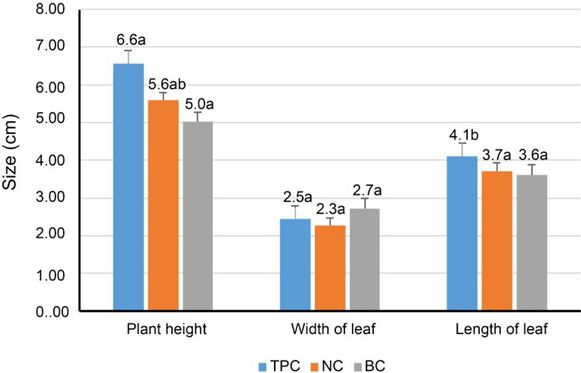
The statistical analysis highlights the significant impact of transparent plastic cover treatment on plant height and leaf dimensions. Plants grown under plastic cover exhibit the best overall growth, with the tallest height of 6.6 cm and the largest leaf dimensions of 2.5 cm wide and 4.1 cm long. This suggests that the plastic cover created a favorable microenvironment, potentially improving humidity, temperature regulation, and light diffusion, thereby enhancing plant growth. In contrast, plants without a cover exhibit slightly reduced growth, averaging 5.6 cm in height, with leaves measuring 2.3 cm wide and 3.7 cm long (Fig. 5). Although the leaves are slightly wider, overall growth is less robust than in the plastic-covered plants. This suggests that the absence of a cover may have exposed the plants to less optimal environmental conditions, affecting their growth.
The shortest plant (5.0 cm) and the leaf with a width of 2.3 cm and a length of 3.6 cm were found in the bottle cover treatment. This result shows that although it provides some protection, the bottle cover is less effective compared to the transparent plastic cover. Limitations in air circulation or differences in light and temperature conditions within the bottle cover might reduce growth. Among the three-cover treatment, the most effective for promoting plant development was the transparent plastic cover, likely because it provided a suitable environment for better growth.
The successful adaptation to their new environment; the plant growth rate was improved, resulting in the development of new leaves and increased plant height. This increase in leaf number enhances photosynthesis, resulting in a higher accumulation of photosynthates, which supports further growth and increases leaf area and length (Rahayu et al, 2021). Once plants adapt well to the ex-vitro environment, there will be improvements in their physiology, morphology, and the functioning of all plant organs. By manipulating environmental conditions, stress on the plants can be reduced, facilitating their survival and healthy growth (Manokari et al. 2025; Hiti-Bandaralage et al. 2022).

The effect of cover types: transparent plastic cover (TPC), no cover (NC) and bottle cover (BC) on the growth of plant height, leaf breadth, and leaf length in 6-month-old.
Conclusions
A reliable protocol of in vitro propagation for A. reversa and elimination of bacterial contaminants was identified in this research. Shoot initiation was optimal in MS media added with 1.0 mg L-1 TDZ and 0.5 mg L-1 BAP, while media MS with 1.5 mg L-1 BAP proved effective for adventitious shoot production. During the in vitro culture, contaminations were effectively removed by 1-hour UV-C light irradiation, intermittently for a 1-week period. In the final method, the application of transparent plastic cover during the acclimatization of A. reversa resulted in taller plants with broader and longer leaves.
-
Declaration of generative AI and AI-assisted technologies in the writing process:
The authors declare that the use of AI and AI-assisted technologies was not applied in the writing process.
Acknowledgements
Financial support for this research was generously provided by the Government Research Organization for Food and Agriculture under Decree No. 7/III.1.1/2025. The authors also wish to extend their sincere appreciation to CV Ranata, Lembang, West Java Province, Indonesia, for kindly providing the genetic materials used in this study.
Data availability statement
Data will be made available upon request to the authors.
References
- ABDEL-BASET, R.M.; MOHAMED, S.E.; SAADAWY, F.M.; HEWIDY, M. Optimization of Alocasia amazonica proliferation through in-vitro culture technique. Arab University Journal Agriculture Science, v.88, n.3, p.888-891. 2020.
-
ABDULHAFIZ, F.; MOHAMMED, A; KAYAT, F.; ZAKARIA, S.; HAMZAH, Z.; RAMACHANDRA REDDY PAMURU, R.R.; GUNDALA, P.B.; REDUAN, M.F.H. Micropropagation of Alocasia longiloba Miq and comparative antioxidant properties of ethanolic extracts of the field-grown plant, in vitro propagated and in vitro-derived callus. Plants, v.9, n.7, p.1-21. 2020. https://doi.org/10.3390/plants9070816
» https://doi.org/10.3390/plants9070816 -
AHMAD, N.; FAISAL, M.; AHMAD, A.; ABDULRAHMAN, A.A.; AHMED, A.; QAHTAN, A.A.;ALOK, A. Thidiazuron Induced in vitro clonal propagation of Lagerstroemia speciosa (L.) Pers - an important avenue tree. Horticulturae, v.8, n.5. p.359, 2022. https://doi.org/10.3390/horticulturae8050359
» https://doi.org/10.3390/horticulturae8050359 -
ARAFAH; DILA LAILATUL, D.; HERNAWATI, D.; NURYADIN, E. The effect hormone BAP (6-Benzyl Amino Purine) on the growth of potato axillary shoots (Solanum tuberosum L.) in Vitro Jurnal Biologi Tropis, v.21, n.3, p.641-647, 2021. https://doi.org/10.29303/jbt.v21i3.2823
» https://doi.org/10.29303/jbt.v21i3.2823 -
ASIH, N.P.S.; ERLINAWATI, I.; PRIYADI, A. Reconstructing phylogenies of Alocasia spp. (Araceae) distributed in indonesia for conservation prioritization. Journal of Tropical Life Science, v.12, n.3, p.317-323, 2022. http://dx.doi.org/10.11594/jtls.12.03.04
» http://dx.doi.org/10.11594/jtls.12.03.04 -
BALIGAD, J. L.; HUANG, P.L.; DO, Y.Y. The Effects of UV-C irradiation and low temperature treatment on microbial growth and oxidative damage in fresh-cut bitter gourd (Momordica Charantia L.). Horticulturae, v.9, n.1068, 2023. https://doi.org/10.3390/horticulturae9101068
» https://doi.org/10.3390/horticulturae9101068 -
BHASKAR, R.; NAGELLA, P.; MADHU, A.; SURIYAMURTHY, N. UV-C and gamma radiation mediated L-DOPA production fromin-vitrocultures ofMucuna pruriens(L.) DC. Vegetos, v.38, p.721-731, 2025. https://doi.org/10.1007/s42535-024-00842-2
» https://doi.org/10.1007/s42535-024-00842-2 -
DAAWIA, J.G.; KRISANTINI, M.S.; ASIH, N.P.S.; MATRA, D.D.; SUHARTAWAN, B. Study of morphology and growth of Alocasia spp. from Papua, Indonesia. Hayati Journal of Biosciences, v.32, n.2, p.367-373, 2025. https://doi.org/10.4308/hjb.32.2.367-373
» https://doi.org/10.4308/hjb.32.2.367-373 - ENNOURI, A.; LAMIRI,A.; O CHLYAH, O.; M MAHFOUDI, M.; BENCHEQROUN, S.K.; M ESSAHLI, M.; ALAOUI, M.M. Antifungal effect of natural extracts on fungal contamination in the vitro culture of Calodendrum capense (L.f.) Thunberg. Journal of Materials andEnvironmental Sciences, v.11, n.4, p.647-57, 2020.
-
GRZELAK, M.; PACHOLCZAK, A.; NOWAKOWSKA, K. Challenges and insights in the acclimatization step of micropropagated woody plants. Plant Cell, Tissue and Organ Culture, v.159, n.72, 2024 https://doi.org/10.1007/s11240-024-02923-1
» https://doi.org/10.1007/s11240-024-02923-1 -
HARFOOT, R.; YUNG, D. B.; ANDERSON, W. A.; HERNÁNDEZ, L. C.; LAWLEY, B; PLETZER, D.; WILD, C. E. K.; COETZEE, N.; DERRAIK, J. G.B.; QUIÑONES-MATEU M.E. Ultraviolet-C irradiation, heat, and storage as potential methods of inactivating SARS-CoV-2 and bacterial pathogens on filtering facepiece respirators. Pathogens, v.11, n.1, p.83, 2021. https://doi.org/10.3390/pathogens11010083
» https://doi.org/10.3390/pathogens11010083 -
HITI-BANDARALAGE J.; HAYWARD. A.; MITTER N. Structural disparity of Avocado rootstocks in vitro for rooting and acclimation success. International Journal of Plant Biology, v.13, n.4, p.426-442, 2022. https://doi.org/10.3390/ijpb13040035
» https://doi.org/10.3390/ijpb13040035 - JAFARPOUR E.; KHEIRY, A.; SHAKANI, M.; RAZAVI, F. enhancing morpho-phytochemical properties of catharanthus roseus l. var. ‘ocellatus’ via plant growth regulators. International Journal of Horticultural Science and Technology, v.12, n.3, p.263-386, 2025.
-
LAAGUIDI, M.; MEZIANI, R.; SELLAM, K. In vitro culture of date palm: a review of challenges and solutions for managing endophytic bacteria contamination. Vegetos, 2025. https://doi.org/10.1007/s42535-025-01287-x
» https://doi.org/10.1007/s42535-025-01287-x -
MA, C.; DUAN, C.; JIANG, Y.; NAGLE, M.; PEREMYSLOVA, E.; GODDARD, A.; STRAUSS, H.S. Factors affectingin vitror egeneration in the model treePopulus trichocarpa: II. Heritability estimates, correlations among explant types, and genetic interactions with treatments among wild genotypes. In Vitro Cellular & Developmental Biology-Plant, v.58, p.853-864, 2022. https://doi.org/10.1007/s11627-022-10302-8
» https://doi.org/10.1007/s11627-022-10302-8 -
MANOKARI, M.; FAISAL, M.; ALATAR, A.A.; MAHIPAL, S.; SHEKHAWAT, M.S.In vitroregeneration and micro-morpho-anatomical characterization of leaves towards epiphytic adaptation inAechmea bracteata(Sw.) Griseb. In Vitro Cellular & Developmental Biology-Plant, v.61, p.258-267, 2025. https://doi.org/10.1007/s11627-024-10478-1
» https://doi.org/10.1007/s11627-024-10478-1 -
MUBAROK, S.; SUMINAR, E.; KARYANI, T.; RUFAIDAH, F.; SARI, D.N.; RAHMAT, B.P.N. An overview of the increasing ornamental plant business in Indonesia Post-COVID-19 Pandemic as a result of social media and its future perspective. Sustainability, v.15, n.19, 14211, 2023. https://doi.org/10.3390/su151914211
» https://doi.org/10.3390/su151914211 -
MUHKLISANI, P.D.; KARTI, M.H.; PRIHANTORO, L. Aklimatisasi dan respon pertumbuhan mutan Leucaena leucocephala varietas tarramba teradaptasi asam. Jurnal Ilmu Nutrisi & Teknologi Pakan, v.19, n.3, p.66-70, 2021. http://dx.doi.org/10.29244/jintp.19.3.66-70
» http://dx.doi.org/10.29244/jintp.19.3.66-70 -
Okoroafor, U.E. Microbial contamination in plant tissue culture and elimination strategies. Nigeria Agricultural Journal, v.53, n.2, p.348-355, 2022. https://www.ajol.info/index.php/naj/article/view/243321
» https://www.ajol.info/index.php/naj/article/view/243321 -
PEREIRA, A.R.; BRAGA, D.F.; VASSAL, M.; GOMES, I.B.; SIMÕES, M. Ultraviolet C Irradiation : a promising approach for the disinfection of public spaces? Science of Total Environment, v.879, n.164007, 2023. https://doi.org/10.1016/j.scitotenv.2023.163007
» https://doi.org/10.1016/j.scitotenv.2023.163007 -
PRAMANIK, D.; ISMAINI, L.; SHINTIAVIRA, H.; ROHAYATI, E.; DANIYANTI, R.D.; BASUNDARI, F.R.A.; KARTIKANINGRUM, S.; SURYAWATI.; UTAMI, D.W.; RACHMAWATI, F. Media and amino acids supplementation alter morphological, development, and bioactive metabolite profiling inAlocasia cupreacallus cultures. Plant Cell Tissue and Organ Culture, v.163, n.24, 2025. https://doi.org/10.1007/s11240-025-03116-0
» https://doi.org/10.1007/s11240-025-03116-0 -
RACHMAWATI, F.; E. FIBRIANTY, E.; RIANAWATI, S.; SIDE, T. H.R.; SADLI.; R. D. DANIYANTY, R.D.; ROHAYATI, E. Applicable rapid propagation protocol through organogenesis of Alocasia cuprea for Plant development using micro-bulblet explant. BIO Web of Conferences, v.69, n.01008, 2023. https://doi.org/10.1051/bioconf/20236901008
» https://doi.org/10.1051/bioconf/20236901008 -
RAHAYU, S.; UTAMI, E.S.W.; INDRALOKA, A.B. Pengaruh ekstrak yeast dan pisang raja terhadap pertumbuhan tunas embrio Vanda hookeriana, Rchb.f. Jurnal Biologi, v.14, n.1, p.138-51, 2021. http://dx.doi.org/10.15408/kauniyah.v14i1.16713
» http://dx.doi.org/10.15408/kauniyah.v14i1.16713 -
RAJU, R.I.; HASHI, A.K.; JAZIB, A.; HOSSAIN, M.T. Micropropagation of Alocasia amazonica through indirect. Plant Tissue Culture. & Biotechnology, v.32, n.1, p.13-20, 2022. https://doi.org/10.3329/ptcb.v32i1.60468
» https://doi.org/10.3329/ptcb.v32i1.60468 -
RAM, K.; PATEL, A.K.; CHOUDHARY, S.K.; SHEKHAWAT, N.A. Synergetic effects of TDZ with various phytohormones on high-frequency plant regeneration from mature nodal explants ofCapparis deciduaand their ex vivo implications. Plant Cell Tissue and Organ Culture, v.149, p 621-633, 2022. https://doi.org/10.1007/s11240-022-02234-3
» https://doi.org/10.1007/s11240-022-02234-3 -
SHAHZAIDI, Z.S.; TACKALLOU, S.H.; AMJAD, L.; ZALI, H.; IRANBAKHSH, A. Analysis of UV radiation-induced changes: effects on morpho-physiological, and biochemical traits of Portulaca Oleracea. BMC Plant Biology, v.25, n.1,p.1318, 2025. https://doi.org/10.1186/s12870-025-07386-w
» https://doi.org/10.1186/s12870-025-07386-w -
SINHA, R.; ZANDALINAS, S. I.; FICHMAN, Y.; SEN, S.; ZENG, S.; GÓMEZ-CADENAS, A.; JOSHI, T.; FRITSCHI, F. B.; MITTLER, R. Differential regulation of flower transpiration during abiotic stress in annual plants. New Phytologist, v.235, n.2, p.611-629, 2022. https://doi.org/10.1111/nph.18162
» https://doi.org/10.1111/nph.18162 -
TASNIM, N.; RAHMAN, K.T.; SARKER, S.; RAJU, M.R.I.; & HOSSAIN, M.T. In vitro mass propagation of Philodendron cv. ‘Birkin’ through direct and indirect organogenesis. Plant Tissue Culture and Biotechnology, v.35, n.1, p.105-116, 2025. https://doi.org/10.3329/ptcb.v35i1.82285
» https://doi.org/10.3329/ptcb.v35i1.82285 -
TAZMIN, N.; RAHMAN, K.T.; SARKER, S.; RAJU, M.R.I.; HOSSAIN, M.T. In vitro Propagation of Alocasia baginda ’Silver Dragon’ through direct and indirect organogenesis. Plant Tissue Culture and Biotechnology, v.34, n.1, p.35-47, 2024. https://doi.org/10.3329/ptcb.v34i1.74343
» https://doi.org/10.3329/ptcb.v34i1.74343 -
TRUONG, C.S.; MUTHUKUTTY, P.; JANG, h.k.; KIM, H.; LEE, D.H.; YOO, S.Y. Filter-Free, harmless, and single-wavelength far UV-C germicidal light for reducing airborne pathogenic viral infection. Viruses, v.15, n.1463, 2023. https://doi.org/10.3390/v15071463
» https://doi.org/10.3390/v15071463 -
TUWO, M.; TAMBARU, E.; PATANDJENGI, B. Mikropropagasi talas satoimo Colocasia esculenta ( L .) Schott Var . antiquorum melalui meristem apikal. Jurnal Ilmu Alam dan Lingkungan, v.12, n.1, p.28-33, 2021. https://doi.org/10.70561/jal.v12i1.13093
» https://doi.org/10.70561/jal.v12i1.13093 -
WAGH, Y.; NANDINI, K. Changes in morpho-physiological and yield parameters of rice (Oryza sativaL.) in response to ultraviolet-b (UV-B) radiation. International Journal Environment and Climate Change. v.9, n.12, p.862-77.https://doi.org/10.9734/ijecc/2019/v9i1230167
» https://doi.org/10.9734/ijecc/2019/v9i1230167 -
YACHYA, A.; AFINA, N.N.; ANDRIANI, V.; WARDANIA, S.; PUTRI, R.A.A.F.; SARI, N.T.; ARYANING, R.A. The growth of Alocasia macrorrhiza (L) Schott variegata roots on Murashige and Skoog medium supplemented 6-benzyl amino purine (BAP) and kinetin. Jurnal Biota, v.9, n.1, 2023. https://doi.org/10.19109/Biota.v9i1.13904
» https://doi.org/10.19109/Biota.v9i1.13904
Edited by
-
Editor:
José Carlos Sorgato (Universidade Federal da Grande Dourados, Brasil)