 Morphoagronomic characterization of ornamental pepper accesses
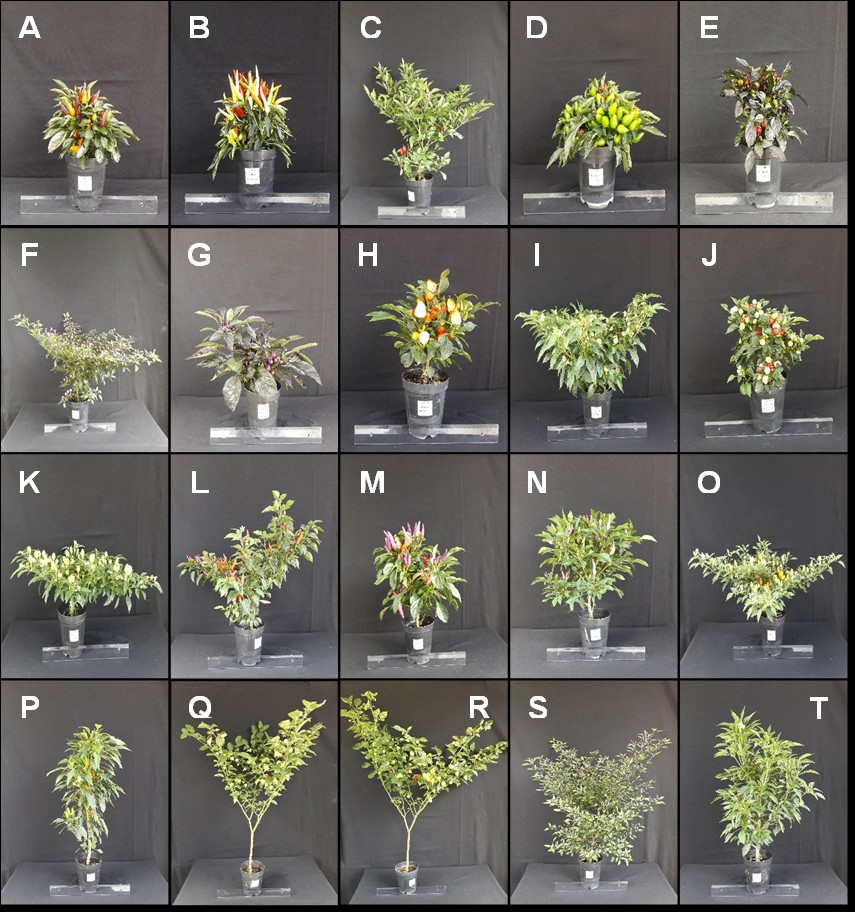
Pepper plants are an important source of minerals, being widely used in the food industry. Furthermore, this crop has relevant ornamental potential, but still little explored. In this sense, the characterization of ornamental pepper accesses is of great relevance to identify genotypes that present desirable characteristics, as well as measuring genetic variability. Given the above, the objective of the present research was to carry out the morphoagronomic characterization of ornamental pepper accesses. The experiments were conducted under greenhouse conditions belonging to the Pernambuco Agronomic Institute (IPA), situated in Recife. The market seeks plants in which there is harmony between the plant’s architecture and the size of the pot, owing both plant height and crown diameter be 1.5 to 2 times the height of the vase, thus, only accesses 404, 408, 410, and 423 would fit this criterion. For the characteristics of immature fruit color (CIM) and mature fruit color (CMD), accesses 408 and IFV presented colors that greatly attract the attention of consumers, combined with the compact architectures that both have, indicate that these accesses may be promising. Finally, the characterization of ornamental pepper access proved to be a highly relevant tool for selecting genotypes that present characteristics desired by the consumer market for this type of pepper.
Keywords:
Capsicum annuum
; genetic breeding; genetic variability; pot plants
 Thumbnail