 In vitro evaluation of plant growth promoting bacteria isolated from the cymbidian orchid
Abstract
The diversity of Cymbidium hybrids, and the growing commercialization of orchids, reinforces the need for sustainable production, and the bioprospecting of diazotrophic bacteria can demonstrate potential for agricultural use. The objective of this study was to evaluate in vitro diazotrophic bacteria, isolated from rhizospheric soil and tissues of the Cymbidium orchid, and to analyze the solubilization capacity of phosphorus, potassium and phytohormones production. Leaves, pseudobulbs and rhizospheric soil were isolated in five different semi-solid and semi-selective mediums, NFb, JNFb, LGI, JMV and FAM, in order to verify the biological nitrogen fixation capacity, through the indicative movie on the surface of the medium. The bacteria were grouped, according to their morphological characteristics, in a dendrogram, and selected at 75% similarity, testing them for the production of indoleacetic acid (IAA). The isolates that stood out in terms of the production of the aforementioned phytohormone were tested for their ability to solubilize phosphorus and potassium, usage phosphate rock powder, AO-15, and potassium, phonolite, as a source, respectively. The 66 isolated strains fixed nitrogen, and the 18 strains with 75% similarity produced AIA. The 8 strains that stood out in the production of indoleacetic acid, in the absence and presence of tryptophan, did does not solubilize phosphorus, with the strains UNIFENAS 100-589, UNIFENAS 100-591, UNIFENAS 100-600, UNIFENAS 100-604, being able to solubilize potassium, demonstrating the potential agricultural use of growth -promoting bacteria in the cultivation of the Cymbidium orchid.
Keywords:
2-(1H-indol-3-yl) acetic acid; diazotrophic bacteria; floriculture; inoculant; nitrogen
Resumo
A diversidade de híbridos de Cymbidium, e a crescente comercialização de orquídeas, reforça a necessidade da produção sustentável, sendo que a bioprospecção de bactérias diazotróficas pode demonstrar potencial de uso agrícola. Objetivou-se avaliar in vitro bactérias diazotróficas, isoladas de solo rizosférico e tecidos da orquídea Cymbidium, e analisar a capacidade de solubilização de fósforo, potássio e produção de fitormônios. Folhas, pseudobulbos e solo rizosférico foram isolados em cinco diferentes meios semissólidos e semisseletivos, NFb, JNFb, LGI, JMV e FAM, a fim de verificar a capacidade de fixação biológica de nitrogênio, por meio da película indicativa na superfície do meio. As bactérias foram agrupadas, de acordo com suas características morfológicas, em um dendrograma, e selecionadas a 75% de similaridade, testando-as quanto a produção de ácido indolacético (AIA). Os isolados que obtiveram destaques quanto a produção do referido fitormônio, foram testados em sua capacidade de solubilização de fósforo e potássio, usando como fonte, pó de rocha fosfatada, AO-15, e potássica, fonolito respectivamente. As 66 estirpes isoladas fixaram nitrogênio, e as 18 estirpes com 75% similaridade produziram AIA. As 8 estirpes que se destacaram na produção do ácido indolacético, na ausência e presença de triptofano, não solubilizaram fósforo, sendo que as estirpes UNIFENAS 100-589, UNIFENAS 100-591, UNIFENAS 100-600, UNIFENAS 100-604, foram capazes de solubilizar potássio, demonstrando o potencial de uso agrícola das bactérias promotoras de crescimento no cultivo da orquídea Cymbidium.
Palavras-chave:
ácido acético 2-(1H-indol-3-il); bactérias diazotróficas; floricultura; inoculante; nitrogênio
Introduction
Orchidaceae family has the most varied species, with different characteristics, including numerous hybrids, with uniqueness and attractive peculiarities, as well as modern production methods, with orchids being one of the main species sold in pots, corresponding to 58% of the segment. of production, in the state of São Paulo (Ibraflor, 2023). This context reflects the search for more sustainable alternatives in the cultivation of orchids, as it is a product in which the beauty of leaves and flowers are essential for commercialization, with the inoculation of plant growth-promoting bacteria (PGPB) being a sustainable and beneficial in the growth and development of the crop, in addition to studies already revealing the diversity of the microbiota in association with orchids (Silva et al., 2018; Reiter et al., 2020; Cruz et al., 2022).
PGPB are those capable of promoting plant development directly or indirectly. These bacteria can be found in the rhizosphere and plant tissues, acting in an endophytic manner. When promoting growth directly, bacteria synthesize a compound, or facilitate the absorption of certain nutrients from the environment, providing the plant with biologically fixed nitrogen, solubilized phosphorus from the soil and phytohormones such as auxins (Moreira et al., 2010).
The isolation of microorganisms from different plant species is based on the association of the host with different growth-promoting microorganisms, justifying the specific study of the species (Chakraborty et al., 2019). The use of these microorganisms in plant production encompasses issues beyond productivity and can refer to the entire maintenance of soil life. Silva et al. (2020), highlights the contribution of beneficial microorganisms to the sustainability of the system, conserving the environment in which production is inserted.
Thus, the bioprospection of beneficial microorganisms has been the target of studies, demonstrating an important relationship with orchids, helping in seed germination and sustaining the cycle in inhospitable environments for some floristic species, as well as contributing to coping with adverse situations in cultivation (Etesami and Maheshwari, 2018; Nordstedt and Jones, 2020; Friesem et al., 2021; Miranda et al., 2021).
Given the importance of this topic for the cultivation of ornamental plants, the objective of this study was to evaluate in vitro diazotrophic bacteria, isolated from rhizospheric soil and tissues of the Cymbidium sp. orchid, and to analyze the solubilization capacity of phosphorus, potassium and phytohormones production.
Material and methods
The plant material, as well as the rhizospheric soil, used for the isolation of the bacteria, were randomly collected from matrices of the orchid Cymbidium sp., cultivated for a period of 2 years, in a substrate based on vegetable land and sand (proportion 2:1), in a greenhouse in the nursery of ornamental plants of the University Professor Edson Antônio Velano (UNIFENAS), located in Alfenas-MG (geographical coordinates: 21°25’46’’ S and 45°56’50’’ W, at 880 m of altitude) and the experiment conducted in the laboratory of agricultural microbiology.
From the collected seedlings, pseudobulbs and leaves sectioned at 3 mm were used, washed in running water, disinfected in a laminar flow hood in 90º alcohol for 30 seconds, 2% sodium hypochlorite for 1 minute and subsequently washed 6 times in distilled and autoclaved water (Döbereiner et al., 1995). The fragments were macerated and endophytic microorganisms were isolated and introduced as close to the bottom of the container as possible, since nitrogen-fixing bacteria are microaerophilic, in the semi-solid and semi-selective media NFb (Azospirillum spp.), JNFb (Herbaspirillum spp.), LGI (A. amazonense) (Döbereiner et al., 1995), JMV (Burkholderia spp.) (Reis et al., 2004) and FAM (A. amazonense) (Magalhães and Döbereiner, 1984).
In the same semi-solid and semi-selective culture media, samples of rhizosphere soil were introduced, previously sieved, and collected from the seedlings after removal of excess soil. The flasks were arranged in a completely randomized design, with three replicates per collected part, in the five culture media, totaling 15 treatments with 45 experimental units.
The inoculated media were maintained at a temperature of 27 ºC in a growth chamber for a period of 14 days, until they presented a film characteristic of N2 fixation, and those that did not present were discarded, considering the films that reached the surface and/or 4 mm below. Cultures were grown on plates containing the original solid media. Subsequently, the process was repeated to confirm nitrogen fixation, picked and purified in Petri dishes, in YMA medium (Yeast, Mannitol, Agar), received a UNIFENAS code followed by an identification number, and were stored in eppendorf, containing autoclaved distilled water for the conservation of the strains (Castellani, 1939).
In order to aggregate related species, a comparative analysis of the strains was carried out using a similarity dendrogram, a hierarchical clustering method (R Core Team, 2022), according to morphological characteristics: days of appearance; average diameter (mm); acidification or alkalinization of the medium (pH); exopolysaccharide (EPS) production; consistency (gum production); optical (transparency, translucent, opaque and glossy); elevation (flat or convex); color (white, pink, cream, red, yellow) (Oliveira et al., 2020).
For the production of indole acetic acid (IAA), 18 isolates, with 75% similarity, randomly selected within each group, were cultivated in two conditions in DYGS medium, in the presence and absence of tryptophan (100 μg mL-1), in a completely randomized design, in a double factorial scheme 18x2, with 18 strains and two conditions (with and without tryptophan), totaling 36 treatments with three repetitions, thus obtaining 108 experimental units, with the pH of the medium adjusted to 6.8 (Pedrinho et al., 2010). Using the quantitative colorimetric method, after seven days the concentration was evaluated (Gordon and Weber, 1951), and the absorbance was read using a spectrophotometer (wavelength of 535 nm). Based on the results of AIA production, a prominent group was selected to carry out the GRAM test, phosphorus, and potassium solubilization.
For the phosphorus solubilization test, 15 μL of the bacterial suspension grown in YM medium (Yeast, Mannitol) were inoculated into 30 mL of liquid GL medium, using 10 g of AO-15 (Parmar and Sindhu, 2013) as a phosphorus source, in a completely randomized design, in which the treatments consisted of 8 bacterial strains and a negative control (without bacterial inoculation), using three replicates, in a total of 27 experimental units. For seven days, the inoculated medium was kept under agitation (120 rpm, 25 ºC), and subsequently centrifuged (1000 rpm, 4 ºC, 10 min). To measure the concentration of soluble phosphorus, the methodology described in Tedesco et al. (1995).
For the potassium solubilization test, 500 μL of the bacterial suspension, cultivated in YM medium, was transferred to 50 mL of Aleksandrov medium (Parmar and Sindhu, 2013) containing, as a potassium source, 10 g of phonolite (Florentino et al., 2017), in a completely randomized design, in which the treatments consisted of 8 bacterial strains and a negative control (without bacterial inoculation), using three replicates, in a total of 27 experimental units. For seven days, the bottles were shaken (120 rpm, 25 ºC), and then centrifuged (1000 rpm, 4 ºC, 10 min). The supernatant was used to determine the pH of the medium and the potassium concentration (Lopes-Assad et al., 2006). The results of the AIA, phosphorus solubilization and potassium solubilization tests were subjected to analysis of variance and the means of the three repetitions of each test were subjected to the Scott- Knott test. at 5% probability, using the SISVAR software (Ferreira, 2014).
Results and discussion
A total of 66 strains were isolated, and diversity was assessed, totaling 18 groups at 75% similarity, demonstrated by cutting the horizontal line (Fig. 1).
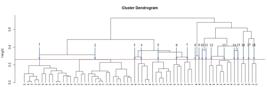
Dendrogram of similarity, according to the morphological characteristics of the bacterial strains isolated from the plant parts and rhizospheric soil of Cymbidium.
It is observed that two large groups harbored the majority of bacteria, group one with 14 isolates, predominantly endophytic and largely from isolation in the FAM medium, and group two with 17 isolates, predominantly from rhizospheric soil and mostly isolated, in the NFb environment. Groups three, four, five, six, eight, nine, ten, fourteen, fifteen, sixteen, seventeen and eighteen were exclusively endophytic microorganisms, almost entirely pseudobulbs, except for groups eight, nine and fifteen whose isolates were exclusive to leaves. Groups seven, eleven, twelve and thirteen were bacteria of different origins. Of the 66 isolates, 43 were obtained from plant parts of the orchid, and the amount of associative or free-living microorganisms prospected from the soil will vary, with the same genus being able to occupy both criteria, providing direct or indirect effects (Bezerra et al., 2022).
The synergism of these microorganisms is extremely important for obtaining products for agricultural use (Silva et al., 2020). One of the obstacles to manufacturing from isolates prospected from the soil is due to the specific association of some microorganisms, with little study of the combination of various strains, as well as the concomitant use of other phytosanitary products, since different species can react differently to the mixture (Alboneti et al., 2020).
The strains UNIFENAS 100-588, UNIFENAS 100-589, UNIFENAS 100-590, UNIFENAS 100-591, UNIFENAS 100-593, UNIFENAS 100-595, UNIFENAS 100-596, UNIFENAS 100-597, UNIFENAS 100-600, FENAS 100-601, UNIFENAS 100-604, UNIFENAS 100-606, UNIFENAS 100-609, UNIFENAS 100-610, UNIFENAS 100-613, UNIFENAS 100-619, UNIFENAS 100-634, UNIFENAS 100-646, were tested for the production of indoleacetic acid (IAA), pointing out eight isolates that stood out simultaneously, in the presence and absence of tryptophan, a precursor amino acid, in the production of the aforementioned hormone (Table 1).
Indoleacetic acid, belonging to the group of phytohormones known as auxins, plays an important role in plant growth, favoring the growth of roots and aerial parts of plants. The seedlings of Impatiens walleriana, an annual ornamental plant, cultivated for the beauty of its flowering, presented greater leaf area, fresh and dry mass in the treatment sprayed with IAA, than those cultivated through inhibition of phytohormone synthesis (Salinas et al., 2022).
All strains tested were capable of producing IAA. Highlight for isolates UNIFENAS 100-595, UNIFENAS 100-589, UNIFENAS 100-600, UNIFENAS 100-646, UNIFENAS 100-634, with higher values than the others in the absence of tryptophan, and statistically equal production of IAA in the presence of the precursor hormone, which will vary the concentration in root exudates depending on the plant genotype. On the other hand, Oliveira et al. (2020) highlighted the prospected 100-351 strain of emperor’s bat obtaining a higher value in the absence, however, statistically higher in the presence of tryptophan.
The promotion of plant growth through the associative relationship with bacteria is notable, as well as the influence of PGPB on plant productivity. Hernández et al. (2024) reported an increase in productivity by 20% in corn with foliar application of Azospirillum brasilienses at a dose of 500 mL ha-1, surpassing the seed treatment carried out with the strain, demonstrating the diverse possibility of use, as well as the need for studies regarding the dose of bioenrichment applied.
The inoculation of Azospirillum brasilienses and Azospirillum colombiana increased the specific root surface area, the average height and number of tillers in wheat, in soils contaminated with copper, enhancing the use of these microorganisms, even in conditions of soils saturated with heavy metals (Turchetto et al., 2023).
There is growing interest in studies on the prospecting of plant growth-promoting bacteria, with the aim of optimizing the use of synthetic fertilizers and improving soil biotic conditions. Oliveira et al. (2020) presents the in vitro potential of bacteria isolated from the torch ginger for the production of phytohormones and solubilization of phosphorus and potassium. Faria et al. (2021) demonstrate the multifunctional potential of endophytic bacteria from Anacardium othonianum in promoting plant growth in vitro and ex vitro.
The strains UNIFENAS 100-595, UNIFENAS 100-591, UNIFENAS 100-604, UNIFENAS 100-606, UNIFENAS 100-589, UNIFENAS 100-600, UNIFENAS 100-646, UNIFENAS 100-634, were highlighted in the production of IAA, in absence of tryptophan, and were tested for phosphorus and potassium solubilization (Table 2).
The strains were not able to solubilize phosphorus, using the source presented, and the correlation with the pH of the solution can be noted, since there was no acidification, corroborating one of the solubilization methods, which consists of the release of organic acids during the process, and the influence on pH will vary depending on the phosphorus source used (Rasul et al., 2021).
However, the UNIFENAS 100-600 strain, even though it is not capable of solubilizing phosphorus, showed promise in solubilizing potassium and acidified the medium in both tests, inferring the operating mode regarding the exudation of compounds, in order to make the minerals soluble. in its inorganic form (Aallam et al., 2021).
As for potassium, the strains UNIFENAS 100-589, UNIFENAS 100-591, UNIFENAS 100-600, UNIFENAS 100-604, were able to solubilize around 20%, depending on the source used in the test, ranging from 313 mg L -1 to 345 mg L -1 after seven days. With the exception of UNIFENAS 100-600, the others did not acidify the culture medium, demonstrating variation in the mechanisms of nutrient availability.
The eight strains tested for phosphorus and potassium solubilization passed the GRAM test, seven of which were negative, and UNIFENAS 100-604 was positive. Among the genera already known for promoting plant growth, Azospirillum, Gluconacetobacter, Pseudomonas and Rhizobium are gram-negative, but the genera Bacillus and Paenibacillus are gram-positive bacteria, and the difference in the composition and structure of the cell wall can help to understand how they react to different physical and chemical aspects to which they are subjected, as well as the ideal method of inoculation (Chai et al., 2022). Bacteria of the genus Bacillus, in addition to promoting plant growth, act indirectly as pest control agents, reducing the penetration of nematodes into the sugarcane root system, reaching mortality rates of 81.10% from the aforementioned pest (Schoen-Neto et al., 2021).
There are few reports of microbial combinations as inoculants for orchids of the genus Cymbidium, bringing together microorganisms that contribute in different ways to the growth and development of the species, as well as mechanisms for making nutrients available, and the combination of strains in the form of inoculants can constitute a method to optimize the multiple or single function of the strain used (Kaur et al., 2022).
In this way, bacteria can contribute significantly not only to plant growth, but also to agricultural sustainability, since these bacteria are capable of providing nutrients and promoting plant growth, contributing to the reduction of synthetic fertilizers (Zeng et al., 2022).
Conclusions
Plant growth-promoting bacteria, isolated from orchids of the genus Cymbidium, have potential for agricultural use, fix nitrogen, produce IAA, with the strains UNIFENAS 100-589, UNIFENAS 100-591, UNIFENAS 100-600, UNIFENAS 100-604 standing out, which solubilize potassium.
Acknowledgments
The research did not receive external funding.
Data availability statement
Data will be available upon request.
References
-
AALLAM, Y.; MALIKI, B.E.; DHIBA, D.; LEMRISS, S.; SOUIRI, A.; HADDIOUI, A.; TARKKA, M.; HAMDALI, H. Multiple potential plant growth promotion activities of endemic Streptomyces spp. from moroccan sugar beet fields with their inhibitory activities against Fusarium spp. Microorganisms, v.9, n.7, p.1429, 2021. https://doi.org/10.3390/microorganisms9071429
» https://doi.org/10.3390/microorganisms9071429 -
ALBONETI, A.L.; CECCONELLO, D.M.; RINGENBERG, R.; SANTOS, C.V.; BONINI, A.K.; ALVES, L.F.A.; RANDO, J.S.S.; ALVES, V. Effect of phytosanitary products used on cassava crop on biological aspects of entomopathogenic fungi. Research, Society and Development, v.9, n.9, e450997248, 2020. http://dx.doi.org/10.33448/rsd-v9i9.7248
» http://dx.doi.org/10.33448/rsd-v9i9.7248 -
BEZERRA, G.A.; TAKITA, M.A.; TOSTA, C.D.; CECCATO-ANTONINI, S.R.; ROSA-MAGRI, M.M. Seleção de bactérias promotoras de crescimento de plantas isoladas de cana-de-açúcar. Semina: Ciências Agrárias, v.43, n.4, p.1757-1768, 2022. https://doi.org/10.5433/1679-0359.2022v43n4p1757
» https://doi.org/10.5433/1679-0359.2022v43n4p1757 - CASTELLANI, A. Viability of some pathogenic fungi in distilled water. Journal of Tropical Medicine and Hygiene, v.42, p.225-226, 1939.
-
CHAI, Y.N.; FUTRELL, S.; SCHACHTMAN, D.P. Assessment of Bacterial Inoculant Delivery Methods for Cereal Crops. Frontiers in Microbiology, v.13, e791110, 2022. https://doi.org/10.3389/fmicb.2022.791110
» https://doi.org/10.3389/fmicb.2022.791110 -
CHAKRABORTY, A.; KUNDU, S.; MUKHERJEE, S.; GHOSH, B. Endophytism in Zingiberaceae: elucidation of beneficial impact. Endophytes and Secondary Metabolites. Kolkata: Springer Nature, p.1-26, 2019. https://doi.org/10.1007/978-3-319-76900-4_31-1
» https://doi.org/10.1007/978-3-319-76900-4_31-1 -
CRUZ, E.S.; FREITAS, E.F.S.; SILVA, M.; PEREIRA, O.L.; KASUYA, M.C.M. A new mycorrhizal species of Ceratobasidium (Ceratobasidiaceae) associated with roots of the epiphytic orchid Gomesa recurva from the Brazilian Atlantic Forest. Phytotaxa, v.550, n.3, p.224-232, 2022. https://phytotaxa.mapress.com/pt/article/view/phytotaxa.550.3.2
» https://phytotaxa.mapress.com/pt/article/view/phytotaxa.550.3.2 - DÖBEREINER, J.; BALDANI, V.L.D.; BALDANI, J.I. Como isolar e identificar bactérias diazotróficas de plantas não leguminosas. Itaguaí: Embrapa - Spi, 1995. 60p.
-
ETESAMI, H.; MAHESHWARI, D.K. Use of plant growth promoting rhizobacteria (PGPRs) with multiple plant growth promoting traits in stress agriculture: Action mechanisms and future prospects. Ecotoxicology and Environmental Safety, v.156, p.225-246, 2018. https://doi.org/10.1016/j.ecoenv.2018.03.013
» https://doi.org/10.1016/j.ecoenv.2018.03.013 -
FARIA, P.S.A.; MARQUES, V.O.; SELARI, P.J.R.G.; MARTINS, P.F.; SILVA, F.G.; SALES, J.F. Multifunctional potential of endophytic bacteria from Anacardium othonianum Rizzini in promoting in vitro and ex vitro plant growth. Microbiological Research, v.242, e126600, 2021. https://doi.org/10.1016/j.micres.2020.126600
» https://doi.org/10.1016/j.micres.2020.126600 -
FERREIRA, D.F. Sisvar: um guia dos seus procedimentos de comparações múltiplas Bootstrap. Ciência e Agrotecnologia, v.38, n.2, p.109-112, 2014. https://doi.org/10.1590/S1413-70542014000200001
» https://doi.org/10.1590/S1413-70542014000200001 -
FLORENTINO, L.A.; REZENDE, A.V.; MIRANDA, C.C.B.; MESQUITA, A.C.; MANTOVANI, J.R.; BIANCHINI, H.C. Potassium solubilization in phonolite rock by diazotrophic bacteria. Comunicata Scientiae, v.8, n.1, p.17-23, 2017. https://doi.org/10.14295/cs.v8i1.1292
» https://doi.org/10.14295/cs.v8i1.1292 -
FRIESEM, G.; REZNIK, N.; COHEN, M.S.; CARMI, N.; KEREM, Z.; YEDIDIA, I. Root-associated microbiomes, growth and health of ornamental geophytes treated with commercial plant growth-promoting products. Microorganisms, v.9, n.8, p.1785, 2021. https://doi.org/10.3390/microorganisms9081785
» https://doi.org/10.3390/microorganisms9081785 -
GORDON, S.A.; WEBER, R.P. Colorimetric estimation of indoleacetic acid. Plant Physioogy, v.26, n.1, p.192-195, 1951. https://doi.org/10.1104/pp.26.1.192
» https://doi.org/10.1104/pp.26.1.192 -
HERNÁNDEZ, A.G.; SILVA, E.P.; FERREIRA, P.A.A.; LOVATO, P.E.; OLIVEIRA, G.P.; SOARES, C.R.F.S. Métodos de inoculação e eficiência agronômica da estirpe Azospirillum brasilense Az39 para a cultura do milho em diferentes condições edafoclimáticas brasileiras. Revista Brasileira de Ciências Agrárias, v.19, n.1, e3609, 2024. https://doi.org/10.5039/agraria.v19i1a3609
» https://doi.org/10.5039/agraria.v19i1a3609 -
IBRAFLOR (INSTITUTO BRASILEIRO DE FLORICULTURA). Diagnóstico Setor Ornamental Brasil - Base 2023 - CEPEA. Available at: <Available at: https://www.ibraflor.com.br/n%C3%BAmeros-do-setor-c%C3%B3pia >. Accessed at: May 3rd 2024.
» https://www.ibraflor.com.br/n%C3%BAmeros-do-setor-c%C3%B3pia -
KAUR, T.; DEVI, R.; KUMAR, S.; SHEIKH, I.; KOUR, D.; YADAV, A.N. Microbial consortium with nitrogen fixing and mineral solubilizing attributes for growth of barley (Hordeum vulgare L.). Heliyon, v.8, n.4, e09326, 2022. https://doi.org/10.1016/j.heliyon.2022.e09326
» https://doi.org/10.1016/j.heliyon.2022.e09326 -
LOPES-ASSAD, M.L.; ROSA, M.M.; ERLER, G.; CECCATO-ANTONINI, S.R. Solubilização de pó-de-rocha por Aspergillus niger Revista Espaço e Geografia, v.9, n.1, p.1-17, 2022. https://doi.org/10.26512/2236-56562006e39764
» https://doi.org/10.26512/2236-56562006e39764 - MAGALHÃES, F.M.M; DOBEREINER, J. Ocorrência de Azospirillum amazonense em alguns ecossistemas da Amazonia. Revista de Microbiologia, v.15, n.4, p.246-252, 1984.
-
MIRANDA, L.; PEREIRA, M.C.; VELOSO, T.G.R.; TARTARINE, N.; CARVALHO, S.B.G.; KASUYA, M.C.M. Endophytic fungi in roots of native orchids of rupestrian grasslands (campos rupestres) in Serra do Cipó, Brazil. Iheringia, Série Botânica, v.76, 2021. https://isb.emnuvens.com.br/iheringia/article/view/856
» https://isb.emnuvens.com.br/iheringia/article/view/856 -
MOREIRA, F.M.S.; SILVA, K.; NÓBREGA, R.S.A.; CARVALHO, F. Diazotrophic associative bacteria: diversity, ecology and potential applications. Comunicata Scientiae, v.1, n.2, p.74, 2010. https://doi.org/10.14295/cs.v1i2.45
» https://doi.org/10.14295/cs.v1i2.45 -
NORDSTEDT, N.P.; JONES, M.L. Isolation of rhizosphere bacteria that improve quality and water stress tolerance in greenhouse ornamentals. Frontiers in Plant Science, v.11, p.826, 2020. https://doi.org/10.3389/fpls.2020.00826
» https://doi.org/10.3389/fpls.2020.00826 -
OLIVEIRA, A.J.; FRANCO, T.C.; FLORENTINO, L.A.; LANDGRAF, P.R.C. Characterization of associative diazotrophic bacteria in torch ginger. Semina: Ciências Agrárias, v.41, n.6, p.2815-2824, 2020. https://doi.org/10.5433/1679-0359.2020v41n6p2815
» https://doi.org/10.5433/1679-0359.2020v41n6p2815 - PARMAR, P.; SINDHU, S.S. Potassium solubilization by rhizosphere bacteria: influence of nutritional and environmental conditions. Journal of Microbiology Research, v.3, n.1, p.25-31, 2013.
-
PEDRINHO, E.A.N.; GALDIANO, Jr., R.F.; CAMPANHARO, J.C.; ALVES L.M.C.; LEMOS, E.G.M. Identificação e avaliação de rizobactérias isoladas de raízes de milho. Bragantia, v.69, n.4, p.905-911, 2010. https://doi.org/10.1590/S0006-87052010000400017
» https://doi.org/10.1590/S0006-87052010000400017 - R CORE TEAM. R: A language and environment for statistical computing. R Foundation for Statistical Computing, Vienna, Austria, 2022. Available at: R Project. Accessed at: April 25, 2024.
-
RASUL, M.; SUMERA, Y.; YAHYA, M.; BREITKREUZ, C.; TARKKA, M.; REITZ, T. The wheat growth-promoting traits of Ochrobactrum and Pantoea species, responsible for solubilization of different P sources, are ensured by genes encoding enzymes of multiple P-releasing pathways. Microbiological Research, v.246, e126703, 2021. https://doi.org/10.1016/j.micres.2021.126703
» https://doi.org/10.1016/j.micres.2021.126703 -
REIS, V.M.; ESTRADA-DE LOS SANTOS, P.; TENORIO-SALGADO, S.; VOGEL, J.; STOFFELS, M.; GUYON, S.; MAVINGUI, P.; BALDANI, V.L.D.; SCHMID, M.; BALDANI, J.L.; BALANDREAU, J.; HARTMANN, A.; CABALLERO-MELLADO, J. Burkholderia tropica sp. nov., a novel nitrogen-fixing, plant-associated bacterium. International journal of systematic and evolutionary microbiology, v.54, n.6, p.2155-2162, 2004. https://doi.org/10.1099/ijs.0.02879-0
» https://doi.org/10.1099/ijs.0.02879-0 -
REITER, N.; PHILLIPS, R.D.; SWARTS, N.D.; WRIGHT, M.; HOLMES, G.; SUSSMILCH, F.C.; DAVIS, B.J.; WHITEHEAD, M.R.; LINDE, C.C. Specific mycorrhizal associations involving the same fungal taxa in common and threatened Caladenia (Orchidaceae): Implications for conservation. Annals of Botany, v.126, n.5, p.943-955, 2020. https://doi.org/10.1093/aob/mcaa116
» https://doi.org/10.1093/aob/mcaa116 -
SALINAS, M.; HAKIM, G.; GANDOLFO, E.; LOJO, J.D.; GIARDINA, E.; BENEDETTO, A.D. Involvement of auxins in Impatiens walleriana plants grown in different plug tray systems during nursery. Ornamental Horticulture, v.28, n.3, p.347-354, 2022. https://doi.org/10.1590/2447-536X.v28i3.2511
» https://doi.org/10.1590/2447-536X.v28i3.2511 -
SCHOEN-NETO, G.A.; SOARES, M.R.C.; SORACE, M.; DIAS-ARIEIRA, C.R. Nematicidas biológicos associados a biofertilizantes no manejo de Pratylenchus zeae em cana-de-açúcar. Revista Brasileira de Ciências Agrárias, v.14, n.4, p.1-7, 2021. https://doi.org/10.5039/agraria.v14i4a6560
» https://doi.org/10.5039/agraria.v14i4a6560 -
SILVA, M.A.; NASCENTE, A.S.; FILIPPI, M.C.C.D.; LANNA, A.C., SILVA, G.B.D.; SILVA, J.F.A.E. Individual and combined growth-promoting microorganisms affect biomass production, gas exchange and nutrient content in soybean plants. Revista Caatinga, v.33, n.3, p.619-632, 2020. https://doi.org/10.1590/1983-21252020v33n305rc
» https://doi.org/10.1590/1983-21252020v33n305rc -
SILVA, M.; CRUZ, E.S.; VELOSO, T.G.R.; MIRANDA, L.; PEREIRA, O.L.; BOCAYUVA, M.F.; KASUYA, M.C.M. Colletorichum serranegrense sp. nov., a new endophytic species from the roots of the endangered Brazilian epiphytic orchid Cattleya jongheana Phitotaxa, v.351, n.2, p.163-170, 2018. https://doi.org/10.11646/phytotaxa.351.2.4
» https://doi.org/10.11646/phytotaxa.351.2.4 - TEDESCO, M.J., GIANELLO, C., BISSANI, C.A., BOHNEN, H.; VOLKWEISS, S.J. Análises de solo, plantas e outros materiais. (Boletim Técnico). Porto Alegre: UFRGS, 1995.
-
TURCHETTO, R.; VOLPI, G.B.; SILVA, R.F.; ROS, C.O.; BARROS, S.; MAGALHÃES, J.B.; TROMBETTA, L.J.; ANDREOLA, D.S.; ROSA, G.M.; SILVA, A.P. Coinoculação de Azospirillum com fungos micorrízicos no cultivo de trigo em solo contaminado com cobre. Semina: Ciências Agrárias, v.44, n.4, p.1571-1586, 2023. https://doi.org/10.5433/1679-0359.2023v44n4p1571
» https://doi.org/10.5433/1679-0359.2023v44n4p1571 -
ZENG, Q.; DING, X.; WANG, J.; HAN, X.; IQBAL, H.M.N.; BILAL, M. Insight into soil nitrogen and phosphorus availability and agricultural sustainability by plant growth-promoting rhizobacteria. Environmental Science and Pollution Research International, v.29, n.30, p.45089-45106, 2022. https://doi.org/10.1007/s11356-022-20399-4
» https://doi.org/10.1007/s11356-022-20399-4
Edited by
-
Editor:
José Carlos Sorgato (Universidade Federal da Grande Dourados, Brasil)