
 Economic feasibility of small-scale aquaculture of scallop (Nodipecten nodosus) and cobia (Rachycentron canadum) in a multi-trophic system on the southeastern Atlantic coast
ABSTRACT
This study evaluated the economic feasibility of scallop monoculture (Nodipecten nodosus) in six 100-meter longlines, monoculture of cobia (Rachycentron canadum) in twelve 565.5 m3 net cages, and the integrated multitrophic aquaculture system (IMTA) with both species, in four longlines and six net cages of the same dimensions, in an area of 5,000 m2, on the southeastern coast of Brazil. This study aimed to determine whether this approach could provide greater profitability and resilience than traditional monocultures. Investments, operating costs, and profitability were estimated for the three production systems according to the variation in survival, productivity, and market prices. The financial indicators showed positive values for the three systems evaluated. There was a reduction of US$ 1.88 per dozen scallops from scallop monoculture to IMTA and US$ 0.22 per kg of cobia from cobia monoculture to IMTA. However, comparatively, scallop monoculture had the worst results. For this system, although the IRR (35.03%) and MIRR (19.37%) are above the MRA (12%), the NPV, ANPV, and PP (US$ 69,785.07, US$ 12,350.85 and 3.71 years, respectively), had lower economic attractiveness when compared to the other two systems evaluated. Between cobia monoculture and IMTA, there is a certain proximity of results. The IMTA system showed a slight advantage in terms of the highest market prices. The diversification of production is an interesting option even with the greater associated investment, which can favor economic returns and mitigate the risks of small-scale systems dedicated to monocultures.
Keywords:
Bivalve mollusks; IMTA; Integrated multi-trophic aquaculture; Mariculture; Southeastern coast of Brazil
INTRODUCTION
The global production of marine and coastal aquaculture reached 71 million t in 2022, including 35 million t of aquatic animals and 36 million t of algae. In the same period, in Brazil, the production was only 0.11 million t (FAO, 2024). The Brazilian marine aquaculture production is still incipient compared to other countries, mainly in Asia, primarily due to the consolidation and application of public policies prioritizing alternatives with more significant socioeconomic impact, aiming to take advantage of the regional potential (Nogueira and Henriques, 2020).
A fundamental difference within marine aquaculture is whether it depends on feed (Barrett et al., 2022). In one category there are fish and crustaceans, whereas in the second one there are bivalve mollusks and macroalgae, which can obtain energy from the elements in the water. In the case of bivalves, such filter feeders feed on organic particles in suspension and phytoplankton that use inorganic compounds to conduct photosynthesis (Grant and Pastres, 2019).
For aquaculture enterprises that use feed, this can represent more than 50% of the operating costs (Philips, 2009) and can reach up to 78% (Bezerra et al., 2016). In addition, the discharge of organic matter into the sea, which results from the feeding process, can represent a source of pollution and eutrophication for the marine environment (Chopin et al., 2012), leading to greater deposition of sediment in the substrate, which may change the benthic composition and the dynamics of water currents (Rosa et al., 2019).
In this context, integrated multi-trophic aquaculture (IMTA) can provide a way to optimize spent resources and mitigate possible impacts. This is characterized by the simultaneous and close cultivation of species at different trophic levels (Knowler et al., 2020). One of its fundamental principles is that the different cultures can act synergistically, making the integrated result better than if the cultures were done separately (Chopin et al., 2012; Silva et al., 2022). From nutrients and excess organic matter from fish feeding, bivalve mollusks obtain food and can grow at higher rates than usual (Bergamo et al., 2021). Then, there is a mitigation of eutrophication, an increase in productivity, and economic gains (Petersen et al., 2014; Kurtay and Lök, 2023).
Another factor that may represent a potential benefit of IMTA is the added value that may arise from adopting environmentally correct practices. In a study conducted in Canada, about 50% of consumers were willing to pay up to 10% more for products originated from multi-trophic aquaculture (Ridler et al., 2007).
So far, in the Brazilian marine aquaculture, few species have proved to be profitable for large-scale enterprises due to, among other factors, low commercialization value (Nogueira and Henriques 2020; Silva et al., 2022), difficulty in obtaining juvenile forms (Marques et al., 2018), and a restricted and underdeveloped production chain (Valenti et al., 2021).
Adopting ingrained IMTA models can be an economical alternative, but they are still little explored in the country (Bergamo et al., 2021; Silva et al., 2022; Checa et al., 2024). Thus, this study aimed to evaluate the economic feasibility of an IMTA involving scallops (Nodipecten nodosus) and cobias (Rachycentron canadum), an enterprise implemented three years ago on the southeastern coast of Brazil, considering the generation of additional income for the producers involved. Research on the technical and economic feasibility of IMTA for the species mentioned has not yet been published in Brazil or elsewhere. The hypothesis is that this system, although requiring more investment, may be more profitable and resilient than the traditional scallop and cobia monocultures.
METHODS
STUDY AREA AND CULTURE CHARACTERIZATION
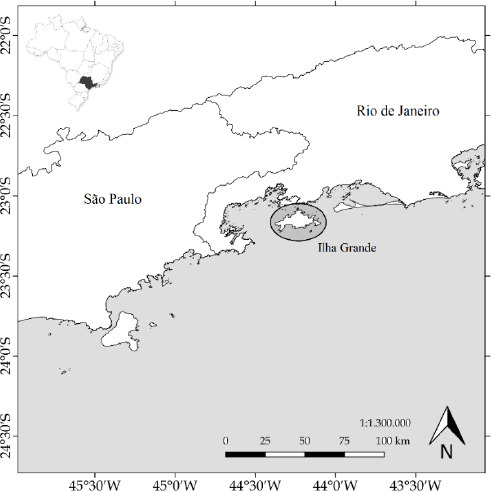
The scallop monoculture (N. nodosus), the cobia monoculture (R. canadum), and an integrated culture (IMTA) with both species were evaluated in the Ilha Grande bay region, off the coast of Southeast Brazil (23°S; 44°W) (Figure 1). This region is characterized by bays and sheltered waters, temperature, and depth suitable for marine aquaculture close to the coast (Kjerfve et al., 2021).

Coast of the southeastern region of Brazil, with emphasis on the study area, Ilha Grande Bay, Rio de Janeiro.
For the three proposed systems, this study used an area of 5,000 m2 (125 m x 40 m) as an aquaculture production unit, which corresponds to the dimensions of the marine farms studied.
The area of the scallop monoculture contains six long lines of 100 m in length, with 100 lanterns with eight floors each (Figure 2a). Cobia monoculture is composed of 12 net cages with a useful volume of 565.5 m3 (12 m diameter x 5 m of useful depth) (Figure 2b). In the IMTA system, four long lines and six net cages, with the same dimensions used in scallop and cobia monoculture, were installed (Figure 2c).

Representation of culture structures. Layout of production system (longlines and net cages). In which: (a) scallop monoculture; (b) cobia monoculture; and (c) IMTA.
The length of the mooring cables used to support the cultivation structures is equal to three times the average depth of the site, resulting in 300 m of cables, respecting the limit of 5,000 m² of area of the aquaculture enterprise. Ring buoys signaled all assembled structures, the long lines and net cages were anchored by 900 kg concrete piers, varying in quantity according to the demand of each production system.
PRODUCTION SYSTEM EVALUATED - TECHNICAL AND ECONOMIC ASPECTS
Between September 2023 and February 2024, semi-structured interviews were conducted with 18 local producers in Ilha Grande Bay and adjacent areas in Rio de Janeiro to obtain technical and economic information about the aquaculture activity. The snowball sampling technique was used, in which the first interviewees indicate new participants until reaching the saturation point, which occurs when the new interviewees start to repeat the contents already obtained in previous interviews without adding new relevant information to the research (Castilho-Barros et al., 2014; Parker et al., 2019).
The ethics committee analyzed the questionnaire via Plataforma Brasil (process no. 59669022.1.0000.5279), a Brazilian unified database of research records involving human beings. Via this questionnaire application, it was possible to verify the production factors and data on commercialization. From this information, it was possible to verify the production factors of the three production systems for later estimation of costs and profitability of the enterprises, which are represented in Table 1.
The data were organized in electronic spreadsheets and a Shapiro-Wilk’s test was employed to ascertain whether they followed a Gaussian distribution. This was followed by a Levene’s test to identify homogeneity among the variances. As the variables showed variance heterogeneity, a non-parametric Mann-Whitney’s test was employed to ascertain statistically significant differences. All analyses were evaluated with a significance level of 5% and were performed using the R language with the packages: chisq.posthoc.test, dplyr, ExpDes, ggpubr, readxl, skimr, and stats (Ebbert, 2019; R Core Team, 2020).
The production indicators analyzed are expressed on an annual basis and all variables did not show significant differences (Table 1).
The acquisition of N. nodosus seeds was from a laboratory located in the State of Santa Catarina, in the southern region of Brazil. About 1,000 km from the development, this laboratory is the only one in the country that is capable of meeting commercial demands. Marques et al. (2018) and Garcia et al. (2022) state that the survival of scallops in a culture environment can vary from 60% to 70%. This information was confirmed during the study, for both production systems (scallop monoculture and IMTA).
According to information from the interviews, juvenile R. canadum were obtained from a company in the region. For economic and financial analyses of this culture, conservative values were also adopted regarding the density of three fish m-3 (Bergamo et al. 2021; Zarzar et al., 2022) and survival rate of 60% (Sanches et al. 2008; Bergamo et al. 2021), also confirmed in this study. At the end of the one-year production cycle, the mean weight per fish in this study was 2.5 kg, below the 3 kg described by Bezerra et al. (2016) and Bergamo et al. (2021). In the final phase, before harvesting, a density of 1.8 fish m-3 was considered, the same value observed by Sampaio et al. (2011), corresponding to 4.5 kg of fish m-3.
The costs of the diet (feed and trash fish) were based on values of the study region. Although there is no specifically designed feed for marine carnivorous fish so far, for this study, it was estimated to be twice the price of commercial feed for freshwater carnivorous fish (US$ 1.76 kg-1), maintaining the value for trash fish (US$ 0.38 kg-1), provided in the 2:1 ratio. The feed conversion rate applied was 2:1 for feed consumption (Bergamo et al., 2021; Zarzar et al., 2022) and 4:1 for trash fish (Sanches et al., 2008).
In all production systems (scallop monoculture, cobia monoculture, or IMTA), in addition to the two permanent employees of the project, it was estimated that an additional three employees would be hired to work temporarily. This workforce is responsible for helping with seasonal activities, such as sowing and harvesting scallops and stocking and harvesting cobias, totaling a two-month contract during the production cycle.
ECONOMIC ANALYSIS
The investment structures, costs, and financial and profitability indicators were based on methodologies applied and validated in different recent economic feasibility studies of marine aquaculture projects (Nogueira and Henriques 2020; Bergamo et al. 2021; Silva et al., 2022). The price survey was conducted as a priority with local suppliers and producers.
Standard capital-budgeting techniques were performed to calculate the production cost, following Engle et al. (2010). Annual fixed costs were obtained from producers’ surveys. Mean input (stocking density, initial biomass, fingerling size, and feeding rate) and output (gross yield) quantities for production strategies were used in the enterprise budgets. Capital costs associated with equipment were standardized across the three-production system, and the straight-line method was used to calculate annual depreciation.
The cash flow formation was based on the results obtained in the respective operating costs (OC). The cash flow enables it to show the monetary situation of the activity. It constitutes the result of covering other fixed costs, risks, and return on capital for a time horizon of 10 years, with the initial investments being made in year zero, that is, in the implementation of the project, and a discount rate of 10% per year on the amount invested (Castilho-Barros et al., 2018; Silva et al., 2022).
The standard cash flow analysis was performed following Engle et al. (2010) to obtain the year-end balance of available cash. Cash flow risk indicators were calculated using standard formulas and included: cash flow coverage ratio, ratio of available cash balance over cash inflow, cash operating expense, and total liabilities.
Other profitability indicators described by Shang (1981) were also used: gross income (GI): production of N. nodosus and/or R. canadum per dozen or kg, respectively, multiplied by their respective market prices; operating profit (OP): difference between GI and OC, this indicator measures short-term profitability, showing the financial and operating conditions of the activity; gross margin (GM): margin in relation to the OC, that is, the result obtained after the producer bears the operating cost, considering a specific sale price of a dozen N. nodosus and/or kg of R. canadum and the productivity of the production system; leveling point (LP): cost indicator in relation to the product unit, determines what minimum production is necessary to cover the total operating cost, given the unit sales price; and profitability index (PI): ratio between OP and GI, expressed as a percentage, in which this indicator shows the rate of revenue available from the culture after paying all the operating costs involved.
The long-term profitability of investing in specific strategies was calculated using standard methods (Engle, 2010; Kumar and Engle, 2017) and included payback period (PP), internal rate of return, in its simple (IRR) and modified (MIRR) forms, the net present value, in its simple (NPV) and annualized (ANPV) forms.
The IRR is an important indicator of economic viability, usually used to compare a minimum rate of attractiveness (MRA) for decision-making. The MRA is defined as the expected return if the capital was invested in another low-risk fixed-income activity, or the mean return of the market being analyzed. For this purpose, an MRA of 12% was used, which is higher than the rate of 11.25% defined by the basic interest rate of the Brazilian economy for 2024. Thus, the undertaking is only economically viable if the IRR exceeds the MRA (Engle et al., 2005). The MIRR proposes that a percentage of the cash flow generated should be reinvested at the market interest rate, adopting a more conservative posture in the analysis of the enterprise; the results enable the decision of the project execution with greater security (Castilho-Barros et al., 2018).
The NPV is the amount the entrepreneur would have at the end of the project’s time horizon, stipulated in 10 years but adjusted for the present value (Shang, 1990). ANPV also represents the expected return on an investment. The difference is that the NPV does not show corrected results when comparing long-term projects but with different uptimes. Therefore, when the evaluated investment proposals have different periods, as in most cases, the application of an ANVP is recommended (Castilho-Barros et al., 2018).
PP is the time required in years for the investment to pay off, that is, to recover the initial capital invested, which, together with the results of IRR, MIRR, NPV, and ANPV, makes it possible to choose, with less margin of error, which proposal for investment and funding is the most appropriate, ensuring the entrepreneur’s best decision-making process.
For the economic analysis, depending on the system, four components were considered in expenses: those dedicated to scallop monoculture, those dedicated to marine cobia monoculture, those to the conditions of IMTA, and those common to the three production systems.
ANALYSIS OF THE SENSITIVITY AND RESILIENCE OF THE ENTERPRISE
The Brazilian marine aquaculture faces significant challenges that threaten its long-term viability and sustainability. Among the main risks are the adverse environmental conditions, such as extreme weather events that can compromise cultivation structures and impact productivity indicators. The constant threat of diseases and parasites also poses a danger to mariculture, potentially causing substantial financial losses.
The lack of effective regulation, rules, and enforcement contributes to conflicts with other economic activities, such as fishing and tourism. Issues such as theft and vandalism are more common in remote areas, where security is limited, which creates an additional challenge for mariculturists.
Market price volatility and dependence on imported input increase the producers’ vulnerability to economic and exchange rate fluctuations, directly affecting the sector’s profitability. Furthermore, the lack of technical training and investment in research and development restricts innovation and the adoption of sustainable practices, limiting the growth of aquaculture.
In this context, to assess the resilience of aquaculture in the three proposed production systems, five different analyses were considered, as follows:
the first analysis was based on the variation of 25.0%, above and below, on the mean sales prices practiced in the region, which are US$6.92, US$8.65, and US$10.38 for a dozen scallops and US$4.61, US$5.77, and US$6.92 for a kilogram of cobia, considering financial indicators and profitability due assessments. This analysis is justified mainly due to seasonality influenced by the demand of market prices for both species cultivated throughout the year (Silva et al., 2022). The commercialization values considered the Brazilian tax effects for this type of product, 18% of the “ICMS” in the State of São Paulo and 2.7% of “Funrural”, the amount charged on the sale when filling out the rural producer’s invoice;
the second analysis evaluated the behavior of IRR, MIRR, and PP on the survival variations of both cultures in the three proposed production systems. Via this analysis, it was possible to identify the minimum the enterprise needs to produce to avoid collapsing (scallop and cobia monoculture) and which culture is more sensitive to these variations (IMTA);
the third analysis was the complete annual culture loss, hypothetically in years three or five, that could occur due to occasional adverse environmental conditions, theft, or diseases that could affect both scallops and fish. Although the bay of Ilha Grande, the development site, does not have extreme environmental or oceanographic characteristics to the point of physically compromising the production structure, this analysis is essential to assist in the decision-making of any aquaculture farmer who is interested in entering and investing in the activity (Shang, 1990);
having staggered production as a standard for both cultures, the fourth analysis evaluated the potential limit of absorption of fixed labor in the enterprise. Thus, the hiring of two, three, and four employees was budgeted and, based on the economic results (IRR, MIRR, and PP), the potential of an undertaking of this nature for the region was verified; and
finally, in the fifth analysis, the behavior of the IRR, MIRR, and PP indicators was measured concerning the variation in the survival percentage of scallops and cobias, together with the variation in the mean final weight of cobias.
RESULTS
The investment to implement the production system scallop monoculture (N. nodosus) represented 62.23% of the amount needed to implement cobia monoculture (R. canadum). When comparing the scallop monoculture to the investment required to implement the IMTA system, the scallop monoculture represented 38.03% of the total. Cobia monoculture was 14.92% above what was needed for IMTA (Table 2).
Items that were common to the three systems were estimated at, respectively, 49.20% of total investments for scallop monoculture, 30.33% for cobia monoculture, and 35.65% for IMTA, with the equipment “support raft” being the greatest component (20.87%, 12.87%, and 15.12%, respectively). Although the support raft, aluminum boat, and engine are significant expenses, proportionally, they influenced less because they were shared equally in the investment for the three production systems (Table 2).
The total budget variations of each proposed system were 45.57% for scallop monoculture, 65.33% for cobia monoculture, and 59.76% for IMTA compared to their respective total value. Among the items that most burdened the investments of each production system were the “lanterns” for scallop monoculture and IMTA (25.05% and 12.10%, respectively) and the “net cages” for cobia monoculture and IMTA (55.15% and 32.41%, respectively). Values referring to “documentation fee” and “project elaboration” varied between 5.23%, 4.34%, and 4.59% for scallop monoculture, cobia monoculture, and IMTA, respectively.
The equipment depreciation had the lowest overall value in scallop monoculture (US$ 7,744.35), which was 26.94% below cobia monoculture (US$ 10,600.67), and 21.84% below IMTA (US$ 9,908.70).
The highest OC identified was in the cobia monoculture (US$ 159,471.73). The OC of the scallop monoculture (US$ 28,139.53) represented 17.65% of that required for the cobia monoculture. In comparison, the OC of the IMTA system (US$ 95,002.10) resulted in 29.62% above that of the scallop monoculture and 67.86% below the costs for the cobia monoculture (Table 3).
The operating costs of items that are common to the three production systems evaluated (US$ 10,640.00) corresponded to 37.81%, 6.67%, and 11.20% of the total values of scallop monoculture, cobia monoculture, and IMTA, respectively. To maintain the productivity of each production system, the respective values were budgeted at US$ 17,499.53, US$ 148,831.73, and US$ 84,362.10, representing 62.19%, 93.33%, and 88.80% of the total per system (scallop monoculture, cobia monoculture, and IMTA, respectively). “Labor” (permanent + temporary) was the item that most burdened scallop monoculture (38.01%), followed by “acquisition of seeds” (18.36%). For cobia monoculture and IMTA, “food” (feed + trash fish) was the item that most impacted the OC (54.41% and 45.67%, respectively). Considering the price of US$1.83 per cobia fingerling, the costs for acquiring the fingerlings ranked second, accounting for 31.33% of the total costs for cobia monoculture and 26.29% for IMTA.
When considering only the operating values of each system, excluding the values of the “common items” (US$ 10,640.00), the OC attributed exclusively to the cultivation of scallop corresponded to 11.83% (US$ 9,978.44) in the IMTA system, while the cultivation of cobia corresponded to 88.17% (US$ 74,383.65).
The global values identified in the annual OC of each system were used as an expense in the cash flow calculation (Silva et al., 2022), considering the operating profit (OP) for the three production systems.
Table 4 shows the production costs per dozen scallops or kg of cobia in the three proposed systems. Values below the market prices of the region were obtained by relating the OC to the amount produced. There was a reduction of US$ 1.88 dz-1 scallops from scallop monoculture to IMTA and US$ 0.22 kg-1 of cobia from cobia monoculture to IMTA.
The OP financial indicators, as well as the GM and PI profitability indicators showed positive values in the three production systems (Table 5). By allocating net cages next to scallop long lines, IMTA has a considerable increase in the economic and financial results.
Costs and economic indicators of the profitability for the three production systems evaluated: scallop monoculture (Nodipecten nodosus), cobia monoculture (Rachycentron canadum), and integrated multi-trophic aquaculture - scallop and cobia (IMTA), in 5,000 m2, southeastern region of Brazil (February 2024)1.
The profitability indicators show favorable results using the market values of the study region. However, comparatively, scallop monoculture had the worst results. For this system, although the IRR (35.03%) and MIRR (19.37%) are above the MRA (12%), the NPV, ANPV, and PP (US$ 69,785.07, US$ 12,350.85, and 3.71 years, respectively) show a lower economic attractiveness when compared to the other two systems evaluated. Between cobia monoculture and IMTA, there is a certain proximity of results, being more favorable to IMTA.
To turn scallop monoculture into IMTA, increasing the investment by 38.03% (Table 5) will be necessary. With this transformation, GR would increase by 170.24%, and IRR, MIRR, and ANPV by 42.65%, 20.16%, and 138.85%, respectively, in addition to the 20.11% drop in the PP (scallop monoculture at 3.71 years and IMTA at 2.97 years).
Although the IMTA system shows attractive indicators, migration from a monoculture system of cobia to an integrated one does not show economic and financial advantages. For the cobia monoculture to start operating as an IMTA, it would be necessary to remove six net tanks, reducing the amount invested by 14.92%, consequently resulting in this system’s productive and financial reduction. The decrease in productivity estimated for this simulation (cobia monoculture for IMTA) results in a decrease of GR of 33.63%, 12.70% of OP, 2.78%, 1.38%, and 11.46% in the IRR, MIRR, and ANPV indicators, respectively, in addition to the reduction in the period for recovery of invested capital from 3.02 to 2.97 years.
ANALYSIS OF THE SENSITIVITY AND RESILIENCE OF THE ENTERPRISE
The analysis on the sensitivities of different scenarios aims to identify the behavior of the activity’s results in the face of the various adversities that may affect it. Below, there are five situations that are common to the activity in which different pricing scenarios were analyzed and their effect on a set target was measured:
ANALYSIS 1: SALES PRICE VARIATION
The variation of 20.0%, up or down, in the selling price of the production showed negative values only for the cobia monoculture when applied to the lowest selling prices in all the proposed scenarios (Table 6). This variation in the sales price is commonly practiced throughout the year. According to the shellfish farmers interviewed, the highest values are found during summer (November - March), when there is a greater demand for tourists in the region. Thus, note that this period is considered the most important for the region and, consequently, for the activity.
Return on investment for the three production systems, given the 20.0% variation in the marketing price: scallop monoculture (Nodipecten nodosus), cobia monoculture (Rachycentron canadum), and integrated multi-trophic aquaculture - scallop and cobia (IMTA), in 5,000 m2, southeastern region of Brazil (February 2024)1.
Although the minimum positive values of this modeling are above the OC per unit produced (dz or kg), the results achieved in this scenario demonstrate the risk of the activity when practicing the lowest values for any production system.
Furthermore, with the addition of 20.0% on the base values for the marketing of the scallop, the gain in the financial and profitability indicators revolved around 43.69% for the OP and GM, 19.74% for PI, 48.92% and 22.75% for IRR and MIRR, respectively, as well as the reduction in the production amount needed (16.67% LP) and a PP from 3.71 to 2.89 years (22.22% reduction).
With the same variation of 20.0% in the commercialization price, cobia monoculture showed an increase in gains of 81.54% for OP and GM, 51.28% for PI, 84.76% and 32.91% for IRR and MIRR, respectively, and 126.83% for NPV and ANPV. There is also a 16.67% reduction in the amount being produced and a 30.03% reduction in the PP (from 3.02 years to 2.11 years).
By this modeling, IMTA shows attractive values. The OP and GM can achieve a 61.99% gain at the highest sales prices (US$ 10.38 dz-1 and US$ 6.92 kg-1). The PI, IRR, MIRR, and NPV and ANPV, can also increase by 35.00%, 64.45%, 26.18%, and 95.08%, respectively. The reductions reach 16.67%, the minimum amount necessary to maintain the activity, as well as a reduction from 2.97 to 2.21 years (25.37% reduction) for PP.
ANALYSIS 2: SURVIVAL VARIANCE
According to the IRR, MIRR, and PP indicators, the modeling of the variation in survival per production system and those combined in IMTA drew considerable attention to scallop monoculture and cobia monoculture productions. If there is less than 50.0% survival for scallops and 60.0% for cobia, the activity becomes impractical (Figure 3). However, a simple 10.0% increase in survival in these production systems makes the activity attractive and with positive results concerning such indicators.

Evaluation of profitability indicators against the interaction of survival rates with the final weight of fish cultivated in the production system IMTA.
When modeling the variation in IMTA survival rates, note that the possible mortality of cobia affects the activity resilience. A mortality of 50.0% for scallops and cobia is the minimum limit to make the activity economically attractive with IRR and MIRR above MRA (Table 7).
Sensitivity analysis by the internal rate of return (IRR), modified internal rate of return (MIRR), and payback period (PP) of the three evaluated systems (scallop monoculture, cobia monoculture, and IMTA) given the different final survival rates of the scallop and cobia cultures, in 5,000 m2, southeastern region of Brazil, February 2024.
ANALYSIS 3: CULTURE LOSS
Although aquaculture constantly monitors environmental conditions that may interfere with the activity, there is always the risk of considerable production losses due to environmental, health, predation, or escape issues.
The simulation of culture loss, whether in the third or fifth year, entails considerable economic losses to scallop monoculture (Table 8). The cobia monoculture is more resilient to culture loss simulations since the IRR and the MIRR are well above the MRA. The analysis of the resilience of cobia monoculture according to the ANPV also shows little interference in economic results due to losses (Table 8).
Costs and return on investment for the three production systems, given the possibility of losing a production cycle: scallop monoculture (Nodipecten nodosus); cobia monoculture (Rachycentron canadum) and integrated multi-trophic aquaculture - scallop and cobia (IMTA), in 5,000 m2, southeastern region of Brazil (February 2024)1.
The IMTA production system shows some fluctuation in the face of proposed losses. In this system, the loss of cobia considerably compromises the financial health of the activity.
ANALYSIS 4: VARIATION IN THE NUMBER OF WORKERS
According to the owners of the enterprises that we interviewed, hiring laborers to work in the activity ranges from two to five employees (depending on the activity’s complexity), with monthly salaries of US$ 249.88. Aquaculture practiced on the southeast coast of Brazil is still considered an alternative to family income, whether for the owner or the hired employee.
Modeling as a variation in the number of employees exposes the limits within which marine aquaculture operates. In scallop monoculture, given the relative simplicity of operating it, an excess of two employees hired permanently can compromise the activity (Table 9). In the cultivation of scallops (scallop monoculture), it is common to hire employees to occasionally operate in the sowing (beginning of the cycle) and harvesting of the scallops (end of the cycle) or cleaning the lanterns (middle of the cycle). In this case, as the number of permanent employees increases, the economic gains and, consequently, the attractiveness of the activity decreases.
Profitability indicators for the three production systems, given the variation in the number of permanent employees: scallop monoculture (Nodipecten nodosus), cobia monoculture (Rachycentron canadum) and integrated multi-trophic aquaculture - scallop and cobia (IMTA), in 5,000 m2, southeastern region of Brazil (February 2024)1.
As to producing cobia (cobia monoculture and IMTA), hiring more than three employees is justified, mainly due to fish maintenance (feeding, biometrics, harvesting, maintenance of structures, etc.). Thus, hiring three or four employees for cobia monoculture and IMTA has little effect on profitability indicators (Table 9).
ANALYSIS 5: RELATIONSHIP BETWEEN THE VARIATION IN SURVIVAL AND THE FINAL WEIGHT OF THE FISH
Figure 3 demonstrated the interaction between the survival rate and the final weight of fish farmed in the IMTA system. This analysis points out valuable results on how such factors can affect this system’s profitability and payback time.
In the simulation with the lowest mean weight (2.00 kg, Figure 3A), there is a progressive increase in both IRR and MIRR and a marked reduction of PP from 60% of cobias survival, denoting low interference of the variation of scallop survival in the profitability indicators.
When simulated with 2.5 and 3.0 kg of final mean weight (Figure 3B and C), the profitability analyses are positive only from 50% in both cultures for 2.5 kg and 60% survival of scallops and 40% of cobias in the 3.0 kg models. However, for 2.5 kg, the indicators point to viable conditions from 40% and 60% survival for scallops and cobias, respectively.
In general, the simulation with 3.00 kg (Figure 3C) have more attractive results in terms of profitability and payback time. The 50% survival configuration of scallops and cobias results in an IRR and MIRR above the TMA, which is a strong indication of the influence of the increase in the mean weight of the fish on the viability of the project. In this modeling, the IRR and the MIRR reach expressively high values as the survival rate of the fish increases, with PP having a considerable reduction from the survival of 50% for both scallops and cobias.
Note, therefore, that the increase in the mean weight of the fish has an impact directly proportional to the project’s profitability and inversely proportional to the payback time of the investment. This fact reinforces the understanding that strategies aimed at increasing the mean weight of fish output can be highly effective in improving the economic and financial viability of the enterprise. Furthermore, the analysis indicates that the production of cobias, especially when compared to that of scallops, in an integrated system such as IMTA, tends to be more profitable, suggesting that efforts to increase the survival rate of cobias may be particularly beneficial for the success of the project.
ANALYSIS 6: SCENARIOS VARYING THE PRICE OF FEED AND FEED CONVERSION RATIO (FCR)
The economic viability of aquaculture is strongly influenced by several factors. To assess the resilience of each system, the impact of feed price and conversion on cobia farming was assessed in both the monoculture system and the IMTA system. The analysis using the financial indicators IRR, MIRR, and PP enables us to understand the differences in the economic performance of each system, highlighting their resilience to production variations and their potential to promote greater economic stability. Figures 4 and 5 show the results of the impacts of variations in feed price and feed conversion on the economic analysis of the monoculture of this species and on the IMTA system.

Sensitivity analysis of profitability indicators in cobia (Rachycentron canadum) farming in monocultural and IMTA productions. The analysis focuses on the means variation of 10% (both upwards and downwards) in the commercial price of feed practiced in the southeastern region (US$ 1.73 kg-1, February 2024).

Sensitivity analysis of profitability indicators in cobia (Rachycentron canadum) farming in monocultural and IMTA productions. The analysis focuses on increasing the feed conversion factor from 0.5 to 1.0 over the reference value of this study of 2.0 (February 2024).
The change in indicators regarding the increase in feed costs (Figure 4) shows the negative impacts on the systems profitability. The IRR and MIRR decrease as feed prices increase, indicating a reduction in the economic attractiveness of aquaculture activity. However, IMTA maintains greater stability in the financial indicators evaluated, showing better rates of return and a shorter payback period compared to monoculture. This suggests that the diversification of production in IMTA enables a better use of input, reducing the economic impacts of the increase in feed prices.
Figure 5 shows the results of the analysis of the influence of feed conversion (FCR) on the economic viability of the proposed production systems (cobia monoculture and IMTA). Note that the increase in FCR reduces the profitability of production. In both monoculture and IMTA, the higher the feed conversion, the lower the IRR and MIRR values and the longer the payback period. However, while monoculture suffers more pronounced impacts with the worsening of FCR, IMTA demonstrates greater resilience, showing a more controlled growth in the return on investment time.
The results obtained by the sensitivity analyses regarding the variation in feed price and the influence of feed conversion on the evaluated production systems indicate that IMTA is a more economically stable alternative. Although monoculture has higher rates of return under ideal conditions, it becomes less advantageous as production challenges increase. Thus, it is understood that the adoption of IMTA as a production system can be a viable strategy to reduce economic risks and ensure greater financial sustainability in marine aquaculture.
DISCUSSION
Small-scale aquaculture has emerged as a viable and sustainable alternative for generating income for small entrepreneurs (Salazar et al., 2018). The results obtained in this study demonstrate the economic viability of scallop and cobia monocultures for the southeastern coast of Brazil, but mainly of the proposed IMTA system in an area of 5,000 m2, which can be attributed to the high commercial value of the products and the maximum occupation of the area, space optimization, using cultivation structures.
Family farming, occupying smaller areas, is an interesting alternative due to flexibility (Theodoridis et al., 2020). The data used in the IMTA model include the costs associated with the infrastructure and operating costs needed to implement the activity in a small-scale system in the three production systems evaluated. The multi-trophic system enables a better occupation of the cultivation area, which is essential in places with limitations on the size of aquaculture areas.
Coastal aquaculture plays a vital role in the livelihoods, employment, income generation, and settlement of producers in coastal communities in many developing countries, particularly in Asia and Latin America (FAO, 2024). As in Southeast Asia, one of the advantages of this small-scale activity is the lower initial investment when compared to offshore cultivation, generally on a larger scale, in which the high value of the production structures can cost between 30% and 50% of the investment (Bezerra et al., 2016). Along the coastal region, the target of this study, there is a greater condition of shelter and protection from meteorological tides, enabling the use of low-cost materials and equipment in the manufacture of longlines, net cages, and mainly anchoring structures (Petersen et al., 2014), burdening the operating cost less. However, note that the dispute over the territory and the greater need for conflict management are unfavorable factors, in addition to the problem of water pollution, which is common on the Brazilian coast.
As a favorable factor, the possibility of direct sale of scallops and live fish was considered, which, in addition to the socio-environmental appeal of the IMTA system, can obtain higher sales prices than those achieved by selling in large quantities (Silva et al., 2022). However, note that direct sales may involve more time for marketing, depending on demand, and may compromise the production schedule. But, as both scallops and cobias grow unevenly, selective harvesting can minimize this problem and promote revenue anticipation and feed savings in fish farming.
Another favorable factor is that well-designed IMTA systems can occupy market niches that demand products with an environmental seal, being sustainably certified (Largo et al., 2016). Knowler et al. (2020) stated that IMTA can improve production sustainability, reduce the impacts of aquaculture operations, and provide financial benefits via diversified products.
Except for the Perna perna mussel, which does not depend on feed or a laboratory to obtain seeds (Alves et al., 2020), the Brazilian marine aquaculture has a series of limitations, including few laboratories that produce young forms and the high commercial feed prices (Kuhnen et al., 2022).
For both cobia and scallops, but mainly for scallops, there is a lack of laboratories to produce juvenile forms in Brazil, which increases the cost of production. The acquisition of scallop seeds significantly increased the cost of the activity in the scallop monoculture by 18.36%. In comparison, for the IMTA system, it fell to only 3.63%, corroborating Marques et al. (2018), who reached 14% of the OC for the acquisition of N. nodosus seeds for the implantation of the aquaculture on the southeastern coast of Brazil.
These data confirm that about five years after the previous study, the share of funding allocated to the acquisition of seeds in scallop monoculture has changed little, highlighting one more economic advantage of the IMTA system. Such costs negatively influence the viability rates of the projects (Miao et al., 2009). This factor influenced the economic indices, which could be even better if the price of seeds and fingerlings were lower.
In the case of using feed, there is a lack of nutritional studies in Brazil referring specifically to cobia (Bezerra et al., 2016), which could make the product cheaper. One of the greatest remaining challenges is developing ecologically and economically efficient commercial feeds for this species. Feed conversion rates are still very high, ranging from two to 3:1 (Lima et al., 2019; Zarzar et al., 2022). The costs attributed to the commercial feed used in marine fish culture vary between 40% and 60% of the total production cost and can reach up to 85% in intensive systems (Sanches et al., 2008; Miao et al., 2009). In this study, food, even using trash fish, which is cheaper, was the main component for operating costs, reaching 54.41% for fish farming and 45.67% for the IMTA system, corroborating with several other studies on the production of marine fish (Petersen et al., 2014, Bergamo et al., 2021).
As in Brazil, it is also common to adopt the use of trash fish in cobia feeding to lower the cost of production in Southeast Asian countries, requiring a smaller amount of feed (Petersen et al., 2014; Benetti et al., 2021). For cobia monoculture and IMTA, the ratio of 50% feed to trash fish was used. If we chose to use only commercial feed, the contribution to the operating cost would rise to 66.14% for cobia monoculture and to 57.95% for IMTA, reducing the profit margin. However, even so, it would still be economically viable. It is worth considering whether to use trash fish, which has the disadvantage of producing a polluting effect, in addition to the possibility of introducing parasites and viral and bacterial diseases into the culture (Eissa et al., 2021). Another unfavorable factor in its use is the stimulus for trawl fishing and problems with its unbalanced nutritional value due to the diversity of species, in addition to the risk of breaking points in the cold chain, as this fishing waste is rarely packed in ice on vessels or warehouses.
From the production point of view, Petersen et al. (2014) reported an increased growth of cobia that were fed with a balanced diet compared to those that were fed exclusively with trash fish. However, there is a considerable supply of fishing waste in the study region. For this reason, we decided to use it, reducing the cost of feeding regarding commercial feed and improving the economic profitability indices. Sanches et al. (2008) reported as a favorable point that this practice, especially in areas close to fish landing sites, reduces the amount of waste resulting from the commercialization of fish, which are often discarded at sea without any control. However, it is worth mentioning that in 2008, the time of the referred study, there was still no commercial feed for marine fish in Brazil. Currently, the commercial diet still a high price and poor availability due to a lack of demand, which still favors using trash fish.
Even in the case of a small-scale project, “labor” was another item that significantly increased the operating cost. As the activity is still little practiced in Brazil, there is a lack of trained personnel and specialized equipment for aquaculture operations; only the advancement and consolidation of the activity can contribute to the reduction of labor costs. Note that the basic calculation for this item is due to hiring two full-time workers (8 hours a day-1), three occasional workers (temporary) at sowing, stocking, and harvesting occasions for scallop and/or multi-trophic cultivation, and another worker dedicated to fish farming, which is enough for maintaining the production routine. Such values are higher when compared to aquaculture enterprises in the Philippines, where labor represents between 10% and 14% of the operating cost (Samonte, 2017). However, in some Asian countries, this workforce is composed of workers who seek to overcome the poverty line, subjecting themselves to receiving very low wages, which are inconsistent with market values (Valderrama et al., 2015).
The payback period of 3.64 years in the economically viable condition found in IMTA with a survival rate of 40.0% for scallops and 60.0% for cobia was like the one obtained by Silva et al. (2022) for the IMTA system (Nodpecten nodosus + Perna perna) in the worst production system observed. However, it was still higher than the 2.4 years Marques et al. (2018) found for the worst condition of the monoculture of N. nodosus produced in the same region five years ago. Their use of a 10-story lantern can explain their shorter return on capital (PP), while in this study, we used an 8-story lantern. Nevertheless, our results are better than the 6-year PP obtained by Taylor et al. (2006) for the cultivation of Nodipecten subnodosus in Magdalena Bay, Baja California peninsula, Mexico, using bottom cultivation in pads, which tends to have a higher production cost due to lower productivity per area. Since it is conducted on a flat surface, it does not explore the water column like the suspended system with lanterns proposed in this study.
Studies by Bergamo et al. (2021) and Silva et al. (2022) state that the integrated system maintained higher profitability rates for the same study region, even facing a reduction in the commercialization value and an increase in mortality. The results obtained in this study corroborate this fact, demonstrating that the proposed IMTA system can compensate for market variations when compared to scallops or cobia monocultures, demonstrating greater resilience with better IRR, MIRR, NPV, and ANPV.
For many years, the research and development efforts in marine fish farming in Brazil were directed towards mullet (Mugil spp.), fat snook (Centropomus parallelus), and sole (Paralichthys orbignyanus), which unfortunately have not yet reached a level of commercial production (Valenti et al., 2021). With the development of breeding technology and, consequently, the large-scale production of cobia (R. canadum) in Asia, some national producers began to consider this species, which is native to Brazil, including several production initiatives in the Northeast and Southeast regions (Bezerra et al., 2016, Zarzar et al., 2022).
An exciting proposal for strengthening the activity and increasing income generation would be the practice of interactive marine fish farming. This concept aims to demonstrate the importance and benefits of marine fish farming to the public, enabling the opportunity to interact with the management of the activity via guided tours, interactive feeding, and diving. Generally, this approach is conducted in environmentally preserved regions, promoting interaction between tourists and marine fish farming (Rombenso et al., 2016).
Culturing cobia is still a developing activity from a commercial point of view in Brazil. However, it may show a favorable horizon from a financial point of view, mainly with consolidating its production chain. The continuous growth of aquaculture will require the development of production systems that have the least impact on the environment, enabling the generation of jobs and income alternatives for coastal communities. In Brazil, despite the existence of public policies aimed at this sector, they are little implemented. There is also a lack of government actions that promote an orderly and sustainable occupation of the coastal environment, as well as an adequate strategy for developing the activity to encourage the gradual increase in the production volume and consolidation of the production chain.
CONCLUSIONS
Despite the higher investment required, the multi-trophic system of the scallop (Nodipecten nodosus) with the cobia (Rachycentron canadum), in 5,000 m2, showed economic viability results close to those obtained for the cobia monoculture and higher, when compared to the scallop monoculture, promoted in the same area, confirming the hypothesis of change in profitability with the implementation of the IMTA system.
Variable costs were substantially greater than fixed costs, mainly in cobia monoculture. Thus, profitability of aquaculture practices is highly sensitive to feed efficiency, with strong incentive to save money in the use of the most expensive input, in this case feed.
Production diversification proved to be favorable both in the economic and socio-environmental sense since it can mitigate the risks of monocultures in small-scale enterprises, in addition to subsidizing the implementation of new projects and, consequently, creating jobs and income, while promoting and strengthening local development.
Understanding the factors influencing the sustainable development of aquaculture toward achieving nutritional and food security is crucial for planning at both the regional and national levels in Brazil. While this study may serve as baseline information on cost-benefit analysis affecting mariculture, it emphasizes the need for further research. This will enable stakeholders to access the latest knowledge, as well as enhancing public-private partnerships to provide financial benefits via subsidies in addressing issues related to key aquaculture inputs such as quality fish feed and seed. This will stimulate aquaculture to become a growth engine of socio-economic development among coastal communities not only in southeastern of Brazil but also at the national level, thereby making aquaculture a viable alternative for small producers.
REFERENCES
-
Alves, J. L., Galvão, M. S. N., Garcia, C. F. & Marques, H. L. A. 2020. Productive performance of brown mussels Perna perna (Linnaeus, 1758) cultivated on ropes at low densities in Caraguatatuba, Brazil. Aquaculture, 51, 3297-3304. DOI: https://doi.org/10.1111/are.14665
» https://doi.org/10.1111/are.14665 -
Barrett, L. T., Theuerkauf, S. J., Rose, J.M., Alleway, H. K., Bricker, S. B., Parker, M., Petrolia, D. R. & Jones. R. C. 2022. Sustainable growth of non-fed aquaculture can generate valuable ecosystem benefits. Ecosystem Services, 53, e101396. DOI: https://doi.org/10.1016/j.ecoser.2021.101396
» https://doi.org/10.1016/j.ecoser.2021.101396 -
Benetti, D. D., Suarez, J., Camperio, J., Hoenig, R. H., Tudela, C. E., Daugherty, Z., McGuigan, C. J., Mathur, S., Anchieta, L., Buchalla, Y., Alarcón, J., Marchetti, D., Fiorentino, J., Buchanan, J., Artiles, A. & Stieglitz, J. D. 2021. A review on cobia, Rachycentron canadum, aquaculture. Journal of the World Aquaculture Society, 52, 691-709. DOI: https://doi.org/10.1111/jwas.12810
» https://doi.org/10.1111/jwas.12810 -
Bergamo, G. C. A., Olier, B. S., Sousa, O. M., Kuhnen, V. V., Pessoa, M. F. G. & Sanches, E. G. 2021. Economic feasibility of mussel (Perna perna) and cobia (Rachycentron canadum) produced in a multi-trophic system. Aquaculture International, 29, 1909-1924. DOI: https://doi.org/10.1007/s10499-021-00762-x
» https://doi.org/10.1007/s10499-021-00762-x -
Bezerra, T. R. Q., Domingues, E. C., Maia Filho, L. F. A., Rombenso, A. N., Hamilton, S. & Cavalli, R.O. 2016. Economic analysis of cobia (Rachycentron canadum) cage culture in large and small-scale production systems in Brazil. Aquaculture International, 24, 609-622. DOI: https://doi.org/10.1007/s10499-015-9951-2
» https://doi.org/10.1007/s10499-015-9951-2 - Castilho-Barros, L., Barreto, O. J. S. & Henriques, M. B. 2014. The economic viability for the production of live baits of white shrimp (Litopenaeus schmitti) in recirculation culture system. Aquaculture International, 22, 1925-1935
-
Castilho-Barros, L., Owatari, M. S., Mouriño, J. L. P., Silva, B. C. & Seiffert, W. Q. 2018. Economic feasibility of tilapia culture in southern Brazil: A small-scale farm model. Aquaculture , 515, e734551. DOI: https://doi.org/10.1016/j.aquaculture.2019.734551
» https://doi.org/10.1016/j.aquaculture.2019.734551 -
Chopin, T., Cooper, J. A., Reid, G., Cross, S. & Moore, C. 2012. Open-water integrated multi-trophic aquaculture: environmental biomitigation and economic diversification of fed aquaculture by extractive aquaculture. Reviews in Aquaculture , 4, 209-220. DOI: https://doi.org/10.1111/j.1753-5131.2012.01074.x
» https://doi.org/10.1111/j.1753-5131.2012.01074.x -
Ebbert, D. 2019. chisq.posthoc.test: A Post Hoc Analysis for Pearson’s Chi-Squared Test for Count Data. R package version 0.1.2. https://CRAN.R-project.org/package=chisq.posthoc.test
» https://CRAN.R-project.org/package=chisq.posthoc.test -
Eissa, A. E., Abou-Okada, M., Alkurdi, A. R. M., El Zlitne, R. A., Prince, A., Abdelsalam, M. & Derwa, H. I. M. 2021. Catastrophic mass mortalities caused by Photobacterium damselae affecting farmed marine fish from Deeba Triangle, Egypt. Aquaculture Research, 52, 4455-4466. DOI: https://doi.org/10.1111/are.15284
» https://doi.org/10.1111/are.15284 - Engle, C. R. 2010. Aquaculture Economics and Financing. Wiley-Blackwell, Oxford.
-
Engle, C. R., Kumar, G. & Bouras, D. 2010. The economic trade-offs between stocking fingerlings and stockers: A mixed integer multi-stage programming approach. Aquaculture Economics and Management, 14(4), 315-331. DOI: http://dx.doi.org/10.1080/13657305.2010.526020
» http://dx.doi.org/10.1080/13657305.2010.526020 -
Engle, C. R., Pomerleau, S., Fornshell, G., Hinshaw, J. M., Sloan, D. & Thompson, S. 2005. The economic impact of proposed effluent treatment options for production of trout Oncorhynchus mykiss in flow-through systems. Aquacultural Engineering, 32, 303-323. DOI: https://doi. org/10.1016/j.aquaeng.2004.07.001
» https://doi. org/10.1016/j.aquaeng.2004.07.001 - FAO (Food and Agriculture Organization of the United Nations). 2024. The State of World Fisheries and Aquaculture 2024. Blue Transformation in action. FAO, Rome.
-
Garcia, C. F., Galvão, M. S. N., Alves, J. L. & Marques, H. L. A. 2022. Compensatory growth in Nodipecten nodosus scallops farmed in a tropical region (São Paulo state, southeastern Brazil). Aquaculture Research, 53(13), 4638-4645. DOI: https://doi.org/10.1111/are.15955
» https://doi.org/10.1111/are.15955 - Grant, J. & Pastres, R. 2019. Ecosystem models of bivalve aquaculture: implications for supporting goods and services. In: Smaal, A. C., Ferreira, J. G., Grant, J., Petersen, J. K. & Strand, Ø. (Ed.). Goods and Services of Marine Bivalves (pp. 507-525). London: Springer.
-
Kjerfve, B., Dias, G. T. M., Filippo, A. & Geraldes, M. C. 2021. Oceanographic and environmental characteristics of a coupled coastal bay system: Baía de Ilha Grande-Baía de Sepetiba, Rio de Janeiro, Brazil. Regional Studies in Marine Science, 41, e101594. DOI: https://doi.org/10.1016/j.rsma.2020.101594
» https://doi.org/10.1016/j.rsma.2020.101594 -
Knowler, D., Chopin, T., Martínez-Espiñeira, R., Neori, A., Nobre, A., Noce, A. & Reid, G. 2020. The economics of Integrated Multi-Trophic Aquaculture: where are we now and where do we need to go? Reviews in Aquaculture , 19, 1-16. DOI: https://doi.org/10.1111/raq.12399
» https://doi.org/10.1111/raq.12399 -
Kuhnen, V. V., Hopkins, K., Mota, L. S., Sousa, O. M. & Sanches, E. G. 2022. Challenges and lessons from marine finfish farming in Brazil. Marine Policy, 138, e104979. DOI: https://doi.org/10.1016/j.marpol.2022.104979
» https://doi.org/10.1016/j.marpol.2022.104979 -
Kumar, G. & Engle, C. 2017. Economics of intensively aerated catfish ponds. Journal of the World Aquaculture Society, 48(2), 320-332. DOI: https://doi.org/10.1111/jwas.12385
» https://doi.org/10.1111/jwas.12385 -
Kurtay, E. & Lök, A. 2023. Growth rate, meat yield, condition index and reproduction of mussels (Mytilus galloprovincialis, Lamarck 1819) integrated to a fish farm. Regional Studies in Marine Science , 67, e103210. DOI: https://doi.org/10.1016/j.rsma.2023.103210
» https://doi.org/10.1016/j.rsma.2023.103210 -
Largo, D. B., Diola, A. G. & Marababol, M. S. 2016. Development of an integrated multi-trophic aquaculture (IMTA) system for tropical marine species in southern Cebu, Central Philippines. Aquaculture Reports, 3, 67-76. DOI: https://doi.org/10.1016/j.aqrep.2015.12.006
» https://doi.org/10.1016/j.aqrep.2015.12.006 -
Lima, L. S., Pinto, T. K., Brandao, B. C. S., Santos, W., Hamilton, S., Domingues, E. C., Klein, A. P., Schettini, C. A., Poersch, L. H. & Cavalli, R. O. 2019. Impact of cage farming of cobia (Rachycentron canadum) on the benthic macrofauna in a tropical region. Aquaculture , 512, 734314-734314. DOI: https://doi.org/10.1016/j.aquaculture.2019.734314
» https://doi.org/10.1016/j.aquaculture.2019.734314 -
Marques, H. L. A., Galvão, M. S. N., Garcia, C. F. & Henriques, M. B. 2018. Economic analysis of scallop culture at the north coast of São Paulo State, Brazil. Boletim Instituto de Pesca, 44(2), e290. DOI: https://doi.org/10.20950/1678-2305.2018.290
» https://doi.org/10.20950/1678-2305.2018.290 -
Miao, S., Jen, C. C., Huang, C. T. & Hu, S. H. 2009. Ecological and economic analysis for cobia Rachycentron canadum commercial cage culture in Taiwan. Aquaculture International, 17, 125-141. DOI: https://doi.org/10.1007/s10499-008-9185-7
» https://doi.org/10.1007/s10499-008-9185-7 -
Nogueira, M. C. F. & Henriques, M. B. 2020. Large-scale versus family-sized system production: economic feasibility of cultivating Kappaphycus alvarezii along the southeastern coast of Brazil. Journal of Applied Phycology, 32, 1893-1905. DOI: https://doi.org/10.1007/s10811-020-02107-2
» https://doi.org/10.1007/s10811-020-02107-2 -
Parker, C., Scott, S. & Geddes, A. (2019) Snowball Sampling. SAGE Research Methods Foundations. Available from: Available from: http://eprints.glos.ac.uk/6781/1/6781%20Parker%20and%20Scott%20%282019%29%20Snowball%20Sampling_Peer%20reviewed%20pre-copy%20edited%20version.pdf Access date: 2025 Apr. 28.
» http://eprints.glos.ac.uk/6781/1/6781%20Parker%20and%20Scott%20%282019%29%20Snowball%20Sampling_Peer%20reviewed%20pre-copy%20edited%20version.pdf -
Petersen, E. H., Luan, T. D., Chinn, D. T. M., Tuan, V. A., Bihn, T. Q., Truc, L. V. & Glencross, B. D. 2014. Bioeconomics of cobia, Rachycentron canadum, aquaculture in Vietnam. Aquaculture, Economics and Management, 18, 28-44. DOI: https://doi.org/10.1080/13657305.2014.855953
» https://doi.org/10.1080/13657305.2014.855953 - Philips, M. 2009. Mariculture overview. In: Steele, J. H., Thorpe, S., Turekian, K. (Ed.). Encyclopedia of Ocean Sciences (pp. 537-544). Amsterdam: Elsevier.
-
R Core Team 2020. R: A language and environment for statistical computing. R Foundation for Statistical Computing, Vienna, Austria. Available from: Available from: https://www.R-project.org/ Access date: 2025 Apr. 28.
» https://www.R-project.org/ -
Ridler, N., Wowchuk, M., Robinson, B., Barrington, K., Chopin, T., Robinson, S.M.C., Page, F., Reid, G. K., Szmerda, M. P., Sewster, J. & Boyne-Travis, S. 2007. Integrated multi-trophic aquaculture (IMTA): a potential strategic choice for farmers. Aquaculture, Economics and Management, 11, 99-110. DOI: https://doi.org/10.1080/13657300701202767
» https://doi.org/10.1080/13657300701202767 -
Rombenso, A. N., Araújo, A. L., Robinson, G. & Sampaio, L. A. 2016. Nearshore marine finfish culture: a small-scale pilot initiative in southern Brazil. World Aquaculture , 47, 14-18. DOI: https://www.was.org/Magazine/Contents.aspx?Id=57
» https://www.was.org/Magazine/Contents.aspx?Id=57 -
Rosa, J., Lemos, M. F. L., Crespo, D., Nunes, M., Freitas, A., Ramos, F., Pardal, M. Â. & Leston, S. 2019. Integrated multitrophic aquaculture systems - Potential risks for food safety. Trends in Food Science and Technology, 96, 79-90. DOI: https://doi.org/10.1016/j.tifs.2019.12.008
» https://doi.org/10.1016/j.tifs.2019.12.008 -
Salazar, C., Jaime, M., Figueroa, Y. & Fuentes, R. 2018. Innovation in small-scale aquaculture in Chile. Aquaculture, Economics and Management, 22, 151-167. DOI: https://doi.org/10.1080/13657305.2017.1409293
» https://doi.org/10.1080/13657305.2017.1409293 -
Samonte, G. P. B. 2017. Economics of Kappaphycus spp. Seaweed Farming with Special Reference to the Central Philippines. Tropical Seaweed Farming Trends, Problems and Opportunities, 147-154. DOI: http://doi.org/10.1007/978-3-319-63498-2_9
» http://doi.org/10.1007/978-3-319-63498-2_9 -
Sampaio, L. A., Moreira, C. B., Miranda-Filho, K. C. & Rombenso, A. N. 2011. Culture of cobia Rachycentron canadum (L) in near-shore cages off the Brazilian coast. Aquaculture Research, 42, 832-834. DOI: https://doi.org/10.1111/j.1365-2109.2010.02770.x
» https://doi.org/10.1111/j.1365-2109.2010.02770.x - Sanches, E. G., Seckendorff, R. W., Henriques, M. B., Fagundes, L. & Sebastiani, E. F. 2008. Economic viability of cobia (Rachycentron canadum) in an offshore system. Informações Econômicas, 38(12), 42-51.
- Shang, Y.C. 1981 Aquaculture Economics: Basic Concepts and Methods of Analysis. Westview Press. Boulder, Colorado.
- Shang, Y.C. 1990. Aquaculture economic analysis: an introduction. World Aquaculture Society, Baton Rouge.
-
Silva, E. G., Castilho-Barros. L. & Henriques. M. B. 2022. Economic feasibility of integrated multi-trophic aquaculture (mussel Perna perna, scallop Nodipecten nodosus and seaweed Kappaphycus alvarezii) in Southeast Brazil: A small-scale aquaculture farm model. Aquaculture , 552, e738031. DOI: https://doi.org/10.1016/j.aquaculture.2022.738031
» https://doi.org/10.1016/j.aquaculture.2022.738031 -
Taylor, M. H., Koch, V., Wolff, M. & Sínsel, F. 2006. Evaluation of different shallow water culture methods for the scallop Nodipecten subnodosus using biologic and economic modeling. Aquaculture , 254(1), 301-316. DOI: https://doi.org/10.1016/j.aquaculture.2005.10.048
» https://doi.org/10.1016/j.aquaculture.2005.10.048 -
Theodoridis, A., Ragkos, A. & Koutouzidou, G. 2020. Revealing the profile of economically efficient mussel farms: a restricted data envelopment analysis application. Aquaculture International, 28, 675-689. DOI: https://doi.org/10.1007/s10499-019-00490-3
» https://doi.org/10.1007/s10499-019-00490-3 -
Valderrama, D., Cai, J., Hishamunda, N., Ridler, N., Neish, I. C., Hurtado, A. Q., Msuya, F. E., Krishnan, M., Narayanakumar, R., Kronen, M., Robledo, D., Gasca-Leyva, E. & Fraga, J. 2015. The economics of Kappaphycus seaweed cultivation in developing countries: a comparative analysis of farming systems. Aquaculture, Economics and Management, 19(2), 251-277. DOI: http://dx.doi.org/10.1080/13657305.2015.1024348
» http://dx.doi.org/10.1080/13657305.2015.1024348 -
Valenti, W. C., Barros, H. P., Moraes-Valenti, P., Bueno, G. W. & Cavalli, R. O. 2021. Aquaculture in Brazil: past, present and future. Aquaculture Reports, 19, e100611. DOI: https://doi.org/10.1016/j.aqrep.2021.100611
» https://doi.org/10.1016/j.aqrep.2021.100611 -
Zarzar, C. A., Cavalli, R. O., Santos, P. R. B. & Trombeta, T. D. 2022. Effect of different diet pellet sizes on the growth of juvenile cobia (Rachycentron canadum). Arquivo Brasileiro de Medicina Veterinária e Zootecnia, 74, 677-685. DOI: https://doi.org/10.1590/1678-4162-12543
» https://doi.org/10.1590/1678-4162-12543
-
DATA AVAILABILITY STATEMENT
The data that support the findings of this study are available from the corresponding author.
-
FUNDING
This research was funded by the National Council for Scientific and Technological Development (CNPq, Brazil, for the productivity research grants, grant number 303859/2023-7).
The data that support the findings of this study are available from the corresponding author.


 Legend: A - mean weight 2.0 kg; B - mean weight 2.5 kg; and C - mean weight 3.0 kg; * scallop - ** cobia; internal rate of return (IRR), modified internal rate of return (MIRR), and payback period (PP). Amounts expressed in US dollars (US$ = BRL 5.00). Source: Research data.
 Source: Research data.
 Source: Research data.