Effects of Etching Duration on Surface Properties and Friction/Wear Characteristics of Ceramic-Coated Silicone Rubber for Hydrogen Compressors
Abstract
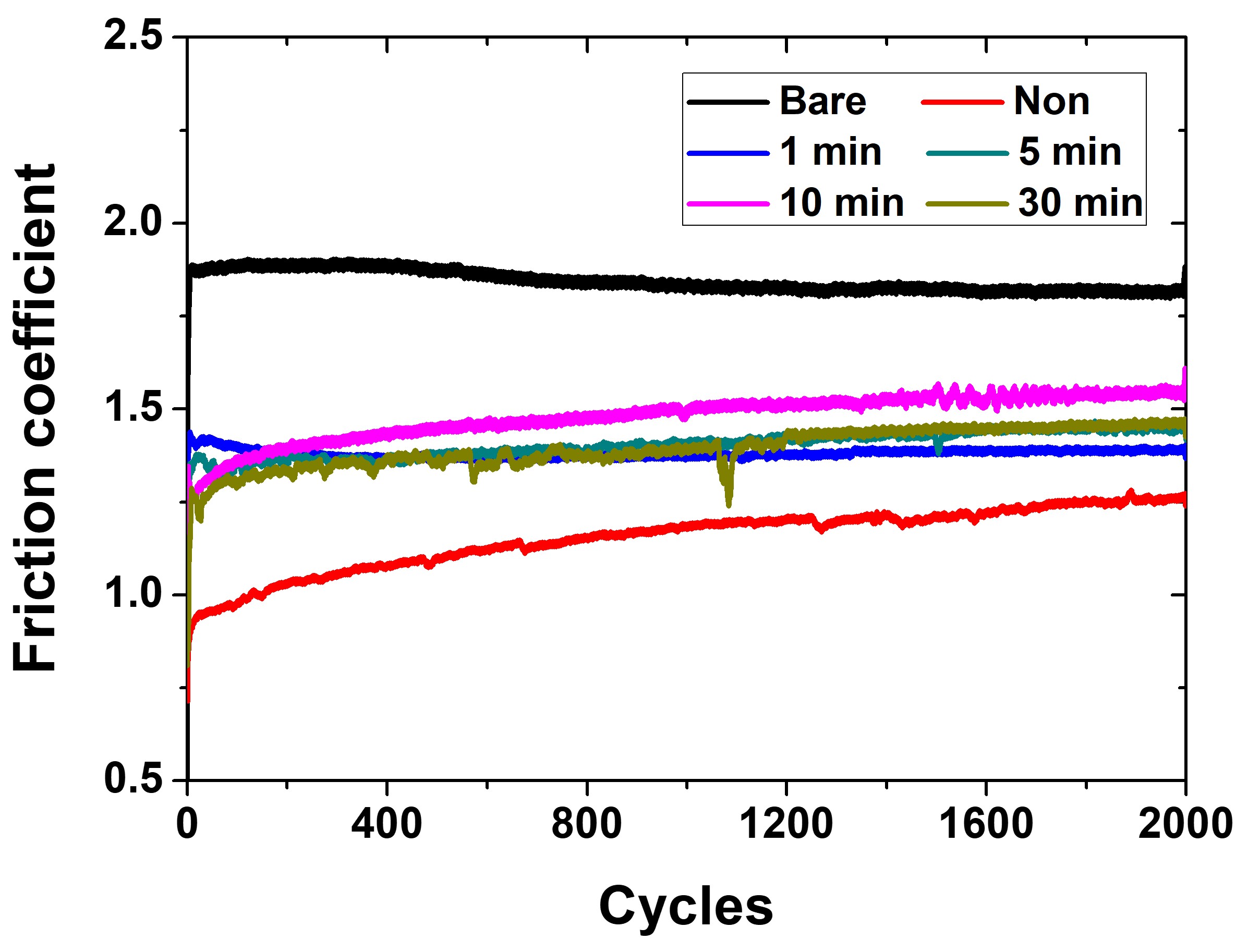
In this study, we explored the effects of etching on the surface properties and tribological performance of silicone rubber for hydrogen compressor applications. Ceramic particle-coated silicone rubber specimens were etched using a solution of nitric acid and ammonium fluoride for different durations. XRD and Raman analyses confirmed that the etching process did not alter the crystalline structure and molecular bonding of the PDMS matrix. EDS analysis revealed changes in surface composition after etching. The findings demonstrated that extended etching times resulted in the formation of complex surface structures, profoundly modifying the topography and wettability of silicone rubber. These surface alterations influenced the interfacial adhesion with ceramic coatings. However, prolonged etching reduced the optical transparency. Compared to bare PDMS, the ceramic-coated specimens showed enhanced wear resistance. Tribological investigations revealed an initial increase in the friction coefficient with increasing etching duration, followed by a slight decrease for the 30-minute etched specimen. Wear analysis indicated that longer etching times resulted in more severe wear tracks, implying increased surface damage and material loss.
Keywords
: Silicone rubber; Surface modification; Etching process; Friction and wear characteristics; Hydrogen compressor applications
 Thumbnail
 Thumbnail
 Thumbnail
 Thumbnail
 Thumbnail
 Thumbnail
 Thumbnail
 Thumbnail
 Thumbnail
 Thumbnail
 Thumbnail
 Thumbnail