Influence of additives use from natural sources on the mechanical performance of post-consumer HDPE composites reinforced with natural fibers
Abstract
This study investigated the efficiency of different natural-source additives as coupling agents in sustainable composites based on post-consumer high-density polyethylene (HDPEpc) reinforced with 30 wt.% curauá fiber (CF). The effects of citric acid (CA), pine rosin (PR), and pine lignin (PL) were evaluated in comparison to a conventional synthetic agent, maleic anhydride-grafted polyethylene (MAPE). Mechanical tests — tensile, flexural, and Izod impact — demonstrated that the addition of natural-source additives resulted in significant improvements in the mechanical properties compared to the composite without additives. The performance of the composite with the addition of PR was statistically similar to that of the composite compatibilized with MAPE. The results highlight the potential of PR, a natural resin, as a coupling agent, suggesting a viable, renewable, and more environmentally suitable alternative to synthetic coupling agents, thereby contributing to the development of more sustainable thermoplastic composites.
Keywords:
Mechanical performance; thermoplastic composite; curaua fiber; natural additives; sustainability
1. Introduction
Thermoplastic polymers reinforced with natural fibers are highlighted by their notable mechanical properties and environmentally sustainable characteristics1,2. These composites demonstrate the potential to replace conventional materials in various industrial applications, especially in sectors seeking to reduce their environmental impact3. Nevertheless, the lack of interfacial adhesion between the natural fiber and the polymeric matrix often limits these materials' structural and functional efficacy. This incompatibility can be attributed to intrinsic chemical differences. While natural fibers have hydrophilic functional groups, which confer polarity, olefinic polymers are apolar, making it difficult for the components to interact effectively4.
Each fiber-matrix system has a unique interface, whose interfacial interaction is decisive for the performance of the composite materials. To achieve satisfactory mechanical and thermal properties, it is essential to optimize this interaction. Traditionally, this improvement has been achieved by chemical treatments applied to the natural fibers or the polymeric matrix. Techniques such as mercerization, silanization, and acetylation effectively improve compatibility between components, thereby promoting better adhesion at the fiber-matrix interface4-6. However, using chemical compounds in these processes raises concerns about toxicity and adverse environmental impacts, challenging the sustainability of these methods.
An alternative approach to improving interfacial adhesion in composites is the addition of processing aids and coupling agents, such as maleic anhydride functionalized polyolefins. Studies indicate that the chemical modification of the polymeric matrix using maleic anhydride promotes a more efficient interaction between the components of the fiber-matrix system, resulting in superior mechanical properties7-10. Despite the advances in interfacial adhesion, synthetic coupling agents have limitations, including the possibility of acting as pro-degradants, which can affect the long-term stability of the polymeric matrix11.
Considering these challenges, sustainable alternatives that minimize environmental waste generation are being explored to enhance the properties of polymeric composites reinforced with natural fibers. For example, surface cleaning of fibers with distilled water can reduce impurities and increase surface roughness, which favors adhesion at the fiber-matrix interface12-14. In addition, using organic acids and natural oils as additives emerges as an environmentally friendly approach. Studies indicate that these natural source additives can act as coupling agents and flow aids, optimizing the fiber-matrix interaction and improving the processability of the composites15-21. Incorporating these additives can optimize the interfacial interaction, promoting more homogeneous distribution and more effective adhesion, resulting in significant improvements in the materials' mechanical, thermal, and rheological properties.
Thus, investigating mechanical properties becomes essential to understanding the effect of incorporating different natural source additives in fiber-reinforced thermoplastic composites. Properties such as tensile and flexural strength are related to stress transfer efficiency at the fiber-matrix interface22. In fiber-reinforced composites, this interface plays a critical role, as the loads applied to the matrix are transferred to the fibers, which are responsible for carrying the mechanical stresses22-24.
In this context, the present study investigates the influence of different additives from natural sources on the mechanical properties of post-consumer high-density polyethylene (HDPEpc) thermoplastic composites reinforced with curaua fibers (CF). The analysis of the effect of these additives on the material's performance contributes to advancing the application of sustainable solutions in composite production.
2. Materials and Methods
2.1. Materials
For the formulation of composite materials, post-consumer high-density polyethylene (HDPEpc), derived from blow-molded containers/packaging, was used as the polymer matrix, and curaua fiber (CF) was used as the reinforcing material.
The coupling agents used were maleic anhydride-grafted polyethylene (MAPE), provided by Cristal Master; citric acid (CA), obtained from Êxodo Científica; colophony resin, known as pine rosin (PR), derived through the distillation of gum extracted from coniferous trees of the Pinaceae family; and pine lignin (PL), provided by ARTECOLA Indústrias Químicas Ltda, extracted through the kraft process used in the paper and pulp industry.
2.1.1. Processing of curaua fibers
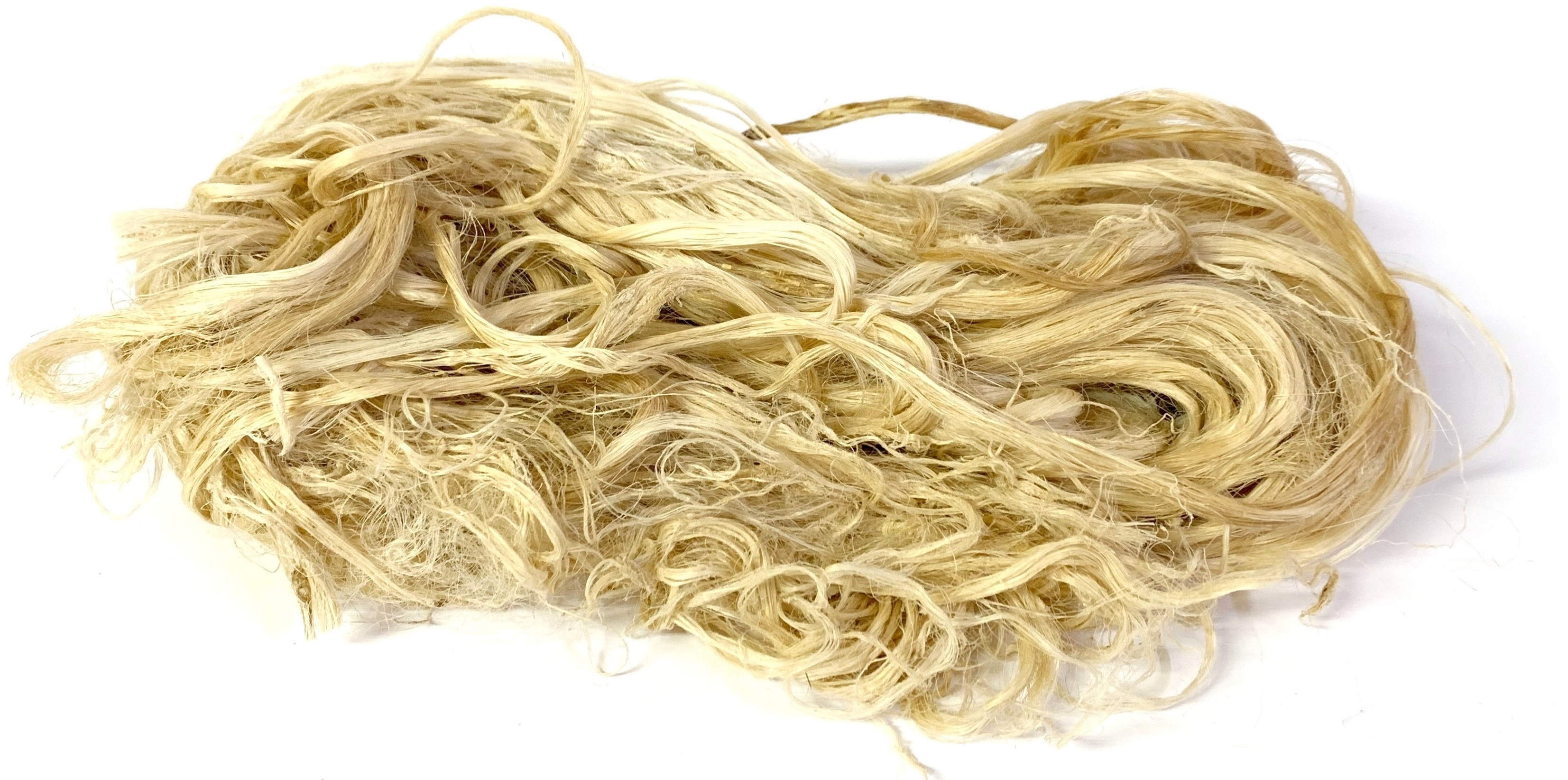
The fibers used in this study were obtained directly from a farmer in the Pará region and underwent only basic mucilage removal, followed by coarse cleaning. Figure 1 illustrates the visual appearance of the fibers in their natural state, as received, before any further treatment.

A simple superficial cleaning was performed to ensure a more natural and sustainable use of the fibers as reinforcement in polymeric composites. The natural curaua fibers (Figure 2a) were initially separated and washed with distilled water at room temperature to remove surface impurities. After washing, the fibers were air-dried for 12 hours, completing the first stage of cleaning (Figure 2b). In the sequence, they were manually combed with a stainless-steel comb to enhance their purity (Figure 2c). After these surface treatments, the fibers were cut into ~1 cm segments. Finally, they were dried in a conventional laboratory oven at 60 °C for 24 hours, making them suitable for incorporation into composites.

2.1.2. Recycling of post-consumer high-density polyethylene (HDPEpc)
The HDPE-polymeric matrix used in this study was sourced from post-consumer pots and containers, originating from compounding pharmacies and the packaging of dietary supplements and vitamins (Figure 3a). The recycling process employed was mechanical and carried out on a small scale. Initially, the containers were washed with running water to remove surface impurities such as product residues, dust, or labels. Subsequently, the material was air-dried at room temperature for 24 hours to ensure the elimination of residual moisture. After drying, the containers were manually cut into small fragments (flakes) with an approximate area of 1 cm2 (Figure 3b).

2.1.3. Sample formulation and processing
Based on previous studies25, the formulations were developed using 67 wt.% HDPEpc, 30 wt.% CF, and 3 wt.% additive, aiming to produce test specimens to evaluate the influence of different natural source additives as coupling agents in composites manufactured by injection molding. The formulations, whose mass percentages are detailed in Table 1, include the following samples:
-
HDPEpc/CF without additives (HDPEpc/CF).
-
HDPEpc/CF with MAPE (HDPEpc/CF/MAPE).
-
HDPEpc/CF with citric acid (HDPEpc/CF/CA).
-
HDPEpc/CF with pine rosin (HDPEpc/CF/PR).
-
HDPEpc/CF with pine lignin (HDPEpc/CF/PL).
The materials were initially mixed and homogenized in an internal mixing chamber (Thermo Scientific HAAKE™ PolyLab OS), configured at 60 rpm, 190 °C, and 10 minutes mixing time to produce the composites. After homogenization, the material was subjected to particle size reduction using a knife mill (SOLAB SL-30), followed by drying in a conventional oven at 60 °C for 1 hour. The crushed material was then injection molded using a piston-driven mini-injection molding machine (Thermo Scientific HAAKE™ Mini-Jet II). The equipment was configured with a barrel temperature of 210 °C and a mold temperature of 40 °C, applying an injection pressure of 600 bar and a holding pressure of 400 bar, both maintained for 10 seconds. The test specimens obtained by injection molding were prepared according to the dimensions specified by the American Society for Testing and Materials (ASTM) standards, based on the type of mechanical test to be performed: ASTM D63826 for tensile testing, ASTM D79027 for flexural testing, and ASTM D481228 for unnotched Izod impact testing. This ensured methodological compliance for the subsequent analyses of the mechanical properties of the composites.
2.2. Characterization methods
2.2.1. Tensile test
Tensile strength and tensile modulus were determined by the ASTM D638 standard26, using the Instron® EMIC 23-5D universal testing machine, equipped with a 5 kN load cell and a 35 mm gripping distance. Seven V-type specimens with a total length of 74 mm were evaluated for each sample at a constant speed of 2 mm/min.
2.2.2. Flexural test
Strength and flexural modulus were determined by ASTM D79027 standard, using a flexure test performed on the Instron® EMIC 23-5D universal testing machine, equipped with a 5 kN load cell and a 45 mm distance between the lower supports (14:1). For each sample, seven specimens with dimensions of 62.5×12.5×3.2 mm were evaluated at a constant rate of 2 mm/min until a strain of 5% was achieved.
2.2.3. Izod impact test
The impact resistance was determined by the ASTM D481228 standard, using the CEAST IMPACTOR II model 7611.000, equipped with a 2.75 J hammer. Seven unnotched specimens with dimensions of 62.5×12.5×3.2 mm were evaluated for each sample.
2.2.4. Scanning Electron Microscopy (SEM)
Morphological characterization was performed using Scanning Electron Microscopy (SEM) to observe the fracture surface appearance and the influence of additives acting as coupling agents on the fiber-matrix adhesion of polymeric composites reinforced with natural fibers. The analyses were performed on the test specimens after the tensile test, which were selected to present mechanical properties close to the average. These samples were manually cut, mounted on stubs with carbon tape, and sputter-coated with gold. The analytical conditions for obtaining backscattered electron (BSE) images were 10 kV acceleration and 2500x magnification, using the Jeol© JSM-6510LV electron microscope.
2.2.5. Statistical analysis
The statistical analysis of the variance (ANOVA) of the obtained results was conducted using the software Origin. A one-way ANOVA and a Tukey's test were used to check for statistical differences among groups (p ≤ 0.05).
3. Results and Discussion
3.1. Mechanical performance of composites
The mechanical properties of the polymeric matrix and the composites containing different coupling agents were evaluated by tensile, flexural, and Izod impact tests. The stress-strain curves (Figures 4 and 5) illustrate the relationship between the applied force and the deformations produced during the tensile and flexure tests. The polymeric matrix (HDPEpc) exhibited a typical ductile behavior, characterized by a greater capacity for plastic deformation before failure. On the other hand, the composites showed a profile characteristic of rigid materials (evidenced by the increased slope, indicating the biggest modulus of elasticity) and brittle failure29.


From the stress-strain and flexural-strain curves of the samples, as presented in Figures 4 and 5, the values for the tensile modulus (Et), maximum tensile strength (σmáx.), tensile strength at fracture (σt), elongation/strain (ε), flexural modulus (Ef), and flexural strength at 5% strain (σf) were determined. The results are specified in Table 2.
Mechanical properties obtained from tensile and flexural tests for the HDPEpc and composites samples with and without adding additives.
Initially, the performance of the HDPEpc polymeric matrix was analyzed to establish a reference for comparison with fiber-reinforced composites modified with synthetic and natural additives. The results indicated that the pure polymeric matrix exhibits good stiffness and strength under applied loads, typical of high-density polyethylene (HDPE) properties29. Tensile strength at break and deformation confirmed the high ductility of the material, demonstrating its capacity to withstand significant deformation before failure. The HDPEpc demonstrated a balanced combination of strength and flexibility in the flexural test, reflecting good mechanical performance for a post-consumer polymer. These results are consistent with the literature, highlighting the capacity of recycled HDPE to retain significant mechanical properties, particularly toughness, even after reprocessing30.
The incorporation of CF into the HDPEpc matrix resulted in an increase in stiffness, albeit with significant differences when compared to composites with additives. The composite without additives (HDPEpc/CF) exhibited a higher modulus and maximum tensile strength than the pure matrix (HDPEpc), but still showed limitations compared to the other composites. In general, the absence of a coupling agent results in insufficient adhesion between the matrix and the fibers, which may have compromised load transfer and, consequently, the tensile strength at break. This is because the capacity to transfer stress from the matrix to the fibers depends primarily on effective fiber-matrix adhesion4.
In contrast, the presence of additives such as MAPE, CA, PR, and PL significantly improved the mechanical performance of the composites. This suggests that an enhanced fiber-matrix interaction contributes to improving properties such as tensile strength, flexural strength, and elastic modulus, highlighting the effectiveness of these additives in system compatibilization.
Due to its bifunctional chemical structure, MAPE was used as the reference coupling agent in this study. The apolar chain of MAPE exhibits compatibility with the polymeric matrix, promoting good physical interaction. At the same time, the maleic anhydride functional group chemically reacts with hydroxyl (–OH) groups present on the surface of natural fibers7-10,31-35. As shown in Figure 6, this interaction occurs through the formation of hydrogen bonds and possible covalent bonds.

As expected, the HDPEpc/CF/MAPE sample exhibited excellent results, with a tensile strength of 42.84 MPa, flexural strength of 39.75 MPa, and high elastic modulus values of 1430.19 MPa in tensile and 2047.83 MPa in flexural tests. These values confirm the effectiveness of maleic anhydride-grafted polyolefin as a coupling agent for fiber-reinforced thermoplastic composites, leading to improvements in the mechanical properties of the composites31-35.
Similarly, the HDPEpc/CF/PR sample, using pine rosin as the coupling agent, also showed excellent mechanical performance, with a tensile strength of 41.88 MPa, flexural strength of 41.83 MPa, and high elastic modulus values of 1528.80 MPa in tensile and 1977.44 MPa in flexural tests. Although statistically similar to the HDPEpc/CF/MAPE sample, these values stood out due to the higher tensile modulus and flexural strength. This suggests that pine rosin can be an effective coupling agent, promoting improved mechanical performance. Similar effects were reported by Inga-Lafebre et al.36 in their study on post-consumer polypropylene reinforced with agave fibers, using pine rosin resins as coupling agents. The authors observed improvements in the mechanical properties, attributed to the chemical interaction detected by FTIR, confirming its role as a coupling agent.
On the other hand, composites with the addition of citric acid (HDPEpc/CF/CA) and pine lignin (HDPEpc/CF/PL) also showed improvements in mechanical properties, although with lower performance compared to the HDPEpc/CF/MAPE and HDPEpc/CF/PR samples. Concerning elastic modulus, the HDPEpc/CF/CA sample exhibited statistically similar values to those of HDPEpc/CF/MAPE and HDPEpc/CF/PR samples, indicating comparable stiffness between the materials. However, the tensile and flexural properties of the HDPEpc/CF/CA sample were lower, but similar to those of the HDPEpc/CF/PL sample.
The HDPEpc/CF/PL sample, in turn, exhibited the highest elastic modulus among all composites, with values of 1731.51 MPa in tensile and 2136.99 MPa in flexural tests. However, as shown in Figure 5, a decrease in flexural strength was observed after 4.25% strain, which supports the tensile test results where the strength of the HDPEpc/CF/PL sample was reduced despite the increase in modulus. This reduction in tensile and flexural strength can be attributed to insufficient interfacial adhesion, compromising the effective stress transfer from the matrix to the fibers4,22-24. In contrast, the elastic modulus is less sensitive to interfacial adhesion than strength, as reported in literature37. Incorporating cellulose-based fillers restricts the movement of the polymeric chains, increasing the material's stiffness37,38. This behavior explains the results observed for the HDPEpc/CF/PL sample, where a reduction in tensile and flexural strength accompanied the increase in modulus.
The tensile and flexural results can be correlated with the Izod impact test, which evaluates the impact resistance and the material's capacity to absorb energy during fracture. Figure 7 shows the average impact resistance values of the analyzed samples. For the pure HDPEpc-polymeric matrix, an average impact resistance of 85.45 kJ/m2 was obtained, once again highlighting the excellent toughness of HDPE, even after reprocessing30.

A significant reduction in impact resistance was observed for the composites compared to the pure matrix. This behavior can be attributed to the reduced ductility caused by fiber incorporation, as reported in other studies39,40. Although it increases the material's rigidity, the reinforcement reduces its capacity to dissipate energy under impact conditions, resulting in a more brittle behavior. Additionally, when comparing the composites with and without the addition of additives, the HDPEpc/CF/MAPE, HDPEpc/CF, and HDPEpc/CF/PR samples exhibited statistically similar impact resistance values of 13.72 kJ/m2, 13.44 kJ/m2, and 13.38 kJ/m2, respectively. On the other hand, the HDPEpc/CF/CA and HDPEpc/CF/PL samples exhibited the lowest impact resistance values, with 12.32 kJ/m2 and 11.98 kJ/m2, respectively.
This reduction in impact resistance of HDPEpc/CF/CA and HDPEpc/CF/PL samples may be related to the increased material stiffness. Stiffer materials tend to absorb less energy during impact, favoring a faster crack propagation and reducing the material’s capacity to dissipate applied energy39. These results can also be correlated with the tensile and flexural tests, where in the HDPEpc/CF/CA and HDPEpc/CF/PL samples, the elastic modulus increases while tensile and flexural strengths decrease. This suggests that the stiffer the material, the more brittle its fracture behavior becomes.
3.2. Microstructural analysis of post-fracture composite
Figure 8 shows Scanning Electron Microscopy (SEM) micrographs of the fractured surface of the test specimens after the tensile testing at 2,500x magnification. The images highlight the fiber dispersion within the polymeric matrix and the influence of additives on the fiber-matrix interface, providing a detailed analysis of interfacial adhesion.

Micrograph of the fracture surface of: (a) HDPEpc/CF; (b) HDPEpc/CF/MAPE; (c) HDPEpc/CF/CA; (d) HDPEpc/CF/PR; and (e) HDPEpc/CF/PL.
The fracture surface micrograph of the sample without additives, HDPEpc/CF, shown in Figure 8a, reveals an uneven morphology with voids around the fibers, indicating poor interfacial adhesion. This characteristic highlights the poor fiber-matrix wettability, resulting from the lack of interfacial adhesion. Similar behaviors are observed in the micrographs of the HDPEpc/CF/CA and HDPEpc/CF/PL samples, shown in Figures 8c and 8e, respectively, confirming a less efficient interface in these systems.
On the other hand, the micrographs of the HDPEpc/CF/MAPE and HDPEpc/CF/PR samples, shown in Figures 8b and 8d, respectively, show fibers well-bonded to the polymeric matrix, indicating a more efficient interfacial interaction. This behavior is reflected in better stress transfer between the phases, contributing to the observed improvements in the mechanical properties. The compatibilization promoted by MAPE significantly reduced void formation, optimized the fiber-matrix interface, and maximized mechanical performance, as shown in other studies8,31,33-35. Similarly, PR, a naturally derived resin, was shown to be an effective alternative as a coupling agent, promoting good interfacial adhesion and mechanical performance comparable to the HDPEpc/CF/MAPE sample.
The HDPEpc/CF/CA and HDPEpc/CF/PL samples, although showing improvements over the system without additives (HDPEpc/CF), exhibited lower performance compared to the HDPEpc/CF/MAPE and HDPEpc/CF/PR samples. Figures 8c and 8e highlight the presence of voids, which are structural defects that can affect the efficiency of interfacial adhesion in the composite. In addition to hindering stress transfer between the matrix and fibers, these voids act as stress concentration points, facilitating the initiation and propagation of cracks. This explains the lower impact resistance observed in the HDPEpc/CF/CA and HDPEpc/CF/PL samples.
Nevertheless, the HDPEpc/CF/PL sample exhibited the highest modulus of elasticity, indicating that, although the interfacial adhesion is weak, the stiffness of the matrix was increased by the presence of cellulose-based fillers. These results corroborate studies that suggest the modulus of elasticity is less sensitive to the quality of the fiber-matrix interface compared to tensile and flexural strength, which are strongly influenced by interfacial adhesion37.
4. Conclusions
This study demonstrated that natural-source additives such as citric acid (CA), pine rosin (PR), and pine lignin (PL) exhibit high potential as coupling agents in post-consumer high-density polyethylene (HDPEpc) composites reinforced with curauá fiber (CF).
The results indicated significant improvements in mechanical properties, particularly in elastic modulus, tensile strength, and flexural strength, compared to the composite without additives. In particular, PR, a natural resin, showed statistically similar performance to the synthetic coupling agent MAPE, highlighting its effectiveness as a natural coupling agent.
Microstructural analyses corroborated the mechanical data, revealing a more cohesive and void-free fiber–matrix interface in the composites with the addition of MAPE and PR, which facilitated more efficient stress transfer.
In addition to confirming the relevance of coupling agents in optimizing mechanical properties, the findings of this study underscore that natural-source additives — especially PR — are promising and environmentally viable alternatives to synthetic coupling agents in thermoplastic composites, as they combine technical performance, waste valorization, and environmental responsibility.
5. Acknowledgments
The authors would like to thank the Laboratory of Polymer Materials (LaPol) and the Sustainability Core (NS) of the Federal University of Rio Grande do Sul (UFRGS), CNPq, CAPES, CAPES PROEX, and ARTECOLA Indústrias Químicas Ltda for their support in the development of this research.
-
Data Availability
All data supporting the conclusions of this study are included in the article. The raw datasets generated and/or analyzed during the current study are available from the corresponding author on reasonable request.
6. References
-
1 Kumar R, Ul Haq MI, Raina A, Anand A. Industrial applications of natural fibre-reinforced polymer composites: challenges and opportunities. Int J Sustain Eng. 2019;12(3):212-20. http://doi.org/10.1080/19397038.2018.1538267
» http://doi.org/10.1080/19397038.2018.1538267 -
2 Martinez Lopez Y, Paes JB, Donatian G, Gonçalves FG, Méndez FC, Nantet ACT. Production of wood-plastic composites using cedrela odorata sawdust waste and recycled thermoplastics mixture from post-consumer products: a sustainable approach for cleaner production in Cuba. J Clean Prod. 2020;244:118723. http://doi.org/10.1016/j.jclepro.2019.118723
» http://doi.org/10.1016/j.jclepro.2019.118723 -
3 Maciel NOR, Ferreira JB, Vieira JS, Ribeiro CGD, Lopes FPD, Margem FM, et al. Comparative tensile strength analysis between epoxy composites reinforced with curaua fiber and glass fiber. J Mater Res Technol. 2018;7(4):561-5. http://doi.org/10.1016/j.jmrt.2018.03.009
» http://doi.org/10.1016/j.jmrt.2018.03.009 -
4 Albinante SR, Pacheco EBAV, Visconte LLY. Revisão dos tratamentos químicos da fibra natural para mistura com poliolefinas. Quim Nova. 2013;36(1):114-22. http://doi.org/10.1590/S0100-40422013000100021
» http://doi.org/10.1590/S0100-40422013000100021 -
5 Bodur MS, Bakkal M, Sonmez HE. The effects of different chemical treatment methods on the mechanical and thermal properties of textile fiber reinforced polymer composites. J Compos Mater. 2016;50(27):3817-30. http://doi.org/10.1177/0021998315626256
» http://doi.org/10.1177/0021998315626256 -
6 Tran LQN, Yuan XW, Bhattacharyya D, Fuentes C, Van Vuure AW, Verpoest I. Fiber-matrix interfacial adhesion in natural fiber composites. Int J Mod Phys B. 2015;29(10-11):1540018. http://doi.org/10.1142/S0217979215400184
» http://doi.org/10.1142/S0217979215400184 -
7 Csikós Á, Faludi G, Domján A, Renner K, Móczó J, Pukánszky B. Modification of interfacial adhesion with a functionalized polymer in PLA/wood composites. Eur Polym J. 2015;68:592-600. http://doi.org/10.1016/j.eurpolymj.2015.03.032
» http://doi.org/10.1016/j.eurpolymj.2015.03.032 -
8 Wang K, Addiego F, Laachachi A, Kaouache B, Bahlouli N, Toniazzo V, et al. Dynamic behavior and flame retardancy of HDPE/hemp short fiber composites: effect of coupling agent and fiber loading. Compos Struct. 2014;113:74-82. http://doi.org/10.1016/j.compstruct.2014.03.009
» http://doi.org/10.1016/j.compstruct.2014.03.009 -
9 Essabir H, Bensalah MO, Rodrigue D, Bouhfid R, Qaiss AK. Biocomposites based on Argan nut shell and a polymer matrix: effect of filler content and coupling agent. Carbohydr Polym. 2016;143:70-83. http://doi.org/10.1016/j.carbpol.2016.02.002
» http://doi.org/10.1016/j.carbpol.2016.02.002 -
10 Catto AL, Stefani BV, Santana RMC, et al. Influence of coupling agent in compatibility of post-consumer HDPE in thermoplastic composites reinforced with eucalyptus fiber. Mater Res. 2014;17(1, Suppl 1):203-9. http://doi.org/10.1590/S1516-14392014005000036
» http://doi.org/10.1590/S1516-14392014005000036 - 11 Araújo JR, Mano B, Spinacé MAS, De Paoli MA. Degradação e estabilização de compósitos de polietileno e polipropileno reforçados com fibras de curauá. In: 10º Congresso Brasileiro de Polímeros (CBPol); 2009; Foz do Iguaçu, PR, Brasil. Anais. São Carlos: Associação Brasileira de Polímeros; 2009.
-
12 Teixeira FP, Silva FA. On the use of natural curauá reinforced cement-based composites for structural applications. Cement Concr Compos. 2020;114:103775. http://doi.org/10.1016/j.cemconcomp.2020.103775
» http://doi.org/10.1016/j.cemconcomp.2020.103775 -
13 Kalia S, Thakur K, Celli A, Kiechel MA, Schauer CL. Surface modification of plant fibers using environment friendly methods for their application in polymer composites, textile industry and antimicrobial activities: a review. J Environ Chem Eng. 2013;1(3):97-112. http://doi.org/10.1016/j.jece.2013.04.009
» http://doi.org/10.1016/j.jece.2013.04.009 -
14 Moura A, Bolba C, Demori R, Lima LPFC, Santana RMC. Effect of rice husk treatment with hot water on mechanical performance in poly(hydroxybutyrate)/rice husk biocomposite. J Polym Environ. 2018;26(6):2632-9. http://doi.org/10.1007/s10924-017-1156-5
» http://doi.org/10.1007/s10924-017-1156-5 -
15 Poletto M, Zattera AJ, Santana RMC. Effect of natural oils on the thermal stability and degradation kinetics of recycled polypropylene wood flour composites. Polym Compos. 2014;35(10):1935-42. http://doi.org/10.1002/pc.22852
» http://doi.org/10.1002/pc.22852 -
16 Martins AB, Santana RMC. Effect of carboxylic acids as compatibilizer agent on mechanical properties of thermoplastic starch and polypropylene blends. Carbohydr Polym. 2016;135:79-85. http://doi.org/10.1016/j.carbpol.2015.08.074
» http://doi.org/10.1016/j.carbpol.2015.08.074 -
17 Tomacheski D, Pittol M, Ribeiro VF, Santana RMC. Organic additives as antimicrobial agents in thermoplastics compounds. Proc MRS. 2016;1817(54):imrc2015abs021. http://doi.org/10.1557/opl.2016.54
» http://doi.org/10.1557/opl.2016.54 -
18 Castro DO, Passador F, Ruvolo-Filho A, Frollini E. Use of castor and canola oils in “biopolyethylene” curauá fiber composites. Compos, Part A Appl Sci Manuf. 2017;95:22-30. http://doi.org/10.1016/j.compositesa.2016.12.024
» http://doi.org/10.1016/j.compositesa.2016.12.024 -
19 Martins AB, Cattelan AK, Santana RMC. How the compatibility between polyethylene and thermoplastic starch can be improved by adding organic acids? Polym Bull. 2018;75(5):2197-212. http://doi.org/10.1007/s00289-017-2147-3
» http://doi.org/10.1007/s00289-017-2147-3 -
20 Lima LPFC, Santana RMC, Chamorro Rodríguez CD. Influence of coupling agent in mechanical, physical and thermal properties of polypropylene/bamboo fiber composites: under natural outdoor aging. Polymers. 2020;12(4):929. http://doi.org/10.3390/polym12040929
» http://doi.org/10.3390/polym12040929 -
21 Poletto M. Natural oils as coupling agents in recycled polypropylene wood flour composites: mechanical, thermal and morphological properties. Polym Polymer Compos. 2020;28(7):443-50. http://doi.org/10.1177/0967391119886941
» http://doi.org/10.1177/0967391119886941 -
22 Azeez TO, Onukwuli DO, Nwabanne JT, Banigo AT. Cissus populnea fiber - unsaturated polyester composites: mechanical properties and interfacial adhesion. J Nat Fibers. 2020;17(9):1281-94. http://doi.org/10.1080/15440478.2018.1558159
» http://doi.org/10.1080/15440478.2018.1558159 -
23 Lee CH, Khalina A, Lee SH. Importance of interfacial adhesion condition on characterization of plant-fiber-reinforced polymer composites: a review. Polymers. 2021;13(3):438. http://doi.org/10.3390/polym13030438
» http://doi.org/10.3390/polym13030438 -
24 Budiman BA, Triawan F, Adziman F, Nurprasetio IP. Modeling of stress transfer behavior in fiber-matrix composite under axial and transverse loadings. Compos Interfaces. 2016;24(7):677-90. http://doi.org/10.1080/09276440.2017.1262666
» http://doi.org/10.1080/09276440.2017.1262666 - 25 Kieffer VZ, Santana RMC. Efeito do teor de fibra de curauá no desempenho mecânico de compósitos de PEAD pós-consumo. In: 24º Congresso Brasileiro de Engenharia e Ciência dos Materiais (CBECiMat); 2022; Águas de Lindóia, SP, Brasil. Anais. São Paulo: Metallum Congressos Técnicos e Científicos; 2022.
- 26 ASTM: American Society for Testing and Materials. ASTM D638: standard test method for tensile properties of plastics. West Conshohocken: ASTM; 2022.
- 27 ASTM: American Society for Testing and Materials. ASTM D790: standard test methods for flexural properties of unreinforced and reinforced plastics and electrical insulating materials. West Conshohocken: ASTM; 2017.
- 28 ASTM: American Society for Testing and Materials. ASTM D4812: standard test method for unnotched cantilever beam impact resistance of plastics. West Conshohocken: ASTM; 2022.
- 29 Callister WD Jr, Rethwisch DG. Ciência e engenharia de materiais: uma introdução. 9. ed. Rio de Janeiro: LTC; 2016.
-
30 Oblak P, Gonzalez-Gutierrez J, Zupancic B, Aulova A, Emri I. Processability and mechanical properties of extensively recycled high-density polyethylene. Polym Degrad Stabil. 2015;114:133-45. http://doi.org/10.1016/j.polymdegradstab.2015.01.012
» http://doi.org/10.1016/j.polymdegradstab.2015.01.012 -
31 Roumeli E, Terzopoulou Z, Pavlidou E, Chrissafis K, Papadopoulou E, Athanasiadou E, et al. Effect of maleic anhydride on the mechanical and thermal properties of hemp/high-density polyethylene green composites. J Therm Anal Calorim. 2015;121(1):93-105. http://doi.org/10.1007/s10973-015-4596-y
» http://doi.org/10.1007/s10973-015-4596-y -
32 Watanabe R, Sugahara A, Hagihara H, Mizukado J, Shinzawa H. Insight into interfacial compatibilization of glass-fiber-reinforced polypropylene (PP) using maleic-anhydride modified PP employing infrared spectroscopic imaging. Compos Sci Technol. 2020;199:108379. http://doi.org/10.1016/j.compscitech.2020.108379
» http://doi.org/10.1016/j.compscitech.2020.108379 -
33 Dolza C, Fages E, Gonga E, Gomez-Caturla J, Balart R, Quiles-Carrillo L. Development and characterization of environmentally friendly wood plastic composites from biobased polyethylene and short natural fibers processed by injection moulding. Polymers. 2021;13(11):1692. http://doi.org/10.3390/polym13111692
» http://doi.org/10.3390/polym13111692 -
34 Vallejos ME, Aguado RJ, Morcillo-Martín R, Méndez JA, Vilaseca F, Tarrés Q, et al. Behavior of the flexural strength of hemp/polypropylene composites: evaluation of the intrinsic flexural strength of untreated hemp strands. Polymers. 2023;15(2):371. http://doi.org/10.3390/polym15020371
» http://doi.org/10.3390/polym15020371 -
35 Ferreira ESB, Silva FS, Luna CBB, Costa ARM, Sousa FM, Carvalho LH, et al. Toward producing biopolyethylene-babassu fiber biocomposites with improved mechanical and thermomechanical properties. Polymers. 2024;16(3):419. http://doi.org/10.3390/polym16030419
» http://doi.org/10.3390/polym16030419 -
36 Inga-Lafebre J, Pulido-González H, González-Núñez R, Hernández-Hernández M, Rabelero-Velasco M, Aranda-García F, et al. The multirole of modified natural gums for multicomponent polymers: as coupling agents for polymers reinforced with cellulosic fibers or compatibilizers for biodegradable polymer blends. Quim Nova. 2019;42(3):296-304. http://doi.org/10.21577/0100-4042.20170333
» http://doi.org/10.21577/0100-4042.20170333 -
37 Valente M, Sarasini F, Marra F, Tirillo J, Pulci G. Hybrid recycled glass fiber/wood flour thermoplastic composites: manufacturing and mechanical characterization. Compos, Part A Appl Sci Manuf. 2011;42(6):649-57. http://doi.org/10.1016/j.compositesa.2011.02.004
» http://doi.org/10.1016/j.compositesa.2011.02.004 - 38 Vieira GS, Ferreira ACB, Bonse BC. Avaliação das propriedades de compósitos de polipropileno copolímero e fibra de malva. In: 22º Congresso Brasileiro de Engenharia e Ciência dos Materiais (CBECiMat); 2016; Natal, RN, Brasil. Anais. São Paulo: Associação Brasileira de Metalurgia, Materiais e Mineração; 2016.
-
39 Pereira GB, Pereira GC, Benini KCCC, Bandeira CF, Montoro SR. Caracterização de compósitos de poliestireno de alto impacto (HIPS) reforçados com fibras de coco verde para eventual aplicação na indústria automobilística. CadUniFOA. 2017;12(34):15-22. http://doi.org/10.47385/cadunifoa.v12.n34.417
» http://doi.org/10.47385/cadunifoa.v12.n34.417 -
40 Silva LP, Munhoz AH Jr, Peres RM, Machado MLC. Characterization and evaluation of employment in rigid packaging of polypropylene composites with bamboo fiber. Mater Res. 2022;25:e20220316. http://doi.org/10.1590/1980-5373-mr-2022-0316
» http://doi.org/10.1590/1980-5373-mr-2022-0316
Edited by
-
Associate Editor:
Leonardo Gondim de Andrade e Silva.
-
Editor-in-Chief:
Luiz Antonio Pessan.
All data supporting the conclusions of this study are included in the article. The raw datasets generated and/or analyzed during the current study are available from the corresponding author on reasonable request.