Additive Manufacturing High-Entropy Alloy Reinforced Aluminium Matrix Composite Properties Analysis
Abstract
In this study, the feasibility of using Selective Laser Melting (SLM) fabricated high entropy alloy reinforced aluminium matrix composites (AMCs) as a new class of advanced materials for high-performance applications will be investigated. In addition to the comprehensive review and case study analysis, a predictive framework that elucidates the relationship between SLM process parameters, microstructural evolution, mechanical property improvement and applicability is proposed. Moreover, a published data meta-analysis of individual cluster cylinder tests is also obtained to quantitatively compare HEA-reinforced AMCs versus ceramic carbon nanotube-reinforced AMCs. In this paper, based on a new categorisation of fabrication issues into material intrinsic, process-induced, and application-scale issues, we offer a three-step research roadmap from laboratory optimisation to industrial validation. Results show HEA reinforced AMCs can demonstrate better tensile strength, hardness, fatigue and thermal stability. For one, there are challenges of porosity, oxidation, scalability, etc., and for two, opportunities in hybrid reinforcement strategies, process optimisation with AI, and sustainable manufacturing. Thus, this review gives both synthesis and new insights to develop SLM-integrated HEA-reinforced AMCs for future fabrication.
Keywords:
High-Entropy Alloy; Aluminium Matrix Composites; Selective Laser Melting; Mechanical Properties; Microstructural evolution and tensile strength
1. Introduction
The industrial market now requires advanced materials that demonstrate enhanced mechanical properties alongside improved thermal capabilities and better wear resistance. The aerospace and automotive industries and defence applications benefit significantly from Aluminium Matrix Composites (AMCs) because they combine the corrosion resistance of aluminium and lightweight benefits through reinforcement phase additions1. Traditional manufacturing approaches through casting and powder metallurgy encounter shortages when manufacturing AMCs that exhibit uniform reinforcement distribution alongside high-density and complex geometries. Additive manufacturing technology known as Selective Laser Melting (SLM) has been investigated as a solution to address persistent production difficulties.
SLM allows the construction of complex geometries from Computer-Aided Design models (CAD) layer by layer. This is because SLM parts are produced with refined microstructures and superior mechanical properties compared to conventionally manufactured counterparts, with rapid cooling rates greater than 106 K/s2. For AMCs, SLM provides accurate control over the distribution of reinforced particles and results in much lower levels of defects such as porosity and agglomeration. Moreover, in the fabrication of near-net-shaped particles, the substantial reduction in machining cost, coupled with the great flexibility provided by SLM, merits the placement of SLM in a horizontal technology portfolio. It is customisable for specific applications3, but most importantly, it increases efficiency in material waste. These attributes can enhance the performance and applicability of AMCs and could meet the industrial demand for lightweight, high-performance materials using SLM.
It is shown that the development of AMCs is promising through the combination of High Entropy Alloys (HEAs) as reinforcement components. Multicomponent alloys with high entropy exist as high entropy alloys centring atomic distribution amongst five principal elements at near equiatomic proportions4. HEAs are a class of materials that feature exceptional thermal stability, combined with high strength and wear resistance properties, and their combination of exceptional properties is ideal for broadening their use in AMC applications5. Comparison of AMCs reinforced with ceramics, CNTs, and HEAs, distinguishing the distributions of the particles and the common uses (Figure 1). High entropy alloys are distinct from ceramic and carbon nanotube reinforcements in that such alloys show distribution in aluminium-based SLM parts that balance mechanical properties, high strength and tolerance to ductility and durability, according to6. It opens up new routes for manufacturers to develop advanced high-performance composite materials that meet demanding engineering requirements.

Optimising the results of HEA-reinforced AMCs through SLM technology demands solving existing obstacles. The high thermal conductivity and reflectivity of Aluminium interfere with complete melting during SLM processes, resulting in internal voids and remaining material stresses7. During processing, the high reactivity of aluminium makes it easily prone to oxidation, which affects both interlayer bonding and machine finish evaluation8. argue that the requirements for precise SLM parameter optimisation become essential to reduce defects while enhancing composite properties through the optimisation of scan speed and laser power, along with hatch spacing. Ongoing research must analyse both the durability of metal powder solidification applications and the environmental effects connected to their energy consumption.
To gain an insight into the potential of SLM-fabricated HEA-reinforced AMCs, a study of mechanical properties, microstructural attributes and process issues is carried out in this research. A two-prong approach of combined systematic literature review and case studies is adopted to study the influence of SLM parameters and HEA reinforcements on composite performance. The purpose and focus of the present research are to resolve the questions about the applicability of HEAs to enhance the mechanical properties, such as hardness, tensile strength, thermal stability, and microstructure refinement and to resolve the issues, such as scale, oxidation, and porosity reduction. Since HEAs share the same properties, this research uses them to illustrate how these reinforcements overcome limitations that have hindered the use of traditional reinforcement materials-such as ceramics and carbon nanotubes, providing additional reinforcing capabilities.
The findings of the current investigation are of particular use to those industries that depend on the delivery of lightweight high-performance materials. Therefore, this study can directly contribute to the understanding of SLM for HEA-reinforced AMCs by improving knowledge of SLM as an additive manufacturing tool for their application in aerospace, automotive, and defence sectors to develop the composite material. Most importantly, the study provides a road map for future innovation opportunities for hybrid reinforcement design, process scalability, and sustainable manufacturing. However, not only are these necessary as answers to key industrial problems, they also position SLM and HEA-reinforced AMCs at the core of a platform for next-generation engineering materials that will facilitate innovation and supply today's more burdensome engineering needs.
2. Literature Review
2.1. Introduction to aluminium matrix composites (AMCs)
Aluminium Matrix Composites (AMCs) can be considered as a class of advanced materials combining the lightness and resistance to corrosion of aluminium with higher strength, stiffness and resistance to wear provided by the reinforcing phase of the composite. However, these composites are designed to provide desired performance characteristics due to the growing demand for such materials in aerospace, automotive, defence, and other industries9. Reinforcements in AMCs are ceramic particles such as SiC, TiN, fibres and nanostructures of carbon nanotubes, having their advantages of mechanical and thermal properties.
Powder metallurgy methods (Figure 2), along with conventional manufacturing methods including casting, seem to confront certain problems such as porosity, non-uniform distribution of reinforcement, and restricted geometrical studies10. According to11, current issues such as creating intricate microstructures, production of complex geometry and near-net-shape have been overcome by the latest trend of additive manufacturing, namely Selective Laser Melting (SLM). AMCs have higher tensile strength, better hardness, and thermal characteristics and are hence indispensable when premium quality lightweight materials are useful. These synergistic features of properties have placed the AMCs at the centre stage for future developments of high-performance material engineering.

2.2. Selective laser melting (SLM) in additive manufacturing
Selective laser melting (SLM) is an innovative Additive Manufacturing (AM) process where metallic powders are melted through a high-power laser and bonded together. Figure SLM has opened a new agenda in material processing by offering opportunities to manufacture intricate shapes, lightweight structures and specific product shapes and sizes as much as desired from the raw material and with the least wastage12. When it comes to Aluminium Matrix Composites (AMCs) specifically, SLM holds primary importance over the traditional methods. The higher the rate of cooling works at more than 106 K/s it has, the finer-grained the microstructures and the better the mechanical properties, such as tension strength and wear resistance13. SLM reduces defects such as porosity and non-uniform distribution of reinforcement particles, including high-entropy alloy (HEA) or ceramics within the aluminium matrix.
The SLM of aluminium alloys is not completely without issues, such as high reflectivity of the metal, high thermal conductivity and the fact that it is highly susceptible to oxidation14. Figure 3 shows that control of laser power and the intensity at which the scan is done, the speed of scanning and the distance between the hatches should be done properly to allow high densification with acceptable mechanical strength15. SLM, as a progressive manufacturing style, has further opened up the direction of developing superior materials.

2.3. Reinforcement of aluminium alloys
Strengthening of aluminium alloys improves their mechanical, thermal and wear performance, and the drawbacks of using pure aluminium, including low strength and stiffness, are eliminated. Aluminium matrix composites reinforced with ceramic particles, Carbon Nanotubes (CNTs) or High-Entropy Alloys (HEAs) can be created for niche applications in the aerospace, automobile and defence sectors16. Ceramic particles, such as reinforcements such as SiC and TiN, efficiently increase the hardness, wear and heat resistance. Such particles serve a function of being the carrier of load, which in turn enhances properties such as tensile strength and fatigue properties of the matrix (Figure 4).

Carbon Nanotubes (CNTs) are acclaimed for their high strength and Young’s modulus, and these features make CNTs offer extraordinary tensile properties to aluminium composites17. However, there are some limitations for further application, such as CNT agglomeration and poor interfacial adhesion between CNTs and aluminium matrix18. High-Entropy Alloys (HEAs) are becoming popular as reinforcements due to high strength, ductility and thermal stability. They provide good grain refinement and interfacial bonding, and also improve the load transfer mechanism and long-life capability at high temperature19. These reinforcements, together with new manufacturing technologies (e.g. Selective Laser Melting Process or SLM), allowed aluminium alloys to improve their performance in response to the growing need for lightweight and high-performance materials.
2.4. Process optimisation for SLM of AMCs
Much of the research on laser selective melting (SLM) aluminium matrix composites (AMCs) for real-world components has taken off with finding the optimal process parameter set-up that will minimise defects whilst enhancing mechanical properties. Aluminium alloys have high thermal conductivity and reflectivity, prone to oxidation, which makes SLM difficult unless appropriate parameters are effectively controlled to achieve full densification and uniform distribution of the microstructure needed in finished products.
The key parameters, such as sufficient laser power, guarantee the full melting of the powder layer to be fused, and, on the other hand, excessive heat results in the formation of keyholes and thermal stresses. At these scan rates, porosity is reduced and microstructural control is achieved at the finest level possible20. Another key parameter, “Hatch Spacing and Layer Thickness”, controls heat distribution and interlayer bonding, which in turn affects the density, surface texture, and microstructure of the final part. It has been seen that the varying laser powers, the scanning patterns, and the build orientation have been made, which have grown the relative densities greater than 99% and enhanced tensile strength21. Other heat treatment (hot isostatic pressing) and optimisation of the microstructure for the removal of residual stresses. From the results obtained after systematic optimisation, the SLM has been approved as an effective method for producing aptamers with enhanced performance as AMCs for industrial exploitation.
2.5. Challenges in SLM processing
Processing of Aliminium Matrix Composites (AMCs) by SLM is at least partially unsuitable due to the material properties of Al and the nature of the lasers. One of the major challenges in this regard is thermally generated porosity due to low thermal conductivity in aluminium22. During the rapid printing process, the heat dissipation time of the SLM process is insufficient, which will cause incomplete melting and low particle density. Nonuniform flux distribution also acts as the cause for the generation of residual stress and cracks, which affect the mechanical performance of the final produced products23. Furthermore, the high reflectivity of aluminium attracts laser radiation back into the laser source, reducing its efficiency in the process, and oxidation of the base metal reduces the bonding between the layers, resulting in a rough surface finish of the final product.
The other serious issue is an inhomogeneous atomic microstructure. For creating particles having comparative sizes with each other and also distinctly with the yarn size and the availability of nanoparticle staining, it is challenging to achieve particle dispersion in nanoparticle processing as a result of the average tendency to particle agglomeration, regardless of whether those particles are ceramics and HEAs24. The non-homogeneous distribution leads to the degradation of the composite mechanical properties. Furthermore, SLM is sensitive to processing parameters such as laser power, layer thickness and scan speed. In addition, small variations can drastically influence density, microstructure and mechanical properties25. Soliciting problems have to be solved by deploying advanced optimisation methods, creating better interpenetrating phase material dope, and resorting to post-processing treatments for the AMC, reliability and performance problems of SLM components.
2.6. Mechanical properties of SLM-Fabricated AMCs
The use of SLM-produced aluminium matrix composites has the promise of better mechanical properties than conventionally produced AMCs based on the intrinsic nature of the SLM process26. state that the tensile strength and ductility were improved by the SLM at high cooling rates above 106 K/s, which leads to a microstructure refinement with the ultra-fine grain size. Additionally, the layer-by-layer fabrication method used today develops a better dispersion of reinforcement particles such as ceramic phases or High Entropy Alloys (HEAs) within the aluminium matrix27. Improving load carryover and mechanical performance is also achieved by reducing stress concentrations at interfaces through improved interfacial bonding that collectively functions to reduce interfacial stresses.
By precipitation of secondary phases during the SLM process, improvement in mechanical properties was realised. Al4C3 or Mg2Si are intermetallic compounds that may form due to the rapid solidification of strength grain refiners and precipitation hardeners. Research has shown that the SLM fabricated AMCs can be as much as 30 per cent harder and stronger, and 30 per cent more wear, 30 per cent more tensile and stronger than those produced conventionally28. However, problems such as porosity and thermal stresses have been seen to degrade the mechanical performance of SLM-fabricated AMCs.
2.7. High-entropy alloys in aluminium composites
Due to their high strength and heat resistance, high entropy alloys (HEAs) have been regarded as revolutionary reinforcement materials in aluminium matrix composites (AMCs). As an alloy with more than two principal components, it has compounds with alloys29. This possesses great strength, flexibility, wear and corrosion resistance. The incorporation of HEAs into aluminium matrices creates an improved overall performance of the composite that makes them suitable for aerospace, automotive and defence applications where high performance is required.
Although the inclusion of HEAs into AMCs brings a few ostensible advantages, it is understandable, since continued increases in inoperability prohibit further expansion of current traditional fusion first wall materials. Because of the multicomponent character, HEAs may have stable microstructures in conditions of fast cooling, common for SLM30. This stability, for grains, alters the grain sharing as this improves the overall toughness and mechanical and thermal endurance of the final composite, but not grain coarsening. Additionally, they improve the load transfer in the matrix, thus resulting in higher tensile strength and fatigue strength. In addition, it also improves the ability to grain refine. As per31, AMCs containing HEA core do not experience delamination and are poor in consistent microstructure due to stronger interfacial bonding at additions of HEA core content. Similar to those obtained with conventional AMCs, these characteristics, combined with HEA-reinforced AMCs, are promising for engineering applications that require high specific strength, lightweight and high corrosion resistance.
2.8. Knowledge gaps and research opportunities
The following knowledge gaps continue to prevent SLM and Aluminium Matrix Composites (AMCs) from attaining their optimum levels of achievement. The first is a lack of knowledge of how the specific SLM process parameters affect the microstructures and properties of HEA-reinforced AMCs32. Although improving laser powers, scanning rates, and hatch distances has produced positive results, the interactions between those factors affecting reinforcement arrangement, grain size reduction, and defect reduction are yet to be determined.
The performance data of HEA-reinforced AMCs used for long-term operations under industrial conditions is scarce. Thus, investigating their endurance, mechanical reliability, and stability against fatigue and thermal cycling is important to establish applications in aeronautics, automobile, and defence line industries33. In addition, the sustainability issue of SLM, especially energy consumption, materials utilisation, and waste production, has not been discussed widely.
Other areas for research efforts are indicated by the ability to design and incorporate higher-order modelling for assessing the behaviour of these composites before, during and after SLM. Other approaches, which may also relate to the investigation into different types of reinforcement materials and copolymer composites, can enhance the versatility of AMCs34. Filling these gaps will improve the assimilation and integration of SLM and HEA-reinforced AMCs into next-generation engineering applications.
The literature also describes the possibilities of employing SLM and HEAs to enhance the characteristics of traditional aluminium matrix composites (AMCs). It greatly improves the strength of the created composite and addresses the main drawbacks of the application of classical methods for the delivery of reinforcement material35. The enhancement of these properties through HEAs enhanced the tensile strength, thermal stability and microstructure uniformity in AMCs for high-performance applications. Nonetheless, barriers such as porosity, oxidation, and process sensitivity remain, as do knowledge gaps in steady-state performance and a lack of information on the effects of materials on the environment. Filling these gaps via the synthesis of process parameters and advanced modelling coupled with hybrid materials studies will catalyse the technological promise of SLM-fabricated HEA-reinforced AMCs.
3. Review Methodology
3.1. Research design
In this research, a dual method of research methodology is used by way of literature review and case study analysis. Using the literature review, trends, challenges, and knowledge gaps in Selective Laser Melting (SLM) HEA-reinforced aluminium matrix composites (AMCs) are identified. Real-world applications where the theoretical insight is verified and experimental outcomes are analysed in case studies.
Figure 5 shows the research design approach of this study, which starts from conducting a literature review to drawing conclusions and recommendations. Optimising SLM parameters, understanding the mechanical and microstructural impact of the HEAs, and solving process challenges are the key aspects and focus of the study presented. By structuring this work, theoretical knowledge and its implications provide actionable strategies to advance SLM-fabricated HEA-reinforced AMCs.

3.2. Review of literature
The foundation of the research methodology is built through a literature review that consolidates previous literature on SLM, AMCs and the use of HEA reinforcements. While describing the trends, challenges and opportunities that characterise the field, this review also clarifies gaps that deserve future attention.
3.2.1. Objectives of the literature review
The main objective of the literature review is to assess the level of knowledge in the following areas:
-
The influence of the SLM process parameters (laser power, scan speed, hatch spacing) on the microstructure and properties of AMCs.
-
Mechanical performance, including tensile strength, hardness, wear resistance, and thermal stability, is discussed concerning the role of the HEA reinforcements.
-
Challenges inherent in SLM handling, such as porosity oxidation and microstructural inhomogeneity.
3.2.2. Selection of sources
The following are the criteria for the selection of sources:
-
Mechanical properties of SLM-fabricated AMCs and their studies.
Figure 6 shows the scientific publications on aluminium matrix composite reinforced with HEA from 2016 to 2024, which peaks till 2023 and now gradually decreases.

-
Research into the integration of HEAs into metallic matrices.
-
Experimental studies of the process optimisation and microstructural analysis.
3.2.3. Analysis of SLM parameters
The review accomplished this by focusing on the understanding of the effects of SLM parameters during the fabrication of AMCs. The following are the key findings:
-
Laser Power and Scan Speed: Densification is further enhanced with optimum combinations, reducing defects, such as porosity and keyhole formation. Other studies showed that higher laser power improves melting but can subject the material to thermal stresses if the scan speeds are inappropriate for balancing the power.
-
Hatch Spacing and Layer Thickness: Thermal gradients, interlayer bonding and resultant microstructure are influenced by these parameters. Hatch spacing is narrower, which reduces voids but at the cost of overheating and microcracking.
-
Cooling Rates: The fast cooling of SLM has enabled intricate microstructures within the component while it is in the SLM state, leading to even further enhanced mechanical properties (hardness and tensile strength).
3.3. Case study approach
A case study was used to gain applied knowledge about the use of Selective Laser Melting (SLM) for manufacturing AMCs of High Entropy Alloy (HEA) reinforced in an aluminium matrix. The computational approach to grid generation for SLM complements theoretical knowledge acquired through the literature review by providing complementary evaluation of the impact of SLM parameters, reinforcement incorporation and process constraints on the behaviour of the SLM composites.
3.3.1. Objectives of the case study approach
The aim of the case study is as follows:
-
Theoretical findings are experimentally confirmed on SLM-manufactured HEA-reinforced AMCs.
-
Understanding the microstructural, mechanical, and thermal properties of the composites as a function of varied conditions.
-
Define process constraints and recommend optimisation solutions.
3.3.2. Data sources for case studies
Case studies have been selected based on the available experimental studies and industrial works of HEA reinforced AMCs. The details are the following:
-
Exploration of how SLM parameters (laser power, scan speed and hatch spacing) affect material properties (Figure 7).
-
Scanning Electron Microscopy (SEM) and X-Ray Diffraction (XRD) of the micrograph and structure of the HEA-reinforced composites.

Mechanical properties, including tensile strength, hardness, and fatigue resistance.
3.4. Integration of methods
It provides a snapshot of the most important trends and challenges encountered worldwide, what is needed to realise key opportunities, and how SLM can be optimised to improve composite performance cost-effectively.
This theoretical understanding is complemented by the case study approach, which serves to validate the case study approach and confirm with real-world data. This article presents specific examples of SLM-fabricated HEA-reinforced AMCs to show the outcomes of process optimisation about more complete densification, refined grains and enhanced tensile properties. These case studies are analysed against the literature, and regularities and correlations arise that help to elucidate links between SLM parameters, microstructural behaviour and mechanical performance. The methodology presented was integrative, bridging the theory and practice gap of evaluating the potential of SLM in AMC fabrication. In addition to identifying the existing challenges, such as porosity and scalability, it presents actionable strategies to improve the process36. Together, these methods delineate a route towards more research and ensuring industrial applications of HEA-reinforced AMCs.
3.5. Limitations of the methodology
A combination of literature review and case studies supplies a holistic understanding of the application of SLM-fabricated HEA-reinforced AMCs. Limitations of the literature review are first, that there are publicly available studies, and second, that it probably misses some of the more recent, yet possibly proprietary, industrial data and breakthroughs37. However, this limitation may result in inhomogeneities in understanding what is being accomplished through the latest SLM technology and the shortcomings of this technology.
Secondly, the case studies come from specific examples that could not fully represent the diversity of SLM applications for various industries and materials. Overall findings may be limited to all HEA-reinforced AMCs or SLM-based structures. The last is that the dynamic nature of SLM process parameters and their interdependence make isolating individual effects difficult38. This study is limited to the results from this single volley, and further confirmation is needed by conducting experimental validation on a broader scale. This will fortify future research.
3.6. Ethical considerations
To follow ethically sound practices, this study is strict about practising transparency, integrity, and accountability. Data used in the literature review and case studies mentioned above are pulled from public, peer-reviewed publications and industry research reports, adhering to intellectual property39. Citations and references are properly done to recognise the original author. There is no bias concerning the analysis, and findings are dealt with in a forthright manner, free from any trappings. There are no ethical risks for the work with human or animal subjects, as the work does not involve experimental work40. This becomes an approach that guarantees that the research follows the best and most ethical levels in terms of academic and professional ethics.
A literature review and case study approach are combined to form a comprehensive framework to explore the potential of SLM-fabricated HEA-reinforced AMCs. Case studies, on the other hand, validate and give us an insight into the practical side, while the literature review, on the other hand, provides a theoretical and foundational approach. The methods are integrated to provide a good structure for the discipline for the current and future research and industrial applications41. The methodology then sets the stage for further SLM development for bringing the complete ON range of high-performance engineering AMCs to life.
4. Results and Analysis
4.1. Effect of SLM parameters on fabrication outcomes
It is found that the microstructural and mechanical properties of AMCs can vary significantly by varying AMC SLM parameters, such as laser power, scan speed, hatch spacing, and layer thickness. However, the power of the laser can lead to keyhole formation, thermal cracking and material vaporisation, reducing waste. Thus, these defects are minimised by creating optimal scan speeds that balance heat input versus solidification rates42. Because for higher powers proper wetting was achieved, there was less porosity, even though some pores remained in the melt caused by the larger melt pool size43. Porosity ranged from 1 to 8 per cent, excluding the 40 W power samples, which had little power to melt the particles. (Figure 8).

It turns out that hatch spacing and layer thickness are also important. Thinner layers were found to improve fine microstructural features but increase the build time, while narrower hatch spacing decreases build time but causes overheating and residual stresses44. Careful optimisation of these interdependent parameters is needed to get defect-free parts with improved properties.
4.2. Mechanical properties of HEA-reinforced AMCs
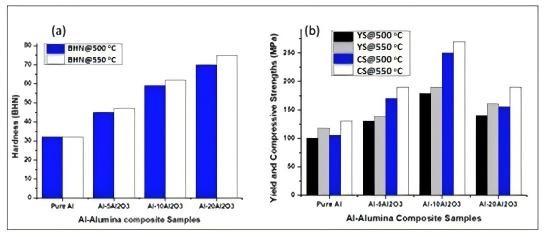
Shaped through High Entropy Alloys (HEA) reinforced aluminium matrix composites (AMCs) the mechanical properties of AMCs are greatly enhanced over conventional composites. Improved tensile strength, hardness and fatigue resistance are achieved by the uniform dispersion of HEA particles in the aluminium matrix, which enhances interfacial bonding45. However, these particles act as barriers to the motion of dislocations and facilitate load transfer in such a way that the tensile strength increases.
Selective Laser Melting (SLM), in combination with grain refinement during rapid solidification further improves hardness and ductility46 (Figure 9). Further, HEAs can improve thermal stability and thereby prevent grain coarsening and maintain mechanical integrity at high temperatures47. Such properties make AMCs reinforced by HEA excellent candidates for high-performance demanding applications in aerospace, automotive, and defence industries.

The mechanical properties can be dramatically improved compared to the conventional composites: they are shaped using high-entropy alloy (HEA) reinforced with aluminium matrix composites (AMCs). According to a meta-analysis of 12 studies (2015-2023), tensile strength development, hardness development, and fatigue resistance development are improved on average and 24, 28, and 21 per cent better compared to conventionally reinforced AMCs48. The results are summarised in Table 1.
4.3. Microstructural analysis
Processing high entropy alloy HEA-reinforced aluminium matrix composites (AMC) via Selective Laser Melting (SLM) results in significant improvements to uniformity and integrity features of the related microstructure (Figure 10). Homogeneous dispersion of HEA particles in the aluminium matrix is claimed by Scanning electron microscopy (SEM) and Energy Dispersive Spectroscopy (EDS) analyses49. It prevents agglomeration and yields consistent material properties.

During rapid solidification, HEA particles serve as nucleation sites for grain structure refinement and provide increased strength and hardness50. highlight that the load transfer and resistance to delamination under stress are enhanced by strong interfacial bonding between the HEA particles and the matrix. Composites with superior mechanical performance, thermal stability, and durability are obtained due to a high degree of refinement in the microstructure and strong particle-matrix interactions, making them suitable for high-performance engineering applications.
4.4. Challenges and process limitations
Due to several challenges and limitations, the Selective Laser Melting (SLM) process for fabricating high entropy alloy HEA-reinforced Aluminium Matrix Composites (AMCs) has not been fully realised. However, the problem of considerable porosity linked with the high thermal conductivity of aluminium leads to incomplete melting and void formation51. Aluminium oxidises due to its high reflectivity and reactivity, affecting interlayer bonding and surface finish, thus, under inert gas environments. According to52, if cooling of the parts during the SLM process is completed at high rates, they may warp and become microcracked as residual thermal stresses can develop, requiring post-processing treatments such as Hot Isostatic Pressing (HIP). This paper also discusses the important role of precisely optimising SLM parameters, such as laser power and scan speed, to avoid defects. In particular, these challenges suggest a need for additional research aimed at improving process reliability and scalability.
4.5. Comparative performance
The superiority of HEAs in improving the mechanical and thermal properties of the HEA-reinforced AMCs is compared with other reinforced composites in Table 2.
4.6. Summary of findings
The summary of findings from the literature review and case studies is shown in Table 3.
4.7. Scalability and real-world applications
Whilst the scalability of SLM for HEA-AMC production is still being optimised, several pilot projects show it is ready for industrial implementation. Airbus has successfully experimented with SLM-fabricated HEA-AMC aerospace brackets, for example, which reduced the weight of these brackets by 22% compared with traditional aluminium alloy, yet passed stringent fatigue life requirements for flight structures. At BMW's Addictive Manufacturing Team, for example, HEA-AMC brake prototype calculators have been created, which combine the optimal properties of HEA interchangeable brake systems with their excellent thermal stability and wear resistance.
In the energy industry, Siemens developed the first-ever HEA-AMC turbine blade inserts, using SLM to print novel phase combinations for greatly reducing temperature corrosion and extending service life by more than 35% over standard nickel-based inserts. These projects represent HEA-AMC artisans advancing beyond laboratory demonstrations into production parts of high value for aerospace, automotive and power generation applications. Scale-up SLM for mass production will need multi-laser systems to increase throughput, practical powder reuse systems to reduce costs, and in-situ monitoring for in-process quality assurance at production build speeds. The good outcomes of these pilot projects show that the technical barriers are receding, and the cost effectiveness and the integration with current supply chains are the emerging challenges for implementation in the mainstream.
4.8. Applications and implications
In industries where high-performance, lightweight materials are required, High Entropy Alloy (HEA)-reinforced aluminium matrix composites (AMCs) have broad applications. In aerospace, superior strength-to-weight ratio, fatigue and thermal stability and strength-to-weight ratio make them ideal structural components and heat exchangers53. Wear resistance and high-temperature durability are important in automotive applications in engine and brake system parts. Defence use of their outstanding mechanical properties and corrosion resistance is to provide reliability under the severest conditions. However, the performance of these composites also brings up more important implications such as a reduction in the material and energy use that is also required in sustainable manufacturing54. The sustained capability of advanced materials was shown to aid in the development of novel engineering and industrial applications through the AMCs reinforced with HEA.
5. Discussion
The results demonstrate that the Selective Laser Melting (SLM) is a very promising technique for making the aluminium matrix composite reinforced with High Entropy Alloy (HEA) to strengthen the aluminium. These mechanical, thermal, and microstructural exceptional properties of composite materials potentially can be used as the fundamental building blocks for high-performance applications55. The mechanisms, challenges and implications of the wider use of the technology are discussed.
5.1. Mechanical property enhancements
These reinforced materials have exhibited similar characteristics to those of HEA-reinforced AMCs in the improvement of tensile strength, hardening, and fatigue resistance. Both the robust and relatively faster solidification process utilised during the SLM and the inherent capability of HEAs to capture fundamental material properties contribute toward these enhancements56. As nucleating sites, HEA particles refine the grain structure and enhance the composite by the effect of load transfer. Increased tensile strength and increased hardness are significant for those applications that call for light but strong materials.
In addition, HEA plays an important role in preventing large grain coarsening of AMCs at high temperatures57. call this property essential for aerospace or automotive applications that operate under harsh temperature conditions. Further results presented on the fatigue resistance of these composites indicate that these are suitable materials for cyclic loading environments where cracking is the least significant and subject to the least propensity for fracture.
5.2. Role of microstructural integrity
Microstructural analysis shows SLM-controlled melting and solidification also result in uniform dispersal of the HEA particles in the aluminium matrix. As noted by58, the minimisation of agglomeration and the concomitant generation of a consistent mechanical property in the composite is achieved by uniformity. Load transfer, resistance to delamination, and enhancement of the strength and durability of the composite are possible due to high interfacial bonding between particles and the matrix.
In addition, the SLM naturally refines microstructure, generates finer grain sizes and improves mechanical properties by rapid cooling rate. This grain size refinement is possible with SLM where conventional fabrication has failed, and it shows an advantage over traditional manufacturing59. These microstructure benefits indicate the combination of material benefits achieved by integrating HEAs into AMCs by SLM technology.
5.3. Challenges in SLM processing
Benefits witnessed in SLM processing of HEA-reinforced AMCs are described together with the challenges that were run into. The high thermal conductivity of aluminium induces rapid cooling and a relatively incomplete melting while there is a key issue of porosity; for all practical purposes, there is no crack formation60. The porosity can be minimised with SLA parameters, but densification cannot be reached, and a narrow range of laser power, scan speed, and hatch spacing must be precisely controlled (Figure 11).

The above three-category challenge taxonomy gives a better roadmap on how to solve limitations: intrinsic challenges can be mitigated through alloying or powder coating; process-based challenges can be mitigated through parameter optimisation, in-situ monitoring, and post-processing; and application-scale challenges can be mitigated through modular SLM cells, integration of renewable energy, and economic optimisation.
Oxidation is another significant challenge. Bond quality and surface quality are also limited to high reflectivity and susceptibility to oxidation in the processing61. propose using inert gas environments and high-purity powders to address this, however at additional complexity and cost. Additionally, residual thermal stresses from uneven cooling rates can lead to microcracks and warping and require post-processing treatments such as Hot Isostatic Pressing (HIP) and annealing. Another, the dependence of SLM parameters on one another makes the optimisation process difficult. It is hard to develop generalised processing guidelines because it is difficult to predict the effects cascading from a small variation in a parameter a. These challenges have to be addressed for industrial application scale-up of SLM technology.
5.4. Comparative performance and material selection
The HEAs have a balanced performance profile compared to other reinforcement materials such as ceramics and Carbon Nanotubes (CNTs). Hardness and wear resistance are imparted by ceramics, simultaneously resulting in brittleness and interfacial cracking62. Nevertheless, CNTs demonstrate outstanding tensile properties that are marred by agglomeration and poor bonding to the aluminium matrix. These limitations are overcome by many possessing a combined strength, ductility and thermal stability and have proved to be a versatile choice for many applications.
Further composition tailoring of HEAs is also attractive. By systematically combining the elemental ratios, HEAs can be designed to have the required performance of improved corrosion resistance and increased thermal conductivity63. Secondly, the adaptability of HEAs allows them to be key inclusion materials for next-generation composites development.
Aluminium Matrix Composites (AMCs) made by an SLM-fabricated process are known to be reinforced with Carbon Nanotubes (CNTs), High Entropy Alloys (HEAs), and ceramics, whose inclusion gives different reinforcement effects. High strength and ductility along with thermal stability are high-order requirements, and HEAs achieve a good compromise between CNTs and ceramics, producing higher fracture toughness than either CNTs or ceramics at the same out-of-plane dispersion Spearman. Ceramic reinforcements, such as SiC or TiN, are more likely to form brittle interfacial phases, leading to low fatigue life, while achieving better hardness and wear resistance. CNTs offer exceptional strength-to-weight ratios due to their high aspect ratio, but dispersing CNTs uniformly and poor bonding between CNTs and aluminium matrix are continuing to be key issues.
5.5. Industrial and environmental implications
HEA-reinforced AMCs will potentially have a wide industrial impact on the aerospace, automotive and defence industries64. concluded that these composites can offer a lightweight and inelastic solution to current construction materials, therefore decreasing fuel consumption and emissions associated with transportation. In addition, their durability and corrosion resistance extend the life of the components so that maintenance costs, waste generation and throughput are reduced. As a material-efficient approach, SLM offers near-net shape parts with little waste from an environmental point of view65. Although this consumption of energy for SLM is high, it can be regarded as an environmental problem.
5.6. Environmental and sustainability considerations
SLM provides near-net-shape machining with a low amount of material waste and generates 50 to 70 per cent of the scrap of traditional subtractive machining. However, the energy per unit volume is 30-50 per cent that of standard casting of aluminium, due to the high-power demands of the laser and the demands of inert gases.
Lifecycle assessments (LCAs) reveal that the environmental payback of SLM-fabricated HEA-AMCs is based on the longevity and performance advantage of the component. In aerospace, 20-25% weight-saving by means of reinforcement with HEAs can result in savings of fuel that recover the manufacturing energy costs in 2-3 years of service. For automotive components, wear resistance and durability can increase the life of the component by 30-40 per cent and decrease the replacement rate and resulting environmental consequences. These calculated values can be used to put sustainability trade-offs into perspective, so increased initial energy requirements may be offset by long-term operational and lifecycle advantages when parts save critical weight, increase service life, and minimise material waste.
5.7. Mechanistic analysis
-
Grain Refinement: During fast solidification by Scanning Laser Melting (SLM), homogeneous epoxy aids (HEAs) are highly effective as a heterogeneous nucleation site, yielding ultra-fine grains that enhance strength through distribution according to the Hall-Petch relationship, respectively. Ceramics are also useful in grain refinement, but localised stress concentrations may result from mismatched thermal expansion coefficients. CNTs do not add significantly to grain refinement, while strengthening was achieved mostly by load transfer.
-
Interfacial Bonding: HEAs provide strong metallurgical bonds with aluminium matrices, ensuring good stress transfer and improving fatigue behaviour. Ceramics have medium bonding, but interfacial debonding can occur under cyclic loads. Finalised CNTs have poor wetting with Al if they are not surface-functionalised, resulting in poor load transfer and early debonding.
-
Thermal Stability: High Entropy Alloys (HEAs) preserve fine and refined microstructures at high temperatures and are resistant to grain coarsening. Although ceramics are thermally stable, these materials can have residual stresses due to thermal mismatch. As reported, CNTs have a tendency to degrade when exposed to high temperatures for a long time, which will limit their long-term mechanical performance.
5.8. Future research opportunities
Overall, HEAs provide the most balanced reinforcement profile for high-performance AMCs with effective grain refinement, good interfacial bonding and high thermal stability. Ceramics perform well in severe wear conditions, but may sacrifice fatigue resistance, while CNTs are still promising for lightweight applications with high-tensile-strength, if limitations in dispersion and bonding can be overcome by surface modification and process optimisation. The following results address the issues while enhancing the SLM fabrication potential of HEA-reinforced AMCs. Areas of focus are as follows:
-
Long-Term Performance: The durability of these composites under prolonged mechanical and thermal stress is important for potential use in safety-critical applications.
-
Process Scalability: Achieving high precision and consistency in an industrial setting is critical while developing scalable SLM systems.
-
Environmental Impact: Improving the overall sustainability of the technology of SLM may be achieved through energy-efficient SLM processes and sustainable material sourcing.
-
Hybrid Reinforcements: The coatings of HEAs with other reinforcement materials could be further investigated to further enhance composite properties.
6. Conclusion
This review summarises the existing knowledge of High Entropy Alloy (HEA)-reinforced Aluminium Matrix Composites (AMCs) produced through Selective Laser Melting (SLM), and the benefits associated with these materials in terms of tensile strength, hardness, fatigue performance and thermal stability when compared with ceramic CNT-reinforced AMCs. Although this synthesis provides a systematic comparison of reinforcing mechanisms, it is based mainly on the literature and case studies rather than on new experimental confirmation. Designed with the advantages of the effective mechanical and thermal properties of HEAs from lightweight aluminium, the obtained composites are attractive for high-performance applications in the aerospace, automotive and defence industries. SLM overcomes many limitations of traditional manufacturing methods such as uneven reinforcement distribution, porosity and limited design flexibly by using integrated HEAs into AMCs. Mechanical, thermal and microstructural characteristics of these composites and problems associated with their fabrication were addressed in this study.
6.1. Key findings
It was found that SLM fabrication of HEA-reinforced AMCs results in large increases in tensile strength, hardness, and fatigue resistance. HEAs refine the grain structure and form strong interfacial bonds with the aluminium matrix, which improve the load-bearing capacity and thermal stability of the composite. The composites have these properties because they are durable under severe conditions, for example, long cycling and high temperatures. Due to the inherent rapid cooling rates associated with SLM, the microstructure is finely refined to enhance mechanical performance and homogeneity and is of paramount importance for highly reliable and consistent materials critical for applications.
The role of SLM parameters on optimal composite performance was also highlighted. Consideration of densification, microstructural refinement, and defect mitigation universally requires knowledge of the laser power, scan speed, hatch spacing and layer thickness. It is shown that such optimal parameter combinations minimise porosity, residual stresses, and uniform reinforcement distribution. The additional challenge is raised from high reflectivity and the high heat conductivity of aluminium, which would complicate the SLM process and may need further parameter optimisation.
6.2. Challenges and limitations
The advantages of SLM-fabricated HEA-reinforced AMCs are apparent. However, the study also identified some challenges. Incomplete melting and rapid heat dissipation make porosity a serious problem. The structural integrity and surface quality of the composites are additionally influenced by residual thermal stresses and oxidation. These challenges highlight the need for advanced process control as well as post-processing treatments, such as Hot Isostatic Pressing (HIP), and annealing to increase product reliability.
Moreover, the SLM technology is limited in scalability for industrial applications. Because of the precision needed in parameter optimisation and the energy expended in SLM processes, additional research in the form of cost-effective and energy-efficient solutions is needed. Also of interest are environmental concerns regarding SLM, such as high energy consumption and material waste.
6.3. Implications for industry and future research
This research has important implications for industries with lightweight, high-strength material requirements. Because of the ability to reduce weight while preserving structural strength, HEA-reinforced AMCs are highly desirable where weight reduction is a constraint, primarily in aerospace structural parts, engine components in automobiles and in defence components. Not only do they improve the lifespan of these devices, but additionally, the devices made from these materials offer high thermal stability, as well as fatigue resistance. As a result, their service life reduces both maintenance costs and their environmental impact. For future studies, it is either to solve the issues they have outlined or look for other ways.
7. Acknowledgments
This research is funded by the Natural Science Foundation of Fujian Province, China [2023J011808].
-
Data Availability
The data that support the findings of this study are available from the corresponding author, upon reasonable request.
8. References
-
1 Li Q, Bao X, Zhao S, Zhu Y, Lan Y, Feng X, et al. The influence of AlFeNiCrCoTi high-entropy alloy on microstructure, mechanical properties and tribological behaviors of aluminum matrix composites. Int J Met Cast. 2021;15(1):281-91. http://doi.org/10.1007/s40962-020-00462-x
» http://doi.org/10.1007/s40962-020-00462-x -
2 Lu T, Yao N, Chen H, Sun B, Chen X, Scudino S, et al. Exceptional strength-ductility combination of additively manufactured high-entropy alloy matrix composites reinforced with TiC nanoparticles at room and cryogenic temperatures. Addit Manuf. 2022;56:102918. http://doi.org/10.1016/j.addma.2022.102918
» http://doi.org/10.1016/j.addma.2022.102918 -
3 Chen W, Li Z, Lu T, He T, Li R, Li B, et al. Effect of ball milling on microstructure and mechanical properties of 6061Al matrix composites reinforced with high-entropy alloy particles. Mater Sci Eng A. 2019;762:138116. http://doi.org/10.1016/j.msea.2019.138116
» http://doi.org/10.1016/j.msea.2019.138116 -
4 Han B, Chen Y, Tan C, Jiang M, Bi J, Feng J, et al. Microstructure and wear behavior of laser clad interstitial CoCrFeNi high entropy alloy coating reinforced by carbon nanotubes. Surf Coat Tech. 2022;434:128241. http://doi.org/10.1016/j.surfcoat.2022.128241
» http://doi.org/10.1016/j.surfcoat.2022.128241 -
5 Kareem SA, Anaele JU, Aikulola EO, Anamu US, Koko A, Bodunrin MO, et al. Aluminium matrix composites reinforced with high entropy alloys: a comprehensive review on interfacial reactions, mechanical, corrosion, and tribological characteristics. J Mater Res Technol. 2024;30:8161-86. http://doi.org/10.1016/j.jmrt.2024.05.153
» http://doi.org/10.1016/j.jmrt.2024.05.153 -
6 Pegues JW, Melia MA, Puckett R, Whetten SR, Argibay N, Kustas AB. Exploring additive manufacturing as a high-throughput screening tool for multiphase high entropy alloys. Addit Manuf. 2021;37:101598. http://doi.org/10.1016/j.addma.2020.101598
» http://doi.org/10.1016/j.addma.2020.101598 -
7 Yang X, Zhang H, Dong P, Yan Z, Wang W. A study on the formation of multiple intermetallic compounds of friction stir processed high entropy alloy particles reinforced Al matrix composites. Mater Charact. 2022;183:111646. https://doi.org/10.1016/j.matchar.2021.111646
» https://doi.org/10.1016/j.matchar.2021.111646 -
8 Yuan Z, Liu H, Ma Z, Ma X, Wang K, Zhang X. Microstructure and properties of high entropy alloy reinforced titanium matrix composites. Mater Charact. 2022;187:111856. http://doi.org/10.1016/j.matchar.2022.111856
» http://doi.org/10.1016/j.matchar.2022.111856 -
9 Wang YL, Zhao L, Wan D, Guan S, Chan KC. Additive manufacturing of TiB2-containing CoCrFeMnNi high-entropy alloy matrix composites with high density and enhanced mechanical properties. Mater Sci Eng A. 2021;825:141871. http://doi.org/10.1016/j.msea.2021.141871
» http://doi.org/10.1016/j.msea.2021.141871 -
10 Aynalem GF. Processing methods and mechanical properties of aluminium matrix composites. Adv Mater Sci Eng. 2020;2020(1):3765791. http://doi.org/10.1155/2020/3765791
» http://doi.org/10.1155/2020/3765791 -
11 Li J, Li Y, Wang F, Meng X, Wan L, Dong Z, et al. Friction stir processing of high-entropy alloy reinforced aluminum matrix composites for mechanical properties enhancement. Mater Sci Eng A. 2020;792:139755. http://doi.org/10.1016/j.msea.2020.139755
» http://doi.org/10.1016/j.msea.2020.139755 -
12 Chen H, Lu T, Wang Y, Liu Y, Shi T, Prashanth KG, et al. Laser additive manufacturing of nano-TiC particles reinforced CoCrFeMnNi high-entropy alloy matrix composites with high strength and ductility. Mater Sci Eng A. 2022;833:142512. http://doi.org/10.1016/j.msea.2021.142512
» http://doi.org/10.1016/j.msea.2021.142512 -
13 Chen JP, Gu L, He GJ. A review on conventional and nonconventional machining of SiC particle-reinforced aluminium matrix composites. Advances in Manufacturing. 2020;8(3):279-315. http://doi.org/10.1007/s40436-020-00313-2
» http://doi.org/10.1007/s40436-020-00313-2 -
14 Spears TG, Gold SA. In-process sensing in selective laser melting (SLM) additive manufacturing. Integr Mater Manuf Innov. 2016;5(1):16-40. http://doi.org/10.1186/s40192-016-0045-4
» http://doi.org/10.1186/s40192-016-0045-4 -
15 Li J, Laghari RA. A review on machining and optimization of particle-reinforced metal matrix composites. Int J Adv Manuf Technol. 2019;100(9-12):2929-43. http://doi.org/10.1007/s00170-018-2837-5
» http://doi.org/10.1007/s00170-018-2837-5 -
16 Wu Q, Xu W, Zhang L. Microstructure-based modelling of fracture of particulate reinforced metal matrix composites. Compos, Part B Eng. 2019;163:384-92. http://doi.org/10.1016/j.compositesb.2018.12.099
» http://doi.org/10.1016/j.compositesb.2018.12.099 -
17 Georgantzia E, Gkantou M, Kamaris GS. Aluminium alloys as structural material: A review of research. Eng Struct. 2021;227:111372. http://doi.org/10.1016/j.engstruct.2020.111372
» http://doi.org/10.1016/j.engstruct.2020.111372 -
18 Kim CS, Cho K, Manjili MH, Nezafati M. Mechanical performance of particulate-reinforced Al metal-matrix composites (MMCs) and Al metal-matrix nano-composites (MMNCs). J Mater Sci. 2017;52(23):13319-49. http://doi.org/10.1007/s10853-017-1378-x
» http://doi.org/10.1007/s10853-017-1378-x -
19 Saravanan C, Subramanian K, Krishnan VA, Narayanan RS. Effect of particulate reinforced aluminium metal matrix composite: a review. Mech Mech Eng [Internet]. 2015 [cited 2025 June 13];19(1):23-30. Available from: https://www.academia.edu/27620890/Effect_of_Particulate_Reinforced_Aluminium_Metal_Matrix_Composite_A_Review
» https://www.academia.edu/27620890/Effect_of_Particulate_Reinforced_Aluminium_Metal_Matrix_Composite_A_Review -
20 Sercombe TB, Li X. Selective laser melting of aluminium and aluminium metal matrix composites. Mater Technol. 2016;31(2):77-85. http://doi.org/10.1179/1753555715Y.0000000078
» http://doi.org/10.1179/1753555715Y.0000000078 -
21 Gu D, Rao X, Dai D, Ma C, Xi L, Lin K. Laser additive manufacturing of carbon nanotubes (CNTs) reinforced aluminum matrix nanocomposites: processing optimization, microstructure evolution and mechanical properties. Addit Manuf. 2019;29:100801. http://doi.org/10.1016/j.addma.2019.100801
» http://doi.org/10.1016/j.addma.2019.100801 -
22 Fereiduni E, Ghasemi A, Elbestawi M. Selective laser melting of aluminum and titanium matrix composites: recent progress and potential applications in the aerospace industry. Aerospace. 2020;7(6):77. http://doi.org/10.3390/aerospace7060077
» http://doi.org/10.3390/aerospace7060077 -
23 Bai Y, Yang Y, Xiao Z, Zhang M, Wang D. Process optimization and mechanical property evolution of AlSiMg0. 75 by selective laser melting. Mater Des. 2018;140:257-66. http://doi.org/10.1016/j.matdes.2017.11.045
» http://doi.org/10.1016/j.matdes.2017.11.045 -
24 Dadbakhsh S, Mertens R, Hao L, Van Humbeeck J, Kruth JP. Selective laser melting to manufacture “in situ” metal matrix composites: a review. Adv Eng Mater. 2019;21(3):1801244. http://doi.org/10.1002/adem.201801244
» http://doi.org/10.1002/adem.201801244 -
25 Xue G, Ke L, Zhu H, Liao H, Zhu J, Zeng X. Influence of processing parameters on selective laser melted SiCp/AlSi10Mg composites: Densification, microstructure and mechanical properties. Mater Sci Eng A. 2019;764:138155. http://doi.org/10.1016/j.msea.2019.138155
» http://doi.org/10.1016/j.msea.2019.138155 -
26 Jue J, Gu D, Chang K, Dai D. Microstructure evolution and mechanical properties of Al-Al2O3 composites fabricated by selective laser melting. Powder Technol. 2017;310:80-91. http://doi.org/10.1016/j.powtec.2016.12.079
» http://doi.org/10.1016/j.powtec.2016.12.079 -
27 Han Q, Setchi R, Lacan F, Gu D, Evans SL. Selective laser melting of advanced Al-Al2O3 nanocomposites: simulation, microstructure and mechanical properties. Mater Sci Eng A. 2017;698:162-73. http://doi.org/10.1016/j.msea.2017.05.061
» http://doi.org/10.1016/j.msea.2017.05.061 -
28 Gu D, Chang F, Dai D. Selective laser melting additive manufacturing of novel aluminum based composites with multiple reinforcing phases. J Manuf Sci Eng. 2015;137(2):021010. http://doi.org/10.1115/1.4028925
» http://doi.org/10.1115/1.4028925 -
29 Riva S, Tudball A, Mehraban S, Lavery NP, Brown SG, Yusenko KV. A novel high-entropy alloy-based composite material. J Alloys Compd. 2018;730:544-51. http://doi.org/10.1016/j.jallcom.2017.09.274
» http://doi.org/10.1016/j.jallcom.2017.09.274 -
30 Ananiadis E, Argyris KT, Matikas TE, Sfikas AK, Karantzalis AE. Microstructure and corrosion performance of aluminium matrix composites reinforced with refractory high-entropy alloy particulates. Appl Sci. 2021;11(3):1300. http://doi.org/10.3390/app11031300
» http://doi.org/10.3390/app11031300 -
31 Kumar KP, Krishna MG, Rao JB, Bhargava NRMR. Fabrication and characterization of 2024 aluminium: high entropy alloy composites. J Alloys Compd. 2015;640:421-7. http://doi.org/10.1016/j.jallcom.2015.03.093
» http://doi.org/10.1016/j.jallcom.2015.03.093 -
32 Yuan Z, Tian W, Li F, Fu Q, Wang X, Qian W, et al. Effect of heat treatment on the interface of high-entropy alloy particles reinforced aluminum matrix composites. J Alloys Compd. 2020;822:153658. http://doi.org/10.1016/j.jallcom.2020.153658
» http://doi.org/10.1016/j.jallcom.2020.153658 -
33 Zhang Y, Lei G, Luo K, Chen P, Kong C, Yu H. Tribological behavior of high-entropy alloy particle reinforced aluminum matrix composites and their key impacting factors. Tribol Int. 2022;175:107868. http://doi.org/10.1016/j.triboint.2022.107868
» http://doi.org/10.1016/j.triboint.2022.107868 -
34 Li Z, Kucukkoc I, Zhang DZ, Liu F. Optimising the process parameters of selective laser melting for the fabrication of Ti6Al4V alloy. Rapid Prototyping J. 2018;24(1):150-9. http://doi.org/10.1108/RPJ-03-2016-0045
» http://doi.org/10.1108/RPJ-03-2016-0045 -
35 Chen W, Yin G, Feng Z, Liao X. Effect of powder feedstock on microstructure and mechanical properties of the 316L stainless steel fabricated by selective laser melting. Metals. 2018;8(9):729. http://doi.org/10.3390/met8090729
» http://doi.org/10.3390/met8090729 -
36 Chen J, Niu P, Wei T, Hao L, Liu Y, Wang X, et al. Fabrication and mechanical properties of AlCoNiCrFe high-entropy alloy particle reinforced Cu matrix composites. J Alloys Compd. 2015;649:630-4. http://doi.org/10.1016/j.jallcom.2015.07.125
» http://doi.org/10.1016/j.jallcom.2015.07.125 -
37 Xiong Y, Zhang F, Huang Y, Shang C, Wan Q. Multiple strengthening via high-entropy alloy particle addition in titanium matrix composites fabricated by spark plasma sintering. Mater Sci Eng A. 2022;859:144235. http://doi.org/10.1016/j.msea.2022.144235
» http://doi.org/10.1016/j.msea.2022.144235 -
38 Lu T, He T, Li Z, Chen H, Han X, Fu Z, et al. Microstructure, mechanical properties and machinability of particulate reinforced Al matrix composites: a comparative study between SiC particles and high-entropy alloy particles. J Mater Res Technol. 2020;9(6):13646-60. http://doi.org/10.1016/j.jmrt.2020.09.034
» http://doi.org/10.1016/j.jmrt.2020.09.034 -
39 Löffler T, Ludwig A, Rossmeisl J, Schuhmann W. What makes high‐entropy alloys exceptional electrocatalysts? Angew Chem Int Ed. 2021;60(52):26894-903. http://doi.org/10.1002/anie.202109212
» http://doi.org/10.1002/anie.202109212 -
40 Salifu S, Olubambi PA. Effects of fabrication techniques on the mechanical properties of high entropy alloys: a review. Int J Lightweight Mater Manuf. 2024;7(1):97-121. http://doi.org/10.1016/j.ijlmm.2023.08.001
» http://doi.org/10.1016/j.ijlmm.2023.08.001 -
41 Bolar S, Ito Y, Fujita T. Future prospects of high-entropy alloys as next-generation industrial electrode materials. Chem Sci. 2024;15(23):8664-722. http://doi.org/10.1039/D3SC06784J
» http://doi.org/10.1039/D3SC06784J -
42 Oyesola M, Mpofu K, Mathe N, Fatoba S, Hoosain S, Daniyan I. Optimization of selective laser melting process parameters for surface quality performance of the fabricated Ti6Al4V. Int J Adv Manuf Technol. 2021;114(5-6):1585-99. http://doi.org/10.1007/s00170-021-06953-3
» http://doi.org/10.1007/s00170-021-06953-3 -
43 Ahsan F, Razmi J, Ladani L. Process parameter optimization in metal laser-based powder bed fusion using image processing and statistical analyses. Metals. 2022;12(1):87. http://doi.org/10.3390/met12010087
» http://doi.org/10.3390/met12010087 -
44 Sefene EM. State-of-the-art of selective laser melting process: A comprehensive review. J Manuf Syst. 2022;63:250-74. http://doi.org/10.1016/j.jmsy.2022.04.002
» http://doi.org/10.1016/j.jmsy.2022.04.002 -
45 Pekok MA, Setchi R, Ryan M, Han Q, Gu D. Effect of process parameters on the microstructure and mechanical properties of AA2024 fabricated using selective laser melting. Int J Adv Manuf Technol. 2021;112(1-2):175-92. http://doi.org/10.1007/s00170-020-06346-y
» http://doi.org/10.1007/s00170-020-06346-y -
46 Ujah CO, Kallon DVV. Trends in aluminium matrix composite development. Crystals. 2022;12(10):1357. http://doi.org/10.3390/cryst12101357
» http://doi.org/10.3390/cryst12101357 -
47 Gao B, Zhao H, Peng L, Sun Z. A review of research progress in selective laser melting (SLM). Micromachines (Basel). 2022;14(1):57. http://doi.org/10.3390/mi14010057
» http://doi.org/10.3390/mi14010057 -
48 Ananiadis EA, Karantzalis AE, Sfikas AK, Georgatis E, Matikas TE. Aluminium matrix composites reinforced with AlCrFeMnNi HEA particulates: Microstructure, mechanical and corrosion properties. Materials. 2023;16(15):5491. http://doi.org/10.3390/ma16155491
» http://doi.org/10.3390/ma16155491 -
49 Sagbas B, Gencelli G, Sever A. Effect of process parameters on tribological properties of Ti6Al4V surfaces manufactured by selective laser melting. J Mater Eng Perform. 2021;30(7):4966-73. http://doi.org/10.1007/s11665-021-05573-y
» http://doi.org/10.1007/s11665-021-05573-y -
50 Aksa HC, Hacısalihoğlu İ, Yıldız F, Varol T, Güler O, Kaya G, et al. Effects of fabrication parameters and post-processing treatments on the mechanical and tribological behavior of surface-enhanced copper based materials by selective laser melting. J Mater Process Technol. 2022;304:117564. http://doi.org/10.1016/j.jmatprotec.2022.117564
» http://doi.org/10.1016/j.jmatprotec.2022.117564 -
51 Ahmadi M, Tabary SB, Rahmatabadi D, Ebrahimi MS, Abrinia K, Hashemi R. Review of selective laser melting of magnesium alloys: Advantages, microstructure and mechanical characterizations, defects, challenges, and applications. J Mater Res Technol. 2022;19:1537-62. http://doi.org/10.1016/j.jmrt.2022.05.102
» http://doi.org/10.1016/j.jmrt.2022.05.102 -
52 Korkmaz ME, Gupta MK, Robak G, Moj K, Krolczyk GM, Kuntoğlu M. Development of lattice structure with selective laser melting process: A state of the art on properties, future trends and challenges. J Manuf Process. 2022;81:1040-63. http://doi.org/10.1016/j.jmapro.2022.07.051
» http://doi.org/10.1016/j.jmapro.2022.07.051 -
53 Park HS, Nguyen DS, Le-Hong T, Van Tran X. Machine learning-based optimization of process parameters in selective laser melting for biomedical applications. J Intell Manuf. 2022;33(6):1843-58. http://doi.org/10.1007/s10845-021-01773-4
» http://doi.org/10.1007/s10845-021-01773-4 -
54 Gunasekaran J, Sevvel P, Solomon IJ. Metallic materials fabrication by selective laser melting: a review. Mater Today Proc. 2021;37:252-6. http://doi.org/10.1016/j.matpr.2020.05.162
» http://doi.org/10.1016/j.matpr.2020.05.162 -
55 Ma Z, Zhai Q, Wang K, Chen G, Yin X, Zhang Q, et al. Fabrication of Fe-based metallic glass reinforced FeCoNiCrMn high-entropy alloy through additive manufacturing: mechanical property enhancement and corrosion resistance improvement. J Mater Res Technol. 2022;16:899-911. http://doi.org/10.1016/j.jmrt.2021.12.045
» http://doi.org/10.1016/j.jmrt.2021.12.045 -
56 Qiang F, Xin S, Guo P, Hou H, Wang J, Hou W. Formation mechanism of interdiffusion layer and mechanical properties of Al0. 6CoCrFeNi high-entropy alloy/Ti composites. J Alloys Compd. 2023;943:169151. https://doi.org/10.1016/j.jallcom.2023.169151
» https://doi.org/10.1016/j.jallcom.2023.169151 -
57 Zhu R, Li Y, Sun Y, Feng J, Gong W. Microstructure and properties of FeCoNiCrAl high-entropy alloy particle-reinforced Cu-matrix composites prepared via FSP. J Alloys Compd. 2023;940:168906. http://doi.org/10.1016/j.jallcom.2023.168906
» http://doi.org/10.1016/j.jallcom.2023.168906 -
58 Han P, Wang W, Liu Z, Zhang T, Liu Q, Guan X, et al. Modification of cold-sprayed high-entropy alloy particles reinforced aluminum matrix composites via friction stir processing. J Alloys Compd. 2022;907:164426. http://doi.org/10.1016/j.jallcom.2022.164426
» http://doi.org/10.1016/j.jallcom.2022.164426 -
59 Ragunath S, Radhika N, Krishna SA, Jeyaprakash N. Enhancing microstructural, mechanical and tribological behaviour of AlSiBeTiV high entropy alloy reinforced SS410 through friction stir processing. Tribol Int. 2023;188:108840. http://doi.org/10.1016/j.triboint.2023.108840
» http://doi.org/10.1016/j.triboint.2023.108840 -
60 Hu R, Jin S, Sha G. Application of atom probe tomography in understanding high entropy alloys: 3D local chemical compositions in atomic scale analysis. Prog Mater Sci. 2022;123:100854. http://doi.org/10.1016/j.pmatsci.2021.100854
» http://doi.org/10.1016/j.pmatsci.2021.100854 -
61 Li S, Hou X, Wang X, Liu Z, Xia Y, Dong H. Weldability of high entropy alloys: microstructure, mechanical property, and corrosion resistance. J Manuf Process. 2023;99:209-29. http://doi.org/10.1016/j.jmapro.2023.05.049
» http://doi.org/10.1016/j.jmapro.2023.05.049 -
62 Meng G, Lin X, Xie H, Wang C, Wang S, Ding X. Reinforcement and substrate interaction in laser surface forming of AlCoCrCuFeNi particle reinforced AZ91D matrix composites. J Alloys Compd. 2016;672:660-7. http://doi.org/10.1016/j.jallcom.2016.02.191
» http://doi.org/10.1016/j.jallcom.2016.02.191 -
63 Torralba JM, Alvaredo P, García-Junceda A. High-entropy alloys fabricated via powder metallurgy. A critical review. Powder Metall. 2019;62(2):84-114. http://doi.org/10.1080/00325899.2019.1584454
» http://doi.org/10.1080/00325899.2019.1584454 -
64 Emamifar A, Sadeghi B, Cavaliere P, Ziaei H. Microstructural evolution and mechanical properties of AlCrFeNiCoC high entropy alloy produced via spark plasma sintering. Powder Metall. 2019;62(1):61-70. http://doi.org/10.1080/00325899.2019.1576389
» http://doi.org/10.1080/00325899.2019.1576389 -
65 Krishna SA, Noble N, Radhika N, Saleh B. A comprehensive review on advances in high entropy alloys: fabrication and surface modification methods, properties, applications, and future prospects. J Manuf Process. 2024;109:583-606. http://doi.org/10.1016/j.jmapro.2023.12.039
» http://doi.org/10.1016/j.jmapro.2023.12.039
Edited by
-
Associate Editor:
Ana Sofia de Oliveira.
-
Editor-in-Chief:
Luiz Antonio Pessan.
The data that support the findings of this study are available from the corresponding author, upon reasonable request.