Applicability of Sugarcane Bagasse Waste in the Manufacturing of Porous Ceramic Support for Filtration Membrane
Abstract
This work evaluated the application of sugarcane bagasse waste in the manufacture of porous ceramic supports for filtration membrane. Kaolinitic clay and sugarcane bagasse waste from the Campos dos Goytacazes-RJ region used as raw materials were characterized regarding their chemical, mineralogical and thermal behavior. Four clayey formulations containing up to 25 wt.% of bagasse waste were prepared, extruded, dried and fired at 950 ºC, 1000 ºC and 1050 °C. The fired supports were characterized by water absorption, apparent porosity, apparent density, linear shrinkage, mechanical strength, mercury porosimetry and microstructural analysis. It was found that the incorporation of bagasse waste increased the total porosity by up to 31 %. The results also showed that the porous support produced with 20 wt.% of sugarcane bagasse waste and fired at 1000 °C has potential for application in low-cost ceramic membranes. These results suggest a highly attractive way for the sustainable valorization of sugarcane bagasse waste.
Keywords:
Sugarcane bagasse; Porous ceramic supports; Membrane; Valorization
1. Introduction
Currently, the generation of biomass solid waste has raised significant concerns, requiring an emerging global sustainable approach1, including sugarcane bagasse waste. When stored in sugar mills' yards, this solid waste contributes to inefficiency in its utilization and becomes prone to the development of fungi and bacteria2.
Bagasse is a residual material obtained after the sugarcane crushing process for juice extraction and sugar and ethanol production. A portion of the bagasse has traditionally been used by mills to generate bioelectricity through its combustion in boilers, making sugar and ethanol mills self-sufficient in electricity3. Brazil is the world's largest producer of sugarcane and, consequently, also the leading generator of sugarcane bagasse waste, which represents the largest volume of solid waste generated by the national agroindustry4. According to the Brazilian Institute of Geography and Statistics (IBGE)5, the estimated Brazilian sugarcane production for the 2023 harvest was 707.7 million tons. It is estimated that approximately 198.2 million tons of sugarcane bagasse waste will be generated, as for each ton of sugarcane processed, a total of 280 kg of bagasse waste is produced6.
The sustainable use of sugarcane bagasse waste has been mitigated from a technical-scientific perspective, considering its versatility. In fact, sugarcane bagasse waste has been applied in technological innovations as an alternative raw material in various sectors, such as biofuel production7, renewable energy generation8, animal feed9, the use of bagasse ash in construction10, briquette production11, fertilizer release12, bulletproof armor13, and others.
Ceramic membranes are stable porous inorganic materials, resistant to high temperatures and chemicals, widely used in microfiltration and ultrafiltration separations, with significant applications in sectors such as chemical, textile and food processing14-17. They consist of a porous support, which makes up about 99 % of their composition, and a thin separation layer, offering benefits such as durability, mechanical resistance and ease of cleaning. However, ceramic supports tend to be expensive due to the use of synthetic raw materials and high-temperature firing processes18. To deal with this, studies have encouraged the use of natural raw materials, such as clays19-21, and polluting solid waste22,23, combined with lower firing temperatures, as a more economical alternative in the production of these ceramic products.
Recent researches have demonstrated the viability of combining clays with various agro-industrial wastes, such as quartzite waste with corn starch24, coal fly ash25 and the exhausted solid waste of rosemary26 for example, as pore-forming agents in the manufacture of porous ceramic supports. These studies have shown promising results in increasing porosity and reducing production costs, in addition to contributing to the valorization of regional waste and promoting circular economy practices. However, despite these advances, there is a predominance of the use of already calcined waste, such as bagasse ash, whose physical-chemical behavior differs substantially from that of in natura material27. Therefore, the use of in natura sugarcane bagasse waste, without undergoing prior combustion stages, is still little explored in literature. This approach stands out for enabling the elimination of additional processing steps, favoring the direct use of agro-industrial waste, and contributing to the understanding of the thermal effects associated with the degradation of organic material during sintering, especially in compositions based on kaolinitic clays.
In this context, this study aimed to investigate the incorporation of in natura sugarcane bagasse waste as a pore-forming agent in the production of porous ceramic supports based on kaolinitic clay, aiming at its potential use in low-cost ceramic membranes. Considering that sugarcane bagasse is thermally degraded in the initial stages of sintering, contributing to the formation of pores, the study also evaluated the influence of different sintering temperatures on the microstructure and resulting technological properties. These parameters were emphasized to define suitable conditions for the development of porous supports with characteristics aligned with membrane applications. As its main contribution, this work presents a sustainable route for the reuse of a widely available agro-industrial waste in combination with natural clay, providing a technically viable and environmentally responsible alternative for the manufacture of ceramic supports.
2. Experimental Procedure
2.1. Characterization of raw materials
In this study, the following initial raw materials were used: i) kaolinitic clay collected from a red ceramic company (Campos dos Goytacazes-RJ, Brazil); and ii) sugarcane bagasse waste generated from the sugarcane crushing process, collected from a sugar and ethanol mill (Campos dos Goytacazes-RJ, Brazil). Four formulations of ceramic supports were prepared, consisting of mixtures of kaolinitic clay and sugarcane bagasse waste, as shown in Table 1.
For comparison purposes, the reference support formulation (Formulation M1) used is free from sugarcane bagasse waste. However, in the other formulations, the clay was partially replaced by up to 25 % by weight of waste. All raw materials were separately processed in terms of drying at 110 °C, dry-milled, and then sieved through a 100 µm mesh sieve, following the ISO 3310-1:2016 standard28. The formulations described in Table 1 were then mixed, homogenized, and granulated manually by passing them again through the 100 µm sieve.
The mineralogical analysis was performed by X-ray diffraction (XRD) using a diffractometer (Bruker - D8 Advance) with Cu-Kα radiation, 40 kV, and 30 mA, a step size of 0.05°, and a 2θ range of 3 to 60°. Additionally, the crystalline phases were identified using the internal standard method presented in the ICSD standard sheets.
The chemical analysis of the clay sample was conducted by X-ray fluorescence (XRF) using an energy dispersive X-ray fluorescence spectrometer (Panalitycal - Axial Max). The functional groups present in the sugarcane bagasse waste structure were determined by Fourier-transform infrared spectroscopy (FTIR) (Shimadzu - IRPrestige-2) to investigate its chemical composition.
The thermal behavior of the clay and sugarcane bagasse waste was investigated by differential thermal analysis (DTA), thermogravimetric analysis (TGA), and differential scanning calorimetry/thermogravimetry (DSC/TG) using a simultaneous thermal analyzer (TA Instruments - SDT Q600) in an oxidizing atmosphere (air) with a heating rate of 10 °C/min.
2.2. Fabrication and characterization of porous supports
The plasticity behavior of clay formulations without and with the addition of 15 % sugarcane bagasse waste was determined by the Casagrande method, using the Atterberg consistency limits29,30.
Ceramic supports with an outer diameter of 10 mm and an inner diameter of 5 mm were prepared by extrusion using a manual extruder with an annular-shaped die. Subsequently, the supports were dried at room temperature for 24 hours. After drying, the extruded ceramic supports were fired in a laboratory furnace (Agni GmbH) at temperatures of 950, 1000, and 1050 °C, following the burning cycle: 1) heating: from ambient temperature (~25°C) to 180 °C, with a heating rate of 3°C/min; from 180 to 600 °C, with a heating rate of 1°C/min; from 600 °C to the maximum firing temperature, with a heating rate of 3 °C/min; holding at the maximum firing temperature for 10 minutes; and 2) cooling by inertia, turning off the furnace from the maximum temperature to room temperature.
The fired ceramic supports were evaluated through the following properties: linear shrinkage, water absorption, apparent porosity, apparent density, and tensile strength by the diametral compression method.
The linear firing shrinkage was determined from the variation in the length of the supports according to ASTM C 326-0931 and calculated using the equation given by:
Where LFS is the linear firing shrinkage, Ld is the dry support length (cm), and Lf is the fired support length (cm).
Water absorption, apparent porosity, and apparent density were determined according to the procedures described in ABNT NBR ISO 10545-32632 and calculated using the equations given by:
Where AA is water absorption (%), AP is apparent porosity (%), AD (g/cm3) is apparent density, Msat is the mass of the water-saturated ceramic support (g), Md is the mass of the dry ceramic support (g), and Mi is the mass of the ceramic support immersed in water (g).
Mechanical strength (tensile strength) was determined using a universal testing machine (MicroTest), where tests were performed based on applying diametral compression load. To evaluate the stress generated on the piece, tensile strength was calculated based on the rupture stress, using the formula shown in Equation 533:
Where σ is the rupture stress, P is the fracture load, De, Di, and l are the external diameter, internal diameter, and length of the ring, respectively. K refers to a constant that depends on the ratio Di/De34.
The microstructural analysis of the fracture surface of the fired supports was performed by scanning electron microscopy (Hitach - TM1000). The supports were gold-coated by cathodic sputtering.
Total porosity and pore size distribution of the fired ceramic supports were determined by mercury intrusion porosimetry using a porosimeter (Micrometrics – Autopore IV 9500).
Permeability tests were performed using the system described in Figure 1, following Darcy's law35, initially with distilled water, being analyzed under pressures of 1, 1.5 and 2 bar.

Water permeability system, (1) feed, (2) pressure pump, (3) feed line, (4) membrane module, (5) valve, (6) purge, (7) support, (8) recirculation line, (9) pressure transducer, (10) valve, and (11) permeation flux line.
3. Results and Discussion
Table 2 presents the chemical composition of the clay. The main oxide constituents of the clay were SiO2 at 53.2 % and Al2O3 at 28.1 %. The SiO2/Al2O3 ratio was approximately 1.89. This result indicates that the clay from the Campos dos Goytacazes-RJ region used in this study has a high amount of kaolinite. It can be noted that the clay contains a low iron oxide (Fe2O3) content of about 2.43 % and low levels of fluxing oxides (K2O, Na2O, CaO, and MgO). The high loss on ignition of 12.50 %, typical of clays from the Campos dos Goytacazes-RJ36 region, is mainly attributed to the elimination of water bound in the structure of kaolinite.
The FTIR spectrum of sugarcane bagasse waste is shown in Figure 2. The sugarcane bagasse waste is a complex material mainly composed of cellulose (42 % – 58.2 %), hemicellulose (9.2 % – 25 %) and lignin (13.4 % – 20 %)37,38. It can be observed in Figure 1 that cellulose is indicated by the O-H bands (3406 cm-1), C-H (2800–3000 cm-1), and absorptions in the 1000–1100 cm-1 region. Lignin is indicated by the bands at 1500–1600 cm-1, which corresponds to the aromatic vibrations of the phenolic rings and the conjugated C=C and C=O stretching, characteristic of its complex structure, rich in phenylpropanoid units. Hemicellulose, in turn, contributes bands in the region of 1000 – 1200 cm−1, attributed to the deformation vibrations of the –CH3 group, as well as to the asymmetric stretching of C–O–C bonds of the sugars present in its amorphous and branched structure. These data are consistent with literature39.

The sugarcane bagasse showed a high loss on ignition of approximately 94 % and residual ash content of around 6 %. This event occurs due to the organic nature of the sugarcane bagasse waste, which is destroyed during heating at high temperatures. This result is crucial for the present study, as one of the main objectives is to create voids (open pores) in the structure of the fired ceramic support. Therefore, this becomes feasible by the elimination of sugarcane bagasse waste during the firing process.
The X-ray diffractograms of the clay and sugarcane bagasse waste are shown in Figures 3 and 4, respectively. It is observed in Figure 2 that the clay sample exhibited diffraction peaks characteristic of the following crystalline phases: kaolinite (2SiO2.Al2O3.2H2O), muscovite mica (KAl2Si3AlO10(OH)2), gibbsite (Al2O3.3H2O), goethite (Fe2O3.H2O), and quartz (SiO2), with predominance of kaolinite, identified in the ICSD CIF codes 63192, 74608, 6162, 239321 and 16331, respectively. The mineralogical analysis is consistent with the chemical analysis results (Table 2).


The diffractogram in Figure 4 shows that the sugarcane bagasse waste presented a broad amorphous band between approximately 14° and 25° (2θ), characteristic of lignocellulosic organic materials. This band is associated with the presence of amorphous components such as lignin and hemicellulose, which have disordered molecular structures and therefore do not generate well-defined diffraction peaks. Within this range, three more evident peaks are identified, located at 2θ = 15.5°, 22° and 27°, attributed to the crystallographic planes (110), (200) and (004) of type I cellulose, which is the only component that presents a partially crystalline structure.
Furthermore, diffraction peaks of lower intensity were observed at higher angles, notably close to 2θ = 31°, 36° and 39°, which may be associated with the presence of inorganic wastes naturally present in the biomass, such as silica, metal oxides or traces of clay minerals40. These peaks may also indicate the formation of secondary crystalline phases, such as quartz or calcium carbonate, which may originate from the soil or result from the drying and processing process of the material. The presence of the broad amorphous band, combined with the main and secondary peaks, reinforces the heterogeneous composition of the waste, formed by cellulose, lignin, hemicellulose and small mineral fractions. These data corroborate the results obtained in the FTIR analysis (Figure 1), which also indicated the presence of these constituents in the sugarcane bagasse waste.
Figure 5 presents the thermal analysis curves (DTA and TGA) of the clay sample used. It is noted that the clay exhibited three endothermic reactions during heating, accompanied by mass loss at different temperature ranges, which can be described as: i) two small endothermic reactions at approximately 274 °C with a mass loss of 1.21 % and 330 °C with a mass loss of 1.42 %, due to dehydration of the hydroxides (gibbsite and goethite) present in the clay; and ii) a more intense endothermic event accompanied by significant mass loss (9.41 %), which is due to the dihydroxylation of kaolinite, leading to the formation of the disordered phase metakaolinite. The total mass loss of the clay observed in the TGA curve was 12.04 %, which agrees with the results obtained in the chemical analysis (Table 2).

Figure 6 presents the DSC and TGA curves for the sugarcane bagasse waste. An endothermic event at 55° C is observed, associated with a mass loss of 4 %, which is possibly related to moisture release, as generally found in sugarcane bagasse fibers13. A small exothermic event at 99 °C explains the start of cellulose decomposition, in addition to the more relevant peak at 332 °C, which shows the continuation of this decomposition with a mass loss of 60 %. From 350 °C, there is a mass loss of about 30 %, accompanied by an exothermic event at 431 °C, which may be related to the degradation of lignin and hemicellulose. The total mass loss obtained (~94 %) corroborates the value of loss on ignition obtained for the sugarcane bagasse waste.

Figure 7 illustrates the location of formulations M1 (pure clay) and M2 (clay incorporated with 15 % waste) on the Casagrande diagram. It can be observed that the clay sample is located within the acceptable extrusion region, where it showed a plasticity index of 23 % and a liquid limit of 60 %. This plastic behavior of pure clay reflects its mineralogical composition and is mainly attributed to the presence of kaolinite. However, when the clay is mixed with 15 % sugarcane bagasse waste, it was observed that the clay-waste mixture shifted to the optimal extrusion region.

This change occurs because the sugarcane bagasse waste can act as a stabilizer or modifier of the rheological properties of the clay41. By interfering with the interaction between clay particles and water, the fibrous structure of the bagasse can improve water retention in the system42, helping to better disperse the particles and promoting better plasticity, making it more suitable for processes like extrusion. Therefore, the modified clay presents characteristics that favor more efficient and controlled extrusion, with fewer deformations and greater stability during the process.
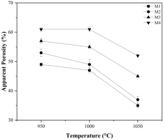
Table 3 presents the linear shrinkage, apparent density and water absorption of the fired ceramic supports. Linear shrinkage values between 6.2 % and 14.8 % were found. The results showed that both the increase in firing temperature and the addition of sugarcane bagasse waste caused an increase in the linear shrinkage of ceramic supports. Thus, the firing temperature and waste content tend to influence the sintering and densification degree of the ceramic supports produced. Because of this, the formulations incorporated with sugarcane bagasse waste (M2, M3, and M4 formulations), which act as a pore-forming agent, showed higher linear shrinkage values compared to the pure clay formulation (M1 formulation). Furthermore, it was observed that significant changes occurred above 1000 °C. This behavior was also observed in another study41, where the properties of porous ceramics produced from a mixture of kaolinitic clay and pore-forming agents such as sawdust and starch were evaluated. Even though, in some specific cases, such as at 950 °C, the linear shrinkage showed only a slight increase, and at 1000 °C, the M2 and M3 formulations exhibited equal values, the effect of increasing firing temperature tends to cause an increase in the vitrification degree, resulting in higher densification of the ceramic supports. This effect leads to an increase in linear shrinkage values, regardless of the amount of sugarcane bagasse waste added. Regarding apparent density, the ceramic supports produced presented values distributed across a wide range, varying from 0.89 g/cm3 to 1.82 g/cm3. The densification process of ceramic supports containing sugarcane bagasse waste is somewhat complex due to opposing effects occurring with the increase in firing temperature. These effects include sintering, degassing, and mainly the release of volatiles from the combustion of sugarcane bagasse waste, which corroborates with the loss on ignition data. At any firing temperature, the effect of high mass loss is decisive in the densification behavior, in accordance with the DSC and TGA data (Figure 5) of the sugarcane bagasse waste. Furthermore, the thermal destruction of the sugarcane bagasse waste during the firing process is strongly responsible for the delay in densification, resulting in more porous ceramic supports. This is consistent with the microstructural characteristics. Furthermore, in the variation of water absorption, it is observed that the effect of the firing temperature was to reduce water absorption, mainly above 1000 °C due to the greater vitrification of the fired supports. On the other hand, at all firing temperatures, the ceramic supports showed higher water absorption values. A similar behavior was also observed for apparent porosity, as shown in Figure 8. High values of apparent porosity (37 – 61 %) were obtained. The explanation for this behavior is related to the thermal destruction of sugarcane bagasse waste during the firing process, which is accompanied by the generation of a large number of open pores within the structure of the supports. The results also showed that the water absorption values and apparent porosity of the M4 formulation supports were higher than the others at all firing temperatures. This was likely influenced by the higher amount of pore-forming agents in this composition, and consequently, greater mass loss and open pore formation during the firing process. These results are highly relevant for practical application in low-cost ceramic membranes, as the level of apparent porosity suggests that the supports may have good permeability. Furthermore, the water absorption and apparent porosity values are consistent when compared to other studies43-46, where organic wastes are also used as pore-forming agents in porous ceramic supports for filtration membranes.
Linear Shrinkage, Apparent Density and Water Absorption of supports fired at sintering temperatures.
The tensile strength of ceramic supports is presented in Figure 9. It can be observed that the values range from 3 MPa to 13 MPa, being strongly influenced by the firing temperature and the proportion of sugarcane bagasse waste incorporated into the formulation. In general, increasing the firing temperature enhances the mechanical strength of the ceramic bodies due to the intensification of the sintering process, which results in a denser and more cohesive microstructure. In contrast, the addition of lignocellulosic waste to the ceramic composite exerts the opposite effect, progressively reducing the tensile strength. This behavior can be attributed to the high loss on ignition of sugarcane bagasse at elevated temperatures, which leads to significant mass loss and the formation of open pores within the material structure, as evidenced in Figure 8. Notably, higher concentrations of this waste result in substantial decreases in the mechanical properties of the fired ceramic supports.

Figure 10 shows micrographs obtained by scanning electron microscopy (SEM) of fractured surfaces of ceramic supports fired at temperatures between 950 °C and 1050 °C. An evolution of the microstructure is observed by increasing firing temperature and sugarcane bagasse waste content. The sugarcane bagasse acts as a pore-forming agent, leading to significant variations in porosity. As its content increases, so does the porosity and pore size, due to the thermal degradation of the organic matter during firing — as also indicated by the loss on ignition. This effect is particularly evident in micrographs F, G, and L, which show deeper pores in the structure. Additionally, increasing the firing temperature intensifies the sintering process, resulting in a denser and more compact microstructure with narrower and more uniformly distributed pores. This behavior is especially clear in images I, J, K, and L (fired at 1050 °C), indicating a more advanced sintering stage. Notably, no defects such as cracks or fissures were identified in any of the samples.

SEM images of ceramic pieces, where: A, B, C and D are M1, M2, M3 and M4 respectively, sintered in 950 °C; E, F, G and H are M1, M2, M3 and M4 respectively, sintered in 1000 °C; I, J, K and L are M1, M2, M3 and M4 respectively, sintered in 1050 °C.
In view of these results, especially when considering mechanical strength, the most consistent firing temperature to be chosen as optimal for the manufacture of the porous ceramic support would be 1050 °C. However, considering the apparent porosity, these same supports have relatively lower values compared to supports fired at other temperatures. This fact makes it less interesting for use as a support for filtration membranes, as when tested for this purpose, it could lead to a higher pressure drop when a flow passes through the porous support, possibly causing a reduction in pressure when fluid (liquid or gas) passes through the porous medium, in this case, ceramic support. This pressure drop is caused by the resistance to flow provided by the material's pores. In the case of the ceramic support fired at 1050 °C, the lower apparent porosity indicates that the pores of the material are narrower, as can be seen in Figure 10 (SEM). This results in higher flow resistance, increasing the energy required for the fluid to pass through the support. This higher resistance could be problematic in filtration membrane applications, as more energy (pressure) would be needed in a potential filtration system to maintain the desired flow, which would increase operational costs. Additionally, lower porosity could decrease the filtration rate, compromising the functionality of the support for this application.
Based on this, the temperature of 1000 °C is considered the most convenient because it balances the need for efficient sintering and preserves sufficient porosity to ensure good selectivity in filtration without directly affecting the performance and practical viability of the system. Therefore, the porous supports fired at 1000 °C were selected to be analyzed in terms of porosity and average pore size with the purpose of classifying the supports according to the type of filtration (microfiltration or ultrafiltration).
Table 4 presents the porosity and average pore diameter values of the ceramic supports sintered at 1000 °C, evidencing a clear tendency for these parameters to increase with the addition of sugarcane bagasse waste. The ceramic supports presented average pore size values between 0.06 and 0.90 µm and porosity between 33 and 64 %. These results are consistent with the apparent porosity data (Figure 8) and with the modal profiles observed in the pore distribution curves in Figure 11. Formulation M1, without waste, presented a narrow modal peak around 0.1 µm, indicating a mesoporous structure with high selectivity and low permeability. The formulations with 15 % (M2) and 20 % (M3) of waste presented bimodal distributions and larger pores, associated with greater accessibility to the flow, with intermediate characteristics between selectivity and permeability. Although M2 and M3 present similar porosity (51 %), the average pore size of the M3 formulation makes the void volume more accessible to fluid flow, maximizing performance in terms of permeability. The formulation with 25 % waste (M4) presented the widest and most macroporous pore distribution, with predominant peaks close to 1 µm and the presence of pores above 10 µm, being more suitable for applications that prioritize high permeability and flow, although with lower efficiency in the filtration of fine particles. In this context, the most convenient situation for this study is precisely the search for a balance between selectivity and permeability, which makes the M3 formulation particularly promising. Furthermore, these results are highly relevant, as they indicate that ceramic supports incorporating sugarcane bagasse waste and sintered at 1000 °C have potential for application in microfiltration processes, which require average pore sizes in the range of 0.1 to 10 µm47.

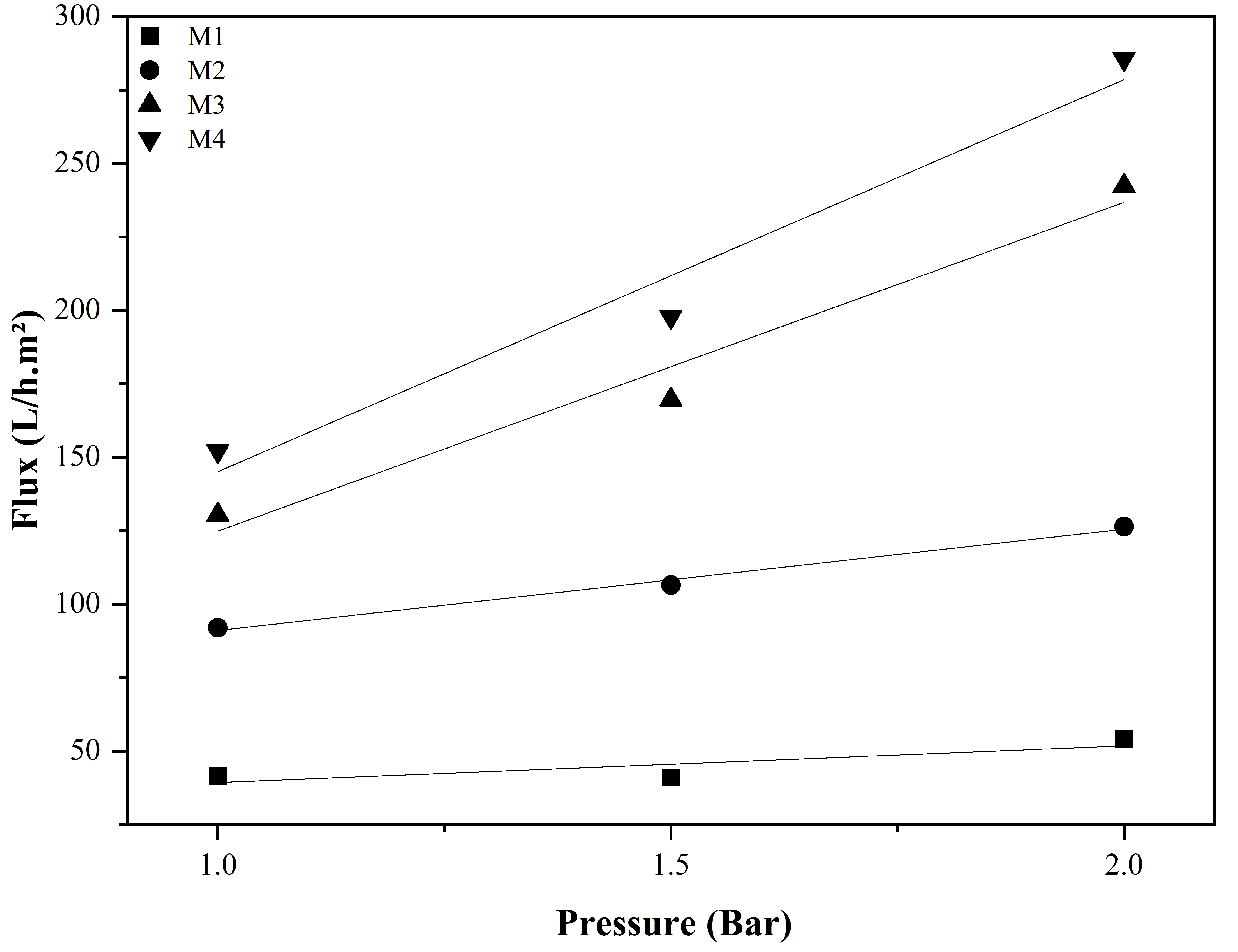
Figure 12 presents the stabilized water flux of the ceramic supports as a function of applied pressure. Table 5 shows the corresponding permeability values for each support. The results demonstrate a linear relationship between permeated flux and pressure, with flux increasing proportionally to pressure. This behavior aligns with Darcy’s law35, as also reported by other authors48-50.

The permeability values follow a similar trend, with the highest values observed for the supports containing greater amounts of sugarcane bagasse waste, particularly the M4 support, which reached a maximum of 133.39 L/h·m2·bar. This outcome was expected, as the incorporation of organic waste promotes increased porosity through the formation of voids during thermal decomposition.
Among the tested supports, M1 exhibited the lowest permeated flux across all pressures, suggesting limited porosity or reduced pore interconnectivity. As the sugarcane bagasse waste content increased, so did the flux, confirming the positive impact of the waste on the porous structure. In particular, the M3 support demonstrated a highly favorable balance between mechanical strength and permeability. This support exhibited significantly higher flux than M1 and M2, while avoiding the excessive pore formation observed in M4, which could compromise mechanical integrity. Therefore, M3 was selected as the most suitable ceramic support, as it combines satisfactory mechanical performance with high permeability. Moreover, the linear increase in flux with pressure for all samples indicates structural stability under the test conditions, with no evidence of pore collapse or blockage. These findings confirm that the addition of sugarcane bagasse waste significantly enhances the porous architecture of the ceramic supports, facilitating fluid transport. This behavior is consistent with the chemical and thermal analyses, which indicated the generation of pores due to the thermal degradation of lignocellulosic components.
4. Conclusions
This work demonstrated in a very promising way that sugarcane bagasse waste has the potential to be valorized as a low-cost renewable biomass raw material to produce kaolinitic clay-based porous ceramic supports. The results showed that sugarcane bagasse waste acted as an excellent pore-forming agent, facilitating the creation of high open porosity in the structure of the ceramic support fired at different temperatures. It was established that the physical properties and sintered microstructure of the ceramic supports are strongly dependent on the amount of sugarcane bagasse waste added and firing temperature. The higher the incorporation of sugarcane bagasse waste, the greater the creation of open porosity with larger average pore size. Such characteristics are relevant to produce high-quality porous ceramic supports. Finally, the porous ceramic support produced with 20 % sugarcane bagasse waste (M3 Formulation) and fired at 1000 °C exhibited adequate properties for potential application in low-cost ceramic membranes for microfiltration processes.
5. Acknowledgments
The authors would like to thank the Brazilian agencies Research Support of the State of Rio de Janeiro – FAPERJ (Process numbers: E-26/200.180/2021 and E-26/201.137/2022), Coordination for the Improvement of Higher Education Personnel – CAPES (Sandwich Doctoral Program Abroad - CAPES-PDSE (Process number: 88881.690243/2022-01)), and the National Council for Scientific and Technological Development - CNPq (Process number: 306147/2023-8). The authors also wish to thank Cerâmica Sardinha for providing the clay and Usina Canabrava for supplying the sugarcane bagasse.
-
Data Availability
The authors confirm that the data supporting the findings of this study are available within the article and are also available from the corresponding author upon reasonable request.
6. References
-
1 United Nations Environment Programme. International Solid Waste Association. Global waste management outlook 2024 - beyond an age of waste: turning rubbish into a resource [Internet]. Nairobi: UN Environment Programme; 2024 [cited 2024 Dec 20]. Available from: https://wedocs.unep.org/20.500.11822/44939
» https://wedocs.unep.org/20.500.11822/44939 - 2 Gebbie L, Dam TT, Ainscough R, Palfreyman R, Cao L, Harrison M, et al. A snapshot of microbial diversity and function in an undisturbed sugarcane bagasse pile. BMC Biotechnol. 2020;20:26.
- 3 Khatri P, Pandit AB. Systematic review of life cycle assessments applied to sugarcane bagasse utilization alternatives. Renew Sustain Energy Rev. 2023;174:113168.
-
4 União Nacional da Bioenergia. Bagaço de cana-de-açúcar: 5 usos ecológicos do maior resíduo agroindustrial do país [Internet]. Araçatuba: UDOP; 2024 [cited 2024 Dec 20]. Available from: https://www.udop.com.br/noticia/2024/01/16/bagaco-de-cana-de-acucar-5-usos-ecologicos-do-maior-residuo-agroindustrial-do-pais.html
» https://www.udop.com.br/noticia/2024/01/16/bagaco-de-cana-de-acucar-5-usos-ecologicos-do-maior-residuo-agroindustrial-do-pais.html -
5 IBGE News. IBGE previews harvest of 308.5 million tonnes for 2024, a drop of 2.8% compared to 2023 [Internet]. Rio de Janeiro: IBGE; 2023 [cited 2024 Mar 20]. Available from: https://agenciadenoticias.ibge.gov.br/en/agencia-press-room/2185-news-agency/releases-en/38331-ibge-preve-safra-de-308-5-milhoes-de-toneladas-para-2024-com-queda-de-2-8-frente-a-2024
» https://agenciadenoticias.ibge.gov.br/en/agencia-press-room/2185-news-agency/releases-en/38331-ibge-preve-safra-de-308-5-milhoes-de-toneladas-para-2024-com-queda-de-2-8-frente-a-2024 - 6 Silva DW, Farrapo CL, Ribeiro DP, Mendes RF, Mendes LM, Scolforo JRS. MDP with particles of eucalyptus and corn straw. Sci For. 2015;43(108):853-62.
- 7 Soares LA, Fuess LT, Delforno TP, Oliveira VM, Silva EL, Varesche MBA. Biofuel production from solid and liquid fractions of hydrothermally pretreated sugarcane bagasse in a continuous compartmentalized reactor and potential metabolic pathways. Quim Nova. 2024;47(8):e20240033.
- 8 Islam S, Islam MS, Rahman MA, Islam MS. Renewable energy potential of sugarcane waste biomass: a review. Int J Renew Energy Res. 2021;11(2):691-703.
- 9 Gunun N, Wanapat M, Gunun P, Cherdthong A, Khejornsart P, Kang S. Effect of treating sugarcane bagasse with urea and calcium hydroxide on feed intake, digestibility, and rumen fermentation in beef cattle. Trop Anim Health Prod. 2016;48(6):1123-8.
- 10 Balaji N, Lakshmi PS. Experimental investigation on utilization of sugarcane bagasse ash as a cementitious material in mortar. Int J Res Appl Sci Eng Technol. 2019;7:6.
- 11 Malkapuram D, Ballari SO, Chinta S, Rajasekaran P, Venkatesan B, Vellingiri S, et al. Mechanical, water absorption, efflorescence, soundness and morphological analysis of hybrid brick composites. Materia (Rio J). 2024;29(3):e20240179.
- 12 Messa LL, Contieri GA, Faez R. Sugarcane bagasse fibers derivatives and their application in chitosan-based composite films for NPK fertilizer release. J Braz Chem Soc. 2023;34(5):653-63.
- 13 Monteiro SN, Candido SV, Braga FO, Bolzan LT, Weber RP, Drelich JW. Sugarcane bagasse waste in composites for multilayered armor. Eur Polym J. 2016;78:173-85.
- 14 Ali MB, Hamdi N, Rodriguez MA, Mahmoudi K, Srasra E. Preparation and characterization of new ceramic membranes for ultrafiltration. Ceram Int. 2018;44(2):2328-35.
- 15 Saini P, Bulasara VK, Reddy AS. Performance of a new ceramic microfiltration membrane based on kaolin in textile industry wastewater treatment. Chem Eng Commun. 2019;206(2):227-36.
- 16 Aissat M, Hamouda S, Bettahar N, Tarboush BJA, Bahmani A. Characterization and application of ceramic membranes prepared from Algerian kaolin. Ceramica. 2019;65(376):554-61.
- 17 Abdullayev A, Bekheet MF, Hanaor DAH, Gurlo A. Materials and applications for low-cost ceramic membranes. Membranes. 2019;9:1-31.
- 18 Maciel FS, Areias IOR, Holanda JNF. Valorization potential of coffee grounds waste as a renewable pore-forming agent to produce low-cost porous ceramic support. Res Soc Dev. 2023;12(2):e22612240023.
- 19 Santos J, Riella HG, Kuhn RC, Marangoni C. Fabrication and characterization of low-cost ceramic membranes for microfiltration of Acutodesmus obliquus using modified clays. Materia (Rio J). 2019;24(4):e-12426.
- 20 Xavier LA, Fetzer DEL, Oliveira TV, Eiras D, Voll FAP, Vieira RB. Effect of stainless-steel slag concentration in the fabrication of cost-effective ceramic membranes: seawater pre-treatment application. Ceram Int. 2022;48(16):23273-83.
- 21 Misrar W, Loutou M, Saadi L, Mansori M, Waqif M, Favotto C. Cordierite containing ceramic membranes from smectitic clay using natural organic wastes as pore-forming agents. J Asian Ceram Soc. 2017;5(2):199-208.
- 22 El Maguana Y, Elhadiri N, Benchanaa M, Chikri R, Idouhli R, Tabit K. Low-cost and high-performance ceramic membrane from sugar industry waste: characterization and optimization using experimental design. Mater Today Proc. 2022;53(2):310-7.
- 23 Li L, Cao G, Zhao R, Wu S, Wang L, Li X, et al. Recycling of construction and demolition waste to fabricate cost-effective anorthite ceramic membranes for enhanced separation of an oil-in-water emulsion. Constr Build Mater. 2020;265:120512.
- 24 França SAS, Santana LNL, Rodríguez MA, Menezes RR, Arimatéia RR, Lira HL. Ceramic membranes production using quartzite waste for treatment of domestic wastewater. Int J Appl Ceram Technol. 2025;22(2):e14986.
- 25 Kumar A, Singh R, Sharma S, Verma N. Development of porous ceramic membranes from fly ash and red mud for wastewater treatment applications. Mater Chem Phys. 2023;287:126409.
- 26 Rafya M, Misrar W, Saâdi L, Mansori M, Waqif M, Hafidi A, et al. Ceramic membrane support based on kaolin and solid waste from hydrodistillation of Rosmarinus officinalis L. Mater Chem Phys. 2023;295:127030.
- 27 Dhiman S, Balakrishnan M, Naddeo V, Ahsan N. Performance of Anaerobic Membrane Bioreactor (AnMBR) with sugarcane bagasse ash-based ceramic membrane treating simulated low-strength municipal wastewater: effect of operation conditions. Water Air Soil Pollut. 2023;234(3):141.
- 28 International Organization for Standardization. ISO 3310-1:2016: test sieves — technical requirements and testing — Part 1: Test sieves of metal wire cloth. Geneva: ISO; 2016.
- 29 ABNT: Associação Brasileira de Normas Técnicas. NBR 7180:2016: soil – determination of plastic limit. Rio de Janeiro: ABNT; 2016.
- 30 ABNT: Associação Brasileira de Normas Técnicas. NBR 6459: determination of liquid limit. Rio de Janeiro: ABNT; 2016.
- 31 ASTM International. ASTM C326-09(25): standard test method for modulus of rupture of concrete. West Conshohocken, PA: ASTM International; 2009.
- 32 ABNT: Associação Brasileira de Normas Técnicas. NBR ISO 10545-3: Ceramic tiles — Part 3: Determination of water absorption, apparent porosity, apparent relative density, and apparent density. Rio de Janeiro: ABNT; 2018.
- 33 Frocht MM. Strength of Materials. New York: Ronald Press; 1951. p. 175-6.
- 34 Bortz SA, Lund HH. The brittle ring test. In: Conference conducted by the School of Engineering and the College Extension Division. North Carolina State College in cooperation with the Office and Ordnance Research; 1961; North Carolina. Proceedings. London: Interscience Publishers; 1961. p. 383-406.
- 35 Homaeigohar SS, Buhr K, Ebert K. Polyethersulfone electrospun nanofibrous composite membrane for liquid filtration. J Membr Sci. 2010;365:68-77.
- 36 Souza GP, Sousa SJG, Terrones LAH, Holanda JNF. Mineralogical analysis of Brazilian ceramic sedimentary clays used in red ceramic. Ceramica. 2005;51:381-6.
- 37 Khatri P, Pandit AB. Systematic review of life cycle assessments applied to sugarcane bagasse utilization alternatives. Biomass Bioenergy. 2022;158:106365.
- 38 Bilal M, Wang Z, Cui J, Ferreira LFR, Bharagava RN, Iqbal HMN. Environmental impact of lignocellulosic wastes and their effective exploitation as smart carriers: a drive towards greener and eco-friendlier biocatalytic systems. Sci Total Environ. 2020;722:137903.
- 39 Khalil HPSA, Bhat AH, Yusra AFI. Green composites from sustainable cellulose nanofibrils: a review. Carbohydr Polym. 2012;87:963-79.
- 40 Pereira AC, Rocha GFB, Ferreira LA, Silva D, Costa JF. Structural characterization of chemically modified sugarcane bagasse fibers. In: Simpósio Nacional de Instrumentação Agropecuária; 2017 Nov; São Carlos, São Paulo, Brazil. Anais. São Carlos: Embrapa Instrumentação; 2017.
-
41 Soares LA, Alexandrino AC, Souza CP, Duarte MML. Caracterização do bagaço da cana-de-açúcar visando a produção de carvão ativado [Internet]. Rio de Janeiro: ABQ; 2014 [cited 2024 Dec 25]. Available from: https://www.abq.org.br/cbq/2014/trabalhos/5/6241-19487.html
» https://www.abq.org.br/cbq/2014/trabalhos/5/6241-19487.html - 42 Chacha MS, Andrew B, Vegi MR. Amendment of soil water retention and nutrients holding capacity by using sugarcane bagasse. Curr Agric Res. 2019;7(2):224-35.
- 43 Matos WEC, Silva HJB, Paz GM, Santos VB. Use of sugarcane bagasse ash as a structural or pozzolanic filling material for cementitious mortar production: a review. Materia (Rio J). 2021;26(4):e13122.
- 44 Salman MM, Radhi NS, Sabr OH, Nhabih HT. Utilization of diverse cheap materials as pore generating agent to manufacture low-cost porous ceramic. Ceramica. 2020;66:179-85.
- 45 Li L, Cao G, Zhao R, Wu S, Wang L, Li X, et al. Recycling of construction and demolition waste to fabricate cost-effective anorthite ceramic membranes for enhanced separation of an oil-in-water emulsion. Constr Build Mater. 2020;265:120512.
- 46 Huang J, Zhang H, Zhang Y, Liang D, Chen H. Recycle coal fly ash for preparing tubular ceramic membranes applied in transport membrane condenser. Sep Purif Technol. 2022;282(Pt A):119972.
- 47 Daneluz J, Silva GF, Duarte J, Turossi TC, Santos V, Baldasso C, et al. Membrane separation process of microfiltration applied to the filtration of kombuchas. Food Chem Adv. 2023;3:100451.
- 48 Liu M, Zhu Z, Zhang Z, Chu Y, Yuan B, Wei Z. Development of highly porous mullite whisker ceramic membranes for oil-in-water separation and resource utilization of coal gangue. Separ Purif Tech. 2020;237:116483.
- 49 Saja S, Bouazizi A, Achiou B, Ouaddari H, Karim A, Ouammou M, et al. Fabrication of low-cost ceramic ultrafiltration membrane made from bentonite clay and its application for soluble dyes removal. J Eur Ceram Soc. 2020;40:2453-62.
- 50 Singh P, Manikandan NA, Purnima M, Pakshirajan K, Pugazhenthi G. Recovery of lignin from water and methanol using low-cost kaolin-based tubular ceramic membrane. J Water Process Eng. 2020;38:101615.
Edited by
-
Associate Editor:
Eliana Muccillo
-
Editor-in-Chief:
Luiz Antonio Pessan
The authors confirm that the data supporting the findings of this study are available within the article and are also available from the corresponding author upon reasonable request.