
 Sport, social policy and poverty in Portugal: analysis of the Programa Nacional de Desporto para Todos (PNDpT) funding
Abstract
This research sought to examine the configuration of funding and public expenditure on sports policies aimed at broadening participation in sports in Portugal, especially those that provide opportunities for low-income populations. The data linked to the Programa Nacional de Desporto para Todos (National Sport for All Program)—PNDpT—were our empirical basis for this study, which showed that the Portuguese State plays a limited role in the Portuguese Institute of Sport and Youth (IPDJ) budget, with sports betting and online gambling being the main sources of funding for this Institute. Regarding the PNDpT, we point out that the IPDJ’s average budget share in 2022 was limited to 13% of total costs, which may hinder the expansion of this program. By way of reflection, we suggest that resources could be better allocated, since while the PNDpT accounts for only 2.5% of the IPDJ budget, transfers to sports federations account for 75%.
Keywords
Sports policy; Sports for All; Social policy
Resumo
Esta investigação buscou examinar a configuração do financiamento e do gasto público das políticas desportivas destinadas à generalização da prática desportiva em Portugal, em especial aquelas que preveem vagas à população pobre do país. Os dados vinculados ao Programa Nacional de Desporto para Todos (PNDpT) foram nossa base empírica de estudo, e demonstraram que o Estado português participa de maneira tímida do orçamento do instituto Português do Desporto e Juventude (IPDJ), sendo as apostas esportivas e online a maior fonte de financiamento deste órgão. Sobre o PNDpT apontamos que a fatia orçamentária média do IPDJ em 2022 se limitou a 13% dos custos totais, o que tende a dificultar a expansão deste programa. Como reflexão, sugerimos que os recursos poderiam ser mais bem partilhados, pois enquanto o PNDpT consome a quantia módica de 2,5% do orçamento do IPDJ, as transferências para as federações desportivas avançam em 75%.
Palavra-chave
Política Esportiva; Desporto para Todos; Política Social
Resumen
Esta investigación buscó examinar la configuración de la financiación y del gasto público de las políticas deportivas destinadas a la generalización de la práctica deportiva en Portugal, especialmente aquellas que proporcionan vacantes a la población pobre del país. Los datos vinculados al Programa Nacional de Desporto para Todos (PNDpT) fueron nuestra base empírica de estudio, que mostró que el Estado portugués participa de manera tímida en el presupuesto del IPDJ, siendo las apuestas deportivas y en línea la mayor fuente de financiación de este organismo. Sobre el PNDPT, señalamos que la participación promedio de presupuesto del IPDJ en 2022 se limitó al 13% de los costos totales, lo que puede dificultar la expansión de este programa. A modo de reflexión, sugerimos que los recursos podrían distribuirse mejor, ya que mientras el PNDpT representa solo el 2.5% del presupuesto IPDJ, las transferencias a las federaciones deportivas alcanzan el 75%.
Palabra clave
Política Deportiva; Deportes para todos; Política pública
1 INTRODUCTION
Sport, in general, can be conceived as a social phenomenon of global significance. Many countries recognize it as such an important asset that they define it as a social right—that is, something to which everyone should have access and freedom of choice regarding its practice. This is the case in the European Union (Comissão Europeia, 2022) and its member states, such as Portugal, where Article 79 of the Constitution assigns the State the responsibility of promoting widespread access to physical and sports activities.
Although Portugal has a high Human Development Index (HDI) (0.890 in 20231), it faces persistent inequalities: approximately 20% of the population lives at risk of poverty, with the highest incidence among low-income workers, the unemployed, the elderly, women, and immigrants. This reality impacts access to sports, as the country remains among the least physically active in the European Union—78% of the population is considered sedentary (Comissão Europeia, 2022). These factors underscore the need for public policies capable of universalizing the right to sports and addressing the social inequalities that shape national participation patterns.
In this context, the Portuguese government, through the Instituto Português do Desporto e Juventude (Portuguese Institute of Sport and Youth)—IPDJ—develops sports-related policies aimed at the general population, among which the Programa Nacional de Desporto para Todos (National Sport for All Program)—PNDpT—stands out as the main expression of the country’s social policy for sports. Despite the importance and longevity of this program, the Portuguese and Brazilian scientific literature still contains few systematic studies on its scope, effectiveness, and, above all, its funding structure.
This study focuses on analyzing public funding for sports in Portugal in 2022, with an emphasis on the PNDpT, considering the policies implemented by the 22nd Constitutional Government, which provided, in its government plan, for the development of actions aimed at segments of the population living in poverty or at social risk (Portugal, 2019). To this end, we analyze: (a) the budgetary sources that support the program; (b) the magnitude of the resources allocated to its implementation; and (c) the allocation of expenditures identified in the program contracts signed with implementing entities that provide for places reserved for people living in poverty.
The article is organized as follows: following this introduction, we present the social and sports context of Portugal and the state structure of sports, situating the PNDpT within the framework of social policy for sports; next, we present the methodology and the discussion of the empirical results in light of the adopted theory, concluding with final considerations.
2 THE PORTUGUESE WELFARE STATE AND THE CONTEXT OF POVERTY AND SPORTS PRACTICE
The formation of the Portuguese welfare state stems from specific historical trajectories. Following the advance of European welfare in the post-World War II era, marked by Keynesianism and the “golden years of capitalism” (Hobsbawm, 1995), the neoliberalism of the 1970s redefined the universalization of rights and state intervention (Harvey, 2005). Within this process, Portugal structured a model characterized as a “semi-welfare state” by Sousa Santos and Ferreira (2002), with protection systems of significant yet limited scope.
Studies on health (Silva; Pestana, 2013), education (Abrantes; Roldão, 2013), and social protection (Madureira, 2020) indicate that, until 2009, public systems were strengthened. However, the 2008 crisis and the austerity measures imposed by the Troika starting in 2011 restricted social funding and reduced the state’s capacity to respond (Nunes, 2021). Despite improvements in the Well-being Index2 and the HDI, deep inequalities in income distribution persist: in 2022, 21.2% of the population lived at risk of poverty,3 reaching 28.5% among foreigners (Peralta; Carvalho; Fonseca, 2023), with a monthly4 threshold of €591.25 and significant pressure from housing costs, especially in Lisbon.5
This picture reveals a welfare state marked by progress, but also strained by structural limits and recent budgetary constraints. These inequalities shape access to social rights, including sport, whose realization depends on public policies and on the budget allocated to programs, especially those that provide services to people living in poverty, such as the PNDpT, the object of this study.
In this context, marked by structural limitations of the Portuguese welfare state and the persistence of socioeconomic inequalities, it is important to consider how these conditions are reflected in access to sports. Let us begin with the central question: Is Portugal a physically active country? According to the European Commission’s report Sport and Physical Activity (2022), the answer is no. Only 22% of the population participates in sports regularly or with some frequency, below the European average of 38%. The situation is even more critical among women over 24, men over 40, manual workers, homemakers, unemployed people, and retirees. Furthermore, 83% of Portuguese people rarely engage in daily physical activities such as cycling, dancing, or gardening, a figure that negatively surpasses even the rates of sports participation. The report also notes that motivation for exercise is linked to health, relaxation, and physical fitness. In contrast, the main barriers are lack of time (44%) and lack of motivation or interest (29%), in addition to factors such as type of work, age, geographic location, and education level.
Given this, and considering that more than 20% of the population lives at risk of poverty—a situation exacerbated for foreigners and low-income workers—participation in sports tends to be even more limited. This reality suggests that physical inactivity, which affects 78% of the population, tends to be linked to material inequalities and the social position occupied by different groups. These factors reinforce the centrality of the welfare state and the social policies developed, considering their limitations and possibilities, as described by Behring and Boschetti (2011). These policies, in addition to operating in the field of social protection linked to the capital/labor relationship, can promote goods and services in education, culture, and sports, with the allocation of public funds serving as a central mechanism for implementing them, especially for the impoverished segment of society.
3 STATE STRUCTURE FOR SPORT AND SOCIAL POLICY FOR SPORTS IN PORTUGAL
The low rate of sports participation among the Portuguese population, combined with the limitations of the welfare state and persistent poverty, positions sport as a relevant public policy, whose institutional framework largely determines its scope. In this sense, it is important to understand how the sports system is organized in the country. The Portuguese sports structure is based on the pyramidal model characteristic of the European tradition, linking clubs, regional associations, national federations, and international bodies, each with specific responsibilities in the promotion, organization, and regulation of sports participation (Godinho, 2018). This arrangement is reinforced by Article 79 of the Portuguese Constitution, which guarantees the right to sports and assigns to the State, in collaboration with schools and sports organizations, the duty to promote sports, foster physical culture, and prevent violence.
The Framework Law on Physical Activity and Sport (Law No. 5/2007) sets out the actors, responsibilities, and functioning of the national sports system. Chapters II and III define the responsibilities of the public administration, autonomous regions, local authorities, and sports associations, including the Olympic organization, federations, clubs, sports companies, professional competitions, and sports agents. This legal framework highlights, as noted by Santos, Carvalho, and Alves (2021), the central role of the State in coordinating the system, reaffirming, according to Godinho (2018), the aim of making sports a universal activity as a cultural and formative element. Since 2022, the 23rd Constitutional Government, via Decree-Law No. 32/2022, has assigned to the Secretary of State for Youth and Sports (SEJD)—reporting to the Deputy Minister for Parliamentary Affairs—the authority to manage the country’s sports policy, leaving school sports to the Directorate-General for Education, under shared responsibility with the Minister of Education.
In addition to sports, the SEJD is also responsible for implementing youth policies. Its structure comprises multiple entities: the Portuguese Institute of Sport and Youth (IPDJ), the Sports Foundation, the National Sports Council, the Doping Analysis Laboratory, divisions focused on federated sports and sports for all, national and high-performance centers, sports medicine sectors, initiatives to promote sports ethics, and infrastructure departments.
The IPDJ, in particular, is a public institute with administrative and financial autonomy, responsible for the decentralized implementation of sports and youth policies. It works in collaboration with sports organizations, youth entities, and local authorities, playing a central role in the promotion of sports, support for high performance, doping control, sports medicine, and infrastructure management. As this is the centralizing body of the Portuguese State for sports, we consider, for all intents and purposes, all actions directly or indirectly carried out by the IPDJ to constitute Portugal’s national sports and youth public policy. In Table 1, we summarize its main areas of activity.
Categorization of the areas of action of Portugal’s sports policy and their respective programs, venues, and actions
Given the limitations of this study, we will not analyze all areas, but some observations are necessary. Competitive Sports refers to the set of practices within the federated system, involving the training and performance of athletes and teams in local, national, and international competitions, often linked to the economic, political, and symbolic interests of federations, leagues, and representative bodies. Sport for All, in turn, covers practices in a leisure context, ranging from informal activities to technical, recreational, or competitive training programs. Student Sports, meanwhile, refers to practices within the educational systems of the 2nd and 3rd cycles of basic education, secondary education, and higher education, which may take on a curricular, competitive, or recreational character.
In this context, the social policy for sports promoted by the IPDJ takes the form of a set of actions aimed at making sports widely available and accessible to the entire population, especially at the community, school, and non-federated levels. This policy may involve both investments in infrastructure and the promotion of sports development projects in public or private spaces. Thus, we understand social policy for sports to encompass all programs, spaces, and initiatives associated with the categories of Sport for All and Student Sports, as it is in these areas that the state’s efforts to promote the right to sports in its universal dimension are concentrated.
4 METHODOLOGY
This research is grounded in the historical-dialectical materialist method (Netto, 2011), adopting a descriptive-analytical approach through bibliographic and documentary research (Gil, 2008; Minayo, 2013). Empirically, data collection was based on information available in the Program Contracts (Contratos-Programa—CPs) signed between the IPDJ and implementing entities of the PNDpT for the year 2022.6 Initially, 428 CPs were identified, of which 156 were excluded because they did not provide for spaces designated for the population living in poverty, resulting in a final sample of 272 documents.
The description and analysis of the data follow the methodology for the critical evaluation of social policies proposed by Boschetti (2009) and adapted to the sports field by Athayde et al. (2020, 2022), focusing on the categories: (a) sources of funding; (b) magnitude of expenditures; and (c) allocation of expenditures. From the CPs, we extracted information on requested and approved amounts, counterpart funding, and revenue composition, organizing them into spreadsheets for analysis using simple descriptive statistics (means, percentages, and proportional ratios). Comparing these data with the IPDJ’s overall budget and with transfers allocated to sports federations allowed us to situate the PNDpT within the broader context of national sports public policy.
5 RESULTS AND DISCUSSIONS
The analysis of public funding is not limited to a merely formal and technical discussion; it has a political character, even in bodies that have political, administrative, and financial autonomy to organize their budgets, as is the case with the IPDJ. Understanding the budget carries unique heuristic value in identifying how the state plans its actions and what its priorities are at the governmental level (Salvador, 2012), a reality that is also present in sports policies, as Carneiro (2018) points out. Based on these premises, we have organized the discussion into three distinct sections: first, analyzing the sources of funding and public spending within the broader context of the IPDJ; second, examining the budgetary dynamics of the PNDpT; and finally, exploring the relationship between the two regarding the allocation of expenditures.
5.1 ANALYSIS OF BUDGET SOURCES AND THE MAGNITUDE OF IPDJ REVENUES AND EXPENDITURES
The Portuguese government’s goal between 2019 and 2022 was to expand sports participation across all age groups and social segments to the European average, including those at risk of poverty, as well as to position the country among the fifteen most physically active nations (Portugal, 2019). Carvalho (2022) estimated that to achieve this, sports participation would need to double—a difficult goal given historical trends. Given this, it is worth asking: what is the available budget, and to what extent does it allow for the development of sports policy?
Regarding budgetary sources, Carneiro and Mascarenhas (2018) highlight that these indicators reveal the origin of resources allocated to a specific social policy, answering the question “who pays the bill?”. In the case of the IPDJ, these sources can be understood in two interconnected ways: the general sources of the agency’s budget and its own sources, legally linked to it. Table 2 illustrates this structure, which consists of: (a) state funds via taxes paid by the population; (b) community funds, particularly from the European Union; (c) revenue from games and betting (in-person and online), with amounts not paid to winners and allocated to sports; and (d) the IPDJ’s own resources linked to its regulatory, supervisory, and asset management activities.
That said, based on the IPDJ’s 2022 management reports,8 we can demonstrate the scale of the budget across its various funding sources and, in turn, link them to the amount allocated to the PNDpT. In that year, revenue budget execution, considering what was actually collected,9 was 13% lower than in 2019—the year immediately preceding the COVID-19 pandemic—influenced primarily by revenue from the Social Games, which failed to recover to pre-pandemic levels.
Breaking down this revenue, we can see from Figure 1 that, of the IPDJ’s three main budgetary sources, those classified as own revenue10 account for nearly all revenue (85%) and expenditures (86%). In contrast, funds received directly from the Portuguese state budget account for only 11% of revenue and 14% of expenditures, while EU funds, with the smallest share, account for 4% of revenue and 1% of expenditures. This structure reveals “who pays the bill”—in this case, largely the “gambling citizen.”

Distribution of amounts across the different financial functions of the IPDJ budget in 202211.
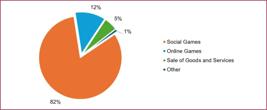
Regarding the composition of the IPDJ’s so-called “own revenue,” Figure 2 shows that this is primarily characterized by social games (82%) and online games (12%), which together account for nearly all revenue at 94%. Based on these data and considering, as we saw earlier, that this agency’s overall revenue is 85% dependent on the IPDJ’s own sources, we can say that games and betting account for approximately 62%12 of all revenue at the IPDJ.13 This situation is similar to that in other European Union countries, as suggested by the studies of Petry, Steinbach, and Tokarski (2004) and Tofan; Bilan; Cigu (2023).
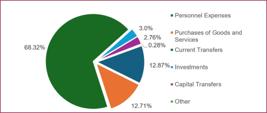
On the expenditure side,14 in Figure 3, we see a classification that identifies “current transfers” as the IPDJ’s largest expenditure, accounting for over 68% of all spending. This grouping refers to the “funding of the IPDJ’s mission areas—Sports and Youth” (Portugal, 2023, pp. 4), implemented through the programs and actions described in Table 1, in addition to those related to youth, in technical, material, and financial terms for their development. Together, these expenditures totaled €58,825,044.30 in 2022. The amount allocated to the PNDpT comes from this expenditure, which we will detail in the following section.
5.2 ANALYSIS OF THE SOURCES AND BUDGETARY SCALE OF THE PNDpT
The regulatory and operational framework of the PNDpT stipulates that funding through CPs, using IPDJ resources, may not exceed 60% of the amount requested in projects submitted by civil society organizations, except in cases of extraordinary relevance (Portugal, 2022, Art. 7, para. 3). In other words, for projects linked to the PNDpT to be implemented, they must rely on additional resources from the entities themselves, program participants, private companies and individuals, other non-profit entities, and/or local authorities (Municipal Councils and Parish Councils).
Based on the data examined, Figure 4 summarizes the composition of revenues and their average magnitude in the CPs examined during the PNDpT application phase, with implementation scheduled for 2022. It shows that the largest share would, in principle, be funded by the IPDJ, with an average expectation of 37.58% (equivalent to 62% of the permitted limit). When this percentage is combined with the amount committed by local authorities, public sources account for 45.97%. The remainder would come from applicant entities, service users, and companies and individuals, totaling 47.87%, with 6.16% unspecified—potentially from public or private sources.

Expected budgetary participation of public and private entities and the IPDJ, on average, in CPs with places reserved for people experiencing poverty at the time of application to the PNDpT in 2022.
Based on the previous data, in which the average expenditures projected at the time of application were 37.57% for the IPDJ and 62.43% for the entities and their partners, in Figure 5 we establish a comparison between these figures and those actually committed to by the parties upon signing the CPs, showing that the average expenditure funded by the IPDJ was lower than what the entities had requested at the time of application, standing at 13.85%. On the other hand, the average amount allocated to the entities and their partners increased to 86.15%, leaving the PNDpT with a very low average budget share for the year 2022, far below the funding percentage stipulated in its regulations.
Considering the average, we identified a disconnect between organized civil society’s expectations regarding the PNDpT and the empirical reality, as evidenced by the 63% difference between the amount requested and the amount actually made available by the IPDJ. It cannot be ruled out that this reality may have impacted the ability of sports associations, universities, and sports federations to serve the general population and, in particular, those living in poverty, who are notably highly dependent on social programs to access public goods and services.

Relationship between the budgetary participation projected at the time of application and that agreed in the CPs between the IPDJ and the applicant entities and their partners, with places reserved for people in disadvantaged situations, within the scope of the PNDpT in 2022.
5.3 MAGNITUDE AND ALLOCATION OF IPDJ EXPENDITURES AND THEIR RELATIONSHIP WITH THE PNDpT
This section compares the average expenditure of the support agreed upon by the parties in the CPs with the budgetary data related to the IPDJ budget line allocated to the agency’s core activity, making it possible to assess the PNDpT’s representation in the IPDJ budget and in Portugal’s sports policy, as well as illustrating the allocation of public resources across different forms of sports participation—whether for grassroots federated sports, high-performance sports, or the promotion of sports participation nationwide.
In terms of magnitude, we selected for analysis the budget data on expenditures for the “PNDpT” and “Transfers to sports federations” and calculated their relative values, taking into account the total budget of the IPDJ and the portion allocated to “current transfers” (funds for the agency’s core activities) and the Portuguese state’s overall budget for sports, consolidated in Table 3. In this table, we can see that the IPDJ’s spending on the PNDpT, in CPs with reserved places for the population living in poverty, in 2022, is almost negligible, as it represents only 2.5% of current transfers, 1.71% of the IPDJ’s budget, and 0.065% of the state’s overall budget. This significant gap between the two budget items reveals a structural asymmetry, indicating that the promotion of sports participation remains a secondary priority within the agency’s budget. However, when we examine the transfers to sports federations by the IPDJ, the reality is the opposite, as they account for 75% in this regard, 51% of the IPDJ’s total expenditures, and 2% of the general state budget.
Relationship between the general expenditures of the IPDJ and the State and expenditures on the PNDpT and transfers to sports federations in 2022. Data in nominal values (€) and percentages
Obviously, organized sports have social relevance, and the government has an interest in promoting them; this orientation is outlined in the program of the 22nd Constitutional Government, which defines the strategic objective of “affirming Portugal in the international sports context” (Portugal, 2019, p. 120). However, even though this same document includes a provision—aiming to “place the country among the fifteen European nations with the most physically active citizens in the coming decade” (Portugal, 2019)—the funds allocated to promoting sports participation among the population were significantly lower in 2022.
The reality shown in Figure 5, in which the average amount requested in the projects submitted by applicants under the PNDpT calls for proposals (37.58%) fell to 13.85% at the time the CPs were signed, combined with the magnitude of the amounts allocated to the PNDpT, as shown in Table 2, suggests that there may be some degree of relationship between the IPDJ’s inability to meet, to a greater extent, the demands of civil society organizations for more support for projects linked to this program and, among other factors, the program’s limited significance within the agency’s overall budget. This combination, namely the low volume of funding allocated to the program and the significant reduction in the support agreed in the CPs, points to a pattern of underfunding that limits the capacity to implement and expand PNDpT initiatives.
In terms of policy direction, the historical tendency of state actions to prioritize competitive sports is striking in the reality under examination. This configuration demonstrates that, even in a country whose Constitution recognizes sport as a social right, public efforts remain concentrated on structures linked to competitive and federated sports, relegating the widespread practice of sport to a residual status. This scenario reflects a dilemma characteristic of what Sousa Santos and Ferreira (2002) termed the Portuguese “semi-welfare state”: the coexistence of universalist and egalitarian principles with selective budgetary practices that favor sectors structured within federated systems and national representation, to the detriment of the general population, particularly the socioeconomically disadvantaged. The PNDpT’s low share of the IPDJ budget, coupled with the substantial reduction in support allocated in the CPs, points to the need to rethink the balance between performance sport and inclusion if progress is to be made toward universalizing the right to sports.
In summary, a joint analysis of the magnitude and allocation of funding indicates that the PNDpT occupies a marginal position within Portugal’s sports policy, despite its potential to expand sports participation among the population. This configuration tends to limit access by the population living in poverty to funded projects, precisely because the proposing entities depend, in principle, on this resource to maintain or expand their activities and due to the nature of this population segment’s dependence on social policies.
6 FINAL CONSIDERATIONS
As we have seen throughout this article, the welfare state in Portugal, despite the advances that occurred prior to the Troika’s austerity policies, has a configuration distinct from that found in countries where it is more advanced in terms of worker protection and the universalization of social policies, affecting to some extent part of the population’s access to their social rights. In the case of the subject of this study—sport as a social right—data on sports participation indicate that this right has yet to be realized in the country.
The analyses conducted to understand public funding for the PNDpT in terms of the sources, magnitude, and allocation of spending—though limited to a cross-sectional snapshot of the year 2022—suggest that public investment in this program—which has high potential to increase sports participation in the country, especially among the most impoverished segment of society—is limited in relation to the needs identified in the projects covered by the CPs. Considering that the IPDJ’s main sources of funding come from revenue generated by social games and only marginally from the Portuguese state budget, increasing the latter’s share in funding social policy for sports could be an alternative. However, such a possibility would require a different perspective in favor of the welfare state in the country, an aspect conditioned by Portuguese political, social, and ideological dynamics and by the balance of power within the governing coalition.
With regard to the allocation of expenditures, there is a predominance of support for competitive sports at the expense of what we call social policy for sports. While the former absorbs about 75% of the IPDJ’s total current transfers, the remainder is contested among programs linked to Sport for All—notably the PNDpT and the PRID—and by youth-focused initiatives not always related to sport. An increase in the amount of resources allocated to this aspect of the policy, if not resulting from an increase in the sources that fund the IPDJ, would depend on adjusting the current internal allocation structure, requiring greater balance in budget distribution. Such a shift presupposes coordination among the different actors involved in social policy for sports.
The considerations presented here, informed by the scientific methodology that guided this study, should be interpreted with caution, as they require further exploration through new research. Similarly, we suggest conducting studies that examine the PNDpT longitudinally, thereby enabling the development of more robust conclusions regarding the subject under analysis. After all, empirically understanding this program and its impact on the most impoverished segment of society is a key factor in strengthening the welfare state in Portugal and in the pursuit of greater social equality.
-
FUNDING
This study was conducted with support from the Coordination for the Improvement of Higher Education Personnel - Brazil (CAPES) - Funding Code 001.
-
HOW TO CITE
PASSOS, Felipe Barbosa; ATHAYDE, Pedro Fernando Avalone. Sport, social policy and poverty in Portugal: analysis of the Programa Nacional de Desporto para Todos (PNDpT) Funding. Movimento, v. 32, p. e32021, Jan./Dec. 2026. DOI: https://doi.org/10.22456/1982-8918.148959.
-
1
See: Human Development Index. The Global Economy.com, 2026. Available at: https://pt.theglobaleconomy.com/rankings/human_development/European-union/#:~:text=Table_title:%20Human%20Development%20Index%20(0%20%2D,%7C%20Available%20data:%201980%20%2D%202023%20%7C. Accessed on: Nov. 20, 2025.
-
2
Calculated by INE (National Institute of Statistics). The “objective of the Well-being Index is to provide, on a regular basis, results that allow for monitoring the evolution of well-being and social progress in two key areas—families’ material living conditions and quality of life.” Source: INSTITUTO NACIONAL DE ESTATÍSTICA. Available at:https://www.ine.pt/xportal/xmain?xpid=INE&xpgid=ine_indbemestar. Accessed on: June 18, 2024.
-
3
Proportion of individuals with an equivalent income below the at-risk-of-poverty threshold, which corresponds to 60% of the national median income per equivalent adult. See: PORDATA, c2024. Available at: https://www.pordata.pt/portugal/taxa+de+risco+de+pobreza+antes+e+apos+transferencias+sociais-2399. Accessed on: June 17, 2024.
-
4
“Threshold below which income is considered low in comparison with the income of other residents in the country, not necessarily implying a situation of poverty. The at-risk-of-poverty threshold corresponds to 60% of the national median income per adult equivalent after social transfers.” See: PORDATA, c2024. Available at: https://www.pordata.pt/portugal/limiar+de+risco+de+pobreza-2167. Accessed on: June 14, 2024.
-
5
Data on the cost of rent in Portuguese cities can be found on the IDEALISTA website, 2026. Available at: https://www.idealista.pt/media/relatorios-preco-habitacao/arrendamento/. Accessed on: June 14, 2024.
-
6
We emphasize that the time frame of this study was limited by the material resources and time available to the researchers, making it impossible to extend it to the entire period of Portugal’s 22nd Constitutional Government (2019–2022). Thus, this study is not intended to be longitudinal but rather cross-sectional, with the year 2022 selected as it is the most recent, post-pandemic, and most suitable to serve as a basis for future studies.
-
7
Data refer to the year 2022.
-
8
In the reports, both the revenue and expenditure budgets are divided into activity and project budgets, but for this study we will use the sum of the two to present the general budget data.
-
9
This corresponds to the revenue actually collected during the fiscal year, distinct from the initial forecast and the revised forecast (forecast adjusted during the year). Definition based on the general glossary of the General Budget Department of Portugal (Portugal, 2015c).
-
10
Described in Table 1 of this article.
-
11
The budget source “State – taxes” consists of financial functions (FF) numbers 311 and 313, the “Community Funds” category corresponds to FF 421, 441, 482, 483, and 488, and the “IPDJ Own” category relates to FF 363, 367, 368, 513, 522, and 533 (Portugal, 2022b).
-
12
Data generated by dividing the sum of the absolute values of social and online gaming (€64,439,892.54) by the IPDJ’s total revenue from all sources (€104,131,937.43) and converted to a percentage.
-
13
It is important to note that the IPDJ Management Report includes its own revenues in its classification table, excluding those arising from financial functions 368 and 522, all of which are associated with the concept of SG&A (Selling, General & Administrative Expenses). In short, we can say that these are revenues generated directly from the sale of products or services, from investments, interest on financial reserves, property rentals, and other administrative sources. Thus, the figures considered in the analysis in Figure 4 differ from those shown in Figure 3.
-
14
The expenses refer to the IPDJ’s general budget (the sum of state revenues, community funds, and the agency’s own funds).
AVAILABILITY OF RESEARCH DATA
Research data are available only upon request.
References
- ABRANTES, Pedro; ROLDÃO, Cristina. Relação dos portugueses com o sistema educativo. In: SILVA, Filipe Carreira (org.). Os portugueses e o Estado Providência: uma perspectiva comparada. Lisboa: ICS Imprensa de Ciências Sociais, 2013. p. 109-130.
-
ATHAYDE, Pedro Fernando Avalone et al Análise e avaliação de políticas estaduais de esporte: uma proposta metodológica. Revista Brasileira de Ciência e Movimento, v. 30, n.1, p. 1–20, 2022. DOI: https://doi.org/10.31501/rbcm.v30i1.12624
» https://doi.org/10.31501/rbcm.v30i1.12624 -
ATHAYDE, Pedro Fernando Avalone et al Análise de políticas esportivas: compartilhando uma proposta teórico-metodológica. Motrivivência, v. 32, n. 61, p. 1–23, 2020. Disponível em: http://educa.fcc.org.br/scielo.php?script=sci_arttext&pid=S2175-80422020000100205 Acesso em: 15 jun. 2025.
» http://educa.fcc.org.br/scielo.php?script=sci_arttext&pid=S2175-80422020000100205 -
ATHAYDE, Pedro Fernando Avalone; FIGUEIREDO, António José Barata. Public management of sport: a description and comparative analysis of the organizational structure in Brazil and Portugal. Retos, v. 51, p. 979-987, 2024. DOI: https://doi.org/10.47197/retos.v51.101356.
» https://doi.org/10.47197/retos.v51.101356 - BEHRING, Elaine Rosseti; BOSCHETTI, Ivanete. Política social: fundamentos e história. 9. ed. São Paulo: Cortez, 2011.
-
BOSCHETTI, Ivanete. Avaliação de políticas, programas e projetos sociais. In: CFESS/ABEPSS. Serviço Social: direitos sociais e competências profissionais. Brasília: CFESS/ABEPSS, 2009. p. 575–593. Disponível em: https://cressrn.org.br/files/arquivos/V6W3K9PDvT66jNs6Ne91.pdf Acesso em: 15 jun. 2025.
» https://cressrn.org.br/files/arquivos/V6W3K9PDvT66jNs6Ne91.pdf -
CARNEIRO, Fernando Henrique Silva. O financiamento do esporte no Brasil: aspectos da atuação estatal nos governos Lula e Dilma. Tese (Doutorado em Educação Física) — Universidade de Brasília, Brasília, 2018. Disponível em: http://repositorio.unb.br/handle/10482/34067 Acesso em: 15 jun. 2025.
» http://repositorio.unb.br/handle/10482/34067 -
CARNEIRO, Fernando Henrique Silva; MASCARENHAS, Fernando. O financiamento esportivo brasileiro: proposta de metodologia crítica de análise. E-legis, v. 11, p. 119-140, 2018. DOI: https://doi.org/10.51206/e-legis.v11i0.481.
» https://doi.org/10.51206/e-legis.v11i0.481 - CARVALHO, Jorge Vilela de Carvalho. Sistema político desportivo e o modelo de financiamento em Portugal. Lisboa: IPDJ: Edições Afrontamento, 2022.
-
COMISSÃO EUROPEIA. Sport and physical activity: Special Eurobarometer 525 – Portugal – Factsheet. Cardiff: Comissão Europeia, 2022. DOI: https://doi.org/10.2766/356346
» https://doi.org/10.2766/356346 - GIL, Antônio. Métodos e técnicas em pesquisa social. 6. ed. São Paulo: Atlas, 2008.
- GODINHO, Ana Filipa Evaristo Mendes. Portugal e o Modelo Europeu do Desporto: estatísticas e constrangimentos. Tese (Doutorado em Ciências do Desporto) - Faculdade Ciências do Desporto e Educação Física, Universidade de Coimbra. Coimbra, 2018.
- HARVEY, David. O neoliberalismo: história e implicações. 5. ed. São Paulo: Edições Loyola, 2005.
- HOBSBAWM, Eric. Era dos extremos: o breve século XX (1914-1991). São Paulo: Companhia das Letras, 1995.
-
INSTITUTO NACIONAL DE ESTATÍSTICA (INE). Estatística da Despesa pública 2022–2023. Lisboa: INE, 2024. Disponível em: https://www.ine.pt/xportal/xmain?xpid=INE&xpgid=ine_destaques&DESTAQUESdest_boui=646061486&DESTAQUESmodo=2. Acesso em: 16 jun. 2024.
» https://www.ine.pt/xportal/xmain?xpid=INE&xpgid=ine_destaques&DESTAQUESdest_boui=646061486&DESTAQUESmodo=2 -
INSTITUTO PORTUGUÊS DO DESPORTO E JUVENTUDE (IPDJ). Disponível em https://ipdj.gov.pt/ Acesso em: 14 jun. 2024.
» https://ipdj.gov.pt/ -
MADUREIRA, Cesar. A reforma da administração pública e a evolução do estado-providência em Portugal: história recente. Ler História, n. 76, p. 179–202, 2020. DOI: https://doi.org/10.4000/lerhistoria.6408
» https://doi.org/10.4000/lerhistoria.6408 - MINAYO, Maria Cecília de Souza. O desafio do conhecimento: pesquisa qualitativa em saúde. São Paulo: Hucitec, 2013.
- NETTO, José Paulo Introdução ao estudo do método em Marx. São Paulo: Expressão Popular, 2011.
- NUNES, Andreia Filipa Varanda. A governação socioeconómica da União Europeia e o Estado Social em Portugal. Dissertação (Mestrado em Economia Internacional e Estudos Europeus) - Universidade de Lisboa, Lisboa, 2021.
-
PERALTA, Susana; CARVALHO, Bruno; FONSECA, Miguel. Portugal, balanço social 2023 - relatório anual. Lisboa: Nova School of Business & Economics, 2023. Disponível em: https://www.novasbe.unl.pt/Portals/0/Files/Social%20Equity%20Initiative/2024/NovaSBE_BalancoSocial2023_Relatorio_Final.pdf Acesso em: 15 jun. 2025.
» https://www.novasbe.unl.pt/Portals/0/Files/Social%20Equity%20Initiative/2024/NovaSBE_BalancoSocial2023_Relatorio_Final.pdf -
PETRY, Karen; STEINBACH, Dirk; TOKARSKI, Walter. Sport systems in the countries of the European Union: similarities and differences. European Journal for Sport and Society, v. 1, n. 1, p. 15–21, 2004. DOI: https://doi.org/10.1080/16138171.2004.11687744
» https://doi.org/10.1080/16138171.2004.11687744 -
PORTUGAL- Decreto-Lei n.º 68/2015, de 29 de abril. Regimes jurídicos da exploração e prática das apostas hípicas mútuas de base territorial e da atribuição da exploração de hipódromos, e altera os Estatutos da Santa Casa da Misericórdia de Lisboa. Diário da República, Lisboa, 1.ª série, n.º 83, 29 de abr. 2015. Disponível em: https://diariodarepublica.pt/dr/legislacao-consolidada/decreto-lei/2015-131293600 Acesso em: 20 ago. 2024.
» https://diariodarepublica.pt/dr/legislacao-consolidada/decreto-lei/2015-131293600 -
PORTUGAL. Decreto-Lei n.º 56/2006, de 15 de março. Estabelece as bases da política de juventude. Diário da República, Lisboa, 1.ª série, n. 52, 15 mar. 2006. Alterado pelo Decreto-Lei n.º 23/2018, de 10 de abril. Disponível em: https://www.pgdlisboa.pt/leis/lei_mostra_articulado.php?nid=2580&tabela=leis&so_miolo= Acesso em: 15 jun. 2025.
» https://www.pgdlisboa.pt/leis/lei_mostra_articulado.php?nid=2580&tabela=leis&so_miolo= -
PORTUGAL. Decreto-Lei n.º 98/2011, de 21 de setembro. Aprova a orgânica do Instituto Português do Desporto e Juventude, I.P. Diário da República, Lisboa, 1.ª série, n. 182, 21 set. 2011. Disponível em: https://diariodarepublica.pt/dr/detalhe/decreto-lei/98-2011-671032 Acesso em: 15 jun. 2025.
» https://diariodarepublica.pt/dr/detalhe/decreto-lei/98-2011-671032 -
PORTUGAL. Decreto-Lei n.º 137/2014, de 12 de setembro. Estabelece o modelo de governação dos fundos europeus estruturais e de investimento para o período de 2014-2020. Diário da República, Lisboa, 1.ª série, n. 176, 12 set. 2014a. Disponível em: https://diariodarepublica.pt/dr/detalhe/decreto-lei/137-2014-56747378 Acesso em: 15 jun. 2025.
» https://diariodarepublica.pt/dr/detalhe/decreto-lei/137-2014-56747378 -
PORTUGAL. Decreto-Lei n.º 159/2014, de 27 de outubro. Estabelece as regras gerais de aplicação dos programas operacionais e dos fundos da política de coesão para o período 2014-2020. Diário da República, Lisboa, 1.ª série, n. 206, 27 out. 2014b. Disponível em: https://diariodarepublica.pt/dr/detalhe/decreto-lei/159-2014-58605739 Acesso em 15 jun. 2025.
» https://diariodarepublica.pt/dr/detalhe/decreto-lei/159-2014-58605739 -
PORTUGAL. Decreto-Lei n.º 67/2015, de 29 de abril. Define os apoios financeiros do Instituto Português do Desporto e Juventude, I.P. Diário da República, Lisboa, 1.ª série, n. 83, 29 abr. 2015a. Disponível em: https://diariodarepublica.pt/dr/detalhe/decreto-lei/67-2015-67098360 Acesso em: 15 jun. 2025.
» https://diariodarepublica.pt/dr/detalhe/decreto-lei/67-2015-67098360 -
PORTUGAL. Instituto Português do Desporto e Juventude. Relatório de gestão: exercício de 2021. 2022b. Disponível em: https://ipdj.gov.pt/documentos-de-gestao Acesso em: 10 jun. 2024.
» https://ipdj.gov.pt/documentos-de-gestao -
PORTUGAL. Instituto Português do Desporto e Juventude. Relatório de gestão: exercício de 2022. 2023. Disponível em: https://ipdj.gov.pt/documentos-de-gestao Acesso em: 10 jun. 2024.
» https://ipdj.gov.pt/documentos-de-gestao -
PORTUGAL. Lei n.º 12/2022, de 27 de junho. Orçamento do Estado para 2022. Diário da República, Lisboa, 1.ª série, n. 122, 27 jun. 2022. Disponível: https://diariodarepublica.pt/dr/detalhe/lei/12-2022-185224662 Acesso em 15 jun. 2024
» https://diariodarepublica.pt/dr/detalhe/lei/12-2022-185224662 -
PORTUGAL. Portaria n.º 315/2015, de 30 de setembro. Fixa as condições de atribuição do montante correspondente a 3,5% da receita apurada, nos termos da alínea c) do n.º 2 do artigo 12.º do regime jurídico da exploração e prática das apostas desportivas à cota de base territorial, aprovado em anexo ao Decreto-Lei n.º 67/2015, de 29 de abril. Diário da República, Lisboa, 2.ª série, n. 191, 30 set. 2015b. Disponível em: https://diariodarepublica.pt/dr/detalhe/portaria/315-2015-70411879 Acesso em: 15 jun. 2024.
» https://diariodarepublica.pt/dr/detalhe/portaria/315-2015-70411879 -
PORTUGAL. Direção-Geral do Orçamento. Síntese da execução orçamental: outubro de 2015 Lisboa: DGO, 2015c. Disponível em: https://www.dgo.gov.pt/execucaoorcamental/SintesedaExecucaoOrcamentalMensal/2015/novembro/1115-SinteseExecucaoOrcamental_outubro2015_AnaliseExecucaoOrcamental.pdf Acesso em: 15 jun. 2024.
» https://www.dgo.gov.pt/execucaoorcamental/SintesedaExecucaoOrcamentalMensal/2015/novembro/1115-SinteseExecucaoOrcamental_outubro2015_AnaliseExecucaoOrcamental.pdf -
PORTUGAL. Programa do XXII Governo Constitucional: 2019-2023. 2019. Disponível em: https://www.portugal.gov.pt/pt/gc22/comunicacao/documento?i=programa-do-xxii-governo-constitucional Acesso em: 10 jun. 2024.
» https://www.portugal.gov.pt/pt/gc22/comunicacao/documento?i=programa-do-xxii-governo-constitucional - PRICEWATERHOUSECOOPERS (PwC). Estudo caracterizador do setor do desporto em Portugal e impacto da COVID-19. Lisboa, 2021.
-
SALVADOR, Evilásio. Fundo público e o financiamento das políticas sociais no Brasil. Serviço Social em Revista, v. 14, n. 2, p. 4–22, 2012. DOI: https://doi.org/10.5433/1679-4842.2012v14n2p4
» https://doi.org/10.5433/1679-4842.2012v14n2p4 - SANTOS, Boaventura de Sousa; FERREIRA, Sílvia. A reforma do Estado-Providência entre globalizações conflituantes. In: CARAPINHEIRO, Graça; HESPANHA, Pedro. Risco social e incerteza: pode o Estado social recuar mais? Coimbra: Edições Afrontamento, 2002. p. 177-225.
-
SANTOS, Edmilson Santos dos; CARVALHO, Maria José Carvalho; ALVES, Alex Vieira. Políticas públicas de desporto e municípios: arcabouço legal no Brasil e em Portugal. LICERE, v. 24, n. 4, p. 593–616, 2021. DOI: https://doi.org/10.35699/2447-6218.2021.37732
» https://doi.org/10.35699/2447-6218.2021.37732 - SILVA, Pedro Alcântara; PESTANA, Maria Helena. Avaliação e atitudes perante os sistemas de saúde europeus numa perspectiva comparada europeia. In: SILVA, Filipe Carreira (org.), Os portugueses e o Estado Providência: uma perspectiva comparada. Lisboa: ICS Imprensa de Ciências Sociais, 2013. p. 131-160.
- TOFAN, Mihaela; BILAN, Irina; CIGU, Elena. Sources and resources for funding sport in Europe. In: TOFAN, Mihaela; BILAN, Irina; CIGU, Elena (ed.). European Financial Resilience and Regulation EUFIRE. Iasi: Ed. Universitatii, 2023.
-
UNIÃO EUROPEIA. Regulamento (UE) 2021/817 do Parlamento Europeu e do Conselho, de 20 de maio de 2021. Estabelece o programa Erasmus+ para o período 2021-2027. Jornal Oficial da União Europeia, L 189, 28 maio 2021. Disponível em: https://eur-lex.europa.eu/PT/legal-content/summary/erasmus-european-union-programme-for-education-training-youth-and-sport.html Acesso em: 15 jul. 2024
» https://eur-lex.europa.eu/PT/legal-content/summary/erasmus-european-union-programme-for-education-training-youth-and-sport.html -
UNIÃO EUROPEIA. Resolução do Conselho e dos Representantes dos Governos dos Estados-Membros 2020/C 419/01. Relativa a uma agenda da União Europeia para o desporto 2021-2024. Jornal Oficial da União Europeia, C 419, 1 dez. 2020. Disponível em: https://eur-lex.europa.eu/PT/legal-content/summary/erasmus-european-union-programme-for-education-training-youth-and-sport.html Acesso em: 15 jul. 2024
» https://eur-lex.europa.eu/PT/legal-content/summary/erasmus-european-union-programme-for-education-training-youth-and-sport.html
Edited by
-
EDITORIAL RESPONSIBILITY
Alex Branco Fraga*, Elisandro Schultz Wittizorecki*, Mauro Myskiw*, Raquel da Silveira** Universidade Federal do Rio Grande do Sul, Escola de Educação Física, Fisioterapia e Dança, Porto Alegre, RS, Brazil.

 Source: Portugal, 2023. Prepared by the authors.
 Source: Portugal, 2023. Prepared by the authors.
 Source: Portugal, 2023. Prepared by the authors.
 Source: 2022 PNDpT Program Contracts. Prepared by the authors.
 Source: 2022 PNDpT Program Contracts. Prepared by the authors.