 Leukocyte telomere length and telomerase activity in Long COVID patients from Rio de Janeiro, Brazil
Abstract
BACKGROUND Coronavirus disease 2019 (COVID-19) is caused by the new coronavirus 2 (severe acute respiratory syndrome coronavirus 2 - SARS-CoV-2). Long COVID is a new condition associated with persistent COVID-19 symptoms and/or new emerging symptoms. Telomeres are specialised structures for genome protection at the end of chromosomes and telomerase is the enzyme that synthesises telomere DNA.
OBJECTIVES Patients with Long COVID symptoms were recruited at the Pedro Ernesto University Hospital (HUPE) in Rio de Janeiro, Brazil, with the main purpose of investigating the association between telomere length and Long COVID.
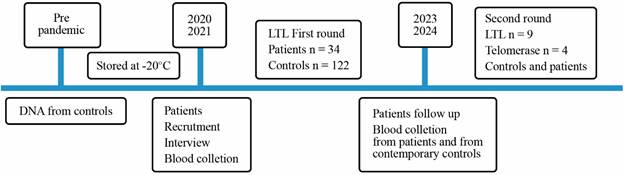
METHODS Leukocyte telomere length (LTL) was determined by quantitative real-time polymerase chain reaction (qPCR) in 34 Long COVID patients compared to a control group (n = 122). Telomerase activity was determined by qPCR assays using the commercial kit from ScienCell. A questionnaire on symptoms, vaccine doses and blood count was completed.
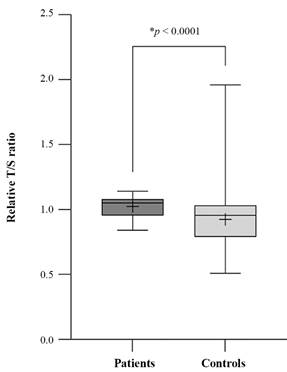
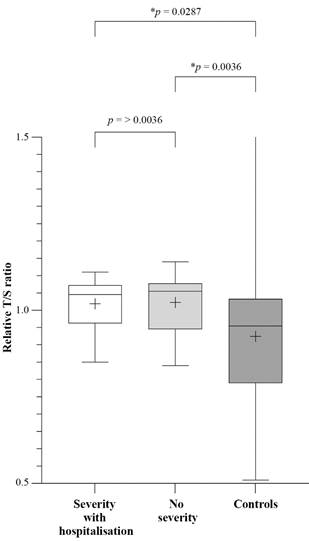
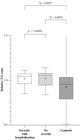
FINDINGS The Long COVID patients were found to have an increase in LTL. Telomerase activity was also examined in a smaller number of patients and found to be reactivated in the blood.
MAIN CONCLUSIONS It will be necessary to conduct further studies and monitor Long COVID patients to determine if future health issues could be linked to telomerase activity and elongated telomeres.
Key words:
post-acute COVID-19 syndrome; post-acute sequelae of SARS-CoV-2 infection; telomere elongation; telomerase; SARS-CoV2
 Thumbnail
 Thumbnail
 Thumbnail