 SEMI-CONTINUOUS APPLICATION OF LEACHATE AND SEPTIC TANK EFFLUENT TO INCREASE AND ACCELERATE BIOGAS PRODUCTION IN LANDFILLS
Abstract
In this study, the bioreactors were constructed as systems designed to simulate waste degradation and biogas generation in landfills, promoting greater environmental control and contributing to the Sustainable Development Goals, particularly SDG 7 (Affordable and Clean Energy), SDG 11 (Sustainable Cities and Communities), and SDG 13 (Climate Action). Their use enables sustainable strategies for leachate management, percolate recirculation, and energy recovery. This study evaluated biogas production in 1,000 L reactors filled with municipal solid waste and subjected to semi-continuous application of raw leachate, concentrated leachate, and septic tank effluent, simulating seasonal dry and rainy conditions. The experiment was conducted over a 12-month period, with daily measurements of biogas composition and flow. The results show that leachate recirculation significantly increased methane production in both seasons, whereas septic tank effluent had a positive effect primarily during the dry period. The findings highlight the potential of leachate recirculation as an environmentally sound strategy to enhance anaerobic digestion, reduce greenhouse gas emissions, and strengthen sustainable solutions for landfill management.
Keywords:
Solid Waste; Biomethane; Methane; Leachate; Landfill; MSW.
Resumo
Os biorreatores constituíram sistemas projetados para simular a degradação dos resíduos e a geração de biogás em aterros sanitários, promovendo maior controle ambiental e contribuindo para os Objetivos do Desenvolvimento Sustentável, especialmente os ODS 7 (Energia Limpa e Acessível), 11 (Cidades e Comunidades Sustentáveis) e 13 (Ação Climática). Sua utilização possibilitou estratégias sustentáveis de manejo do chorume, ciclagem de líquidos percolados e estímulo à recuperação energética. Este estudo avaliou a produção de biogás em reatores de 1.000 L preenchidos com resíduos sólidos urbanos e submetidos à aplicação semicontínua de chorume bruto, chorume concentrado e efluente de fossa séptica, simulando condições sazonais de seca e chuva. O experimento foi conduzido por 12 meses, com medições diárias de composição e vazão do biogás. Os resultados demonstram que a recirculação de chorume aumentou significativamente a produção de metano em ambos os períodos sazonais, enquanto o efluente de fossa apresentou efeito positivo principalmente no período seco. A pesquisa evidencia o potencial da recirculação de líquidos percolados como estratégia ambientalmente favorável para incremento da digestão anaeróbia, redução de emissão de GEE e fortalecimento de soluções sustentáveis aplicáveis à gestão de aterros sanitários.
Palavras-chave:
Resíduos Sólidos; Biometano; Metano; Lixiviado; Aterro Sanitário; RSU.
Resumen
En este estudio, los biorreactores fueron construidos como sistemas diseñados para simular la degradación de residuos y la generación de biogás en vertederos, promoviendo un mayor control ambiental y contribuyendo a los Objetivos de Desarrollo Sostenible, en particular al ODS 7 (Energía asequible y no contaminante), al ODS 11 (Ciudades y comunidades sostenibles) y al ODS 13 (Acción por el clima). Su utilización permitió la implementación de estrategias sostenibles para la gestión de lixiviados, la recirculación de líquidos percolados y la recuperación energética. Este estudio evaluó la producción de biogás en reactores de 1.000 litros llenados con residuos sólidos urbanos y sometidos a la aplicación semicontinua de lixiviado bruto, lixiviado concentrado y efluente de fosa séptica, simulando condiciones estacionales de sequía y de lluvia. El experimento se desarrolló durante 12 meses, con mediciones diarias de la composición y el caudal del biogás. Los resultados muestran que la recirculación de lixiviados incrementó de forma significativa la producción de metano en ambas estaciones, mientras que el efluente de fosa séptica presentó un efecto positivo principalmente durante el período seco. Los hallazgos ponen de relieve el potencial de la recirculación de lixiviados como estrategia ambientalmente favorable para mejorar la digestión anaerobia, reducir las emisiones de gases de efecto invernadero y fortalecer soluciones sostenibles aplicables a la gestión de vertederos.
Palabras-clave:
Residuos Sólidos; Biometano; Metano; Lixiviado; Vertedero; RSU.
INTRODUCTION
The main technique for proper final disposal in developing countries is landfills. This treatment method reduces possible negative environmental impacts from incorrect disposal, such as air, soil and groundwater contamination (COSTA et al., 2018). The anaerobic digestion of waste in the landfill produces biogas, which is mostly made up of CH4, CO2 and small concentrations of N, O2, H2S, NH3, H, CO2 among others (MAGALHÃES, 2018; SILVA; MOTA, 2019). Its use as an energy source is a type of Clean Development Mechanism (CDM) that complies with the Kyoto Protocol by reducing GHG emissions (SILVA; MOTA, 2019). It is one of the most promising solutions for treating food waste and producing energy and nutrients (PARITOSH et al., 2017).
In addition to environmental conservation and improved quality of life, the use of energy from landfills can be employed to sell carbon credits and make an important contribution to increasing the country's energy matrix. Currently, around 77% of the energy used in Brazil comes from hydroelectric power stations, making it vulnerable to depend predominantly on just one source of energy - such as the crisis that occurred in 2001, when the reservoirs fell, making it impossible for the large hydroelectric power stations to function properly (CROVADOR et al., 2018; SILVA; MOTA, 2019).
According to Nascimento et al. (2019), Brazil exploits between 7% and 20% of the biogas produced in landfills. In 2022, 77,076,428 tons of solid waste were generated in the country and around 93% was collected, of which 61.1% was destined for landfills. This is a slight increase compared to 2019, when 92% was collected and 59.5% was sent to landfills. Although the Northeast is the region with the second-highest generation of MSW (24.6%), it has the lowest MSW Collection Coverage Index of any region in Brazil, with 82.7% of waste collected of this amount, only 37.3% is sent to landfills, which corresponds to 5,844,347 tons/year. Albeit a portion is still not covered by regular MSW collection, there has been a quantitative and qualitative improvement in collection coverage in all regions of the country (ABRELPE, 2020; ABREMA, 2023).
In the northeast of the country, the GNR Fortaleza Valorização de Biogás LTDA renewable natural gas plant stands out. The plant captures the biogas produced at the Caucaia West Metropolitan Landfill (ASMOC), purifies and treats it to produce biomethane, and distributes the renewable gas to industries, businesses, and homes via the Ceará Gas Company (CARVALHO et al., 2021). ASMOC began operating in 1991 with waste produced in Caucaia/CE and began receiving solid waste from the city of Fortaleza/CE in 1998 (SILVA, 2017). Currently, ASMOC receives around 5,500 tons/day of MSW and produces around 80,000 m3/day of biomethane.
Locational studies should be carried out to understand biogas production, which changes according to the region (GOMES et al., 2024). In addition to geographical location, other variables interfere with biogas generation, such as type and age of waste, degree of decomposition, leachate irrigation, climate, landfill cover, landfill management, air humidity, precipitation, atmospheric pressure, wind speed, solar radiation, pH, temperature, oxidation-reduction potential, volatile solids content, and variation in gas composition (CANDIANI; VIANA, 2017; COSTA et al., 2018; GOLLAPALLI; KOTA, 2018; GOMES et al., 2024; LUCERNONI et al., 2017; MACHADO et al., 2021; MAGALHÃES, 2018; MORAIS et al., 2020; MOTA et al., 2019; SANTOS et al., 2019). Therefore, to increase the efficiency of methane energy use in landfills, the aforementioned variables that interfere with it must be studied.
Due to the importance of sanitary landfills for solid waste disposal in Brazil, and the potential for energy generation using the biogas produced at ASMOC, the behavior of landfills in Brazil needs to be studied and techniques and technologies need to be developed in order to increase production efficiency of the use of biogas as an incremental source in the energy matrix. This study aims to evaluate biogas production through the anaerobic digestion of municipal solid waste with semi-continuous application of leachate and domestic sewage septic tank effluent.
METHODOLOGY
STUDY SITE
The research was conducted at the GNR, on the premises of the Aterro Sanitário Metropolitano Oeste de Caucaia (ASMOC), located in the municipality of Caucaia/CE (Figure 1), 30 km from Fortaleza, which receives around 5,500 tons of MSW per day from both the municipalities of Caucaia and Fortaleza. The temperature at the landfill varies between 24.6°C and 29.1°C, with an average of 27.5°C. The average monthly rainfall during the rainy season is 286mm, while during the dry season it drops to 23.1mm. (GOMES et al., 2024).

ASSEMBLY AND OPERATION OF REACTORS
A 1,000 liter container was used to assemble the reactor. Four overlapping layers were added, with the bottom layer consisting of 0.15m of gravel n°02, followed by a 0.05m layer of gravel n°1 and sand, 0.5m of MSW medium-textured soil cover at a height of 0.20 m, and approximately 10% of the remaining headspace. Each layer was compacted with a socket (Figure 2).
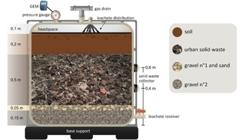
A low-pressure manometer was placed at the top of each reactor for connection to the gas quality detector. The reactors were hermetically sealed to prevent loss of gas and moisture.
The waste mass collection devices were inserted at two different heights in the reactor, 0.40m and 0.6m. At the top, a liquid distribution system was inserted, consisting of a spiral-shaped hose, 2m long, with a 3/4" diameter, and with 1" holes distributed along its length, closed at the end to distribute the leachate and water over the surface of the reactor.
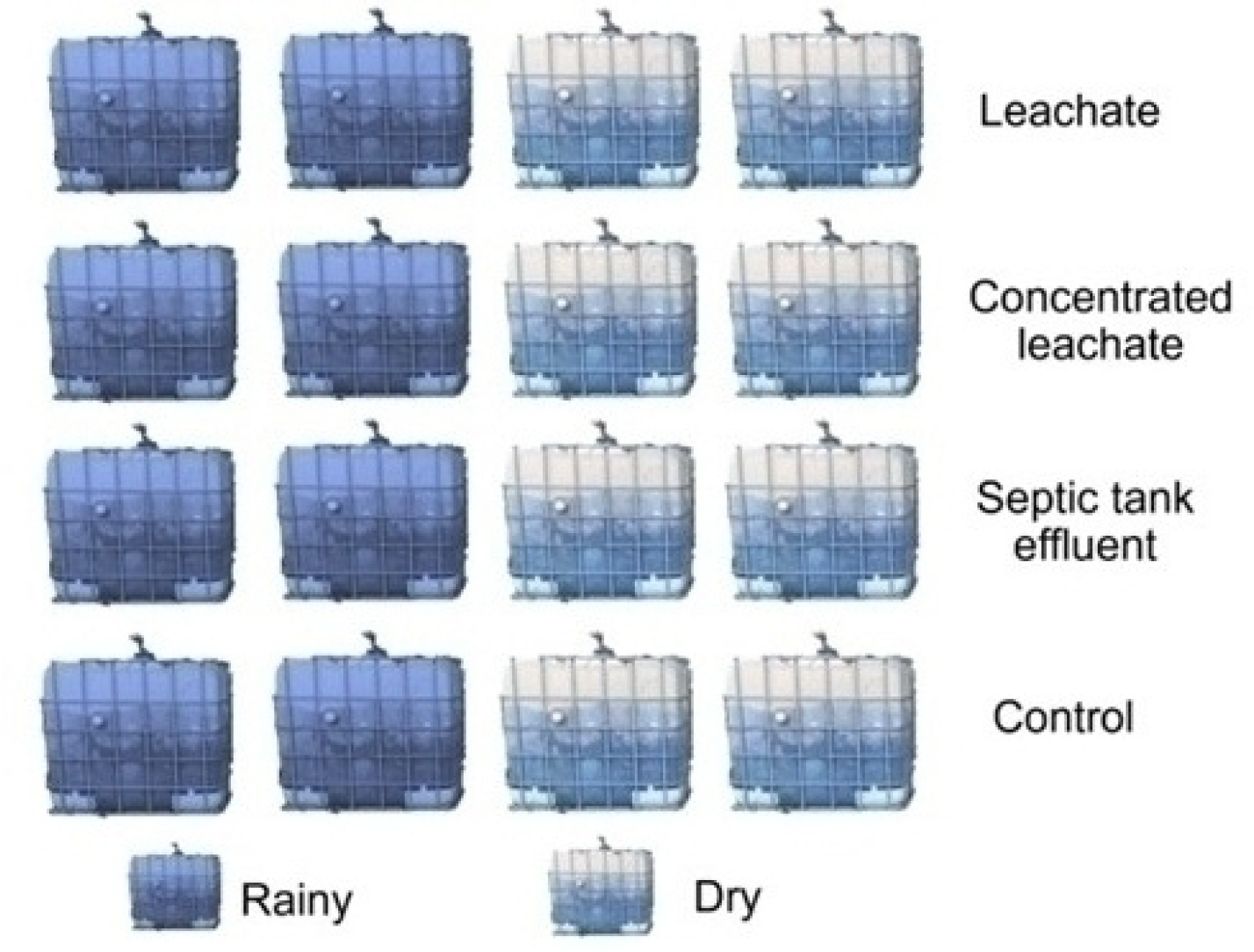
The number of reactors was determined based on a factorial statistical design, with 16 IBC-type reactors (Figure 3), of which 4 were irrigated with leachate from the old cells (approximately 23 years old), 4 received concentrated leachate (from the reverse osmosis treatment of the new cells, that began operating in January 2021), 4 with domestic septic tank effluent and another 4 received neither leachate nor domestic septic tank effluent.
Layout and assembly of the experiment with the reactors installed at GNR/ASMOC, Caucaia CE. Source: The authors (2024).
Every 15 days, 20L of leachate or cesspit effluent were applied to each reactor, with a surface area of 1m2, which was mixed to homogenize it before application. Irrigation with 30L of water in each reactor was also carried out every two weeks to simulate rainfall, keeping the minimum humidity at 50%. Water irrigation was interspersed with effluent disposal, so the reactors were irrigated weekly. The reactors irrigated with water were called rainy and the other reactors were called dry (Figure 3).
In order to more accurately simulate the decomposition of solid waste in the ASMOC, the IBCs were filled according to the proportion of waste types obtained from the gravimetric analysis (Figure 4). The organic waste was collected from the university restaurants at the UFC PICI Campus; the other materials were collected as soon as they were unloaded at the landfill.

Gravimetric composition of representative sample of ASMOC waste. Source: Created by the author with data taken from ASMOC (2022).
The materials were weighed according to each composition in order to achieve the desired proportion, based on gravimetric analysis; after weighing, they were crushed and mixed in order to obtain a homogeneous mass to be inserted into the reactors. Following the mixing process, the waste was reweighed for equal distribution to each reactor. Both the waste and the topsoil were compacted manually with a socket to a density of 332.23 kg/m3.
According to the percentages from the gravimetric analyses and the volume to be inserted, each reactor received 166.12 kg of solid waste, distributed in different compositions, as shown in Table 1.
The leachate from the old cell and the concentrated leachate were collected and pumped into storage tanks for application. The leachate was then pumped from the reservoirs to the reactors using a ¾ HP single-phase centrifugal pump with 32 mm PVC pipes, connected to the distribution system at the top of the reactor. Before connecting the pump, the effluent and leachate were mixed to homogenize the compound.
The existing outlet valve at the base of the IBC was used to capture the leachate produced in the reactors, connected to pipes for draining the percolate. During the first half of the year, the leachate was drained weekly by opening the valve to the tank of each reactor; thereafter, it was drained daily.
MONITORING THE COMPOSITION AND FLOW OF BIOGAS
The gas composition was measured individually, one point at a time, on a daily basis. LANDTEC's GEM5000 portable gas analyzer was used to measure the composition, connected to the G0.6 gas volume meter manufactured by LAO in the PAs of each reactor (Figure 5). The flow valve was opened daily to read the flow rate and composition; once all the gas had passed through, the valve was closed again.

Measurement of gas flow and composition in the reactors installed at GNR/ASMOC. Source: The authors (2024). Statistical analysis.
The data were tabulated in Excel and the statistical software JAMOVI version 2.3 was used for the statistical analysis, with a 95% confidence interval. The readings from each type of reactor per month were summed, totaling 11 samples each. The Shapiro-Wilk test was applied to assess the normality of the data, followed by the Friedman and Durbin-Conover tests.
RESULTS AND DISCUSSION
The Shapiro-Wilk test (Table 2) indicated that the methane production data from the different reactors over time did not follow a normal distribution, so the Friedman test (Table 3) was carried out and revealed there were significant differences between the groups. Subsequently, the multiple comparisons test was then carried out (Table 4).
Descriptive volume statistics of methane in liters produced during the experiment in the reactors installed at GNR/ASMOC. Source: The authors (2024).
Friedman volume test of methane in liters produced during the experiment in the reactors installed at GNR/ASMOC. Source: The authors (2024).
Multiple volume comparisons (Durbin-Conover) of methane produced during the experiment in the reactors installed at GNR/ASMOC. Source: The authors (2024).
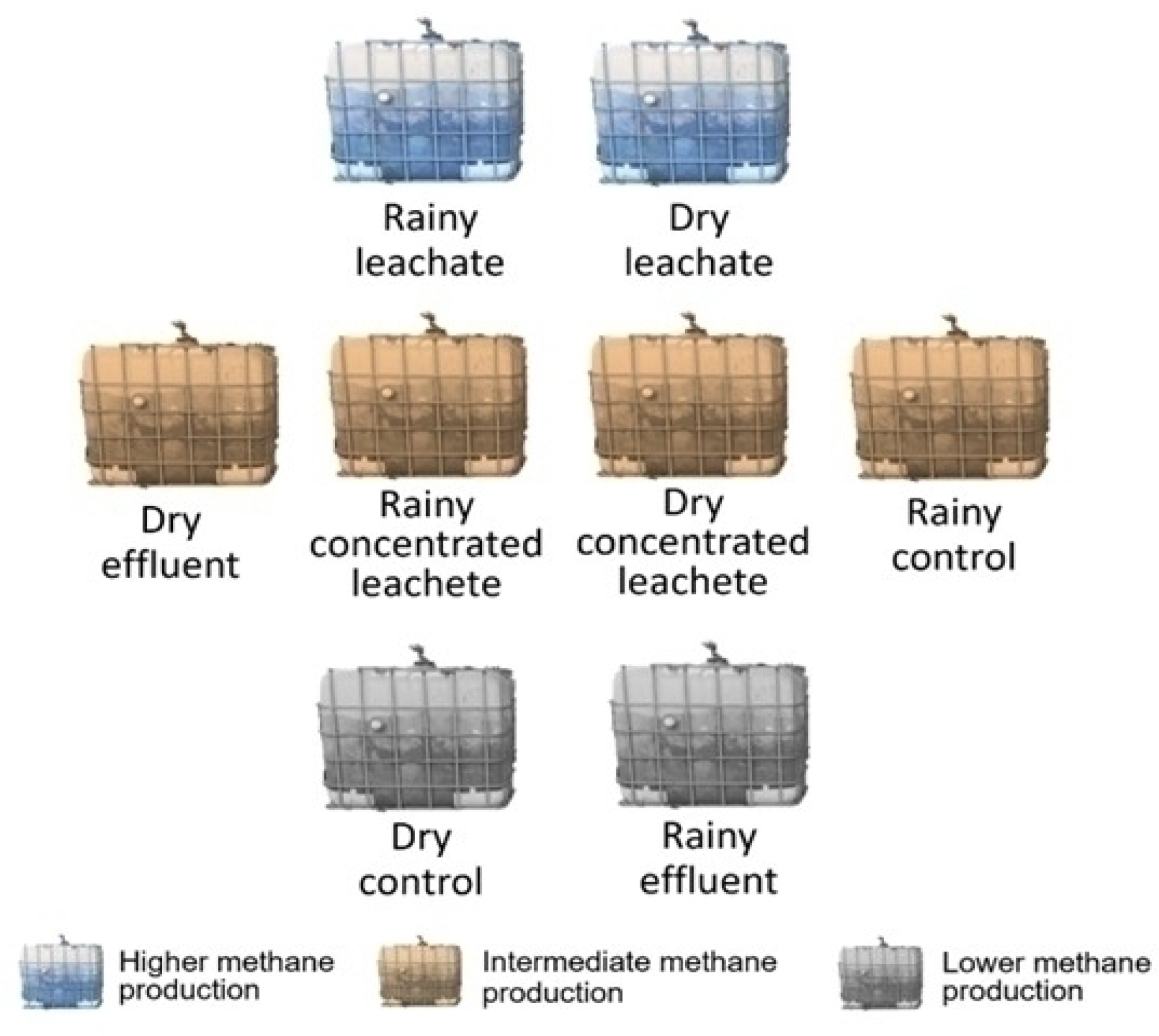
Tables 2, 3, and 4 show that the data was divided into three groups, with statistical differences between the groups and similarities among the parameters in the same group. The group with the lowest methane production was made up of the dry control and the rainy effluent.
The intermediate group consisted of dry effluent, rainy concentrated leachate, dry concentrated leachate, and rainy control. Finally, the reactors with the best methane production efficiency were the rainy leachate and the dry leachate (Figure 6). He e Fei (2020) also found higher methane values with the introduction of leachate than water.

The dry concentrated leachate was between the highest methane production and the intermediate methane production, as it showed a statistically significant difference from the dry effluent and similarity to the dry leachate; however, it was classified in the intermediate group as it showed statistical similarity with the rainy concentrated leachate and the rainy control and difference with the rainy leachate.
Given this data, it can be seen that there is no difference between the dry and rainy periods when the reactor receives leachate and concentrated leachate. In the case of the control and the effluent, there is a significant difference between the dry and rainy periods. Therefore, it is clear that the introduction of raw or concentrated leachate increases methane production, as it introduces nutrients and water into the environment. The recirculation of leachate in a landfill culminates in the treatment of leachate through physical, chemical, and biological processes. It also increases biogas production, improves biodegradability, adjusts the degradation environment, can prevent acidification in the rapid degradation stage, and accelerates the decomposition and stabilization of MSW (LIU et al., 2021a; MEHRDAD et al., 2021; ZHANG et al., 2021).
Leachate produced in the methanogenic phase, when recirculated, increases the hydrolysis of solid food waste, degrades volatile solids, improves the rate of acidogenesis, increases mass transfer, and positively effects the volatile fatty acid concentrations and redistribution of nutrients (KO; YANG; XU, 2016). However, despite having a concentrated amount of microorganisms, nutrients, and heavy metals, leachate from landfills can contaminate the environment and pose risks to human health if improperly disposed of (LIU et al., 2021a; MEHRDAD et al., 2021; ZHANG et al., 2021).
In order to improve the performance of anaerobic digestion in landfills, the application rate needs to be studied, as the leachate must be recirculated in a quantity that allows the substrate to be supplied with moisture. However, when introduced in very high volumes, it causes acidification, and elimination of nutrients, organic matter and microorganisms, which reduces methane production (DEGUEURCE; TRÉMIER; PEU, 2016; LI et al., 2020). The improvement of the leachate application rate in a thermophilic leaching bed reactor was found by Hussain et al. (2017), which improved the efficiency of acidification, hydrolysis, and degradation.
Concerning the control, there was a statistical difference between the dry and rainy periods, determining that rainfall affects biogas production, with the dry period producing less methane, as found by (GOMES et al., 2024) when they analyzed the ASMOC massifs monthly between January 2019 and December 2022. They concluded that there is a positive correlation between rainfall and methane production in the ASMOC. The same was found by Abushammala et al. (2016) and Romana Gomes et al. (2022) when studying methane production and rainfall in a landfill and in a dump, respectively.
Another alternative that increases the efficiency of anaerobic digestion is the use of co-digestion, which is the mixing of different substrates with complementary, methane-producing characteristics. In addition to interfering with the type of waste, the co-substrate provides nutrients and provides positive synergistic effects on the environment, improving the digestion process and biogas production (OBULISAMY et al., 2016). Many studies of the co-digestion of food waste and sewage sludge have been carried out, as both are produced on a large scale and have the potential to produce methane (FERREIRA, 2017).
In a sanitary landfill there are limitations to the use of sewage sludge due to the volume required and also the interference with the geomechanical behavior of the landfill, so one way of analyzing co-digestion was through the irrigation of domestic effluent on the waste. The results showed that irrigation with septic tank effluent improved methane production when compared to the control without rainfall, although it performed equally well in the rainy season without effluent irrigation. When comparing the reactors that received septic tank effluent and rainfall, they performed less well than the control with rainfall. It can therefore be seen that the irrigation of septic tank effluent in the dry season increases methane production in landfills, although irrigation with both raw leachate and concentrated leachate showed a better response.
Studying the effects of co-digestion of sewage sludge and organic food waste, Koch et al. (2016) found an increase in the specific yield of methane compared to sludge mono-digestion, suggesting a stimulation of methane generation by co-digestion due to the more favorable ratio of C/N (Carbon/Nitrogen) with the addition of food waste. Ferreira (2017) also obtained an increase in specific methane production by adding food waste to sewage sludge for anaerobic co-digestion in a bench-scale biodigester with initial pH correction to 7.5. Cheng et al. (2021) found an increase in biogas production through the co-digestion of sludge with food waste in a bioreactor, which could be a viable alternative to fossil fuels. Y. Liu et al. (2021) obtained an increase in biogas production in a sewage sludge and organic waste co-digestion system of up to seven times compared to the baseline scenario. Nair et al. (2014) found an increase in methane production with the addition of sludge at various salt concentrations.
Recent research into the anaerobic co-digestion of sewage sludge and food waste has found that in the near future methane generation through co-digestion could be a promising energy source, but studies are necessary to make the process economically viable (MEHARIYA et al., 2018).
The results reinforce the environmental and technological relevance of the study, as they demonstrate that leachate recirculation-whether raw or concentrated-is an effective strategy for intensifying methane generation and optimizing the operation of landfill bioreactors. These findings advance the state of the art by demonstrating, in a controlled experimental environment with realistic climatic simulation, that the recirculation of percolated liquids improves the microbiological and physicochemical conditions of the waste mass, favoring critical stages of anaerobic digestion. Furthermore, the results are directly aligned with SDGs 7, 11, and 13 by showing that integrated waste management practices can enhance the energy recovery of biogas, reduce greenhouse gas emissions, and extend landfill lifespan. The practical application of this knowledge may support the development of public policies and operational strategies for leachate recirculation and the use of septic tank effluents, contributing to the creation of replicable solutions for other Brazilian landfills, particularly in tropical regions with high rainfall variability.
CONCLUSION
Rainfall, irrigation of septic tank effluent in the dry season and the introduction of leachate in both the dry and rainy seasons increased methane production in landfills. The highest methane production occurred with the introduction of leachate in the dry and rainy periods.
Due to the importance of landfills for the final disposal of solid waste in Brazil and the high potential for energy generation from biogas produced in facilities such as ASMOC, it is essential to deepen the understanding of landfill behavior and to develop techniques and technologies that enhance biogas production efficiency. The results of this study demonstrate that the recirculation of leachate-raw or concentrated-and the application of septic tank effluent are effective strategies for intensifying anaerobic digestion, increasing methane production, and promoting greater process stability. These advances underscore the need for continuous improvement in leachate management practices in Brazilian landfills, particularly in light of the country's climatic diversity and its influence on waste biodegradation.
Beyond the technical contributions, the findings highlight significant environmental benefits and show strong alignment with the Sustainable Development Goals, particularly SDG 7 (Affordable and Clean Energy), SDG 11 (Sustainable Cities and Communities), and SDG 13 (Climate Action). The enhancement of biogas production and its use as an additional energy source contribute to reducing greenhouse gas emissions, improving integrated solid waste management, and strengthening practices aligned with the circular economy. Thus, the study not only addresses the central research question but also provides valuable insights for public policy development and for the implementation of replicable solutions in other landfills, expanding the potential for energy recovery and environmental sustainability in Brazil.
DATA AVAILABILITY
Not applicable.
REFERENCES
- ABRELPE. Panorama dos Resíduos Sólidos no Brasil 2020. Associação Brasileira de Empresas de Limpeza Pública e Resíduos Especiais - ABRELPE, p. 51, 2020.
- ABREMA. Panorama dos Resíduos Sólidos no Brasil 2023. Associação de Resíduos e Meio Ambiente, dez. 2023. Available at: . Accessed on: 6 jun. 2024
- ABUSHAMMALA, M. F. M.; BASRI, N. E. A.; YOUNES, M. K. Seasonal Variation of Landfill Methane and Carbon Dioxide Emissions in a Tropical Climate. International Journal of Environmental Science and Development, v. 7, n. 8, p. 586-590, 2016.
-
BRASIL. ODS Brasil - Objetivo. Brasília, [s.d.]. Disponível em: https://odsbrasil.gov.br/objetivo/objetivo?n=1 Acesso em: 10 nov. 2025.
» https://odsbrasil.gov.br/objetivo/objetivo?n=1 - CANDIANI, G.; VIANA, E. Emissões fugitivas de metano em aterros sanitários. GEOUSP: Espaço e Tempo (Online), v. 21, n. 3, p. 845-857, 2017.
- CARVALHO, M. L. F. DE et al. Impactos ambientais decorrentes do processo de instalação e operacionalização da Usina de Biogás GNR de Fortaleza (CE): a Educação Ambiental como via de transformação social. Revista Brasileira de Educação Ambiental (RevBEA), v. 16, n. 4, p. 227-247, 1 ago. 2021.
- CHENG, H. et al. Bioenergy recovery from methanogenic co-digestion of food waste and sewage sludge by a high-solid anaerobic membrane bioreactor (AnMBR): mass balance and energy potential. Bioresource Technology, v. 326, n. December 2020, p. 124754, 2021.
- COSTA, M. D. et al. Laboratory studies to evaluate the performance of landfill cover layers for the reduction of gases emissions and infiltrations. Engenharia Sanitaria e Ambiental, v. 23, n. 1, p. 77-90, 2018.
- CROVADOR, M. I. C. et al. Estimativa Da Produção De Biogás Em Aterro Sanitário Subtropical Brasileiro. Revista em Agronegócio e Meio Ambiente, v. 11, n. 1, p. 227, 2018.
- DEGUEURCE, A.; TRÉMIER, A.; PEU, P. Dynamic effect of leachate recirculation on batch mode solid state anaerobic digestion: Influence of recirculated volume, leachate to substrate ratio and recirculation periodicity. Bioresource Technology, v. 216, p. 553-561, 2016.
- FERREIRA, J. S. Codigestão de lodo de esgoto com resíduos urbanos e industriais visando ao aumento da produção de metano. [s.l.] Universidade Federal do Rio de Janeiro, 2017.
- GOLLAPALLI, M.; KOTA, S. H. Methane emissions from a landfill in north-east India: Performance of various landfill gas emission models. Environmental Pollution, v. 234, p. 174-180, 2018.
- GOMES, A. C. C. DE O. et al. Correlação entre parâmetros climáticos e produção de metano em aterro sanitário no nordeste brasileiro. Caderno Pedagógico, v. 21, n. 4, p. e3558, 3 abr. 2024.
- HE, H.; FEI, X. Scaling up laboratory column testing results to predict coupled methane generation and biological settlement in full-scale municipal solid waste landfills. Waste Management, v. 115, p. 25-35, set. 2020.
- HUSSAIN, A.; FILIATRAULT, M.; GUIOT, S. R. Acidogenic digestion of food waste in a thermophilic leach bed reactor: Effect of pH and leachate recirculation rate on hydrolysis and volatile fatty acid production. Bioresource Technology, v. 245, n. August, p. 1-9, 2017.
- KO, J. H.; YANG, F.; XU, Q. The impact of compaction and leachate recirculation on waste degradation in simulated landfills. Bioresource Technology, v. 211, p. 72-79, 2016.
- KOCH, K. et al. Co-digestion of food waste in a municipal wastewater treatment plant: Comparison of batch tests and full-scale experiences. Waste Management, v. 47, p. 28-33, 2016.
- LI, C. et al. Impact of continuous leachate recirculation during solid state anaerobic digestion of Miscanthus. Renewable Energy, v. 154, p. 38-45, 2020.
- LIU, H. et al. The evaluation system of the sustainable development of municipal solid waste landfills and its application. Sustainability (Switzerland), v. 13, n. 3, p. 1-18, 2021a.
- LIU, Y. et al. Optimizing the co-digestion supply chain of sewage sludge and food waste by the demand oriented biogas supplying mechanism. Waste Management and Research, 2021b.
- LUCERNONI, F. et al. Sampling method for the determination of methane emissions from landfill surfaces. Waste Management and Research, v. 35, n. 10, p. 1034-1044, 2017.
- MACHADO, S. L. et al. Biogas production in a tropical landfill: Long-term monitoring results and analysis of variables of influence. Environmental Monitoring and Assessment, v. 193, n. 8, 2021.
- MAGALHÃES, G. V. V. Avaliação da biodigestão anaeróbia de residuos orgânicos: ensaios de potencial bioquimico de metano (bmp) e projeto piloto de um biodigestor em escala real. [s.l: s.n.].
- MEHARIYA, S. et al. Co-digestion of food waste and sewage sludge for methane production: Current status and perspective. Bioresource Technology, v. 265, n. March, p. 519-531, 2018.
- MEHRDAD, S. M. et al. Prediction of methane emission from landfills using machine learning models. Environmental Progress and Sustainable Energy, v. 40, n. 4, p. 1-10, 2021.
- MORAIS, M. et al. Análise Físico-química e Microbiológica do Lixiviado do Aterro Sanitário no Município de Rio Branco - Acre. South American Journal, v. 7, n. 1, abr. 2020.
- MOTA, F. S. et al. Características Climáticas E Variações Horárias Da Concentração Do Biogás Em Um Aterro Sanitário Localizado No Nordeste Do Brasil. Revista Brasileira de Ciências Ambientais (Online), p. 1-12, 2019.
- NAIR, A. et al. Enhancing biogas production from anaerobic biodegradation of the organic fraction of municipal solid waste through leachate blending and recirculation. Waste Management & Research: The Journal for a Sustainable Circular Economy, v. 32, n. 10, p. 939-946, 14 out. 2014.
- NASCIMENTO, M. C. B. et al. Estado da arte dos aterros de resíduos sólidos urbanos que aproveitam o biogás para geração de energia elétrica e biometano no Brasil. Engenharia Sanitaria e Ambiental, v. 24, n. 1, p. 143-155, 2019.
- OBULISAMY, P. K. et al. Anaerobic co-digestion of food waste and chemically enhanced primary-treated sludge under mesophilic and thermophilic conditions. Environmental Technology (United Kingdom), v. 37, n. 24, p. 3200-3207, 2016.
- PARITOSH, K. et al. Food Waste to Energy: An Overview of Sustainable Approaches for Food Waste Management and Nutrient Recycling. BioMed Research InternationalHindawi Limited, , 2017.
- ROMANA GOMES, É. et al. Influência de condições climáticas na composição do biogás gerado no lixão municipal de Juazeiro do Norte - CE. Revista DAE, v. 70, n. 237, p. 210-228, 5 jul. 2022.
- SANTOS, G. O. et al. Otimização da captação de metano de um aterro sanitário do Nordeste brasileiro. Revista Principia - Divulgação Científica e Tecnológica do IFPB, v. 1, n. 47, p. 204, 2019.
- SILVA. Avaliação da evolução do comportamento geomecânico de aterros sanitários com base na realização de ensaios de laboratório e de campo. Tese-Fortaleza: Universidade Federal do Ceará, 2017.
- SILVA, A. K. M.; MOTA, F. S. B. Caracterização dos resíduos sólidos urbanos: aproveitamento do biogás. 1a edição ed. Curitiba: Appris, 2019.
- ZHANG, P. et al. Numerical model of leachate recirculation in bioreactor landfills with high kitchen waste content. Water (Switzerland), v. 13, n. 13, 2021.
Edited by
-
Editors in Charge
Alexandra Maria OliveiraAlexandre Queiroz Pereira Eduardo Von Dentz

 Source: The authors (2024).
 The authors (2024).