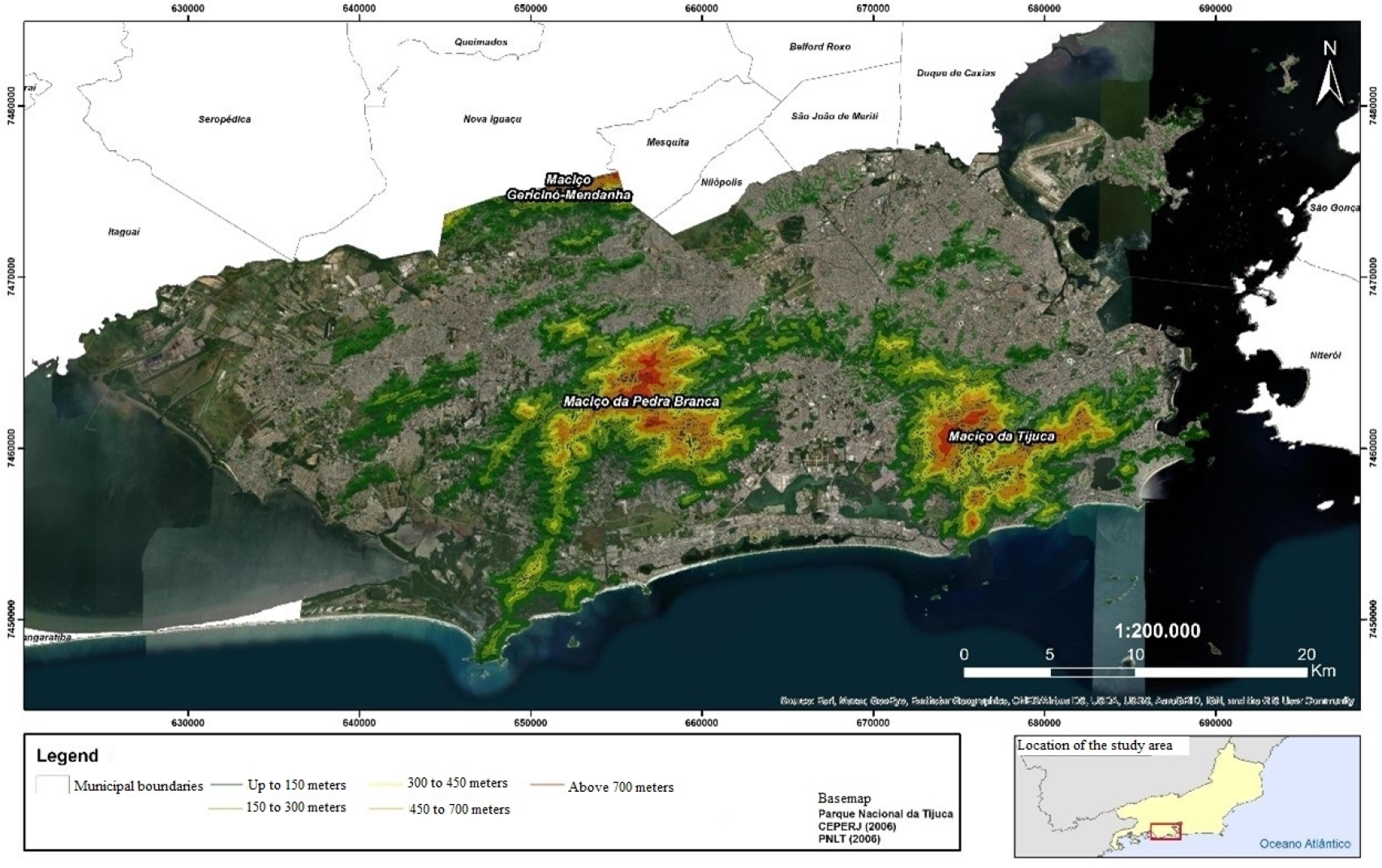
 TIJUCA MASSIF, ITS FORESTS, AND THE SOCIAL METABOLISM OF THE CITY OF RIO DE JANEIRO, BRAZIL, FROM THE NINETEENTH TO THE EARLY TWENTIETH CENTURY
The landscape of Rio de Janeiro, characterized by its unique geomorphology and the diversity of its forests and ecosystems, illustrates the historical processes that shaped the city’s formation. This study aims to explore the role of the Tijuca Massif, particularly the Tijuca Forest, in the urban expansion of Rio de Janeiro in the nineteenth and twentieth centuries, identifying the key factors that influenced land use and transformation within the nature-society-city dynamic that continues to resonate today. The insights in this article are based on a qualitative approach, which includes the analysis of specialized literature and documentary research conducted in historical archives. This massif and its green areas functioned as structuring vectors, influencing both the city’s territorial expansion and the formation of cultural practices and ways of life that define Rio’s identity. The presence of green spaces in the heart of the city goes beyond just being a natural heritage; it also highlights important cultural and historical aspects that redefine their significance. This understanding positions the city as a dynamic organism, constantly interacting with its biophysical environment. Urban transformations reflect a complex web of social, ecological, and political interactions, with the surrounding massif and its forests playing a vital role in this ongoing process.
Keywords:
Society-Nature Interactions; Urban Metabolism; Urban Forests; Historical Geography; Environmental History.
 Thumbnail
 Thumbnail
 Thumbnail