 EROSION IN SOILS ADDED WITH HYDROGEL
Abstract
Soil erosion is currently the main cause of soil degradation. Therefore, it is urgent to implement technologies that aim to reduce erosion processes. The effects of hydrogel on water storage and its ability to reduce surface runoff and soil losses were evaluated. Experiments were set up in pots and in the field, with different doses of hydrogel and under different managements, respectively. In pots, the treatments were: T0 and T02 - 0 g of hydrogel; T0.5g - 0.5 g; T1g - 1 g; T2g - 2g; T3g - 3 g; T4g - 4g and T5g - 5 g of hydrogel. In the field, 13.3 g of hydrogel/m2 was applied to erosion plots installed in an area with soursop cultivation under different conservation managements, namely: - T1 - Planting in contour lines + stone cordons + grass planting; T2 - Planting downhill, without grass; T3 - Contour planting + grass planting and T4 - Downhill planting + grass planting. The total volume of water percolated in each pot and the surface runoff and soil losses were measured. It was concluded that doses between 4 and 5 g/pot cause increases in water retention of more than 20%, mainly after 4 or 5 wetting and drying cycles. The high variability of the treatments made it difficult to measure the effects of the hydrogel on soil losses, requiring more field studies using the polymer.
Keywords:
Surface Runoff; Storage; Conservation Practices
Resumo
A erosão do solo é atualmente a principal causa de sua degradação. Por isso, é urgente a implementação de tecnologias que visem reduzir os processos erosivos. Por esse motivo propõe-se avaliar os efeitos do hidrogel no armazenamento da água e sua capacidade em reduzir o escoamento superficial e as perdas de solos. Montou-se experimentos em vasos e em campo, com diferentes doses de hidrogel e sob diferentes manejos, respectivamente. Em vasos os tratamentos foram: T0 e T02 - 0 g de hidrogel; T0,5g - 0,5 g; T1g - 1 g; T2g - 2g; T3g - 3 g; T4g - 4g e T5g - 5 g de hidrogel. Em campo, aplicou-se 13,3 g de hidrogel/ m2 em parcelas de erosão instaladas em área com cultivo de gravioleiras sub diferentes manejos conservacionistas, foram eles: - T1- Plantio em Curvas de Nível + cordões de pedra + plantio de capim; T2 -Plantio morro abaixo, ausente de capim; T3 - Plantio em curva de Nível + plantio de capim e T4 - Plantio morro abaixo + plantio de capim. Mediu-se o volume total de água percolado em cada vaso e o escoamento superficial e as perdas de solos. Concluiu-se que doses entre 4 e 5 g/vaso ocasionam aumentos da retenção da água em mais de 20%, principalmente após 4 ou 5 ciclos de umedecimento e secagem. A elevada variabilidade dos tratamentos dificultou a aferição dos efeitos do hidrogel nas perdas de solos, sendo necessários mas estudos de campo utilizando o polímero.
Palavras-chave:
Escoamento Superficial; Armazenamento; Práticas Conservacionistas
Resumen
La erosión del suelo es actualmente la principal causa de degradación del suelo. Por ello, es urgente implementar tecnologías que tengan como objetivo reducir los procesos de erosión. Por esta razón se propone evaluar los efectos del hidrogel sobre el almacenamiento de agua y su capacidad para reducir la escorrentía superficial y las pérdidas de suelo. Los experimentos se realizaron en macetas y en el campo, con diferentes dosis de hidrogel y bajo diferente manejo, respectivamente. En macetas, los tratamientos fueron: T0 y T02 - 0 g de hidrogel; T0,5g - 0,5g; T1g - 1g; T2g - 2g; T3g - 3g; T4g - 4 gy T5g - 5 g de hidrogel. En campo se aplicaron 13.3 g de hidrogel/m2 en parcelas de erosión instaladas en un área con cultivo de guanábana bajo diferentes manejos de conservación, fueron: - T1- Siembra en Curvas de Nivel + cordones de piedras + siembra de pasto; T2 - Plantación cuesta abajo, sin pasto; T3 - Plantación en curva de nivel + plantación de césped y T4 - Plantación cuesta abajo + plantación de césped. Se midió el volumen total de agua percolada en cada maceta y el escurrimiento superficial y las pérdidas de suelo. Se concluyó que dosis entre 4 y 5 g/maceta provocan aumentos en la retención de agua superiores al 20%, principalmente después de 4 o 5 ciclos de mojado y secado. La alta variabilidad de los tratamientos dificultó medir los efectos del hidrogel sobre las pérdidas de suelo, lo que requirió más estudios de campo utilizando el polímero.
Palabras-clave:
Escorrentía Superficial; Almacenamiento; Prácticas de Conservación
INTRODUCTION
The susceptibility of soil to erosion varies considerably with its intrinsic characteristics, such as aggregate stability, soil texture, the existence of impeding layers, the occurrence of a B horizon, slope, water storage capacity, and hydraulic conductivity, among others (Silva et al., 2021; Hao et al., 2020; Ferreira et al., 2020; Lima et al., 2020; Costa Falcão & Falcão Sobrinho, 2019). Additionally, erosivity, characterized as the potential of water to cause erosion, also plays a significant role (Lima et al., 2020).
In general, the intensity of the combination of soil intrinsic factors and precipitation erosivity determines the magnitude of water erosion of soil.
The mitigation of erosive processes requires the reduction of any of their stages (Xing et al., 2023; Lima et al., 2020), thereby reducing global soil loss. Carvalho et al. (2002) highlighted that the stages of the erosion process are three: soil particle disaggregation, transport of disaggregated particles with surface runoff, and deposition of eroded material in lower areas.
Studies show that mechanical conservation practices such as contour planting combined with stone rows can reduce surface runoff and global soil loss (Falcão Sobrinho & Barbosa, 2022).
In the studies by Lima et al. (2020), the authors found that during high precipitation events (81.2 and 71.0 mm), there was no surface runoff in conservation treatments using mulch, whereas, in exposed soil treatment, average runoff values reached 7.55 mm, and soil loss was 0.015 kg m^-2, indicating the impact of soil management on runoff generation and consequently on soil loss.
Water-retaining polymers, widely used in agriculture and medicine, have been recently evaluated as allies in reducing erosive processes. Pandey and Kumari (2024) showed that biopolymers from agricultural waste could improve shear strength and increase soil particle cohesion, demonstrating their potential contribution to controlling permeability and erosion.
Nascimento et al. (2022) corroborate these claims by evidencing increases in soil water storage capacity by up to 37% with the addition of hydrogel, estimating that adding 0.1% (w/w) hydrogel to a sandy loam soil could result in soil water storage of about 180 m^3 ha^-1.
Zheng et al. (2023) conducted a meta-analysis of 1,504 paired data points from 310 articles published before July 2022 to evaluate the effect of water-retaining polymers. They found that their addition to soil resulted in average increases of 17.2% in soil water storage, with this variable being closely related to the growth in water-stable aggregates and soil porosity.
The benefits of hydrogels on soil water storage capacity and aggregate stability raise the hypothesis that applying them to soil can reduce soil disaggregation and surface runoff, contributing to global soil loss reduction.
In this context, this paper aimed to evaluate the capacity of different doses of hydrogel to increase soil water storage and their effects on surface runoff and soil loss under various soil management practices.
MATERIAL AND METHODS
This study was conducted in two stages: in the laboratory, simulating greenhouse conditions. The subsequent stage was carried out in the field, under different land use conditions.
The first stage evaluated the potential of different doses of hydrogel in increasing soil water retention, with the aim of determining the best doses for field use as an ally in reducing erosion processes.
This first stage was conducted under greenhouse conditions using pots. It is worth mentioning that, due to space limitations, two experiments were set up: the first started in April 2022 and the second in May 2022.
Square-frustum-shaped pots with a seven-liter capacity standing on a base about 50 cm above the ground received soil, leaving about 5 cm of free edge. At their bases, a projected opening with a ½-inch PVC pipe connected to a PVC elbow and another pipe allowed the percolated water to go from the soil to bottles on the floor surface.
To obtain the soil for the experiments, an area with exposed soil located in the field area was selected, and the 0-20 cm deep layer was removed. After collecting and mixing it, the soil filled some pots.
Concurrently, hydrogel doses (Forth brand), characterized by the manufacturer as a copolymer of acrylamide and potassium acrylate, were weighed on a precision scale. The dosages used in both experiments were 0, 0.5, 1.0, 2.0, 3.0, 4.0, and 5.0 g of hydrogel, distributed among the treatments highlighted in the following text.
In the aftermath, 5-centimeter cavities in the center of each pot received the dry (powder) hydrogel in the respective dosages. Subsequently, 2 L of water, measured with a graduated cylinder, was added to each pot. The first drainage from the pots, collected in the collector bottles, was disregarded.
The distribution of hydrogel doses in the pots was random, using the completely randomized design (CRD), with the treatments in experiment 1 consisting of T0 - 0 g of hydrogel/pot (control treatment); T0.5 - 0.5 g, T2 - 2 g, and T4 - 4 g of hydrogel per pot.
In experiment 2, the treatments were T0.2 - 0 g of hydrogel/pot (control treatment); T1 - 1 g, T3 3 g, and T5 - 5 g of hydrogel per pot, all with three replications each, totaling 24 experimental units in the two experiments.
In each experimental unit, 2 L of water was added at seven or fourteen-day intervals during evaluations, with the total amount of water drained from each unit collected in the collection bottles and subsequently measured with a graduated cylinder. Furthermore, not replenishing water in data collections favored the soil wetting and drying in the treatments.
The measured volumes for each treatment underwent systematization and normality and variance analysis (ANOVA). Due to the significance of the F-test, data from both experiments underwent the Tukey test (5%) using the R-project software version 4.0.2 (R CORE TEAM, 2021).
The second stage of this study took place in the field, at the rural community called São Domingos in the municipality of Sobral, Ceará, with geographical coordinates 3°47'47.82"S and 40°31'42.79"O.
The completely randomized experimental design used a 4 x 31 factorial scheme (treatment x period), with treatments consisting of four different soil management practices: T1 - Contour Planting + Stone Rows + Grass Planting; T2 - Downhill Planting without Grass; T3 - Contour Planting + Grass Planting; and T4 - Downhill Planting + Grass Planting. The 14 data collection dates represented each period.
Each treatment consisted of 20 plants, spaced 7 x 7 m, and distributed in four rows. The central area of each treatment received the installation of erosion plots along the slope, totaling four plots.
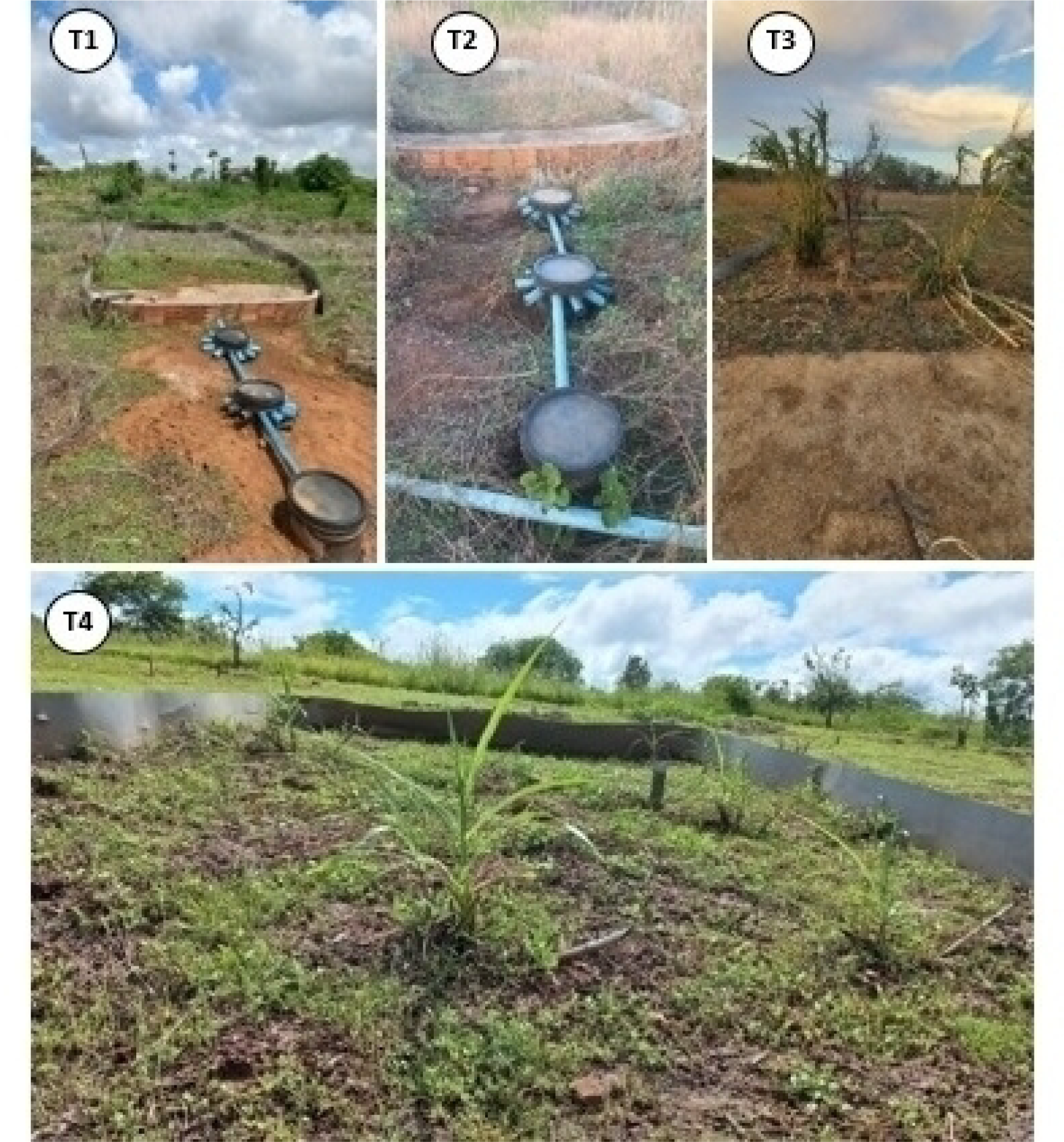
Each plot, approximately 20 m2 (Figure 1), was built with a masonry base and surrounded by zinc plates, measuring approximately 10 m in length, 2 m in width, and 0.3 m in height. The 0.15-meter burial of each plate ensured the isolation of the erosion plot from the surrounding area and prevented runoff and soil from entering from adjacent areas, allowing all generated surface runoff to head to the gutter of their respective erosion plots (COSTA FALCÃO & FALCÃO SOBRINHO, 2019).
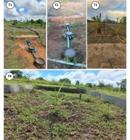
Experiment plots: T1 - Contour Planting + Stone Rows + Grass Planting; T2 - Downhill Planting without Grass; T3 - Contour Planting + Grass Planting; and T4 - Downhill Planting + Grass Planting.
The plots received a collection system that consisted of a 50 mm PVC pipe and three buckets with capacities of 20, 25, and 50 liters, respectively. The first and second buckets had a system of 12 outlets, with the twelfth part of the runoff generated in the first and second buckets being channeled to the next one, in this case, the second and third buckets, respectively (ARAÚJO, 2017).
The sample collections occurred over 2023 within 24 hours after precipitation in each treatment. The surface runoff collected within 24 hours in each bucket of the system was totaled, sampled, and taken to the laboratory, and then the entire collection system was emptied and cleaned, awaiting the next erosive event.
The soil loss determination in each treatment required the sample drying and the weighing of the eroded sediments, followed by the multiplication of the sediment concentration (mg L-1) of the samples by the amount of surface runoff collected in the erosion plots during each sampled erosive event. From these results, the extrapolation per hectare of surface runoff and soil loss values considered the actual area of each erosion plot.
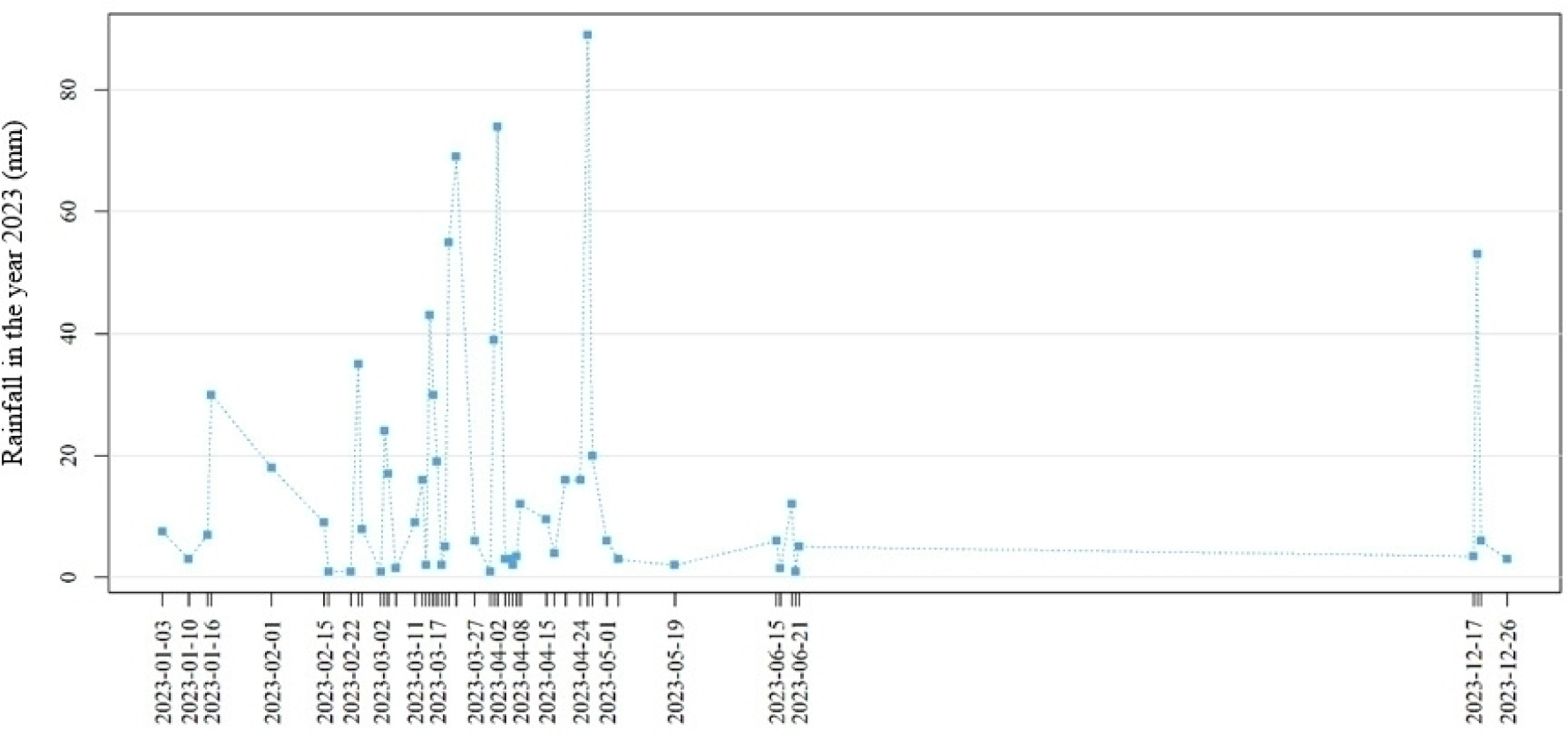
The precipitation (Figure 2) data came from the Ayres de Souza Meteorological Station No. 382, a reservoir that belongs to the Fundação Cearense de Meteorologia e Recursos Hídricos (Ceará Foundation for Meteorology and Water Resources, FUNCEME) and is 7 km from the study area in a straight line. Figure 1 shows the monthly sum of precipitation that occurred in 2023.
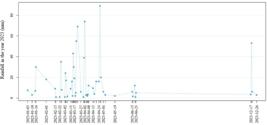
Monthly precipitation for the year 2023. Meteorological Station nº 382 (Açude Ayres de Souza), Munucipio de Sobral - District of Jaibaras (Ceará), FUNCEME 2022. Source: FUNCEME, 2023. Org.: Prepared by: the authors, 2024.
The treatment slope determination happened by measuring the level difference between two extreme points of each treatment and dividing the value by the distance between the two points. The following values were found per treatment: T1 - 9.0%; T2 - 2.0%; T3 - 4.0 %; and T4 - 7.0%.
The data of the analyzed variables underwent the tests of Shapiro-Wilk for normality and, when approved, the variance analysis by the F test. The R-Project software 4.0.2 (R CORE TEAM, 2021) performed the Tukey test at a 5% probability for more reliable data.
Surface runoff and soil loss data were also subjected to the analysis of Spearman's correlation matrix and the principal component (PCA) using the SPSS v.16 software. The sample adequacy assessment resulted from the Kaiser-Meyer-Olkin (KMO) uniformity and Bartlett's sphericity tests.
RESULT AND DISCUSSION
GREENHOUSE STAGE
Analysis of variance data from the experiments conducted in the greenhouse indicated significant effects for the isolated variables: hydrogel doses in experiment 1 and percolate volume in both experiment 01 and experiment 02. The interaction between hydrogel doses and percolate volume was not significant.
Summary of Analysis of Variance (ANOVA) for hydrogel doses, leachate volume, and hydrogel interaction and leachate volume.
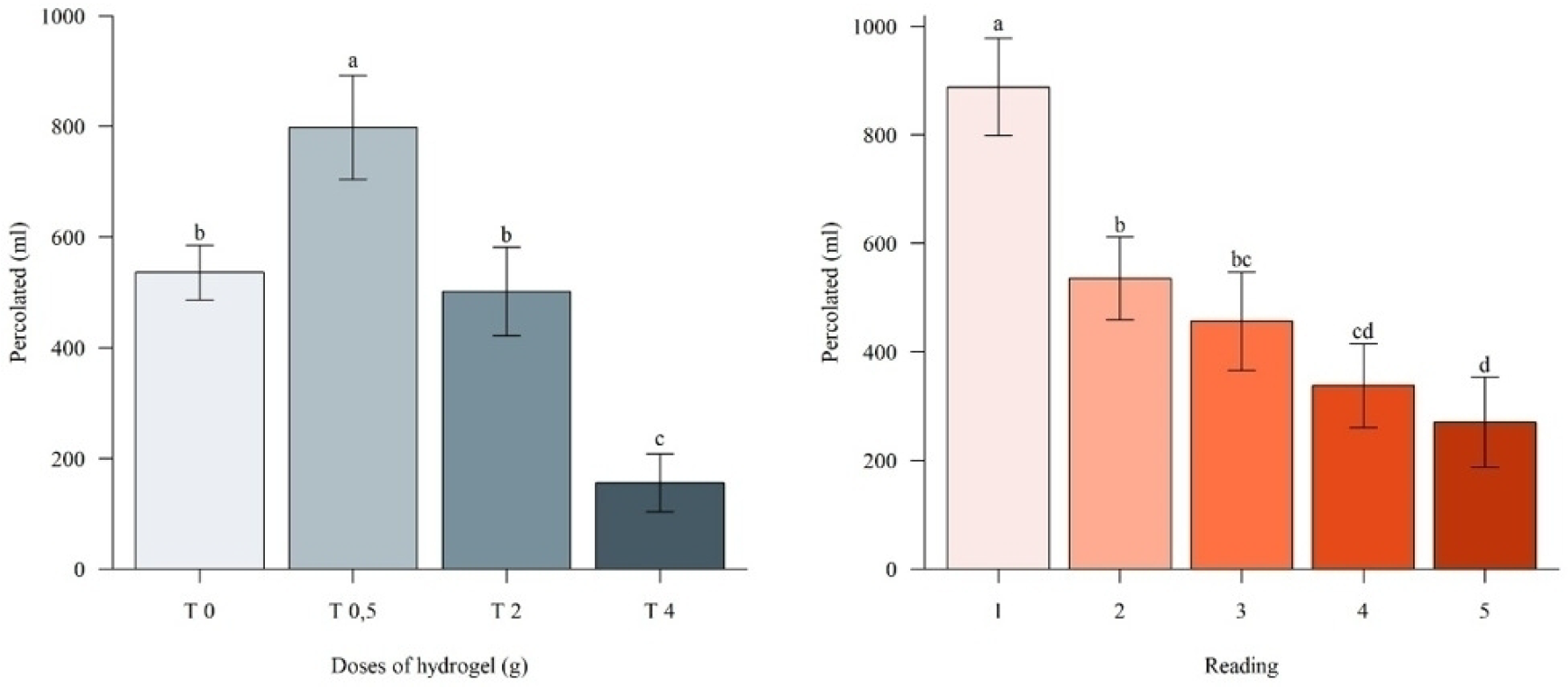
Data from figure 03 show the effect of hydrogel doses and the five evaluations on the percolate volume in the different treatments of experiment 01. In the pots added with 0.5 g of hydrogel (T0.5), the percolate volume was significantly higher than in the control treatment pots, which did not contain hydrogel (0 g of hydrogel per pot), and in other treatments with doses equal to 2 and 4 g of hydrogel per pot. The percentage difference in percolate volume between T0.5 and T0 was 10.36% (Figure 3).
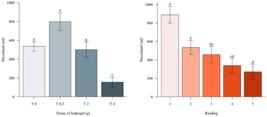
Effect of hydrogel doses (left) and readings (right) of experiment 1 on the leachate volume of potted soils, added hydrogel: T0 - 0 g of hydrogel; T0.5 - 0.5 g of hydrogel; T2 - 2 g of hydrogel and T4 - 4 g of hydrogel. Source: Elaboration: the authors, 2024.
Although in absolute terms, the treatment without hydrogel had the second highest percolate volume from the pots, T0 did not differ statistically from the treatment with the application of 2 g of hydrogel per pot (T2). The T4 treatment showed the lowest volume among the treatments of experiment 1, with a 28.50% reduction in percolate volume compared to T0.5 and a 20.24% reduction compared to the control treatment (Figure 3).
Considering the percolate volume over time and the wetting and drying cycles, there was a progressive reduction in collected volumes. The percentage difference between the percolate volume of the first and last evaluations was 30.49% (Figure 3).
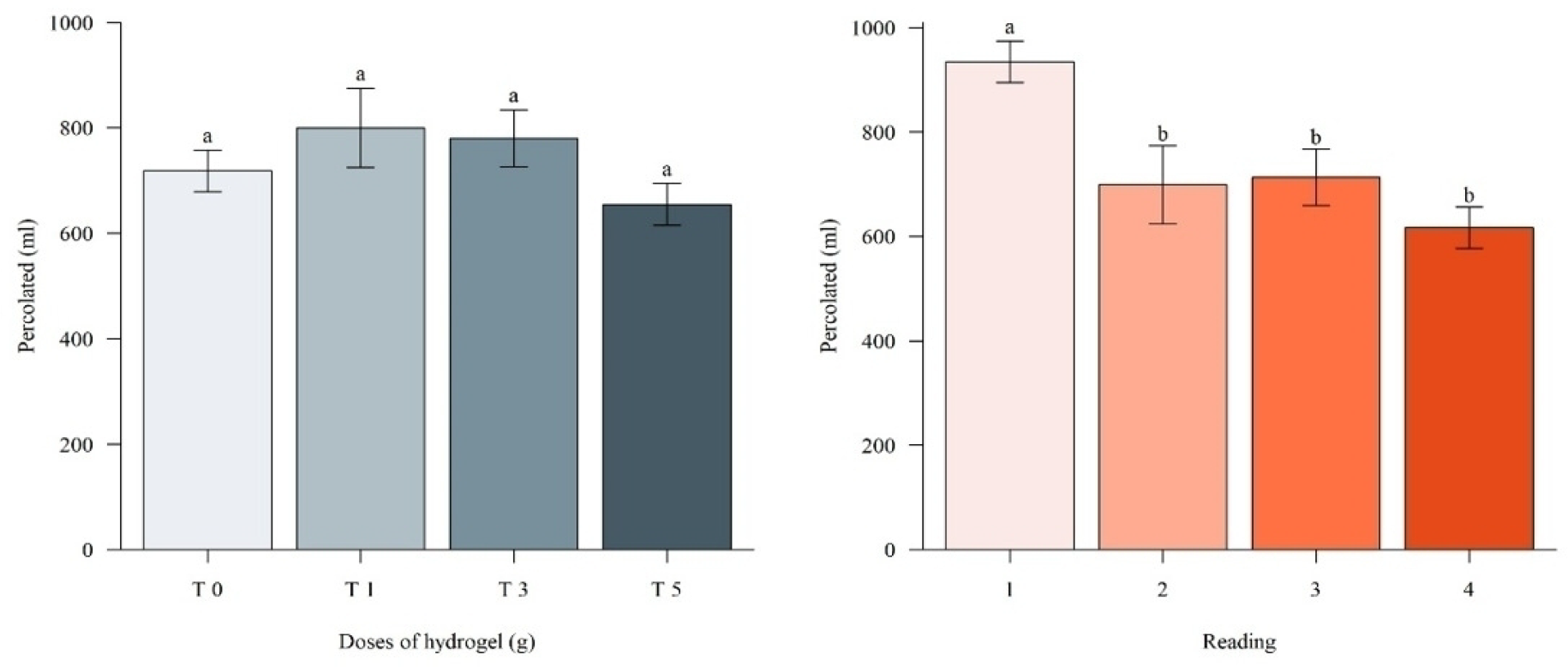
In experiment 2, whose data are in figure 4, there was no significant difference among the applied hydrogel doses, although, in absolute terms, the pots added with 1.0 g of hydrogel (T1) presented a higher percolate volume than in control treatment pots (T02), with 8.81% difference between T1 and T02 (Figure 3).
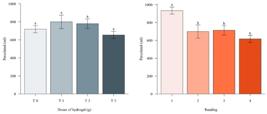
Effect of hydrogel doses (left) and readings (right) of experiment 2 on the leachate volume of potted soils, added of hydrogel: T0 - 0 g of hydrogel; T1-1 g of hydrogel; T3 - 3 g of hydrogel and T5 5 g of hydrogel. Source: Elaboration: the authors, 2024.
In absolute terms, the T5 treatment, with 5 g of hydrogel per pot, showed the lowest percolate volume, with an 18.15% reduction compared to the T1 treatment and a 10.25% reduction compared to the control treatment (T02) (Figure 4).
Regarding the effect of time, in experiment 2, the analysis of percolate volumes followed a similar trend to the first experiment, with a reduction in collected volumes between the first and subsequent readings. The percentage difference between the percolate volume of the first and last evaluation was 66.01%, higher than that observed in experiment 1.
These results indicate that hydrogel doses between 0.5 and 3.0 g/pot do not result in effective water retention in the soil and may even reduce retention compared to soil without hydrogel addition. Doses between 4 and 5 g/pot, however, resulted in increased water retention of over 20% compared to soil without hydrogel, having the potential to ensure significant storage of precipitation water, which generates surface runoff carrying eroded sediments, especially after 4 or 5 cycles of wetting and drying.
The fact that doses between 0.5 and 3.0 g of hydrogel negatively affect water retention in the soil has an unknown impact. It is worth noting, however, that the absence of an effect on water retention in soils with low doses of the polymer appears in other studies (FALCÃO SOBRINHO and BARBOSA, 2020; PONTES FILHO et al., 2018).
Regarding doses between 4 and 5 g, whose effect on retention was evident, the manufacturer of the hydrogel recommends doses of 5 g per plant.
Nascimento et al. (2022) corroborate the data from the present research, showing that adding hydrogel at a dose of 0.1% (w/w) increased the basal water storage capacity of the soil by up to 37%. They estimated that under their experimental conditions, for each hectare and a 0.2 m soil layer, water storage in a sandy loam soil added with 0.1% (w/w) hydrogel could increase by 180 m3 ha-1, a significant value concerning the potential for reducing sediments carried in surface runoff.
Regarding the higher water retention in the soil over the readings, this fact may relate to the effect of wetting and drying cycles on soil aggregation, given that this variable is a meaningful factor in the behavior of unsaturated soils. It significantly alters the amount of pores, moisture content, distribution, structure, and especially the cementation that contributes to particle aggregation (HOCHMAN et al., 2021; CHEN et al., 2018).
Paluszek (2011) stated that wetting and drying cycles promote the loosening of soil structure and increased aeration because, during hydrogel expansion, soil mass detachment and an increase in total porosity occur, explaining the results observed in the present study.
Hou et al. (2018) also showed that soil bulk density decreases with the application of superabsorbent hydrogel because the product promotes the formation of macropores in the soil. Nascimento et al. (2021), using the same hydrogel and similar wetting and drying cycles as ours, also observed a progressive increase in water retention with increasing hydrogel doses while percolate volume decreased. It is worth noting that the authors stated that after 100 days, especially at high temperatures, the water storage capacity in soils with hydrogel decreased, indicating reduced efficiency over time.
FIELDWORK STAGE
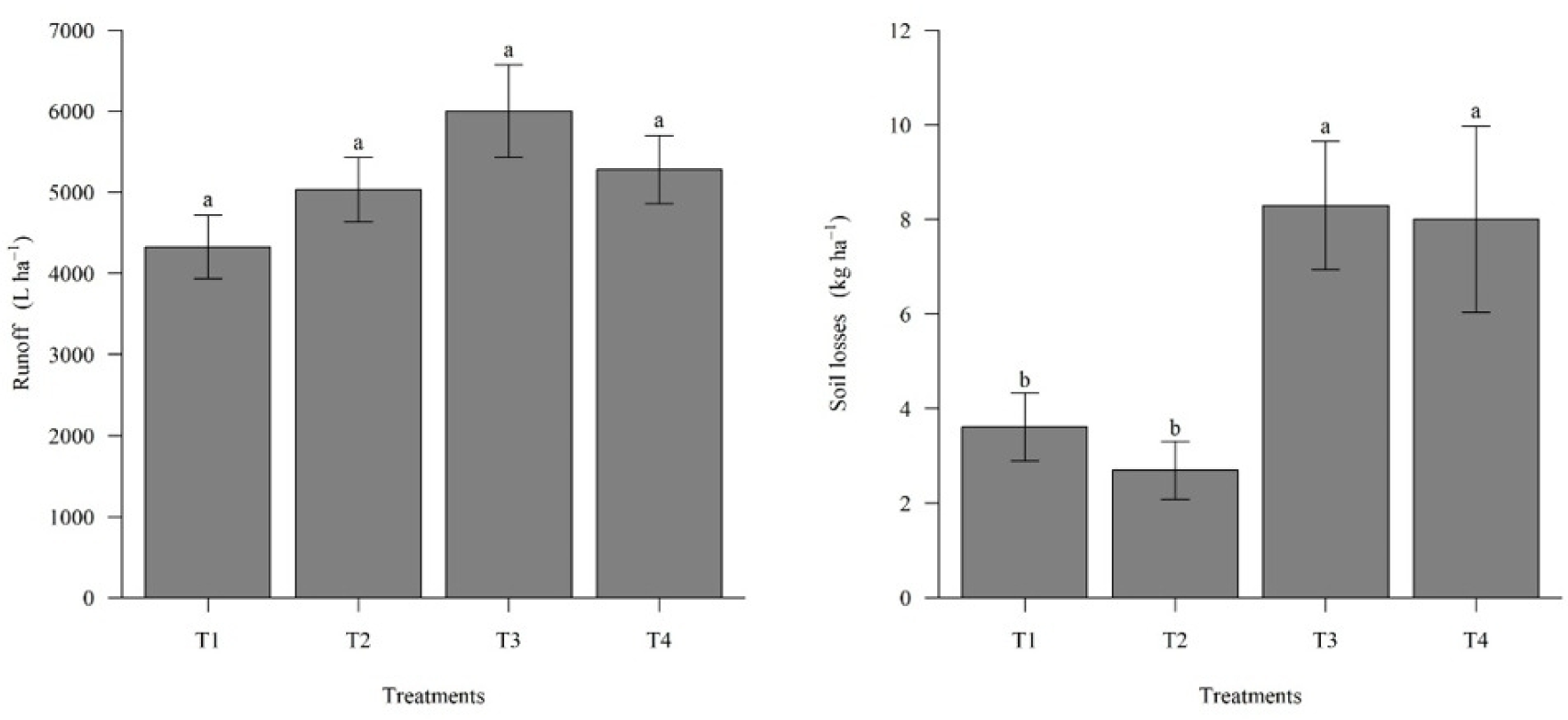
Analysis of variance showed a relevant effect on soil loss between treatments; however, there was no meaningful effect on surface runoff, which may be related to the high variability of this variable due to significant precipitation variation.
In absolute terms, the average surface runoff values were 5,159.61 L ha-1, with maximums of 5,999.738 L ha-1 and minimums of 4,326.299 L ha-1 (Figure 4), which is close to the average of 5,692.33 L ha-1 found by Falcão Sobrinho and Barbosa (2022) in the same area, in treatments with contour planting associated with stone rows and downhill planting without vegetation.
Soil losses in treatments T1 and T2 did not differ, averaging 3.61 and 2.69 kg ha-1 per evaluation, respectively. In T3 and T4, the average values were 8.29 and 7.99 kg ha-1, respectively (Figure 5), which is 38.7% higher than treatments T1 and T2.
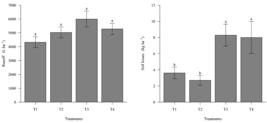
Surface runoff and soil losses from treatments T1 - Planting on Contour Lines associated with stone cords + grass planting; T2 - Planting down the hill, absent of grass; T3 - Planting on a contour line + planting grass and T4 - Planting downhill + planting grass. Source: Elaboration: the authors, 2024.
In terms of magnitude, the observed values are low compared to those found in previous experiments (FALCÃO SOBRINHO and BARBOSA, 2022) for the same treatments but without using hydrogel and without grass cover.
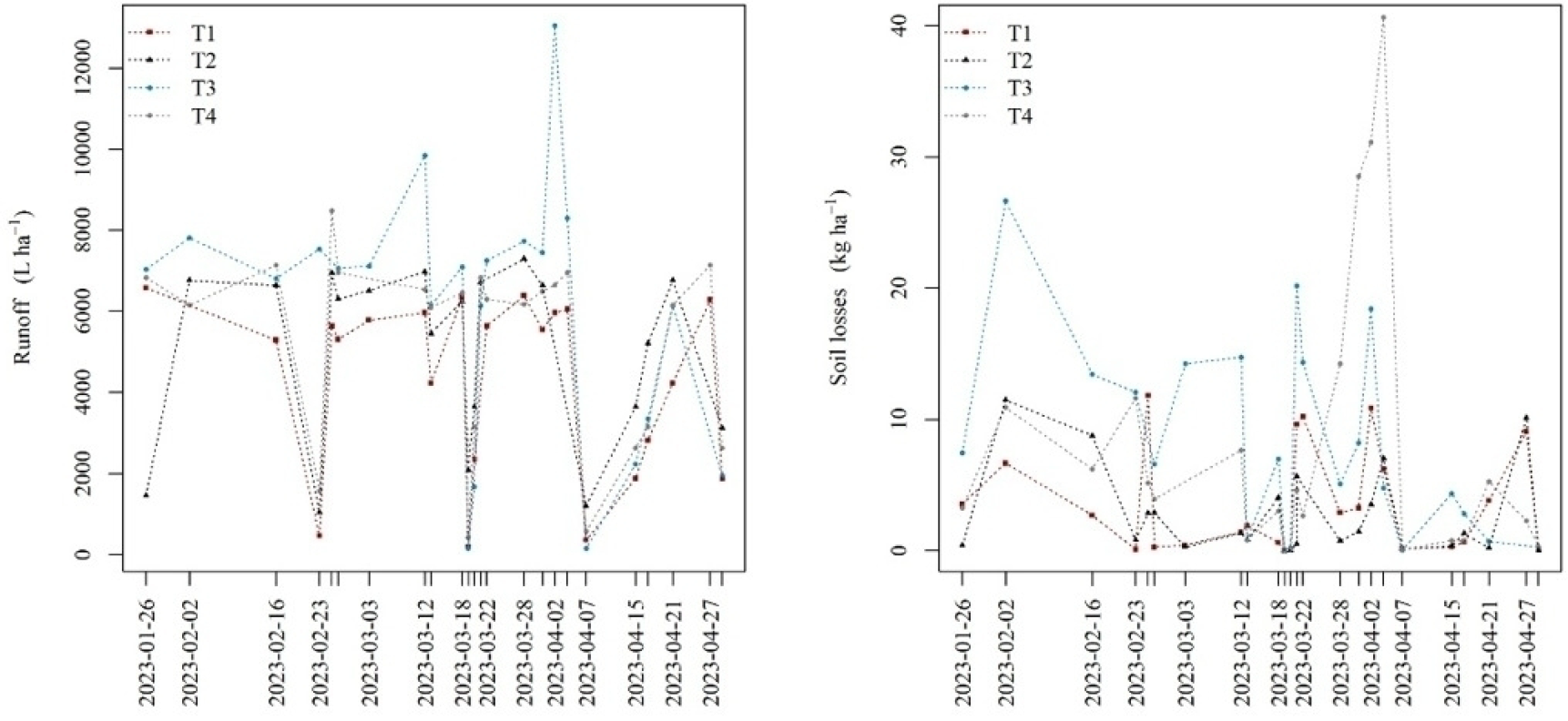
The distribution of surface runoff and soil loss over the evaluations (Figure 5) suggests no linear relationship between runoff and soil loss, as in some treatments, such as T3, the highest runoff did not generate the highest soil loss peak (Figure 6). This trend similarly appears in studies by Falcão Sobrinho and Barbosa (2022) for the same area.
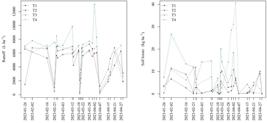
Behavior of surface runoff and soil losses throughout the evaluations in the treatments T1 -
Planting on Contour Lines associated with stone cords + grass planting; T2 - Planting down the hill, absent of grass; T3 - Planting on a contour line + planting grass and T4 - Planting downhill + planting grass. Source: Elaboration: the authors, 2024.
The lower magnitude of soil losses in the present study may relate to the positive effect of hydrogel on soil aggregation, as treatment T2, the only one without grass (live cover) and whose planting was downhill, showed the lowest soil loss compared to treatments T3 and T4.
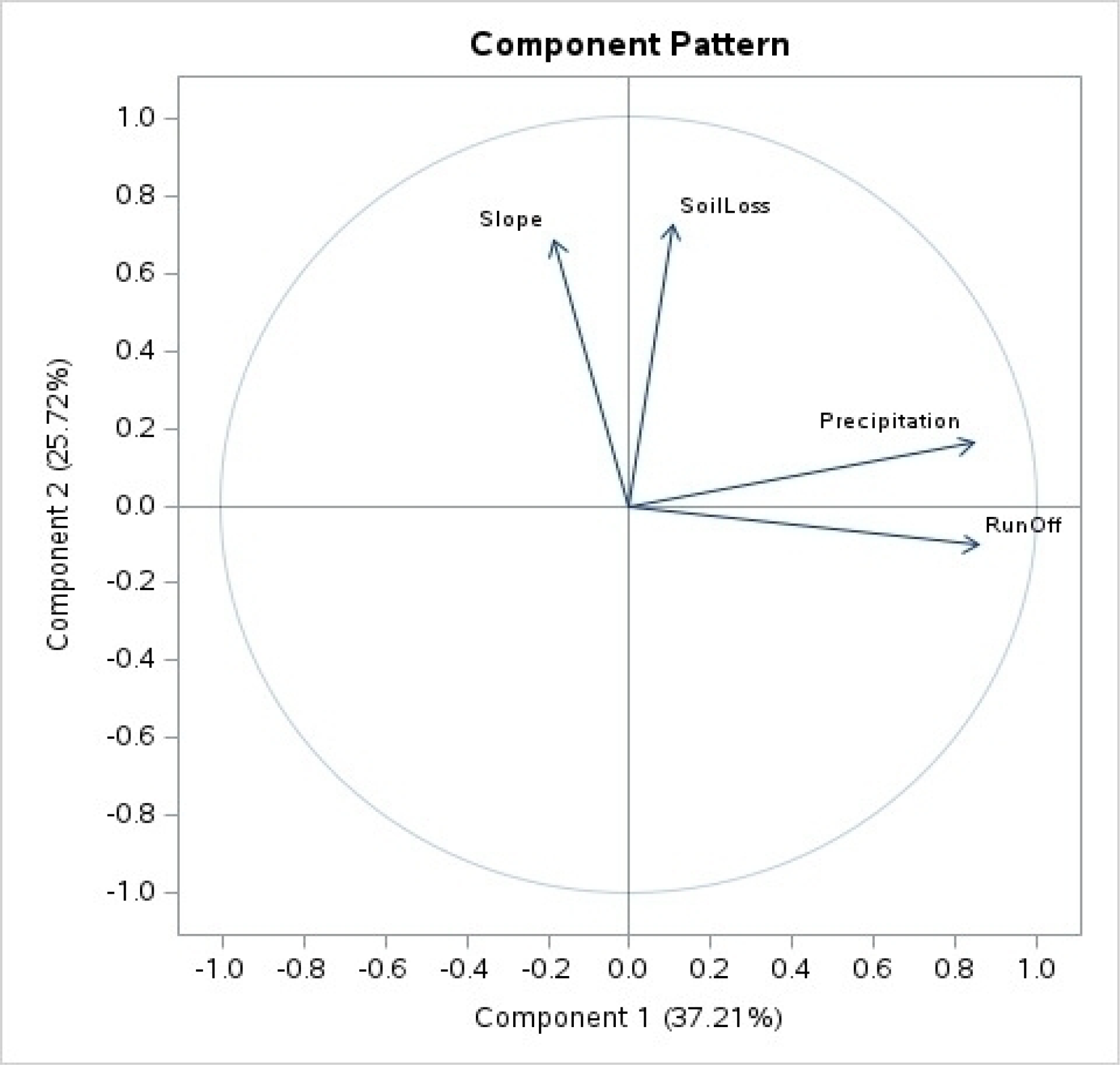
However, the high variability of the treatments, including slope, made it difficult to assess the isolated effects of hydrogel on soil losses. The proof of this is in the principal component analysis (Figure 7), which showed that slope is the main factor influencing soil loss.
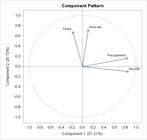
Principal component analysis (PCA) for the variables precipitation, slope, soil loss and surface runoff in relation to the treatments T1 - Planting on contour lines associated with stone cords + grass planting; T2 - Planting down the hill, absent of grass; T3 - Planting on a contour line + planting grass and T4 - Planting downhill + planting grass. KMO test: 0.659 and Bartlett test: 103.776. Source: Elaboration: the authors, 2024.
Spearman's correlation matrix (Table 2) also showed a positive correlation between surface runoff and precipitation (0.427), indicating that the greater the precipitation, the greater the surface runoff. There was also a positive correlation between soil loss and runoff (0.698) and soil loss and precipitation, although the latter was considered low (0.427) (Table 2).
Spearman's correlation matrix for the variables precipitation, slope, surface runoff and soil losses. Source: Elaboration: the authors, 2024.
CONCLUSION
Hydrogel doses between 4 and 5 g increase soil water storage and retention;
Data from pot experiments indicate that hydrogel can be an ally in reducing surface runoff in soils subject to erosive processes;
The high variability of treatments, including slope, made it difficult to assess the isolated effects of hydrogel on soil losses.
Further field studies are necessary to confirm the effects of hydrogel use on surface runoff and soil losses, especially in areas with the same slope.
ACKNOWLEDGEMENT
We thank the Fundação Cearense de Apoio ao Desenvolvimento Científico e Tecnológico (Ceará Foundation for the Support of Scientific and Technological Development, FUNCAP) for funding the call that supported the development of the research resulting in this publication, the Coordenação de Aperfeiçoamento de Pessoal de Nível Superior (Coordination for the Improvement of Higher Education Personnel, CAPES), and the Conselho Nacional de Desenvolvimento Científico e Tecnológico (National Council for Scientific and Technological Development, CNPq) for their technical, scientific, and structural support.
REFERENCES
- ARAÚJO, I. C. DA S. Perda de solo e aporte de nutrientes e metais em reservatório do semiárido brasileiro. Ceará: UFC, 2017. 154f. Tese (Doutorado em Ciência do Solo).
- CARVALHO, D. F.; MONTEBELLER, C. A.; CRUZ, E. S.; CEDDIA, M. B.; LANA, A. M. Q. Perda de solo e água em um Argissolo Vermelho Amarelo, submetido a diferentes intensidades de chuva simulada. Revista Brasileira de Engenharia Agrícola e Ambiental, v. 6, p. 385-389, 2002.
- CHEN, R.; XU, T.; LEI, W.; ZHAO, Y.; QIAO, J. Impact of multiple drying-wetting cycles on shear behaviour of an unsaturated compacted clay. Environ. Earth Sci. v. 77, p. 683, 2018.
-
COSTA FALCÃO, C. L. DA & FALCÃO SOBRINHO, J. Precipitation and soil carriage in microbacies of theacaraú valley in the state of Ceará. Acta Geográfica, v.13, p. 1-27, 2019. https://dx.doi.org/10.5654/acta.v13i32.4138
» https://dx.doi.org/10.5654/acta.v13i32.4138 -
EBABU, K.; TSUNEKAWA, A.; HAREGEWEYN, N.; TSUBO, M.; ADGO, E.; FENTA, A. A.; MESHESHA, D. T.; BERIHUN, M. L.; SULTAN, D.; VANMAERCKE, M.; PANAGOS, P.; BORRELLI, P.; LANGENDOEN, E. J.; POESEN, J. Global analysis of cover management and support practice factors that control soil erosion and conservation. International Soil and Water Conservation Research. v 10, p. 161 - 176, 2022. https://doi.org/10.1016/j.iswcr.2021.12.002
» https://doi.org/10.1016/j.iswcr.2021.12.002 -
FALCÃO SOBRINHO, J. F.; BARBOSA F.E.L. Water Absorption by Hydrogel Using Fertilizers, Environment and Natural Resources Research, v. 10, p. 26-52, 2020. https://doi.org/10.5539/enrr.v10n2p26
» https://doi.org/10.5539/enrr.v10n2p26 -
FALCÃO SOBRINHO, J. F.; BARBOSA, F. E. L. Soil losses in agricultural area of the semi-arid. Mercator, v. 21, p. 1-14, 2022. https://doi.org/10.4215/rm2022.e21020
» https://doi.org/10.4215/rm2022.e21020 -
FERREIRA, S. D; CLAUDINO-SALES, V.; FALCÃO SOBRINHO, J. Pedodiversity and environmental degradation in the lower course of Acaraú river, Ceará State, Northeastern Brazil. Revista Brasileira de Geografia Física, v.13, p. 2788-2801, 2020. Doi. 10.5654/acta.v13i32.4138
» https://doi.org/10.5654/acta.v13i32.4138 -
FUNCEME- Fundação Cearense de Meteorologia e Recursos Hídricos. Série Histórica. Disponível em:http://www.funceme.br/produtos/script/chuvas/Download_de_series_historicas/downloadHistoricos/postos/500.txt Acesso em julho de 2024.
» http://www.funceme.br/produtos/script/chuvas/Download_de_series_historicas/downloadHistoricos/postos/500.txt - HAO, H.X.; CHENG, L.; GUO, Z.L.; WANG, L.; SHI, Z.H. Plant community characteristics and functional traits as drivers of soil erodibility mitigation along a land degradation gradient. Land Degrad. Dev. V. 31, p.1851-1863, 2020.
-
HOCHMAN, D.; DOR, M.; MISHAEL, Y. Diverse effects of wetting and drying cycles on soil aggregation: Implications on pesticide leaching. Chemosphere, v. 263, p. 1 - 9, 2020. https://doi.org/10.1016/j.chemosphere..127910
» https://doi.org/10.1016/j.chemosphere..127910 -
HOU, X.; LI, R.; HE, W.; DAI, X.; MA, K.; LIANG, Y. Superabsorbent polymers influence soil physical properties and increase potato tuber yield in a dry-farming region. J. Soils Sediments, v. 18, p. 816-826, 2018. https://doi.org/10.1007/s201811368-017-1818-x
» https://doi.org/10.1007/s201811368-017-1818-x -
LIMA, C. A. DE; MONTENEGRO, A. A. DE A.; LIMA, J. L. M. P. DE; ALMEIDA, T. A. B., SANTOS, J. C. N. DOS. Uso de coberturas alternativas do solo para o controle das perdas de solo em regiões semiáridas. Eng Sanit Ambient, v.25, p. 531-542, 2020. DOI: 10.1590/S1413-41522020193900
» https://doi.org/10.1590/S1413-41522020193900 -
NASCIMENTO, C. D. V.; MOTA, J. C. A.; NASCIMENTO, I. V.; ALBUQUERQUE, G. H. DA S.; SIMMONS, R. W.; DIAS, C. T. DOS S.; COSTA, M. C. G. Temperature limitations in the use of hydrogels on leptosols in a semi-arid region of Brazil. Geoderma Regional, v. 26, p. 1 - 9, 2021. https://doi.org/10.1016/j.geodrs.2021.e00407Get rights and content
» https://doi.org/10.1016/j.geodrs.2021.e00407 - PALUSZEK, J. Physical quality of eroded soil amended with gel-forming polymer. Int. Agrophys. v. 25, p. 375-382, 2011.
-
PANDEY, S. KUMARI, N. Chapter 24 - Utilisation of agricultural waste biopolymer for soil erosion management. Advances in Pollution Research, p. 249-260, 2024. https://doi.org/10.1016/B978-0-443-15291-7.00019-5
» https://doi.org/10.1016/B978-0-443-15291-7.00019-5 -
PONTES FILHO, R. A., GONDIM, F. A.; COSTA, M. C. G. Seedling growth of tree species under doses of hydrogel and two levels of luminosity. Revista Árvore, v. 42, p. 1-9, 2018. https://doi.org/10.1590/1806-90882018000100012
» https://doi.org/10.1590/1806-90882018000100012 -
R CORE TEAM. R: A language and environment for statistical computing. R Foundation for Statistical Computing. 2021. Disponível em: https://www.R-project.org/ Acesso em julho de 2022.
» https://www.R-project.org/ -
SILVA, C.V. T.; ANDRADE, E. M. DE; AQUINO, L. C. DE; FILHO, L.; RIBEIRO FILHO, J. C.; OLIVEIRA JÚNIOR, H. S. DE. Temporal dynamics of soil susceptibility to erosion in semiarid watersheds. Acta Scientiarum. Agronomy, v. 43. p. 1 - 12, 2021. Doi: 10.4025/actasciagron.v43i1.51378.
» https://doi.org/10.4025/actasciagron.v43i1.51378. -
ZHENG, H.; MEI, P.; WANG, W.; YIN, Y.; LI, H.; ZHENG, M.; OU, X.; CUI, Z. Effects of super absorbent polymer on crop yield, water productivity and soil properties: A global meta-analysis. Agricultural Water Management, v. 282, p. 108290, 2023. https://doi.org/10.1016/j.agwat.2023.108290
» https://doi.org/10.1016/j.agwat.2023.108290 -
XING, S., ZHANG, G., WANG, C., ZHANG, N., CHEN, S. Effects of straw incorporation on soil erosion resistance along a land degradation gradient in the black soil region of China. Catena, v. 231, p. 107365, 2023. https://doi.org/10.1016/j.catena.2023.107365
» https://doi.org/10.1016/j.catena.2023.107365
-
Editors in Charge
Alexandra Maria OliveiraAlexandre Queiroz Pereira