
 GEOGRAPHICAL CHANGES IN THE AUTOMOBILE INDUSTRY, A CASE STUDY OF BATTERYS FOR ELECTRICAL VEHICLES
Abstract
The purpose of this article is to contextualize the geographical changes of automobile industry, analyzing the relationship between the main producing countries and the evolution of science, technology and innovation in this sector. In this sense, an empirical research was carried out, with the construction and analysis of a database of Dewert Innovation plataform, showing the evolution of patent registration. We also investigate the recent transformation of this industry towards electromobility, which has been made possible by advances in production of batteries. Thus, the lithium-ion battery (LIB) sector was studied, which highlights the change in innovative leadership from the West to the East, with the increasing relevance of Japan, South Korea and China.
Keywords:
development; Science; technology and innovation; automobile industry
Resumo
O propósito deste artigo é contextualizar as mudanças na geografia da indústria automobilística, analisando a relação entre os principais países produtores e a evolução da ciência, tecnologia e inovação no setor. Para tanto, foi realizada uma pesquisa empírica, com a construção e análise de uma base de dados, na plataforma Dewert Innovation, mostrando a evolução do registro de patentes. Também é investigada a transformação recente na indústria em direção à eletromobilidade, que vem sendo viabilizada pelo avanço na produção de baterias. Assim, estudou-se o setor de baterias de íon-litio (LIB), que evidencia a mudança na liderança inovativa, do Ocidente para o Oriente, com a relevância cada vez maior do Japão, da Coreia do Sul e da China.
Palavras-chave:
desenvolvimento; ciência; tecnologia e inovação; indústria automobilística
Resumen
El propósito de este artículo es contextualizar los cambios en la geografía de la industria automotriz, analizando la relación entre los principales países productores y la evolución de la ciencia, la tecnología y la innovación en el sector. Para ello, se realizó una investigación empírica, con la construcción y análisis de una base de datos disponible en la plataforma Dewert Innovation, mostrando la evolución del registro de patentes. También se investiga la reciente transformación de la industria hacia la electromovilidad, que ha sido posible por los avances en la producción de baterías. Así, se estudió el sector de las baterías de iones de litio (LIB), que pone de relieve el cambio de liderazgo innovador, de Occidente a Oriente, con la creciente relevancia de Japón, Corea del Sur y China.
Palabras-clave:
desarrollo; ciencia; tecnología e innovación; industria automobilística
INTRODUCTION
A good metaphorical expression for the 20th century is to call it the century of the automobile, symbolic of capitalism and an expression of Fordism, understood here, as a total way of life as highlighted by Harvey (1993). In fact, both the automobile and petroleum (another key sector of the world economy to this day) are expressions of the mass consumer society. The petroleum issue, in fact, became strategic for states throughout the 20th century, having a strong geopolitical component and significant relevance in the world economy (Yergin, 2010).
The consolidation of the internal combustion engine gave rise - from the 1920s onwards - to an unprecedented productive change in the two sectors, mentioned above. With regard to the automotive industry, the focus of this article, the stabilization of the technological standard created the conditions for oligopoly, with the concentration of production of a few brands in a few countries. In the 1970s, the Third Industrial Revolution (3rd IR) brought with it a new set of possibilities, based on the introduction of computers and greater automation. This phase changed the technological pattern again, allowing the reconfiguration of the market structure of the industry as a whole, opening space for the entry of new players and countries. It is in this context that the strong dependence on oil proved to be a relevant factor, in economic and geopolitical terms. In addition, issues related to environmental impacts, resulting from massive industrialization, began to permeate discussions in search of more effective actions aimed at sustainability.
This framework of disruptive events reached the turn of the 21st century in the face of a largely globalized industrial economy - with its global value chains - and amid growing concern about climate change. The environmental agenda demands less polluting technology, especially in the automotive industry, and the information and communications revolution provides the technological support for this. Electric vehicles are once again taking center stage and are becoming a viable alternative for the energy transition, in which electromobility is seen as a paradigm shift. A technological race is underway to ensure that EVs (electric vehicles) can compete directly with conventional ICE (internal combustion engine) vehicles, tackling what is the “Achilles heel” of electric vehicles: the battery. The low performance of batteries leaves EVs vulnerable and impractical for users in their daily lives, especially on longer journeys. This technological story is told through an analysis of patent registration data related to lithium-ion batteries for electric vehicles since 1990. What we see is the predominant presence of registrations in Japan between 1990 and 2012, followed by Germany and the USA, and with subsequent growth in filings by South Korea and China. Quite famous brands in the ICT (Information and Communication Technologies) sector - for mainly cell phones and laptops - are present among the main depositors, in addition to manufacturers consolidated in the automotive industry.
The technologies used in the composition of lithium-ion batteries (LIB) used in electric vehicles are the same for all types of electronic devices. With the advent of the microprocessor in the 1970s, accompanied by the entire process of diffusion and technological spillovers, the ICT sector became one of the most important in the industrial economy. It is in this evolutionary scenario that research aimed at technological innovation in batteries developed, especially throughout the 1980s and early 1990s. It is worth noting that the first commercially available cell phones and laptops used nickel-cadmium (NiCd) batteries and later nickel-metal hydride (NiMH). It was in 1991 that Sony commercialized the first rechargeable lithium-ion battery, which has constantly undergone transformations that allow greater adaptability to the most varied products (ROSOLEM, 2012). The analysis of patent data related to LIB for electronic devices shows us a movement quite similar to that observed for EVs, in terms of global distribution among countries. Among the brands, there is a strong presence from the ICT sector, but with some traditional ones from the automotive sector.
The global production of lithium-ion batteries has been growing substantially in recent years, and is strongly concentrated in East Asia - China, South Korea and Japan. However, several investment announcements in the USA and Europe have been reported, which indicates a race for production and innovation capacity, which involves the energy sovereignty of nations. The formation of new industrial conglomerates is evident, through mergers, joint ventures and R&D partnerships, between traditional groups from the ICT and automotive sectors, as well as with the entry of new players in the LIB market for electric vehicles.
Studies indicate that the stock of knowledge present in LIB patent registrations has been growing in the last decade, indicating a greater breadth, as well as a greater interdisciplinarity of this knowledge. Different sectors are feeding off each other to share common knowledge. This points to a technological lock-in of LIBs, given their capacity to recombine knowledge for application in vehicles, electronic devices and other energy storage systems. Amid the broad global movement of transition from internal combustion engines to electromobility, supported in large part by the overflow of the ICT sector, could the break with carbon lock-in be proving to be a reality? Just as the 20th century was marked by a succession of social, political and economic events around petroleum, could a geopolitical reconfiguration with different consequences be taking place? Will dependence on oil give way to dependence on light metals - the raw material present in LIBs - with a possible lithium lock-in?
To support this discussion, this article is based on the collection and analysis of patent data obtained from the Derwent Innovation platform, belonging to the Clarivate Analytics group, with restricted access to usersi. The extractions resulted in the formation of three large groups of databases, related to: 1) the internal combustion engine, between 1900 and 2019; 2) Lithium-ion batteries for use in electric vehicles between 1990-2019; 3) Lithium-ion batteries for use in electronic devices between 1990-2019.
For this work, the results constructed from the database of the aforementioned platform for groups 2 and 3 will be presented, as follows: a) for group 2, a filter was first made in the manual code DWPI (Derwent World Patent Index) combining the subgroups X16-B01F1 and X21. Then (in parallel) another search was performed in the IPC (International Patent Documentation), combining the specific subgroups B60K and H01M. Finally, the platform is submitted to a combination of the two results obtained, generating a single database. The final extraction was performed using the INPADOC (International Patent Documentation) function; b) for group 3, a filter was first performed in the manual code DWPI (Derwent World Patent Index) combining the subgroups X16-B01F1 and P8 or T or W. Then (in parallel) another search was performed in the IPC, combining the specific subgroups H01M and H02H or H02J.
We emphasize here that the geography of innovation, as a sub-area of economic geography, has produced important contemporary theoretical contributions, as highlighted in the critical review carried out by Moulaert & Sekia (2010), regarding territorial innovation modelsii. Furthermore, it is important to mention that the theme of regional/local development is the focus of several theoretical reflections in geography, as expressed in the work of already classic authors such as Lipietz (1988); Harvey (2013); Piore & Sabel (1984); Smith (1988) and Benko (1996), among othersiii. Even recognizing the importance of these distinct contributions and theoretical frameworks, the backdrop of the present investigation is the world-systems analysis, in particular from the reflections of Giovanni Arrighi (1997) and Immanuel Wallerstein (2011), as justified below.
This theoretical perspective defines a World-system
“...as a system in which there is an extensive division of labor. This division is not merely functional - that is, occupational - but geographical. That is, the range of economic tasks is not evenly distributed throughout the world-system.” (WALLERSTEIN, 2011, p. 491).
In this author’s view, the world-economy is divided into core states, peripheral areas, and semi-peripheral areas “that lie between the center and the periphery in a series of dimensions, such as the complexity of economic activities, the strength of the state apparatus, cultural integrity, etc.” (idem, p. 492). Wallerstein also argues that the division of a world-economy presupposes a hierarchy of occupational tasks, in which the tasks that require higher levels of qualification and a higher level of capital accumulation are reserved for the areas that have a greater capacity to retain and/or control these two variables.
The position of centrality in the modern interstate system is defined by the successful combination of activities of the organic nucleus, at a given moment in time, in a territory. These activities are defined as those considered innovative. In historical capitalism, the states considered central, dominated (and dominate) the innovative processes and the products derived from them. There is a symbiosis between state and capital, “which increases the reciprocal capacity to consolidate and reproduce their association with activities more typical of the organic nucleus” (ARRIGHI, 1997, p. 157). For the purposes of this article, this characterization is pertinent, to the extent that it is possible to establish a correlation between scientific and technological development, manifested by the innovations of products and processes in the case study that will be presented, and the position of states in the interstate system. In other words, the states that today are in the central positions (more developed), not by coincidence, are those that internalized and produced the innovations, over time, through their respective national companies.
Arrighi (1997), paraphrasing Schumpeter, draws attention to the fact that innovations are not only concentrated in time, but also tend to be concentrated in space. In other words, certain places end up concentrating the activities considered “the brain” of corporate capital, these being the central zones of the capitalist world-economy. Other places, however, concentrate “muscle and nerve” activities, configuring themselves as peripheral countries. The intermediate zone (the semiperiphery) has a more or less an equal combination of activities with these two characteristics. As highlighted by this author, “the relevant distinction is between activities that involve strategic decision-making, control and administration, research and development, on the one hand, and activities of pure execution, on the other” (ARRIGHI, 1997, p. 187). Thus, the purpose here is to provide an x-ray of the geography of production and science, technology and innovation surrounding lithium-ion batteries, which appears to be shifting from the west (USA and Europe) to East Asia (Japan, South Korea and China), following the larger movement of transfer of capital accumulation processes to that region, which has been ongoing in recent decades (Arrighi, 1997; Arrighi, 2008).
In other words, the study of the registration of patents for lithium-ion batteries, which are currently fundamental to the shift in the global automobile industry towards electromobility, is used here as an example of the empowerment of the East Asian region and its increasing centrality in the capitalist world-economy. Therefore, command over the latest innovations in an archetypal 20th century industry (automotive) can be seen as an indicator of the positioning of states in the interstate system in the center - semi-periphery - periphery model, given the growing relevance of national companies from Japan, South Korea and China in relation to those from the United States and Europe.
ELECTRIC VEHICLE BATTERIES AND TECHNOLOGICAL SPILLOVER
The resurgence of electric vehicles and the advancement of electromobility are directly linked to the technological evolution of battery composition. The main technological challenges to be overcome in relation to EV batteries are high reliability, high performance, high energy density, reduced recharge time, long life cycle, reduced weight and volume, reasonable cost, and safety, as well as environmental friendliness, since battery disposal still represents an obstacle from an environmental point of view (ROSOLEM et al, 2012).
Currently, the most advanced and most widely used are lithium-ion batteries (LIB). Lithium is a light metal with high electrochemical potential and the highest energy intensity, which are very attractive characteristics for use in energy storage systems (ROSOLEM et al, 2012). This type of battery has high power and energy densities and has been used, in addition to electric vehicles, in cell phones, tablets, laptops, household electrical appliances, medical devices, as well as energy storage systems (solar, wind, etc.) and even satellites (KVA, 2019).
Regarding the dominant technology outlook for the 2020s, according to the IEA (2020), lithium-ion batteries will dominate the EV market for three reasons. First, this technology is well established, which means that there is considerable experience in its large-scale manufacturing, as well as a solid understanding of its long-term durability characteristics. Second, the large investment in lithium-ion manufacturing and supply chains that has been made to date constitutes a barrier to the entry of alternative technologies. Third, alternative technologies are still at lower technology readiness levels (TRLs); none have yet been applied in real-life commercial vehicle conditions (IEA, 2020).
Even when a new technology reaches a level of technological maturity that makes it potentially available, there will be a considerable delay before it begins to penetrate the market. This is because extensive testing under real-world conditions is required, and even if and when testing demonstrates substantial improvements along key metrics (e.g. cost, energy density, durability, safety), new production capacity will need to be installed (IEA, 2020).
While lithium-ion technology has made enormous progress over the past decade in terms of energy density, costs and cycle life, there is still room for improvement. Research is ongoing to improve all three main components of LIB cells: cathodes, anodes and electrolytes. Furthermore, recent developments in battery design and thermal management are primarily aimed at cutting module component costs. Two examples are Contemporary Amperex Technology Co. Limited’s (CATL) cell-to-pack and Build Your Dreams’ (BYD) “Blade Battery” which aim to remove intermediate module components, thus reducing assembly costs and increasing energy density by up to 20% (CATL, 2019; BYD, 2020).
In recent years, the average price of lithium-ion battery packs for EVs has fallen significantly. This can be explained by several factors such as: increasing global supply capacity, growth in order volumes from major automotive manufacturers, increasing energy density, as well as the introduction of new cell and battery pack designs (BNEF, 2021). According to calculations carried out by BNEF (2021), LIB battery prices could fall below USD/KWh 100 in 2024 and reach USD/KWh 58 by 2030. This is consistent with the concept of learning rate, which links the rate of price decline to the volume of batteries deployed in the market. The study arrived at a learning rate of 18% (cost reduction for each doubling of battery capacity), and used it for the price trend curve. By 2035, lithium-ion batteries could reach a volume-weighted average price of USD 45/kWh. However, this will require material substitution and further technological advancements (BNEF, 2021).
Despite concerns around battery performance, some EVs may not necessarily be designed for the highest possible energy densities. This may be the case for city buses or light commercial vehicles (LCV), where volumetric constraints are less stringent. Another reason is to lower the price of electric cars in markets where affordability is more important than range (IEA, 2020). For these applications, LFP cathode technology is well suited due to the wide availability of its precursor materials (including the fact that it does not use cobalt) and its long life cycle. The recent announcement of Tesla's partnership with CATL to adopt LFP cathodes, as well as cell-to-pack technology in its cars produced in China, points in this direction (REUTERS, 2020).
As discussed so far, LIBs are used in a variety of products, playing a crucial role in the electronics, energy and transportation sectors. LIB technology consists of several components and subsystems, through which different sectors are involved in the value chain, both in production and use (STEPHAN et al, 2017). Figure 1 visually shows this overflow of technological knowledge between areas. It illustrates the sectoral configuration in LIBs, indicating the complexity and technological diffusion in the producing and user sectors.

The core components enable the main functions of the battery: the electrochemical reactions that convert electrical energy into chemical energy (charging) and vice versa (discharging). Individual cells assemble the core components - enhanced by peripheral components (wiring, coating, cooling system, system balancing) - and can be stacked into a cell system (battery pack). These different subsystems and applications require different production processes and specific expertise, which are provided by different sectors. For example, raw materials from the mining sector are processed into core and peripheral components by the chemical, metallurgical and electrical-electronic sectors. Finally, the electrical-electronic sector assembles the components into the cell, which can be integrated into various larger technical systems, such as in mobile applications (EVs, laptops, tablets, mobile phones) or stationary applications (integration of intermittent renewable energies into electricity grids).
The sectoral configuration of the LIB therefore consists of many different sectors. Their knowledge and practices (processes) differ substantially, since they are based on different scientific disciplines (STEPHAN et al, 2017). It is noted that the dynamics of the individual sector directly impacts battery innovation processes. Electronic devices were the pioneers in the use of LIBs, which made possible the popularization and high consumption of cell phones, tablets and laptops. From this technology embedded in LIBs, the technological spillover to the automotive industry, through EVs, has occurred intuitively and automatically. This market dynamic in new sectors has substantially increased the development of innovative processes, accompanied by changes in the organization of productive activities in value chains, such as the formation of joint ventures or vertical integration efforts (STEPHAN et al, 2017).
PATENT DATA RELATED TO LITHIUM-ION BATTERIES
Based on data extracted from the Derwent Innovation platform (2021), this section aims to analyze the patent market related to lithium-ion batteries since 1990, specifically for electric vehicles. It is worth noting that in the 1990s, lithium-ion batteries (LIB) were already the most advanced, both for vehicles and electronic devices (ROSOLEM et al, 2012).
In 1990, there were 28 patent documents related to lithium-ion batteries for electric vehicles (LIB-EV), of which 16 were in Japan. After 9 years, the volume of documented patents grew by 992.9%, jumping to 306 documents in 1999. Throughout the 1990s, there were 1,153 LIB-EV patents documented, with Japan leading with 771 documents, representing 68.0% of the total. Next came Germany, the USA and France, with 11.2%, 7.8% and 2.7%, respectively. The traditional Japanese automotive sector dominated the LIB patent market for EVs, with Toyota leading with 117 documents, followed by Nissan, Honda, Mitsubishi and Yamaha. The highlight, however, is the strong participation of manufacturers related to the Information and Communications Technology (ICT) sector, such as the Japanese companies Hitachi, Panasonic, NGK, Sumitomo, Sony, Toshiba, Fujitsu and TDK. In the sectoral analysis, companies related to ICTs accounted for 23.4% of the share of LIB-EV patents in the 1990s, behind only the automotive sector, with 72.8% (DERWENT, 2021). In all sectoral analyses related to LIB patent documents, the 50 largest manufacturers in terms of document volume in the total period, between 1990 and 2019, were considered.
In the 2000s, the total volume of LIB-EV patent documents reached 8,015 - an increase of 595.1% compared to the previous decade. Japan remained the largest applicant with a 65.1% share, followed by the USA (7.8%), China (7.3%) and Germany (5.6%). The growing number of documents occurred mainly after 2005, when the number jumped from 545 to 1,905 in 2009, an increase of 249.5%. Regarding manufacturers, the traditional automotive companies Renault, Denso, Daimler, GM, Bosch, Subaru, Stellantis and Ford stood out in the LIB-EV patent market, in addition to the then emerging Korean company Hyundai. The ICT sector's share reached 29.4% in 2006, but ended the 2000s with 21.8%, which was lower than the number observed in the 1990s. Other important brands in the ICT sector began to appear, such as LG Chem, GS Yuasa, NEC, Samsung, General Electric and Omron, in addition to others in the chemical products sector, such as Showa Denko and Asahi Kasei, (DERWENT, 2021).
Finally, the data observed for the 2010s reveal a growth of 421.1% compared to the previous decade, reaching a total of 41,769 LIB-EV patent documents. The sum of the volumes for 2018 and 2019 (11,607) is higher than the entire volume documented over the twenty years of the 1990s and
2000s (9,168). Among the main countries, Japan accounted for 35.4% of the share, followed by China, the USA and South Korea, with 27.0%, 13.7% and 10.3%, respectively. Throughout the 2010s, 73.7% of LIB-EV patents were documented in Asia. It is important to highlight the significant growth in Chinese documents, which began to surpass Japanese participation from 2017 onwards. In 2019 alone, 2,438 LIB-EV patents were documented in China. Among the manufacturers in the automotive sector, some already traditional ones such as Porsche, BMW and Suzuki, and other emerging Chinese ones such as BYD and BAIC, stand out. The ICT sector expanded its share of the LIB-EV patent market, reaching 36.4% of all registrations in the 2010s, with the automotive sector's share falling from 73.8% to 58.8% between 2000 and 2010. The brands in the ICT sector that begin to gain prominence are Murata, SEL and CATL, in addition to SK Innovation, originating from the energy sector, (DERWENT, 2021). Graph 1 clearly shows Japanese hegemony, with significant participation from Germany and the USA until 2005, when South Korea and China began to appear in the patent market, with the latter country assuming the leadership after 2017.
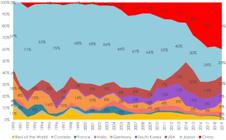
Participation in the volume of patent documents related to lithium-ion batteries for electric vehicles - by country
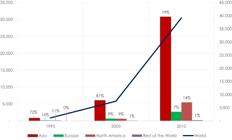
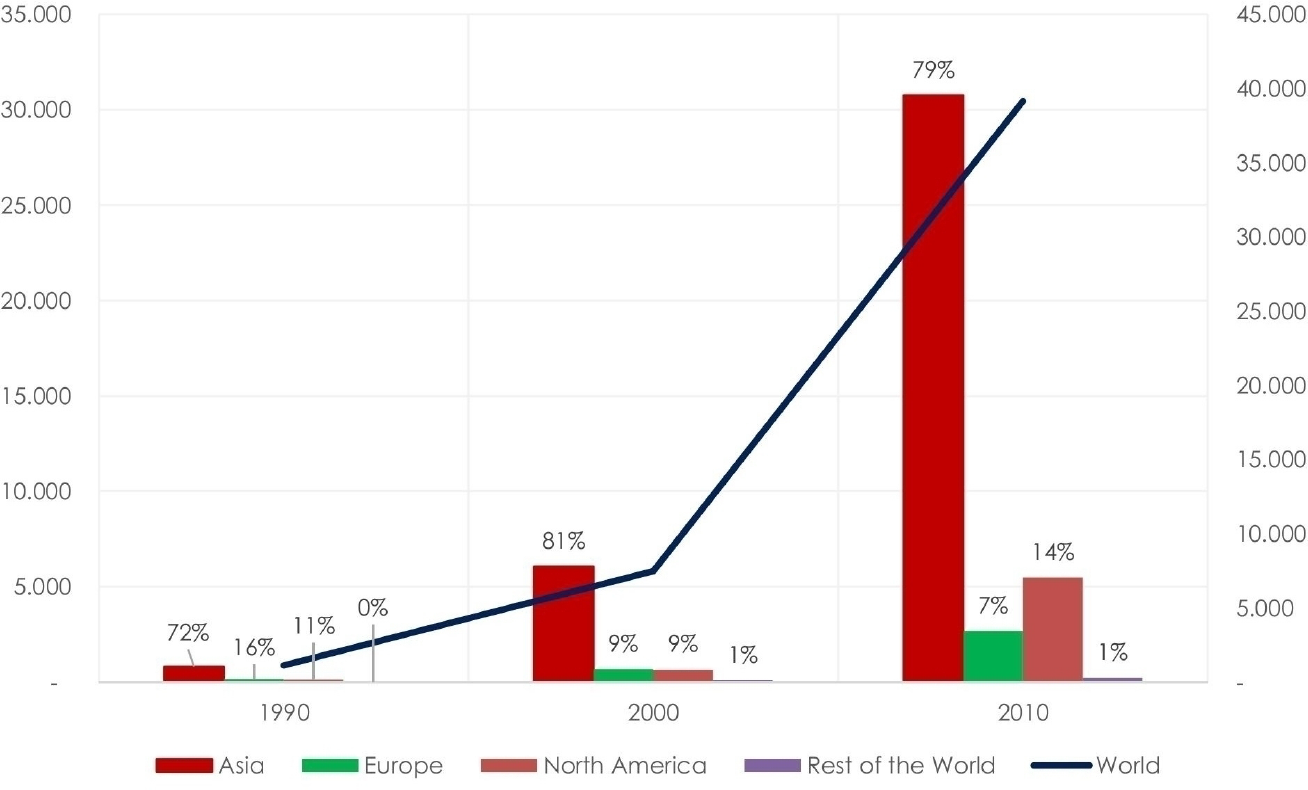
Graph 2 shows the growth in the volume of documents in the world, as well as the distribution between continents, with Asia accounting for 74% of LIB patents documented in the world in 2020. The sectoral analysis of LIB-EV patent documents can be seen in Graph 3. Among the 50 largest applicants, 100% belonged to the automotive sector in 1990. From then on, the ICT sector began to advance in research, reaching 41% of the share of LIB-EV patents in 2017. The movement of ICT manufacturers into the modern automotive industry is clear.
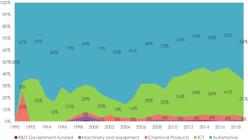
Sectoral participation of the top 50 that documented the most patents for lithium-ion batteries for electric vehicles

Top 15 manufacturers that have documented the most patents for lithium-ion batteries for electric vehicles - 2019

Top 20 manufacturers that have most documented LIB-EV related patents - total volume between 1990-2019

The analysis illustrated in Graph 4 shows the participation of the 15 largest LIB-EV patent filers in 2019 and their respective average annual variations between 2010 and 2019. Toyota led in 2019 with a 9% share, although its average annual growth over the last 10 years was only 5.2%. Next we have LG Chem with a 4.9% share and an average annual expansion of 16.5% for the same periods. CATL had only 1.1% share in 2019, but with an average growth of 60.8% over the last decade. Graph 5 shows the ranking of the 20 largest LIB-EV patent filers between 1990 and 2019, in which Toyota led with more than 6,000 documents. The highlight is the presence of seven brands from the ICT sector among the 20 largest
THE LITHIUM-ION BATTERY MARKET
This section aims to provide a brief analysis of the global LIB market for vehicles, presenting data related to the geographical distribution of production, as well as market share and recent announcements of investments and partnerships between brands.
In 2020, the production of EV lithium-ion batteries was 160 Gigawatt-hours/year, which represented an increase of 36.8% compared to 2019 (117 GWh/year), enough to charge 3.3 million BEVs (MCKINSEY, 2020). In terms of production capacity, the LIB-EV market is currently heavily concentrated in East Asia, with around 85% of the global share, distributed among: China (76%), South Korea (5%) and Japan (4%) (SNE, 2021).
Based on data from BNEF (2021), Graph 6 shows the evolution of lithium-ion battery production capacity for EVs, according to the location of the factories. In 2021, total capacity reached 586 GWh/year, which represented an increase of 83.7% compared to 2019. For 2025, estimates are that global capacity will more than quadruple, to 2,539 GWh/year. It is important to highlight the 368.9% growth in Europe's production capacity between 2019 and 2021. Most of the new facilities are being directed to European countries, with companies aiming to meet the region's growing demand (MCKINSEY, 2020). Currently, the main EV battery factories in Europe are located in Poland and Hungary (IEA, 2021). The European capacity share is expected to grow from just 6% in 2021 to around 18% in 2025 (BNEF, 2021).
Among the brands, according to data from SNE 2021, the Korean company LG Chem took the lead in the EV battery market share in 2020, with 24.6% compared to 10.4% recorded in 2019. In Chart 8, it is also possible to see the Chinese company CATL in second place, with a 23.5% share, followed by the Japanese company Panasonic, with 20.4% (SNE, 2021). It is important to highlight that the battery market for electric vehicles is dominated by companies from the electronics sector, where together they represent 51.0% of the total (LG Chem, Panasonic and Samsung). Manufacturers BYD, SK Innovation, CALB and Gouxan have their origins in the energy sector, with BYD starting to produce electric buses in 2008. The AESCiv and PEVEv brands represent joint ventures between companies in the automotive sector and ICT.
Overall, joint ventures are becoming a popular collaboration model in the battery industry, with a growing number of partnerships announced in 2019. This trend mainly reflects the fact that joint ventures allow automakers to sustain sufficient capacity to achieve their ambitious sales and production goals. In 2020, a joint venture between Japan's Toyota and China's BYD was announced for R&D of EVs and batteries. The new company, BYD Toyota EV Technology, will operate in China (ELECTRIC CAR, 2020). Another announcement was a joint venture between Volkswagen and Bosch for battery cell production in Europe. Companies seek cost and technology leadership in the industrialization of batteries (AUTOMOTIVE BUSINESS, 2022). In 2021, the manufacturer Stellantis also announced two joint ventures with Korean companies LG Chem and Samsung. Both partnerships aim to produce batteries in North America, but the location of the plants has not yet been announced (ELECTRIVE.COM, 2021). Some automakers also prefer multisourcing strategies involving a number of cell phone manufacturers. This is the case of Tesla, which relied exclusively on cells from Panasonic and signed new contracts with CATL and LG Chem for the Chinese market in 2019 (MCKINSEY, 2020).
THE TECHNOLOGICAL LOCK-IN OF LITHIUM-ION BATTERIES: FROM CARBON LOCK-IN TO LITHIUM LOCK-IN?
As already discussed, lithium-ion batteries have been the main choice for mobile energy storage solutions, due to their long life cycle and high energy and power density, compared to other battery systems (ETACHERI et al, 2011). Initially used in electronic devices, their use has expanded to the automotive sector, as well as to energy storage from renewable sources, such as solar and wind energy. It can be said that the mass commercialization of electric vehicles will depend on the success of R&D related to a new generation of LIBs, with improvements in performance indicators (energy density and cost) that meet the necessary qualifications for EVs to be accepted by consumers (HU et al, 2016).
In a study published in the Journal of Cleaner Production, Aaldering et al (2019) analyzed a patent database related to lithium-ion batteries, with a view to obtaining an inclusive view of the continuous path of technological development embedded in research, as well as predicting their future development potential. To this end, the study used two machine learning algorithms: principal component analysis (PCAvi) and random forest classifier (RFCvii). PCA offers a more condensed view of the composition of knowledge stocks within the patent data, while RFC allows the prediction of potential evolutionary developments for each identified knowledge component.
The study also revealed a pattern related to electrodes and other main components of battery cells, as being the main focus of inventive activity, which was consistent over time and led to the formation of related knowledge stocks. It was observed that, between 2010 and 2017, the knowledge process became more interdisciplinary. Different sectors have interacted with each other to share a common knowledge base. The increasing applicability of LIBs in EVs is being demonstrated by the presence of convergent TKS, which has gained more importance in the last decade with the development of batteries by sectors linked to the electronics sector in conjunction with automobile manufacturers (Aaldering et al, 2019).
Aaldering et al (2019) also identified in the study that research related to the battery management system (BMS) is present in the LIB patent data. BMSs offers several benefits - through the development of more accurate algorithms to monitor the status of batteries - as it can ensure optimized battery life cycle, performance and reliability, as well as reduced maintenance costs and safety risks (Rahimi-Eichi et al, 2013). The need for a smart BMS is vital in the establishment of electric mobility, since progress in chemistry and materials alone cannot guarantee a smooth integration of LIBs (Aaldering et al, 2019).
Finally, the results of the study suggest that LIBs are the reference technology and will continue to dominate the energy storage market, as they benefit from the growing penetration and recombination capabilities of knowledge for automobiles and stationary energy storage applications (AALDERING et al, 2019).
The new model that is emerging in the automotive sector has energy efficiency, determined by the environmental agenda, as its driving force. The search for less polluting technology is part of the main disruptive trend in electromobility. It is in this environment that lithium-ion batteries have emerged as a new technology, where a new trajectory is being established in order to transform it into the dominant technology in the automotive sector for the coming decades. The break with carbon lock-in has never been so close to the industrial economy and an emerging paradigm. A new technological paradigm of lithium-ion batteries, electromobility, light metals and sustainability.
In addition to the evidence pointing to this transition from ICE to electromobility, from the announcements to discontinue the combustion engine by the automotive industry, corroborated by public policies, it is also possible to observe this movement through patent data. We identified in the research that the growth in the volume of LIB-EV documents is higher than the growth in ICE patents, in the period between 1990 and 2019. While ICE patent documents had an average annual variation of 9.8%, LIB-EV documents expanded by an average of 20.7% in the 30 years analyzed. This shows us that the growing movement in research aimed at innovation in lithium-ion batteries is more than double the expansion rate of the innovative process of the combustion engine.
According to data from the Mineral Commodity Summaries 2021, published by the USGS, the global end-use markets for lithium are estimated as follows: batteries, 71%; ceramics and glass, 14%; lubricating greases, 4% and other uses 10%. Five mining operations in Australia, two brine operations in Argentina and Chile, and two brine operations and one mining operation in China accounted for the majority of global lithium production - a total of 10 operations. According to the document, due to overproduction and declining prices, several established lithium operations have postponed capacity expansion plans. Lithium supply security has become a priority for technology companies in the United States and Asia. Strategic alliances and joint ventures between technology companies and exploration companies continue to be established to ensure a reliable and diverse supply of lithium for battery suppliers and vehicle manufacturers (USGS, 2021).
Table 1 shows the global lithium market, with the distribution of its reserves and production by country. In 2019, approximately 86,100 metric tons of lithium were produced, with Australia being the largest producer, with a 52.3% share of the total, followed by Chile, with approximately 22.4%. It is estimated that there are approximately 86 million tons of lithium available in nature worldwide. The most recent data indicates that Bolivia holds approximately 24.4% of the total lithium on the planet, followed by Argentina and Chile, with 22.4% and 11.2%, respectively. Almost 60% of all global lithium reserves are in South America (USGS, 2021). This is where the difference between the availability of a given natural resource in a territory and the control of the resulting manufactured products becomes evident, because South American countries are unable to produce lithium batteries with national companies, as production is controlled by countries with less or no participation in the source of the raw material for this technology. In other words, the countries mentioned participate peripherally in the lithium battery value chain, merely as suppliers of the raw materialviii.
The break with the carbon lock-in that is emerging should lead to a new geopolitical configuration, with an eventual redistribution of political and economic forces on the global stage. Just as oil has brought strategic relevance to countries with large reserves - especially in the Middle East and Venezuela - light minerals could be a window of opportunity for their holders to better position themselves in the global energy market. In relation to lithium, Bolivia and Argentina stand out, and should direct investments to increase their production, which together currently account for only 7.3% of the share, while their combined reserves are 46.9% of the world total. Nickel is already being widely exploited in Indonesia, and could be an opportunity for Brazil, with 17% of global reserves and only 2.3% of production. Even so, the critical issue remains for these countries holding reserves of lithium and other light minerals, as they are currently participating only as primary suppliers in the lithium-ion battery production chain, because they have not managed to develop scientific and technological capabilities or even their own companies in the automotive industry that could internalize production within the scope of this new paradigm of electromobility. The contrast with East Asian countries, which are in central positions in technological and productive advances, even surpassing western economies, could not be more explicit.
In short, the case study presented here exemplifies the movement of East Asian states to achieve a central position in the system. Arrighi (1997) highlights the strategies of semi-peripheral states to reach the center, classifying them as struggles against exclusion and struggles against exploitationix. In this case, the countries of the region acted in both directions. Fighting against exploitation, they took on “a wide range of activities, regardless of comparative advantage” (ARRIGHI, 1997, p. 219). This is how they developed their respective national automotive industries and managed to achieve success in the face of international competition in the sector. The case study presented here, of lithium-ion batteries, is an expression of this. With scientific and technological development, they have managed to modify their structural positions in the capitalist world-economyx, as highlighted by Wallerstein (2011),
“The development process of a world-economy brings with it technological advances, which enable the expansion of its margins. In this case, certain regions of the world can change their structural role in the world-economy to their own benefit.” (p. 493).
Latin American countries, on the other hand, have not internalized the most profitable stages of global value chainsxi, and several of them have been facing deindustrialization processes (Palma, 2019; Ouriques, 2024), limiting themselves to being merely suppliers of raw materials (in this case, lithium), which is also an expression of their subordinate position in the world-economy.
FINAL CONSIDERATIONS
The data presented in this article suggests a significant change in the competition between companies and states in the global automotive industry, around the topic of electromobility. As demonstrated, East Asian countries have become crucial players in innovation in the sector, specifically in the production of lithium batteries, which are currently important for the return of electric vehicles.
Regarding patent data, there is a clear convergence between the major patenting brands and the leading brands in market share. The countries with large volumes of patents are also the largest manufacturers. This is true for both ICE and LIB-EV patents. The development of historical capitalism is linked to technological innovation, and the innovative process is never a random process, following certain patterns of technological trajectory. In this case, it is noteworthy that innovations linked to electromobility in the automotive industry are increasingly associated with companies linked to information and communication technologies, which have been occupying an important space in the sector, in cooperation and also in competition with traditional vehicle manufacturers.
Regarding the sources of raw materials used to manufacture LIBs, it is worth noting that the largest reserves of light minerals (lithium, nickel and cobalt) are located, for the most part, in countries that are not epicenters of the processes of power and accumulation of global capital. In short, peripheral and semi-peripheral countries, as exemplified in the case of Lithium, where the three main world reserves are located in Bolivia, Argentina and Chile, are currently mere suppliers of the raw material in question and, therefore, incapable of internalizing more profitable links in the value chain, as they have not developed indigenous production capacities for batteries based on this raw material. The contrast with East Asian countries could not be more striking, since Japan, South Korea and China, as shown in this article, have developed production capacities in the automotive chain over time and are today leaders in innovation in this new stage of this industry, being focused on electromobility and the search for more sustainable solutions from an environmental point of view.
ANNEX 1
List of specifications of filters used in searches for ICE patent documents; LIB-EV and LIB-E

REFERENCES
-
AALDERING, L.; LEKER, J.; SONG C. Analysis of technological knowledge stock and prediction of its future development potential: The case of lithium-ion batteries. 2019. Journal of Cleaner Production 223 (2019) 301e311. https://doi.org/10.1016/j.jclepro.2019.03.174
» https://doi.org/10.1016/j.jclepro.2019.03.174 - ARRIGHI, Giovanni. A ilusão do desenvolvimento. Petrópolis, Vozes, 1997.
- _____. Adam Smith em Pequim. São Paulo, Boitempo, 2008.
- BENKO, Georges. Economia, espaço e globalização na aurora do século XXI. São Paulo, Hucitec, 1996.
- BNEF (BloombergNEF). Zero-Emission Vehicles Factbook. 2021. A special report prepared for COP26.
-
BYD (2020), BYD's New Blade Battery Set to Redefine EV Safety Standards. Disponível em: www.byd.com/en/news/2020-03-30/BYD%27s-New-Blade-Battery-Set-to-Redefine-EV-Safety-Standards
» www.byd.com/en/news/2020-03-30/BYD%27s-New-Blade-Battery-Set-to-Redefine-EV-Safety-Standards -
CATL (Contemporary Amperex Technology Co. Limited). CATL to Drive New Wave of e-Mobility with Next-Generation Electric Vehicle Battery Technology. 2019. Disponível em: www.prnewswire.com/news-releases/catl-to-drive-new-wave-of-e-mobility-with-nextgenerationelectric-vehicle-battery-technology-300915309.html Acesso em: 18/07/2021
» www.prnewswire.com/news-releases/catl-to-drive-new-wave-of-e-mobility-with-nextgenerationelectric-vehicle-battery-technology-300915309.html -
DERWENT INNOVATION. IP Intelligence/Patent Intelligence Software. Clarivate Analytics. Endereço: www.derwentinnovation.com, 2021.
» www.derwentinnovation.com - ETACHERI, V.; MAROM, R.; ELAZARI, R.; SALITRA, G.; AURBACH, D. Challenges in the development of advanced Li-ion batteries: a review. In: Energy & Environmental Science, 4, 2011, p. 3243-3263.
- GEREFFI, Gary. Global Value Chains and Development: redefining the contours of 21st century capitalism. Cambridge, Cambridge University Press, 2018.
- GEREFFI, Gary & KORZENIEWICZ, Miguel (eds). Commodity chains and global capitalism. Westport (Connecticut), Praeger, 1994.
- HARVEY, David. A condição pós-moderna. São Paulo, Loyola, 1993.
- _____. Os limites do capital. São Paulo, Boitempo, 2013.
- HU, J.; MORAIS, H.; SOUSA, T.; LIND, M. Electric vehicle fleet management in smart grids: a review of services, optimization and control aspects. In: Renewable and Sustainable Energy Reviews, 56, April 2016, p. 1207-1226.
- IEA, International Energy Agency. Global EV Outlook. 2020.
- KARATASLI, Sahan S. The Capitalist World-economy in the Longue Durée: changing modes of the global distribution of wealth, 1500-2008. Sociology of Development, Vol. 3, number 2, 2017, pp. 163-196.
-
KVA (Kung. Vetenskaps Akademien. Press Release. The Nobel Prize in Chemistry 2019. 2019, Disponívels em https://www.nobelprize.org/prizes/chemistry/2019/press-release/ Acesso em 23.01.2022.
» https://www.nobelprize.org/prizes/chemistry/2019/press-release/ - LEE, Neil. Psychology and the Geography of Innovation. In: Economic Geography, 93:2, March 2017, pp. 106-130.
- LIPIETZ, Alain. O capital e seu espaço. São Paulo, Editora Nobel, 1988.
- MCKINSEY & Company. Electric Vehicle Index: Europe cushions a global plunge in EV sales, July 2020.
- MOULAERT, Frank & SEKIA, Farid. Territorial Innovation Models: a critical survey. In: Regional Studies, 37:3, 2010, pp. 289-302.
- OURIQUES, Helton R. A América Latina na economia-mundo capitalista no Século XXI: a influência da China e os limites do modelo primário-exportador. Revista Desarrollo y Espacio, 3 (1), Enero-Junio, 2024.
- PALMA, José G. Desindustrialización, desindustrialización “prematura” y “síndrome holandés”. El Trimestre Económico, 86 (4), 2019, pp. 901-966.
- PIORE, Michael J. ; SABEL, Charles F. The second industrial divide: possibilities for prosperity. New York, Basic Books, 1984.
- RAHIMI-EICHI, H.; OJHA, U.; BARONTI, F.; CHOW, M.Y. Battery management system: an overview of its application in the smart grid and electric vehicles. In: IEEE Industrial Electronics Magazine, 7 (2), June 2013, p. 4-16.
-
REUTERS. Tesla in talks to use CATL's cobalt-free batteries. 2020. In: China-made cars,www.reuters.com/article/us-tesla-china-electric-exclusive/exclusive-tesla-in-talks-touse-catls-cobalt-free-batteries-in-china-made-cars-sources-idUSKBN20C0R
» www.reuters.com/article/us-tesla-china-electric-exclusive/exclusive-tesla-in-talks-touse-catls-cobalt-free-batteries-in-china-made-cars-sources-idUSKBN20C0R - ROSOLEM, M.; BECK, R.;SANTOS, G..; ARIOLI, V. Bateria de lítio-íon: conceitos básicos e potencialidades. CPqD Tecnologia, Campinas, v.8, n.2, p.59-72, jul/dez, 2012.
- RUVACALBA, Daniel M. The Semiperipheral States in the Twenty-first Century: measuring the structural position of regional powers and secondary regional states. International Studies, 57 (1), 2020, pp. 20-50.
- SHIE, Vincent H. & WENG, Chih-Yuan. Destabilizing the Semiperiphery: the counterturn of China’s ascendence in the World-Economy. Perspective on Global Development and Technology, 10, 2011, pp. 365-385.
- SMITH, Neil. Desenvolvimento desigual. Rio de Janeiro, Bertrand Brasil, 1988.
-
SNE Research. 2021. Disponível em http://www.sneresearch.com/_new/eng/sub/sub/sub1/sub1_01.php?sub_cat=2 Acesso em 21.01.2022.
» http://www.sneresearch.com/_new/eng/sub/sub/sub1/sub1_01.php?sub_cat=2 -
STEPHAN, A., SCHMIDT, T., BENING, C., HOFFMANN, V. The sectoral configuration of technological innovation systems:Patterns of knowledge development and diffusion in the lithium-ion battery technology in Japan. Elsiever 2017. Disponível em: http://dx.doi.org/10.1016/j.respol.2017.01.009
» http://dx.doi.org/10.1016/j.respol.2017.01.009 - TUNES, Regina. Geografia da inovação: o debate contemporâneo sobre a relação entre território e inovação. In: Espaço & Economia. Ano V, número 9, 2016.
-
USGS (U.S. Geological Survey) 2021. Mineral commodity summaries 2021: U.S. Geological Survey, 200 p., https://doi.org/10.3133/mcs2021
» https://doi.org/10.3133/mcs2021 - YERGIN, Daniel. O petróleo: uma história mundial de conquistas, poder e dinheiro. São Paulo, Paz e Terra, 2010.
- WALLERSTEIN, Immanuel. El moderno Sistema mundial. La agricultura capitalista y los Orígenes de la economía-mundo europea em el siglo XVI. México, Siglo Veintiuno Editores, 2011, (segunda edición aumentada, nuevo prólogo).
Edited by
-
Editors in Charge
Alexandre Queiroz Pereira

 Source:
  Source:
  Source:
  Source:
  Source:
  Source:
  Source: Bloomberg NEF (2021)*Estimated data
 Source: