 Efficacy and safety of paclitaxel drug-coated balloon angioplasty for stenosis of hemodialysis vascular access: 6-month results from a brazilian multicenter prospective study
ABSTRACT
Background Stenosis resulting from neointimal hyperplasia remains a significant concern associated with dysfunction of arteriovenous fistulas (AVF).
Objectives To investigate the safety and efficacy of paclitaxel drug-coated balloon (DCB) angioplasty for treating failing AVFs.
Methods Investigators analyzed 58 hemodialysis patients treated with RangerTM DCBs from December 2022 to December 2023 across four centers. Lesions treated were de novo or restenotic and located in the juxta-anastomosis, cannulation zone, and outflow segment. Patients were evaluated through physical examinations and Duplex ultrasound at 1, 3, and 6 months. The primary efficacy endpoint was target lesion primary patency at 1, 3, and 6 months, and the primary safety endpoint was freedom from serious adverse events through 30 days post-procedure. Secondary endpoints were access circuit primary patency and technical and procedural success.
Results Nine patients (16%) had thrombosed access at the initial presentation, and 31 (53%) presented with recurrent stenosis. The target lesion primary patency rate at 6 months was 85.7%, and the access circuit primary patency rate at 6 months was 67.5%. No serious adverse events, either local or systemic, were reported. Sex, age, stenosis location, type of lesion, presence of thrombosis, lesion recurrence, diabetes status, or whether post-ballooning dilation was performed did not significantly affect the 6-month target lesion primary patency.
Conclusions DCB angioplasty was shown to be safe and effective for treating peripheral stenosis in vascular access.
Keywords:
hemodialysis; paclitaxel-coated balloon; RangerTM; vascular access; stenosis
RESUMO
Contexto A estenose resultante da hiperplasia neointimal continua sendo uma preocupação significativa associada à disfunção das fístulas arteriovenosas (FAVs).
Objetivos Investigar a segurança e eficácia da angioplastia com balão revestido com paclitaxel (DCB) para o tratamento de FAVs em falência.
Métodos Os investigadores analisaram 58 pacientes em hemodiálise tratados com o DCB Ranger™ de dezembro de 2022 a dezembro de 2023, em quatro centros. As lesões tratadas eram de novo ou restenóticas, localizadas próximas à anastomose, na zona de canulação ou no segmento de saída. Os pacientes foram avaliados por meio de exames físicos e ultrassom Duplex aos 1, 3 e 6 meses. O desfecho primário de eficácia foi a perviedade primária da lesão-alvo aos 1, 3 e 6 meses, e o desfecho primário de segurança foi a ausência de eventos adversos graves até 30 dias após o procedimento. Os desfechos secundários foram a perviedade primária do circuito de acesso e o sucesso técnico e procedimental.
Resultados Nove pacientes (16%) apresentaram trombose das FAVs na apresentação inicial e 31 (53%) apresentaram estenose recorrente. A taxa de perviedade primária da lesão-alvo aos 6 meses foi de 85,7%, e a taxa de perviedade primária do circuito de acesso aos 6 meses foi de 67,5%. Nenhum evento adverso grave, local ou sistêmico, foi relatado. Sexo, idade, localização da estenose, tipo de lesão, presença de trombose, recorrência da lesão, status diabético e realização de dilatação pós-balão não afetaram significativamente a perviedade primária da lesão-alvo aos 6 meses.
Conclusões A angioplastia com DCB demonstrou ser segura e eficaz para o tratamento da estenose periférica em acessos vasculares.
Palavras-chave:
hemodiálise; balão revestido com paclitaxel; Ranger™; acesso vascular; estenose
INTRODUCTION
Functional autologous arteriovenous fistulas (AVFs) are the vascular access of choice for patients with end-stage renal disease undergoing hemodialysis therapy. AVFs are favored over prosthetic arteriovenous grafts and central venous catheters due to their longer durability, fewer complications, and lower maintenance costs.1-4 However, stenosis resulting from neointimal hyperplasia remains a major concern associated with AVF dysfunction.5 Additionally, about 50% of AVFs fail to mature due to development of intimal hyperplasia and stenosis, leading to reduced flow and access occlusion.5-7
Plain balloon angioplasty, typically with high-pressure balloons, remains the first-line treatment for clinically significant stenosis.1 Despite being widely used, the technique’s primary patency rates at one year are relatively low, ranging from 26% to 62%, mainly due to cellular proliferation and neointimal hyperplasia that occur post-procedure.5,8,9 Addressing recurrent AVF dysfunction often requires repeated plain balloon angioplasties, a costly approach that can also negatively impact patient quality of life.8-10
Recent studies have shown that angioplasty using drug-coated balloons offers better primary patency rates than traditional plain balloon angioplasty.11-13 These drug-coated balloons are typically infused with paclitaxel, an agent that stabilizes microtubules and prevents migration and proliferation of vascular smooth muscle cells, which are key factors in the development of neointimal hyperplasia.14
This study reports the 6-month results from a prospective, single-arm trial investigating the safety and efficacy of DCB angioplasty for treating failing autologous AVFs.
MATERIAL AND METHODS
Ethical aspects
All procedures in this study followed the ethical standards of the 1964 Helsinki Declaration and its later amendments. The research ethics committee at the Universidade Federal Fluminense, Rio de Janeiro, Brazil, approved this study under opinion number 5.747.190 and certificate of presentation of ethical appreciation number 55923222.1.0000.5243. Patients provided written informed consent to participate in the study, and their personal details were removed from this analysis.
Patient selection
The investigators prospectively analyzed a convenience sample of patients with AVF treated for stenosis of hemodialysis vascular access using the Ranger™ DCB (Boston Scientific, Marlborough, MA, USA) between December 2022 and December 2023. The study was conducted at four centers: 1) Centro Clínico Livcare (Niterói, Rio de Janeiro, Brazil), 2) Clínica Vene (Rio de Janeiro, Rio de Janeiro, Brazil), 3) Clínica Inteligência Vascular Avançada (Salvador, Bahia, Brazil) and 4) Dermavasc (Brasília, Distrito Federal, Brazil). The sample size was determined by the availability of patients who met the inclusion criteria within the study period.
Patients included in the study underwent angioplasty for salvage of AVF access and met the following inclusion criteria: they were aged over 18 years; had an autologous AVF in use for at least 30 days; exhibited significant angiographic stenosis (luminal narrowing ≥ 50%), causing clinical and hemodynamical dysfunction of the vascular access; had stenosis located between the arteriovenous anastomosis and the axillary vein; had a target lesion length of less than 10 cm, and a vessel diameter of less than 8 mm.
The exclusion criteria for the study included: pregnant or breastfeeding women; those planning to become pregnant during the study period; individuals with active infections; patients on immunosuppressive therapy; participation in other research studies; cognitive limitations preventing understanding of the nature of the study and its potential consequences; patients with coagulation disorders; life expectancy of less than 12 months; allergies to contrast media, aspirin, clopidogrel, heparin, or paclitaxel; and concurrent central venous stenosis.
Study device
The Ranger™ (Boston Scientific, Marlborough, MA, USA) is a drug-coated balloon with a 2 μg/mm2 paclitaxel dose and a TRANSPAX™ citrate ester coating that transfers the drug while reducing paclitaxel exposure during catheter delivery. Once at the lesion site, paclitaxel irreversibly binds to microtubules, inhibiting proliferation of smooth muscle cells and reducing the occurrence of neointimal hyperplasia.14 The components of the drug-coated balloon are built on the platform of the commercially available Sterling (Boston Scientific, Marlborough, MA, USA) balloon dilation catheter, which is compatible with a 0.018-inch wire.
Study procedures
Four vascular surgeons performed the procedures with patients under local anesthesia and sedation. A prophylactic dose of cephalosporin (1000 mg) was administered intravenously before the procedure. Following an initial fistulogram and intravenous administration of 5,000 IU of heparin, the stenosis was crossed using a 0.018 hydrophilic guidewire and pre-dilated with a high-pressure non-compliant balloon. The type and size of this balloon (chosen by the operator) were selected to match the diameter of the adjacent normal vessel. Multiple inflations were used for resistant lesions. If these lesions did not respond adequately to dilation, they were treated with a cutting or ultra-high pressure non-compliant balloon at the operator’s discretion. This treatment approach was also considered acceptable for inclusion in this study. Patients who needed a stent after the initial dilation due to indicators of vessel preparation failure, such as more than 30% residual stenosis, a dissection that limited blood flow, or leakage of contrast material, were excluded from the study.
Once good vessel preparation had been achieved, treatment was completed with inflation of a DCB (Ranger™, Boston Scientific, Marlborough, MA, USA) over the wire. To avoid geographic miss, the DCB was 1 mm larger in diameter and at least 5mm longer at either end than the last balloon dilatation catheter used. The Ranger™ drug-coated balloons had diameters of 5-8 mm and lengths of 40-80mm and were always inflated at their nominal pressure for 3 minutes. After completing DCB angioplasty, the operator could perform additional dilation with a high-pressure balloon to achieve satisfactory results, at their own discretion.
A final angiogram of the entire vascular access was performed to evaluate the procedural result, exclude any immediate complications, and serve as a reference for subsequent follow-up angiograms. Physical examinations and Duplex ultrasound were scheduled at 1, 3, and 6 months after the procedure, according to the routine protocol of the centers, with extra visits as needed to address access circuit dysfunction. Anticoagulants or antiplatelet therapy were used according to the standard care protocols at each center. Variables collected from the electronic records included patient demographics, comorbidities, procedural details, and outcome data.
Study endpoints
The primary and secondary study endpoints are described in Table 1. We applied study definitions according to the Society of Interventional Radiology (SIR) reporting standards.15
Statistical analysis
Measured values are reported as frequencies. Patency analysis was performed with the Kaplan-Meier method and, when applicable, compared using the log-rank test. SPSS software version 18.0 for Windows (IBM, USA) was used for data analysis, and p-values < 0.05 were considered statistically significant. In this study, statistical power calculations were performed a posteriori to evaluate sample size adequacy for detecting clinically meaningful differences.
RESULTS
Fifty-eight patients fulfilled the inclusion criteria and were evaluated in this study.
Patient and lesion characteristics
Table 2 details patient demographics, concurrent medical conditions, and characteristics of the dialysis access circuits.
Patient demographics, concurrent medical conditions, and characteristics of the dialysis access circuits (n=58).
Most patients were male (57%), under 65 years old (53%), and non-smokers (90%). Significant comorbidities included hypertension (84%), diabetes mellitus (45%), ischemic heart disease (17%), and stroke (7%). Fifty-three percent of patients presented with recurrent stenosis, and 47% with de novo lesions. Stenotic lesions were located in the juxta-anastomosis (52%), cannulation zone (17%), and outflow segment (31%). The types of AVF treated were radiocephalic (in 48% of patients), brachiocephalic (21%), and brachiobasilic (31%).
Clinical, procedural, and safety outcomes
Clinical and procedural success were achieved in 100% of the patients. Figure 1 shows the procedural outcomes of an example case. Throughout the first 30 days following the procedure, no serious adverse events, either local or systemic, were reported. No deaths occurred during the study period.

Example of procedural outcomes in a patient with radiocephalic AVF with stenosis at juxta-anastomosis. a) Angiography of a radiocephalic AVF with stenosis at juxta-anastomosis. b) Pre-dilation with 6x60mm high-pressure balloon; c) Preoperative angiography demonstrating adequate vessel preparation; d) Angioplasty with RangerTM DCB (8x80mm); e) Control angiography; f, g, and h) Control Doppler 6 months after the initial procedure without signs of restenosis and with a flow volume of 933ml/min.
Performance outcomes
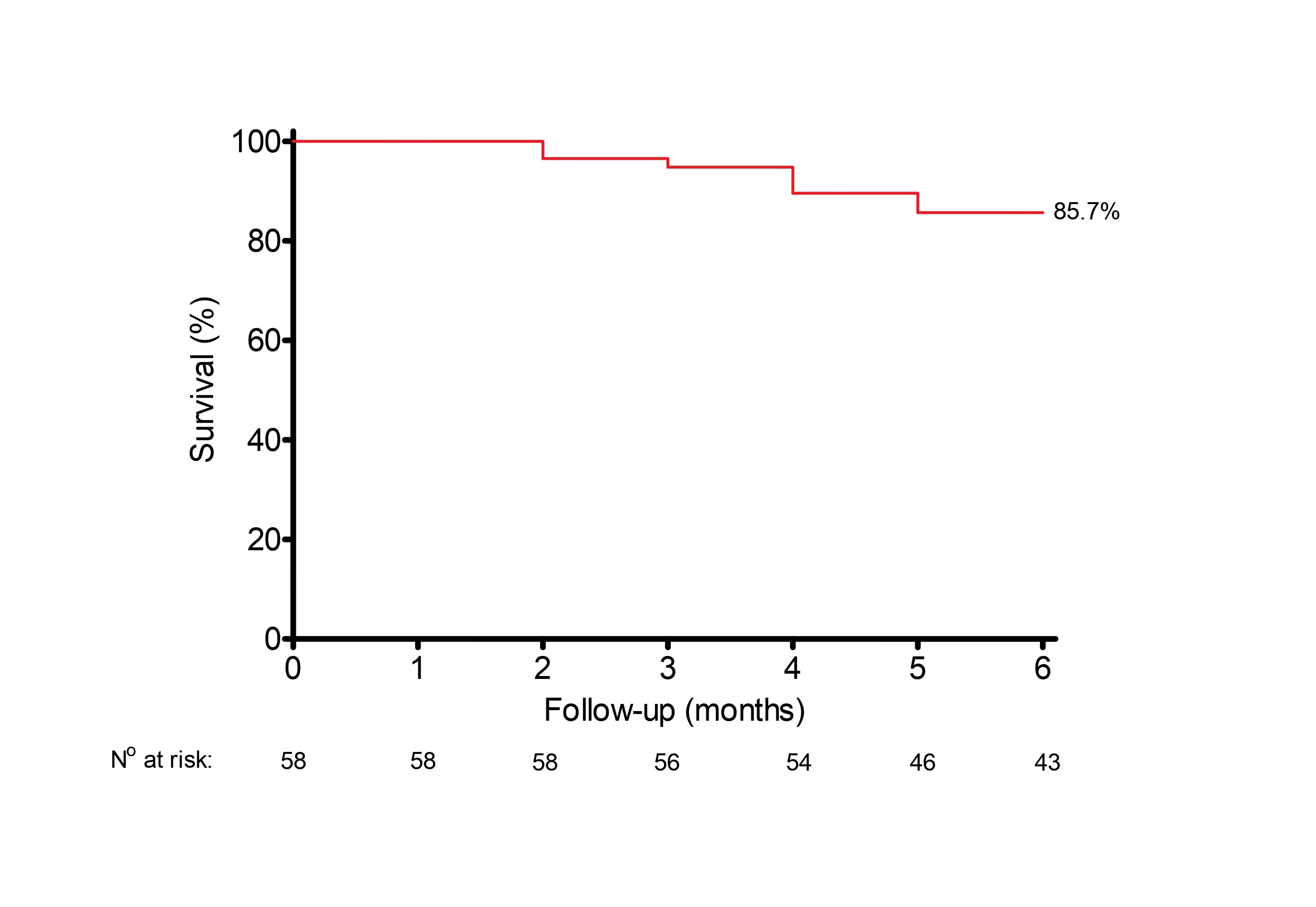
Figures 2 and 3 show patency rates for the study endpoints over the 6-month follow-up period. As shown in Figure 2, target lesion primary patency rates at 1, 3, and 6 months were 100%, 96.5%, and 85.7%, respectively. Access circuit primary patency rates were 100% at 1 month, 91.3% at 3 months, and 67.5% at 6 months (Figure 3).

Target lesion primary patency rates were 100% at 1 month, 96.5% at 3 months, and 85.7% at 6 months.

Access circuit primary patency rates were 100% at 1 month, 91.3% at 3 months, and 67.5% at 6 months.
As detailed in Table 3, we did not observe significant differences in 6-month target lesion primary patency when comparing groups based on sex, age, stenosis location, type of lesion, presence of thrombosis, lesion recurrence, diabetes status, or post-ballooning dilation.
Comparative analysis of six-month target lesion primary patency (TLPP) across patient demographics, lesion characteristics, and treatment variables (n=58).
DISCUSSION
Fistula failure in patients relying on hemodialysis results in missed or inadequate dialysis treatments, repeated endovascular treatments, and catheter use, all adversely affecting patients’ quality of life and contributing to healthcare costs.16 Current research indicates that drug-coated balloons are safe and may reduce restenosis rates compared to conventional angioplasty balloons when treating failing AVFs.17
Building on this knowledge, our study demonstrates the effectiveness of DCB angioplasty for treating hemodialysis vascular access stenosis. We achieved a 100% clinical and procedural success rate in the patient cohort examined. Furthermore, the absence of deaths or serious adverse events related to the procedure within the 6 months following treatment indicates the safety of DCB angioplasty in dysfunctional dialysis fistulas.
The demographics and lesion characteristics of the patients in our cohort reflect a typical end-stage renal disease population, with a high prevalence of hypertension, diabetes, and recurrent stenosis.18-20 The distribution of stenotic lesions and types of AVFs treated is comparable to what has been reported in previous research, underscoring the common challenges in managing AVF stenoses.20,21
The 6-month target lesion primary patency rate of 85.7% observed in this study is notably high, particularly compared to the outcomes of traditional percutaneous transluminal angioplasty. A systematic review and meta-analysis of six randomized controlled trials and four cohort studies showed that target lesion primary patency in DCBs varied from 18.75% to 88.24% at 6-month follow-up.22 For lesions treated with non-drug coated balloons, rates ranged from 30% to 77.42%.22 This is the second study investigating the efficacy and safety of Ranger™ DCB angioplasty for hemodialysis vascular access stenosis. Previously, Soon et al.23 conducted a retrospective study comparing patency rates after the use of Ranger™ DCB or conventional balloon angioplasty in Asian patients with hemodialysis access stenosis. The study reported a higher, though not statistically significant, target lesion primary patency rate in the DCB-treated arm at 6 months (84.3% vs 71.6%, p=0.08), along with significantly longer mean time to target lesion reintervention, especially amongst recurrent lesions when compared to the conventional balloon angioplasty-treated arm. Additionally, DCB-treated circuits demonstrated a longer mean time to circuit reintervention (6.9 ± 2.8 vs 5.8 ± 3.7 months, p = 0.04). Also important is that the target lesion primary patency rate of the Ranger™ DCB in the Asian population23 closely matches the results we observed in the Brazilian population, highlighting the device’s consistent performance across diverse ethnic groups.
Paclitaxel is the most commonly used drug in drug-eluting balloons because it is highly lipophilic and rapidly absorbed and retained in endothelial cells after a short contact time.24 However, the technology behind DCBs comes at a higher cost compared to traditional or high-pressure balloons, limiting their use primarily to challenging lesions prone to recurrence.17 Our study showed comparable patency rates for de novo and restenotic lesions treated with DCBs, suggesting that broadening the clinical application of these devices beyond recurrent cases could be beneficial in reducing the overall need for repeat interventions. In the present study, other classical risk predictors such as sex, age, stenosis location, type of lesion, presence of thrombosis, diabetes status, and post-ballooning dilation did not statistically modify target lesion primary patency.
Our study presents some limitations, mainly the small number of participants and the relatively short follow-up period. Considering the sample size of 58 patients, the present study would only have an adequate statistical power of 80% if the absolute difference in patency rate between subgroups were 30% or higher. To better evaluate the difference in the effectiveness of DCB angioplasty for specific settings, it would be necessary to include more participants and/or extend the follow-up period. Additionally, the use of a convenience sample may not provide a representative cross-section of the broader population due to potential biases in patient availability. Consequently, the results should be interpreted with caution, acknowledging that they may not fully extrapolate to all individuals with hemodialysis vascular access stenosis.
The call for randomized clinical trials to more definitively determine the efficacy of Ranger™ DCBs across different lesion types and patient characteristics is a crucial next step. Randomized clinical trials would provide a controlled environment to isolate the effects of DCBs, mitigating the influence of confounding variables and offering stronger evidence to support or refute our preliminary observations. Larger observational studies would also provide more robust data and allow for a more granular analysis of the efficacy and safety of DCB angioplasty across different patient demographics and lesion characteristics. Such studies would help clarify the specific indications for DCB use, optimizing patient selection and treatment outcomes.
We plan to analyze the 12-month outcomes in this patient population to better understand the long-term effectiveness and safety of angioplasty with the Ranger™ DCB in treating hemodialysis vascular access stenosis. This extended follow-up will provide additional information on the durability of the treatment effect, the potential for late adverse events, and the need for subsequent interventions, which are crucial for establishing long-term treatment protocols.
CONCLUSION
Our study demonstrates the effectiveness and safety of angioplasty with the Ranger™ DCB for treating hemodialysis vascular access stenosis. We achieved high clinical and procedural success rates with no significant adverse events within the 6-month follow-up period. The 6-month target lesion primary patency rate of 85.7% suggests that DCB angioplasty is a valuable addition to the treatment options for failing AVFs. Future studies, particularly randomized controlled trials and larger observational studies, are essential to refine patient selection criteria and optimize treatment protocols.
ACKNOWLEDGEMENTS
The authors thank Morgana Moretti, PhD, for providing medical writing assistance during preparation of this manuscript.
-
How to cite: Harduin LO, Barroso TA, Guerra JB et al. Efficacy and safety of paclitaxel drug-coated balloon angioplasty for stenosis of hemodialysis vascular access: 6-month results from a brazilian multicenter prospective study. J Vasc Bras. 2025;24:e20240103. https://doi.org/10.1590/1677-5449.202401032
-
Financial support: None.
-
The study was carried out at Centro Clínico LivCare, Niterói, RJ, Brasil, Clínica Vene, Rio de Janeiro, RJ, Brasil, Clínica Inteligência Vascular Avançada, Salvador, BA, Brasil, and Dermavasc, Brasília, DF, Brasil.
REFERENCES
-
1 Lok CE, Huber TS, Lee T, et al. KDOQI clinical practice guideline for vascular access: 2019 update. Am J Kidney Dis. 2020 [cited 2023 July 29];75(4 suppl 2):S1-64. https://www.ajkd.org/article/S0272-6386(19)31137-0/fulltext
» https://www.ajkd.org/article/S0272-6386(19)31137-0/fulltext -
2 Arhuidese IJ, Orandi BJ, Nejim B, Malas M. Utilization, patency, and complications associated with vascular access for hemodialysis in the United States. J Vasc Surg. 2018;68(4):1166-74. http://doi.org/10.1016/j.jvs.2018.01.049 PMid:30244924.
» http://doi.org/10.1016/j.jvs.2018.01.049 -
3 Almasri J, Alsawas M, Mainou M, et al. Outcomes of vascular access for hemodialysis: A systematic review and meta-analysis. J Vasc Surg. 2016;64(1):236-43. http://doi.org/10.1016/j.jvs.2016.01.053 PMid:27345510.
» http://doi.org/10.1016/j.jvs.2016.01.053 -
4 Lee T. Fistula first initiative: historical impact on vascular access practice patterns and influence on future vascular access care. Cardiovasc Eng Technol. 2017;8(3):244-54. http://doi.org/10.1007/s13239-017-0319-9 PMid:28695442.
» http://doi.org/10.1007/s13239-017-0319-9 -
5 Roy-Chaudhury P, Sukhatme VP, Cheung AK. Hemodialysis vascular access dysfunction: a cellular and molecular viewpoint. J Am Soc Nephrol. 2006;17(4):1112-27. http://doi.org/10.1681/ASN.2005050615 PMid:16565259.
» http://doi.org/10.1681/ASN.2005050615 - 6 National Kidney Foundation. KDOQI Clinical Practice Guidelines and Clinical Practice Recommendations for 2006 Updates: Hemodialysis Adequacy, Peritoneal Dialysis Adequacy and Vascular Access. Am J Kidney Dis. 2006;48:S1-322.
-
7 Allon M, Robbin ML. Increasing arteriovenous fistulas in hemodialysis patients: problems and solutions. Kidney Int. 2002;62(4):1109-24. http://doi.org/10.1111/j.1523-1755.2002.kid551.x PMid:12234281.
» http://doi.org/10.1111/j.1523-1755.2002.kid551.x -
8 Rajan DK, Bunston S, Misra S, Pinto R, Lok CE. Dysfunctional autogenous hemodialysis fistulas: outcomes after angioplasty--are there clinical predictors of patency? Radiology. 2004;232(2):508-15. http://doi.org/10.1148/radiol.2322030714 PMid:15286321.
» http://doi.org/10.1148/radiol.2322030714 -
9 Heye S, Maleux G, Vaninbroukx J, Claes K, Kuypers D, Oyen R. Factors influencing technical success and outcome of percutaneous balloon angioplasty in de novo native hemodialysis arteriovenous fistulas. Eur J Radiol. 2012;81(9):2298-303. http://doi.org/10.1016/j.ejrad.2011.09.004 PMid:21955605.
» http://doi.org/10.1016/j.ejrad.2011.09.004 -
10 Kitrou PM, Katsanos K, Spiliopoulos S, Karnabatidis D, Siablis D. Drug-eluting versus plain balloon angioplasty for the treatment of failing dialysis access: final results and cost-effectiveness analysis from a prospective randomized controlled trial (NCT01174472). Eur J Radiol. 2015;84(3):418-23. http://doi.org/10.1016/j.ejrad.2014.11.037 PMid:25575743.
» http://doi.org/10.1016/j.ejrad.2014.11.037 -
11 Kitrou PM, Papadimatos P, Spiliopoulos S, et al. Paclitaxel-Coated Balloons for the Treatment of Symptomatic Central Venous Stenosis in Dialysis Access: Results from a Randomized Controlled Trial. J Vasc Interv Radiol JVIR. 2017;28(6):811-7. http://doi.org/10.1016/j.jvir.2017.03.007 PMid:28434662.
» http://doi.org/10.1016/j.jvir.2017.03.007 -
12 Kitrou PM, Spiliopoulos S, Katsanos K, Papachristou E, Siablis D, Karnabatidis D. Paclitaxel-coated versus plain balloon angioplasty for dysfunctional arteriovenous fistulae: one-year results of a prospective randomized controlled trial. J Vasc Interv Radiol JVIR. 2015;26(3):348-54. http://doi.org/10.1016/j.jvir.2014.11.003 PMid:25542635.
» http://doi.org/10.1016/j.jvir.2014.11.003 -
13 Katsanos K, Karnabatidis D, Kitrou P, Spiliopoulos S, Christeas N, Siablis D. Paclitaxel-coated balloon angioplasty vs. plain balloon dilation for the treatment of failing dialysis access: 6-month interim results from a prospective randomized controlled trial. J Endovasc Ther. 2012;19(2):263-72. http://doi.org/10.1583/11-3690.1 PMid:22545894.
» http://doi.org/10.1583/11-3690.1 -
14 Axel DI, Kunert W, Göggelmann C, et al. Paclitaxel inhibits arterial smooth muscle cell proliferation and migration in vitro and in vivo using local drug delivery. Circulation. 1997;96(2):636-45. http://doi.org/10.1161/01.CIR.96.2.636 PMid:9244237.
» http://doi.org/10.1161/01.CIR.96.2.636 -
15 Gray RJ, Sacks D, Martin LG, Trerotola SO, Society of Interventional Radiology Technology Assessment Committee. Reporting standards for percutaneous interventions in dialysis access. J Vasc Interv Radiol JVIR. 2003;14(9 Pt 2):S433-42. http://doi.org/10.1097/01.RVI.0000094618.61428.58 PMid:14514859.
» http://doi.org/10.1097/01.RVI.0000094618.61428.58 -
16 McCarley P, Wingard RL, Shyr Y, Pettus W, Hakim RM, Ikizler TA. Vascular access blood flow monitoring reduces access morbidity and costs. Kidney Int. 2001;60(3):1164-72. http://doi.org/10.1046/j.1523-1755.2001.0600031164.x PMid:11532113.
» http://doi.org/10.1046/j.1523-1755.2001.0600031164.x -
17 Khawaja AZ, Cassidy DB, Al Shakarchi J, McGrogan DG, Inston NG, Jones RG. Systematic review of drug eluting balloon angioplasty for arteriovenous haemodialysis access stenosis. J Vasc Access. 2016;17(2):103-10. http://doi.org/10.5301/jva.5000508 PMid:26847736.
» http://doi.org/10.5301/jva.5000508 -
18 Lai C-C, Fang H-C, Tseng C-J, Liu CP, Mar GY. Percutaneous angioplasty using a paclitaxel-coated balloon improves target lesion restenosis on inflow lesions of autogenous radiocephalic fistulas: a pilot study. J Vasc Interv Radiol JVIR. 2014;25(4):535-41. http://doi.org/10.1016/j.jvir.2013.12.014 PMid:24529550.
» http://doi.org/10.1016/j.jvir.2013.12.014 -
19 Harduin L O, Barroso TA, Guerra JB, et al. Safety and efficacy of a new covered stent in hemodialysis vascular access outflow stenosis: A Brazilian multicenter retrospective study. J Vasc Access. 2024;11297298231226259. Ahead of print. http://doi.org/10.1177/11297298231226259
» http://doi.org/10.1177/11297298231226259 -
20 Trerotola SO, Lawson J, Roy-Chaudhury P, Saad TF, Lutonix AV Clinical Trial Investigators. Drug coated balloon angioplasty in failing AV fistulas: a randomized controlled trial. Clin J Am Soc Nephrol. 2018;13(8):1215-24. http://doi.org/10.2215/CJN.14231217 PMid:30042225.
» http://doi.org/10.2215/CJN.14231217 -
21 Maleux G, Vander Mijnsbrugge W, Henroteaux D, et al. Multicenter, randomized trial of conventional balloon angioplasty versus paclitaxel-coated balloon angioplasty for the treatment of dysfunctioning autologous dialysis fistulae. J Vasc Interv Radiol. 2018;29(4):470-475.e3. http://doi.org/10.1016/j.jvir.2017.10.023 PMid:29471988.
» http://doi.org/10.1016/j.jvir.2017.10.023 -
22 Abdul Salim S, Tran H, Thongprayoon C, Fülöp T, Cheungpasitporn W. Comparison of drug-coated balloon angioplasty versus conventional angioplasty for arteriovenous fistula stenosis: systematic review and meta-analysis. J Vasc Access. 2020;21(3):357-65. http://doi.org/10.1177/1129729819878612 PMid:31595799.
» http://doi.org/10.1177/1129729819878612 - 23 Soon SX, Tan RY, Pang SC, et al. RangerTM paclitaxel-coated balloon versus conventional balloon angioplasty for treatment of failing arteriovenous fistulas and grafts in haemodialysis patients: a retrospective cohort study. J Vasc Access. 2023;24(5):1032-41. PMid:34965773.
-
24 Irani FG, Teo TKB, Tay KH, et al. Hemodialysis arteriovenous fistula and graft stenoses: randomized trial comparing drug-eluting balloon angioplasty with conventional angioplasty. Radiology. 2018;289(1):238-47. http://doi.org/10.1148/radiol.2018170806 PMid:30040057.
» http://doi.org/10.1148/radiol.2018170806