Is COVID-19 pandemic associated with sadness? A prepandemic and postpandemic comparison
ABSTRACT
Objective: To analyze whether the COVID-19 pandemic is associated with an increment in the feeling of sadness among adults and elderly individuals from southern Brazil.
Methods: Two cross-sectional population-based studies were conducted with the same target population in 2016 and 2020 with individuals aged 18 years or older. The outcome was a feeling of sadness, measured through the scale of faces. The exposure variables were infection by the coronavirus SARS-COV-19, contact with someone infected by COVID-19, presence of any symptoms of COVID-19, remote work after the pandemic, social distancing, infodemic behavior, and fear of COVID-19.
Results: Overall, 1,300 (2016) and 1,307 (2020) individuals were interviewed at home. The prevalence of sadness was 9.0% (95% CI 6.9 to 11.2) in 2016 and 15.2% (95% CI 12.3 to 18.0) in 2020. The only variable of the pandemic setting associated with sadness was fear of COVID-19. Individuals with a higher fear of the pandemic were 50% more likely to be sad. However, this effect disappeared when stress was included in the model.
Conclusions: An increase in the prevalence of sadness was observed, showing that fear of COVID-19 was associated with a greater frequency of sadness. This association was probably mediated by stress level.
KEYWORDS
Sadness; COVID-19 pandemic; Mental health; Epidemiology
RESUMO
Objetivo: Analisar se a pandemia da COVID-19 está associada ao aumento do sentimento de tristeza entre adultos e idosos do sul do Brasil.
Métodos: Dois estudos transversais de base populacional foram conduzidos com a mesma população-alvo em 2016 e 2020 com indivíduos com 18 anos ou mais. O desfecho foi o sentimento de tristeza, medido pela escala de faces. As variáveis de exposição foram infecção pelo coronavírus SARS-COV-19, contato com alguém infectado pela COVID-19, presença de algum sintoma da COVID-19, trabalho remoto após a pandemia, distanciamento social, comportamento infodêmico e medo da COVID-19.
Resultados: No geral, 1.300 (2016) e 1.307 (2020) indivíduos foram entrevistados no seus domicílios. A prevalência de tristeza foi de 9,0% (IC95% 6,9 a 11,2) em 2016 e 15,2% (IC95% 12,3 a 18,0) em 2020. A única variável do cenário pandêmico associada à tristeza foi o medo da COVID-19. Indivíduos com maior medo da pandemia tiveram 50% mais probabilidade de se sentirem tristes. No entanto, esse efeito desapareceu quando o estresse foi incluído no modelo de análise.
Conclusões: Foi observado aumento na prevalência de tristeza, mostrando que o medo da COVID-19 esteve associado a maior frequência de tristeza. Essa associação foi provavelmente mediada pelo nível de estresse.
PALAVRAS-CHAVE
Tristeza; Pandemia da COVID-19; Saúde mental; Epidemiologia
INTRODUCTION
Mental disorders have affected approximately one in four individuals worldwide in recent years1. According to the World Health Organization, the COVID-19 pandemic may have triggered a 25% increase in the prevalence of anxiety and depression2. It is already known that sadness is considered to be one of the core symptoms of depression by most authors, but also sadness is more frequently associated with deaths of loved ones and to be at the origin of their dysphoric episode in individual reporting an adverse event3 The unprecedented crisis with direct and indirect social effects provided by the pandemic can have potential negative impacts on the mental health of the population4,5. Its implications in terms of health exist in the face of a scenario of uncertainty, scarcity of resources and treatments, and social and economic aspects6,7. Temporary or permanent job loss, financial difficulties, and challenges in obtaining food and other material goods are highlighted as stressors that may have contributed to emotional distress and feeling of sadness 6–8.
In Brazil, the COVID-19 pandemic finds the population in a situation of extreme vulnerability, with high unemployment rates and deep cuts in social policies9. Notable differences in emotional responses have been observed among populations that experience social and health inequities10.
The physical restrictions necessary to reduce the spread of the disease also brought separation from family and friends. The loss of acquaintances, family and friends resulting from an unknown virus also may have motivated an increase in negative emotional effects as the feeling of sadness 4,6, which is an emotion characterized by feelings of melancholy, discouragement, emotional pain and lack of pleasure11.
In addition, changes in access to health and social assistance occurred during the restrictive measures. Such changes disrupted the systems and structures that previously operated to support the mental health and well-being of families and mitigate risks that contribute to social and health inequalities12.
Evidence shows negative psychological effects as people manage pandemic-related concerns along with isolation and occupational and academic changes6,7, which can bring about an increase in anxiety, depression, stress, fear and sadness10,13–16. Additionally, people with a preexisting mental health condition may be more likely to endorse challenging emotions such as greater grief and feelings of sadness10.
Considering the evidence on the negative effects of the pandemic and the relevance of emotional problems that can start or worsen in epidemic processes17, the main objective of this paper was to analyze whether the COVID-19 pandemic may be associated with an increment in the feeling of sadness.
METHODS
Participants, sampling and procedures
This is a panel study that consists of two cross-sectional studies conducted with the same target population but with different samples. These two studies were carried out with individuals aged 18 years or older from the city of Rio Grande, a municipality in the extreme southern part of Brazil, with approximately 200 thousand inhabitants (96% urban), with a Human Development Index (HDI) of 0.74418
The first study was performed from April to June 2016, while the second study occurred from October to December 2020. The sampling strategy was conducted in two stages based on the Brazilian demographic census19. The details of the methodological procedures can be found elsewhere20. This research was approved by the Health Research Ethics Committee of the Federal University of Rio Grande (protocol number 20/2016 and 4162424/2020).
Both data collections were domiciliary through face-to-face interviews. In the 2020 survey, the previously trained interviewers used personal protective equipment (PPE) and kept the necessary distance and in an open environment outside the homes. The interviews were carried out through a questionnaire, precoded and standardized with closed questions, using tablets, and later transferred to REDCap® software (research electronic data capture).
Variables
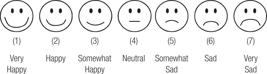
The outcome of this study consisted of a feeling of sadness. This variable was measured using a face scale, which consists of seven faces ranging from "very happy" to "very unhappy"21. A self-report instrument for measuring mood using a picture response system with seven faces with emotional expressions accompanied by a descriptive text ranging from Very sad (coded with a value of 1) to Very happy (value 7) (see Figure 1)21, answering the following question: "Now I'm going to show you some faces that express various feelings, from a person who feels very happy (point to the first face) to a person who feels very sad (point to the last face). Which of these faces best shows how you felt most of the time this year?" Those who reported themselves as identifying with the last three faces were considered to be sad. The variable was dichotomized into yes (for those who reported having some sadness) and no (for those considered happy or neutral).

Distribution of the prevalence of feeling of sadness in the years 2016 and 2020 and of the fear of pandemic, according to the score of perceived stress into quartiles. Rio Grande, Brazil (n=1,295).
The exposure variables were related to the pandemic setting: infection by the coronavirus SARS-COV-19 (self-reported medical diagnosis), contact with someone infected by COVID-19, presence of any symptoms of COVID-19, remote work after the pandemic, social distancing (frequency that individuals stay at home), infodemic behavior (those individuals who searched for information about the pandemic several times per day), and fear of COVID-19 (a scale with seven items to evaluate negative feelings regarding COVID-19). This last instrument consists of a screening tool22 validated for use in Brazil23. The cumulative score ranged from 7 to 35 (the higher the score, the higher the participant's fear of COVID-19). This score was divided into quintiles, and those individuals in the highest quintile were classified as having a higher fear of COVID-19.
The covariables analyzed by purposes of adjustment for confounding were sex, age, skin color, marital status, live alone, schooling, economic level, private health plan, smoking, alcohol consumption, physical inactivity, obesity, hypertension, diabetes, heart disease, health perception and perceived sleep quality (Supplementary Material). In addition, perceived stress was analyzed as a possible mediator between fear of COVID-19 and sadness. Stress was measured with the Perceived Stress Scale, translated and validated to the Brazilian population24. The total score was divided into quintiles, from the lowest to the highest levels of stress.
Statistical analysis
The data were analyzed in Stata 15.1 software, taking into account the effect of the sampling design. First, we described the sample by means of relative frequencies and compared the distribution over the two years. Second, we ran crude associations between sadness, fear of COVID-19 and stress. Third, we examined the change in the prevalence of sadness through Poisson regression, and in the mean score of stress through Linear regression. Adjustments were done simultaneously for all possible confounders. Finally, we tested crude and adjusted associations between sadness and the variables related to the pandemic setting through Poisson regression. The significance level was established as 5% for two-sided tests. We also performed an internal consistency analysis (Chronbach's alpha) of the validated instruments: pre-pandemic stress scale; post-pandemic stress scale and fear of covid scale.
RESULTS
In 2016 and 2020, 1,300 and 1,307 individuals were interviewed, respectively. The distribution of the sample in these two years is presented in Table 1. The prevalence of sadness in 2016 was 9.0% (95% CI 6.9 to 11.2), and in 2020, it was 15.2% (95% CI 12.3 to 18.0). We observed a higher prevalence of sadness after the advent of the pandemic, even with adjustments for possible confounders (Table 2). However, the mean score of stress decreased, on average, one point by year, going from 23.6 points (2016) to 19.1 points (2020).
Sample characteristics prepandemic (n=1,300) and postpandemic (n=1.307) COVID-19. Rio Grande, Brazil.
Change in the prevalence of feeling of sadness and in the average score of stress before (2016) and after (2020) the COVID-19 pandemic. Rio Grande, Brazil.
It can be seen (Figure 1) that sadness showed a positive linear association with stress level. The most stressed individuals accounted for the highest prevalence of sadness in both years. We also reported (Figure 1) a positive linear association between stress level and fear of COVID-19. The most stressed individuals were four times more affected by fear of the pandemic than the least stressed individuals (37% versus 9%).
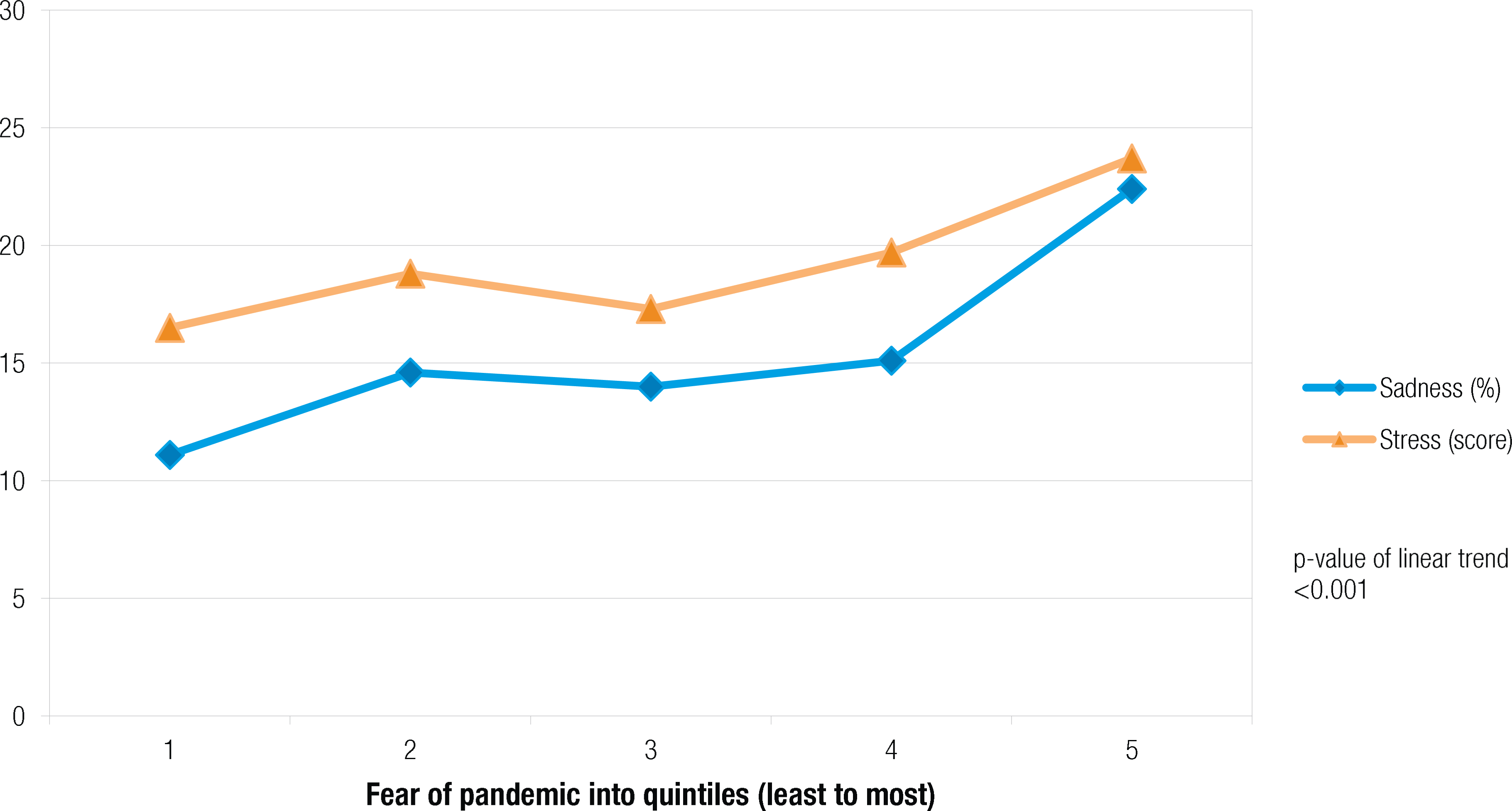
Looking at Figure 2, we confirmed that the mean score of stress increased as the fear of COVID-19 increased. The same phenomenon was verified for the prevalence of sadness, where the individuals more fear by the pandemic were twice as sad as those least fear by the pandemic (22.4% versus 11.1%).

Distribution of feeling of sadness (prevalence) and of score of stress (points) according to fear of pandemic into quintiles. Rio Grande, Brazil (n=1,298).
The prevalence of sadness was not associated with infection by coronavirus, contact with someone infected by COVID-19, symptoms of COVID-19, remote work, social distancing or infodemic behavior (Table 3). The only variable of the pandemic setting associated with sadness, in our analyses, was fear of COVID-19. Even after controlling for potential confounding variables, individuals with a higher fear of the pandemic were 50% more likely to be sad (Table 3). However, this effect disappeared when stress was included in the model, leading to the belief that stress mediates the association between fear of COVID-19 and sadness.
Association between variables related to the COVID-19 pandemic and the feeling of sadness among adults and elderly from Rio Grande, Brazil, 2020 (n=1,285).
The results of the internal consistency analysis (Chronbach's alpha) of the validated instruments were: pre-pandemic stress scale: 0.84; post-pandemic stress scale: 0.81and fear of Covid scale: 0.83.
DISCUSSION
In this study, we aimed to analyze the increase in the feeling of sadness resulting from the COVID-19 pandemic in a southern Brazilian population. We found a higher prevalence of sadness during the pandemic but a lower score of stress during the same period. However, it was demonstrated that with the increase in fear of COVID-19, there was an increase in the scores of stress and the frequency of sadness.
Beyond concern about the spread of the novel coronavirus and its repercussions on the physical health of individuals, the COVID-19 pandemic made clear the need to worry about aspects of mental health. Factors such as financial struggles, social isolation, infodemic behavior, domestic violence, fear of being infected, fear of the infection of loved ones, job losses, and the lack of knowledge about the virus and its repercussions have been identified as potential contributors to negative outcomes on mental health, such as sadness, fear and stress4,6,10,25. Among the mental health aspects commonly studied amid the pandemic, our study focuses on sadness and the influence of stress and fear on it.
Sadness is influenced by exteroceptive stimuli triggering through interoceptive pathways from the vagus nerve and lamina I to the Central Nervous System (CNS), physiological actions that include increased heart rate, adrenaline secretion, and contraction of specific facial muscles26. It can be characterized by changes in mood and behaviors and can be accompanied by stress, fear, and loneliness. In moments of crisis, sadness is expected, since it is considered a mechanism for coping with difficult situations8.
During the COVID-19 pandemic, the feeling of sadness has been found in different studies. Gautam et al. (2020)13 reported a prevalence of sadness of 28.8% in a population from Nepal, and Jenkins et al. (2021)10 related that approximately 27% of the Canadians studied presented a feeling of sadness. Specifically, regarding the increase in sadness, similar to our results, a study conducted with 157,213 Americans from 13 to 100 years old demonstrated that from the acute to the sustained phase of the pandemic, there was an increase of 18% in the frequency of sadness (OR=1.18; 95% CI: 1.13-1.24) and an increase of 21% when compared to the prepandemic and sustained phases of the pandemic (OR=1.21; 95% CI: 1.15-1.26)5.
On the other hand, stress can be defined as an emotional response to external stressors that activate a series of neuronal and endocrinal responses27. Considering that the COVID-19 pandemic disrupted everyone's daily life, stress became a chronic, long-term and worrisome reaction, since it is associated with and considered essential for the development of negative mental health outcomes27. Even before the pandemic, a study also carried out with a southern Brazilian population showed that stress was related to a higher probability of sadness28.
However, unexpectedly, we found a lower prevalence of stress amid the COVID-19 pandemic. Studies with adults from 18 to 85 years old reported maintenance of the levels of stress in Italy and no changes in this outcome in the Netherlands when evaluated during different waves of the COVID-19 pandemic29,30. In Switzerland and the United Kingdom, an increase in perceived stress amid the COVID-19 pandemic was found in young adults compared to previous data31,32. Similar to our results, the study of Yarrington et al. (2021)5, carried out from February to July 2020 and already cited above, tracked data from 157,213 users of a mental health app in the United States and found that the frequency of stress decreased by 13% compared to the prepandemic and sustained phases of the pandemic (OR=0.87; 95% CI: 0.84-0.91) and 16% compared to the acute and sustained phases (OR=0.84; 95% CI: 0.81-0.87).
It could be hypothesized that this finding may be related to reducing day-to-day work stress, whether due to commuting, pressure to meet schedules, or goals, among other factors. On the other hand, the reduction in post-pandemic stress could be that the return to socializing with people and the normal routine contributed to this result. Thus, sadness would be associated with the complications of the pandemic, social isolation, and loss, but there would be less initial stress related to being away from in-person work and the post-pandemic return to the normal routine.
Regarding fear of COVID-19, it is important to explain that this is a natural and common emotion seen during the spread of infectious diseases, and it is responsible for influencing the behaviors and reactions of the people affected by the outbreak20,33. Fear of COVID-19 has already been associated with depression, stress, anxiety, and mental well-being, highlighting the importance of the role of fear on mental health at this time34.
In our study, fear of COVID-19 was associated with sadness, but this effect disappeared when stress was added to the analysis. It is possible to hypothesize two things: first, the association between fear of COVID-19 and sadness could be mediated by stress; and second, if there was an increase in stress, the frequency of sadness would be even greater, and its association with the fear of COVID-19 would be stronger. It is known that the pandemic enhanced multiple fears and stressors, e.g., socioeconomic, unknown infection, social instability, information boredom33,34, and other situations that can be related to negative feelings33. This fact might lead to the hypothesis that individuals with fear of COVID-19 also could be stressed about concerns arising from the pandemic and thus have predominantly negative feelings, such as sadness. According to this speculation, studies have evidenced the partial mediator role of perceived stress in the association between fear, anxiety, and psychological behavioral responses in Iran35 and in the association between fear and well-being in India36.
It is necessary to highlight some limitations of this study. First, the cross-sectional design does not allow established causality in the results, and caution is necessary during the interpretation, especially considering the bidirectional association between sadness, stress and fear of COVID-19. Sadness and stress were measured by screening and not diagnostic tools; nonetheless, they demonstrated good validity and sensitivity in the evaluation of these variables, being important and accessible to apply in population-based studies21,37.
As strengths of this study, we can cite the sampling process conducted in two stages and the fact that this is a population-based study and, therefore, counts on the participation of a representative portion of the population. Moreover, the data were collected face-to-face, in the households of the interviewees, an important methodology and distinction, compared to online surveys conducted during the same period21,37.
In conclusion, even though there was a decrease in the frequency of stress during the pandemic, an important increase in the prevalence of sadness was observed. In addition, having a higher fear of COVID-19 was associated with a higher frequency of stress and sadness. Last, fear of COVID-19 and sadness were associated, but the addition of stress in the model turned off that association, making it possible to assume that stress could be acting as a mediation factor. These results show that although mental health is being widely studied amid the COVID-19 pandemic, some variables and associations are still not clear and need further construction of evidence. In this way, it will be possible to assist in the construction of public mental health policies.
Nowadays the Covid-19 pandemic is over. However, if we face a new pandemic scenario, it is very important to assess how much the community cares about this, and not just if people become infected. The Covid-19 was responsible for the largest number of DALYs during the pandemic, even surpassing ischemic heart disease, mainly in Latin America (non-published data of Global Burden of Disease). Therefore, we advice researchers to continue monitoring the mental health of the population. We are not yet aware of he long-term impact of Covid-19 on mental distress, such as depression, anxiety and dementia. Nonetheless these diseases and disorders are spreading across the world, similar to what we observed with Covid-19, but on a slower scale.
-
FUNDING
This research was funded by FAPERGS (Foundation for Research Support of the State of Rio Grande do Sul), under grant numbers16/2551-0000359-9 and 20/2551-0000277-2.
-
This work was developed by the postgraduate program in Health Sciences at Federal University of Rio Grande. Rio Grande, Brazil.
REFERENCES
- 1 Charlson F, Van Ommeren M, Flaxman A, Cornett J, Whiteford H, Saxena S. New WHO prevalence estimates of mental disorders in conflict settings: a systematic review and meta-analysis. Lancet. 2019;394(10194):240–8.
-
2 World Health Organization (WHO). COVID-19 pandemic triggers 25% increase in prevalence of anxiety and depression worldwide [Internet]. 2022 [cited 2022 Mar 30]. Available from: https://www.who.int/news/item/02-03-2022-covid-19-pandemic-triggers-25-increase-in-prevalence-of-anxiety-and-depression-worldwide
» https://www.who.int/news/item/02-03-2022-covid-19-pandemic-triggers-25-increase-in-prevalence-of-anxiety-and-depression-worldwide - 3 Mouchet-Mages, S., Baylé FJ. Sadness as an integral part of depression. Dialogues Clin Neurosci. 2008;10(3):321–7.
- 4 Holmes EA, O’Connor RC, Perry VH, Tracey I, Wessely S, Arseneault L, et al. Multidisciplinary research priorities for the COVID-19 pandemic: a call for action for mental health science. The Lancet Psychiatry. 2020;7(6):547–60.
- 5 Yarrington JS, Lasser J, Garcia D, Vargas JH, Couto DD, Marafon T, et al. Impact of the COVID-19 Pandemic on Mental Health among 157,213 Americans. J Affect Disord. 2021;286(December 2020):64–70.
- 6 Pfefferbaum B, North C. Mental Health and the Covid-19 Pandemic. N Engl J Med. 2020;383(6):508–10.
- 7 Zhou Y, Macgeorge EL, Myrick JG. Mental health and its predictors during the early months of the covid-19 pandemic experience in the United States. Int J Environ Res Public Health. 2020;17(17):1–19.
- 8 Droit-Volet S, Gil S, Martinelli N, Andant N, Clinchamps M, Parreira L, et al. Time and Covid-19 stress in the lockdown situation: Time free, «Dying» of boredom and sadness. PLoS One. 2020;15(8 August):1–15.
- 9 Werneck GL, Carvalho MS. A pandemia de COVID-19 no Brasil: Crônica de uma crise sanitária anunciada. Cad Saude Publica. 2020;36(5):1–4.
- 10 Jenkins EK, McAuliffe C, Hirani S, Richardson C, Thomson KC, McGuinness L, et al. A portrait of the early and differential mental health impacts of the COVID-19 pandemic in Canada: Findings from the first wave of a nationally representative cross-sectional survey. Prev Med (Baltim). 2021;145:106333.
- 11 Lokko HN ST. Sadness: Diagnosis, Evaluation, and Treatment. Prim Care Companion CNS Disord. 2014;16(6):27274.
- 12 Gadermann AC, Thomson KC, Richardson CG, Gagné M, Mcauliffe C, Hirani S, et al. Examining the impacts of the COVID-19 pandemic on family mental health in Canada: findings from a national cross-sectional study. BMJ Open. 2021;11(1):1–11.
- 13 Gautam K, Adhikari RP, Gupta A Sen, Shrestha RK, Koirala P, Koirala S. Self-reported psychological distress during the COVID-19 outbreak in Nepal: findings from an online survey. BMC Psychol. 2020;8(1):1–10.
- 14 Mariani R, Renzi A, Di Monte C, Petrovska E, Di Trani M. The impact of the covid-19 pandemic on primary emotional systems and emotional regulation. Int J Environ Res Public Health. 2021;18(11):5742.
- 15 Pérez-Fuentes MdC, Molero Jurado MdM, Martos Martínez Á GLJ. Threat of COVID-19 and emotional state during quarantine: Positive and negative affect as mediators in a cross-sectional study of the Spanish population. PLoS One. 2020;15(6):1–11.
- 16 Ypsilanti A, Mullings E, Hawkins O, Lazuras L. Feelings of fear, sadness, and loneliness during the COVID-19 pandemic: Findings from two studies in the UK. J Affect Disord. 2021;295(1):1012–23.
- 17 Barros MB de A, Lima MG, Malta DC, Szwarcwald CL, Azevedo RCS de, Romero D, et al. Report on sadness/depression, nervousness/anxiety and sleep problems in the Brazilian adult population during the COVID-19 pandemic. Epidemiol e Serv saude. 2020;29(4):e2020427.
-
18 Instituto Brasileiro de Geografia e Estatistica (IBGE). Cidades e Estados: Rio Grande, Rio Grande do Sul [Internet]. 2023 [cited 2023 Dec 12]. Available from: https://cidades.ibge.gov.br/brasil/rs/rio-grande/panorama
» https://cidades.ibge.gov.br/brasil/rs/rio-grande/panorama -
19 IBGE. Instituto Brasileiro de Geografia e Estatistica. Estatistica (IBGE). Cidades e Estados: Rio Grande, Rio Grande do Sul [Internet]. 2022 [cited 2022 Apr 7]. Available from: https://cidades.ibge.gov.br/brasil/rs/rio-grande/panorama
» https://cidades.ibge.gov.br/brasil/rs/rio-grande/panorama - 20 Dumith SC, Paulitsch RG, Carpena MX et al. Planning and execution of a population-based health survey by means of a multidisciplinary research consortium. Sci Med. 2018;28(3):ID30407–ID30407.
- 21 Andrews FM, Withey SB. Social Indicators of Well-Being: Americans’ Perceptions of Life Quality. Boston, MA: Springer US; 2012.
- 22 Ahorsu DK, Lin C-Y, Imani V, Saffari M, Griffiths MD PA. The fear of COVID-19 scale: development and initial validation. Int J Ment Heal Addict. 2020;1–9.
- 23 Medeiros ED; Silva PGN; Reis LM; Monteiro RP; Coelho GLH; Guimarães CLC; et. Psychometric properties of the Coronavirus Anxiety Scale (CAS) in Brazil. Death Stud. 2021;Aug:1–11.
- 24 Luft CDB, Sanches SdO, Mazo GZ AA. Brazilian version of the Perceived Stress Scale: translation and validation for the elderly. Rev Saude Publ. 2007;41(4):606-615.
- 25 Lindert J, Jakubauskiene M, Bilsen J. The COVID-19 disaster and mental health—assessing, responding and recovering. Eur J Public Health. 2021 Nov;31(Supplement_4):iv31–5.
-
26 Damasio A, Carvalho GB. The nature of feelings: Evolutionary and neurobiological origins. Nat Rev Neurosci [Internet]. 2013;14(2):143–52. Available from: http://dx.doi.org/10.1038/nrn3403
» http://dx.doi.org/10.1038/nrn3403 - 27 Pfeifer LS, Heyers K, Ocklenburg S, Wolf OT. Stress research during the COVID-19 pandemic and beyond. Neurosci Biobehav Rev. 2021 Dec;131:581–96.
- 28 Demenech L, Fernandes S, Paulitsch R, Dumith S. Invisible villain: high perceived stress, its associated factors and possible consequences in a population-based survey in southern Brazil. Trends Psychiatry Psychother. 2021;
- 29 Gori A, Topino E. Across the COVID-19 Waves; Assessing Temporal Fluctuations in Perceived Stress, Post-Traumatic Symptoms, Worry, Anxiety and Civic Moral Disengagement over One Year of Pandemic. Int J Environ Res Public Health. 2021 May;18(11):5651.
- 30 Slurink IAL, Smaardijk VR, Kop WJ, Kupper N, Mols F, Schoormans D, et al. Changes in Perceived Stress and Lifestyle Behaviors in Response to the COVID-19 Pandemic in The Netherlands: An Online Longitudinal Survey Study. Int J Environ Res Public Health. 2022 Apr;19(7):4375.
- 31 Hagger MS, Keech JJ, Hamilton K. Managing stress during the coronavirus disease 2019 pandemic and beyond: Reappraisal and mindset approaches. Stress Heal. 2020 Aug;36(3):396–401.
- 32 García-León MÁ, Pérez-Mármol JM, Gonzalez-Pérez R, García-Ríos M del C, Peralta-Ramírez MI. Relationship between resilience and stress: Perceived stress, stressful life events, HPA axis response during a stressful task and hair cortisol. Physiol Behav. 2019 Apr;202:87–93.
- 33 Brooks SK, Webster RK, Smith LE, Woodland L, Wessely S, Greenberg N, et al. The psychological impact of quarantine and how to reduce it: rapid review of the evidence. Lancet. 2020 Mar;395(10227):912–20.
- 34 Coelho CM, Suttiwan P, Arato N, Zsido AN. On the Nature of Fear and Anxiety Triggered by COVID-19. Front Psychol. 2020 Nov;11:581314.
- 35 Sharif Nia H, She L, Kaur H, Boyle C, Khoshnavay Fomani F, Hoseinzadeh E, et al. A Predictive Study Between Anxiety and Fear of COVID-19 With Psychological Behavior Response: The Mediation Role of Perceived Stress. Front Psychiatry. 2022 Mar;13:851212.
- 36 Lathabhavan R, Vispute S. Examining the Mediating Effects of Stress on Fear of COVID-19 and Well-being Using Structural Equation Modeling. Int J Ment Health Addict. 2021 May;1–9.
- 37 Siqueira Reis R, Ferreira Hino AA, Romélio Rodriguez Añez C. Perceived Stress Scale: Reliability and Validity Study in Brazil. J Health Psychol. 2010 Jan;15(1):107–14.