
 Micropenis in Children and Adolescents: A Narrative Review
ABSTRACT
Purpose: To summarize current evidence on the etiology, diagnostic approach, management strategies, and outcomes of micropenis in children and adolescents.
Materials and Methods: A narrative review was performed using PubMed/MEDLINE (October 2025) with the search terms (Micropenis OR Microphallus OR "Small Penis") AND (Children OR Youth OR Adolescents). From 707 records screened, 36 studies were selected based on methodological quality and relevance to clinical practice.
Results: Micropenis is a clinical sign frequently associated with underlying endocrinopathies, particularly Congenital Hypogonadotropic Hypogonadism (CHH). Accurate diagnosis relies on standardized Stretched Penile Length (SPL) assessment, recently optimized by the Stretched Penile Length INdicator Technique (SPLINT). Use of population-specific SPL nomograms is critical for diagnostic reliability. Testosterone therapy remains the primary treatment modality and demonstrates greatest efficacy in early infancy, promoting significant penile growth and generally favorable functional outcomes. Spontaneous catch-up growth during puberty has been reported in select cases. Current evidence supporting surgical interventions in children and adolescents is limited, heterogeneous, and associated with inconsistent long-term results; thus, surgery should not be considered first-line therapy. High-quality long-term outcome data and randomized placebo-controlled trials are lacking.
Conclusions: Standardized SPL measurement and appropriate nomogram use are essential for accurate diagnosis. Early hormonal therapy, especially in CHH-associated micropenis, appears to yield optimal functional and psychosocial outcomes. Expectant management may be appropriate in selected clinical scenarios. Surgical techniques remain controversial, with insufficient evidence to recommend routine use. Further well-designed prospective studies, including randomized placebo-controlled trials, are needed to define long-term outcomes and guide clinical decision-making.
Keywords:
Child; Hypogonadism; Testosterone
INTRODUCTION
Micropenis is a clinical diagnosis characterized by a structurally normal, albeit small, penis (1). The condition is defined by a Stretched Penile Length (SPL) that falls 2.5 standard deviations (SD) or more below the mean in a chart for a patient's age and level of sexual development (2). The identification of micropenis in infancy or childhood is of paramount importance, as it is frequently the presenting sign of a significant underlying congenital or acquired endocrinopathy (3, 4). The clinical relevance of micropenis extends beyond its physical manifestation. The diagnosis can cause considerable anxiety for parents, significant psychosocial distress, body image issues, self-esteem problems, concerns about future sexual function and loss of Quality of Life (5). Historically, the management of micropenis has been a subject of controversy, with past recommendations even including the now-obsolete consideration of gender reassignment for the most severe cases (6). However, cumulative evidence from follow-up studies, albeit with persisting knowledge gaps, has considerably advanced our understanding, especially in the context of hormonal therapy. (7). This narrative review aims to provide a comprehensive overview of the current state of knowledge regarding micropenis in the pediatric and adolescent population. The relevance of the topic, the diagnostic process with a comparison of the principal growth charts used globally, the mainstays of treatment, and the reported outcomes based on contemporary scientific evidence will be covered.
MATERIALS AND METHODS
A comprehensive literature search was conducted on PubMed/MEDLINE in October 2025. The search strategy employed Medical Subject Headings (MeSH) and free-text terms: (Micropenis OR Microphallus OR "Small Penis") AND (Children OR youth OR adolescents), unrestricted by date or language, with a focus on articles published in English.
Initial results were screened by title and abstract for pediatric/adolescent relevance. Inclusion criteria: articles discussing etiology, diagnosis, treatment, or outcomes. Exclusion criteria: adult-onset concerns, hypospadias, epispadias, bladder exstrophy, buried/concealed penis unrelated to shaft length deficiency or other genital abnormalities. A total of 707 articles were identified. Of these, 36 key articles were selected for this review based on their relevance, study design, and contribution, with a focus on studies reporting penile growth charts and treatment results. Reviews and articles that did not mention diagnosis or treatment results were also excluded (Figure-1).

RESULTS
a. Relevance of the Topic in Pediatric Urology
Micropenis is a relevant topic in pediatric urology and endocrinology primarily because it serves as a critical physical marker for underlying systemic diseases. The precise global prevalence is unknown, but data suggest an incidence of approximately 1 in 300 male births, with a reported incidence in North America of approximately 1.5 per 10,000 male newborns (8). The condition is most often a consequence of insufficient androgen stimulation for penile growth during a critical window of fetal development, specifically from 12 weeks of gestation through the postnatal "mini-puberty" in the first six months of life.
The most common underlying known cause is Congenital Hypogonadotropic Hypogonadism (CHH), a failure of the testosterone axis (9). Furthermore, micropenis can be a feature of numerous genetic syndromes, such as Prader-Willi, Kallmann, and Klinefelter syndrome, making its recognition a key step in a broader diagnostic workup (10). A full medical evaluation is essential not only to address the penile size itself but also to diagnose and manage potentially life-threatening associated conditions, such as hypoglycemia in cases of panhypopituitarism (Table-1).
b. Diagnosis and Comparison of Growth Charts
The diagnosis of micropenis is clinical, based on an accurate measurement of SPL. A 2024 systematic review (11) highlighted significant heterogeneity in measurement methodologies across 145 studies. This review identified several factors that influence the accuracy of SPL measurements. To address these inconsistencies, the authors proposed a standardized protocol named the Stretched Penile Length INdicator Technique (SPLINT) – (Figure-2).
SPLINT (Stretched Penile Length INdicator Technique). Note the private ambient room, supine position, foreskin retraction (for those who doesn't have phimosis), use of rigid ruler with zero-error correction and the compression over the suprapubic fat. The penis is stretched vertically to the point of resistance without causing discomfort. At least two (preferably three) measurements are obtained to ensure reproducibility.
A cornerstone of diagnosis is the use of penile length nomograms. These charts provide the mean and standard deviations for SPL across different ages. However, there is a significant finding in the literature about the well-documented variation in penile size across different ethnic and geographic populations. This has led to the development of numerous population-specific nomograms. A comparison of the most widely used charts is presented in Table-2.
As the table illustrates, there are just few anthropometric pediatric populations sampling around the World. Therefore, clinicians should use the most relevant, up-to-date, and population-specific data available to accurately diagnose micropenis and local data record charts are undoubtedly the best way to diagnosis micropenis.
c. Treatment
The initial objectives of micropenis management are counseling, investigation of underlying endocrinological causes (as often as possible) and hormonal therapy, with the goal to stimulate penile growth to achieve a length that is within the normal range for age. Surgical options are reserved for cases where hormonal therapy fails to achieve adequate penile length, or in the presence of anatomical abnormalities.
c.1. Hormonal Therapy
The most widely accepted and effective treatment for micropenis, which can be particularly effective in cases of CHH, is hormonal therapy, but some patients may not reach normal adult penile size, especially in cases of severe hypogonadotropic hypogonadism (20). Monitoring for side effects such as premature virilization and elevated serum testosterone is recommended, particularly with topical therapy. There are no large, placebo controlled, long-term studies and evidence-based guidelines directly addressing testosterone therapy for micropenis, and further research is needed to optimize treatment timing and assess long-term outcomes.
According to medical literature, the optimal timing for testosterone therapy to achieve the best response in penile growth for patients with micropenis is during infancy or early childhood, including the period of mini puberty. Early initiation of therapy is associated with greater penile growth, and initial penile dimensions – particularly glans width – are strong predictors of response (21-23). Table-3 summarizes the main study results with testosterone for micropenis.
c.2 Surgical Treatment
Surgical intervention, as documented in medical literature, is not a first-line treatment for micropenis in children. Surgical techniques are complex and include procedures like the release of the suspensory ligament (31) and neo phalloplasty. The outcomes of these surgeries in the pediatric population are not well-documented, and they carry significant risks, making hormonal therapy the preferred initial approach. The Brazilian Federal Medical Council, under Resolution 1.478/1997, considers penile lengthening surgery for sexual dysfunction to be experimental and restricts its performance to rigorously controlled human research protocols (32).
DISCUSSION
Micropenis is clinically significant because it frequently reflects underlying disruptions in androgen endocrinologic axis, with Congenital Hypogonadotropic Hypogonadism (CHH) being the most common identifiable etiology. Its presence may also indicate broader syndromic conditions, emphasizing the role of micropenis as an early diagnostic marker within multidisciplinary evaluations (36).
Accurate diagnosis depends on correct use of standardized Stretched Penile Length (SPL) measurement protocols. The literature demonstrates substantial heterogeneity in measurement techniques, increasing the risk of misclassification. The recently proposed Stretched Penile Length Indicator Technique (SPLINT) offers a reproducible method designed to mitigate these discrepancies, although further validation across diverse populations is required. Given the documented ethnic and regional variability in penile length, the use of population-specific nomograms remains essential for diagnostic reliability.
Testosterone therapy remains the most effective and widely accepted treatment. Studies consistently demonstrate significant penile growth, particularly when initiated in infancy or early childhood, corresponding to periods of heightened androgen sensitivity. While short-term outcomes are favorable, long-term data are limited, and randomized placebo-controlled trials are lacking. Factors such as baseline penile size may influence treatment response, but standardized predictive markers have not yet been established.
Emerging evidence suggests that many untreated patients may achieve normalization of penile size during puberty, supporting expectant management in selected cases. However, methodological limitations - particularly high attrition rates - restrict the generalizability of this approach. Any expectant strategy must be individualized and accompanied by structured clinical and psychosocial follow-up.
Surgical management remains controversial. The available evidence is scarce, heterogeneous, and limited by small cohorts and inconsistent outcome reporting. Procedures such as suspensory ligament release or phalloplasty are reserved for exceptional situations and should not be considered first-line interventions.
Significant knowledge gaps persist, including the optimal timing and duration of hormonal therapy, long-term functional and psychosocial outcomes, and predictors of spontaneous pubertal growth. Future progress will depend on well-designed prospective studies capable of addressing these limitations.
CONCLUSIONS
The management of micropenis in children and adolescents relies fundamentally on accurate diagnosis using standardized SPL measurement techniques and population-specific nomograms. Hormonal therapy, particularly in cases related to CHH, remains the cornerstone of treatment and generally yields favorable functional and psychosocial outcomes when initiated early. Emerging evidence suggests that expectant management may be appropriate in select individuals due to the potential for spontaneous pubertal catch-up growth, although further validation is required. Surgical interventions lack robust evidence, show inconsistent outcomes and high morbidity, and should not be considered first-line therapy in this population. High-quality prospective studies, including randomized placebo-controlled trials, are needed to define long-term outcomes, refine patient selection, and guide evidence-based management strategies.
ACKNOWLEDGEMENTS
The author reports using AI (ManusAI, from Manus Technologies) for assistance with literature search, reference management and language review. The author takes full responsibility for the final content.
-
ABBREVIATIONS
- BMI = Body Mass Index
- CHH = Congenital Hypogonadotropic Hypogonadism
- DHT = Dihydrotestosterone
- GnRH = Gonadotropin-Releasing Hormone
- HPG = Hypothalamic-Pituitary-Gonadal
- LH = Luteinizing Hormone
- FSH = Follicle-Stimulating Hormone
- SD = Standard Deviation
- SPL = Stretched Penile Length
- SPLINT = Stretched Penile Length INdicator Technique
- TE = Testosterone Enanthate
Data Availability
All data generated or analysed during this study are included in this published article
REFERENCES
- 1 Alsaleem M, Leslie SW. Micropenis. In: StatPearls [Internet]. Treasure Island (FL): StatPearls Publishing; 2025. p.
-
2 Hatipoğlu N, Kurtoğlu S. Micropenis: etiology, diagnosis and treatment approaches. J Clin Res Pediatr Endocrinol. 2013;5(4):217-223. doi: 10.4274/Jcrpe.1135
» https://doi.org/10.4274/Jcrpe.1135 -
3 Khadilkar V, Mondkar SA. Micropenis. Indian J Pediatr. 2023;90(6):598-604. doi: 10.1007/s12098-023-04540-w
» https://doi.org/10.1007/s12098-023-04540-w -
4 Ishii T, Sasaki G, Hasegawa T, Sato S, Matsuo N, Ogata T. Testosterone enanthate therapy is effective and independent of SRD5A2 and AR gene polymorphisms in boys with micropenis. J Urol. 2004;172(1):319-324. doi: 10.1097/01.ju.0000129005.84831.1e
» https://doi.org/10.1097/01.ju.0000129005.84831.1e -
5 Callens N, De Cuypere G, Van Hoecke E, T'sjoen G, Monstrey S, Cools M, et al. Sexual quality of life after hormonal and surgical treatment, including phalloplasty, in men with micropenis: a review. J Sex Med. 2013;10(12):2890-2903. doi: 10.1111/jsm.12298
» https://doi.org/10.1111/jsm.12298 -
6 Wiygul J, Palmer LS. Micropenis. ScientificWorldJournal. 2011;11:1462-1469. doi: 10.1100/tsw.2011.135
» https://doi.org/10.1100/tsw.2011.135 -
7 Bin-Abbas B, Conte FA, Grumbach MM, Kaplan SL. Congenital hypogonadotropic hypogonadism and micropenis: effect of testosterone treatment on adult penile size why sex reversal is not indicated. J Pediatr. 1999;134(5):579-583. doi: 10.1016/S0022-3476(99)70244-1
» https://doi.org/10.1016/S0022-3476(99)70244-1 -
8 Nelson CP, Park JM, Wan J, Bloom DA, Dunn RL, Wei JT. The increasing incidence of congenital penile anomalies in the United States. J Urol. 2005;174(4 Pt 1):1573-1576. doi: 10.1097/01.ju.0000179249.21944.7e
» https://doi.org/10.1097/01.ju.0000179249.21944.7e -
9 Stancampiano MR, Suzuki K, O’Toole S, Russo G, Yamada G, Ahmed SF. Congenital micropenis: etiology and management. J Endocr Soc. 2021;6(2):bvab172. doi: 10.1210/jendso/bvab172
» https://doi.org/10.1210/jendso/bvab172 -
10 Aaronson IA. Micropenis: medical and surgical implications. J Urol. 1994;152(1):4-14. doi: 10.1016/S0022-5347(17)32804-5
» https://doi.org/10.1016/S0022-5347(17)32804-5 -
11 Goel P, Choudhury P, SPLINT group. Advancing precision in penile length measurement: evidence-based synthesis of stretched penile length INdicator technique (SPLINT). J Indian Assoc Pediatr Surg. 2024;29(5):492-504. doi: 10.4103/jiaps.jiaps_11_24
» https://doi.org/10.4103/jiaps.jiaps_11_24 - 12 Teckchandani N, Bajpai M. Penile length nomogram for Asian Indian prepubertal boys. J Pediatr Urol. 2014;10:359-362.
- 13 Ishii T, Matsuo N, Inokuchi M, Abe T, Iwata A, Ohta Y, et al. A cross-sectional growth reference and chart of stretched penile length for Japanese boys aged 0-7 years. Horm Res Paediatr. 2015;84:388-394.
- 14 Gul MK, Yakar M, Saglam HS. A cross-sectional chart of stretched penile length for Turkish children aged 0-6 years. Ann Med Res. 2021;27:933-937.
- 15 Ibrahim A, Soliman H, AbuZeid ES, El-Kholy M, El-Gohary Y, El-Shaiat M. A cross-sectional growth reference and chart of stretched penile length for Egyptian prepubertal boys aged 5-9 years: a single center study. Egypt J Hosp Med. 2023;90:2909-2914.
- 16 Krämmer BR, Silveira RC, Costa EC, Mendes ML, Procianoy RS, Guaragna Filho G. Evaluation of stretched penile length (SPL), postnatal penile growth evolution, and micropenis in Brazilian preterm newborns. J Pediatr (Rio J). 2025;101:(in press).
-
17 Gabrich PN, Vasconcelos JS, Damião R, da Silva EA. Penile anthropometry in Brazilian children and adolescents. J Pediatr (Rio J). 2007;83(5):441-446. doi: 10.2223/JPED.1671
» https://doi.org/10.2223/JPED.1671 - 18 Wang YN, Zeng Q, Xiong F, Zeng Y. Male external genitalia growth curves and charts for children and adolescents aged 0 to 17 years in Chongqing, China. Asian J Androl. 2018;20:567-571.
- 19 Tomova A, Deepinder F, Robeva R, Lalabonova H, Kumanov P, Agarwal A. Growth and development of male external genitalia: a cross-sectional study of 6200 males aged 0 to 19 years. Arch Pediatr Adolesc Med. 2010;164:1152-1157.
- 20 Tietjen DN, Uramoto GY, Tindall DJ, Husmann DA. Micropenis in hypogonadotropic hypogonadism: response of the penile androgen receptor to testosterone treatment. J Urol. 1998;160:1054-1057.
-
21 Rohayem J, Alexander EC, Heger S, Nordenström A, Howard SR, et al. Mini-puberty, physiological and disordered: consequences, and potential for therapeutic replacement. Endocr Rev. 2024;45(4):460-492. doi: 10.1210/endrev/bnae003
» https://doi.org/10.1210/endrev/bnae003 -
22 Mesas-Aróstegui MA, Hita-Contreras F, López-Siguero JP. A therapeutic proposal for mini-puberty in male infants with hypogonadotropic hypogonadism: a retrospective case series. J Clin Med. 2024;13(22):6983. doi: 10.3390/jcm13226983
» https://doi.org/10.3390/jcm13226983 - 23 Becker M, Hesse V. Minipuberty: why does it happen? Horm Res Paediatr. 2020;93:76-84.
-
24 Ishii T, Sasaki G, Hasegawa T, Sato S, Matsuo N, Ogata T. Testosterone enanthate therapy is effective and independent of SRD5A2 and AR gene polymorphisms in boys with micropenis. J Urol. 2004;172(1):319-324. doi: 10.1097/01.ju.0000129005.84831.1e
» https://doi.org/10.1097/01.ju.0000129005.84831.1e -
25 Karrou M, Messaoudi N, Assarrar I, Alla A, Rouf S, Latrech H. Efficacy of transdermal dihydrotestosterone and testosterone enanthate for penile augmentation in patients with idiopathic micropenis: a comparative randomized study. Clin Med Insights Endocrinol Diabetes. 2023;16:11795514231208328. doi: 10.1177/11795514231208328
» https://doi.org/10.1177/11795514231208328 -
26 Bin-Abbas B, Conte FA, Grumbach MM, Kaplan SL. Congenital hypogonadotropic hypogonadism and micropenis: effect of testosterone treatment on adult penile size why sex reversal is not indicated. J Pediatr. 1999;134(5):579-583. doi: 10.1016/S0022-3476(99)70244-1
» https://doi.org/10.1016/S0022-3476(99)70244-1 - 27 Nerli RB, Guntaka AK, Patne PB, Hiremath MB. Penile growth in response to hormone treatment in children with micropenis. Indian J Urol. 2013;29:288-291.
- 28 Becker D, Wain LM, Chong YH, Gosai SJ, Henderson NK, Milburn J, et al. Topical dihydrotestosterone to treat micropenis secondary to partial androgen insensitivity syndrome (PAIS) before, during, and after puberty - a case series. J Pediatr Endocrinol Metab. 2016;29:173-177.
- 29 Arisaka O, Hoshi M, Kanazawa S, Nakajima D, Numata M, Nishikura K, et al. Systemic effects of transdermal testosterone for the treatment of microphallus in children. Pediatr Int. 2001;43:134-136.
- 30 Xu D, Lu L, Xi L, Cheng R, Pei Z, Bi Y, et al. Efficacy and safety of percutaneous administration of dihydrotestosterone in children of different genetic backgrounds with micropenis. J Pediatr Endocrinol Metab. 2017;30:1285-1291.
-
31 Campbell J, Gillis J. A review of penile elongation surgery. Transl Androl Urol. 2017;6(1):69-78. doi: 10.21037/tau.2016.11.19
» https://doi.org/10.21037/tau.2016.11.19 - 32 Federal Council of Medicine (Brazil). Resolution No. 1,478/1997: Defines penile lengthening surgical procedures for sexual dysfunction as experimental. Brasília (DF): CFM; 1997.
- 33 Hinman F Jr. Surgical management of microphallus. J Urol. 1971;105:901-904.
- 34 Gilbert DA, Jordan GH, Devine CJ, Winslow BH, Schlossberg SM. Phallic construction in prepubertal and adolescent boys. J Urol. 1993;149:1521-1526.
- 35 Perović S. Phalloplasty in children and adolescents using the extended pedicle island groin flap. J Urol. 1995;154:848-853.
- 36 Amirkashani D, Abdollahi Sarvi M, Masoumi M. Long-term outcomes of untreated micropenis: growth patterns and predictive factors. Front Pediatr. 2025;13:1501259.
Edited by
-
Editor in Chief
Luciano Alves Favorito
-
Associate Editor
Luciano Alves Favorito


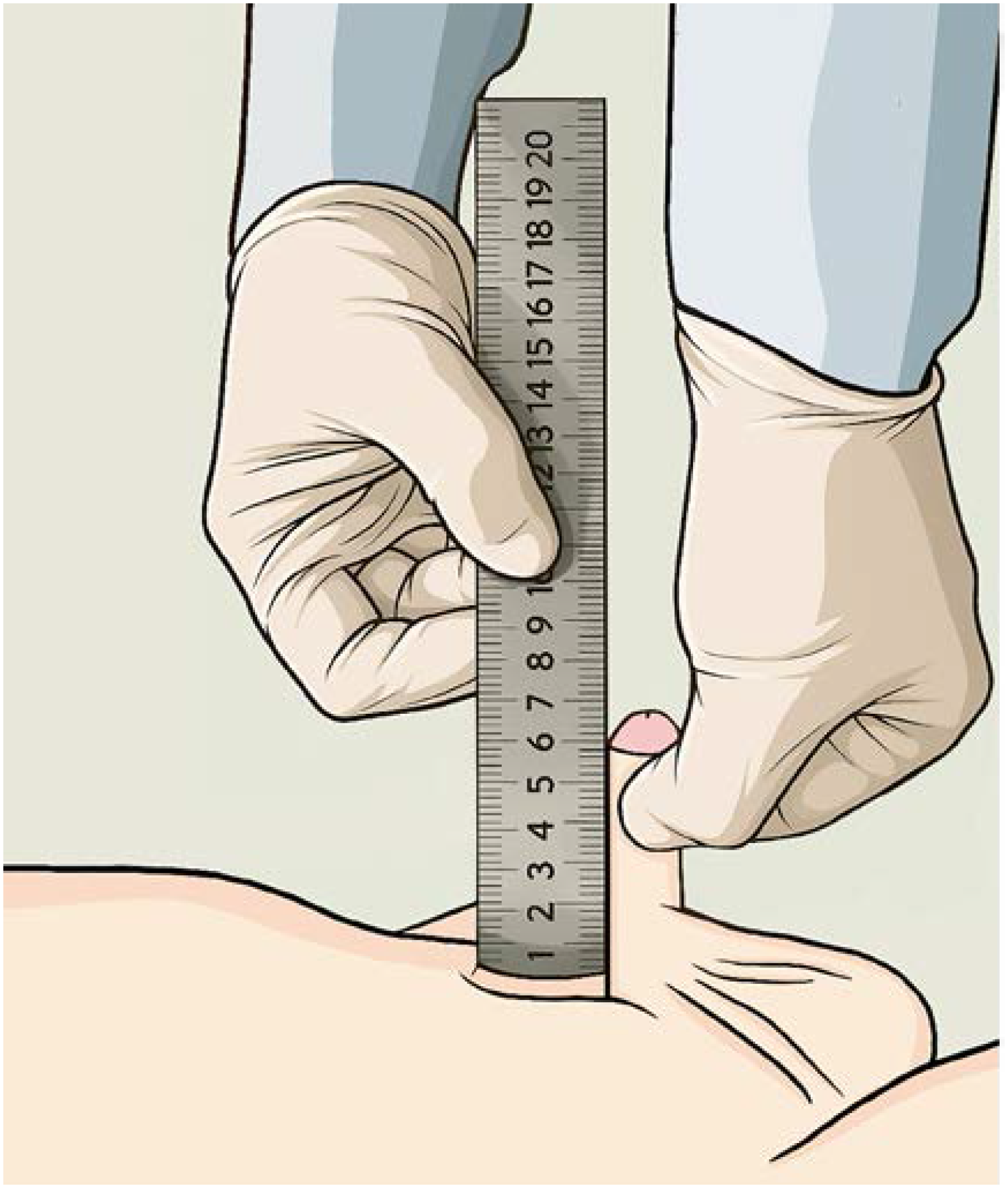 Figure Source: The Author.