 Asymptomatic Leukocytospermia and Assisted Reproductive Technology Outcomes: Reason for concern?
ABSTRACT
Leukocytospermia, defined as ≥1×10⁶ white blood cells (WBC)/ml of semen, is a condition frequently observed in infertile men. While symptomatic leukocytospermia is often associated with genital tract infections and managed accordingly, the clinical significance of asymptomatic leukocytospermia remains uncertain—particularly in the setting of Assisted Reproductive Technology (ART). Seminal leukocytes, primarily neutrophils, play a physiological role in immune surveillance and tissue homeostasis. However, when excessively activated, they may generate high levels of reactive oxygen species (ROS), contributing to oxidative stress, sperm dysfunction, and DNA damage. This narrative review critically examines whether asymptomatic leukocytospermia adversely affects ART outcomes, including fertilization, embryo development, clinical pregnancy, and live birth rates. A synthesis of current evidence—including meta-analyses and large retrospective studies—suggests that asymptomatic leukocytospermia does not negatively impact these outcomes. Moreover, standard sperm preparation techniques and the widespread use of ICSI appear to neutralize any potential deleterious effects from seminal leukocytes. Given the absence of compelling evidence supporting its harmful impact on ART success, routine treatment of asymptomatic leukocytospermia—particularly with empiric antibiotics—is not recommended. Such interventions may disturb the natural immune balance, promote antibiotic resistance, and increase healthcare burdens without demonstrable benefit. Nonetheless, selective treatment may be justified in specific scenarios, such as recurrent implantation failure or early pregnancy loss. Further research is warranted to standardize leukocyte detection methods and to clarify the role of adjunctive therapies. Until more definitive data emerge, an individualized, evidence-based approach remains the most appropriate strategy for managing asymptomatic leukocytospermia in infertile men pursuing ART.
Keywords:
Infertility; Reproductive Techniques, Assisted; Oxidative Stress
INTRODUCTION
Infertility affects about 17% of couples worldwide (1), with male factors contributing to 20-30% of the cases (2, 3). Among the potential causes of male infertility, leukocytospermia –defined as an increased concentration of white blood cells (WBCs) in semen– remains a subject of debate. The reported prevalence of leukocytospermia varies widely, ranging from 2 to 40% among infertile men, depending on the study population, detection method, and diagnostic threshold used (4–6).
The World Health Organization (WHO) defines leukocytospermia as the presence of ≥1 × 10⁶ WBC/mL of semen (4, 7). It can result from an infection, such as male genital tract infection (MGTI), including male accessory gland infection (MAGI), which is typically managed with antibiotics and frequent ejaculation (8, 9). However, non-infectious causes –including non-bacterial inflammation, autoimmune disease, varicocele, and unhealthy lifestyle factors such as tobacco use or chronic alcohol consumption– are also implicated (5, 8, 10–13). In such cases, treatment strategies may involve anti-inflammatory medications, antihistamines, antioxidants, and lifestyle modifications (5, 14–16).
The term seminal leukocytes collectively refers to WBCs found in semen, which consist of 2-5% T-lymphocytes, 20-30% macrophages, and 50-60% granulocytes, primarily neutrophils (17, 18). These cells originate from the testis, epididymis, and prostate (19–21). Under normal physiological conditions, seminal leukocytes play a key role in immune surveillance, helping to regulate inflammatory responses by releasing cytokines and proinflammatory mediators. This immune activity facilitates pathogen elimination and supports reproductive health by removing abnormal and immature sperm cells through phagocytosis and the release of reactive oxygen species (ROS) (22, 23).
In cases of infection or inflammation, leukocytes are actively recruited through chemotaxis, which directs them from the bloodstream to affected tissues (24). Once at the site of inflammation, leukocytes become activated by integrins and cytokines, including tumor necrosis factor alpha (TNFα) and interleukins (25, 26). This activation leads to the release of large amounts of proinflammatory cytokines and ROS, resulting in oxidative stress, which can damage sperm plasma membranes and DNA, ultimately compromising sperm quality and contributing to male infertility (27–30).
A key distinction must be made between symptomatic and asymptomatic leukocytospermia. Symptomatic leukocytospermia is associated with MGTI or MAGI and is often accompanied by clinical symptoms like urogenital pain, dysuria, pollakiuria, or other urine tract disturbances (31–33). Diagnosis typically involves identifying the causative pathogens to guide targeted antibiotic therapy (31–33). Conversely, asymptomatic leukocytospermia presents without overt clinical symptoms and may have infectious and non-infectious origins (6, 34). Consequently, the necessity for treatment in cases of asymptomatic leukocytospermia remains a topic of ongoing debate (6, 35), particularly when evaluating its role in the context of Assisted Reproductive Technology (ART) outcomes (36).
European and American Urological guidelines provide no clear recommendations on managing asymptomatic leukocytospermia in men with infertility (37, 38). In modern healthcare systems, the cost-effectiveness of ART, including in vitro fertilization (IVF) and intracytoplasmic sperm injection (ICSI), depends on treatment expenses, success rates, and risk of multiple pregnancies (39, 40). Given that leukocytospermia has been associated with impaired semen quality, it is crucial to determine whether treatment improves ART outcomes and enhances the cost-effectiveness of fertility care for affected couples.
This article critically assesses whether an evidence-based rationale exists for treating asymptomatic leukocytospermia in the context of ART, specifically in IVF and ICSI cycles. By systematically examining the existing literature, we seek to clarify whether intervention is necessary to optimize ART success or whether asymptomatic leukocytospermia poses minimal concern.
LEUKOCYTOSPERMIA AND MALE INFERTILITY
Inflammation, Leukocytospermia, and the Impact on Sperm Function
Infection-induced inflammation triggers an immune response that activates local macrophages and recruits leukocytes from the bloodstream to the site of infection (41). The testicular immune defense protects male germ cells while allowing an inflammatory response to combat infections (42).
Macrophages play a key role in immune regulation through phagocytosis and the secretion of proinflammatory and anti-inflammatory cytokines (25, 43). These antigen-presenting cells are critical for immune homeostasis, spermatogenesis, and regulation of autoimmunity against testicular antigens (44, 45).
Another part of the natural immune defense system is leukocytes, especially neutrophil granulocytes. In a healthy state, circulating neutrophils are resting and most are eliminated without receiving an activating signal (46). However, when infections or injuries occur, they must be able to respond appropriately as multifunctional first responders (46). Neutrophils that encounter a series of agonists enter a pre-activated or primed state that sets them on high alert, enabling them to respond aggressively (e.g., through degranulation, respiratory burst activity, increased phagocytosis, release of ROS, and bioactive mediators) if another activation stimulus occurs (46). Due to the variety of host- and pathogen-derived mediators, priming can be induced by multiple signaling pathways and intracellular processes, such as chemokines, cytokines, alarmins, integrins, pathogen‐derived molecules, and mechanical forces (46). The signaling pathways and the resulting cellular phenotype depend on the priming agent acting on the neutrophils and the specific environment (46).
Despite their critical role in the defense system, leukocytes can also become detrimental when activated as they produce 1,000 times more ROS than spermatozoa (47). While controlled ROS levels are essential for sperm maturation, capacitation, acrosome reaction, and chromatin condensation (48), excessive ROS generation by activated seminal leukocytes depletes seminal antioxidants (49) such as catalase, glutathione, and superoxide dismutase, which scavenge free radicals (49–51). This imbalance leads to oxidative stress, potentially damaging spermatozoa (52).
ROS, including hydroxyl radicals (-OH), superoxide anions (O2-), and hydrogen peroxide (H2O2), are potent oxidants (53–57). Importantly, spermatozoa are particularly vulnerable to oxidative stress due to the high content of polyunsaturated fatty acids in their plasma membrane (53). While H2O2 can penetrate plasma membranes and cause intracellular damage, O2- and -OH primarily induce lipid peroxidation, disrupting membrane integrity and impairing sperm function (28, 58–60). ROS-mediated intracellular damage ranges from chromatin cross-linking and protein impairment to DNA modifications and fragmentation (56, 61–65).
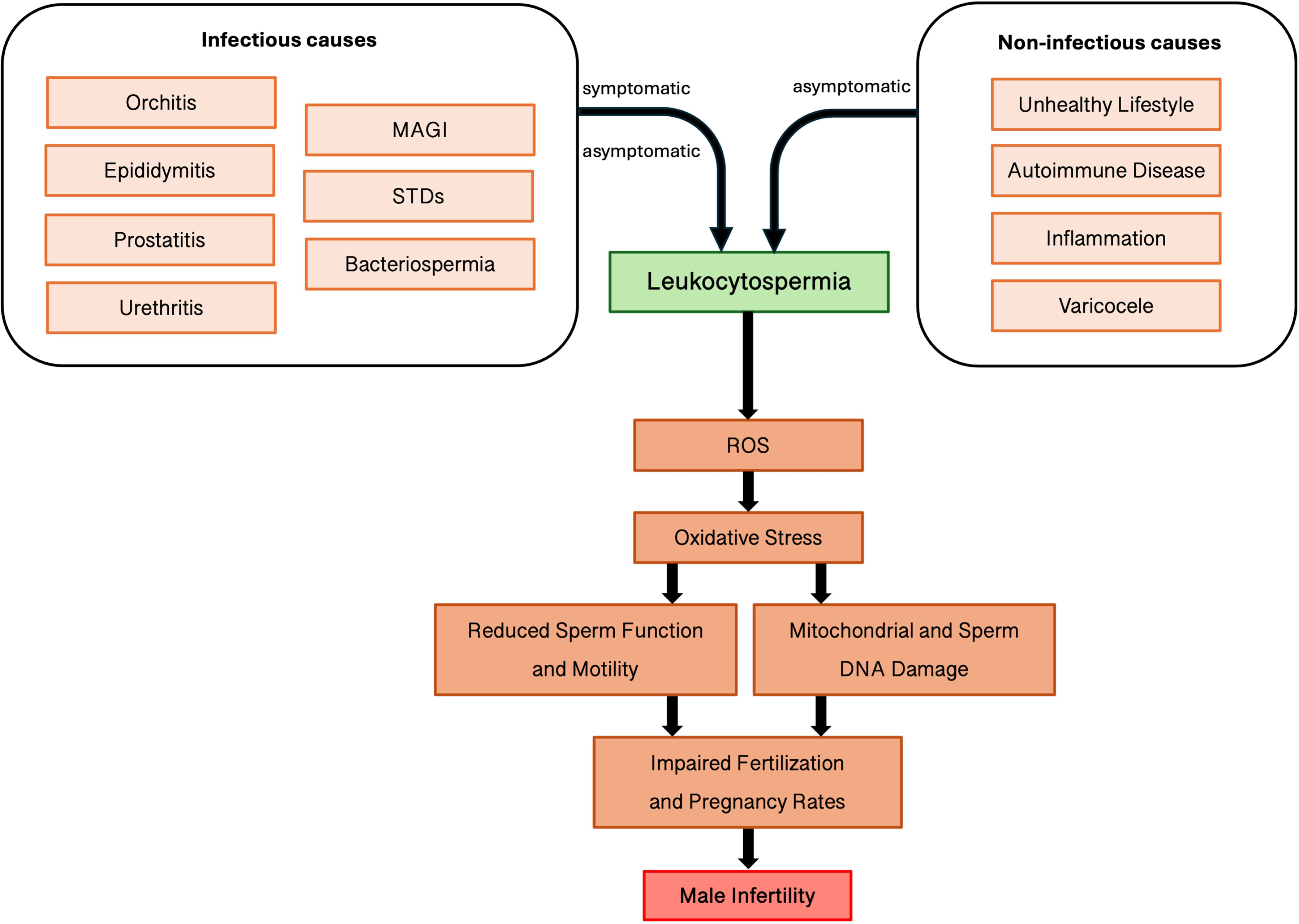
Oxidative stress further compromises sperm function by reducing acrosine activity, impairing sperm-oocyte fusion (66–69), and damaging mitochondrial function (62, 70, 71). Since mitochondria are crucial for adenosine triphosphate (ATP) production in the sperm cell, oxidative damage to mitochondrial DNA (mtDNA) can impair sperm motility and overall fertilization potential (62, 70–76). Additionally, ROS-induced axonemal damage directly affects sperm motility (43, 77) (Figure-1).
Pathophysiological Pathways Linking Infectious and Non-Infectious Causes of Leukocytospermia to Male Infertility via Oxidative Stress. MAGI, male genital infections; STDs, sexually transmitted diseases; ROS, reactive oxygen species.
Maintaining sperm DNA integrity is essential for successful fertilization, embryo development, and ongoing pregnancy (78). Increased sperm DNA fragmentation is associated with prolonged time to pregnancy in fertile couples (79). While sperm with fragmented DNA can fertilize oocytes, early embryonic development often arrests when paternal genes are not correctly functional (80). Additionally, sperm DNA damage may increase the risk of chromosomal abnormalities and miscarriages (81), reducing success rates of both natural conception and ART (82–88).
Given that leukocytospermia might increase the proportion of spermatozoa with impaired DNA compared to non-leukocytospermic samples (78), a question to ask is: should screening for leukocytospermia become a routine part of infertility assessments for couples undergoing ART? This question is relevant to refine clinical guidelines for male infertility evaluation and ART decision-making.
Detection Methods of Seminal Leukocytes
Several techniques are available for detecting seminal leukocytes, each with varying levels of specificity and practicality. One traditional method involves staining a sperm smear using the Papanicolaou technique, which distinguishes leukocytes from spermatids and spermatocytes based on differences in staining properties, size, and nuclear morphology (89). However, the method is prone to morphological misidentification, making it less reliable (89).
A more commonly used approach is the histochemical peroxidase test, which quantifies leukocytes containing the peroxidase enzyme –a characteristic feature of granulocytes (89). This test is quick, inexpensive, and widely used for initial screening. However, it has limitations: it cannot detect activated polymorphonuclear cells that have already released their granules or peroxidase-negative leukocytes such as lymphocytes, macrophages, and monocytes (89). Therefore, the number of total leukocytes in semen may be underestimated, though peroxidase-positive granulocytes remain the predominant leukocyte type in semen (89).
A more precise alternative is the immunocytochemical method, which uses monoclonal antibodies targeting the CD45 antigen, a pan-human leukocyte marker (89). This approach enables the detection of all leukocyte subtypes, including granule-released polymorphonuclear leukocytes and peroxidase-negative cells such as lymphocytes, macrophages, and monocytes. However, while more accurate, immunocytochemical staining is also more time-consuming and expensive compared to histochemical methods (89).
LEUKOCYTOSPERMIA AND ART OUTCOMES: INSIGHTS FROM META-ANALYSES AND RECENT STUDIES
Meta-analysis
A 2020 systematic review and meta-analysis examining the impact of leukocytospermia on sperm quality and ART outcomes analyzed 28 case-controlled retrospective studies. The findings revealed no significant differences in fertilization rates (FR) or clinical pregnancy rates (CPR) between couples with and without leukocytospermia undergoing conventional IVF or ICSI (90). However, males with leukocytospermia exhibited significantly lower sperm concentration and reduced progressive motility, indicating a negative impact on sperm parameters. Notably, two-thirds of the included studies (n=18) did not differentiate between symptomatic and asymptomatic leukocytospermia (90). The ten remaining studies specifically compared asymptomatic leukocytospermia to non-leukocytospermic controls. The meta-analysis indicated a considerable inter-study heterogeneity due to differences in the distinction between symptomatic and asymptomatic cases and in the detection methods across studies, which introduced potential inconsistencies in reliability and accuracy, limiting the generalizability of the findings (90).
To address this heterogeneity, the meta-analysis included a subgroup analysis based on leukocyte detection methods, categorizing studies into those using CD45-based immunocytochemistry or flow cytometry, peroxidase staining, and morphological evaluation of stained semen smears (90). Another subgroup analysis included only studies assessing asymptomatic leukocytospermia without genital tract infections (90). After adjusting for these variables, the previously observed association between leukocytospermia and reduced sperm concentration and progressive motility was no longer significant, suggesting that methodological differences and confounding factors contributed to the initial findings (90). Moreover, most studies did not account for key variables such as duration of sexual abstinence and patient age, both of which are known to influence semen quality (90).
Ultimately, after controlling for confounding factors, the meta-analysis concluded that asymptomatic leukocytospermia did not negatively impact basic semen parameters or sperm DNA integrity (90). Furthermore, subfertile couples with asymptomatic leukocytospermia did not exhibit reduced reproductive outcomes after ART, reinforcing the notion that leukocytospermia alone may not be a critical determinant of ART success (90).
Large-Scale Retrospective Studies
The largest retrospective study included in the meta-analysis discussed above had some divergent findings (91). The authors compared conventional IVF and ICSI outcomes among three groups: non-leukocytospermia (n=3,026), low-level leukocytospermia (<106 WBC/mL, n=344), and high-level leukocytospermia (≥106 WBC/mL, n=138) (91). No significant differences were found in pregnancy complications or congenital malformations across the groups (91). However, leukocytospermic patients underwent significantly more ICSI cycles than non-leukocytospermic patients (91). Interestingly, couples with leukocytospermia had more cycles with at least one high-quality embryo and more two pronuclei (2PN) zygotes than those without leukocytospermia (91).
Despite these favorable laboratory parameters, total sperm concentration and total sperm count were significantly lower in leukocytospermic men, although sperm vitality was slightly higher in the low-level leukocytospermic group (91). Notably, FR and CPR were significantly higher in the presence of leukocytospermia (91). Based on these findings, the authors suggested that leukocytospermia may be physiologically advantageous to a certain extent (91). They further hypothesized that ROS play a dual role, being essential for various physiological processes such as DNA condensation, sperm capacitation, and acrosome reaction, but potentially detrimental when present at excessively high concentrations over prolonged periods (91).
However, a notable finding was that high-level leukocytospermia was associated with increased early pregnancy loss and a three-fold higher risk of ectopic pregnancy compared to the non-leukocytospermia group (91). These differences remained significant even after excluding women with reproductive tract anomalies and ovarian dysfunction, though only the increase in early miscarriages reached statistical significance (91). The authors suggested that while ROS can impair various sperm functions, they do so to various degrees. Although high ROS levels contribute to DNA fragmentation, both sperm fusion and motility remain primarily unaffected, potentially explaining the increased fertilization rates alongside higher early pregnancy loss rates in the high leukocytospermia group (91).
Overall, the study suggested that low-level leukocytospermia may enhance sperm fertilization capacity and pregnancy outcomes, while high-level leukocytospermia, despite not impairing sperm fertilizing ability, may compromise early pregnancy (91). Yet, the study had several limitations. It made no distinction between symptomatic and asymptomatic leukocytospermia, relied on the peroxidase test for WBC detection, and had a retrospective design (91). Despite these limitations, male and female ages and indications for IVF/ICSI were comparable across groups, supporting the validity of the findings (91).
Additional Retrospective Studies on ART Outcomes
Another retrospective study comparing IVF, ICSI, and split insemination outcomes between leukocytospermic and non-leukocytospermic men reported no significant differences in FR, CPR, or live birth rates (LBR) (92). However, in conventional IVF cycles, sperm concentration and progressive motility were significantly lower in leukocytospermic men (92). Similarly, leukocytospermic patients undergoing ICSI exhibited reduced progressive motility (92).
The study further analyzed split insemination cycles (i.e., using IVF and ICSI simultaneously) to determine whether the insemination method influenced ART outcomes in the presence of leukocytospermia. No differences were observed in FR, CPR, and LBR between IVF and ICSI within the leukocytospermia group. However, ICSI resulted in more 2PN zygotes, available embryos, and good-quality embryos compared to IVF (92).
While informative, the study had limitations, including its retrospective design and relatively small sample size (n=133; leukocytospermic men: 63 IVF, 38 ICSI, 32 split insemination cycles) (92). Moreover, the peroxidase test was used for WBC detection, and there was no differentiation between symptomatic and asymptomatic leukocytospermia (92). Semen samples were collected after a wide range of ejaculatory abstinence intervals (2-7 days). Nevertheless, all included patients underwent their first ART cycle and had a normal karyotype. Women older than 40 years and those with uterine malformations, coagulation, or thrombophilia disorders were excluded (92). The study supported that leukocytospermia does not compromise ART success, though ICSI may provide certain embryological advantages over conventional IVF (92).
Leukocytospermia and Preimplantation Genetic Testing Outcomes
A 2024 retrospective study examined the impact of leukocytospermia on ICSI outcomes with preimplantation genetic testing for aneuploidy (PGT-A). Among 5,435 fertilization cycles, no significant differences were observed in LBR, FR, 2PN rate, or embryo aneuploidy rates between couples with and without leukocytospermia (93). Moreover, leukocyte concentrations did not predict LBR, thus also suggesting that leukocytospermia does not negatively impact ART outcomes (93).
The authors proposed that the unique setting of ICSI with PGT-A might have mitigated any potential adverse effects of leukocytospermia, as sperm selection during ICSI could reduce the influence of leukocyte-mediated oxidative stress (93). However, they cautioned that these findings might not directly translate to conventional IVF treatments (93).
As with prior studies, leukocytospermia was detected using the peroxidase test, and no distinction was made between symptomatic and asymptomatic cases (93). However, semen samples were collected after a well-defined 2-5 days of ejaculatory abstinence, and female age did not significantly differ between groups, ensuring comparability (93).
The Case Against Routine Treatment of Asymptomatic Leukocytospermia
Given the lack of conclusive evidence linking asymptomatic leukocytospermia to impaired ART outcomes, routine treatment remains controversial. Below are the primary arguments against intervention.
-
There is no significant influence on ART success
-
Studies show no significant differences in ART success rates between men with and without asymptomatic leukocytospermia (90).
-
Sperm preparation methods (e.g., density gradient centrifugation) can eliminate leukocytes, reducing their potential impact on fertilization and embryo development (94, 95).
-
ICSI appears to circumvent potential sperm quality issues, reducing any need for routine treatment (89, 92, 93).
-
Asymptomatic leukocytospermia may resolve naturally over time without medical intervention (35).
-
There is no evidence that treating asymptomatic leukocytospermia improves conception rates (38, 96).
-
-
The Immune Surveillance Hypothesis
-
Risks of Overtreatment
Clinical Justification for Targeted Treatment
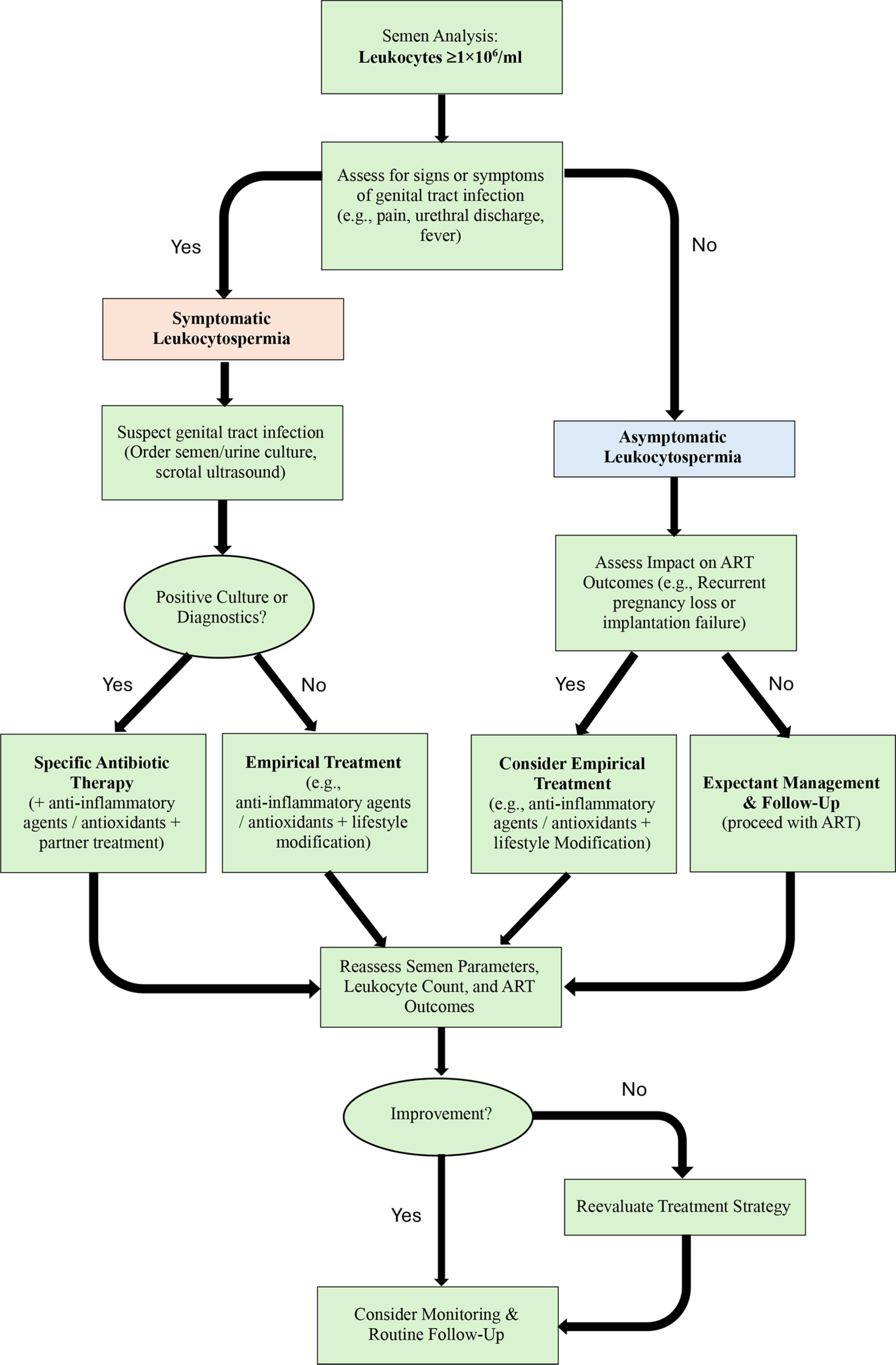
While routine treatment is not recommended, selective intervention may be justified in specific cases (Figure-2, Table-1), as listed below.
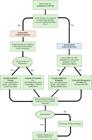
Clinical Management Algorithm for Leukocytospermia in Couples Undergoing Assisted Reproductive Technology.
Management of Leukocytospermia in Male Partners of Couples Undergoing Assisted Reproductive Technology.
-
Symptomatic Male Genital Tract Infections (MGTI)
-
Adjunctive Therapies
-
Antioxidants (e.g., Vitamin C, E, Selenium, Coenzyme Q10) may help reduce oxidative stress without the risks of antibiotics (14, 103, 104), though their impact on fertility outcomes remains uncertain (37, 38).
-
Anti-inflammatory therapy (e.g., COX 2 inhibitor) may improve semen parameters and reduce leukocytospermia, but the effect on pregnancy rates remains inconclusive (5, 15).
-
-
Recurrent ART Failure
-
We suggest that in cases of recurrent early pregnancy loss and implantation failure, it may be justifiable to alleviate leukocytospermia using antibiotics, anti-inflammatory drugs, or antioxidants.
-
Future Directions
Despite advancements in understanding leukocytospermia, several knowledge gaps remain, particularly in distinguishing symptomatic from asymptomatic cases and assessing the possible impact on reproduction by comparing asymptomatic leukocytospermic infertile men with fertile controls. Future research should prioritize the standardization of leukocyte detection methods, such as flow cytometry versus peroxidase staining, to enhance diagnostic accuracy and clinical relevance. Additionally, further studies are needed to evaluate the efficacy of targeted treatment approaches, if any, including antioxidants and anti-inflammatory therapies, in improving ART outcomes for leukocytospermic patients.
CONCLUSIONS
Current evidence suggests that among couples undergoing ART, asymptomatic leukocytospermia does not compromise the outcomes and should, therefore, not be routinely treated, mainly when semen processing methods are used (e.g., density gradient centrifugation), and ICSI is the fertilization method. While some studies indicate a potential association between leukocytospermia and an increased risk of early pregnancy loss and ectopic pregnancy, these findings are based on low-quality evidence and require further investigation. For now, we suggest that clinical decisions regarding the treatment of asymptomatic leukocytospermia should be individualized, particularly in cases of recurrent early pregnancy loss and unexplained ART failure. Until more robust data emerge, a pragmatic, evidence-based approach remains crucial in balancing the potential risks and benefits of treatments to alleviate leukocytospermia in the context of ART.
ACKNOWLEDGEMENTS
Peter Humaidan and Sandro C. Esteves contributed similarly as senior authors
REFERENCES
-
1 [No Authors]. Infertility Prevalence Estimates, 1990-2021. [Internet]. World Health Organization, 2023. Available at. <https://www.who.int/publications/i/item/978920068315>
» https://www.who.int/publications/i/item/978920068315> -
2 Agarwal A, Mulgund A, Hamada A, Chyatte MR. A unique view on male infertility around the globe. Reprod Biol Endocrinol. 2015 Apr 26;13:37. doi: 10.1186/s12958-015-0032-1.
» https://doi.org/10.1186/s12958-015-0032-1 -
3 Thonneau P, Marchand S, Tallec A, Ferial ML, Ducot B, Lansac J, Lopes P, Tabaste JM, Spira A. Incidence and main causes of infertility in a resident population (1,850,000) of three French regions (1988-1989). Hum Reprod. 1991 Jul;6(6):811-6. doi: 10.1093/oxfordjournals.humrep.a137433.
» https://doi.org/10.1093/oxfordjournals.humrep.a137433 -
4 Keck C, Gerber-Schäfer C, Clad A, Wilhelm C, Breckwoldt M. Seminal tract infections: impact on male fertility and treatment options. Hum Reprod Update. 1998;4:891-903. doi: 10.1093/humupd/4.6.891.
» https://doi.org/10.1093/humupd/4.6.891 - 5 Gambera L, Serafini F, Morgante G, Focarelli R, De Leo V, Piomboni P. Sperm quality and pregnancy rate after COX-2 inhibitor therapy of infertile males with abacterial leukocytospermia. Hum Reprod. 2007;22:1047–51.
- 6 Ventimiglia E, Capogrosso P, Boeri L, Cazzaniga W, Matloob R, Pozzi E, et al. Leukocytospermia is not an informative predictor of positive semen culture in infertile men: results from a validation study of available guidelines. Hum Reprod Open. 2020;2020:hoaa039.
-
7 WHO laboratory manual for the examination and processing of human semen. World Health Organization. [Internet]. 5th ed. 2010;271. Available at. <https://iris.who.int/bitstream/10665/44261/1/9789241547789_eng.pdf>
» https://iris.who.int/bitstream/10665/44261/1/9789241547789_eng.pdf> - 8 Brunner RJ, Demeter JH, Sindhwani P. Review of Guidelines for the Evaluation and Treatment of Leukocytospermia in Male Infertility. World J Mens Health. 2019;37:128–37.
- 9 Branigan EF, Muller CH. Efficacy of treatment and recurrence rate of leukocytospermia in infertile men with prostatitis. Fertil Steril. 1994;62:580–4.
- 10 Close CE, Roberts PL, Berger RE. Cigarettes, Alcohol and Marijuana are Related to Pyospermia in Infertile Men. J Urol. 1990;144:900–3.
- 11 Domes T, Lo KC, Grober ED, Mullen JBM, Mazzulli T, Jarvi K. The incidence and effect of bacteriospermia and elevated seminal leukocytes on semen parameters. Fertil Steril. 2012;97:1050–5.
- 12 Barratt CLR, Bolton AE, Cooke ID. Functional significance of white blood cells in the male and female reproductive tract. Hum Reprod. 1990;5:639–48.
- 13 Hassanin AM, Ahmed HH, Kaddah AN. A global view of the pathophysiology of varicocele. Andrology. 2018;6:654–61.
-
14 De Ligny W, Smits RM, Mackenzie-Proctor R, Jordan V, Fleischer K, De Bruin JP, et al. Antioxidants for male subfertility. Cochrane Gynaecology and Fertility Group, editor. Cochrane Database of Systematic Reviews [Internet]. 2022 [cited 2024 Sep 23];2022(5). Available at. <http://doi.wiley.com/10.1002/14651858.CD007411.pub5>
» http://doi.wiley.com/10.1002/14651858.CD007411.pub5> - 15 Lackner JE, Herwig R, Schmidbauer J, Schatzl G, Kratzik C, Marberger M. Correlation of leukocytospermia with clinical infection and the positive effect of antiinflammatory treatment on semen quality. Fertil Steril. 2006;86:601–5.
- 16 Oliva A, Multigner L. Ketotifen improves sperm motility and sperm morphology in male patients with leukocytospermia and unexplained infertility. Fertil Steril. 2006;85:240–3.
- 17 Wallach EE, Wolff H. The biologic significance of white blood cells in semen. Fertil Steril. 1995;63:1143–57.
- 18 Smith DC, Barratt CLR, Williams MA. The Characterisation of Non-Sperm Cells in the Ejaculates of Fertile Men Using Transmission Electron Microscopy/Charakterisierung von nicht-Spermatozoen-Zellen in den Ejakulaten von fruchtbaren Männern unter Verwendung der Transmissions-Elektronen-Mikrosk. Andrologia. 2009;21:319–33.
- 19 Simbini T, Umapathy E, Jacobus E, Tendaupenyu G, Mbizvo MT. Study on the Origin of Seminal Leucocytes Using Split Ejaculate Technique and the Effect of Leucocytospermia on Sperm Characteristics. Urol Int. 1998;61:95–100.
-
20 Wang YF, Holstein AF. Intraepithelial lymphocytes and macrophages in the human epididymis. Cell Tissue Res [Internet]. 1983 Sep [cited 2024 Oct 4];233. Available from: http://link.springer.com/10.1007/BF00212221
» http://link.springer.com/10.1007/BF00212221 - 21 Pelliccione F, D’Angeli A, Cordeschi G, Mihalca R, Ciociola F, Necozione S, et al. Seminal macrophages in ejaculates from men with couple infertility. Int J Androl. 2009;32:623–8.
-
22 Martínez-Prado E, Camejo Bermúdez MI. Expression of IL-6, IL-8, TNF-alpha, IL-10, HSP-60, anti-HSP-60 antibodies, and anti-sperm antibodies, in semen of men with leukocytes and/or bacteria. Am J Reprod Immunol. 2010;63:233-43. doi: 10.1111/j.1600-0897.2009.00786.x.
» https://doi.org/10.1111/j.1600-0897.2009.00786.x - 23 Eggert-Kruse W, Boit R, Rohr G, Aufenanger J, Hund M, Strowitzki T. Relationship of seminal plasma interleukin (IL) -8 and IL-6 with semen quality. Hum Reprod. 2001;16:517–28.
- 24 Kolaczkowska E, Kubes P. Neutrophil recruitment and function in health and inflammation. Nat Rev Immunol. 2013;13:159–75.
- 25 Mosser DM, Edwards JP. Exploring the full spectrum of macrophage activation. Nat Rev Immunol. 2008;8:958–69.
- 26 Futosi K, Fodor S, Mócsai A. Neutrophil cell surface receptors and their intracellular signal transduction pathways. Int Immunopharmacol. 2013;17:638–50.
- 27 Politch JA, Tucker L, Bowman FP, Anderson DJ. Concentrations and significance of cytokines and other immunologic factors in semen of healthy fertile men. Hum Reprod. 2007;22:2928–35.
- 28 Henkel R, Kierspel E, Stalf T, Mehnert C, Menkveld R, Tinneberg HR, et al. Effect of reactive oxygen species produced by spermatozoa and leukocytes on sperm functions in non-leukocytospermic patients. Fertil Steril. 2005;83:635–42.
- 29 Lobascio AM, De Felici M, Anibaldi M, Greco P, Minasi MG, Greco E. Involvement of seminal leukocytes, reactive oxygen species, and sperm mitochondrial membrane potential in the DNA damage of the human spermatozoa. Andrology. 2015;3:265–70.
- 30 Mahfouz R, Sharma R, Thiyagarajan A, Kale V, Gupta S, Sabanegh E, et al. Semen characteristics and sperm DNA fragmentation in infertile men with low and high levels of seminal reactive oxygen species. Fertil Steril. 2010;94:2141–6.
-
31 Ronald AR, Alfa MJ. Microbiology of the Genitourinary System. In: Baron S, editor. Medical Microbiology [Internet]. 4th ed. Galveston (TX): University of Texas Medical Branch at Galveston; 1996 [cited 2024 Sep 19]. Available at. <http://www.ncbi.nlm.nih.gov/books/NBK8136/>
» http://www.ncbi.nlm.nih.gov/books/NBK8136/> - 32 Sharma R, Gupta S, Agarwal A, Henkel R, Finelli R, Parekh N, et al. Relevance of Leukocytospermia and Semen Culture and Its True Place in Diagnosing and Treating Male Infertility. World J Mens Health. 2022;40:191.
-
33 Rees J, Abrahams M, Doble A, Cooper A; Prostatitis Expert Reference Group (PERG). Diagnosis and treatment of chronic bacterial prostatitis and chronic prostatitis/chronic pelvic pain syndrome: a consensus guideline. BJU Int. 2015;116:509-25. doi: 10.1111/bju.13101.
» https://doi.org/10.1111/bju.13101 - 34 Pajovic B, Radojevic N, Vukovic M, Stjepcevic A. Semen analysis before and after antibiotic treatment of asymptomatic chlamydia- and ureaplasma-related pyospermia. Andrologia. 2013;45:266–71.
- 35 Lackner JE, Lakovic E, Waldhör T, Schatzl G, Marberger M. Spontaneous variation of leukocytospermia in asymptomatic infertile males. Fertil Steril. 2008;90:1757–60.
- 36 Wolff H, Politch JA, Martinez A, Haimovici F, Hill JA, Anderson DJ. Leukocytospermia is associated with poor semen quality. Fertil Steril. 1990;53:528–36.
-
37 Brannigan RE, Hermanson L, Kaczmarek J, Kim SK, Kirkby E, Tanrikut C. Updates to Male Infertility: AUA/ASRM Guideline (2024). J Urol. 2024;212:789-799. doi: 10.1097/JU.0000000000004180.
» https://doi.org/10.1097/JU.0000000000004180 -
38 Salonia A, Bettocchi C, Capogrosso P, Carvalho J. EAU Guidelines on Sexual and Reproductive Health [Internet]. EAU Guidelines Office; 2024 [cited 2024 Oct 28]. Available at. <https://uroweb.org/guidelines/sexual-and-reproductive-health/chapter/introduction-2>
» https://uroweb.org/guidelines/sexual-and-reproductive-health/chapter/introduction-2> - 39 Asplund K. Use of in vitro fertilization—ethical issues. Ups J Med Sci. 2020;125:192–9.
- 40 Mladovsky P, Sorenson C. Public Financing of IVF: A Review of Policy Rationales. Health Care Anal. 2010;18:113–28.
- 41 Hedger MP, Meinhardt A. Cytokines and the immune-testicular axis. J Reprod Immunol. 2003;58:1–26.
-
42 Naito M, Itoh M. Patterns of infiltration of lymphocytes into the testis under normal and pathological conditions in mice. Am J Reprod Immunol. 2008;59:55-61. doi: 10.1111/j.1600-0897.2007.00556.x.
» https://doi.org/10.1111/j.1600-0897.2007.00556.x - 43 La Vignera S, Vicari E, Condorelli RA, D’Agata R, Calogero AE. Male accessory gland infection and sperm parameters (review): MAGI and sperm parameters. I Int J Androl. 2011;34(5pt2):e330–47.
- 44 Comhaire F. Mechanisms and effects of male genital tract infection on sperm quality and fertilizing potential: the andrologist's viewpoint. Hum Reprod Update. 1999;5:393–8.
- 45 Rival C, Guazzone VA, Von Wulffen W, Hackstein H, Schneider E, Lustig L, et al. Expression of co-stimulatory molecules, chemokine receptors and proinflammatory cytokines in dendritic cells from normal and chronically inflamed rat testis. Molecular Hum Reprod. 2007;13:853–61.
- 46 Vogt KL, Summers C, Chilvers ER, Condliffe AM. Priming and de‐priming of neutrophil responses in vitro and in vivo. Eur J Clin Invest. 2018;48(S2):e12967.
- 47 de Lamirande E, Gagnon C. Capacitation-associated production of superoxide anion by human spermatozoa. Free Radic Biol Med. 1995;18:487–95.
- 48 Pons-Rejraji H, Sion B, Saez F, Brugnon F, Janny L, Grizard G. Rôles des dérivés actifs de l'oxygène (DAO) sur les spermatozoïdes humains et infertilité masculine. Gynecol Obstet Fertil. 2009;37:529–35.
- 49 Rajasekaran M, Hellstrom WJ, Naz RK, Sikka SC. Oxidative stress and interleukins in seminal plasma during leukocytospermia. Fertil Steril. 1995;64:166–71.
- 50 Agarwal A, Saleh RA, Bedaiwy MA. Role of reactive oxygen species in the pathophysiology of human reproduction. Fertil Steril. 2003;79:829–43.
- 51 Al-Saleh I, Coskun S, Al-Rouqi R, Al-Rajudi T, Eltabache C, Abduljabbar M, et al. Oxidative stress and DNA damage status in couples undergoing in vitro fertilization treatment. Reprod Fertil. 2021;2:117–39.
-
52 Derbel R, Sellami H, Sakka R, Ben Slima A, Mkaddem I, Gdoura R, et al. Relationship between nuclear DNA fragmentation, mitochondrial DNA damage and standard sperm parameters in spermatozoa of infertile patients with leukocytospermia. J Gynecol Obstet Hum Reprod. 2021 May;50(5):102101. doi: 10.1016/j.jogoh.2021.102101.
» https://doi.org/10.1016/j.jogoh.2021.102101 - 53 Aitken RJ, Clarkson JS, Fishel S. Generation of Reactive Oxygen Species, Lipid Peroxidation, and Human Sperm Function. Biol Reprod. 1989;41:183–97.
-
54 Aitken RJ, Irvine DS, Wu FC. Prospective analysis of sperm-oocyte fusion and reactive oxygen species generation as criteria for the diagnosis of infertility. Am J Obstet Gynecol. 1991;164:542-51. doi: 10.1016/s0002-9378(11)80017-7.
» https://doi.org/10.1016/s0002-9378(11)80017-7 - 55 Krausz C, Mills C, Rogers S, Tan SL, Aitken RJ. Stimulation of oxidant generation by human sperm suspensions using phorbol esters and formyl peptides: relationships with motility and fertilization in vitro. Fertil Steril. 1994;62:599–605.
- 56 Kodama H, Yamaguchi R, Fukuda J, Kasai H, Tanaka T. Increased oxidative deoxyribonucleic acid damage in the spermatozoa of infertile male patients. Fertil Steril. 1997;68:519–24.
- 57 Lopes S, Jurisicova A, Sun JG, Casper RF. Reactive oxygen species: potential cause for DNA fragmentation in human spermatozoa. Hum Reprod. 1998;13:896–900.
- 58 Aitken RJ, Clarkson JS. Cellular basis of defective sperm function and its association with the genesis of reactive oxygen species by human spermatozoa. J Reprod Fertil. 1987;81:459–69.
- 59 Alvarez JG, Touchstone JC, Blasco L, Storey BT. Spontaneous Lipid Peroxidation and Production of Hydrogen Peroxide and Superoxide in Human Spermatozoa Superoxide Dismutase as Major Enzyme Protectant Against Oxygen Toxicity. J Androl. 1987;8:338–48.
- 60 Jones R, Mann T, Sherins R. Peroxidative breakdown of phospholipids in human spermatozoa, spermicidal properties of fatty acid peroxides, and protective action of seminal plasma. Fertil Steril. 1979;31:531–7.
- 61 Guo C, Sun L, Chen X, Zhang D. Oxidative stress, mitochondrial damage and neurodegenerative diseases. Neural Regen Res. 2013;8:2003–14.
- 62 Sikka SC. Role of Oxidative Stress and Antioxidants in Andrology and Assisted Reproductive Technology. J Androl. 2004 Jan 2;25(1):5–18.
-
63 Aitken RJ, Gordon E, Harkiss D, Twigg JP, Milne P, Jennings Z, et al. Relative impact of oxidative stress on the functional competence and genomic integrity of human spermatozoa. Biol Reprod. 1998;59:1037-46. doi: 10.1095/biolreprod59.5.1037.
» https://doi.org/10.1095/biolreprod59.5.1037 - 64 Barroso G, Morshedi M, Oehninger S. Analysis of DNA fragmentation, plasma membrane translocation of phosphatidylserine and oxidative stress in human spermatozoa. Hum Reprod. 2000;15:1338–44.
- 65 Twigg JP, Irvine DS, Aitken RJ. Oxidative damage to DNA in human spermatozoa does not preclude pronucleus formation at intracytoplasmic sperm injection. Hum Reprod. 1998;13:1864–71.
-
66 Lanzafame FM, La Vignera S, Vicari E, Calogero AE. Oxidative stress and medical antioxidant treatment in male infertility. Reprod Biomed Online. 2009;19:638-59. doi: 10.1016/j.rbmo.2009.09.014.
» https://doi.org/10.1016/j.rbmo.2009.09.014 - 67 Aitken RJ, West KM. Analysis of the relationship between reactive oxygen species production and leucocyte infiltration in fractions of human semen separated on Percoll gradients. Int J Androl. 1990;13:433–51.
-
68 Aitken RJ, Clarkson JS, Hargreave TB, Irvine DS, Wu FC. Analysis of the relationship between defective sperm function and the generation of reactive oxygen species in cases of oligozoospermia. J Androl. 1989;10:214-20. doi: 10.1002/j.1939-4640.1989.tb00091.x.
» https://doi.org/10.1002/j.1939-4640.1989.tb00091.x - 69 Aitken RJ, Clarkson JS. Significance of reactive oxygen species and antioxidants in defining the efficacy of sperm preparation techniques. J Androl. 1988;9:367–76.
- 70 Villegas J, Schulz M, Soto L, Iglesias T, Miska W, Sánchez R. Influence of reactive oxygen species produced by activated leukocytes at the level of apoptosis in mature human spermatozoa. Fertil Steril. 2005;83:808–10.
- 71 de Lamirande E, Gagnon C. Reactive oxygen species and human spermatozoa. I. Effects on the motility of intact spermatozoa and on sperm axonemes. J Androl. 1992;13:368–78.
- 72 Shamsi MB, Kumar R, Bhatt A, Bamezai RNK, Kumar R, Gupta NP, et al. Mitochondrial DNA Mutations in etiopathogenesis of male infertility. Indian J Urol. 2008;24:150–4.
- 73 Wei YH, Wu SB, Ma YS, Lee HC. Respiratory function decline and DNA mutation in mitochondria, oxidative stress and altered gene expression during aging. Chang Gung Med J. 2009;32:113-32.
- 74 Thangaraj K, Joshi MB, Reddy AG, Rasalkar AA, Singh L. Sperm mitochondrial mutations as a cause of low sperm motility. J Androl. 2003;24:388–92.
- 75 Baklouti-Gargouri S, Ghorbel M, Chamkha I, Mkaouar-Rebai E, Sellami A, Chakroun N, et al. Possible association of a novel missense mutation A6375G in the mitochondrial cytochrome C oxidase I gene with asthenospermia in the Tunisian population. Genet Test Mol Biomarkers. 2012;16:1298–302.
- 76 Baklouti-Gargouri S, Ghorbel M, Ben Mahmoud A, Mkaouar-Rebai E, Cherif M, Chakroun N, et al. Mitochondrial DNA mutations and polymorphisms in asthenospermic infertile men. Mol Biol Rep. 2013;40:4705–12.
- 77 de Lamirande E, Gagnon C. Reactive oxygen species and human spermatozoa. II. Depletion of adenosine triphosphate plays an important role in the inhibition of sperm motility. J Androl. 1992;13:379–86.
- 78 Erenpreiss J, Hlevicka S, Zalkalns J, Erenpreisa J. Effect of Leukocytospermia on Sperm DNA Integrity: A Negative Effect in Abnormal Semen Samples. J Androl. 2002;23:717–23.
- 79 Evenson DP, Jost LK, Marshall D, Zinaman MJ, Clegg E, Purvis K, et al. Utility of the sperm chromatin structure assay as a diagnostic and prognostic tool in the human fertility clinic. Hum Reprod. 1999;14:1039–49.
- 80 Evenson DP, Larson KL, Jost LK. Sperm chromatin structure assay: its clinical use for detecting sperm DNA fragmentation in male infertility and comparisons with other techniques. J Androl. 2002;23:25–43.
- 81 Griveau JF, Le Lannou D. Reactive oxygen species and human spermatozoa: physiology and pathology. Int J Androl. 1997;20:61–9.
- 82 Henkel R, Kierspel E, Hajimohammad M, Stalf T, Hoogendijk C, Mehnert C, et al. DNA fragmentation of spermatozoa and assisted reproduction technology. Reprod Biomed Online. 2003;7:477–84.
- 83 Henkel R, Hajimohammad M, Stalf T, Hoogendijk C, Mehnert C, Menkveld R, et al. Influence of deoxyribonucleic acid damage on fertilization and pregnancy. Fertil Steril. 2004;81:965–72.
-
84 Sun JG, Jurisicova A, Casper RF. Detection of deoxyribonucleic acid fragmentation in human sperm: correlation with fertilization in vitro. Biol Reprod. 1997;56:602-7. doi: 10.1095/biolreprod56.3.602.
» https://doi.org/10.1095/biolreprod56.3.602 - 85 Lopes S, Sun JG, Jurisicova A, Meriano J, Casper RF. Sperm deoxyribonucleic acid fragmentation is increased in poor-quality semen samples and correlates with failed fertilization in intracytoplasmic sperm injection. Fertil Steril. 1998;69:528–32.
- 86 Duran EH, Morshedi M, Taylor S, Oehninger S. Sperm DNA quality predicts intrauterine insemination outcome: a prospective cohort study. Hum Reprod. 2002;17:3122–8.
- 87 Morris ID, Ilott S, Dixon L, Brison DR. The spectrum of DNA damage in human sperm assessed by single cell gel electrophoresis (Comet assay) and its relationship to fertilization and embryo development. Hum Reprod. 2002;17:990–8.
- 88 Evenson DP. Sperm Chromatin Structure Assay (SCSA®) for Fertility Assessment. Curr Protoc. 2022;2:e508.
-
89 World Health Organization. WHO laboratory manual for the examination and processing of human semen [Internet]. 6th ed. Geneva: World Health Organization; 2021. Available at. <https://iris.who.int/handle/10665/343208>
» https://iris.who.int/handle/10665/343208> - 90 Castellini C, D’Andrea S, Martorella A, Minaldi E, Necozione S, Francavilla F, et al. Relationship between leukocytospermia, reproductive potential after assisted reproductive technology, and sperm parameters: a systematic review and meta-analysis of case-control studies. Andrology. 2020;8:125–35.
- 91 Barraud-Lange V, Pont JC, Ziyyat A, Pocate K, Sifer C, Cedrin-Durnerin I, et al. Seminal leukocytes are Good Samaritans for spermatozoa. Fertil Steril. 2011;96:1315–9.
- 92 Qiao X, Zeng R, Yang Z, Xu L, Ma Q, Yang Y, et al. Effects of leukocytospermia on the outcomes of assisted reproductive technology. Andrologia. 2022;54:e14403.
- 93 Gill P, Puchalt NG, Molinaro T, Werner M, Seli E, Hotaling J, et al. Leukocytospermia does not negatively impact outcomes in in vitro fertilization cycles with intracytoplasmic sperm injection and preimplantation genetic testing for aneuploidy: findings from 5435 cycles. J Assist Reprod Genet. 2024;41:1213–9.
- 94 Dutta S, Bocu K, Agarwal A. Role of Leukocytospermia in the Management of Male Infertility: Decoding a Mystery for the Busy Clinicians. World J Mens Health. 2024;42:e86.
- 95 Ricci G, Perticarari S, Boscolo R, Simeone R, Martinelli M, Fischer-Tamaro L, et al. Leukocytospermia and sperm preparation - a flow cytometric study. Reprod Biol Endocrinol. 2009;7:128.
- 96 Jung JH, Kim MH, Kim J, Baik SK, Koh SB, Park HJ, et al. Treatment of Leukocytospermia in Male Infertility: A Systematic Review. World J Mens Health. 2016;34:165.
-
97 Henkel R. Leukocytospermia and/or Bacteriospermia: Impact on Male Infertility. J Clin Med. 2024;13:2841. doi: 10.3390/jcm13102841.
» https://doi.org/10.3390/jcm13102841 -
98 Yao Y, Qiu XJ, Wang DS, Luo JK, Tang T, Li YH, et al. Semen microbiota in normal and leukocytospermic males. Asian J Androl. 2022;24:398-405. doi: 10.4103/aja202172.
» https://doi.org/10.4103/aja202172 - 99 Hussain U, Venishetty N, Alkassis M, Raheem O. The Clinical Management of Leukocytospermia in Male Infertility: A Narrative Review. Uro. 2024;4:36–49.
- 100 Rooney KL, Domar AD. The relationship between stress and infertility. Dialogues Clin Neurosci. 2018;20:41–7.
-
101 Schuppe HC, Pilatz A, Hossain H, Diemer T, Wagenlehner F, Weidner W. Urogenital Infection as a Risk Factor for Male Infertility. Deutsches Ärzteblatt international [Internet]. 2017 May 12 [cited 2025 Mar 17]; Available at. <https://www.aerzteblatt.de/10.3238/arztebl.2017.0339>
» https://www.aerzteblatt.de/10.3238/arztebl.2017.0339> -
102 Das S, Roychoudhury S, Roychoudhury S, Agarwal A, Henkel R. Role of Infection and Leukocytes in Male Infertility. In: Kesari KK, Roychoudhury S, editors. Oxidative Stress and Toxicity in Reproductive Biology and Medicine [Internet]. Cham: Springer International Publishing; 2022 [cited 2024 Nov 6]. p. 115–40. (Advances in Experimental Medicine and Biology; vol. 1358). Available at. <https://link.springer.com/10.1007/978-3-030-89340-8_6>
» https://link.springer.com/10.1007/978-3-030-89340-8_6> -
103 De Luca MN, Colone M, Gambioli R, Stringaro A, Unfer V. Oxidative Stress and Male Fertility: Role of Antioxidants and Inositols. Antioxidants (Basel). 2021;10:1283. doi: 10.3390/antiox10081283.
» https://doi.org/10.3390/antiox10081283 -
104 Das S, Roychoudhury S, Dey A, Jha NK, Kumar D, Roychoudhury S, et al. Bacteriospermia and Male Infertility: Role of Oxidative Stress. In: Kesari KK, Roychoudhury S, editors. Oxidative Stress and Toxicity in Reproductive Biology and Medicine [Internet]. Cham: Springer International Publishing; 2022 [cited 2025 Mar 17]. p. 141–63. (Advances in Experimental Medicine and Biology; vol. 1358). Available at. <https://link.springer.com/10.1007/978-3-030-89340-8_7>
» https://link.springer.com/10.1007/978-3-030-89340-8_7>