 Conservation and quality of onion bulbs under environmental conditions
ABSTRACT
Onions are a vegetable of great importance worldwide, and the production has been growing in several regions of the Country, especially in the Northeast Region. Vale do São Francisco Region in Pernambuco is considered to have great agricultural potential, attracting significant investments in agriculture. Post-harvest conservation is important for the commercialization of onions, which exhibit large price variations. This study aims to evaluate the characteristics and post-harvest losses of open-pollinated cultivars and commercial hybrids. The experiment was carried out on HORTIVALE-Sementes do Vale farm in the city of Petrolina-PE. The experimental design used was randomized blocks with eight open-pollinated cultivars and commercial hybrids with three replications. After harvesting, the bulbs were stored under uncontrolled ambient conditions for 75 days. We observed that the bulbs stored at ambient temperature showed significant mass losses in relation to storage time, mainly after 45 days. The authors verified that most cultivars showed good characteristics, in relation to shelf life and bulb quality concerning commercial interests, after 40 days of storage at uncontrolled ambient temperature.
Keywords:
Allium cepa L.; shelf life; temperature; cultivars
RESUMO
A cebola é uma hortaliça de grande importância em todo o mundo, e sua produção vem crescendo em diversas regiões do país, especialmente na região Nordeste. A região do Vale do São Francisco em Pernambuco, é considerada de grande potencial agrícola, atraindo diversos investimentos na agricultura. A conservação pós-colheita é importante para a comercialização da cebola, que apresenta grandes variações de preços. Esse trabalho tem como objetivo avaliar características e perdas pós-colheita de cultivares de polinização livre e híbridos comerciais. O local de cultivo foi a Fazenda HORTIVALE-Sementes do vale na cidade de Petrolina-PE. O delineamento utilizado foi de blocos casualizado com oito cultivares de polinização livres e hibridas comercais com três repetições. Após a colheita, os bulbos foram armazenados sob condições de temperatura ambiente não controlada por 75 dias. Observou-se que os bulbos armazenados em temperatura ambiente têm perdas de massa significativas em relação ao tempo de armazenamento principalmente a partir de 45 dias. Conclui-se que as cultivares em sua maioria apresentam cararteristicas de boa adaptação, com tempo de prateleira e qualidade do bulbo em relação às caracteristicas comerciais com um armazenamento de 40 dias em temperatura ambiente não controlada.
Palavras-chave:
Allium cepa L.; tempo de prateleira; temperatura; cultivares
Onions (Allium cepa L.) are one of the most consumed and grown vegetables worldwide. As potatoes and tomatoes, onions stand out, reaching production of 1,640,628 tons in 49,119 hectares (IBGE, 2024).
In Brazil, this crop is most produced in the South Region, corresponding to 50% of the national production, followed by the Southeast (23.9%), Northeast (18.5%) and Central-West (7.6%) Regions. In general, onions are grown by small and large farmers, creating income, generating jobs with great socioeconomic importance (EPAGRI, 2024).
In the Brazilian Northeast Region, onions are one of the most important vegetable crops grown in Vale do São Francisco Region, which is part of several municipalities of the states of Pernambuco and Bahia, being responsible for 97.9% of the production in the region, showing productivity of 24.9 and 49.8 t/ha, respectively (IBGE, 2024). In this region, onions are grown all year long, due to Breeding Programs that have been developing cultivars of tropical onions adapted to the weather conditions of the Northeast Region since the 1970’s (Sousa et al., 2022).
This vegetable is very important in everyday eating habit and it is highly consumed throughout the year. Thus, developing protocols for storage is essential, since a considerable amount of onions is stored worldwide to meet daily needs (Farias et al., 2023). Onions exhibit a large price variation, which is directly related to the harvest season, making storage an alternative aimed at improving yields (Alves et al., 2023).
The main challenges are weight loss and bulb diameter during storage, directly related to the temperature conditions in the storage place (Silva et al., 2023). Siva et al. (2023) reported that in addition to quantitative losses, damage caused by fungi and bacteria during storage is common, compromising product quality.
In post-harvesting, damage and losses are usually a consequence of storage conditions, such as temperature, which can compromise the preservation of the bulbs (Balbino et al., 2024). Inappropriate storage conditions may lead to damage, such as rot, weight loss, and diameter reduction (Siva et al., 2023). The authors point out that some cultivars, both hybrids and open-pollinated, are better adapted to locations with high temperatures during the growing season in the field and after harvesting.
Studying storage of onion bulbs, Neto et al. (2019) noticed that the bulbs stores at ambient temperature showed significant mass loss in relation to storage time, mainly after 45 days. In this sense, the results obtained by Alemayehu et al. (2015) showed that the onion bulbs should be dried and stored at temperatures between 25 and 30°C, which provides a longer lifespan and higher quality of the bulbs, and consequently better marketability.
The adaptability of the bulbs to the storage conditions is extremely important, mainly when these bulbs are kept for a long period of time under uncontrolled environmental conditions (Farias et al., 2023).
Studies aiming to develop storage techniques of onion bulbs associated with the development of cultivars adapted to local environmental conditions are essential to a better bulb preservation and, consequently, to a better producers’ income, as this storage guarantees sales during off-season periods.
The aim of this study was to evaluate the quality (weight loss, diameter and useful life after harvesting) after 75-day storage, under ambient temperature conditions, of five open-pollinated cultivars and three commercial onion hybrids.
MATERIAL AND METHODS
Area of the study
The experiment was carried out on the experimental farm of the company Hortivale-Sementes do Vale Ltda, located at the rural zone of the municipality of Petrolina-PE, Projeto de Irrigação Senador Nilo Coelho (Irrigation Project Senador Nilo Coelho), in the Caatinga area (9°05'S, 40°19'W, 350 m altitude). According to Köppens’ classification, the climate in the region is ‘BSWh’, Brazilian semi-arid conditions, hot and humid summer, rainfall concentration from January to April, annual average 510 mm, and monthly average temperature from 22 to 38oC (INMET, 2022).
Conducting the experiment
The cultivars used in the trial, for evaluating post-harvest quality after cultivation under months with high temperatures in the São Francisco Valley region in the city of Petrolina-PE, from November 2022 to May 2023, are presented in Table 1.
Harvesting was performed 75 days after planting (at 112 days after preparing the seedbeds). The seedbed consisted of three rows, each block consisted of 8 plots, each plot with 60 plants (5 rows with 12 plants), being three blocks in each treatment. Spacing 120 cm between rows and 5 cm between plants. The useful area of the plot consisted of three central rows, being used for statistics analysis.
Experimental conducting procedure
The crop was manually harvested, when bulbs became mature (bending). After harvesting, the bulbs were naturally dried in the field for 72 hours, and, afterwards separated from the stalk. Next, the excess of soil was removed without watering or using any other product. After all the specimens were identified, they were taken to a semi-open storage area.
In storage, the bulbs were kept in boxes under ambient conditions. The average temperature was 29.0°C, being measured daily, with the use of a digital thermometer. the bulbs were kept in boxes under ambient conditions.
Evaluated variables
Shelf life was evaluated every 15 days. The weight was expressed in grams, considering 5 replications of each cultivar (the rotten ones were discarded). The authors started to evaluate the bulbs since day 1 up to day 75.
Data processing and statistical analysis
Bulb shelf life
Weight and diameter were evaluated every 15 days, using the bulbs harvested in the field. The commercial quality and characteristics were observed.
Mass loss related to weight (g) and diameter (mm) related to storage time
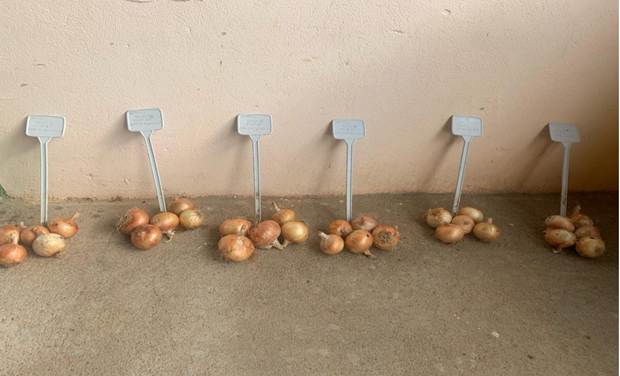
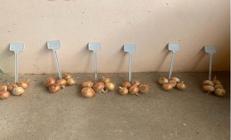
The bulbs were identified and, then, weight and diameter of 5 bulbs of each stored cultivar were evaluated every 15 days. Weight was determined using a digital scale and the bulb diameter was determined using a manual caliper until the 75th day of storage (figure 1).
Statistical analysis of obtained data
The authors evaluated the shelf life and diameter of the bulbs using the average values obtained. Using these data a regression curve was created by Sigma plot 15.0 software.
RESULTS AND DISCUSSION
Bulb shelf life
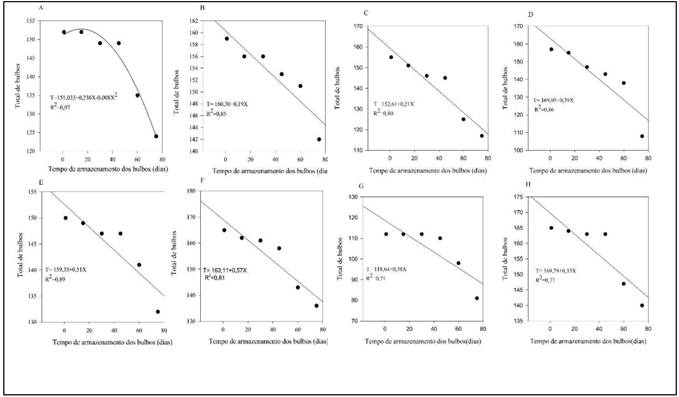
Cultivar A-IPA 11, in regression analysis, showed a decrease in growth curve rate after 30 days of storage; cultivar B-IPA 13 Brisa verão was stable at 30 and 45 days, showing the greatest weight losses between 60 and 75 days. Cultivar C-Alfa São Francisco and E-Rio vale lost weight in the beginning of storage and stabilized between 40 and 60 days. Cultivar D-IPA 11 avulsa kept stabilized in the beginning of the storage, showed significant losses between 60 and 75 days, though. Cultivar F-Campo lindo showed more weight loss at the end of storage period; cultivar G-Harrier presented the lowest number of harvested bulbs, showed resistance to storage, decreasing after 45 days; cultivar H-Leona showed good result in the beginning of storage, decreasing at the end of the period (figure 2).
Bulb useful lifetime post-harvesting is related to the total quantity of bulbs harvested in the field and the losses showed in the regression curve. The authors noticed that the results are due to harvesting up to curing, concerning the way these bulbs were stored and room temperature. Most of the cultivars started to lose bulbs after 40 days, corroboration the study carried out by Neto et al. (2019), showing that the bulbs stored at ambient temperature show significant mass losses in relation to storage time, mainly after 45 days.
The results showed that no significant losses that could compromise the results could be noticed.
Thus, the cultivars showed good adaptability to environmental weather conditions, as well as shelf life up to 40 days of storage, showing little losses of the bulbs caused by rotting. This fact can be related to the bulb quality, due to its chemical composition, which is highly dependent on pre- and post-harvesting conditions (Martins et al., 2019).
Mass loss related to weight (g) and diameter (mm) related to storage time
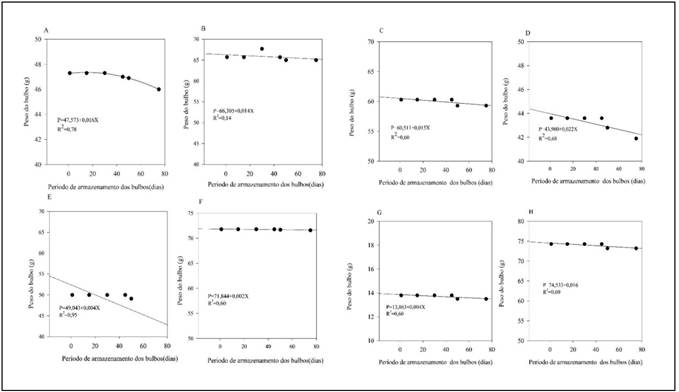
Evaluating figure 3 (below), the weights are arranged in a straight line, with minimal loss related to the initial weight at the initial time. Cultivar G-Harrier did not adapt to semi-arid region concerning bulb production (low weight); cultivars B-IPA 13 Verão, C-Alfa São Francisco, F-Campo lindo and H-Leona showed the greatest weights and also the highest productivities (figure 3).
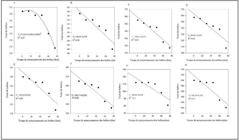
Total of bulbs harvested in the field and quantity of bulbs at the end of the storage period. *A-IPA11, B-IPA13 Brisa verão, C-Alfa São Francisco, D-IPA11 avulsa, E-Rio vale, F-Campo lindo, G-Harrier, H-Leona. Petrolina, UFRPE, 2022 and 2023.
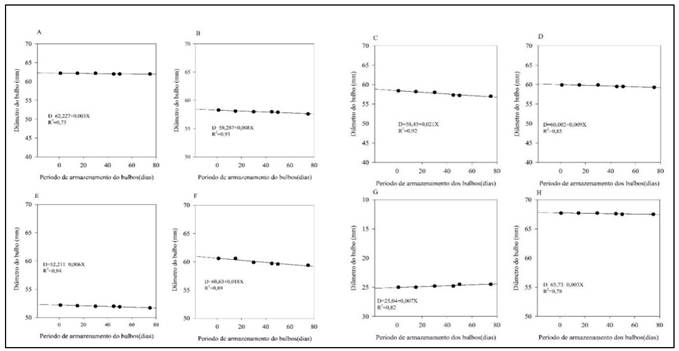
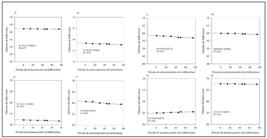
The authors noticed a minimum diameter loss; some losses of onion cataphylls during the storage period were noticed, without compromising the commercial classification. The cultivars A-IPA11, D-IPA11 avulsa and H-Leona showed straight lines graphs, with the least diameter loss. Cultivar B-IPA13 Brisa verão and cultivar F-Campo lindo showed diameter loss in relation to storage time, cultivar G-Harrier did not show a commercially acceptable diameter, being the cultivar which shows the smallest diameters (figure 4).
The storage of a bulb in a good-colored condition, no heat stress, and well-ventilated, will result in less weight loss, as reported by Siva et al. (2023). The authors in this study also noticed that the cultivars showed less weight loss in each evaluation time, and, at the end of storage period, the bulbs showed commercially acceptable production. The bulb diameter decreases simultaneously to the weight loss. The average of bulb weight did not show any significant differences; the weight loss was minimal, being related to the loss of onion cataphylls and bulb moisture during the storage process. We also observed the lowest losses of the bulb characteristics. This is a result of appropriate storage conditions, and good adaptation traits of the genotypes.
According to Marconatto et al. (2021), the attractive characteristics of the varieties and their resistance to storage are due to the fact that this cultivar has higher dry matter contents compared with other cultivars. Another positive characteristic related to resistance to bulb storage is that this cultivar presents a more adherent skin, which is an attractive condition for the producers, since they can store and sell their product earning higher incomes.
The bulbs showed a good post-harvesting characteristic, showing the lowest losses of bulbs, diameter and weight during the storage at ambient temperature until 40 days after harvesting. Thus, the farmers can store these cultivars and commercialize them at any time of the year when the supply of the product is generally low (off-season periods).
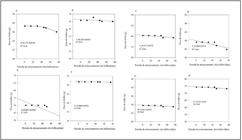
Bulb weight during storage time. *A-IPA11, B-IPA13 Brisa verão, C-Alfa SãoFrancisco, D-IPA11 avulsa, E-Rio vale, F-Campo lindo, G-Harrier, H-Leona. Petrolina, UFRPE, 2022 and 2023.
REFERENCES
-
ALEMAYEHU, G; SYNGENTA, N; MOHAMMED, A; MENAMO, TM; NEGA, G. 2015. Effect of curing and top removal time on quality and shelf life of onions (Allium cepa L.). Global Journal of Science Frontier Research: D (Agriculture and Veterinary) 15: 27-36. Available athttps://www.researchgate.net/publication/283795558
» https://www.researchgate.net/publication/283795558 -
ALVES, FQG; CASAIS, LKN; NASCIMENTO, IR; SILVA, FC; TELES, SP; OLIVEIRA, LB; KONDORFER, DB; LUZ, JMQ. 2023. Potencial agronômicodegenótipos de cebola em condição de clima tropical de baixa altitude. Contribuciones a las Ciencias Sociales 16: 29813-29831. https://doi.org/10.55905/revconv.16n.12-047
» https://doi.org/10.55905/revconv.16n.12-047 - BALBINO, JMS; CAETANO, LCS. 2024. Manejo na colheita e na pós-colheita.
-
EPAGRI-CEPA. 2024. Empresa de Pesquisa Agropecuária e Extensão Rural de Santa Catarina. Accessed onJanuary 20, 2025. Available atAvailable athttps://cepa.epagri.sc.gov.br/index.php/publicacoes/publicacoes-do-epagri-cepa
» https://cepa.epagri.sc.gov.br/index.php/publicacoes/publicacoes-do-epagri-cepa - FARIAS, ADO. 2023. Processo de industrialização de produto saudável voltado para redes de supermercados. Natal-RN: UFERSA. 86p. (M.SC. Thesis).
-
IBGE. 2024. Instituto Brasileiro de Geografia e Estatítica- Levantamento Sistemático daProduçãoAgrícola. Accessed atJanuary 20, 2025. Available at Available at https:/ csistematico-da-producao-agricola.html
» https:/ csistematico-da-producao-agricola.html -
INMET. 2022. Management report INMET 2020-2022 (only in Portuguese). In: National Institute of Meteorology. Accessed onMarch 16, 2023. Available at Available at https://portal.inmet.gov.br/uploads/notastecnicas/Relatório-Gestão-Final_um.pdf
» https://portal.inmet.gov.br/uploads/notastecnicas/Relatório-Gestão-Final_um.pdf -
MARCONATTO, JL; MARCUZZO, LL. 2021. Perda de massa, brotamento e podridão debulbo durante a armazenagem de cebola. Revista Agronomia Brasileira, 5: 1-5. Available atdoi:10.29372/rab202109
» https://doi.org/10.29372/rab202109 -
MARTINS, N; PETROPOULOS, S; FERREIRA, ICFR. 2019. Chemical composition and bioactive compounds of garlic (Allium sativum L.) as affected by pre- and post-harvest conditions: A review: Food Chemistry 211: 41-50). Elsevier Ltd. Available athttps://doi.org/10.1016/j.foodchem.2016.05.029
» https://doi.org/10.1016/j.foodchem.2016.05.029 - A NETO, PA; GRANGEIRO, LC; MENDES, AMS; COSTA, NDS; MARROCOS, TP; VALDIVIA SOUZA, FL. 2019. Crescimento e acúmulo de macronutrientes na cultura da cebola em Baraúna (RN) e Petrolina (PE). Available at
-
SIVA, SV; VELMURUGAN, G; PRATHIBA, R; POORNIMA, DS; SUVETHA, M; KEETHIGA, V. 2023. Effect of on-farm storage structure on physical and bio-chemical changes in aggregatum onion. Materials Today: Proceedings 72: 2417-2422. Available at https://doi.org/10.1016/j.matpr.2022.09.429
» https://doi.org/10.1016/j.matpr.2022.09.429 -
SOUSA, LCC; COSTA, JHQ; SANTANA, LA; SILVA, JM. 2022. Produtores rurais de Belém do São Francisco-PE e ações do Instituto Agronomico de Pernambuco (IPA). Revista de Extensão Da UNIVASF10: 204-221. Available athttps://www.periodicos.univasf.edu.br/index.php/extramuros/article/view/1734
» https://www.periodicos.univasf.edu.br/index.php/extramuros/article/view/1734
-
Consent for publication
All authors allow to publish the manuscript
-
Data availability
Data will be made available upon request to the corresponding author.
-
Declaration of generative AI and AI-assisted technologies in the writing process:
The authors state that they did not use artificial intelligence tools, or declared to make use of the tool for name, version, origin, with the purpose of briefly describing the use.
Data will be made available upon request to the corresponding author.