
 Influence of work regimes on motivation, engagement and individual performance: a multigroup analysis in project teams
Abstract
Abstract The aim of the study is to analyze the effect of amotivation and intrinsic motivation regulation on engagement and how engagement influences the performance of individuals in project teams under on-site, hybrid, and remote work regimes (work from home). The research stands out for analyzing the relationship between motivation, engagement, and individual performance in different work regimes, contributing to the understanding of the impact of remote work on project teams and informing the choice of the regime that best fosters the motivation and performance of individuals in project teams. The methodology used was multigroup analysis, using structural equation modeling of partial least squares (PLS-SEM). The proposed conceptual model was validated. The intrinsic regulation of motivation positively influences engagement, while amotivation has a negative relationship with engagement in all work regimes. The relationship between engagement and individual performance was moderate in the on-site and hybrid regimes but weak in the remote regime. The research demonstrates that intrinsic motivation drives engagement across all work arrangements. However, the impact of engagement on performance, significant in the on-site and hybrid models, was considerably reduced in the remote regime, requiring future investigations.
Keywords:
Motivation; Engagement; Individual performance; Multigroup analysis; Project management
Resumo
Resumo O objetivo do estudo é analisar o efeito da amotivação e da regulação da motivação intrínseca sobre o engajamento e como o engajamento influencia o desempenho dos indivíduos em equipes de projetos em regimes de trabalho presencial, híbrido e remoto (work from home). A investigação destaca-se por analisar a relação entre motivação, engajamento e desempenho individual em diferentes regimes de trabalho, contribuindo para a compreensão do impacto do trabalho remoto em equipes de projetos e para a escolha do regime que melhor favoreça a motivação e o desempenho dos indivíduos em equipes de projetos. A metodologia utilizada foi a análise multigrupo, utilizando modelagem de equações estruturais de mínimos quadrados parciais (PLS-SEM). O modelo conceitual proposto foi validado. A regulação intrínseca da motivação influencia positivamente o engajamento, enquanto a amotivação tem uma relação negativa com o engajamento em todos os regimes de trabalho. A relação entre engajamento e desempenho individual foi moderada nos regimes presencial e híbrido, mas fraca no regime remoto. A pesquisa demonstra que a motivação intrínseca impulsiona o engajamento em todos os regimes de trabalho. No entanto, o impacto do engajamento no desempenho, significativo nos modelos presencial e híbrido, foi consideravelmente reduzido no regime remoto, indicando a necessidade de investigações futuras.
Palavras-chave:
Motivação; Engajamento; Desempenho individual; Análise multigrupo; Gerenciamento de projetos
1 Introduction
The COVID-19 pandemic transformed work regimes, leading organizations to adopt remote work at scale (Bick et al., 2020; OECD, 2020). This shift altered the workplace and work-related behaviors, affecting project teams that rely on collaboration and communication (Ozkan et al., 2022; Santos et al., 2023). In this context, understanding the effects of work regimes on team dynamics has become essential for organizational continuity and for the optimization of human capital in the post-pandemic environment (Gilson et al., 2021).
Within this framework, the present study investigates three constructs that underpin performance in project teams: motivation, engagement, and individual performance. Motivation, defined as the force that directs, intensifies, and sustains voluntary effort, constitutes a foundation for the success of project teams (Deci & Ryan, 1985; Pinder, 1998). Engagement, in turn, is expressed through a connection to and enthusiasm for work and acts as a catalyst for productivity and efficiency in project teams (Schaufeli et al., 2002; Bakker & Demerouti, 2008). Individual performance emerges from the interaction between motivation and engagement and is directly reflected in the results achieved by teams (Campbell, 1990; Griffin et al., 2007). However, the relationships among these constructs may vary according to the work context, which requires an analysis of their variability across different work regimes (Knight et al., 2021; Smite et al., 2023).
In this sense, the adoption of remote and hybrid work regimes by organizations requires an understanding of how these models influence team dynamics (Mehta, 2021). The debate surrounding the permanence of these regimes after the pandemic contrasts with the possibility of returning to on-site work, raising questions about the implications of each model for the organizational environment (Camargo, 2023). In this context, the following research question emerges: What is the impact of amotivation and intrinsic regulation on engagement, and of engagement on individual performance in project teams, under on-site, hybrid, and remote work regimes? The relevance of this investigation lies in the need to understand how different work regimes influence essential factors such as motivation, engagement, and performance in project teams, thereby contributing to the improvement of organizational practices (Viana et al., 2022; Santos et al., 2023).
To address this research question, the study adopted a quantitative approach, using an online survey with professionals working in project teams. Data were collected through scales widely recognized in the literature: the Multidimensional Work Motivation Scale (MWMS) to measure motivation (Gagné et al., 2015), the Utrecht Work Engagement Scale (UWES) to assess engagement (Schaufeli et al., 2002), and an individual performance scale adapted from Van Dyne and LePine (1998). Data analysis was conducted using structural equation modeling with the SmartPLS 3.0 software (Ringle et al., 2015), following the guidelines proposed by Hair et al. (2014). A multigroup analysis (MGA) was performed to compare the different work regimes, as recommended for examining group differences in structural equation models (Henseler & Chin, 2010).
The results of the analysis indicate that intrinsic regulation of motivation positively influences engagement, whereas amotivation presents a negative relationship with engagement across all work regimes. However, the relationship between engagement and individual performance was moderate in the on-site and hybrid regimes but weak in the remote regime. These findings contribute to the literature on project management and remote work by providing evidence on how different work regimes affect motivation, engagement, and performance. From a practical perspective, the results may support managers in decision-making regarding work policies and team management strategies across diverse organizational contexts.
2 Theoretical framework
2.1 Motivation
Motivation is recognized as a central factor in the performance of project teams (Deci & Ryan, 1985; Gagné & Deci, 2005). Self-Determination Theory posits that autonomy, competence, and relatedness are basic psychological needs that foster intrinsic regulation, promoting persistence and well-being (Ryan & Deci, 2017; Olafsen et al., 2018). In contrast, amotivation reflects a lack of purpose or interest and is commonly associated with lower performance and disengagement (Cerasoli et al., 2014).
However, challenges such as social isolation and reduced face-to-face interactions increase the risk of amotivation, negatively affecting employee well-being and productivity (Fadzilah et al., 2021; Smite et al., 2023). According to Van Zoonen et al. (2021), the absence of regular social interaction can diminish the perception of belonging, which is a critical factor for sustaining intrinsic motivation.
Additionally, recent studies by Deci & Olafsen (2020) extend this discussion by suggesting that autonomy in remote work can be enhanced through management practices that provide psychological support and clarity of expectations. Such interventions mitigate the effects of isolation and create conditions in which intrinsic motivation can develop, contributing to higher levels of engagement and performance.
2.2 Engagement
Engagement refers to a work-related state of energy characterized by vigor, dedication, and absorption (Schaufeli et al., 2002; Bakker & Demerouti, 2008). Fostering engagement requires an environment that emphasizes recognition, feedback, and organizational trust (Bakker et al., 2011; Kolodinsky et al., 2018).
Work regimes influence the modulation of engagement. Mehta (2021) and Santos et al. (2023) argue that remote work provides flexibility and work–life balance, but reduces social interactions, which affects the sense of belonging. The literature demonstrates a relationship between engagement and performance in project teams (Harter et al., 2002).
In project teams, engagement plays a central role due to the nature of project-based work. Engagement in project teams influences individual performance and contributes to team cohesion and project success (Bakker et al., 2020). In hybrid or remote environments, sustaining engagement becomes a challenge for project managers. In these contexts, virtual communication and collaboration strategies are required to maintain team engagement (Smite et al., 2023). The ability to adapt project management practices to different work regimes, with a focus on team members’ engagement, emerges as a key competence for project leaders (Ozkan et al., 2022).
2.3 Performance in the context of work regimes
Performance in project teams is a multidimensional construct that encompasses technical, behavioral, and contextual competencies (Campbell, 1990; Griffin et al., 2007). In on-site regimes, face-to-face interaction facilitates collaboration, whereas in remote regimes the reliance on digital tools poses challenges to productivity (Santos et al., 2023; Gilson et al., 2021).
High levels of employee engagement not only increase productivity but also promote higher job satisfaction, lower turnover rates, and stronger alignment with the organization’s strategic objectives (Harter et al., 2002). Mediation by factors such as a positive work environment and leadership practices that foster autonomy and team support strengthens employee engagement and contributes to improved performance within the organizational context (Bailey et al., 2019).
Engagement not only drives immediate outcomes but also acts as a protective factor in high-pressure environments and contexts of constant change, enhancing team resilience (Knight et al., 2021). Other factors may help explain performance in remote settings, including technological support and emotional intelligence (Gilson et al., 2021).
2.4 Work regimes
In the project context, the work regime refers to the organizational structure and the environment in which teams operate to carry out their activities (Turner & Müller, 2003). This construct has gained relevance with the evolution of project management practices and, more recently, with the changes accelerated by the COVID-19 pandemic (Kniffin et al., 2021). Work regimes in projects encompass not only the physical location where work is performed, but also the processes, technologies, and interpersonal dynamics that shape task execution and collaboration among team members (Raghuram et al., 2019). Understanding these regimes is relevant to project success, as they directly influence communication, coordination, and team performance (Gilson et al., 2021).
Each work regime presents specific advantages and challenges. The hybrid model combines the benefits of on-site and remote work, providing flexibility and a moderate level of social interaction (Viana et al., 2022; Ozkan et al., 2022). The on-site regime is characterized by the physical presence of team members in the organization’s workplace, which facilitates direct collaboration and immediate engagement. Work from home, also informally referred to as remote work or telework, takes place outside the organization’s premises and may be carried out at home or in another location that offers adequate conditions, such as Internet access, electricity, and an appropriate structure for the efficient execution of project activities.
Recent literature has examined how these different work regimes affect essential aspects of project team functioning. Remote work may lead to a reduction in the quality of interpersonal relationships and team identification, potentially affecting cohesion and collective performance (Kniffin et al., 2021). Conversely, hybrid work can offer a balance between the flexibility of remote work and the advantages of face-to-face interaction, provided that it is properly managed (Galanti et al., 2021).
In the specific context of project teams, the need to adapt leadership and coordination practices to each work regime in order to maintain high levels of motivation and engagement has been emphasized (Handke et al., 2020). These perspectives reinforce the importance of a deeper understanding of how different work regimes shape the relationship between motivation, engagement, and performance in project teams.
3 Hypotheses development
Intrinsic motivation, which arises from the pleasure and satisfaction derived from performing a task, is closely associated with work engagement. Intrinsically motivated individuals tend to display higher levels of vigor, dedication, and absorption, which are core elements of engagement (Schaufeli et al., 2002; Ryan & Deci, 2017). This relationship is explained by the satisfaction of the basic psychological needs for autonomy, competence, and relatedness, as proposed by Self-Determination Theory (Deci & Ryan, 1985; Gagné & Deci, 2005).
In work environments that promote autonomy and support, such as remote and hybrid regimes, intrinsic motivation tends to be strengthened, resulting in higher levels of engagement (Bailey et al., 2019; Mehta, 2021). The literature also indicates that intrinsic motivation facilitates the alignment between individual and organizational goals, creating a virtuous cycle of engagement and productivity (Bakker et al., 2011; Harter et al., 2002).
Accordingly, higher levels of intrinsic motivation are expected to result in greater engagement, regardless of the work regime. Therefore, the following hypothesis is proposed:
-
H1: There is a positive relationship between intrinsic regulation and individual engagement in project teams.
Amotivation, characterized by the absence of interest, energy, or purpose, is associated with low levels of work engagement (Olafsen et al., 2018; Schaufeli et al., 2002). When individuals do not perceive meaning in their tasks or face barriers to satisfying basic psychological needs, they tend to disengage emotionally and cognitively (Deci & Olafsen, 2020; Smite et al., 2023).
This negative impact is intensified in work regimes that provide limited support or increase isolation, such as remote work. Studies indicate that the absence of regular social interactions, combined with a lack of immediate feedback, exacerbates the effects of amotivation, leading to even lower levels of engagement (Kolodinsky et al., 2018; Van Zoonen et al., 2021).
Therefore, amotivation is expected to be negatively related to engagement in all contexts, with more pronounced effects in remote work settings. Based on this reasoning, the following hypothesis is proposed:
-
H2: There is a negative relationship between amotivation regulation and individual engagement in project teams.
Engagement is widely recognized as a positive predictor of performance, particularly in the context of project teams. Engaged individuals exhibit higher energy, dedication, and focus, which translate into higher productivity, work quality, and achievement of organizational and project goals (Harter et al., 2002; Bakker & Demerouti, 2014). The literature suggests that engagement is especially effective in environments that provide organizational support and frequent social interaction, such as on-site and hybrid regimes (Knight et al., 2021; Santos et al., 2023).
However, in remote regimes, the absence of face-to-face interactions may weaken the emotional connection among project team members, reducing the positive effects of engagement on performance (Smite et al., 2023; Mehta, 2021). In this context, reliance on digital communication tools and the lack of direct feedback make it more challenging to sustain high levels of engagement, thereby attenuating its impact on performance.
Engagement plays a key mediating role between motivation and performance, acting as the mechanism through which intrinsic motivation is translated into positive outcomes (Bakker & Demerouti, 2014; Schaufeli et al., 2002). When project team members are intrinsically motivated, they tend to invest more energy and dedication in their tasks, increasing engagement levels (Ryan & Deci, 2017; Gagné & Deci, 2005). This engaged state, in turn, enhances effectiveness, quality, and productivity in project contexts (Harter et al., 2002; Bakker et al., 2020).
Thus, the positive relationship between engagement and performance is expected to be stronger in on-site and hybrid regimes and less evident in remote regimes. Accordingly, the following hypothesis is proposed:
-
H3: There is a positive relationship between engagement and individual performance in project teams.
4 Conceptual model
The proposed conceptual model is grounded in the interrelationships among motivation, engagement, and performance, as outlined by Self-Determination Theory (Deci & Ryan, 1985; Ryan & Deci, 2017) (Figure 1).

The conceptual model proposed in Figure 1 is grounded in the interrelationships among motivation, engagement, and performance, as outlined by Self-Determination Theory (Deci & Ryan, 1985; Ryan & Deci, 2017). The model presents the formulated hypotheses, in which intrinsic regulation of motivation (H1) and amotivation (H2) influence engagement, which in turn affects individual performance (H3) in project teams. Engagement is represented as a mediating construct, capturing the dimensions of vigor, dedication, and absorption, as defined by Schaufeli et al. (2002).
The model also incorporates the context of different work regimes on-site, hybrid, and remote as a potential moderating factor in these relationships, reflecting the dynamic and complex nature of contemporary project teams. This visual representation synthesizes the proposed theoretical relationships and serves as the foundation for the subsequent empirical investigation.
5 Research methodology
5.1 Research approach and strategy
This study adopted a quantitative approach, grounded in the recommendations of Hair et al. (2014), to investigate the relationships among motivation, engagement, and performance in project teams under different work arrangements: on-site, hybrid, and remote. The research strategy was a survey, which, according to Henseler & Chin (2010), is suitable for collecting structured data that enables the application of advanced statistical analyses, such as structural equation modeling.
5.2 Population and sample
The target population comprised professionals working in project teams across different sectors in Brazil. Sample selection followed a non-probabilistic convenience method, aligning with the practices described by Forza (2002) for organizational research. To ensure that the sample was adequate for robust statistical analyses, the software G*Power 3.1.9 (Faul et al., 2007) was used to calculate the minimum sample size, considering a statistical power of 0.80, a medium effect size of 0.15, and a significance level of 0.05.
5.3 Data collection instruments
Data were collected through an online questionnaire developed on the Google Forms platform, using scales recognized in the literature: (i) Multidimensional Work Motivation Scale (MWMS), used to measure different motivational regulations, including intrinsic motivation and amotivation, as adapted by Dos Santos et al. (2022) for the Brazilian context; (ii) Utrecht Work Engagement Scale (UWES), applied to assess the components of vigor, dedication, and absorption of engagement, based on the studies of Schaufeli et al. (2002) and translated by Angst et al. (2009); and (iii) Job Performance Scale, adapted from Van Dyne & LePine (1998), with adjustments made for the Brazilian context in this study, following the recommendations of Borsa et al. (2012) for the cultural validation of scales.
5.4 Data collection procedures
Data collection was conducted over four weeks, following the guidelines of Dillman et al. (2014) for the distribution of online questionnaires. Participants were recruited via email and professional social networks, with clear explanations of the research objectives, in accordance with the ethical principles outlined by Fowler (2014).
5.5 Bias control
Measures were implemented to minimize response biases, including the use of a Social Desirability Scale (Crowne & Marlowe, 1960) and item randomization in the questionnaire, as recommended by Podsakoff et al. (2003). A pretest was conducted with a pilot group to ensure the clarity and adequacy of the items (DeVellis, 2016).
5.6 Data analysis
Data analysis was conducted using structural equation modeling (SEM) with the SmartPLS 3.0 software (Ringle et al., 2015), following these steps: (i) Construct Validation: reliability was assessed using Cronbach’s alpha and Composite Reliability (CR), as well as convergent validity through Average Variance Extracted (AVE) and discriminant validity, in accordance with Hair et al. (2014); (ii) Hypothesis Testing: relationships among constructs were examined based on path coefficients, as suggested by Henseler & Chin (2010); and (iii) Multigroup Analysis (MGA): a multigroup analysis was performed to assess whether the structural model applied equivalently across different data groups (Byrne, 2006).
The contextual variable considered was the work arrangement. Multigroup analysis was conducted considering three work arrangements: on-site, hybrid, and remote. Comparisons among these arrangements were performed to identify differences in the relationships among constructs, in line with Sarstedt et al. (2011).
The research protocol followed the ethical guidelines established by the institution’s Research Ethics Committee, in accordance with the principles described by Resnik (2018). Participants provided informed consent, ensuring confidentiality and anonymity throughout the process.
The bootstrap procedure is a statistical technique used to estimate the precision of sample parameters through multiple resamplings from the original sample (Efron & Tibshirani, 1994).
Table 1 presents the differences among the work arrangements analyzed. When comparing the hybrid and on-site arrangements, no statistically significant differences are observed in any of the causal relationships examined (p > 0.05 for all comparisons). This finding suggests that, in terms of motivational and engagement dynamics, these two work arrangements exhibit similar characteristics, aligning with the findings of Galanti et al. (2021), who indicate that hybrid work can provide a balance between the flexibility of remote work and the advantages of on-site interaction.
The analysis reveals statistically significant differences when comparing the hybrid arrangement with work from home. Specifically, the relationship between engagement and performance shows a statistically significant difference (p = 0.001), indicating that the impact of engagement on performance varies between these two work arrangements. This observation corroborates the studies by Knight et al. (2021), which highlight how different work environments can shape the effectiveness of engagement.
In the comparison between on-site and work from home arrangements, two statistically relevant findings emerge. The relationship between engagement and dedication shows a significant difference (p = 0.019), suggesting that engagement may influence dedication differently across these two work environments. The relationship between engagement and performance also presents a statistically significant difference (p = 0.003). These findings are consistent with the research by Smite et al. (2023), which points to specific challenges of remote work in maintaining consistent levels of engagement and performance.
The remaining causal relationships, including amotivation → engagement, engagement → absorption, engagement → vigor, and intrinsic regulation → engagement, did not present statistically significant differences across work arrangements (p > 0.05 for all comparisons). This result suggests that certain aspects of motivation and engagement remain stable regardless of the work arrangement, as proposed by Self-Determination Theory (Ryan & Deci, 2017).
Overall, these results provide evidence that, although some dynamics remain consistent across work arrangements, differences do exist, particularly regarding the impact of engagement on performance and dedication, especially when comparing on-site or hybrid work with work from home. These observations are consistent with the conclusions of Raghuram et al. (2019), who emphasize the need to adapt management practices to different remote work contexts.
6 Results
The models and the results obtained from the examined relationships are presented below, with particular emphasis on the multigroup analysis results. Figure 2 illustrates the model applied to the context of the on-site work arrangement.
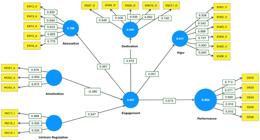
Figure 2 illustrates the model for the on-site work arrangement, providing insights into the relationships between engagement and performance in this context. It can be observed that engagement, composed of motivational regulations, amotivation, and intrinsic regulation, as well as its dimensions of vigor, dedication, and absorption, explains 45.40% of the individual performance construct in the on-site work arrangement.
This result indicates a moderate level of explanatory power for the individual performance construct. This finding is consistent with studies by Bakker et al. (2011) and Harter et al. (2002), which highlight the relationship between engagement and job performance. However, explaining less than half of the variance in performance suggests that other variables not included in the model may influence individual performance.
The explanatory power of 45.40% in the on-site arrangement provides a point of comparison for the other work arrangements. This value serves as a reference for assessing how engagement and performance dynamics may vary across different work contexts, as suggested by Knight et al. (2021) and Smite et al. (2023).
This result in the on-site arrangement supports the notion that face-to-face interaction and a shared physical work environment may facilitate aspects of engagement that translate into performance, as argued by Galanti et al. (2021). Nevertheless, the model also indicates room for further investigation into other factors that may complement the explanation of individual performance in project teams.
This analysis of the on-site arrangement establishes a basis for comparisons with the hybrid and remote work arrangements, enabling an understanding of how different work environments may shape the relationship between engagement and performance. This approach aligns with the recommendations of Raghuram et al. (2019) regarding the need to adapt management practices to different work contexts.
Next, the effect on the performance construct in the hybrid work arrangement is examined. Figure 3 presents the model applied to the context of the hybrid work arrangement.

Figure 3 presents information on the relationships between engagement and performance in this context. The results show that engagement, composed of motivational regulations, amotivation, and intrinsic regulation, as well as its dimensions of vigor, dedication, and absorption, explains 45.60% of the individual performance construct in the hybrid work arrangement.
This result indicates a moderate level of explanatory power for the individual performance construct in the hybrid arrangement. The finding is close to that observed in the on-site arrangement, suggesting consistency in the relationship between engagement and performance across these two contexts. This similarity aligns with the observations of Galanti et al. (2021) regarding the potential of hybrid work to maintain benefits associated with on-site interactions.
The explanatory power of 45.60% in the hybrid arrangement, similar to that of the on-site arrangement, suggests that the hybrid model may preserve the engagement and performance dynamics observed in the on-site environment. This finding supports the discussions of Knight et al. (2021) and Santos et al. (2023) on the effectiveness of engagement in environments that combine social interaction and organizational support.
However, as in the on-site arrangement, the model indicates that other variables not included may influence individual performance. This suggests the need for further investigations to identify complementary factors that explain performance in project teams within the hybrid context.
The similarity in results between the on-site and hybrid arrangements provides a basis for comparisons with the remote arrangement. This analysis contributes to understanding how different work configurations may affect the relationship between engagement and performance, aligning with the recommendations of Raghuram et al. (2019) regarding the adaptation of management practices to different work contexts.
Finally, the effect on the performance construct in the work from home arrangement is examined. Figure 4 presents the model applied to the context of the work from home arrangement.

Figure 4 presents the work from home arrangement, providing information on the relationships between engagement and performance. The main result shows that engagement, composed of motivational regulations, amotivation, and intrinsic regulation, as well as its dimensions of vigor, dedication, and absorption, explains 6.70% of the individual performance construct in the work from home arrangement.
This result indicates a low level of explanatory power for the individual performance construct in the work from home arrangement. This finding contrasts with those observed in the on-site and hybrid arrangements, suggesting a change in the relationship between engagement and performance in this context. This difference aligns with the observations of Smite et al. (2023) and Van Zoonen et al. (2021) regarding the specific challenges of remote work.
The explanatory power of 6.70% in the work from home arrangement, considerably lower than in the other arrangements, suggests that the traditional engagement model may not adequately capture performance dynamics in remote environments. This finding supports the discussions by Raghuram et al. (2019) on the need to rethink work and performance models in remote contexts.
The result indicates that other variables not included in the model may substantially influence individual performance in remote work. This suggests the need for further investigations to identify complementary factors that explain performance in project teams within the work from home context. Possible factors include self-management skills, technological competence, and the ability to maintain boundaries between work and personal life, as suggested by Gilson et al. (2021).
The discrepancy in results between the work from home arrangement and the on-site and hybrid arrangements provides a basis for a deeper analysis of the specific characteristics of remote work. This analysis contributes to understanding how different work configurations affect the relationship between engagement and performance, highlighting the importance of developing models tailored to the remote context.
7 Discussion
The analyses conducted using structural equation modeling indicate that the proposed model is valid, with the ability to explain 56% of engagement. This result is consistent with previous studies that highlight the relevance of intrinsic motivation and engagement in project teams (Bakker et al., 2011; Harter et al., 2002). The confirmation of the relationships between intrinsic regulation and engagement, and between amotivation and engagement, supports the principles of Self-Determination Theory (Ryan & Deci, 2017), reinforcing its applicability across different work arrangements.
The results support hypothesis H1, demonstrating a positive and significant influence of intrinsic motivational regulation on engagement across all work arrangements. This finding is consistent with the existing literature (Gagné & Deci, 2005; Olafsen et al., 2018) and suggests that, regardless of the work environment, intrinsically motivated individuals tend to exhibit higher levels of engagement. This underscores the importance of fostering autonomy and a sense of purpose among team members, including in remote or hybrid work contexts.
Hypothesis H2 was also confirmed, revealing a negative relationship between amotivation and engagement across all work arrangements. This finding aligns with prior studies (Deci & Olafsen, 2020; Smite et al., 2023) and highlights the need to identify and mitigate factors that contribute to amotivation, particularly in remote work environments, where isolation may intensify its negative effects.
Hypothesis H3 was partially supported, revealing significant variations across work arrangements. In the on-site arrangement, the relationship between engagement and performance was stronger, possibly due to the greater ease of face-to-face communication and immediate team support (Knight et al., 2021). In the hybrid arrangement, this relationship remained moderate, suggesting that the combination of on-site and remote interactions may preserve some of the benefits associated with engagement (Galanti et al., 2021).
However, in work from home, the relationship between engagement and performance proved to be weak, explaining only 6.7% of the variance in performance. This unexpected result suggests that other factors, such as autonomy, technological competence, or self-management capability, may play a more prominent role in individual performance in remote environments (Raghuram et al., 2019). This finding highlights the need to adapt management strategies and performance metrics to the remote work context.
The multigroup analysis reveals that, although the relationship between intrinsic motivation and engagement remains consistent across all work arrangements, the impact of engagement on performance varies considerably. This indicates that internal motivational mechanisms are robust despite changes in the work environment, whereas the translation of engagement into performance is more complex and context-dependent.
These findings have implications for the study’s objective. The results suggest that strategies aimed at promoting intrinsic motivation and reducing amotivation can be effective across all work arrangements. However, approaches to translating engagement into performance need to be adapted to the remote work context. This points to the need to develop project team management models for distributed environments that consider not only engagement but also additional factors that contribute to success in remote work settings.
8 Conclusions
This article aimed to address the following research question: “What is the impact of amotivation and intrinsic regulation on engagement, and of engagement on individual performance in project teams under on-site, hybrid, and remote work arrangements?” To answer this question, a multigroup analysis was conducted using partial least squares structural equation modeling (PLS-SEM), comparing the three work arrangements.
The results partially supported the proposed hypotheses. Intrinsic motivational regulation showed a positive and significant influence on engagement, whereas amotivation exhibited a negative relationship with engagement across all work arrangements, confirming H1 and H2. However, the relationship between engagement and individual performance (H3) was moderate in the on-site and hybrid arrangements but weak in the remote arrangement. These findings are consistent with Self-Determination Theory (Ryan & Deci, 2017) and prior studies on engagement (Schaufeli et al., 2002), while also revealing important nuances regarding the impact of the work arrangement.
Specifically, in the on-site arrangement, the relationship between engagement and performance was stronger, possibly due to the greater ease of face-to-face communication and immediate team support (Knight et al., 2021). In the hybrid arrangement, this relationship remained moderate, suggesting that the combination of on-site and remote interactions may preserve some of the benefits associated with engagement (Galanti et al., 2021). In contrast, in the remote arrangement, the weak relationship between engagement and performance indicates that other factors, such as autonomy, technological competence, or self-management capability, may play a more prominent role in individual performance (Raghuram et al., 2019). In addition, the consistency of the relationship between intrinsic motivation and engagement across all arrangements suggests that internal motivational mechanisms are robust despite changes in the work environment.
Conversely, the negative impact of amotivation on engagement, observed across all work arrangements, underscores the importance of management strategies aimed at minimizing lack of motivation, particularly in remote contexts, where isolation may intensify its effects (Smite et al., 2023).
This study has some limitations. The asymmetric distribution of respondents across different work arrangements may have influenced the analysis of relationships among variables. Moreover, the data were collected in 2023, a post-pandemic period characterized by potential cultural and behavioral instabilities in the work environment, which may have affected the results. The absence of specific mediation and moderation analyses related to work arrangements also limits a deeper understanding of the observed relationships.
This article contributes to the advancement of knowledge by demonstrating that intrinsic motivation drives engagement across all work arrangements, while the impact of engagement on performance varies substantially among them. In particular, the finding that engagement has a weak relationship with performance in the remote arrangement represents an important contribution, suggesting that other factors may be more relevant in this context.
The theoretical implications include the need to refine existing motivation and engagement models to better incorporate the specific characteristics of different work arrangements, especially remote work. From a practical perspective, the results suggest that project managers should adapt their motivation and engagement strategies according to the work arrangement, with particular attention to remote work, where engagement appears to have a reduced impact on performance.
For future research, it is recommended to investigate the mediating role of engagement in the relationship between intrinsic motivation and performance, considering the specific characteristics of hybrid and remote work arrangements. The inclusion of mediation and moderation analyses tailored to each work arrangement is also recommended to clarify how these arrangements influence the interactions among motivation, engagement, and performance. Additionally, longitudinal studies could provide insights into how these relationships evolve over time, particularly as organizations continue to adapt to new post-pandemic work models.
Acknowledgements
This study was carried out with the support of the Coordination for the Improvement of Higher Education Personnel, Brazil (CAPES).
Statement on Data Availability
The data used and analyzed in this study are available upon request from the corresponding authors.
Financial support:
How to cite:
References
- Angst, R., Benevides-Pereira, A., & Porto-Martins, P. (2009). UWES Manual – Portuguese BR Maringá: GEPEB.
-
Bailey, C., Madden, A., Alfes, K., & Fletcher, L. (2019). The meaning, antecedents, and outcomes of employee engagement: A narrative synthesis. International Journal of Management Reviews, 21(1), 31-53. https://doi.org/10.1111/ijmr.12077
» https://doi.org/10.1111/ijmr.12077 -
Bakker, A. B., & Demerouti, E. (2008). Towards a model of work engagement. Career Development International, 13(3), 209-223. https://doi.org/10.1108/13620430810870476
» https://doi.org/10.1108/13620430810870476 -
Bakker, A. B., & Demerouti, E. (2014). Job demands–resources theory. In P. Y. Chen, & C. Cooper (Eds.), Wellbeing: a complete reference guide (pp. 1-28). Hoboken: Wiley-Blackwell. DOI: https://doi.org/10.1002/9781118539415.wbwell019
» https://doi.org/10.1002/9781118539415.wbwell019 -
Bakker, A. B., Albrecht, S. L., & Leiter, M. P. (2011). Key questions regarding work engagement. European Journal of Work and Organizational Psychology, 20(1), 4-28. https://doi.org/10.1080/1359432X.2010.485352
» https://doi.org/10.1080/1359432X.2010.485352 -
Bakker, A. B., Demerouti, E., & Schaufeli, W. B. (2020). Job demands–resources theory: taking stock and looking forward. Journal of Occupational Health Psychology, 25(1), 10-24. https://doi.org/10.1037/ocp0000171 PMid:27732008.
» https://doi.org/10.1037/ocp0000171 -
Bick, A., Blandin, A., & Mertens, K. (2020). Work from home after the COVID-19 outbreak Dallas: Federal Reserve Bank of Dallas. https://doi.org/10.24149/wp2017
» https://doi.org/10.24149/wp2017 -
Borsa, J.C., Damásio, B.F., & Bandeira, D.R. (2012). Cross-cultural adaptation and validation of psychological instruments: some considerations. Paidéia, 22(53), 423-432. https://doi.org/10.1590/S0103-863X2012000300014
» https://doi.org/10.1590/S0103-863X2012000300014 - Byrne, B.M. (2006). Structural equation modeling with EQS: Basic concepts, applications, and programming (2nd ed.). New York: Psychology Press.
-
Camargo, J. (2023, June 13). Fim do home office: profissionais preferem ficar desempregados a voltarem para presencial [End of home office: professionals prefer to be unemployed rather than return to face-to-face work]. Money Times. Retrieved in 2025, February 21, from https://www.moneytimes.com.br/fim-do-home-office-profissionais-preferem-ficar-desempregados-a-voltarem-para-presencial-entenda/
» https://www.moneytimes.com.br/fim-do-home-office-profissionais-preferem-ficar-desempregados-a-voltarem-para-presencial-entenda/ - Campbell, J. P. (1990). Modeling the performance prediction problem in industrial and organizational psychology. In M. D. Dunnette & L. M. Hough (Eds.),Handbook of industrial and organizational psychology(2nd ed., pp. 687-732). Palo Alto, CA: Consulting Psychologists Press.
-
Cerasoli, C. P., Nicklin, J. M., & Ford, M. T. (2014). Intrinsic motivation and extrinsic incentives jointly predict performance: A 40-year meta-analysis. Psychological Bulletin, 140(4), 980-1008. https://doi.org/10.1037/a0035661 PMid:24491020.
» https://doi.org/10.1037/a0035661 -
Crowne, D. P., & Marlowe, D. (1960). A new scale of social desirability independent of psychopathology. Journal of Consulting Psychology, 24(4), 349-354. https://doi.org/10.1037/h0047358 PMid:13813058.
» https://doi.org/10.1037/h0047358 - Deci, E. L., & Olafsen, A. H. (2020). Self-determination theory in work organizations: the state of a science. Annual Review of Organizational Psychology and Organizational Behavior, 7, 19-43. http://doi.org/10.1146/annurev-orgpsych-012119-044527.
-
Deci, E. L., & Ryan, R. M. (1985). Intrinsic motivation and self-determination in human behavior New York: Springer US. https://doi.org/10.1007/978-1-4899-2271-7
» https://doi.org/10.1007/978-1-4899-2271-7 - DeVellis, R. F. (2016). Scale development: theory and applications Thousand Oaks: Sage Publications.
-
Dillman, D. A., Smyth, J. D., & Christian, L. M. (2014). Internet, phone, mail, and mixed-mode surveys: The tailored design method Hoboken: Wiley.. https://doi.org/10.1002/9781394260645
» https://doi.org/10.1002/9781394260645 -
Efron, B., & Tibshirani, R. J. (1994). An introduction to the bootstrap Boca Raton: CRC Press.. https://doi.org/10.1201/9780429246593
» https://doi.org/10.1201/9780429246593 -
Fadzilah, N., Hanafi, M., Fatimah, S., Rahmat, N., Kadar, A., Athirah, A. (2021). A study of work from home motivation among employees. International Journal of Asian Social Science, 11(8), 388-398. https://doi.org/10.18488/journal.1.2021.118.388.398
» https://doi.org/10.18488/journal.1.2021.118.388.398 -
Faul, F., Erdfelder, E., Lang, A. G., & Buchner, A. (2007). G* Power 3: A flexible statistical power analysis program for the social, behavioral, and biomedical sciences. Behavior Research Methods, 39(2), 175-191. https://doi.org/10.3758/BF03193146 PMid:17695343.
» https://doi.org/10.3758/BF03193146 -
Forza, C. (2002). Survey research in operations management: a process‐based perspective. International Journal of Operations & Production Management, 22(2), 152-194. https://doi.org/10.1108/01443570210414310
» https://doi.org/10.1108/01443570210414310 - Fowler, F. J. (2014). Survey research methods Thousand Oaks: Sage Publications.
-
Gagné, M., & Deci, E. L. (2005). Self-determination theory and work motivation. Journal of Organizational Behavior, 26(4), 331-362. https://doi.org/10.1002/job.322
» https://doi.org/10.1002/job.322 -
Gagné, M., Forest, J., Vansteenkiste, M., Crevier-Braud, L., van den Broeck, A., Aspeli, A. K., Bellerose, J., Benabou, C., Chemolli, E., Güntert, S. T., Halvari, H., Indiyastuti, D. L., Johnson, P. A., Molstad, M. H., Naudin, M., Ndao, A., Olafsen, A. H., Roussel, P., Wang, Z., & Westbye, C. (2015). Multidimensional work motivation scale. European Journal of Work and Organizational Psychology, 24(2), 178-196. https://doi.org/10.1080/1359432X.2013.877892
» https://doi.org/10.1080/1359432X.2013.877892 -
Galanti, T., Guidetti, G., Mazzei, E., Zappalà, S., & Toscano, F. (2021). Work from home during the COVID-19 outbreak: the impact on employees’ remote work productivity, engagement, and stress. Journal of Occupational and Environmental Medicine, 63(7), e426-e432. https://doi.org/10.1097/JOM.0000000000002236 PMid:33883531.
» https://doi.org/10.1097/JOM.0000000000002236 - Gilson, L. L., Maynard, M. T., Jones Young, N. C., Vartiainen, M., & Hakonen, M. (2021). Virtual teams research: 10 years, 10 themes, and 10 opportunities. Journal of Management, 47(1), 131-156. http://doi.org/10.1177/0149206320981781.
-
Griffin, M. A., Neal, A., & Parker, S. K. (2007). A new model of work role performance: positive behavior in uncertain and interdependent contexts. Academy of Management Journal, 50(2), 327-347. https://doi.org/10.5465/amj.2007.24634438
» https://doi.org/10.5465/amj.2007.24634438 -
Hair, J. F., Sarstedt, M., Hopkins, L., & Kuppelwieser, V. G. (2014). Partial least squares structural equation modeling (PLS-SEM). European Business Review https://doi.org/10.1108/EBR-10-2013-0128
» https://doi.org/10.1108/EBR-10-2013-0128 -
Handke, L., Klonek, F. E., Parker, S. K., & Kauffeld, S. (2020). Interactive effects of team virtuality and work design on team functioning. Small Group Research, 51(1), 3-47. https://doi.org/10.1177/1046496419863490
» https://doi.org/10.1177/1046496419863490 -
Harter, J. K., Schmidt, F. L., & Hayes, T. L. (2002). Business-unit-level relationship between employee satisfaction, employee engagement, and business outcomes: A meta-analysis. The Journal of Applied Psychology, 87(2), 268-279. https://doi.org/10.1037/0021-9010.87.2.268 PMid:12002955.
» https://doi.org/10.1037/0021-9010.87.2.268 -
Henseler, J., & Chin, W. W. (2010). A comparison of approaches for the analysis of interaction effects. Structural Equation Modeling, 17(1), 82-109. https://doi.org/10.1080/10705510903439003
» https://doi.org/10.1080/10705510903439003 -
Kniffin, K. M., Narayanan, J., Anseel, F., Antonakis, J., Ashford, S. P., Bakker, A. B., Bamberger, P., Bapuji, H., Bhave, D. P., Choi, V. K., Creary, S. J., Demerouti, E., Flynn, F. J., Gelfand, M. J., Greer, L. L., Johns, G., Kesebir, S., Klein, P. G., Lee, S. Y., Ozcelik, H., Petriglieri, J. L., Rothbard, N. P., Rudolph, C. W., Shaw, J. D., Sirola, N., Wanberg, C. R., Whillans, A., Wilmot, M. P., & Vugt, M. V. (2021). COVID-19 and the workplace: Implications, issues, and insights for future research and action. The American Psychologist, 76(1), 63-77. https://doi.org/10.1037/amp0000716 PMid:32772537.
» https://doi.org/10.1037/amp0000716 -
Knight, C., Patterson, M., & Dawson, J. (2021). Building work engagement: A systematic review and meta-analysis investigating the effectiveness of work engagement interventions. Journal of Organizational Behavior, 42(7), 946-964. https://doi.org/10.1002/job.2520 PMid:28781428.
» https://doi.org/10.1002/job.2520 -
Kolodinsky, R. W., Ritchie, W. J., & Kuna, W. A. (2018). Meaningful engagement: impacts of a ‘calling’ work orientation and perceived leadership support. Journal of Management & Organization, 24(3), 406-423. https://doi.org/10.1017/jmo.2017.19
» https://doi.org/10.1017/jmo.2017.19 -
Mehta, P. (2021). Work from home: work engagement amid COVID-19 lockdown and employee happiness. Journal of Public Affairs, 21(4), e2709. https://doi.org/10.1002/pa.2709 PMid:34220347.
» https://doi.org/10.1002/pa.2709 - Organisation for Economic Co-operation and Development – OECD. (2020). digital transformation in the age of COVID-19: building resilience and bridging divides Paris: OECD.
-
Olafsen, A. H., Deci, E. L., & Halvari, H. (2018). Basic psychological needs and work motivation: A longitudinal test of directionality. Motivation and Emotion, 42(2), 178-189. https://doi.org/10.1007/s11031-017-9646-2
» https://doi.org/10.1007/s11031-017-9646-2 -
Ozkan, N., Erdil, O., & Gök, M. Ş. (2022). Agile teams working from home during the COVID-19 pandemic: A literature review on new advantages and challenges. Lecture Notes in Business Information Processing, 438, 38-60. https://doi.org/10.1007/978-3-030-94238-0_3
» https://doi.org/10.1007/978-3-030-94238-0_3 - Pinder, C. C. (1998). Work motivation in organizational behavior Upper Saddle River, NJ: Prentice Hall.
-
Podsakoff, P. M., MacKenzie, S. B., Lee, J. Y., & Podsakoff, N. P. (2003). Common method biases in behavioral research: A critical review of the literature and recommended remedies. The Journal of Applied Psychology, 88(5), 879-903. https://doi.org/10.1037/0021-9010.88.5.879 PMid:14516251.
» https://doi.org/10.1037/0021-9010.88.5.879 -
Raghuram, S., Hill, N. S., Gibbs, J. L., & Maruping, L. M. (2019). Virtual work: bridging research clusters. The Academy of Management Annals, 13(1), 308-341. https://doi.org/10.5465/annals.2017.0020
» https://doi.org/10.5465/annals.2017.0020 -
Resnik, D. B. (2018). The ethics of research with human subjects: Protecting people, advancing science, promoting trust (Vol. 74). Berlin: Springer.. https://doi.org/10.1007/978-3-319-68756-8
» https://doi.org/10.1007/978-3-319-68756-8 - Ringle, C. M., Wende, S., & Becker, J.-M. (2015). SmartPLS 3.0 Bönningstedt: SmartPLS GmbH.
-
Ryan, R. M., & Deci, E. L. (2017). Self-determination theory: Basic psychological needs in motivation, development, and wellness New York: Guilford Publications. https://doi.org/10.1521/978.14625/28806
» https://doi.org/10.1521/978.14625/28806 -
Santos, R. B. M. D., Figueiredo, P. S., & Marques, F. T. (2023). Challenges to agile software project management practices in the context of the COVID-19 pandemic. Gestão & Produção, 30, e9722. https://doi.org/10.1590/1806-9649-2022v29e9722
» https://doi.org/10.1590/1806-9649-2022v29e9722 -
Santos, N. R., Mónico, L., Pais, L., Gagné, M., Forest, J., Cabral, P. M. F., & Ferraro, T. (2022). The multidimensional work motivation scale: psychometric studies in Portugal and Brazil. Management Research: Journal of the Iberoamerican Academy of Management, 20(2), 89-110. https://doi.org/10.1108/MRJIAM-07-2021-1206
» https://doi.org/10.1108/MRJIAM-07-2021-1206 -
Sarstedt, M., Henseler, J., & Ringle, C. M. (2011). Multigroup analysis in partial least squares (PLS) path modeling: alternative methods and empirical results. Advances in International Marketing, 22, 195-218. https://doi.org/10.1108/S1474-7979(2011)0000022012
» https://doi.org/10.1108/S1474-7979(2011)0000022012 -
Schaufeli, W. B., Salanova, M., González-Romá, V., & Bakker, A. B. (2002). The measurement of engagement and burnout: A two-sample confirmatory factor analytic approach. Journal of Happiness Studies, 3(1), 71-92. https://doi.org/10.1023/A:1015630930326
» https://doi.org/10.1023/A:1015630930326 -
Smite, D., Moe, N. B., Hildrum, J., Gonzalez-Huerta, J., & Mendez, D. (2023). Work-from-home is here to stay: call for flexibility in post-pandemic work policies. Journal of Systems and Software, 195, 111552. https://doi.org/10.1016/j.jss.2022.111552 PMid:36320721.
» https://doi.org/10.1016/j.jss.2022.111552 -
Turner, J. R., & Müller, R. (2003). On the nature of the project as a temporary organization. International Journal of Project Management, 21(1), 1-8. https://doi.org/10.1016/S0263-7863(02)00020-0
» https://doi.org/10.1016/S0263-7863(02)00020-0 -
Van Zoonen, W., Sivunen, A., & Rice, R. E. (2021). Boundary communication: how smartphone use after hours is associated with work-life conflict and organizational identification. The Journal of Applied Psychology, 106(4), 495-506. https://doi.org/10.1037/apl0000500
» https://doi.org/10.1037/apl0000500 -
Van Dyne, L., & LePine, J. A. (1998). Helping and voice extra-role behaviors: evidence of construct and predictive validity. Academy of Management Journal, 41(1), 108-119. https://doi.org/10.2307/256902
» https://doi.org/10.2307/256902 -
Viana, L. P., Chitó, R. É., & Hoffmeister, D. (2022). A percepção da liderança sobre a produtividade no trabalho híbrido: um estudo de caso no setor bancário. Cippus, 10(1), 1-15. https://doi.org/10.18316/cippus.v10i1.9736
» https://doi.org/10.18316/cippus.v10i1.9736
Editor-in-Chief


