 Healthcare supply chain resilience during the COVID-19 pandemic: PPE procurement challenges and strategies
Abstract:
The COVID-19 pandemic exposed critical vulnerabilities in hospital supply chains, especially in developing countries with limited procurement agility. This study analyzes how public and private healthcare institutions responded to disruptions in the supply chain of pandemic personal protective equipment (PPE), based on a structured survey conducted with hospital managers and representatives from the regional health authority in southern Brazil. The findings reveal institutional asymmetries in demand forecasting, supplier diversification, and technological integration. Procurement resilience was influenced more by managerial flexibility and inter-institutional collaboration than using digital tools. By addressing local governance in public procurement under emergency conditions, this research offers an empirical contribution from a Global South perspective, highlighting adaptive and collaborative mechanisms as key factors for strengthening hospital supply chains during crises. The results contribute to the literature on humanitarian logistics and disaster preparedness, with implications for decentralized health systems. This study also supports progress toward Sustainable Development Goal 3 (Good Health and Well-Being), by promoting strategies that ensure equitable access to medical supplies in critical situations.
Keywords:
Humanitarian logistics; Healthcare supply chain; Supply chain resilience; Procurement strategies
Resumo:
A pandemia de COVID-19 evidenciou vulnerabilidades críticas nas cadeias de suprimentos hospitalares, especialmente em países em desenvolvimento com baixa agilidade nos processos de aquisição. Este estudo investiga como instituições de saúde de Maringá, cidade de médio porte no sul do Brasil, responderam às rupturas no fornecimento de equipamentos de proteção individual (EPIs), a partir de uma survey estruturada aplicada a gestores hospitalares e representantes da autoridade regional de saúde. Os resultados revelam assimetrias institucionais quanto à previsão de demanda, diversificação de fornecedores e integração de tecnologias. A resiliência nos processos de aquisição foi influenciada mais pela flexibilidade gerencial e colaboração interinstitucional do que pelo uso de ferramentas digitais. Ao abordar a governança local das compras públicas em situação de emergência, esta pesquisa oferece uma contribuição empírica relevante desde a perspectiva do Sul Global, destacando mecanismos adaptativos e colaborativos como fatores-chave para fortalecer cadeias de suprimentos hospitalares em crises. Os achados contribuem para os debates sobre logística humanitária e preparação para desastres, com implicações para sistemas de saúde descentralizados. Este estudo também apoia o avanço do Objetivo de Desenvolvimento Sustentável 3 (Saúde e Bem-Estar), ao promover estratégias para garantir o acesso equitativo a insumos médicos em situações críticas.
Palavras-chave:
Logística humanitária; Cadeia de suprimentos hospitalar; Resiliência da cadeia de suprimentos; Estratégias de aquisição
1 Introduction
Pre-existing weaknesses in the Personal Protective Equipment (PPE) supply chain include overreliance on a limited number of global suppliers, inventory systems focused on efficiency over resilience, and a lack of diversification and redundancy to mitigate risk. These structural issues limited the ability of health systems to respond effectively to large-scale health crises. According to Pompeu & Slovic (2023), the COVID-19 pandemic exposed and deepened these vulnerabilities through a sudden surge in demand, panic buying, export restrictions, and logistical disruptions, leading to critical PPE shortages. Moreover, the crisis exacerbated global inequalities in access to PPE, especially in low- and middle-income countries, where insufficient infrastructure and weak coordination for maintaining and distributing existing stocks worsened the situation.
The World Health Organization (WHO) and the Centers for Disease Control and Prevention (CDC) were quick to recommend the use of face masks as an effective measure in reducing transmission of the virus since the beginning of the pandemic. However, this recommendation has met with resistance or a lack of adherence in several parts of the world. Factors such as misinformation, ingrained cultural beliefs, the spread of misinformation about the effectiveness of masks, and discussions around individual rights have influenced people's decisions on whether to wear masks.
In this context, the WHO has issued comprehensive guidelines regarding the use of PPE, highlighting its effectiveness in preventing the spread of the virus. At the same time, the United Nations (UN) launched a Global Humanitarian Response Plan to COVID-19, underlining the urgency of coordinated action on an international scale. On the national scene, Brazil has implemented a series of legislative measures, including Law No. 1.036 (Brasil, 2021), seeking to address the public health emergency associated with the coronavirus.
Internationally, supply chain challenges were also evident. In India, lockdowns caused labor shortages and transportation barriers, severely impacting firms operating with minimal stock levels (Sharma et al., 2020). According to Cohen & van der Meulen Rodgers (2020), the global PPE supply chain has been disrupted by the COVID-19 pandemic, with many countries restricting PPE exports to meet domestic needs. The author further states that China is a global leader in the production of a wide range of manufactured goods, including protective face masks, gloves, and protective gowns. Even with the emergence of other low-cost exporters, China dominates the global PPE export market. One of the contributions to the shortage of PPE in the United States during the COVID-19 outbreak was the sudden increase in demand from the healthcare system and the public (Handfield et al., 2022).
Among the various special situations resulting from COVID-19, panic buying is one of them that generates anxiety, fear, panic, and agitation. This phenomenon can happen in response to the impending catastrophe that can increase the price and take necessary goods out of people's hands (Arafat et al., 2021). While panic buying behaviors marked the initial stages of the crisis, the sustained increase in demand was also due to stricter infection control protocols and broader PPE usage among hospital staff. As Patel et al. (2017) emphasize, during public health emergencies, PPE demand surges not only as an immediate reaction but also as a systemic necessity, as more employees require protective equipment under elevated safety standards. This combination of behavioral and institutional pressures contributed to prolonged supply shortages and procurement challenges.
The study by Chadwick et al. (2022) states that information from the media and other people (friends and public people) increased the fears of limited access to products as the pandemic continued to spread and increased the likelihood of procuring larger quantities than usual. Therefore, government institutions have had difficulty disseminating pandemic-related recommendations through media organizations, due to the relatively low trust and their role in not only increasing the likelihood of fears about product availability but also causing panic buying behaviors.
The shortage of PPE in Brazil and in several parts of the world was driven by the sudden and intense demand for these products, leading to supply problems. Large-scale production of masks, initially unable to meet global demand, has resulted in rising prices and shortages, especially among health workers and vulnerable groups.
Livingston et al. (2020) report that this intensified search for PPE has resulted in shortages, affecting the availability of the product in the market. Specifically, hospitals, as sectors of extreme importance on the front lines of the fight against the pandemic, have shown a preference in their procurement, often facing difficulties in securing adequate supplies for their health professionals and patients. In addition, national press reports highlighted the difficulties faced by the country's hospitals in securing basic supplies for the care of COVID-19 patients, underscoring the pressing need for these resources to ensure the safety of both healthcare workers and patients amid PPE shortages.
Compared to countries that adopted swift containment measures, such as South Korea and New Zealand, Brazil experienced a more severe health crisis. By the end of 2020, Brazil had recorded over 200,000 COVID-19-related deaths and more than 7 million confirmed cases, with mortality rates surpassing those of many European countries (WHO, 2020). The country’s continued reliance on global supply chains, while others expanded domestic production and secured bilateral agreements, exacerbated PPE shortages. This hampered the protection of frontline workers and weakened Brazil’s overall pandemic response.
Given this context, the research question guiding this study is: How did hospital procurement systems in a southern Brazilian city respond to disruptions in the PPE supply chain during the COVID-19 crisis? The general objective of this study is to analyze how public and private healthcare institutions responded to disruptions in the supply chain of PPE during the COVID-19 pandemic, focusing on institutional adaptive capacities, collaboration mechanisms, and key factors influencing procurement resilience.
To address this objective, the study uses a survey-based methodology applied to hospital managers in public and private institutions in a mid-sized city in southern Brazil. The research is limited to the period between 2020 and 2021 and focuses specifically on the supply and management of hospital PPE.
The article is structured as follows: Section 2 presents the literature review; Section 3 details the methodology; Section 4 discusses the results; Section 5 presents the discussion; and Section 6 concludes with final considerations.
2 Theoretical foundations
As the pandemic progressed, the demand for PPE increased drastically, leading to widespread shortages of these essential items. Panicbuying, exacerbated by alarming information on social media, significantly contributed to the instability of supply chains, resulting in stockouts and hindering healthcare professionals' access to PPE (Sigala et al., 2022). In the Brazilian context, Yoshizaki et al. (2020) empirically demonstrated that panic buying in São Paulo, intensified by misinformation and amplified through social networks, led to abrupt spikes of up to 175% in sales of essential goods during the days preceding the first lockdown. This behavior strained retail and hospital supply chains, revealing how fear-driven consumption patterns and the absence of rationing policies aggravated stockouts and disrupted logistics operations.
Furthermore, the pandemic revealed new vulnerabilities, such as the critical dependence on foreign suppliers and the lack of centralized coordination in managing strategic inventories. Export restrictions imposed by some countries worsened the global shortage, highlighting the need to diversify supply sources and strengthen local production of these items (Ash et al., 2023). According to Koppenberg et al. (2020), temporary export bans imposed by major grain-producing countries during COVID-19 generated global supply instability, indirectly affecting food and input availability in nations like Brazil, where logistical bottlenecks and port delays further exposed the fragility of trade-dependent sectors. Even though Brazil maintained open export channels, the international disruptions emphasized its vulnerability to external market shocks and the limited national capacity for emergency production.
The literature has significantly contributed to understanding the logistical challenges faced by healthcare institutions, particularly highlighting the specificities of the hospital context. Recent publications reinforce this perspective by exploring how integrated approaches can enhance hospital efficiency, patient satisfaction, and service quality. Oliveira et al. (2024) demonstrate that combining Discrete Event Simulation (DES) with Data Envelopment Analysis (DEA) enables performance optimization in emergency departments through scenario testing and resource utilization. Similarly, Marcato et al. (2023) highlight the role of relational factors—such as empathy and responsiveness—in shaping patient satisfaction, even under perceived overcrowding. Furthermore, Bernardo et al. (2022) emphasize the need to incorporate subjective dimensions in patient experience metrics, suggesting that operational performance must be complemented by humanized care to improve health systems holistically.
In addition to structural and operational weaknesses, the Brazilian health system was also undermined by misinformation during the pandemic. Galhardi et al. (2022) found that disinformation disseminated through social media, especially Facebook and WhatsApp, undermined public trust in preventive measures and vaccination campaigns, fostering confusion and resistance among citizens and professionals. This “infodemic” directly influenced the procurement and distribution of PPE and medical supplies, as inconsistent guidance and politicized narratives delayed coordinated actions across government levels.
In Brazil, the COVID-19 pandemic exposed vulnerabilities in the healthcare supply chain, such as panic buying of PPE, dependence on imported supplies constrained by export restrictions, and procurement distortions fueled by misinformation. Addressing these challenges requires technological adoption and the development of resilience abilities. Focusing on the Brazilian healthcare supply chain during COVID-19, Tortorella et al. (2024) show that adopting Industry 4.0 technologies improves performance, but its impact is significantly amplified when resilience abilities are developed in parallel. Adaptive and restorative abilities played a more prominent role than anticipation and monitoring, highlighting the need for capabilities that enable rapid recovery and flexibility in crisis contexts.
At this stage of the research, a literature review was conducted to comprehensively map and analyze relevant studies and articles related to the theme of hospital and humanitarian supply chain disruption during COVID-19. The articles were analyzed qualitatively, seeking to understand their contributions, and were divided according to the main subject of the study into the following areas: supply chain disruption, supply chain resilience, smart supply chain, demand, procurement, and public-private collaborations.
2.1 Supply chain disruption
The studies analyzed explore various challenges and solutions to mitigate disruptions in the supply chain. One of the main points addressed is the need for coordinated measures between different countries and sectors to prevent initial disruptions from spreading through the chain, creating cycles of scarcity and delays (Chukwuka et al., 2023). The importance of improving accuracy in logistics response time was also identified, especially in the therapeutic supply sector, where accuracy can be increased with the use of historical data and more advanced solutions (Mariappan et al., 2023; Nguyen et al., 2023; Sigala et al., 2022)
In addition, the detection of anomalies in logistics data and the use of predictive models are seen as valuable tools to anticipate disruptions in the supply of medicines (Baloch et al., 2023). In the context of emergencies, supply chain risks were classified into internal and external factors, with emphasis on issues such as wars and natural disasters (Ahlqvist et al., 2023). Strategies such as budget optimization and accurate resource allocation, especially in pandemic situations, are essential to minimize the impact of crises, as well as highlighting the importance of collaboration between different parts of the chain to maximize efficiency and profits (Bian et al., 2021)
Examining the early COVID-19 response in the United States, Thompson & Anderson (2021) reveal critical vulnerabilities in humanitarian supply chains and propose thematic research lines to enhance resilience. Their analysis underscores the interconnectedness between pandemics, complex disasters, global supply chains, and environmental factors, framing future challenges as systemic rather than isolated events.
Moreover, these strategies highlight the importance of collaboration between different parts of the chain to maximize efficiency and profits, as emphasized by Fan et al. (2023). The COVID-19 pandemic further underscored the vulnerability of healthcare operations, with significant implications on resource scarcity and demand fluctuations. Leite et al. (2020) argue that healthcare organizations, professionals, and governments must anticipate these operational and economic impacts and reassess their plans to handle such adverse events effectively.
2.2 Supply chain resilience
The studies highlight resilience strategies to face crises, with emphasis on the COVID-19 pandemic. Key approaches include agility, collaboration, and flexibility in the supply chain. Collaboration, while critical, did not necessarily ensure greater visibility during the pandemic, underscoring the need to improve traceability and diversify the origin of resources (Finkenstadt & Handfield, 2021). Strategies such as the use of redundant materials helped to avoid supply shortages, while education of health personnel and early assignment of roles were identified as essential for efficient response (Okeagu et al., 2021).
In the context of healthcare, Beaulieu et al. (2022) emphasized the importance of supporting investments in new information technologies and providing training for logistics staff in healthcare settings. They also highlighted the need for public decision-makers to implement new practices with suppliers to improve the management of personal protective equipment. Technology has played a crucial role in enabling the prediction of shortages and optimizing supply management processes, as pointed out by Scala & Lindsay (2021). Supply chain resilience depends on factors such as responsiveness, sustainability, and safety. Resilience plans have been developed to mitigate the impacts of the pandemic, but their practical application is still limited (Zamiela et al., 2022). New management models propose greater visibility, speed, and global independence, with the introduction of advanced technologies and information sharing to improve performance (Arji et al., 2023). In sectors such as the production of face masks, worker safety, and good behavior in the workplace were considered the most important factors for success, emphasizing the importance of a humane and sustainable approach in the supply chain (Handfield et al., 2022; Kumar et al., 2023; Nayeri et al., 2023). The use of causal loop diagrams allows the identification of critical interdependencies and bottlenecks in humanitarian supply chains, supporting more resilient decision-making processes (Assumpção et al., 2024).
2.3 Smart supply chain
The studies discuss the impact of emerging technologies, such as blockchain and artificial intelligence (AI), on supply chain and healthcare management. Blockchain integration is seen as a solution that promotes transparency, traceability, and immutability of data, as well as improving communication between stakeholders (Omar et al., 2021). With smart contracts, it is possible to manage transactions in a decentralized way, ensuring greater control and security (Zahedi et al., 2021). In the healthcare sector, the use of AI has the potential to optimize the prediction of bed occupancy and the distribution of medical resources, especially in times of crisis, in addition to reducing the asymmetry of information between suppliers and operators (Cannavale et al., 2022; Omar et al., 2022).
In addition, the analysis of disruptive incidents in the supply chain reveals that lead time and laboratory supply were the most impacted, generating a shortage of reagents and increased prices (Azadi et al., 2023). Technologies such as blockchain have also been applied to track batches of vaccines, improving security and preventing counterfeits (Jebbor et al., 2022). AI-based forecasting is another important solution, allowing for the efficient allocation of medical facilities and customization of services according to patients' needs, which helps to avoid waste and shortages of medicines and equipment (Alajmi et al., 2021; Ramirez Lopez et al., 2022).
According to Bhaskar et al. (2020), an open innovation approach at scale, which can provide protection to the system in the event of an acute and prolonged need, should be part of future global supply chain systems. This would ensure the continuous supply of essential healthcare supplies and the resilience of healthcare systems. Technologies like blockchain could serve as enablers to further improve the efficiency of these supply chains.
Beyond technological automation, innovative learning tools such as serious games have been used to simulate humanitarian logistics under severe supply constraints. These simulations help professionals experience decision-making under scarcity, fostering adaptability and strategic thinking (Ducatti et al., 2025). Such approaches conceptually mirror the challenges faced by hospitals during the COVID-19 pandemic, where PPE shortages demanded rapid, coordinated responses under limited resources.
A quantitative approach to pandemic response incorporates not only traditional logistics costs but also social costs such as deprivation and equity. Using GAMS-based simulations, Malmir & Zobel (2021) show that, in some cases, prioritizing rapid relief to reduce human suffering may outweigh minimizing transportation costs.
2.4 Demand
The studies look at how the COVID-19 pandemic has exposed weaknesses in supply chains, especially in the procurement of PPE and medical supplies. The growing reliance on suppliers has led to quality issues, rising prices, and political interference, with companies facing restrictions on procuring essential products (Gonzatto Junior et al., 2022; Sawyerr & Harrison, 2022). To address the shortage, some companies have adopted unsanctioned practices, such as the prolonged use of PPE and expired equipment, which have compromised safety. Given this, strategies such as the creation of safety stocks and the diversification of suppliers have been proposed to mitigate these problems (Spieske et al., 2022).
Moreover, the impact of prioritization on the allocation of PPE was highlighted, with the need to establish an emergency management infrastructure to increase the resilience of the health system. Direct contracts with manufacturers and the diversification of supply sources, including contracting with local suppliers, have been identified as effective measures to address increased demand and avoid supply disruptions during future crises (Baloch et al., 2022; Snowdon and Wright, 2022).
Patel et al. (2017) highlight structural vulnerabilities, including the limited production capacity of PPE suppliers and the offshoring of manufacturing, which severely hinder emergency responsiveness. Furthermore, they note that demand increases due to panic behavior and elevated usage protocols, and broader occupational exposure within healthcare settings. These insights reinforce the importance of strategic preparedness and supply chain resilience under crisis conditions.
2.5 Procurement
The studies highlight the importance of prior preparation and adaptability in managing crises, such as pandemics, to ensure the effective procurement of medical products and emergency supplies. In addition, cost stability is pointed out as an essential factor in the selection of sustainable suppliers, with an emphasis on continuous improvement and quality control (Harland et al., 2021). The need for flexibility in regulations and agility in decision-making during crises is equally important for procurement professionals to be able to deal with supply system failures and quickly rely on new suppliers (Debnath et al., 2023).
Other strategies include pre-positioning emergency supplies with pre-purchase contracts to minimize costs and losses in sudden disasters and implementing internal procurement controls and standardization of materials to improve performance (Salarpour & Nagurney, 2021). Flexibility in contracts with suppliers and the dynamic adjustment of storage space are also pointed out as effective solutions to mitigate risks of scarcity or surplus in critical situations (Aghajani et al., 2023; Kochakkashani et al., 2023; Muhwezi et al., 2023).
The lessons learned thus far emphasize the need to recognize the strategic role of procurement, the empowerment of those responsible for purchasing, and the importance of formalized coordination mechanisms. However, these mechanisms do not guarantee effectiveness without trust among the different levels of governance (Vecchi et al., 2020).
2.6 Public-private collaboration
Studies state the importance of public-private collaboration in emergencies, such as disasters, and the need for effective outsourcing management, which goes beyond formal contracts to incorporate communication and collaboration across borders (Ash et al., 2022). Centralized inventory management by governments, as in the case of Canada, can help mitigate supply shortages and increase cost efficiency in adverse scenarios (Diehlmann et al., 2021). Furthermore, additional processes, such as product testing, are essential for reducing risks in temporary supply chains and ensuring the safety of consumers during crises, such as the COVID-19 pandemic (Schumacher et al., 2021)
3. Methodology
This research adopts an exploratory single-case study design (Yin, 2015), focusing on the healthcare supply chain of Maringá, a mid-sized city in southern Brazil, during the COVID-19 pandemic. The single-case approach is justified by the city's representative characteristics within the Brazilian healthcare system, including its hybrid public-private structure, regional relevance, and documented challenges in PPE procurement during the crisis. As recommended by Yin (2015), this design allows for an in-depth investigation of a contemporary phenomenon within its real-life context, particularly when the boundaries between the phenomenon and context are not clear. The case study is complemented by a structured survey applied to key institutional actors, enabling a more comprehensive understanding of procurement resilience while maintaining the depth and contextual richness typical of case study research.
In many cases, healthcare institutions had to adapt their procurement strategies to ensure a rapid supply of PPE, medications, and other essential supplies. The use of simplified procurement processes, such as the waiver of public bidding, was a measure adopted by many hospitals to ensure agility in purchasing materials, which brought new challenges in supplier management and inventory control.
Based on the literature review, the research methodology adopted for this study was a case study applied with a survey. The stages of the survey are mentioned in Figure 1.

Figure 1 shows that the survey research methodology, as described by Forza (2002), involves a structured process of data collection and analysis aimed at understanding the perceptions, attitudes, or behaviors of a population. The first step is to clearly define the research problem so that the questionnaire is developed to address relevant and measurable questions. Next, the survey is designed, typically with closed-ended questions to ensure standardized responses and facilitate quantitative analysis. It is essential to conduct a pilot test to ensure the questions are properly understood. After developing the survey, the sample is defined, and it must be representative of the target population. The sample can be selected using either probabilistic or non-probabilistic methods, depending on the research objectives. Data collection is carried out through interviews or questionnaire distribution, and Forza (2002) recommends follow-up to increase the response rate. Finally, the collected data is analyzed using statistical techniques, such as descriptive or inferential analysis, to conclude the behavior or attitudes of the studied population. This structured process allows survey research to provide meaningful insights into social or organizational phenomena with a solid quantitative foundation.
In line with the research objective, the Survey seeks to identify which pandemic response strategies were used by hospitals in the city in southern Brazil regarding the procurement of PPE and evaluate the resilience of these hospitals' supply chains during the period.
The city of Maringá was selected for this study due to its strategic location and regional importance within the Brazilian healthcare system. Located in southern Brazil, Maringá has a well-established healthcare infrastructure and represents a mid-sized city that faced logistical and administrative challenges during the COVID-19 pandemic.
This study involved interviews with three hospitals and one regional health authority, totaling four interviews, with one interview conducted with each respondent in 2024. This sample size is typical of exploratory studies, which aim to understand phenomena in specific contexts, although they do not allow for broad generalization of the results. The selection of this sample was based on the availability of information and the relevance of the institutions involved. Nonetheless, it is acknowledged that the findings are limited to Maringá’s specific context and should not be generalized to other locations without caution.
The interviews were conducted with managers responsible for supply chain operations and PPE management during the pandemic. The responses reflect both the personal opinions of the managers and the institutional policies and practices of each hospital. The limited number of respondents is an important consideration when discussing the validity and generalizability of the findings.
The respondents belong to the management of health areas, such as doctors with positions in the administrative area and superintendents. The sample in focus was composed of professionals in health management and had the support of the Regional Health Department.
To carry out the diagnosis of the main hospitals of the city, the questions will be directed to verify the actions, legislation, action plans, resources, and infrastructure, among other means, that demonstrate how hospitals responded to the COVID-19 pandemic.
For the application of the questionnaire, the option of sending an online form was chosen. The questions contained in the questionnaire are based on the contributions found in the literature by the systematic review. Thus, the questionnaire seeks to establish a diagnosis of the level of resilience found in the supply chain of the city's hospitals. For the composition of the questionnaire, questions related to smart supply chain technologies, procurement strategies, partnerships, and demand forecasting, among others, are observed.
For the construction of the questionnaire, the Google Forms platform was used. This platform was chosen due to the ease of submission, access by respondents, practicality of answering, access to the questionnaires answered, as well as the compilation of the resulting data.
After selecting the respondents, two types of survey form links were sent, these being e-mail and WhatsApp, and their completion via Google Forms was monitored during the period of sixty days. This monitoring aimed to verify the return of sending error addresses not found, and respondents' questions, among others.
After the questionnaire application phase, the data returned from the Google Forms platform was exported to a file in .xls format, which is the type of format used for files used in the Microsoft Excel software. The results obtained were compiled and arranged in tables containing the answers of all respondents to each question. This separation was carried out to facilitate the individual identification of each response and the qualitative analysis of the results obtained.
The analysis was carried out qualitatively, where it sought to identify the opinion of the respondents regarding the actions taken to diagnose the level of resilience of the hospital supply chain during the pandemic. As a data analysis tool, the Microsoft Excel tool was used, as it allows the construction of graphs, the performance of calculations, and the elaboration of spreadsheets to assist in the organization, interpretation, and analysis of data.
The managers were informed that their responses would be used exclusively for academic and research purposes. The interview environment was structured to encourage honest and thoughtful answers. Additionally, the interviews aimed at an open approach without pressure to ensure the genuine expression of the managers' opinions. However, due to the nature of the interviews and the lack of data triangulation, the responses were analyzed with caution, considering the potential for distortions arising from self-reporting.
4. Results
This section presents the empirical results of the study, focusing on the case of healthcare institutions in Maringá during the COVID-19 pandemic. It begins with an overview of Brazil’s healthcare system and the institutional framework that shaped the national and local responses to the crisis, followed by a contextualization of the city and the hospitals selected for analysis, emphasizing their governance structures and complementary roles in the health network. The results from the survey and interviews are then discussed according to key thematic categories derived from the literature review, such as supply chain disruption, resilience, demand forecasting, procurement, and public–private collaboration. Altogether, these analyses compose a comprehensive case study that captures the diversity of experiences, challenges, and adaptive strategies adopted by healthcare institutions during the pandemic.
4.1 Brazil's healthcare sector
The COVID-19 pandemic had a profound and prolonged impact on Brazil, beginning with the first confirmed death on March 12, 2020. The country quickly became one of the global epicenters, reaching one million confirmed cases by June 19, 2020, and recording 100,000 deaths by August 8, 2020 (Brasil, 2025). Subsequent waves intensified the crisis, with Brazil surpassing 600,000 deaths by October 8, 2021. Although the World Health Organization declared the end of the pandemic in May 2023, COVID-19 continued to circulate, albeit with significantly reduced case numbers and fatalities by 2024 (Brasil, 2025).
The Maringá city was among the many Brazilian municipalities affected by shortages of personal protective equipment PPE and served as a relevant case for analyzing how local healthcare institutions managed such difficulties. Furthermore, the public policies adopted in Maringá reflect characteristics common to other similarly sized cities, making the findings relevant to a broader audience beyond the local context.
A hybrid model characterizes the healthcare sector in Brazil, with the coexistence of public and private services. The Brazilian Unified Health System (SUS) is responsible for ensuring universal and free access to medical care, playing a crucial role in assisting the population in various situations, including emergencies and pandemics. During the COVID-19 pandemic, SUS faced significant logistical challenges, especially in the procurement of medical equipment and supplies, such as personal PPE, to meet emergency demand.
Additionally, the Brazilian healthcare sector has a complex procurement process, which involves several bureaucratic stages, from the definition of needs to the bidding process and supplier contracts. This system, while essential for ensuring transparency and the proper allocation of public resources, can be slow and vulnerable to failures in crises, such as the one experienced during the pandemic. Efficient management of the h supply chain, including the procurement of PPE, was one of the greatest challenges faced by healthcare institutions in Brazil during the health crisis.
Procurement in the Brazilian healthcare sector is regulated by specific laws that ensure transparency and the legality of the processes, such as the Procurement Law (Law 8.666/93) and the Access to Information Law (Law 12.527/2011). However, these rules can be an obstacle in emergencies, such as the COVID-19 pandemic, when the speed of material acquisition becomes essential.
4.2 City contextualization
The survey used in this study was based on a review of the literature on hospital supply chain management during the COVID-19 pandemic. The analysis of the good practices, challenges, and solutions adopted by the health institutions, identified in previous studies, served as a foundation for the development of research questions.
The survey questions were formulated with the aim of investigating how hospitals dealt with supply chain disruption, demand forecasting, PPE procurement, supply chain resilience, and the use of emerging technologies, among other crucial aspects for responding to the health crisis.
As of 2025, the city has 14 public hospitals according to the National Registry of Health Establishments (CNES, 2025) and approximately 26 private hospitals. The hospitals that participated in this study represent only a portion of Maringá’s hospital network, yet they reflect the variety of governance structures and service portfolios that characterize the local healthcare landscape.
For the application of the survey, three hospitals in the city of Maringá, Paraná, in addition to the Regional Health District, were selected.
The first one (A) is a public institution linked to State Univeristy of Máringá, whose main objective is to provide specialized medical care, in addition to acting as a teaching and research center. This hospital exclusively serves Brazil's public health system, SUS, patients, offering high-complexity services in various medical specialties. As a university hospital, it plays an important role in the training of health professionals, being a training center for students of medicine, nursing, and physiotherapy, among other related courses. In addition, this hospital is involved in scientific research activities, often aimed at innovating medical treatments and improving hospital management practices.
The second one (B) serves children and adults through the SUS and has a multi-professional team composed of doctors, nurses, nursing technicians, physiotherapists, psychologists, pharmacists, social workers, and nutritionists, who provide/participate in the diagnosis, promotion, and physical, social, and psychological recovery of patients, also acting in health prevention;
The third one (C) is a private institution, working in general medicine, especially in the prevention and treatment of cancer. Serving patients through private and SUS health plans.
The Regional Health District: The purpose of this regional office is to integrate the organization, planning, and execution of health actions and services. The institutions selected for this study represent a diverse range of characteristics and types of care, reflecting both the complexity of Maringá's health system and the different responses to the COVID-19 pandemic.
These institutions have distinct characteristics, both in terms of management and the public served. The first and second hospitals represent public care, being responsible for most general and specialized medical services aimed at the population. The third hospital, as it is private, offers specialized services, serving patients with a greater focus on oncology. The Regional Health Region, in turn, has a coordinating and regulatory role, not acting directly in hospital care, but with great importance in managing the public health response.
These institutions represent different portions of the hospital system, covering high-complexity hospitals, general hospitals, and specialized hospitals, with a focus on public and private services. The public served ranges from SUS patients to private patients and health insurance patients. During the pandemic, these hospitals had complementary roles, with Hospitals A and B being instrumental in the care of general and urgent cases, while Hospital C had to adapt its services to deal with the health crisis, directing resources and adjusting protocols to maintain cancer care while facing the shortage of PPE and supplies.
The importance of these institutions during the pandemic was significant, as they became the main reference units for the treatment of patients with COVID-19, in addition to continuing to provide essential care in other areas of health, such as oncological and emergency treatments. The Regional Health Region played a crucial role in the articulation and coordination of responses throughout the region, ensuring the supply of resources and the planning of emergency actions.
4.3 Interview results
To carry out the diagnosis, a structured questionnaire was elaborated based on the good practices identified through the literature review. The questions were directed to verify the actions, legislation, action plans, resources, and infrastructure, among other means that demonstrated how hospitals responded to the COVID-19 pandemic and are described in Table 1.
After compiling the managers' answers, the results were categorized by the area in which the question falls and were analyzed separately.
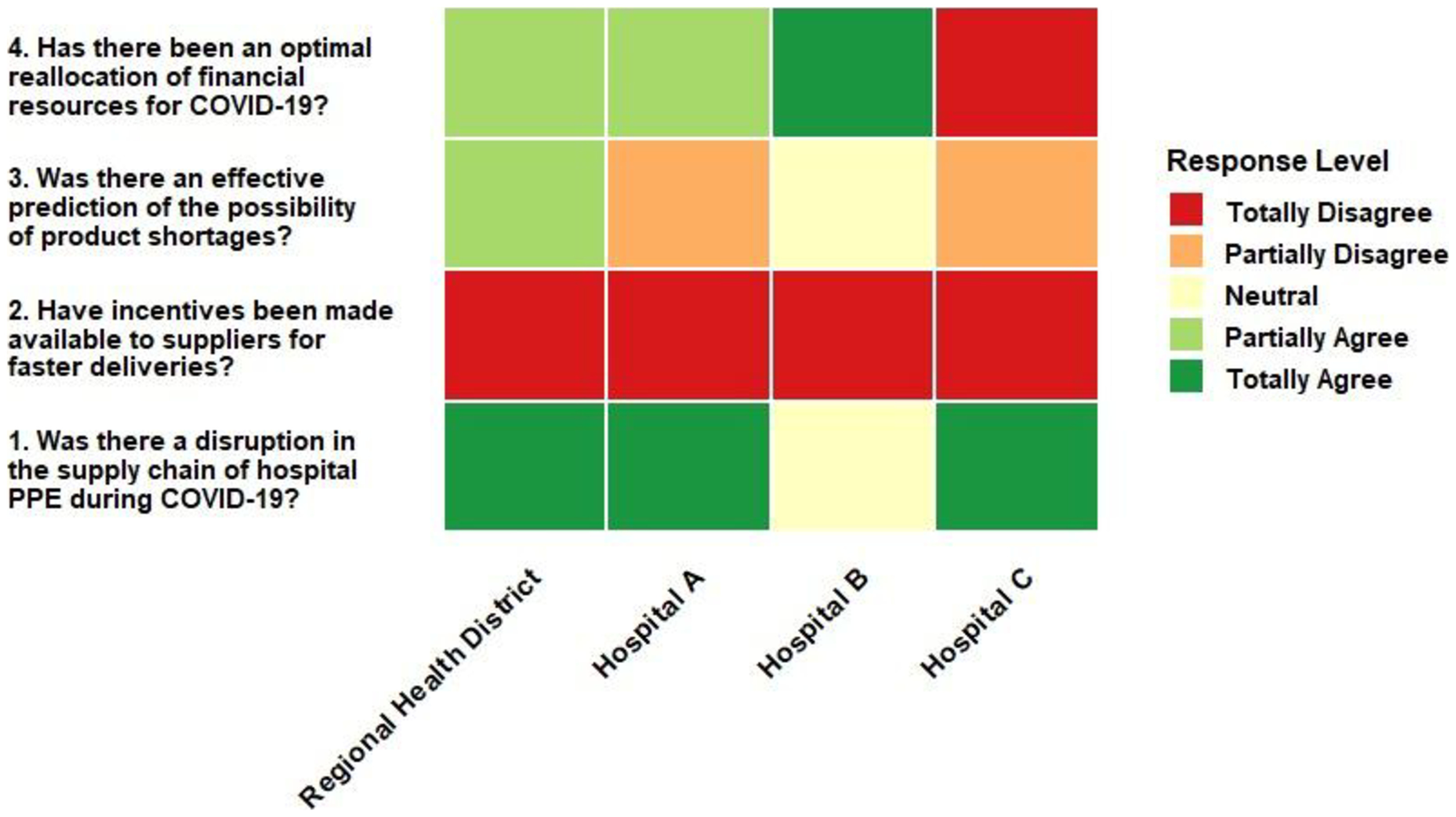
For the analysis of the results, the answers were compiled and presented in graphic format. Figure 2 shows the answers to questions related to supply chain disruption.
Most institutions indicated that there was a disruption in the supply chain. This reflects the widespread perception of PPE supply failures, which was a reality in many parts of the world due to unprecedented demand and production shortages during the pandemic. The response of hospital B, which was more neutral, may indicate that, at the local level, this institution managed to avoid such a severe crisis.
There is a consensus that no significant incentives have been made available to suppliers to ensure faster deliveries or larger quantities of supplies. This response highlights a potential failure in public and private policies to create incentives or partnerships with suppliers during the pandemic. The lack of incentives may have contributed to the breakdown of the supply chain in many cases.
The perception of an effective prediction of supply disruption varied among institutions. This suggests that, although some institutions have made prior preparation, others may have been surprised by the lack of PPE, indicating uneven preparation between the different hospital networks. Hospital C's most negative response suggests that the failure in the forecast was perceived more intensely by specialized hospitals.
Opinion on the optimal allocation of financial resources during the pandemic was divided. The source of funds differs according to the category of the hospital: federal, state, private, and philanthropic resources, among others. Hospital B expressed a very positive view, suggesting that its management of resources was effective, while other institutions were more critical. This variation may reflect differences in funding levels or management capacity among hospitals. Hospital B may receive more direct government support, while private or specialized hospitals may encounter more difficulties.
Figure 3 depicts the answers to questions related to supply chain resilience.

The institutions agree that supply chain management has not been agile enough. This suggests a perception of slowness in responding to the rapid changes that the pandemic has required, with a lack of real-time adaptation to deal with crises of scarcity. Agile management would be essential in scenarios of high unpredictability, but it seems that this capability was absent or insufficient.
Figure 4 shows the answers to questions related to smart tools.

In general, institutions have not widely adopted smart technologies or advanced methods, such as big data analytics, IoT, blockchain, or other more sophisticated forecasting tools for supply chain management. This may reflect a delay in the modernization of procurement and logistics processes in Brazilian hospitals, especially in public or smaller institutions.
Figure 5 shows the answers to questions related to supply chain demand.
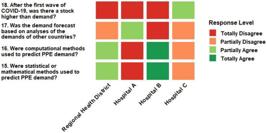
When it comes to forecasting and managing PPE demand, there is variability in the experts' responses. On the question about the use of statistical or mathematical methods to forecast demand, most experts from the four institutions partially or fully agree that these methods were used, suggesting a positive perception of incorporating quantitative approaches to deal with supply shortages. However, the Regional Health District and Hospital B indicated neutrality or disagreement with these practices, suggesting that, in these specific contexts, there were limitations in the adoption of more advanced methods of demand forecasting.
The question of whether the demand forecast was based on an analysis of the demands of other countries also presents divergences. Hospitals A and B demonstrated a higher degree of partial or total agreement, suggesting that they relied on international benchmarks to adjust their strategies. In contrast, the Regional Health District and the hospital C showed more neutrality and partial disagreement, which may indicate a lower dependence on external data or a greater focus on local demands.
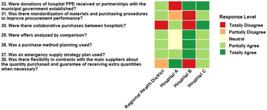
Figures 6 and 7 show the answers to questions related to the procurement sector of the supply chain.
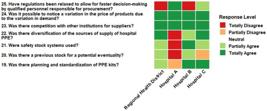
Regarding procurement, the responses highlight divergences in the perception of the flexibility and agility of the strategies adopted during the pandemic. To the issue of flexibility in regulations and contracts. For example, hospitals A and B showed a positive view, with mostly concordant responses, which suggests that these institutions were successful in adapting their procurement processes and renegotiating contracts in an agile manner. However, the Regional Health and Hospital C indicated more neutrality and disagreement, suggesting that they faced greater regulatory challenges or less flexibility in their procurement approaches.
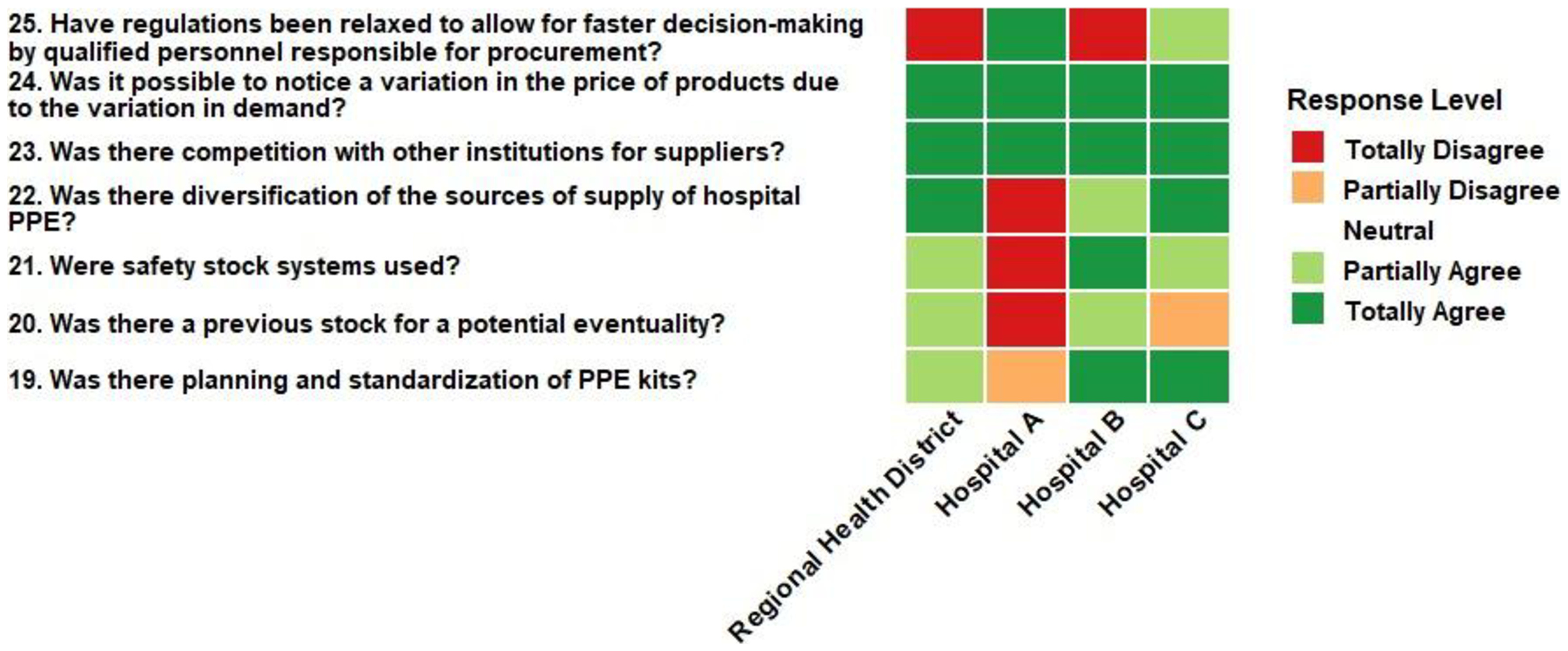
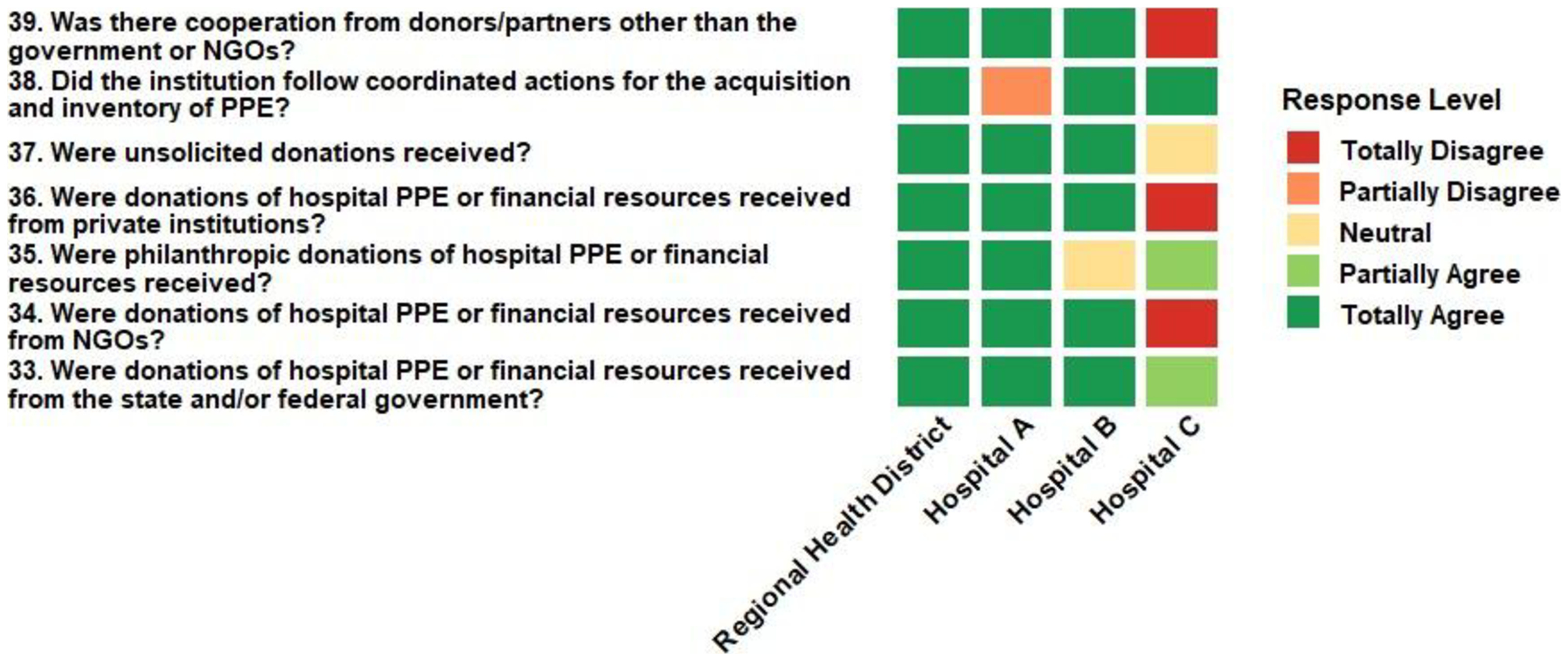
Another relevant issue refers to the use of planned purchasing methods, where the hospitals A and B have widely agreed that strategies such as collaborative purchasing between hospitals and standardization of procedures have been implemented. These responses reflect increased preparedness and coordination in crises. On the other hand, the Regional Health District and hospital C showed a more neutral stance, indicating that these methods were not as widespread or effective in their realities. Figure 8 shows the answers to the questions related to public-private partnerships.

Hospitals indicated that there was a considerable flow of donations, both PPE and financial resources, coming from various sources (government, NGOs, private institutions, and philanthropic donations). This flow of foreign aid was vital to sustain supplies during the most critical moments of the pandemic. Cooperation between donors, partners, and hospitals is also a positive aspect, indicating coordinated action among stakeholders. Despite this support, the level of donations was not entirely satisfactory to cover all initial needs, especially in the early stages of the pandemic, when demand for PPE and medical resources outstripped supply capacity.
The standardization of PPE kits and strategic procurement planning had no influence on some hospitals, which may have contributed to disorderly and inefficient management during the pandemic. Hospitals that did not have a safety stock or prior planning suffered more from the shortage, especially in the first wave of COVID-19.
There is recognition that the competition between institutions for suppliers was intense, which directly impacted on the increase in PPE prices. This price variation reflects the law of supply and demand, which affects the cost of essential products globally. The relaxation of regulations and contracts was necessary to allow greater agility in the procurement of these products.
Across the different thematic areas, some patterns of consensus emerged among the participating institutions. There was broad agreement on the occurrence of supply chain disruptions, the lack of incentives for suppliers, and the insufficiency of agile supply chain management during the pandemic. A shared perception also existed regarding the limited adoption of advanced digital tools for procurement and forecasting. Conversely, views were more divided on the effectiveness of demand forecasting methods and the flexibility of procurement regulations. Notably, Hospital B frequently stood out from the consensus, often reporting more positive outcomes in areas such as resource allocation, flexibility in procurement processes, and collaborative purchasing. In contrast, Hospital C tended to express more critical or negative evaluations, particularly concerning forecasting accuracy and regulatory flexibility. These divergences suggest that institutional context, governance structure, and resource availability significantly influenced procurement resilience during the crisis.
Overall, the responses reflect an experience of crisis that has forced institutions to deal with supply disruptions, lack of planning, and inadequate technologies. However, there have been cooperative efforts and, in many cases, emergency solutions to mitigate the impacts. The variation in responses between different hospitals also highlights significant disparities in pandemic management and response capacity. The lessons learned from these challenges can serve as a foundation for enhancing the resilience and adaptability of hospital supply chains in future crises.
5. Discussion
The survey analysis highlights significant weaknesses in hospital supply chain management during the COVID-19 pandemic, particularly in relation to logistical disruptions, lack of supplier relations, and failures in resource forecasting and allocation. These findings are consistent with recent literature, as noted by Sigala et al. (2022), who attribute logistical disruptions to interdependent systemic failures. The absence of collaborative strategies with suppliers, identified by all respondents, reflects the sector’s low level of coordination, as discussed by Fan et al. (2023).
The variability in responses emphasizes the lack of standardization in forecasting methods, especially among public hospitals. Hospital C, a private institution specialized in cancer care, faced greater forecasting challenges, likely due to the high complexity of its operations and the specialized nature of its services, which require careful management of resources specific to oncological treatments. The hospital's reliance on traditional procurement processes, coupled with limited access to advanced analytical tools, further hindered its ability to accurately forecast demand. This scenario aligns with the analyses of Mariappan et al. (2023) and Nguyen et al. (2023), who highlight the relationship between limited data integration and the low digital maturity of healthcare institutions. In contrast, public hospitals A and B, despite resource constraints, adopted more standardized supply chain practices, often relying on centralized procurement and more rigid systems for inventory control.
The heterogeneity in responses reinforces these vulnerabilities, with more structured institutions, mainly private ones like Hospital C, demonstrating more adaptive practices. While Hospital C reported occasional use of predictive analytics and more flexible supply chain strategies, it still faced significant challenges due to limited integration of these tools into daily operations. Public hospitals, on the other hand, struggled with these challenges more acutely due to limited financial resources and bureaucratic processes that hindered the adoption of advanced technologies. Chukwuka et al. (2023) emphasize the multidimensional complexity of logistical risks, which is reflected in the survey results through the lack of incentive policies, low resilience, and limited demanding capabilities.
Visibility and coordination issues were recurring themes, especially among public hospitals, which reported difficulties accessing real-time data, integrating inventories, and coordinating procurement. Only a few private institutions, such as Hospital C, with greater management capacity, employed more advanced practices, as proposed by Handfield et al. (2022). These findings emphasize the need for modernization in hospital supply chains, with an emphasis on digital technologies and patient-centric care, as advocated by Nayeri et al. (2023).
The adoption of emerging technologies, such as blockchain, artificial intelligence, and predictive tools, was very limited across all institutions. While Omar et al. (2021, 2022) and Cannavale et al. (2022) highlight the potential of these technologies to improve traceability and reduce informational asymmetries, practical implementation faced significant barriers. These included high costs, lack of technical training, institutional resistance, and the absence of public policies to foster innovation in healthcare supply chains. While private hospitals, such as Hospital C, had more capacity to invest in such technologies, the high costs and lack of skilled personnel hampered their adoption. Public hospitals, operating under stricter budget constraints and more rigid procurement systems, faced even greater difficulties in implementing these technologies.
Logistical practices such as Just-in-Time (JIT), Quick Response (QR), and Vendor Managed Inventory (VMI), which could have enhanced adaptability and responsiveness to demand, were notably absent. Azadi et al. (2023) argue that failure to adopt these methodologies compromises organizational agility, particularly in emergency contexts. The lack of these practices was evident in both private and public hospitals, though private hospitals like Hospital C had a slightly higher capacity to implement flexible logistics strategies when compared to their public counterparts.
The low agreement on the use of quantitative methods for forecasting PPE demand reflects the prevalence of empirical decision-making, particularly in public hospitals. Although systems like the Safety-Stock system proposed by Gonzatto Junior et al. (2022) and predictive models from Baloch et al. (2022) exist, they were underutilized. The absence of international benchmarking, as suggested by Snowdon & Wright (2022), also limited the capacity for anticipatory actions. The decision to avoid excessive stockpiling after the first wave may reflect both budget constraints and deficiencies in forecasting processes, as indicated by Sawyerr & Harrison (2022).
In terms of planning and standardization, data revealed still incipient practices, with less structured approaches in public hospitals. Only a few respondents reported maintaining prior stockpiles or safety stock systems, reflecting budget restrictions and a lack of strategic planning, as discussed by Yao et al. (2023). In contrast, all respondents from private hospitals, such as Hospital C, reported having a more tactical approach to supplier diversification, which was seen as an emergency response. The perception of competition among institutions and price fluctuations further emphasizes the unstable environment described by Harland et al. (2021).
Regulatory flexibility was reported in a limited and unsystematic manner, hindering rapid responses and contradicting Aghajani et al. (2023)’s recommendations. Emergency procurement strategies were partially adopted, with strong reliance on centralized processes in public hospitals, which delayed responses and reduced agility. Collaborative purchasing and comparative offer analysis were rarely implemented, indicating low institutional coordination and a lack of integrated governance mechanisms.
Partnerships with government, the private sector, and philanthropic organizations were more common in public hospitals. The mobilization of donations from various sources confirmed the importance of support networks in humanitarian logistics, as emphasized by Diehlmann et al. (2021). However, the disparities in the quantity and regularity of resources received reflect unequal access and coordination capacity, findings consistent with Skipworth et al. (2020). Isolated efforts to acquire supplies and build stockpiles were also observed, aligning with mitigation strategies described by Ash et al. (2022).
The variety of donors and partners calls for robust control and traceability mechanisms, as suggested by Schumacher et al. (2021), but these were not widely reported by survey participants. In summary, the results underscore the importance of collaboration networks and technological innovation in emergency response, while also exposing structural gaps, particularly in public hospitals, related to logistical integration, strategic planning, and technological adoption capacity.
6. Conclusion
Recent humanitarian crises, such as the COVID-19 pandemic, have highlighted the fragility of health systems by exposing logistical bottlenecks that have limited access to essential medical supplies, such as PPE, respirators, and medicines. The research carried out throughout this study confirmed that such challenges are aggravated by factors such as dependence on single suppliers, bureaucracy in procurement, and the unpredictability of demand. In this scenario, the proposed framework presents a holistic and integrated approach, focusing on the resilience and efficiency of procurement processes.
The study focused on analyzing the resilience of the healthcare supply chain in the context of a mid-sized Brazilian city during the pandemic, with specific attention to the procurement of PPE. The results revealed that most institutions, both public and private, faced structural and operational constraints, including procurement delays, absence of emergency stockpiles, and limited use of technological tools. These constraints directly affected their ability to respond to fluctuating demand and to protect healthcare professionals in a timely manner. In this context, resilience is defined as the capacity of health services and professionals to maintain core functions and adapt effectively during crises. Based on the data collected, it can be concluded that the hospitals analyzed were not fully resilient. Although some degree of adaptability and collaboration was observed, particularly through public-private partnerships, these efforts were reactive rather than proactive and lacked systemic coordination. The survey was applied in hospitals in a city in the south of Brazil, seeking to understand how local managers dealt with the procurement of PPE during the pandemic. The survey was structured based on the good practices identified in the systematic review and sought to evaluate the response of hospitals in terms of procurement strategies, public-private partnerships, inventory visibility, and the use of technologies for supply management. Results showed recurring issues: lack of long-term planning, dependence on a small number of suppliers, and difficulty forecasting demand. However, collaboration between public and private institutions emerged as a key mechanism for mitigating supply shortages, highlighting the importance of integrated efforts during emergencies.
This study contributes to advancing knowledge on crisis logistics and health system preparedness by providing empirical evidence from a Global South perspective. It reinforces the need for systemic approaches to procurement, with an emphasis on resilience, efficiency, and coordination. The proposed framework offers practical guidance for evaluating procurement performance and can serve as a foundation for policy recommendations and strategic improvements in hospital supply chains. Additionally, the study aligns with Sustainable Development Goal 3 (Good Health and Well-being), by emphasizing the need for robust health systems capable of maintaining essential services during disruptive events.
Economically and socially, the study illustrates how weak procurement processes in healthcare can exacerbate inequalities, increase mortality rates, and reduce the ability of governments to protect frontline workers. Strengthening healthcare supply chains goes beyond operational efficiency; it is a critical component of public health policy and national resilience.
One of the study’s limitations lies in its small sample size, three hospitals and one regional health authority, which limits the generalizability of the results. The data were also based on self-reported responses from managers, which may contain biases despite measures taken to ensure candid feedback. Additionally, it is acknowledged that the findings are limited to Maringá’s specific context and should not be generalized to other locations without caution. Nevertheless, the in-depth qualitative approach enabled a rich understanding of the procurement context and revealed key vulnerabilities and opportunities for improvement.
This research is original in its integration of procurement practices, smart supply chain technologies, and emergency governance in a highly unequal and institutionally fragmented setting. It offers a unique contribution to the international literature on supply chain resilience, shedding light on how regulatory, financial, and managerial barriers influence institutional responses to crises in low- and middle-income countries.
Finally, the study opens pathways for future research in crisis management and humanitarian logistics. Recommended directions include comparative studies across different municipalities, regions, or countries to assess variations in procurement resilience; the exploration of emerging technologies such as artificial intelligence and quantum computing to enhance forecasting and procurement strategies; the inclusion of sustainability metrics in emergency logistics to reduce environmental impact; and the development of simulation models to test the effectiveness of various coordination and procurement mechanisms in different crisis scenarios.
Statement on Data Availability
All data used in this research are fully available in the article itself. There are no additional datasets deposited in external repositories.
-
Financial support:
This study was financed in part by the Coordenação de Aperfeiçoamento de Pessoal de Nível Superior – Brasil (CAPES).
-
How to cite:
Lima, I. A. S., Alcantara, B. A., Gomes, H. C., & Samed, M. M. A. (2026). Healthcare supply chain resilience during the COVID-19 pandemic: PPE procurement challenges and strategies. Gestão & Produção, 33, e1325. https://doi.org/10.1590/1806-9649-2025v33e1325
References
-
Aghajani, M., Torabi, S. A., & Altay, N. (2023). Resilient relief supply planning using an integrated procurement -warehousing model under supply disruption. Omega, 118, 102871. https://doi.org/10.1016/j.omega.2023.102871
» https://doi.org/10.1016/j.omega.2023.102871 -
Ahlqvist, V., Dube, N., Jahre, M., Lee, J. S., Melaku, T., Moe, A. F., Olivier, M., Selviaridis, K., Viana, J., & Aardal, C. (2023). Supply chain risk management strategies in normal and abnormal times: policymakers’ role in reducing generic medicine shortages. International Journal of Physical Distribution & Logistics Management, 53(2), 206-230. https://doi.org/10.1108/IJPDLM-12-2021-0511
» https://doi.org/10.1108/IJPDLM-12-2021-0511 -
Alajmi, A., Adlan, N., & Lahyani, R. (2021). Assessment of supply chain management resilience within Saudi medical laboratories during the Covid-19 pandemic. Procedia CIRP, 103, 32-36. https://doi.org/10.1016/j.procir.2021.10.004 PMid:35169538.
» https://doi.org/10.1016/j.procir.2021.10.004 -
Arafat, S. M. Y., Kar, S. K., & Kabir, R. (2021). Possible controlling measures of panic buying during COVID-19. International Journal of Mental Health and Addiction, 19(6), 2289-2291. https://doi.org/10.1007/s11469-020-00320-1 PMid:32837417.
» https://doi.org/10.1007/s11469-020-00320-1 -
Arji, G., Ahmadi, H., Avazpoor, P., & Hemmat, M. (2023). Identifying resilience strategies for disruption management in the healthcare supply chain during COVID-19 by digital innovations: a systematic literature review. Informatics in Medicine Unlocked, 38, 101199. https://doi.org/10.1016/j.imu.2023.101199 PMid:36873583.
» https://doi.org/10.1016/j.imu.2023.101199 -
Ash, C., Diallo, C., Venkatadri, U., & VanBerkel, P. (2022). Distributionally robust optimization of a Canadian healthcare supply chain to enhance resilience during the COVID-19 pandemic. Computers & Industrial Engineering, 168, 108051. https://doi.org/10.1016/j.cie.2022.108051 PMid:35250153.
» https://doi.org/10.1016/j.cie.2022.108051 -
Ash, C., Venkatadri, U., Diallo, C., Vanberkel, P., & Saif, A. (2023). PPE supply optimization under risks of disruption from the COVID-19 pandemic. Operations Research Forum, 4(2), 23. https://doi.org/10.1007/s43069-023-00209-4
» https://doi.org/10.1007/s43069-023-00209-4 -
Assumpção, N. H., de Almeida Alcantara, B., de Souza Lima, I. A., & Samed, M. M. A. (2024, June). Development of a causal loop diagram to understand the complexity of a food bank’s supply chain processes. InInternational Joint conference on Industrial Engineering and Operations Management(pp. 477-488). Cham: Springer Nature Switzerland. https://doi.org/10.1007/978-3-031-80785-5_36
» https://doi.org/10.1007/978-3-031-80785-5_36 -
Azadi, M., Yousefi, S., Saen, R. F., Shabanpour, H., & Jabeen, F. (2023). Forecasting sustainability of healthcare supply chains using deep learning and network data envelopment analysis. Journal of Business Research, 154, 113357. https://doi.org/10.1016/j.jbusres.2022.113357
» https://doi.org/10.1016/j.jbusres.2022.113357 -
Baloch, G., Gzara, F., & Elhedhli, S. (2022). Covid-19 PPE distribution planning with demand priorities and supply uncertainties. Computers & Operations Research, 146, 105913. https://doi.org/10.1016/j.cor.2022.105913 PMid:35755161.
» https://doi.org/10.1016/j.cor.2022.105913 -
Baloch, G., Gzara, F., & Elhedhli, S. (2023). Risk-based allocation of COVID-19 personal protective equipment under supply shortages. European Journal of Operational Research, 310(3), 1085-1100. https://doi.org/10.1016/j.ejor.2023.04.001 PMid:37284205.
» https://doi.org/10.1016/j.ejor.2023.04.001 -
Beaulieu, M., Roy, J., Rebolledo, C., & Landry, S. (2022). The management of personal protective equipment during the COVID-19 pandemic: the case of the province of Quebec. Healthcare Management Forum,35(2), 48-52. https://doi.org/10.1177/08404704211053996
» https://doi.org/10.1177/08404704211053996 -
Bernardo, J. M. S., Mendes, G. H. D. S., Lizarelli, F. L., & Roscani, M. G. (2022). Instrumentos para avaliar a experiência do paciente em hospitais: uma revisão de escopo. Gestão & Produção, 29, e0821. https://doi.org/10.1590/1806-9649-2022v29e0821
» https://doi.org/10.1590/1806-9649-2022v29e0821 -
Bhaskar, S., Tan, J., Bogers, M. L., Minssen, T., Badaruddin, H., Israeli-Korn, S., & Chesbrough, H. (2020). At the epicenter of COVID-19–the tragic failure of the global supply chain for medical supplies. Frontiers in Public Health, 8, 562882. https://doi.org/10.3389/fpubh.2020.562882 PMid:33335876.
» https://doi.org/10.3389/fpubh.2020.562882 -
Bian, W., Yang, X., Li, S., Yang, X., & Hua, G. (2021). Advantages of 3PLs as healthcare supply chain orchestrators. Computers & Industrial Engineering, 161, 107628. https://doi.org/10.1016/j.cie.2021.107628 PMid:34545266.
» https://doi.org/10.1016/j.cie.2021.107628 -
Brasil. (2021). Medida Provisória nº 1.036, de 17 de Março de 2021. Brasília, DF: Diário Oficial da República Federativa do Brasil. Retrieved in 2025, February 7, from https://www.planalto.gov.br/ccivil_03/_ato2019-2022/2021/mpv/mpv1036.htm
» https://www.planalto.gov.br/ccivil_03/_ato2019-2022/2021/mpv/mpv1036.htm -
Brasil. Ministério da Saúde. (2025). Coronavirus Brazil Retrieved in 2025, August 8, from https://covid.saude.gov.br/
» https://covid.saude.gov.br/ - Cadastro Nacional de Estabelecimentos de Saúde - CNES. (2025). DATASUS Brasília: CNES.
-
Cannavale, C., Esempio Tammaro, A., Leone, D., & Schiavone, F. (2022). Innovation adoption in inter-organizational healthcare networks–the role of artificial intelligence. European Journal of Innovation Management, 25(6), 758-774. https://doi.org/10.1108/EJIM-08-2021-0378
» https://doi.org/10.1108/EJIM-08-2021-0378 - Chadwick, D., Ågren, K. A., Caton, S., Chiner, E., Danker, J., Gómez‐Puerta, M., Heitplatz,V., Johansson,S., Normand,C. L., Murphy,E., Plichta, P., Strnadová, I., & Wallén, E. F. (2022). Digital inclusion and participation of people with intellectual disabilities during COVID‐19: a rapid review and international bricolage. Journal of Policy and Practice in Intellectual Disabilities, 19(3), 242-256. https://doi.org/10.1111/jppi.12410.
-
Chukwuka, O. J., Ren, J., Wang, J., & Paraskevadakis, D. (2023). A comprehensive research on analyzing risk factors in emergency supply chains. Journal of Humanitarian Logistics and Supply Chain Management, 13(3), 249-292. https://doi.org/10.1108/JHLSCM-10-2022-0108
» https://doi.org/10.1108/JHLSCM-10-2022-0108 -
Cohen, J., & van der Meulen Rodgers, Y. (2020). Contributing factors to personal protective equipment shortages during the COVID-19 pandemic. Preventive Medicine, 141, 106263. https://doi.org/10.1016/j.ypmed.2020.106263 PMid:33017601.
» https://doi.org/10.1016/j.ypmed.2020.106263 -
Debnath, B., Bari, A. M., Haq, M. M., de Jesus Pacheco, D. A., & Khan, M. A. (2023). An integrated stepwise weight assessment ratio analysis and weighted aggregated sum product assessment framework for sustainable supplier selection in the healthcare supply chains. Supply Chain Analytics, 1, 100001. https://doi.org/10.1016/j.sca.2022.100001
» https://doi.org/10.1016/j.sca.2022.100001 -
Diehlmann, F., Lüttenberg, M., Verdonck, L., Wiens, M., Zienau, A., & Schultmann, F. (2021). Public-private collaborations in emergency logistics: a framework based on logistical and game-theoretical concepts. Safety Science, 141, 105301. https://doi.org/10.1016/j.ssci.2021.105301
» https://doi.org/10.1016/j.ssci.2021.105301 -
Ducatti, A. P. S., Doneda, L. R. Z. D. C., Lima, I. A. D. S., Cazane, A. L., Bertazzo, T. R., & Brito Junior, I. (2025). Games for humanitarian logistics and disaster management: a systematic review.Journal of Humanitarian Logistics and Supply Chain Management, 1-29. https://doi.org/10.1108/JHLSCM-03-2025-0042
» https://doi.org/10.1108/JHLSCM-03-2025-0042 -
Fan, Y., Shao, J., & Wang, X. (2023). Relief items procurement and delivery through cooperation with suppliers and logistics companies considering budget constraints. International Journal of Production Economics, 264, 108975. https://doi.org/10.1016/j.ijpe.2023.108975
» https://doi.org/10.1016/j.ijpe.2023.108975 -
Finkenstadt, D. J., & Handfield, R. (2021). Blurry vision: supply chain visibility for personal protective equipment during COVID-19. Journal of Purchasing and Supply Management, 27(3), 100689. https://doi.org/10.1016/j.pursup.2021.100689
» https://doi.org/10.1016/j.pursup.2021.100689 -
Forza, C. (2002). Survey research in operations management: a process‐based perspective. International Journal of Operations & Production Management, 22(2), 152-194. https://doi.org/10.1108/01443570210414310
» https://doi.org/10.1108/01443570210414310 - Galhardi, C. P., Freire, N. P., Fagundes, M. C. M., & Minayo, M. C. S. (2022). Fato ou fake? Uma análise da desinformação frente à pandemia da COVID-19 no Brasil. Ciência & Saúde Coletiva, 27(5), 1849-1858. PMid:35544814.
-
Gonzatto Junior, O. A., Nascimento, D. C., Russo, C. M., Henriques, M. J., Tomazella, C. P., Santos, M. O., Neves, D., Assad, D., Guerra, R., Bertazo, E. K., Cuminato, J. A., & Louzada, F. (2022). Safety-Stock: predicting the demand for supplies in Brazilian hospitals during the COVID-19 pandemic. Knowledge-Based Systems, 247, 108753. https://doi.org/10.1016/j.knosys.2022.108753 PMid:35469240.
» https://doi.org/10.1016/j.knosys.2022.108753 -
Handfield, R., Apte, A., & Finkenstadt, D. J. (2022). Developing supply chain immunity for future pandemic disruptions. Journal of Humanitarian Logistics and Supply Chain Management, 12(4), 482-501. https://doi.org/10.1108/JHLSCM-09-2021-0096
» https://doi.org/10.1108/JHLSCM-09-2021-0096 -
Harland, C. M., Knight, L., Patrucco, A. S., Lynch, J., Telgen, J., Peters, E., Tátrai, T., & Ferk, P. (2021). Practitioners’ learning about healthcare supply chain management in the COVID-19 pandemic: a public procurement perspective. International Journal of Operations & Production Management, 41(13), 178-189. https://doi.org/10.1108/IJOPM-05-2021-0348
» https://doi.org/10.1108/IJOPM-05-2021-0348 -
Jebbor, S., Raddouane, C., & El Afia, A. (2022). A preliminary study for selecting the appropriate AI-based forecasting model for hospital assets demand under disasters. Journal of Humanitarian Logistics and Supply Chain Management, 12(1), 1-29. https://doi.org/10.1108/JHLSCM-12-2020-0123
» https://doi.org/10.1108/JHLSCM-12-2020-0123 -
Kochakkashani, F., Kayvanfar, V., & Haji, A. (2023). Supply chain planning of vaccine and pharmaceutical clusters under uncertainty: the case of COVID-19. Socio-Economic Planning Sciences, 87, 101602. https://doi.org/10.1016/j.seps.2023.101602 PMid:37255585.
» https://doi.org/10.1016/j.seps.2023.101602 -
Koppenberg, M., Bozzola, M., Dalhaus, T., & Hirsch, S. (2020). Mapping potential implications of temporary COVID‐19 export bans for the food supply in importing countries. Agribusiness, 37(1), 25-43. https://doi.org/10.1002/agr.21684
» https://doi.org/10.1002/agr.21684 -
Kumar, V., Nguyen, H. T. T., Mittal, A., & Lai, K. K. (2023). The production and distribution of face masks to other countries: a strategic approach of Taiwan during COVID-19 outbreak. Journal of Global Operations and Strategic Sourcing, 16(2), 541-567. https://doi.org/10.1108/JGOSS-11-2021-0096
» https://doi.org/10.1108/JGOSS-11-2021-0096 -
Leite, H., Lindsay, C., & Kumar, M. (2020). COVID-19 outbreak: implications on healthcare operations. The TQM Journal, 33(1), 247-256. https://doi.org/10.1108/TQM-05-2020-0111
» https://doi.org/10.1108/TQM-05-2020-0111 -
Livingston, E., Desai, A., & Berkwits, M. (2020). Sourcing personal protective equipment during the COVID-19 pandemic. Journal of the American Medical Association, 323(19), 1912-1914. https://doi.org/10.1001/jama.2020.5317 PMid:32221579.
» https://doi.org/10.1001/jama.2020.5317 -
Malmir, B., & Zobel, C. W. (2021). An applied approach to multi-criteria humanitarian supply chain planning for pandemic response. Journal of Humanitarian Logistics and Supply Chain Management, 11(2), 320-346. https://doi.org/10.1108/JHLSCM-08-2020-0064
» https://doi.org/10.1108/JHLSCM-08-2020-0064 -
Marcato, J. G., Silva, H. M. R. D., Luiz, O. R., Mariano, E. B., & Paro, C. E. (2023). Modelando qualidade, satisfação e crowding percebido em saúde pública: um estudo com pacientes brasileiros de baixa-renda. Gestão & Produção, 30, e10722. https://doi.org/10.1590/1806-9649-2022v30e10722
» https://doi.org/10.1590/1806-9649-2022v30e10722 -
Mariappan, M. B., Devi, K., Venkataraman, Y., Lim, M. K., & Theivendren, P. (2023). Using AI and ML to predict shipment times of therapeutics, diagnostics, and vaccines in e-pharmacy supply chains during the COVID-19 pandemic. International Journal of Logistics Management, 34(2), 390-416. https://doi.org/10.1108/IJLM-05-2021-0300
» https://doi.org/10.1108/IJLM-05-2021-0300 -
Muhwezi, M., Mutebi, H., Mayanja, S. S., Tukamuhabwa, B., Namagembe, S., & Kalema, R. (2023). Information integration, procurement internal controls, material and purchasing procedure standardization, and procurement performance in humanitarian organizations. Journal of Humanitarian Logistics and Supply Chain Management, 13(4), 410-432. https://doi.org/10.1108/JHLSCM-11-2021-0115
» https://doi.org/10.1108/JHLSCM-11-2021-0115 -
Nayeri, S., Sazvar, Z., & Heydari, J. (2023). Towards a responsive supply chain based on the industry 5.0 dimensions: a novel decision-making method. Expert Systems with Applications, 213, 119267. https://doi.org/10.1016/j.eswa.2022.119267
» https://doi.org/10.1016/j.eswa.2022.119267 -
Nguyen, A., Bougacha, O., Lekens, B., Lamouri, S., Pellerin, R., & Couvreur, C. (2023). On the use of logistics data to anticipate drug shortages through data mining. Procedia Computer Science, 219, 949-956. https://doi.org/10.1016/j.procs.2023.01.371
» https://doi.org/10.1016/j.procs.2023.01.371 -
Okeagu, C. N., Reed, D. S., Sun, L., Colontonio, M. M., Rezayev, A., Ghaffar, Y. A., Kaye, R. J., Liu, H., Cornett, E. M., Fox, C. J., Urman, R. D., & Kaye, A. D. (2021). Principles of supply chain management in a time of crisis. Best Practice & Research. Clinical Anaesthesiology, 35(3), 369-376. https://doi.org/10.1016/j.bpa.2020.11.007 PMid:34511225.
» https://doi.org/10.1016/j.bpa.2020.11.007 -
Oliveira, L. F. A. D., Peres, I. T., & Araujo, B. M. (2024). Avaliação de desempenho do atendimento em uma emergência hospitalar do Rio de Janeiro: uma abordagem híbrida por meio de Simulação de Eventos Discretos e Análise Envoltória de Dados. Gestão & Produção, 31, e1024. https://doi.org/10.1590/1806-9649-2024v31e1024
» https://doi.org/10.1590/1806-9649-2024v31e1024 -
Omar, I. A., Debe, M., Jayaraman, R., Salah, K., Omar, M., & Arshad, J. (2022). Blockchain-based supply chain traceability for COVID-19 personal protective equipment. Computers & Industrial Engineering, 167, 107995. https://doi.org/10.1016/j.cie.2022.107995 PMid:35153368.
» https://doi.org/10.1016/j.cie.2022.107995 -
Omar, I. A., Jayaraman, R., Debe, M. S., Salah, K., Yaqoob, I., & Omar, M. (2021). Automating procurement contracts in the healthcare supply chain using blockchain smart contracts. IEEE Access: Practical Innovations, Open Solutions, 9, 37397-37409. https://doi.org/10.1109/ACCESS.2021.3062471
» https://doi.org/10.1109/ACCESS.2021.3062471 -
Patel, A., D’Alessandro, M. M., Ireland, K. J., Burel, W. G., Wencil, E. B., & Rasmussen, S. A. (2017). Personal protective equipment supply chain: lessons learned from recent public health emergency responses. Health Security, 15(3), 244-252. https://doi.org/10.1089/hs.2016.0129 PMid:28636443.
» https://doi.org/10.1089/hs.2016.0129 -
Pompeu, E., & Slovic, A. (2023). Global health security challenges in times of pandemic: access to personal protective equipment in the Covid-19 crisis.Saúde e Sociedade, 32(3), e230331pt. https://doi.org/10.1590/S0104-12902023230331en
» https://doi.org/10.1590/S0104-12902023230331en -
Ramirez Lopez, L. J., Cárdenas Babativa, J. M., & Rojas Reales, W. M. (2022). Blockchain apply to the supply chain of essential medicines for the treatment of Covid-19 in Colombia. Informatics in Medicine Unlocked, 33, 101100. https://doi.org/10.1016/j.imu.2022.101100 PMid:36193444.
» https://doi.org/10.1016/j.imu.2022.101100 -
Salarpour, M., & Nagurney, A. (2021). A multicountry, multicommodity stochastic game theory network model of competition for medical supplies inspired by the COVID-19 pandemic. International Journal of Production Economics, 236, 108074. https://doi.org/10.1016/j.ijpe.2021.108074 PMid:35615460.
» https://doi.org/10.1016/j.ijpe.2021.108074 -
Sawyerr, E., & Harrison, C. (2022). Resilience in healthcare supply chains: a review of the UK’s response to the COVID-19 pandemic. International Journal of Physical Distribution & Logistics Management, 53(3), 297-329. https://doi.org/10.1108/IJPDLM-09-2021-0403
» https://doi.org/10.1108/IJPDLM-09-2021-0403 -
Scala, B., & Lindsay, C. F. (2021). Supply chain resilience during pandemic disruption: evidence from healthcare. Supply Chain Management, 26(6), 672-688. https://doi.org/10.1108/SCM-09-2020-0434
» https://doi.org/10.1108/SCM-09-2020-0434 -
Schumacher, R., Glew, R., Tsolakis, N., & Kumar, M. (2021). Strategies to manage product recalls in the COVID-19 pandemic: an exploratory case study of PPE supply chains. Continuity & Resilience Review, 3(1), 64-78. https://doi.org/10.1108/CRR-07-2020-0024
» https://doi.org/10.1108/CRR-07-2020-0024 -
Sharma, A., Gupta, P., & Jha, R. (2020). COVID-19: impact on health supply chain and lessons to be learnt. Journal of Health Management, 22(2), 248-261. https://doi.org/10.1177/0972063420935653
» https://doi.org/10.1177/0972063420935653 -
Sigala, I. F., Sirenko, M., Comes, T., & Kovács, G. (2022). Mitigating personal protective equipment (PPE) supply chain disruptions in pandemics–a system dynamics approach. International Journal of Operations & Production Management, 42(13), 128-154. https://doi.org/10.1108/IJOPM-09-2021-0608
» https://doi.org/10.1108/IJOPM-09-2021-0608 -
Skipworth, H., Delbufalo, E., & Mena, C. (2020). Logistics and procurement outsourcing in the healthcare sector: a comparative analysis. European Management Journal, 38(3), 518-532. https://doi.org/10.1016/j.emj.2020.04.002 PMid:38620233.
» https://doi.org/10.1016/j.emj.2020.04.002 -
Snowdon, A., & Wright, A. (2022). Digitally enabled supply chain as a strategic asset for the COVID-19 response in Alberta. Healthcare Management Forum, 35(2), 90-98. https://doi.org/10.1177/08404704211057525
» https://doi.org/10.1177/08404704211057525 -
Spieske, A., Gebhardt, M., Kopyto, M., & Birkel, H. (2022). Improving resilience of the healthcare supply chain in a pandemic: evidence from Europe during the COVID-19 crisis. Journal of Purchasing and Supply Management, 28(5), 100748. https://doi.org/10.1016/j.pursup.2022.100748
» https://doi.org/10.1016/j.pursup.2022.100748 -
Thompson, D. D., & Anderson, R. (2021). The COVID-19 response: considerations for future humanitarian supply chain and logistics management research. Journal of Humanitarian Logistics and Supply Chain Management, 11(2), 157-175. https://doi.org/10.1108/JHLSCM-01-2021-0006
» https://doi.org/10.1108/JHLSCM-01-2021-0006 -
Tortorella, G. L., Prashar, A., Antony, J., Fogliatto, F. S., Gonzalez, V., & Godinho Filho, M. (2024). Industry 4.0 adoption for healthcare supply chain performance during COVID-19 pandemic in Brazil and India: the mediating role of resilience abilities development. Operations Management Research : Advancing Practice Through Research, 17(2), 389-405. https://doi.org/10.1007/s12063-023-00366-z
» https://doi.org/10.1007/s12063-023-00366-z -
Vecchi, V., Cusumano, N., & Boyer, E. J. (2020). Medical supply acquisition in Italy and the United States in the era of COVID-19: the case for strategic procurement and public–private partnerships. American Review of Public Administration, 50(6-7), 642-649. https://doi.org/10.1177/0275074020942061
» https://doi.org/10.1177/0275074020942061 - World Health Organization – WHO (2020). Coronavirus disease (COVID-19) advice for the public: when and how to use masks Geneva: WHO.
-
Yao, C., Fan, B., Zhao, Y., & Cheng, X. (2023). Evolutionary dynamics of supervision-compliance game on optimal pre-positioning strategies in relief supply chain management. Socio-Economic Planning Sciences, 87, 101598. https://doi.org/10.1016/j.seps.2023.101598
» https://doi.org/10.1016/j.seps.2023.101598 - Yin, R. K. (2015). Case study: planning and methods Porto Alegre: Bookman Publisher.
-
Yoshizaki, H. T. Y., Brito Junior, I., Hino, C. M., Aguiar, L. L., & Pinheiro, M. C. R. (2020). Relationship between panic buying and per capita income during COVID-19. Sustainability (Basel), 12(23), 9968. https://doi.org/10.3390/su12239968
» https://doi.org/10.3390/su12239968 -
Zahedi, A., Salehi-Amiri, A., Smith, N. R., & Hajiaghaei-Keshteli, M. (2021). Utilizing IoT to design a relief supply chain network for the SARS-COV-2 pandemic. Applied Soft Computing, 104, 107210. https://doi.org/10.1016/j.asoc.2021.107210 PMid:33642961.
» https://doi.org/10.1016/j.asoc.2021.107210 -
Zamiela, C., Hossain, N. U. I., & Jaradat, R. (2022). Enablers of resilience in the healthcare supply chain: a case study of US healthcare industry during COVID-19 pandemic. Research in Transportation Economics, 93, 101174. https://doi.org/10.1016/j.retrec.2021.101174
» https://doi.org/10.1016/j.retrec.2021.101174
-
Editor-in-Chief
Pedro Munari.