
 Indigenous Peoples in the Pantanal: Demands for Ethnic Tourism
Abstract:
The Pantanal biome, located in South America and spanning Brazil, Bolivia, and Paraguay, is home to quilombola, riverside, and Indigenous communities. The latter have demonstrated an interest in entering the tourism market; however, the implementation of this activity faces significant obstacles, including low visibility, difficult access to villages, and a lack of dialogue with productive sectors. This research investigates these challenges and confrontations, aiming to “analyze two initiatives implementing tourism experiences within the Kadiwéu Indigenous Territories and the Taunay-Ipegue Indigenous Territory of the Terena ethnic group.” Through fieldwork, direct observation, and dialogue with interlocutors, and drawing on the geography and anthropology of tourism as theoretical frameworks, this study interprets the dynamics of tourism implementation in Indigenous Territories, identifying trajectories, expectations, and challenges related to ethnic tourism.
Keywords:
ethnic tourism; Pantanal; culture; Indigenous peoples
Resumo:
O bioma Pantanal, localizado na América do Sul, se estende pelo Brasil, Bolívia e Paraguai e abriga comunidades quilombolas, ribeirinhas e indígenas. Estas últimas têm demonstrado interesse em participar do mercado turístico, porém, a implementação da atividade tem revelado fortes entraves, tais como baixa visibilidade, dificuldade de acesso às aldeias e ausência de diálogo com setores produtivos. Trata-se de desafios e enfrentamentos que esta pesquisa se propõe a investigar com o objetivo de “analisar duas iniciativas de implementação de experiências de turismo no interior das Terras Indígenas Kadiwéu e da Terra Indígena Taunay-Ipegue da etnia Terena”. Mediante levantamento de campo, com observação direta e diálogo com interlocutores, e tendo como referencial teórico a geografia do turismo e a antropologia do turismo, a pesquisa tem como resultado a leitura e interpretação da dinâmica de implementação do turismo em territórios indígenas, identificando trajetórias, expectativas e desafios em relação ao turismo étnico.
Palavras-Chaves:
turismo étnico; Pantanal; cultura; povos indígenas
Resumen:
El bioma del Pantanal, ubicado en Sudamérica, se extiende por Brasil, Bolivia y Paraguay y alberga comunidades quilombolas, ribereñas e indígenas. Las comunidades indígenas tienen interés en participar del turismo regional; pero, la implementación del turismo enfrenta obstáculos significativos, tales como baja visibilidad, dificultad de acceso a las aldeas y la falta de diálogo con el sector turístico. Se trata de desafíos y confrontaciones que esta investigación se propone investigar con el objetivo de “analizar dos iniciativas para la implementación de experiencias turísticas en la Tierra Indígena Kadiwéu y la Tierra Indígena Taunay-Ipegue de la etnia Terena”. Mediante trabajo de campo, con observación directa y diálogo con interlocutores, y teniendo como referente teórico la geografía del turismo y la antropología del turismo, el resultado es la lectura e interpretación de la dinámica de implementación del turismo en territorios indígenas, identificando trayectorias, expectativas y desafíos en relación al turismo étnico.
Palabras clave:
turismo étnico; Pantanal; cultura; pueblos indígenas
Introduction
The understanding of ethnic tourism as a modality driven by travelers’ motivation for authentic experiences of a specific people’s culture (Lama, Sarkhel, 2022). This form of tourism entails visitors traveling to host communities-whether within or outside traditional territories-in search of experiences centered on living with these peoples. It is a category of visitation occurring in various countries across highly diverse communities (Yea, 2002; Yang, Wall, 2008). In Brazil, this practice has increased over the past several decades across different Indigenous Territories (ITs) and ethnic groups. Examples include the Piaçaguera IT (Tupi-Guarani et al., 2022), the Yawanawá IT (Honorato, 2020), the Yanomami IT (Oliveira, 2022), the Pataxó IT (Grünewald, 2005), the Baré IT (Proença; Panosso Neto, 2022), the Kaingang and Kanoe ITs (Lac, 2005), and the Jaboti IT (Von Held, 2013), among other peoples, as outlined in Normative Instruction No. 03/2015 concerning the regulation of tourism in ITs.
The interest in understanding the motivations, economic and social impacts, and host-visitor relationships fostered by ethnic tourism has drawn the attention of researchers in both geography and anthropology. In the anthropology of tourism, studies have examined ethnic affirmation and resurgence, interethnic contact (Neves, 2012; Grünewald, 2006, 2009; Van Den Berghe, Keyes, 1984), ritual versus tourist efficacy (Neves, 2010), tourism, art, and heritage (Graburn, 1976; Prats, Santana, 2011; Hume, 2013), and shamanism and ceremonial practices (Fotiou, 2010; Losonczy, Mesturini, 2011; Honorato, 2020), among other themes central to anthropology. Similarly, in the geography of tourism, researchers have analyzed themes such as the production of spaces by and for tourism (Cruz, 2008; Moretti, 2007), decolonial demands (Grimwood et al., 2024; Scheyvens, 2025), the recognition of Indigenous knowledges and cosmologies (Guia, Jamal, 2024), traditional communities (Weaver, 2015; Lee, 2024), and quilombolas (Souza, 2021).
This article addresses two emerging tourism experiences in Indigenous communities in the state of Mato Grosso do Sul, which encompasses ITs of various ethnicities distributed across its 357,125 square kilometers (IBGE, 2020). This study is relevant as it captures the communities’ claims and interests, gender protagonism, and other dynamics shaping tourism arrangements. These communities aim to bring a practice that has long affected them marginally-and not always in their best interest-into their territories and under their direct control.
The research examined experiences in the Kadiwéu IT in Porto Murtinho (MS) municipality and the Taunay-Ipegue IT in Aquidauana (MS) municipality. In both territories, but particularly among the Kadiwéu, a significant presence and participation of Indigenous women in implementing tourism activities was observed.
Following the rights secured by the 1988 Brazilian Federal Constitution, the Indigenous movement institutionalized itself through ethnic organizations starting in the late 1980s (Pimentel; Todesco, 2024). Consequently, Indigenous women’s participation in community dynamics strengthened, notably in advocating for gender equality and engaging in collective discussions (Sacchi, 2003). This reinforces the notion that “Indigenous women have achieved representation in their peoples’ struggles and inspired one another to expand and occupy their spaces” (Conceição, 2018, p. 79; our translation). A recent mapping by the Brazilian Socioenvironmental Institute (ISA, 2024) identified 92 Indigenous Women’s Organizations distributed across all Brazilian states. In the Pantanal region of Mato Grosso do Sul, there are three Terena associations, all in Aquidauana: the Bananal Village Women’s Association, the Água Branca Village Indigenous Women’s Association, and the Ipegue Village Indigenous Women’s Association. The latter two are located within the territory covered by this research.
In this article, the analytical category of território usado (used territory) draws on Milton Santos’s (1999) definition of it as complex and dynamic-extending beyond the physical dimension to encompass the harmonization of objects and actions across different scales. It consists of infrastructure, buildings, and natural forms intersecting with flows of people, information, capital, and human activities (Santos, 1999). It is equally important to understand territory through Marcelo Lopes de Sousa’s perspective, stating that “[…] territory is fundamentally a space defined and delimited by and through power relations” (1995, p. 78; our translation), a view corroborated by Manoel Correia de Andrade in A questão do território no Brasil (2004).
The objective of this article is to analyze two tourism implementation initiatives: one in the Alves de Barros Village (Kadiwéu IT, Porto Murtinho municipality) and another in the Cristalina Retomada (Taunay-Ipegue IT, Aquidauana municipality). It examines how these Terena and Kadiwéu communities currently engage with regional tourism dynamics, their aspirations for more effective participation in this productive chain, and their mobilization strategies to secure an insertion in the tourism market.
Methodological procedures
The research was motivated by the Indigenous communities’ own demands, as they sought to discuss with researchers of the field the potential and the incipient tourism practices taking place in the villages, such as hosting visitors interested in experiencing village life, which has been occurring without structured organization or planning on the part of the communities. Following contact with the Kadiwéu and Terena groups, mediated by Indigenous university students, on-site visits were arranged as “lifestyle experience”. Under this framework, the Indigenous hosts welcomed the research team (researchers and students) as visitors. Through sensory engagement with the environment and experiences of learning and cultural exchange, the team assessed both the potential and the vulnerabilities of the human and material attractions to inform future tourism projects.
The participating groups defined the spatial scope of the research, which encompassed the Alves de Barros village (Kadiwéu IT, Porto Murtinho Pantanal) and the Cristalina Retomada1, an area reclaimed by the Terena (Taunay-Ipegue IT, Aquidauana Pantanal). A total of three field visits were conducted: two to Alves de Barros (September 2023 and March 2024) and one to the Cristalina Retomada (April 2024). Each stay lasted approximately three days, the duration these communities consider optimal for tourist visits.
The methodology combined a literature review with field observation, including informal conversations with Indigenous interlocutors and direct engagement with the visited communities’ realities. Interviews were designed to gather maximum insight regarding tourist reception capacity, idealized itineraries, proposed culinary offerings, tourism potential, and personnel availability, among other aspects. Approximately 15 individuals from each village were contacted during the three immersions, including Indigenous leaders and those involved with the tourism projects. Because the study focuses on structures, relationships, and the collective rather than the individual, interlocutors remain anonymous to preserve their identities and the collective nature of the initiatives.
During these field trips, the research team visited natural attractions and participated in cultural experiences, which helped gauge the involvement and interest of broader societal segments (e.g., tour operators) in implementing village tourism. Qualitative data were organized, coded, and analyzed using theoretical frameworks from the geography and anthropology of tourism. The analysis placed particular emphasis on the communities’ agency in implementing tourism practices within their territories (Grünewald, 2009) and doing so in a self-determined manner (Jesus, 2012), while also drawing on studies concerning the geography and cultures of the Pantanal (Banducci Junior, 2002; Ribeiro, 2015).
Tourism in the Pantanal
The Pantanal is the world’s largest wetland (Ab’Saber, 2006) and is recognized by the United Nations Educational, Scientific and Cultural Organization (UNESCO) as a Natural World Heritage Site and Biosphere Reserve. Located in central South America, it spans 150,355 square kilometers across Brazil, Bolivia, and Paraguay (IBGE, 2020). The Brazilian portion is divided between Mato Grosso (MT, 35.36%) and Mato Grosso do Sul (MS, 64.64%) (IBGE, 2020). The Pantanal is formed within the Upper Paraguay River Basin and hosts a significant biodiversity of brazilian flora and fauna.
The Brazilian Pantanal biome is distributed across 11 sub-regions based on geomorphological characteristics: Abobral, Aquidauana, Barão de Melgaço, Cáceres, Miranda, Nabileque, Nhecolândia, Paiaguás, Paraguai, Poconé, and Porto Murtinho (Silva, Abdon, 1998). The Pantanal plain is a sedimentary system characterized by extensive rivers that form floodplains, lagoons, and small lakes shaping the landscape. The climate is marked by continentality, with annual averages around 25°C, though maximum temperatures frequently exceed 40°C under the influence of the Continental Tropical Air Mass (Silva et al., 2022). Cycles of floods and droughts drive the dynamic, scenic landscape that defines the Pantanal biome (Silva et al., 2022). This plain is home to distinct traditional communities-including Indigenous peoples, quilombolas, smallholder farmers, and riverside dwellers (ribeirinhos) (Banducci Junior, 2007; Costa, 1999; Chiaravalloti; Homewood; Erikson, 2017; Souza, 2021)-who, given the opportunities offered by tourism, express interest in participating in this productive chain. Figure 1 illustrates the Pantanal area in Brazil.

Tourism in the Pantanal of Mato Grosso do Sul began to be systematically organized according to market dictates starting in the late 1970s, with the establishment of fishing lodges and a focus on sports fishing and nature contemplation. This development shared the space with cattle ranching, the region’s traditional economic activity. The region’s exuberant flora and fauna, alongside the fish-rich rivers of the Upper Paraguay basin, are key indicators of local tourism dynamics, which are governed by the plain’s environmental specificities; the seasonal floods and droughts that map out life in the region also tend to guide tourist activities (Ribeiro, 2015; Banducci Junior, 2006; Moretti, 1999).
Until the 18th century, the Pantanal served as a route for colonizers seeking northern gold mines and capturing Indigenous people for enslavement (Costa, 1999). Continuous non-Indigenous settlement in the Pantanal plain began in the 18th century with the construction of border fortifications to secure Portuguese territorial claims and repel Indigenous incursions (Esselin, 2011). The first cattle ranches emerged alongside these military garrisons, which offered protection and logistical support. Cattle ranching was favored by the abundance of cattle that had dispersed across the region after the destruction of the Jesuit reductions by the bandeiras (colonial expeditions) (Costa, 1999; Esselin, 2011). By the mid-19th century, beef cattle ranching on large estates (latifúndios) had become the primary non-Indigenous economic activity in the Pantanal, establishing a pastoral culture in the region (Ribeiro, 2015; Banducci Junior, 2007; Araújo, 2010).
The workforce on the farms consisted of formerly enslaved people, indigenous people, Paraguayans, and Bolivians. The coexistence of these diverse groups, coupled with the influence of migrants from southern Brazil, forged a highly distinct cultural landscape on the Pantanal ranches. This identity was grounded in the cattle-ranching tradition and the plain’s unique environmental conditions (Banducci Junior, 2007; Esselin, 2011).
Shifts in the Brazilian livestock sector - driven by new breeding and slaughtering techniques and compounded by the 1980s livestock crisis (Ribeiro, 2015)-destabilized the economy of the Pantanal latifúndios. This scenario created opportunities for certain properties, particularly those located in areas with conserved fauna and flora and accessible infrastructure, to experiment with tourism as a secondary activity and a complementary source of income to pastoral practices. As this tourism modality expanded and consolidated, other Pantanal communities and peoples were also affected (Chiaravalloti; Homewood; Erikson, 2017), whether through the demand for labor or as a consumer market for agricultural, handicraft, and artistic products.
Indigenous peoples inhabiting tourism-friendly areas of the plain, such as the Kadiwéu, Terena, and Guató, have expressed interest in this market. They are mobilizing to develop organized tourism, guided by Normative Instruction No. 03/2015 and driven by community participation. Ethnicities located near established tourist routes, particularly the Terena and Kadiwéu, are seeking greater autonomy over the tourism market by designing structured visitation and village lodging projects (Jesus, 2012; Bordin, 2023). Such a stance tends to bring about, over the years, a change in the profile of visitors to Indigenous areas (Smith, 1989), allowing, in the words of Cooper et al. (2007), the development of the activity according to the receiving group’s prerogative, insofar as it turns toward types of travelers with expectations and behaviors more consistent with the tourism model the communities have sought to implement on their lands, with an emphasis on ecological and ethnic aspects.
In the Pantanal, systematic, market-driven tourism organization began in the late 1970s with the establishment of fishing lodges for sport fishermen. Concurrently, fishing boat services dedicated exclusively to sports fishing emerged on the Paraguay River and its tributaries (Banducci Junior, 2006).
Although initially characterized by precarious infrastructure and improvised services, the activity gradually transformed the Pantanal’s environment and labor conditions. New fishing-related occupations emerged, such as live bait collectors and boat pilots, alongside hospitality roles like housekeeping, cooks, and waitstaff, employing both men and women.
Alongside fishing tourism, ecological and cultural tourism modalities were also established in the region following the reorganization of ranches, which built and adapted lodges and installed infrastructure to accommodate families or groups of tourists interested in engaging in tourism focused on the contemplation of nature and experiencing local culture, distinct from the profile of the fishing tourist (Fernandes et al., 2021). Tourism can thus be defined as an activity based on leisure (Graburn, 1983), or one that provides “[…] pleasurable experiences, different from those we encounter in everyday life” (Urry, 1996, p. 15, our translation).
Regarding regional culture and traditions, Pantanal lodges and hotels offer comprehensive packages featuring accommodation and diverse activities such as photographic and night safaris, hiking, boat rides, horseback riding, and immersive experiences with local customs, stories, and cuisine (Araújo, 2023). Tourists in this segment are significant consumers of Indigenous products, including ceramics, seed and straw jewelry, and wood carvings. Through these material artifacts-primarily produced by Terena and Kadiwéu women-Indigenous culture has long been a staple of the regional tourism market. Ceramic art is particularly prized; tourists frequently purchase pots, platters, pans, and zoomorphic figures, among various other pieces, providing vital income for ceramist families.
Conversations with the ceramists revealed that while ceramics are typically sold through orders placed by middlemen and merchants, the artists themselves also travel to high-traffic tourist cities. These include Bonito, Miranda (which hosts a Terena art and craft center), and Campo Grande, home to the Casa do Artesão, a venue dedicated to marketing the state’s artisanal production to tourists (Pacheco; Benini, 2025). Urban centers such as São Paulo, Brasília, and Rio de Janeiro are also part of the commercial circuit for some ceramists, who frequently travel to attend cultural events.
This situation has afforded these women a new standing within their villages, granting them a level of protagonism that is, in some aspects, symmetrical to that of male leaders. Their roles as artists, merchants, travelers, and providers have enabled female ceramists to expand their participation in the decision-making spheres of village public policy and mobilize the community’s attention toward their demands and projects. Furthermore, it has created labor opportunities within the community and promoted new spaces for female sociability (Pimentel; Todesco, 2024). In this context, tourism has become a subject of interest and debate among the Indigenous peoples inhabiting the Pantanal. In the case of the Kadiwéu, ceramists are the primary proponents and drivers of implementing this activity in their territories, while in Terena villages, tourism is developing with a focus on nature contemplation.
Tourism in Indigenous Territories
Tourism is a well-established economic component in many Indigenous communities and ITs across Brazil (Banducci Junior, Urquiza, 2012; Honorato, 2020; Lustosa, 2015; Oliveira, 2022; Pereiro, 2015; Tupi-Guarani et al., 2022). For example, in the Piaçaguera IT (Atlantic Forest, São Paulo), tourism is the primary income source for five of its twelve Tupi-Guarani villages (Tupi-Guarani et al., 2022). In northern Brazil, the Yanomami, in partnership with the Brazilian National Association of Indigenous Peoples (FUNAI) and the Chico Mendes Institute for Biodiversity Conservation (ICMBio), recently concluded the YARIPO Visitation Plan (Yanomami Ecotourism) to guide expeditions to Yaripo (Pico da Neblina), known as the highest point in the country. This official plan ensures the Yanomami are the primary beneficiaries of the attraction located on their lands (Oliveira, 2022).
Among the Yawanawá, shamanic rituals involving ayahuasca and rapé, alongside traditional music, dance, and festivals, draw hundreds of domestic and international tourists to the villages (Honorato, 2020). These Amazonian groups, the coastal Tupi-Guarani, and the Pataxó of Bahia leverage tourism for identity reconstruction and ethnic revitalization (Grünewald, 2015). Similarly, the Jenipapo-Kanindé in Ceará successfully blocked a resort development on their lands, establishing a community-based tourism project instead (Lustosa, 2015). These cases exemplify highly successful, self-determined initiatives across Brazil’s North, Southeast, and Northeast that yield significant economic, social, autonomy-related, sociocultural, and decision-making benefits.
Ethnic tourism experiences are expanding nationwide. In Mato Grosso, which also holds part of the Pantanal territory, 19 ethnicities develop Indigenous tourism on their lands. Key attractions include sports fishing, hiking trails, waterfalls, rivers, birdwatching, ritual participation, and handicraft sales (Siqueira, 2024).
In Mato Grosso do Sul, Indigenous tourism experiences have been implemented since the final decades of the 20th century. However, not all were successful, primarily because many of them originated from projects external to the communities. This was the case with the initiatives established in the Marçal de Souza Urban Village, involving the Terena people in Campo Grande, and in the Dourados Indigenous Reserve (RID), with the Guarani and Kaiowá ethnicities, in the early 2000s. In both contexts, Indigenous peoples were inserted into the tourism circuit without prior consultation or their consent, leading the experiences to failure (Banducci Junior, Urquiza, 2012).
Analyzing global Indigenous tourism studies, Pereiro (2015) identified two consolidated analytical approaches. The first posits tourism as a neo-colonial enterprise imposed by capitalist centers on less developed countries, tending to promote colonialist experiences for local communities. This framework accurately describes the failed Mato Grosso do Sul experiences, where the adopted tourism model disregarded Terena and Kaiowá demands, expectations, and their right to participate in decision-making processes (Yang, Wall, 2008).
However, while emphasizing the asymmetry of social relations in the field of tourism, this perspective often overlooks the agency of host societies. As Pereiro asserts, drawing on Stronza researchers must recognize the reflexive and active roles of Indigenous peoples, who are not merely passive subjects. Indeed, the Dourados Indigenous Reserve later saw an internal movement to re-establish tourism on its own terms, founded on different negotiation parameters and bases of control, supported by the Multiple Activities Nucleus (NAM), a cultural unit managed by the community itself (Banducci Junior, Urquiza, 2012).
This experience corroborates a second analytical trend, highlighted by Pereiro (2015) and Maldonado (2005), which points to Indigenous protagonism in tourism practices within their territories. Maldonado (2005) demonstrates that in 80% of 170 Latin American Indigenous tourism initiatives, communities played an active role, developing tourism projects without initial external assistance from NGOs or government sectors. As Pereiro (2015) notes, this evidence confirms Indigenous groups’ protagonism in their “commitment to strategically develop tourism as a form of resistance and affirmation of their cultural identity” (p. 10, our translation).
In this context, FUNAI Normative Instruction No. 003/2015, issued on June 11, 2015, catalyzed a quantitative and qualitative leap in tourism involving Indigenous peoples, despite lacking precise definitions for tourist modalities like ethnotourism, which are essential for guiding these peoples (Lustosa, 2018). More recently, the 2025 Joint Normative Instruction (INC FUNAI/ICMBIO) seems to signal a transition from a passive position in tourism-exclusively offering Indigenous art products outside their territories-to a more active role in proposing services within ITs.
Thus, although there are unsuccessful experiences with Indigenous tourism, numerous successful initiatives yield substantial benefits for the societies that promote them (Weaver, 2015), redefining the spaces for tourism in the region across diverse spheres.
The Terena and Kadiwéu Tourism Experiences in the Pantanal
Tourism in ITs constitutes, as noted, a highly complex theme, especially due to “the impact generated by an increasingly internationalized activity […] in remote communities dedicated to traditional survival activities” (Maldonado, 2009, p. 25, our translation). Attentive to these premises and warnings, we will next analyze the emergence of two tourism experiences in Indigenous villages in the Mato Grosso do Sul Pantanal.
The Kadiwéu Indigenous People
Speakers of the Guaikurú linguistic family, the Kadiwéu are known as 'horsemen Indians' due to their traditional dexterity with mounts. They once dominated a vast territory in the south of the state, subjugating some peoples, trading them, and intermarrying with others-as is the case with the Terena people (Instituto Socioambiental, 2014; Silva, 2015). The Kadiwéu live in the Kadiwéu IT, a territory of approximately 500,000 hectares located in the municipality of Porto Murtinho, comprising around 1,700 individuals (IBGE, 2023) residing in six villages: Alves de Barros, Campina, Tomázia, Barro Preto, Córrego do Ouro, and São João (Figure 2).

Location map of the Kadiwéu Indigenous Territory, highlighting the Alves de Barros Village.
The Kadiwéu call themselves Ejiwajegi, meaning ‘people of the eyuguá palm.’ Known in Brazilian Portuguese as carandá (Copernicia cerifera), this palm is abundant in their territory (Silva, 2015). Currently, they live from hunting, gathering, agriculture, and a cattle-raising system in partnership with local ranchers. Moreover, “ceramic production […], also provides economic gains, as it is geared toward selling to tourists” (Silva, 2015, p. 285).
The Alves de Barros village comprises approximately 300 families (SED, 2021) living in masonry and wooden houses settled on large lots that house extended families. On their land, families cultivate cassava, pumpkins, and fruit trees like mango, cashew, orange, guava, and others, in addition to raising livestock like chickens, pigs, ducks, sheep, cows, horses, and domestic animals like dogs and cats. According to an Indigenous interlocutor, “[…] my yard has everything to eat; everyone in my family lives here.”
The village center houses the Antônio Alves State Indigenous School, a sports court, a Center for Preventing and Combating Forest Fires (PrevFogo) outpost, and the Cultural Center, situated in a covered area with bleachers, suitable for hosting meetings, fairs, and cultural presentations. Resulting from the project “Pesquisa sobre cerâmica e o fomento da comunidade e cultura Kadiwéu no Mato Grosso do Sul” (“Research project on ceramics and the promotion of Kadiwéu community and culture in Mato Grosso do Sul”, a partnership between the Federal University of Mato Grosso do Sul, the University of Manitoba and FUNDECT), the Cultural Center serves community initiatives, whether for internal events or for receiving and presenting to visitors.
The project’s second phase contributed to the construction of the Kadiwéu Women Artists’ House, a space for exhibiting and commercializing the ceramics produced by the village’s women artists, as well as a location for hosting workshops and other collective activities linked to art and female labor in the village. A female leader described the space: “The house is ours, it is mine, it is yours - it belongs to every Kadiwéu woman” (ceramist leader), while another interlocutor proudly affirmed: “Now we have a place to show and sell our ceramics” (ceramist). The constructed spaces aim to leverage ceramic production, among other Kadiwéu arts, and increase visitation to the village, promoting tourism and the local economy, while simultaneously contributing to consolidate the protagonism of women artists in the community. For Sacchi (2003, p. 101; our translation), “The demands voiced by Indigenous women demonstrate that they have united their voices with the national Indigenous movement, on one hand, but are also developing a political discourse and practice from a gender perspective.”
The 40-km route from Bodoquena presents the first logistical difficulty for operationalizing tourism in the area. The road is unpaved, and the descent down the mountain range to the village is quite steep and rugged, requiring a 4×4 vehicle and an experienced driver, which hinders access for sporadic visitors. Despite this complicating factor, the route is endowed with rare scenic beauty, with viewpoints to appreciate the exuberance of the Pantanal landscape from the plateau. The months of June, July, and August, the blooming season of the ipê trees, make the arrival at the village a colorful spectacle of yellow and pink.
During fieldwork, the group participated in different activities designed to be offered to tourists as day-trip or overnight experiences in the village. These are distinct and attractive activities that enable the elaboration of various itineraries with cultural, environmental, and adventure attractions. The first visit was to a ceramist’s yard, where she crafts her ceramic art. The experience was enriching, as it allowed the group to appreciate the entire ceramic production process, considering there were pieces in different stages of manufacture, from raw, kneaded clay to the firing of vessels in bonfires lit for this purpose. This was certainly the most impactful experience for the group, as, while molding the ceramic objects, the artist recounted the manufacturing stages and the meaning of the graphics imprinted on the pieces. Finally, it was also possible to observe the pigmentation process of a vessel using different clays and pau santo, a plant from which they extract the resin that provides the black varnish characteristic of Kadiwéu ceramic decoration (Duran, 2015), as shown in Figure 3.

Subsequently, the group participated in a trail route through the forest surrounding the village to collect green clay. This is one of the types of clay used for painting ceramic pieces, applied in natura in the pigmentation of artifacts. The search for the clay is not guaranteed to be successful, which turned the expedition into a picturesque adventure. The material was only discovered with the help of an older Indigenous man who indicated the possible location to find it, on the banks of a stream. After excavation, the clay emerged in its characteristic grayish-green color, contrasting with the brown clay of the bank, and could be deposited into small containers, later delivered to the ceramists.
Beyond the main attractions, some residences were visited for dialogue with the families and the purchase of artifacts, such as necklaces, bracelets, bows, and arrows, among others. The residents’ receptivity was great; however, this should not be a constant condition, considering that an increased flow of tourism in the village could lead to community stress (Yea, 2002). It is up to the group to seek a balance between the demands of the activity and the residents’ willingness to meet them.
The site for accommodating tourists who wish to spend the night in the village is not yet organized. All indications suggest that the village’s old school building, which is opposite the Cultural Center, will be adapted for this purpose. This is another project the Indigenous people are committed to completing in order to operationalize tourism practices in their territory.
The experience allowed for a brief, yet instructive and affective, immersion into the context of Kadiwéu ceramic production and certain aspects of the village’s daily life and culture. At the end of the activities, ceramic objects and adornments were purchased as personal souvenirs or gifts for friends and relatives. This type of consumption highlighted another inflection point concerning the ceramic trade. It involves the transportation of the artifacts, particularly the larger vessels, which are quite fragile and must withstand a bumpy journey after being purchased. On that occasion, the ceramists lacked appropriate packaging to protect the pieces, utilizing alternative materials like plastic, fabric, and cardboard, which bulk up the objects and are not suitable for their intended purpose.
These are the minor challenges faced by the visitation project, which, under the protagonism of women involving the collective in tourism planning and management (UNWTO, 2019), is taking shape with the gradual implementation of infrastructure and the adhesion of community members. Such a condition and posture of the Indigenous people regarding ethnotourism in the village approaches what Honorato (2020) has termed etnodesenvolvimento (ethnodevelopment), which encompasses the observance of basic principles to guide the implementation of exogenous activities in ITs according to a model, rhythm, and internal negotiations specific to the group applying and developing them. In other words, it means that the people retain control over their social organization, culture, and natural resources, maintaining the freedom to negotiate both internally and externally regarding the activities it promotes (Stavenhagen, 1997).
The Terana indigenous people
The Aruák-speaking Indigenous people, with a population of approximately 30,000 individuals, are one of the largest Indigenous populations in the country (Ladeira, Azanha, 2014), and are distributed across nine municipalities in Mato Grosso do Sul. The Terena are an agricultural people who traditionally cultivate cassava, corn, and green beans, among other products (Comissão Pró-Índio, 1984). Similarly, they engage in hunting, fishing, and cattle raising-a custom inherited from contact with the Mbayá-Guaicuru in the 17th century (Ladeira, Azanha, 2014) and maintained to this day.
Within the Reserves, the Terena resort to mechanization for planting. Because cultivation areas are restricted, due to the dimension of the lands in relation to the number of families relying on them, family groups face difficulties in earning the minimum income to remain in the territory. This compels forced migration to urban areas and the pursuit of alternative income-generating activities, such as cutting sugarcane at sugar and alcohol mills, temporary work on farms, and fruit harvesting in other states. In this context, tourism emerges as an attractive alternative for the village economy and a source of income for resident families.
The Cristalina Retomada, where the field visit occurred, encompasses the area of the former Cristalina farm, a property that occupied the traditional land of the Terena people for years. According to Indigenous anthropologist Gilson Tiago, the word retomada (retake or reclaim) entails, “in the discourse of the Indigenous community, [the] action of retaking traditional land, which was being occupied by ranchers” (Tiago, 2019, p. 42). Between 2013 and 2015, the Indigenous people organized movements to reclaim traditional territory occupied by farms surrounding the Taunay-Ipegue IT (Figure 4), in warrior-like initiatives that involved the community as a whole (Tiago, 2019). In 2015, it was the turn of the Cristalina Retomada (Pokoo), which was placed under the responsibility of the leader who continues to live there with his family today (Tiago, 2019). At the Cristalina Retomada, they produce food in small garden plots and orchards, raise pigs, ducks, and chickens for their own consumption or for sale in the village or nearby towns, and also raise cattle owned by various families from the IT.

The experience at the Taunay-Ipegue IT differed from the previous one at the Kadiwéu IT. Among the characteristics of the Terena people, one can highlight their traditional aptitude for political diplomacy, which is exacerbated in their daily interactions, open to sociability. The Terena are a people who hold a history of long and close interaction with non-Indigenous society (Pechincha, 2014). This condition favors relations with alterity, be it the political other or the purutuye, as White people are called, including tourists visiting the village. With joyful expressions, restrained gestures, and soft speech, the Terena generally captivate their interlocutors during conversation circles or when narrating their stories and discussing their culture.
The visit to the Cristalina Retomada was due to the leader’s invitation to get to know the location and experience a visitation trial presented as having tourism potential. The presence of visitors is not foreign to the Cristalina Retomada, being evidenced by a registry book containing messages and impressions from people from different parts of the country and the world who have been there. The Terena couple in charge of the area receive sporadic visitors for day trips to the village; they offer a modest room in the house where they reside, the former farm headquarters, for those wishing to spend the night.
As Tiago (2019, p. 81) states, “With the retomadas, our population seeks to live where our ancestors built a history; it is the place where we find memories of our ancestors, and we can live according to our cultural tradition.” It is precisely these memories and traditions that outsiders have sought during their visits to the area, characterizing them as the differential offering of tourism in Cristalina. People have traveled to the Cristalina Retomada eager to experience the lifestyle of a Terena family. They share meals, talk to residents, go on trail walks, ride horses, and learn about the history of the retomada movement and Indigenous resistance concerning their territories and cultures. Moreover, they can purchase small handicrafts and adornments like earrings, necklaces, and bracelets produced by the host and other women from the IT.
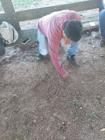
This incipient practice has sparked an interest in structuring tourism as a regular activity, with the offer of transportation, lodging, meals, tours, artistic performances, souvenir sales, among other products. The first and perhaps most prominent attraction they possess is the very condition of the location - that is, the fact that it is a reclaimed territory through Indigenous organization. The history of the movement for the reconquest of the land is a topic of common interest among visitors, being narrated with pride and rich detail by the leader of the Cristalina Retomada, as shown in Figure 5, in which he appears drawing the strategy for the retomadas conquest on the ground.
In addition to the history, visitors can enjoy daily contact with the Terena; partake in hearty and flavorful meals featuring original Indigenous cuisine recipes; go horseback riding; and relish a unique natural setting with verdant pastures, abundant forests, watercourses, and many birds typical of the Pantanal landscape. Activities to be organized for future tourist offerings include trails to different locations, nocturnal animal spotlighting, birdwatching, and seasonal fruit harvesting, such as the guavira (Campomanesia spp.) and the pequi (Caryocar brasiliense), which are common in the region.
Tourism, as such, is an activity that still needs to be structured on-site. The visit to the Cristalina Retomada showed, however, that it is a project that falls within the horizon of demands and of the repertoire of community initiatives towards being integrated into the region’s tourism circuit. Just as in the Kadiwéu IT, this is a movement undertaken by the Indigenous people themselves, who have been mobilizing to make tourism on their lands an effective activity under their domain and management. The path tread thus far, in both situations evaluated here, points to the gradual yet determined consolidation of experiences molded after ecological tourism and ethnotourism, in which the autonomy of the host peoples prevails (Honorato, 2020), alongside respect for each ethnicity’s way of life, customs, habits, and cultures. Aware of their people’s needs and local potential, the Terena and Kadiwéu Indigenous people demonstrate vigilance over the dynamics of village life and the limits of host-guest interaction, managing the activity’s impacts on the communities just as this tourism modality prescribes (Smith, 1989; Honorato, 2020).
Final Considerations
Analyzing the relationship of the Terena and Kadiwéu peoples of the Mato Grosso do Sul Pantanal with tourism, it can be observed that these ethnic groups have coexisted with tourism in their territory. This has occurred primarily through the work of female ceramists, whose art is highly appreciated and disseminated by visitors. The insertion and permanence of Indigenous people in this sector have occurred without their protagonism and self-determination. Based on the lived experience within the villages, it was found that this condition has stimulated initiatives aimed at attracting tourists to the heart of the villages, thereby expanding Indigenous control over the management of these activities.
The discussion raised from the proposed theoretical framework, which involved studies in geography and anthropology from the perspective of tourism, ethnic tourism, and Indigenous communities in the Mato Grosso do Sul Pantanal, among others, in harmony with the methodology and fieldwork, enabled a dialogue between theoreticians in alignment with the authors lived experience. As pointed out by Cruz (2008), Duran (2015), Graburn (1976), Grimwood et al. (2024), Grünewald (2006), Hume (2013), Lama e Sarkhel (2022), and Lustosa (2018), tourism in the researched areas tends to promote the circulation of people and the generation of employment and income in the involved communities. Furthermore, it fosters the effective participation of Indigenous people in the economic, social, and decision-making machinery of local tourism production. This validates the article’s objective: to analyze two initiatives for implementing tourism experiences within the Kadiwéu IT and the Taunay-Ipegue IT of the Terena ethnic group.
Beyond illustrating the interests and mobilization of the communities regarding the implementation of tourism on their lands, it was possible to identify the preponderant role of women in this endeavor. Because they are inserted, albeit tangentially, into the regional tourist market through the trade of art and handicrafts they manufacture, the women demonstrated a sharper perception of the dynamics and the socioeconomic dimension of tourism and, consequently, of the possible benefits that can result from its practice when under the organization and control of the Indigenous group itself. It is in this sense, and the fact that they are intensifying their political and gender organization (Pimentel, Todesco, 2024; Conceição, 2018; Sacchi, 2003) at local and national levels, that conjunctural conditions and technical means are provided for them to position themselves with greater protagonism in this process.
The observed of “lifestyles experience” for which we were summoned by members of the researched communities, and whose experimental and evaluative purpose regarding a visitation practice corresponded, from the outset, to the interest of the Terena and Kadiwéu Indigenous people to see themselves better equipped for tourism through this initiative - placed us in the ambiguous condition of tourists and evaluators during scheduled visits to the villages. At the same time, it proved to be a privileged occasion for dialogue and acquiring knowledge of an autonomous, experimental-phase model of an ethno-tourist enterprise.
We engaged in activities focused on the environment, on the valorization of and respect for local nature, and which exalt traditional culture and practices, in addition to contact with the daily life of the villages. There is still much to consider regarding the tourism to be implemented in the visited villages, such as the impact on community life, the appropriate destination for organic and inorganic waste, the improvement of infrastructure for receiving visitors, and the training of local agents to work in the activity, among others.
The invitation to visit the villages, however, in itself attests to the degree of interest and commitment of the ethnicities to understand and master the activity’s dynamics, as well as their dedication to implementing sustainable practices that result in social, environmental, and economic benefits for the community. It becomes evident that, for the Kadiwéu and Terena Indigenous peoples, expanding participation in tourism goes beyond a desire for insertion into the service chain; it is about establishing new means of dialogue and interaction with non-Indigenous society and consolidating channels of resistance against the surrounding society and the tourism market that benefits from the Indigenous presence and territory. Such a position becomes all the more relevant when considering that these are initiatives and movements spearheaded primarily by Indigenous women - both Kadiwéu and Terena - in critical articulations within the Pantanal communities and, beyond them, with society at large.
References
- AB´SABER, Aziz. Brasil: paisagens de exceção. O litoral e o Pantanal Matogrossense: patrimônios básicos. Cotia: Ateliê Editorial, 2006.
- ANDRADE, Manuel Correia de. A questão do território no Brasil. 2. ed. São Paulo: Hucitec, 2004.
- ARAÚJO, Ana Paula Correia de. O rural em movimento: a pecuária nas transformações espaciais do Pantanal. Campo Grande: Editora da UFMS, 2010.
- ARAÚJO, Sabrina Sales. Ecoturismo e identidade no Pantanal Sul: usos da categoria “pantaneiro” em perspectiva. 2023. Dissertação (Mestrado em Antropologia Social) - Universidade Federal de Mato Grosso do Sul. Campo Grande, 2023.
- BANDUCCI JUNIOR, Álvaro. A natureza do pantaneiro: relações sociais e representação de mundo no Pantanal da Nhecolândia. Campo Grande: Editora da UFMS , 2007.
- BANDUCCI JUNIOR, Álvaro. Catadores de iscas e o turismo da pesca no Pantanal Mato-Grossense. Campo Grande: Editora da UFMS , 2006.
- BANDUCCI JUNIOR, Álvaro; URQUIZA, Antônio Hilário Aguilera. Povos indígenas e o turismo em Mato Grosso do Sul: descaso e improviso. Cadernos do LEME, v. 4, n. 2, p. 1-22, 2012.
- BOGARIN, Beatriz. Indígenas no processo de produção da cerâmica Kadiwéu. [fotografia]. Terra Indígena Kadiwéu. Porto Murtinho, MS, 2023. 1 fotografia, color.
-
BORDIN, Débora. Povos originários: pontes para o turismo de base comunitária em Mato Grosso do Sul. Fundtur/MS, 2023. Available from: https://www.turismo.ms.gov.br/povos-originarios-pontes-para-o-turismo-de-base-comunitaria-no-mato-grosso-do-sul/ Access at: 13 ago. 2025
» https://www.turismo.ms.gov.br/povos-originarios-pontes-para-o-turismo-de-base-comunitaria-no-mato-grosso-do-sul/ -
CHIARAVALLOTI, Rafael Morais; HOMEWOOD, Katherine; ERIKSON, Kirsten. Sustainability and land tenure: who owns the floodplain in the Pantanal, Brazil. Land use policy, v. 64, p. 511-524, 2017. Available from: https://doi.org/10.1016/j.landusepol.2017.03.005 Access at: 23 sept. 2025
» https://doi.org/10.1016/j.landusepol.2017.03.005 - COMISSÃO PRÓ-ÍNDIO. Índios no Estado de São Paulo: resistência e transfiguração. São Paulo: Yankatu Editora, 1984.
- CONCEIÇÃO, Keyla Francis de Jesus da. A invisibilidade do indígena no processo eleitoral brasileiro: as Organizações Indígenas e a luta pela representação política. 2018. Dissertação (Mestrado em Direito) - Universidade de Brasília, Brasília, 2018.
- COOPER, Chris et al Turismo: princípios e práticas. 3ª ed. Porto Alegre: Bookman, 2007.
- COSTA, Maria de Fátima. História de um país inexistente: o Pantanal entre os séculos XVI e XVIII. São Paulo: Kosmos, 1999.
- CRISTOFORI, Pedro. Mapa de localização da Terra Indígena Kadiwéu, destaque para a Aldeia Alves de Barros [material cartográfico]. Campo Grande: UFMS, 2025.
- CRUZ, Rita de Cássia Ariza da. Turismo, produção do espaço e desenvolvimento desigual: para pensar a realidade brasileira. Aportes y Transferencias, v. 12, n. 2, p. 25-45, 2008.
-
DURAN, Maria Raquel da Cruz. Leituras antropológicas sobre a arte Kadiwéu. Cadernos de Campo, v. 24, n. 1, p. 43-70, 2015. Available from: https://doi.org/10.11606/issn.2316-9133.v24i24p43-70 Access at: 25 ago. 2025.
» https://doi.org/10.11606/issn.2316-9133.v24i24p43-70 - ESSELIN, Paulo Marcos. A pecuária bovina no processo de ocupação e desenvolvimento econômico no pantanal sul-mato-grossense (1830-1910). Dourados: Editora da UFGD, 2011.
-
FERNANDES, Julio Francisco Alves; ARAÚJO, Ana Paula Correia de; RIBEIRO, Mara Aline. O Pantanal por elas: o trabalho da mulher pantaneira no turismo. Caderno Virtual De Turismo, v. 21, n. 1, p. 33-45, 2021. Available from: https://doi.org/10.18472/cvt.21n1.2021.1833 Access at: 18 may 2025.
» https://doi.org/10.18472/cvt.21n1.2021.1833 - FOTIOU, Evgenia. From medicine men to day trippers: shamanic tourism in Iquitos. Peru: University of Wisconsin-Madison, 2010.
-
FUNDAÇÃO NACIONAL DOS POVOS INDÍGENAS - FUNAI. Funai e ICMBio regulamentam turismo sustentável em terras indígenas e unidades de conservação. 2025. Available from: https://www.gov.br/funai/pt-br/assuntos/noticias/2025/funai-e-icmbio-regulamentam-turismo-sustentavel-em-terras-indigenas-e-unidades-de-conservacao-com-foco-na-valorizacao-cultural-e-socioambiental Access at: 17 nov. 2025.
» https://www.gov.br/funai/pt-br/assuntos/noticias/2025/funai-e-icmbio-regulamentam-turismo-sustentavel-em-terras-indigenas-e-unidades-de-conservacao-com-foco-na-valorizacao-cultural-e-socioambiental -
FUNDAÇÃO NACIONAL DOS POVOS INDÍGENAS - FUNAI. INSTRUÇÃO NORMATIVA N° 003/2015, de 11 de junho de 2015. Estabelece normas e diretrizes relativas às atividades de visitação para fins turísticos em terras indígenas. 2015. Available from: https://www.gov.br/funai/pt-br/arquivos/conteudo/ascom/2015/doc/jun-06/in-03-2015.pdf Access at: 17 nov. 2025.
» https://www.gov.br/funai/pt-br/arquivos/conteudo/ascom/2015/doc/jun-06/in-03-2015.pdf - GRABURN, Nelson H. Ethnic and tourist arts: cultural expressions from the Fourth World. Berkeley: University of California Press, 1976.
-
GRABURN, Nelson H. The anthropology of tourism. Annals of Tourism Research, v. 10, n. 1, p. 9-33, 1983. Available from: https://doi.org/10.1016/0160-7383(83)90113-5 Access at: 25 oct. 2025.
» https://doi.org/10.1016/0160-7383(83)90113-5 -
GRIMWOOD, Bryan S. R.; LEE, Emma; HIGGINS-DESBIOLLES, Freya. Unsettling geographies of tourism. Tourism Geographies, v. 26, n. 6, p. 899-916, 2024. Available from: https://doi.org/10.1080/14616688.2024.2402997 Access at: 25 ago. 2025.
» https://doi.org/10.1080/14616688.2024.2402997 - GRÜNEWALD, Rodrigo de Azevedo. Indigenism, tourism and cultural revival among the Pataxó people in Brazil. London Journal of Tourism, Sport and Creative Industries, v. 2, p. 21-27, 2009.
- GRÜNEWALD, Rodrigo de Azevedo. Tourism and ethnicity. Horizontes Antropológicos, v. 1, n. 20, p. 141-159, 2006.
- GRÜNEWALD, Rodrigo de Azevedo. Turismo e o resgate da cultura Pataxó. In: BANDUCCI JUNIOR, Álvaro; BARRETTO, Margarita (org.). Turismo e identidade local. 5ª ed. Campinas: Papirus, 2005. p. 127-148.
-
GUIA, Jaume; JAMAL, Tazim. Entangled engagements: a posthumanist and affirmative ethics for tourism geographies. Tourism Geographies, p. 608-619, 2024. Available from: https://doi.org/10.1080/14616688.2024.2330574 Access at: 18 jun. 2025.
» https://doi.org/10.1080/14616688.2024.2330574 - HONORATO, Bruno Eduardo Freitas. Turismo étnico e xamânico na terra indígena do Rio Gregório: um estudo sobre a construção da aldeia Yawarani. 2020. Tese (Doutorado em Antropologia) - Universidade Federal de Minas Gerais. Belo Horizonte, 2020.
- HUME, David. Tourism art and souvenirs: the material culture of tourism. London: Routledge, 2013.
-
INSTITUTO BRASILEIRO DE GEOGRAFIA E ESTATÍSTICA. Censo 2022. Brasil tem 1,7 milhão de indígenas. 2023. Available from: https://agenciadenoticias.ibge.gov.br/noticias/brasil-tem-1-7-milhao-de-indigenas Access at: 22 apr. 2024.
» https://agenciadenoticias.ibge.gov.br/noticias/brasil-tem-1-7-milhao-de-indigenas -
INSTITUTO BRASILEIRO DE GEOGRAFIA E ESTATÍSTICA. Pesquisa Mensal de Serviços 2020. 2020. Available from: https://www.ibge.gov.br/estatisticas/economicas/servicos/ Access at: 22 apr. 2024.
» https://www.ibge.gov.br/estatisticas/economicas/servicos/ -
INSTITUTO SOCIOAMBIENTAL (ISA). Mapa das Organizações de Mulheres Indígenas no Brasil. 2024. Available from: https://acervo.socioambiental.org/acervo/mapas-e-cartas-topograficas/brasil/mapa-das-organizacoes-de-mulheres-indigenas-no-brasil Access at: 10 oct. 2025.
» https://acervo.socioambiental.org/acervo/mapas-e-cartas-topograficas/brasil/mapa-das-organizacoes-de-mulheres-indigenas-no-brasil -
INSTITUTO SOCIOAMBIENTAL (ISA). Povos indígenas no Brasil: Terena, 2014. Available from: https://pib.socioambiental.org/pt/Povo:Terena Access at: 18 maio 2024.
» https://pib.socioambiental.org/pt/Povo:Terena - JESUS, Djanires Lageano de. A (re)tradicionalização dos territórios indígenas pelo turismo: um estudo comparativo entre os Kadiwéu (Mato Grosso do Sul-BR) e os Maori (Ilha do Norte-NZ). 2012. Tese (Doutorado em Geografia. Universidade Federal do Paraná. Curitiba, 2012.
- LAC, Flávia. O Turismo e os Kaingang na Terra Indígena de Iraí/RS. 2005. Dissertação (Mestrado em Antropologia Social) - Universidade Federal do Paraná, Curitiba, 2005.
-
LADEIRA, Maria Elisa; AZANHA, Gilberto. Povos indígenas no Brasil: Terena. 2014. Available from: https://pib.socioambiental.org/pt/Povo:Terena Access at: 18 may 2024.
» https://pib.socioambiental.org/pt/Povo:Terena -
LAMA, Rinzing Lama; SARKHEL, Debagni. Ethnic Tourism. In: LAMA, Rinzing Lama; SARKHEL, Debagni. Encyclopedia of tourism management and marketing. Cheltenham, UK: Edward Elgar Publishing, 2022. p. 122-124. Available from: https://doi.org/10.4337/9781800377486.ethnic.tourism Access at: 22 apr. 2024.
» https://doi.org/10.4337/9781800377486.ethnic.tourism -
LEE, E. Direitos dos povos indígenas e turismo: pensando sobre a colonização. Tourism Geographies, 1-8, 2024. Available from: https://doi.org/10.1080/14616688.2024.2395469 Access at: 22 apr. 2024.
» https://doi.org/10.1080/14616688.2024.2395469 - LOSONCZY, Anne-Marie; MESTURINI Silvia. La selva viajera: rutas del xamanismo ayahuasquero entre Europa y América. Revista Religião e Sociedade, v. 30, p. 2, 2011.
- LUSTOSA, Isis Maria Cunha. O povo indígena Jenipapo-Kanindé do Ceará e o turismo. Agália - Revista de Estudos na Cultura, p. 93-127, 2015. (Volume especial: Turismo em terras indígenas).
- LUSTOSA, Isis Maria Cunha. Políticas públicas para regulamentar o turismo em terras indígenas: povos indígenas, projetos de turismo e demarcação no Brasil. In: ANAIS DO IV COLÓQUIO INTERNACIONAL DE TURISMO EM TERRAS INDÍGENAS E DE COMUNIDADES TRADICIONAIS: ATAQUES AOS SEUS DIREITOS E SUAS ESTRATÉGIAS DE ENFRENTAMENTO, 2018, Anais [...] Fortaleza: Departamento de Geografia da Universidade Federal do Ceará, 2018.
- MALDONADO, Carlos. O turismo rural comunitário na América Latina: gênesis, características e políticas. In: BARTHOLO, Roberto; SANSOLO, Davis Gruber; BURSZTYN, Ivan (org.). Turismo de base comunitária, diversidade de olhares e experiências brasileiras. Rio de Janeiro: Letra e imagem, 2009. p. 25-44.
-
MALDONADO, Carlos. Red de turismo sostenible comunitario para América Latina. Jornadas de Formación: Turismo Responsable. 2005. Available from: http://turismoresponsable.net Access at: 23 may 2024.
» http://turismoresponsable.net - MORETTI, Edvaldo. Atividade turística no Pantanal e as transformações no trabalho. Revista de geografia, v. 5, n. 9, p. 41-46, 1999.
- MORETTI, Edvaldo. Turismo, consumo e produção do espaço: o mundo do trabalho no período técnico cientifico informacional. In: IX COLÓQUIO INTERNACIONAL DE GEOCRÍTICA, 11, 2007, Anais [...] Porto Alegre, 2007.
- NEVES, Sandro Campos. A apropriação indígena do turismo: os Pataxó de Coroa Vermelha e a expressão da tradição. 2012. Tese (Doutorado em Antropologia) - Universidade Federal da Bahia, Salvador. 2012.
- NEVES, Sandro Campos. Eficácia ritual e eficácia turística: o ritual do awê entre os Pataxó Meridionais e o turismo. Revista Cultur, ano 04, n. 2, 2010.
-
OLIVEIRA, Marcos Wesley de. Yaripo - Ecoturksmo Yanomami: plano de visitação, 2022. Available from Available from https://acervo.socioambiental.org/acervo/documentos/yaripo-ecoturismo-yanomami-plano-de-visitacao Access at: 01 jun. 2024.
» https://acervo.socioambiental.org/acervo/documentos/yaripo-ecoturismo-yanomami-plano-de-visitacao - PEREIRO, Xerardo. Pelos trilhos do(s) turismo(s) indígena(s). Agália - Revista de Estudos na Cultura, p. 9-34, 2015. (Volume especial: Turismo em terras indígenas).
- PIMENTEL, Maria José dos Santos; TODESCO, Caroline. Turismo de base comunitária e empoderamento feminino na comunidade indígena Catu dos Eleotérios. Revista GeoNordeste, n. 2, p. 201-220, 2024.
- PRATS, Llorenç; SANTANA, Agustin. Turismo y patrimonio, entramados narrativos. Tenerife: PASOS, 2011.
- PROENÇA, Ana Rosa Guimarães Bastos; PANOSSO NETO, Alexandre Panosso. Turismo em territórios indígenas: desenvolvimento e impacto sociocultural na Comunidade Indígena Nova Esperança “Pisasú Sarusawa” (Rio Cuieiras - Amazonas). RBTUR, v. 16, e-2408, 2022.
- RIBEIRO, Mara Aline. Entre cheias e vazantes: a produção de geografias no Pantanal. Campo Grande: Editora da UFMS , 2015.
- RIBEIRO, Mara Aline. Líder indígena traça croqui de retomadas para turistas. [fotografia]. Terra Indígena Kadiwéu. Porto Murtinho, MS, 2024. 1 fotografia, color.
- SACCHI, Ângela. Mulheres indígenas e participação política: a discussão de gênero nas organizações de mulheres indígenas. Revista Anthropológicas, v. 14, n. 1, p. 95-110, 2003.
- SANTOS, Milton. O território e o saber local: algumas categorias de análise. Cadernos Ippur, v. 2, p. 15-25, 1999.
-
SCHEYVENS, Regina. International development and tourism geographies. Tourism Geographies, v. 27, p. 620-630, 2025. Available from: https://doi.org/10.1080/14616688.2024.2330579 Access at: 22 apr. 2024.
» https://doi.org/10.1080/14616688.2024.2330579 -
SECRETARIA DE ESTADO DE EDUCAÇÃO (SED). Governo investe na Terra Indígena Kadiwéu em benefício de três mil índios. 2021. Available from: https://www.sed.ms.gov.br/governo-investe-na-terra-indigena-kadiweu Access at: 15 may 2024.
» https://www.sed.ms.gov.br/governo-investe-na-terra-indigena-kadiweu - SILVA, Charlei Aparecido da; FIALHO, Edson; ROCHA, Vinícius Machado. Uma visão social sobre o clima e seus significados nas paisagens climáticas dos lugares, o Pantanal/Brasil no contexto das mudanças climáticas. In: OLIVEIRA-COSTA, Jorge; ZACHARIAS, Andréa A.; PANCHER, Andréia M. Métodos e técnicas no estudo da dinâmica da paisagem física nos países da CPLP - Comunidade dos Países de Expressão Portuguesa. Málaga: EUMED, 2022. p. 49-76.
- SILVA, Giovani José da. De Mbayá-Guaikurú a Kadiwéu: uma sociedade de artistas e guerreiros. In: CHAMORRO, Graciela; COMBÈS, Isabelle. Povos indígenas em Mato Grosso do Sul: história, cultura e transformações sociais. Dourados: Editora da UFGD , 2015. p. 277-286.
- SILVA, João dos Santos Vila da; ABDON, Myrian de Moura. Delimitação do Pantanal brasileiro e suas sub-regiões. Pesquisa Agropecuaria Brasileira, v. 33, Número Especial, p. 1703-1711, 1998.
-
SIQUEIRA, Débora. Aldeias trabalham com pesca esportiva, ecoturismo, turismo cultural e observação de pássaros. Governo de Mato Grosso, 2024. Available from: https://www.sedec.mt.gov.br/-/mt-tem-19-etnias-desenvolvendo-turismo-ind%C3%ADgena-aponta-mapeamento-da-sedec/ Access at: 18 may 2024.
» https://www.sedec.mt.gov.br/-/mt-tem-19-etnias-desenvolvendo-turismo-ind%C3%ADgena-aponta-mapeamento-da-sedec/ - SMITH, Valene. Hosts and guests: the Anthropology of tourism. 2 ed. Pennsylvania: University of Pennsylvania Press, 1989.
- SOUSA, Marcelo José Lopes de. O território: sobre espaço e poder, autonomia e desenvolvimento. In: CASTRO, Iná Elias; GOMES, Paulo Cesar da Costa; CORRÊA, Roberto Lopes (org.). Geografia: conceitos e temas. 14ª Ed. Rio de Janeiro: Bertrand Brasil, 1995. p. 77-116.
- SOUZA, João Batista Alves de. As trajetórias e resistências das comunidades quilombolas do Pantanal Sul-Mato-Grossense. Porto Alegre: Total Books, 2021.
- STAVENHAGEN, Rodolfo. Las organizaciones indígenas: actores emergentes en América Latina. Revista de la CEPAL, v. 62, p. 61-73, 1997.
- TIAGO, Gilson. Kixovoku Hômo Terenoe: um estudo antropológico sobre o jeito Terena de se pintar. 2019. Dissertação (Mestrado em Antropologia Social) - Universidade Federal de Mato Grosso do Sul. Campo Grande, 2019.
- TUPI-GUARANI, Itamirim, et al Terra Indígena Piaçaguera: turismo como movimento de resistência. São Paulo: Comissão Pró-Índio de São Paulo, 2022.
- UNWTO. Global Report on Women in Tourism - Second Edition. Madri: UNWTO, 2019.
- URRY, John. O olhar do turista: lazer e viagens nas sociedades contemporâneas. Studio Nobel, SESC, 1996.
- VAN DEN BERGUE, Pierre; KEYES, Charles. Introduction: Tourism and Re-Created Ethnicity. Annals of Tourism Resaerch, n. 11, p. 343-352, 1984.
- VON HELD, Almir de Amorim. Turismo em terras indígenas: atravessando o portal com respeito. 2013. Dissertação (Mestrado Profissional em Turismo) - Universidade de Brasília, Brasília, 2013.
-
WEAVER, David Bruce. Beyond convention: reimagining indigenous tourism. Tourism Geographies, v. 18, n. 1, p. 28-37, 2015. Available from: https://doi.org/10.1080/14616688.2015.1122077 Access at: 22 apr. 2024.
» https://doi.org/10.1080/14616688.2015.1122077 -
YANG, Li; WALL, Geoffrey. Ethnic Tourism and Entrepreneurship: Xishuangbanna, Yunnan, China. Tourism Geographies, v. 10, n. 4, p. 522-544, 2008. Available from: https://doi.org/10.1080/14616680802434130 Access at: 12 apr. 2024.
» https://doi.org/10.1080/14616680802434130 -
YEA, Sallie. On and off the ethnic tourism map in Southeast Asia: The case of Iban longhouse tourism, Sarawak, Malaysia. Tourism Geographies, v. 4, n. 2, p. 173-194, 2002. Disponível em: Disponível em: https://doi.org/10.1080/14616680210124945 Access at: 22 apr. 2025.
» https://doi.org/10.1080/14616680210124945
-
1
It is important to note that, in administrative-legal terms, the Cristalina Retomada possesses the Territorial Delimitation Identification Report (RCID); however, it remains under litigation. This legal precarity is a critical variable to consider when analyzing tourism experiences in Indigenous areas undergoing official regularization processes.
-
Data availability statement:
Not applicable
Not applicable

 Source:
  Source:
  Source:
  Source: Cristofoli (2025).
 Source: