
 THE EDUCATIONAL AGENDA AS A NODAL POINT IN THE BRAZILIAN ANTI-RACIST STRUGGLE: A LOOK AT THE DISCURSIVE ARTICULATIONS OF BLACK MOVEMENTS
ABSTRACT
Through a historiographical review of the political actions of black Brazilian movements, based on the writings of Nilma Lino Gomes on the educator black movement and the reflections of Alex Ratts on the academic-based black movement, we seek to understand the articulatory practices that contributed to establishing the signifier ‘education’ as a nodal point in the discursive field of the anti-racist struggle in Brazil, centering different requests from black subjects, from access and permanence in schools/universities to the struggles for culturally responsive and racially just pedagogical practices. To summarize, this is a theoretical essay based on a review of the national literature and in dialogue with the discourse theory of Ernesto Laclau and Chantal Mouffe.
Keywords
Black movements; Anti-racist education; Nodal point; Discourse Theory
RESUMO
Mediante retomada historiográfica da atuação política dos movimentos negros brasileiros, baseado nos escritos de Nilma Lino Gomes sobre o movimento negro educador e nas reflexões de Alex Ratts sobre o movimento negro de base acadêmica, buscamos compreender as práticas articulatórias que contribuíram para fixar o significante “educação” como ponto nodal no campo discursivo da luta antirracista no Brasil, centralizando diferentes demandas dos sujeitos negros, desde o acesso e a permanência nas escolas/universidades até as lutas por práticas pedagógicas culturalmente responsivas e racialmente justas. Assim, em síntese, trata-se de um ensaio teórico construído a partir da revisão da literatura nacional e em diálogo com a Teoria do Discurso de Ernesto Laclau e Chantal Mouffe.
Palavras-chave
Movimentos negros; Educação antirracista; Ponto nodal; Teoria do Discurso
RESUMEN
A lo largo de una revisión historiográfica de las acciones políticas de los movimientos negros brasileños, a partir de los escritos de Nilma Lino Gomes sobre el movimiento negro educador y de las reflexiones de Alex Ratts sobre el movimiento negro de base académica, buscamos comprender las prácticas articuladoras que contribuyeron a establecer el significante ‘educación’ como punto nodal en el campo discursivo de la lucha antirracista en Brasil, centralizando diferentes demandas de los sujetos negros, desde el acceso y la permanencia en las escuelas/universidades hasta la lucha por prácticas pedagógicas culturalmente sensibles y racialmente justas. En suma, se trata de un ensayo teórico basado en una revisión de la literatura nacional y en diálogo con la teoría del discurso de Ernesto Laclau y Chantal Mouffe.
Palabras clave
Movimientos negros; Educación antirracista; Punto nodal; Teoría del Discurso
Introduction
The articulation of various social movements in the Brazilian context has generated, and continues to generate, countless pressures on the State in its quest to improve the living conditions of marginalized groups. The confluence of interests, driven by social class, race, ethnicity, gender, sexuality, and other factors, as well as their intersections, has paved the way for guaranteeing and accessing fundamental rights, such as health, housing, employment, and education. The latter right is the basis of our considerations in this topic, bearing in mind the democratization of the right to education and the engagement of organized movements in the late 1970s, representing the struggle for equity and social justice.
During the process of redemocratization of the Brazilian State and from the second half of the 20th century onwards, the efforts of black movements to constitute, through the arena of public and political spaces, the raising of issues linked to racial discrimination became notorious (Sposito, 2000), structurally maintained even after May 13, 1888, the date that demarcates the supposed symbolic process of abolition of slavery through the signing of the Lei Áurea (Golden Law).
The institutionalization of abandonment and denial of access to land for formerly enslaved people exposes the fallacy of the idea of freedom as nothing more than a varied set of political agreements, among them the Land Law, which legitimizes domination and the maintenance of racial violence arising from the relations between the master’s house and the slave quarters, as Souza, 2017, rightly highlights – specifically from the elites of enslavers and the promotion of narratives of forgetting the scenario of enslavement, as well as the trivialization of an event that defines our social, cultural and economic relations to this day.
The former slave and his descendants left slavery dispossessed and unprepared for free labor, incapable, in short, of adapting to the new contractual standards and rationalizing and modernizing schemes of large-scale agricultural and industrial production, becoming henceforth marginalized by force of the inevitable logic of capitalist progress
(Azevedo, 2004, p. 18, our translation)
The author’s considerations in the excerpt above corroborate the understanding of the persistence of racial inequalities in the post-abolition of slavery context and how relations between masters and enslaved people remained, albeit in different forms, governed by the dominator/dominated duality within social institutions and the continued discourses of Brazilian territorial formation, with an ode to European matrices to the detriment of black groups.
It was to ensure the voracious economic and social interests of this country’s elites that racial violence was promoted and naturalized from the psyche—in the idea of the inferiority of Black people (Fanon, 2008)—to the materiality of life in urban centers, where Black men and women began to occupy the most remote spaces, lacking urban facilities and services, exposed to the harsh environment (Aguiar; Souza, 2019) and facing double discrimination based on class and race. Thus, the socio-spatial segregation that exists today is the result of mechanisms that have been reiterated since the colonization process and, also, of the modern form of capital accumulation in Brazil.
It is intending to change the course of racism, in its various forms, that Black movements join forces and strategies of collective, plural, and everyday resistance, seeking to subvert the condition of abandonment that Black Brazilians have faced for generations. Through the readings and considerations of Black theorists on the historiography of Brazilian political articulations in the racial field, the prominent place focused on education is evident, seen as a fruitful means of establishing anti-racist practices.
This work was developed along these lines, aiming to discuss the implications of the organized political struggles of Black groups since the 1970s and the privileged place given to the educational agenda within these struggles. This work examines the historiographical reexamination of the activities of Black movements in Brazil by important thinkers, notably Professor Dr. Nilma Lino Gomes and her writings on the Black education movement (Gomes, 2017) and Professor Dr. Alex Ratts in his research and reflections on the academic-based Black movement (Ratts et al., 2006; Ratts, 2011). Although these authors are the main theoretical frameworks mentioned above, we also seek to engage with related works in the fields of education, geography teaching, the geography of ethnic-racial relations, sociology, and political science.
Through these two keys to analyzing and organizing Black thought in the final decades of the 2000s, presented by the theorists cited above, we seek, in light of the post-structuralist assumptions of Ernesto Laclau and Chantal Mouffe’s discourse theory, to understand the articulatory practices and discursive chains composed through the political action of Black people and the construction of nodal points “[...] that partially fix meanings, and the partial character of this fixation proceeds from the openness of the social, a result, in turn, of the constant overflow of all discourse through the infinity of the field of discursivity” (Laclau; Mouffe, 2015, p. 113).
The infinite discursive field surrounding the Black movement and the efforts directed toward racial equity confront us with a process of negotiating meanings by those affected by racism, who actively and collectively articulate themselves to establish a shared sense of action, a nodal point that can temporarily meet the demands for dignity and change the subservient status experienced by Black people. The point of convergence of different and, in some cases, even divergent social movements organized around the Black agenda has been education, especially in ensuring free public education, as well as in the formulation and implementation of educational curricula that address Black-African issues.
Regarding the structuring and organization of the reflections, this article was subdivided into two topics. In the first, entitled “[...] education is the chosen field”: the Black movement that educates, produces, and articulates knowledge, we center the debates on the educational content that marks the action of Black movements in Brazil, based on the writings of Gomes (2017). The second topic, titled “The color of this university city is me”: higher education as a nodal point in the articulations of the academic-based Black movement, draws on the debates of Ratts et al. (2006) and Ratts (2011) on the academic-based Black movement, that is, the activism of young Black university students in universities. It is worth noting that both topics rely on our considerations, supported by Ernesto Laclau and Chantal Mouffe’s Discourse Theory, regarding political discursivity and the articulations arising from the process of conceiving education (both in the role of basic school institutions and universities) as the main discursive chain of the Brazilian anti-racist struggle, given the multiplicity of existing demands and identities.
“[...] Education is the Chosen Field”: The Black Movement that Educates, Produces and Articulates Knowledge.
Before establishing the debate about the Black education movement, we believe it is necessary to discuss who debates and who writes about the intellectual nature of this movement. In the academic world, where subjectivities are often mitigated in favor of notions of subject-researcher/subject-researched distance and the power relations surrounding what and who should be considered a reference for knowledge, we believe in a movement that also begins with the recognition of what and who is evidenced in research.
Black intellectual Sueli Carneiro (2005) attests to the above considerations and addresses, in her thesis entitled “The construction of the other as non-being as the foundation of being,” the mechanisms of inferiorization that the device of raciality operates, associated with the conception of the paradigm of the Other by Roseli Fischmann (1994). The conformation and reproduction of the processes of discrimination, for Carneiro (2005), originate from a historically and pedagogically prior unity that attributes meanings and ways of conceiving the Other in the dimension of non-being, of the non-human (Fig. 1).

First street demonstration of the Movimento Negro Unificado (Unified Black Movement) on the steps of the Municipal Theater of São Paulo.
African slavery and the unfolding discourses created and reiterated, as a theoretical tradition of subjugation of Black and Indigenous peoples, symbolize the condition of the Other, and this is also revealed in scientific rationality, as we propose to problematize in this brief introduction to this topic. Thus, we believe that:
he sustainability of racist ideology depends on its ability to naturalize its conception of the Other. It is essential that the dominated, defeated Other express, in its concrete condition, what the ideology attributes to it. Words and things, form and content, must coincide for the idea to become naturalized
(Carneiro, 2005, p. 29, our translation)
In a dialogical tone with the assumptions of Carneiro (2005), as well as of countless Black intellectuals who have dedicated decades to denaturalizing scientific racism and its consequences for the educational profile of the Brazilian population, Professor Nilma Lino Gomes—a scholar in the field of education and ethnic-racial relations, to whom we will dedicate ourselves in the discussion on the Black educator movement—is a reflection and mirror of the educational policies articulated previously and currently in this country. A reflection because today’s academic intellectuals are challenged by the projection of Black activist bodies from past decades, and a mirror because she represents, within and despite the Euro-white academy, the theoretical and methodological force of anti-racist pedagogies systematized in their genesis at the heart of Black movements and unfolded within them, in us, and in others who will come after her and after us.
As Conceição Evaristo, another great contemporary intellectual forged in the field of black poetic writings, reinforces:
echoes perplexed verses
with rhymes of blood
and hunger.
gathers all our voices
gathers within itself
the silent, silent voices
choked in our throats.
gathers within itself
speech and action.
In my daughter's voice
the resonance
of life-freedom will be heard
And it is in the insurgencies of voices and discourses articulated by racialized subjects that Gomes (2017) debates the historiography of the black movement, understanding it as a diversity of ways of organizing and politically positioning black people in the fight against racism, configuring itself as “[...] a collective and political actor constituted by a set of varied groups and political entities” (Gomes, 2017, p. 27) that, despite having equivalences in the anti-racist construct, also have particularities and internal disputes that result in the construction of varied agendas.
We consider the lack of consensus in democratic theory beneficial. After all, the sphere of political action should not rely on essentialist mechanisms of consensus and reconciliation, since confrontation is constitutive of humanity and a condition for the existence of diversity. It is in the realm of consensus that liberalism relies on imposing universal truths that are not representative (Mouffe, 2015); on the contrary, it reproduces a “universalization,” an attempt to arbitrarily close off the meanings of the world in the name of existing narratives and power plays. Thus, we understand the impossibility of closing discursive chains (as universal and immutable maxims) as a necessary prerogative for social movements to achieve hegemony through their activism and the establishment of provisionally established agendas.
Thus, as Gomes discusses the existence of discourses surrounding (i) Zumbi dos Palmares’s return to the abolitionist struggle; (ii) the urgency to criminalize racist practices; and (iii) the perception that formal education neglects ethnic-racial knowledge, the author exposes the plurality of issues addressed in Black movements and, consequently, the internal disputes common to the relational nature of collective identities. Thus, the phenotypic racial element alone was not enough to unite subjects and politically advance their anti-hegemonic demands; it was necessary to understand that the collective results in a diverse range of discursive fronts, making it essential to establish suturings around the discursive field to temporarily constitute an articulatory chain between the various struggles that come to comprise an organized social order capable of antagonizing the power space occupied by the hegemonic equivalent of racism.
We identified in Gomes (2017) that, among the numerous signifiers, it is education that gains centrality and is fixed in the field of discursivity, as a nodal point in the action of black movements at the end of the 20th century, as we attest in the writings below:
Education is the chosen field for reflection here because it is a social right, hard-won by non-hegemonic groups in Brazil, which was systematically denied to Black Brazilians for a long time. In the struggle to overcome this situation of denial of rights and the invisibility of the history and presence of an ethno-racial collective that participated and actively participates in the construction of the country, the Black movement, through its prominent leaders and the actions of its activists, elected and highlighted education as an important space and time capable of intervention and social emancipation, even amidst waves of conservative regulation and capitalist violence
(Gomes, 2017, p. 24, our translation, emphasis added).
The dispute within the educational field, highlighted above, is not necessarily related to the idea that other demands were/are less urgent, irrelevant, and/or should be eliminated—thus generating a solution to the internal disputes of collective subjects—but that there was a provisional suspension of these demands to universalize the discourse, making it more representative in the game of differences. In the post-structuralist contributions of Discourse Theory, “[...] the universal is nothing more than a particular(s) that at some point became dominant” (Laclau, 2011, p. 54), articulated around a nodal point. Thus, the idea of a nodal point consists of a “[...] discourse that articulates other discourses around itself” (Santos, 2019, p. 151).
For establishing links around education, it was necessary to discuss race and ethnic-racial identity as a unifying element and the first factor of equivalence between black collectives, with the aim of i) raising awareness/mobilizing subjects regarding their ethnic-racial condition and, once mobilized, ii) outlining strategies for demands in the political field. From this perspective, Domingues (2009, p. 102, our translation) emphasizes:
For the Black movement, "race," and therefore ethno-racial identity, is used not only as an element of mobilization but also as a mediator of political demands. In other words, for the Black movement, "race" is the determining factor in organizing Black people around a common project of action.
The political articulation to be established in this context was not previously organized, as the abstraction of the narrative about ancestry and the valorization of Black identity, or the idea of brotherhood based on aspects of color and race, was not enough for the political to be effectively operated. Thus, it was necessary to understand the rules and norms of the democratic field of rights-claiming to provide the possibility of destabilizing the hegemonic other and to conceive, within the institutional/legal realm, of successive reparatory measures neglected by the State in the post-abolition period.
In the Jesuit educational processes of colonial Brazil, aligned with the formation of social castes, the elites were entitled to higher and erudite (propaedeutic) education, aimed at maintaining the colonial power structure. In contrast, Black and Indigenous people were entitled to trade education to corroborate and reaffirm the degrading place of enslavement (Casimiro, 2007). Educational neglect also acted (and remains in force) as a mechanism for the permanence of the formerly enslaved in the most impoverished classes.
Domingues (2009), in his historiographical research on Black protests and schooling in Brazil (1889-1937), highlights the role of Black leaders and organized groups in encouraging their peers to pursue intellectual instruction in schools. Furthermore, the researcher also highlights the role of collectives in denouncing, through the Black press, the lax State, which did little to address the low educational attainment of the Afro-Brazilian population. Through associations, clubs, and autonomous organizations, Black individuals sought alternatives to formal education. They established their own educational institutions, such as the “Progresso e Aurora” (Progress and Dawn) school, founded on May 13, 1908, by the “Sociedade Amigos da Pátria” (Society of Friends of the Fatherland). Records indicate that approximately 1.000 students attended during its decade of operation.
In a similar movement, the Teatro Experimental do Negro (Fig. 2), led by intellectual and activist Abdias do Nascimento, also worked to educate and incorporate Black people into artistic and cultural activities, including the creation of literacy workshops and the sharing of knowledge on African and Afro-Brazilian themes in the dramaturgical project. Through these and other initiatives, it is clear that informal educational environments have represented a space-time of resistance for the anti-racist struggle since before the systematic uprising of the contemporary Black movement, given the neglect of formal spaces in the context of the entry and retention of Black individuals, as well as in the formulation of curricula that fail to address African and Afro-Brazilian knowledge—a perspective still recurrent given the gaps in Law No. 10.639/03 (Brasil, 2003).

Staging of the show Sortilégio- Misterio Negro (Spell- Black Mystery), by Abdias do Nascimento.
Although it does not encompass the timeframe adopted in this discussion, we believe it is pertinent to highlight schooling, the desire for educated Black bodies, as a long-standing project in Brazilian Black activism. Our choice to highlight the strategies at the end of the 20th century is related to the minimal change in the landscape of neglect since “abolition.”1, and given this, the effervescence of the black movement in the face of the unprecedented organization of black entities throughout the country, with emphasis on the work of the Movimento Unificado Contra Discriminação Racial-MUCDR (Unified Movement Against Racial Discrimination), later renamed as Movimento Negro Unificado-MNU (Unified Black Movement).
Founded in 1978, the MNU reflects the worsening racism and its attendant consequences during the military dictatorship. By organizing nationwide, Black collectives led to more effective measures in the fight against police violence, the murder of Black people, and acts of racial discrimination. These issues were present at the MNU’s first demonstration on July 7 of the same year (Fig. 3), held on the steps of the São Paulo Municipal Theater, which drew approximately 2,000 people.
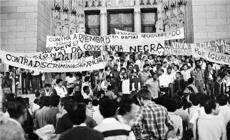
The organization that “[...] chooses education and work as two important agendas in the fight against racism”, according to Gomes (2012, p. 738), is also responsible for constituting a generation of black intellectuals seen as a reference in the insertion and dedication to the study of racial issues in academic spaces.
In the context of the country’s redemocratization, after the end of the military dictatorship, faced with the numerous disputes of/in the National Constituent Assembly, the agenda of the black movement with a more universalist focus – in the sense of thinking about educational policies – reorders its political strategies and recognizes that a large part of the black population was still not contemplated, even with the advancement of educational agendas for diversity (Gomes, 2017).
The recognition of the continued status quo of Blackness sparked the affirmative action agenda in the form of higher education admission quotas as an emergency alternative to changing the educational profile of the Black population. Based on Laclau and Mouffe’s (2015) Discourse Theory, this movement represented the volatility of the hegemonic position, requiring new contours to encompass the heterogeneity of subjects at different educational levels and spaces. It is necessary, in the context of particularisms, to reappropriate the chosen universalist tone.
Thus, the choice of education stands out as a common project and a nodal point capable of representing, in a more universal way, the many particularities of the anti-racist colonial agenda. This perception is present in Gomes’s reflections (2017, p. 24, our translation), after all:
In the struggle to overcome this situation of denial of rights and invisibility of the history and presence of an ethnic-racial collective that participated and actively participates in the construction of the country, the black movement, through its main leaders and the actions of its activists, elected and highlighted education as an important space and time capable of intervention and social emancipation even amidst waves of conservative regulation and capitalist violence.
The nodal point centered on education positions the Black movement as the primary political force capable of building pathways and establishing connections between the Black community, primary schools, and universities—spaces that were previously predominantly exclusionary for this social group. Demands in this context stem from the recognition that “[...] the school is socially responsible for the transmission and socialization of knowledge” (Gomes, 2017, p. 53). Therefore, beyond the need to develop public policies that guarantee the inclusion of the Black community in formal educational processes, the school is also seen as a favorable environment for the reflection and dissemination of Black knowledge, without ignoring and countering the school’s previous role in reproducing racial stigmas.
“The Color of this City University is me”2: Higher Education as a Nodal Point in the Articulations of the Academic-Based Black Movement
Considering the time frame adopted regarding the black movement from the 1970s onwards, what stands out among the many faces of this collective is the articulation of racial agendas by young black students within universities – that is, the focus on higher education as a field of dispute for the (few) black subjects who roamed the restricted spaces of the (even more) Eurowhite academy at the time.
Lima and Prates (2015) analyzed racial inequalities in Brazil over the past 40 years. They found significant growth in the net enrollment rates of Black and brown youth aged 18 to 24 in higher education, rising from a low of 0% to 1% in 1980 to nearly 30% in 2010. This rate remained significantly unequal compared to the 60% rate for white youth in 2010. However, we are interested in highlighting the Black movement’s demand for access to higher education, as the net enrollment rate for Black youth aged 18 to 24 enrolled in higher education was less than 1% in 1980. Statistically and allegorically, for every 100 Black youth, not even one whole Black body attended higher education! It was against this extreme racial violence that access to higher education became an equal demand among the countless other, equally legitimate, demands of the Brazilian Black movement. Alex Ratts—a leading researcher in the fields of anthropology, geography, and education on ethnic-racial relations—in addition to his notable contributions to the debate on Black, quilombola, and Indigenous spatialities and the commemoration of Black intellectuals such as Beatriz Nascimento and Lélia Gonzalez, offers considerations and a bold overview of the actions of Black collectives in universities, as well as the new activism emerging from this space in the face of academic racism.
For Ratts (2009, p. 8), the guise of racism operating in science production spaces “[...] unfolds in the maintenance of Black underrepresentation in teaching and student bodies,” a mechanism promulgated since eugenicist racial theories in the 19th century and in the propagation of ideas tied to the division of humanity by racial criteria – in which, in the biological wake, whites hierarchically occupy a place of prestige to the detriment of other races and the various problems generated through the processes of miscegenation (Schwarcz, 1993). The ideal of civility and healthy development of the Brazilian nation was, therefore, based on the ideology of whitening, both in terms of phenotype and the constitution of a nationalist discourse grounded in the matrix of Eurowhite socio-territorial formation (Skidmore, 2012).
Ratts (2009), in dialogue with Lélia González’s (1983) students, exposes another facet of academic racism: the attempt to turn black people at the university into “infant” people, those who cannot be the owners of their discourses – like the child who is represented by the speech of the guardian/adult and, in a similar situation, the condition of Blackness through the denial and/or omission of corporeality and Afro-referenced knowledge.
And the risk we take here is the act of speaking with all its implications. Precisely because we have been spoken for, infantilized (infans does not have their own speech, it is the child spoken for in the third person, because adults speak for them), in this work, we assume our own speech. In other words, the trash will speak, and in a peaceful way
(Gonzalez, 1983, our translation, emphasis added).
The act of speaking, language itself, for Lélia Gonzalez and Alex Ratts, is an instrument of counterposition for the underrepresented; it involves confronting colonized knowledge and investing not in new, but in other epistemes than those of modernity-coloniality (Quijano, 2005) that govern our representative imagination about the world and the other.
In the logic of modernity/coloniality, the construction of knowledge and wisdom of subalternized groups is constantly repressed by the hegemonic colonizing subject, as a way of reaffirming its own postulates. Science, also hostage to modern/colonial primacy, establishes the European bubble as universal and the theoretical-methodological myopia attributed to any sources outside of whiteness3.
It is worth highlighting that the interactions between language and politics by collectives and social movements are vital for us to think of discourse not as a solely cognitive element, unrelated to political action or even without any implication in this field, but as a mediator in the construction of articulatory practices responsible for constituting and organizing social relations, since it is in the locus of discursive conditions that political facts and objects emerge (Laclau; Mouffe, 2015).
The social understood as discourse is configured as the interior to which the actions of the political unfold (Mutzenberg, 2003); where discursive formations conceive, within a plurality of signifiers and a system of relations, processes of identification and negotiation of fixation of partial meanings (Laclau; Mouffe, 2015) to draw a coherent panorama of the struggles for demands within a given collective.
Discourses surrounding the denial of academic spaces for Black people, both in their corporeality and in the recognition of their epistemes, are a central perspective at the heart of the Black movement with an academic base; therefore, they are the result of centralizations arising from the constitution of a collective will. According to Ratts (2009, p. 3), this movement was initially constituted by “[...] several young Black academics who sought to form study and discussion groups on the racial issue.” The priority of these groups was the university context, given the activism that was taking place internally within institutions at the time, which were still exempt from affirmative action policies.
The articulation of non-hegemonic groups at the university exposes concerns and aligns with the resumption of black movements in the 1970s, as “[...] the milestone of a new activism” (Ratts, 2009, p. 6), similar to that of feminist groups that also began to dispute academic spaces in the same period, according to the author’s considerations.
To illustrate the collectives of Black students, teachers, and activists active in the university context in the early 1970s, we highlight the work of the André Rebouças Working Group (Grupo de Trabalho André Rebouças -GTAR), from the Fluminense Federal University (Universidade Federal Fluminense -UFF), in the city of Niterói-RJ. This group included students from the most diverse courses, with greater representation from the humanities area, as well as students from the exact sciences field.
Established as an academic blackness project, the GTAR developed reflections linked to black people in Brazil and conceived, through meetings, encounters, events, among other synonyms common to scientific dissemination within the university, the possibility of approaching the debate on racial relations from the perspective of racialized subjects, no longer from the scientific racism fed back by the erasure of Afro-diasporic knowledge matrices and the conformation of enslavement processes by color/race criteria.
Ratts (2011) highlights that among the theoretical and political goals of the GTAR were the inclusion of credits on ethnic-racial relations in Brazil in humanities courses and the reconstruction of existing curricula, such as those related to the Anthropology of Black Brazilians, present at the Institute of Human Sciences and Philosophy at the UFF. It is also worth highlighting the group’s role in the process of updating and inserting other bibliographical references in studies on race and the construction of dialogue networks with researchers in the field of racial issues from different universities (aligned with the group’s perspectives), taking such actions as a criterion for disputing Blackness in/within the academic-scientific space.
As a reference for academic activism within GTAR/UFF, in Niterói, the young historian Beatriz Nascimento stood out (Fig. 4). At the same time, at the University of São Paulo (USP), we had the work of the young sociologist Eduardo de Oliveira e Oliveira (Fig. 5). They were both committed to questioning/problematizing the university’s role in confronting racial inequalities and racism in Brazil.

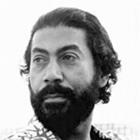
More specifically, Beatriz Nascimento developed a broad debate about racial and gender relations, considering the continuities and implications of the slave legacy in the context of social modernization in Brazil which, aligned with the core of Western European domination (Nascimento, 2021), sought to revictimize Black groups not only physically, but in the propagation of worldviews, ideologies, and habits in which they are inferiorized.
Beatriz Nascimento highlights in her writings the consequences of colonial enslaved persons’ thought in the daily lives of black individuals and their own corporeality:
Eighty years ago, my race lived in the most degrading conditions. I sometimes think that perhaps I would still be on my home continent if there hadn't been an economic revolution by white people, with which I had nothing to do to this day, as most of my peers remain socially and economically degraded, without access to the riches of the country they built. When I return to everyday life, I find that people see my color as my main identifying feature, and to this extent, they treat me as an inferior being
(Nascimento, 2007, p. 96, our translation).
By revisiting Beatriz Nascimento’s texts and intellectual trajectory, Ratts (2007) aims, first and foremost, to interact with her voice, with her perspectives on the world, originating from a black woman, historian, researcher and “Atlantic”4 – as she herself demonstrated in her career paths, focused on expanding debates about racial issues in academic circles; the condition of black people at universities; as well as their corporeality, identity, culture and space.
The opening and sedimentation of paths taken by Beatriz Nascimento in her hybrid trajectory as an intellectual/activist and in her disputes in the university space, articulated with the work of countless other critical thinkers – such as Lélia Gonzalez and Eduardo de Oliveira e Oliveira –, generated means, modes, methods for research on ethnic-racial relations, constituting, through the mosaic of countless open fronts and maintained in resistance within the classrooms and the student struggles of young black men and women, a leafy baobab tree rooted in the ancestral intellectuality of our people.
We therefore continue to challenge curricula, theories, teaching practices, and other axioms in basic and higher education; articulating agendas and building chains of equivalence and difference in this field chosen for the anti-racist struggle, so that Black knowledge is no longer folklorized, stigmatized as mythical/uncivilized, or honored on specific dates of the year, but instead duly recognized as part of the many histories and geographies of this country.
Still discussing the purposes of higher education in the anti-racist debate contemporary to the Black movement of the 1970s, the academic-activist trajectories of Eduardo de Oliveira and Oliveira and Beatriz Nascimento offer significant insights into the dynamics promoted by Black groups, collectives, and exponents in the construction of chains of equivalence around the anti-racist struggle in higher education. Although they developed in distinct geographic and institutional contexts, their trajectories converged in promoting debates and reflections on Black issues, articulated both from the corporeality of these researchers within the context of public universities and in theoretical-scientific disputes aimed at valuing Black thought in Brazil.
For Eduardo de Oliveira e Oliveira, one of the prominent leaders of the Black academic movement in the country, the fight against racism in universities was urgent and, in light of this, he dedicated much of his activism to the defense and inclusion of Black students and professors, as well as to the recognition of the contribution of the Black population to science and Brazilian culture.
Among the numerous formative moments that marked this period of broad advocacy and articulation of the academic-based Black movement, “A Quinzena do Negro” (“The Black Fortnight,” from May 22 to June 8, 1987) stands out. It was held at the USP School of Psychology, being conceived and organized by Eduardo de Oliveira e Oliveira. The event aimed to foster a debate on Black issues from the perspective of Black academics, countering the Manichaeism present in studies that historically objectified Black subjects through the lens of white intellectuals. For Eduardo de Oliveira e Oliveira, it was essential to affirm Black people as subjects with their own agency, aware of their racial identity and their role in the production of knowledge. As he put it, the objective was to “reveal Black people as both creatures and creators” (Oliveira, 1977, p. 287).
With the participation of black and white intellectuals and activists, with whom Eduardo dialogued at the Brazil-United States level, the conversation circles, lectures and exhibitions of works of art and news from the Black Press of São Paulo, Imprensa Negra Paulista (Trapp, 2018) contributed to a theoretical, artistic, and militant body of denunciation and demands made of university authorities. It is in this context that Eduardo, with great vehemence, explains the following words:
We have a right to this institution, especially this one (USP), which is a public one. And the fact that we hold (The Black Fortnight) within the university is so that the university assumes its responsibility to educate more Black people, so that they can, like Beatriz (Nascimento), who attended a university, go to the quilombo, the favela, wherever, and teach there. Now, without a university, without credit, it would be impossible for me even to make it this week here, because I would just be a Black person. Today, after 10 or 12 years of work, they tell me to come in and sit down, because I am Eduardo de Oliveira e Oliveira, who has a degree, who doesn't intend to be a doctor, who hasn't whitened himself, but who uses it as a working tool to be able to affirm himself as Black and help other Black people affirm themselves as such
(Oliveira, 1977, n. p. apud Ratts, 2011, p. 42, our translation, emphasis added).
Their cry for social and racial justice within and outside the university context, but mainly focused on the shackles of academic racism, represented and still represents the echo of our existence as black researchers in the still too whitened space of academia, of the nonconformities that the other participants in the formality of the black fortnight (professors and students present) shared daily.
Perhaps a question that permeates the reader’s imagination, at the end of this topic, is why we should focus efforts on the sociospatial practices of two individuals to represent a collective. One possible path to resolving this issue lies within the assumptions of Discourse Theory; after all, we also question to what extent this establishes connections with the demands of particularism and universalism inherent in that theory.
For Laclau (2005) and Laclau and Mouffe (2015), the dichotomy between universalism and particularism in politics serves as a crucial tool in constructing collective identities and establishing common bonds among social groups, even in the face of the multiplicity of demands present in the discursive field. Based on broader and more abstract principles, universalism does not dismiss and/or render invisible particularist demands. After all, the concept of the universal derives from consensuses arising from individuals and their specific needs; thus, they are not opposites, but rather relational and fluctuate depending on what is being objectified over time.
For political movements to act more effectively, the author mentioned above emphasizes the importance of conceiving both a universalist and a particularist vision. In this sense, considering the Black movement itself and the centrality of education in combating racism, we have a configuration that is both universalist—in which education (basic, informal, and higher) acts as a key point for implementing anti-racist practices—and particularist. After all, issues related to employment, housing, gender inequalities, sexuality, public health, and the incarceration of the Black population, among others, remain relevant. In any case, they highlight the provisional nature of education as a demand that has become hegemonized concerning the adopted timeframe and the ongoing paradox of the particular that universalizes itself in favor of encompassing principles based on the formulation of popular hegemony (Laclau, 2011).
For us, addressing the lives and activism of Black intellectuals/activists means recognizing the duplicity surrounding the universal-particular dialectic, the “what I am/what we are” of systematically dispersed groups, both physically, in the face of the Black diaspora, and symbolically, given the incipient presence of positive references to Blackness. Therefore, it is about ensuring ways to mobilize individuals in the political arena so that the common/equivalent tormentor of their subjectivities—racism—is not reified through vetoes created and recreated in the reconstruction and reclaiming of Afro-origin identity.
In the complexity and heterogeneity of the contemporary world, the constitution of truly democratic practices must arise from a continuous movement of consideration between particular/universal, after all, every political identity is marked by internal divisions (particularisms) that constitute the universal through “the absence of” and the lack of specific content that becomes provisionally occupied by references arising internally from particularisms, to hegemonize other meanings through the mechanism of politics, meanings resulting from a once particular element, because, according to the writings of Laclau (2011, p. 33), “[...] the gap between the universal and the particular is irreparable, which is equivalent to saying that the universal is nothing more than a particular that at some point became dominant”.
The notion of universalism, questioned by the specificities of the topic at hand in this text, raises some reservations about the notion of the West and Eurocentrism as equivalent to the universal and about the extent to which narratives that promote and/or corroborate this idea, as well as the idea of annihilating scientific practices and the production of knowledge originating in Europe, can generate harmful consequences for the advancement of science and the lives of individuals. Laclau offers insights into this debate and fosters reflections that lead to dialogues on the dimension of coloniality. For the author, this tension—which should not be resolved—between the universal and the particular offers paths beyond Eurocentrism. After all, Eurocentric discourse lacks differentiation between values considered universal and the concrete social agents that embody them. For what feeds this system if not the very power relations restricted to a select group gaining strength to hegemonize?
The universal had found its own body, but this was still the body of a particularity—nineteenth-century European culture. Thus, European culture was particular and at the same time the expression—no longer the incarnation—of the universal human essence (as the Soviet Union would later be considered the motherland of socialism). The crucial point here is that there was no intellectual means of distinguishing between European particularism and the universal functions it was supposed to embody, since European universalism had constructed its identity precisely by canceling the logic of incarnation and, as a result, by universalizing its own particularism
(Laclau, 2011, p. 50, our translation).
As described in the excerpt above, the universalism that emerged from European culture largely stemmed from the elimination of the previous logic of incarnation, based on the irrationality of religion, where God represented the irreproachable universal corpus. With this paradigm shift in the advent of modernity, the personification of the universal no longer occupies the place of an entity, but rather an essentialized idea—the idea of the civilizing mission enacted by European peoples so that, a posteriori, other groups deemed “historyless” and “underdeveloped” could reach the level of civilization.
It is in this transition that we can attest to Eurocentrism as an essentialization of the universal human form, which modernity begins to validate, in contrast to the embodied religious and proletarian body, becoming yet another problem to be solved, given that the privileged position occupied by Europeans does not arise from political maneuvering aimed at temporarily hegemonizing certain senses of the world, but rather from a ratification of the understanding of the relationship between the universal and the particular, acting as a grouping of principles and values that precede the articulations of social actors—generating, in this movement, the incarnation of the European as the embodiment of universal functions. In dialogue with decolonial theorist Castro-Gómez (2017), the tasks occupied by Eurocentrism relate to an axiom of other abstract universalisms that have existed throughout history, from irrational Christian perception to Enlightenment reason.
In light of the above considerations, we propose theoretical and philosophical foundations that can lead to the idea that the anti-Eurocentric stance is not necessarily a stance in opposition to universalism. After all, we understand that the anti-colonial and anti-racist struggle must be carried out based on the idea of universalizing interests within the groups involved, whether they are black, quilombola and/or indigenous.
Thus, the antagonistic nature of the struggle of social actors in the Black movement in contemporary times in favor of the universalization of the educational field (basic, higher and informal education), as a central agenda in the promotion of anti-racist practices, and the corollary of these actions – such as the criminalization of racism, the establishment of racial quotas in higher education, legislation for the demarcation of lands for quilombola peoples, the inclusion of History and Afro-Brazilian culture subjects in school curricula, among others –, highlight fruitful paths regarding the (provisional) universalization of one of the many effervescent particularisms within Black movements.
Final Considerations
In recent years, many scholars in the field of ethnic-racial issues have developed the exercise of remembering and reifying the trajectories of Black activists and activism, to ratify the expression and concreteness that “our steps come from afar…”, as Jurema Werneck (2010) rightly highlights, in recognition of the overlapping of distinct voices, actions and sources that mobilized the anti-racist agenda at the heart of the articulations of Black movements in their continuities, discontinuities, compositions and ruptures – which, in the case of Werneck (2010), concerns the agencies of Black women and, related to the present work, considerations on the discursive chains constructed in the face of educational disputes.
We therefore recognize, within the intricacies of Discourse Theory (Laclau, 2006; Laclau; Mouffe, 2015), the fundamental importance of constructing a collective identity for the formation of a unique political field, bearing in mind that the struggle for an anti-racist and inclusive education demands numerous contributions to the formation of a critical Black collective identity, capable of recognizing the cultural diversity and history of Black people in Brazil (Brazil, 2006). It is through this sense of education in dispute that the Black movement seeks to promote awareness and mobilization of the Black population around a common political project.
Thus, the Black movement represents a social actor attentive to the thresholds of universal educational demand. After all, it was not enough to demand the right to admission, but also to guarantee a school routine with the physical and symbolic presence of Black individuals. In light of this, the tension surrounding teaching curricula and traditional pedagogical practices proved helpful in countering the prevailing academic and scientific racism, constituting a call for change throughout the educational structure.
Acknowledgement
Not aplicable.
Data Availability Statement
All dataset were generated or analyzed in the current study.
References
-
AGUIAR, V.; SOUZA, L. A contribuição do movimento por justiça ambiental no combate ao racismo ambiental: apontamentos teóricos. Élisée - Revista de Geografia da UEG, Goiás, v. 8, n. 2, p. e82199, 2019. Disponível em: https://www.revista.ueg.br/index.php/elisee/article/view/9828 Acesso em: 14 jan. 2024.
» https://www.revista.ueg.br/index.php/elisee/article/view/9828 -
ARQUIVO NACIONAL. Dia Internacional para a Eliminação da Discriminação Racial. Fundo Correio da Manhã. Rio de Janeiro: Arquivo Nacional, 1957. Disponível em: https://www.gov.br/arquivonacional/pt-br/canais_atendimento/imprensa/noticias/dia-internacional-para-a-eliminacao-da-discriminacao-racial Acesso em: 15 jan. 2024.
» https://www.gov.br/arquivonacional/pt-br/canais_atendimento/imprensa/noticias/dia-internacional-para-a-eliminacao-da-discriminacao-racial - AZEVEDO, C. M. M. Onda negra, medo branco: o negro no imaginário das elites - século XIX. Rio de Janeiro: Annablume, 2004.
- BRASIL. Lei n.º 10.639, de 9 de janeiro de 2003. Altera a Lei nº 9.394, de 20 de dezembro de 1996, que estabelece as diretrizes e bases da educação nacional, para incluir no currículo oficial da rede de ensino a obrigatoriedade da temática “História e Cultura Afro-Brasileira”, e dá outras providências. Diário Oficial da União: seção 1, Brasília, DF, n. 8, p. 1, 10 jan. 2003.
- BRASIL. Orientações e ações para educação das relações étnico-raciais Brasília: Ministério da Educação; Secretaria da Educação Continuada, Alfabetização e Diversidade, 2006.
- BRASIL. Lei nº 13.415, de 16 de fevereiro de 2017. Altera a Lei nº 9.394, de 20 de dezembro de 1996, que estabelece as diretrizes e bases da educação nacional, para dispor sobre a reforma do ensino médio e dá outras providências. Diário Oficial da União: seção 1, Brasília, DF, ano 154, n. 31, p. 1, 17 fev. 2017.
-
CARLOS, Jesus. Manifestação do Movimento Negro Unificado contra a Lei Afonso Arino e Caminhada por Zumbi nas ruas do centro da cidade de São Paulo, SP. São Paulo: Jesus Carlos Imagens, 1980. Disponível em: https://www.jesuscarlosimagens.com/negros-s?lightbox=dataItem-kd69xx7d Acesso em: 10 jun. 2024.
» https://www.jesuscarlosimagens.com/negros-s?lightbox=dataItem-kd69xx7d -
CARNEIRO, S. A construção do outro como não-ser como fundamento do ser 339f. Tese (Doutorado em Educação) – Universidade de São Paulo, Faculdade de Educação. São Paulo, 2005. Disponível em: https://negrasoulblog.wordpress.com/wp-content/uploads/2016/04/a-construc3a7c3a3o-do-outro-como-nc3a3o-ser-como-fundamento-do-ser-sueli-carneiro-tese1.pdf Acesso em: 27 dez. 2023.
» https://negrasoulblog.wordpress.com/wp-content/uploads/2016/04/a-construc3a7c3a3o-do-outro-como-nc3a3o-ser-como-fundamento-do-ser-sueli-carneiro-tese1.pdf -
CASIMIRO, A. P. B. S. Igreja, educação e escravidão no Brasil Colonial. Revista Politeia: História e Sociedade, Vitória da Conquista, v. 7. n. 1, p. 85-102, 2007. Disponível em: https://periodicos2.uesb.br/politeia/article/view/3879 Acesso em: 29 set. 2023.
» https://periodicos2.uesb.br/politeia/article/view/3879 -
CASTRO-GÓMEZ, S. ¿Qué hacer con los universalismos occidentales? Observaciones en torno al “giro decolonial”. Analecta Política, Medellín, v. 7, n. 13, p. 249-272, 2017. https://doi.org/10.18566/apolit.v7n13.a02. Acesso em: 19 nov. 2023.
» https://doi.org/10.18566/apolit.v7n13.a02 -
DOMINGUES, P. O recinto sagrado: educação e antirracismo no Brasil. Cadernos de Pesquisa, São Paulo, v. 39, n. 138, p. 963-994, 2009. https://doi.org/10.1590/S0100-15742009000300014
» https://doi.org/10.1590/S0100-15742009000300014 - EVARISTO, C. Poemas da recordação e outros movimentos. 3. ed. Rio de Janeiro: Malê, 2017.
- FANON, F. Pele negra, máscaras brancas. Salvador: EDUFBA, 2008.
- FISCHMANN, R. Discriminação, preconceito, estigma: relações de etnia em escolas e no atendimento à saúde de crianças e adolescentes em São Paulo. São Paulo: Faculdade de Educação; Universidade de São Paulo; Fundação MacArthur; Conselho Nacional de Desenvolvimento Científico e Tecnológico, 1994.
-
GOMES, N. L. Movimento negro e educação: ressignificando e politizando a raça. Educação & Sociedade, v. 33, n. 120, p. 727-744, jul. 2012. https://doi.org/10.1590/S0101-73302012000300005
» https://doi.org/10.1590/S0101-73302012000300005 - GOMES, N. L. O movimento negro educador: saberes construídos na luta por emancipação. Petrópolis: Vozes, 2017.
- GONZALEZ, L. Racismo e sexismo na cultura brasileira. In: SILVA, L. A. M. et al. Movimentos sociais urbanos, minorias étnicas e outros estudos Brasília: Anpocs, 1983. p. 223-244.
- LACLAU, E. A razão populista São Paulo: Companhia das Letras, 2005.
- LACLAU, E. Inclusão, exclusão e a construção de identidades. In: AMARAL JÚNIOR, A.; BURITY, J. (Orgs). Inclusão social, identidade e diferença: perspectiva pós-estruturalista de análise social. São Paulo: Anna Blume, 2006. p. 21-38.
- LACLAU. E. Emancipação e diferença. Rio de Janeiro: Eduerj, 2011.
- LACLAU, E.; Mouffe, C. Hegemonia e estratégia socialista: por uma política democrática radical. São Paulo; Brasília: Intermeios; CNPq, 2015.
- LIMA, M.; PRATES, I. Desigualdades raciais no Brasil: um desafio persistente. In: ARRETCHE, M. (Org.). Trajetórias das desigualdades: como o Brasil mudou nos últimos cinquenta anos. 1. ed. São Paulo: Editora Unesp; CEM, 2015. p. 163-192.
-
MINISTÉRIO DA IGUALDADE RACIAL. Maria Beatriz Nascimento é inscrita no Livro dos Heróis e Heroínas da Pátria. Portal Gov.br. Publicado em: 31 out. 2023. Disponível em: https://www.gov.br/igualdaderacial/pt-br/assuntos/copy2_of_noticias/maria-beatriz-nascimento-e-inscrita-no-livro-dos-herois-e-heroinas-da-patria Acesso em: 11 jun. 2025.
» https://www.gov.br/igualdaderacial/pt-br/assuntos/copy2_of_noticias/maria-beatriz-nascimento-e-inscrita-no-livro-dos-herois-e-heroinas-da-patria - MOUFFE, C. Sobre o político São Paulo: WMF Martins Fontes, 2015.
- MUTZENBERG, R. Identidades e movimentos sociais numa sociedade indomável. Revista Política e Trabalho, João Pessoa, v. 19, p. 39-58, 2003.
- NASCIMENTO, B. Uma história feita por mãos negras: relações raciais, quilombos e movimentos. Rio de Janeiro: Zahar, 2021.
- OLIVEIRA, E. O. Etnia e compromisso intelectual. In: GTAR. Caderno de Estudos da III Semana de Estudos do Negro na Formação Social Brasileira Niterói: UFF, 1977. p. 22-27.
- QUIANGALA, A. C. et al. Branco não é uma cor (entrevista com Grada Kilomba). Distrito Federal: Preta, Nerd & Burning Hell, 2015.
- QUIJANO, A. Colonialidade do poder, eurocentrismo e América Latina. In: LANDER, E. (Org.). A colonialidade do saber: eurocentrismo e ciências sociais. Buenos Aires: Conselho Latino-americano de Ciências Sociais, 2005. p. 107-130.
- RATTS, A. Eu sou Atlântica: sobre a trajetória de vida de Beatriz Nascimento. São Paulo: Imprensa Oficial; Kuanza, 2007. p. 93-98.
- RATTS, A. Encruzilhadas por todo percurso: individualidade e coletividade - movimento negro de base acadêmica. In: PEREIRA, A. M.; SILVA, J. (Orgs.). Movimento Negro Brasileiro: escritos sobre os sentidos de democracia e justiça social no Brasil. Belo Horizonte: Nandyala, 2009. p. 81-108.
-
RATTS, A. Corpos negros educados: notas acerca do movimento negro de base acadêmica. NGUZU: Revista do Núcleo de Estudos Afro-Asiáticos, Londrina, v. 1, p. 28-39, 2011. Disponível em: https://www.academia.edu/38943858/Corpos_negros_educados_notas_acerca_do_movimento_negro_de_base_acad%C3%AAmica Acesso em: 01 out. 2023.
» https://www.academia.edu/38943858/Corpos_negros_educados_notas_acerca_do_movimento_negro_de_base_acad%C3%AAmica -
RATTS, A. J. P. et al. Representações da África e da população negra nos livros didáticos de geografia. Revista da Casa da Geografia de Sobral, Sobral, v. 8, n. 1, p. 45-59, 2006. Disponível em: https://rcgs.uvanet.br/index.php/RCGS/article/view/89 Acesso em: 15 fev. 2024.
» https://rcgs.uvanet.br/index.php/RCGS/article/view/89 -
SANTOS, I. S. Estágio Supervisionado em Geografia na Universidade do Estado da Bahia: antagonismos na construção do saber geográfico docente e formação. 228f. Tese (Doutorado em Geografia) – Universidade Estadual de Campinas, Instituto de Geociências. Campinas, São Paulo, 2019. Disponível em: https://repositorio.unicamp.br/Acervo/Detalhe/1092685 Acesso em: 12 jan. 2024.
» https://repositorio.unicamp.br/Acervo/Detalhe/1092685 - SCHWARCZ, L. K. M. O espetáculo das raças: cientistas, instituições e questão racial no Brasil: 1870-1930. São Paulo: Companhia das Letras, 1993.
- SKIDMORE, T. Preto no branco: raça e nacionalidade no pensamento brasileiro. Rio de Janeiro: Paz e Terra, 2012.
-
SOCIEDADE BRASILEIRA DE SOCIOLOGIA. Eduardo de Oliveira e Oliveira. Sociedade Brasileira de Sociologia [s. d.]. Disponível em: https://sbsociologia.com.br/project/eduardo-de-oliveira-e-oliveira/ Acesso em: 10 jun. 2025.
» https://sbsociologia.com.br/project/eduardo-de-oliveira-e-oliveira/ - SOUZA, J. A elite do atraso: da escravidão à Lava Jato, São Paulo: Leya, 2017.
-
SPOSITO, M. P. Algumas hipóteses sobre as relações entre movimentos sociais, juventude e educação. Revista Brasileira de Educação, n. 13, p. 73-94, 2000. Disponível em: http://educa.fcc.org.br/pdf/rbedu/n13/n13a05.pdf Acesso em: 17 jun. 2023.
» http://educa.fcc.org.br/pdf/rbedu/n13/n13a05.pdf -
TRAPP, R. P. A Sociologia Negra de Eduardo de Oliveira e Oliveira. Revista da Associação Brasileira de Pesquisadores/as Negros/as, Curitiba, v. 10, p. 193-221, 2018. https://doi.org/10.31418/2177-2770.2018.v10.n.25.p194-221
» https://doi.org/10.31418/2177-2770.2018.v10.n.25.p194-221 -
WERNECK, J. Nossos passos vêm de longe! Movimentos de mulheres negras e estratégias políticas contra o sexismo e o racismo. Revista da Associação Brasileira de Pesquisadores/as Negros/as, v. 1, n. 1, p. 7-17, 2010. Disponível em: https://abpnrevista.org.br/site/article/view/303 Acesso em: 17 jun. 2023.
» https://abpnrevista.org.br/site/article/view/303
-
Funding
Fundação de Amparo à Pesquisa do Estado de São PauloGrant No: 2021/12274-4
Notes
-
1
With emphasis on the same strategies reified in the “Reform” of Secondary Education (Law No. 13,415/2017) (Brazil, 2017), whose essence allocates secondary-level professional education to the poor, black people and children of workers, and to the children of the upper-middle class and the elite, a propaedeutic education in private educational institutions aimed at preparing them for higher education.
-
2
In reference to the song “O canto da cidade” (The Song Of The City), released on August 14, 1992, as the first single by Brazilian musician Daniela Mercury, written by musician and composer Tote Gira as a way of affirming Black pride. According to the composer, the line “a cor desta cidade sou eu” (the color of this city is me) references the city of Salvador as the place with the largest concentration of the Black population in Brazil, also considered the largest Black community outside of the African continent.
-
3
Our perspectives, despite the concept of whiteness, align with those of researcher Grada Kilomba (Quiangala et al., 2015), particularly in establishing a dividing line between biological and social considerations. Kilomba emphasizes in an interview that white is not a color; it is a definition related to social and political privileges historically granted to a group, and whiteness has to do with the shaping of the material and symbolic reality of this group, which, consciously or unconsciously, enjoys access to dominant structures and is treated as a universal human being.
-
4
“I am Atlantic” is the expression used by Beatriz Nascimento in the documentary Orí (1989), directed by sociologist and filmmaker Raquel Gerber, to present her trajectories aligned with the actions of the black movements in Brazil, from 1977 to 1988. Through the Atlantic/transatlantic perspective, the historian highlights the African roots and the processes of resignification arising from the black experience in the diaspora as mechanisms of resistance of black people in the face of reconstructions resulting from the colonial project in the Americas.
-
Section Editors:
Nilma Gomes https://orcid.org/0000-0002-0767-2008 e Wilma Coelho https://orcid.org/0000-0001-8679-809X

 Source:
  Picture:
  Picture:
  Fonte: Ministério da Igualdade Racial (2023).
 Fonte: Sociedade Brasileira de Sociologia (s. d.).