
 Trade classes at São José Prison: the training of prisoners in the First Republic*1
Abstract
This article deals with the debate on the proposal to create trade classes at the São José Prison, presented by Father Frederico Costa to the Pedagogical Congress of Pará in 1901, in Belém. This is a historical study in which we used as sources the minutes of this Congress published in the magazine A Escola, an educational periodical that circulated in the state between 1900 and 1905. We used content analysis from Franco’s (2008) perspective to interpret the collected data, through which we decoded the messages contained in the texts, aiming to extract information that would provide an understanding of the existing discourse on prison education and its relationship with the ideas in vogue at the beginning of the 20th century. Our study dialogues with Michel Foucault’s (2014) reflections on prisons, especially in his work Discipline and Punish, as well as the discussion by Rusche and Kirchheimer (2004) , who link the birth of prisons as an institution to the very birth of the capitalist mode of production. Frederico Costa was a prison chaplain and believed that prisoners had a better chance of reintegrating into society through a profession established by training given in the prison. However, his speech proposed rehabilitation according to the economic interests of the ruling classes, for whom certain people should not be educated, but adapted to the social reality of industrialization. The proposal was endorsed by the third committee, presented and discussed in plenary during two sessions, and approved in a format that was structurally different from the original.
Trade Classes; São José Prison; Belém do Pará; First Republic
Resumo
Este artigo trata do debate sobre a proposta de criação de aulas de ofícios na cadeia São José, apresentada pelo Padre Frederico Costa ao Congresso Pedagógico do Pará em 1901, em Belém. Trata-se de uma pesquisa histórica na qual utilizamos como fontes as atas desse Congresso publicadas na revista A Escola , um periódico educacional que circulou no estado entre 1900 e 1905. Na interpretação dos dados coletados, utilizamos a análise de conteúdo na perspectiva de Franco’s (2008) , por meio da qual realizamos a decodificação das mensagens constantes nos textos, visando a extrair informações que proporcionassem o entendimento do discurso existente sobre educação prisional e sua relação com as ideias em voga no início do século XX. Nosso estudo dialoga com as reflexões de Michel Foucault (2014) sobre as prisões, especialmente em sua obra Vigiar e Punir , além da discussão de Rusche e Kirchheimer (2004) , que vinculam o nascimento das prisões enquanto instituição ao próprio nascimento do modo de produção capitalista. Frederico Costa era capelão da cadeia e acreditava na maior chance de reintegração dos presos à sociedade por meio de profissão estabelecida por formação ministrada na cadeia. Porém, seu discurso propunha uma reabilitação de acordo com interesses econômicos das classes dirigentes, para as quais certas pessoas não deveriam ser instruídas, mas adaptadas à realidade social de industrialização. A proposição obteve anuência na terceira comissão, foi apresentada e discutida em plenário durante duas sessões, sendo aprovada em formato estruturalmente diferente do original.
Aulas de Ofícios; Cadeia São José; Belém do Pará; Primeira República
Introduction
Is it surprising that prisons resemble factories, schools, barracks, hospitals, which all resemble prisons?
(Michel Foucault, Discipline and Punish. 2014).
This article discusses the proposal put forward by Father Frederico Costa at the Pedagogical Congress of Pará, which aimed to create professional trade classes at the São José Prison in Belém in 1901, at the beginning of the First Republic.
With regard to methodological path of this study, we went through the stages of surveying and reviewing the literature, selecting works that dealt with the proposed theme, such as: Alvarez’s (2002) article, A criminologia no Brasil ou como tratar desigualmente os desiguais [Criminology in Brazil, or how to treat the unequal unequally], which highlights the importance of criminological ideas in the Brazilian intellectual debate between 1880 and 1930; the article by Duarte and Sivieri-Pereira (2018) , Aspectos históricos da educação escolar nas instituições prisionais brasileiras do período imperial ao século XXI [Historical aspects of school education in Brazilian prisons from the imperial period to the 21st century], in which they outline the historical process of inclusion of education in Brazilian prison institutions since the foundation of the first House of Correction, in Rio de Janeiro; as well as the article by Oliveira (2013) , A educação escolar nas prisões: uma análise a partir das representações dos presos da penitenciária de Uberlândia (MG) [Incarcerated schooling: an analysis based the representations of prisoners from the the prison of Uberlandia (MG)], in which the author reflects on prescribed and instituted school education in the prison context. Also noteworthy is the book O ensino de ofícios nos primórdios da industrialização [Teaching trades in the early days of industrialization], by Cunha (2005) , in which the author carries out a sociological and historical reconstruction that allows us to understand how education was inserted into that context and the ideological framework at play in the training of workers; as well as Vasquez’s dissertation (2008), Sociedade cativa: entre cultura escolar e cultura prisional - uma incursão pela ciência penitenciária [Captive society: between school culture and prison culture - an incursion into prison science], which offers important contributions about education in the prison system and its history.
Our study also dialogues with Michel Foucault’s (2014) reflections on prisons, especially in his work Discipline and Punish , as well as the discussion by Rusche and Kirchheimer (2004) , who link the birth of prisons as an institution to the very emergence of the capitalist mode of production.
This work is historical research, the main characteristic of which is the use of sources for investigations that are not limited to written documents, but include a variety of evidence, such as images, objects, architectural spaces, among others. According to Karnal and Tastch (2013) , the concept of document has been broadened and covers any trace of the “past, preserved by accident or deliberately, analyzed from the present and establishing dialogues between current subjectivity and past subjectivity” (Karnal; Tastch, p. 24, 2013). From this perspective, we collected our sources from the archives of the Hemeroteca Nacional, the Public Archives of the State of Pará and the rare works sector of the Arthur Vianna Public Library, especially the Minutes of the Pedagogical Congress of Pará published in the magazine A Escola , an educational periodical that circulated in the state between 1900 and 1905.
The information on Father Frederico Costa was obtained from the study carried out by João da Silva Lopes (2010) in his master’s thesis entitled Sociedade, relações de poder e religiosidade no Alto Rio Negro a partir das representações de Dom Frederico Costa [Society, power relations and religiosity in the Alto Rio Negro based on the representations of Dom Frederico Costa], defended at the Federal University of Amazonas.
To interpret the data collected, We used content analysis from the perspective of Franco (2008) , through which we decoded the messages contained in the texts, in order to extract information that would provide an understanding of the existing discourse on prison education and its relationship with the ideas in vogue at the beginning of the 20th century. Bearing in mind that the document is not a mouthpiece for the truth about the past, we need to interrogate it as testimony - precious, no doubt, among all; but, like all testimony, imperfect; therefore, subject to criticism ( Bloch, 2002 , p. 142).
As for the historical context, the work is set in the early days of the First Republic, a period in which it was extremely important for intellectuals and rulers to disseminate the idea of progress in various areas, education being one of them. At the same time, belittling the monarchy’s past was a way of highlighting the educational backwardness of that time in comparison with the new golden age of the Republic ( Schueler; Magaldi, 2009 ), hence the importance of the monumental buildings of the school groups, one of the strategies used to highlight the prestige of these establishments to the detriment of the imperial institutions.
The memory of the elementary school and republican action in favor of school education was built on top of the rubble of old school houses, “school palaces”, debates, laws, reforms, projects, initiatives and policies to institutionalize the school in the times of the Empire. Mocking the past, imperial schools were read, in the final years of the 19th century, under the sign of backwardness, precariousness, dirt, scarcity and “mold” ( Schueler; Magaldi, 2009 , p. 35).
If education was supposed to spread the republican message, teaching in prisons would also be an opportunity for the moral reforms needed for the new context, becoming the subject of various debates about its direction and guidelines, remaining controversial to this day to the point that, in a reflection on the school education prescribed and instituted in the current prison context, Oliveira (2013) argues that
[...] the creation of new schools, mainly associated with vocational education, is not enough to solve the problem of education for young and adult prisoners. It is necessary to value and put into practice a broad and articulated educational concept, capable of privileging and contributing to the formation of individuals with potential and skills that favor social mobility ( Oliveira, 2013 , p. 966).
The challenge presented by the author is magnified when we look at the context of the progressive and exponential increase in the prison population in Brazil, as opposed to the shortage of places in the prison system in a scenario of terrible conditions for serving sentences, which highlights a problematic situation with no signs of a solution - especially if we consider that we live in a society characterized by a markedly unfair social structure3. The panorama becomes even more critical if we take into account that the population deprived of their liberty has a very low level of schooling (Ribeiro et al. , 2018), which makes them even more susceptible to the perverse effects of the serious inequalities that distance them from access to basic citizenship rights, confirming Michel Foucault’s thesis, which has been widely substantiated, that “prisons, [...] instead of returning corrected individuals to freedom, scatters dangerous delinquents in the population” (Foucault, 2014, p. 260).
It is from this point of view that Oliveira (2013) and Onofre and Julião (2013) point to the need to implement public policies aimed at improving educational conditions in prisons, bearing in mind that access to education is a human right and that it is necessary to provide prisoners with essential resources so that they can develop social activities and maintain daily practices that contribute to building a life project outside of prison, from the perspective that “education is a global process because it collects scattered pieces of life: It gives meaning to the past, offers tools to formulate individual projects in the present, and resignifies prospects for the future” ( Onofre; Julião, 2013 , p. 65). However, about the debate on education in the prison system during the First Republic, the discussion leads us to question the positions and decisions of congressmen on this issue and to doubt whether there was any intention to raise free citizens who could continue successful life paths outside of confinement or whether there were only interests linked to the economic needs of the ruling classes.
Historical aspects of trade classes in prisons
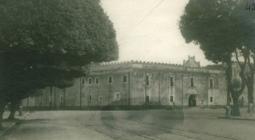
Research into the history of prisons in Pará is still rare, but a recent study by Muniz (2020) , on basic education in a female reeducation center in the state, presents important aspects related to the origins of the São José prison. The author informs us that, in 1749, Franciscans restarted the construction of a convent which they named São José, but when they returned to Portugal, the building came under the administration of the provincial government and was turned into a pottery factory, a barracks, an artillery corps, provincial cavalry squadron, gunpowder depot and, following the cholera epidemic that struck the capital in 1835, the building was transformed into a hospital to treat the infected and, in 1843, it became a public prison, with the authorization of Governor Manoel Veloso. After being transformed into a prison, various renovation works were started but were not completed due to a lack of funds.
Teaching activities in the prison had already existed since the monarchy, when Abel Graça, president of the province at the time, through Law 701 of October 25, 1871 ( Pará, 1871 ), ordered the establishment of manufacturing workshops that would be run by prisoners who were qualified to do so and had good conduct, receiving a bonus deducted from the sale of the products manufactured there. At the same time, the law created a primary school, which would be run by the prison chaplain and, if that was impossible, by the jailer’s assistant or even by one of the prisoners of good conduct.
Three years after its creation, the school’s regulations were approved through the Ordinance of June 29, 1874 ( Pará, 1874 ), which established its general operating guidelines. The school’s curriculum would include teaching the alphabet, reading, writing and cursive, Christian doctrine and the four main arithmetic operations. The books to be used would be the same as those accepted by the Directorate of Public Instruction; the school year began on January 7 and ended on December 9, and the school’s opening hours were from twelve noon to three o’clock in the afternoon every day, except Sundays, holy days of vigilance, Holy Week and national holidays. The teacher was responsible for supplying the students with paper, quills, ink, inkwells, rulers and compendiums, which were passed on by the chief of police after a request to the Directorate of Instruction. To maintain discipline, the teacher would use the disciplinary means allowed in other schools, as well as the punishments authorized by the prison regulations of October 11, 1843, after agreeing with the jailer. Students who were most distinguished for their progress would be exempt from the services they were obliged to perform under the prison regulations. To enroll, students had to fill in a form provided by the jailer, but prisoners who were not free or who suffered from contagious diseases were not allowed to enroll or attend, so even in jail enslaved blacks were forbidden to study.
Among other aspects of the legacy that the Empire bequeathed to the Republic were the heavy prison sentences for vagrants and beggars, so that if the rich had the right not to work, the poor, in this situation, were subject to imprisonment for vagrancy.
What’s more, in this way it would be possible to transform “the majority of the mass”, “from a choice of disturbance and general shame into a notable element of national prosperity”. The formation of a qualified workforce was seen not only as a way of maintaining order and preventing disorder, but also as an “intelligent instrument of industrial production”, to “transform the apathy in which industries still find themselves among us” ( Cunha, 2005 , p. 30).
Even with the Proclamation of the Republic, the discussion did not stop. Prove of this is the presence of the topic – as a matter to be debated in plenary – in the statute of the Pedagogical Congress of Pará, such as thesis number 28, called “Courses of Elementary Civic and Professional Education in Industrial and Agricultural Establishments, Barracks and Prisons” (Pará, 1900, annex), on which Father Costa based his proposal.
The creation of houses of correction in various European countries originated between the 16th and 18th centuries, to punish criminals, but also providing labor (quite scarce at the time) to industries, which were becoming increasingly numerous due to the advent of the Industrial Revolution. Its objective was to cleanse the city of “vagrants and beggars” ( Vasquez, 2008 ), regenerating them for social life, and also as a space for teaching trades. In Amsterdam, Netherlands, houses of correction were also successful in finding a workforce for the nascent industry, resocializing prisoners so that they could spontaneously enter the job market after serving their sentence ( Rusche; Kirchheimer, 2004 ). Three centuries later, prisons would also serve as a way of taming the workforce, as well as being a means of punishment for transgressions or crimes. To achieve their goal of expanding the workforce in the nascent industries, many individuals were captured for frivolous and casual reasons, such as begging, which had been criminalized. In the 19th century, with the need for workers duly met, a different perception of the prison’s function was consolidated, as one in which irrational incarceration with no prospect of a future was a backwardness and a loss of productive forces, at that point the prison began to be thought of as a space for rehabilitation for social life.
In Brazil, the introduction of trade classes in prisons as a standard procedure for rehabilitating convicts was implemented during the Empire by Decree No. 678 from 1850, when it was made
[...] for the first time the mention of a formalized intellectual education aimed at people deprived of their liberty, as can be read in article 167: “As soon as possible, a school will be created in each of the divisions of the House of Correction, where prisoners will be taught to read and write, and the four operations of arithmetic” ( Duarte; Sivieri-Pereira, 2018 , p. 346).
As in the capital of the Empire, in Belém the teaching function was carried out by the prison chaplain, who was responsible for “ensuring the moral and religious education of the inmates, that is, the concept of education contained in the houses of correction’s regulations, in addition to being concerned with the basic literacy of the convicts, was focused on the development of Christian morals”. ( Duarte; Sivieri-Pereira, 2018 , p. 346). In the expectation not to atone or to repress, the art of punishment in this process put into operation “five quite distinct operations: relating acts, performances, singular behaviors to a set, which is at the same time a field of comparison, a space for differentiation and the principle of a rule to be followed” ( Foucault, 2014 , p. 179).
In his thoughts on the subject, Foucault argues that the prison was born even before any law governed it, because as an institution it arose when an organization capable of taming personal behavior was set up through a systematic process of training bodies, where procedures were developed “to divide individuals, to fix them and distribute them spatially, to classify them, to take the maximum amount of time strength from them” (Foucault, 2014, p. 223), something very similar to
[...] a somewhat strict barracks, a school without indulgence, a shady workshop, but, when you get down to it, nothing is qualitatively different. This double foundation – juridical-economic on the one hand, technical-disciplinary on the other – made prisons appear as the most immediate and most civilized of all punishments. And it was this double way of functioning that gave it immediate solidity ( Foucault, 2014 , p. 225).
The idea was of an institution that would carry out “the universal pedagogy of work for those who were refractory” ( Foucault, 2014 , p. 120) through a useful pedagogy that would reconstitute
[...] the taste for work in the lazy individual, force him back into a system of interests in which work will be more advantageous than laziness, form around him a small, reduced, simplified and coercive society where the maxim will clearly appear: whoever wants to live must work. Obligation to work, but also retribution that allows the inmate to improve his lot during and after imprisonment ( Foucault, 2014 , p. 120).
Cunha (2005) corroborates this view, stating that in Brazil, both liberalism and positivism, together with Catholicism, promoted professional education as prevention and correction.
As a preventive pedagogy, it would promote the disciplining and technical qualification of children and young people whose destiny was “obviously” manual labor, to prevent them from being seduced by sin, vices, crimes and political-ideological subversion. Moreover, in the workshops of the correctional schools, work would be the appropriate treatment for these deviations, if the children and young people had already fallen victim to the harmful influences of the streets ( Cunha, 2005 , p. 24).
This would be a way for individuals who were unable to secure their livelihood to dedicate themselves to finding it through a professional activity, which should be made available inside the prison, in appropriate disciplinary and pedagogical circumstances – a concept that was fiercely advocated by Frederico Costa during the Pedagogical Congress.
Frederico Costa and the debate on trades classes at the Pedagogical Congress of Pará
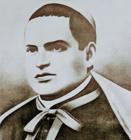
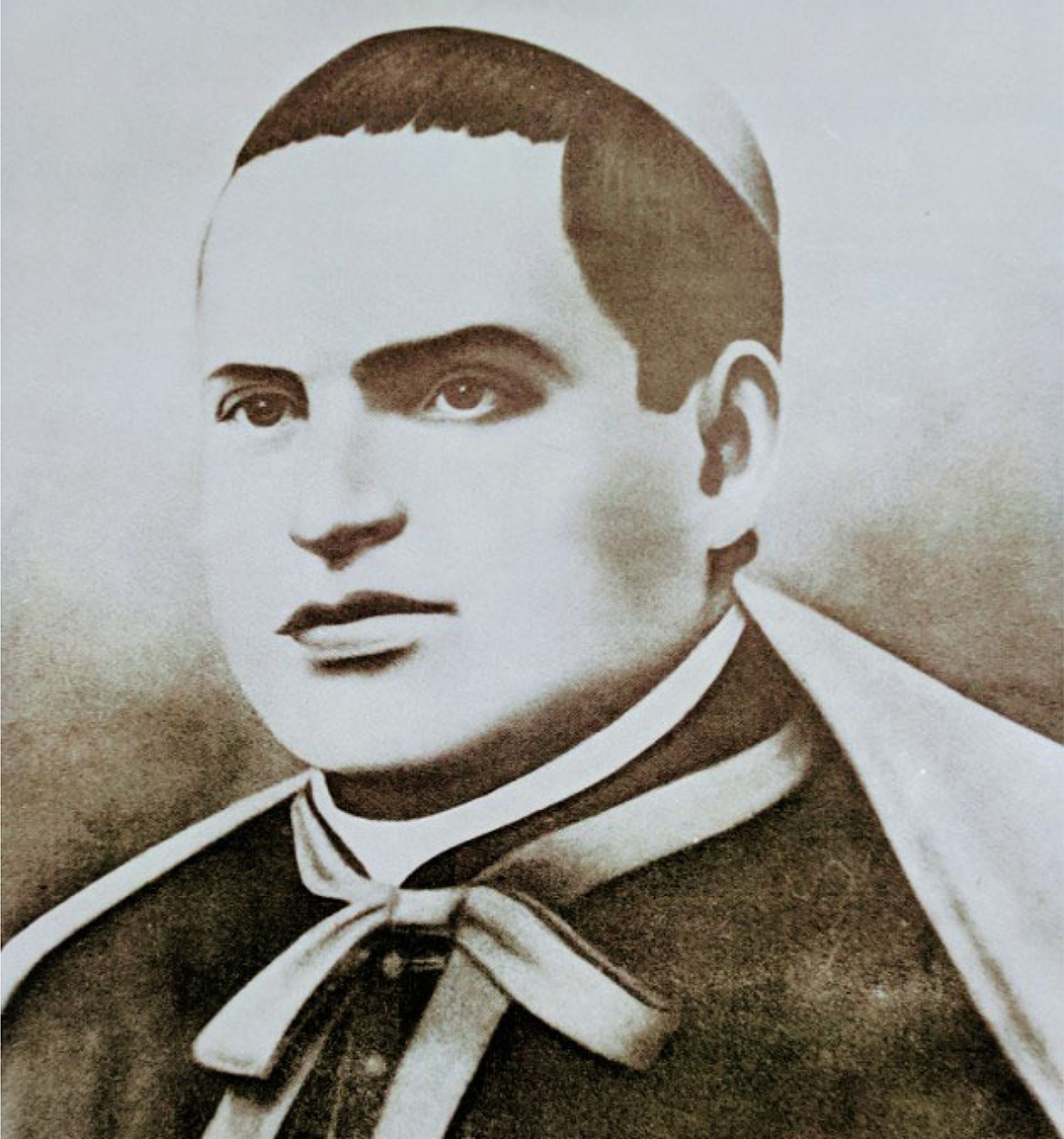
Lopes (2010) tells us that Frederico Costa was born in Santarém, a municipality in Pará, in the Baixo Amazonas region, in 1875, and was the son of a shoemaker and an elementary school teacher, both from Belém. He was baptized with the name of his uncle and godfather, Lieutenant Colonel Frederico Augusto da Gama Costa, a veteran of the Paraguayan War, member of the Empire’s Conservative Party, congressman, and state senator.
It is quite likely that his family, despite their limited means, were well connected and had indisputable moral references, which were important requirements for obtaining a place at the Belém seminary – run by Dom Antônio de Macedo Costa – where he was enrolled at the age of 10. Perhaps because this is a study of the period when Costa was bishop of Manaus, we could not find any references in Lopes’ study (2010) to his role as chaplain of Belém’s public prison.
Costa had such a good relationship with Dom Macedo that, in one of his pastoral letters, he described him as “the great bishop and apostle of the Amazon, the immortal”. As a dedicated student, he was so admired by his teachers that, at the age of 17, in 1892, he was sent to study philosophy at the Saint-Sulpice seminary in France, and later, in 1896, theology at the Pontifical Latin American Pious College in Rome. In 1899, he was ordained a priest and in the same year entered the Pontifical Gregorian University, where he received the Doctor of Theology title, defending his thesis in a session presided over by Pope Leo XIII, of whom he became an avid admirer – to the point of writing a series of articles about him in the Pará newspaper Republica during the first months of 1900. It was at the beginning of the 20th century, already as a priest, that Frederico Costa returned to Belém to be awarded the honorary title of Canon of the Cathedral in October 1902 and appointed parish priest of the Mother Church of Our Lady of Nazareth in December of the same year. At the time of his return, slavery had been abolished and the country was trying to consolidate the republican regime, whose command in Pará was being disputed by state oligarchic groups. Furthermore,
Freemasonry, the great rival of the reformist Church, was strengthened since a large part of the ruling elite belonged to its ranks and liberal ideas were spread openly from the south to the north of the country. Protestantism also benefited from the republican regime, since the establishment of a secular political regime brought with it religious freedom, allowing the practice of proselytism and the publication of periodicals, where articles and reports contrary to the Catholic Church and its leaders were published. Dom Frederico Costa, when bishop of Manaus, was the target of these periodicals, and even proposed the creation of a newspaper to defend the diocese from these attacks ( Lopes, 2010 , p. 34).
In a context of expansion for the Catholic Church, new dioceses were created, such as the one in Manaus, in 1892, and the Prelature of Santarém, set up by Frederico Costa himself in 1904. Lopes (2010) explains in his study that these were important changes for the Church in the Amazon region, as they strengthened its pastoral work, “creating new prelatures, new parishes and bringing in new religious congregations that began to work in education, health, social assistance and promotion and indigenous missions” ( Lopes, 2010 , p. 35).
On September 15, 1899, the newspaper Republica , linked to Governor Lauro Sodré – one of the state’s greatest leaders at the time – reported the priest’s return from Europe:
On the steamer “Pernambuco”, which is due to arrive in the next few days, is our distinguished local, Father Dr. Frederico Costa, who did a brilliant theological course at the St. Sulpice Seminary in Paris and received his doctorate in Rome at the Pontifical Latin American Pious College. The young priest is the son of Mr. Marciliano Costa and nephew of our helpful political leader, Colonel Frederico Costa. A warm welcome (Notas e Echos, 1899, p. 1).
The debate around the proposal for trade classes, which took place at the Pedagogical Congress of Pará, began at the 4th ordinary session, held on January 7, 1901, with a preliminary presentation by Costa, who pointed out that in São José Prison several prisoners were working men, for whom the establishment of labor in prison could serve as a means of regeneration.
In addition, the products produced by the prisoners’ efforts could be sold, helping to reduce the state’s expenses. Furthermore, once the profits from the sale of the products were divided between the state and the prisoners, they would be able to support themselves and their families with their work. Following this line of reasoning, he declared that the regime until then followed by the state was onerous and made prisoners subjected to “misery” and “inaction”, both of which were always harmful.
Based on these arguments and seeking to reduce state expenses, alleviate the disadvantages resulting from the idleness of prisoners and contribute to their correction – so that when they left prison, they could be new and good citizens – Frederico Costa presented the following project: “Article 1 - Professional trade classes should be established in public prisons. [...] Article 2 - Half of the income should be reserved for the prisoners, the other should go to the State” (Doutrina: Congresso Pedagógico, 1901a, p. 332).
After being read and supported, the project was referred to the 3rd committee (Professional Education), made up of Rodrigues Valle, Antonio Marques de Carvalho and Ernesto Mattoso, who gave a favorable opinion. It was thus presented at the Pedagogical Congress of Pará’s 10th ordinary session, which took place on January 15, 1901, and entered the agenda for the first discussion.
In defense of his proposal, Costa spoke on the basis of three aspects that, according to him, would make it easier for congressmen to appreciate and approve it. Firstly, he would talk about the reasons that led him to propose the project, then about its feasibility and, finally, about the means to implement it.
At that time, as today, the situation of the prisoners was so dramatic that Father Costa confessed that the first reason that led him to propose his project was the feeling of pity and compassion caused by living in that environment.
For more than a year now, ladies and gentlemen, I have taken the trouble to visit our São José public prison several times a week. I will not exaggerate by saying that there, perhaps more than anywhere else, I have learned to know the miseries that weigh on poor humanity: physical and moral miseries. Hunger, thirst, disease, all wrapped up in the deepest ignorance, the boiling over of the most shameful passions, the most abominable vices, hatred, anger, blasphemy and everything else that is detestable in the world.
When I saw so much misery, my heart was overwhelmed with pain. Could not something be done for these unfortunates? (Doutrina: Congresso Pedagógico, 1901a, p. 481).
Costa based his argument on a critique of Cesare Lombroso’s theory4, according to which the causes of an individual’s criminal tendency are to be found in their natural physical, physiological and psychological characteristics. He countered this with arguments from Catholic doctrine, according to which man is endowed with free will and, even if at birth he is subject to a tendency towards perversity – as a result of original sin – when he reaches the age of reason, he is free to choose between evil and good, which remains deep in his nature. These assumptions bring us back to Foucault’s warning about the transformation required for the effects of imprisonment, when he quotes the Treilhard Report:
The order that should reign in prisons can contribute greatly to regenerating convicts; the vices of education, the contagion of bad examples, idleness [...] have given rise to crimes. Well then, let’s try to close off all these sources of corruption; let rules of sound morality be practiced in the houses of detention; let the convicts, obliged to do work that they will end up enjoying when they reap the fruits of it, contract the habit, the taste and the need for occupation; let them be given the example of a laborious life respectively; it will soon become a pure life; they will soon begin to regret the past, the first advanced sign of love for duty (Treilhard apud Foucault, 2014 , p. 226).
Following this line of thought, for Costa, by creating the right conditions and receiving the right means to regenerate himself, little by little, the individual would be able to establish a balance and achieve the good that would soon be awakened in his soul.
As for the feasibility of the plan, Costa first explained that the São José prison had a population of approximately “two hundred prisoners, some are shoemakers, others are carpenters, others are tailors... and others have no trade at all. In order to support them, the government gives them a daily allowance of $800, paid according to the exchange rate; it also gives them the necessary cloth to cover themselves every three months” (Doutrina: Congresso Pedagógico, 1901a, p. 484). In this context, for Costa, it would be enough to methodically organize the work, so that those who already had a trade would help train those who did not, who would be obliged to learn it.
According to him, this practice was already being carried out in various prisons in Europe, which would make the prison a real house of correction, since the people who left there would get to know a trade with which they could earn a living.
Regarding the means to make his project viable, he argued that the best alternative would be to hand over the administration to an order of religious men and women, a condition in which everything would be done “in no time”. He concluded by pointing out aspects relating to the organization of classes, opening hours, trades to be offered and, above all, highlighting moral formation, a factor that should not be neglected, since “brute force can almost never moralize a man. [...] there must be the greatest vigilance over the morals of the prisoners; [...] to teach them the practice of the commandments, the duties towards God, towards oneself and society” (Doutrina: Congresso Pedagógico, 1901a, p. 486).
Arthur Vianna, requesting to speak, argued that the matter was important, but that the issue of prisons would be totally outside the purposes set by the Congress; he added that there was nothing in that space to justify a discussion on the issue of prisons or criminology, which was supported by João Marques de Carvalho. Reinforcing his argument against Costa’s proposition, Vianna said that prison was one of man’s most beautiful achievements, because in times gone by it was a “real dungeon, a horrible prison where the convict was deprived of all feelings” (A Escola, 1901, p. 487). Still according to him, the situation had changed and the prison had become “a beautiful conquest of the spirit of modern civilization” (Doutrina: Congresso Pedagógico, 1901a, p. 487), it was no longer a punishment, but a necessary separation that disposed the individual to meditation and repentance, concluding that the subject was important and difficult, but the Congress had no competence to discuss penitentiary matters.
In the arguments between Costa and Vianna – the former defending the work of prisoners to make them moral and the latter still disagreeing with the agenda that referred to classes and jobs in prisons – Henrique Santa Rosa stepped in, looking for a middle ground. In his arguments, he disagreed with Vianna’s position on the incompetence of Congress to deal with education in prisons, but agreed that the thesis diverged from its objectives and made some comments on Costa’s proposal in relation to its feasibility, as he felt that the trades classes would take time to be put into practice and it would probably not be possible to carry them out. Antônio de Carvalho was of a similar opinion, believing that the Congress had the power to deliberate on the teaching of captives. At the end of the discussions, although Frederico Costa’s proposal was approved, there was not enough of a quorum to validate the result and the session was postponed.
The controversy was not entirely unimportant, since the subject of prison “has always been part of an active field where projects, relocations, experiments, various theories, testimonies, inquiries, around prison institutions, a whole prolixity, a whole zeal” ( Foucault, 2014 , p. 227).
Debates resumed on January 22, 1901, when the second discussion of Costa’s bill was included on the agenda, and other amendments were tabled, gradually decharacterizing the chaplain’s initial idea. First there was the proposal by Ignácio Moura to create a primary education class for prisoners; then there was Antônio de Carvalho’s substitute amendment to the wording of the first article, with the following determination: “That the Pedagogical Congress make efforts before the competent powers to make primary and manufacturing education, of the trades considered most useful, a reality in the public jail of the state capital” (Doutrina: Congresso Pedagógico, 1901b, p. 567). This wording was the most accepted by the congressmen.
Costa, the author of the initial proposal, also defended the creation of moral classes, which was harshly criticized by Arthur Vianna and the others present, because they felt that the presence of a chaplain priest in the prison already guaranteed the provision of moral or religious education, and that it was unnecessary to add another teacher for this purpose. Vianna, who did not support the proposal for the priest’s trade classes, approved Carvalho’s amendment because he considered it to be consistent with the aims of the congress, especially as it expanded the primary education that already existed in the prison.
During this session, the disagreements between Costa and other congressmen were made clear, especially Arthur Vianna, who emphasized the “extemporaneity” of the project, claiming that, as a result, there was not much that could be done to improve the institution’s situation.
In defense of his point of view, Costa argued that he recognized the terrible conditions of the space and that, for this reason, he thought of a way to take advantage of the work and energy of the prisoners, precisely so that they could offer something to society, paying their expenses with the salary derived from their work, thus becoming useful to the community, always emphasizing the feeling of “charity, compassion and love for Christ” that encouraged him to conceive and propose the project.
In the midst of the controversy, Henrique Santa Rosa spoke about the difficulties intrinsic to the Chaplain’s initial proposal, such as the fact that the teaching regime might not coincide with the sentence of certain prisoners, and ended his speech by declaring his support for Antonio de Carvalho’s proposal. Later, with the substitute amendment put to the vote, Frederico Costa’s proposal was approved with changes that made it unrecognizable and without article 2 of the original proposal, which proposed remuneration for prisoners. In the end, Father Costa’s initial project was not actually approved, since its original text underwent structural changes that completely disfigured it.
About the project presented, it is important to note that, if the priest’s idea originated from a feeling of empathy, it is also likely that its origin was to supply the market with a more qualified workforce; hence the initial preference for trades and not the teaching of regular elementary school subjects. In this way, it is possible to infer that the main function of the trade classes in prison was not the profit earned by the institution or even the payment for the production of the prisoners, but to make these individuals docile through “a scheme of individual submission and their adjustment to an apparatus of production” ( Foucault, 2014 , p. 237).
In addition, religious, moral and civic teachings would also meet the need to align and instruct inmates in the perspective of the newly installed republican regime.
Another noteworthy point in the discussions was the resistance to the project by some members, who claimed that the subject was not within the Pedagogical Congress’ competence. From these statements, we can infer that, in the view of some members of the congress, the decisions made there could not result in a burden for the state, and that the approved proposals should not be imposed.
In the case of Costa’s project, we observed that the approved wording was limited to a mere recommendation, a fact evidenced by the replacement of the affirmative expression “be established” with the indicative “make efforts to”, characterizing uncertainty and doubt as to its realization, which evidences the thesis that education in the First Republic did not promote as many changes or improvements in comparison to the imperial period as was proposed in official speeches.
From this perspective, historical milestones cannot necessarily be considered moments of rupture and change in education. In the same way, Brazilian primary education went through a process of constitution that did not begin in the Republic, but was articulated since the imperial times.
Final considerations
Our objective with this article was to discuss the debate surrounding the proposal put forward by Father Frederico Costa at the Pedagogical Congress of Pará, which aimed to create trade classes at the São José prison in Belém at the beginning of the 20th century. The period in which this debate took place was very opportune for discussion of the subject, given the strong foreign influence, mainly European, with the spread of the ideals of prosperity, modernization, progress and order, a context in which it was understandable to deny the concept of prison as an environment devoid of civilization and opportunities, while at the same time affirming it as a space for transforming inmates into orderly people who were useful to society.
In this sense, from reading the discussions held at the Congress, we can infer that Father Costa’s project was in line with the concept of prison as a space for the moral reform of man, and that there was no concern with schooling per se, but with the desire to keep inmates away from idleness, which was considered by the priest to be a harmful factor in their process of regeneration.
Denying the idea of “innate evil” – the Lombrosian basis for excluding those who were “irredeemable” from social life – Costa proposed Christian doctrine as a roadmap for the redemption of convicts, including through work as a practice of prevention and correction.
It was, in a way, about transmuting the dishonest and lazy individual into a proficient and diligent citizen, integrating him into the productive community. However, even though the project was aligned with the overall Republican guidelines, the congressmen did not approve the original format of his project, dehydrating it until it became a simple recommendation, which corroborates the idea that the Congress – despite its political and institutional importance – was powerless in face of the inertia of the state’s ruling classes in their task of instituting an innovative educational and pedagogical culture, capable of breaking century-old paradigms, in a reality where the fundamental rules were Order and Progress.
References
- ALVAREZ, Marcos César. A criminologia no Brasil ou como tratar desigualmente os desiguais. Dados: Revista de Ciências Sociais, Rio de Janeiro, v. 45, n. 4, p. 677-704, 2002.
- BLOCH, Marc. Apologia da história. Rio de Janeiro: Jorge Zahar, 2002.
- CUNHA, Luiz Antônio. O ensino de ofícios nos primórdios da industrialização . 2. ed. São Paulo: UNESP; Brasília, DF: Flacso, 2005.
- DOUTRINA: Congresso Pedagogico. Revista A Escola: Revista Official de Ensino, Belém, v. 1, n. 12, 1901a.
- DOUTRINA: Congresso Pedagogico. Revista A Escola: Revista Official de Ensino, Belém, v. 1, n. 14, 1901b.
- DUARTE, Alisson José Oliveira; SIVIERI-PEREIRA, Helena de Ornellas. Aspectos históricos da educação escolar nas instituições prisionais brasileiras do período imperial ao século XXI. Educação Unisinos, São Leopoldo, v. 22, n. 4, p. 344-352, out./dez. 2018.
- FOUCAULT, Michel. Vigiar e punir. 42. ed. Petrópolis: Vozes, 2014.
- FRANCO, Maria Laura Puglisi. Análise de conteúdo. 3 ed. Brasília, DF: Líber Livro, 2008.
- KARNAL, Leandro; TASTCH, Flavia Galli. Documento e história: a memória evanescente. In: PINSKY, Carla Bassanezi; LUCA, Tânia Regina de (org.). O historiador e suas fontes . São Paulo: Contexto, 2013. p. 9-27.
- LOPES, João da Silva. Sociedade, relações de poder e religiosidade no Alto Rio Negro a partir das representações de Dom Frederico Costa. 2010. 159 f. Dissertação (Mestrado em História) - Universidade Federal do Amazonas, Manaus, 2010.
- MUNIZ, Diana Helena Alves. História da educação básica no Centro de Reeducação Feminino - CRF (2006-2016). 2020. 164 f. Dissertação (Mestrado em Currículo e Gestão da Escola Básica) - Universidade Federal do Pará, Belém, 2020.
- NOTAS E ECHOS. A Republica: Orgão do Club Republicano (PA), Belém do Pará. v. 1, n. 167, 15 set. 1899.
- OLIVEIRA, Carolina Bessa Ferreira de. A educação escolar nas prisões: uma análise a partir das representações dos presos da penitenciária de Uberlândia (MG). Educação e Pesquisa, São Paulo, v. 39, n. 4, p. 955-967, out./dez. 2013.
- ONOFRE, Elenice Maria Cammarosano; JULIÃO, Elionaldo Fernandes. A educação na prisão como política pública: entre desafios e tarefas. Educação & Realidade, Porto Alegre. v. 38, n. 1, p. 51-69, jan./mar. 2013.
- PARÁ . Decreto 874, de 1900. Belém: [ s. n .], 1900.
- PARÁ. Lei nº 701 de 25 de outubro de 1871. Manda estabelecer as oficinas que forem necessarias na cadêa publica da capital e dá as providencias relativas. Belém: [s. n.], 1871.
- PARÁ. Portaria de 29 de julho de 1874. Expede o regulamento para a escola de instrucção primaria na cadeia publica da capital do Pará. Belém: [s. n.], 1874.
-
PONTE SOCIAL. Como superar a extrema pobreza no Brasil. Ponte Social, 8 fev. 2021. Disponível em: tinyurl.com/5xpn3whp Acesso em: 08 fev. 2021.
» tinyurl.com/5xpn3whp -
PRESÍDIO SÃO JOSÉ: BELÉM (PA). IBGE Biblioteca - Anfiteatro Coliseu das Artes; Capela São José, [19--]. Disponível em: tinyurl.com/3ere95ry Acesso em: 20 dez. 2021.
» tinyurl.com/3ere95ry - RIBEIRO, Ariadne; SALDANHA, Tiago Gomes; SIMONINI, Marcos Paulo Cavalcante; FRANCISCO, Allan Felipe; SANTOS, Marcelo Marcos Dos; DOTTA, Alexandre Godoy. Uma análise da escolaridade da população carceraria do Brasil: um estudo a partir dos dados do INFOPEN 2017. In: Anais do XIV Evento de Iniciação Científica UNIBRASIL, 14., 2018, Curitiba. Anais [...]. Curitiba: EvincI, 2018. p. 52- 52.
- RUSCHE, Georg; KIRCHHEIMER, Otto. Punishment and social structure. New York: Columbia University Press, 2004.
- SCHUELER, Alessandra Frota Martinez de; MAGALDI, Ana Maria Bandeira de Mello. Educação escolar na Primeira República: memória, história e perspectivas de pesquisa. Tempo, Rio de Janeiro, v. 13, n. 26, p. 32-55, 2009.
- VASQUEZ, Eliane Leal. Sociedade cativa: entre cultura escolar e cultura prisional: uma incursão pela ciência penitenciária. 2008. 163 f. Dissertação (Mestrado em História da Ciência) - Pontifícia Universidade Católica de São Paulo, São Paulo, 2008.
-
1 - Data availability:
The entire dataset supporting the findings of this study has been published within the article itself.
-
3
- “Poverty and extreme poverty continue to be a factor in Brazilian society year after year. According to the most recent Brazilian Institute of Geography and Statistics (IBGE) data, in 2018 the country had 13.5 million people living in extreme poverty, according to World Bank criteria. Added to those on the poverty line, this amounts to 25% of the country’s population. The characteristics and distribution of the population living in poverty and extreme poverty are striking. Black and brown people account for 72.7% of those in poverty or extreme poverty - 38.1 million people. Among those in extreme poverty, black or brown women make up the largest contingent: 27.2 million people. It is worth noting that the average per capita household income of black or brown people is half that of white people” ( Ponte Social, 2021 ).
-
4
- Cesare Lombroso was a physician and criminologist born in Verona, Italy, on November 6, 1835. The son of a wealthy Jewish family, he became world famous for his studies on the relationship between physical and mental characteristics. He graduated in medical studies in 1858, at the age of 23, from the University of Pavia and volunteered in the Italian national army. He was later a professor of psychiatry and anthropology at the beginning of the 20th century. Alvarez (2002) states that Lombroso “became famous for defending the theory that has come to be popularly known as that of the ‘born criminal’, an expression that was actually created by Ferri. By assuming that behavior is biologically determined and basing his assertions on a large amount of anthropometric data, Lombroso constructed an evolutionary theory in which criminals appear as atavistic types, that is, as individuals who physically and mentally reproduce primitive characteristics of man” ( Alvarez, 2002 , p. 679).
-
Editor:
Prof. Dr. Renata Marcílio Cândido.
The entire dataset supporting the findings of this study has been published within the article itself.

 Source: São José Prison: Belém (PA) IBGE Library (19--).
 Source: