
 Perceptions of lower secondary teachers on school dropout in the pandemic context
Abstract
This study addresses the results of a quantitative investigation focused on perceptions of teachers working in lower secondary education in a low-income area of São Paulo. It aimed to understand these teachers’ views on school dropout during the return to in-person school activities in 2022. The study examined the following questions: teachers’ definition of school dropout, the profile of students at greater risk of dropping out, and whether they received guidance from the municipal department of education during the pandemic. Of the 174 teachers working at the six public schools analyzed, 140 responded to the questionnaire, resulting in an 80.5% response rate. School dropout was chosen as an indicator due to its historic impact on educational inequalities. The results showed that, according to the participants, the students most likely to drop out were boys, Black, and socially and economically disadvantaged—a scenario that is not exclusively the the result of the pandemic. The data show that the teachers were aware of the students at risk, understand their socioeconomic context, and received guidance and public policy recommendations to address the changes in the post-pandemic school environment.
Pandemic; School; Educational inequalities; Lower secondary education
Resumo
Este estudo aborda os resultados de uma pesquisa de natureza quantitativa, focada na percepção de professores que lecionam nos anos finais do ensino fundamental em uma região periférica de São Paulo. O objetivo foi compreender a visão desses profissionais sobre o abandono escolar durante o retorno às atividades presenciais em 2022. As questões investigadas foram: a definição de abandono escolar pelos docentes, o perfil dos alunos com maior risco de abandono e se receberam orientações da secretaria municipal de educação durante o período pandêmico. Dos 174 professores atuantes nas seis escolas públicas analisadas, 140 responderam ao questionário, resultando em uma taxa de resposta de 80,5%. O abandono escolar foi escolhido como indicador devido ao seu impacto histórico nas desigualdades educacionais. Os resultados revelaram que, de acordo com os participantes, os estudantes mais propensos ao abandono são meninos, negros, social e economicamente desfavorecidos; um cenário que não é exclusivamente resultado da pandemia. Os dados evidenciam que os professores têm consciência dos estudantes em situação de risco, compreendem o contexto socioeconômico em que estão inseridos e receberam diretrizes e propostas de políticas públicas para lidar com as mudanças no ambiente escolar pós-pandemia.
Pandemia; Escola; Desigualdades educacionais; Ensino Fundamental
Introduction
Since 2020, several studies conducted by universities and governmental and civil society organizations have sought to identify the effects of the suspension of in-person classes due to the Covid-19 pandemic on the educational development of children and adolescents and on teachers’ working conditions (FCC, 2020; Lima, 2020a, 2020b; Geledés, 2021).
This study4 involved six public schools that offer elementary and lower secondary education, located in an area marked by social and economic vulnerability in the northern zone of the municipality of São Paulo. Its main objective was to identify the strategies adopted to mitigate school dropout, particularly during 2022, when students returned to in-person classes. School dropout was chosen because it is a historic indicator that contributes significantly to educational inequalities, manifesting specific disparities between geographic areas and social groups (Paes de Barros et al., 2017; Vázquez-Recio; López-Gil, 2018; Silva Filho; Araújo, 2017).
In 2022, the National Institute for Educational Studies and Research Anísio Teixeira (INEP) published Impacts of the Pandemic on Brazilian Children’s Literacy (Bof; Basso; Santos, 2022), providing an overview of distinct effects on the country’s different social strata.
Considering the specific stage of elementary education, the study Educational Response to the Covid-19 Pandemic 2020 found that, on average, schools had in-person learning activities suspended for 282 days,5 which led to significant changes in the school dynamics of the children served. For the public system, the average was 291 days, whereas in the private system, schools had an average of 248 days of suspended in-person activities (Bof; Basso; Santos, 2022, p. 244).
To ensure continuity of education during the suspension of in-person classes, several strategies were adopted, ranging from emergency remote teaching (ERT) to the distribution of printed materials, covering all levels of education, from early childhood to postgraduate studies. School closures began in March 2020, requiring a rapid adaptation to ensure the continuity of schooling for children and adolescents. Initially, the interruption was expected to be brief; however, it extended until mid-2021, when hybrid activities were implemented with rotating class schedules, with regular in-person attendance resuming only in the 2022 school year.
The study6 that originated this article examined 2022, the period of resumption of in-person activities at schools, with attendance control based on in-person classroom activities and a minimum requirement of curricular completion of 200 school days.
Considering a series of regulations issued by public authorities from 2020 to 2023 to ensure the resumption of in-person classes, particularly in 2022, we defined three research questions: Did the actions, programs, and educational policies aimed at addressing the effects of social distancing caused by the pandemic help reduce educational inequalities during the return to in-person classes? What role did schools play in this context, considering the actions of both teachers and school managers? Were those strategies effective in preventing school dropout?
In this article, we present an analysis of a specific dataset7 obtained through a questionnaire administered via the Survey Monkey platform. Of 174 teachers working in lower secondary education at the six public schools selected for the study, 140 responded to the questionnaire, which represents an 80.5% response rate. The study was supported by the Unicamp Research Ethics Committee and approved under CAEE number: 65030422.3.0000.8142. All participants signed an Informed Consent Form (TCLE).
The schools were selected based on a study that involved collecting information about the 17 elementary schools that also offer lower secondary education in the northern zone of São Paulo. The selection of schools was guided by an analysis and characterization of the existing units in the area, as well as by sociodemographic indicators, levels of social vulnerability, crime rates, and the availability of public services such as education, health care, social assistance, and access to cultural and/or recreational spaces. From this group of schools, 12 were initially highlighted, and six were ultimately included in the study. The selection also considered a range of data made available by INEP, in order to obtain a group of schools that reflected the diversity of social, educational, and geographic indicators present in the area.
The decision to focus on lower secondary education was based on the complexity of this transitional stage, a phase marked by significant transformations in various domains of students’ lives: biological, physical, emotional, cognitive, and social (Silva; Barros, 2021). In addition, changes occur in the organization of the school routine, as students move from a predominantly didactic relationship with a single classroom teacher (generalist) during elementary education to daily interaction with a range of subject-specific teachers, in accordance with the curricular structure defined for lower secondary education—one shaped by distinct subjects and requiring greater autonomy on the part of students.
The semi-structured questionnaire consisted of 21 closed-ended questions and three open-ended ones,8 organized into four thematic units: (i) respondent profile; (ii) perceptions of how the school operated in 2022, with particular emphasis on information regarding student dropout; (iii) actions taken by schools (by both administrators and teachers) to mitigate school dropout; and (iv) knowledge of the regulations (principles and proposed actions) issued by the Municipal Department of Education (SME) to address school dropout.
The questionnaire was administered with the consent of school administrators, in collective teacher work environments at the schools. Teachers responded to the survey using a link to the questionnaire shared during those meetings. Printed copies were also made available in case of difficulty accessing or completing the online version.
This article presents the profile of the respondents and explores, through the open-ended questions, three dimensions of teachers’ perceptions of school dropout: (i) their definition of it; (ii) the action taken by the school to prevent or mitigate school dropout; and (iii) the characteristics of the students who stop attending school.
To analyze the open-ended questions, responses were categorized using MAXQDA software (2022 version) as a support tool for processing and analyzing the data. This tool allows for the generation of a visual representation known as a word cloud, which, when considered alongside the content of the responses, provides a better understanding of the results (Vilela et al., 2020). For the closed-ended questions, a descriptive exploratory analysis was conducted. The frequencies of responses for each question, as well as some combinations and other summary statistics were obtained using SPSS software (IBM Statistics SPPS v. 20).
Among the respondents, 101 were teaching in 2022 at one of the six schools included in the study. That is, they met our expectation of reaching professionals that could speak from within the context of the schools selected by the study. It is worth noting that, in 2021, of 63 regulations issued by the São Paulo Municipal Department of Education, fifteen referred to the issue of school dropout. From that group, the questionnaire included Law No. 17,567, of June 8, 2021, which stablished the Municipal School Dropout Prevention Policy (São Paulo, 2021).
Theoretical framework of the analysis
The research is situated within the field of gender and racial studies, whose theoretical and analytical foundations contribute to the analysis of educational inequalities, of which school dropout is one of the indicators. The use of sex, color/race, and socioeconomic indicators allows analyzing who is most affected by inequalities within the school environment. Researchers like Marília Pinto de Carvalho, among others, have been highlighting since the early 2000s the importance of looking at school failure not only from a social class perspective, but also considering the social markers of gender and race (Carvalho, 2003).
Gender is a social marker in that, as a theoretical category, it refers to a set of meanings and symbols constructed based on the perception of sexual difference. These meanings and symbols are assigned and used not only to understand the observed and lived reality, but also to establish social relations of subordination and power. Thus, gender is an important category in analyzing the perceptions and actions of education professionals regarding the effects of the pandemic on school. It is particularly important in the case of school dropout and in how public authorities use regulations and guidelines to propose actions for schools situated in very distinct contexts. These regulations and guidelines also tend to affect the people involved in different and unequal ways.
But the gender perspective is not exclusive in this process of understanding educational inequalities. Attention must also be paid to how school dropout is made visible. Discussions on this issue also gain relevance as the offer of education moves closer to universalization (Marcílio, 2005), making it clear which students, though enrolled, do not remain in school—thus revealing indicators of incomplete coverage. This condition of leaving school is part of a schooling process pervaded by exclusion and failure.
Racial inequalities, as reflected in educational indicators, have long been present both in academic discourse and the agendas of Black movements. As early as 1993, working with data from PNAD, Luiz Carlos Barcelos showed that the educational indicators for Black and mixed-race students were systematically lower than those of other racial groups.
Ten years later, Soares and Alves (2003), in a study based on data from the Basic Education Assessment System (SAEB), presented the gap in academic performance between white and Black students, favoring white students. They also discuss the importance of implementing public and school-based policies aimed at achieving a fairer balance between effectiveness and equity in Brazilian schools.
Another dimension that underpins the present analysis involves the concepts and distinctions between the terms abandono and evasão escolar. The literature reviewed reveals nuanced uses of these terms: some authors justify their preference for one or the other, while others use both without drawing a clear distinction. These divergences, already present before the pandemic, take on new dimensions in light of possible effects caused by the prolonged interruption of school activities due to the public health crisis.
Some studies conducted before the pandemic define evasão as the failure to enroll in the following school year, and abandono as non-attendance during the current school year. Paes de Barros et al. (2017) explain that a student may drop out (evadir) without having abandoned school (abandonar), illustrating the possibility of a student who was promoted but simply decided to stop studying—thus characterized as a “promoted dropout.”
Authors such as Silva Filho and Araújo (2017) discuss the difference between evasão and abandono escolar based on definitions presented by the National Institute for Educational Studies and Research Anísio Teixeira (INEP, 1998) and by the Basic Education Development Index (IDEB, 2012), characterizing the student’s disengagement from the education system as abandono.
The distinction between evasão and abandono escolar was used by the National Institute for Educational Studies and Research Anísio Teixeira (INEP, 1998). In that case, “abandono” refers to a situation in which the student leaves school but returns the following year, whereas in “evasão”, the student leaves school and does not return to the school system. The Basic Education Development Index (IDEB, 2012), on the other hand, defines abandono as the student’s disengagement from the education system and withdrawal from school activities without requesting a transfer (Silva Filho; Araújo, 2017, p. 37-38).
An important dimension for understanding the concept is offered by Ferrão and Auler (2012), who reject the notion of evasão as an individual failure at school. Instead, they attribute it to multiple factors and place responsibility not only on the student but also on social conditions and school systems. Steimbach (2012), in turn, presents another perspective on the concepts. According to this author:
Although most studies use the term evasão, this research takes care to use the term abandono. More than a methodological choice for presenting the theme, this reflects an effort toward semantic precision. Evasão is understood as a solitary act by the individual, whereas abandono carries an ambiguity—suggesting either that the student chose to leave, or that the student may have been ‘abandoned’ by the institution. This ambiguity is seen as necessary in order to better align the chosen term with the hypotheses being developed (Steimbach, 2012, p. 88).
Supporting Steimbach’s (2012) argument, Vázquez-Recio and López-Gil (2018) discuss the factors that contribute to abandono/evasão. According to these authors, one should not consider a “universal and hypothetical student” who fails at learning. More than that, attention must be paid to the student’s profile and their personal and social characteristics:
It is therefore necessary to take individuals, embodied in their own experiences and lived realities, as the central focus of analysis, since the identities they construct are intersected by multiple structures of oppression that hinder access to rights and opportunities. The assumption of intersectionality as a basis for analyzing school failure and dropout is essential for clarifying the various forms of discrimination and disadvantage that may arise from the interrelation between factors and systems (Vázquez-Recio; López-Gil, 2018, p. 15, authors’ translation).9
It is therefore necessary to take into account students’ socioeconomic, racial, and gender differences in order to better understand school persistence and dropout.
With the pandemic, socioeconomic inequalities—and the public sector’s ability to mitigate them—emerged more than ever as a major challenge for education. The lack of access to technology and the adoption of emergency remote teaching (ERT) made it legitimate to consider that students may not have abandoned school, but rather may have been abandoned by it, insofar as minimum conditions for access to technological resources were not guaranteed with the same quality for all (Muchacho et al., 2021; Cunha et al., 2020; Araújo, 2023).
The three years of experiencing the pandemic and the return to in-person classes (2020 to 2022), within a highly complex political and economic context, significantly hindered the production of data that could reflect students’ relationships with school, also affecting how school dropout has been characterized. The studies—some of which are discussed below—are mostly empirical research conducted in different school settings and areas, using diverse methodologies. In most cases, they do not explore in depth the conceptual distinctions among evasão, abandono, and school persistence.
The article “Education in Times of Pandemic: Narratives of Teachers from Rural Public Schools” (Souza; Pereira; Fontana, 2020) discusses the challenges of teaching in rural schools, where already precarious conditions were worsened by the pandemic, despite the commitment and efforts of school administrators and teachers. The research is based on collective narratives from teachers working in rural schools and aimed to understand remote teaching policy and the conditions for its implementation in rural contexts. Limited internet access in rural areas, road conditions, low population density, and socioeconomic challenges illustrate regional and territorial disparities. According to the authors, although teachers were at the center of remote pedagogical work, they faced the loss of rights and a pedagogical policy that placed educational technology at the forefront—undermining the central role of teacher labor and effort.
In the article “Covid-19 and the Social Effects of School Closures” (Ferreira Sobrinho Jr.; Moraes, 2020), the authors identify several effects of the pandemic: the interruption of student learning, the lack of guaranteed school meals for the most vulnerable, the difficult yet necessary adaptation of teachers to the new technological reality, gaps in child welfare services, an increase in school dropout rates, the social isolation of children, and the challenges of validating and measuring learning. These conditions had a more severe impact on those living in situations of vulnerability and social injustice.
The article “Out of School Is Not an Option! Active Student Search During the Pandemic” (Novais; Mendonça, 2021) analyzes the Active Student Search strategy (Busca Ativa Escolar) as a response to the effects of the Covid-19 pandemic on schools, particularly regarding students’ access to and retention in the education system. The authors find that active student search is an important tool for reaching learners who are out of school; however, according to them, for it to be effective, technical and financial support is needed, along with the implementation of public policies that help address social problems and ensure follow-up for students who have returned to school.
The article “Impacts of the Pandemic on Brazilian Education” (Koslinski; Bartholo, 2022) presents four dimensions of the pandemic’s effects: learning loss, increased educational inequalities, rising school dropout rates, and negative impacts on students’ well-being and mental health.
These texts point to efforts to understand an atypical moment in Brazilian education, while also revealing preexisting educational problems. They reinforce the importance of research that can go further in seeking effective solutions to educational inequalities, improving teachers’ working conditions, and strengthening school infrastructure.
In the course of this work, we chose to adopt the concept of abandono as presented by Steimbach (2012), understanding it as a process involving multiple actors: students, families, schools, teachers, and society.
Analysis of results
Before proceeding to the analysis of the open-ended responses, it is important to present the profile of teachers in the area studied. According to the literature (Gatti et al., 2019; Vianna, 2002), women are the majority at all levels of basic education, a pattern also observed in the present study (Graph 1). Data from the 2023 Basic Education Census (Censo da Educação Básica – CEB), published by INEP, indicate that women account for 66.2% of teachers in lower secondary education.10

When it comes to race/color, comparison with broader datasets is limited by the high rate of “no response” in the School Census, both for students and teachers, as discussed by Senkevics et al. (2016). To provide some context, data from the 2022 IBGE Demographic Census—the most recent with consolidated results—for the city of São Paulo indicate that the population is composed of 57.4% white and 43.5% Black individuals. The racial profile of our respondent group does not diverge significantly from that of the city of São Paulo (Graph 2).

Regarding the number of students perceived to have dropped out of school in 2022, 32.6% of respondents indicated a range of 1 to 3 students, and 31.5% reported that 4 to 6 students dropped out in the classes they taught (Graph 3).

Percentage of responding teachers by perceived number of students who dropped out of school in 2022
On the other hand, the data regarding students’ return to the classroom and completion of the school year are encouraging, as shown in Graphs 4 and 5. For just over half of the teachers (52.7%), a large share of their students (75% to 99%) returned to the classroom—that is, to in-person activities. As for the completion of the 2022 school year, most teachers (75.6%) reported that 75% to 99% of their students completed the year. Considering both responses from each teacher, 48.3% of respondents indicated that both the return and completion rates for their students fell within the 75% to 99% range.
One of the questions presented to teachers aimed to find out whether schools had access to the regulations issued by the Municipal Department of Education, specifically Law No. 17.564 of June 8, 2021, which established the Municipal Policy for the Prevention of School Dropout (Política Municipal de Prevenção ao Abandono e à Evasão Escolar). Article 4 of this law lists a set of guidelines for structuring actions to be implemented in schools. In the questionnaire, a list of these guidelines was presented to gather information on which strategies were adopted in alignment with the Municipal Policy for the Prevention of School Dropout. Table 1 presents these strategies in descending order of frequency.
Remedial classes remain a prevalent strategy for mitigating school dropout. The guideline set forth by the law links periodic learning assessments to remedial classes for those who need them.11 This may reflect an understanding that learning difficulties play a role in the process of students becoming disengaged from school. Unsurprisingly, the item “periodic learning assessments” appeared in 73.1% of responses, making it the fourth most frequently mentioned action. Most of the remaining guidelines correspond to actions focused on relationship-building, support, and integration—either among students themselves, such as the formation of student councils, sports groups, and study groups, and awareness-raising actions to combat harassment or bullying, or between the school and families, aiming to foster greater engagement with school activities.
Some of the guidelines focus on relational aspects, such as: actions to encourage student participation in class decisions; bringing students’ families closer to their school activities and/or future plans; activities that bring students closer together and strengthen their bonds; encouraging students to reflect on their own “life projects”; and awareness-raising actions to prevent early pregnancy. These are consistent with the main results of the question designed to capture the teachers’ views on the primary causes of school dropout during the period, as presented in Table 1 below.
Items such as lack of family support for studying and disinterest in school, for example, are among the three most important causes of dropout. The result is based on an average score calculated using a four-point Likert scale (4 = very important, 3 = important, 2 = slightly important, and 1 = not important). Poverty, according to the respondents, is the most significant factor—a social issue commonly identified as a key driver of school dropout and, consequently, a primary indicator of educational inequality. Closely tied to this vulnerability is school absenteeism due to work, whether to help with household responsibilities—particularly in the case of girls—or to contribute to household income, often in the case of boys. In dialogue with the literature, Carvalho (2005) and Artes and Carvalho (2010) examine these issues, offering different perspectives on how domestic work for girls and outside work for boys help explain school dropout.
Another concern raised in the narratives of education professionals is the lack of family support in monitoring or encouraging students’ studies. Disinterest in school is also a frequent observation, especially in the post-pandemic period. These vulnerability factors related to school dropout have been documented in the literature for many years (Zago, 2011; Osti, 2004; Carvalho, 2004) and continue to appear in more recent studies (Nunes et al., 2023; Ratusniak; Silva, 2022; Paes de Barros, 2017). The main contributing factors are interconnected, with poverty at their core, but when combined with socioeconomic indicators of race and gender, they take on specific contours.
In response to the open-ended question “How do you define school dropout?”, the most frequent answer among respondents was “students’ disinterest in school,” mentioned 22 times (23.7%) out of 93 valid responses—which represent 66.4% of the total sample. Considering the context of the pandemic and social distancing, with school socialization weakened by the long interruption of in-person activities, this disinterest may reflect specific circumstances—often attributed to students, particularly in situations of poverty and discouragement, which were exacerbated during the pandemic and linked to the losses they experienced.
We present, illustratively, a selection of teachers’ responses and perceptions, with the aim of clarifying the context in which the terms were used:
-
lack of interest in school learning;
-
lack of interest. The pandemic was part of this disinterest;
-
as a complex issue that reflects the diverse conditions of families today, ranging from financial needs to domestic child labor, as well as other factors such as disinterest in school;
-
student disinterest, along with a lack of awareness of the importance of school and lack of family support;
-
lack of prospects with school. The student doesn’t see school as a means of changing their life.
What the responses suggest—and what the word cloud (Figure 1) illustrates—is that, in the perception of teachers, school dropout is multifactorial. Even though the term “disinterest” stands out, it is associated with other complementary terms such as economic issues, limited family involvement, and the absence of adequate social policies. It is noteworthy that dropout is not perceived as something that may also be intrinsic to the school itself, but rather attributed to factors that are, on the one hand, subjective (disinterest, lack of prospects, weakened bonds, failure to prioritize school ties, or devaluation of school culture, among others); and, on the other, external—placing responsibility on disorganized families, social inequality, and the lack of public policies.

Characterization of teachers’ definitions of school dropout, based on the open-ended questionnaire response
The academic literature has discussed and continues to discuss the attribution of responsibility for school failure, here considered only in terms of school dropout. As early as 1997, Maria Helena de Souza Patto was questioning the attribution of responsibility for school failure. In 2005, the author wrote:
There is, above all, a profound hostility between teachers and students, the latter being held responsible for the persistent difficulties faced by those who teach. This attribution of responsibility is also reinforced by a Psychology that naturalizes the social and has confirmed social and racial prejudice by using psychometric methods to “prove” that the poor and non-white are, as a rule, less capable (Patto, 2005, p. 15).
Attributing internal difficulties in schooling to external factors, as seen in the respondents’ perceptions, is something that has yet to be overcome.
An important aspect of the study, considering the markers of sex, race/color, and financial condition, was to observe teachers’ perceptions regarding the characteristics of those most likely to drop out of school. The open-ended question asked: “Describe the characteristics of your students who dropped out of school in 2022 (considering sex, race/color, age, economic situation, students with disabilities, or any other characteristics you wish to mention).”
The choice of an open-ended question, without specifying the students’ race/color, aimed to avoid the predefinition of groups—such as Black boys, Brown boys, white boys, Black boys with disabilities, among other options. This allowed each respondent to choose the most appropriate term. In the academic literature, there is an extensive and well-referenced discussion on how to formulate and analyze the race/color question in surveys. Researchers either use the five options established by IBGE (white, Black, Brown, Asian, Indigenous) or work with the broader social categories “white” and “Black” (the latter combining the values for Black and Brown respondents). Hasenbalg (1979) advocates the use of the category “Black” as a way to highlight the structural inequalities observed in comparisons between white and Black individuals. Along similar lines, Gomes, Silva, Régis, and Miranda (2018) support the unification of racial groups for analyzing educational inequalities. On the other hand, studies by Soares (2007) and Silva and Soares (2019) emphasize the separate use of the “Black” and “Brown” categories, working with disaggregated data as a strategy to reveal nuances between racial groups and allow for a more detailed analysis of observable inequalities. To avoid steering responses in a particular direction, the open-ended question was chosen.
In this question, 85 respondents provided an answer, representing 60.1% of the 140 participants in the study. The term “vulnerability” (mentioned twenty times) appears most frequently in the respondents’ perceptions (Figure 2) and refers to social and economic conditions, as it is associated with poverty. The markers of sex and race/color can be observed in the phrasing of some responses. The word “boy” appears twelve times, and “adolescent,” fifteen times. Whether referring to boys or adolescents, the adjective “Black” signals the racial profile of vulnerability, appearing sixteen times. To this are added occurrences of “preto” (Black) and “pardo” (Brown) in other responses, in contrast to only four mentions of the term “white.”

Characterization of students who dropped out of school in 2022, according to teachers’ perceptions
Selection of responses from teachers:
-
most of the students who dropped out of school were boys, Black, and poor, residents of this low-income area of B., some left in order to work, others to take care of siblings who frequently missed class;
-
they are students who were already living in social vulnerability already abandoned by public policies. Students who are not reached by public policies, who are outside the protection network, students living in families in extreme social vulnerability;
-
male adolescents, Black or Brown (terminology used by IBGE), living in poverty, who need to work to help with family income and/or take care of younger siblings or do domestic work;
-
most cases were due to learning difficulties, domestic violence, male sex, ages 12 to 15, relatively poor, and without disabilities;
-
adolescents, Black, in conditions of severe vulnerability, some with health diagnoses, all with a weakened support network.
Teachers’ perceptions (Figure 2) are connected to the explanatory framework of school dropout as defined by them (Figure 1) and align with research that, for the past two decades, has pointed to the racialization of poverty and educational inequalities. The findings of Carvalho (2003, 2004, 2005) and Rezende (2007) indicate that it is Black, poor boys who face the greatest difficulties in school, involving issues of staying enrolled, attendance, and dropout.
During the development of the project, an effort was made to compare teachers’ perceptions with the attendance records kept by the schools visited. However, data collection revealed that each school used its own criteria to record absences, which made it difficult to compare institutions or align the data with teachers’ perceptions. Official data on the study’s topic also showed inconsistencies. Given these limitations, the article came to focus exclusively on the analysis of teachers’ perceptions.
Final considerations
The study set out to reveal certain aspects of the pandemic’s impact on schools in a low-income area of São Paulo, in a densely populated district that faced considerable challenges during the public health emergency. In this article, based on the open-ended questions from a survey administered to teachers working in lower secondary education at six public schools, we presented ways of understanding how teachers perceive school dropout.
When in-person activities resumed in 2022, the initial expectation was a return to the pre-pandemic routine of 2019. However, that did not materialize. People had changed, social relationships had been transformed, and the school dynamic itself had also undergone significant changes. Issues that had already been present in the school environment became even more prominent: learning difficulties, absenteeism, and interpersonal relationship challenges.
When describing the characteristics of students who dropped out of school in 2022, teachers pointed to a predominantly male and Black profile, socially and economically disadvantaged. This situation is not new and is not a result of the pandemic, as the literature on the topic highlights.
The data presented in this article show that the school knows the student population it serves and is well aware of the social and economic context in which students live. The scenario described by the survey respondents highlights the limitations on effective school action to prevent dropout.
Reframing the concept of “school dropout” must take into account that it is not merely a matter of learning difficulties leading to a process of leaving school. This reality must be understood within a broader context of social and racial vulnerability, which was worsened by the pandemic.
When we speak of reframing school dropout, we propose going beyond teachers’ perceptions, as these still reflect an interpretation that attributes what happens in school spaces to external factors. It is necessary to move past the polarized view of blame, which at times places responsibility on families and students, and at others on the school and its teachers, and to pay attention to how these factors interrelate and complexify the search for solutions. In a crisis such as the one experienced between 2020 and 2022, any response must rely on intersectoral policies that take into account social and racial specificities across different geographic areas.

Percentage of responding teachers by percentage of students who returned to the classroom (1)

6-The authors thank the teachers and school managers who participated in the study, whose contribution was essential for the results achieved.
7- The authors thank the statistician Lilian Nati (FCC) for her contribution in formulating the questionnaires, analyzing data, discussing and writing the results, and critically reading the article.
References
-
ARAÚJO, Edileuza Ferreira de. Socioeconomia no ensino durante a pandemia: como as diferentes classes responderam ao processo de ensino e aprendizagem. Rebena: Revista Brasileira de Ensino e Aprendizagem, Rio Largo, v. 6, p. 76-84, 2023. Disponível em: https://rebena.emnuvens.com.br/revista/article/view/100 Acesso em: 3 nov. 2024.
» https://rebena.emnuvens.com.br/revista/article/view/100 -
ARTES, Amélia Cristina Abreu; CARVALHO, Marília Pinto de. O trabalho como fator determinante da defasagem escolar dos meninos no Brasil: mito ou realidade? Cadernos Pagu, Campinas, n. 34, p. 41-74, jan. 2010. Disponível em: https://doi.org/10.1590/S0104-83332010000100004 Acesso em: 3 nov. 2024.
» https://doi.org/10.1590/S0104-83332010000100004 -
BARCELOS, Luiz Carlos. Educação e desigualdades raciais no Brasil. Cadernos de Pesquisa, São Paulo, n. 86, p. 15-24, 1993. Disponível em: https://publicacoes.fcc.org.br/cp/article/view/935 Acesso em: 3 nov. 2024.
» https://publicacoes.fcc.org.br/cp/article/view/935 -
BOF, Alvana Maria; BASSO, Flávia Viana; SANTOS, Robson dos. Impactos da pandemia na alfabetização das crianças brasileiras. Cadernos de Estudos e Pesquisas em Políticas Educacionais, Brasília, DF, v. 7, p. 1-36, 2022. Disponível em: https://cadernosdeestudos.inep.gov.br/ojs3/index.php/cadernos/article/view/5573 Acesso em: 7 mar. 2025.
» https://cadernosdeestudos.inep.gov.br/ojs3/index.php/cadernos/article/view/5573 -
CARVALHO, Maria Eulina Pessoa de. Escola como extensão da família ou família como extensão da escola? O dever de casa e as relações família-escola. Revista Brasileira de Educação, Rio de Janeiro, n. 25, p. 94-104, jan. 2004. Disponível em: https://doi.org/10.1590/S1413-24782004000100009 Acesso em: 3 nov. 2024.
» https://doi.org/10.1590/S1413-24782004000100009 -
CARVALHO, Marília Pinto de. Quem é negro, quem é branco: desempenho escolar e classificação racial de alunos. Revista Brasileira de Educação, Rio de Janeiro, n. 28, p. 77-95, jan./abr. 2005. Disponível em: https://doi.org/10.1590/s1413-24782005000100007 Acesso em: 03 nov. 2024.
» https://doi.org/10.1590/s1413-24782005000100007 -
CARVALHO, Marília Pinto de. Sucesso e fracasso escolar: uma questão de gênero. Educação e Pesquisa, São Paulo, v. 29, n. 1, p. 185-193, jan./jun. 2003. Disponível em: https://www.scielo.br/j/ep/a/whzMRVSVmcVCgfY9CkfMt4n/?format=pdf Acesso em: 3 nov. 2024.
» https://www.scielo.br/j/ep/a/whzMRVSVmcVCgfY9CkfMt4n/?format=pdf - CUNHA, Leonardo Ferreira Freitas da; SILVA, Alcineide de S.; SILVA, Aurênio Pereira da. O ensino remoto no Brasil em tempos de pandemia: diálogos acerca da qualidade e do direito e acesso à educação. Revista Com Censo, Brasília, DF, v. 7, n. 3, p. 27-27, ago. 2020.
-
FCC. Fundação Carlos Chagas. Pesquisa educação escolar em tempos de pandemia na visão de professoras/es da educação básica. São Paulo: FCC, 2020. Disponível em: https://www.fcc.org.br/educacao-escolar-em-tempos-de-pandemia/educacao-escolar-em-tempos-de-pandemia-na-visao-de-professorases-da-educacao-basica/ Acesso em: 3 nov. 2024.
» https://www.fcc.org.br/educacao-escolar-em-tempos-de-pandemia/educacao-escolar-em-tempos-de-pandemia-na-visao-de-professorases-da-educacao-basica/ -
FERRÃO, Luciana Vigil; AULER, Décio. Os estudantes do arquivo morto. Educação, Santa Maria, v. 37, n. 1, p. 153-172, jan./abr. 2012. Disponível em: https://periodicos.ufsm.br/reveducacao/article/view/3158/2716 Acesso em: 3 nov. 2024.
» https://periodicos.ufsm.br/reveducacao/article/view/3158/2716 -
FERREIRA SOBRINHO Jr., João; MORAES, Cristina de Cassia Pereira. A Covid-19 e os reflexos sociais do fechamento das escolas. Dialogia, n. 36, p. 128-148, 2020. Disponível em: https://periodicos.uninove.br/dialogia/article/view/18249 Acesso em: 3 nov. 2024.
» https://periodicos.uninove.br/dialogia/article/view/18249 - GATTI, Bernardete Angelina et al. Professores do Brasil: novos cenários de formação. Brasília, DF: Unesco, 2019.
-
GELEDÉS. A educação de meninas negras em tempos de pandemia: o aprofundamento das desigualdades. 1. ed. São Paulo: Geledés, 2021. Pesquisa Geledés Instituto da Mulher Negra. Coord. Suelaine Carneiro. Disponível em: https://www.geledes.org.br/wp-content/uploads/2021/04/A-educacao-de-meninas-negras-em-tempo-de-pandemia.pdf Acesso em: 3 nov. 2024.
» https://www.geledes.org.br/wp-content/uploads/2021/04/A-educacao-de-meninas-negras-em-tempo-de-pandemia.pdf - GOMES, Nilma Lino. Apresentação. In: SILVA, Paulo Vinicius Baptista da; REGIS, Kátia; MIRANDA, Shirley Aparecida de. Educação das relações étnico-raciais: o estado da arte. Curitiba: NEAB-UFPR: ABPN, 2018. p. 1-5.
- HASENBALG, Carlos Alfredo. Discriminação e desigualdades raciais no Brasil. Rio de Janeiro: Graal, 1979.
-
IBGE. Instituto Brasileiro de Geografia e Estatística. Pesquisa nacional por amostra de domicílio 2009: síntese dos indicadores sociais. Brasília, DF: IBGE, 2022. Disponível em: http://www.ibge.gov.br Acesso em: 14 set. 2023.
» http://www.ibge.gov.br -
INEP. Instituto Nacional de Estudos e Pesquisas Educacionais Anísio Teixeira. Pesquisa resposta educacional à pandemia de Covid-19: 2020, 2021. Brasília, DF: INEP, 2022. Disponível em: https://www.gov.br/Inep/pt-br/areas-de-atuacao/pesquisas-estatisticas-e-indicadores/censo-escolar/pesquisas-suplementares/pesquisa-resposta-educacional-a-pandemia-de-covid-19 Acesso em: 4 nov. 2024.
» https://www.gov.br/Inep/pt-br/areas-de-atuacao/pesquisas-estatisticas-e-indicadores/censo-escolar/pesquisas-suplementares/pesquisa-resposta-educacional-a-pandemia-de-covid-19 -
KOSLINSKI, Mariane; BARTHOLO, Tiago. Impactos da pandemia na educação brasileira. Rio de Janeiro: Fundação Lemann: UFRJ, 2022. Nota técnica. Dados para um debate democrático na Educação (D 3 e); Fundação Lemann; UFRJ, 2022. Disponível em: https://d3e.com.br/relatorios/impactos-da-pandemia-na-educacao-brasileira/ Acesso em: 3 nov. 2024.
» https://d3e.com.br/relatorios/impactos-da-pandemia-na-educacao-brasileira/ -
LIMA, Ana Lúcia D'Império. Retratos da educação no contexto da pandemia do coronavírus: perspectivas em diálogo. São Paulo: Fundação Carlos Chagas, 2020a. Disponível em: https://movinovacaonaeducacao.org.br/wp-content/uploads/2020/12/Pesquisa-Retratos-da-educacao-no-contexto-da-pandemia-de-coronavirus.pdf Acesso em: 14 set. 2023.
» https://movinovacaonaeducacao.org.br/wp-content/uploads/2020/12/Pesquisa-Retratos-da-educacao-no-contexto-da-pandemia-de-coronavirus.pdf -
LIMA, Ana Lúcia D'Império. Retratos da educação no contexto da pandemia do coronavírus: um olhar sobre múltiplas desigualdades. São Paulo: Fundação Carlos Chagas, 2020b. Disponível em: https://www.fcc.org.br/fcc/wp-content/uploads/2021/02/Retratos-da-Educacao-na-Pandemia_digital-_outubro20.pdf Acesso em: 14 set. 2023.
» https://www.fcc.org.br/fcc/wp-content/uploads/2021/02/Retratos-da-Educacao-na-Pandemia_digital-_outubro20.pdf - MARCÍLIO, Maria Luiza. História da escola em São Paulo e no Brasil São Paulo: Instituto Braudel, 2005.
-
MUCHACHO, Luana; VILHENA, Carla; VALADAS, Sandra T. Covid-19 e desigualdades escolares: uma análise da investigação sobre os efeitos do encerramento das escolas no processo de ensino e aprendizagem. Educação, Sociedade & Culturas, Porto, v. 59, p. 183-201, 2021. Disponível em: https://doi.org/10.24840/esc.vi59.342 Acesso em: 3 nov. 2024.
» https://doi.org/10.24840/esc.vi59.342 - NOVAIS, Edcleide da Silva Pereira; MENDONÇA, Daelcio Ferreira Campos. Fora da escola não pode! busca ativa escolar na pandemia. Revista Latino-Americana de Estudos Científicos, v. 2, n. 10, p. 190-200, jul./ago. 2021.
-
OSTI, Andrea. As dificuldades de aprendizagem na concepção do professor. 2004. 149 f. Dissertação (Mestrado) - Universidade Estadual de Campinas, Faculdade de Educação, Campinas, 2004. Disponível em: https://hdl.handle.net/20.500.12733/1597300 Acesso em: 3 nov. 2024.
» https://hdl.handle.net/20.500.12733/1597300 - PAES DE BARROS, Ricardo et al. Políticas públicas para redução do abandono e evasão escolar de jovens. [ S. l .]: Fundação Brava: Instituto Unibanco: Insper: Instituto Ayrton Senna, 2017.
- PATTO, Maria Helena Souza. Exercícios de indignação: escritos de educação e psicologia. São Paulo: Instituto de Psicologia da Universidade de São Paulo, 2005.
-
RATUSNIAK, Célia; SILVA, Carla Clauber da. A expulsão escondida na evasão escolar: gênero, raça e fracasso escolar. Revista Educação, Cultura e Sociedade, v. 12, n. 1, 2022. Disponível em: https://periodicos.unemat.br/index.php/recs/article/view/6454 Acesso em: 3 nov. 2024.
» https://periodicos.unemat.br/index.php/recs/article/view/6454 -
REZENDE, Andréia Botelho de. Questão de gênero e raça: o desempenho escolar de meninos negros. Anagrama, São Paulo, v. 1, n. 2, p. 1-13, 2009. Disponível em: https://www.revistas.usp.br/anagrama/article/view/35299 Acesso em: 3 nov. 2024.
» https://www.revistas.usp.br/anagrama/article/view/35299 - SÃO PAULO. Lei nº 17.564, de 08 de junho de 2021. Institui a Política Municipal de Prevenção ao Abandono e à Evasão Escolar. Diário Oficial da Cidade de São Paulo, São Paulo, p. 1, 9 jun. 2021.
-
SENKEVICS, Adriano Souza; MACHADO, Tais de SantAnna; OLIVEIRA, Adolfo Samuel de. A cor ou raça nas estatísticas educacionais. Brasília, DF: INEP, 2016. (Série documental: textos para discussão; n. 41). Disponível em: https://td.Inep.gov.br/ojs3/index.php/td/article/view/3880 Acesso em: 3 nov. 2024.
» https://td.Inep.gov.br/ojs3/index.php/td/article/view/3880 -
SIEGEL, Aline Thaís; STACHESKI, Ana Lúcia Damásio; NUNES, Camila da Cunha; BRUNS, Juliana Pedroso. Evasão e abandono escolar no ensino fundamental: percepções a partir da gestão escolar. Cadernos de Pesquisa, São Paulo, v. 30, n. 1, p. 9-36, nov. 2023. Disponível em: https://periodicoseletronicos.ufma.br/index.php/cadernosdepesquisa/article/view/14601 Acesso em: 3 nov. 2024.
» https://periodicoseletronicos.ufma.br/index.php/cadernosdepesquisa/article/view/14601 -
SILVA, Mariana Marques da; BARROS, Lucian da Silva. A contribuição da escola para a promoção da saúde mental de adolescentes no combate a depressão e ao suicídio. Brazilian Journal of Development, Curitiba, v. 7, n. 3, p. 21078-21095, mar. 2021. Disponível em: https://ojs.brazilianjournals.com.br/ojs/index.php/BRJD/article/view/25509 Acesso em: 3 nov. 2024.
» https://ojs.brazilianjournals.com.br/ojs/index.php/BRJD/article/view/25509 -
SILVA FILHO, Raimundo Barbosa; ARAÚJO, Ronaldo Marcos de Lima. Evasão e abandono escolar na educação básica no Brasil: fatores, causas e possíveis consequências. Educação por Escrito, Porto Alegre, v. 8, n. 1, p. 35-48, 2017. Disponível em: https://revistaseletronicas.pucrs.br/porescrito/article/view/24527 Acesso em: 3 nov. 2024.
» https://revistaseletronicas.pucrs.br/porescrito/article/view/24527 - SOARES, José Francisco. Desigualdades raciais e desempenho escolar. In: SILVA, Nelson do Valle. Educação e desigualdade social. São Paulo: Moderna, 2007. p. 177-199.
-
SOARES, José Francisco; ALVES, Maria Tereza Gonzaga. Desigualdades raciais no sistema brasileiro de educação básica. Educação e Pesquisa, São Paulo, v. 29, n. 1, p. 147-165, jan. 2003. Disponível em: https://doi.org/10.1590/S1517-97022003000100011 Acesso em: 3 nov. 2024.
» https://doi.org/10.1590/S1517-97022003000100011 -
STEIMBACH, Alan A. Juventude, escola e trabalho: razões da permanência e do abandono no curso técnico em agropecuária integrado. 2012. 127 f. Dissertação (Mestrado em Educação) - Setor de Educação, Universidade Federal do Paraná, Curitiba, 2012. Disponível em: https://acervodigital.ufpr.br/xmlui/bitstream/handle/1884/27535/R%20-%20D%20-%20STEIMBACH%2C%20ALLAN%20ANDREI.pdf?sequence=1&isAllowed=y Acesso em: 3 nov. 2024.
» https://acervodigital.ufpr.br/xmlui/bitstream/handle/1884/27535/R%20-%20D%20-%20STEIMBACH%2C%20ALLAN%20ANDREI.pdf?sequence=1&isAllowed=y -
VÁZQUEZ-RECIO, Rosa; LÓPEZ-GIL, Mónica. Interseccionalidad, jóvenes "sin-sistema" y resistencia. Una mirada diferente del fracaso/abandono escolar. Revista Brasileira de Educação, Rio de Janeiro, v. 23, p. e230094, 2018. Disponível em: https://doi.org/10.1590/S1413-24782018230094 Acesso em: 3 nov. 2024.
» https://doi.org/10.1590/S1413-24782018230094 -
VIANNA, Cláudia Pereira. O sexo e o gênero da docência. Cadernos Pagu, Campinas, n. 17-18, p. 81-103, 2002. Disponível em: https://doi.org/10.1590/S0104-83332002000100003 Acesso em: 3 nov. 2024.
» https://doi.org/10.1590/S0104-83332002000100003 -
VILELA, Rosana Brandão; RIBEIRO, Adenize; BATISTA, Nildo Alves. Nuvem de palavras como ferramenta de análise de conteúdo. Millenium, n. 11, p. 29-36, 2020. Disponível em: https://revistas.rcaap.pt/millenium/article/view/17103 Acesso em: 3 nov. 2024.
» https://revistas.rcaap.pt/millenium/article/view/17103 -
ZAGO, Nair. Fracasso e sucesso escolar no contexto das relações família e escola: questionamentos e tendências em sociologia da educação. Revista Luso-Brasileira, Florianópolis, v. 2, n. 3, p. 57-83, 2011. Disponível em: https://www.maxwell.vrac.puc-rio.br/17155/17155.PDF Acesso em: 3 nov. 2024.
» https://www.maxwell.vrac.puc-rio.br/17155/17155.PDF
-
1- Data availability:
The full dataset supporting this study is publicly available and can be accessed at: https://repositorio.uspdigital.usp.br/handle/item/655
-
4
- This article presents a part of the results from a study included in the project Desigualdades Educacionais no Contexto da Pandemia: Diagnóstico e Proposições para Políticas Públicas (Educational Inequalities in the Pandemic Context: Diagnosis and Recommendations for Public Policies), funded by the São Paulo Research Foundation (FAPESP) within the Rapid Implementation Call of the UN Research Roadmap for Covid-19, launched in July 2021. Process No. 2021/08680-7. The wider project was coordinated by Professor Marília Carvalho, Ph.D., whereas the Fundação Carlos Chagas (FCC) team was coordinated by Amélia Artes.
-
5
- The 282 days represent more than a school year, which, according to the 1996 National Education Guidelines and Framework Law (LDB), spans 200 school days.
-
8
- (1) How do you define school dropout?; (2) Name the action taken by your school to prevent school dropout that you consider the most important; (3) Describe the characteristics of the students who dropped out of school in 2022 (considering gender, race/color, age, economic situation, presence of students with disabilities, or any other characteristics you wish to indicate).
-
9
- In the original: Resulta por tanto necesario tomar como foco central de análisis a los sujetos encarnados en sus propias experiencias y vivencias, porque las identidades que van construyendo estarán atravesadas por múltiples factores opresores que impiden el acceso a derechos y oportunidades. La asunción de la interseccionalidad para el análisis del fracaso y del abandono es clave para el esclarecimiento de las diferentes discriminaciones y desventajas que se pueden dar como efecto de la interrelación entre factores y sistemas (Vázquez-Recio; López-Gil, 2018, p. 15).
-
10
- Information available at INEP website: https://download..
-
11
- “[…] IX – to structure periodic learning assessments and offer remedial classes for students who need them,” Law No. 17,564 of June 8, 2021.
-
Editor:
Prof. Dr. Roni Cleber Dias de Menezes
The full dataset supporting this study is publicly available and can be accessed at: https://repositorio.uspdigital.usp.br/handle/item/655

 * In the questionnaire, the response options followed the categories used by IBGE (white, Black, brown, Asian, and Indigenous). The responses “Black” (preta) and “Brown” (parda) were grouped into the analytical category “Black” (negra).Source: Research questionnaire. School Dropout and the Pandemic, 2023 (the authors).
 * In the questionnaire, the response options followed the categories used by IBGE (white, Black, brown, Asian, and Indigenous). The responses “Black” (preta) and “Brown” (parda) were grouped into the analytical category “Black” (negra).Source: Research questionnaire. School Dropout and the Pandemic, 2023 (the authors).
 Source: Research questionnaire. School Dropout and the Pandemic, 2023 (the authors).
 Translation note: Top words translated into English: disinterest, lack, devaluation, public, neglect.Source: Research questionnaire. School Dropout and the Pandemic, 2023 (the authors).
 Translation note: Top words translated into English: vulnerability, teenager, family, boy, blackSource: Research questionnaire. School Dropout and the Pandemic, 2023 (the authors).
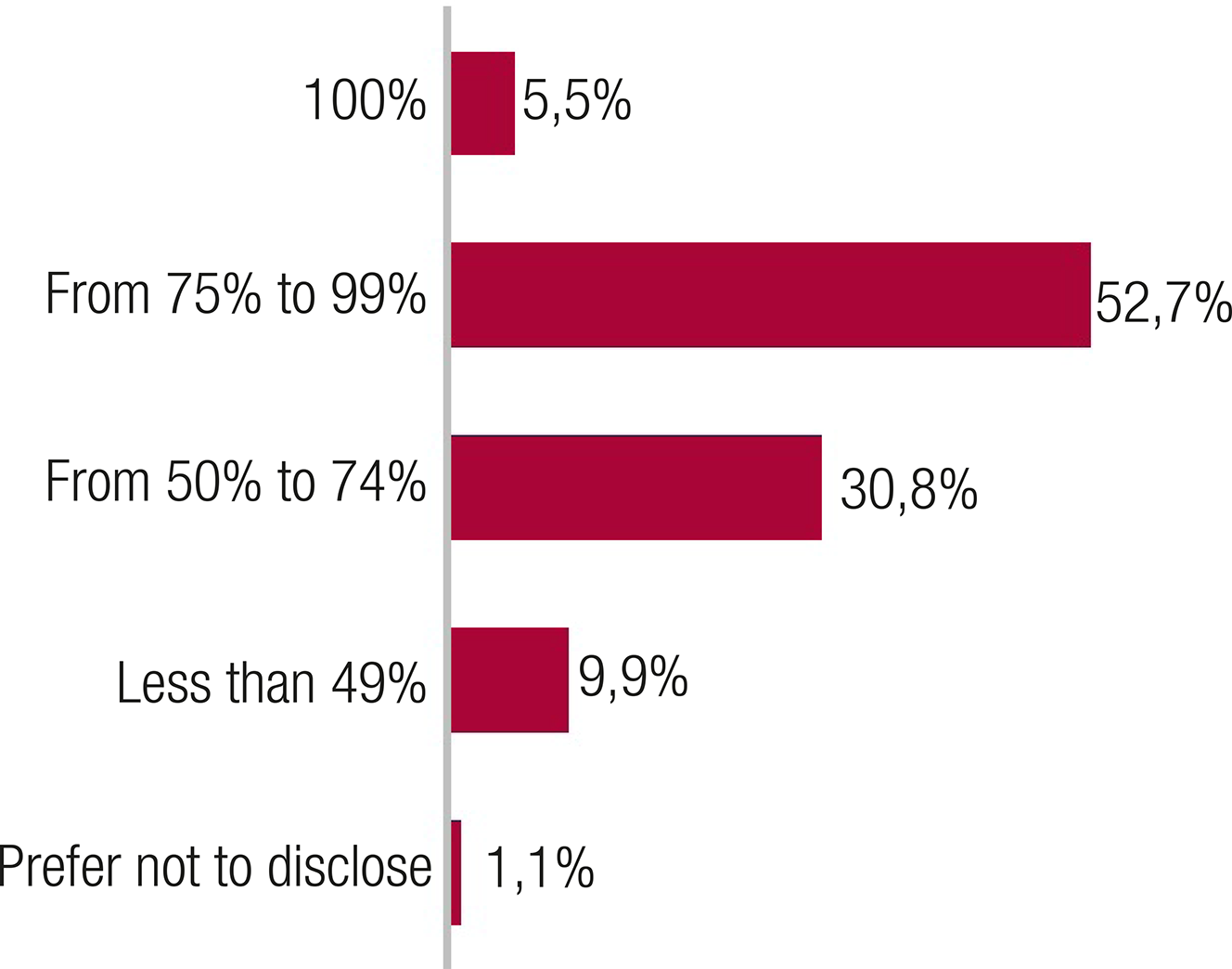 1) Note: This refers to the first month of classes, based on the total number of students enrolled in lower secondary education in 2022.* P.N.D.: Prefer not to disclose.Source: Research questionnaire. School Dropout and the Pandemic, 2023 (the authors).
 1) Note: This refers to the first month of classes, based on the total number of students enrolled in lower secondary education in 2022.* P.N.D.: Prefer not to disclose.Source: Research questionnaire. School Dropout and the Pandemic, 2023 (the authors).