 The state of the art in body studies and their paradigms in the first decades of the 21st century
The body is a recurring subject in several fields of knowledge, including philosophy, history, and education. Conceptions of the body tend to be analyzed in academic literature because they express how authors reflect on the relationship of the human being with themselves, others, and nature. Thus, the problem of this study is to identify the predominant epistemological approaches to the subject from 2001 to 2018. Regarding methodology, a quantitative-qualitative bibliometric study was conducted with education journals from 2001 to 2018, specifically those ranked A-1 by the Qualis CAPES system (2013-2016). The general objective of the study was to examine conceptions of the body in Brazilian education journals, approaching the paradigms of major scientific theories. Its specific objectives include: a) Examining the movement of knowledge production on the subject during the studied period; b) identifying the authors who published the most on body-related topics in education journals; c) analyzing how the epistemological debate on the body developed quantitatively; and d) showing how body conceptions manifest themselves in the different texts analyzed. The results show that among the studied journals, there is a predominance of phenomenological conceptions, followed by the postmodern movement, positivism, and dialectical materialism, respectively. In conclusion, the phenomenological tradition was found to stand out in the studied texts, demonstrating a concern with looking at the human being as a totality.
Epistemology; Knowledge production; Body; Brazilian education bibliography
 Thumbnail
 Thumbnail
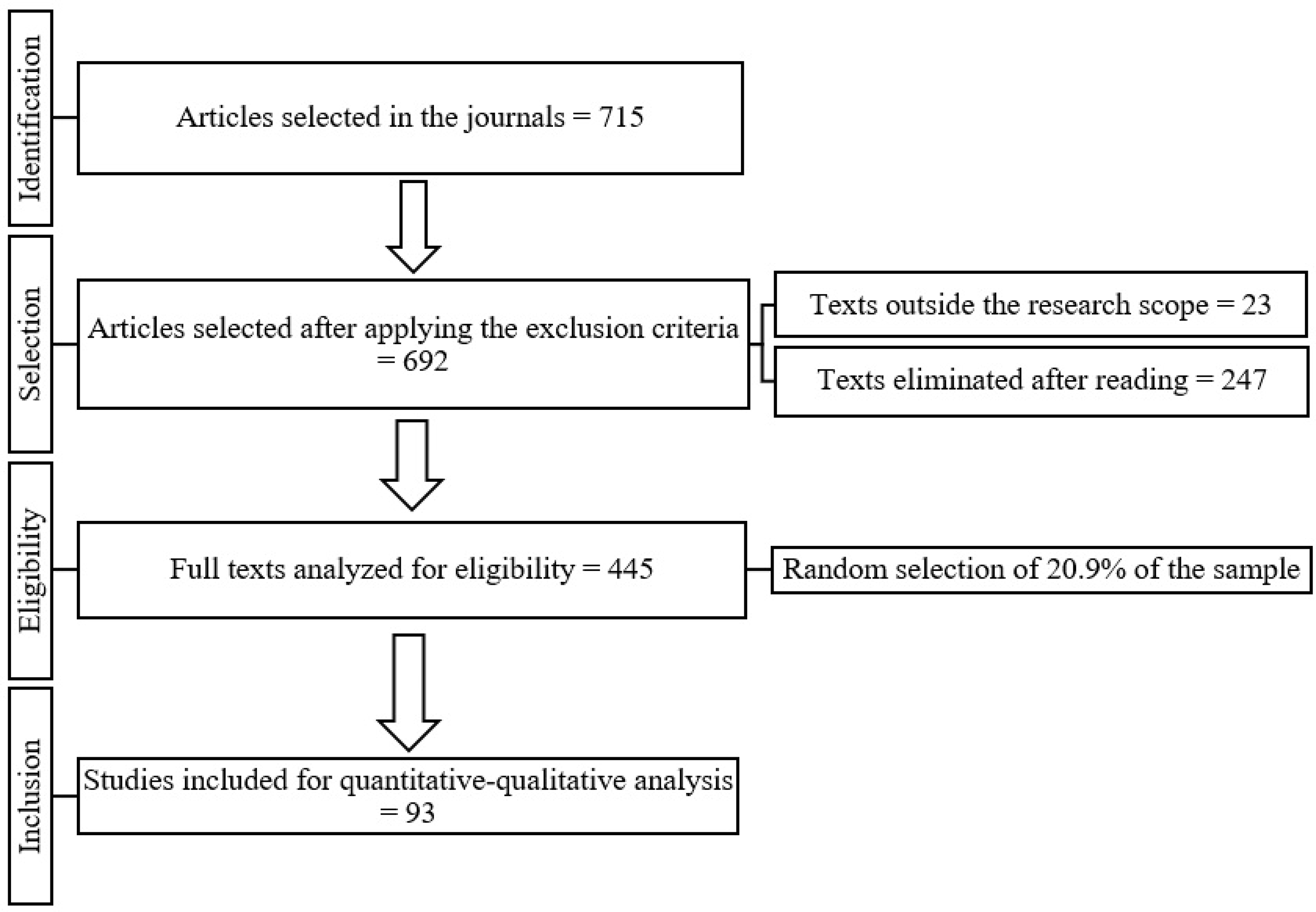 Source: Adapted from
  Source: The author.