
 Discursive interactions in small-group work: a case study in a Brazilian primary school
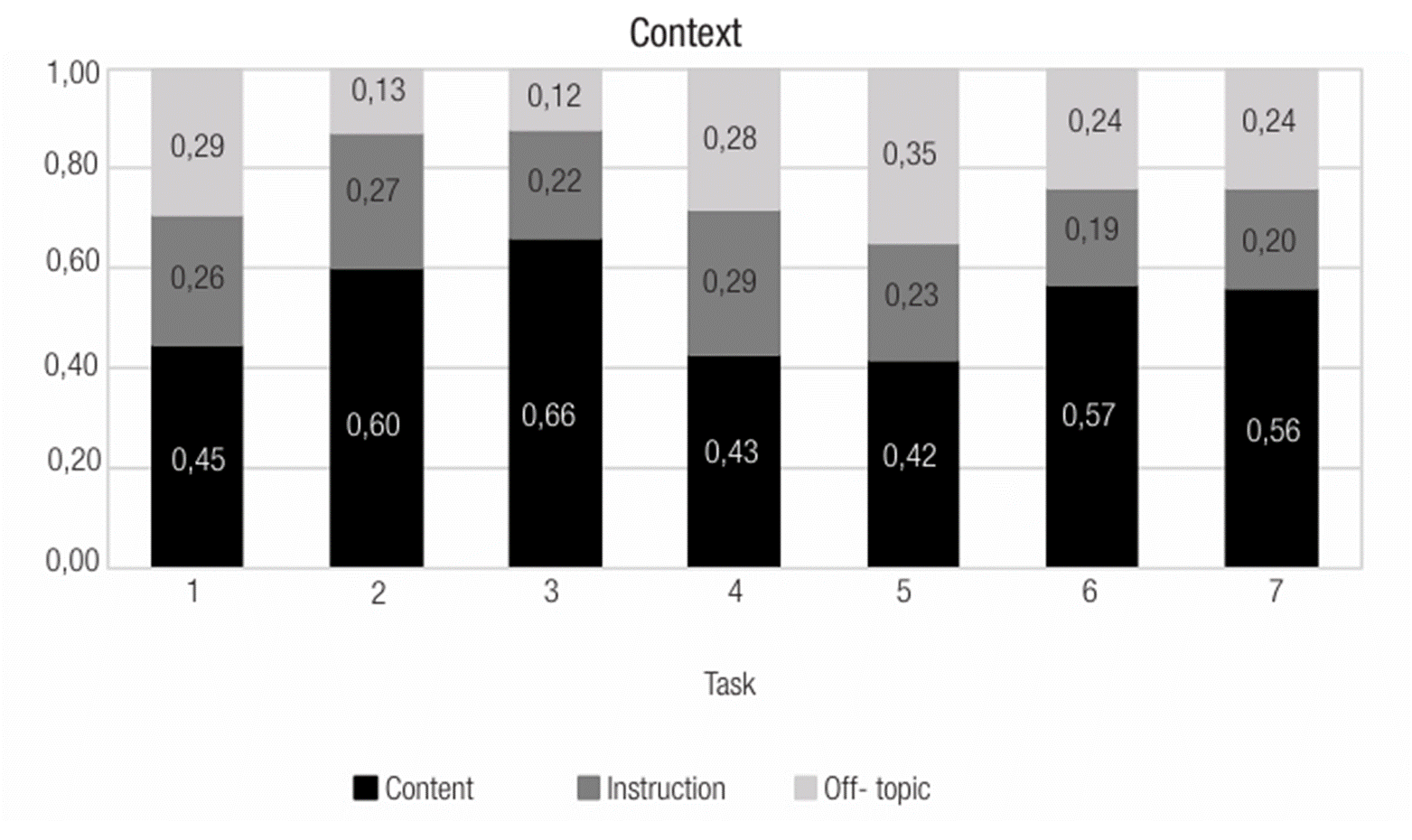
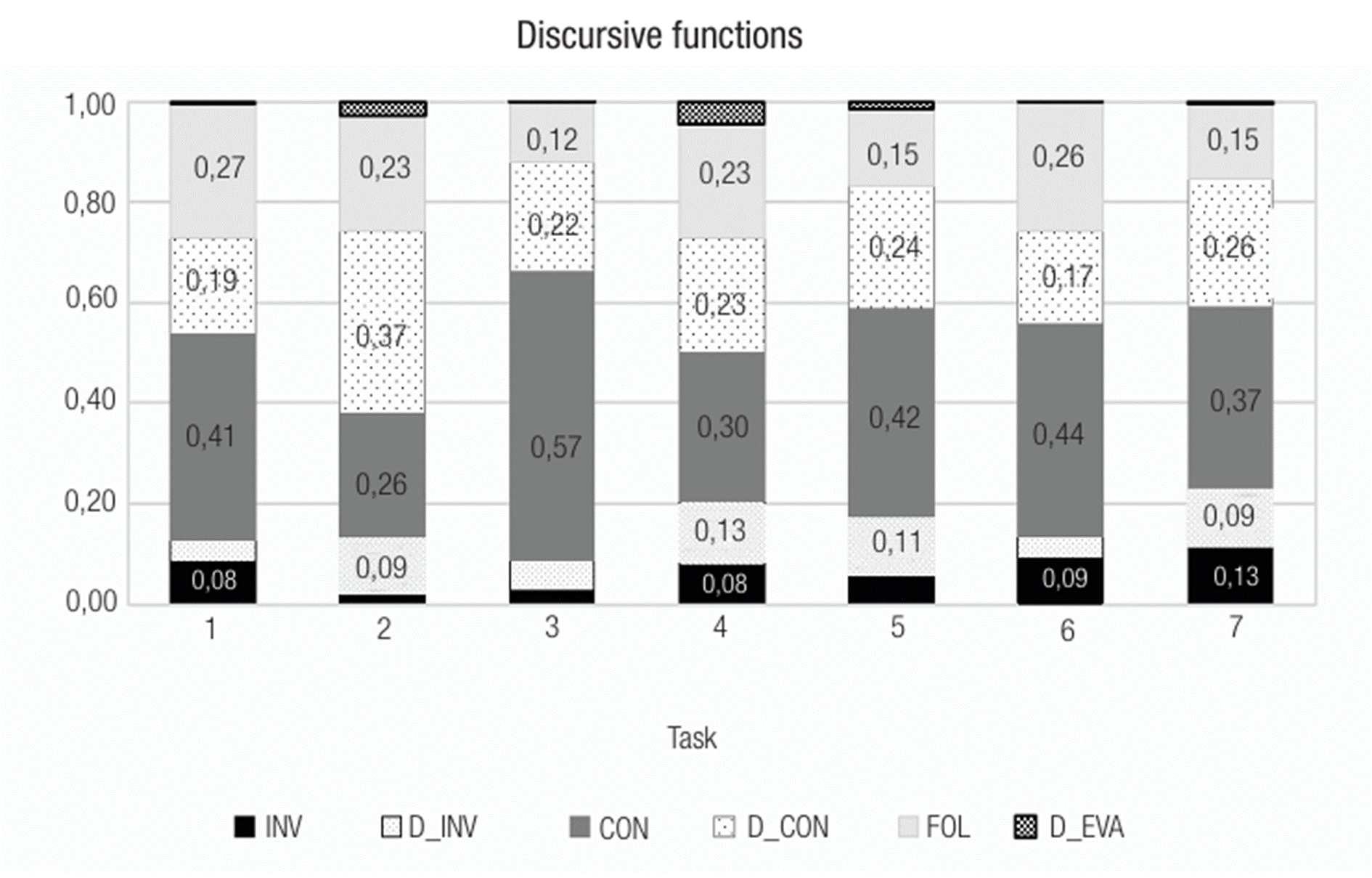
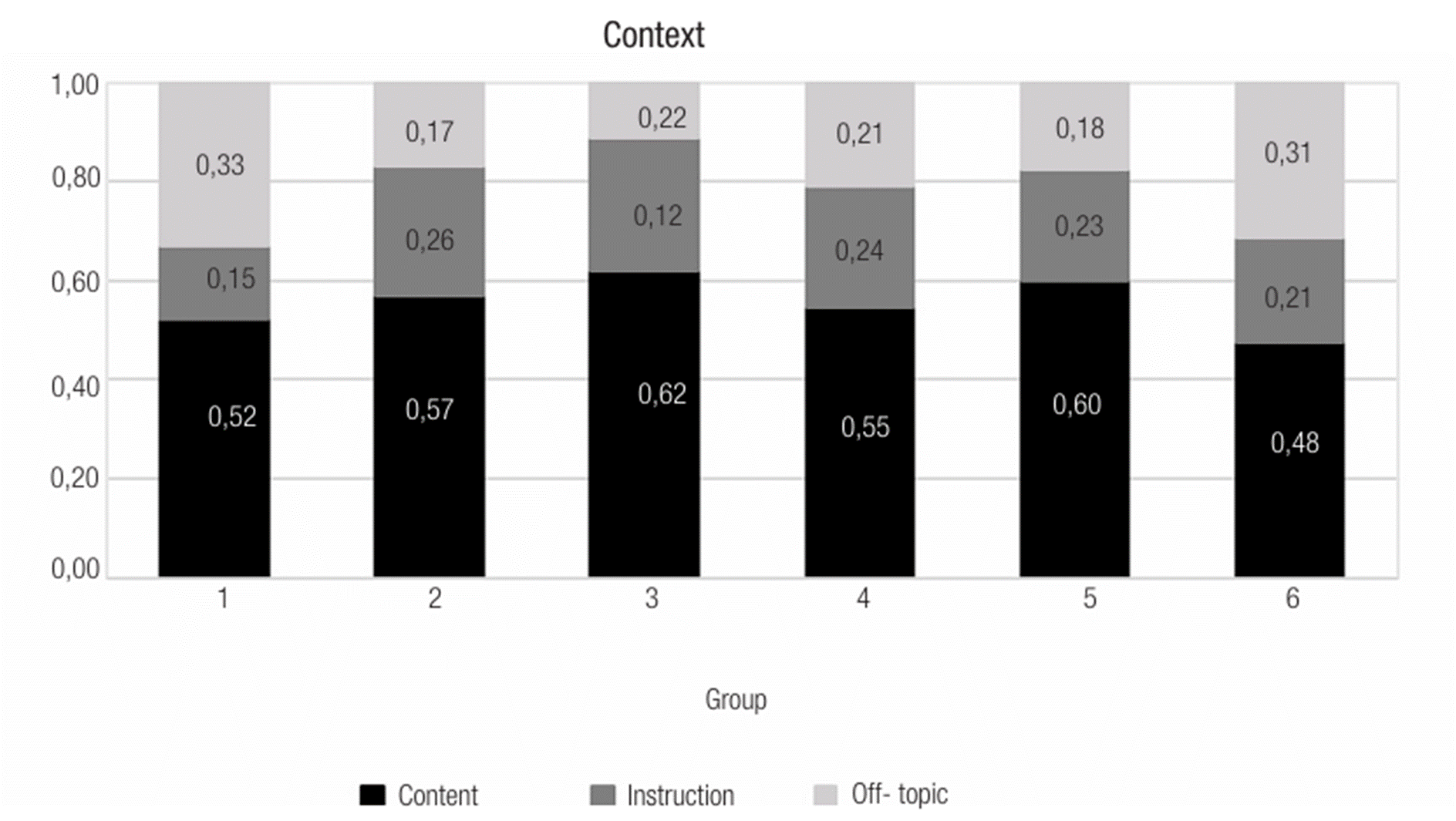
Much research has shown that small-group work plays an important role in learning, promoting cognitive growth and conceptual understanding. However, these positive outcomes are mainly achieved when group talk is productive. Addressing a gap in the literature, this paper explores discursive interactions within small-group work in a Brazilian primary school. The data were collected from three Year 5 classes in a countryside school of Minas Gerais. The study quantitatively analyses 42 episodes of group-work talk, characterizing the context of the talk (content, instruction, and off-topic) and the discursive functions of the utterances (invitation, dialogic invitation, contribution, dialogic contribution, follow-up, and dialogic evaluation). The coding scheme was specifically designed based on key aspects of dialogic talk as defined in the literature. The study reveals that groups spend half of their time discussing the task content, while the remainder is devoted to task instructions and off-topic conversations. When students focus on the content, most utterances are contributions (24% of which are dialogic) and fewer than one fifth are invitations (8% dialogic). The paper also examines variations in code frequencies across different tasks and groups. Only a few differences were found to be statistically significant. The study concludes that Brazilian students do not typically interact through dialogic talk. This finding is discussed in relation to three conditions: shared understanding, minimal shared knowledge, and the management of disagreements.
Keywords:
Group work - Discursive interaction - Classroom dialogue - Quantitative analysis.
 Thumbnail
 Thumbnail
 Thumbnail
 Thumbnail
 Thumbnail
 Thumbnail
 Source: The author based on research data.
 Source: The author based on research data
 Source: The author based on research data
 Source: The author based on research data
 Source: The author based on research data
 Source: The author based on research data