
 NEW NATIONAL GRADUATE EDUCATION PLAN (2024-2028): CHALLENGES, EMERGENCIES, AND LIMITATIONS IN THE BRAZILIAN CONTEXT
ABSTRACT:
The promulgation of the National Graduate Education Plan (PNPG) raises central questions about the future directions of Brazilian graduate studies, historically regarded as a privileged locus for fostering research, science, and innovation. The objective is to analyze the challenges, the pressing issues, and the limitations presented in the PNPG (2024-2028) (Brazil, 2023) regarding the development and consolidation of graduate education in Brazil, focusing on its strategic role in promoting research, science, and innovation for national development. This qualitative, exploratory, bibliographic, and documentary study is grounded in the historical-critical methodology to examine the challenges, urgencies, and limitations highlighted in the PNPG in light of the system’s strategic role in national development. Documentary analysis focuses on three categories: (i) emerging challenges; (ii) objectives and mission; and (iii) axes of action, limits, and obstacles. Results reveal noteworthy advances in inclusion, diversity, and internationalization, aligned with goals of equitable expansion and strengthened inter-institutional networks. Nonetheless, vulnerabilities persist—such as budgetary dependence on unstable sources, risks of technocratic instrumentalization, and gaps in qualitative program evaluation—that hinder the construction of a robust, socially referenced scientific ecosystem capable of meeting contemporary demands for technological sovereignty. Consolidating an inclusive and excellent graduate system, therefore, requires stable financing policies, assessment metrics that value regional diversity and social impact, and incentives for collaborative arrangements among universities, institutes, and the productive sector. By outlining these critical elements, the study contributes to the debate on PNPG 2024-2028 implementation and guides reflections on strategies that ensure sustained high-quality scientific output, foster the training of highly qualified human resources, and expand international engagement while accounting for Brazil’s specificities and inequalities.
Keywords:
national graduate education plan; Brazilian graduate education; educational policy
RESUMO:
A promulgação do Plano Nacional de Pós-Graduação (PNPG) suscita indagações centrais sobre os rumos da pós-graduação brasileira, historicamente reconhecida como locus privilegiado de indução à pesquisa, ciência e inovação. O objetivo é analisar os desafios, as emergências e as limitações apresentados PNPG (2024-2028) (Brasil, 2023) em relação ao desenvolvimento e consolidação da pós-graduação no Brasil, com foco em sua função estratégica de promover a pesquisa, a ciência e a inovação para o desenvolvimento nacional. Este estudo qualitativo, de caráter exploratório, bibliográfico e documental, fundamenta-se na metodologia histórico-crítica para analisar os desafios, emergências e limitações explicitados no PNPG diante do papel estratégico do sistema para o desenvolvimento nacional. A análise documental concentra-se em três categorias: (i) desafios emergentes, (ii) objetivos e missão, e (iii) eixos de atuação, limites e entraves. Os resultados evidenciam avanços relevantes em inclusão, diversidade e internacionalização, alinhados a metas de expansão equitativa e fortalecimento de redes interinstitucionais. Entretanto, persistem fragilidades, como a dependência orçamentária de fontes instáveis, riscos de instrumentalização tecnocrática e lacunas na avaliação qualitativa dos programas. Tais obstáculos comprometem a construção de um ecossistema científico robusto, socialmente referenciado e capaz de responder às demandas contemporâneas de soberania tecnológica. Conclui-se que a consolidação de um sistema de pós-graduação inclusivo e de excelência exige políticas de financiamento perenes, métricas avaliativas que valorizem diversidade regional e impacto social, e estímulo à arranjos colaborativos entre universidades, institutos e setor produtivo. Ao delinear esses elementos críticos, o estudo contribui para o debate sobre a implementação do PNPG 2024-2028 e orienta reflexões sobre estratégias que garantam a continuidade da produção científica de qualidade, promovam a formação de recursos humanos altamente qualificados e ampliem a inserção internacional sem descuidar das especificidades e desigualdades do contexto brasileiro.
Palavras-chave:
plano nacional de pós-graduação; pós-graduação brasileira; política educacional
RESUMEN:
La promulgación del Plan Nacional de Posgrado (PNPG) suscita interrogantes centrales sobre los rumbos de la posgraduación brasileña, históricamente reconocida como un espacio privilegiado para la investigación, la ciencia y la innovación. El objetivo es analizar los desafíos, las urgencias y las limitaciones presentadas en el PNPG (2024-2028) (Brasil, 2023) en relación con el desarrollo y la consolidación del posgrado en Brasil, con énfasis en su función estratégica de promover la investigación, la ciencia y la innovación para el desarrollo nacional. Este estudio cualitativo, de carácter exploratorio, bibliográfico y documental, se fundamenta en la metodología histórico-crítica para analizar los desafíos, urgencias y limitaciones expuestos en el PNPG considerando el papel estratégico del sistema en el desarrollo nacional. El análisis documental se concentra en tres categorías: (i) desafíos emergentes; (ii) objetivos y misión; y (iii) ejes de actuación, límites y obstáculos. Los resultados evidencian avances significativos en inclusión, diversidad e internacionalización, coherentes con metas de expansión equitativa y fortalecimiento de redes interinstitucionales. Sin embargo, persisten fragilidades, como la dependencia presupuestaria de fuentes inestables, riesgos de instrumentalización tecnocrática y vacíos en la evaluación cualitativa de los programas, que comprometen la construcción de un ecosistema científico robusto y socialmente referenciado, capaz de responder a las demandas contemporáneas de soberanía tecnológica. Se concluye que la consolidación de un sistema de posgrado inclusivo y de excelencia exige políticas de financiación permanentes, métricas de evaluación que valoren la diversidad regional y el impacto social, y estímulos a los arreglos colaborativos entre universidades, institutos y el sector productivo. Al delinear estos elementos críticos, el estudio contribuye al debate sobre la implementación del PNPG 2024-2028 y orienta reflexiones sobre estrategias que garanticen la continuidad de la producción científica de calidad, promuevan la formación de recursos humanos altamente calificados y amplíen la inserción internacional sin descuidar las particularidades y desigualdades brasileñas.
Palabras clave:
plan nacional de posgrado; posgrado brasileño; política educativa
INTRODUCTION
Based on the concept that the world of production has entered the Fourth Revolution, the field of power (the State) and agencies for the promotion of research and graduate studies issue calls for proposals that prioritize the so-called natural sciences, creators of technologies, inventions, and material innovations, to the detriment of the humanities, to secure competitive advantages within the realm of commodity production (Azevedo; Oliveira; Catani, 2016, p. 786).
The epigraph both announces and exposes one of the emerging challenges that Brazilian society must confront, specifically within the realms of academia, research, and innovation, as the world of production begins to dictate the rules of power. In the neoliberal context of production, universities have been encouraged to prioritize applied, functional research that aligns with productive demands. This context has reconfigured higher education, instigating changes in management styles, pedagogical organization, and funding mechanisms that now aim to establish pedagogical-administrative models closely aligned with corporate managerial models (Lesnieski; Trevisol; Bechi). Within the graduate studies, this directional shift seeks to meet the demands for technological development and scientific productivity, transforming science into a productive force and an instrument of economic competitiveness. As highlighted in the writings of Santos (2010), Almeida and Batistela (2011), and Chauí (2001), this orientation calls into question the very purpose of the university as a space for the disinterested pursuit of truth, a defining characteristic of the classical 19th-century model, where the production of knowledge was viewed as an autonomous activity dedicated to the advancement of learning.
The adoption of neoliberal policies has affected the structures of university research, creating tensions between theory and practice. As a result, universities are compelled to adapt to market demands, concentrating their research efforts on securing public-private funding. This configuration has enabled corporations and independent research centers to play a leading role in technological development, effectively competing with universities. In this context, universities have begun redefining their roles, prioritizing areas that promote economic growth and align with corporate interests. This transformation alters the function of university research in today’s landscape (Almeida; Batistela, 2011). In this scenario, as highlighted by Zabalza (2004) and reinforced by Fávero and Ody (2015), the university ceases to function as a cultural good and instead becomes an economic commodity: a service provider tasked with preparing its clients to compete in the labor market. In other words, as pointed out in a recent study by Trevisol, Fávero, and Mikoliczik (2024, p. 1), “the university has become a commodity embedded within a neoliberal rationality predicated on the maximization of profit, competition, and competitiveness, a shift that compromises its historical mission to advance knowledge.”
A brief presentation of the university’s context in the face of neoliberalism helps us to critically understand the situation of graduate education in Brazil, including its dynamics, contradictions, challenges, and limitations. Beyond the training of master’s and doctoral graduates in Brazil, the National Graduate Education System (SNPG-Sistema Nacional de Pós-Graduação), comprising graduate programs evaluated and recognized by the Coordination for the Improvement of Higher Education Personnel (CAPES), has been responsible for the production of scientific knowledge (Oliveira, 2015). The inception of CAPES marked a milestone in the development of graduate education; according to Coury (2014, p. 38): “although CAPES originated as a campaign aimed at the professional development of university faculty, its scope of action was soon expanded to meet the qualification demands of various segments of society.” As noted by Bianchetti (2009, p. 38):
[...] formally, CAPES was established in 1951, within the framework of a government policy through which, together with agencies responsible for evaluation, monitoring, and funding, the aim was to foster the organization and development of projects, stimulate research, and contribute to improving the country's standing on the global stage, primarily through the creation of graduate programs.
Bianchetti’s (2009) findings reaffirm the importance of CAPES as a state institution deemed fundamental to the institutionalization of the National Graduate Studies System and, currently, essential for the monitoring and evaluation of graduate programs. The National Graduate Studies System, articulated with the objectives of CAPES, has historically remained one of the primary driving forces for research, innovation, and scientific progress across a wide array of fields.
Within this context, the National Graduate Education Plans (PNPG-Planos Nacionais de Pós-graduação) are formulated to establish goals designed to consolidate and expand Stricto Sensu graduate education in Brazil. Generally, PNPG are approved periodically for a ten-year duration; however, this rule is not always observed. There have been plans that remained in force for fewer than ten years, and at certain junctures, the country has found itself without any plan in effect, as evidenced by the gap in the PNPG coverage between 2022 and 2024 (Trevisol; Fávero; Almeida, 2020). This distressing state of affairs compels us to pose a critical question: how can a nation aspire to generate high-impact science and foster social development through research if, due to political considerations, it proves incapable of maintaining the continuity of policies designed to stimulate science and graduate education in the training of master’s and doctoral graduates? This temporal interval created a void, devoid of general guidelines, given that the subsequent PNPG should have been deliberated upon before the expiration of the preceding plan (2010-2024) to prevent any discontinuity. Yet, this gap does possess a redeeming feature: it has afforded the new CAPES administration, inaugurated under the Lula government, the opportunity to construct a PNPG that is truly attuned to the challenges currently confronting Brazil’s graduate education system.
The overview presented serves as a foundation for formulating the investigative problem, summarized in the following question: What challenges, emerging issues, and limitations are highlighted in the PNPG (2024-2028)? The objective of this study is to analyze the challenges, emerging issues, and limitations presented in the PNPG (2024-2028) (Brasil, 2023) regarding the development and consolidation of graduate education in Brazil, with a focus on its strategic role in fostering research, science, and innovation for national development. This research uses a qualitative approach (Flink, 2009) with exploratory objectives (Triviños, 1987), using bibliographic (Flink, 2009; Fávero et al., 2023) and documentary (Marconi; Lakatos, 2010; Fávero; Centenaro, 2019; Centenaro; Bukowski; Pereira, 2023) methods. The analysis is grounded in historical-critical methodology (Lesnieski; Trevisol; Silva, 2024). The documentary analysis focuses on the content of the New National Graduate Education Plan (PNPG 2024-2028), aiming to identify its challenges, emerging issues, and limitations. The article is organized into four sections following this introduction. The first part discusses the PNPGs preceding the current PNPG (2024-2028), to historicize the material conditions, contradictions, and underlying intentions that drove the elaboration and implementation of each of these plans. The second part presents trends in graduate education based on quantitative and qualitative data made available by CAPES through the Sucupira Platform. In the third section, we will undertake a deeper analysis of the PNPG (2024-2028) based on analytical categories, to present and systematize the trends, challenges, emerging issues, and limitations about the PNPG (2024-2028), which will remain in force until 2028. Finally, we offer a few concluding remarks.
THE (MIS)PATHS OF THE NATIONAL GRADUATE EDUCATION PLANS PRECEDING THE PNPG (2024-2028)
The prefix (des)caminho, (mis)path, is used with the specific intent of linguistically highlighting the objective of this text: to reconstruct, from a dialectical, critical, and contextualized perspective, the trajectory of the PNPGs that preceded the current PNPG (2024-2028) (Brasil, 2023), while pointing out the imbalances and deviations regarding graduate education that have occurred throughout the history of Brazilian education. To begin, we deem it necessary to introduce CAPES as the driving force behind the National Graduate Education System in Brazil, an institution whose founding mission was to institutionalize graduate education as the quintessential vehicle for the transformation and modernization of the Brazilian university. Within this context of its inception, Bianchetti (2009) argues that graduate education adopted the training of professors and the development of research as its primary focal points. Thus, according to the author (Bianchetti, 2009, p. 40):
[...] CAPES was established as the Coordination for the Improvement of Higher Education Personnel starting in 1964. From that point onward, and for many years, the predominant operational paradigm remained that of training personnel for universities. Since the early 1990s, however, this predominant paradigm has shifted, and the focus has turned to the training of researchers.
The author's observations provide insights into the evolution of CAPES, which has undergone distinct phases with complementary objectives. The first phase, from 1964 to the 1990s, aimed at training professors to staff university faculties. The second phase, covering from 1990 to 2010, primarily aimed at training researchers, which was seen as essential for the country's progress and development. The third phase, covering the years 2010 to 2024, maintained the objectives of the previous phases, while aiming to make Brazilian research cutting-edge, internationally recognized, and closely aligned with societal demands, particularly those based on the “Triple Helix” model that involves collaboration between universities, society, and industry. This period is marked by inherent contradictions: on one hand, the PNPG (2010-2020) (Brasil, 2010a) proclaimed optimism regarding the country's growth prospects, particularly those anticipated following the discovery of the pre-salt oil reserves; on the other hand, the subsequent years (2016-2020) witnessed cuts to research scholarship funding and even the curtailment of resources for certain fields, specifically those linked to the humanities. During this phase, CAPES fostered a research model characterized by a functionalist and economistic orientation, prioritizing the pursuit of “practical” outcomes aligned with the production modes associated with flexible accumulation.
According to Santos (2010), higher education and stricto sensu graduate programs are compelled to adopt the practices and demands of the business world, orienting their institutional structures toward technological development and the expansion of science as a productive force, one that generates applied economic gains and integrates into the international competitiveness of economies with a view to achieving productivity gains. According to Bechi, Bilibio, and Trevisol (2022), the organizing ethos of teaching and research is guided by productivism, economism, speed, streamlining, and flexibility; naturally, in the course of this process, it pressures higher education to discard, eliminate, and exclude anything that might compromise its efficacy and dynamism within the realm of global competitiveness.
Bianchetti (2009) highlights several critical aspects regarding CAPES. These criticisms do not diminish the value of CAPES; in fact, the institution’s merits are recognized, particularly its role in advancing a national project for graduate education. However, the author argues that in the pursuit of excellence, CAPES imposes an evaluation model that allows little room for the inherent diversity within Brazil, both in the relationship with other countries (from which its indicators of excellence are derived) and in its internal dynamics among programs, particularly across academic fields. The flexibility available to these programs and fields is extremely limited. While being part of the system grants legitimacy and secures funding, it comes at a cost: submission to a virtually singular standard that encompasses both evaluation and research funding criteria.
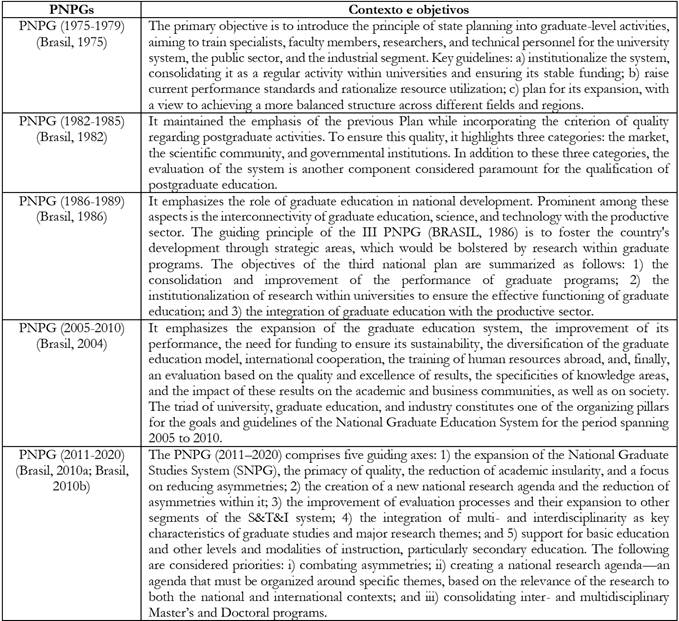
In this journey, the PNPGs serve as a compass guiding the path that graduate education and research must follow in Brazil, with a particular emphasis, within the evaluation process, on funding, the prioritization of strategic areas, the rectification of asymmetries, internationalization, and the expansion of graduate education throughout the country. On one hand, these plans act as an “X-ray” of Brazilian graduate education (highlighting its limitations, gaps, and challenges); on the other, they embody a commitment to establishing goals deemed essential for the nation's scientific development. It is within this context that the seven PNPGs are formulated. In Chart 1, we summarize the objectives of each of these plans.

Adherence to the conditions outlined in the PNPG (BRASIL, 2010) drives the development of regulatory instruments for the evaluation and funding of graduate programs that are based on quantitative productivity. Trevisol, Fávero, and Almeida (2019) argue that quantitative evaluation criteria, particularly those concerning publications, papers, dissertations, theses, and books, have become objectives actively pursued by these programs, given that the volume of publications (measured by the Qualis system) constitutes one of the central criteria for securing financial support. However, this race for publications is not always accompanied by quality or social relevance for the regions in which these graduate programs operate.
In this context, Ivashita and Vieira (2017) argue that these challenges necessitate a reevaluation of graduate programs, particularly regarding their emphasis on academic production. The authors highlight a complicated relationship between CAPES and graduate programs. As the agency responsible for funding, CAPES also assesses program performance based on productivity. Therefore, to secure funding, programs must achieve favorable evaluations. This connection between funding and evaluation subjects programs to a constant, “frenetic” pace of production to meet the targets set by CAPES. Bianchetti (2006, p. 177) previously pointed out this issue, asserting that the logic of CAPES can essentially be summarized by one key word: “deadlines.” In this framework, the whole system is reduced to individual components. Furthermore, the authors argue that this evaluation process can be punitive, as only programs with impressive scores are eligible for significant funding. As a result, a duality between the quality and quantity of publications emerges, posing both a bottleneck and a vulnerability within the PNPG (2011-2020) (Ivashita; Vieira, 2017).
During the tenure of the PNPG (2011-2020), CAPES produced reports aimed at evaluating the established goals and the progress achieved. Among the challenges identified, Trevisol, Fávero, and Almeida (2019) highlight the need for more effective monitoring and the implementation of evaluation criteria that are more flexible and better suited to diverse regional realities. The incorporation of indicators that align with research addressing social and business demands constitutes a key point. Another significant challenge is internationalization, which remains dependent on discontinuous government programs, in addition to the need to consolidate a continuous system of scholarships and collaborations with international centers of excellence. CAPES also underscores the importance of strengthening institutional self-evaluation and developing models that reflect the social and economic impact of the research conducted.
The research agenda has introduced new participants, particularly companies that are acting as funding sources for research. As Barreto and Domingues (2012, p. 50) point out, “the Triple Helix model, by establishing partnerships among universities, government, industry, and other societal institutions, fosters a new perspective on how the research agenda is organized within graduate studies.” According to Azevedo, Oliveira, and Catani (2016), this proposed National Research Agenda is based on concepts of competition, alongside material innovation and technology, which ultimately undermines the Humanities. The agenda aims to secure competitive advantages in the area of commodity production, leading to a focus on research fields related to innovation and technology, such as agriculture and infrastructure. In contrast, the Humanities are pushed to the margins.
According to Trevisol, Fávero, and Almeida (2019), the final 2018 document proposes a revision of the evaluation model, advocating a multidimensional approach that takes into account the diversity of contexts and vocations of graduate programs (PPGs), with key axes such as human resource training, innovation, and socioeconomic relevance. The need to balance qualitative and quantitative criteria, enhance the Qualis system, and integrate related fields in an interdisciplinary manner is highlighted. Linking evaluation to its impact on economic and social development, as well as the need to improve the monitoring of alumni and the impact of research on attracting investment, constitutes other relevant points for elevating the standards of Brazilian science.
Finally, the report (Brasil, 2020) titled “Proposal for Enhancing the Evaluation of Brazilian Graduate Education for the 2021-2024 Quadrennium: A Multidimensional Model” (Proposta de Aprimoramento da Avaliação da Pós-Graduação Brasileira para o quadriênio 2021 - 2024, Modelo Multidimensional), highlights the continuity of the guidelines established in the PNPG (2011-2020) (Brasil, 2010a) while also suggesting changes to the evaluation process for the new period. Despite advancements in Brazilian graduate education, such as the growth in master’s and doctoral programs and increased international visibility, the report identifies challenges, including a scarcity of PhD holders per capita compared to OECD countries and the need for greater international impact in research. According to Neto, Trevisol, and Almeida (2021), to enhance the evaluation system, the report proposes the “Multidimensional Model,” which seeks to overcome the limitations of the previous single, rigid, and uniform model, a model deemed inadequate for reflecting the specific characteristics of diverse programs. The five dimensions comprising this new evaluation model are: personnel training, research, innovation and knowledge transfer, societal impact, and internationalization. The gradual implementation of these changes aims to align the evaluation process with the specificities of the various programs and to improve the overall quality of graduate education.
The report emphasizes the importance of adopting international metrics recognized by the academic community to replace the Qualis system. It proposes the inclusion of external members in the assessment of social impact, as well as a requirement for institutional planning within Science and Technology Institutes (STIs). These reforms, aligned with the Legal Framework for Science, Technology, and Innovation (Brazil, 2016), aim to strengthen the integration between academia and the business sector, in addition to enhancing Brazil's competitiveness on the global stage.
REALITIES AND TRENDS IN GRADUATE EDUCATION IN BRAZIL
The history of the National Graduate Studies Plans, presented earlier, highlights the relative youth of Brazil's stricto sensu graduate education. Within the brief span of approximately seven decades, the country has successfully established a National Graduate Studies System. Although this system is considered young, the progress achieved over these few decades is widely acknowledged; nevertheless, one cannot overlook the fact that graduate education in Brazil replicates the same structural patterns typical of the broader higher education sector. These include difficulties regarding funding sources, a concentration of resources and programs in major urban centers, challenges in defining quality assessment systems, gaps in the training of master's and doctoral graduates, a lack of consistent policies to incentivize and foster research, and inadequate policies regarding student access to and retention within master's and doctoral programs.
Goal 14 of Brazil's National Education Plan (PNE - Plano Nacional de Educação) for 2014-2024 aims to gradually increase enrollments in stricto sensu graduate programs, with an objective of reaching an annual output of 60,000 master's graduates and 25,000 doctoral graduates by the end of the plan. However, this goal has experienced a downward trend in the number of graduates, decreasing from 70,071 master's graduates in 2019 to 59,374 in 2022. Data indicates that the peak number of master's and doctoral graduates occurred in 2019, with 24,432 doctoral degrees awarded. In 2020, there was a decline to 20,007 doctoral graduates, followed by a gradual recovery in subsequent years, although the figures have not yet returned to the levels seen in 2019 (Inep, 2025).
One of the variables accounting for these data is likely linked to the pandemic period; however, one cannot rule out the possibility that other variables, particularly those related to the adverse policies targeting graduate education implemented by the Temer and Bolsonaro administrations, contributed decisively to these figures.
Budget cuts, reductions in research grants, the constant harassment of graduate programs, and the ridicule of science culminated in a regression that placed the production of specialized knowledge in Brazil at imminent risk. The historical and material context fostered a perverse alliance between social conservatism and liberal idealism, which compromised research, especially given that graduate education in Brazil is conducted primarily within public universities. Attempts at privatization, the implementation of managerialist models, and pressure for economistic practices culminated in a proposal launched by Minister of Education Abraham Weintraub known as the “Future-se Program,” which, in practice, delegates to educational institutions the responsibility of securing funding for their programs and departments through partnerships with the private sector (Giolo, 2020).
The fulfillment of Goal 14 of the PNE (2014-2025) (Brazil, 2014) is linked to the following aspects: a) Expansion of funding: increasing financial support for graduate education through official funding agencies, such as CAPES and the National Council for Scientific and Technological Development (CNPq-Conselho Nacional de Desenvolvimento Científico e Tecnológico); b) Increased course offerings: encouraging the creation of new master’s and doctoral programs, particularly in regions with fewer existing options, promoting decentralization and equity in access to graduate education; c) Partnerships and networks: stimulating the formation of consortia and networks among higher education institutions to share resources and expertise, thereby strengthening the quality of the programs offered; d) Faculty development: promoting the professional qualification of teaching staff by increasing the proportion of faculty members holding master’s and doctoral degrees within higher education institutions, as established in Goal 13 of the PNE (2014-2025).
The data regarding Goal 14 of the National Education Plan (PNE) for 2014-2025 (Brasil, 2014) provide an overview of the landscape and trends in graduate education. However, they also highlight historical challenges and bottlenecks that have been present in previous National Plans for Graduate Education (PNPGs) which need to be addressed. The most significant challenge is insufficient funding, a result of austerity policies that have negatively impacted scientific progress and hindered the necessary expansion to meet the established goals. Unfortunately, President Bolsonaro’s administration has hindered scientific advancement and caused a regression to levels comparable to those seen in Brazil in 2014 (Araújo; Macedo, 2022).
Regional inequalities continue to represent a significant gap. Disparities exist in the availability of graduate programs across the country's various regions, necessitating the implementation of specific policies to balance this distribution. Another looming challenge concerns the balance between quality and quantity. The expansion of enrollments and the establishment of new graduate programs must be accompanied by an evaluation process that ensures quality and curbs the perverse logic of massification driven by market forces. Finally, it is crucial to address challenges related to research scholarships: there is a need to increase their availability and value, as well as to formulate policies that encourage young people to pursue a research career. In other words, young researchers must be valued so that they can envision a sustainable and secure career path as researchers.
Regarding the expansion of graduate education, the PNPG (2024-2028) (Brasil, 2023) indicates that the number of municipalities hosting graduate programs (PPGs) rose from 23 in 1970 to 324 in 2023. According to data from the document, in 2022, 497 institutions, comprising both Higher Education Institutions (HEIs) and research institutes, offered 4,777 graduate programs, spanning all 27 Federative Units. This snapshot is the result of a continuous process of graduate education expansion over the past seventy years, a process that has accelerated notably over the last two decades. This figure is corroborated by the Sucupira platform (Brasil, 2024), which charts the evolution of the stricto sensu graduate course offerings, as illustrated in Table 1.
Over a decade, all levels and modalities of program offerings have demonstrated positive growth, with particular emphasis on professional master’s and professional doctoral programs, which have exhibited considerable expansion. The objective of expanding the range of courses and program modalities is enshrined in the PNPG; consequently, this represents a gap and a challenge that has historically required attention. However, a more critical analysis brings to light several disquieting issues: a) there is a clear trend toward increasing the supply of professional master’s and doctoral programs, programs characterized by a more flexible, adaptable, and pragmatic approach, and which align more closely with the relationship between the university and economic demands. The applied and functional nature of research is increasingly becoming the driving force behind these new graduate programs; b) although the data project a positive “air” of growth, one cannot overlook the fact that such expansion must be accompanied by supportive policies designed to ensure the maintenance and continuity of these programs. The belief that civil society will shoulder the financial burden for research at the master’s and doctoral levels is a deceptive illusion, one that is, moreover, Machiavellian in its intent to absolve the State of its commitments regarding the promotion of research. This issue places certain fields of knowledge under constant threat, whether through the risk of discontinuation or the reduction of resources.
According to the Sucupira Platform (Brasil, 2024), of the 7,246 courses offered in 2022, 6,916 were operational, 285 were in the process of being discontinued, and 45 were discontinued that year. This demonstrates that, beyond mere expansion, it is crucial to consider public policies that ensure the quality and continuity of graduate programs (PPGs). According to the PNPG (2024-2028) (Brazil, 2023), the growth in the number of offered graduate programs stems from the expansion of graduate programs offered in a network format. These, designated by CAPES Ordinance No. 214/2017 (Brazil, 2017) as stricto sensu graduate programs in associative forms, are characterized by their joint offering by two or more institutions (whether public or private), which, in an articulated and officially formalized manner, create and maintain a master’s and/or doctoral program with defined and shared responsibilities among the partner institutions. The PNPG (2011-2020) (Brazil, 2010a) identified the offering of network-based programs as a key objective for the expansion of graduate education in Brazil. Among the objectives of this mode of delivery are: 1) to consolidate and expand specific fields of knowledge; 2) to reduce territorial disparities; and 3) to enable the establishment of nascent programs through partnerships with well-established programs.
In 2024, the Sucupira Platform provided ratings for Graduate Programs (PPGs) in Brazil. According to the data, 37% of programs received a rating of 4, while 22% achieved a rating of 5. Only 0.3% were rated 1, and 0.6% received a rating of 2. Additionally, 21% were rated 3, 9% were rated 6, and 5% earned a rating of 7. Furthermore, 6% of programs hold a Concept A designation, which is assigned to newly established PPGs that have not yet undergone their first quadrennial evaluation. The significant number of programs rated 4 and 5 reflects the challenges they face in producing high-impact knowledge, ensuring faculty excellence, advancing internationalization efforts, successfully placing alumni, and achieving sustainability.
However, these difficulties cannot be attributed solely to the programs themselves, given that they stem from external factors, such as political interference, a scarcity of research grants, difficulties in accessing research calls for proposals, challenges in institutional and national strategic planning, the devaluation of the research profession, geographical constraints, competition with already-established graduate programs, and the difficulty of meeting the evaluation criteria employed by CAPES (particularly due to the use of comparative methods between programs and constant changes in evaluation standards). CAPES’s inconsistency in defining the medium- and long-term trajectory of graduate education in Brazil constitutes a factor that hinders graduate programs from formulating and implementing strategic plans capable of achieving consolidation beyond the four-year evaluation cycle.
The Sucupira Platform (Brasil, 2024) provides insights into the distribution of graduate programs across different administrative units. According to the data, 59% of these programs are found within the federal network, 22% within the state network, 1% within the municipal network, and 18% in the private network, which includes both for-profit and non-profit universities. Most graduate programs (PPGs) are concentrated in the public network, which starkly contrasts with undergraduate education, where more than 70% of offerings are in the private sector. This discrepancy indicates that graduate education is primarily a public endeavor, suggesting that the private sector is less inclined to invest in graduate studies due to financial unappeal. Additionally, Graph 1 illustrates the distribution of these programs across various major fields of study.

The PPGs within the broad multidisciplinary field addresses the goals established by the PNPG (2011-2020) (2010a). Furthermore, the data can be interpreted as pointing toward Goals 13 and 14 of the PNE (2014-2025) (Brasil, 2014), which call for an increase in the number of master’s and doctoral graduates active in higher education. The significant number of programs in the multidisciplinary, health, and humanities fields suggests that these areas can contribute to achieving this goal, given that they offer more opportunities for advanced training. Finally, the concentration of programs in the health, humanities, and multidisciplinary fields indicates that the upcoming PNPG (2024-2028) (Brasil, 2023), and indeed the PNE (2014-2025) (Brasil, 2014), should focus on strategies and goals designed to balance the growth of less represented fields, such as Letters and Biological Sciences.
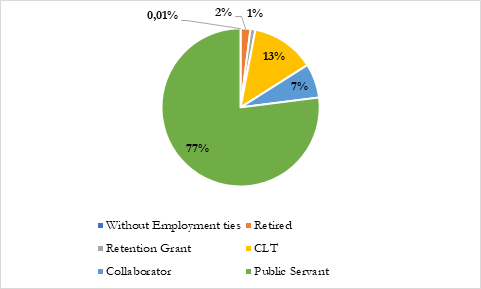
Another important aspect of graduate education is the faculty. According to the Sucupira Platform (2024), there were 84,494 active faculty members in Brazilian graduate programs in 2022. However, a total of 109,548 employment ties with institutions were recorded, indicating that a single faculty member may work in more than one graduate program, thus holding multiple employment connections. Graph 2 illustrates the faculty members' relationships with these institutions.

The data presented reaffirm that graduate education, and consequently research in Brazil, is predominantly concentrated within public institutions. A segment of 13% holds employment ties governed by the CLT, while 7% are collaborators. Meanwhile, according to the Sucupira Platform (2024), 83% are permanent staff (90,651), collaborators account for 16% (17,429), and 1% are visiting faculty (1,468).
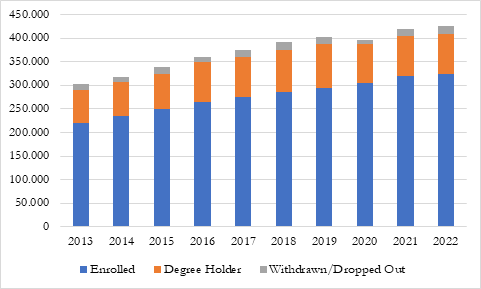
Regarding the student body, the SNPG has shown steady growth. The graph below summarizes the data over the last 10 years.
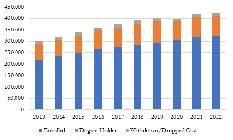
According to the PNPG (2024-2028) (Brasil, 2023), from 2013 to 2022, a steady increase was observed in the number of students enrolled in graduate programs (Master’s and Doctoral courses), with an average growth rate of 48%. The number of graduates also grew steadily—at a rate of 21% over the period—except for a slight negative fluctuation in 2020 (the first year of the COVID-19 pandemic). Records of withdrawal and dropout also followed a consistent trend during this period, exhibiting a similar negative fluctuation in 2020, yet maintaining an average of 4% of the total student body in each reference year. Of this total, 76.7% are currently enrolled, 19.4% have graduated, 3.8% have withdrawn or dropped out, and 0.1% have changed academic levels (Brasil, 2024).
Another important criterion for graduate education in Brazil, and one included as a goal in the PNPG (2011-2020) (Brasil, 2010a), relates to the presence of undergraduate students within graduate programs. This aspect is particularly significant, given that research initiation constitutes one of the foundational pillars of the university “triad” of teaching, research, and extension, thereby facilitating the attraction and integration of undergraduates into scientific activities. According to the PNPG (2024-2028) (Brasil, 2023), in 2022, the participation of 54,242 undergraduate students across 66,264 graduate-level projects was recorded. This participation occurred predominantly in research projects (86%), followed by involvement in extension projects (9%); the remaining forms of participation, which were far less significant in volume, were distributed among innovation projects (2%), interinstitutional projects (2%), and other categories (1%).
Finally, the data regarding postdoctoral studies as a form of continuing education for the faculty. The presence of researchers at the postdoctoral level is fundamental to the investigations conducted within graduate programs, as well as to the enhancement of the educational process for Master’s and doctoral students. According to the PNPG (2024-2028) (Brasil, 2023), in 2022, 18,714 postdoctoral researchers were affiliated with graduate programs. Of this total, 54% were active in federal public institutions, 36% in state public institutions, and 10% in private institutions. Nevertheless, gaps persist regarding this form of continuing education, particularly those related to research grants and postdoctoral fellowships involving a leave of absence from regular professional duties.
REALITIES AND TRENDS IN GRADUATE EDUCATION IN BRAZIL
Based on the previously outlined diagnosis, we will critically analyze, through the lens of the PNPG (2024-2028) (Brasil, 2023), the challenges and trends in graduate education in Brazil. This analysis will be organized around three categories: emerging challenges for graduate education, the objectives and mission of graduate education, and key lines of action.
Emerging Challenges for Graduate Education under the PNPG (2024-2028)
To facilitate analysis, the data have been compiled in the chart below. We have selected the challenges and subsequently described the key factors that hinder the bridging of these gaps in graduate education.
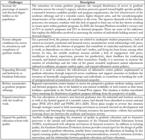
The challenges presented are the foundation for the organization of the PNPG (2024-2028) (Brazil, 2023), which aims to outline the key goals the country must achieve to foster a model of science characterized by high social impact and a commitment to overcoming the social ills in which Brazil has historically been mired. It is important to highlight that CAPES identifies a series of challenges that are not present in the PNPG (2014-2028). The PNPG (2024-2028), in turn, establishes inclusion, diversity, and access and retention as challenges, in addition to addressing concerns regarding the relationship between graduates and the labor market.
The elements outlined in this text represent a departure from previous National Graduate Education Plans. Affirmative action policies are emphasized, highlighting the importance of implementing strategies that enhance access, retention, and completion rates in graduate programs. However, challenges remain in training master's and doctoral graduates, including reducing disparities in the availability of graduate programs and expanding the education system while ensuring quality, a concern that has been addressed in earlier National Graduate Education Plans and continues to be relevant in the current National Graduate Education System (SNPG). The PNPG (2024-2028) specifically prioritizes internationalization, research, extension activities, and innovation, as well as the connection between graduate education and basic education. The focus on extension, innovation, and the interaction between graduate and basic education signals a significant shift: moving away from a model that mainly prepares individuals for academic faculty roles towards one that emphasizes training researchers involved in practical applications, with a strong focus on innovation.
Objective and Mission of the PNPG (2024-2028)
The PNPG (2024-2028) establishes the following mission: “To ensure a high-quality, diverse, equitable, and inclusive graduate education system that is connected to the needs of society” (Brasil, 2024, p. 89). It is worth highlighting that the mission presented for the coming years underscores the need for the SNPG to invest time and resources in realizing the dimensions of inclusion and diversity. This recognition differs from previous PNPGs, which focused on fostering the development of graduate education geared toward the country’s scientific and technological advancement. The recognition of equity within the PNPG (2024-2028) goes hand in hand with affirmative action policies as a fundamental prerequisite for social justice.
The mission ascribed by the PNPG (2024-2028) (Brasil, 2023) moderates the drive toward neoliberal scientific development, a characteristic of the PNPG (2011-2020) (Brasil, 2010a). It does so through a Research Agenda anchored in the “Triple Helix” model; this approach, which aims to establish partnerships among universities, government, businesses, and other institutions, facilitates the organization of a graduate-level research agenda that may prioritize areas deemed strategic for the private sector. Adopting a critical stance, Azevedo, Oliveira, and Catani (2016) argue that the proposed National Research Agenda, intended to guide various aspects of graduate education (research, evaluation, internationalization, etc.), is grounded in concepts of competition and innovation. Furthermore, they contend that it focuses on developing technologies essential to the model of "flexible accumulation," with the ultimate goal of positioning the country as a global leader. Moreover, according to these authors, this proposal betrays a disregard for the Humanities, which are effectively deemed superfluous within the global landscape of economic competitiveness.
The PNPG (2024-2028) outlines a vision for the future, aiming to establish a National Graduate Studies System that is excellent, equitable, inclusive, and sustainable. This system seeks to promote high-quality, diverse training that aligns with the real needs of society (Brasil, 2024, p. 89). Several key points emerge from this vision: i) Graduate education is currently not aligned with society's actual needs. ii) There is a necessity for investment in both financial and academic sustainability. iii) Diversity and inclusion are emphasized as essential components for the future of graduate education. While these points serve as foundational premises for a targeted future, the use of such terms may appear generic and overly broad, even in the context of defining that future.
The effectiveness of this future depends, among other strategies, on the political stance adopted by governments regarding research. It is essential that governments expand research grants, invest greater resources in research funding calls, and embrace research and science as a priority social value for the country. Recent examples of governments that openly espoused science-denying narratives ultimately fostered a sentiment of disregard for scientists and for science within the public sphere. The tangible consequences of this stance reverberated in a reduction of research grants and investments in the postgraduate sector. It is therefore fundamental that the SNPG mobilize to ensure the fulfillment of the PNPG (2024-2028) goals (Brasil, 2023), independent of the shifting whims of governments.
The values embedded in the mission and future vision are reaffirmed in the PNPG (2024-2028) (Brasil, 2023). These values emphasize diversity, equity, inclusivity, quality, collaboration, and transparency. They aim to create a more open and pluralistic model of graduate education by promoting inclusion and recognizing a wider range of academic fields. This proposal seeks to move beyond the restrictive values associated with graduate education in the previous PNPG (2011-2020) (Brasil, 2010a), which only recognized a limited number of fields as strategic for the nation's scientific development.
Area of Action under the PNPG (2024-2028)
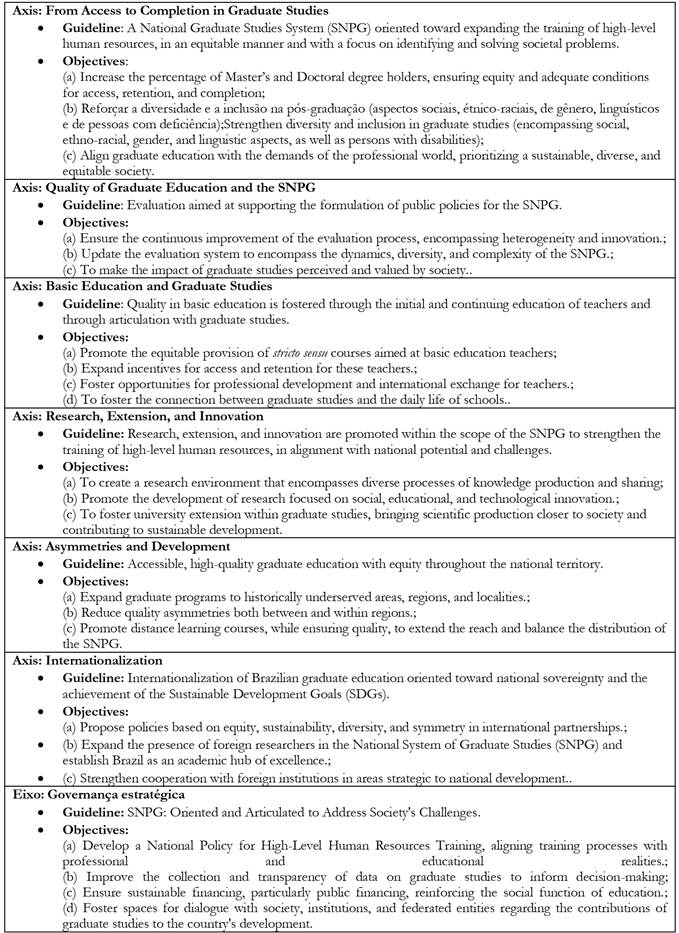
The preliminary version of the PNPG (2024-2028) (Brazil, 2023) proposes seven axes. Each of these axes is organized into guidelines, objectives, and strategies intended to address the challenges facing graduate education in Brazil. These constitute strategic elements designed to remain in effect for the next five years. According to the PNPG (2024-2028), the guideline articulated within each axis reflects the desired changes; thus, the guideline serves to steer the efforts undertaken within that specific area of action. Each guideline comprises one or more objectives, totaling 23 objectives in this preliminary proposal for the PNPG 2024-2028. This set of objectives should be understood as both necessary and sufficient to underpin the desired impacts within the SNPG. The objectives are, in turn, detailed through strategies which, taken together, outline the path, that is, the how for achieving the stated objectives. For organizational purposes, the axes will be presented in a chart format containing the corresponding guideline and objective. At this stage, we will not address the strategies individually; the analysis of these strategies will be undertaken in a subsequent section.

Based on its guidelines and objectives, the PNPG (2024-2028) (Brazil, 2023) proposes a set of strategies that can be grouped into the following categories: i) making graduate education attractive through initiatives aimed at recruiting undergraduate students, strengthening affirmative action policies, providing incentives for research careers, and creating welcoming environments for young researchers within graduate programs; ii) establishing new programs and research lines to address currently underserved areas, fostering collaboration with the corporate sector, and promoting the Sustainable Development Goals (SDGs) in alignment with the innovation ecosystem; and iii) implementing measures to simplify the evaluation process, with a particular emphasis on valuing strategic planning and self-assessment. Furthermore, the plan seeks to bring graduate programs closer to basic education and societal demands to generate high-impact knowledge, while fully respecting the three dimensions proposed within the evaluation framework: the program itself, student training, and societal impact.
The challenge, tinged with a sense of constraint, of increasing the number of master’s and doctoral graduates without compromising quality, while simultaneously ensuring student retention and program completion, persists within the PNPG (2024-2028). At least two specific situations currently stand out as key challenges. The first stems directly from the strategic stance the Brazilian government has adopted regarding research and science within the country. It is simply not possible to increase the number of master’s and doctoral graduates without public investment in and support for these graduate programs. Political and governmental instability, coupled with constant budget cuts, fosters a climate of insecurity and undermines the consolidation of Graduate Programs (PPGs). The second concern relates to quality: expansion must be achieved without sacrificing standards. This demands constant vigilance to curb the proliferation of PPGs that are driven primarily by market interests and possess limited social relevance. In other words, the graduate system must be democratized without becoming a mass-market enterprise. As a matter of public policy, CAPES must establish organic, long-term mechanisms for evaluating PPGs, mechanisms that provide stability and put an end to the prevailing “productivist” logic. This issue is particularly noteworthy and problematic given that the new Qualis model weakens scientific journals while reinforcing a specific “type” of evaluation based on article citations and access metrics. Thus, while we may have escaped the "slavery" of the journal-centric Qualis system on one hand, researchers now find themselves held captive by the dictates of citation counts, metrics that are increasingly driven by social media platforms.
FINAL CONSIDERATIONS
The reflections presented in this text highlight that the recent direction of graduate education in Brazil, particularly with the organization of the new PNPG (2024-2028) (Brasil, 2023), has seen significant advancements alongside persistent challenges. On one hand, there are notable quantitative improvements in the number of master's and doctoral programs available, largely due to the expansion of the SNPG across various regions and fields of knowledge. On the other hand, several limitations remain, including budgetary dependence, difficulties in establishing sustained policies to promote research, and the undervaluation of research areas that do not align with immediate market interests.
The current landscape of graduate education in Brazil emphasizes the need for new approaches that make graduate studies more flexible and modern. This shift arises in response to pressures from the productive sector and the growing social demands for inclusion, diversity, and practical relevance. The National Education Plan for Graduate Studies (PNPG) for 2024-2028 (Brasil, 2023) begins an important discussion by introducing guidelines that prioritize equity and the inclusion of historically underrepresented groups. It also aims to establish a direct connection with basic education, marking a departure from earlier plans that were primarily focused on promoting technological advancements and economic growth. While this transition indicates a move toward a more diverse and inclusive framework for research and innovation, there are still risks related to its potential instrumentalization. This modernization mustn't compromise the critical academic mission or lead to a decline in the humanities in favor of purely productivist approaches.
The quality of master’s and doctoral training hinges upon ensuring adequate and stable funding, implementing evaluation models less centered on purely quantitative metrics, and consolidating strategies that guarantee access and retention for students hailing from diverse socioeconomic backgrounds. The PNPG (2024-2028) thus offers key anchor points, such as a commitment to internationalization that extends beyond merely competitive exchanges, the encouragement of affirmative action policies, and more intensive dialogue with public education networks.
The proposed guidelines and strategic pillars have the potential to facilitate significant progress. However, achieving these goals largely depends on the existing political and economic landscape. If governments do not recognize research as a public good, they may impose budgetary and institutional constraints that could undermine the medium- and long-term planning of graduate programs. Therefore, it is essential to foster a scientific culture and create strong interinstitutional collaborations involving funding agencies, universities, research institutes, the private sector, and, most importantly, civil society. A collective commitment to the strategic value of science is crucial for establishing an inclusive, high-quality National Graduate System that can effectively address national challenges sustainably.
References
- ALMEIDA, Maria de Lourdes Pinto de; BATISTELA, Airton Carlos. A relação universidade pública & setor produtivo na América Latina: mais impasses que possibilidades. In: ALMEIDA, Maria de Lourdes Pinto de; PEREIRA, Elisabete Monteiro de Aguiar (org.). Políticas educacionais de ensino superior no Século XXI: um olhar transnacional. Campinas, SP: Mercado de Letras, 2011.
-
ARAÚJO, Maria Arlete Duarte de; MACEDO, Marconi Neves. O desmonte da educação superior no governo Bolsonaro. ENCONTRO BRASILEIRO DE ADMINISTRAÇÃO PÚBLICA, 9., 2022, São Paulo. Anais .... São Paulo: Sociedade Brasileira de Administração Pública, 2022. Disponível em: Disponível em: https://sbap.org.br/ebap-2022/358.pdf Acesso em: 20 jan. 2026.
» https://sbap.org.br/ebap-2022/358.pdf -
AZEVEDO, Mário Luiz Neves de; OLIVEIRA, João F.; CATANI, Afrânio M. O sistema Nacional de Pós-graduação (SNPG) e o Plano Nacional de Educação (PNE 2014-2024): regulação, avaliação e financiamento. RBPAE 2024, v. 32, n. 3, p. 783-808. Disponpivel em: Disponpivel em: https://seer.ufrgs.br/rbpae/article/view/68576 Acesso em: 24.nov. 2024.
» https://seer.ufrgs.br/rbpae/article/view/68576 - BARRETO, Francisco César de Sá; DOMINGUES, Ivan. O PNPG 2011-2020: os desafios do país e o sistema nacional de pós-graduação. Educação em Revista, v. 28, n. 03, p. 17-53, set. 2012.
-
BECHI, Diego; BILIBIO, Rogerio Augusto; TREVISOL, Marcio Giusti. A pesquisa na educação superior na perspectiva de nussbaum e da portaria mctic n. 1.122/2020 2020. Revista Ibero-Americana de Estudos em Educação, v. 28, n. 03, p. 17-53. Disponível em: Disponível em: https://www.redalyc.org/journal/6198/619872110007/619872110007.pdf Acesso em: 24 nov. 2020
» https://www.redalyc.org/journal/6198/619872110007/619872110007.pdf - BIANCHETTI, Lucídio. Os dilemas do coordenador do Programa de Pós-Graduação: entre o burocrático-administrativo e o acadêmico-pedagógico. In: BIANCHETTI, Lucídio; SGUISSARDI, Valdemar (org.). Dilemas da Pós-Graduação: gestão e avaliação. Campinas, SP: Autores Associados, 2009.
-
BRASIL. I PNPG - Plano Nacional de Pós-Graduação Brasília, DF, 1975. Disponível em: Disponível em: https://www.capes.gov.br/images/stories/download/editais/I_PNPG.pdf Acesso em: 15 set. 2024
» https://www.capes.gov.br/images/stories/download/editais/I_PNPG.pdf -
BRASIL. II PNPG - Plano Nacional de Pós-Graduação (1982-1985). Brasília, DF, 1982. Disponível em:Disponível em:https://www.capes.gov.br/images/stories/download/editais/I_PNPG.pdf Acesso em: 15 set. 2020.
» https://www.capes.gov.br/images/stories/download/editais/I_PNPG.pdf -
BRASIL. III PNPG - Plano Nacional de Pós-Graduação (1986-1989) Brasília, DF, 1986. Disponível em:Disponível em:http://uab.capes.gov.br/images/stories/download/editais/III_PNPG.pdf Acesso em: 15 set. 2020.
» http://uab.capes.gov.br/images/stories/download/editais/III_PNPG.pdf - BRASIL. Plano Nacional de Pós-Graduação - PNPG 2005-2010: coordenação de aperfeiçoamento de pessoal de nível superior. Brasília, DF: CAPES, 2004.
- BRASIL. Plano Nacional de Pós-Graduação - PNPG 2011-2020: coordenação de aperfeiçoamento de pessoal de nível superior. v.1. Brasília, DF: CAPES, 2010a.
- BRASIL. Plano Nacional de Pós-Graduação - PNPG 2011-2020: coordenação de aperfeiçoamento de pessoal de nível superior. v.2. Brasília, DF: CAPES, 2010b.
-
BRASIL. Lei nº 13.005, de 25 de junho de 2014 Aprova o Plano Nacional de Educação (PNE) e dá outras providências. Diário Oficial da União: seção 1, Brasília, DF, 26 jun. 2014. Disponível em: Disponível em: https://www.planalto.gov.br/ccivil_03/_ato2011-2014/2014/lei/l13005.htm Acesso em: 20 jan. 2026.
» https://www.planalto.gov.br/ccivil_03/_ato2011-2014/2014/lei/l13005.htm -
BRASIL. Lei nº 13.243, de 11 de janeiro de 2016 Dispõe sobre estímulos ao desenvolvimento científico, à pesquisa, à capacitação científica e tecnológica e à inovação e altera a Lei nº 10.973, de 2 de dezembro de 2004, entre outras. Diário Oficial da União: seção 1, Brasília, DF, 12 jan. 2016, p. 1. Disponível em: Disponível em: https://www.planalto.gov.br/ccivil_03/_ato2015-2018/2016/lei/l13243.htm Acesso em: 20 jan. 2026.
» https://www.planalto.gov.br/ccivil_03/_ato2015-2018/2016/lei/l13243.htm -
BRASIL. Portaria nº 214, de 27 de outubro de 2017 Dispõe sobre formas associativas de programas de pós-graduação stricto sensu. Diário Oficial da União: seção 1, Brasília, DF, n. 209, p. 35, 31 out. 2017. Disponível em: Disponível em: https://pesquisa.in.gov.br/imprensa/servlet/INPDFViewer?captchafield=firstAccess&data=31%2F10%2F2017&jornal=1&pagina=35 Acesso em: 20 jan. 2026.
» https://pesquisa.in.gov.br/imprensa/servlet/INPDFViewer?captchafield=firstAccess&data=31%2F10%2F2017&jornal=1&pagina=35 - BRASIL. Proposta de aprimoramento do modelo de avaliação da PG: Documento final da comissão de acompanhamento do PNPG 2011-2002. Brasília: CAPES, 2018.
- BRASIL. Proposta de Aprimoramento da Pós-Graduação Brasileira para o Quadriênio 2021-2024-Modelo Multidimensional Brasília: CAPES, 2020.
- BRASIL. Plano Nacional de Pós-Graduação (PNPG) 2024-2028: versão preliminar para consulta pública Brasília: CAPES, 2023.
-
BRASIL. Plataforma Sucupira: observatório da pós-graduação Brasília, DF: CAPES, 2024. Disponível em: Disponível em: https://sucupira.capes.gov.br/ Acesso em: 10 out. 2024.
» https://sucupira.capes.gov.br/ - CENTENARO, Junior Bufon; BUKOWSCI, Chaiane; SANTOS, Antonio Pereira dos. A pesquisa documental e sua importância para compreensão das políticas educacionais. In: FÁVERO, Altair Alberto; TONIETO, Carina; BUKOWSKI, Chaiane; CENTENARO, Junior Bufon (orgs.). Pesquisa em Política Educacional: perspectivas metodológicas. Porto Alegre: Livrologia, 2023, p.155-174.
- COURY, Maria de Amorim. Ações do Plano Nacional de Pós-graduação (PNPG) 2005-2010 para a redução de assimetrias regionais: avaliação dos instrumentos criados pela CAPES. 2014. 50 f. (Dissertação de Mestrado). Universidade Federal do Rio Grande/FURG, Programa de Pós-Graduação em Educação e Ciências: Química da Vida Saúde, Rio Grande do Sul, 2014
- CHAUÍ, Marilena. Escritos sobre universidade São Paulo: Editora UNESP, 2001.
- FÁVERO, Altair et al. Interação e diálogo com o campo de estudo: a pesquisa bibliográfica em políticas educacionais. In: FÁVERO, Altair Alberto; TONIETO, Carina; BUKOWSKI, Chaiane; CENTENARO, Junior Bufon (orgs.). Pesquisa em Política Educacional: perspectivas metodológicas. Porto Alegre: Livrologia, 2023, p.99-116.
-
FÁVERO, Altair Alberto; CENTENARO, Junior Bufon. A pesquisa documental nas investigações de políticas educacionais: potencialidades e limites. Revista Contrapontos, Itajaí, v.19, n.1, jan./dez., 2019, p.170-184. Disponível em: https://arquivo.periodicos.univali.br/index.php/rc/article/view/13579
» https://arquivo.periodicos.univali.br/index.php/rc/article/view/13579 - FÁVERO, Altair Alberto; ODY, Leandro Carlos. Os (des)caminhos da formação do docente pesquisador no Ensino Superior: mitos e possibilidades. In: FÁVERO, Altair Alberto; TONIETO, Carina; ODY, Leandro Carlos (orgs.). Docência Universitária: pressupostos teóricos e perspectivas didáticas. Campinas/SP: Mercado de Letras, 2015, p.6182.
- FLICK, Uwe. Desenho da pesquisa qualitativa Porto Alegre: Artmed, 2009.
- GIOLO, Jaime. O Future-se sem futuro. Revista direitos, trabalho e política social, Cuiabá, v. 6, n. 10, p. 261-350, jan./jun. 2020.
- IVASHITA, Simone; VIEIRA, Aline Daniella R. A pós-graduação no Brasil e o Plano Nacional de Pós-Graduação - PNPG (2011-2020): rupturas e permanências. Debates em Educação, v. 9, n. 19, p. 122-132, set./dez. 2017.
-
LESNIESKI, Marlon Sandro Lesnieski.; TREVISOL, Marcio Giusti. BECHI, Diego. Gerencialismo e performatividade na educação superior: apontamentos sobre a incorporação de uma cultura neoliberal. Revista de Educação Pública, S. l., v. 32, p. 686-705, jan./dez. 2023. DOI: 10.29286/rep.v32ijan/dez.14097. Disponível em: Disponível em: https://periodicoscientificos.ufmt.br/ojs/index.php/educacaopublica/article/view/14097 Acesso em: 20 jan. 2026.
» https://doi.org/10.29286/rep.v32ijan/dez.14097» https://periodicoscientificos.ufmt.br/ojs/index.php/educacaopublica/article/view/14097 - LESNIESKI, Marlon Sandro; TREVISOL, Marcio Giusti; SILVA, Gabrielle José da. Metodologia Histórico-Crítica em Pesquisas Educacionais: 1.como aproximações. Educação & Realidade, v. e130601, 2024.
- MARCONI, Marina de Andrade; LAKATOS, Eva Maria. Fundamentos de metodologia científica 7. ed. São Paulo: Atlas, 2010.
- OLIVEIRA, João Ferreira de; FONSECA, Marília. A pós-graduação brasileira e o seu sistema de avaliação. In: OLIVEIRA, João de; CATANI, Afrânio Mendes; FERRERIRA, Naura Syria C. (org.). Pós-Graduação e avaliação: impactos e perspectivas no Brasil e no cenário internacional. Campinas, SP: Mercado de Letras, 2010.
- SANTOS, Boaventura de Sousa. Pela mão de Alice: o social e o político na pós-modernidade. 13. ed. São Paulo: Cortez, 2010.
-
SHIGUNOV NETO, Alexandre.; TREVISOL, Marcio Giusti; ALMEIDA, Maria de Lourdes Pinto de. Da institucionalização do Sistema de Pós-graduação ao Plano Nacional de Pós-Graduação (2011-2020): desafios e perspectivas. Revista Diálogo Educacional, S. l., v. 21, n. 71, 2021. DOI: 10.7213/1981-416X.21.071.AO07. Disponível em: Disponível em: https://periodicos.pucpr.br/dialogoeducacional/article/view/28229 Acesso em: 24 nov. 2024
» https://doi.org/10.7213/1981-416X.21.071.AO07» https://periodicos.pucpr.br/dialogoeducacional/article/view/28229 -
TREVISOL, Marcio Giusti; FÁVERO, Altair Alberto; ALMEIDA, Maria de Lurdes Pinto de. Pesquisa e avaliação no PNPG (2011-2020): fragilidades e potencialidades. Revista Eletrônica Pesquisaeduca, [S. l.], v. 11, n. 25, p. 303-324, 2020. Disponível em: Disponível em: https://periodicos.unisantos.br/pesquiseduca/article/view/901 Acesso em: 24 nov. 2024.
» https://periodicos.unisantos.br/pesquiseduca/article/view/901 -
TREVISOL, Marcio Giusti; FÁVERO, Altair Alberto; MIKOLICZIC, Daniê Regina. Universidade e commodity:quando o mercado coloniza a Educação Superior. Revista Brasileira de Pós-Graduação (RBPG), Brasília, n.19, n.40, p.01-22), jan./dez., 2024. Disponível em: https://rbpg.capes.gov.br/rbpg/article/view/2275
» https://rbpg.capes.gov.br/rbpg/article/view/2275 - TRIVIÑOS, Augusto Nibaldo Silva. Introdução à pesquisa em ciências sociais São Paulo: Atlas, 1987.
- ZABALZA, Miguel. O Ensino Universitário: seu cenário e seus protagonistas. Porto Alegre: Artmed, 2004.
-
1
Article published with funding from theCoordenação de Aperfeiçoamento de Pessoal de Nível Superior- CAPES/Brazil) for editing, layout, and XML conversion services, and funding from theConselho Nacional de Desenvolvimento Científico e Tecnológico- CNPq/Brazil for the translation of the article into English.
The content underlying the research text is contained in the manuscript.
Data citations
BRASIL. Plataforma Sucupira: observatório da pós-graduação Brasília, DF: CAPES, 2024. Disponível em: Disponível em: https://sucupira.capes.gov.br/ Acesso em: 10 out. 2024.
History
-
Received
21 May 2025 -
Preprint posted on
21 May 2025
10.1590/SciELOPreprints.5255 -
Accepted
11 Feb 2026

 Source: Created by the authors (2024)
 Source: Sucupira Platform (
 Source: Sucupira Platform (2024)
 Source: Sucupira Platform (2024)
 Source: PNPG (2024-2028) (
 Source: Prepared by the authors based on the PNPG. (2024-2028) (