
 EDITORIAL POLICIES IN EDUCATION JOURNALS: A DOCUMENTARY ANALYSIS
ABSTRACT:
There is a feedback relationship between editorial work and editorial policies that plays an important operational role in scientific activities involving authors, editors, reviewers, research funding agencies, journal indexing bases, and other stakeholders. In this context, a specific and consensual definition of the concept of editorial policies can contribute to regulating scientific publishing. This study aimed to analyze the relationship between the information available on the websites of education journals and their editorial policies, as well as problematizing the concept of “editorial policies”. In this research, with an interpretative paradigm and a qualitative nature, a documentary and thematic analysis was conducted on the information available on the websites of five journals. The data were organized into three main categories: about the journal, editorial flow, and ethical issues. We identified significant variation in the information provided on the websites, although there is a common core, such as focus, scope, and periodicity. Information on manuscript submission and evaluation varies in specificity among the journals, with only three providing explicit guidelines for reviewers. All consulted materials provide information on research ethics and reference documents, although this information is organized differently across the websites. Based on this, a definition of "editorial policies" with normative, technical, and political characteristics was proposed. By claiming a consensual nature, this definition can contribute to the operational efficiency of editorial work and decision-making in activities related to scientific publishing.
Keywords:
Scientific publishing; scientific publication; journal management; Editorial Policies
RESUMO:
Existe uma relação retroalimentativa entre o trabalho editorial e as políticas editoriais que desempenha importante papel operacional nas atividades científicas envolvendo autores, editores, avaliadores, agências de fomento à pesquisa, bases indexadoras de periódicos, entre outros agentes. Nesse sentido, uma definição específica e consensual do conceito de políticas editoriais pode contribuir para a regulamentação da publicação científica. Este trabalho teve como objetivo analisar a relação entre as informações disponibilizadas nos sites de periódicos da área de Educação e suas políticas editoriais, bem como problematizar um conceito de “políticas editoriais”. Nesta pesquisa, de paradigma interpretativo e caráter qualitativo, foi realizada uma análise documental e temática das informações disponibilizadas nos sites de cinco periódicos. Os dados foram organizados em três principais categorias: sobre o periódico, fluxo editorial e questões éticas. Identificamos que há grande variação em relação às informações disponibilizadas nos sites, ainda que exista um núcleo comum, como foco, escopo e periodicidade. Informações acerca de submissões e avaliações de manuscritos variam em grau de especificidade entre os periódicos, sendo que apenas três deles indicam diretrizes para avaliadores. Todos os materiais consultados disponibilizam informações sobre ética em pesquisa e indicam documentos de referência, ainda que tais informações estejam organizadas de formas distintas entre os sites. A partir disso, foi proposta uma definição de “políticas editoriais” de caráter normativo, técnico e político, que, ao reivindicar caráter consensual, pode contribuir para a operacionalidade do trabalho editorial e para a tomada de decisões nas atividades relacionadas à publicação científica.
Palavras-chave:
editoração científica; publicação científica; gestão de periódicos; políticas editoriais
RESUMEN:
Existe una relación retroalimentativa entre el trabajo editorial y las políticas editoriales que desempeña un importante papel operativo en las actividades científicas que involucran a autores, editores, evaluadores, agencias de financiamiento de investigaciones, bases de indexación de revistas, entre otros agentes. En este sentido, una definición específica y consensuada del concepto de políticas editoriales puede contribuir a la regulación de la publicación científica. Este trabajo tuvo como objetivo analizar la relación entre la información disponible en los sitios web de revistas del área de Educación y sus políticas editoriales, así como problematizar el concepto de “políticas editoriales”. En esta investigación de paradigma interpretativo y de carácter cualitativo, se realizó un análisis documental y temático de la información disponible en los sitios web de cinco revistas. Los datos se organizaron en tres categorías principales: sobre la revista, flujo editorial y cuestiones éticas. Identificamos que existe una gran variación en la información proporcionada en los sitios web, aunque hay un núcleo común, como el enfoque, alcance y periodicidad. La información sobre la presentación y evaluación de manuscritos varía en grado de especificidad entre las revistas, y solo tres de ellas indican directrices para los evaluadores. Todos los materiales consultados proporcionan información sobre ética en investigación e indican documentos de referencia, aunque esta información esté organizada de manera diferente en los sitios web. A partir de esto, se propuso una definición de políticas editoriales de carácter normativo, técnico y político que, al reclamar un carácter consensuado, puede contribuir a la operatividad del trabajo editorial y a la toma de decisiones en las actividades relacionadas con la publicación científica.
Palabras clave:
Edición científica; publicación científica; gestión de revistas; Políticas Editoriales
INTRODUCTION
Editorial policies (EP) gather information to define the identity of a journal, indicating its position in aspects involving scientific publications. Considering that journals are one of the main vehicles of scientific communication in contemporary times, there must be some regulation of editorial activities, allowing decision-making and the operationality of the editorial flow for various agents involved in scientific activity. Thus, EP contributes to the regulation of these processes.
From this perspective, EP is a crucial resource of information for different aspects of scientific activity. Authors rely on this document to determine whether the journal is a suitable platform for communicating their research results and to adapt their manuscripts according to the specified requirements. In addition, researchers can rely on the EP to identify whether the journal adopts predatory practices. Editors use EP to make decisions regarding the editorial process and responsibilities for its preparation, establishing a feedback mechanism between editorial work and the EP. Evaluation guidelines include the information available in the EP. They are a reference document for evaluators. In addition to these actors, research funding agencies, institutions assessing postgraduate programs, journal indexing databases, and examination committees for competitions and other selection processes can rely on the journal EPs to establish evaluation rules and criteria. Therefore, it is necessary for this information be transparent and easily accessible, usually available on the journals' websites.
Despite its importance, we believe that there is a demand for a concept of EP that is specific, operational, and consensual within the editorial management of journals, especially in the area of Education. It is important to emphasize the specificity of the areas, considering several aspects of the position of the journals, such as legislation for research involving human beings in Human Sciences, and specific journal databases. Based on this, this investigation started from the following question: What information is available on journal websites, and how does it relate to EP? Our objectives were to analyze the relationship between the information available on the websites of journals in Education and their EP, and to problematize the concept of “editorial policies”.
The EPs have been the subject of research and used as data sources to answer several questions related to scientific publication. Regarding instructions for authors, it has been reported that journals in the field of Pediatrics were late in providing guidelines for standardizing publications (Meerpohl; Wolff; Niemeyer, 2010). Only a small percentage of Spanish journals in the fields of Science and Technology seek to regulate the attribution of authorship in publications (Ruíz-Pérez; Marcos-Cartagena; López-Cózar, 2014). In contrast, the EPs of Brazilian journals in the field of Psychology demonstrated adherence to the authorship criteria of the International Committee of Medical Journal Editors (ICMJE), suggesting the regulation of this practice (Freitas; Mainieri; Mármora, 2021).
Regarding Open Access, measures that can contribute to better use of research, such as adherence to Open Data, have not been widely encouraged by most journals in the field of Dentistry (Almaqrami et al., 2020), while 52% of a sample of journals in the field of Communication and Information have encouraged data sharing (Silveira; Silva; Dall’agnoll, 2023). For Open Science, a communication model adopted by journals in the field of Health indexed in the Scientific Electronic Library Online (SciELO), discrepancies have been reported between information made available on the platform and the website of each journal (Bojo-Canales; Melero, 2023).
Regarding peer review guidelines, few journals in the Humanities and Social Sciences area disclose information and parameters on how this stage should occur (Matos Cardoso, 2011). Regarding ethical aspects in research, some journals in the area of Psychiatry require details of the consent provided by research participants and suggest that characteristics that make studies morally controversial, but not unethical, should be published analogously to methodological limitations (Strech; Metz; Hannes, 2014). Research on EP has contributed to identifying important elements to be considered when reformulating the EP of other journals that are reviewing their defining documents (Beltrão; Silva, 2020).
From this perspective, research has focused on particular emphases of scientific publishing in different areas of knowledge. However, there has been no discussion about the definition of this concept of EP represented in these works, despite its importance. Based on this scenario, this research globally emphasizes the concept of EP, seeking to encompass different dimensions of scientific publishing, focused on the Education area.
As a theoretical framework for analysis, we are based on Peircean pragmatism and semiotics. The pragmatist understanding of science describes it as a human endeavor determined to answer questions posed by itself (Laudan, 1990; Prosdocimi, 2020). For this philosophical current, experience is the main way to access knowledge, and the definition of an object is based on its effects (Laudan, 1990; Peirce, 2017). Thus, we understand EP as knowledge with an experiential component, a product of the practice of scientific editors. Based on the analyses, we problematize a concept of EP from a triadic diagram, aligned with the triadic conception of experience proposed by Charles Sanders Peirce (Peirce, 2017; Santaella, 1995).
This article is organized into four sections. In the methodology section, we outline the steps developed for collecting and analyzing data from journals selected by intentional sampling. In the results section, we present the data organized using a double-entry framework and the categories found. In the discussion section, we interpret the results found and problematize the concept of EP, discussing several features that touch on journal management practices. We conclude the text by summarizing the findings and discussions, suggesting research that will continue this investigation, and indicating guidelines for journal editors in the final considerations section.
METHODOLOGY
This research was conducted within the interpretative paradigm with qualitative data. In educational research, the paradigm is related to the set of values that determine how questions are asked, how research designs are conducted, how meanings are assigned, and what the reliability criteria of a research are (Treagust; Won, 2023). In the interpretative or constructivist paradigm, as described by Taylor (2014) and Treagust and Won (2023), the emphasis is on understanding a phenomenon in depth and on the possible attributions of meaning, which occur as a result of a prolonged interaction of researchers with the data. Within the possible approaches of qualitative research, we carried out a documentary analysis combined with thematic analysis, resulting in a creative synthesis (Patton, 2014). The investigation unfolded through the following steps: i) selection of journals; ii) skimming of the material; iii) identification of categories; and iv) synthesis of results.
In qualitative research, sampling is intentional: representative cases with a wealth of information are selected for in-depth investigation. In this sense, the definition of the sample size depends on a series of factors, such as the research question, the nature of the data collected, the usefulness of the data in answering the questions, credibility, and the availability of time and resources, for example. Thus, when designing the research, the balance between sample size and usefulness of the data must be considered. The validity and meaning of the data are more related to the richness of information in the selected cases than to the sample size (Patton, 2014). Based on this, we combined heterogeneous sampling with theoretical-deductive sampling, seeking to document the diversity and shared patterns in a group of representative cases (Patton, 2014). Below, we describe some criteria that indicate reliability in the selected journals and justify why they can contribute to answering the research questions. We emphasize that, using the same criteria indicated, other journals could be selected and that, ultimately, the selection is also related to the trajectory and worldview of the researchers.
Our sample size had five journals. The Revista Brasileira de Estudos Pedagógicos (RBEP) and Cadernos de Pesquisa were selected because they belong to government agencies (Instituto Nacional de Estudos e Pesquisas Educacionais Anísio Teixeira and the Fundação Carlos Chagas, respectively); the Revista Brasileira de Educação (RBE) was selected because it belongs to the agency that regulates postgraduate studies in the area of Education in Brazil, the National Association of Postgraduate Studies and Research in Education (ANPEd-Associação Nacional de Pós-Graduação e Pesquisa em Educação). These journals' affiliations indicate their representativeness in a context of research tradition in the area. The journal Práxis Educativa, from the State University of Ponta Grossa (UEPG), was selected because it is linked to the ANPEd Forum of Editors of Journals in the Area of Education (Fepae-Fórum de Editores de Periódicos da Área da Educação). In addition, the journal is linked to the ethics indicator, since it contributes to discussions about integrity in research. Furthermore, these journals are indexed in Educ@, an online indexer of journals in the field of Education maintained by the Carlos Chagas Foundation, with strict indexing criteria. We selected the American Journal of Education (AJE) - Chicago to include an international journal, indexed in the Scopus and Web of Science databases, and which belongs to a publisher with a tradition in scientific publications, the University Press. Thus, we considered this sample, consisting of heterogeneous cases that meet the research objectives and that illustrate the theme of EP, selected based on reliability criteria, to be sufficient.
After defining the sample, we performed a full reading of all sections of each journal's websites to familiarize ourselves with the material. At this point, there was no concern with categorizing the data or making any judgments. Then, we created categories to group the main topics on the journals' websites based on patterns that emerged among the researchers during discussions after the full reading. From this perspective, the categories were constructed a posteriori. As a summary of the work, we created a double-entry table in which we present the categories crossed with the selected journals.
THEORETICAL FRAMEWORK
The Education area corresponds to Area 38 of the Coordination for the Improvement of Higher Education Personnel (Capes-Coordenação de Aperfeiçoamento de Pessoal de Nível Superior). The Qualis Periódicos (Journal report) for the area, a tool that underpins the evaluation of scientific production in postgraduate programs, for the last four years (2017-2020), available on the Sucupira Platform, presented around 80 journals classified in stratum A1, a number that is equivalent to 7.1% of the total journals in the parent area (Brasil, 2021). No information on EP was found in the journals' evaluation criteria, with the Google Scholar h-index being the main criterion for classifying the journals (Brasil, 2021).
Currently, the Brazilian publishing market and research activities in Brazil have undergone significant changes that directly affect publishing activities, such as the increase in the number of journals managed by editorial teams composed of undergraduate and graduate faculty and students; the discussion of professionalizing scientific journal editors (Santos Cruz, 2020) and the recent change announced by Capes about Qualis Periódicos, which will no longer be used in the next four years (2025-2028) to evaluate the scientific production of graduate programs (Schmidt, 2024). Internationally, themes related to Artificial Intelligence (AI) in dialogue with the academic field (Schäfer, 2023) and Open Science (Almaqrami et al., 2020; Bojo-Canales; Melero, 2023) also impact the publishing scenario and complicate the activities developed in it, demanding the improvement of the agents who put them into practice.
According to Santos Cruz (2020), in publishing, the editorial team of scientific journals must be qualified to present professional skills and competencies, based on technical training in process management, which allows all dimensions of their editorial policy to be put into practice. From this perspective, EP is represented by a set of information that structures a scientific journal and encompasses its divisions and responsibilities, directly associated with the role of publishers in all stages of the editorial process. According to Gruzynski, Golin and Castedo (2008):
The definition of the editorial policy presupposes the choice of the journal's title and subtitle, the area of knowledge covered and the publication's editorial project - in which its mission, periodicity, peer review, arbitration criteria, requirement for originality of articles, sections, languages, profile of authors and readers, normative requirements and data on the publication's circulation are described (Gruszynski; Golin; Castedo, 2008, p. 10).
EP reflects not only the profile of a journal but also its management guidelines. Their importance is characterized by their ability to attribute identity to journals and guide decision-making by the editorial team (Silveira; Silva; Dall’agnoll, 2023). In addition, EPs play a strategic role in the qualification and visibility of scientific journals (Angelo et al., 2021), since they must meet the strict criteria of the databases to be indexed (Santos Cruz et al., 2024).
While the relevance of EP for the existence of journals is highlighted, the literature concentrates work that addresses the theme of EP, almost always in a secondary way, being associated with pillar subjects of other natures. In the scenario found from a bibliographic survey on the subject in academic search engines (Google Scholar, SciELO), EP are merely cited or only described in the contextualization of studies that address other objects of the editorial universe, such as ethics in journals (Magalhães et al., 2014; Tavares-Neto; Azevedo, 2009; Vilela; Londero, 2022), the propagation of the access protection regime and the licensing of knowledge conveyed in journals (Feres et al., 2021) or, even, the editorial structure of scientific journals (Trzesniak, 2009) and academic productivism (Kuhlmann Jr., 2015).
Few publications have been found that treat EP as a central theme. Therefore, Silveira, Silva and Dall’agnoll (2023) and Dias (2024) address the relationship between EP and the incorporation and sharing of scientific data in scientific journals. Beltrão and Silva (2020) analyze the EP of national education journals to compare them to the EP of the Boletim do Museu Paraense Emílio Goeldi.
In the international scenario, and dedicating to discuss how EP preserves or does not preserve research integrity, Stojanovski and Marusic (2017) analyze predatory journals in Croatia, a context in which they are inserted. They point, instead, to the global scenario of scientific publications, when they state that
[…] 70% research results are irreproducible, mostly due to selective reporting, pressure to publish, low statistical power and poor analysis, insufficient replication by the original research group, inadequate oversight/mentoring, poor experimental design, poorly described methods, unavailability of codes or raw data, as well as fraud and poor peer review (Stojanovski; Marusic, 2017, p. 292).
In this context, the discussion on EP can contribute to ethical issues related to journals. Based on this, the authors point out seven elements that are subverted by predatory journals: editorial board, contact, fees, name and scope of the journal, indexing and metrics, peer review, and spam emails. For Stojanovski and Marusic (2017), these items would therefore make up the EP of a serious and honest journal, even though the authors do not use further definitions for the concept.
The debate on EP also shows relevance for the training of journal editors. Gomes (2010) states that there is still a lack of specific training for scientific publishing professionals. According to the author, “[...] there is no specific professional training for the editor of scientific journals, a role normally occupied by researchers in the area without the necessary technical training to promote or coordinate editorial processes as a whole” (Gomes, 2010, p. 157). Within this technical training, which, for the author, is done at a higher education level and with postgraduate studies, would also include “[...] a solid cultural background, which includes mastery of at least one language other than the native language, prior knowledge of the publishing market in question, and training to deal with specific publication management tools” (Gomes, 2010, p. 159).
From this, it is clear to us how important it is to professionalize the career of a scientific editor, especially since this person is often responsible for drafting the SP adopted by a given journal. Thus, the alignment of technical skills, academic knowledge, and understanding of how publications work is central to the training of journal editors, given that editors are expected to have a solid background in academia that allows them to perceive nuances in the areas of research covered in journals.
We also assume that journal indexing is crucial to the visibility and credibility of academic publications (Santos Cruz et al., 2024). Once indexed, journals are viewed as an indicator of quality, since the criteria for inclusion in such databases often involve careful consideration of technical aspects, such as periodicity, editorial composition, and ethical standards. That said, the search for indexers is a strategy aligned with the EP that prioritizes scientific excellence. Another relevant aspect of the EP related to indexing is the expectation of attracting higher-quality submissions, which will feed back into the journal's reputation.
Therefore, EP can and should be used as a data source to answer the most diverse research questions involving scientific journals. However, they should also be treated as the main object of study, aiming at the development and maintenance of their particularities, given their potential to contribute to the definition of quality standards for scientific journals.
RESULTS
We structured the description of the results according to the main categories established in the research categorical framework (chart 1). We organized the information on the journals' websites into three categories: about the journal, editorial flow, and ethical issues. For each category, we indicated the topics that we selected from the data corpus and indicated in which journals they were present.
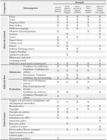
- Double-entry table crossing information from the categories “About the journal”, “Editorial flow” and “Ethical issues” (rows) with the journals investigated (columns).
About the journal
All journals analyzed have a section entitled “About the Journal.” However, the content of the information varies.
The American Journal of Education has an “About the Journal” section on its website, which presents the frequency of publication, the impact factor, citation score, objective, focus, and scope. In exclusive sections, it addresses the topics of Open Access policy (presenting the green and gold open access options), fraud prevention, and minimum requirements for publication (American Journal of Education, 2023a).
The website of the Brazilian Journal of Pedagogical Studies (RBEP) briefly presents its history, describes its sections, lists its indexers, and indicates the proposal for unpublished or previously published articles as preprints. It is possible to check information about its continuous publication flow, electronic format, and Open Access. The focus/scope is evident in the description of the sections, but there is no section on the website dedicated solely to this information. In contrast, RBEP provides an Editorial Development Plan, which “[...] defines actions, necessary resources, and desired results for the next 3 to 5 years [...]” of the journal (Brazilian Journal of Pedagogical Studies, 2023). In this document, it is possible to check data and strategic information about its general premises, indexing and impact, internationalization, quantitative indicators, indexing sources, libraries, and databases.
The Revista Brasileira de Educação (RBE), published by the National Association of Graduate Studies and Research in Education (ANPEd), presents areas of interest, their publication flow, and information on co-editing by a scientific publisher in a presentation section. Information on indexing sources and sponsorship is given in exclusive sections. The RBE website provides the document Regulation of the Brazilian Journal of Education (Regulamento da Revista Brasileira de Educação), which addresses its organization and operation (Revista Brasileira de Educação, 2023).
In turn, the Revista Práxis Educativa indicates its objective of “[...] publishing works that contribute to its specific field of research and that can serve as a reference for other research works [...]” and the minimum requirements for publishing texts, such as submission guidelines and ethical issues. No other information about the journal is presented on its website (Práxis Educativa Journal, 2023).
In a single section, entitled “About the Journal,” the Cadernos de Pesquisa journal provides condensed information on its website regarding its purpose as a journal, focus, scope, and publication requirements. It also presents and describes its sections and generally sets out its criteria for evaluating the manuscripts received. In the same section, the journal reveals its continuous and online publication mode, its publication languages, and Open Access. There are specific sections for presenting indexing sources, and information regarding the cataloging record (Cadernos de Pesquisa, 2023b). No information is provided on impact factor, citation score, bibliometric indicators, qualitative, or quantitative. Finally, there is the topic “Bibliometric indicators,” which, unanimously, is not among the characteristics presented about the journals analyzed.
Editorial flow
When considering the issue of editorial flow, two specific paradigmatic elements were observed in the journals analyzed: one related to submission and the other related to evaluation. When analyzing the journals that constitute the corpus of this research, we describe the results found below.
Regarding submission, the American Journal of Education details the conditions for publication, guidelines for authors who intend to publish in the journal, formatting recommendations, and explanations regarding manuscript handling. It also includes guidelines for text formatting. From the perspective of evaluation, the journal contains a section that deals with peer review and a space for guidelines for reviewers and editors. We note the absence of documents with pre-formatted templates, as well as a tab to clarify any doubts about the peer review process of dossiers (American Journal of Education, 2023c).
The Revista Brasileira de Estudos Pedagógicos deals, in the submission axis, with presenting recommendations for publication, guidelines for authors, a template for standardizing the submission, and guidelines for formatting the text to be submitted. The evaluation axis is limited to the description of the peer review process and the guidelines for evaluators. Guidelines for editors and an examination of the peer review process of the dossiers are not included in the data available by the journal (Brazilian Journal of Pedagogical Studies, 2023).
The website of the Revista Brasileira de Educação (ANPEd) is concerned with presenting information that relates not only to the universe of submission, such as the conditions for publication, the guidelines for authors, the necessary templates and the guidelines for formatting texts, but also to the universe of evaluation, such as a detailed description of the evaluation process and the principles for editors. The process of peer review of dossiers and guidelines for evaluators was not found on the website (Brazilian Journal of Education, 2023).
We observed the presentation of information that is linked to the sphere of submission in the Revista Práxis Educativa (UEPG). This includes the conditions for publication in the journal, the guidelines for authors, the formatting guidelines, and data affiliated with the sphere of evaluation, such as an explanation of the evaluation process and the process of peer review of the dossiers. There is a lack of templates to be filled out and guidelines for evaluators and editors (Revista Práxis Educativa, 2023).
The journal Cadernos de Pesquisa (Fundação Carlos Chagas) explicitly states on its website the conditions of publication, the guidelines for authors, the templates to be used, the guidelines for text formatting, the manuscript evaluation process, and the guidelines for reviewers. Finally, we note the absence of guidelines for editors or descriptions of the peer review process for dossiers (Cadernos de Pesquisa, 2023b; 2023c).
Ethical issues
All journals mention ethical aspects in their EP; however, the content in each one may vary. Some journals dedicate an exclusive section to explain ethical issues, while others have this information distributed throughout the website.
The American Journal of Education (Chicago) - AJE, dedicates a specific section to ethics statements. This section presents the ethical principles that guide the journal's work to maintain public trust in scientific knowledge: integrity, generativity, respect for human dignity and diversity, transparency, and reliability (American Journal of Education, 2023b). In addition, the journal specifies in detail the manifestation of these principles in the responsibilities of authors, reviewers, and editors. In the instructions for authors section, the ethical principles are reaffirmed, and the importance of double-blind review is highlighted (American Journal of Education, 2023c).
Other specific sections of the AJE also mention ethical aspects such as the “Fraud Prevention” section, which states some information for preventing contributors from being victims of fraud by other institutions that impersonate the journal (American Journal of Education, 2023e); the authors’ rights section, which describes the versions of the manuscript (American Journal of Education, 2023f); and the section on obtaining permission to use articles, dedicated to indicating in which situations and in what way each version of the manuscript can be used (American Journal of Education, 2023d).
The Revista Brasileira de Estudos Pedagógicos, in the “Guidelines” section, points out the Creative Commons license and declares that the journal’s good scientific practices agree with the guidelines of the Committee on Publication Ethics (COPE). The general rules section for submitting originals describes the procedures necessary to anonymize submission information and its 24-month quarantine policy. In the “Ethical Guidelines” section, the journal’s editorial policy mentions its commitment to originality, verification of plagiarism and self-plagiarism using the Similarity Check software, procedures for analyzing scientific misconduct, and retraction policy. The copyright statement and privacy policy are also mentioned in specific sections, with the General Law for the Protection of Personal Data-Lei Geral de Proteção de Dados Pessoais (Brazil, 2018) highlighted in the Editorial Development Plan-Plano de Desenvolvimento Editorial (Revista Brasileira de Estudos Pedagógicos, 2023).
The Revista Brasileira de Educação indicates the Creative Commons license, type BY, in the “Intellectual property” section. In the “Submission conditions”, we find the commitment to the originality of submitted manuscripts and the importance of anonymity for the evaluation process. There are also specific sections to mention the “Copyright statement” and the “Privacy policy” (Brazilian Journal of Education, 2023).
The Revista Práxis Educativa also affirms its commitment to publishing original works in the “Submission Conditions” section. The “Guidelines for Authors” section mentions the importance of not identifying authorship in manuscripts during the evaluation process. There is a section dedicated to describing “Ethical Issues”. The journal’s editorial policy supports these guidelines in the following documents: resolutions 466 and 510 of the National Health Council; Ethics and Integrity in Scientific Practice, of the National Council for Scientific and Technological Development (CNPq); Ethics and Research in Education: subsidies, e-book of ANPEd; and in the American Psychological Association (APA) manual. The website contains specifications concerning the ethical issues of articles, authorship, plagiarism, self-plagiarism, and evaluation processes. In addition, there are specific sections for “Copyright Statement” and “Privacy Policy” (Práxis Educativa Journal, 2023).
In the “Privacy Statement”, the journal Cadernos de Pesquisa indicates its commitment to the General Data Protection Law-Lei Geral de Proteção de Dados (Cadernos de Pesquisa, 2023b). The “Submissions” section states its commitment to the originality and anonymity of manuscripts (Cadernos de Pesquisa, 2023a). Regarding usage permissions, it declares the adoption of the Creative Commons BY-NC license. The “Research Ethics” section describes the ethical procedures to be adopted in research involving human beings. It is also worth highlighting here the sections “Conflicts of interest”, “Copyright Statement”, and “Privacy Policy” (Cadernos de Pesquisa, 2023a; 2023bc).
DISCUSSION
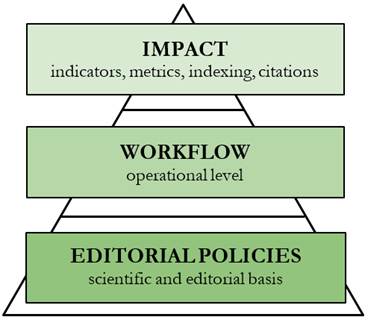
We understand that the scientific journal management involves several levels of decision-making for its consolidation as an important instrument of scientific communication. In this decision-making environment, the EP comprises the most fundamental level, consisting of a horizon that guides decisions within the scope of editorial practices in the workflow, and which, consequently, will present consequences for the impact of the journal in terms of metrics, citations, indexing and social impact (Figure 1). Thinking about the concept of editorial policies is fundamental for the structuring of a scientific journal.
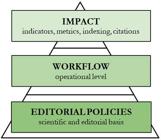
- Diagram indicating levels of decision-making and editorial practices: editorial policies, workflow and impact.
As illustrated by the diagram (Figure 1), we believe that the EPs are constituted by the decisions made by the editorial board of a journal. They underpin the basis of its scientific and editorial stance. These decisions define the workflow at its operational level, establishing the activities to be performed by the team according to their individual roles within the editorial board. Certainly, the execution of the editorial workflow results in the impact of the journal, that is, in the quantification of its indicators, metrics, indexing and citations.
Regarding the first category, when observing the “About the Journal” sections, we sought to identify the pattern of data provided in each of them. While information such as focus, scope, periodicity, form and requirements for publication are evident in all the journals in the sample, elements of the cataloging record, qualitative indicators, funding information and impact factor are the information that appear least.
Traditionally, information such as the journal’s purpose, history, languages of publication and indexing sources are displayed on websites. Accordingly, the research chart (Chart 1) shows that each of these categories is included in three journals - the majority of the sample. On the other hand, information about the citation score and the specification of each of the sections published by the journal, which should also be consensual information, is provided in only two of the five journals in the table.
This may lead readers to question the relevance of disclosing the less frequent information indicated by the journals. However, we believe that all the topics presented in the table are essential to present, and any EP that does not provide them is considered incomplete. In this sense, we observe that none of the journals in the intentional sample presented data on their bibliometric indicators at the time of the analysis. This absence is curious since these indicators are commonly associated with the relevance and credibility of a journal. Although such an association is common, the quality of a journal should not be assessed solely based on these metrics. Aside from the discussion about whether this fact is considered fair, bibliometric indicators serve as important parameters and criteria for indexing and impact of the journal, becoming essential information that constitutes its EP.
In the editorial flow category, two distinct movements are evident: the solidification and the volatility of the aspects present in the corpus. Regarding submission, all the journals analyzed have detailed information on the conditions for publication, and guidelines for authors and formatting texts. Therefore, these are well-established elements of the understanding of scientific editorial policy.
Volatility is perceived by making templates available on the journals' pages, which is absent in two of the five materials analyzed. This reveals a diversity of understanding of these data as being intrinsic to the EP of a scientific journal, in which to submit an article, standardization within a specific model would not be required at the time of submission. However, others value this procedure, making the template available.
These movements are also manifested in the sphere of evaluation, a subtopic of the editorial flow. In this dimension, only the description of the evaluation process is established as an inherent component of the editorial policy. The other aspects we analyzed, such as the peer review process of the dossiers, the guidelines for evaluators, and the guidelines for editors, are not included on all the pages of the journals. This fact shows that the evaluative level of the editorial flow, considering the corpus, is more volatile and diverse, evidencing a part of the field of EP that is in dispute.
Reading the data presented, we can observe the need for greater discussion about the dynamics of evaluation in the field of scientific journals and their role in the dissemination of clear standards on the topic in question. It would be possible to expect that doubts about how the dossier evaluation processes take place and what guidelines are followed by editors and evaluators of a given work would be resolved.
Regarding the category of ethical issues, we believe that a journal must demonstrate its commitment to public trust in scientific knowledge beyond a statement, materializing this responsibility with detail, specificity, and transparency in its editorial policy. This materialization consists of making available a document with references to the journal's editorial practices, which must be sufficient to ensure assertive action by the editorial team, authors, and reviewers.
We emphasize that research ethics implemented in a journal should not be the sole responsibility of editors, but rather a shared responsibility among editors, authors, and reviewers. Each of these agents must be clear about the best practices that are a reference for their conduct, and these practices should be easily accessible in the editorial policy.
There is diversity in the documents guiding good scientific practices in journals - resolutions from the National Health Council (Conselho Nacional de Saúde), documents from the São Paulo Research Foundation- Fundação de Amparo à Pesquisa do Estado de São Paulo (FAPESP, 2024), CNPq documents, Cope guidelines, and ANPEd entries, for example, and all of them indicated some reference document. Given the existence of consensuses that exceed such documents in the scientific community, both at the national and international level, and the possibility of identifying convergences between such consensuses, the most important requirement in organizing editorial policy is not the presence of a specific reference document, but the indication of one of them.
We found that ethical issues are transversal in the EP. Journals organize information about ethics in specific sections, but also there are intersections with these issues in other sections of the policies, such as “Conditions for submission”, or even related to the evaluation process.
Considering our exploration into the experiences of individuals searching for information on journal websites, we pondered whether there exists an optimal approach to presenting this information. We believe that consolidating all pertinent details concerning ethical considerations into a dedicated section could enhance user navigation, facilitating easier access to the answers they seek, whether they are authors, reviewers, or editors. Nevertheless, given the cross-cutting nature of ethics in publishing, some degree of redundancy in the organization and structure of the Ethical Principles (EP) document may be unavoidable.
Drawing from the results and interpretations derived from the investigation of information available on the journals' websites, we present a triadic concept of editorial policies. Peirce (2017), while focusing on a phenomenological investigation of the essences of experience, categorized it into three fundamental dimensions (Santaella, 1995). Firstness refers to the immediate aspect of experience, encompassing potentiality, shock, surprise, and freshness. Secondness denotes the dimension of reaction and confrontation. Thirdness is associated with synthesis, mediation, and regulation. These categories are not arranged chronologically but are instead closely intertwined in time. Building upon these elements, we aim to explore three fundamental categories that underpin the concept of EPs.
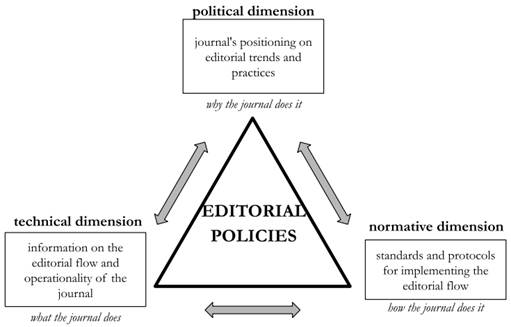
The concept of editorial policy presented by Gruszynski, Golin and Castedo (2008) encompasses a normative character of the particularities of a journal and its structuring for the receipt of manuscripts and consumption by readers. However, in addition to standardization, the EP should also encompass other lines of character i) technical and ii) political, strictly speaking (Figure 2): i) the technical one should present the entire overview regarding information about the journal and its editorial flow, allowing authors and readers to be aware of all stages from submission to publication, granting them autonomy to submit manuscripts respecting the sections provided by the journal, the particularities of the submission platform and the documents necessary for pre-evaluation and peer review; ii) the politician must explain the stance of the editorial team and, consequently, of the journal, regarding ethical issues, such as good practices involved in the editorial process, protocols related to misconduct, research ethics, copyright, principles for authors, information on APCs, quarantine policy, retraction policy, integrity, in addition to the prevention of plagiarism and self-plagiarism.
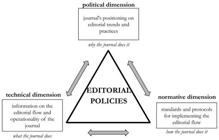
- Diagram of the triadic concept of editorial policy, indicating the normative, technical and political dimensions.
From a Peircean perspective, the technical dimension is related to firstness, as it consists of the quality of the journal, which identifies it. The political dimension is related to secondness, indicating positioning and reaction to editorial issues that arise and demand discussion. Finally, thirdness is related to the normative dimension, given its regulatory nature. Thus, we propose that, in a triadic and integrated way, these categories make up the concept of EP.
We elaborate this concept in the following statement: “the information on normative, technical and political dimensions about a scientific journal must reflect its choices and positions applied to the execution of its editorial flow process, being organized coherently”. From this, we draw attention to the union of the normative dimension, present in the concept of Gruszynski, Golin and Castedo (2008), with the technical and political dimensions cited in the definition of the current article. These dimensions comprise sufficient types of information to present a journal to the public on a website, for example, the most common presentation tool for journals today.
The connection between the normative, technical, and political dimensions in the concept of EP reflects the proposed triadic structure. The normative dimension establishes the protocols guiding the editorial flow, defining how the journal operates. The technical dimension describes the operationalization of the journal, that is, what it does. The political dimension manifests the causes of the journal's adoption of certain practices, evidencing its positioning for the editorial trends. In this way, these dimensions act in an integrated manner, ensuring coherence between guidelines, processes, and editorial intentions. Along these lines, for each topic related to editorial practices - for example: peer review, publication formats and fee charging - the journal must: i) take a political stance on the subject (political dimension), ii) adhere to an existing standard or regulate the practice (normative dimension) and iii) operationalize the execution of this practice in the journal's editorial flow (technical dimension) in a manner consistent with the political positioning and the standard adopted.
The applicability and validation of this triadic concept of EP can be illustrated through the issue of manuscript access, using a hypothetical journal that adheres to the standards set by the Directory of Open Access Journals (DOAJ) or other specific publishing guidelines (normative dimension). This journal operates its editorial workflow using software such as Open Journal Systems (OJS) (technical dimension) and embraces an Open Access policy to enhance the dissemination of its content (political dimension). In its editorial policy, the aforementioned journal will address the normative, technical, and political dimensions pertinent to Open Access publishing.
Based on this definition, the same editorial issue cuts across all dimensions of the EP. For example, whether peer review should be open or anonymous has been a debate in the publishing community (Hamilton et al., 2020; Nassi-Caló, 2021). In the political dimension, the editorial team should decide which format will be adopted and what the scientific, ethical, and editorial grounds are to support such a decision. In the technical dimension, the editorial team should plan how the editorial flow will accommodate open peer review, for example. Finally, in the normative dimension, the editorial team will indicate instructions for authors and protocols on how reviews will be published, for example.
By relating the proposed definition to the levels of decision-making in editorial practices, we can point out how EPs are indispensable guidelines for the inclusion of journals in indexing sources (Santos Cruz et al., 2024). Bufrem, Gabriel Júnior, and Gonçalves (2010) point out how the indexing of a journal in scientific databases contributes to its growth and consolidation as a vehicle for scientific communication. The main indexing databases analyze journal websites to evaluate their publications and normative, technical, and political information. In this sense, we must state that EPs define journals and constitute a crucial factor for their growth process, acting as a tool that allows the self-regulation of scientific production.
Regarding their role in characterizing a journal, the EPs are established as parameters that, when associated with rigorous criteria, can differentiate ethical and upright scientific journals from the growing and dangerous journals with predatory practices (Stojanovski; Marusic, 2017). Based on this, it is worth saying that the clarity in the presentation of the EP contributes to the public opinion's endorsement of the journal's reputation, guaranteeing authors, readers, editors, and other agents in the scientific field a reciprocal and dialogic follow-up. Also, the interpretation of the information to identify predatory practices requires maturity from the researcher on the subject, considering that “predatory practices” consists of another concept that lacks a consensual definition in the area.
Notable journals with action plans for EPs stand out. The Revista Brasileira de Estudos Pedagógicos, for example, as mentioned in the results section, presents a document called Editorial Development Plan on its website. It would be advisable for all journals to have a document that sets out the objectives to be achieved in the medium and long term, to contemplate changes in their EPs - changes developed based on the three dimensions discussed here.
Therefore, Gomes's (2010) reflects on the need to professionalize the career of journal editors and the researcher's perspective to ensure the quality and credibility of journals. Both the training of editors and their technical improvement are fundamentally urgent to successfully systematize the editorial process (Santos Cruz, 2020).
Some of the challenges are detecting plagiarism, dealing with conflicts of interest, and ensuring the scientific relevance and rigor of articles to be published. These professionals will also be able to discuss contemporary issues that impact the entire universe of scientific communication, such as AI (Schäfer, 2023) and Open Science (Almaqrami et al., 2020; Bojo-Canales; Melero, 2023), globally, and the change in Qualis Periódicos (Schmidt, 2024), locally. Therefore, a commitment to ethics and academic integrity is urgent, since it is on these bases that a journal's excellence can be built.
FINAL CONSIDERATIONS
This study aimed to analyze the relationship between the information available on the websites of journals in the field of Education and their EPs, and we identified that there is variation between the websites of each journal. Regarding information about the journal, data on focus, scope, and periodicity are present on the websites of all the materials consulted, while data on qualitative indicators, impact factor, and financial sustainability are present only in some of them. Information related to manuscript submission and evaluation varies. Only some of the websites indicate templates for authors and evaluation guidelines for reviewers. Regarding ethical issues, all journals indicate a reference document for good editorial practices and provide additional information, although how they are organized on each website varies between the journals. Thus, we identified that the main themes regarding these documents in relevant journals in the field of Education are: information about the journal, editorial flow, and ethical issues.
We also seek to critically examine the concept of “editorial policies.” We propose that editorial policies for a journal should be developed with consideration of normative, technical, and political dimensions. This triadic framework aims to achieve coherence in editorial policies, as the themes associated with editorial practice comprehensively intersect across these dimensions. To provide specific guidance for developing editorial policies and ensuring accessibility of information on journal websites, we recommend: i) addressing all relevant topics outlined in the subcategories of Chart 1; ii) clearly defining the journal’s focus and scope; iii) providing manuscript templates; iv) presenting evaluation guidelines in a precise manner; v) establishing a dedicated section for ethical considerations; vi) regularly reviewing editorial policies to stay aligned with emerging editorial trends; and vii) maintaining current and accessible journal websites for public consultation.
In discussing the limitations of this research, we must acknowledge the use of a purposeful sample. While this approach facilitated a more thorough investigative and descriptive analysis by focusing on a defined subset, it was limited to the examination of just five journals. Consequently, the discussions and proposals presented herein are grounded solely in the corpus under investigation. To enable broader generalizations, it would be essential for future studies to validate the proposed concept across a wider range of journals within the field. Additionally, it is worthwhile to consider the potential applicability of the proposed concept to other areas of knowledge within Human Sciences, accounting for their unique characteristics.
To enhance the sample, we recommend that future studies focused on the Brazilian publishing landscape take regional diversity into account while defining their samples, ensuring geographic representation of the journals involved. Additionally, we acknowledge a limitation in our research related to the construction of categories, which may exhibit some degree of flexibility. In a new sampling and data collection effort, it would be possible to reorganize these categories for greater specificity, reflecting what is anticipated to emerge in São Paulo or aiming to identify distinct patterns within the same corpus of data.
In conducting this research, we addressed topics relevant to editorial practice concerning scientific publishing that warrant in-depth exploration. From this standpoint, we propose several questions aimed at contributing to contemporary discussions within the literature. These inquiries focus on how editorial practices can help combat predatory practices and prevent fraud. Additionally, we seek to explore ways to engage graduate students in training for scientific publishing. We also examine how public policies can support scientific publishing activities from the perspective of Open Science. Furthermore, we consider how scientific publishing, in collaboration with research and funding institutions, can navigate the challenges presented by academic productivism. Lastly, we investigate how transparency in journal manuscript evaluation criteria can enhance the quality of submitted texts and the evaluation process performed by reviewers.
Based on our research, we expect to contribute to the research area in journal management, which is still dispersed and poorly consolidated in Brazil, by problematizing a concept of EP. In addition, we hope to contribute to editorial practices regarding the elaboration of EP.
ACKNOWLEDGMENTS
This article reports on an investigation initially sparked by discussions held at Editora Ibero-Americana. Thus, we would like to express our gratitude to Prof. Dr. José Anderson Santos Cruz for his contributions during the design of this research.
References
-
ALMAQRAMI, Bushra S.; HUA, Fang; LIU, Yanxiaoxue; HE, Hong. Research waste-related editorial policies of leading dental journals: Situation 2018. Oral Diseases, v. 26, p. 696-706, 2020. <http://doi.org/10.1111/odi.13257>.
» https://doi.org/10.1111/odi.13257 -
AMERICAN JOURNAL OF EDUCATION. (30 de agosto de 2023a). AJE About the Journal. Disponível em: <Disponível em: https://www.journals.uchicago.edu/journals/aje/about >. Acesso em: 13/01/2024.
» https://www.journals.uchicago.edu/journals/aje/about -
AMERICAN JOURNAL OF EDUCATION. (30 de agosto de 2023b). AJE Statement of Ethics. Disponível em: <Disponível em: https://www.journals.uchicago.edu/journals/aje/ethics-statement >. Acesso em: 13/01/2024.
» https://www.journals.uchicago.edu/journals/aje/ethics-statement -
AMERICAN JOURNAL OF EDUCATION. (30 de agosto de 2023c). Instructions for authors. Disponível em: <Disponível em: https://www.journals.uchicago.edu/journals/aje/instruct >. Acesso em: 13/01/2024.
» https://www.journals.uchicago.edu/journals/aje/instruct -
AMERICAN JOURNAL OF EDUCATION. (30 de agosto de 2023d). Obtaining permission to reuse material in your article. Disponível em: <Disponível em: https://www.journals.uchicago.edu/journals/aje/permissions >. Acesso em: 13/01/2024.
» https://www.journals.uchicago.edu/journals/aje/permissions -
AMERICAN JOURNAL OF EDUCATION. (30 de agosto de 2023e). Preventing Fraud. Disponível em: <Disponível em: https://www.journals.uchicago.edu/journals/aje/prevent-fraud >. Acesso em: 13/01/2024.
» https://www.journals.uchicago.edu/journals/aje/prevent-fraud -
AMERICAN JOURNAL OF EDUCATION. (30 de agosto de 2023f). Your Rights as an Author. Disponível em: <Disponível em: https://www.journals.uchicago.edu/journals/aje/jrnl_rights >. Acesso em: 13/01/2024.
» https://www.journals.uchicago.edu/journals/aje/jrnl_rights -
ANGELO, Edna da Silva; FURTADO, Fabiene Letizia Alves; CARVALHO, Gracilene Maria; RIBEIRO, Nivaldo Calixto. Análise da política editorial de periódicos da ciência da informação: Biblionline e Encontros Bibli. OSFPreprints, 2021. <https://doi.org/10.31219/osf.io/y3f4x>
» https://doi.org/10.31219/osf.io/y3f4x -
BELTRÃO, Jimena Felipe; SILVA, Taíse da Cruz. Análise de políticas editoriais de periódicos científicos nacionais: Contribuições para o Boletim do Museu Paraense Emílio Goeldi. Ciências Humanas. Perspectivas em Ciência da Informação, v. 25, n. 3, p. 3-21, 2020. Disponível em: <Disponível em: https://periodicos.ufmg.br/index.php/pci/article/view/25502/19925 >. Acesso em: 05/07/2024.
» https://periodicos.ufmg.br/index.php/pci/article/view/25502/19925 -
BOJO-CANALES, Cristina; MELERO, Remedios. Open access editorial policies of SciELO health sciences journals. Journal of Information Science, v. 49, n. 3, 685-698, 2023. <http://doi.org/10.1177/01655515211015135>.
» https://doi.org/10.1177/01655515211015135 - BRASIL. Lei n.º 13.709 de 2018 Lei Geral de Proteção de Dados Pessoais (LGPD). Brasília, 2018.
- BRASIL. Ministério da Educação; Coordenação de Aperfeiçoamento de Pessoal de Nível Superior. Relatório do Qualis Periódicos - Área 38: Educação Brasília, 2021.
-
BUFREM, Leilah Santiago; GABRIEL JUNIOR, Rene Faustino; GONÇALVES, Viviane. Dez anos de Revista Diálogo Educacional (2000-2009): histórico e evolução. Revista Diálogo Educacional, v. 10, n. 29, p. 123-149, 2010. Disponível em: <Disponível em: https://periodicos.pucpr.br/dialogoeducacional/article/view/3070 >. Acesso em: 07/06/2024.
» https://periodicos.pucpr.br/dialogoeducacional/article/view/3070 -
CADERNOS DE PESQUISA. (30 de agosto de 2023a). Declaração de Privacidade. Disponível em: <Disponível em: https://publicacoes.fcc.org.br/cp/about/privacy >. Acesso em:13/01/2024.
» https://publicacoes.fcc.org.br/cp/about/privacy -
CADERNOS DE PESQUISA. (30 de agosto de 2023b). Sobre a Revista. Disponível em: <Disponível em: https://publicacoes.fcc.org.br/cp/about >. Acesso em:13/01/2024.
» https://publicacoes.fcc.org.br/cp/about -
CADERNOS DE PESQUISA. (30 de agosto de 2023c). Submissões. Disponível em: <Disponível em: https://publicacoes.fcc.org.br/cp/about/submissions >. Acesso em:13/01/2024.
» https://publicacoes.fcc.org.br/cp/about/submissions -
DIAS, Carolina Guimarães de Souza. Políticas editoriais de compartilhamento de dados em periódicos brasileiros de ciências sociais aplicadas na coleção SciELO. Encontros Bibli, v. 29, e95038, 2024. <https://doi.org/10.5007/1518-2924.2024.e95038>.
» https://doi.org/10.5007/1518-2924.2024.e95038 -
FAPESP. Fundação de Amparo à Pesquisa do Estado de São Paulo. Código de Boas Práticas Científicas 2024. Disponível em: <Disponível em: https://fapesp.br/acordos/SECOVI/boas_praticas.pdf >. Acesso em:13/01/ 2024.
» https://fapesp.br/acordos/SECOVI/boas_praticas.pdf -
FERES, Marcos Vinício Chein; SILVA, Lorena Abbas da; BRUNO, Ana Luísa Brêtas; ANDRADE, Felipe César de. Para além do acesso ao conhecimento: Licenças Creative Commons e políticas editoriais dos periódicos científicos. Brazilian Journal of Information Science: Research trends, v. 15, p. 1-23, 2021. <https://doi.org/10.36311/1981-1640.2021.v15.e02105>.
» https://doi.org/10.36311/1981-1640.2021.v15.e02105 -
FREITAS, Caio Mendes; MAINIERI, Alessandra Ghinato; MÁRMORA, Cláudia Helena Cerqueira. Ética e autoria nas revistas brasileiras de psicologia. Revista Bioética, v. 29, n. 3, p. 648-654, 2021. <http://dx.doi.org/10.1590/1983-80422021293500>.
» https://doi.org/10.1590/1983-80422021293500 -
GOMES, Valdir Pereira. O Editor de Revista Científica: desafios da prática e da formação. Informação & Informação, v. 15, n. 1, p. 147-172, 2010. <https://doi.org/10.5433/1981-8920.2010v15n1p147>.
» https://doi.org/10.5433/1981-8920.2010v15n1p147 -
GRUSZYNSKI, Ana Cláudia; GOLIN, Cida; CASTEDO, Raquel. Produção editorial e comunicação científica: uma proposta para edição de revistas científicas. Revista E-compós, v. 11, n. 2, p. 1-17, 2008. <https://doi.org/10.30962/ec.238>.
» https://doi.org/10.30962/ec.238 -
HAMILTON, Daniel G.; FRASER, Hannah.; HOEKSTRA, Rink; FIDLER, Fiona. Journal policies and editors’ opinions on peer review. eLife, v. 9, e62529, 2020. <https://doi.org/10.7554/elife.62529>.
» https://doi.org/10.7554/elife.62529 -
KUHLMANN JR, Moysés. Produtivismo acadêmico, publicação em periódicos e qualidade das pesquisas. Cadernos de Pesquisa, v. 45, n. 158, p. 838-855, 2015. <http://dx.doi.org/10.1590/198053143597>.
» https://doi.org/10.1590/198053143597 -
LAUDAN, Larry. Science and Relativism: Some Key Controversies in the Philosophy of Science. Chicago: The University of Chicago Press, 1990. <http://doi.org/10.7208/chicago/9780226219332.001.0001>.
» https://doi.org/10.7208/chicago/9780226219332.001.0001 -
MAGALHÃES, Ana Paula Silva.; AZEVEDO, Carolina Oliveira da Silva; OLIVEIRA, Dayane de; PRADO, Fernanda Bertelli Tejerina de; ELIAS, Soraya Ferreira; SANTO, Nathália Barbosa do Espírito. Ética dos editores de periódicos brasileiros: evolução e desafios. Revista Médica de Minas Gerais, v. 24, n. 1, p. 26-30, 2014. <https://dx.doi.org/10.5935/2238-3182.20140013>.
» https://doi.org/10.5935/2238-3182.20140013 -
MATOS CARDOSO, María Manuela Tavares. Peer review of scholarly journals in the humanities and social sciences: Reported editorial policies and practices. Revista Española de Documentación Científica, v. 34, n. 2, p. 141-164, 2011. <http://doi.org/ 10.3989/redc.2011.2.796>.
» https://doi.org/10.3989/redc.2011.2.796 -
MEERPOHL, Joerg J.; WOLFF, Robert F.; NIEMEYER, Charlotte M. Editorial Policies of Pediatric Journals: Survey of Instructions for Authors. Archives of Pediatrics & Adolescent Medicine, v. 164, n. 3, p. 268-272, 2010. <http://doi.org/10.1001/archpediatrics.2009.287>.
» https://doi.org/10.1001/archpediatrics.2009.287 -
NASSI-CALÓ, Lilian. Editores opinam sobre política editorial e aspectos da avaliação por pares. SciELO em Perspectiva, 2021. Disponível em: <Disponível em: https://blog.scielo.org/blog/2021/03/03/editores-opinam-sobre-politica-editorial-e-aspectos-da-avaliacao-por-pares/ >. Acesso em: 13/01/2024.
» https://blog.scielo.org/blog/2021/03/03/editores-opinam-sobre-politica-editorial-e-aspectos-da-avaliacao-por-pares/ - PATTON, MichaelQuinn. Qualitative Research & Evaluation Methods: Integrating Theory and Practice. 4a ed.Londres: SAGE Publications, 2014.
- PEIRCE, Charles Sanders. Semiótica Tradução de José Teixeira Coelho Neto. 4.ª ed. São Paulo: Perspectiva, 2017.
- PROSDOCIMI, Francisco. O que é a ciência?: A ciência sob um exame de consciência. 1.ª ed. Rio de Janeiro: ArtecomCiencia, 2020. 214 p.
-
REVISTA BRASILEIRA DE EDUCAÇÃO. (30 de agosto de 2023). Sobre o periódico. Disponível em: <Disponível em: https://www.scielo.br/journal/rbedu/about/#about >. Acesso em: 13/01/2024.
» https://www.scielo.br/journal/rbedu/about/#about -
REVISTA BRASILEIRA DE ESTUDOS PEDAGÓGICOS. (30 de agosto de 2023). Condições para submissão. Disponível em: <Disponível em: http://www.rbep.inep.gov.br/ojs3/index.php/rbep/about/submissions >. Acesso em:13/01/2024.
» http://www.rbep.inep.gov.br/ojs3/index.php/rbep/about/submissions -
REVISTA PRÁXIS EDUCATIVA. (30 de agosto de 2023). Submissões. Disponível em: <Disponível em: https://revistas.uepg.br/index.php/praxiseducativa/about/submissions >. Acesso em:13/01/2024.
» https://revistas.uepg.br/index.php/praxiseducativa/about/submissions -
RUÍZ-PÉREZ, Rafael; MARCOS-CARTAGENA, Diego; LÓPEZ-CÓZAR, Emilio Delgado. Scientific authorship in the areas of science and technology: international policies and editorial practices in spanish scholarly journals. Revista Española de Documentación Científica, v. 37, n. 2, e049, 2014. <http://doi.org/10.3989/redc.2014.2.1113>.
» https://doi.org/10.3989/redc.2014.2.1113 - SANTAELLA, Lucia. A Teoria Geral dos Signos: semiose e autogeração. São Paulo: Editora Ática S.A., 1995.
- SANTOS CRUZ, José Anderson. Gestão do conhecimento e gestão editorial: Qualificadores da avaliação de periódicos da área de educação. Tese (Doutorado em Educação). Araraquara: Universidade Estadual Paulista “Júlio de Mesquita Filho”, 2020.
- SANTOS CRUZ, José Anderson; GANIKO-DUTRA, Matheus; LEITE DA SILVA, Alexander Vinícius; LOPES-DELPHINO, Kevin Luiz. Gestión de revistas científicas en el área de Educación: Una mirada al escenario brasileño. In: BRIS, Mario M.; CUETO, Juan Pablo C.; VARGAS, Jairo Steffan A. Aprendizaje y gestión de la educación en Iberoamérica: Perspectivas y experiencias. Madrid: Editorial Dykinson, 2024, p. 51-62.
-
SCHÄFER, Mike S. The Notorious GPT: science communication in the age of artificial intelligence. JCOM: Journal of Science Communication, v. 22, n. 2, p. Y02, 2023. <https://doi.org/10.5167/uzh-237847>.
» https://doi.org/10.5167/uzh-237847 -
SCHMIDT, Sarah. Qualis-periódicos será substituído por classificação com foco nos artigos. Revista Pesquisa Fapesp, 26 out. 2024. Disponível em: <Disponível em: https://revistapesquisa.fapesp.br/qualis-periodicos-sera-substituido-por-classificacao-com-foco-nos-artigos/ >. Acesso em: 07/06/2024.
» https://revistapesquisa.fapesp.br/qualis-periodicos-sera-substituido-por-classificacao-com-foco-nos-artigos/ -
SILVEIRA, Lúcia da; SILVA, Fabiano Couto Corrêa; DALL’AGNOLL, Ares Barbosa. Políticas editoriais de dados científicos em periódicos da área de comunicação e informação. Revista Ibero-Americana de Ciência da Informação, v. 16, n.1, 2023. <https://doi.org/10.26512/rici.v16.n1.2023.42055>.
» https://doi.org/10.26512/rici.v16.n1.2023.42055 -
STOJANOVSKI, Jadranka; MARUŠIĆ, Ana. Does small equal predatory? Analysis of publication charges and transparency of editorial policies in Croatian open access journals. Biochemia Medica, v. 27, n. 2, p. 292-299, 2017. <https://doi.org/10.11613/BM.2017.032>.
» https://doi.org/10.11613/BM.2017.032 -
STRECH, Daniel; METZ, Courtney; HANNES, Knüppel. Do Editorial policies support ethical research? A thematic text analysis of author instructions in psychiatry journals. PLoS ONE, v. 9, n. 6, e97492, 2014. <http://doi.org/10.1371/journal.pone.0097492>.
» https://doi.org/10.1371/journal.pone.0097492 -
TAVARES-NETO, José; AZEVEDO, Eliane S. Destaques éticos nos periódicos nacionais das áreas médicas. Revista da Associação Médica Brasileira, v. 55, n.4, p.400-404, 2009. <https://doi.org/10.1590/S0104-42302009000400013>.
» https://doi.org/10.1590/S0104-42302009000400013 - TAYLOR, Peter C. Contemporary Qualitative Research. In: Norman G. Lederman e Sandra K. Abell(Ed.). Handbook of Research on Science Education Nova York: Routledge, 2014, p. 38-54. (v. II).
-
TREAGUST, David F.; WON, Mihye. Paradigms in Science Education Research. In: Norman G. Lederman, Dana L. Zeidler e Judith S. Lederman. (Ed.). Handbook of Research on Science Education Nova York: Routledge, 2023, p. 3-27. (v. III). <https://doi.org/10.4324/9780367855758-2>.
» https://doi.org/10.4324/9780367855758-2 -
TRZESNIAK, Piotr. A estrutura editorial de um periódico científico. In: SABADINI, Aparecida Angelica Zoqui Paulovic; SAMPAIO, Maria Imaculada Cardoso; KOLLER, Sílvia Helena. Publicar em psicologia: um enfoque para a revista científica. São Paulo: Instituto de Psicologia da Universidade de São Paulo, 2009, p. 87-102. <https://doi.org/ 10.11606/9788586736339>.
» https://doi.org/10.11606/9788586736339 -
VILELA, Larissa Zubioli Lelis; LONDERO, Leandro. Ética na pesquisa em educação em ciências: Análise da política editorial de periódicos brasileiros. Revista Brasileira de Pesquisa em Educação em Ciências, v. 23, p. 1-29, 2022. <https://doi.org/10.28976/1984-2686rbpec2023u271299>.
» https://doi.org/10.28976/1984-2686rbpec2023u271299
Edited by
History
-
Received
29 Aug 2024 -
Preprint posted on
02 Aug 2024
10.1590/SciELOPreprints.9401 -
Accepted
26 Feb 2025

 Source: Prepared by the authors (2024).
 Source: Prepared by the authors (2024).
 Source: Prepared by the authors (2024).