
 COLONIZED EARLY LITERACY: A CURRICULUM, A POLICY, AND ITS MULTIPLE FACES: AN ANALYSIS OF THE NATIONAL EARLY LITERACY POLICY
ABSTRACT:
The article analyzes the National Literacy Policy/PNA as a network policy in a capillarization of actions that support the policy perspective, its scientific evidence base. We discuss the notion of scientific evidence as the foundation of actions for early literacy, an idea mobilized to give an absolute meaning to early literacy, its curriculum, and teacher education for this phase. This problematization is built through a dialogue with post-structural and post-colonial contributions, discussing the rigidity that allows inferring the production of a discourse that colonizes early literacy and childhood. A colonial authority that emerges from stereotyping literacy practices that are not consistent with what is established as the “last word” on/for early literacy, its curriculum, and teacher education. Opposed to the observed univocity, we defend the production of policies from a discursive perspective that does not prescind contingent articulations and negotiations between discourses, always multiple and marked by difference, as a fight for meaning in an alterity relationship.
Keywords:
early literacy; curriculum; scientific evidence; colonial discourse; difference
RESUMO:
O presente artigo volta-se para a análise da Política Nacional de Alfabetização como uma política em rede, numa capilarização das ações em defesa da perspectiva adotada pela mesma - a fundamentação em evidências científicas. Argui-se a noção de evidências científicas como fundamento das ações para a alfabetização, ideia que é mobilizada na busca por imprimir uma significação absoluta à alfabetização, ao currículo da alfabetização e à formação de professores para essa etapa. Assim, a problematização se dá, em diálogo com aportes pós-estruturais e pós-coloniais, em torno da discussão acerca de uma fixidez que permite inferir a produção de um discurso que coloniza a alfabetização e a infância. Uma autoridade colonial que se ergue a partir da estereotipia das práticas de alfabetização que não se coadunam com o que é estabelecido como “última palavra” sobre - e para - a alfabetização, currículo da alfabetização e formação de professores. Em contraposição a univocidade observada, defende-se a produção de políticas numa perspectiva discursiva, que não prescindem de articulações contingenciais e de negociações entre discursos - sempre múltiplos e marcados pela diferença - como luta pela significação numa relação alteritária.
Palavras-chave:
alfabetização; currículo; evidências científicas; discurso colonial; diferença
RESUMEN:
El artículo se centra en el análisis de la Política Nacional de Alfabetización/PNA como una política en red, en una capilarización de acciones en defensa de la perspectiva adoptada por esa política - la fundamentación en evidencias científicas. Se argumenta la noción de evidencia científica como fundamento de las acciones para la alfabetización, idea que es movilizada en la búsqueda de dar un sentido absoluto a la alfabetización, al currículo alfabetizador y a la formación docente para esta etapa. Así, la problematización ocurre, en el diálogo con los aportes postestructurales y postcoloniales, en la discusión sobre una inmutabilidad que permite inferir la producción de un discurso que coloniza la alfabetización y la infancia. Una autoridad colonial que surge del estereotipo de prácticas alfabetizadoras que no son congruentes con lo establecido como “última palabra” sobre/para la alfabetización, el currículo de alfabetización y la formación docente. En contraposición a la univocidad observada, se defende la producción de políticas en una perspectiva discursiva, que no prescinden de articulaciones y negociaciones contingentes entre discursos, siempre múltiples y marcados por la diferencia, como lucha por el sentido en una relación alteritaria.
Palabras clave:
alfabetización; currículo; evidencias científicas; discurso colonial; diferencia
INTRODUCTION
I have never encountered a concept that could be summed up in one word. Should I be surprised by this? Has there ever been a concept that is truly nameable? I mean, nameable with a single name or a single word? (Derrida, 2004, p. 270).
I open the discussion I propose based on Derrida's questions, in dialogue with a text in which the author discusses the irreducibility and necessity of the perhaps, in his words, which “[...] would make every instance of the last word tremble” (p. 270). It is with the intention of discussing the search for this last word, capable of containing within itself all the significance for what literacy, the literacy curriculum, and the training of literacy teachers are—which was designed with/in/through the National Literacy Policy (PNA), instituted in 2019 by the Literacy Secretariat (Sealf-Secretaria de Alfabetização) of the Ministry of Education (2019-2022)—that I develop this reflection inspired by Derrida, also attempting to make the possible readings of this policy tremble.
I embark on this challenge based on studies in the field of curriculum, a topic I have been researching and in which, more than reaffirming well-defined disciplinary and/or thematic boundaries, I move in the interstices of education research, articulating curriculum and childhood-literacy-training in an intervallic and ambivalent space, a hybrid object that constitutes itself on the border, not as delimitation, but as displacement.
Bringing this point to this reflection is important because it infers from my problematization of the “last word.” After all, who can speak about literacy? What can a curriculum specialist say about literacy? Or a literacy teacher about the curriculum? To speak of literacy or/and curriculum or/and childhood or/and, is monolingualism possible? By mentioning monolingualism, with Derrida (2001), I understand that this is a cultural and colonial issue.
In defense of a hybrid perspective, discussed from poststructural and postcolonial lenses, I question a totalitarian and totalizing discourse about literacy that seeks the “last word” as an exercise of colonialist authority. In the name of a supposed truth, this discourse establishes rules of recognition that make authority familiar and, from this, divides, normalizes, discriminates, and establishes an inside/outside, right/wrong, which establishes rules of recognition and control over subjects, practices, and institutions. It is a “truth” that seeks its plenitude and essentiality, but its presence is always partial, since difference exceeds and escapes surveillance, which disturbs colonial authority in its claim to essentialization and generalization.
I structure this reflection around a presentation of the PNA (Brazil, 2019) and the discourses that aim to imbue literacy, curriculum, and teacher training with a sense of absolute significance within its context. The analysis regards the PNA as a network of policies in itself, aligning with Stephen Ball's (2014) approach to understanding alternative forms of agency and affiliations within the political-educational project. This framework reveals the complex interrelationships among new locations and social actors that express themselves in a non-linear manner. The author emphasizes the state's transition from governance to governance, further contributing to the discussion surrounding the concept of colonized literacy. This concept will be examined by critically engaging with a discourse grounded in a sense of certainty as the “final word,” analyzed through the interstitial and hybrid lens of Homi Bhabha (2001) and in light of Derridean undecidables.
Thus, mobilizing such references, I also dispute the meaning of literacy, the literacy curriculum, early childhood education, and the training of its educators, defending a conception of curriculum as cultural enunciation, a process that occurs in a contingent and liminal way, where difference, instead of being denied, is contingently negotiated.
PNA AND ITS ARTICULATIONS - LITERACY POLICY NETWORK
Stephen Ball (2014), in a work that he warns is a workbook —a kind of possible policy analysis aligned with the context of global education policies —develops an analysis of policy networks using “networks” as both a method and a conceptual device. He further observes networks as flow, movement, and interconnections, which welcome new voices into discourses, mobilizing innovations and collaborative actions. He also highlights the complexity of the relationships established by these networks and draws attention to the fact that “[...] new narratives about what counts as good policy are articulated and validated” (Ball, 2014, p. 29).
This consideration by the author, combined with one of the analytical exercises presented in the aforementioned work, which highlights a consciously constructed and maintained network, provides elements for considering the PNA not as a policy, but as a political network mobilized by the reconfiguration of the Ministry of Education beginning in 2019, when SEALF was created, with a focus on the topic of literacy. While this emphasis may suggest a consideration of the importance of literacy, not restricted to a single stage of basic education or grade/age, it also provides clues—in the way it appears dissociated from the Secretariat of Basic Education—to the dispute surrounding the meaning of literacy. This dissociation, which demonstrates a linear sequencing, invests in a staged and instrumental logic that is already evident in the way the National Common Curricular Base (BNCC) proposes the transition from early childhood education to elementary school, and is further intensified within the literacy policies proposed by Sealf.
The PNA (Brazil, 2019a) presents a configuration that signals the emergence of a theoretical perspective that is being made explicit based on indicators observed in the provisions on its principles, objectives, and guidelines:
Art. 3. The principles of the National Literacy Policy are:
[...] III - basing programs and actions on evidence from cognitive sciences;
IV - emphasis on teaching six essential components of literacy: a) phonemic awareness; b) systematic phonics instruction; c) oral reading fluency; d) vocabulary development; e) text comprehension; and f) written production;
[...] Art. 5. The guidelines for implementing the National Literacy Policy are:
- prioritizing literacy in the first year of elementary school;
- encouraging teaching practices for the development of oral language and emergent literacy in early childhood education;
- integrating motor practices, musicalization, dramatic expression, and other artistic forms into the development of fundamental literacy skills;
[...]VII - encouraging the early identification of learning difficulties in reading, writing, and mathematics, including specific learning disabilities; and
VIII - appreciation of early childhood education teachers and literacy teachers (Brasil, 2019a, p. 16).
A single perspective is considered valid as a guide for literacy processes and, consequently, as a basis for proposed policies. This orientation is also reflected in the very structure of the new secretariat: the emphasis on grounding in scientific evidence from cognitive sciences, considered, in this context, a “robust” science—a term used to refer to science that produces evidence. Although Sealf disputes that there is no prioritization of a method, and that the PNA "[...] merely establishes guidelines on the minimum essential components that must be worked on to achieve effective literacy, regardless of the approach employed" (Sealf, 2022, p. 41), one perspective is clearly seen as the guiding axis of the guidelines that unfold from it. Scientific evidence is clarified based on the definition of the sciences that produce it and the validation criteria that allow it to be qualified as scientific, as noted in the PNA text that lists the parameters for this validation.
[...] the PNA took two important steps: first, it proposed the definition of key concepts (art. 2, I to XI), to avoid inaccuracies and misunderstandings about literacy, adopting terms such as literacy and numeracy, in line with the common terminology present in research and studies in developed countries; second, it enunciated, among its principles, conditions that enable the development of a more effective literacy policy (art. 3, III to V): the basis in evidence from cognitive sciences, the emphasis on teaching six essential components for literacy - phonemic awareness, systematic phonics instruction, fluency in oral reading, vocabulary development, text comprehension and written production - and the adoption of benchmarks from successful public policies, both national and foreign (Brasil, 2019b, p. 40).
It is possible to observe the emergence of movements seeking to hegemonize a certain meaning attributed to evidence, which should be considered as a guide for literacy processes. This movement is seen in the binary polarization established under the idea of science and literacy based on scientific evidence. This can be seen in the very definition of “evidence”:
The term “evidence” refers to findings resulting from scientific research. Evidence-based literacy employs procedures and resources whose effects have been tested and proven effective.
[...] When we seek evidence to improve our pedagogical practices, we need to be guided by quality parameters of research designs based on rigorous experimental and statistical controls for hypothesis testing (MEC/Sealf, 2020, pp. 28-29).
Precision/prediction that leaves no room for other possibilities and perspectives. Evidence is clearly and unequivocally identified, produced by experts and scientists. Margins are occupied, which subtly and subliminally occurs in the PNA's graphic design. Its margins are occupied and collaborate to try to control the fleeting process of signification, seeking to fix the meaning that escapes the margins. Like hyperlinks, with the headline “What do the experts say?”, they state:
The use of phonics methods alone will not solve the literacy problem. Other equally compelling evidence must be taken into account by educational authorities: a clear and consistent national curriculum; teaching strategies and materials appropriate to the level of teachers; appropriate assessment tools; highly qualified, well-prepared teachers; adequate school supervision and rigorous teaching of Portuguese, Mathematics, and Science. Only the systematic use of this body of evidence can help Brazil make a qualitative leap forward in literacy and education.
João Batista Araújo e Oliveira, PhD in Educational Research from Florida State University, President of the Alfa and Beto Institute (Brazil, 2019b, pp. 17).
Over the past 40 years, studies have been conducted to understand how people visually process words and access their meaning. Such studies have contributed to understanding the cognitive and linguistic phenomena underlying the reading of words, sentences, and texts. Thus, studies on visual processing and reading acquisition have analyzed both proficient readers and those in the process of learning to read.
Elizeu Coutinho de Macedo, PhD in Experimental Psychology from the University of São Paulo, Adjunct Professor in the Graduate Program in Developmental Disorders at Mackenzie Presbyterian University (Brazil, 2019b, pp. 21).
How children learn to read and the best ways to teach them are not simply a matter of opinion. Scientists studying literacy instruction and acquisition have conducted research that provides definitive answers to these questions and dispels erroneous opinions. Their findings reveal that beginning readers, to be successful, must first learn how the alphabetic writing system works. They need to learn the shapes, sounds, and names of letters, how letters represent separate sounds in words, and how to divide spoken words into the smallest sounds represented by letters.
Linnea Ehri, Professor Emeritus of Educational Psychology at the City University of New York, participated in the National Reading Panel, commissioned by the U.S. Congress to review research and identify effective methods for teaching reading (Brasil, 2019b, pp. 26).
What skills and/or knowledge are necessary for learning to decode and, therefore, for developing sight-reading skills? It seems that two factors are fundamental: knowledge of letter sounds and phonemic awareness, that is, the ability to identify or segment the small sound segments that make up the words we hear or speak.
Cláudia Cardoso-Martins, PhD in Psychology from the University of Illinois at Urbana-Champaign, USA, Full Professor in the Department of Psychology at the Federal University of Minas Gerais (Brasil, 2019b, pp. 33).
Literacy programs that introduce systematic phonics instruction have consistently shown better results than programs that do not, with repercussions for both reading and writing individual items, as well as text comprehension. For this reason, many countries already recommend, in their official guidelines, that systematic phonics instruction be part of literacy programs, such as the United States, France, Great Britain, and Finland.
Alessandra Gotuzo Seabra, PhD in Psychology from the University of São Paulo, Professor of the Graduate Program in Developmental Disorders at Mackenzie Presbyterian University (Brazil, 2019b, pp. 33).
I have included some excerpts from the 20 “expert's word” insertions that occupy the margins of the PNA text. It is interesting to consider how the graphic design commits to emphasizing the following perspective: a text with delimited margins, occupied in this way, prevents other ideas from competing for space; once populated, these ideas assert the path to be followed. The struggle for hegemony of a discourse that aligns science and results occurs in the invisibility and discrediting of other proposals that are not guided by science and are presented without guarantees of results.
The PNA is supported by a master narrative that justifies it and that spreads throughout the programs linked to it, especially the Time to Learn (Tempo de Aprender) program, defined as “[...] the most comprehensive literacy program in the history of Brazil. Intended primarily for children in preschool and the 1st and 2nd grades of elementary school in Brazilian public schools.”
PROGRAM AXES AND ACTIONS
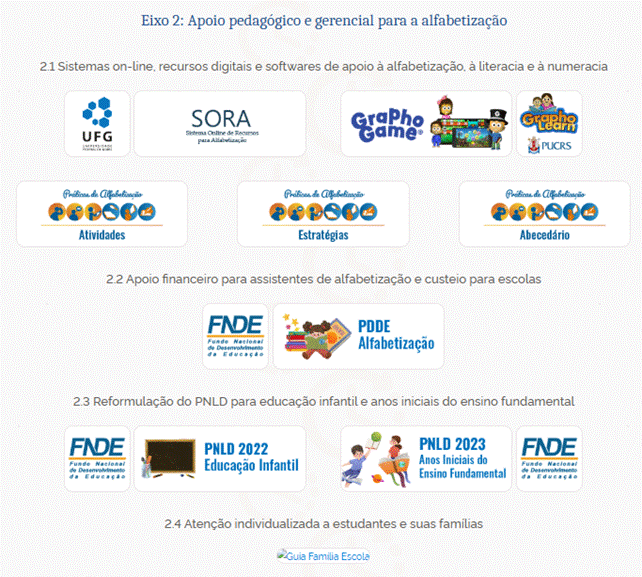
Time to Learn (Tempo de Aprender) is a comprehensive literacy program designed to improve the quality of literacy instruction in all public schools nationwide. To this end, the program implements initiatives that enhance the pedagogical and managerial training of teachers and administrators, provides evidence-based materials and resources for students, teachers, and educational administrators, improves student learning monitoring through individualized attention, and recognizes the value of literacy teachers and administrators.
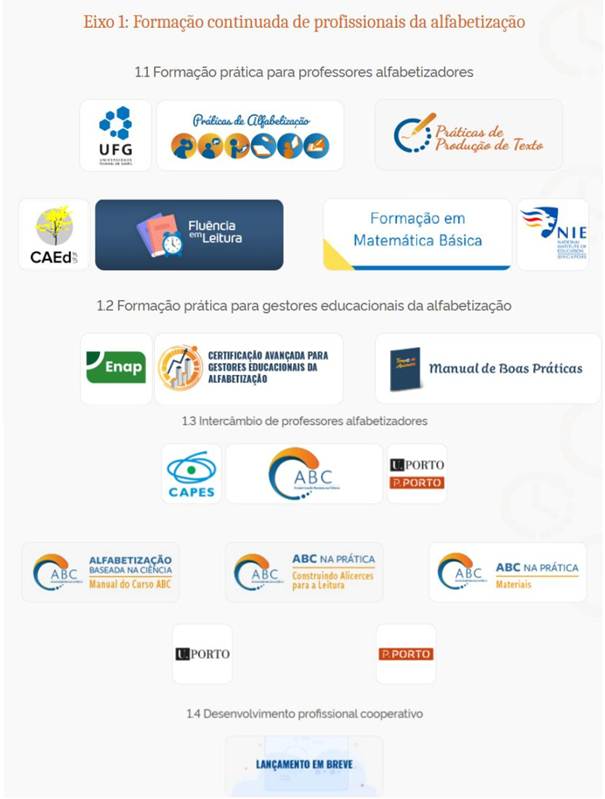
To improve the quality of literacy, the Time to Learn program proposes actions structured around four axes:

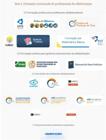

Returning to the concept of a network as outlined by Ball (2014), the PNA can be understood as an expansive network that extends through the various programs associated with it. This widespread action defends the perspective inherent in the policy, which is grounded in scientific evidence. Consequently, we can assert that the PNA, as a networked policy, aligns with hegemonic strategies that shape a web of policies disputing the meanings of education, childhood, and training. This alignment not only influences pedagogical approaches within educational institutions but also impacts the debate over accountability in the teaching-learning process. By adhering to the logic that informed the proposal and approval of the BNCC, this approach fosters a homogenization of pedagogical processes related to literacy and early childhood education, grounded in a perspective of normative universality that dismisses the potential for varied interpretations (Frangella, 2020).
The proposal for evidence-based literacy clearly does not advocate for a singular approach; instead, it is framed as a curricular paradigm. The objective is to establish a curriculum policy for literacy, early childhood education, and the training of educators in these foundational stages of education, all grounded in scientific perspectives that prioritize specific methodologies while sidelining diverse literacy approaches. This intention is evident in the National Education Plan:
Art. 8. The National Literacy Policy will be implemented through programs, actions, and instruments that include:
Curricular guidelines and clear and objective goals for early childhood education and the initial years of elementary school (Brazil, 2019a, p. 18).
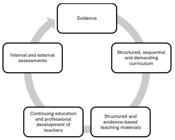
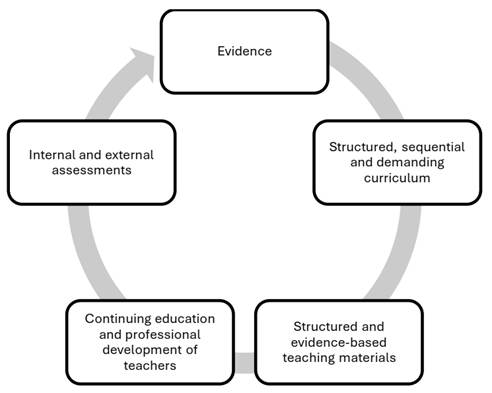
This becomes clearer in the discourses surrounding and moving with/through the National Literacy Policy (PNA). In an organized work on evidence-based literacy, Sargiani (2022) proposes a reconceptualization of the literacy cycle, which he claims has already been proposed within the scope of recent public policies addressing the topic, culminating in the National Literacy Policy (PNA). This proposal arises amid the quest to “[...] overcome the superficiality of theoretical disputes and ideological debates and prioritize what scientific research affirms (p. 2).” In his argument, he presents the contributions of a cognitive science of reading to improving processes, how countries use this evidence to modify their practices—the only mention in the Brazilian context being the policy implemented in Sobral, Ceará—and explains how to consider this evidence, emphasizing which research qualifies as rigorous and produces evidence that should support pedagogical practices for learning to read and write. To this end, he defends the evidence-based literacy cycle as:
Put more eloquently, in an interview with Gazeta do Povo, upon the launch of the National Evidence-Based Literacy Report (Renabe-Relatório Nacional de Alfabetização Baseada em Evidência) - produced as a result of the National Science-Based Literacy Conference (Conabe-Conferência Nacional de Alfabetização Baseada em Ciência) promoted by the Ministry of Education (MEC) in October 2019 -, Sargiani (2021, [s. p.]) states: “in theory, literacy does not and should not have an ideological or political bias. We study because we want to understand the best way to teach reading and writing, and we believe it is possible to do this independently and technically.” He adds: “We are choosing what the research says; we are always choosing the path of science.” We need to highlight that, at the time, the author was coordinator of Neuroscience and Linguistics at the Ministry of Education, working at Sealf and as scientific president of Conabe.
The journey of science—characterized by its focus on efficiency and effectiveness and embodying the essence of quality—is objective and verifiable. It rests on empirical foundations that dismiss queries not subjected to the rigorous scrutiny of scientific inquiry, all underpinned by transparency and neutrality. Consequently, the assurances provided transcend any debate surrounding the meanings of literacy. As a result, the pluralistic interpretations collapse into a singular definition that prevails above the fluctuating circumstances of the world.
WHO HAS THE “FINAL WORD”? UNIFORMITY AND UNIDIRECTIONALITY AS AUTHORITY
[...] the way of thinking about reality that was historically established in the West, and that established rigid borders: borders not only political, linked to national states, but also analogously broader borders, which are configured in the multiple fields of social praxis, which were reduced dichotomously, restricting diversity into watertight dualisms such as spirit and matter, Good and Evil (Abdala Junior, 2004, p. 9).
Within these multiple fields in which these forms of duality arise, it is possible to situate literacy and its qualifications at issue in the National Policy, or more directly, science and non-science, and, from there, other oppositional pairs emerge—truth/fiction, efficient/inefficient, evident/apparent, etc.
This is an ongoing discursive dispute that seeks to definitively define a meaning for literacy. The discussions surrounding the criticisms of the National Policy transcend the methodological question, although this gains relevance due to the possible associations with the definitions presented throughout the policy text. This is the point that the Sealf management team and the PNA's producers say:
14. A MATTER OF METHOD?
14.1 Some points deserve detailed attention due to their prominence in public debate. One of them is a supposed controversy regarding the adoption of a specific method within the context of the National Literacy Policy. The controversy in question was false, in the sense that it did not essentially involve opposing ideas, but rather gross distortions regarding the work carried out by the Ministry of Education.
14.2. Media outlets repeatedly claimed that the National Literacy Policy would prioritize a 'phonic method.' This fact spread so widely that it even inspired official actions, such as a Request for Information filed by a Senator of the Republic (SEI 3751523) or even official legislative speeches that went so far as to state that the Ministry of Education SEI/MEC - 3737731 - would condition funding transfers on the adoption of methods (SEI 3751537).
14.3. The confusion initially arose because the PNA includes two essential components of literacy, each with technical terminology: phonemic awareness and systematic phonics instruction. In simpler terms, the Policy states that students must effectively recognize the phonemes of the Portuguese language, as well as be able to recognize the relationship between graphemes and phonemes, decoding words alphabetically. These skills and knowledge must be taught explicitly and systematically.
14.4. From this, it can be argued that it is a mistake to say that presenting all the relationships between graphemes and phonemes is equivalent to a method. The BNCC expressly recommends students' mastery of the relationships between graphemes and phonemes:
“Master the relationships between graphemes and phonemes”; (...) 'Know how to decode words and written texts' (BNCC, p. 93, emphasis added)
'Write, spontaneously or by dictation, words and sentences alphabetically' (BNCC, p. 99)
14.5. It seems unreasonable to suggest that the BNCC adheres to a 'phonics method' when it suggests that children should understand the relationships between graphemes and phonemes, which, for simplicity, can be considered in this argumentative context as the relationships between letters and their respective sounds.
14.6. The PNA does not impose any method, but merely establishes guidelines on the minimum essential components that must be worked on to achieve effective literacy, regardless of the approach employed. The essential components for literacy do not correspond to a specific method. What scientific evidence shows is that phonemic and phonological awareness, alphabetic knowledge, reading fluency, vocabulary development, reading comprehension, and written production are fundamental components of any effective literacy method. Given the evidence, all schools and teachers can and should use the methods that best suit their practices.
14.7. This rumor led to another: there was an alleged ideological bias in the National Literacy Policy and in the work of the Literacy Secretariat. This was a frequent accusation in the media, which called Sealf technicians the “ideological wing of the Ministry of Education,” aiming to belittle their work.
14.8. Sealf is a Brazilian government agency that has enjoyed considerable stability throughout its administration, having had the same management team since its inception. It is a technical agency par excellence. Four (4) different Ministers of State for Education took office, and all of them, as well as interested civil society, recognized the relevance and professionalism of the Literacy Secretariat, as well as the dozens of initiatives already made available to teachers, administrators, and families throughout Brazil.
14.9. Furthermore, the “Time to Learn” Program, the main offshoot of the National Literacy Policy, is the only literacy program in the history of the Federal Government that has conducted scientific impact assessments to verify its effectiveness. As seen in item 19, the program had a positive impact on both vulnerable and non-vulnerable schools that implemented the pedagogical and managerial interventions outlined in the program.
14.10. Both the Secretariat's history and the results of its programs and initiatives demonstrate the high level of professionalism that governed the department's work. (MEC/Sealf, 2022, pp. 40-42).
In line with the argument presented, this is not merely a question of methodology; rather, it highlights one of many points open for discussion. The focus is not on proposing a singular method but on striving to establish an overarching definition of literacy, bolstered by the pronounced qualitative aspects of technical and scientific matters, all while maintaining professionalism and neutrality. This consistency is evident across all other components of the process, which are also regarded as uniform and homogeneous, thereby not exempting the methodological considerations from this investigative framework.
The search for definition is directly and objectively reflected in the investment and clarification of terms that eliminate doubts and misunderstandings, thereby fostering the desired uniformity. In the decree establishing the National Literacy Program (Brasil, 2019), Article 2 provides a glossary defining terms related to literacy, establishing meanings that should guide subsequent interpretations and dismiss references to alternative meanings for the same signifier. This creates a sign that is recognized as both the origin and the product, as well as the intended outcome.
A similar approach is evident in the National Literacy Program (Brasil, 2019b) within item 2, “Literacy and Numeracy.” Throughout the document, specific words are highlighted in bold to signify the definition of a concept or noun.
Furthermore, there is a clear delineation that allows this evidence to be regarded as an indisputable scientific truth. It is not productive to entertain multiple notions of truth; there is only one in this context. This emphasizes the importance of neuroscience and cognitive sciences, alongside a focus on behavioral, biological, and physiological aspects, which ultimately separate social factors and education as forms of cultural production. This perspective is one I have been advancing in my studies and work. It does not negate scientific contributions; rather, it seeks to challenge the notion of science as the sole definitive answer. This aligns with Derrida's cautionary assertion: “scientism is not science [...] Scientism disfigures what is most respectable in science” (Derrida, 2004, p. 63).
In this intricate discursive game, we observe the production of stereotypes that contribute to the established oppositional logic. Overcoming this logic requires adopting a specific literacy perspective—a scientific one—raised to the status of an unequivocal response. This perspective is presented as capable of overcoming what is negatively perceived, that is, not only literacy failure and learning difficulties, but also a series of related issues: from differences to inequalities, from the ways of being a teacher to the weakening of their practice and training.
In the realm of teaching written language, educators who adopt methods that emphasize understanding the nature of the subject—namely, the alphabetic writing system—hold a significant advantage. Research conducted both in Brazil and internationally consistently highlights the benefits of phonics instruction. Studies comparing children who receive systematic and structured phonics-based education with those exposed to what is known in the Brazilian context as constructivist practices reveal a clear distinction. In these constructivist scenarios, children are encouraged to discover for themselves what is written and to formulate hypotheses about how to write, all under the guidance of a teacher who believes it is not their role to directly instruct (Maluf, 2022, pp. 57-58).
This stereotype is mobilized in the very discussion of the National Literacy Policy(PNA), based on scientific evidence that invests in defining a qualitatively superior literacy practice based on explicit, systematic, and structured teaching, terms used to define the most appropriate teaching. The excerpt above, which is not included in the PNA but produced by one of the experts who endorses the policy, infers about the stereotypical discourse that is emerging about teaching, along a line that, with Derrida, we can understand as grounded in a perspective of the metaphysics of presence: teaching/non-teaching, in a very pasteurization of the meaning given to teaching.
Does aligning with other theoretical and methodological perspectives for literacy practices imply not teaching? Does a teacher who assumes the role of mediator in the learning process, considering that this process involves more than just brain development, or cognitive and psychic development, considered universal, imply renouncing the role of teacher or teaching? What does teaching mean? What does teaching include?
This fixed duality has an authoritative effect upon which a colonial discourse rests, based on a discursive transparency driven by an understanding of meaning as given, a reflected image of a more-than-true, unique reality. This image, posited as origin and essence, justifies the appropriation and control of this “other,” the focus of this authority's investment.
Aligning the discourse on scientific evidence, taken as the foundation of literacy practices/curricula, and on childhood and its formators, with postcolonial readings that focus on the analysis of colonial discourse, occurs in the search for a staticity upon which colonial discourse is based and which functions as an apparatus of power by relying on the recognition and repudiation of differences. The stereotype, in the words of Bhabha (2001, p. 121), “[...] is a fixed form of representation that denies the play of difference.” Thus, there is a rejection of otherness in the prior recognition of the other that is rejected.
Bhabha (2001) interprets the stereotype as a strategy of colonial discourse, analyzing its ambivalence as a productive force. To this end, she does so from a psychoanalytic perspective, operating from the concept of fetish. The stereotype as fetish moves between the anxiety of lack and its refusal—a desire for plenitude that requires the masking of lack. Its ambivalence operates from the necessary presence of the difference to be objectified, an “evidence of the visible” (Bhabha, 2001, p. 123) that allows “[...] the construction of positionalities and oppositionalities” (p. 125). In this reading, then, the fetishized stereotype is a split object, a productive split as an exercise of power that confers authority and justifies control.
Along these lines, it is possible to see the discourse in favor of science in this oscillation between need and desire, as the visible face of the separation that denies the other the capacity to govern themselves, which unfolds in the objectification, normalization, and government of this very visible other. Visibility given through evaluations.
6.2. [...] A major motivation for formulating the National Literacy Policy (PNA) was the results regarding the quality of reading, writing, and basic mathematics learning in Brazil.
6.3. Brazil finds itself in an uncomfortable situation regarding its educational outcomes, especially considering the indicators of the National Education Plan for the decade 2014-2024. The information and references provided in Technical Note DPA/Sealf number 58/2021 (SEI 3751085) will be used as the basis for the overview discussed in the following subitems.
6.4. According to the results of the 2016 National Literacy Assessment (ANA), 54.73% of the more than 2 million students completing the 3rd grade of elementary school performed insufficiently on the reading proficiency exam. Of this total, approximately 450,000 students were classified at level 1 on the proficiency scale, meaning they are unable to locate explicit information in simple texts of up to five lines and to identify the purpose of texts such as invitations, posters, recipes, and notes.
6.5. Regarding the results of the National Basic Education Assessment System (SAEB) 2019 assessment, it was found that only 14.08% of students assessed in the second year of elementary school are likely capable of reading, with comprehension, a text of average length. Furthermore, in mathematics, only a little over 17% of students can solve simple problems such as ordering four two-digit numbers in ascending order or identifying objects similar to a cylinder. While the results are concerning, it is worth noting that they are not directly comparable to the results of the National Literacy Assessment, due to methodological changes between exams. (Sealf, 2022, p. 12-13).
The above excerpt is from the Sealf 2019-2022 Program and Action Report (Relatório de Programas e Ações da Sealf), presented in December 2022, which seeks to provide transparency and continuity to the work developed at Sealf. As explained in the executive summary, due to the large amount of content covered, a logical organization was sought to allow for the flow of information presented. Thus, major topics are listed, indicating how they will be broken down. One of these topics specifically concerns the National Literacy Policy (PNA) and is organized as follows:
National Literacy Policy -PNA
-
. The Motivation for a National Literacy Policy
-
. Considerations on Previous Public Policies in the Context of Literacy
-
. Formulation of the National Literacy Policy
-
. Advances in the National Literacy Policy
-
. National Literacy Policy in the Context of the National Education Plan
-
. Response to the COVID-19 Pandemic and Learning Recovery in the Context of Literacy
-
Scientific Evidence as a Guiding Principle for the National Literacy Policy
-
. The Explanatory Notebook of the National Literacy Policy
-
. A Question of Method? (Sealf, 2022, pp. 2-3).
Following the proposed path, if motivations are centered on evaluation results, considerations about previous public policies connect them to the outcomes to be achieved. Furthermore, there is an indication that these policies have not produced robust evidence regarding the effectiveness of their proposals, which is corroborated by the evaluations.
7.5. Despite the significant resources spent on the PNAIC, it was not possible to identify a systematic effort by the federal government or even universities to conduct a robust set of studies on the impact of the PNAIC on children's literacy. However, Bartholo & Xavier, in a 2019 study (SEI 3751091), conducted a systematic review of the scientific literature on the PNAIC and, after a search using rigorous quality criteria with scores ranging from 1 to 5, found 121 eligible studies, of which only four addressed the program's impacts. Two of them addressed mathematics (scores 1.4 and 2.2), and the other two addressed language (scores 1.6 and 2.0). For mathematics, both studies found no differences between the control and experimental groups, and one of them (score 2.2) indicated that the experimental group gained an understanding of students' difficulties, which was interpreted as an advantage over the control group. For language, one of the studies (score 1.6) made a positive assessment of the impacts, and the other (score 2.0) concluded that there was no gain in the 2014 ANA results for students who participated in the program in 2013. Also, there was no great advance in ANA results between 2014 and 2016 (Sealf, 2022, p. 15).
A forbidden otherness articulated in colonial discourse, a fixation that projects what must be denied and which demands normative surveillance.
Specially over the past four decades, researchers from around the world and across a wide range of fields (from education to neuroscience, psychology, and genetics) have made crucial scientific discoveries about: i) the psycholinguistic processes involved in skilled reading and writing; ii) how these processes develop throughout the learning process; iii) the types of instruction and materials that have proven most effective in teaching and learning; iv) the set of factors that can determine learning success; and v) the knowledge teachers must master to teach more effectively. Today, therefore, a body of solid, consistent, empirically validated knowledge is available, withstanding the “contrary evidence” and providing a solid foundation for making the pedagogical practice of teaching reading and writing more effective. We call these foundations “Science-Based Literacy,” and we seek to document them in this manual, necessarily concise and accessible to Brazilian literacy teachers. We believe that literacy teachers will find here a set of knowledge that is useful for each teacher to reflect on their teaching practice, to better understand literacy, and through their appropriation of scientific knowledge, to fulfill their desire to become a better teacher.
Obviously, scientific knowledge about teaching and learning to read is only a small part of the art of literacy, but we are certain that it is a fundamental foundation for more effective teaching practices, which will ultimately enable more Brazilian children to fully benefit from the powers of reading and writing.
Given the vastness of available scientific knowledge and the very nature of scientific knowledge (cumulative, pluralistic, and revisionist), the ABC Manual does not encompass everything that literacy teachers need to know. We have sought to provide the essentials for a current, scientific, and modern understanding of what it means to teach and learn to read and write in Portuguese. The important thing here is that literacy teachers, now having direct contact with scientific evidence, can, in the future, know where to look for empirically validated knowledge that meets the diverse needs of their teaching practices. Above all, it is important that literacy teachers, also using this manual, develop the qualities found in science, which are characterized by curiosity, openness to plurality, rigorous analysis, empirical testing, refutation, and revision of knowledge. We hope that, like scientists, literacy teachers can give empirical evidence primacy in reformulating their knowledge and literacy practices. The great advantage of evidence-based teaching is that teachers can, from the outset, have a greater degree of confidence in the effectiveness of the strategies they use with their students (Alves and Leite, 2021, pp. 2-3).
The extensive excerpt is justified by its presentation of the discourse surrounding the primacy of scientific evidence in establishing positionalities and oppositionalities. This process unfolds through the discursive alignment of science, characterized by guaranteed effectiveness, quality validation, and the chain's attempt to obscure its incompleteness. Scientific knowledge is portrayed as merely “[...] a portion of the art of literacy,” yet it serves as a “fundamental basis” that bestows a “[...] degree of confidence in the effectiveness of strategies,” ultimately producing totalizing effects.
The current analysis does not reject scientific knowledge or diminish the role of cognitive science in the discourse surrounding literacy. From the discursive perspective that informs this debate, scientific knowledge is viewed as a discourse that negotiates, articulates, and interacts with other forms of knowledge. Consequently, the issue at hand is not the denial of this discourse but rather the oversimplified interpretation of it—an authority that could potentially override and justify the control and subjugation of others involved in this process. This interpretation creates a discourse-truth that, when framed in this manner, disregards contingent articulations and presents non-negotiable aspects.
In discussing the conception of scientific discourse from this perspective, I reference Derrida (2003) and his analysis of the university's raison d'être, alongside his insights regarding the institution's responsibilities. He asserts that the university is fundamentally anchored in the principle of reason. Derrida calls for a renewed sense of responsibility within the university, advocating for discussions that challenge the authority of power and the principle of reason. He proposes a deconstructive approach, which he describes as "[...] a thought that cannot be reduced to technique, nor to science, nor to philosophy" (p. 149). This perspective advocates for a critical questioning of science as an absolute truth, navigating the tension between the traditions that must be upheld and an openness to future possibilities. From Derrida’s viewpoint, the university's renewed responsibility encompasses the dual task of maintaining competence and tradition while exploring the boundaries of knowledge.
Thus, it is a question of “[...] scientific normativity, beginning with the value of objectivity or objectification, which regulates and authorizes its discourse” (Derrida, 2003, p. 150), yet another investment that aligns with Derrida's deconstructionist perspective in problematizing the notion of the metaphysics of presence, a presence of meaning, a sense of truth, or truth of truth (Hermes, 2013).
This is also a science that confronts other studies that are subordinated to the sense of the presence of truth that robust science seems to embody. It produces evidence given its generalizing conclusiveness, capable of being immune to contingencies.
What is at stake for Derrida in this radical process of questioning is the potential for a pluralization of voices regarding reality, each possessing rational and well-argued validity. This ensures that the democratic landscape continuously expands, leading to the notion that democracy is always yet to come. For Derrida, this does not imply that hypotheses are disregarded or that concepts or theories go unproposed; rather, it means that these ideas are consistently and rigorously questioned and critiqued. Most importantly, they should not be subject to conditions that predetermine what can be questioned, contemplated, or discussed (Fragoso, 2015, p. 3).
The question at hand involves the problematization of what constitutes the "last word." The foundation of science, and the emphasis that defines both its nature and its methodology, revolves around the exclusion of alternative discourses. This univocal approach stresses the concept of singularity—specifically, one science, one discourse, and consequently, one curriculum, leading to a particular form of literacy. This singularity marginalizes other perspectives, positioning itself above them and demanding their transformation into a unified narrative.
FINAL CONSIDERATIONS
When a river is cut, it completely cuts off
the river-discourse of water it once made;
when cut, the water breaks into pieces,
into wells of water, into paralytic water.
In the well situation, water is equivalent
to a word in a dictionary situation:
isolated, stagnant in its own well,
and because it is thus stagnant, stagnant;
and more: because thus stagnant, it changes,
and changes because it communicates with no one,
because the syntax of this river has been cut off,
the thread of water through which it flowed
(Melo Neto, 2013, p. 243).
The “last word,” a trickle of water, the containment of the flow, the drying up of the river.
If the poem at a given moment says that a river-discourse needs the grandiloquence of a flood, much water in trickles, a single trickle is the drip of a river-discourse growing scarce.
The reflection presented here endeavors to evoke additional streams of thought regarding literacy and curriculum, aiming ultimately to create an overflow. Much like stagnant water, the pursuit of a "final word" constrains the dynamic movement and circulation of discourses that, through their interactions, negotiations, and conflicts, shape the meanings of literacy, literacy curriculum, and teacher training in an ongoing process that resonates with multiple voices. These voices may compete or diverge, yet it is this very difference that energizes them. There is no definitive “last” or “first” word; rather, it is essential to allow as many perspectives as possible to emerge—an endless series of deferrals and reconsiderations. In the context of this study, the goal is not to reject science, but rather to challenge the notion of science as a monolithic, unequivocal entity. Instead, it should be viewed as one discourse among many—subject to debate, conflict, articulation, negotiation, and consensus—while preserving the potential for ongoing interaction and dialogue.
Thus, a single word that a priori and precisely defines literacy and its curriculum is not enough. Science as a guarantee also restricts possibilities and inventiveness in curriculum production for literacy. Nor does this entail a naiveté that implies emptying the discussion about how children learn, nor strategies that enhance this process. This is suggested by the logic imprinted in the National Literacy Policy (PNA), which, in defending a foundation in scientific evidence, does so based on a designation that preserves/refers to its reverse opposite. Therefore, “explicit and organized teaching” as a pillar for learning to read seems to imply that outside this theoretical-epistemological-methodological framework, dispersion and random actions reign, emptying the daily production of literacy teachers in different contexts, prohibiting other discourses/perspectives that signify literacy and the curriculum differently. It is by highlighting this prohibition, which is based on an authority - here scientific - that aligns itself with the idea of a colonized literacy, of a colonial discourse based on an image fixed as truth, which subordinates, based on this more than true truth, other existences.
Confronting colonial authority requires recognizing that the fixed image is not clear but instead blurred by a difference that transcends it, coupled with a demand for recognition. This ambivalent displacement resists difference while simultaneously reiterating it, disrupting colonial visibility and authority. It creates interstices from which questions can arise, guiding us away from absolute generalizations towards singularities. This process resembles a negotiation between alterities, affirming a right to other meanings within a contingent, differential, and other-oriented coexistence.
References
- ABDALA- JUNIOR, Benjamin. Um ensaio de abertura: mestiçagem e hibridismo, globalização e comunitarismo. IN: ABDALA- JUNIOR, Benjamin (org.) Margens da Cultura - mestiçagem, hibridismo & outras misturas São Paulo: Boitempo, 2004.
-
ALVES, Rui; LEITE, Isabel. Introdução do Manual pelos Editores Alfabetização Baseada na Ciência (ABC). IN: ALVES, Rui; LEITE, Isabel (orgs.) Alfabetização Baseada na Ciência - Manual do Curso ABC Brasília: MEC/CAPES, 2021. Disponível em: <Disponível em: https://alfabetizacao.mec.gov.br/images/pdf/manual_do_curso_abc.PDF >. Acesso em: 03/03/2023.
» https://alfabetizacao.mec.gov.br/images/pdf/manual_do_curso_abc.PDF - BALL, Stephen. Educação Global S. A: Novas redes políticas e o imaginário neoliberal. Ponta Grossa: Editora UEPG, 2014.
- BHABHA, H. O local de cultura Belo Horizonte: UFMG, 2001.
- BRASIL. Decreto n.º 9.765, de 11 de abril de 2019. Institui a Política Nacional de Alfabetização. Brasília: 2019a.
- BRASIL. PNA - Política Nacional de Alfabetização/Secretaria de Alfabetização (Caderno). Brasília: MEC, 2019b.
- DERRIDA, Jacques. O monolinguismo do outro ou a prótese de origem Porto: Campo das Letras Editores S.A. 2001.
- DERRIDA, Jacques. A universidade sem condição São Paulo: estação Liberdade, 2003.
- DERRIDA, Jacques. Papel-máquina São Paulo: Estação Liberdade, 2004.
- DERRIDA, Jacques; ROUDINESCO, Elizabeth. De que amanhã: diálogos. Rio de Janeiro: Jorge Zahar, Ed., 2004.
- FRAGOSO, Fernando. As ciências, a razão e a desconstrução. Revista Cult São Paulo: Editora Bregantini, 2015.
- FRANGELLA, Rita de Cássia Prazeres. “Muitos como Um”: políticas curriculares, justiça social, equidade, democracia e as (im)possibilidades de diferir. Educar em Revista, Curitiba, v. 36, e75647, 2020.
- HERMES, Ana Luiza Fay. Para além do claustro, um pensamento da diferença: Jacques Derrida e a desconstrução da metafísica da presença.Sapere Aude, 4(7), p. 224-244, 2013.
- MELO NETO, João Cabral. Melhores Poemas São Paulo: Global Editora, 2013, 1.ª edição digital.
- MALUF, Maria Regina. Ensinar a ler: urgência do mundo atual e de contextos de pobreza. IN: SARGIANI, Renan (org.). Alfabetização baseada em evidências Da ciência à sala de aula. Porto Alegre: Penso, 2022.
-
MINISTÉRIO DA EDUCAÇÃO/SECRETARIA DE ALFABETIZAÇÃO - MEC/SEALF. Relatório Nacional de Alfabetização Baseada em Evidências (RENABE) Brasília: 2020. Disponível em: <Disponível em: https://alfabetizacao.mec.gov.br/images/pdf/renabe_web.pdf >. Acesso em: 14/12/2022.
» https://alfabetizacao.mec.gov.br/images/pdf/renabe_web.pdf -
POLÍTICA NACIONAL DE ALFABETIZAÇÃO - PNA. Programa Tempo de Aprender 2022. Disponível em: <Disponível em: https://alfabetizacao.mec.gov.br/#pna >. Acesso em 14/12/2022.
» https://alfabetizacao.mec.gov.br/#pna -
SARGIANI, Renan. Brasil finalmente chegou ao que há de mais avançado em alfabetização. O que falta para aplicar? Gazeta do Povo Brasília, 12/02/2021. Disponível em: <Disponível em: https://www.gazetadopovo.com.br/educacao/brasil-o-que-ha-de-mais-avancado-em-alfabetizacao-o-que-falta-para-aplicar/ >. Acesso em: 10/03/2023.
» https://www.gazetadopovo.com.br/educacao/brasil-o-que-ha-de-mais-avancado-em-alfabetizacao-o-que-falta-para-aplicar/ - SARGIANI, Renan. Alfabetização baseada em evidências: como a ciência cognitiva da leitura contribui para as práticas e políticas educacionais. IN: SARGIANI, Renan (org.). Alfabetização baseada em evidências Da ciência à sala de aula. Porto Alegre: Penso , 2022.
-
SECRETARIA DE ALFABETIZAÇÃO - SEALF. Relatório de Programas e Ações - Secretaria de Alfabetização, 2019-2022. Brasília: 2022. Disponível em: <Disponível em: https://alfabetizacao.mec.gov.br/images/pdf/relatorio_sealf_2019_2022.pdf >. Acesso em: 10/03/2023.
» https://alfabetizacao.mec.gov.br/images/pdf/relatorio_sealf_2019_2022.pdf
-
1
Article published with funding from theConselho Nacional de Desenvolvimento Científico e Tecnológico- CNPq/Brazil for editing, layout and XML conversion services.
-
FUNDING
Article produced as part of research funded by FAPERJ (Cientista do Nosso Estado), UERJ (Prociência), and CNPq (Research Productivity Grant).
-
DATA AVAILABILITY DECLARATION
The content will be found at the time of publication.
The content will be found at the time of publication.
History
-
Received
01 Apr 2025 -
Preprint posted on
23 Feb 2023
10.1590/SciELOPreprints.7857 -
Accepted
20 June 2025

 Source: MEC/PNA, 2022.
 Source: MEC/PNA, 2022.
 Source: MEC/PNA, 2022.
 Source: MEC/PNA, 2022.
 Source: