
 TEACHER TRAINING IN ALTERNATIVE COMMUNICATION: EFFECTS ON CLASSROOM PLANS OF STUDENTS WITH AUTISM
 ABSTRACT:
The socio-communicative impairments evidenced in students with Autism Spectrum Disorder (ASD) compromise their social interactions and academic performance. Studies show that these deficits can be mitigated by the use of Augmentative and Alternative Communication (AAC), implemented by teachers, in school context. In this perspective, the present research aimed to analyze, through a strategic action research, the effects of a training program in AAC on the lesson plan of teachers who teach to students with ASD in the regular classroom. Five teachers who worked in elementary school participated in the study. The data, obtained through questionnaires, interviews and field diaries, were analyzed through the technique of content analysis, supplemented by lexicometric statistics. The results indicated that the training program, conducted remotely, contributed to the improvement of teachers' knowledge about ASD and AAC. Limitations were identified in the transposition of theoretical knowledge into teaching practice. The findings of this research highlight the need for studies aimed at models of teacher training in AAC in an educational context.
Keywords:
autism spectrum disorder; alternative and extended communication; teacher training; lesson plan
RESUMO:
Os prejuízos sociocomunicativos evidenciados em educandos com transtorno do espectro do autismo (TEA) comprometem suas interações sociais e seu desempenho acadêmico. Estudos apontam que esses déficits podem ser mitigados pelo uso da comunicação alternativa e ampliada (CAA), implementada por professores, em contexto escolar. Nessa perspectiva, a presente investigação teve como objetivo analisar, por meio de uma pesquisa-ação estratégica, os efeitos de um programa de formação em CAA no plano de aula de professores que lecionam para alunos com TEA na sala de aula regular. Participaram do estudo cinco docentes que atuavam no ensino fundamental. Os dados, obtidos por meio de questionários, entrevistas e diários de campo, foram analisados através da técnica de análise de conteúdo, complementada por estatística lexicométrica. Os resultados indicaram que o programa de formação, conduzido remotamente, contribuiu para o aprimoramento do conhecimento das docentes sobre TEA e CAA. Foram identificadas limitações na transposição do conhecimento teórico para a prática docente. Os achados desta pesquisa destacam a necessidade de estudos voltados a modelos de formação docente em CAA em contexto educacional.
Palavras-chave:
transtorno do espectro autista; comunicação alternativa e ampliada; formação de professores; plano de aula
RESUMEN:
Los perjuicios sociocomunicativos evidenciados en educandos con Trastorno del Espectro Autista (TEA) comprometen sus interacciones sociales y su desempeño académico. Estudios señalan que estos déficits pueden ser mitigados mediante el uso de la Comunicación Alternativa y Aumentativa (CAA), implementada por profesores en el contexto escolar. En esta perspectiva, la presente investigación tuvo como objetivo analizar, a través de una investigación-acción estratégica, los efectos de un programa de formación en CAA en el plan de clase de profesores que enseñan a alumnos con TEA en el aula regular. Participaron en el estudio cinco docentes que trabajaban en la Educación Primaria. Los datos, obtenidos a través de cuestionarios, entrevistas y diarios de campo, fueron analizados utilizando la técnica de análisis de contenido, complementada con estadística lexicométrica. Los resultados indicaron que el programa de formación, realizado de forma remota, contribuyó al mejoramiento del conocimiento de las docentes sobre TEA y CAA. Se identificaron limitaciones en la trasposición del conocimiento teórico a la práctica docente. Los hallazgos de esta investigación resaltan la necesidad de estudios orientados a modelos de formación docente en CAA en el contexto educativo.
Palabras clave:
trastorno del espectro autista; comunicación alternativa y aumentativa; formación de profesores; plan de clase
INTRODUCTION
Autism Spectrum Disorder (ASD) is a neurodevelopmental disorder characterized by socio-communicative deficits, restricted and repetitive behavior patterns and interests (American Psychiatric Association, 2023). It is estimated that there are 918,877 students diagnosed with ASD regularly enrolled in Brazilian schools (Brazil, 2024). Based on international statistical data, more than 40% of these learners have Complex Communication Needs (CCN), i.e., do not develop functional speech to meet their daily communicative needs (Rose et al., 2016; Beukelman; Light, 2020). Losses of this nature can compromise both the student’s social interactions and their academic performance (Mendonça et al., 2023; Reis; Lourenço, 2025; Walter, 2026).
Given this scenario, it is crucial to expose this population to intervention programs aimed at the development of communication. Among the intervention practices described in the literature, it is worth highlighting Augmentative and Alternative Communication (AAC), understood as a set of tools and strategies that complement or compensate for losses in speech production and/or understanding (Beukelman; Light, 2020). Considered an Evidence-Based Practice (EBP) by international research agencies (Nunes; Schmidt, 2019; Mendonça et al., 2023), AAC is subdivided into two modes of intervention: assisted communication and unassisted communication. The first is produced using external body devices, including electronic voice applications or low-tech features such as boards or communication cards. Unassisted communication, on the other hand, depends on the individual’s body for communication and includes facial expressions, gestures, and manual signals.
In the context of the classroom, AAC takes on three main functions (Shane et al., 2014). First, it acts as a support for the receptive communication of students who have difficulties in understanding speech. Secondly, it is used in the form of "visual cues", which are used to organize routines, keep students engaged in tasks or set expectations for performing activities, signaling what needs to be done. Finally, it is a means of expression for students with speech impairments.
As a support for expressive communication, it is essential to pay attention to the pragmatic aspects of language, using AAC for several communicative functions. In this context, it is important to mention the existence of AAC programs, such as the Picture Exchange Communication System (PECS) (Bondy; Frost, 2001) or adapted-PECS(Walter, 2000), which make use of specific teaching protocols to enable the user to use assisted forms of communication. In these interventionist models, empirically validated teaching strategies are typically employed.
Literature review research published in the last two decades has shown the effectiveness of using AAC for developing sociocommunicative skills and to minimize unwanted behaviors of students with ASD (Proença; Foltran, 2025; Therrien et al., 2025). Despite these data, several national and international studies reveal the precarious knowledge of teachers about AAC, especially regarding ways to integrate communication resources in an educational context (Andzik; Chung; Kranak, 2016; Nunes; Barbosa; Nunes, 2021; Reis; Lourenço, 2025). Some of these investigations show that AAC systems are employed only as visual aids, while others reveal that important pragmatic aspects of assisted communication are neglected. In the first case, it becomes a common practice to reduce the use of AAC to visual routines, while in the second, its use is predominant for imperative purposes, such as request, with other communicative functions being secondary, such as making comments, greeting, or describing events (Nunes; Walter, 2020; Nunes; Barbosa; Nunes, 2021; Logan; Iacono; Trembath, 2022; Therrien et al., 2025).
Other studies show that there are limited opportunities for ASD learners to use their AAC systems in school settings. In the analysis of DeCarlo and collaborators (2019), for example, the 29 students with ASD who used speech-generating devices (SGDs) at school used their systems in less than a quarter of the school term. This means that they spent more than 75% of the time without communicating. Similarly, the 12 students with ASD observed in the Baker and collaborators survey (2022) had access to AAC systems 65% of the time, while in the study conducted by Chung, Carter and Sisco (2012), such access was guaranteed only 40% of the time for the 16 participating students. More recent evidence reinforces this scenario: the systematic review of Therrien et al. (2025) points out that most interventions with AAC occur in highly structured contexts, with reduced vocabulary and limited focus on few communicative functions, which restricts the opportunities for functional use of AAC in school environments.
In general, these data point to different barriers of communication accessibility in the school environment, instigated by misconceptions about AAC, difficulties in managing systems, and the lack of collaborative actions to support the use of alternative forms of communication (Andzik; Chung; Kranak, 2016; Beukelman; Light, 2020). Considering contexts with limited resources - a reality prevalent in Brazilian public schools - this scenario may be aggravated by other factors, including the lack of professionals and materials for the production of AAC resources (Tönsing; Dada, 2023). In a scarcity scenario, the professor regent often takes the lead for the production and implementation of AAC.
It becomes fundamental, therefore, to train the teacher for the use of AAC, considering the context in which he operates. In a dialogical perspective, advocated by Shulman (1986), teacher training should be based both on knowledge derived from the scientific field and tacit knowledge, originating in professional practice. The operationalization of this formative model has gained prominence in the literature on ASD that deals with the transposition of EBPs into naturalistic contexts, such as the classroom. The studies that cover this subject highlight the importance of providing teachers with the opportunity to analyze their knowledge - content, pedagogical and curricular -, the characteristics of their students, as well as the demands of the context in which they operate, when a new practice is proposed (Nunes; Schmidt, 2019).
Considering this training model, and understanding AAC as a EBP, the aim of this study was to analyze the effects of a training program in AAC - based on a dialogical perspective - on the lesson plans of teachers who work in the regular classroom with students with ASD. Specifically, the study aimed to: (a) analyze teachers' conceptions about ASD and AAC, as well as possible changes in these conceptions before and after the training program; (b) evaluate the effects of training in the development and redesign of lesson plans for students with ASD and (c) identify the potential and limitations of teachers in incorporating AAC resources and systems into pedagogical planning.
METHODOLOGY
Delineation
This study is characterized as a strategic action research. In this outline, the changes in the actions of the subjects are previously planned by the researcher, who assumes the leading role in evaluating the results of their intervention (Franco, 2005). The focus was to analyze the effects of the training program proposed by the researchers in the elaboration of the lesson plans of the participating teachers. In addition, the impact of the intervention on how these teachers conceptualized ASD and AAC was analyzed.
Participants
According to the criteria for inclusion of the research, the five teachers recruited for the study: (a) worked in regular class of teaching; (b) had, among the students, at least one child diagnosed with ASD and (c) agreed to participate in all stages of the research. All participants were female. Three worked as full teachers and two as special educators in a state public school of Rio Grande do Norte. All the teachers were graduates in Pedagogy with specialization in some area of Education. One had a master’s degree in Education. The service time in the regular classroom ranged from one to eight years. Of the five female teachers, two had attended short-term training in AAC and ASD, including a teacher regent and one from special education. These formations consisted of lectures and talking wheels.
Instruments
Three instruments were used for the production of research data: (1) semi-structured interview script - aimed at identifying the professional profile of teachers and the level of knowledge they had about ASD and AAC; (2) final evaluation questionnaire of the course - instrument composed of open and closed questions that aimed to analyze the level of understanding of the teachers regarding the themes addressed in the course and (3) field diary of the researcher - notebook where the first author described his impressions or transcribed speeches of the teachers during the training.
The first two instruments were sent, by email, to three teachers of basic education who had experience in teaching students with ASD. They were invited to assess the clarity of the questions and offer suggestions. Subsequently, the observations made by these teachers were analyzed and incorporated into the instruments.
Materials and equipment
Due to the pandemic context of 2020, caused by COVID-19 - period in which the study was conducted -, the training was carried out remotely, following the health recommendations of social distancing. Three environments were defined for communication during the training: (1) Google Classroom® platform - in this virtual environment, theoretical materials (texts) and tasks to be carried out during the course were made available; (2) WhatsApp® message application - created-is a group with all participants for faster communication. This environment served for scheduling interviews, setting schedules, presentation and clarification of doubts, reports regarding training and guidance and (3) Google Meet® - through this tool the classes were held in real time.
Data analysis
Initially, the reports of the teachers, from interviews, questionnaires and application messages (WhatsApp), were transcribed. After the transcription, a floating and exhaustive reading of all the material was carried out. Then, a new reading was conducted to carry out a content analysis (Ezzy, 2002). The categories of analysis were defined in advance, having as reference the research objectives. In this way, the reports were categorized into: (1) conception on ASD; (2) conception on AAC and (3) lesson plans. The data analysis was supplemented by lexicometric statistics, performed using the IRAMUTEQ software (Interface de R pour les Analyses Multidimensionnelles de Textes et de Questionnaires). In this program, similarity analysis was used, which is based on the occurrence of words in text segments (Camargo; Justo, 2013).
Procedures
After the approval of the study by the Ethics Committee - opinion 4.880.52 and CAAE (Certificate of Presentation for Ethical Consideration) 49013021.3.0000.5292 -, five female teachers were recruited for convenience criteria. All the participants were indicated by the school manager who forwarded the teachers' contacts to the researchers. Subsequently, the invitation to participate in the research was sent via message application. After the confirmation of the five participants, an initial meeting was held by videoconference to present the objectives and stages of the study. Once the teachers' consent was obtained, the research proceeded in three stages: (1) initial interview; (2) training program and (3) evaluation of the course. In the first, the teachers were interviewed individually, following the semi-structured interview script. Then, the training program detailed below was carried out. Finally, the teachers answered the final evaluation questionnaire of the course.
Training program
In order to develop a training program focused on the demands of participants, as recommended by Camargo and collaborators (2020), the information collected during the initial interview was used to identify the contents related to ASD and AAC to be taught in the course. Based on these demands, five professional experts in AAC, ASD and teacher training were invited to teach the classes. Of the five professionals, three held doctorates and two masters in the field of Education.
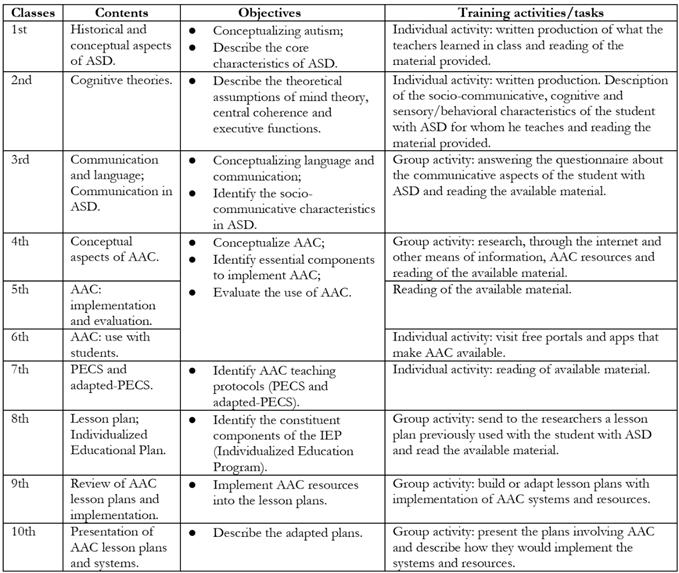
The course, conducted remotely, was composed of 10 meetings, lasting 2 hours each, totaling a workload of 20 hours. All meetings were filmed. The chronology of the lessons, contents, objectives of each meeting and the formative activities are described in Box 1.
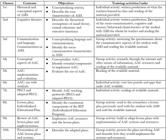
At the end of the theoretical classes (10th meeting), the five students were divided into two groups for the completion of a course task. The activity consisted of the (re)elaboration of a lesson plan, presented at the eighth meeting, outlined for a class that included a student with ASD. Guidelines were given for the new plan, developed collaboratively, to include a description of AAC resources to be used with the target student. Guidance was given to individual groups.
RESULTS AND DISCUSSION
The results of this study will be presented in three sections that aim to analyze the effects of the training program: (1) in the design of ASD; (2) in the design of AAC and (3) in the development of teachers' lesson plans.
Effects of the training program on ASD design
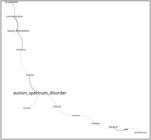
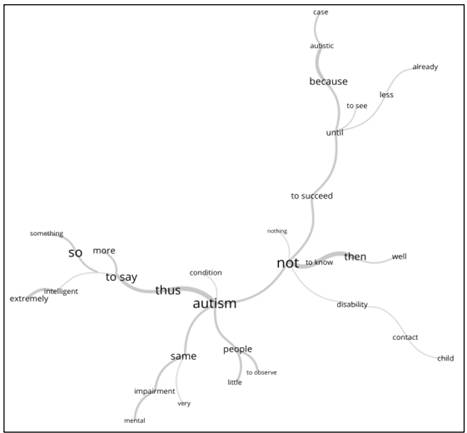
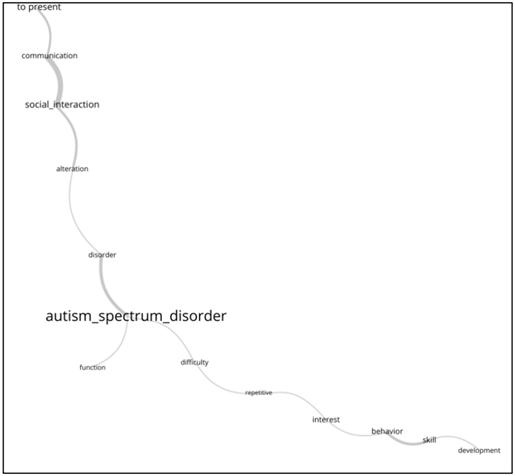
The data in this section was produced from the initial script and the final questionnaire. Figures 1 and 2 present the analysis of similarity made from the answers to the question about the conception that teachers had on autism before and after the training program, respectively.
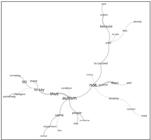
In Figure 1, it is possible to observe that two words received a greater emphasis: "no" and "autism". The branching of the first term with the word "know" suggests teachers' lack of knowledge about ASD, as suggested in the following responses:
I’m going to be very honest with you, I don’t know much about autism, I’ve never worked with autism [...] (P5, 30/03/2021, initial interview, our emphasis).
I think it is a condition that a person is born or acquires over time. Because it’s something like that, I see that the autism symbol some people use in even some activities, is a puzzle. So, it’s something so complex for me to define, that I wouldn’t know how to tell you [...] (P2, 30/03/2021, initial interview, our emphasis).
The term "autism", in turn, is associated with other words such as "compromise," "mental," "intelligent," "condition," and "observe." It follows, based on this representation, that two teachers described autism from what they observed, highlighting cognitive aspects of the disorder, as evidenced in the following speeches:
Autism is a condition. It has already started [...] it is a condition that presents, so I will say exactly what I observe, right? Behavioral or mental symptoms or characteristics. I notice that few of us perceive physical changes. At least in the students I have had, we notice that there are no physical changes. We really notice a disorder, an impairment in the intellectual, mental area [...] (P1, 30/03/2021, initial interview, our emphasis).
See, it’s for me, the disorder is something [...] children are extremely intelligent. I say, so, the students I had with autism, they are extremely intelligent. They are children that I say that the difference is so great that they do not, often, they cannot. I say, it’s a world of theirs, but they are extremely intelligent [...] (P3, 30/03/2021, initial interview, our emphasis).
As identified in the study of Barbosa and Cunha (2021), in this research, teachers seemed to use their experiences in the classroom to conceptualize autism. They focused their descriptions on cognitive aspects of the disorder. While P1 mentioned "mental or intellectual impairment", possibly referring to cognitive impairments identified in a portion of this population, P3 spoke about above-average intelligence, which may be associated with special skills islands (Schmidt, 2012).
Despite the relevance of tacit knowledge, it is necessary to consider scientific knowledge to avoid misunderstandings of autism, such as the idea that they are people who live in their "own world" or are "geniuses," as P3 suggests. Conceptions of this nature foster the idea of individuals inaccessible to external interventions, such as pedagogical practices (Schmidt et al., 2016), which reduces investment in their potentialities, reinforces myths (Sanini; Bosa; 2015) and compromises the development of socio-communicative skills (Barbosa; Cunha, 2021).
Unlike the representation in Figure 1, Figure 2 displays a “cleaner” representation, suggesting greater conceptual uniformity among the teachers after training. This understanding seems to have gone beyond tacit knowledge, relying on technical concepts presented during the classes. In Figure 2, we observe a single representative nucleus formed by the term “autism_spectrum_disorder”, an expression used by all the teachers in their responses. This expression is connected with words that describe the centrality of symptoms, including impairments in social communication skills and behaviors. This pattern of responses is evidenced in the following passages, when teachers characterize ASD as:
[...] [individuals who] tend to exhibit repetitive movements and demonstrate interests in certain areas of knowledge. In general, they prefer calm, quiet environments with little social interaction (P1, 19/05/2021, final questionnaire, our emphasis).
[...] a neurodevelopmental disorder that causes impairments in communication, social interaction, and behavior (P2, 19/05/2021, final questionnaire, our emphasis).
[...] a neurological condition that may involve impairments in communication, socioemotional skills, and language, as well as stereotyped patterns of behavior and restricted interests (P3, 19/05/2021, final questionnaire, our emphasis).
[...] neurodevelopmental disorders that lead to impairments in communication and social interaction, encompassing restrictive and repetitive behaviors [...] (P4, 19/05/2021, final questionnaire, our emphasis).
[...] signs and symptoms presented by the individual, which encompass difficulties in communication, difficulties in social interaction, and/or repetitive movements performed by the individual (P5, 19/05/2021, final questionnaire, our emphasis).
Effects of the training program on the conception of AAC
Among the main difficulties reported by the teachers regarding the management of students with ASD were aspects related to communication, as observed in the following excerpts extracted from the initial interview:
Another major challenge is understanding how they [students with ASD] understand things, because we are left not knowing how much they are grasping and to what extent reinforcement is needed [...] (P1, 30/03/2021, initial interview).
The issue of communication is very important, knowing how I can reach my student considering their different individual characteristics (P3, 30/03/2021, initial interview).
Considering these demands, it was relevant to identify whether the teachers were familiar with resources that could mitigate communication-related difficulties. Thus, they were asked what they understood by “Augmentative and Alternative Communication.” Lacking a clear definition, most of the teachers made inferences about how AAC could promote social interaction, as highlighted in the excerpts below:
[...] so I see alternative communication in this way. A way for us to reach the student, but also for the student to reach us. To also give us a response regarding that stimulus (P3, 30/03/2021, initial interview).
Alternative communication, to me, is a way for us to help this student communicate not only with us, but with everyone. It enables them to understand; even without speaking, they are still able to understand (P4, 30/03/2021, initial interview).
In turn, P1, P2, and P5 alluded to unaided and aided forms of communication when they included in their responses terms such as “body,” “gestures,” “images,” and “technology.” It was also evident that, in order to conceptualize AAC, the teachers inferred its meaning based on the terminology itself, as highlighted in the following excerpts:
[...] I admit that I have not read much about this area, but I imagine it to be something broad, involving several factors. When we think about communication, we think about orality; I am communicating with you through speech. So, when I think of it as augmentative and alternative, I think about diversifying the modes, like this conversation we are having here remotely, with the aid of technology. Other alternative means. And augmentative, I also think it would involve other forms, that is, not, not, not only spoken language, but gestures, I do not know. You help me (P1, 30/03/2021, initial interview, our emphasis).
I know very little about this. Very little indeed. [...] I believe that “alternative” refers to other alternatives for communication; I do not know if that is the correct answer. The term itself already says “alternative communication.” So, if I cannot do it through speech, I can do it through images, through the body, through, I do not know, through video, right? I create strategies. That is how I understand it (P2, 30/03/2021, initial interview, our emphasis).
I do not know. I know what it is in practice, but I do not know how to define it. Using images to facilitate the communication of the student, of a person (P5, 30/03/2021, initial interview, our emphasis).
When asked to provide examples of AAC, P1 responded in a nonspecific manner: “I think technology itself. This communication through games. I will focus on the technological aspect” (P1, 30/03/2021, initial interview). Teacher P2 described an activity she conducted with a student with Down syndrome. In this practice, given the student’s difficulty in performing a task, the teacher recorded another student carrying out the same activity and showed the video to the student. The teacher commented: “I do not know whether this would be considered a type of alternative communication, but it worked” (P2, 30/03/2021, initial interview). The strategy adopted by the teacher resembles the video-modeling technique, which includes the presentation of visual stimuli, such as recordings of another person performing a task (Santo; Barros, 2023).
The other three teachers provided more precise examples, situating AAC as a resource that supports receptive and expressive communication. P3 mentioned the use of a pictogram (an image of a glass of water), accompanied by the statement “it is time to drink water.” She explained: “We started showing the action and trying to demonstrate that everyone was doing it that way” (P3, 30/03/2021, initial interview). On the other hand, teachers P4 and P5 described the use of AAC as a resource for expressive communication, as illustrated by the following responses:
I can talk about the use of pictures, showing them to him and asking what he wants (P4, 30/03/2021, initial interview).
[...] asking how they are feeling, right? And they do not know, the child, the adult, anyway, they do not know [...] they do not communicate verbally. So, I show image options: a happy face, a sad face, anyway, at most three faces. Then they would point to the feeling, the expression (P5, 30/03/2021, initial interview).
The familiarity of some teachers with AAC often stemmed from observing other colleagues. During the initial interview, teacher P1 mentioned that the special education teacher used “technological resources,” such as games and videos, for content instruction, which she classified as part of AAC. In light of this report, the teacher was asked “why she classified such resources as AAC.” The teacher then responded:
I do not know. As I told you, I do not know much about alternative communication. But I am interpreting it based on the term itself. For example, in the classroom, that activity, at that moment, was being written in the notebook for my students, the regular students, so to speak. So, when he made that choice, offered that alternative of adapting those activities using other resources in order to capture the interaction, concentration, and interest of that student, I imagine that at that moment we were using alternative communication. Because that student was also non-speaking (P1, 30/03/2021, initial interview).
The teacher’s description suggests that the resources used by the special education teacher were not intended to promote communicative situations for the students, but rather to facilitate the understanding of the content addressed in the classroom. Similarly, the use of visual resources as a pedagogical strategy was identified in P5’s statement when responding to the question about the use of AAC with students:
It was for him [the student with ASD] to identify, for example, the number one among two other things, or to identify numbers among images that were not numbers or specific objects (P5, 30/03/2021, initial interview).
The teachers’ responses suggest that AAC was perceived more as a video-modeling strategy, an unspecified technological apparatus, or a way of providing visual support to students than as a communication resource. Furthermore, the participants did not refer to intervention programs or specific strategies used for teaching the resource, such as the PECS or adapted-PECS protocols, which are widely discussed in the literature (Nunes; Walter, 2020; Santos et al., 2021; Guthierrez; Walter, 2021; Reis; Lourenço, 2025; Walter, 2026). Walter (2017) emphasizes that it is common to find professionals who confuse educational methods that use pictographic resources, such as pictures and drawings, with AAC programs. In these terms, it is important to emphasize that there is a rigor to be followed in the implementation of an AAC program, ranging from the user’s initial assessment, through the structuring of the program, to the perception of the progress achieved by the individual assisted through this system (Walter, 2017; Beukelman; Light, 2020).
At the end of the course, the teachers were asked whether the training had changed the way they conceptualized AAC. Teachers P1 and P5 responded affirmatively, but did not specify what they had learned, as observed in the following responses:
Yes. Knowledge about AAC began and deepened in an extremely important, necessary, and satisfactory way. Before the course, this knowledge was extremely limited and superficial (P1, 14/07/2021, final questionnaire).
Actually, I was not familiar with AAC, so the course enabled me to learn a little about this form of communication (P5, 14/07/2021, final questionnaire).
At the beginning of the course, P4 reported that AAC was intended for “any person who presented communication difficulties” (P4, 14/07/2021, final questionnaire). Her response remained the same after the course. In contrast, P2 and P3 highlighted interactional aspects made possible by AAC, while also referring to academic issues, as emphasized in the following statements:
[...] At first, I understood it [AAC] much more as a technique for presenting content, but in addition to improving the ability of the child with ASD to understand what is being presented to them, AAC, when properly implemented and stimulated, enables communication, that is, the expression of the thoughts and emotions of the student with autism with other people (P2, 14/07/2021, our emphasis, final questionnaire).
AAC will be useful for improving our interaction and for establishing more precise educational objectives with my student (P3, 14/07/2021, final questionnaire, our emphasis).
P2’s response suggests that her conception of AAC was restricted to its function as support for receptive communication in academic activities. The course broadened this view by presenting alternative communication as a form of student expression. Consistent with P2, P3 mentioned the interactive aspects of AAC and highlighted, although without elaboration, its “educational purpose.” This idea will be revisited in the next section.
Effects of the training program on lesson planning for students with ASD
As reported by the teachers, lesson planning was carried out collaboratively between the classroom teacher and the special education teacher. The former prepared the lesson plan and forwarded it to the special education teacher, who adapted it for the student with ASD. Subsequently, both discussed the outcome of the planning process.
Considering the ongoing use of this lesson plan, the researchers asked the teachers, during the eighth training session, to submit a previously prepared plan. The selection of the plan followed two criteria: it had to be a plan previously developed and implemented by the teachers in previous years, and there had to be at least one student with ASD in the class in which the plan would be implemented. The remaining elements, such as grade level and subject, were left to the teachers’ discretion.
During the ninth training session, the teachers received instructions to revise the submitted lesson plans, detailing how the student with ASD would participate in the class using an AAC system. The new version of the documents was expected to include information discussed throughout the course. Thus, they were asked to organize a lesson plan including the following items: (1) student characterization; (2) objective of the use of the AAC system; (3) procedures for its implementation; and (4) assessment procedures, with criteria indicating the effective use of AAC.
The lesson plan revision activity was carried out in groups, the first composed of P2, P4, and P5, and the second of P1, P3, and P5 - the special education teacher participated in both groups. After completing the task, during the tenth session, the teachers presented their work through the Google Meet platform. The presentation was structured using slides (Microsoft PowerPoint).
Presentation of Group 1
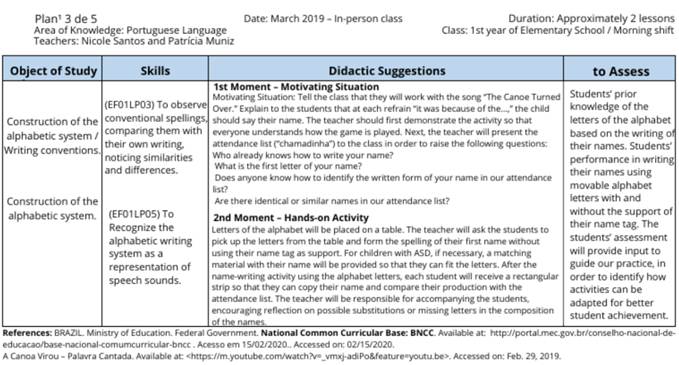
Figure 3 presents the lesson plan prepared by teachers P2 and P4 at the beginning of the 2019 academic semester. The document was produced for the Portuguese language subject and targeted a first-grade elementary school class in which a student with ASD who had not developed functional speech was included.
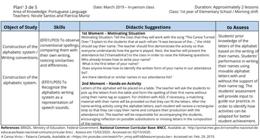
As observed in Figure 3, the lesson plan submitted by the teachers made no reference to the use of AAC for students with ASD. Furthermore, the statements presented by the teachers during the initial interview did not indicate that these systems were used in their classes. Although some participants reported the use of resources they classified as AAC, the analysis indicated that the examples mentioned did not effectively refer to communication systems.
Based on the document presented (Figure 3), the three teachers were instructed to develop a new lesson plan incorporating AAC resources. The presentation of the new document began with the description of the student with ASD, regularly enrolled in the first-grade elementary school class, provided by teacher P2:
Our student is non-speaking, as communication occurs through gaze or by pointing to something of interest. At times, he attempts to vocalize some sounds, mainly “aaaaa.” [...] The communication partners at school were the special education teacher and the teachers from the resource room; I rarely communicated with him. [...] The student does not present motor impairments regarding body mobility, although he has difficulty with pincer movements (P2, 07/07/2021, field diary, our emphasis).
In her report, the teacher addressed important aspects of the student’s nonverbal communication, as well as his motor development and social interaction skills, which had been discussed during the course. This information is critical in the process of selecting alternative communication systems. As highlighted in the literature, before adopting AAC systems, it is crucial to consider not only the student’s abilities and limitations, but also their communication partners, contexts, and modes of expression (Beukelman; Light, 2020; Nunes; Barbosa; Nunes, 2021). Therefore, it is reasonable to state that the group analyzed the characteristics of the target student during the AAC resource selection process.
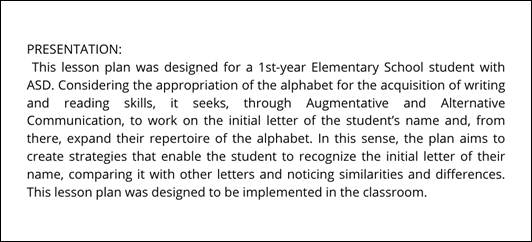
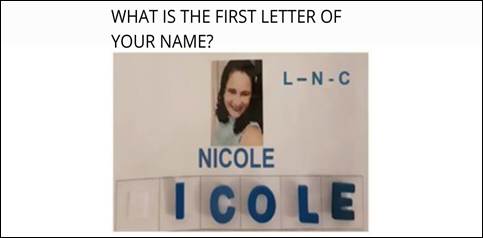
Next, the objective of the lesson plan was presented on the group’s presentation slide, as shown in Figure 4.
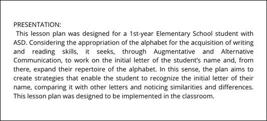
As evidenced in the slide, the objective of the lesson plan was the “creation of strategies” that would support literacy development. Although the development of this skill is crucial within the context of AAC, it is important to consider alternative forms of communication for students who are not yet literate (Beukelman; Light, 2020). Thus, although letter recognition is an important academic objective, it does not constitute, in the short term, a communicative objective.
In this context, the researcher asked the group whether the presented resources would support the communication of the target student. P2 replied by saying:
[...] we talked about this. We are presenting AAC by showing the content, but its purpose is greater than that; it is to enable communication with communication partners. However, we were aware that, at that moment, it would be used to present content. But it is very interesting for the child to gradually develop autonomy, and how wonderful it would be if they could say: teacher, I want to go to the bathroom (P2, 07/07/2021, field diary).
P2’s statement suggests that the group was aware that the resource would assist in carrying out the task, but would not grant “autonomy.” It can be inferred that autonomy refers to the capacity for independent communication, as indicated by the teacher when mentioning the request to go to the bathroom. As highlighted by Beukelman and Light (2020), one cannot expect the student to become literate before learning to communicate autonomously.
Next, the resource to be incorporated into the lesson plan was presented. As shown in Figure 5, it consisted of a board with the child’s photograph and their name formed with movable letters.

Subsequently, the group presented a didactic sequence of how they would implement this system. According to the teachers, initially the board and symbols would be introduced to the student, as reported by the teacher: “The board and the symbols will be presented to him. We will highlight the first letter and associate it with the name above” (P2, 07/07/2021, field diary). After that, video modeling would be used, which would consist of “asking a child, teacher, or family member to make a video using the board” (P2, 07/07/2021, field diary). Subsequently, the student would use the board with the assistance of a partner, removing the symbol until understanding which would be the first letter of their name.
The sequence described above suggests that the student would learn to use the resource through video observation. This practice, known in the literature as video modeling, is considered effective for learning new behaviors, including writing acquisition (Moore et al., 2013). Subsequently, a partner would assist the student in selecting the symbols that compose their name. Despite the relevance of this strategy, the resource developed by the group did not present a clear communicative purpose.
Regarding the assessment procedure, the three teachers indicated that it would be a “continuous assessment,” in which they would observe whether the student recognized themselves in the photograph on the board, whether they identified the first letter of their name, and whether they would use the board autonomously. However, the group did not specify how this “autonomous use” of the constructed resource would occur. Additionally, it is important to highlight that the assessment is centered on the objectives established for the literacy process.
Presentation of Group 2
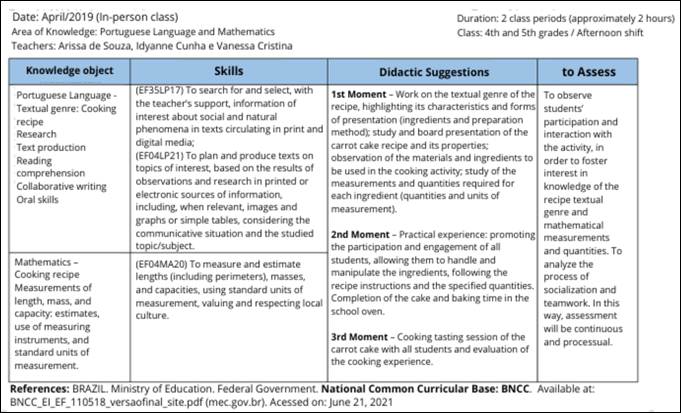
Figure 6 presents the lesson plan developed by teachers P1, P2, and P5, produced in 2019. The plan, which involved Portuguese language and mathematics, was designed and implemented in a fourth-grade class that included a non-speaking autistic student.
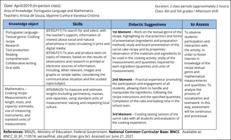
As in Group 1, the participants in Group 2 did not mention the adaptations to be made for the student with ASD, who did not have functional speech. Based on the document presented (Figure 7), the second group, composed of teachers P1, P3, and P5, was instructed to develop a new plan incorporating AAC resources. In contrast to the previous group, the teachers designed a lesson to be delivered remotely. The presentation began with a slide describing the objective and context in which the lesson plan would be developed:
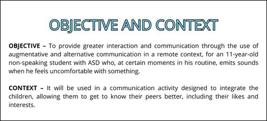
As evidenced in the slide, the teachers described the student’s socio-communicative skills. They further complemented this characterization by outlining the difficulties he faced in participating in remote classes, as highlighted in the following excerpt:
[...] At that time, during the pandemic, our resource was digital [...] and the student was unable to participate because he was non-speaking. I sent an audio message saying that they could send an audio introducing themselves. His mother sent it, but it was not the student who participated. This drew our attention to how we could plan something that would allow this student to participate using augmentative and alternative communication (P3, 07/07/2021, field diary).
According to what was described by the teacher, the choice of the lesson plan for remote teaching arose from a real need, since the non-speaking student with ASD faced difficulties in participating in remote classes. In this context, the teachers recognized AAC as a tool capable of overcoming these challenges.
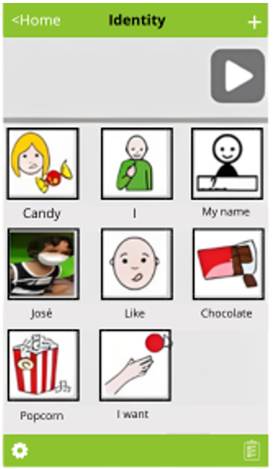
Next, the group presented the planned didactic sequence. Initially, they proposed sending a welcome video and introducing the day’s activity: the production of a video in which the student would introduce himself, sharing his name, age, likes, preferences, and dreams for the future. Subsequently, the teachers described the AAC resource chosen to support the student in the proposed activity. Considering the remote context and the student’s interest in technology, they opted to use the LetMeTalk application, a speech-generating device developed for use on Android devices (Soares; Mager, 2020). This application, discussed during the fifth and sixth training sessions, is illustrated in Figure 8.

The illustration above shows the application screen, configured with a photograph of the participant and symbols representing “candy,” “I,” “my name,” “like,” “chocolate,” “popcorn,” and “I want.” According to the teachers, these images were selected for being relevant to the proposed activity and would be introduced gradually in a dialogical manner. Instruction would begin with the student’s image, allowing him to recognize himself in it and to attribute meaning to the symbols as he interacted with the interlocutor. This process would be guided through questions such as “Where is José?” or “Where is José here?”, highlighting the collective construction of meaning, as pointed out by Nunes, Barbosa, and Nunes (2021).
Subsequently, the student would be encouraged to select these symbols with the assistance of other communication partners. As instruction progressed, additional symbols would be introduced into the application. Activation would be carried out using the finger, taking into account the student’s motor skills.
Family participation was another point highlighted in the presentation, as evidenced in the following segment:
We considered asking the family to download this application. We would have a meeting with the family to discuss how the application would be used and its importance in this process with the student (P3, 07/07/2021, field diary).
According to the group, to carry out the activity, parents would be instructed to formulate questions related to the task, such as “Who are you? What do you like?”. This practice is consistent with studies showing the expansion of interaction opportunities for AAC users through the training of communication partners (Andzik; Chung; Kranak, 2016; Beukelman; Light, 2020; Therrien et al., 2025).
Finally, the group suggested that the same application could be used to support the student’s communication in other activities, mentioning the cooking activity, as suggested in the following statement:
[...] We tried to illustrate a bit how it could be done remotely. It was an activity that did not work, but now we will try to reformulate it using AAC, as well as other activities. For example, transcribing a cooking recipe into pictographic symbols. This would help the child, who would already be in the process of recognizing the symbols. [...] it would be a way for us to try to communicate with this student (P3, 07/07/2021, field diary).
Regarding the assessment procedures, the group described that evaluation would be carried out together with the parents, on an ongoing basis. In other words, parents would report to the teachers how communication was taking place in the family context. They would jointly analyze and define the subsequent steps in a collaborative manner. In this context, the researcher asked the group how this system would be presented to the parents. The group responded that, initially, they would address its feasibility, highlighting its promising effects, as suggested by the excerpt below:
Show that it is possible, show the steps [...] show that it is not the adult who will do it, but the child. The application is designed for the child’s communication with others. So, it is not something we will do just once. Make this very clear to the parents: doing it once will not make everything work. Everything will not be perfect and suddenly my child will communicate with everyone, no. It is a step-by-step process, and it is also important for parents to encourage it (P3, 07/07/2021, field diary).
From this account, it is possible to understand that, despite the lack of practical implementation, the teachers recognized that the implementation of an AAC system occurs as a process and that the focus of the intervention practice is the student’s communication. In addition, the group mentioned that, during the AAC implementation process, certain challenges could arise, as revealed in the following excerpt:
It is not immediate. The child will pick up the phone and use it in another way, press a different symbol [...] but with persistence, showing that it is one symbol at a time, assigning meaning to that symbol, taking care with it, and trying to use it with other people who will help in this process. Because not everyone knows how to use it; until recently, we ourselves did not know, as teachers. Imagine the outside world (P3, 07/07/2021, field diary).
This understanding demonstrates a conscious and reflective approach by the teachers, recognizing the developmental nature and the inherent challenges in implementing AAC. Despite the advances observed in these teachers’ reflections and in the redesign of lesson plans, the analysis reveals that the incorporation of AAC into pedagogical practices is still incipient and, at times, restricted to the use of visual resources with a predominantly instructional purpose. This pattern is supported by the literature, which indicates that teachers in training contexts tend to initially understand AAC as a didactic support rather than as assistive technology aimed at expanding the student’s communicative participation (Nunes et al., 2021). This tension was particularly evident in the plan developed by Group 1, in which the constructed board was closer to a literacy teaching material than to a system designed for the expression of communicative intentions. Regarding the challenges related to AAC use, studies report that many teachers perceive a lack of sufficient training to use AAC; they report limited knowledge and technical skills, which hinders the incorporation of AAC into everyday classroom practice (Sibanda; Mhlanga, 2024).
In the case of Group 2, a closer alignment with practices considered effective in contemporary literature was observed, such as the use of functional vocabulary, a focus on socially meaningful activities, and alignment with the principles of multimodal communication (Beukelman; Light, 2020). The planning of the personal introduction activity using LetMeTalk demonstrates communicative intentionality, promoting the expression of preferences, self-identification, and active participation in an interaction context, aspects that are essential for students with complex communication needs. Nevertheless, some limitations emerge, particularly regarding the continuity of system use beyond the specific activity and the need for greater alignment between communicative and pedagogical objectives, issues discussed in recent studies on continuing education in AAC (Tönsing; Dada, 2023).
Another relevant aspect concerns the transfer of Group 2’s lesson plan to in-person teaching. The personal introduction activity, which was conducted in a remote context, has strong potential to be adapted to the classroom, especially during routine moments such as circle time, welcoming activities, recording tasks, and spontaneous interactions with peers. The successful use of AAC depends on frequent opportunities for communication in natural environments, so the resource should be available in multiple school settings and not only during planned activities. Thus, the developed plan demonstrates potential not only to support the communication of the student with ASD in structured activities but also to promote generalization and communicative autonomy in everyday interactions.
Finally, it is noteworthy that the practices analyzed are not restricted to the context of ASD. Contemporary literature emphasizes that students with other diagnoses associated with impairments in oral communication, such as cerebral palsy, intellectual disability, among others, also greatly benefit from the use of AAC (Beukelman; Light, 2020; Avagyan et al., 2021). In this sense, the lesson plans developed by the teachers, especially the Group 2 plan, have potential for application in diverse educational contexts and may serve as a reference for the planning of broader inclusive practices. The expansion of this understanding among teachers constitutes an important step toward the construction of communicatively accessible school environments, fostering the participation and engagement of different student profiles.
FINAL CONSIDERATIONS
The presence of students with ASD in mainstream classrooms continues to present significant challenges. One of the main obstacles is the lack of knowledge about the disorder among professionals who work directly with this population in the educational setting. These gaps in knowledge affect all stages of pedagogical work, from lesson planning to the implementation and evaluation of educational practices. Furthermore, considering the socio-communicative difficulties of students with ASD, it is crucial that these professionals are familiar with resources that promote communicative accessibility.
In contexts with limited material and human resources, the classroom teacher becomes the main agent of intervention. Based on this scenario, a continuing education program on ASD and AAC was developed for early years elementary school teachers at a public school in Rio Grande do Norte. The main objective was to train the teachers to incorporate AAC systems into their lesson plans. In addition, the impact of this training on the teachers’ conceptions of ASD and AAC was analyzed.
In general, the training course, offered in a remote format, broadened the teachers’ understanding of ASD and AAC. In the first case, misconceptions about the disorder, such as its association with a mental condition characterized by either genius or cognitive impairments, were replaced by a more accurate understanding that it is a neurobiological condition marked by a broad spectrum of characteristics. In the second case, the idea of AAC as a pedagogical tool to improve the comprehension of utterances was replaced by the conception of AAC as a means for the expressive communication of students with ASD.
The concluding activity of the training program consisted of the (re)elaboration of a lesson plan, collaboratively developed, incorporating AAC resources for a student with ASD. Divided into two groups, the teachers clearly described the socio-communicative needs of the students with ASD who would participate in their classes. Moreover, both groups created resources that would foster the target student’s participation in the activities proposed in the lesson plans. However, only one of the groups was able to create a resource that could be used with a clearly communicative purpose.
Given this, it became evident that, despite their conceptual understanding, some teachers experienced difficulties in operationalizing what they had learned. As a result, they resorted to strategies already present in their repertoire, such as the use of visual resources as a pedagogical tool. Based on these data, it is understood that knowledge related to the implementation of AAC is “under development” for part of the teachers who participated in the course. Considering Shulman’s (1986) model of knowledge construction, these findings suggest that the teachers, lacking knowledge that could be readily applied to solve a practical problem, activated consolidated forms of knowledge.
The weaknesses identified in the incorporation of AAC in the practice of some participants may be attributed to the type of training offered, combined with limited opportunities for critical reflection on teaching practice. The course, developed in a remote format, took place over a short period of time. As a result, the teachers did not have the opportunity to implement the planning developed during the training and to share their experiences with the group for analysis, discussion, and adjustment of practices. In other words, it was not possible to produce “case knowledge,” as conceptualized by Shulman (1986). This type of knowledge is important because it enables the training group to adapt new practices to real contexts. Furthermore, the incorporation of unfamiliar intervention strategies depends on a complex set of variables intrinsic to the teacher’s social context, including beliefs, values, life histories, the level of complexity of the proposed model, and the compatibility of the proposal with the school’s reality (Nunes; Schmidt, 2019). Given the limitations imposed by the pandemic reality experienced in 2020, it was not possible to clearly identify aspects related to school culture that could favor, or not, the use of AAC.
Finally, it is important to emphasize the need to provide teachers with training that enables not only theoretical discussion but also the practical implementation of the strategies addressed. To this end, it would be necessary to structure a dialogic training program with sufficient workload to encompass the entire process, allowing for the revisiting of theoretical discussions in light of practical experiences.
References
- AMERICAN PSYCHIATRIC ASSOCIATION DSM-5-TR: Manual diagnóstico e estatístico de transtornos mentais Porto Alegre: Artmed, 2023.
-
ANDZIK, Natalie R.; CHUNG, Yun-Ching; KRANAK, Michael P. Communication opportunities for elementary school students who use augmentative and alternative communication. Augmentative and Alternative Communication, v. 32, n. 4, p. 272-281, 2016. <https://doi.org/10.1080/07434618.2016.1241299>.
» https://doi.org/10.1080/07434618.2016.1241299 -
AVAGYAN, Armenuhi; MKRTCHYAN, Hasmik; SHAFA, Fatemeh Alsadat; MATHEW, Joan Alexandra; PETROSYAN, Tigran. Effectiveness and determinant variables of augmentative and alternative communication interventions in cerebral palsy patients with communication deficit: a systematic review. CoDAS, v. 33, n. 5, p. e20200244, 2021. <https://doi.org/10.1590/2317-1782/20202020244>.
» https://doi.org/10.1590/2317-1782/20202020244 -
BAKER, Alison; BEAN, Allison; CARGILL, Lindsey Paden; LYLE, Samantha. Within arm’s reach: the role of proximity in speech generating device use of ambulatory children with autism. International Journal of Speech-Language Pathology, v. 24, n. 1, p. 88-96, 2022. <https://doi.org/10.1080/17549507.2021.1961861>.
» https://doi.org/10.1080/17549507.2021.1961861 - BARBOSA, João Paulo da Silva; CUNHA, Ane Cristine Hermínio. Representações sociais de professoras sobre o Transtorno do Espectro Autista. In: FERNANDES, Dorgival Gonçalves; NOGUEIRA, José Rômulo Feitosa (org.). Educação, linguagens e práticas sociais Pau dos Ferros: AINPGP, 2021. p. 90-100.
- BEUKELMAN, David R.; LIGHT, Janice. Augmentative and alternative communication: supporting children and adults with complex communication needs. Baltimore: Paul H. Brookes, 2020.
-
BONDY, Andy; FROST, Lori. The Picture Exchange Communication System. Behavior Modification, v. 25, p. 725-744, 2001. <https://doi.org/10.1177/0145445501255004>.
» https://doi.org/10.1177/0145445501255004 -
BRASIL. Instituto Nacional de Estudos e Pesquisas Educacionais Anísio Teixeira (INEP). Censo Escolar da Educação Básica 2024: Resumo Técnico. Brasília, DF: Inep, 2024. Disponível em: <Disponível em: https://download.inep.gov.br/publicacoes/institucionais/estatisticas_e_indicadores/resumo_tecnico_censo_escolar_2024.pdf >. Acesso em: 8 dez. 2025.
» https://download.inep.gov.br/publicacoes/institucionais/estatisticas_e_indicadores/resumo_tecnico_censo_escolar_2024.pdf -
CAMARGO, Brigido Vizeu; JUSTO, Ana Maria. IRAMUTEQ: um software gratuito para análise de dados textuais. Temas em Psicologia, v. 21, n. 2, p. 513-518, 2013. Disponível em: <Disponível em: https://www.redalyc.org/pdf/5137/513751532016.pdf >. Acesso em: 7 mar. 2024.
» https://www.redalyc.org/pdf/5137/513751532016.pdf -
CAMARGO, Síglia Pimentel Höher; SILVA, Gabrielle Lenz da; CRESPO, Renata Oliveira; OLIVEIRA, Calleb Rangel de; MAGALHÃES, Suelen Lessa. Desafios no processo de escolarização de crianças com autismo no contexto inclusivo: diretrizes para formação continuada na perspectiva dos professores. Educação em Revista, v. 36, s/p., 2020. <https://doi.org/10.1590/0102-4698214220>.
» https://doi.org/10.1590/0102-4698214220 -
CHUNG, Yun-Ching; CARTER, Erik W.; SISCO, Lynn G. Social interactions of students with disabilities who use augmentative and alternative communication in inclusive classrooms. American Journal on Intellectual and Developmental Disabilities, v. 117, n. 5, p. 349-367, 2012. <https://doi.org/10.1352/1944-7558-117.5.349>.
» https://doi.org/10.1352/1944-7558-117.5.349 -
DECARLO, Jenna; BEAN, Allison; LYLE, Samantha; CARGILL, Lindsey Paden Miller. The relationship between operational competency, buy-in, and augmentative and alternative communication use in school-age children with autism. American Journal of Speech-Language Pathology, v. 28, n. 2, p. 469-484, 2019. <https://doi.org/10.1044/2018_AJSLP-17-0175>.
» https://doi.org/10.1044/2018_AJSLP-17-0175 - EZZY, Douglas. Qualitative analysis: practice and innovation. London: Routledge, 2002.
-
FRANCO, Maria Amélia Santoro. Pedagogia da pesquisa-ação. Educação e Pesquisa, v. 31, n. 3, p. 483-502, 2005. Disponível em: <Disponível em: https://www.scielo.br/j/ep/a/DRq7QzKG6Mth8hrFjRm43vF/?format=pdf >. Acesso em: 15 maio 2024.
» https://www.scielo.br/j/ep/a/DRq7QzKG6Mth8hrFjRm43vF/?format=pdf -
GUTHIERREZ, Carla Cordeiro Marçal y; WALTER, Catia Crivelenti de Figueiredo. Programa de formação continuada de professores: comunicação alternativa e transtorno do espectro autista. Revista Teias, v. 22, n. 66, p. 240-255, 2021. <https://doi.org/10.12957/teias.2021.57149>.
» https://doi.org/10.12957/teias.2021.57149 -
LOGAN, Kristy; IACONO, Teresa; TREMBATH, David. A systematic search and appraisal of intervention characteristics used to develop varied communication functions in children with autism who use aided AAC. Research in Autism Spectrum Disorders, v. 90, p. 101896, 2022. <https://doi.org/10.1016/j.rasd.2021.101896>.
» https://doi.org/10.1016/j.rasd.2021.101896 -
MENDONÇA, Renata da Costa Rebello de; MARQUES, Glória; LIONE, Viviane de Oliveira Freitas; GROKOSKI, Kamila Castro. A aplicação da Comunicação Suplementar e Alternativa para a estimulação da intenção comunicativa e da cognição em pacientes com Transtorno do Espectro Autista. Revista CEFAC, v. 25, p. e6823, 2023. <https://doi.org/10.1590/1982-0216/20232556823s>.
» https://doi.org/10.1590/1982-0216/20232556823s -
MOORE, Dennis W.; ANDERSON, Angelika; TRECCASE, Francesca; DEPPELER, Joanne; FURLONGER, Brett; DIDDEN, Robert. A video-based package to teach a child with autism spectrum disorder to write her name. Journal of Developmental and Physical Disabilities, v. 25, p. 493-503, 2013. Disponível em: <Disponível em: https://link.springer.com/article/10.1007/s10882-012-9325-x >. Acesso em: 30 jul. 2024.
» https://link.springer.com/article/10.1007/s10882-012-9325-x -
NUNES, Debora; WALTER, Catia. AAC and autism in Brazil: a descriptive review. International Journal of Disability, Development and Education, v. 67, n. 3, p. 263-279, 2020. <https://doi.org/10.1080/1034912X.2018.1515424>.
» https://doi.org/10.1080/1034912X.2018.1515424 -
NUNES, Débora Regina de Paula; BARBOSA, João Paulo da Silva; NUNES, Leila Regina de Paula. Comunicação Alternativa para Alunos com Autismo na Escola: uma revisão da literatura. Revista Brasileira de Educação Especial, v. 27, p. 655-672, 2021. <https://doi.org/10.1590/1980-54702021v27e0212>.
» https://doi.org/10.1590/1980-54702021v27e0212 - NUNES, Débora Regina de Paula; SCHMIDT, Carlo. Educação especial e autismo: das práticas baseadas em evidências à escola. Cadernos de Pesquisa, São Paulo, v. 19, n. 173, p. 84-103, 2019.
-
PROENÇA, Sirlei de; FOLTRAN, Elenice Parise. Comunicação aumentativa e alternativa no apoio à inclusão de alunos com transtorno do espectro autista: um estudo de revisão. Rein - Revista Educação Inclusiva, v. 10, n. 1, p. 47-59, 2025. Disponível em: <Disponível em: https://revista.uepb.edu.br/REIN/article/view/3757 >. Acesso em: 5 dez. 2025.
» https://revista.uepb.edu.br/REIN/article/view/3757 -
REIS, Henrique De Candia; LOURENÇO, Gerusa Ferreira. Avaliação de ações formativas para interações mediadas por comunicação alternativa junto a aluno com autismo. Revista Brasileira de Educação Especial, v. 31, p. e0137, 2025. <https://doi.org/10.1590/1980-54702025v31e0137>.
» https://doi.org/10.1590/1980-54702025v31e0137 -
ROSE, Veronica; TREMBATH, David; KEEN, Deb; PAYNTER, Jessica. The proportion of minimally verbal children with autism spectrum disorder in a community-based early intervention programme. Journal of Intellectual Disability Research, v. 60, n. 5, p. 464-477, 2016. <https://doi.org/10.1111/jir.12284>.
» https://doi.org/10.1111/jir.12284 -
SANINI, Cláudia; BOSA, Cleonice Alves. Autismo e inclusão na educação infantil: crenças e autoeficácia da educadora. Estudos de Psicologia, v. 20, n. 3, p. 173-183, 2015. <https://doi.org/10.5935/1678-4669.20150019>.
» https://doi.org/10.5935/1678-4669.20150019 -
SANTO, Lady Anny Araújo do Espírito; BARROS, Romariz da Silva. Explorando a videomodelação vocal para ensino de comportamento ecoico em crianças diagnosticadas com Transtorno do Espectro Autista (TEA). Research, Society and Development, v. 12, n. 5, e24812541804, 2023. <https://doi.org/10.33448/rsd-v12i5.41804>.
» https://doi.org/10.33448/rsd-v12i5.41804 -
SANTOS, Patricia de Almeida; BORDINI, Daniela; SCATTOLIN, Monica; ASEVEDO, Graccielle Rodrigues da Cunha; CAETANO, Sheila Cavalcante; PAULA, Cristiane Silvestre; PERISSINOTO, Jacy; TAMANAHA, Ana Carina. O impacto da implementação do Picture Exchange Communication System-PECS na compreensão de instruções em crianças com Transtorno do Espectro do Autismo. CoDAS, 2021. <https://doi.org/10.1590/2317-1782/20202020041>.
» https://doi.org/10.1590/2317-1782/20202020041 -
SCHMIDT, Carlo. Temple Grandin e o autismo: uma análise do filme. Revista Brasileira de Educação Especial, v. 18, p. 179-194, 2012. <https://doi.org/10.1590/S1413-65382012000200002>.
» https://doi.org/10.1590/S1413-65382012000200002 -
SCHMIDT, Carlo; NUNES, Débora Regina de Paula; PEREIRA, Débora Mara; OLIVEIRA, Vivian Fátima de; NUERNBERG, Adriano Henrique; KUBASKI, Cristiane. Inclusão escolar e autismo: uma análise da percepção docente e práticas pedagógicas. Psicologia: Teoria e Prática, v. 18, n. 1, p. 222-235, 2016. <https://doi.org/10.15348/1980-6906/psicologia.v18n1p222-235>.
» https://doi.org/10.15348/1980-6906/psicologia.v18n1p222-235 - SHANE, Howard C.; LAUBSCHER, Emily; SCHLOSSER, Ralf W.; FADIE, Holly L.; SORCE, James F.; ABRAMSON, Jennifer S.; FLYNN, Suzanne; CORLEY, Kara. Enhancing communication for individuals with autism: a guide to the Visual Immersion System. Baltimore: Brookes, 2014.
-
SHULMAN, Lee S. Those who understand: knowledge growth in teaching. Educational Researcher, v. 15, n. 2, p. 4-14, 1986. <https://doi.org/10.3102/0013189X015002004>.
» https://doi.org/10.3102/0013189X015002004 - SOARES, Kamyla Lemes; MAGER, Gabriela Botelho. Pictogramas, categorias e iconotipos: uma análise em aplicativos de comunicação aumentativa e alternativa (CAA). InfoDesign, v. 17, n. 1, p. 56-72, 2020.
-
SIBANDA, Sipho; MHLANGA, Brilliant. Knowledge and readiness of teachers in implementing augmentative and alternative communication. Discover Education, v. 3, n. 118, 2024. <https://doi.org/10.1007/s44217-024-00201-y>.
» https://doi.org/10.1007/s44217-024-00201-y -
THERRIEN, Michelle; WHALON, Kelly; NUNES, Débora; MARTI, Peter; SELLERS, Ashley. A systematic review of AAC interventions using speech-generating devices for autistic preschoolers. Augmentative and Alternative Communication, v. 41, n. 2, p. 114-128, 2025. <https://doi.org/10.1080/07434618.2025.2479768>.
» https://doi.org/10.1080/07434618.2025.2479768 - TÖNSING, Kerstin; DADA, Shakila. Augmentative and alternative communication for the classroom. In: HALDER, Santoshi; DADA, Shakila; BANERJEE, Rashida (org.). The Routledge Handbook of Inclusive Education for Teacher Educators London: Routledge India, 2023. p. 361-377.
-
WALTER, Cátia Crivelenti de Figueiredo. Os efeitos da adaptação do PECS associada ao curriculum funcional natural em pessoas com autismo Dissertação (Mestrado em Educação Especial). São Carlos: Universidade Federal de São Carlos, 2000. Disponível em: <Disponível em: https://repositorio.ufscar.br/bitstream/handle/ufscar/3043/2713.pdf >. Acesso em: 2 out. 2024.
» https://repositorio.ufscar.br/bitstream/handle/ufscar/3043/2713.pdf - WALTER, Cátia Crivelenti de Figueiredo. Comunicação alternativa e TEA em sala de aula. In: SCHMIDT, Carlo; BOSA, Cleonice Alves (org.). Autismo e educação: da educação infantil ao ensino superior. 2. ed. Porto Alegre: Penso, 2026. p.111-128.
- WALTER, Elizabeth Cynthia. Os efeitos de um programa de compreensão da leitura oral dialógica por uma criança com autismo Dissertação (Mestrado em Educação). Natal: Universidade Federal do Rio Grande do Norte, 2017.
1
DATA AVAILABILITY STATEMENT
Correspondence
<joaopaulodsb@gmail.com>Correspondence
<debora.nunes@ufrn.br>section editor
CONFLICT OF INTEREST STATEMENT
History
-
Received
01 Nov 2024 -
Preprint posted on
14 Oct 2024
10.1590/SciELOPreprints.55646 -
Accepted
16 Apr 2026

 Source: self-authored (2021).
 Source: self-authored (2021).
 Source: self-authored (2021).
 Source: personal archive.
 Source: personal archive.
 Source: personal archive.
 Source: personal archive.
 Source: personal archive.
 Source: personal archive.