
 COUNTER-HEGEMONIC INTERNATIONALIZATION AND THE GLOBAL SOUTH: EPISTEMOLOGICAL CONTRIBUTIONS TO LATIN AMERICAN BASIC EDUCATION
ABSTRACT:
This paper examines counter-hegemonic internationalization in Latin American Basic Education, emphasizing its epistemological and political contributions from the standpoint of the Global South. The study aimed to investigate how recent academic works (2020-2025) have critically questioned and advanced alternative approaches to Eurocentric models of internationalization, identifying emerging trends, research gaps, and contributions to the field of education. Methodologically, the research was grounded in the knowledge-state systematization framework proposed by Morosini, Kohld-Santos, and Bittencourt (2021), based on the analysis of theses and dissertations identified in the Brazilian Digital Library of Theses and Dissertations (IBICT). A total of 62 studies were initially mapped, of which 16 met the established inclusion criteria and were subsequently organized into three principal analytical categories: (i) epistemological foundations and counter-hegemonic perspectives; (ii) mobilities, migrations, and intercultural dynamics; and (iii) teacher education, policies, and critical pedagogical practices. The theoretical framework draws upon the Epistemologies of the South (Santos, 2007, 2018), the decolonial turn (Mignolo, 2003, 2011; Quijano, 2000), critical interculturality (Walsh, 2013), and Freire’s critical pedagogy (1987). The findings suggest that counter-hegemonic internationalization represents an emerging field of inquiry committed to cognitive justice, plurilingualism, and forms of solidarity-based cooperation. The study concludes that, when conceptualized from the Global South, internationalization should move beyond the mere replication of Eurocentric paradigms and instead be understood as a political and educational project oriented toward transforming relations of power, knowledge, and being, fostering a plural, emancipatory, and socially equitable educational formation.
Keywords:
internationalization of education; epistemologies of the south; decoloniality; basic education; global south
RESUMO:
O presente artigo tem como objetivo analisar a internacionalização contra-hegemônica na educação básica latino-americana, destacando suas contribuições epistemológicas e políticas a partir do Sul Global. A pesquisa buscou compreender como as produções acadêmicas recentes (2020-2025) têm problematizado e proposto alternativas críticas à internacionalização de matriz eurocêntrica, identificando tendências, lacunas e contribuições para o campo educacional. Metodologicamente, o estudo baseou-se no modelo de sistematização do estado do conhecimento proposto por Morosini, Kohld-Santos e Bittencourt (2021), a partir da análise de teses e dissertações mapeadas no Banco de Teses e Dissertações (IBICT). Foram identificadas 62 produções, das quais 16 atenderam aos critérios de inclusão, sendo posteriormente organizadas em três categorias principais: (i) fundamentos epistemológicos e perspectivas contra-hegemônicas; (ii) mobilidades, migrações e interculturalidades; e (iii) formação docente, políticas e práticas pedagógicas críticas. O referencial teórico dialoga com as epistemologias do Sul (Santos B., 2007; 2018), o giro decolonial (Mignolo, 2003; 2011; Quijano, 2000), a interculturalidade crítica (Walsh, 2013) e a pedagogia crítica de Freire (1987). Os resultados evidenciam que a internacionalização contra-hegemônica constitui um campo emergente, comprometido com a justiça cognitiva, o plurilinguismo e a cooperação solidária. Conclui-se que, ao ser pensada desde o Sul Global, a internacionalização deve ultrapassar a reprodução de modelos eurocêntricos e assumir-se como projeto político-educacional voltado à transformação das relações de poder, saber e ser, promovendo, assim, uma formação plural, emancipadora e socialmente justa.
Palavras-chave:
internacionalização da educação; epistemologias do Sul; decolonialidade; educação básica; Sul Global
RESUMEN:
El presente trabajo tiene como objetivo analizar la internacionalización contrahegemónica en la educación básica latinoamericana, destacando sus contribuciones epistemológicas y políticas desde el Sur Global. La investigación buscó comprender cómo las producciones académicas recientes (2020-2025) han problematizado y propuesto alternativas críticas a la internacionalización de matriz eurocéntrica, identificando tendencias, huecos y contribuciones al campo educativo. Metodológicamente, el estudio se basó en el modelo de sistematización del estado del conocimiento propuesto por Morosini, Kohld-Santos y Bittencourt (2021), a partir del análisis de tesis y disertaciones mapeadas en el Banco de Tesis y Disertaciones (IBICT). Se identificaron 62 producciones, de las cuales 16 cumplieron los criterios de inclusión y se organizaron en tres categorías principales: (i) fundamentos epistemológicos y perspectivas contrahegemónicas; (ii) movilidades, migraciones e interculturalidades; y (iii) formación docente, políticas y prácticas pedagógicas críticas. El marco teórico dialoga con las Epistemologías del Sur (Santos, 2007, 2018), el giro decolonial (Mignolo, 2003, 2011; Quijano, 2000), la interculturalidad crítica (Walsh, 2013) y la pedagogía crítica de Freire (1987). Los resultados evidencian que la internacionalización contrahegemónica constituye un campo emergente, comprometido con la justicia cognitiva, el plurilingüismo y la cooperación solidaria. Se concluye que, al ser concebida desde el Sur Global, la internacionalización debe superar la reproducción de modelos eurocéntricos y asumir su rol como proyecto político-educativo direccionado a la transformación de las relaciones de poder, saber y ser, promoviendo una formación plural, emancipadora y socialmente justa.
Palabras clave:
Internacionalización de la Educación; Epistemologías del Sur; Decolonialidad; Educación Básica; Sur Global
INITIAL CONTEXTUALIZATION
In recent decades, the internationalization of education has been established as one of the central pillars of educational policy on the global stage. Encouraged by multilateral institutions and reports of international influence, this agenda centers on Eurocentric metrics regarding North-South academic mobility, access to international rankings, and the implementation of language policies that further reinforce the hegemony of English (Knight, 2004; De Wit, 2020). While such parameters may hold merit in specific contexts, they bear very little resemblance to the social, historical, and cultural realities of Latin America, characterized by structural inequalities and a need for education focused on inclusion, diversity, and social justice.
Within this context, critiques and alternatives emerge that challenge the boundaries of hegemonic internationalization. One such alternative is counter-hegemonic internationalization (Leal; Moraes; Oregioni, 2020), which reframes the process from the perspective of the Global South. This approach emphasizes local epistemologies, solidarity-based cooperation, and educational approaches driven by local needs. This viewpoint aligns with the movement known as the Epistemologies of the South (Santos; Meneses, 2013; Mignolo, 2003; Walsh, 2013), which advocates for valuing historically suppressed forms of knowledge and generating pluriversal alternatives to counter the monocultural logic surrounding Western modernity. By applying these frameworks to the academic sphere, we can conceptualize internationalization not merely as a means of reproducing inequalities but as a vehicle for emancipation.
Although this key issue is becoming more explicit in higher education, little is known about it within basic education in Latin America. In-depth analyses, such as those concerning increased migrant flows, the integration of foreign students into public school systems, the challenges faced by teachers and administrators regarding intercultural relations, and the pressure exerted by multilateral organizations on national policies, are also necessary. Recent research highlights the need for policies regarding intercultural teacher training (Teixeira, 2022), approaches for welcoming migrant students (Souza F., 2020; Hachem, 2023), and critical pedagogies rooted in multiliteracies and digital technologies (Silveira, 2023) capable of interrogating exclusionary logics and offering alternatives for resistance.
This article aims to understand, through a state-of-the-knowledge review (2020-2025), how recent literature has addressed counter-hegemonic internationalization in the Global South, and subsequently to identify the epistemological contributions to Latin American basic education. This is pursued in several ways: (i) by mapping academic works that illustrate internationalization, decoloniality, and Southern perspectives on knowledge; (ii) by epistemologically examining the foundations of counter-hegemonic internationalization; (iii) by indicating how Latin American basic education is thematized in these texts—in terms of teacher training, school administration, migration, languages, and so forth; and (iv) by also describing the contradictions between global policies and local instances of resistance.
Thus, by systematizing the central epistemological implications of recent scholarship, this research aims to provide a foundation for the development of a critical stance in support of educational policy and practice toward counter-hegemonic internationalization. The commitment here is to a position grounded in the Global South, aligned with the plurality of knowledge, that lays the groundwork for a Latin American basic education oriented toward inclusion, interculturality, and cognitive justice.
THEORETICAL AND EPISTEMOLOGICAL FOUNDATIONS
Counter-hegemonic internationalization in the Global South makes us return to the epistemic foundations of knowledge that challenge the Eurocentric centrality of knowledge production and circulation, a centrality imposed for decades. The Epistemologies of the South by Boaventura de Sousa Santos (2007; 2018) gains prominence by focusing on the theoretical value of historically subjugated forms of knowledge, transcending the epistemicide promoted by modernity/coloniality.
The Epistemologies of the South are a set of epistemological interventions that denounce the suppression of knowledge over the last few centuries, perpetrated by the dominant epistemological norm, and value knowledge as successfully contested experience, while also exploring the conditions for a horizontal dialogue among different forms of knowledge. We call this dialogue among forms of knowledge “ecologies of knowledges” (Santos; Meneses, 2013, p. 12).
The idea of an ecology of knowledges emerges as vital for conceptualizing a meaningful internationalization that does not replicate knowledge asymmetries, but rather identifies cognitive and cultural diversity as the most significant resource for Latin American education.
Catherine Walsh (2009; 2013) describes critical interculturality as an educational approach that challenges colonial patterns and facilitates the emergence of a horizontal dialogue among multiple cultural matrices. This perspective aligns with Paulo Freire’s critical pedagogy (1987), which views education as a practice of freedom. Freire emphasizes that education should be an essential element for a process that extends beyond the market and emerges as a mode of civic and emancipatory formation.
Walter Mignolo’s (2003; 2011) decolonial turn also offers another significant contribution, basedon the theory of epistemic disobedience. This comes with the author’s caveat that internationalization is transformative only when approached from the standpoint of a pluriversal horizon, within the diversity of possible worlds. This perspective immediately enters into dialogue with Aníbal Quijano (2000), whose theory of the coloniality of power, knowledge, and being critiques how global hierarchies structure science and education, thereby perpetuating the subordination of Latin America.
In the current debate, Finardi and Guimarães (2019) highlight the dominant role of English in the process of internationalization. They argue that linguistic privilege and exclusive control undermine other forms of expression and hinder the democratization of access. For these authors, the pluralization of language policies is essential for building inclusive international integration. Furthermore, Fenardi, Amorim, and Sarmento (2024) suggest that the role of languages should be considered more specifically, especially given the inequality between the Global North and the Global South as institutions. This reinforces the argument for more democratic language policies. These contributions are strategic for Latin American basic education because they underscore the need to strengthen the teaching of Spanish as a language of regional integration, as well as the value of indigenous and Afro-diasporic languages, while also introducing multilingualism as a counter-hegemonic pedagogical policy.
Souza, Cossa, and Rodrigues (2024) contribute to this discussion by advocating for scientific collaboration in the Global South grounded in solidarity, horizontality, and cognitive justice. The authors frame this debate through African perspectives, such as those of Thiong’o (2009) and Mbembe (2017), which denounce cultural colonialism and insist that respecting one’s epistemologies is a pathway toward alternatives.
Chart 1 - Epistemological Contributions to Counter-Hegemonic Internationalization. The key theoretical frameworks underpinning the discussion on counter-hegemonic internationalization and its implications for basic education in Latin America are summarized. The table is organized to highlight how various authors and critical schools of thought, from Epistemologies of the South to theories of coloniality, dependency, and multilingualism, offer concepts and analytical tools capable of challenging the hegemonic model, which is historically tied to Eurocentric and neoliberal logics. In addition to compiling these foundational theoretical contributions, this systematization illustrates how these insights can be mobilized within concrete pedagogical practices, such as valuing local knowledge, fostering critical interculturality, incorporating indigenous and regional languages into the curriculum, and strengthening South-South cooperation. Thus, the table not only synthesizes the reviewed literature but also outlines practical pathways for reconfiguring the international dimension of education toward a decolonial, inclusive, and pluralistic perspective that responds to the historical and cultural demands of Latin America.
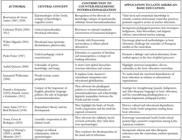
All the theoretical perspectives discussed in this article emphasize that counter-hegemonic internationalization must be viewed as a political and pedagogical practice capable of fostering the development of cognitive justice, multilingualism, and solidarity-based cooperation among the peoples and nations of the Global South. Within the context of basic education in Latin America, these lenses signal the need for curricula that recognize the value of local knowledge, critical intercultural practices, and pluralistic language policies, in contrast to the utilitarian and Eurocentric model that has historically characterized internationalization.
CARTOGRAPHY OF THE STATE OF KNOWLEDGE
Developing a state of knowledge means mapping a set of studies, frameworks, and analyses to scrutinize the existing scientific production within a specific area of interest, highlighting trends, gaps, and contributions to the scientific field. According to Morosini, Kohls-Santos, and Bittencourt (2021, p. 27), “[...] it means identifying what has already been produced in terms of research regarding the subject.”
Through this methodology, the study explores the internationalization of education in all its forms, basic, professional, technological, and higher education, based on theses and dissertations from Brazilian universities published between 2020 and 2025. The state of the art is conceived as a type of bibliographic study that not only organizes and structures academic work but also problematizes it, enabling the identification of gaps, recurring themes, and advancements within the debate on the subject (Morosini; Kohls-Santos; Bittencourt, 2021). The research was conducted across academic databases, the Theses and Dissertations Database (IBICT), using similar search queries with a thematic focus based on keywords, specifically through the following combinations: Global South, internationalization, basic education, and Latin America. The following criteria were then applied for identification: (i) a timeframe between 2020 and 2025, to include recent scholarly output; (ii) theses and dissertations reflecting critical or decolonial voices; and (iii) a focus on issues that contribute to the debate regarding internationalization and epistemologies within the Global South.
The bibliographic survey conducted within the Theses and Dissertations Database (IBICT) identified a total of 62 works related to the themes of internationalization and the Global South between 2020 and 2025. Of this set, 16 works fully met the previously defined inclusion criteria, representing 26% of the total analyzed. The searches revealed heterogeneous results, with particular prominence given to the thematic combination “Global South and internationalization,” which presented the highest number of occurrences (19 works identified, of which 7 were selected (37%)). The search using the descriptors “internationalization and basic education” yielded 31 works, 5 of which were included (16%), while the combination “Global South and basic education” accounted for 12 works, with 4 being selected (33%).
These figures, while significant, highlight the nascent state of studies addressing internationalization from a counter-hegemonic and decolonial perspective within Latin American basic education. This reveals both the concentration of scholarly output around higher education and the need to expand analyses to encompass grassroots educational processes. Thus, the observed landscape indicates an emerging trend toward an epistemological shift within the educational field, wherein theories of knowledge from the South (Santos; Meneses, 2013) and the decolonial turn (Mignolo, 2003; Quijano, 2000) gain centrality as analytical lenses capable of challenging the power-knowledge asymmetries inherent in internationalization policies and practices. This scenario also underscores the strategic importance of scholarship that problematizes the role of schools and universities as spaces for intercultural dialogue, solidarity-based mobility, and South-South scientific cooperation, pointing the way toward an internationalization committed to cognitive justice and the democratization of knowledge.
The data in Table 1 - Keyword Search shows that, in a more generative sense, the articulations associated with the term Global South are the most relevant to this research. Thus, they play a central role in the contemporary debate on counter-hegemonic internationalization.
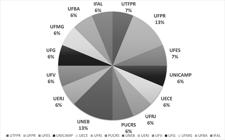
The selected programs are concentrated at institutions across different regions of Brazil, with a focus on federal and state universities and federal institutes. These include the Federal Technological University of Paraná (UTFPR Universidade Tecnológica Federal do Paraná), the Federal University of Paraná (UFPR-Universidade Federal do Paraná), the Federal University of Espírito Santo (Ufes-Universidade Federal do Espírito Santo), the State University of Campinas (Unicamp-Universidade Estadual de Campinas), the State University of Ceará (Uece-Universidade Estadual do Ceará), the State University of Rio de Janeiro (Uerj-Universidade Estadual do Rio de Janeiro), and the Pontifical Catholic University of Rio Grande do Sul (PUCRS-Pontifícia Universidade Católica do Rio Grande do Sul).
Studies conducted at various public higher education institutions were also selected, such as the State University of Bahia (Uneb-Universidade Estadual da Bahia), the São Paulo State University (Unesp-Universidade Estadual Paulista), the Federal University of Viçosa (UFV-Universidade Federal de Viçosa), the Federal University of Goiás (UFG-Universidade Federal de Goiás), the Federal University of Minas Gerais (UFMG-Universidade Federal de Minas Gerais), the Federal University of Bahia (UFBA-Universidade Federal da Bahia), and the Federal Institute of Alagoas (Ifal-Instituto Federal de Alagoas). This broad institutional distribution not only demonstrates the widespread reach of the theme of counter-hegemonic internationalization within the Brazilian academic landscape but also highlights the growing interest among universities and federal institutes in approaching internationalization from critical, intercultural perspectives committed to the Global South.
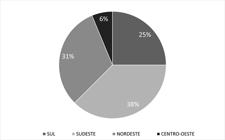
The presence of research originating from different regions - the Northeast, Southeast, and Center-West - demonstrates that this debate is not restricted to the major traditional centers of scientific production, but rather extends toward educational contexts characterized by distinct socioeconomic, cultural, and linguistic realities. Such diversity contributes to a plurality of theoretical and methodological approaches, deepening the field of study by articulating epistemological, political, and pedagogical dimensions.
The mapping of these institutions reflects the consolidation of research and academic cooperation networks structured in a decentralized manner, fostering dialogue between local experiences and global perspectives. For a more detailed visualization of this distribution, Graph 1 synthesizes the institutional representation of the analyzed outputs, enabling an understanding of the breadth and diversity of the academic spaces contributing to the advancement of counter-hegemonic internationalization in Brazil.
The regional distribution of scholarly output reveals the vastness and diversity of the Brazilian debate on counter-hegemonic internationalization. As shown in Graph 2, these studies are not concentrated in a single academic center but are, rather, dispersed across various parts of the country, including federal and state universities, as well as federal institutes. This distribution of scholarly work reveals not only a thematic expansion but also the delineation of a research trajectory structured around new epistemologies and practices, conceived from local experiences that engage in dialogue with global discourses.
The evidence found from the analyzed studies shows that internationalization activities are being reinterpreted and adapted across various institutional and regional contexts, particularly in Brazil’s Southern, Southeastern, and Northeastern regions. This reveals a process of decentralization relative to the historically hegemonic centers of scientific production and educational policy. This shift points toward a democratization of internationalization initiatives, which are now emerging not only within established universities in the South-Southeast axis but also from regional public institutions that are assuming a leading role in formulating alternative and critical approaches.
When appropriated within these contexts, internationalization policies and procedures take on distinct contours, shaped by local realities and specific sociocultural and identity-related demands. This phenomenon broadens the theoretical horizon of internationalization, fostering a shift away from Eurocentric frames of reference toward plural epistemologies anchored in perspectives from the Global South. Thus, it highlights the valorization of situated knowledge, community-based educational strategies, and historically marginalized voices, all of which come to integrate into the international discourse through a logic of reciprocity, solidarity, and cognitive justice. In essence, what emerges is the consolidation of a more inclusive and contextualized international framework, one that recognizes the formative and transformative potential of local experiences while simultaneously challenging global hierarchies of power and knowledge within the field of education.
From this perspective, internationalization is not understood as a mere strategy for competitive positioning in global rankings, and starts to be a social and political exercise, committed to intercultural dialogue, solidarity, and cognitive justice, fundamental principles of the Epistemologies of the South (Santos; Meneses, 2013; Walsh, 2013).
This is a movement of “critical glocalization,” in which local educational and institutional experiences engage in global debates without relinquishing their identity or their territorial rootedness, strengthening research and teaching methodologies aimed at the decolonization of knowledge and the democratization of learning. Thus, the emergence of initiatives within universities and graduate programs in the Global South contributes to the construction of paradigms alternative to Eurocentric rationality, establishing an “ecology of knowledges” (Santos B., 2018) that recognizes intellectual diversity as a prerequisite for rethinking the role of education in civic formation and in the production of knowledge that is truly emancipatory and committed to social transformation.
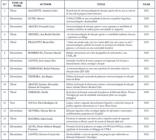
The final corpus of this research consists of theses and dissertations defended at Brazilian universities - Uneb, UFBA, UFPR, Ufes, UFMG, Uece, Uerj, among others - encompassing various prominent graduate programs in Education, Sociology, Administration, and Literature.
The second stage of the state-of-the-art review, in accordance with the methodology developed by Morosini, Kohls-Santos, and Bittencourt (2021), was dedicated to the production of the annotated bibliography. This involved the systematization of information to assist in the identification and organization of the references that will support the subsequent analysis. As the researchers point out, “[...] the documents undergo a process of reading their abstracts, from which certain information is extracted, such as the year of publication, author's name, research title, and full abstract” (Morosini; Kohls-Santos; Bittencourt, 2021, p. 62).
When compiling the bibliography, we not only focused on thematic selection but also considered the year of publication and relevant keywords. These criteria helped ensure that the sources we consulted were both relevant and appropriate. An example of this systematic process is illustrated in Chart 2 - Works Selected for Analysis, which outlines the procedures used to compile the research corpus.
To enhance methodological robustness and provide a clearer, more systematic understanding of the analytical process, the mapped works were organized into three comprehensive thematic axes, as presented in Figure 1. This classification not only facilitates a structured reading of the diverse body of identified works but also offers an interpretive framework for understanding the dynamics, tensions, and convergences existing among the various studies.
By grouping the research into thematic axes, the aim was to highlight both the theoretical and methodological convergences and the zones of contention that traverse the field of counter-hegemonic internationalization. These axes, while revealing a plurality of approaches and epistemological perspectives, also signal a trend toward the maturation of academic debate, demonstrating that the subject is being critically engaged with by distinct fields of knowledge and institutional contexts.
Dessa forma, a classificação temática proposta cumpre uma dupla função: de um lado, organiza o corpus empírico, possibilitando uma leitura comparativa e relacional entre os estudos; de outro, evidencia os caminhos pelos quais a internacionalização vem sendo ressignificada em direção a práticas mais plurais, inclusivas e comprometidas com o Sul Global. Assim, a Figura 1 sintetiza a estrutura analítica que sustenta esta investigação e orienta a compreensão das principais tendências do campo.
The proposed thematic classification serves two main purposes: first, it organizes the empirical data, allowing for a comparative and relational analysis across the studies; second, it emphasizes the ways in which internationalization is being redefined to support practices that are more pluralistic, inclusive, and committed to the Global South. As a result, Figure 1 summarizes the analytical framework that underlies this investigation and provides insight into the key trends in the field.
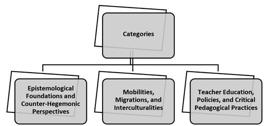
By incorporating studies on epistemological foundations, mobilities and interculturalities, teacher education, and critical pedagogical practices, the aim was to achieve an integrated reading that articulates their theoretical, political, and pedagogical dimensions. The objective was to support an appreciation of how alternative perspectives reinforce, contest, and produce meaning within the Latin American context.
The first category, titled Epistemological Foundations and Counter-Hegemonic Perspectives, comprises texts addressing the geopolitics of knowledge, epistemologies of the South, and other modes of solidarity-based internationalization. Investigations in this field include experiences of “internationalization at home” within Latin American networks (Mazzetti, 2023), language policies under the pressure of English hegemony (Guth, 2020), discourses and practices of academic mobility (Mendes, 2024), the University of International Integration of the Afro-Brazilian Lusophony (Unilab) as a decolonial experience (Rodrigues, 2020), and South-South cooperation in science and technology (Santos, G. 2023).
Category 2, Mobilities, Migrations, and Interculturalities, brings together studies on the migratory flows of students and migrants, and their implications for education. Examples include the mobility of Brazilian medical students to Argentine universities (Araújo, F. 2021); the stories of Asian students at Brazilian universities (Frazatto, 2023); experiences with virtual internationalization in basic education schools (Chernhak, 2023); the challenges faced by migrant children in Minas Gerais (Souza, F. 2020); and an analysis of the educational trajectories of international immigrants, as shaped by age-grade distortion (Hachem, 2023).
Finally, the third category, Teacher Education, Policies, and Critical Pedagogical Practices, includes studies that problematize the initial and continuing education of teachers and administrators in dialogue with internationalization. This scope encompasses investigations into continuing education policy (Teixeira, 2022) in Bahia; a comparison of training policies for school principals in Salvador and Recoleta (Araújo, J. A. 2023); the impacts of international teacher mobility within the Federal Network of Professional, Scientific, and Technological Education (RFEPCT) (Chediak, 2020); critical language education practices regarding Information and Communication Technologies (ICTs) and multiliteracies (Silveira, 2023); and the meanings of digital technologies for graduates in Pedagogy (Alves, 2022).
This categorization enabled the observation that counter-hegemonic internationalization emerges as an embryonic field, in which practices and policies continue to challenge hegemonic modes of neoliberal and Eurocentric inspiration. This method of data organization facilitated an articulation through critical discourses regarding the epistemological, political, and pedagogical aspects of internationalization, situated within the Latin American context.
HORIZONS OF DISCUSSION
Category 1 - Epistemological Foundations and Counter-hegemonic Perspectives
The corpus presented in this category shows the ongoing trends of critique of the hegemonic, Eurocentric, and neoliberal character of internationalization. As Mazzetti observes,
Regional integration and cooperation networks emerge as strategic actors possessing the political legitimacy necessary for the qualified integration of Latin America and the Caribbean (LAC) into the landscape of internationalization, indicating that Latin America aspires to become an epistemic center through collaborative action (Mazzetti, 2023, p. 15).
In this regard, the same author reiterates that:
[...] it is a challenge for the field to construct an internationalization capable of breaking free from modern/colonial rationality and its hegemonic framework, a framework that permits it to be incorporated as Eurocentric knowledge, enabling it to become the only Eurocentric knowledge, overshadowing all other forms of knowledge and other subjects. The heterogeneity of regionalities within Latin America and the Caribbean makes it possible to deconstruct the logic through which this issue has been managed, moving beyond the modern/colonial ideal and sensitizing us to the diverse range of learnings found in the Global South (Mazzetti, 2023, p. 15).
The author also notes that:
Internationalization, as well as studies on the subject, gained momentum in the second half of the 20th century. The maintenance of North/Center hegemony within 'new' global relations has sparked fresh tensions, particularly among places and subjects, specifically professors, researchers, and intellectuals, from the South who advocate for and uphold horizontal relationships. This stance renders regional cooperation and collaboration a priority, ensuring that the destiny of Higher Education is not surrendered to a form of internationalization that fails to incorporate local models, content, and cultures through non-foreign channels (Mazzetti, 2023, pp. 122-123).
However, in this sense, regional cooperation and collaboration also emerge as mechanisms to prevent the replication of historical dependencies and global asymmetries. Therefore,
[...] within this complex, tense, and vast time and space of possibilities, subjects, institutions, and countries have sought relationships of cooperation and regional integration, among which are research networks (Mazzetti, 2023, p. 123).
These networks consolidate into multiple, horizontal lines that delineate relationships with both the North and the South, yet prioritize regional partnerships. They are “[...] necessary pathways in emerging contexts, featuring multiple, horizontal paths connecting with the Center/North and the South, while prioritizing regional partnerships,” as the author states. These are pathways that open up to peripheral subjects and institutions—pathways that “[...] provide general and free access to the knowledge produced, and that include and strengthen the Network itself” (Mazzetti, 2023, p. 124).
This had concrete effects:
[...] the results of solidarity-based cooperation have been experienced through collaborative partnerships within research networks in and of the region. These regional relationships have been a recurring theme in lectures on the subject delivered by intellectuals (Mazzetti, 2023, p. 125).
These efforts highlight the importance of regional academic cooperation as a tool for valuing local knowledge and fostering a more horizontal, inclusive, and plural internationalization.
Finally, in such contexts of political and economic confrontation, Mazzetti (2023, p. 128) highlights the transformative power of internationalization at home:
“[...] under new circumstances of political and economic turbulence, and the absence of mobility experiences for all students and academics, the internationalization of Higher Education, in and from home, [...] emerges as a massive experience of decolonization of/within the region’s networks” (Mazzetti, 2023, p. 128).
Although this scenario offers various opportunities, it also presents challenges, for “[...] there is, therefore, a landscape of possibilities for internationalization [...] in/from a home-based mode in Latin America, but also one characterized by the complexity of regional policies and ideologies, as well as global pressures” (Mazzetti, 2023, p. 128). This counter-hegemonic horizon suggests acknowledging the tensions and challenges of the present moment, but also the possibilities for rupture. In addressing the inequalities created by the centrality of English as a language of control, Guth discusses how:
[...] a situation in which linguistic practice ends up being affected by an insecurity regarding competence, because learners do not produce or share knowledge as if they had attained a 'native' speaker standard, even if their level of language is intelligible, or they are capable of conversing with their peers (Guth, 2020, p. 102).
The passage shows how normative standards of competence restrict academic participation and the flow of knowledge by imposing norms of proficiency that act as symbolic barriers and foster marginalization, as evident with subjects and productions originating from the margins.
Thus, a critical approach is essential for challenging the limitations imposed by linguistic and internationalization initiatives operating under Eurocentric frameworks. Guth (2020, p. 105) reminds us that “[...] for this reason, it is understood that, through critical practices, such policies cannot be regarded merely as acts intended to achieve remote internationalization, but rather represent a space for research.” This statement prompts us to move beyond viewing internationalization merely as a stepping stone toward some future ideal, and instead to perceive it as a productive field in its own right, a site of exploration, a point of tension, and a source of counter-hegemonic alternatives.
The author also observes how “[...] researchers situated in the South have found ways to intervene and critique, informed by the colonial distinction and by the ideologies embedded within language or internationalization policies.” These studies provide evidence that infusing criticality into practices—and fostering border thinking does not render South-North internationalization plans meaningless; rather, criticality is adopted not as a mere instrument or an end in itself, but as a means for people to participate within the process (Guth, 2020, p. 105). This passage demonstrates that, by working from the Global South, scholars expand and broaden their scope for critical action regarding the ideologies underpinning educational, linguistic, and international policies. Far from merely rejecting South-North cooperation, this critical stance helps foster a more explicit and inclusive internationalization, one that takes historical asymmetries into account, while also contributing to genuine participation and the strengthening of epistemologies from the South.
Mendes (2024, p. 204) argues that internationalization must also be viewed as “a sign in dispute” and that “[...] the term ‘internationalization,’ as a linguistic sign and an ideological social phenomenon, acquires different meanings according to its enunciation and its dialogical relationship with other texts/discourses within its field.” This passage demonstrates that internationalization is constituted as a social and discursive construct influenced by diverse voices, interests, and contexts. Its meaning is, therefore, dynamic and relational, shaped by the interactions and power struggles that traverse the field of education.
Within this framework, the author argues that internationalization driven by external interests evolves into an internalized process of institutionalization that undermines internal autonomy: “an internationalization that is more promoted (by external imperatives and interests) than proactive (pursuing its own local interests and internationalization needs) eventually leads to the renunciation of the institution’s internal values to meet the demands of financial organizations” (Mendes, 2024, p. 205). This diagnosis alerts us to the danger of subjecting institutions to an agenda defined by international agencies and funders, thereby weakening these entities' capacity to develop projects rooted in local academic, scientific, and social needs.
In contrast, Mendes (2024) draws upon experiences that eschew this centralizing argument and that appear to be more naturally grounded in specific institutional and regional realities.
Another action that demonstrates a perspective on internationalization distinct from the hegemonic one is the promotion of debates on internationalization for the entire academic community. [...] Furthermore, the promotion of virtual mobility opportunities at higher education institutions in Latin America can also contribute to highlighting regional cooperation and fostering more egalitarian partnerships and South-South mobility. These local and regional initiatives, although still nascent, serve as examples of more organic forms of internationalization that emerge naturally to address local interests and needs (Mendes, 2024, p. 208).
Thus, this analysis highlights emerging Southern development practices, regional cooperation, and virtual mobilities, which can democratize access, create more inclusive horizons of integration, and reinforce internationalization as a situated and plural process.
Within the same critical scope, Rodrigues (2020) observes that, although its progress is still marginal, Unilab's efforts constitute a significant attempt to codify efforts in intercultural and decolonial internationalization. As the author notes,
[...] the analyses also found that, despite some progress in the formation of geopolitical knowledge of an intercultural nature (as proposed in UNILAB’s founding documents), interculturality is an essential process for the construction and dissemination of knowledge and wisdom regarding the reality of the South (Rodrigues, 2020, p. 105).
The excerpts indicate that interculturality should not be seen as a set of normative guidelines but rather as an operational practice focused on valuing diverse ways of knowing and expanding the spread of knowledge that reflects the realities of the Global South. This positions Unilab as an epistemic space that, despite facing challenges and constraints, aims to promote a form of internationalization that is critical and deeply embedded in pluralistic contexts.
Rodrigues (2020, p. 105) supports this perspective by stating that “[...] the staff, consisting of administrative technicians and faculty members, generally engages in various teaching, research, and extension activities with strong intercultural and decolonial themes.” This statement indicates that the institution prioritizes the significance of interculturality not only in its official documents but also in its academic practices. According to Rodrigues (2020), this reflects the ethos of the staff, highlighting the importance of respecting diverse cultures and advocating for more horizontally oriented approaches to knowledge production, especially given hegemonic structures that centralize and rank different forms of knowledge.
Advocating for more horizontally oriented approaches to knowledge production is essential, especially in light of hegemonic structures that centralize and rank various forms of knowledge.
The presence of foreign students, specifically Africans, in these two Brazilian states is linked both to past and ongoing histories of the influence of African culture, people of African descent, and the emancipation of enslaved people in Brazil, and to the need to strengthen intercultural relations for educational cooperation among Portuguese-speaking countries, thereby contributing to closer ties and a sense of identification between Black Brazilian society and Africans (Rodrigues, 2020, pp. 105-106).
This approach helps Afro-Brazilian descendants become aware of the culture and histories of their origins and ancestry, thereby fostering a process of decolonial knowledge.
The quotation highlights that the African presence at Unilab is deeply connected to a broader historical context that includes slavery, resistance, and the contributions of Afro-descendant culture to Brazilian society. This connection is further strengthened by the establishment of educational and cultural ties between Brazil and Portuguese-speaking African countries. These ties provide Afro-Brazilian descendants with the opportunity to explore their origins and ancestry through a process of decolonial knowledge that transforms identities and promotes solidarity-based integration.
By locating Unilab as an epistemic space, Rodrigues (2020) demonstrates that internationalization has a counter-hegemonic character if informed by interculturality. This cultural articulation values ancestralities and increases South-South cooperation, in contrast to models that privilege the reproduction of Eurocentric and neoliberal logics.
Finally, G. Santos (2023) reinforces this narrative that decoloniality requires the deconstruction of the standardization of curricular processes and the liberation of space for plural epistemologies. Santos observes that (2023, p. 159) - “bringing to the classroom the knowledge of indigenous (native), Afro-Brazilian, quilombola, gypsy, peasant, and riverside peoples” - to critically engage with coloniality as a condition for Brazilian educational policies. This approach emerges, for example, in the critique of the National Common Curriculum Base (BNCC), which “[...] reinforces in its text the erasure of the Spanish Language from the Brazilian school curriculum [...]” by privileging only one extra linguistic requirement (Santos, G. 2023, p. 158). Such curricular options reveal the predominance of a homogenizing logic that is contrary to multilingualism and interculturality.
Thus, the author concludes that:
[...] we must understand that language teaching is responsible for establishing forms of relationship that deviate from Eurocentric patterns and for achieving liberation... that we must understand language teaching as functioning not merely to educate, but also to help liberate oneself toward self-actualization (Santos, G., 2023, p. 45).
This observation comes from J. Santos (2021), who analyzed international cooperation data. The analysis reveals that although partnerships are expanding, there are significant challenges regarding structural reform and the establishment of a long-term national policy. As J. Santos (2021, p. 99) stated, “The data show that, despite the increase in international cooperation partnerships, there are difficulties in creating a long-term national policy to enhance the international expansion of education.”
At the same time, cooperation with the Global South is growing:
The sample reveals that the numbers are increasing across the entire spectrum of international cooperation with the Global South, demonstrating that countries with large upper-middle- and lower-middle-income emerging economies constitute an important part of international agreements (Santos, J. A. 2021, p. 100).
J. Santos (2021, p. 101) asserts that among these nations, the BRICS “[...] have been effective in developing mechanisms to promote the development of the ‘Global South,’ increasing their international collaboration with educational institutions.”
Thus, while G. Santos (2023) critiques the enduring colonialities within Brazilian education and envisions decoloniality as a pedagogical and political instrument, J. Santos (2021) emphasizes the strategic role of international cooperation, particularly South-South cooperation, in expanding academic integration and solidifying alternatives to North-South domination. Taken together, these two approaches demonstrate that internationalization can only assume a critical and emancipatory character if it reflects a valuing of local epistemologies through the construction of more horizontal and solidarity-based global networks.
Category 2 - Mobilities, Migrations, and Interculturalities
The studies in this category address the student mobility and participant movements within educational contexts, redirecting attention away from the elitist logic of North-South mobility, and of the Global South in general.
F. Araújo (2021) highlights the appeal of Argentine universities for Brazilian medical students and indicates that these types of movements represent an alternative form of internationalization that the Brazilian educational system continues to neglect. According to the author (2021, p. 151), these “[...] experiments in international student mobility in Latin America” exemplify the “[...] inadequacy of formal internationalization strategies [...]” by exposing authentic and cost-effective alternatives to the conventional logic of academic mobility, even if they have not yet been sufficiently institutionalized to become equitable and sustainable policies. Indeed, from this perspective, F. Araújo (2021, p. 151) argues that so-called “bottom-up” internationalization should be viewed as strategic for countries in the region, as it fosters more democratic processes and promotes the growth of academic cooperation.
The case study examined by the author also demonstrates how the establishment of a common course accreditation system, along with the development of regional mobility for students and researchers, can yield positive impacts regarding the mutual recognition of degrees, the circulation of knowledge, and the integration of academic systems among Latin American institutions. Furthermore, through experiences such as these, F. Araújo (2021, p. 152) asserts that a form of “mobility capital” is constituted, represented by the creation of contact networks, proficiency in additional languages, experience working within different educational systems, and the acquisition of degrees recognized in other countries. Such capital significantly broadens the horizons for academic and professional integration within both the regional and global spheres.
Frazatto (2023) examines the experiences of Asian students at Brazilian universities, critiquing the lack of institutional support policies as well as the perceived burden placed upon students to adapt. According to the author, within the neoliberal paradigm, internationalization is typically conceptualized in a simplified manner, stating that:
[...] while mere international presence thus constitutes a presumption of a certain successful internationalization for the institution, on the other hand, the mobility experience can be understood as the pinnacle of a student's successful personal experience, one in which they must confront a set of challenges to cultivate (Frazatto, 2023, p. 227).
Under this meritocratic perspective, the challenges faced during the exchange are understood as a natural part of individual development, enriching a single idea of individual achievement. This perspective tends to eliding the shared, institutional, or developmental aspects of the internationalization activity. However, Frazatto (2023) observes that, based on these institutional gaps, many students draw upon their common cultural identities to create horizontal networks of support and learning.
These autonomous and cooperative efforts are reconfigured as alternative training sites, particularly in the sphere of language learning, reframing institutional deficiencies as opening doors to knowledge production and sociability. According to the author,
“[...] in some cases, the institution’s deficits or gaps are transformed into openings: based on identity markers and shared repertoires, networks are built and enhanced horizontally, including in the field of language learning as a discursive practice” (Frazatto, 2023, p. 228).
The researcher explores the challenges of encountering otherness, raising important questions about how to navigate differences in communication styles, backgrounds, physical appearance, and personal choices. Frazzatto (2023, p. 230) contends that these encounters should not only be examined but also questioned, as they often align with the “diversity slogans promoted by the knowledge economy, market, and technology.”
Thus, Frazzatto (2023, p. 234) argues that an “internationalization agenda” focused on ethical training, in the medium and long term, needs to be able to combat discriminatory practices, particularly linguistic racism, and provide crucial training, not only for teachers of Portuguese as an additional language, but also for other teachers, technicians, and students who experience the academic environment.
This aspiration aligns with broader concepts of internationalization, such as Chernhak's (2023), in which virtual exchange between Brazilian and Chilean schools is discussed as a democratic and readily available substitute for physical interaction. In this sense, the author further emphasizes that:
[...] virtual exchange offered several benefits, including: fostering a fairer and more inclusive internationalization [...] creating space for students to cultivate critical thinking and global awareness, as well as supporting global learning and global citizenship (Chernhak, 2023, p. 135).
The research shows the potential of digital technologies to mediate intercultural experiences, expand the scope of projects, and facilitate network-based learning platforms. The proposal is not only to extend this model to elementary school students, but also to broaden it to include teachers and administrators, as well as to enhance international learning networks and global collaboration from an academic standpoint:
It is believed:
[...]in the use of virtual exchanges as a potential tool to integrate the Brazilian curriculum across various disciplines, whether mandatory or elective, to work collaboratively on the construction and sharing of knowledge (Chernhak, 2023, p. 136).
F. Souza (2020) and Hachem (2023) present an interconnected study on the education of migrants. According to F. Souza (2020), students at the beginning stages of language education tend to adapt more successfully to the school curriculum.
[...]the indirect participation of children who accompany their parents and who, upon being enrolled in schools, end up altering the landscape of local basic education, generating challenges while also bringing benefits to the school community at large, which comes to coexist with a remarkably rich diversity that can even serve as a support for the learning and practice of other languages (Souza, F. 2020, p. 151).
Following this phase, migrant children encounter additional challenges that highlight the need for linguistic inclusion and teaching methods designed to help integrate these children. The author emphasizes that migrant children positively contribute to local schools, bringing valuable community, cultural, and linguistic diversity that can be utilized as an educational resource. However, she warns that practices of assimilation and acculturation, such as separating children who speak the same foreign language, can impede socialization, emotional development, and the preservation and transmission of heritage languages.
In the school environment, it is important to investigate whether the practice of separating children who speak the same foreign language is not being permeated by acculturation through assimilation, and whether it has negatively impacted processes of socialization and school adaptation, or the child's emotional development and the maintenance of the language(s) spoken by their parents (Souza, F. 2020, p. 152).
This debate is expanded upon by Hachem (2023, p. 216), who believes that students in contexts of migratory vulnerability, whether undocumented, holding refugee status, or possessing irregular documentation, face barriers to accessing proven enrollment resources, limiting opportunities for school participation and increasing the risk of “unsuccessful trajectories.”
The author advocates for structured language policies that address both the design of lessons to provide students with instruction in the host country’s language and the preparation of teachers capable of navigating linguistic variation through a critical and reflective approach. These initiatives also yielded positive effects on the students' social and academic integration, and on larger-scale assessments, having “[...] demonstrated good results in both proficiency tests and PISA” (Hachem, 2023, pp. 216-217).
There is a critical need to modify curricula and assessment practices to accommodate the diversity present in classrooms. The author highlights Minas Gerais and São Paulo as examples that deserve further exploration (Hachem, 2023, p. 217). Additionally, the study emphasizes the central role of proficiency in the host country's language for achieving successful educational outcomes, discussing both the individual and structural dimensions of learning in this context. Hachem (2023, p. 218) states that “from the subject's perspective, the discussion regarding mastery of the host country's language reinforces its importance in attaining successful educational trajectories.”
However, recurring disparities exist across nationalities; for example, Haitian and Paraguayan students exhibit a disproportionate rate of age-grade distortion (Hachem, 2023, p. 224), exposing broader social and historical vulnerabilities. These studies illustrate that South-South student mobility, the inclusion of immigrant students, and “internationalization at home” practices complicate the hegemonic logic of elitist and exclusionary internationalization. Simultaneously, they create space for supportive and critical intercultural practices capable of articulating inclusion, social justice, and identity recognition.
The findings of these studies demonstrate that internationalization in basic and higher education can emerge as a pluralistic and democratic process when it moves away from Eurocentric and neoliberal models in favor of what is just within the context of the Global South.
Category 3 - Teacher Education, Policies, and Critical Pedagogical Practices
This category combines research on policies for the training of teachers and administrators with critical pedagogical practices in the field of internationalization.
Teixeira (2022) draws attention to the discrepancy in continuing teacher education policies in the state of Bahia, demonstrating the gap between rhetoric (valuing culture) and implementation (truly seeking to put education into practice). In this context, and amidst the transformation currently taking place within the educational sector, Teixeira (2022, p. 7), argues that “[...] it is essential to develop public policies for continuing teacher education with a view toward internationalization.”
Her proposal represents a departure from hegemonic logics of Eurocentric internationalization, advocating instead for policies grounded in a local analysis of global resources, policies that are embedded within the local cultural, environmental, and linguistic lexicon, and that prioritize languages such as Guarani and Yoruba, while also advocating for international engagement aimed at emphasizing South-South relations (Teixeira, 2022, p. 146).
Along these lines, the researcher highlights the role of research as a mediator of transformative processes, for through research, weaknesses can be diagnosed and pathways identified for “specific and unique” training policies directed at teachers who instruct classes containing foreign students (Teixeira, 2022, p. 149). A focus on the specific and the intercultural, and the need to dismantle the homogenization of the broader context, enables a more nuanced perspective and facilitates the establishment of public policies that promote epistemic justice as an organizing agenda within education.
However, Teixeira’s (2022) diagnosis also reveals a paradox: while incentives and investments are made available to the state of Bahia, based on its close ties with transnational corporations, for instance, in the fields of culture and tourism, education occupies a secondary position. As the author notes, “[...] in Bahia, despite the incentives for culture and tourism stemming from close economic ties with transnational entities, the development of internationalization policies for continuing teacher education—that is, for the educational sector—is not yet evident, even though it lies at the foundation of various government initiatives” (Teixeira, 2022, p. 149).
This paradox exposes the hidden identity of education as a structuring axis of international politics. Through this facet, internationalization is relegated to a matter of sectoral “theory” or economic condition, when it should be understood as a process of articulation holding the potential to redefine pedagogical practices, curricula, and professional identities, in dialogue with the historical and cultural challenges faced by the region.
Within the school management system, J. A. Araújo (2023) explains how principals in Brazil or Chile receive their training. He also argues that the World Bank plays a crucial role in the development of educational policy formulation in Salvador, in contrast to how critical resistance unfolds in Recoleta. The author highlights the “[...] need to interrogate and examine mechanisms that may ensure the reinforcement of oppressive formations and the realization of these macropolicies within the micropolitics of school principal training” (Araújo, J. A. 2023, p. 285).
To resist such pressures, he emphasizes the importance of dialogue between school principals and educational teams. This dialogue involves questioning, adjusting, or rejecting authoritarian policies, which he considers crucial (Araújo, J. A. 2023, p. 289). The identified forms of resistance have an anti-imperialist and socialist character, functioning as strategies to counterbalance neoliberal approaches that require the super-exploitation of labor, increased personal responsibility, and the precarious conditions faced by teachers (Araújo, J. A. 2023, p. 294).
There is no fixed policy for the initial and ongoing training of school principals, resulting in an uncritical reproduction of the normativity of these institutions to the detriment of transformative changes. As Araújo observes,
[...] the absence or incipient nature of training for school principals would contribute to maintaining the principal’s role as a reproducer of system norms, given that there would be no foundation, neither initial nor continuing education, that converged toward the true function of public education: educating people for life, and not merely for work (Araújo, J. A. 2023, p. 287).
This diagnosis highlights the tension between two different societal projects. On one side is the government that embraces an ideology rooted in socialism or anti-imperialism. This perspective views education as a social right and an essential tool for emancipation, advocating for investment in professional and technical training to foster development and reduce inequality. On the other side is the neoliberal government, which interprets education through the lens of market principles. This approach prioritizes public sector accountability, standardized testing, and public-private partnerships.
This model shifts the focus from civic education to preparing a workforce that meets productive needs. However, as J. A. Araújo (2023, p. 287) points out, “National governments aligned with socialist or anti-imperialist movements have prioritized professional training, investing more than their right-wing counterparts, who champion neoliberalism.”
In the context of teacher education, Chediak (2020) studies the international mobility of teachers within the RFEPCT to Finland. The findings reveal transformative effects: pedagogical shifts, the expansion of academic networks, and the infusion of a “global pedagogy” (Chediak, 2020, p. 334). However, the author notes that training policies are fragmented and that “the lack of articulation in VET teacher education was evident in our data and extended to international training” (Chediak, 2020, p. 341).
In this context, mobility cannot be reduced merely to the consumption of experiences; rather, it must be contextualized within the actual training needs of teachers to facilitate the transfer of knowledge and institutional innovations. As she observes, “[...] it is only possible to transform a teacher’s individual training into a collective benefit through articulation with the dimensions of training, innovation, internationalization, and the administration of this process within the campuses, alongside articulation with national policies and initiatives” (Chediak, 2020, p. 342). Whether through an exchange program, a course, an internship, or an academic mission, when a teacher participates in an international mobility experience, the effects of that experience do not unfold in isolation; rather, they depend on the institutional, cultural, political, and social environment in which the teacher is embedded.
As Chediak states:
The effects of the international mobility experience on the continuing education of teachers are influenced by this context and, for this reason, give rise to tensions, many of which were revealed at the interface with the categories of analysis of this research: experience, effects, identity, training, knowledge transfer, internationalization, and articulation (Chediak, 2020, p. 333).
The theoretical orientations of the international training examined by the author are grounded in classical pedagogical philosophies that emphasize the importance of the student and of the learning process as an “active” endeavor. The conceptual orientations of this international teacher training were broadly informed by progressivism, humanism, and constructivism. The curricular model was shaped by aspects of competency-based pedagogy, active learning methodologies, project-based learning, and Bloom’s Taxonomy (Chediak, 2020, p. 335).
This framework showcases a commitment to integrating both historical and contemporary viewpoints in delivering comprehensive training that aligns closely with the requirements of professional practice. Silveira (2023) presents an innovative case study proposal that highlights critical language education practices rooted in digital technologies and multiliteracies. However, the author warns that the use of information and communication technologies (ICTs) should not be seen simply as a tool for technological advancement; instead, it should be viewed as a means to promote social participation, thus transforming the nature of learning itself.
[...] the objective of critical education is to transform students into subjects of their own learning, creators of meaning and of knowledge significant to their lives, who, consequently, can contribute to social transformation (Silveira, 2023, p. 127).
In doing so, she demonstrates that technologies can both expand practices of democratic participation and reconstitute social inequalities as they are mobilized as tools of domination (Silveira, 2023, p. 126).
Alves (2022) addresses the ways in which undergraduate Pedagogy students at UFBA perceive digital technologies, exposing where a disconnect exists between the type of training received up to that point and the reality they seek to integrate into their teaching practice. The author argues that a dialectical perspective dominates ICTs, oscillating between utilitarianism and critique, yet never becoming aggregative as constructs built around new knowledge (Alves, 2022, p. 122).
The study states “[...] the lack of articulation among digital technologies, Pedagogy training, and teaching practice in Basic Education” (Alves, 2022, p. 122) and, therefore, suggests that digital tools can function as sites for the collective and critical production of knowledge (Alves, 2022, p. 8).
Integrating digital information and communication technologies (DICTs) into education is a way for educational institutions to expand their learning spaces, enabling students to engage in linguistic practices that are familiar to them, practices they already perform in their daily lives outside of school. This integration can be a powerful tool in English language instruction, facilitating immersion in the real world or within a context that encompasses information, interaction, and communication. According to Silveira (2023, p. 125), such integration represents a means of expanding learning spaces and engaging students in linguistic practices that align with those typically carried out outside the school environment.
In the context of English language teaching, a strong integration has been recognized, one capable of extending learning spaces into a real-world context of knowledge, interaction, and communication. This demonstrates that language teaching is more than merely a technological or instrumental practice; it is also a process that must be both conceptualized and shaped by pedagogical and political preferences.
Thus, language teaching is an endeavor that entails a social commitment, as well as an acknowledgment of how the practice itself can either entrench inequalities or foster inclusion, critical citizenship, and social transformation. As Silveira (2023, p. 127) observes, “[...] the study’s findings and the reflections presented indicate that language teaching is an approach that demands social commitment and is, therefore, a political act.”
As articulated within this group, the research gathered under this category suggests that teacher education, alongside school management, constitutes a strategic dimension for consolidating a counter-hegemonic internationalization within basic education.
Teixeira (2022) criticizes the lack of coherent continuing education policies that recognize interculturality and local languages. He highlights the disconnect between cultural incentives and the neglect of education. J. A. Araújo (2023) emphasizes the significant influence of global organizations, such as the World Bank, in shaping management practices in Salvador. This is contrasted with the oppositional responses observed in Recoleta, further illustrating how the tension between neoliberal and anti-imperialist approaches affects the professional development of school principals. Chediak (2020) discusses the transformative benefits of international mobility experiences for teachers within the RFEPCT network. However, he argues that these personal advancements will only be sustainable if they are integrated into institutional and national training policies.
Within pedagogical traditions, Silveira (2023) suggests that integrating ICTs and multiliteracies into critical language education can foster citizenship and social change, while Alves (2022) challenges the disconnect between initial instruction and the effective implementation of technology as a central tool for the collective creation of knowledge.
These studies have demonstrated what is required: unifying fragmented, market-driven approaches to advance formative policies and practices that articulate social justice, epistemic justice, and political-pedagogical commitment.
HORIZONS OF CONTINUITY
Analyses within Category 1 - Epistemological Foundations and Counter-Hegemonic Perspectives - first point to the need to reinforce practices of solidarity and integrative internationalization capable of respecting local contexts and fostering resistance against Eurocentric patterns of control. Thus, the hegemonic logic of global domination, which has historically marginalized countries of the Global South, is called into question. It becomes evident that plural epistemologies and more horizontal arrangements for academic cooperation are better suited to emerging contexts.
The need to consolidate institutional mechanisms that ensure the consistent operationalization of solidarity principles is also highlighted, as exemplified by Unilab, and to address the geographical and administrative barriers that constrain their potential for decolonization. Such mechanisms must guarantee the continuity, organization, and recognition of these programs, thereby integrating Brazil into strategic internationalization networks, particularly within the South-South axis.
Another important aspect addressed was the integration of Brazilian universities into a national policy for the internationalization of science, a policy strengthened through long-term partnerships, particularly within the BRICS framework. In this way, the country can expand its scientific influence, enrich its international relations, and consolidate its position on the global stage without relying exclusively on models from the Global North or South.
The implication is that a decolonial pedagogy has the power to transform language education, shifting it away from established relations of power, knowledge, and being toward practices that value Latin American peoples and resist coloniality, a phenomenon that remains a defining characteristic of learning processes. This perspective expands the scope of internationalization by incorporating social justice, cultural diversity, and the recognition of disadvantaged populations.
The analyses discussed in Category 2 - Mobilities, Migrations, and Interculturalities -demonstrate that these forms of mobility, considered “alternative” or “informal,” must be integrated into research agendas and internationalization policies, particularly in the Global South. It is essential to examine the specificities and impacts of such experiences, the visibility of which becomes possible with the fading of the Eurocentric model, broadening our understanding of the knowledge and subjects currently in circulation.
An additional critical issue involves the reformulation of Educational Language Policies (ELPs), with a focus on the adequate preparation of teachers to acknowledge differences and recognize the value of socialization opportunities. These policies can render student mobility more equitable, reflective, and inclusive by reversing the assimilationist approach and fostering an intercultural learning environment.
The category highlights the importance of establishing virtual exchange as an educational policy, especially within basic education. It promotes international cooperation and increases intercultural interactions for populations that have historically been excluded from mobility in traditional educational settings. This digital and democratic option allows for a more inclusive and equitable approach to internationalization, rooted in the principles of social justice.
There is a critical and immediate need for institutional initiatives that prioritize bilingual education, teacher training, and the enhancement of welcoming practices. These efforts would enable schools to better understand and respect the experiences of migrant families, allowing them to serve as centers for intercultural integration. By implementing these initiatives, schools can create an environment that embraces acceptance and respect for diversity, which is essential for promoting a harmonious coexistence among different cultures.
Within this framework, the development of context-based pedagogical policies, rooted both in students' countries of origin and in their migratory experiences, becomes increasingly fundamental. More than merely acknowledging diversity, this entails a commitment to harnessing it as a pedagogical resource, enabling the development of practices that foster inclusion, equity, and new models of learning.
Finally, emphasis is placed on the need for more robust and integrative public policies regarding teacher education, policies that promote intercultural training through authentic internationalization practices. This ensures that teachers are better equipped to navigate linguistic and cultural diversity in their classrooms, and that mobility, in all its various forms, becomes a vehicle for critical transformation and emancipation.
Analyses within Category 3 - Teacher Training, Policies, and Critical Pedagogical Practices -highlight the need for training policies to enable school principals to critically reflect on local contexts and to resist the uniformity imposed by international organizations. Such policies must support alternative, participatory, and democratic forms of educational management, particularly within the Latin American sphere, to foster institutional autonomy and diversify the practice of school governance.
A relevant issue in this context is the development of reception plans for teachers returning from international experiences. These plans should include strategies to manage pedagogical transformation and ensure consistency in public policy formulation. This type of initiative serves as a crucial foundation for promoting internationalization within the Federal Institutes. It acknowledges the cultural and identity-forming aspects of international experiences and recognizes that the benefits of such events should be shared by both the institutions and their academic communities.
It also emphasizes the importance of developing pedagogical practices and workshops that articulate technology, language, and critical thinking, transforming the classroom into a space where students are invited to question and create new types of formative horizons. Such a lens for viewing education within the context of the Global South makes it possible to challenge traditional teaching models, as well as to encourage the development of educational experiences that are attentive both to the active participation of students and to the production of a multiplicity of forms of knowledge.
Finally, initial teacher education programs must prioritize a form of training that connects technical proficiency, critical reflection, and social practice. This mode of integration is crucial for preventing technicism and for building the proactive pedagogical competence necessary to shape how future teachers respond to the complex modern challenges facing basic education within today’s intercultural and global contexts. Taken together, the propositions presented here argue that, particularly from the perspectives of the Global South, there is far more to the internationalization of education than merely hegemonic or assimilationist models, provided it is conceived within the Global South.
Instead, it demands robust institutional policies, systematic critical training for teachers, democratic governance within schools, and inventive pedagogical strategies open to appreciating cultural, linguistic, and identity-based diversity. Within such a horizon, internationalization assumes the role of social justice, inclusion, and cooperative solidarity; it is appropriated as a political-educational project aimed at transfiguring power relations, knowledge, and modes of being, rendering them increasingly plural, emancipatory, and counter-hegemonic within a formative framework.
In conclusion, this analysis illustrates that the internationalization of education, when viewed from a Global South perspective, must not be confined to hegemonic and assimilationist models. On the contrary, it must articulate epistemological premises that affirm cognitive justice, interculturality, and decoloniality (Category 1); conceptualize alternative mobilities and migratory life as spaces for learning and critical integration (Category 2); and combine training policies with pedagogical practices that foster democratic governance, multilingualism, and innovation (Category 3). Within this framework, internationalization emerges as a political-educational project stemming from the epistemologies of the South—one capable of reshaping relations of power, knowledge, and being, while simultaneously forging a model of new, plural, emancipatory, and counter-hegemonic formative horizons for the field of basic education in Latin America.
References
-
ALVES, Pietro Matheus Bompet Fontoura. Formação inicial de professoras em tempos vir[tu]ais: sentidos e significados de licenciandas em Pedagogia da UFBA. Dissertação (Mestrado em Educação). Salvador: Universidade Federal da Bahia, 2022. Disponível em: <Disponível em: https://repositorio.ufba.br/handle/ri/36431 >. Acesso em: 27/08/ 2025.
» https://repositorio.ufba.br/handle/ri/36431 - AMIN, Samir. O desenvolvimento desigual: ensaio sobre as formações sociais no capitalismo periférico. Rio de Janeiro: Forense Universitária, 1973.
-
ARAÚJO, Fernando Lajus. Internacionalização da educação superior e novas migrações: as mobilidades de estudantes brasileiros de medicina para universidades na Argentina. Dissertação (Mestrado em Sociologia). Curitiba: Universidade Federal do Paraná, 2021. Disponível em: <Disponível em: https://hdl.handle.net/1884/74120 >. Acesso em: 27/08/2025.
» https://hdl.handle.net/1884/74120 -
ARAÚJO, Jomária Alessandra Queiroz de Cerqueira. Políticas de formação de diretores(as) escolares e internacionalização da educação básica: Salvador/Brasil e Recoleta/Chile. Tese (Doutorado em Educação e Contemporaneidade). Salvador: Universidade do Estado da Bahia, 2023. Disponível em: <Disponível em: https://saberaberto.uneb.br/handle/20.500.11896/4858 >. Acesso em: 27/08/2025.
» https://saberaberto.uneb.br/handle/20.500.11896/4858 -
CHEDIAK, Sheylla. Experiência de formação continuada de professores da Educação Básica, Técnica e Tecnológica por meio da mobilidade internacional: efeitos nas concepções pedagógicas. Tese (Doutorado em Educação Escolar). Araraquara: Universidade Estadual Paulista “Júlio de Mesquita Filho”, 2020. Disponível em: <Disponível em: http://hdl.handle.net/11449/194028 >. Acesso em: 27/08/2025.
» http://hdl.handle.net/11449/194028 -
CHERNHAK, Rafael Folmann. A internacionalização em casa: uma experiência de intercâmbio virtual na educação básica (EIVEB). Dissertação (Mestrado em Educação). Porto Alegre: Pontifícia Universidade Católica do Rio Grande do Sul, 2023. Disponível em: <Disponível em: https://tede2.pucrs.br/tede2/handle/tede/10826 >. Acesso em: 27/08/2025.
» https://tede2.pucrs.br/tede2/handle/tede/10826 -
DE WIT, Hans. Internacionalização do Ensino Superior: A Necessidade de uma Abordagem Mais Ética e Qualitativa. Journal of International Students , S. l. , v. 10, n. 1, p. i-iv, 2020. DOI: <https://doi.org/10.32674/jis.v10i1.1893> .
» https://doi.org/10.32674/jis.v10i1.1893 -
FINARDI, Kyria Rebeca; AMORIM, Gabriel Brito; SARMENTO, Simone. Internationalization of Higher Education and the Role of Languages: Insights from the Global North and the Global South. Education and Linguistics Research, v. 10, n. 1, 2024. DOI: <https://doi.org/10.5296/elr.v10i1.22006>.
» https://doi.org/10.5296/elr.v10i1.22006 -
FINARDI, Kyria Rebeca; GUIMARÃES, Felipe Furtado. Local agency in national language policies: the internationalisation of higher education in a Brazilian institution. Current Issues in Language Planning, v. 21, n. 4, p. 351-372, 2019. DOI: <https://doi.org/10.1080/14664208.2019.1697557>.
» https://doi.org/10.1080/14664208.2019.1697557 - FINARDI, Kyria; SANTOS, Jane; GUIMARÃES, Felipe. A relação entre línguas estrangeiras e o processo de internacionalização: evidências da Coordenação de Letramento Internacional de uma Universidade Federal. Interfaces Brasil/Canadá, Canoas, v. 16, n. 1, p. 233-255, 2016.
-
FRAZATTO, Bruna Elisa. “Ainda não entendo nada e por isso é muito difícil, mas vale a pena, eu acho”: internacionalização e políticas de inserção em narrativas de estudantes chineses, japoneses e sul-coreanos em uma universidade brasileira. Tese (Doutorado em Linguística Aplicada). Campinas: Universidade Estadual de Campinas, 2023. Disponível em: <Disponível em: https://hdl.handle.net/20.500.12733/9414 >. Acesso em: 27/08/2025.
» https://hdl.handle.net/20.500.12733/9414 - FREIRE, Paulo. Pedagogia do oprimido 17. ed. Rio de Janeiro: Paz e Terra, 1987.
-
GUTH, Alencar. O PrInt/UFPR em uma encruzilhada de discursos em políticas linguísticas, internacionalização e decolonialidade Dissertação (Mestrado em Letras). Curitiba: Universidade Federal do Paraná, 2020. Disponível em: <Disponível em: https://hdl.handle.net/1884/69741 >. Acesso em: 27/08/2025.
» https://hdl.handle.net/1884/69741 -
HACHEM, Zakia Ismail. Fronteiras na educação: uma leitura sobre a trajetória escolar de imigrantes internacionais no Brasil, a partir do conceito de distorção idade-série. Tese (Doutorado em Sociologia). Belo Horizonte: Universidade Federal de Minas Gerais, 2023. Disponível em: <Disponível em: https://repositorio.ufmg.br/bitstream/1843/54850/1/TeseDoutoradoSociologia_ZakiaIsmailHachem.pdf >. Acesso em: 27/08/2025.
» https://repositorio.ufmg.br/bitstream/1843/54850/1/TeseDoutoradoSociologia_ZakiaIsmailHachem.pdf -
KNIGHT, J. Internacionalização Remodelada: Definição, Abordagens e Fundamentação. Journal of Studies in International Education, 8 (1), p. 5-31, 2004. <https://doi.org/10.1177/1028315303260832>
» https://doi.org/10.1177/1028315303260832 -
LEAL, Fernanda; MORAES, Mário César Barreto; OREGIONI, Maria Soledad. Questionando o discurso e a prática de internacionalização da educação superior predominantes na América Latina. Arquivos Analíticos de Políticas Educativas, v. 28, n. 132, 2020. Disponível em: <https://doi.org/10.14507/epaa.28.3904>.
» https://doi.org/10.14507/epaa.28.3904 -
MAZZETTI, Antônio Carlos. Experiências de internacionalização da educação superior de/em casa no contexto de uma rede de pesquisa latino-americana 2023. Tese (Doutorado em Desenvolvimento Regional). Pato Branco: Universidade Tecnológica Federal do Paraná, 2023. Disponível em: <Disponível em: http://repositorio.utfpr.edu.br/jspui/handle/1/31204 >. Acesso em: 27 ago. 2025.
» http://repositorio.utfpr.edu.br/jspui/handle/1/31204 - MBEMBE, Achille. Crítica da razão negra Lisboa: Antígona, 2017.
-
MENDES, Ana Rachel Macêdo. As internacionalizações da educação superior e a mobilidade acadêmica: discursos e experiências em diálogo. Tese (Doutorado em Educação). Vitória: Universidade Federal do Espírito Santo, 2024. Disponível em: <Disponível em: http://repositorio.ufes.br/handle/10/18285 >. Acesso em: 27/08/ 2025.
» http://repositorio.ufes.br/handle/10/18285 - MIGNOLO, Walter D. Histórias locais/Projetos globais: colonialidade, saberes subalternos e pensamento liminar. Belo Horizonte: Editora UFMG, 2003.
-
MIGNOLO, Walter D. The darker side of western modernity: global futures, decolonial options Durham: Duke University Press, 2011. DOI: <https://doi.org/10.1515/9780822394501>.
» https://doi.org/10.1515/9780822394501 -
MOROSINI, Marilia C; KOHLS-SANTOS, Pricila; BITTENCOURT, Zoraia. Estado do Conhecimento:teoria e prática. Curitiba: CRV, 2021. DOI: <https://doi.org/10.24824/978655868991.1>.
» https://doi.org/10.24824/978655868991.1 -
PREBISCH, Raúl. O desenvolvimento econômico da América Latina e alguns de seus principais problemas Santiago: Cepal, 1949. Disponível em:<Disponível em:https://repositorio.cepal.org/handle/11362/40010 >. Acesso em: 10/09/2025.
» https://repositorio.cepal.org/handle/11362/40010 -
QUIJANO, Aníbal. Colonialidade do poder, eurocentrismo e América Latina CLACSO, 2000. Disponível em: <chrome-extension://efaidnbmnnnibpcajpcglclefindmkaj/Disponível em: https://biblioteca.clacso.edu.ar/clacso/sur-sur/20100624103322/12_Quijano.pdf >. Acesso em: 10/09/2025.
» https://biblioteca.clacso.edu.ar/clacso/sur-sur/20100624103322/12_Quijano.pdf -
RODRIGUES, Faustino Manuel. Relações internacionais sob a ótica de geopolítica do conhecimento: o caso UNILAB. Dissertação (Mestrado em Administração). Fortaleza: Universidade Estadual do Ceará, 2020. Disponível em: <Disponível em: https://www.uece.br/ppga/wp-content/uploads/sites/49/2020/08/FAUSTINO.pdf >. Acesso em: 27/08/2025.
» https://www.uece.br/ppga/wp-content/uploads/sites/49/2020/08/FAUSTINO.pdf - SANTOS, Boaventura de Sousa. O fim do império cognitivo: a afirmação das epistemologias do Sul. Belo Horizonte: Autêntica, 2018.
-
SANTOS, Boaventura de Sousa. Para além do pensamento abissal: das linhas globais a uma ecologia de saberes. Revista Crítica de Ciências Sociais, n. 78, p. 3-46, 2007. DOI: <https://doi.org/10.1590/S0101-33002007000300004>.
» https://doi.org/10.1590/S0101-33002007000300004 - SANTOS, Boaventura de Sousa; MENESES, Maria Paula (org.). Epistemologias do Sul São Paulo: Cortez, 2013.
-
SANTOS, Gustavo Correia dos. Decolonialidades e ensino de espanhol: uma pesquisa-ação colaborativa na Educação Profissional e Tecnológica. Dissertação (Mestrado em Educação Profissional e Tecnológica). Maceió: Instituto Federal de Alagoas, Maceió, 2023. Disponível em: <Disponível em: https://repositorio.ifal.edu.br/items/fb3d4e78-9fdf-4fcd-8e26-96ee2de85873 >. Acesso em: 27/08/2025.
» https://repositorio.ifal.edu.br/items/fb3d4e78-9fdf-4fcd-8e26-96ee2de85873 -
SANTOS, José Arnon Silva. Instituições brasileiras de ensino e pesquisa na Cooperação Sul-Sul para o desenvolvimento: ciência, tecnologia e inovação. Dissertação (Mestrado em Saúde Coletiva). Rio de Janeiro: Universidade do Estado do Rio de Janeiro, 2021. Disponível em: <Disponível em: http://www.bdtd.uerj.br/handle/1/17513 >. Acesso em: 27/08/2025.
» http://www.bdtd.uerj.br/handle/1/17513 -
SILVEIRA, Dayane Rita. Educação linguística crítica, tecnologias digitais da informação e comunicação e multiletramentos: perspectivas do Sul global. Dissertação (Mestrado em Ensino na Educação Básica). Goiânia: Universidade Federal de Goiás, 2023. Disponível em: <Disponível em: http://repositorio.bc.ufg.br/tede/handle/tede/12625 >. Acesso em: 27 ago. 2025.
» http://repositorio.bc.ufg.br/tede/handle/tede/12625 -
SOUZA, Flávia Rodrigues de. Língua, cultura e migração: desenvolvimento linguístico e cultural de crianças de famílias migrantes internacionais em Viçosa, Minas Gerais. Dissertação (Mestrado em Letras). Viçosa: Universidade Federal de Viçosa, 2020. Disponível em: <Disponível em: https://locus.ufv.br/handle/123456789/30797 >. Acesso em: 27/08/2025.
» https://locus.ufv.br/handle/123456789/30797 -
SOUZA, Juliana de Fátima; COSSA, José; RODRIGUES, Cibele Maria Lima. Cooperação Científica no Sul Global: por uma outra Internacionalização. Revista Inter-Ação, Goiânia, v. 49, n. 2, p. 968-984, 2024. DOI: <https://doi.org/10.5216/ia.v49i2.80048>.
» https://doi.org/10.5216/ia.v49i2.80048 -
TEIXEIRA, Ana Regina. Políticas de formação continuada de professores: internacionalização na educação básica da Bahia. Dissertação (Mestrado em Educação e Contemporaneidade). Salvador: Universidade do Estado da Bahia, 2022. Disponível em: <Disponível em: https://saberaberto.uneb.br/items/c94427c5-670c-41a5-bacb-ad6e5ba5a6e6/full >. Acesso em: 27/08/2025.
» https://saberaberto.uneb.br/items/c94427c5-670c-41a5-bacb-ad6e5ba5a6e6/full - THIONG’O, Ngũgĩ wa. Descolonizar a mente: a política da linguagem na literatura africana. São Paulo: Editora Perspectiva, 2009.
- WALLERSTEIN, Immanuel. O universalismo europeu: a retórica do poder. São Paulo: Boitempo, 2006.
-
WALSH, Catherine. Interculturalidade crítica e pedagogia decolonial: in-surgir, re-existir e re-viver. Revista Sociedade e Estado, Brasília, v. 28, n. 1, p. 13-40, jan./abr. 2013. DOI: <https://doi.org/10.1590/S0102-69922013000100002>.
» https://doi.org/10.1590/S0102-69922013000100002 - WALSH, Catherine. Interculturalidad, Estado, sociedad - luchas (de)coloniais de nuestra época Quito: Universidad Andina Simon Bolivar/Abya Yala, 2009.
-
1
Article published with funding from the Coordenação de Aperfeiçoamento de Pessoal de Nível Superior - CAPES/Brazil) for editing, layout, and XML conversion services, and funding from the Conselho Nacional de Desenvolvimento Científico e Tecnológico - CNPq/Brazil for the translation of the article into English.
The data underlying the research text are contained within the manuscript.

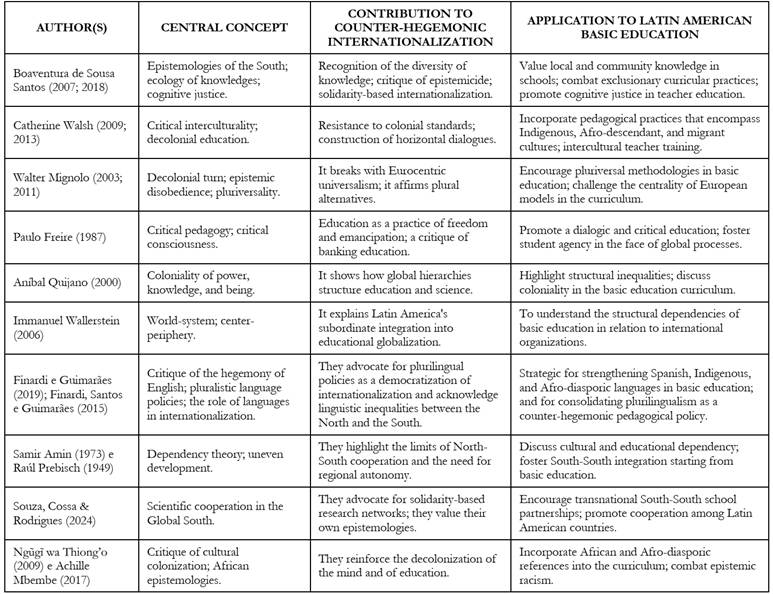 Source: Prepared by the author (2025).
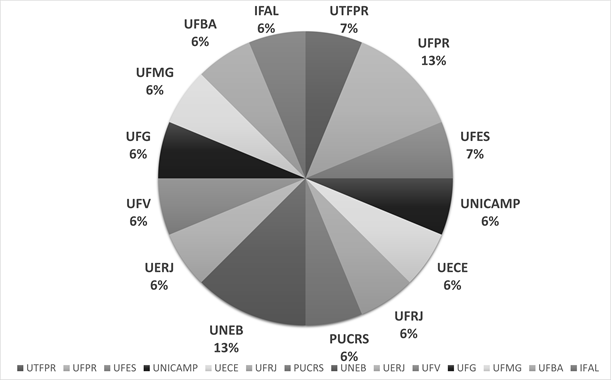 Source: Produced by the author (2025).
 Source: Produced by the author (2025).
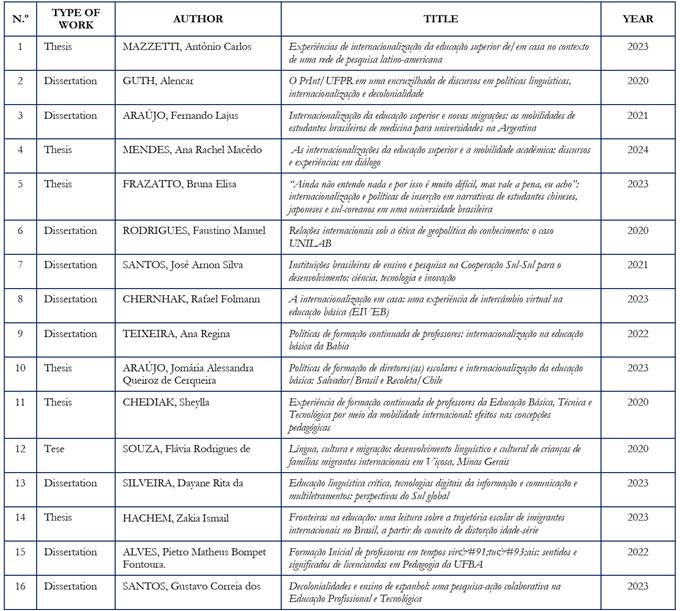 Source: Prepared by the author (2025).
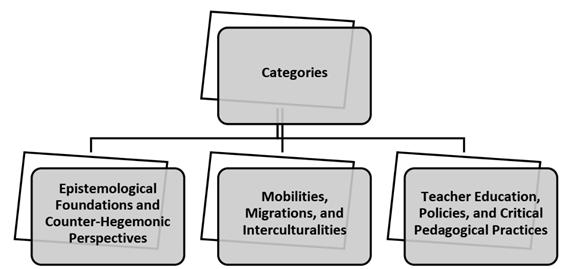 Source: Produced by the author (2025).