
 CARTOGRAPHY OF SUPERVISED INTERNSHIP IN THE TRAINING OF PHYSICAL EDUCATION TEACHERS IN THE BRAZILIAN AMAZON
ABSTRACT:
This study focused on analyzing the organizations and formative conceptions of supervised curricular internships (SCI) that prevail in the Amazon region, aiming to identify elements that characterize the ages of teaching in the professionalization process of future physical education (PE) teachers. The research presented itself as exploratory and descriptive, employing a mixed approach, and was carried out in undergraduate courses in PE at nine public universities in the Brazilian Amazon. The techniques used were documentary analysis and a semi-structured questionnaire, applied to 36 trainee advisory teachers. From the deductive-inductive thematic analysis, three main themes resulted: i) organization of the internship; ii) conceptions; and iii) teaching ages. The results showed formative conceptions of ECS departing from nuances that allude to the three ages: vocation, craft and profession, given the coexistence of elements of diverse orientations in the same training program in the internship, with prevalence of one or another age, depending on the context, highlighting from these elements some singular indications, organizational aspects, formative conceptions of internship and the use of formative devices, which denotes, even if punctually, the development of professional training in the internship.
Keywords:
Teacher professionalization; Physical Education; Teaching ages; Supervised Curricular Internship; Amazon
RESUMO:
Este estudo buscou analisar as organizações e concepções formativas de Estágio Curricular Supervisionado predominantes na região da Amazônia brasileira durante o processo de profissionalização do futuro professor de Educação Física, a fim de identificar elementos caracterizadores daquilo que Gauthier et al. (1998), Hargreaves (2000) e outros autores chamam de idades do ensino. A pesquisa apresentou-se como exploratória, descritiva, e de abordagem mista, sendo realizada nos cursos de licenciatura em Educação Física de nove universidades públicas da referida região. As técnicas utilizadas foram a análise documental e o questionário semiestruturado aplicado a 36 professores orientadores de estágio. Da análise temática dedutivo-indutiva, resultaram três temas principais: i) organização do estágio; ii) concepções; e iii) idades do ensino. Os resultados evidenciaram concepções formativas de Estágio Curricular Supervisionado advindas de nuances que aludem a três idades, denominadas vocação, ofício e profissão, tendo em vista a coexistência de elementos de orientações diversas no mesmo programa de formação no estágio, com prevalência de uma ou outra idade, dependendo do contexto. Dentre esses elementos, destacam-se alguns indicativos singulares, aspectos organizacionais, concepções formativas de estágio e a utilização de dispositivos formativos, o que denota, ainda que de forma pontual, o desenvolvimento de uma formação profissional no estágio.
Palavras-chave:
profissionalização docente; Educação Física; idades do ensino; Estágio Curricular Supervisionado; Amazônia
RESUMEN:
Este estudio se centró en analizar las organizaciones y concepciones formativas de las prácticas curriculares supervisadas (ECS) que prevalecen en la región amazónica, con el objetivo de identificar elementos que caracterizan las edades de la enseñanza en el proceso de profesionalización del futuro docente de educación física (EF). La investigación se presentó como exploratoria, descriptiva, desde un enfoque mixto, realizada en los cursos de pregrado en EF de nueve universidades públicas de la Amazonía brasileña. Las técnicas utilizadas fueron el análisis documental y el cuestionario semiestructurado, aplicado a 36 profesores asesores en prácticas. Del análisis temático deductivo-inductivo, resultaron tres temas principales: i) organización de la pasantía; ii) concepciones; y iii) edades de enseñanza. Los resultados mostraron concepciones formativas de ECS partiendo de matices que aluden a las tres edades: vocación, oficio y profesión, en vista de la coexistencia de elementos de diversas orientaciones en un mismo programa formativo en la pasantía, con prevalencia de una u otra edad, dependiendo del contexto, destacando de estos elementos singulares indicaciones, aspectos organizativos, concepciones formativas de pasantía y el uso de dispositivos formativos, lo que denota, aunque sea puntualmente, el desarrollo de la formación profesional en las prácticas.
Palabras clave:
Profesionalización docente; Educación Física; Edades de la enseñanza; Práctica Curricular Supervisada; Amazonía
INTRODUCTION
This article presents reflections on the Supervised Curricular Internship (SCI) in the training of Physical Education (PE) teachers in the Brazilian Amazon, focusing on identifying and analyzing what Gauthier et al. (1998), Hargreaves (2000) and other authors called teaching ages, considering the process of professionalization of teaching/training (Tardif, 2013b). In this sense, according to Oliveira (2010), professionalization emerges as a defensive way out for education workers against the processes of loss of autonomy at work and disqualification.
Considering the SCI within the context of educational policies, CNE/CP Resolution number 2/2015 recognizes a continuum between initial and continuing education. This perspective sought to establish principles that would support a common national basis for teacher training, aiming at professionalization, collaboration between universities and schools, and stronger coordination in the SCI field (Brazil, 2015).
Although supervised internships have been a part of teacher training in Brazil for over 50 years, there is still a conflict between labor guidelines—internship contracts, internship classifications, monitoring and evaluation—and pedagogical guidelines—mechanisms, internship projects, university-school partnerships, and teacher training (Barra, 2020), which hinders the professionalization process of the SCI. This conflict has received greater attention in the proposal for better coordination between these two guidelines so that they operate in an integrated manner, based on the latest national guideline for initial teacher training (Brasil, 2019).
Although there is a willingness to integrate labor and pedagogical guidelines, it cannot be ignored that the latest revisions that occurred after CNE/CP Resolution number 2/2015 recorded a “[...] loss of the public character of educational policies [...] to adapt to privatization and market-oriented logic,” marked by an “[...] unprecedented reductionism in the history of national education” (Anped, 2019, p. 2-3) and the deconstruction of a collective project (Reis; André; Passos, 2020). These indicators forge a cartography of the SCI in the Amazon, as well as the state of the art of the different age groups in education (Tardif, 2013a) in the SCI, aiming at their adoption. In this process, CNE/CP Resolution number 1/2002 and CNE/CP Resolution number 2/2002 are taken as a reference for teacher training, and CNE/CES Resolution number 7/2004 for Physical Education, as there was no change in the time and space guidelines in the SCI for the period, and 400 hours for the school.
Regarding the production of knowledge on SCI in Physical Education courses in the Brazilian Amazon, Carvalho Filho, Batista, and Souza Neto (2021) mapped the databases of the Coordination for the Improvement of Higher Education Personnel (CAPES-Coordenação de Aperfeiçoamento de Pessoal de Nível Superior) and the Brazilian Digital Library of Theses and Dissertations (BDTD-Biblioteca Digital Brasileira de Teses e Dissertações) between 1996 and 2019, identifying 62 studies developed in the country. In this investigation, the authors found that research was centralized in the South and Southeast regions (n=51) and the low quantity of studies in the Northeast (n=7), Central-West (n=2), and North (n=2). Maffei (2014) showed the incipient scientific production on the subject in the field of PE when comparing it with other areas of knowledge, highlighting a lack of research that could encourage the scientific field to conduct new studies.
Considering that Supervised Curricular Internships are central to the educational process and professional development of teachers, this study aimed to analyze the organizations and formative concepts of Physical Education (SE) programs prevalent in the Amazon region, aiming to identify the elements that characterize the teaching ages in the professionalization process of future teachers of this subject. Thus, we sought to answer the following questions: How are Supervised Curricular Internships organized in undergraduate PE programs in the Amazon? What are the prevailing concepts of Supervised Curricular Internships in the programs studied? Based on the organization and formative concept presented, what are the elements that characterize the teaching ages in the professionalization process of PE teachers in the programs investigated?
REFERENCE FRAMEWORK: TEACHING AGES IN SUPERVISED CURRICULAR INTERNSHIP IN PHYSICAL EDUCATION
The dissemination of the term “ages” was the responsibility of authors such as Gauthier et al. (1998), Hargreaves (2000), Tardif (2013a), and Cyrino (2016). The concept involves, in this context aspect, from vocational learning to the universitarization of training (Bourdoncle, 2000), and in the practice aspect, the exercise of professionalism (Contreras, 2009), considering different stages of the professionalization of teaching.
This process appears linked sometimes to the body of knowledge of a trade, exploring its cognitive dimension (Shulman, 1987) - or reflected in the exercise of professionalism and teaching learning (Hargreaves, 2000) -, sometimes juxtaposed with processes of socialization of missionary, artisanal, or occupational groups in the service of a cause, employment contract, or specialized work (Tardif, 2013a). At the same time, it could be incorporated into the field of teaching practice in SCI processes, considering the learning of practice through the imitation of models and the technical and applicationist instrumentalization of methods, called the “learning of the profession” (Cyrino, 2016, p. 45).
Regarding the SCI, we chose to consider its framework as a reference, seeking a dialogue with the authors cited and others who discuss the topic. Thus, beyond the idea of teaching ages as concepts, in the field of Physical Education, we will consider them as perspectives.
From the age of teaching as a vocation to the perspective of supervised internship as learning from practice through imitation of models
Regarding the notion of the age of teaching as a vocation, Gauthier et al. (1998, p. 20) offer a relevant contribution to the understanding that “[...] teaching is slow to reflect on itself.” In this sense, the authors refer to teaching from the perspective of a “profession,” considering the category of profession as one of its dimensions without knowledge, characterized by observation, imitation, and experience through practice. Thus, if on the one hand the first age can be initially conceived of as having a missionary and vocational character—a gift, in the literal sense of a profession of faith, in which learning to teach occurred through observation and imitation of the practices of experienced teachers, (Vicentini; Lugli, 2009), on the other hand, in the field of PE, this perspective takes on the contours of artisanal learning.
From this perspective, Tardif (2013b) and Gauthier et al. (1998) analyze the teaching profession considering professional training based on learning from practice, permeated by the nature of knowledge and its articulation with teaching in the field of work, focusing on the idea of professional development (Roldão, 2017). The artisanal issue permeates this delimitation.
Thus, to establish relationships between these conceptual aspects surrounding the SCI in Physical Education teacher training, we begin with the understanding that learning of any profession is built through learning professional practice. Historically, “[...] the internship has always been identified as the practical part of professional training courses” (Pimenta; Lima, 2012, p. 29), being systematized since the creation of the Normal Schools (Silvestre, 2011), or the Gymnastics Schools and the barracks, in the case of Physical Education. During this process, it underwent several modifications regarding its formative conception and the terminology adopted, among which the following stand out: Practical Teaching Exercises; Teaching Practice; and, lastly, Supervised Curricular Internship (Silvestre, 2011).
Although SCI is perceived as a central axis for learning professional practice in the process of teaching professionalization (Souza Neto; Cyrino; Borges, 2019), there is also the coexistence of teacher training and internship concepts supported by different theoretical and methodological approaches. Based on the studies of Cyrino (2016), Pimenta and Lima (2012), and Zabalza (2014), the concept of SCI as learning from practice stands out - known as artisanal learning, whose formative element occurs through observation and practical experience resulting from the imitation of model classes taught by experienced teachers (Vicentini; Lugli, 2009).
From the age of teaching as a profession to the perspective of supervised internship as a technical and applicationist instrumentalization of methods
The second age came from the modern state's break with the church, a process marked in the 19th century by the formation of nations and the official establishment of educational systems, which occurred through the establishment of schools and an occupational career for teachers in the service of the state. From this social arrangement, the profession of teaching arose, marking, ever since, the need for didactic-pedagogical preparation in teacher training (Saviani, 2009).
Gauthier et al. (1998, p. 20) describe this age as being influenced by the perspective of knowledge without a profession, whose practical learning occurs through the instrumental application of techniques or knowledge. Thus, practice as a technical and applicationist instrumentalization of methods, or theoretical knowledge, and specific skills becomes epistemologically supported by technical rationality (Pimenta; Lima, 2012; Zeichner, 2010).
However, Tardif (2013a), when discussing the professionalization of teaching, questions whether Brazil has reached the “age of the profession.” This question is based on the results of studies conducted in Canada, which found the reproduction of traditional practices dating back to previous centuries. In this sense, the author questions whether the same teaching procedures are adopted in Brazilian states, demonstrating minimal cohesion regarding teaching principles and procedures (Souza Neto; Borges; Ayoub, 2021).
Behind this question and analogy, it was observed that the ages of teaching, as formative conceptions, can coexist in the same place or in other places of a country/region, with one age or another eventually predominant. However, Tardif (2013a) warns that each age has specificities of a material and/or pedagogical nature, which, over time, have influenced the conceptions of training and practical learning of the teaching profession, as they do not always develop at the same pace, causing ambiguities and tensions in the teacher training process (Altet, 2016).
From the age of teaching as a profession to the perspective of supervised internship as “professional learning”
The third age has the 1980s as its reference point, based on the social movement for the professionalization of teaching (Holmes Group, 1986), which initially occurred in the United States of America (USA). This movement aimed to overcome the low performance rates of educational systems, based on three premises: i) improve the quality of teaching; ii) restructure and strengthen a knowledge base for teaching; and iii) elevate it to the status of a profession (Tardif, 2013a; Heagreaves, 2000).
The professionalization of teaching movement, a central element of this analysis, refers, in general terms, to the development of the teaching profession. From a historical, social, and political perspective, it has been marked by a series of contingencies and problems (Oliveira, 2010).
Gauthier et al. (1998), when referring to the perspective of a profession made of knowledge, in which professional practice contributes to the construction of a knowledge base (Shulman, 1987), emphasize a set of specialized knowledge specific to pedagogical action, understood as a “kind of reservoir,” mobilized and used in a “concrete teaching situation” (Gauthier et al., 1998, p. 28). This occurs in the SCI, a time when students/trainees in training need to learn to deal with the problems and instabilities of the dynamics that occur in the practice of/in the teaching profession.
Cyrino (2016) calls this age as “[...] learning the profession, linked, above all, in research and legal provisions on teacher training” (p. 45). Thus, unlike the first two, it arises from the assumption of a model sedimented in a high-level professional and academic training (Vasques, 2019), built on the border between training and profession (Nóvoa, 2019).
This conception of SCI incorporates other internship training models: i) the theory-practice relationship (Carvalho Filho; Brasileiro, 2020); ii) the research and action-research space (Pimenta; Lima, 2012); iii) initiation to teaching (Ribeiro; Vedovatto, 2019); iv) analysis and reflection on practice (Rufino; Benites; Souza Neto, 2017); v) and the moment of construction and reconstruction of teaching identity (Amaral da Cunha; Batista; Graça, 2020). In Brazil, this perspective has been strengthened in teaching policies with the increase in the workload of Supervised Curricular Internships; the announcement of the need to include, in this process, collaborative projects between universities and schools with the participation of experienced teachers; supervision of the internship by the university and the school; the internship contract; and, more recently, the use of devices for analyzing practice (Brazil, 1996; 2002; 2004; 2008; 2015; 2019).
METHODOLOGY
Considering the proposed objectives, an exploratory and descriptive research3 approach was chosen to provide a broad overview of a topic that has not yet been sufficiently explored in the context under study (Gil, 2019). A mixed methodological approach was used (Small, 2011), which allows for the combination of quantitative and qualitative procedures and techniques in a single study. The analytical advantages of this approach promote interaction and in-depth analysis of results through the triangulation of sources and data (Creswell; Plano Clark, 2011).
Study context: Physical Education in the Brazilian Amazon
From a universe of 15 public higher education institutions (PHEIs), the study focused on nine undergraduate PE programs at nine universities in the Brazilian Amazon, coded in this research as: U1, U2, U3, U4, U5, U6, U7, U8, and U9. Geographically, the institutions are located in the states of Amazonas, Acre, Rondônia, Roraima, Pará, Tocantins, Amapá, Mato Grosso, and Maranhão. The criteria to select the institutions were because they are public universities, their in-person undergraduate PE programs, their annual vacancies, and their ability to train teachers who will work in schools in the region.
Based on this perspective and inspired by the idea of cartography (territory), we sought to map the organizations and formative concepts of supervised internships in PE teacher training. From a geographical perspective, the research covers the vast area of the Brazilian Legal Amazon. In this sense, the word cartography was not used as a method, an analytical procedure linked to intervention research or a cartographic path, as defined by Deleuze and Guattari (1995), but as a synonym for mapping, data collection, and exploratory research, assuming other methodological contours.

Among the nine institutions identified in Figure 1, we observed that they are structured by semester, term, and various curricular components. Furthermore, they offer between 40 and 50 vacancies annually with a bachelor's degree in PE. Most of them are located in their state capitals, except for U6, which is located in the interior of the state and operates in the evening. Another peculiarity concerns U1, which offers vacancies in both day and evening shifts.
Participants
Of a total of 52 participants, the study sample consisted of 36 internship supervisors who signed the Informed Consent Form (ICF). These represented 69% of the total faculty at the nine institutions studied: five from U1; seven from U2; five from U3; two from U4; three from U5; four from U6; three from U7; five from U8; and two from U9. Sixteen participants were male and 20 were female. Regarding the length of teaching experience at SCI, 11% had been teaching for less than one year; 14%, from one to two years; 14%, from three to five years; 19%, from six to nine years; 28%, for more than ten years; and 14% did not provide information. Most of them (53%) had already supervised all internships; 20% in early childhood education only; 8% in the initial years of elementary school; 11% in the final years; and 2.8% in high school and youth and adult education (EJA). The selection criterion for participants was that they were working as internship supervisors at their universities.
To protect confidentiality and anonymity, participants were coded by the acronym PO, followed by the corresponding cardinal number and the educational institution code—PO2, U9, or PO3, U1, for example. Among the 36 participants, six also worked as internship coordinators (IC) and were coded by acronyms such as CE/PO1, U1, and CE/PO1, U8, etc.
Data collection techniques and procedures
Due to technical and material feasibility, documentary research and a semi-structured questionnaire were chosen (Hill, M.; Hill, A., 2009). A documentary study is characterized as a primary source, consisting of uncoded data, such as written records and physical or electronic documents (Gil, 2019). A semi-structured questionnaire, on the other hand, allows for obtaining information in less time and at a lower cost. Furthermore, it allows for greater geographic coverage and a considerable number of participants, given the possibility of sending the instrument by email, fax, or mail (Mattos; Júnior; Blecher, 2008).
Initially, in April 2019, a letter was sent to the institutional emails of the college deans, department heads, and course coordinators of the nine participating institutions requesting their consent and authorization to conduct the research, as well as the email addresses and phone numbers of the faculty members who served as internship supervisors. After authorizations were granted, the collection of documents—Course Pedagogical Projects and Internship Regulations—from the nine institutions surveyed began. These documents were coded using the acronym PPC combined with the university code and the year of the PPC document (U1, 2006, for example). The PPCs were accessed through online searches on the course websites and/or were available via email by the coordinators and department heads of the courses studied, along with the contact lists (emails and phone numbers) of the internship coordinators and faculty supervisors.
The semi-structured questionnaire was developed using the online tool Google Forms, and its validation was carried out in two stages. The first involved consultation with three professors with doctorates, who attested to the adequacy of the content about the study's objectives and conceptual framework. The next stage involved validation by administering the pilot questionnaire to four internship POs, similar to the participants in this study. This stage sought to confirm whether the questions were understandable, met the objectives, or required adjustments. The final instrument consisted of 14 questions: four closed-ended, six closed-ended with justifications, and four open-ended, distributed across three axes: i) participant characterization; ii) structuring and organization of the SCI; iii) and concepts of teacher training and SCI. Taken together, these axes contributed to the identification of elements that characterize the teaching ages in the process of professionalization of Physical Education teachers in the Brazilian Amazon. The questionnaire was sent through the institutional emails of the CEs and POs who were working on the internship at the time of the empirical study, and was answered by May 2019.
Analysis Procedures
After collection, the documentary data and semi-structured questionnaires were organized, separated, and exported to the qualitative analysis software SCR NVivo (release version 1.5.1, 2020), using interactive data triangulation as a strategy (Azevedo et al., 2013). Thematic analysis was conducted using deductive and inductive procedures (Queirós; Graça, 2013), based on the sensitizing analytical categories grounded in the theoretical-conceptual framework anchored in the studies of Pimenta and Lima (2012), Cyrino (2016), Tardif (2013a), and Gauthier et al. (1998).
In the first phase, open coding was performed line by line to identify the most important ideas. Next, a focused and selective review, refinement, and reorganization were carried out, articulated with the writing of analytical memos to reflect and substantiate the decisions made and the explanatory possibilities, establishing a permanent and interactive dialogue between theory, analytical framework, and data (Patton, 2002). This process of constant comparison and interaction between three competing flows of data condensation—data representation, extraction, and confirmation of conclusions—was maintained until saturation (Miles; Huberman; Saldaña, 2014). This analysis resulted in the following themes, as presented in Table 1:
RESULTS
This subsection presents the organizational forms of Supervised Curricular Internships in the research context, based on a descriptive analysis of official course documents from the nine institutions investigated, addressing the distribution of courses per semester across the basic education segments; the internship fields and their interface with the graduate's professional profile; the phases/activities developed in the field; the configurations of the internship centers (IC) concerning the supervising teachers who work in the internships; and, finally, the devices/instruments used (Table 2). During the field research process (first semester of 2019), some institutions were restructuring their PPCs to adapt them to the changes established in the legal regulations on teacher training (Brazil, 2015; 2019), in particular, to the national curriculum guidelines (DCN-diretrizes curriculares nacionais) for Physical Education teacher training (Brazil, 2018).
Course Distribution
The SCIs of the nine programs studied have a workload of 400 to 420 hours, distributed beginning in the second half of the course. Institutions U2, U3, U4, U5, U7, and U8 organize their internships into four disciplines: SCI-I in early childhood education; SCI-II in elementary school; SCI-III in middle school; and SCI-IV in high school/young adult education. U6 and U9, on the other hand, have three disciplines—SCI-I, SCI-II, and SCI-III—distributed across the educational stages. A unique organizational characteristic was also observed at U1, as the 420 hours of SCI occur entirely in the final semester, after all credits/courses in the curriculum have been completed. There is an immersion of 21 school days and 105 hours in each stage of basic education (EI, EF1, EF2, and EM), carried out only in public schools (CE/PO1, U1).
Internship Fields and Graduate Profile
Regarding internship fields, the U1, U2, U4, U6, U7, U8, and U9 institutions are aligned with the professional profile of Physical Education graduates. This profile qualifies, upon completion of their academic training, teachers of the “Physical Education curriculum component” (PPC, U2, 2005, p. 8) to work with “children, adolescents, young people, adults, and the elderly” (PPC, U4, 2017, p. 7), in “public educational establishments” (PPC, U1, 2006, p. 7) or private institutions, with their field/area of work encompassing “different levels and modalities of education” (PPC, U7, 2014, p. 32). All of this requires professional training outlined by “theoretical and practical support” (PPC, U8, 2011, p. 17), grounded in the “ethical principles of the profession” (PPC, U9, 2015, p. 33).
On the other hand, although 100% of the programs surveyed were characterized as undergraduate programs in PE, it was observed in U3 and U5 that internships are configured with a full-time perspective, suggesting that students can intern in both school and non-school settings. U5 went further, establishing internships and assigning elementary and high school to SCI I and II; ECS III and IV provide for practice in “[...] clubs, gyms, sports initiation schools and condominiums; public policies, social movements, charitable institutions, associations [...], sports and leisure” (PPC, U5, 2011, p. 76-79). In the case of U3, the internship is organized only in the segments of basic education, however, it is explicit that the “[...] student may choose in only one stage of the Supervised Internship for the non-school intervention field [...]” (RE/PPC, U3, 2015, p. 165-166), which may be carried out in “hospitals, clinics, gyms, etc.” However, in the U3 PPC, there is no mention of syllabuses that refer to these spaces in the curricular matrix of disciplines.
Field Phases/Activities
Regarding the activities developed, in the PPC of U1, U2, U3, U5, U7, U8, and U9 institutions, in addition to classes and university guidance, field activities are divided into three phases: i) observation; ii) participation/co-participation; and iii) teaching/implementation. At U9, in addition to the observation and teaching phases, there is a provision for an internship in school management. U6 adopts unique nomenclatures: i) diagnostic - observation and contextualization of professional practice areas; ii) project - development of an investigative and interventional action plan; iii) intervention - implementation of the action plan in the internship field; and iv) systematization - preparation of the internship report (PPC, U6, 2010).
Internship Center
Regarding internship centers, the data show the presence of a CE at six institutions (U1, U2, U3, U6, U8, and U9). It was also found that U4, U5, U6, U7, and U9 have two to four POs who teach internship courses. A noteworthy finding is the six to nine POs who supervise small groups of interns (pairs/trios), which was observed at U1, U2, U3, and U8. Only U3 and U8 have an internship center composed of permanent POs, who work semiannually. The U3 PPC, for example, establishes that interns are supervised/mentored by department professors, with “[...] (one professor for each group) who will conduct collective planning and ensure that all internship activities are carried out by all students under proper supervision” (PPC, U3, 2015, p. 124-125). At this institution, seven supervising professors were identified.
On the other hand, although there are six to nine POs, respondents from U1, U2, and U6 indicated that “[...] there are no permanent supervising professors for supervised internships, as the program's faculty rotates annually to teach the course(s)” (PO4, U1; CE/PO1, U2; PO3, U6). Another important point about the organization/systematization of the SCI, illustrated in Graph 1, refers to the way in which the POs select the field schools - that is, the schools where the internships will be carried out - and the supervising teachers (PS).

From the responses of 44% of the Pos, there is no criterion for choosing field schools, so schools were selected according to availability and acceptance; 19% choose schools where there are teachers trained in PE; another 19% through acceptance of the PS; 12% responded that this responsibility falls to the intern; and, finally, 6% choose schools based on the profile, responsibility and experience of the PS.
Training and Assessment Tools
The PPCs of institutions U1, U2, U6, and U9 indicate the preparation of an internship report as a training and assessment tool. Other institutions offer interns the option of converting the RE into a final project (TCC) in the format of a scientific article reporting their experience (U1, 2006; U4, 2017; U7, 2017). In addition to these tools, there are also the presentation of the report in a final seminar (PO2, U3); distance learning (EAD) activities, such as a webfolio and forum on the Moodle platform, and a descriptive report (PPC, U7, 2014); as well as the use of a critical-reflective script for observing PS classes and the teaching of colleagues/interns, followed by conversation circles to encourage collective reflection and an internal event - a socialization seminar with the participation of the schools' supervising teachers (CE/PO1, PO2, PO3, PO4, U8).
CONCEPTS OF SCI
This section presents the concepts of SCI based on the subthemes that emerged from the study. To present and analyze the data, we chose to triangulate the analyses of each institution's documents (PPC) and the data from the questionnaires completed by the POs, as shown in Table 3.
Experience Space
Based on an analysis of the official documents of the U2 and U3 institutions, it is clear that the SCI is conceived as a space for “experiencing a practical teaching experience” that provides the opportunity to “[...] learn to act by doing what is unique to the professional field, while also learning, procedurally” (PPC, U3, 2015, p. 169), under the supervision of an “[...] experienced teacher [...], the role of a physical education teacher in Basic Education” (PPC, U2, 2005, p. 16). Although this concept was found in the responses of 22.3% of the total POs (Table 2), when specifically analyzing the teachers' perception of the U2 and U3 PPCs, it was found that, among the seven respondents from U2, three shared the concept that emerged from the guiding document. In U3, among the five participants, two conceive of the SCI in the same way as the PPC, as shown in the following excerpts: “Experiencing the reality of practice together with experienced teachers” (PO7, U2); “Getting in touch with practical experience at school” (PO2, U2); “Giving students an initial experience with the work area, whether at the club or at school” (PO5, U2); “Experiencing practical learning in the classroom” (PO2, U3); and “Experiencing the practice of Physical Education in schools so that they learn and better understand their area of activity” (PO3, U3).
Applicability of Knowledge
The second subtheme was established in the U3 and U6 PPCs, which understand the SCI as a space for “applicability of theoretical knowledge” (PPC, U3, 2015, p. 169) to provide interns with an understanding of the “[...] training process in the Physical Education degree program” (PPC, U6, 2010, p. 127). This understanding also appears in the responses of 16.6% of the participants. Regarding the U3 and U6 faculty, only one of the five U3 faculty members understands the internship as a time to “[...] put into practice the theoretical knowledge acquired at university” (PO3), which is not evident in the responses of the U6 faculty members.
Research, Intervention, and Teaching
The third subtheme emerged from the PPCs of institutions U1, U4, and U7, which understand the SCI as a place for initiating “research, intervention, and classroom teaching” (PPC, U1, 2006, p. 52). This “theoretical-methodological perspective” is permeated by “[...] action research [...], of practice, which has teaching at its center” (PPC, U7, 2014, p. 85), culminating in the “[...] preparation of a scientific article in the form of a report on the experiences resulting from interventions during internships” (PPC, U4, 2017, p. 28). In this sense, of the total participants, only 8.3% responded that the SCI is a “[...] fundamental moment to provide teaching experience to interns” (PO3, U1), and that it articulates the tripod “study, performance and research” (PO3, U7) as “[...] essential elements for learning teaching work” (PO2, U7). However, the participants of U4 did not indicate the same conception of the official document.
Connecting Theory and Practice
This subtheme is based on the legal documents of the U5, U7, U8, and U9 institutions and the responses of 19.5% of the total POs, who understand the SCI as a space for “articulation between theory and practice” (PPC, U5, 2011, p. 42). This concept aims to “[...] provide interns with the opportunity to encounter practical situations” (PPC, U7, 2010) in professional contexts (PPC, U8, 2011) so that this articulation can be established in the teaching-learning process during Physical Education teacher training (PPC, U9, 2015). Regarding the faculty members affiliated with U5, U7, U8, and U9 institutions, it was observed that, among the four U7 participants, only PO1 understands the SCI as an opportune moment for the articulation of theory and practice, in the “[...] search for a synthesis that makes sense and meaning to the undergraduate student, even allowing for the mitigation of the effects of reality shock.” The U9 faculty members understand that this approach in the SCI can help improve the professional performance of future teachers (CE/PO1, PO2, U9). The participants in U5 and U8 do not disagree with this formative perspective, but they bring it as a structuring element of the sixth conception.
Professional Integration and Transition
Another subtheme found in the U3, U4, and U8 PPCs conceives of the SCI as a process of professional integration and “[...] transition, which seeks to connect two logics - education and work” (PPC, U8, 2011, p. 31), by providing the intern with the opportunity to develop “[...] skills they already possess under the supervision of a professional in the field’ (PPC, U4, 2017, p. 28). Through this understanding, the internship can become a “[...] feedback channel between the institution and the community [...] that will enable the first contact with their future profession” (PPC, U3, 2015, p. 169). Although this conception was found in 13.8% of the POs, when relating what was established in the PPCs (U3, U4, and U8) with the responses of their teachers, the SCI aims to “promote professional integration” (CE/PO1, U8) and provide the intern with a real approach to the work context at school (CE/PO1, U3). The participants of U4, however, disagreed with what is explained in the PPC.
Space for Reflection and Identity Construction
Finally, this subtheme emerges from the U7 and U8 institutions, which understand the SCI as a space for “[...] analysis and reflection on everyday situations in the profession, creating conditions to establish connections between the theories studied in the course and the practical actions of Physical Education in the school context” (PPC, U8, 2011, p. 31). This perspective has the process of analysis and reflection as a guiding element of professional training, as it can provide the actors involved with the opportunity to reshape their “[...] practice, enriching it with theoretical knowledge in a dialectical movement [...] that tensions between what is and what should be, between reality and utopia” (PPC, U7, 2014, p. 85). This conception was also identified in 19.5% of the participants; however, in the responses of the POs of these institutions, it was observed that the U7 teachers do not view the SCI from the same perspective in the PPC.
Regarding the U8 POs, their responses indicated that “[...] the internship fosters practical learning through the analysis of daily professional life” (PO4, U8) by providing “[...] a tension between theory and practice in the face of real-life situations involving student teachers and learning” (PO2, U8). Thus, the SCI enables “[...] a true rapprochement between school and university to assume the functions of initial and continuing teacher education” (PO3, U8), also perceiving it as a “fundamental time/space” for the process of constructing “teacher identity” (PO5, U8).
These data demonstrate that the U8 POs view the process of analysis and reflection on the space of professional practice as a formative concept of ECS, encompassing the idea of theory-practice articulation and insertion into daily school life. Alignment with what is foreseen in the PPC (U8, 2011) presupposes that, in this reality, there are signs of the development of collective work among teacher trainers, who even use reflective devices when monitoring interns.
THE TEACHING AGES
Considering the characteristics highlighted by the POs of the nine IPES investigated as important for becoming a teacher and working in school Physical Education, we sought to identify the teaching ages present in the formative conceptions of the SPE as a place for practical learning of the teaching profession (Gauthier et al., 1998). To this end, the research instrument included a list of selectable items that referenced traits linked to the three teaching ages—vocation, trade, and profession (Tardif, 2013a). There was also an open space for participants to add other characteristics that, from their perspective, were important to highlight.
Regarding the age of the vocation, which is artisanal, the following characteristics were recurrent in the questionnaire responses: “you must like children”; “have control over students”; “pride in discipline”; “learn to teach through observation and practice of experienced teachers”; “teaching can be a gift”; “talent is enough”; “common sense is enough”; “learn to teach through trial and error”; etc. Regarding the age of the profession, the characteristics highlighted were: “going from theory to practice”; “in the art of teaching, it is important to seek and apply knowledge from available classes, even if they are from other realities”; “knowing teaching techniques and methods is enough”; “theoretical knowledge is enough and apply it”; “knowing the subject matter - the content is enough”; and “culture is enough.” Regarding the age of the profession, it was observed that 100% of respondents selected and attributed characteristics of this age, even though they highlighted other combined and unique characteristics of the age of the vocation and the profession. Some of the characteristics were: “knowledge of the laws regulating the profession”; “join a union, professional association, professional council, etc.”; “reflect on their practices”; “seek continuing education”; “it is necessary to have knowledge of educational sciences, knowledge of the subject matter, pedagogical knowledge, knowledge of students, knowledge of the context, and pedagogical knowledge of the content”; “knowledge of action, knowledge in action, and knowledge about action”; “use of new technologies”; “teach through interactions”; etc.
To illustrate and systematize the incidence of responses from the 36 study participants, Graph 2 is presented.

Among the 42% of participants who indicated characteristics of the three age groups—vocation, occupation, and profession—two were affiliated with U1, three with U2, three with U3, one with U4, two with U6, three with U7, and one with U9. Furthermore, 14% selected characteristics related to occupational age and profession age, four with U8 and one with U7. Another 28% selected characteristics of both vocation and profession age; among the ten respondents, four were identified with U2, two with U1, two with U5, one with U3, and one with U6. Finally, 16% selected items related only to profession age, so that at least one teacher was affiliated with different institutions (U1, U3, U4, U5, U8, and U9).
From these data, there were no instances of responses linked solely to the age of the artisanal vocation and/or the age of the profession; when they appear, they are allocated together with the characteristics of the profession's age. However, this demonstrates that the formative conceptions of teaching in the SCS bring underlying elements of diverse orientations and practices within the same training program (Feiman-Nemser; Parker; Zeichner, 1993), since they present postulates characteristic of the three ages of teaching, which gives rise to the following discussion.
DISCUSSION: ANALYSIS AND REFLECTION ON THE CHARACTERIZING ELEMENTS OF THE AGES OF EDUCATION IN THE SCI
In the triangulated analysis of the data, both from the organizational perspective and from the formative conceptions of internship, when considering what was established in the PPC and the responses of the POs of the investigated institutions, although contradictions were found, it was possible to identify some constitutive elements of the teaching ages in the SCI of PE undergraduate programs in the Brazilian Amazon. To this end, we present below some reflections on these results discussed by authors who study the SCI (Cyrino, 2016; Pimenta; Lima, 2012; Zabalza, 2014), taking as a theoretical-conceptual basis the process of professionalization of teaching in terms of learning the practice of the teaching profession (Tardif, 2013a; Nóvoa, 2019; Gauthier et al., 1998).
The discussion was structured around three points, and based on them, a “magnifying glass” was projected onto the internship. The first point highlights the idea of understanding the SCI from the perspective of the age of vocation and its relationship to an occupation without knowledge—practice as imitation of models, artisanal, or as a space for experiences; the second, the perspective of the age of the occupation and its relationship to knowledge without occupation—learning from practice occurs through technical and applicationist instrumentalization; and the third, the perspective of the age of the profession and its relationship to an occupation made of knowledge—practice as learning the profession.
The SCI from the perspective of the age of vocation and its relationship with an occupation without knowledge: practice as imitation of models, artisanal - space of experiences
Initially, the data highlighted the understanding of the SCI as a space for experience (U2 and U3). This perspective refers to learning restricted to practical practice, characterized by the imitation of models (Cyrino, 2016) and experienced in the “[...] reality of practice alongside experienced teachers” (PO7, U2). In this training model, future teachers learn traditionally established knowledge (Saviani, 2009), permeated by the learning of behaviors and qualities important for practical performance. By analogy, this model presents similarities to what occurred between master craftsmen and their apprentices in artisanal teaching (Vicentin; Lugli, 2009; Ryan; Toohey; Hughes, 1996 apud Zabalza, 2014), in which future teachers, “in essence, learned by doing” (Rugiu, 1998, p. 19).
From this perspective, a good teacher would be one who could imitate and reproduce with excellence experienced teachers during practice (Rugiu, 1998), considering the idea of “learning to act by doing what is peculiar” (PPC, U3, 2015, p. 169) in teaching. Thus, it is possible to observe similarities with both the age of vocation (Tardif, 2013a) and artisanal teaching (Vicentini; Lugli, 2009).
The questionnaire revealed that, although participants also indicated and/or added characteristics from other ages (occupation and profession), responses alluding to teaching as a vocation were identified: “you need to like children; prioritize discipline; learn to teach through observation and practice with experienced teachers”; “teaching can be a gift”; “learn to teach through trial and error; and so on.” These results are in line with the analyses carried out by Rufino and Souza Neto (2021, p. 80) on the field of PE teacher training, in which it was found that in the “[...] age of vocation, training presented the contours of artisanal learning, through the example given by the teacher/trainer and learning by doing, typical of artistic actions and with a certain intuitive perspective.”
Thus, in the researched reality, nuances or indicators of formative conceptions of SCI coexist with characteristics linked to vocational or artisanal teaching. In this sense, Pimenta and Lima (2012, p. 36) warn that the internship, when characterized by this conception, can lead to teacher training devoid of “[...] critical analysis theoretically grounded and legitimized in the social reality in which teaching takes place.” To schematically illustrate this conception of SCI, we show Figure 2.

Based on this illustration, we can say that SCI, in some situations, can be a field lacking a body of knowledge and not treated as an academic discipline (Pimenta; Lima, 2012). Teaching practice is inspired by observation, imitation, and the age of vocation or artisanal teaching. This learning occurs as a space for experience, where the intern/future teacher learns the teaching profession through experimentation, with trial-and-error learning as a formative element (Tardif, 2013b). This conception of training is constituted by an occupation without knowledge, supported only in practice for practice's sake (Gauthier et al., 1998).
However, teaching in general, has changed both organizational and pedagogical aspects throughout the professionalization process (Ramalho; Nuñez; Gauthier, 2004). This occurs in the search to build a training model that can overcome traditional concepts outlined only by the experience of teaching situations, based “[...] on imitation or observation of models and advances with disciplines focused on the area of education” (Cyrino, 2016, p. 42), in the sense of articulating training contexts with the field of professional activity. The second point of reflection arises from this process.
The SCI from the perspective of the age of the profession and its relationship with non-professional knowledge: practice as technical and applicationist instrumentalization
From a socio-historical, political, and pedagogical perspective, in the modern university, professional training curricula in various areas of knowledge, especially initial teacher training, as well as teaching practices, have been marked by technical-scientific rationality (Contreras, 2009). This perspective is based primarily on knowledge acquired at the university, with practice as a formative model as technical instrumentalization (Pimenta; Lima, 2012). The SCI based on this understanding is configured as “[...] the time for practice, for ‘how to do it,’ for the techniques to be employed in the classroom, for the development of specific classroom management skills, for filling out observation sheets, diagrams, and flowcharts” (Pimenta; Lima, 2012, p. 37). These are formative actions organized and carried out by an eminently procedural and applicationist nature, sedimented by the bureaucratic aspect (Neira; Ehrenberg, 2013) to the detriment of pedagogical, formative aspects and professional performance on the school floor.
In this context, when analyzing the organization of the SCI in the institutions studied, the results reveal that the configuration standardized by the U1 PPC presents a unique characteristic. Unlike other institutions and what is established in current legal regulations on teacher training (Brazil, 2002; 2015; 2019) and on the training of PE undergraduates (Brazil, 2004; 2018), the SCI instituted at U1 occurs entirely in the last semester of the course, with a workload of 420 hours, carried out in the basic education segments of public schools. Thus, the student can only take the internship after completing all the courses, which is the only moment of immersion and possibility of practical learning in the workplace—at school—since the document analyzed does not include other teaching practices or practical courses as a curricular component. The course is assessed through the submission of reports with duly signed and stamped registration forms (PCC, U1, 2006). Although the PPC does not explicitly state this, by analogy, it can be inferred that this internship configuration resembles the old 3+1 curriculum model, which established a three-year training based on theoretical-scientific knowledge, with practical application only in the last year/semester (Silvestre, 2011; Souza Neto et al., 2004).
Furthermore, the analysis of the PPC and questionnaires from U3 and U6 institutions revealed that the internship was understood as a space to “[...] apply the theoretical knowledge acquired at university” (PO3, U3). These results reveal that, both from an organizational perspective and about the formative concepts of SCI, there is evidence that learning the practice of teaching is based on instruction and occurs through the application of theoretical-scientific knowledge, in which the student first learns the theory in university benches and laboratories, and then goes into the field to intern and apply the techniques learned (Zabalza, 2014). It is as if the practice, dynamics, and interactions that occur during the formative process of/in the teaching profession were devoid of specificities in each of the schools.
As with the previous perspective, this one also found some characteristics that align with the age of the profession (Tardif, 2013a). The POs responded in the questionnaire that to be a PE teacher, it is necessary to “go from theory to practice”; “seek and apply knowledge [...];” “it is enough to know how to apply teaching techniques and methods”; “it is enough to know the subject matter - the content”; “it is enough to have culture”; etc.
In this training model, the priority is to master teaching skills. The SCI becomes a place designed for the application of techniques and/or theories and the development of skills defined by instruction. Therefore, it is not configured as a discipline or an area of knowledge, as illustrated in Figure 3:

Based on this illustration, the university's PO places the student on an internship, and the school welcomes the interns, with a more important role: to open doors. In some situations, reception occurs, but this does not mean that there is effective supervision, guidance, or monitoring of the agents involved, since 44% of participants responded that there are no selection criteria for both PS and field schools, and in some situations, this responsibility falls to the interns. This denotes institutional disarticulation in the SCI and also in the training process, especially regarding the collaborating teacher/school supervisor, who, as highlighted by Benites (2012), does not perceive themselves as training agents. Furthermore, the idea of application, reproduction, and repetition persists, as the implicit understanding that the more classes the intern teaches, the more they will learn, regardless of whether the training agents are engaged.
From this perspective of internship, as in the previous one, what is the major problem? When observing, for example, initial training in the field of PE teachers, it is clear that the training process uses knowledge from other fields of knowledge, such as biology, psychology, and sociology. By analogy, in this case, the SCI can occupy a place of application of techniques or knowledge (biological, psychological, and sociological), characterized as knowledge without a trade. In the first case, also allowing for learning through imitation of models and practical experiences guided by trial and error, an occupation without knowledge is evident, both from the perspective of practice and from the perspective of knowledge.
In this conception, professional, disciplinary, curricular, and experiential knowledge and/or understandings (Tardif, 2013b) are studied separately from professional practice in the field of work, given the curricular fragmentation into isolated disciplines (Pimenta; Lima, 2012) and the challenge of reducing the institutional distance between universities, schools, and training agents (Iza; Souza Neto, 2015). These and other factors hinder the link between knowledge and actions/performance (professional practice) in which teaching occurs (Zeichner, 2010). In this case, the SCI is developed through a formative conception of instrumentalizing practice of techniques and application of knowledge or methods, which can lead to a conception of internship permeated by knowledge without a profession (Gauthier et al., 1998, p. 26).
After these considerations, we arrive at the third proposed point, where teaching (training) in the SCI is understood as learning the profession.
The SCI from the perspective of the age of the profession and its relationship with an occupation made of knowledge: learning the profession
The formative perspective of SCI addressed in this topic is understood as professional learning (Cyrino, 2016) because it is based on the objectives of the movement for the professionalization of teaching (Holmes Group, 1986). Furthermore, the formative perspective is also identified by the search for a break with models based on artisanal and technicist formative rationalities (Contreras, 2009), shown in the two perspectives presented previously.
Four interconnected SCI formative concepts emerged from the results, aligning with practical learning based on the idea of teaching as a profession. The first conceives of the internship as a space for connecting theory and practice (U5, U7, U8, and U9), aiming to establish, in the training process, the attribution of “meaning and significance” so as to overcome “the effects of reality shock” (PO-1, U7); the second, found in the PPCs of institutions U1, U4, and U7, conceives of the SCI as a place for research, intervention, and classroom teaching, where experiences can culminate in the development of the final project (U1, U4) and foster the articulation between study, practice, and research (PO3, U7); the third understands the internship as an essential moment to promote professional integration in the school context (CE/PO1, U3; CE/PO1, U8); the fourth and final understanding is guided by the process of analysis and reflection on the practice and daily life of the teaching profession at school (U7 and U8), being permeated by formative devices (Brazil, 2015) - critical-reflective script, conversation circles after teaching practices, and socialization seminar with the participation of the schools' supervising teachers (CE/PO1, U8).
Unlike most of the institutions investigated, the organizational forms of the SCI, U3, and U8 have six to nine permanent faculty members who supervise a group of four to ten interns each semester. One of them is also a CE, and the others as POs. At U3, in addition to two POs who teach/instruct classes at the university, seven PSUs conduct school visits and supervise interns using a specific form that guides these field visits (CE/PO1, PO2, U3).
These data highlight the resolution of issues that carry with them tensions still present in the internship context in some settings. Among these issues, the need for articulation between theory and practice stands out - highlighting the fine line between training and performance in situations occurring within the profession (PO2, PO3, U8) and which must be part of the formative practice in the SCI through the reflective process on the daily formative activities, favoring the learning of the profession (Cyrino, 2016) - and the “constitution of teaching identity” (PO5, U8).
This reflective process on the daily life of the profession, as suggested by Tardif and Moscoso (2018), must encompass collective interactions, contributing to the constitution of the collegiate professional character (Hargreaves, 2000) through the “[...] dialectic between academic knowledge and knowledge of professional practice” (Zeichner, 2010, p. 487), constructed at the intersection between the university and the school (Nóvoa, 2019). From this perspective, Pimenta and Lima (2012, p. 29), when analyzing the internship, highlight:
Considering the internship as a field of knowledge means giving it an epistemological status that goes beyond its traditional reduction to instrumental practical activity. [...] is produced in the intention between training courses and the social field in which educational practices are developed, the internship can be constituted [...] as a curricular component and central axis in 'teacher training' courses and presents the indispensable aspects for the construction of the professional teacher being concerning the construction of identity, knowledge, and necessary attitudes.
Supporting this understanding is the idea of valuing the knowledge produced/transmitted by teachers and interns in the development and implementation of internship projects and lesson plans—a necessary condition for the professionalization of teaching. This is because teaching, as a profession, requires a knowledge base to establish the inseparability of the theory-practice relationship and, consequently, between training and the profession (Nóvoa, 2019).
Figure 4 is presented to illustrate the SCI and its relationship with the age of the profession and a craft built on knowledge—professional learning.
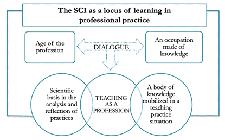
This formative conception of SCI provides an opportunity for learning scientifically grounded practice as an area of knowledge (Pimenta; Lima, 2012), with the guiding elements of teaching practices being the epistemology of professional practice, action research, and the process of analysis and reflection. This internship perspective ratifies the understanding of teaching as a profession (Nóvoa, 2019; Altet, 2016), whose professional training is supported by a body of knowledge mobilized in teaching practice situations, permeating the construction and reconstruction of a set of knowledge used by teachers in the school environment, which can support the learning of professional practice in SCI.
This understanding is based on the idea of initial training permeated by the analysis, reflection, and socialization of experienced and acquired professional knowledge, in which the internship is understood as a locus and a fertile space for future teachers to understand that the process of learning to teach continues throughout their career, supporting the professional development of teachers (Roldão, 2017).
Thus, learning the professional practice of teaching is a formative paradigm based on the understanding of the teacher not as a technician, but as a “practitioner,” given that teaching cannot be merely the application of techniques. Above all, it must be a critically reflected action, grounded in and socialized within the collective space (Tardif; Moscoso, 2018) of a community of practice (Batista, 2020), in which the institutions and agents involved can share and build professional knowledge, aiming at professional learning.
FINAL CONSIDERATIONS
When presenting considerations on the cartography of SCI in PE teacher training in the Brazilian Amazon, it is necessary to revisit the objective of this study. Therefore, we sought to analyze the organizations and training concepts of internships present in the official documents of the educational institutions studied and the views of the supervising teachers, seeking to identify elements that characterize the teaching stages in the professionalization process in the field of PE, in the context studied.
The results highlight a diversity of training concepts of SCI, given the coexistence of nuances/characteristics that allude to the three stages of teaching: vocation, occupation, and profession. Thus, the coexistence of elements of different orientations was implicitly verified in the same teacher training program (Feiman-Nemser; Parker; Zeichner, 1993), with the prevalence of one age or another, based on contradictions between what is established in the guiding documents and what is practiced, in the perception of the internship POs, at the investigated institutions.
The starting point is the understanding that the PPC is, or should be, a collective construction, in the sense that it outlines the conception of internship from both organizational and training perspectives, rather than merely being a tool to comply with legislation (Carvalho Filho; Brasileiro, 2020). In addition, underlying the considerations of the teachers surveyed, issues related to their training trajectories and internship guidance practices emerged. In this context, we observe the presence of conceptions linked to the age of vocation and the age of the profession, which also bring with them, interconnected, indications and interpretations of statements about the idea of teaching as a profession (Nóvoa, 2019; Tardif, 2013b; Ramalho, Nuñez, Gauthier, 2004). These conceptions are observed in the historical-social structure of the teaching professionalization process, in research, and legal aspects related to teacher training (Brasil, 2002; 2015), attributing, over time, the locus and central axis of learning professional practice to the SCI (Souza Neto; Cyrino; Borges, 2019).
Despite some contradictions, peculiar indicators also emerged regarding the organizational aspects of the internship centers at two institutions (U3 and U8). In addition to the presence of a CE, these institutions have a distinct configuration, with six to nine permanent POs. These teachers work on the course every semester, supervising small groups of interns and employing training tools that align with a preliminary idea of supervision (in the case of U3) and monitoring (in the case of U8) by the university during the SCI phases/activities. Thus, they assist in the process of analyzing and reflecting on the daily training activities at the school and in the development of the RE (CE/PO1, U8), revealing, even sporadically, the development of a coordinated effort by the POs of the SCI at these two institutions.
However, given the limitations of studies of this nature, it is necessary to examine these findings in greater depth. To achieve this, we need to use other research instruments and techniques, enabling immersion in the formative spaces of the SCI, both in the university orientation process and in the teaching practices of internships in schools. This process should involve the participation of all agents and seek elements indicative of a pedagogy of SCI training in undergraduate PE programs.
Thus, it is important to break away from the perspective of initial training and SCI based on the imitation of bureaucratic and instrumental model characteristics of artisanal and technical instrumentalization models, giving way to an understanding of internships as professional learning. In this understanding, instituted and instituting formation occur through the mobilization and acquisition of specific knowledge, as well as being grounded in teaching and having as a foundation the epistemology of professional practice (Tardif, 2013b). To this end, it is suggested that the SCI be built in a common space (Nóvoa, 2019), situated on the border between initial and continuing education, with professional socialization among the agents involved in the critical-reflective analysis process as a formative element, based on the dynamics and social interactions that permeate practices in the teaching professionalization process.
References
- ALTET, Margatrite. Profissionalização do ofício de professor e da formação em questão: explorar as contribuições da pesquisa para fortalecer refundar a profissão. In: SPAZZIANI, M. de L. (org.). Profissão de professor: cenários, tensões e perspectivas. São Paulo: Editora Unesp, 2016. p. 39-66.
-
AMARAL-DA-CUNHA, Mariana de S.; BATISTA, Paula; GRAÇA, Amândio. A construção da identidade profissional do professor cooperante de Educação Física. Journal of Sport Pedagogy and Research, n. 7, v. 2, p. 41-51, 2020. DOI: https://doi.org/10.47863/JMBB7646.
» https://doi.org/10.47863/JMBB7646 - ANPED. Associação Nacional de Pós-Graduação e Pesquisa em Educação. Ética e pesquisa em Educação: subsídios. Rio de Janeiro: ANPEd, 2019. 133 p., v. 1.
-
AZEVEDO, Carlos E. F.; OLIVEIRA, Leonel G.; GONZALES, Rafael K.; ABDALLA, Márcio M. A Estratégia de Triangulação: Objetivos, Possibilidades, Limitações e Proximidades com o Pragmatismo. In: IV ENCONTRO DE ENSINO E PESQUISA EM ADMINISTRAÇÃO E CONTABILIDADE - ENEPQ. Anais [...]. Brasília, DF: Associação Nacional de Pós-Graduação e Pesquisa em Administração - ANPAD, 2013, p. 1-16. Disponível em: <Disponível em: https://arquivo.anpad.org.br/abrir_pdf.php?e=MTY2MDU= >. Acesso em: 20/05/2019.
» https://arquivo.anpad.org.br/abrir_pdf.php?e=MTY2MDU= -
BARRA, Valdeniza M. L. O estatuto do trabalho do professor da escola: desafio político para os cinquenta anos do estágio. Revista Educação em Questão, Natal, v. 58, n. 55, p. 1-20, e-18105, jan./mar. 2020. DOI: http://dx.doi.org/10.21680/1981-1802.2020v58n55ID18105.
» https://doi.org/10.21680/1981-1802.2020v58n55ID18105 - BATISTA, Paula. O potencial formativo e os desafios às práticas de supervisão em comunidades de prática: Reflexão sustentada numa experiência pedagógica em contexto de estágio de educação física. In: RIBEIRO, A. I. et al (org.). A supervisão pedagógica no século XXI: desafios da profissionalidade docente. Coimbra: Imprensa da Universidade de Coimbra, 2020. p. 45-64.
- BENITES, Larissa C. O professor-colaborador no estágio curricular supervisionado em educação física: perfil, papel e potencialidades. Tese (Doutorado em Ciências da Motricidade). Rio Claro: Universidade Estadual Paulista, 2012.
-
BOURDONCLE, Raymond. Autour des mots Professionalisation, Formes et Dispositifs. Recherche et Formation, n. 35, p. 117-132, 2000. Disponível em: <Disponível em: https://www.persee.fr/doc/refor_0988-1824_2000_num_35_1_1674 >. Acesso em: 15/03/2020.
» https://www.persee.fr/doc/refor_0988-1824_2000_num_35_1_1674 - BRASIL. Lei n.º 9.394, de 20 de dezembro de 1996 Estabelece as Diretrizes e Bases da Educação Nacional. Brasília, 1996.
- BRASIL. Resolução CNE/CP nº. 1/2002, de 18 de fevereiro de 2002 Estabelece as Diretrizes Curriculares Nacionais para a Formação de Professores da Educação Básica, em nível superior, curso de licenciatura, de graduação plena. Brasília, 2002.
- BRASIL. Resolução CNE/CP n.º 7/2004, de 31 de março de 2004 Estabelece as Diretrizes Curriculares Nacionais para os cursos de graduação em Educação Física, em nível superior de graduação plena. Brasília, 2004.
- BRASIL. Lei n.º 11.788, de 25 de setembro de 2008 Dispõe sobre o estágio de estudantes; altera a redação do art. 428 da Consolidação das Leis do Trabalho - CLT, aprovada pelo Decreto-Lei n.º 5.452, de 1.º de maio de 1943, e a Lei n.º 9.394, de 20 de dezembro de 1996; revoga as Leis n.ºs 6.494, de 7 de dezembro de 1977, e 8.859, de 23 de março de 1994, o parágrafo único do art. 82 da Lei n.º 9.394, de 20 de dezembro de 1996, e o art. 6.º da Medida Provisória n.º 2.164-41, de 24 de agosto de 2001; e dá outras providências. Brasília, 2008.
- BRASIL. Resolução CNE/CP n.º 2/2015, de 02 de julho de 2015 Estabelece as Diretrizes Curriculares Nacionais para a formação inicial em nível superior (cursos de licenciatura, cursos de formação pedagógica para graduados e cursos de segunda licenciatura) e para a formação continuada. Brasília, 2015.
- BRASIL. Resolução CNE/CES n.º 06/2018 Estabelece as Diretrizes Curriculares Nacionais dos Cursos de Graduação em Educação Física. Brasília, 2018.
- BRASIL. Resolução n.º 2, de 20 de dezembro de 2019. Estabelece as Diretrizes Curriculares Nacionais para a Formação Inicial de Professores para a Educação Básica e Base Nacional Comum para a Formação Inicial de Professores da Educação Básica (BNC-Formação) . Brasília, 2019.
- CARVALHO FILHO, Josué José de; BATISTA, Paula; SOUZA NETO, Samuel de. O estágio supervisionado em educação física no Brasil: uma scoping review de teses e dissertações. Movimento, v. 27, p. 1/e27055-28, 2021.
- CARVALHO FILHO, Josué José de; BRASILEIRO, Tânia Suely Azevedo. A formação do professor de educação: reflexões a partir do estágio supervisionado. Curitiba: Appris, 2020.
- CONTRERAS, José. Autonomia de professores Tradução de Sandra Trabusco Valenzuela. 2. ed. São Paulo: Cortez, 2009.
- CRESWELL, John W.; PLANO CLARK, Vicki L. Designing and conducting mixed methods research 2nd ed. Los Angeles: SAGE Publications, 2011.
- CYRINO, Marina. Do acolhimento ao acompanhamento compartilhado: construção colaborativa de uma proposta para o estágio curricular supervisionado no curso de pedagogia. Tese (Doutorado em Educação). Rio Claro: Universidade Estadual Paulista, 2016.
- DELEUZE, Gilles; GUATTARI, Félix. Mil Platôs: capitalismo e esquizofrenia. Rio de Janeiro: Ed. 34, 1995. v. 1.
- FEIMAN-NEMSER, Sharon; PARKER, Michelle B.; ZEICHNER, Kenneth. Professores orientadores são educadores de professores? In: MCINTYRE, D. et al (ed.). Mentoring Londres: Kogan Page, 1993.
- GAUTHIER, Clermont; MATINEAU, Stéphane; DESBIENS, Jean-Francois; MALO, Annie; SIMARD, Denis. Por uma teoria da pedagogia: Pesquisas contemporâneas sobre o saber docente. Tradução de Francisco Pereira. Ijuí, RS: Ed. Unijuí, 1998.
- GIL, Antônio C. Métodos e técnicas de pesquisa-social 7. ed. São Paulo: Atlas, 2019.
-
HARGREAVES, Andy. Four Ages of Professionalism and Professional Learning. Teachers and Teaching. History and Practice, v. 6, n. 2, p. 151-182, 2000. Disponível em: <Disponível em: https://www.tandfonline.com/doi/abs/10.1080/713698714 >. Acesso em: 13/09/2020.
» https://www.tandfonline.com/doi/abs/10.1080/713698714 - HILL, Manuela Magalhães; HILL, Andrew. Investigação por Questionário 2. ed. Lisboa: Edições Sílabo, 2009.
- HOLMES GROUP. Tomorrow’s teachers: A report of the Holmes Group. East Lansing: Holmes Group, 1986.
-
IZA, Dijnane; SOUZA NETO, Samuel de. Os desafios do Estágio Curricular Supervisionado em Educação Física na parceria entre universidade e escola. Movimento, v. 21, n. 1, p. 111-124, 2015. DOI: https://doi.org/10.22456/1982-8918.41542.
» https://doi.org/10.22456/1982-8918.41542 - MAFFEI, Willer S. Prática como componente curricular e estágio supervisionado na formação de professores de educação física. Revista Motrivivência, v. 26, n. 43, p. 229-244, dez. 2014.
- MATTOS, Mauto; G , Adriano J. R.; BLECHER, Shelly JÚNIOR . Metodologia da pesquisa em educação física: Construindo sua monografia, artigos e projetos. 3. ed. São Paulo: Phorte, 2008.
- MILES, Matthew B.; HUBERMAN, Michael A.; SALDAÑA, Johnny. Qualitative Data Analysis: A Methods Sourcebook and The Coding Manual for Qualitative Researchers. Thousand Oaks: SAGE, 2014.
- NEIRA, Marcos G.; EHRENBERG, Mônica C. Análise da proposta de estágio na licenciatura em Educação Física da Universidade de São Paulo. Olh@res, v. 1, n. 1, p. 325-348, maio 2013.
- NÓVOA, António. Entre a formação e a profissão: ensaio sobre o modo como nos tornamos professores. Currículo sem Fronteiras, v. 19, n. 1, p. 198-208, jan./abr. 2019.
-
OLIVEIRA, Dalila A. Os trabalhadores em educação e a constituição política da profissão docente no Brasil. Educar em Revista, Curitiba, n. especial 1, p. 17-35, 2010. Disponível em: <Disponível em: https://www.scielo.br/j/er/a/8KJhphGKx8FRDKFHWkN6Yhs/?format=pdf >. Acesso em: 04/04/2020.
» https://www.scielo.br/j/er/a/8KJhphGKx8FRDKFHWkN6Yhs/?format=pdf - PATTON, Michael Q. Qualitative Research and Evaluation Methods 3. ed. California: Sage Publications, 2002.
- PIMENTA, Selma G.; LIMA, Maria S. L. Estágio e docência 7. ed. São Paulo: Cortez , 2012.
- QUEIRÓS, Paula; GRAÇA, Amândio. A análise de conteúdo (enquanto técnica de tratamento de informação) no âmbito da investigação qualitativa. In: MESQUITA, I.; GRAÇA, A. (org.). Investigação qualitativa em desporto Porto: Porto Editora, 2013. v. 2, p. 115-149.
- RAMALHO, Betania L.; NUÑEZ, Isauro. B.; GAUTHIER, Clermont. Formar o professor, profissionalizar o ensino: perspectivas e desafios. 2. ed. Porto Alegre: Sulina, 2004.
-
REIS, Adriana T.; ANDRÉ, Marly A. D.; PASSOS, Lurizete F. Políticas de Formação de Professores no Brasil, pós LDB 9.394/96. Formação Docente, Belo Horizonte, v. 12, n. 23, p. 33-52, fev. 2020. Disponível em: <Disponível em: https://revformacaodocente.com.br/index.php/ rbpfp/article/view/289 >. Acesso em 20/03/2021.
» https://revformacaodocente.com.br/index.php/ rbpfp/article/view/289 - RIBEIRO, Rodrigo C.; VEDOVATTO, Dijnane. Estágio supervisionado em educação física: processos de iniciação à docência. 1. ed. Curitiba: Editora CRV, 2019 (Coleção Docência, Formação de Professores e Práticas de Ensino, v. 4).
- ROLDÃO, Maria do Céu N. Formação de professores e desenvolvimento profissional. Revista de Educação, PUC-Campinas, Campinas, SP, v. 22, n. 2, p. 191-202, maio/ago. 2017. Disponível em: <www.educa.fcc.org.br/pdf/edpuc/v22n2/1519-3993-edpuc-22-02-00191.pdf>. Acesso em: 20/08/2020.
-
RUFINO, Luiz G. B.; BENITES, Larissa C.; SOUZA NETO, Samuel de. Análise das práticas e o processo de formação de professores de educação física: implicações para a fundamentação da epistemologia da prática profissional. Movimento, Porto Alegre, v. 23, n. 1, p. 393-406, jan./mar. 2017. DOI: 10.22456/1982-8918.62108.
» https://doi.org/10.22456/1982-8918.62108 -
RUFINO, Luiz G. B.; SOUZA NETO, Samuel de. A configuração do campo da formação de professores na educação física: do paradigma artesanal ao profissional. Cadernos de Pesquisa, São Luís, v. 28, n. 2, p. 65-89, abr./jun. 2021. DOI: 10.18764/2178-2229.v28n2.202118.
» https://doi.org/10.18764/2178-2229.v28n2.202118 - RUGIU, Antonio Santoni. Nostalgia do mestre artesão Autores Associados, 1998.
-
SAVIANI, Dermeval. Formação de professores: aspectos históricos e teóricos do problema no contexto brasileiro. Revista Brasileira de Educação, v. 14 n. 40, jan./abr. 2009. DOI: https://doi.org/10.1590/S1413-24782009000100012.
» https://doi.org/10.1590/S1413-24782009000100012 -
SHULMAN, Lee. Knowledge and teaching: foundations of the new reform. Harvard Educational Review, v. 57, n. 1, p. 1-23, fev. 1987. Disponível em: <Disponível em: https://pt.scribd.com/document/259629047/Shulman-L-S-1987-Knowledge-and-Teaching-Foundations-of-the-New-Reform-Harvard-Educational-Review-57-1-1-23 >. Acesso em: 10 /03/2020.
» https://pt.scribd.com/document/259629047/Shulman-L-S-1987-Knowledge-and-Teaching-Foundations-of-the-New-Reform-Harvard-Educational-Review-57-1-1-23 -
SILVESTRE, Magali A. Modelos de Formação e Estágios Curriculares. Formação Docente, v. 3, n. 5, p. 30-45, ago./dez. 2011. Disponível em: <Disponível em: https://revformacaodocente.com.br/index.php/rbpfp/article/view/44 >. Acesso em: 03/03/2020.
» https://revformacaodocente.com.br/index.php/rbpfp/article/view/44 -
SMALL, Mario L. How to Conduct a Mixed Methods Study: Recent Trends in a Rapidly Growing Literature. Annual Review Sociology, v. 37, p. 57-86, 2011. Disponível em: <Disponível em: https://scholar.harvard.edu/files/mariosmall/files/small_ars_2011.pdf >. Acesso em: 05/06/2020.
» https://scholar.harvard.edu/files/mariosmall/files/small_ars_2011.pdf -
SOUZA NETO Samuel de; ALEGRE, Atilio de Nardi; HUNGER, Dagmar; PEREIRA, Juliana Martins. A Formação do Profissional de Educação Física no Brasil: uma história sob a perspectiva da legislação federal no século XX. Rev. Bras. Cienc. Esporte, v. 25, n. 2, p. 113-128, jan. 2004. Disponível em: <Disponível em: http://revista.cbce.org.br/index.php/RBCE/article/view/230/232 >. Acesso em 04/04/2020.
» http://revista.cbce.org.br/index.php/RBCE/article/view/230/232 -
SOUZA NETO Samuel de; CYRINO, Marina; BORGES, Cecília. O estágio curricular supervisionado como lócus central da profissionalização do ensino. Revista Portuguesa de Educação, v. 1, n. 32, p. 52-72, 2019. DOI: https://doi.org/10.21814/rpe.13439.
» https://doi.org/10.21814/rpe.13439 -
SOUZA NETO, Samuel de; BORGES, Cecilia; AYOUB, Eliana. Formação de professores na contemporaneidade: desafios e possibilidades da parceria entre universidade e escola. Pro Posições, v. 32, p. 1-10, e20180084EN, 2021. DOI: http://dx.doi.org/10.1590/1980-6248-2021-0031.
» https://doi.org/10.1590/1980-6248-2021-0031 -
TARDIF, Maurice. A profissionalização do ensino passados trinta anos: dois passos para a frente, três para trás. Educação & Sociedade, v. 34, n. 123, p. 551-571, abr./jun. 2013a. Disponível em: <Disponível em: https://www.scielo.br/j/es/a/LtdrgZFyGFFwJjqSf4vM6vs/ >. Acesso em: 12/01/2021.
» https://www.scielo.br/j/es/a/LtdrgZFyGFFwJjqSf4vM6vs/ - TARDIF, Maurice. Saberes Docentes e Formação Profissional 15. ed. Petrópolis, RJ: Vozes, 2013b.
-
TARDIF, Maurice; MOSCOSO, Javier. N. A noção de “profissional reflexivo” na educação: atualidade, usos e limites. Cadernos de Pesquisa, v. 48, n. 168, p. 388-411, abr./jun. 2018. DOI: https://doi.org/10.1590/198053145271.
» https://doi.org/10.1590/198053145271 - VASQUES, Andreia. L. P. Modelos de formação docente no âmbito da Política Nacional de Formação de Profissionais do Magistério da Educação Básica: pressupostos, ações e dispositivos formativos. Tese (Doutorado em Educação). Rio Claro: Universidade Estadual Paulista, 2019.
- VICENTINI, Paula P.; LUGLI, Rosário G. História da Profissão Docente no Brasil: representações em disputa. São Paulo: Cortez , 2009.
- ZABALZA, Miguel. A. O estágio e as práticas em contextos profissionais na formação universitária São Paulo: Cortez , 2014.
-
ZEICHNER, Kenneth. Repensando as conexões entre a formação na universidade e as experiências de campo na formação de professores em faculdades e universidades. Revista do Centro de Educação, v. 35, n. 10, p. 479-504, set./dez. 2010. DOI: https://doi.org/10.5902/198464442357.
» https://doi.org/10.5902/198464442357
-
1
In this work, the word “cartography” is not used as a method or procedure of analysis linked to intervention research, nor as a cartographic path, in the sense formulated by Deleuze and Guattari (1995), But rather as a synonym for mapping, data collection and exploratory/descriptive research in the context of the Brazilian Amazon.
-
2
Article published with funding from theConselho Nacional de Desenvolvimento Científico e Tecnológico- CNPq/Brazil for editing, layout and XML conversion services.
-
3
The research was submitted to Plataforma Brasil, addressed to the CEP, under CAAE number: 08094919.7.00005465, and approved by Opinion No. 3,255,897, on April 10, 2019.
-
4
The letter (f) was used to symbolize the frequency of responses.
The content underlying the research text is contained in the manuscript
History
-
Received
12 Apr 2022 -
Preprint posted on
01 Apr 2022
10.1590/SciELOPreprints.3874 -
Accepted
08 Aug 2024

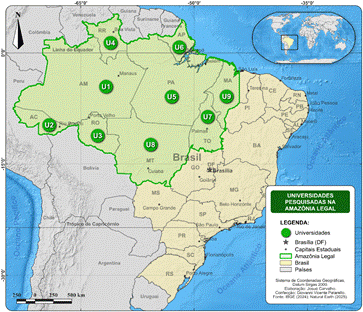 Source: created by the authors (2019).
 Source: prepared by the authors, based on questionnaires (2019).
 Source: prepared by the authors, based on questionnaires (2019).
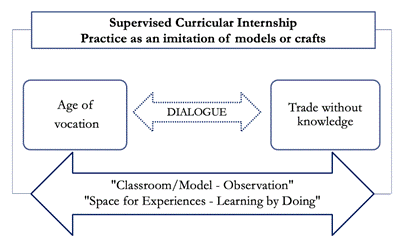 Source: prepared by the authors (2019).
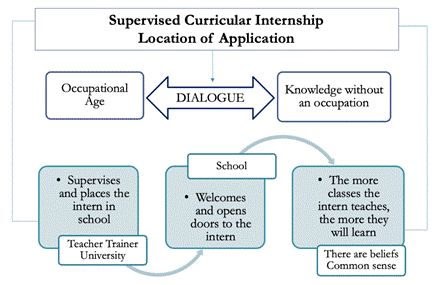 Source: prepared by the authors (2019).
 Source: prepared by the authors (2019).