
 Grammar in Text Production: a functional and inclusive proposal
Abstract
The goal of this article is to analyze how the use of a functional grammar can contribute to the formation of students’ linguistic and textual competences regarding the production of the dissertative-argumentative text, since, despite the theoretical advances, Brazilian students do not present the basic competences to enter the University, according to the results demonstrated in Enem. The research is descriptive, exploratory and qualitative in nature. In the data analysis, the Textual Analysis of Discourses (ATD), proposed by Jean-Michel Adam, was used, since the corpus of the investigation consisted of interviews and texts.
Keywords
Essay-Argumentative Text; Grammar; Linguistic Competence; Textual Competence; Portuguese Language Teaching
Resumo
O objetivo deste artigo é analisar como o uso de uma gramática funcional pode contribuir para a formação das competências linguística e textual dos alunos, no que concerne à produção do texto dissertativo-argumentativo, uma vez que, não obstante os avanços teóricos, a maioria dos alunos brasileiros não apresenta as competências básicas para adentrar a Universidade, conforme os resultados demonstrados no Enem. A investigação é descritiva, possui natureza exploratória e qualitativa. Na análise dos dados, foi utilizada a Análise Textual dos Discursos (ATD), proposta por Jean-Michel Adam, uma vez que o corpus da investigação foi constituído de entrevistas e textos.
Palavras-chave
Competência Linguística; Competência Textual; Ensino de Língua Portuguesa; Gramática; Texto Dissertativo-Argumentativo
Introdução
This article was constructed based on data from a doctoral thesis that addresses the use and contributions of grammar in the production of dissertation-argumentative text, taking into account the difficulties and low proficiency of students in their mother tongue, whose linguistic and textual skills have demonstrated to be below expectations for those who complete basic education. The study involved two state public schools, with teachers and students as subjects. The investigation revealed a complex and controversial scenario, full of doubts as to what and how to teach so that students can develop these skills and, more specifically, critical thinking.
In this scenario of uncertainty, the study also considered the fact that grammar, an instrument used for years in Portuguese language classes, has been giving rise to questions and controversies, which has triggered some changes in the ways of teaching, although none of them, to what we managed investigation, has, so far, been able to reverse the failure situation to which these students have been subjected, especially those from the lower classes.
In view of such controversies, in this study we start from the concept of grammar as “[...] linguistic knowledge that the speaker of a language develops within certain limits imposed by his own human genetic endowment, under conditions of a social and anthropological nature” (Travaglia, 2009, p. 28). This is the internalized grammar that each speaker has. And we consider that, based on this knowledge, other types of grammar can and should be addressed, considering the social character of the language and the fact that Brazil is a stratified country.
It is worth highlighting that, with the democratization of education in Brazil, which began in the 1990s, Brazilian schools began to receive students from the most diverse backgrounds, from an economic, social and cultural point of view. Arroyo (2010) calls this new entry new social collectives and, in the author’s view, despite the inequality they present, they have the right to constitute themselves as subjects of social policies. However, in the creation of curriculum and the definition of evaluation criteria, their voices seem to have been ignored, because, according to Soares (2017), if there was democratization of access to school for the popular classes, there was no democratization of that same school, which resulted in the failure of students belonging to these layers. According to the author, there is a conflict between the linguistic standard that the school uses and wants to see used and that used by students, which constitutes a factor of censorship, stigmatization and failure for them.
The fact is that, before that, there was a certain consensus regarding the teaching of the standard norm of the Portuguese language and its grammar, whose prescriptions were not questioned, on the contrary, they were considered legitimate. Nor were there any major difficulties in understanding them, since, from what we could infer, speakers and grammar came from the same origin. But, upon entering the school, those new subjects, historically and socially ignored, put an end to this consensus. Since then, discussions and controversies have often emerged in the teaching of the Portuguese language, especially about why to teach a language to those who already speak it and about how and what to teach.
This is because language has a social and cultural nature and imposing a standard as legitimate could ratify the common sense that there are superior and inferior cultures, although this is done for the sake of standardization in the written form of the language. As we can see, the issue is linguistic, but it is also sociological, as the school imposes a linguistic standard, whose choice criteria are social and, therefore, strongly corroborated by the economic bias, since it concerns linguistic variety used by the ruling classes.
Corroborating this assertion, Pierre Bourdieu (1998) demonstrates how the School reproduces the class system, what mechanisms it uses to select one knowledge to the detriment of another, how it legitimizes one culture over others, while introducing Sociology of Education concepts such as habitus, symbolic violence, economic capital, symbolic capital, cultural capital and linguistic capital, concepts that supported much of our research, including because we cannot deal with linguistic skills without considering the society in which the language is produced.
The fact is that Bourdieu’s studies shook the convictions that had been guiding teaching in general and, in particular, Portuguese Language, until then based on norms and normative grammar and their set of prescriptions on how to speak and write correctly. To this, theories such as linguistic pragmatics, conversation analysis, sociolinguistics, among other linguistic theories were also added, which brought many theoretical contributions, which significantly expanded the object of language study, but also contributed to destroy the conceptions that supported his teaching.
The results of this are very evident when students are assessed. In Brazil, this became clearer after the education reform, carried out in the 1990s, when the Brazilian State defined large-scale assessment policies, the so-called standardized assessments. The results constituted a way of highlighting and institutionalizing the failure of public-school students, since low performances have persisted since then, as demonstrated by the results released by the Basic Education Assessment System (Saeb).
In percentage terms, it is important to remember that in the National High School Examination (Enem), from 2013 to 2017, the number of students who reached the maximum level of proficiency in relation to the total number of corrected essays, that is, a grade of 1,000, is almost insignificant in relation to the total number of corrected essays (MEC/INEP, 2017). In addition to there being a decline each year, from 2009 to 2017, in this last year, no student achieved the maximum score. On the other hand, the percentage of essays in the minimum proficiency range is quite significant, compared to the maximum proficiency range. This means that many students who take the exam have not developed the necessary skills to be proficient in their own mother tongue.
Meanwhile, language scholars debate theories that often seem not to have reached school, at least not with the necessary depth to provide teachers with discernment as to what and how they should teach so that the student acquires communicative skills. And, in the desire to make the student adhere to the so-called cultured norm of the language, there is a risk of imposing that he learns and grasps a linguistic pattern that is foreign to him without considering that he already has an internalized grammar (Possenti, 1996; Travaglia, 2009), which should be the starting point for his learning, and that he is a speaker, in many cases, skilled in communication, using the form of expression that constitutes the habitus. acquired in their environment (Bourdieu, 1998).
In view of these issues, the study’s research problem was the following central question: how can the use of grammar contribute to the formation of students’ linguistic and textual skills? Other questions are also complementary to the study, among which the following stand out: how do teachers establish their discursive representations regarding the teaching of the Portuguese language, about the use of grammar? How to make the use of grammar in textual production more functional?
Considering all these questions depends, to a large extent, not only on the conceptions that teachers have about how to teach and learn, but, mainly, about grammar and language. In view of this, the general objective of the study was to analyze how the use of grammar can contribute to the formation of students’ linguistic and textual skills, in the production of the dissertation-argumentative text. The specific objectives were: to analyze the discursive representations of teachers and students regarding the teaching of the Portuguese language; present didactic-methodological guidelines for the production of the dissertation-argumentative text.
The research was motivated by the thousands of young Brazilian students who needed and still need to develop communicative competence, especially linguistic and textual skills, so required in exams, competitions, the job market, etc. They are mainly public-school students, where the popular classes are concentrated and, evidently, those who most need this development. In this context, the schools in Maranhão, where the research was carried out, were and continue to be an inexorable part of this reality with performances whose average, in the last ten years, was always around 50% of the total evaluation, both in tests involving the entire Area of Languages, Codes and their Technologies (MEC/INEP, 2007, 2014, 2017), as well as in the writing of the essay, exposing a picture of failure and exclusion, with regard to the occupation of places in universities, which leads to the assumption that also in access to jobs.
The study hopes to contribute as a theoretical and didactic-methodological contribution to Portuguese language teachers, through dialogue and socialization of didactics and a more functional and inclusive teaching practice, which reverberates in the teaching and learning process more effectively. To this end, it is structured as follows: introduction; study methodology; grammar and communicative-discursive competence; discursive representations of teachers and students about the use of grammar; didactic guidelines to produce the dissertation-argumentative text; final considerations.
Study Methodology
This research had exploratory and descriptive purposes. According to Gil (2012), a study is exploratory when the purpose is to develop, clarify and modify concepts and ideas. It is descriptive, as it falls within the field of research that aims to describe the characteristics of a group (Gil, 2012). In this specific case, the focus is on the discursive representations of teachers and students, whose dissertation-argumentative texts were also the object of analysis.
Regarding the approach, the research is qualitative in nature, since “[...] it works with the universe of meanings, motives, aspirations, beliefs, values and attitudes” (Minayo, 2013, p. 21). This option considered the type of responses we intended to obtain in relation to the way teachers and students express themselves in the face of teaching practices developed in Portuguese, which is not possible to measure, but in which it is possible to interpret and describe the meanings of the speeches of these subjects.
As for the analysis method, Textual Discourse Analysis (ATD) was used, since it is “[...] a theory of the co(n)textual production of meaning that must, necessarily, be based on the analysis of concrete texts” (Adam, 2011, p. 13). The option for this methodology also arises from the fact that language and discourse, as objects of communication, “[...] are also relations of symbolic power where relations of force between speakers and their respective groups take place” (Bourdieu, 1998, p. 24). Furthermore, ATD incorporates the vision of how the text constructs meaning, at the same time that it considers the role of Textual Linguistics (TL) in that “[...] it concerns both the description and definition of the different units and the operations, at all levels of complexity, which are carried out on the statements” (Adam, 2011, p. 63).
Thus, ATD considers that “Every text constructs, with greater or lesser explicitness, a discursive representation of its enunciator, its listener or reader and the themes or subjects that are treated” (Adam, 2011, p. 173). In view of this, the analysis focused on the Discursive Representations (RDs) of the research subjects. Conceptually, “[...] every discursive representation [RD] is the expression of a point of view [POS] [...]” (Adam, 2011, p. 113).
The research subjects were 4 (four) teachers and 10 (ten) students, of which 5 (five) had higher performance and 5 (five) had lower performance. The corpus of analysis for the construction of the thesis was constituted in two ways: 1) Rds of high school teachers and students; 20 (twenty) texts produced by the students, of which 10 (ten) were produced without using the cognitive scheme of the argumentative text and the other 10 (ten) were produced based on a cognitive scheme that we proposed. For this section, we only used a text that exemplifies the work and from which we draw on the guidelines of both the first and the others. The names used are pseudonyms, given the confidentiality of the research. And the categories that guide the study presented here are presented in the following table:
These categories defined the questions for the semi-structured interview, whose answers gave us the RDs of the teachers and students participating in the research, which was very important for us to understand how Portuguese language classes often go and what perspectives these subjects may have in the which concerns the teaching and learning process, as we now describe.
Although it was an interview guide with 22 questions, in this article, we reduced the questions for the purpose of summarizing the study. For the teachers, we established the following questions: How does Internalized Grammar articulate with formal grammars? Do you use Normative Grammar? If yes, how often? For the students, the questions were as follows: 1) Does your teacher use Grammar in the classroom? If yes: How often? How does he use it? 2) Which linguistic activities are most common in Portuguese language classes?
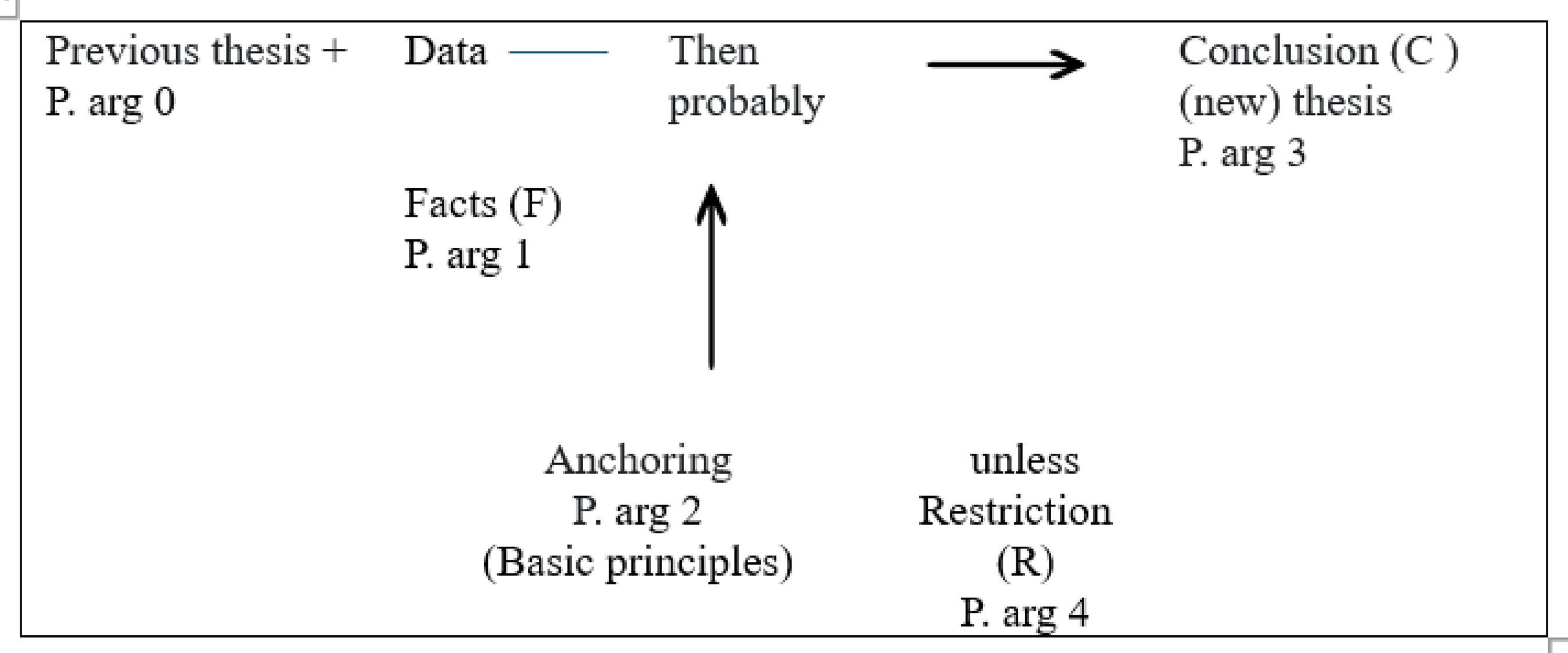
To produce the dissertation-argumentative text, we consider this cognitive scheme in which the author presents argumentative procedures ranging from 0 to 4:
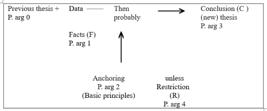
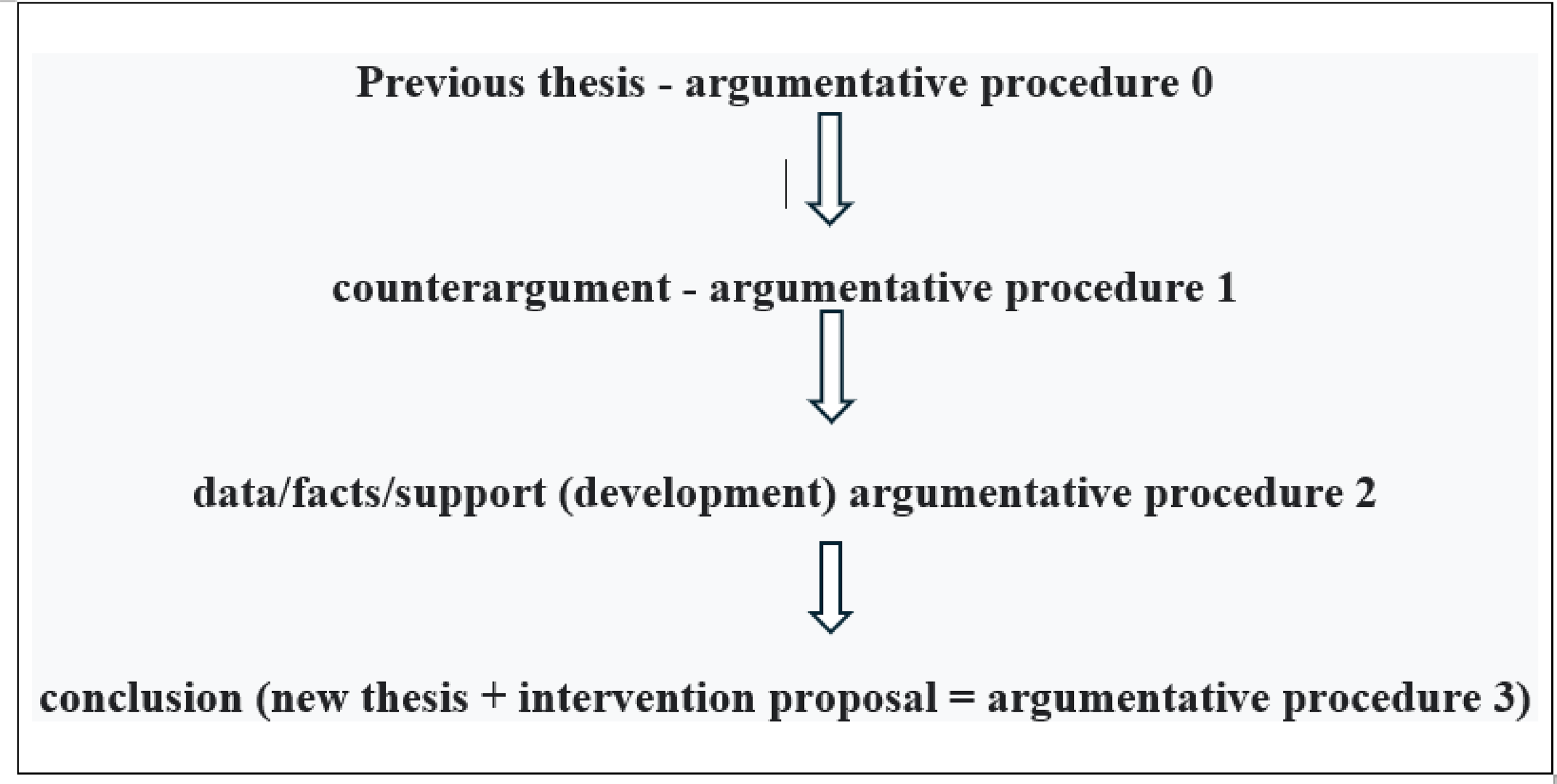
From this, we developed another scheme, including the intervention proposal that is required of them in Enem and made it available to the teacher so that she could use it in the classroom, which was done, as we will present in the analysis and discussion of the results.

For didactic purposes and better understanding, we developed and organized the basic concepts that support this study in the following order: grammar concepts; what competence means; and what are the skills that we want to develop in students, when working on the dissertation-argumentative text.
Grammar and communicative-discursive competence: basic concepts
As we mentioned in the introduction, we start from grammar as the linguistic knowledge of a social and anthropological nature that the speaker of a language develops and is even imposed by their human genetic endowment (Travaglia, 2009). This knowledge that the author refers to is internalized grammar (IG), which is independent of schooling or any systematic learning processes, but of the activation and progressive maturation (or progressive construction), in the linguistic activity itself, of hypotheses about the whatever the language and its principles and rules (Travaglia, 2009).
Another important concept concerns normative grammar (GN), understood as “[...] that which studies only the facts of the standard language, the learned norm of a language, a norm that has become official. [...] it is another type of law that regulates the use of language in society” (Travaglia, 2009, p. 28-29). Here, what we question most are the criteria for choosing this standard, which is not due to a purely linguistic issue, but to the fact that this linguistic variety is used by the wealthier classes. This results in students in other classes being considered incompetent in using their mother tongue, when in fact they are being compelled to use a linguistic variety that is unfamiliar to them, although necessary.
When dealing with competencies, we initially consider the following general concept: “Competence is the ability to mobilize a set of cognitive resources (knowledge, capabilities, information, etc.)” (Perrenoud, 1999, p. 30). In this mobilization, when When it comes to language, students are required to develop communicative competence, which corresponds to the ability of the user of a language to use it appropriately in different communication situations (Travaglia, 2009).
Alongside this competence is necessarily the discursive competence which consists of the ability of the user, producer or receiver of text to contextualize their interaction through verbal language, adapting their textual product to the context of the situation (Travaglia, 2009). Both can be equated and involve grammatical or linguistic skills and textual competence.
By grammatical competence, we understand it as the “[...] ability to generate grammatical linguistic sequences [...] through the establishment and use of linguistic-discursive regularities” (Travaglia, 2009, p. 97). As for textual competence, it corresponds to “[...] the ability to produce, understand, classify and transform texts through the establishment and use of regularities and principles of organization and construction of the text and textual functioning (Travaglia, 2009, p. 97-98).
However, when thinking about competence, we cannot leave aside some of Bourdieu’s concepts, given the complementarity in understanding this investigation, especially regarding the social place that students from lower classes occupy and how this is reflected in their language practices. Therefore, the following are important:
Cultural capital, which comprises knowledge, skills, information, etc., corresponding to the set of intellectual qualifications produced and transmitted by the family, and by school institutions [...] social capital, corresponding to the set of social accesses, which understands the relationship and network of contacts; symbolic capital, corresponding to the set of rituals of social recognition, and which includes prestige, honor, etc. Symbolic capital is a synthesis of the others (cultural, economic and social)
(Bourdieu, 1984 apud Thiry-Cherques, 2006, p. 39, emphasis added).
When it comes to language, it is important to consider that “The school system has the necessary delegated authority to universally exercise a lasting inculcating action in matters of language” (Bourdieu, 1998, p. 50). This implies understanding the concept of habitus proposed by the author. For him, “[...] habitus is a capital that, when incorporated, presents itself with the appearance of something innate” (Bourdieu, 1983, p. 104). Still in this regard, he states that they are “[...] systems of durable and transposable dispositions [...] generating and organizing principles of practices and representations that can be objectively adapted to their objective” (Bourdieu, 1983, p. 88).
It turns out that the school has not been satisfactorily fulfilling this role of inculcating the standard language or forging another habitus in students. We then turn to another important concept of the author that integrates cultural capital: linguistic capital. This capital occurs within what he calls the linguistic market where “[...] the conditions of objective competition are created in and through which legitimate competence can function as linguistic capital producing a profit of distinction on the occasion of each social exchange” (Bourdieu, 1983, p. 42).
And in social exchanges, it is necessary to think about the role of the power relations of symbolic systems, among which we highlight language because, through it, it is possible to establish the domination of one class over another, as it is imposed or legitimized one linguistic variety, to the detriment of others. For Bourdieu (2002), when symbolic systems fulfill the function of domination of one class over another, symbolic violence occurs.
Students need to act in this linguistic market, where they are subject to competition for the profits of distinction. And they do so in a profoundly unequal way. This inequality means that they are unable to express themselves or argue to the same extent as they need. And “[...] it is no accident that the children of the dominant classes are more successful in school culture” (Busetto, 2006, p. 128). In the linguistic market, students from less advantaged classes have against them the cultural and linguistic capital of low prestige and the fact that they are unable to learn the standard language or its grammar. And, to change the status quo, they need to master this grammar and demonstrate that they have the communicative-discursive competence, which must be materialized in the production of the dissertation-argumentative text, which, in general, is requested in assessments.
But, according to Bourdieu, the dominant culture disguises the function of division in the function of communication. This means that “[...] the culture that unites (intermediary of communication) is also the culture that separates (instrument of distinction) and that legitimizes distinctions” (Bourdieu, 2011, p. 11). It is within this function that one class dominates the other and the so-called symbolic violence is instituted, that is, when symbolic systems fulfill the political function of instruments of domination or legitimization of a culture, reinforcing relations of force (Bourdieu, 2011).
These power relations are very evident in Enem. For this reason, in this study, the methodology for applying grammar, in any of its forms, is based on the argumentative text. But the terminology used in the study is a dissertation-argumentative text, as adopted by the Enem Manual. We chose this use, not because we consider the dissertation as a textual typology, but as a writing technique, also because “[...] every statement has an argumentative value, even a simple description devoid of argumentative connectors” (Adam, 2011, p. 122). And, at school, the dissertation seems to be the most used technique to work on argumentation at school. And arguing is “[...] guiding the discourse towards certain conclusions, constitutes the fundamental linguistic act, as each and every discourse underlies an ideology, in the broadest sense of the term” (Koch, 2011, p. 17, emphasis added by the author). We also add:
[...] argumentation constitutes a structuring activity of any and all discourse, since its progression occurs precisely through argumentative articulations, so that the argumentative orientation of the statements that make up a text must be considered as a basic factor not only cohesion, but, mainly, textual coherence
(Koch, 2011, p. 21).
In relation to these argumentative articulations, we highlight that the specificity of the argumentative text lies in the fact that it contains argumentative sequences in the strict sense, whose construction procedures are predominantly argumentative (Adam, 2011). For him, the way information is organized in the text also indicates the organization of textual sequences that correspond to the text plan, created based on the intentions of the writer.
Adam claims that argumentation highlights two movements: demonstrating-justifying a thesis and refuting a thesis. He then concludes: “I proposed giving the complete prototypical argumentative sequence a form that leaves room for counter-argumentation” (Adam, 2011, p. 234). In this sense, he mentions:
An argumentative speech [...] is always situated in relation to an effective or virtual counter-speech. Argumentation is, therefore, inseparable from controversy. Defending a thesis or a conclusion consists of defending it against other theses or conclusions, in the same way that entering into a controversy does not only imply a disagreement [...], but, above all, having counterarguments. This property of argumentation – that it is subject to refutation – seems to me to be one of its fundamental characteristics, clearly distinguishing it from demonstration or deduction which, within a given system, present themselves as irrefutable
(Moeschler, 1985, p. 47 apud Adam, 2011, p. 234)
The most important thing when it comes to working on grammar is to perceive it in the text, as part of the construction strategies and mechanisms, in the connection operations in which textualization is forged. And to work on grammar in textual production, in any of its forms and modalities, it is necessary, above all, to have a detailed diagnosis of the students’ linguistic reality. Only from this point onwards will it be possible to carry out activities that help them expand their linguistic experiences, the set of expressive resources and the formulation of grammatical hypotheses. This requires continuous and gradual work. Thus, if the teaching of pure and simple grammar does not contribute effectively, it is necessary to think about it in more advanced periods of text construction, insofar as restructuring and recompositing work is established (Franchi, 2013). This strategy will materialize in the next section.
Discursive representations of teachers and students about the use of grammar
This section is guided by the RDs of teachers and students regarding the use of grammar in Portuguese language classes, taking as a reference the grammatical/linguistic skills and textual competence, which make up the communicative-discursive competence and, later, we present some didactic guidelines to produce the dissertation-argumentative text.
To work on formal grammars, it is necessary to start from the students’ GI and, later, articulate it with formal grammars. In this regard, the teachers’ Rds give us some indications of how this occurs. Of the four teachers interviewed, one claims to start from normative grammar, another compares grammars, and the others consider GI, as one combats linguistic prejudice and the other part of the linguistic variety used by students, as transcribed:
Clarice: I try not to embarrass students and I always combat linguistic prejudice. I show that what we learn at home with family and friends does not need to be rejected, but that it is necessary to be aware of the rules of normative grammar because we always need it in the most diverse everyday situations.
Violeta: Normally, I start my class by explaining the phenomenon of linguistics and sometimes taking texts that do not necessarily include the cultured variety of the language and sometimes taking the contributions of a student speaking a phrase in class, right? Showing that there is meaning there, that there is legitimacy in that speech, and there are situations in which it must, necessarily, employ a more cultured form that is the norm of prestige.
Laura: I teach by showing normative grammar and contextualizing its daily use.
Marina: I teach by comparing the two, using examples.
Regarding the first two Rds, we agree that not embarrassing students is important, just as it is also important that they understand the need to learn GN as well. It can be said that it is a good discussion to have with students, we only suggest that concrete proposals are presented beyond the exposition and that lead them to a more pragmatic exercise in situations of using the standard variety. We also agree that starting from examples that do not include the standard variety, cultured in the teacher’s terminology, is a methodological path that can contribute to the construction of linguistic competence, but the expression “sometimes” indicates that this does not always occur. From this, we were able to infer that, on some occasions, GN appears purely and simply, despite the little familiarity that students have with the linguistic variety it represents.
Regarding teacher Laura, who claims to come from GN, the predications with gerunds “showing and contextualizing”, as the verbal form already indicates, point to a continuous process in which she uses methodologies that do not come from GI, which corresponds to the variety language they already use and master. Teaching based on a grammar that is foreign to students can make learning the standard language difficult.
Let us observe what one of the students says about what the teacher teaches them:
Andrea: Yes, grammar issue, we worked, until now I see that it is the same scheme as in a private school. We work on the content, or do an assignment or take a test, like the teacher [...] does. She gives us a questionnaire with several sentences for us to modify, get the... see, classify everything correctly. So, she doesn’t really use the book, because the book is very summarized. Grammatical questions, the book only has grammatical rules and when she brings the activities from home, they are usually from Portuguese language websites, she brings us the answers, the rules, in the book. For example, on the subject of nominal agreement, she brought a sheet of 40/45 questions for us to answer, the sheet, according to the rules in the book, because in terms of activity the book doesn’t have much, it doesn’t work a lot of... there are usually 5 to 6 questions from the book.
The student’s RD shows us a methodology for resolving questions, but also one for modifying sentences. The latter can generate more effective effects. The first, however, may or may not contribute to linguistic competence, depending on the type of questions. And, according to the student, the teacher does not rely on the textbook because it only contains “rules”, which means that GN predominates in it. But this grammar is also usually included in lists of complementary exercises, which, in most cases, are repetitive and do not include an understanding of the linguistic mechanisms behind the construction of the text. An example of this are the processes of coordination and subordination, the study of which is carried out from the point of view of classification of sentences and nomenclature, as described in the teaching plans we analyzed. But the students interviewed cannot even refer by name to the classification of a sentence, so we hear and read expressions and terms that do not exist in grammar or, even, the combination of terms that are unlikely from a syntax point of view.
But when asked what they would like to learn, the RDs reveal that they do not know how to answer or even suggest what they need to learn or how they would like to be taught. On the other hand, according to their own statements, the teachers interviewed in this research include in their classes some critical points without which the teaching of any language cannot be successful. The students’ RDs confirm this, as we saw in relation to the articulation between Internalized Grammar (IG) and formal grammar and the purpose of teaching being the learning of the standard norm.
However, when observing classes and analyzing the teaching plan of the two research field schools, with regard to the methodologies used, we observed the predominant use of nomenclatures and the little specificity required when it comes to working with linguistic resources and mechanisms. in textual production, which, in some way, confirms the Enem results. Furthermore, the interviews with the students and the analysis of the texts they produced showed that, when it comes to performance, they are far below what is expected of a student who is completing Basic Education, who has spent twelve years of his life in school and should leave proficient in their own language.
On the other hand, about the use of grammar, the proposal of this study is that, maintaining the focus on the process of constructing texts, on their mechanisms of articulation, progression, lexical choice, with a special place in argumentative text, it is possible to increase students’ communicative competence. After all, language is a way of acting in/on the world and by teaching them this, teachers will have fulfilled their role in transforming the reality of those who have been denied much in a country marked by inequality and social stratification. Given this importance, we move on to analyzing the texts.
Analysis and teaching guidelines to produce the dissertation-argumentative text
The reality observed during the investigation did not prove to be effective in terms of didactic-methodological procedures for working on argumentation. This is shown in the texts we analyzed, whose problems are visible in different ways, highlighting spelling, grammatical and conceptual difficulties that remained even using the cognitive scheme we proposed. However, given that the research period was marked by strikes and extracurricular activities, we did not observe many classes. But the ones we observed were more focused on metalinguistics, that is, on language phenomena, such as verbal and nominal rules, although the examples given articulated GI and GN.
In the first school, when observing the class dedicated to textual production, the collaborating teacher considered the proximity of taking the Enem. For this reason, he thought it would be good to talk about text production to students. However, there was no textual production, in the literal sense of the text’s articulation mechanisms. The class was about the skills required in the textual production of Enem, explained with the teacher’s words, as recommendations. To do this, she was based on the Enem Participant Handbook, which contains the following:
The writing test will require you to produce a prose text, of an essay-argumentative type, on a social, scientific, cultural or political topic. The aspects to be evaluated relate to the skills that must have been developed during the years of schooling. In this essay, you must defend a thesis – an opinion regarding the proposed topic –, supported by consistent arguments, structured with coherence and cohesion, forming a textual unit. Your text must be written in accordance with the formal written form of the Portuguese language. You must also prepare a proposal for social intervention for the problem presented in the development of the text that respects human rights
(Brasil, 2016, p. 7).
These recommendations are important, but we add that text production classes should constitute the core of Portuguese language teaching. The teaching of any standard cannot be dissociated from text production, otherwise it will become a mere abstraction. These norms, originating from that year’s Enem Writing Manual, refer to a ready-made text, but they do not describe the process. They need to know what a thesis is, what the argument consists of, how the counterargument is constructed so that the text is effectively argumentative and which linguistic elements can and should be used for this. Using a base text with these elements would be important for them to observe what each of these elements constitutes in practice.
And it is in this text construction process that these norms are consolidated, it is in this process that the student can learn the articulation mechanisms and defend their points of view. It is in the mapping outline of ideas, in the use of connectors, of textual organizers, in the textual chain, that meaning will be constructed and the speech will be effective in what it proposes. We didn’t have the opportunity to observe this type of class, which doesn’t mean it doesn’t happen.
What we effectively found is that this class, instead of working on textual production, worked on text from a metalinguistic perspective. There was talk about text, but a text was not produced nor was a text taken as a basis. And the process of constructing a text involves many factors that teacher and student must be aware of, since linguistic elements are always used as a function of discursive intentionality. The objective is to influence the interlocutor, the reader. But the way these elements are arranged will define the text plan, the argumentative strategies in this specific case.
When it comes to working on grammar, the most important thing is to perceive it in the text, not as a pretext, as a body that is dissected, but as part of the strategies and mechanisms for constructing meaning, in the connection operations in which we go forging textualization. This means that even metalanguage can only be used under concrete material, preferably starting, initially, from texts produced by the students themselves. When teaching a language, we cannot do without a living laboratory. The student must realize that an oral or written text is a construction and in this construction, there are no fixed meanings that cannot be modified and that grammar is not a recipe to be memorized, but contains the forms of articulation of the language.
In the second school, where the investigation was carried out, we noticed more space dedicated to textual production, although with unsatisfactory results. In the first text we had access to, the teacher’s proposal was for the students to produce a dissertation-argumentative text whose theme was suicide, as, according to her, the city has a significant number of cases and differences of opinion on the topic they are big.
However, in these texts, even in those considered better, the sequences used, at most, were explanatory. There were no well-defined theses or solid arguments, and counter-argumentation was basically non-existent. To contribute to the teacher’s work, based on this reality, we created a table, in which we created a counter-argument proposal for each argument made by the student, as presented below. The student’s text was transcribed in full, but the connectives were highlighted in bold, including those in the argument proposal, as a way of highlighting the textual articulation mechanisms used and which define the type of textual sequences in the text.
In this text, explanatory sequences predominate, which was highlighted in the student’s text, included on the left side of Table 2. In fact, she uses more final conjunctions and to explain why she does something she uses “for” and “since”. . The thesis can be said to be scattered, but it could be summarized as follows: “Pain, despair and anguish are feelings that often lead a person to commit suicide”. But there is no counterargument, which would make the text, in fact, argumentative. All paragraphs, or all sequences, are intended to explain suicide and not to point out arguments contrary to the reasons that are being established. There is little use of textual articulators, which continues in the other texts produced in the class. The text plan is: thesis – explanatory sequence 1 – explanatory sequence 2 – conclusion. After exercising the counterargument, the text was as follows:
Given the difficulties of arguing and obeying the stages of argumentative reasoning, evidenced in the students’ texts, we proposed to one of the teachers participating in the study to work with cognitive schemes. Adam (2011) proposes the use of these schemes because counter-discourse or counter-argumentation are fundamental in the construction of the argumentative text. Among other advantages, this provides practical ways for students to construct texts more safely. Based on this author’s reading, two schemes were created for her to apply to the students, but she chose only one of them, shown in Figure 1 (p. 7), in the methodology of this study.
The scheme we proposed was adapted from Adam’s scheme 22, to which we added to the conclusion a proposal for intervention along the lines proposed by Enem because, according to most students, this constituted their greatest difficulty in textual production. The proposed theme for the text was Gender Identity. Of the ten participating students, only two understood what it was about, the rest wrote about gender ideology. Of the eight who used this theme, two defended it, as if it were a scientific expression, and the rest adopted the discourse that it is something that came to destroy the family and that it is not relevant to discuss gender at school because it is indoctrination content. . None of them demonstrated knowledge that gender ideology is not a scientific term, but emerged in the 1990s to 2000s, arising from the discourse of conservative sectors of the Catholic Church and adopted by far-right parties around the world.
And when we analyzed the texts produced by the students, we found that the scheme works better about the formal aspects of the text, given that they sought to follow the determined steps such as presenting a thesis, refuting it and supporting the refutation. But they proved to be insipid on the topic, many of them reproducing speeches of hate, discrimination and segregation.
All ten texts produced under the scheme, without exception, have spelling and grammatical problems, and nine of them have alarming conceptual problems. The grammatical issue is evident in the use of few connectives and few textual organizers, which hindered the articulation of the texts. In turn, the lack of knowledge that generated conceptual misunderstandings, in a way, invalidated the use of the scheme, as supporting the argument presented has no theoretical value, on the contrary, it reproduces prejudice, discrimination and contributes to reinforcing hate speech. The text we will present below was not well evaluated by the teacher, but it is the only one that does not refer to the so-called gender ideology and, when referring to gender identity, it does not incur conceptual mistakes.
Despite the spelling difficulties, he tried to follow the scheme, but he does not present a previous thesis that he should refute. In this case, he used his own theses, summarized as follows: 1) The country is resistant to the issue of gender identity; 2) individuals suffer prejudice due to this issue. He then presented explanatory arguments to justify what he stated, used textual organizers, responsible for textual articulation, such as “in the first analysis” and “in addition”, presented the support of the arguments, when he referred to the Grupo Gay da Bahia and marked the conclusion with the connective, therefore. But he did not present strong argument connectives (Adam, 2011), such as: but, however, however, however, however.
The other texts produced tried to follow the scheme but chose to write about gender ideology. We do not present any in this section, as those who were not riddled with prejudice and discrimination believed that this so-called ideology was a sexual revolution and something fundamental to the human being. None of them even considered that this expression was coined by conservative religious people and has been used by conservative politicians to distort issues as important as gender identity and diversity.
It is important to highlight that the construction of a speech is always marked by the social experience of individuals and, therefore, students must have access to good literature about what they write, so as not to fall into common sense or end up reinforcing mistakes and prejudices. Likewise, teachers must also have scientific support to address the topics and carry out pedagogical mediation. Choosing the right connective is intrinsically linked to what is understood about the topic and the point of view that is established on it. Without this, no scheme will be enough to make them act on the reality that surrounds them, when it oppresses them and takes away their own rights or those of others.
Final considerations
When proposing the use of grammar in working with dissertation-argumentative texts, we start from the assumption that linguistic mechanisms, morphosyntax and other strategies in using the grammar of a language can contribute decisively to the meaning we want to give to a text. More precisely, the grammar of a language is intrinsically linked to the way we structure discourses and give meaning to them.
We understand that the written language needs a linguistic norm that standardizes it, but we cannot help but question the selection mechanisms of this same norm, when the school has not yet produced more effective forms of learning for those whose internalized grammar is far from that established by grammar. normative, which contributes to reinforcing inequalities. We cannot forget that there is a relationship of forces in society, and those who master the use of symbolic instruments have greater distinction and achieve better results in occupying more profitable positions. In this relationship, those who are stigmatized and excluded are always students from popular classes.
The fact is that it is necessary to reveal the mechanisms of class exclusion and offer possibilities to overcome them on equal terms, also in the use of the mother tongue, in any of its varieties. However, the students’ texts pointed to a reality that is still far from ideal. Linguistic activities have not expanded students’ expressive resources or their linguistic hypotheses. GI is not always the starting point for teaching standard Portuguese. The work with linguistic operators and linguistic articulation mechanisms is done using nomenclatures that they do not understand. This is a reality that needs to be overcome.
Regarding the objective proposed by the study, we can say that it was achieved, even though the cultural and linguistic capital of the students were limitations. In addition to having little knowledge about the topic of textual production, they had little knowledge of the expressive resources that can be used in an argument/counterargument. This added to the spelling difficulties, typical of students in the literacy phase and which should not exist on the part of those completing basic education. Arguing without being equipped with this knowledge, even if following a scheme, is unlikely.
For all these reasons, working on argumentation is one of the most legitimate ways of offering students the possibility of positioning themselves in/on the world. It also contributes to the formation of critical consciousness, as it provides means of questioning what is stated, under the construction of solid arguments, based on what one perceives does not correspond to reality or constitutes an opinion without justifiable basis. It is about refuting prejudices, half-truths, distortions of facts, using language and its grammar as ways of acting on reality.
Finally, the production of argumentative texts deserves a fundamental place in schools, not through theoretical and rare formulations, but through continued workshop work, using grammar in a more functional way, so that students expand their possibilities of using the language, with based on varied models, adapted to each problem, so that they are not limited only to receiving information, but have the competence to analyze it from different perspectives, discuss it and formulate their visions and representations of the world. This is also a way to build a fairer and less unequal society.
Availability of research data
The data set supporting the results of this study is published in the article itself.
References
- ADAM, Jean-Michel. A linguística textual: introdução à análise dos discursos. 2. ed. São Paulo: Cortez, 2011.
-
ARROYO, Miguel Gonzalez. Políticas educacionais e desigualdades: à procura de novos significados. Educação e Sociedade, Campinas, v. 31, n. 113, p. 1381-1416, out./dez. 2010. Disponível em: http://www.cedes.unicamp.br Acesso em: 16 mar. 2015.
» http://www.cedes.unicamp.br - BOURDIEU, Pierre. A economia das trocas linguísticas 2. ed. São Paulo: Editora da Universidade, 1998.
- BOURDIEU, Pierre. O poder simbólico 15. ed. Rio de Janeiro, 2011.
-
BRASIL. Cartilha do participante Brasília: MEC/Inep, 2016. Disponível em: http://inep.gov.br/artigo/-/asset_publisher/B4AQV9zFY7Bv/content/cartilha-do-participante-na-redacao-do-enem-2016-ja-esta-disponivel-para-conferencia/21206 Acesso em: 20 dez. 2016.
» http://inep.gov.br/artigo/-/asset_publisher/B4AQV9zFY7Bv/content/cartilha-do-participante-na-redacao-do-enem-2016-ja-esta-disponivel-para-conferencia/21206 -
BRASIL. Enem por Escola Brasília: MEC/Inep, 2017. Disponível em: http://portal.inep.gov.br/web/guest/enem-por-escola Acesso em: 23 jun. 2017.
» http://portal.inep.gov.br/web/guest/enem-por-escola - BUSETTO, Áureo. A sociologia de Pierre Bourdieu e sua análise sobre a escola. In: CARVALHO, Alonso Bezerra de; SILVA, Wilton Carlos Lima da. Sociologia e educação: leituras e interpretações. São Paulo: Avercamp, 2006. P. 113-133.
- FRANCHI, Carlos. Mas o que é mesmo “gramática”? In: POSSENTI, Sírio. Mas o que é mesmo “gramática” São Paulo: Parábola, 2013. P. 11-101.
- GIL, Antonio Carlos. Métodos e técnicas da pesquisa social 6. ed. São Paulo: Atlas, 2012.
- KOCH, Ingedore G. Villaça. Argumentação e linguagem 13. ed. São Paulo: Cortez, 2011.
- MINAYO, Maria Cecília de Souza. O desafio da pesquisa social. In: MINAYO, Maria Cecília de Souza. Pesquisa social: teoria, método e criatividade. 33. ed. Petrópolis: Vozes, 2013.
- PERRENOUD, Philippe. Construir as competências desde a escola Porto Alegre, Artmed Editora, 1999.
- POSSENTI, Sírio. Por que (não) ensinar gramática na escola Campinas, SP: Mercado de Letras: Associação de Leitura do Brasil, 1996. (Coleção Leituras no Brasil).
- SOARES, Magda. Linguagem e escola: uma perspectiva social. 18. ed. São Paulo: Contexto, 2017.
-
THIRY-CHERQUES, Hermano Roberto. Pierre Bourdieu: a teoria na prática. RAP, Rio de Janeiro, n. 40, v. 1, p. 27-55, jan./fev. 2006. Disponível em: https://www.scielo.br/j/rap/a/3bmWVYMZbNqDzTR4fQDtgRs/?format=pdf⟨=pt Acesso em: 20 dez. 2016.
» https://www.scielo.br/j/rap/a/3bmWVYMZbNqDzTR4fQDtgRs/?format=pdf⟨=pt - TRAVAGLIA, Luiz Carlos. Gramática e Interação: uma proposta para o ensino de gramática. São Paulo: Cortez, 2009.
Edited by
-
Editor in charge:
Lodenir Karnopp

 Source: Adam (2011, p. 234).
 Source: Adapted from scheme 22 (