
 The Relationship Between Social-Emotional Competencies and Teaching in Basic Education
ABSTRACT
This article presents the results of a study that investigated the relationship between social-emotional competencies and teaching practice in basic education. The research analyzes how this human dimension is addressed in educational policies, the arguments that justify its relevance within the school environment, and the perceptions of teachers from a public school in Taguatinga/DF on the topic. This is a case study, with data collected through a questionnaire. The results highlight the fundamental role of these competencies in promoting a more humanized education, recognizing both teachers and students as unique individuals whose needs must be considered throughout the educational process.
Keywords
Social-Emotional Competencies; Teaching Practice; Basic Education
RESUMO
Este artigo apresenta os resultados de uma pesquisa que investigou a relação entre competências socioemocionais e a prática docente na educação básica. A pesquisa analisa como essa dimensão humana é contemplada nas políticas educacionais, as argumentações que sustentam sua pertinência no ambiente escolar, bem como as percepções de professores de uma escola pública situada em Taguatinga/DF sobre o tema. Trata-se de um estudo de caso, cuja coleta de dados foi realizada por meio de questionário. Os resultados evidenciam o papel fundamental dessas competências na promoção de uma educação mais humanizada, que reconhece docentes e estudantes como sujeitos singulares, cujas necessidades devem ser levadas em conta ao longo da trajetória educacional.
Palavras-chave
Competências Socioemocionais; Docência; Educação Básica
Introduction
Society and schools have historically prioritized rationality to the detriment of emotions, and this tendency causes people to feel uncomfortable or find no space to express what they feel when facing life’s various challenges. In schools, this reality seems even more present.
This occurs because the excess of teaching and learning processes mediated by an instrumental rationality, whose criterion of reason is its utility, makes evident that “the more ideas become automatic, instrumentalized, the less one sees in them thoughts with their own meaning” (Horkheimer, 2015, p. 30).
In this context, the school, with its curriculum dynamics that reproduce content, activities, and assessments (Bourdieu; Passeron, 1975), and with time-space strictly scheduled, neglects the emotional dynamics that are fragmented or diluted in the educational process.
Added to this reality is the content-focused perspective of schooling, increasingly present in basic education, which turns teachers into mere content transmitters, who are not always heard in the planning and development of teaching materials, and students into dependent individuals with limited autonomy, in a system that does not value creativity as it should.
Listening to teachers must go beyond each individual's auditory capacity. Listening, in the sense discussed here, means the listener's ongoing willingness to be open to the speech of the other, to the gestures of the other, to the differences of the other (Freire, 1997). This attitude of listening and dialogue between school administrators and educators can contribute to the restructuring and improvement of teaching and learning processes. It requires openness and a willingness to hear what is not always pleasant, but it can also help to establish partnerships, strengthen bonds with students, with parents, and with the community in general.
This study discusses the relationship between social-emotional competencies and teaching in basic education, taking the National Common Curricular Base (BNCC) (Brazil, 2018) as a starting point, since it serves as a guide for principals, coordinators, and teachers to encourage students to develop competencies and skills, including social-emotional education.
In light of the above, this article discusses the following question: Why is it relevant to integrate social-emotional competencies into the practice of teaching in basic education? To answer this question, the researchers used a qualitative methodology, through bibliographic research and the application of a questionnaire to gather data on the perceptions of teachers at a public lower secondary school in the city of Taguatinga, Federal District (DF), regarding the topic of social-emotional competencies and their relationship with teaching in basic education.
Based on authors such as Arroyo (2010), Bourdieu and Passeron (1975), Demo (1990, 2001, 2007), Fonseca (2016), Freire (1983, 1997), Horkheimer (2015), Libâneo (2016), Martuccelli (2007), Morin (2015), Rosenberg (2021), and Síveres (2019), this article seeks to problematize the need for balance between the rational and emotional dimensions in teaching and in the processes of teaching and learning in basic education.
The objectives of this study were established as follows: a) to present how social-emotional competencies are considered in the educational policies that guide basic education; b) to examine the relationship between social-emotional competencies and the practice of teaching in basic education; c) to analyze data from a study conducted with teachers at a public lower secondary school in the city of Taguatinga, Federal District (DF). This study proves to be an important instrument for reflection, so that teaching in basic education becomes increasingly meaningful and significant for both teachers and students.
In the first part, we present the ways in which educational policies refer to social-emotional competencies in the processes of teaching and learning in basic education, especially from the perspective of teachers' pedagogical practice. In the second part, we examine the relationship between social-emotional competencies and the practice of teaching in basic education, questioning their relevance in the current context of Brazilian society, marked by situations of violence, intolerance, and a culture of hate, which have repercussions within schools and classrooms. In the third part, we discuss the methodology, data systematization, as well as the analysis of the results of questionnaires completed by lower secondary school teachers from a public school in the city of Taguatinga, Federal District (DF). Finally, in the concluding remarks, we reflect on aspects that highlight the need to strengthen social-emotional competencies over the predominance of a purely rational focus in the practice of teaching in basic education.
Educational Policies and Their Interfaces with Social-Emotional Competencies
Educational public policies consist of programs or actions developed at the governmental level that aim to contribute to the realization of the rights established in the Federal Constitution (Brasil, 1988), implementing measures that ensure access to education for all citizens.
In this context, education, as a public, subjective, and universal right, must have as its main objective the qualification of the teaching and learning processes in order to fulfill its social role, so that it is not reduced to or treated merely as a social assistance policy (Oliveira, 2005).
Although education, from the perspective of positive law, is present throughout the history of Brazilian education, this does not mean that the right to education is being fully realized, as established by constitutional law. There are authors, such as Arroyo (2010) and Libâneo (2016), who, when reflecting on educational policies in Brazil, are emphatic in their criticism of the guidelines that have historically shaped these policies. These are guidelines driven by international organizations, focused on education as a means to combat social inequalities, but from a perspective of “adjusting it to the demands of the globalization of capital” (Libâneo, 2016, p. 45).
According to Libâneo (2016, p. 44), these guidelines have resulted in “the consolidation of the neoliberal doctrine based on the tripod of deregulation, privatization, and market liberalization, and on reform policies aimed at the modernization of the State, in the sense of less State and more market.”
Based on the reflections of these authors, what is most strongly evidenced in these policies is not the guarantee of the right to a quality education that overcomes social inequalities and ensures the human development of individuals by recognizing them in their entirety. Therefore, what is needed is a comprehensive education that promotes development in all its dimensions: cognitive, professional, social, and economic.
According to Arroyo (2010), there has been progress in the analysis and understanding of the processes that produce and reproduce inequalities, but there is still a lack of deeper analysis of interventionist practices and evaluations of these policies, which are more concerned with measurable, partial, and impressionistic results.
In light of the reflections proposed by the authors, we can infer that the instrumental and utilitarian bias that has characterized educational policy, guided by international directives and primarily concerned with preserving the neoliberal capitalist system, has left aside, in its formulations, a focus on principles that value the recognition of its recipients as individuals who, in the process of becoming fully developed human beings, require curricular guidelines that take into account social-emotional skills and competencies.
From this perspective, what we observe is that the symptoms of the serious limitations of the school institution in fulfilling its functions reveal the crisis it has been experiencing for decades (Algebaile, 2009), since a set of institutional conditions is necessary to ensure learning for all, and this has not been guaranteed by the State throughout history. What is frequently seen is the increase in demand (overcrowded classrooms), the growing pressure from society (holding schools and teachers accountable for social problems), and the continuous deterioration of schools and teaching work.
In this context, Demo (1990, 2001, 2007) discusses the quality of education from both a formal dimension (student performance, learning processes, professional competence of the educator) and a political dimension (education for citizenship, autonomy, and protagonism of students and educators). According to the author, the political quality of education can contribute to overcoming the political poverty of society, which requires fostering individuals' ability to become protagonists of their own stories.
It is possible to observe, however, with the creation of the National Common Curricular Base (Brasil, 2018), that educational policies have begun to present guidelines that may contribute, if effectively implemented in schools and in teachers' pedagogical practices, to the improvement of teaching and learning processes. Among the various guidelines are those related to social-emotional competencies which, although not new, have gained greater relevance in recent years.
It is widely agreed that the content of curricular units in basic education is essential for the development of students' competencies and skills, as outlined in the BNCC (Brasil, 2018), but it should also be considered as a means to educate critical, creative, and empathetic human beings.
Among the ten general competencies of basic education included in the BNCC (Brasil, 2018, p. 10), those that most strongly emphasize emotional aspects are numbers 8 and 9, respectively: 8. To know and appreciate oneself and take care of one's physical and emotional health, understanding oneself within human diversity and recognizing one's own emotions and those of others, with self-awareness and the ability to deal with them; 9. To exercise empathy, dialogue, conflict resolution, and cooperation, asserting oneself and promoting respect for others and for human rights, with openness and appreciation for the diversity of individuals and social groups, their knowledge, identities, cultures, and potential, without prejudice of any kind.
Competency 8 is related to the ability to know and care for oneself in regard to physical and emotional issues, as well as in the student’s relationship with peers, an aspect that requires the constant exercise of self-knowledge. This competency is based on the promotion of students’ self-awareness about what they can or cannot do in terms of caring for their own physical and emotional health. Considering that this stage of life is "marked by intense changes resulting from biological, psychological, social, and emotional transformations" (Brasil, 2018, p. 60), this competency becomes essential.
Competency 9 emphasizes the importance of the student's social development through behaviors and attitudes grounded in empathy, dialogue, conflict resolution, and cooperation. These aspects characterize the human ability to relate to others with sensitivity, otherness, respect, and openness to difference.
With the implementation of the BNCC (Brasil, 2018), the Law of Guidelines and Bases for National Education (LDB) (Brasil, 1996) was amended to include Article 35-A, which in paragraph 7 states: "High school curricula must consider the comprehensive education of students, adopting an approach aimed at the development of their life projects and their formation in physical, cognitive, and social-emotional aspects."
In addition to the BNCC (Brasil, 2018) and the LDB (Brasil, 1996), other educational documents that mention social-emotional competencies in basic education include state curricular guidelines, school teaching plans, and the teaching materials adopted by teachers. All of these documents should encourage the comprehensive development of students, including social-emotional aspects.
The Department of Education of the Federal District (DF) included the following paragraph in the Bylaws of the Public School System of the DF, through Ordinance No. 180, dated May 30, 2019:
XVI – to adopt conciliatory practices and encourage the professional development of teachers in skills such as: nonviolent communication, self-control and emotional intelligence, empathy, and conflict mediation
(Distrito Federal, 2019b, p. 15-17).
The competencies mentioned lead us to recall and revisit the UNESCO report (2010), Learning: The Treasure Within, highlighting two of its four pillars: learning to be and learning to live together. According to the report, “learning to be” consists of developing one’s personality in order to act with greater autonomy, judgment, and responsibility. “Learning to live together,” on the other hand, is related to the development of the ability to understand others, to perceive interdependence, the importance of shared projects, to manage conflicts, and to cultivate values such as respect for diversity and peace.
For the concepts in the report to become a reality in schools, curricula need to be rethought based on the premise that students are complete human beings, whoever they are and regardless of their age group (children, adolescents, youth, adults, or the elderly). They are people who are curious and eager to learn. Learning takes place in multiple ways because they are plural subjects whose bodies and life paths are shaped by emotions, fears, insecurities, trust, and passion. “Curricula that teach people as whole human beings support their social and emotional interactions with the world and make them more capable of collaborating with others to improve it” (UNESCO, 2022, p. 76).
However, it is not enough to have changes in the curricula for education to consider students as whole human beings. It is also necessary that the training of basic education teachers be carried out in the same direction.
Social-Emotional Competencies in the Practice of Teaching in Basic Education
If we ask students from any public school what they think about school, we risk hearing that they like this space not for formal learning but for social interaction. The classroom, as a setting for disseminating the content of various curricular components, in many schools has failed to awaken curiosity and pleasure in the act of teaching and learning.
In this context, we can affirm that the school is a complex institution with at least two faces: one predominantly reproductive (Bourdieu; Passeron, 1975) and the other markedly transformative (Freire, 1983). In other words, its role may lead either to the maintenance or the transformation of the culturally established social order. For it to be transformative, the school must be configured as a space-time, a territory, and a setting for the formation of individuals with knowledge, skills, attitudes, and behaviors that promote informed, engaged, and empathetic citizens (UNESCO, 2015).
Transformative schools also need to be transformed schools, which, according to Rosenberg (2021), are structured institutions that attend to the needs of everyone, thereby developing the ability to create families, workplaces, and governmental spaces that prioritize the full life of all people.
It is within this context that it becomes necessary to reflect on the social-emotional competencies inherent to the practice of teaching, especially in basic education, given the need to reframe the classroom and the school as spaces for meaningful learning and healthy coexistence.
According to Vygotsky (2009), in the interactions established in education, intellectual activity must intrinsically involve affectivity as an inseparable element present in human relationships. Therefore, educational practices should allow for the expression of emotions and feelings, since the people involved in these practices, while affecting others, are also affected themselves.
In light of the above, considering both the student and the teacher as strategic protagonists in the success of teaching and learning processes means developing a pedagogical approach that fosters the development of autonomy, self-regulation, self-care, as well as feelings of reciprocity.
From this perspective, for pedagogical practice to be meaningful and transformative, it must go beyond the technical dimension, being shaped not only by knowledge but also by interpersonal relationships and experiences of an affective, value-based, and ethical nature.
In this regard,
Experiences and learning related to the field of emotions and affectivity go beyond dualisms and grow amid contradictions. Thus, the organization of pedagogical work in the classroom and throughout the school should enable the use of both reason and emotion, thought and feeling, in order to make pedagogical experiences positive and meaningful
(Distrito Federal, 2018, p. 35).
The practice of teaching involves interaction and care in the sense of “preserving socially constructed knowledge and values, while also promoting the ruptures and reconstructions necessary for understanding and changing social reality” (Distrito Federal, 2019a, p. 24).
Just like students, teachers are also individuals in the process of development and likewise need to have their social-emotional aspects considered within the education systems, so that they receive both material and symbolic support for the practice of teaching.
According to Martuccelli (2007), schools and education systems need to provide both material and symbolic support for young people as well as for teachers, so that they may have space and time to develop their critical, creative, and engaged potential, exercising their agency in the construction of a better world.
Therefore, education professionals should be treated as historical subjects who build history, despite the challenges and contradictions present in the daily life of the classroom and the school. They are individuals who need to be cared for so that they can, in turn, better care for the recipients of their mission and for the teaching and learning processes.
From this perspective, the educator is someone who reinvents their relationship with the world,
[...] who reinvents their relationship with the content they teach, with the classroom space, and with their students. They are someone who allows themselves to see in their students possibilities and processes in the making. For this reason, the educator can be compared to an artist in the art of mediating learning and in continually seeking to (re)enchant themselves with their profession
(Brazil, 2009, p. 36–37).
In this process of reinventing the relationship with the world and with the classroom space, the teacher also reinvents themselves to meet the demands of society placed upon the school. These demands often fail to recognize that knowledge is closely connected to feeling, and that human intelligence is directly linked to consciousness and affection. This interconnection opens up a vast field of educational possibilities, but it requires the decolonization of pedagogy, which can only be achieved through constructive and horizontal relationships between assumptions and epistemological perspectives (UNESCO, 2022).
Social-emotional competencies refer to individual capacities that are evident in the ways of thinking, feeling, and acting (behaviors and attitudes) in relation to oneself and to others, particularly when setting goals, making decisions, or dealing with conflictual situations. These competencies can be observed in the various relational patterns present in everyday personal and professional life, arising from both internal stimuli (ways of thinking about oneself, others, and different contexts) and external stimuli (expectations and demands from society and the job market regarding the various social and professional roles we perform, including that of being a teacher).
In the face of the many conflicts present in both personal and professional spheres, emotions can become difficult to control when one is unable to manage the five domains that make up emotional intelligence: knowing one’s own emotions (self-awareness), managing emotions, recognizing emotions in others, self-motivation, and handling relationships (Goleman, 2011). According to the author, in a certain sense, we have two brains or two minds that reflect two different types of intelligence: rational and emotional. Our performance in life is determined by both, but the intellect alone cannot function effectively without emotional intelligence.
Data from the 2021 Saúde Emocional (Emotional Health) survey, conducted by the Nova Escola magazine among teachers and school administrators from 24 Brazilian states and the Federal District, revealed that 73% of them stated they are not in a position to safeguard their own mental health. Among the reasons cited were lack of financial resources (31.7%), lack of available time (18%), and not believing that this type of care is important for themselves (12.7%) (SAE Digital, 2023).
A significant number of educators work multiple shifts, especially women, who, after completing a full day teaching several classes at school, return home to take on responsibilities related to housework and childcare. This is in addition to lesson planning and grading. In this context, there is little or no time left to care for their own physical and emotional health. This aspect is often neglected throughout their teaching careers, which leads to high rates of illness and work-related leave.
The Saúde Mental dos Educadores 2022 (Educators’ Mental Health 2022) survey, also conducted by Nova Escola in partnership with the Love Your Mind Institute (Instituto Ame Sua Mente), included the participation of 5,000 professionals, including teachers and school administrators from all Brazilian states and the Federal District, with 84.6% coming from the public school system. The survey revealed that the number of educators who consider their mental health to be poor or very poor increased from 13.7% to 21.5% compared to the previous year. The most cited negative consequences of the pandemic include intense and frequent feelings of anxiety (60.1%), low productivity and fatigue (48.1%), followed by sleep problems (41.1%). The survey showed that 52.3% of respondents had never participated in any training or capacity-building in mental health, while 33.2% attended some lecture, workshop, or seminar, 7.4% completed a course lasting more than eight hours, and 7.1% participated in a course lasting less than eight hours (Lyra, 2022).
The second survey highlights the limited spaces and opportunities for continuing education focused on supporting teachers' mental and emotional health. In most cases, continuing education programs are geared toward pedagogical training aimed at improving educational outcomes to meet internal and external evaluation standards set by school systems, while giving little priority to the physical, mental, and emotional well-being of teachers.
Methodology, Results, and Discussion Based on the Responses of Public Elementary School Teachers
For the development of this article, fieldwork was carried out guided by a qualitative approach which, according to Richardson (2012), is an attempt to gain a detailed understanding of the meanings and situational characteristics presented by the research participants.
In qualitative research, fieldwork serves as a means of approaching what we aim to understand and study, as well as creating knowledge based on the reality present in the field and the multiple perceptions of the participants regarding the proposed topic (Minayo et al., 1994; Robson, 1996).
This research is also characterized as a case study, as its field of investigation is a public elementary school in the city of Taguatinga, Federal District. The data collected and analyzed cannot be generalized to the entire public school system of the Federal District, but they may serve as a starting point for broader evaluation and the development of pedagogical proposals aimed at fostering social-emotional skills in schools.
The case study is a research method that allows for an in-depth examination of a subject in order to gain a broad and detailed understanding of the reality being investigated. It is currently also considered the most appropriate design for studying a contemporary phenomenon within its real-life context (Yin, 2001; Gil, 2002).
The questionnaire was used as the data collection technique which, according to Marconi and Lakatos (2003), is an instrument composed of a series of ordered questions that can be answered without the presence of the interviewer. This instrument offers time efficiency, reduces costs, and enables access to a large amount of data.
The study focuses on the reality perceived in the data collected through questionnaires completed by 15 teachers from a public lower secondary school (Ensino Fundamental II) in the city of Taguatinga, Federal District, which participates in the Alpha Project: a pilot of an innovative school. This pedagogical proposal, which seeks to reconfigure the teaching and learning process by integrating theory and practice, qualitative and quantitative aspects, meaning and significance, is grounded in the theoretical principles of Alpha Pedagogy: presence, proximity, and departure (Síveres, 2019).
In the first section, teachers were invited to indicate the frequency with which they perceive the following issues (Always, Sometimes, Never, Not applicable):
-
How often do you feel sad?
-
How often do your emotions affect your teaching practice at school?
-
How often do you talk about your emotions at school?
-
How often have you witnessed your colleagues talking about their emotions?
-
How often have you felt like staying away from school due to not feeling emotionally well?
-
How often do you want to express your emotions but choose not to for fear of not being understood?
In the second section, the teachers were invited to indicate their answers to the questions below (Not important, Slightly important, Important, Very important):
-
What is the relevance of social-emotional competencies for the practice of teaching in basic education?
-
Does the school's Political-Pedagogical Project take social-emotional competencies into account?
-
Has the school provided training opportunities that enable the development of social-emotional competencies?
-
When preparing your lesson plans, are social-emotional competencies being considered and included?
-
For you, can social-emotional competencies transform personal, social, and teaching and learning relationships?
The survey was conducted through a Google Forms questionnaire and included 15 educators from a public lower secondary school (Ensino Fundamental II) in Taguatinga/DF. The participants represented the following areas of knowledge: Arts (2), Biological Sciences (1), Physical Education (2), Geography (2), History (1), Literature (1), English Language (2), Portuguese Language (1), Mathematics (2), and Pedagogy/Biology (1). The teachers are distributed across all grades of Ensino Fundamental II (6th to 9th grade). Of the 15 respondents, 10 are female and 5 are male. Regarding their teaching experience in basic education, 4 teachers reported having 1 to 5 years of experience, 4 indicated 6 to 10 years, 5 reported 11 to 15 years, and 2 stated they have 16 to 20 years of experience.
Below are the collected data along with their respective analyses:

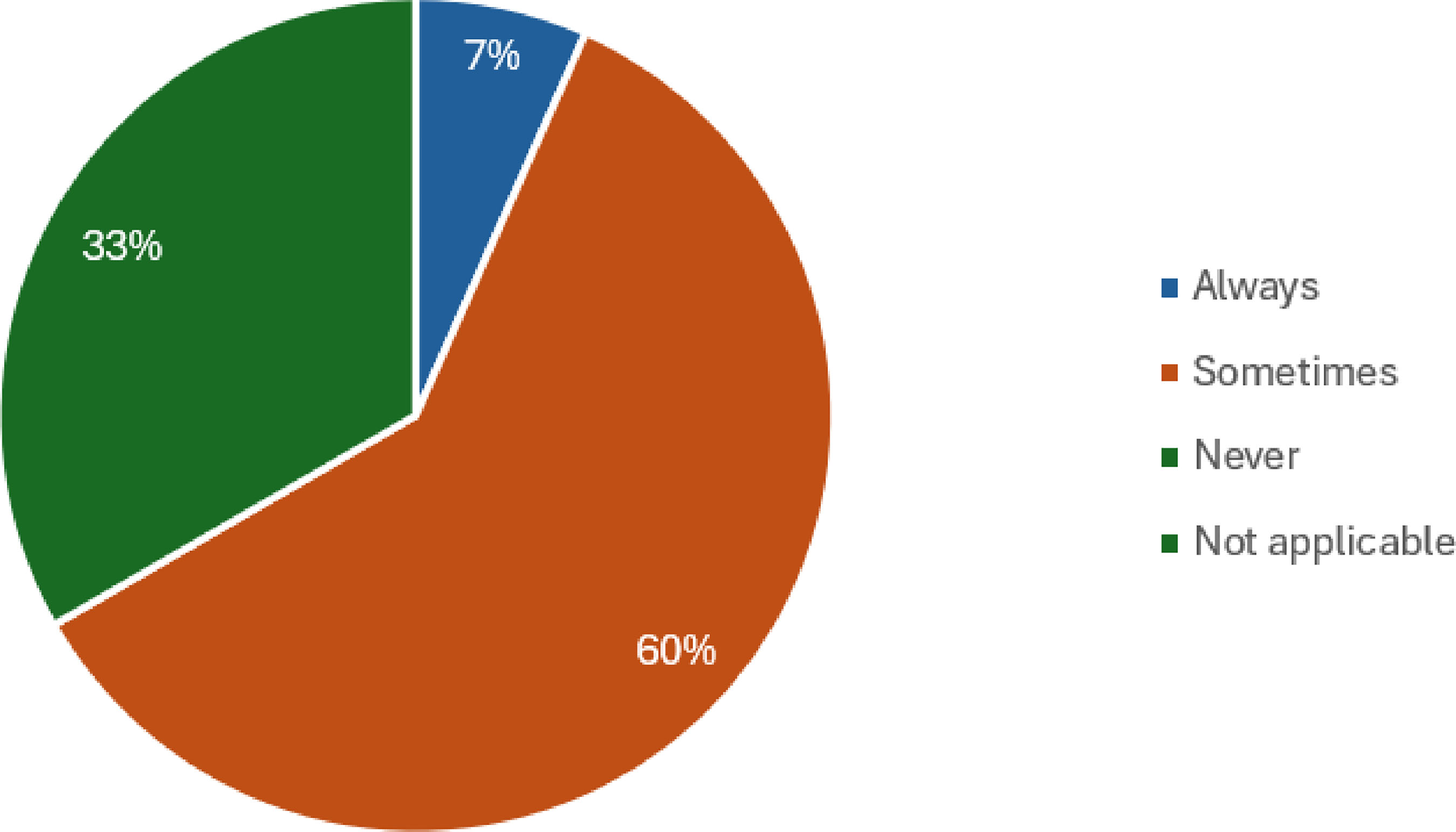
Research has revealed various health problems among teachers due to stress caused by teaching work (Nascimento & Seixas, 2020), a harmful effect resulting, among other factors, from Research has revealed various health problems among teachers due to the stress caused by teaching work (Nascimento & Seixas, 2020), a harmful effect resulting, among other factors, from the demands of internal and external evaluations aimed at achieving results, the bureaucracy of the educational system, the lack of student engagement, and the absence of family support, factors that have become increasingly common. This reality can lead to physical and/or mental exhaustion due to the lack of both material and symbolic support (Martuccelli, 2007). In this context, sadness may result, among other causes, from the frustration of not being able to enhance teaching and learning in the classroom as effectively as desired. Nevertheless, sadness is part of the human condition, just like many other emotions. Embracing positive moments and celebrating achievements should also be part of the teacher’s routine in the classroom and at school. Not everything is frustration and sadness when it comes to teaching work.

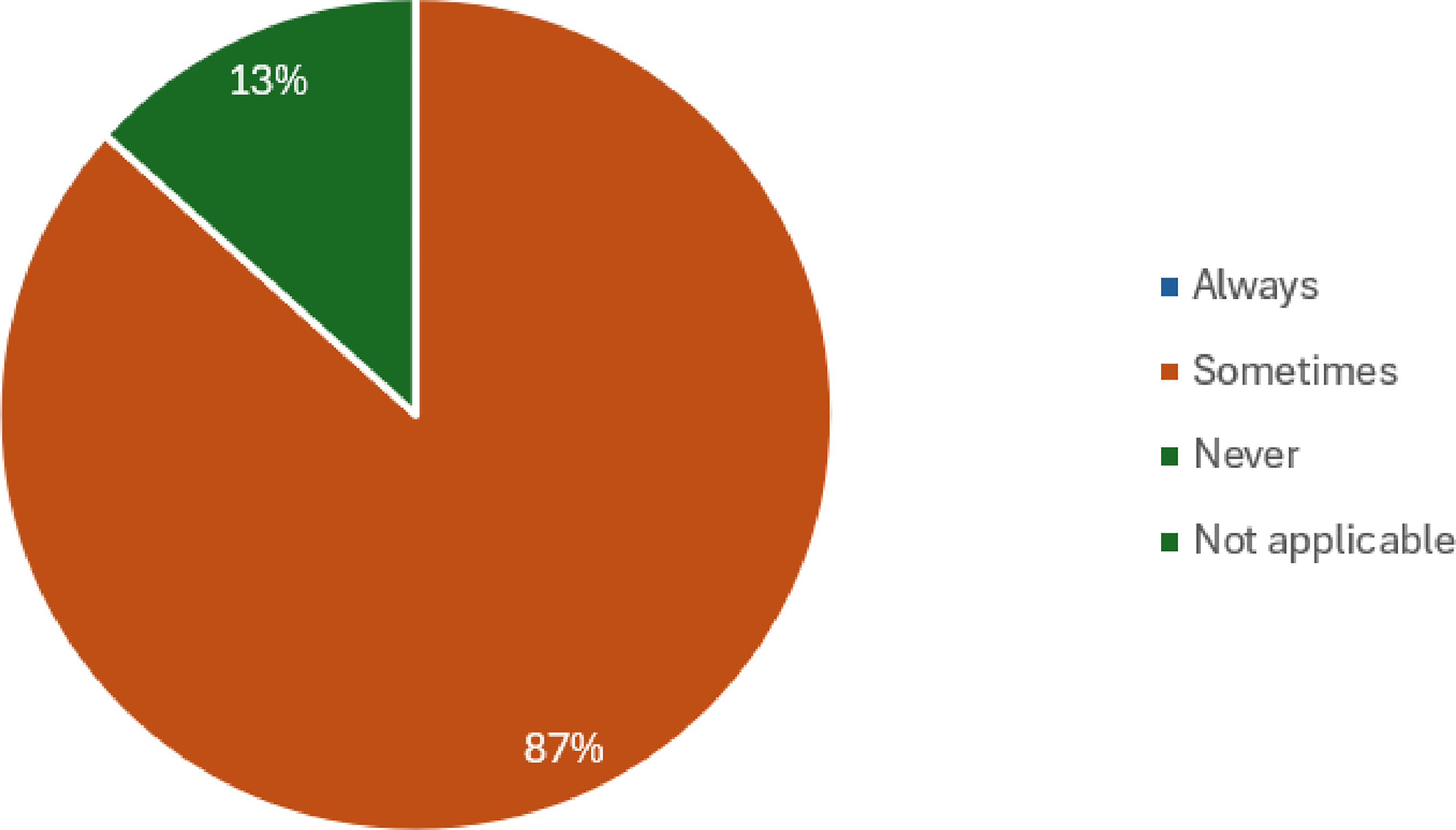
When asked how often their emotions affect their teaching practice, 13 teachers answered “sometimes,” while the remaining 2 responded “never” and “always,” respectively. This graph shows that the majority of teachers recognize that emotions sometimes influence their pedagogical practice. According to Fonseca (2016), emotion directs, leads, and guides cognition, contributing to making the teaching experience either meaningful or traumatic. This occurs because emotion, a term derived from the Latin emovere, means "to move out" or "to create movement," in other words, an impulse to action (UFRGS, 2022).
From this perspective, the school exists, among other aspects, as a setting in which students have the opportunity to develop agency in their individual and collective learning processes, thereby avoiding grade repetition and age–grade distortion. When this goal is not achieved, it is almost always the teacher who is most held accountable and blamed. This scenario generates a cycle that reproduces and reinforces disillusionment with the teaching profession. The question that arises from this reality is: who takes care of those who are responsible for the teaching and learning processes, considering that 50% of the responsibility lies with the teacher and the other 50% depends on student agency, family support, and the backing of the education system so that basic education can, in fact, serve as an entry point and gateway to various other citizenship rights (Volkweiss et al., 2019).
According to the pedagogical proposal of the school under study,
[...] o objetivo para todos os componentes é também conduzir os estudantes ao protagonismo escolar, a participação efetiva da família no cotidiano da escola, fomentando um ambiente agradável, acolhedor e norteador das práticas escolares e democráticas de avaliação e adequação às necessidades
(Distrito Federal, 2022, p. 12).

How often do you talk about your emotions at school? How often have you witnessed your classmates talking about their emotions?
Regarding Graph 3 (on the left): How often do you talk about your emotions at school?, 10 teachers marked “sometimes,” 2, “always,” and 3, “never.” In relation to Graph 3 (on the right): how often have you witnessed your colleagues talking about their emotions?, 11 teachers marked “sometimes,” 3, “always,” and only 1, “never.”
At the school under study, according to what was evidenced in the research, there are opportunities, even if occasional, for teachers to talk about their emotions. In general, it seems that in schools there are no spaces for the expression of emotions because practically everything is timed and pre-defined. In this scenario, emotional dynamics are either fragmented or diluted in the educational process. Modern rationality, by neglecting the other constitutive dimensions of the human being, makes the construction of knowledge, science, and all educational action partial and superficial (Mourthé Junior; Lima; Padilha, 2018).
In this sense, the awareness of the importance of considering the emotional component during moments of pedagogical mediation at school and in the classroom is in line with the principles of a more humanizing education, which regards both the teacher and the student as whole human beings who have interests and needs that must be taken into account in the educational process.
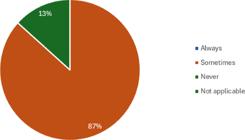
Regarding this graph, 13 teachers marked “sometimes” and 2 marked “never.” These data highlight the predominance of rationality, which is strongly present in schools and classrooms, and has not succeeded in making teaching and learning more enjoyable and engaging for teachers and students. The increasingly content-focused approach in education also reflects the growing consolidation of the rational model of knowledge in educational spaces and, consequently, as previously mentioned, the lack of educational spaces dedicated to the development of social-emotional skills and competencies. The new guidelines established by the BNCC (Brazil, 2018) can encourage schools to be more attentive to this aspect of the teaching and learning process, provided that the school leadership is aware and recognizes that this is an important issue for promoting quality of life and healthier, more sustainable relationships within the school environment.

How often do you wish to express your emotions but refrain from doing so out of fear of not being understood?
In this item, 9 teachers marked “sometimes,” 5 marked “never,” and only 1 marked “always.”
For people to express their emotions, it is necessary to have an environment of trust and empathy. The school has not been able to provide, as it should, spaces for authentic speech and empathetic listening. Technical rationality, an overloaded content-based curriculum, the bureaucracy of grade books, records, reports, the correction of assignments, assessments, and other pedagogical activities have metaphorically turned the school into a factory, in which all actors resemble components of the education system more than human beings with feelings and needs. This reality still seems to reflect what was denounced in the song Another Brick in the Wall, released in 1979 as part of The Wall album by the English rock band Pink Floyd, which stated that “we're just another brick in the wall” of the system.
In this context, as Morin (2015, p. 36) states, “there is no doubt that we need rationality in our lives. But we also need affection, that is, bonds, fulfillment, joy, exaltation, play, self, and community.” This statement helps us reflect that both reason and emotion are inseparable dimensions of human life and therefore must be considered in all teaching and learning processes.

What is the relevance of social-emotional competencies for the practice of teaching in basic education?
Regarding the relevance of social-emotional competencies in teaching, 13 teachers marked “very important” and 2 marked “important.” The teachers’ responses highlight how crucial social-emotional competencies are for creating more positive and collaborative school environments that support student learning and contribute to the emotional well-being of everyone involved. In this context, developing social-emotional competencies in the initial and ongoing training of basic education teachers is an important initiative to ensure the quality of education and the holistic development of students. It is essential for schools to have a plan for continuous and permanent professional development for their teachers, with content that addresses socio-emotional development. This way, teachers will also be able to work on this topic with their students. It is necessary to provide tools that support teachers in this task.

Does the school's Political-Pedagogical Project (PPP) consider social-emotional competencies?
Regarding the school's PPP considering social-emotional competencies, 8 teachers marked “important,” 2 marked “very important,” 3 marked “slightly important,” and 2 marked “not important.” The majority of respondents, that is, 10, indicated that it is important or very important for the school’s PPP to consider social-emotional competencies in educational processes. In the PPP of the school under study, the word “emotion” is mentioned only once in the Aesthetic Principles that guide pedagogical practice: “actions that stimulate creativity, curiosity, emotion, and various artistic and cultural manifestations (interdisciplinary)” (Distrito Federal, 2022, p. 13).

Has the school provided training opportunities that enable the development of social-emotional competencies?
Regarding training opportunities at the school focused on social-emotional competencies, 2 teachers marked “very important,” 5 marked “important,” 6 marked “slightly important,” and 2 marked “not important.”
What stands out in the responses to this question is that the most selected category was “slightly important.” This finding seems to reveal that this remains a gap within the school. It appears increasingly evident that there is a lack of training spaces that incorporate pedagogical approaches enabling teachers to learn how to express their feelings, emotions, and needs in ways that foster more humanized connections with their peers and students. According to Rosenberg (2021), it is not enough to merely talk about establishing new forms of communication. It is necessary to provide paths that facilitate “literacy” in expressing emotions and feelings. What often happens is that we assume teachers, as adults, already possess the ability to express and manage their emotions, but this is not what is observed in most people, since this has not historically been a competency that education has prioritized, as previously mentioned.

When preparing your lesson plans, are social-emotional competencies being considered and included? Do you believe that social-emotional competencies can transform personal, social, and teaching and learning relationships?
In Graph 9 (on the left), 13 teachers classified social-emotional competencies as “very important,” 2 as “important,” and only 1 as “slightly important” in the preparation of lesson plans, highlighting their relevance in pedagogical practice. In Graph 9 (on the right), 10 teachers marked “very important” and 4 marked “important” when assessing the contribution of these competencies to the transformation of interpersonal, social, and teaching and learning relationships.
These may be the most relevant questions of the research because they reveal a positive perception among teachers about the importance of investing in education that develops social-emotional competencies with a view to transforming relationships on various levels.
It is also possible to infer from this strong response by the teachers, where the majority express the importance of considering social-emotional competencies in their lesson plans, that there is an openness on their part to address and develop this theme in their pedagogical practice.
It is important for school management to recognize and understand this attitude as an opportunity to develop a policy of ongoing professional development, as well as to create supports that assist teachers in developing their own social-emotional competencies, as well as those of their students.
Concluding Remarks
The discussion about the relationship between social-emotional competencies and teaching in basic education may seem somewhat obvious, but reality shows otherwise. From early childhood education to higher education, neither teachers nor students have learned to identify and name what they feel, and this happens because we are part of a society that culturally values and prioritizes the rational (cognitive) dimension over social-emotional issues.
The authors who served as the theoretical foundation for this article enabled a critical view and reflection on the way education, historically guided by international directives often concerned solely with the protection and continuity of an economic system that privileges the globalization of capital, fails to contribute to the development of a holistic educational process. Such a process should recognize its actors, teachers and students, not merely as labor to be commercialized but as human beings who are in great need of opportunities to develop the other dimensions that make up who they are.
The present study, based on listening to the opinions of teachers from a public school in the Federal District regarding the researched topic, allows us to reflect on how significant the role of basic education teachers is in the development of students who are in important stages of their cognitive, emotional, and social development.
Based on the elements highlighted above, we can infer that the present article has met its proposed objectives. However, we are aware that it did not aim to address the full complexity surrounding the theme of social-emotional competencies in the practice of teaching in basic education, but rather to serve as a contribution to the ongoing debate.
Availability of research data
The dataset supporting the results of this study is published in this article.
References
- ALGEBAILE, Eveline. Escola pública e pobreza no Brasil: a ampliação para menos. Rio de Janeiro: Lamparina, Faperj, 2009.
-
ARROYO, Miguel. Políticas educacionais e desigualdades: à procura de novos significados. Educ. Soc., Campinas, v. 31, n. 113, p. 1381-1416, out.-dez. 2010. Disponível em: http://www.cedes.unicamp.br Acesso em: 19 maio 2023.
» http://www.cedes.unicamp.br - BOURDIEU, Pierre; PASSERON, Jean-Claude. A Reprodução: elementos para uma teoria do sistema de ensino. Rio de Janeiro: Livraria Francisco Alves Editora SA, 1975.
-
BRASIL. Constituição da República Federativa do Brasil de 1988. Diário Oficial da União, Brasília, 1988. Disponível em: https://www.planalto.gov.br/ccivil_03/constituicao/constituicao.htm Acesso em: 15 maio 2023.
» https://www.planalto.gov.br/ccivil_03/constituicao/constituicao.htm - BRASIL. Lei de Diretrizes e Bases da Educação Nacional (LDB). Lei 9.394, de 20 de dezembro 1996. Diário Oficial da União, Brasília, 1996.
- BRASIL. Educação integral: texto referência para o debate nacional. Brasília: MEC, Secad, 2009.
- BRASIL. Ministério da Educação. Base Nacional Comum Curricular Brasília, 2018.
-
DEMO, Pedro. Qualidade da educação: tentativa de definir conceitos e critérios da avaliação. Est. Aval. Educ., São Paulo, n. 2, 1990. Disponível em: http://educa.fcc.org.br/scielo.php?pid=S0103-68311990000200004&script=sci_arttext. Acesso em: 1 maio 2023.
» http://educa.fcc.org.br/scielo.php?pid=S0103-68311990000200004&script=sci_arttext - DEMO, Pedro. Pobreza Política Campinas: Autores Associados, 2001.
-
DEMO, Pedro. Educação: coisa pobre para o pobre. 2007. Disponível em: https://docs.google.com/document/d/1ivKX8c7rkQTlPrQLuTtlWbuXDPxV_4blxN-pFKbHzr8/pub Acesso em: 1 maio 2023.
» https://docs.google.com/document/d/1ivKX8c7rkQTlPrQLuTtlWbuXDPxV_4blxN-pFKbHzr8/pub -
DISTRITO FEDERAL. Currículo em Movimento da Educação Básica: Pressupostos Teóricos. Brasília, 2018. Disponível em: https://www.educacao.df.gov.br/wp-conteudo/uploads/2018/02/1_pressupostos_teoricos.pdf Acesso em: 15 maio 2023.
» https://www.educacao.df.gov.br/wp-conteudo/uploads/2018/02/1_pressupostos_teoricos.pdf -
DISTRITO FEDERAL. Diretrizes de Formação Continuada da Secretaria de Educação do DF. Brasília, 2019a. Disponível em: https://www.educacao.df.gov.br/wp-conteudo/uploads/2018/02/Diretrizes-de-Formação-Continuada_05fev19.pdf Acesso em: 15 maio 2023.
» https://www.educacao.df.gov.br/wp-conteudo/uploads/2018/02/Diretrizes-de-Formação-Continuada_05fev19.pdf - DISTRITO FEDERAL. SEEDF. Portaria nº 180, de 30 de maio de 2019. Altera a Portaria nº 15 / SEEDF, de 11 de fevereiro de 2015, publicada no DODF nº 41, de 27 de fevereiro de 2015, que aprova o Regimento da Rede Pública de Ensino do Distrito Federal. DODF 102, p. 15-17, 31 maio 2019b.
-
DISTRITO FEDERAL. Secretaria de Estado de Educação do DF. Projeto Político Pedagógico do CEF 11 de Taguatinga 2022. Disponível em: https://www.educacao.df.gov.br/wp-conteudo/uploads/2021/07/ppp_cef_11_taguatinga.pdf Acesso em: 20 maio 2023.
» https://www.educacao.df.gov.br/wp-conteudo/uploads/2021/07/ppp_cef_11_taguatinga.pdf -
FONSECA, Victor da. Importância das emoções na aprendizagem: uma abordagem neuropsicopedagógica. Revista Psicopedagogia, v. 33, n. 102. p. 365-384, 2016. Disponível em: http://pepsic.bvsalud.org/scielo.php?script=sci_arttext&pid=S0103-84862016000300014. Acesso em: 10 maio 2023.
» http://pepsic.bvsalud.org/scielo.php?script=sci_arttext&pid=S0103-84862016000300014 - FREIRE, Paulo. Pedagogia do Oprimido 13. ed. Rio de Janeiro: Paz e Terra, 1983.
- FREIRE, Paulo. Pedagogia da Autonomia: saberes necessários a prática educativa. 9. ed. São Paulo: Paz e Terra, 1997.
- GIL, Antônio Carlos. Como elaborar projetos de pesquisa São Paulo: Atlas, 2002.
- GOLEMAN, Daniel. Inteligência Emocional: a teoria revolucionária que redefine o que é ser inteligente. Rio de Janeiro: Objetiva, 2011.
- HORKHEIMER, Max. Eclipse da razão São Paulo: Editora Unesp, 2015.
-
LIBÂNEO, José Carlos. Políticas educacionais no Brasil: desfiguramento da escola e do conhecimento escolar. Cadernos de Pesquisa, v. 46, n. 159, p. 38-62, jan./mar., 2016. Disponível em: https://www.scielo.br/j/cp/a/ZDtgY4GVPJ5rNYZQfWyBPPb/?lang=pt&format=pdf. Acesso em: 19 maio 2023.
» https://www.scielo.br/j/cp/a/ZDtgY4GVPJ5rNYZQfWyBPPb/?lang=pt&format=pdf -
LYRA, Thaís. Pesquisa revela que saúde mental dos professores piorou em 2022. Nova Escola, 10 out. 2022. Disponível em: https://novaescola.org.br/conteudo/21359/pesquisa-revela-que-saude-mental-dos-professores-piorou-em-2022 Acesso em: 5 maio 2023.
» https://novaescola.org.br/conteudo/21359/pesquisa-revela-que-saude-mental-dos-professores-piorou-em-2022 - MARTUCCELLI, Danilo. Gramáticas del individuo Buenos Aires: Losada, 2007.
- MARCONI, Marina; LAKATOS, Eva. Fundamentos de Metodologia Científica São Paulo: Atlas, 2003.
- MINAYO, Maria et al. Pesquisa Social: teoria, método e criatividade. 6. ed. Petrópolis: Vozes, 1994.
- MORIN, Edgar. Ensinar a viver: manifesto para mudar a educação. Porto Alegre: Sulina, 2015.
-
MOURTHÉ JUNIOR, Carlos Alberto; LIMA, Valéria Vernaschi; PADILHA, Roberto de Queiroz. Integrando emoções e racionalidades para o desenvolvimento de competência nas metodologias ativas de aprendizagem. Interface, Botucatu, v. 22, n. 65, p. 577-588, abr./jun. 2018. Disponível em: https://www.scielo.br/j/icse/a/qYWSNj6CdKGt7FxF4HFR9Lj/ Acesso em: 11 jul. 2025.
» https://www.scielo.br/j/icse/a/qYWSNj6CdKGt7FxF4HFR9Lj/ -
NASCIMENTO, Kelen do; SEIXAS, Carlos. O adoecimento do professor da Educação Básica no Brasil: apontamentos da última década de pesquisas. Revista Educação Pública, v. 20, n. 36, 22 set. 2020. Disponível em: https://educacaopublica.cecierj.edu.br/artigos/20/36/josepho-adoecimento-do-professor-da-educacao-basica-no-brasil-apontamentos-da-ultima-decada-de-pesquisas Acesso em: 20 maio 2023.
» https://educacaopublica.cecierj.edu.br/artigos/20/36/josepho-adoecimento-do-professor-da-educacao-basica-no-brasil-apontamentos-da-ultima-decada-de-pesquisas - OLIVEIRA, Dalila Andrade. A educação no contexto das políticas sociais atuais: entre a focalização e a universalização. Linhas Críticas, Brasília, v. 11, n. 20, p. 27-40, jan./jun. 2005.
- RICHARDSON, Roberto. Pesquisa social: métodos e técnicas. São Paulo: Editora Atlas, 2012.
- ROBSON, Colin. Real world research: A Resource for Social Scientists. USA: Blackwell, 1996.
- ROSENBERG, Marshall. Educação para uma vida mais plena São Paulo: Palas Athenas, 2021.
-
SAE DIGITAL. Saúde emocional do professor 2023. Disponível em: https://sae.digital/saude-emocional-do-professor/ Acesso em: 5 maio 2023.
» https://sae.digital/saude-emocional-do-professor/ - SÍVERES, Luiz. Pedagogia Alpha: presença, proximidade e partida. Curitiba: Brazil Publishing, 2019.
-
UFRGS. Glossário AfetoAVA. Emoção Porto Alegre, 2022. Disponível em: http://nuted.ufrgs.br/oa/AfetoAVA/glossario.html Acesso em: 10 maio 2022.
» http://nuted.ufrgs.br/oa/AfetoAVA/glossario.html -
UNESCO. Educação um tesouro a descobrir 2010. Disponível em: https://unesdoc.unesco.org/ark:/48223/pf0000109590 Acesso em: 19 maio 2023.
» https://unesdoc.unesco.org/ark:/48223/pf0000109590 - UNESCO. Educação para a cidadania global: preparando alunos para os desafios do século XXI. Brasília: UNESCO, 2015.
- UNESCO. Reimaginar nossos futuros juntos: um novo contrato social para a educação. Brasília: Comissão Internacional sobre os Futuros da Educação, UNESCO; Boadilla del Monte: Fundación SM, 2022.
-
VOLKWEISS, Anelise et al. Protagonismo e participação do estudante: desafios e possibilidades. Educação Por Escrito, Porto Alegre, v. 10, n. 1, p. e29112, jan./jun. 2019. Disponível em: https://repositorio.pucrs.br/dspace/bitstream/10923/19361/2/Protagonismo_e_participao_do_estudante_desafios_e_possibilidades.pdf Acesso em: 11 jul. 2025.
» https://repositorio.pucrs.br/dspace/bitstream/10923/19361/2/Protagonismo_e_participao_do_estudante_desafios_e_possibilidades.pdf - VIGOTSKI, Lev. Imaginação e criação na infância São Paulo: Ática, 2009.
- YIN, Robert K. Estudo de Caso: planejamento e métodos. Porto Alegre: Bookman, 2001.
Edited by
-
Editor in charge:
Paula Corrêa Henning

 Source: Authors' elaboration.
 Source: Authors' elaboration.
 Source: Authors' elaboration.
 Source: Authors' elaboration.
 Source: Authors' elaboration.
 Source: Authors' elaboration.
 Source: Authors' elaboration.
 Source: Authors' elaboration.
 Source: Authors' elaboration.