 Teacher Training in Mathematics: trajectories in Brazil and Spain
ABSTRACT
This article analyzes the training paths of mathematics teachers in Brazil (Federal University of Rio Grande do Sul) and Spain (Complutense University of Madrid), comparing their respective training models. Using a qualitative approach, it develops a content analysis of institutional documents and curricula, with the aim of understanding how teacher training in secondary education is structured. The results indicate that, in Brazil, training integrates specific content, pedagogy, and practice from the beginning of the bachelor’s degree. In Spain, on the other hand, the bachelor’s degree focuses on mathematics training, while pedagogical preparation is developed later in the master’s degree in secondary education teaching.
Keywords
Teacher Training; Mathematics Education; Brazil; Spain; Comparative Education
RESUMEN
Este artículo analiza el recorrido formativo de los profesores de Matemáticas en Brasil (UFRGS) y en España (UCM), comparando sus respectivos modelos de formación. Con un enfoque cualitativo, se recurre al análisis de contenido de documentos institucionales y planes de estudio, con el fin de comprender cómo se estructura la preparación para la docencia en la educación secundaria. Los resultados indican que, en Brasil, la formación integra contenidos específicos, pedagogía y práctica desde el inicio de la Licenciatura. En España, en cambio, el Grado se centra en la formación matemática, mientras que la preparación pedagógica se desarrolla posteriormente en el Máster de Profesorado de la Educación Secundaria Obligatoria.
Palabras clave
Formación Docente; Educación Matemática; Brasil; España; Educación Comparada
Introduction
Mathematics teacher training has been central to global educational debates due to the pressing need to prepare professionals capable of meeting the demands of contemporary teaching. A comparative study between the Federal University of Rio Grande do Sul (UFRGS) in Brazil and the University of Burgos in Spain provides an opportunity to examine and comprehend different models of teacher training within distinct educational contexts.
This study aims to investigate the training pathways of future mathematics teachers in both countries, intending to identify shared pedagogical practices and the specific characteristics of their curricular approaches. By highlighting these convergences and differences, the research seeks to enhance international academic dialogue and contribute to the improvement of teacher training strategies in mathematics education.
Comparison Between Educational Pathways in Spain and Brazil
The Organic Law for the Modification of the Organic Law on Education (LOMLOE) in Spain and the National Common Core Curriculum (BNCC) in Brazil serve as the foundation for a comparative analysis of school curricula in both countries. These guidelines direct curriculum organization and teaching practices, defining objectives, content, and essential competencies for student training within each educational context.
This section analyzes the similarities and differences between the LOMLOE and the BNCC to understand the specific characteristics of the education systems in Spain and Brazil. The objective is to elucidate the points of convergence and divergence in the educational pathways defined by these regulations, illustrating how each system organizes education in its respective context.
Below is an image illustrating the structure of the education systems in both countries, from basic education to access to higher education, organized according to the students’ ages. Although age is not the only possible criterion, this approach has been chosen to make the diagram clearer and more accessible.
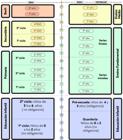
In Brazil, the educational journey begins with Early Childhood Education for children aged 0 to 5. Students then proceed to elementary school, which lasts nine years and is divided into two cycles: grades 1 to 5 and grades 6 to 9. Next, they attend secondary school for three years, which prepares students for higher education.
In Spain, the system also starts with Early Childhood Education, lasting a similar amount of time. Students then attend Compulsory Primary Education for six years, followed by Compulsory Secondary Education (ESO), which lasts four years and covers ages 12 to 16. After ESO, students enter the Baccalaureate, which lasts two years and prepares them for university.
Despite differences in terminology and structure, both countries offer educational pathways that total approximately 12 years of schooling before university. The main differences lie in the subdivisions and terminologies used for each stage, reflecting the specific characteristics of each educational system.
The following sections will examine how mathematics teacher training is organized in Brazil and Spain, considering the training processes, curricular structures, and approaches adopted in each context.
The Structure of Higher Education for Mathematics Teacher Training in Spain and Brazil
The higher education systems in Brazil and Spain vary in structure and organization, reflecting the educational and cultural characteristics of each country.
In Brazil, higher education is divided among universities, university centers, and faculties, each offering a wide variety of courses and programs. Brazilian higher education is categorized into three modalities: licentiate, bachelor’s degree, and technologist. The licentiate degree is designed to train teachers for basic education, with a specific focus on pedagogical training in the chosen field of knowledge. Students who pursue a bachelor’s degree in mathematics, for instance, receive training that qualifies them to work as teachers within the education system. However, a standard bachelor’s degree in mathematics emphasizes theoretical study and scientific research, lacking a pedagogical focus. The Bachelor’s Degree in Mathematics in Brazil typically lasts four years. Upon completion, students are qualified to teach mathematics in primary and secondary education, equipped with appropriate pedagogical training.
In Brazil, students holding a bachelor’s degree in mathematics have the opportunity to further their studies in graduate programs, such as specialization, master’s, or doctoral programs. It is important to note, however, that these graduate studies are considered complementary to initial training, meaning they are additional by nature and not required for the teaching profession. To work as a teacher, a bachelor’s degree in mathematics is essential. Postgraduate studies, on the other hand, allow students to deepen their field knowledge or develop research skills.
In Spain, to work as a mathematics teacher in secondary education, having a bachelor’s degree in mathematics or a related area is insufficient. It is mandatory to complete a master’s degree in secondary and high school teaching, where the necessary pedagogical training for teaching is acquired. According to Vilela (2024), the 4+1 model, derived from the Bologna Process, presents certain contradictions. The bachelor’s degree in mathematics does not include educational content, and the pedagogical component is incorporated only at the end of the program. Thus, even individuals without specific training in mathematics can obtain teaching qualifications upon completing the master’s degree.
Alongside the Master’s Degree in Compulsory Secondary Education and High School Teaching, other master’s and doctoral programs in Spain complement teacher training. These courses, which focus on specialization or research, are not mandatory for teaching but offer opportunities for academic enrichment and professional development, depending on each teacher’s interests.
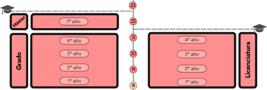
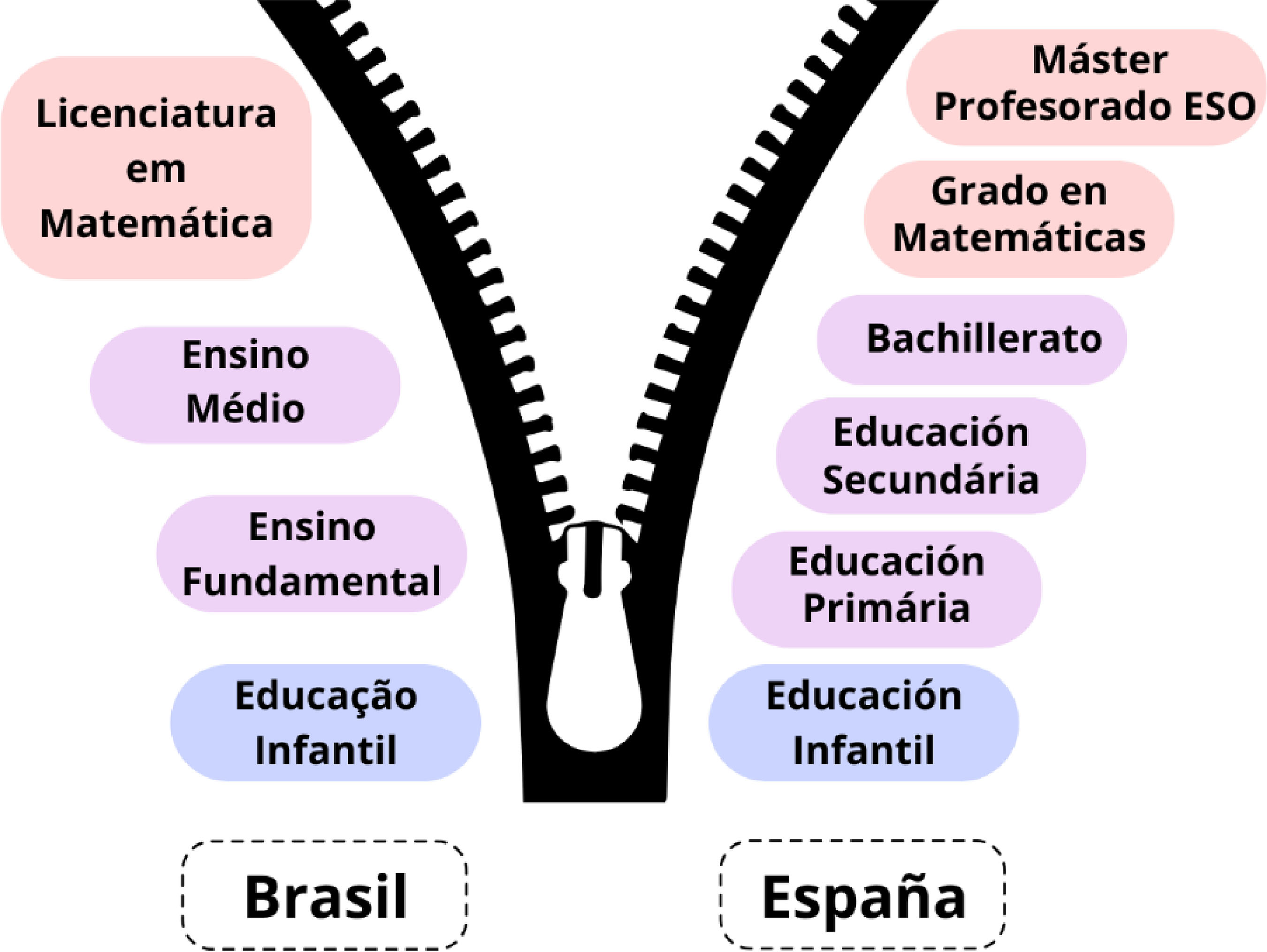
In summary, in Brazil, mathematics teacher training is achieved directly through a bachelor's degree. In contrast, in Spain, the process is longer, necessitating the completion of a bachelor’s degree followed by a master’s ‘degree to teach in secondary education. This difference reflects the particularities of each education system, with Spain adopting a more segmented and specific approach to teacher training at the secondary level.
Figure 3 represents how the pathways for secondary school mathematics teacher training connect in both countries.
The Educational Levels at Which Mathematics Teachers Work After Completing Their Training
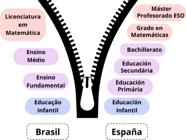
The training of mathematics teachers in Spain and Brazil exhibits differences that significantly affect the educational levels at which these professionals can work. In Spain, upon completing a Master’s Degree in Secondary Education Teaching, teachers are qualified to instruct students in both ESO (Compulsory Secondary Education) and Bachillerato (Upper Secondary Education), which corresponds to the final stage of pre-university education.
In Brazil, a bachelor’s degree in mathematics qualifies teachers to work in the final years of elementary school (6th to 9th grade) as well as in the three years of middle school, thus covering various stages of basic education.
The following image provides a comparison of the educational levels at which mathematics teachers can work in each country.
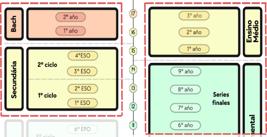
Mathematics teachers’ performance at different levels of education in Spain and Brazil, respectively
As shown in the figure, in Brazil, mathematics teachers are qualified to teach seven years of basic education, ranging from the 6th year of primary education to secondary education. In contrast, in Spain, teachers can instruct in six years of basic education, covering both compulsory and upper secondary education.
Literature Review
Studies on teacher training in the specialized literature highlight that teachers’ professional development involves a continuous process of identity building, closely linked to practice and engagement with school culture. Nóvoa (2023) emphasizes that the profession is established in spaces of collaboration, exchange, and shared reflection, and that training cannot be understood solely as the transmission of content, but rather as a process situated in experience. Similarly, Tardif (2012) views teaching knowledge as an integrated set that combines academic and curricular knowledge with professional experience, underscoring the need for training models that coherently relate disciplinary content, pedagogy, and practice.
In the field of mathematics education, the literature stresses the importance of approaches that encourage inquiry, reasoning, and decision-making based on teaching practice. Ponte (2009) argues that teaching mathematics requires an investigative mindset, where teachers continuously analyze and review their practice based on evidence and the tasks assigned to students.
These contributions provide a theoretical framework that connects teaching identity, professional knowledge, and conceptions of mathematics teaching. This framework is crucial for analyzing how these dimensions are reflected or absent in the training models of Brazil and Spain. Relying on these conceptual foundations, we sought to identify existing comparative studies between the two countries to contextualize the discussion and verify how the scientific literature has addressed this issue.
To identify studies related to the training of mathematics teachers from a comparative perspective between Brazil and Spain, a search was conducted in the Scopus and Web of Science databases using the terms: comparative education, teacher training, mathematics, Brazil, and Spain. However, the research yielded only two relevant studies. The first analyzes support offered in engineering courses in both countries, comparing Brazil and Spain. The second examines mathematical literacy, comparing several countries, including Brazil and Spain, based on PISA data. Although relevant, these studies do not fit within the scope of this research.
To expand the results, a new search was conducted using the same terms but focusing exclusively on ‘Brazil’ to verify the existence of comparative studies between Brazil and other countries, in addition to Spain. However, this search returned only the same two studies found previously. Then, using the same keywords but with ‘Spain,’ a total of 16 results were obtained, excluding duplicates in both databases. Of these 16 studies, six were selected for their relevance or significance in contributing to the research.
One of these studies compares the training of mathematics teachers for primary education at universities in Spain, Greece, and Romania. Nolla et al. (2024) analyze the mathematics and mathematics education subjects offered in these programs, highlighting curricular similarities and differences, as well as credit loads, PISA results, and the directives of the NCTQ (2008) report prepared by the National Council on Teacher Quality. Although focused on primary education, the study provides relevant criteria for comparing teacher training in Brazil and Spain, especially regarding curriculum organization, credit distribution, and the influence of legislation on training programs.
Martínez-González and Santamaría-Herrera (2023) examine the continuing education of primary school mathematics teachers in Spain, focusing on courses and resources available through national and regional portals. The study highlights advancements in digital competence and technological support but notes a lack of training in socio-affective skills and mathematical learning situations, except for La Rioja. Although the study primarily addresses primary education, it offers relevant elements for comparing Spain and Brazil, especially by highlighting gaps and challenges in Spanish training provision.
Ancheta-Arrabal and Segura (2022) analyze mathematics learning in early childhood education in Portugal, Spain, and Slovenia, considering educational policies, pedagogical practices, curricula, and professional teacher knowledge. They identify a consensus around Realistic Mathematics Education, emphasizing contextualized and playful learning, but also point out differences in curricular orientations: a holistic approach in Spain, mathematics as a language in Portugal, and an emphasis on concepts and procedures in Slovenia. While focused on early childhood education, the study provides insights for comparing educational practices and initial teacher training between Brazil and Spain.
Naya-Rivero et al. (2021) investigate the type of mathematical knowledge present in the curricula of the Primary Education Degree at Spanish public universities. Analyzing teaching guides and parameters from the Teacher Education and Development Study in Mathematics report, they examine both mathematical content knowledge and pedagogical content knowledge. The results show marked variability in the distribution of ECTS credits and a predominance of mathematical knowledge over pedagogical knowledge. Although the study does not compare countries, it reveals regional differences in curriculum organization that influence teacher training, offering elements for comparative analysis between Spain and Brazil.
Rodríguez Muñiz, Alonso Velázquez, and Muñiz Rodríguez (2015) investigate the initial training of secondary school mathematics teachers in Spain, highlighting limitations and gaps compared with other countries. The study reviews international programs, considering their organization, duration, admission requirements, and professional standards, and contrasts these elements with the Spanish model, providing a historical synthesis and current perspective. The results indicate significant differences and the need to improve the quality of teacher training. Although it does not compare specific universities, the research focuses on the same teacher profile and offers criteria for identifying curricular particularities, as well as analyzing similarities and differences between the training systems in Spain and Brazil.
Sanz and Martín (2014) analyze Spain’s participation in the Teacher Education and Development Study in Mathematics study, conducted between 2007 and 2009, during the implementation of bachelor’s and master’s degrees derived from the Bologna Process. The study identifies strengths and weaknesses in initial training programs; however, Spain’s participation focused solely on primary education. Despite being an older study, it provides relevant data for comparing teacher training in Brazil and Spain, especially regarding the duration of courses, and the mathematical and pedagogical knowledge of future teachers, as well as the distribution of course loads among different training areas. These elements facilitate the analysis of similarities, challenges, and potential improvements in the training of mathematics teachers.
A review of the literature reveals that most studies focus on the training of primary school teachers and, to a lesser extent, early childhood education. Although general comparisons between Spain and other countries exist, there is a notable absence of research specifically addressing the training of secondary school mathematics teachers. This gap in the literature underscores the importance of studies that specifically compare the training of mathematics teachers in Brazil and Spain at this educational level.
Methodology
This study aims to analyze the training of secondary school mathematics teachers through a comparative approach between two specific institutions: the Federal University of Rio Grande do Sul (UFRGS) in Brazil and the Complutense University of Madrid (UCM) in Spain. The focus is on the curricula of the programs offered by these universities, with the goal of identifying similarities, differences, and challenges in their training proposals.
The central research question is: How are the curricula for training mathematics teachers structured at specific institutions in Brazil (UFRGS) and Spain (UCM), and what are the main similarities and differences between the two contexts? To define the study’s scope, specific programs from each university were selected. At UFRGS, the Bachelor’s Degree in Mathematics, designed to train teachers for basic education, particularly for the final years of elementary and secondary school, was examined. At UCM, both the Bachelor’s Degree in Mathematics and the Master’s Degree in Teacher Training for Compulsory Secondary Education, Baccalaureate, Vocational Training, and Language Teaching, with a specialization in Mathematics, were analyzed.
To identify references supporting the comparative analysis, a systematic search was conducted in the Scopus and Web of Science databases to locate research addressing comparisons between teacher training in Brazil and Spain. This literature review contextualized the study within existing academic discussions, highlighting gaps that could be explored further and indicating promising avenues for new contributions.
The analysis will be based on the curricula of the Bachelor’s Degree in Mathematics at UFRGS and the curricula of the Degree in Mathematics and the Master’s Degree at UCM. Through these documents, we will examine how each institution configures the training of mathematics teachers for primary and secondary education levels.
This approach aims to develop an analysis that integrates primary sources, such as the curricula themselves, with contributions from the scientific literature. It is anticipated that the study’s results will offer insights contributing to the strengthening of teacher training programs and promoting dialogue between different educational contexts.
It is important to note that this study is based on the curricula of two specific universities, UFRGS and UCM. Although both institutions are recognized and representative in their contexts, their curricula do not reflect the diversity of training models in Brazil and Spain. This limitation constitutes a constraint of the research and suggests possibilities for future studies that include other institutions, regions, and approaches to teacher training.
Content Analysis
Based on Bardin’s (2011) principles, this study utilized content analysis as its methodological approach. Within this context, content analysis is defined as “a set of communication analysis techniques that uses systematic and objective procedures to describe the content of messages” (Bardin, 2011, p. 44).
Sousa and Santos (2020) further elaborate that Laurence Bardin’s Content Analysis can be understood as a collection of methodological tools that continuously evolve, aimed at analyzing various content contributions, whether verbal or nonverbal, through a systematization of methods employed in data analysis (Sousa; Santos, 2020, p. 1400).
In content analysis, three essential phases are involved. The first phase, pre-analysis, involves the initial organization of the material. The second phase, analytical description, is achieved through the coding and categorization of the selected documents, based on the theoretical framework and research objectives. The third phase encompasses the treatment of results and interpretation, where findings are linked to theoretical foundations, culminating in conclusions that propel the research forward. These stages ensure a rigorous analysis and detailed understanding of the data examined.
Definition of Units of Analysis
The units of analysis represent specific sections of the study object that guide the research and facilitate a structured comparison between the contexts examined. In this research, these units pertain to the Bachelor’s Degree in Mathematics at UFRGS and the Degree in Mathematics plus Master’s Degree in Teacher Training at UCM. Before delving into the thematic units defined for this comparison, we will present the reasons for choosing these two universities, emphasizing their relevance in the educational landscape of each country.
Subsequently, we will analyze the thematic units selected for this comparison:
-
Historical context: The evolution of teacher training, influences of educational policies, and reforms impacting the curriculum structure over time.
-
Curriculum structure and training path: Subjects offered and the organization of the academic trajectory.
-
Participation in school contexts: Types of internships, duration, and institutional organization in academic training.
-
Distribution and focus of teacher training: A comparative analysis of the mathematical, pedagogical, and practical components in the curricula of UCM and UFRGS.
Exploring these units will contribute to a deeper understanding of the similarities, differences, and challenges involved in training mathematics teachers in the two examined contexts.
Analysis of Results
The results are analyzed based on the selected thematic units to identify the similarities and differences in mathematics teacher training between Brazil and Spain. The study examines historical influences, curriculum structures, the relationship between theory and practice, and the impact of certification on professional qualification. It highlights the challenges and opportunities within each educational system.
Comparison Between Two Teacher Training Programs: The Federal University of Rio Grande do Sul and the Complutense University of Madrid
The choice to compare the UFRGS and the UCM to explore mathematics teacher training is supported by the academic and institutional significance of both universities. They are renowned for their traditions in teacher training and for the quality of their mathematics programs. The UFRGS, a leading Brazilian university, offers a Bachelor’s degree in Mathematics, reflecting national curriculum guidelines and addressing the challenges of teacher training in a context marked by educational inequalities and cultural diversity. Conversely, UCM, one of the oldest and most prestigious universities in Spain, offers both a bachelor’s degree in Mathematics and a Master’s degree in Secondary School Teacher Training. These programs provide a European perspective on teacher training, consistent with the European Higher Education Area (EHEA).
The comparison between these institutions stemmed from an exchange facilitated by the Erasmus+ program. According to its official website, this program supports education, training, youth, and sports by establishing partnerships worldwide. It facilitated cultural exchange between Brazil and Spain, enabling research on the initial training of mathematics teachers in both countries. This initiative broadened understanding of the similarities and differences in the curricular and methodological approaches adopted in each context. Additionally, Erasmus+ emphasizes priorities such as social inclusion, ecological and digital transitions, and youth participation in democratic life, aligning with contemporary educational and international cooperation demands.
Thus, the analysis between UFRGS and UCM aims to understand how different historical, cultural, and political contexts influence curriculum structuring and the definition of the profile of mathematics teachers for basic education. Moreover, this comparison uncovers opportunities to enhance teacher training practices and fosters the exchange of experiences between the two educational systems.
History of Federal University of Rio Grande do Sul
The Mathematics Course was established in 1936, offering two qualifications: a Bachelor’s Degree and a Licentiate Degree. It was authorized to operate in 1942 through Decree No. 9,706, and in 1944, the course received official recognition via Decree No. 17,400. From 1975 to 1984, a Bachelor of Science degree with a major in Mathematics was offered, which later evolved into the fully recognized Bachelor of Mathematics degree.
In 1993, a new curriculum model was implemented for the bachelor’s degree program, moving away from the traditional three-one structure—three years dedicated to mathematical training and one year to didactic-pedagogical training. The new curriculum was designed based on a professional profile for mathematics teachers, aiming to provide students with opportunities to engage in situations directly related to this profile by integrating an introduction to teaching throughout the course (UFRGS, 2023).
According to the University’s official website, the UFRGS Institute of Mathematics offers a Bachelor’s Degree in Mathematics with the goal of training teachers with a strong scientific background for roles in basic education. The course includes studies in mathematical, psycho-pedagogical, and educational computing content. It also contains elements that illustrate the application of mathematics in other areas of knowledge and its use in addressing everyday social problems. The course annually offers 90 slots, divided equally between day and evening classes. There are 45 places for the daytime Bachelor’s Degree in Mathematics, with admission in the first semester, and another 45 places for the evening Bachelor’s Degree in Mathematics, admitting students in the second semester.
History of the Complutense University of Madrid
The history of the Bachelor’s Degree in Mathematics at the UCM is documented in the book “Evolución Histórica de la Licenciatura en Matemáticas (Exactas) en la Universidad Central” (Historical Evolution of the Bachelor’s Degree in Mathematics [Exact Sciences] at the Central University) by Enrique Outerelo Domínguez, published in 2009. The degree’s history begins with the Royal Decree of September 7, 1858, which officially introduced the course, initially called the Degree in Exact Sciences, at the former Central University. This decree is considered the culmination of the 19th-century liberals’ educational project, based on the Spanish Constitution of 1812, particularly Title 9 (On Public Education). The study of mathematicians’ training and curriculum evolution began in 1812, also addressing the efforts to relocate the University of Alcalá to Madrid, with a first unsuccessful attempt in 1822 and the final move in 1836.
The course experienced various phases, with curricula being analyzed based on government-approved textbooks, manuals written by teachers, and subject syllabi. The study also included information on the training and scientific careers of the professors who defined these plans, including brief biographies of several educators involved. Although the analysis focused on the UCM, the structure and organization of mathematics studies were applicable to other Spanish universities, serving as a reference for institutions that adopted these courses.
The history of the Bachelor’s Degree in Mathematics can be divided into three major stages: The first, “Origins of the Bachelor’s Degree in Mathematical Sciences (Exact Sciences) (1770-1868),” marks the beginning of mathematics education at the university. The second stage, “Consolidation of the Bachelor’s Degree in Mathematical Sciences (1868-1931),” signifies the consolidation of the course and its institutional development. The third stage, “Modernization of the Bachelor’s Degree in Mathematical Sciences (1931-2008),” represents a period of significant changes. Beginning in 2009, with the implementation of the Bologna Process, the course’s structure was reformulated, transforming the Bachelor’s Degree in Mathematical Sciences into the current Degree in Mathematics. This change aimed to align the curriculum with European standards, facilitating academic mobility and mutual recognition of degrees among European Union countries, reflecting an adaptation to the new requirements of the European Higher Education Area.
Differences in the Nomenclature of Course Loads in Two Countries
To compare the mathematics courses offered in Brazil and Spain, it is essential to analyze the differences in the organization of course loads in these two educational systems. In Spain, higher education follows the European Credit Transfer and Accumulation System (ECTS), which standardizes student workloads and learning.
The ECTS, part of the EHEA, allows credits obtained at one institution to be valid at others, based on clear learning outcomes and associated workloads. According to the European Education Area website, beyond providing flexibility to higher education programs, the ECTS supports the organization, evaluation, and international compatibility of education systems. It is a fundamental element of the Bologna Process, contributing to the clarity of documents such as the European Diploma Supplement. Currently, it is adopted by most EHEA countries and other nations outside this area.
The Bachelor’s Degree in Mathematics at the UCM involves a total workload of 240 ECTS, distributed over four academic years. Each ECTS is equivalent to approximately 25 hours of work, meaning the 60 ECTS per year correspond to 1,500 hours of annual commitment, including classes, studies, research, and other academic activities. Therefore, throughout the course, students must dedicate a total of 6,000 hours.
In Spain, becoming a secondary school teacher requires completing a Master’s Degree in Secondary Education. This additional training complements a bachelor’s degree in specific areas, such as Mathematics, Physics, or History. This master’s program, compulsory for teaching in the secondary education system, aims to equip future teachers with the pedagogical and didactic knowledge necessary for teaching practice.
At the UCM, the Masters Degree in Secondary Education has a total workload of 60 ECTS, equating to approximately 1,500 hours of academic work. The course is structured to provide theoretical and practical training, covering areas such as psychopedagogy, specific teaching methods for the chosen subject, classroom management, and the development of teaching resources, among other skills necessary for professional practice. Additionally, master’s students must complete supervised internships, applying their knowledge in real teaching contexts under the guidance of experienced teachers. After completing the master’s degree, graduates can apply for vacancies in the public and private education system in Spain, becoming eligible to teach in secondary education.
In Brazil, an educational credit is a unit used to quantify the workload and academic work that students complete throughout a higher education course. In the context of the Bachelor’s Degree in Mathematics at UFRGS, the credit system is used to organize and plan the course load, ensuring that students meet the requirements necessary to complete the course. The Bachelor’s Degree in Mathematics at UFRGS employs a credit system, where each credit accounts for 15 hours of academic activities. These activities include classroom lectures, studies, practical work, supervised internships, and other educational experiences. The curriculum aims to integrate theoretical and practical training, emphasizing the teaching of mathematics and preparing students to become educators while fostering research skills in the field.
The complete workload for the Bachelor’s Degree in Mathematics at UFRGS is approximately 3363 hours, spread over 8 semesters (4 years). The curriculum is structured to balance mathematical training with pedagogical courses, providing students with a comprehensive and adequate education for the teaching profession.
Understanding the Curriculum at the Complutense University of Madrid
The Bachelor’s Degree in Mathematics at the UCM comprises four academic years (eight semesters) and totals 240 ECTS credits. The first two years, corresponding to 120 ECTS credits, provide basic training and foundational content common to courses in Mathematical Engineering, Mathematics and Statistics, and Mathematics and Data Science.
The Bachelor’s Degree in Mathematics curriculum at the UCM aims to develop a range of mathematical skills. Students are taught to solve mathematical problems using fundamental calculation abilities and other techniques. They learn to propose, analyze, validate, and interpret models of real-life situations using the most appropriate mathematical tools. The course also promotes the ability to plan problem-solving while considering the available tools, time, and resource constraints. Additionally, students are trained in using computer applications for statistical analysis, numerical and symbolic calculations, graphical visualization, optimization, and more to experiment with and solve mathematical problems.
The Bachelor’s Degree in Mathematics curriculum at the UCM is divided into various modules that include basic, compulsory, and elective subjects, spanning eight semesters. This structure facilitates progressive learning, starting with fundamental content and advancing to more specific and complex topics. It provides a foundation in pure and applied mathematics, as well as computer science. The distribution of ECTS credits per module and the semesters in which the respective subjects are taken is detailed below.
Distribution of ECTS credits by type of subject in the degree at the Complutense University of Madrid
Table 2 presents the distribution of ECTS credits by module, also indicating the semesters in which the corresponding courses are taken.
Distribution of ECTS credits per module and semester in the Mathematics Degree at the Complutense University of Madrid
The Master’s Degree in Teacher Training for Compulsory Secondary Education, Baccalaureate, Vocational Training, and Language Teaching prepares professionals from various knowledge areas aspiring to teach in the Spanish education system. This comprehensive degree offers multiple specialties, such as Mathematics, Language, and Biology, depending on the student’s prior training. Although this degree is a mandatory requirement for teaching in secondary education, it does not guarantee a teaching position, as additional conditions are required by current regulations.
The Specific Module of the Master’s Degree in Secondary Education with a Specialization in Mathematics is structured into three sections. The first, ‘Complements for Mathematical Education’ (15 ECTS), addresses essential content for secondary education, covering the significance of mathematics and the development of mathematical thinking. The second, ‘Learning and Teaching Mathematics’ (10 ECTS), emphasizes teaching methodologies, assessment, and the utilization of teaching resources. The third, ‘Teaching Innovation and Introduction to Educational Research’ (5 ECTS), introduces teachers to research in mathematics education and innovative classroom proposals.
Module structure and ECTS credit distribution for specializations in the master’s degree in teacher training
Understanding the Federal University of Rio Grande do Sul Curriculum
The curriculum structure of the Bachelor’s Degree in Mathematics at the UFRGS organizes credit distribution and course loads to meet the academic and training requirements established by the program. The course comprises a total of 222 credits, distributed among compulsory, elective, complementary, and converted credits. Additionally, the total workload for obtaining the degree is 3363 hours, which includes extension activities and both compulsory and elective curricular components. The distribution of these elements, which constitute the course’s curricular matrix, is outlined below.
Distribution of Credits and Workload in the Bachelor’s Degree in Mathematics Course - Federal University of Rio Grande do Sul
Based on data from the 2025 Pedagogical Course Project for the Bachelor’s Degree in Mathematics, the following table was created to show the distribution of course loads by educational activity. The table illustrates the organization of the subjects and activities included in the curriculum, which encompass specific training in Mathematics and Physics, general education training, teaching practice, curricular practice, final project work, and elective subjects.
Distribution of course load by activities in the Bachelor’s Degree in Mathematics (Pedagogical Course Project 2025)
To systematically compare the training programs offered by UFRGS and UCM, this section organizes the curriculum data into common components: mathematics training, teaching training, and practical training. An analytical examination of the syllabi was conducted to identify the predominant educational function of each subject (disciplinary content, educational foundations, or school practice). This classification enabled the regrouping of UFRGS’s educational activities into categories equivalent to those in UCM’s Bachelor’s and Master’s degrees, allowing for the synthesis comparison presented in Table 6.
Comparison between the mathematics teacher training programs at Federal University of Rio Grande do Sul and Complutense University of Madrid
Participation in School Contexts: types of internships, duration, and institutional organization in academic training
Practical training in mathematics teacher education programs at UFRGS (Brazil) and UCM (Spain) is crucial for preparing future teachers. However, the organization of this training reflects the unique aspects of each country’s education system. At UCM, practical training primarily occurs in the Master’s Degree in Secondary Education Teacher Training, as the Bachelor’s Degree in Mathematics predominantly focuses on theory and disciplinary content. The one-year Master’s program includes a specific block of practical training that enables future teachers to gain experience teaching at the secondary school, high school, and vocational levels. These sessions, totaling 30 ECTS, occur in educational centers under the supervision of a tutor. During this period, students can observe and engage in teaching, as well as plan and evaluate educational processes. The Master’s program also includes modules that encourage reflection on teaching methodologies and the challenges presented by different educational contexts.
At UFRGS, practical training is a significant curriculum component, beginning early in the program. Students in the Bachelor’s Degree in Mathematics must complete Teaching-Learning Practice Laboratories in Mathematics, each lasting 120 hours, for a total of 360 hours devoted specifically to mathematics teaching practice. During these labs, students interact with teaching methodologies, reflect on their performance, and experience teaching situations in real-world basic education contexts.
Furthermore, students must undertake a Supervised Curricular Internship (supervised teaching practice) totaling 420 hours in basic education schools, coordinated by the Faculty of Education. This period is divided into three stages: Mathematics Education Internship I, II, and III. During these internships, future teachers confront real teaching situations, allowing them to apply their initial training knowledge and critically reflect on their pedagogical performance, guided by experienced professionals.
Distribution and Focus of Teacher Training: Comparative Analysis of the Mathematical, Pedagogical, and Practical Components in the Curricula of Complutense University of Madrid and Federal University of Rio Grande do Sul
Below is a comparative table of the teacher training programs in Mathematics at UFRGS (Brazil) and UCM (Spain). The table provides an overview of the main components of each curriculum, including duration, disciplinary and pedagogical approach, organization of internships, and characteristics of the final degree.
The comparison between the UFRGS and UCM curricula reveals divergent approaches to mathematics teacher training. While UFRGS integrates pedagogical and practical training from the start of the degree program, providing a structure that combines theory and practice throughout, UCM focuses teacher training at a later stage, primarily through a Master’s Degree in Teacher Training. This disparity reflects not only institutional differences but also the distinct regulatory and cultural frameworks of teacher training in Brazil and Spain. To thoroughly understand these structural differences, it is essential to consider the historical processes that shaped each model.
In the Spanish context, the consecutive 4+1 model directly results from the Bologna Process, which reorganized European university studies to emphasize teacher training concentrated on subject specialization. As Puentes, Bolívar, and Verdejo (2015) assert, this structure has preserved a professional identity rooted in academic mastery, with minimal pedagogical integration. According to them: “This academic university training, outside the Faculties of Education, is sustained only by the belief, disproved in practice, that it suffices to know the subject to teach it” (Puentes, 2015, p. 253). This delayed inclusion of pedagogical components shifts the responsibility for integrating theory and practice to a brief, later period, potentially hindering the development of a reflective teaching identity.
The curriculum analysis by Vilela (2024) contends that the Mathematics Degree in Spain continues to be dominated by academic mathematical knowledge, influencing how future teachers perceive the concepts of “knowing” and “teaching” mathematics. This perspective aligns with João Pedro da Ponte’s contributions, who emphasizes the necessity of differentiating between academic mathematical knowledge and school mathematical knowledge, advocating for initial training that fosters critical navigation between both domains.
Conversely, Brazil has pursued a different trajectory, stemming from an internal movement to reassess teacher training programs. In the 1990s, the Licentiate Degree Forum significantly recognized the licentiate degree as a distinct domain for teacher training. As Carneiro (1999) notes, this movement affirmed the identity of the “licentiate subject” and repositioned teachers in specific areas as teacher trainers. This initiative overcame the fragmented “three-one” model and encouraged the adoption of integrated curricula, exemplified by UFRGS, which since 1993 has continuously integrated mathematical content, pedagogical knowledge, and school practices. Unlike a supranational imposition, this transformation arose from internal institutional discussions, aiming to enhance the professional identity of teachers and promote the unity of theory, didactics, and practice.
Concerning professional knowledge, Tardif (2012) stresses that teaching necessitates the integration of content knowledge, experiential understanding, school context familiarity, and practice reflection. Similarly, Nóvoa (2023) champions early involvement in school culture and participation in reflective communities for teacher training. The UFRGS model aligns with these principles by incorporating practical experience from the earliest semesters, fostering a progressive and contextualized teaching identity. In contrast, UCM prioritizes a robust disciplinary foundation but postpones teacher professionalization to a subsequent, more focused stage.
Thus, the distinction between the two institutions highlights not only curricular differences but also varying conceptions of teacher professionalization. UFRGS advances toward an integrated teaching identity, weaving together disciplinary, pedagogical, and practical knowledge from the outset, whereas UCM perpetuates a model where academic mathematical knowledge precedes and dominates pedagogical training. This analysis underscores the need to recalibrate the balance between disciplinary and pedagogical training in both countries, a theme evident in the works of Tardif, Nóvoa, Vilela, and Ponte, and suggests opportunities for more cohesive and unified curriculum designs.
Conclusion
The analysis of the training pathways and curricular structures in Brazil and Spain demonstrates how each country’s educational system influences the preparation of future mathematics teachers, revealing varied pedagogical and organizational approaches. In Brazil, training begins from the first semesters of the bachelor’s degree, offering a continual integration of theory and practice. This model facilitates the early immersion of future teachers into the educational environment, developing not only their mastery of mathematical content but also their ability to teach and reflect on the teaching-learning process. Conversely, in Spain, the approach is more segmented, with a bachelor’s degree emphasizing disciplinary training in mathematics followed by a master’s degree focused on pedagogical preparation and supervised practice. This model provides a strong foundation in mathematical content but requires an additional step at the master’s level for future teachers to acquire the pedagogical skills necessary for teaching at the secondary level.
Both models, shaped by distinct institutional and regulatory logics, provide complementary perspectives on the structuring of initial teacher training. The specific characteristics identified in each context invite further exploration of how these configurations impact future professional practice, and to what extent they facilitate the integration of various knowledge areas that constitute the teaching profile.
In summary, the Brazilian and Spanish models offer approaches that can enrich the training of future mathematics teachers, aiding the preparation of professionals not only in mathematical content mastery but also in the development of pedagogical skills and critical reflection on educational practice. The originality of this study lies in its comparative examination of two training trajectories with significantly different structures and timelines, allowing for a deeper understanding of how each country’s educational system shapes teacher professionalization in secondary education. Furthermore, the findings open new avenues of research, particularly those focused on exploring the experiences of students and teachers in training, extending comparisons to other institutions and regions, and analyzing the influence of educational policies on curriculum organization and the construction of professional knowledge. Future research considering new educational contexts could deepen this discussion and identify potential improvements for teacher training, thus helping prepare future teachers to face the challenges of teaching in diverse environments1.
Acknowledgments
this work was carried out with the support of the Coordination for the Improvement of Higher Education Personnel – Brazil (CAPES) – Funding Code 001.
Availability of research data
The dataset supporting the results of this study is published in this article.
References
- ANCHETA-ARRABAL, Ana; SEGURA, Carlos. Comparing Mathematics Early Years Education in Spain, Portugal and Slovenia. Mathematics, v. 10, n. 15, p. 2590, 25 jul. 2022.
- BARDIN, Laurence. Análise de Conteúdo São Paulo: Edições 70, 2011.
-
COSTA, José Carlos Oliveira. O currículo de matemática no ensino médio do Brasil e a diversidade de percursos formativos São Paulo: Universidade de São Paulo, 2011. 323 p. Tese (Doutorado em Educação) – Programa de Pós-Graduação em Educação, Área de Concentração: Ensino de Ciências e Matemática, Faculdade de Educação, Universidade de São Paulo, 2011. Disponible en: https://doi.org/10.11606/T.48.2011.tde-06122011-162114 Acceso el: 16 abr. 2025.
» https://doi.org/10.11606/T.48.2011.tde-06122011-162114 -
ESPAÑA. Ley Orgánica 3/2020, de 29 de diciembre (LOMLOE), por la que se modifica la Ley Orgánica 2/2006, de 3 de mayo, de Educación. BOE, n. 340, 2020. Disponible en: https://www.boe.es/eli/es/lo/2020/12/29/3/con Acceso el: 15 jan. 2025.
» https://www.boe.es/eli/es/lo/2020/12/29/3/con -
MELLO, Jéssica Adriane de; MARTÍNEZ-GONZÁLEZ, Alicia; BASSO, Marcus Viniciusde Azevedo. Rutas de formación de profesores de matemáticas: Un análisis comparativo entre Brasil y España. Sociedad de la información, v. 1, p. 1-5, 2025. Disponible en: http://www.sociedadelainformacion.com/VICEAMCM/Rutas.pdf Acceso el: 10 jan 2025.
» http://www.sociedadelainformacion.com/VICEAMCM/Rutas.pdf -
MARTÍNEZ-GONZÁLEZ, Alicia; SANTAMARÍA-HERRERA, Alba. Formación permanente nacional y autonómica del profesorado de matemáticas de educación primaria en España. Revista Interuniversitaria De Formación Del Profesorado, v. 98, 2023. Disponible en: https://doi.org/10.47553/rifop.v9 8i37.2.99227 Acceso el: 24 abr. 2025.
» https://doi.org/10.47553/rifop.v9 8i37.2.99227 - NAYA-RIVEIRO, Ma. Cristina et al. Estudio interregional comparado de la educación matemática en la formación inicial del profesorado de educación primaria. Revista Latinoamericana de Investigación en Matemática Educativa, v. 24, n. 2, p. 207-233, 11 jul. 2021.
-
NOLLA, Álvaro et al. Elementary mathematics teacher education programs in Greece, Romania, and Spain. International Electronic Journal of Mathematics Education, v. 19, n. 4, p. em0789, 1 out. 2024. Disponible en: https://doi.org/10.29333/iejme/15041 Acceso el: 24 abr. 2025.
» https://doi.org/10.29333/iejme/15041 - NÓVOA, Antonio. Professores: libertar o futuro. São Paulo: Diálogos Embalados, 2023.
- OUTERELO DOMÍNGUEZ, Enrique. Evolución histórica de la Licenciatura en Matemáticas (Exactas) en la Universidad Central Madrid: Facultad de Matemáticas, Universidad Complutense de Madrid, 2009.
-
PONTE, João Pedro da (Org.). Práticas profissionais dos professores de Matemática Lisboa, 2009. Disponível em: https://rosaurasoligo.wordpress.com/wp-content/uploads/2014/12/prc3a1ticas-profissionais-dos-professores-dematemc3a1tica-joc3a3o-pedro-da-ponte-org.pdf Acesso em: 24 mar. 2024.
» https://rosaurasoligo.wordpress.com/wp-content/uploads/2014/12/prc3a1ticas-profissionais-dos-professores-dematemc3a1tica-joc3a3o-pedro-da-ponte-org.pdf -
PUENTES, Roberto Valdés; BOLIVAR, Antonio Botia; VERDEJO, Antonio Moreno. Una valoración de la formación inicial de profesores en España: el Máster en Educación Secundaria. Educação em Revista, v. 31, n. 3, p. 251-278, 2015. Disponible en: https://doi.org/10.1590/0102-4698132995 Acceso el: 15 nov. 2025.
» https://doi.org/10.1590/0102-4698132995 -
RODRÍGUEZ MUÑIZ, Luis J.; ALONSO VELÁZQUEZ, Pedro; MUÑIZ RODRIGUEZ, Laura. ¿Hay un vacío en la formación inicial del profesorado de matemáticas de Secundaria en España respecto a otros países? Revista de Educación, n. 372, p. 111-140, 2015. Disponible en: https://doi.org/10.4438/1988592X-RE-2015-372-317 Acceso el: 31 mar. 2025.
» https://doi.org/10.4438/1988592X-RE-2015-372-317 - SANZ, Ismael; MARTÍN, Ruth. The IEA-TEDS-M study in the framework of the Spanish National Institute of Educational Assessment (INEE). In: GONZÁLEZ ASTUDILLO, Maria Teresa; CODES VALCARCE, Myriam; ARNAU VERA, David; ORTEGA DEL RINCÓN, Tomás (Ed.). Investigación en Educación Matemática XVIII Salamanca: SEIEM, 2014. p. 67-81.
- SOUSA, José Raul; SANTOS, Simone Cabral Marinho. Análise de conteúdo em pesquisa qualitativa: modo de pensar e de fazer. Pesquisa e debate em Educação, v. 10, n. 2, p. 1396-1416, 2020.
- TARDIF, Maurice. Saberes docentes e formação profissional Petrópolis: Vozes, 2012. 328 p.
-
UCM. Universidad Complutense de Madrid. Grado en Matemáticas Madrid, S. d. Disponible en: https://www.ucm.es/estudios/grado-matematicas Acceso el: 14 ene. 2025.
» https://www.ucm.es/estudios/grado-matematicas -
UCM. Universidad Complutense de Madrid. Plan de estudios de Matemáticas Madrid, S. d. Disponible en: https://matematicas.ucm.es/data/cont/media/www/pag-6270/gmd/estructura_mat.pdf Acceso el: 15 jan. 2025.
» https://matematicas.ucm.es/data/cont/media/www/pag-6270/gmd/estructura_mat.pdf -
UFRGS. Universidade Federal do Rio Grande do Sul. Licenciatura em Matemática Porto Alegre, S. d. Disponible en: https://www.ufrgs.br/site/ensino/graduacao/matematica/ Acceso el: 14 oct. 2025.
» https://www.ufrgs.br/site/ensino/graduacao/matematica/ -
VILELA, Denise. Processo de Bolonha na Espanha e formação de professores de matemática para o curso secundário SciELO Preprints, 2024. Disponible en: https://preprints.scielo.org/index.php/scielo/preprint/view/10526 Acceso el: 24 mayo 2025.
» https://preprints.scielo.org/index.php/scielo/preprint/view/10526

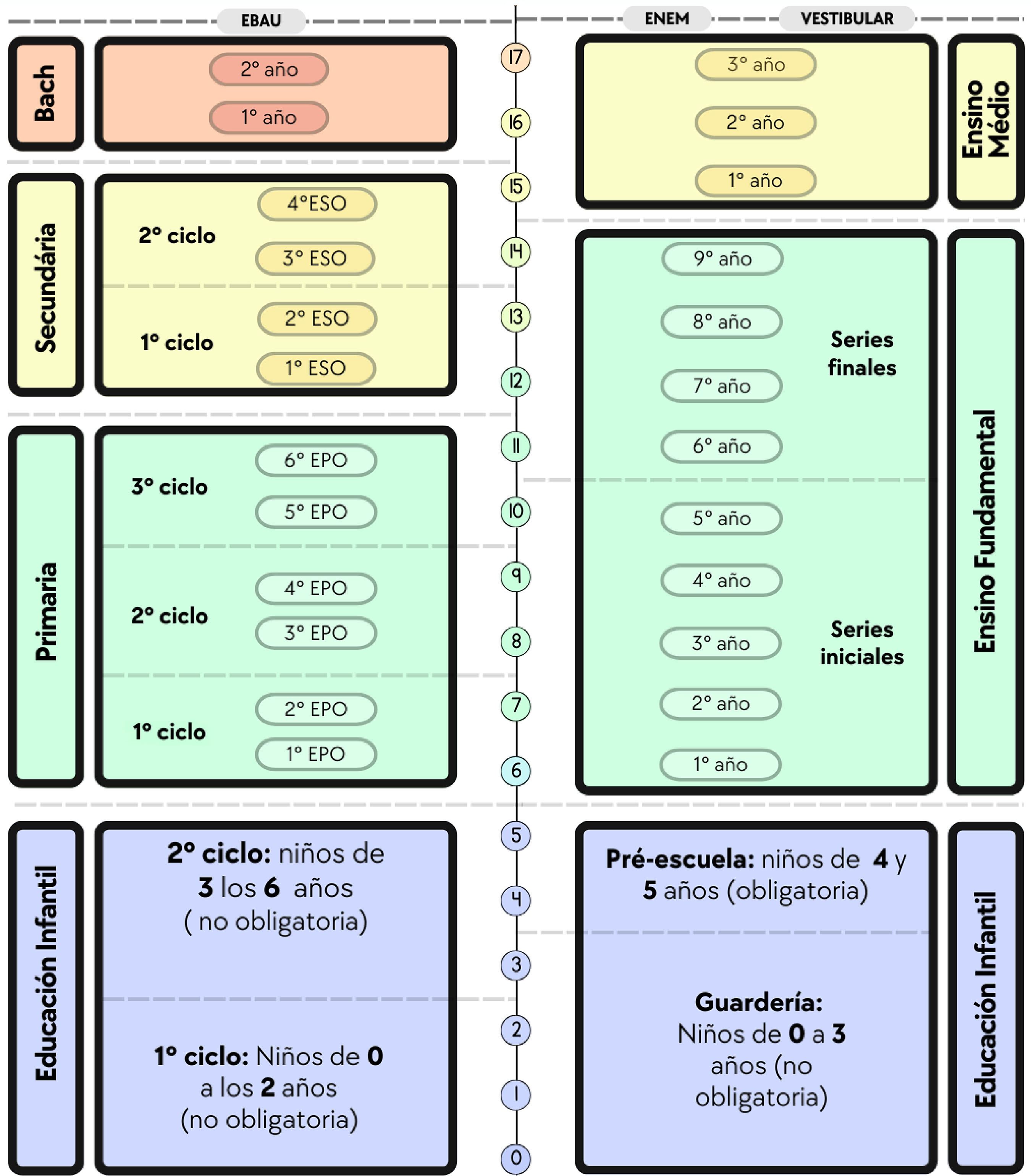 Note: Translation of the figure content: In Spain, basic education is structured into Primary Education (6 years) and Secondary Education (4 years), followed by the Bachelor’s degree (4 years) and the Master’s degree in Teacher Training (1 year). In Brazil, basic education includes Elementary School (9 years) and Secondary School (3 years), followed by a Bachelor’s degree in Mathematics with integrated teacher education. Source: Adapted from
 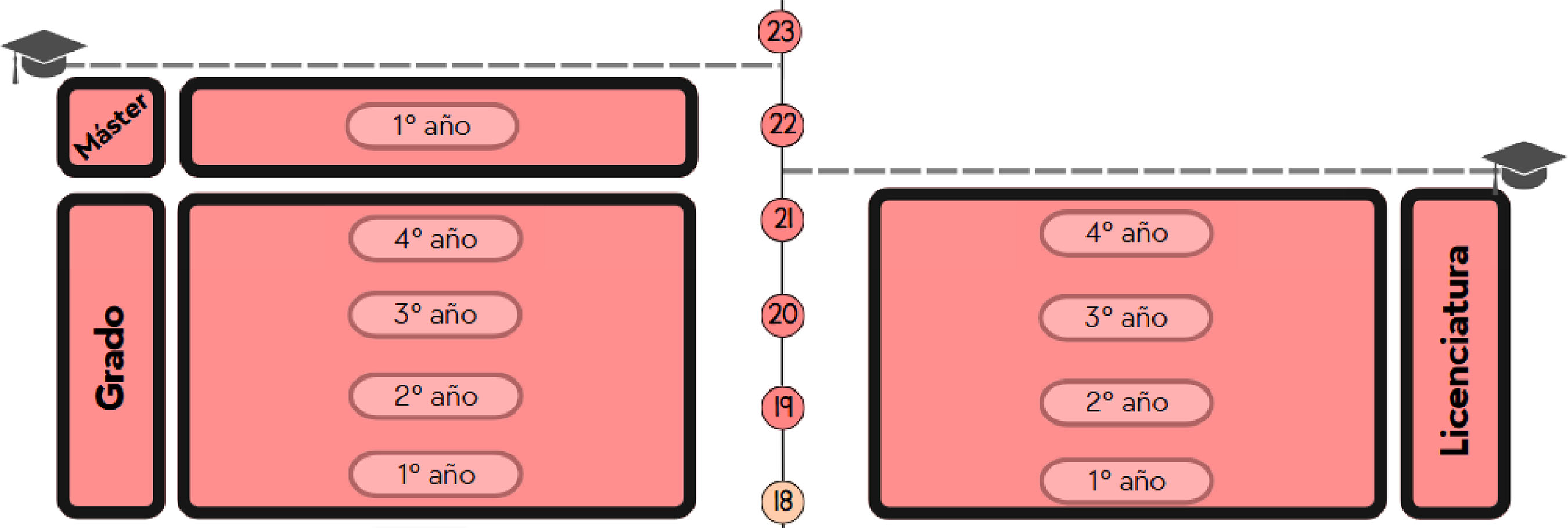 Note: Translation of the figure content: In Spain, Higher Education is composed of a Grado program structured in four years (1st year, 2nd year, 3rd year, and 4th year), followed by a Máster program of one year (1st year). In Brazil, Higher Education in Licenciatura is structured in four years (1st year, 2nd year, 3rd year, and 4th year). Source:
  Source: Prepared by the authors.
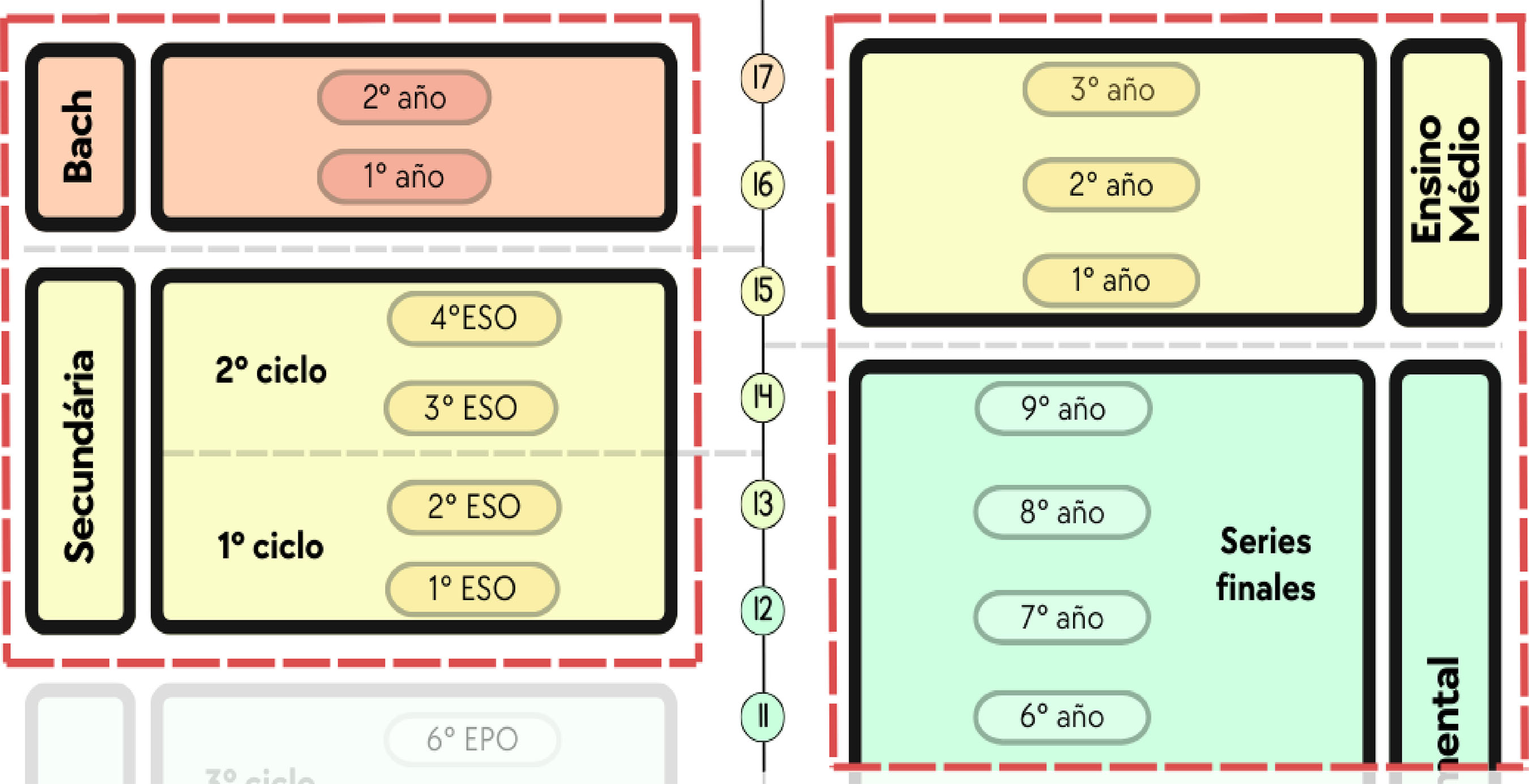 Note: Translation of the figure content: The figure highlights the educational levels in which Mathematics teachers may work in Spain and Brazil. In Spain, this includes Secondary Education (Secundaria), organized into the 1st cycle (1º ESO and 2º ESO) and the 2nd cycle (3º ESO and 4º ESO), as well as Bachillerato (1st and 2nd year). In Brazil, it includes Ensino Médio (Secondary School), structured into three years (1st, 2nd, and 3rd year), and the final years of Ensino Fundamental (Elementary School), comprising the 6th, 7th, 8th, and 9th years (“series finales”). Source: Prepared by the authors.