 Game-mediated health education on pubertal blockers for transgender adolescents: experience report
Abstract
Objective to report the experience of a game-mediated educational intervention on pubertal blockers for transgender adolescents.
Method health education was conducted in two in-person meetings in 2024, led by nurse facilitators. The game emerged as a mediating resource for the educational activity, designed in a memory game format, with eight pairs of illustrated and explanatory cards. The material was created in Canva and applied in a Non-Governmental Organization (NGO) in Recife, Pernambuco, which supports LGBTQIAPN+ adolescents. During the activity, participants discussed the concepts presented on the cards, allowing for an interactive and collaborative approach to the learning process.
Results the experience showed that the educational intervention with a playful approach favored engagement among participants, promoting a welcoming environment conducive to dialogue about pubertal blockers. Mediation through the game allowed for greater active participation, sharing of experiences, and clarification of doubts about pubertal blockers. Among the difficulties observed, the age heterogeneity and different levels of prior knowledge on the subject stood out, requiring adaptations in conducting the activity. Nevertheless, the strategy proved relevant for addressing sensitive topics in an accessible and participatory way.
Conclusion and implications for the practice the creation of the game proved to be an innovative strategy to be used in health education interventions, aiming to promote active learning focused on the subject matter.
Keywords:
Adolescent; Educational Technology; Health Education; Puberty Inhibitors; Transgender Person
Resumo
Objetivo relatar a experiência de uma intervenção educativa mediada por jogo sobre bloqueadores puberais para adolescentes transgêneros.
Método a educação em saúde foi realizada em dois encontros presenciais, em 2024, conduzidos por enfermeiros mediadores. O jogo emergiu como recurso mediador da atividade educativa, sendo elaborado no formato da memória, com oito pares de cartas ilustradas e explicativas. O material foi confeccionado no Canva e aplicado em uma Organização Não Governamental (ONG) de Recife, Pernambuco, que acolhe adolescentes LGBTQIAPN+. Durante a atividade, os participantes discutiam os conceitos apresentados nas cartas, permitindo uma abordagem interativa e colaborativa do processo de aprendizado.
Resultados a experiência evidenciou que a intervenção educativa com abordagem lúdica favoreceu o engajamento entre os participantes, promovendo um ambiente acolhedor e propício ao diálogo sobre bloqueadores puberais. A mediação pelo jogo possibilitou maior participação ativa, compartilhamento de vivências e esclarecimento de dúvidas sobre bloqueadores puberais. Entre as dificuldades observadas, destacou-se a heterogeneidade etária e os diferentes níveis de conhecimento prévio sobre o tema, exigindo adaptações na condução da atividade. Ainda assim, a estratégia mostrou-se relevante para abordar temas sensíveis de forma acessível e participativa.
Conclusão e implicações para a prática a criação do jogo configurou-se como uma estratégia inovadora para ser utilizada em intervenções de educação em saúde, visando à promoção de uma aprendizagem ativa com enfoque na temática.
Palavras-chave:
Adolescente; Educação em Saúde; Inibidores de Puberdade; Pessoas Transgênero; Tecnologia Educacional
Resumen
Objetivo informar sobre la experiencia de una intervención educativa mediada por juegos sobre bloqueadores de la pubertad para adolescentes transgénero.
Método la educación para la salud se llevó a cabo en dos reuniones presenciales en 2024, dirigidas por enfermeras mediadoras. El juego, desarrollado en formato de memoria, contó con ocho pares de tarjetas ilustradas y explicativas. El material se creó en Canva y se aplicó en una Organización No Gubernamental (ONG) en Recife, Pernambuco, que acoge a adolescentes LGBTQIAPN+. Durante la actividad, los participantes discutieron los conceptos presentados en las tarjetas, lo que permitió un enfoque interactivo y colaborativo del proceso de aprendizaje.
Resultados la experiencia demostró que la intervención educativa con un enfoque lúdico favoreció la participación de los participantes, promoviendo un ambiente acogedor propicio para el diálogo sobre los bloqueadores de la pubertad. La mediación a través del juego permitió una mayor participación activa, el intercambio de experiencias y la aclaración de dudas sobre estos fármacos. Entre las dificultades observadas, destacaron la heterogeneidad generacional y los diferentes niveles de conocimiento previo sobre el tema, lo que requirió adaptaciones en la realización de la actividad. Aun así, la estrategia demostró ser relevante para abordar temas delicados de manera accesible y participativa.
Conclusión e implicaciones para la práctica la creación del juego demostró ser una estrategia innovadora para intervenciones de educación para la salud, con el objetivo de promover el aprendizaje activo centrado en el tema.
Palabras clave:
Adolescente; Educación en Salud; Inhibidores de Pubertad; Personas Transgénero; Tecnología Educacional
INTRODUCTION
Adolescence is a phase of human development marked by psychological, physical, and social transformations.1 According to the World Health Organization (WHO), this phase encompasses the age range of 10 to 19 years, its beginning marked by puberty, the maturation of sexual organs, the appearance of secondary sexual characteristics, and the construction of identity.2 In Brazil, adolescence is a priority period for comprehensive protection under the Statute of the Child and Adolescent (Estatuto da Criança e do Adolescente - ECA), which, through this, ensures the right to health, dignity, and full development, demanding public policies and care practices sensitive to the specificities of this population.3
For transgender adolescents, bodily changes and secondary sexual characteristics can represent significant impasses, because gender identity diverges from these transformations that arise during puberty.4 However, the absence of spaces for dialogue, qualified listening, and acceptance regarding these changes can intensify processes of psychological suffering, anxiety, and insecurity, in addition to contributing to withdrawal from health services.4 From this perspective, gender and sexuality are configured as social determinants of health, influencing access, quality of care, and the experiences lived by transgender adolescents in the health system.5
In the field of health for this population, pubertal blockers have been recognized by national and international guidelines and protocols as a possibility for pharmacological intervention that allows for the temporary suspension of pubertal development, extending the time for reflection, multidisciplinary follow-up, and informed decision-making.6-8 Access to clear and understandable information about these interventions can contribute to reducing anxiety, strengthening youth empowerment, and establishing more qualified dialogues between adolescents, families, and health professionals.6 However, such information is still frequently mediated by technical approaches, with little interaction or marked by stigmas and pathologizing discourses.7
It is important to provide clear and understandable information about pharmacological interventions, such as pubertal blockers.9,10 Adequate understanding of the use and indications of the aforementioned pharmacological items can reduce anxiety, promote informed decisions, and facilitate dialogue between adolescents, families, and healthcare professionals.10-12 However, available educational tools often fail to engage the youth audience, as they use technical or uninteractive approaches that do not consider their specific preferences and learning needs.13
Educational games emerge as an innovative and promising alternative, as they combine playful elements with the knowledge construction process.12,13 Despite the advancement in the use of educational games in various health areas, there is a clear gap in the development of games specifically aimed at transgender adolescents regarding pubertal blockers. The absence of materials that combine accessibility, engagement, and scientifically based information points to an opportunity for innovation.14 This gap is even more relevant given the evidence that traditional methods, such as primers and lectures, often fail to establish an effective connection with the target audience, limiting the impact of the content transmitted.12,13
Thus, the problem that guides this writing refers to the need to create an effective tool that promotes health literacy about puberty inhibitors among transgender adolescents. The question is how this tool can be structured to meet the population’s needs for understanding and knowledge building, and what elements are essential for an educational game to become an educational and inclusive strategy.
This study’s significance is evidenced by the growing recognition of the unique health needs of the transgender population and the need to overcome barriers to access to information. In a context where misinformation and prejudice can exacerbate the psychological and physical suffering of these adolescents, promoting health literacy becomes a crucial measure to empower them and reduce vulnerabilities. Furthermore, this work seeks to contribute to the literature on health education methods, exploring the potential of games as educational technologies in this care setting.
In this sense, Nursing, as a producer of health care, assumes a care practice focused on transgender adolescents, mainly through educational actions that promote health literacy, autonomy, and respect for gender identities.6 Thus, educational technologies, such as games, have stood out as relevant tools for playfully addressing sensitive topics, as they favor engagement, active participation, and the collective construction of knowledge, breaking with traditional and normative models of health education.13
Finally, by addressing the topic of puberty blockers in adolescents, mediated by an educational game, this study not only fills a knowledge gap but also offers a path for health promotion. Thus, the construction of well-founded educational games can transform the way complex information is transmitted, contributing to the autonomy and well-being of the aforementioned population in health services.15 In light of the above, this study aimed to report the experience of a game-mediated educational intervention on pubertal blockers for transgender adolescents.
METHOD
Part of this experience was previously disclosed in preliminary format as a book chapter in the work Successful Initiatives in LGBTQIAPN+ Public Health in Pernambuco (Experiências Exitosas em Saúde da População LGBTQIAPN+ de Pernambuco),15 focusing on describing the development of the educational game, and this article differed substantially by expanding the methodological design, deepening the analysis of the empirical results, and incorporating a critical discussion on health education using an educational game with transgender adolescents, configuring itself as a new and more robust version of the study.
This is a descriptive study, of the experience report type, about a game-mediated educational intervention on puberty inhibitors for transgender adolescents. The educational actions took place in a Non-Governmental Organization (NGO) in the city of Recife, Pernambuco, Brazil. The NGO works to provide shelter, psychosocial support, and defend the rights of LGBTQIAP+ individuals and their families, establishing itself as a community-based reference point for transgender adolescents in the area.
The choice of games as an educational strategy was based on evidence that recognizes games and other playful educational technologies as effective resources for promoting engagement, active participation, and meaningful learning in health, especially among adolescents.16,17 In the field of Nursing and health education, it is noted that games favor dialogic interaction, the collective construction of knowledge, and the reduction of communication barriers in sensitive topics, contributing to health literacy and strengthening the autonomy of individuals.16,17
Before the game was developed, a survey of national and international scientific production on the topic was conducted in May 2024, in databases such as Scientific Electronic Library Online (SciELO), Medical Literature Analysis and Retrieval System Online (MEDLINE) via Public Medical Literature (PubMed), Latin American and Caribbean Literature in Health Sciences (LILACS) via Virtual Health Library (VHL), and Scopus, through the combination of the descriptors, in English and Portuguese: “puberty inhibitors”, “adolescent”, “transgender people”, and “educational technology”. 442 studies were identified, of which 11 met the inclusion criteria by directly addressing the health care of transgender adolescents, the use of puberty blockers, and/or educational health strategies. Of the 11 studies, four were qualitative studies, three were technical documents from scientific societies, and four were integrative reviews. The analysis of this material allowed the identification of recurring informational gaps, priority content, and pedagogical approaches appropriate to the target audience, which directly supported the definition of the themes, language, and structure of the game.
The definition of the game's theme emerged from a demand expressed by the NGO itself and by the adolescents served, identified in previous informal meetings and discussion groups promoted by the institution. On these occasions, the adolescents reported doubts, insecurities, and difficulties in accessing reliable information about puberty blockers, health care, and rights within the scope of the Unified Health System (Sitema Único de Saúde - SUS). Based on this demand, two preparatory meetings were held between the mediating nurses and members of the NGO team, with the aim of discussing the relevance of the theme, the format of the game, and the content to be addressed.
The gamification activity consisted of a memory game, which was made using the Canva online application (Figure 1). The game was composed of eight pairs of cards, made in the approximate size of 7 x 7 cm, with a colored background and visual elements associated with gender diversity, such as the use of vibrant colors and symbols widely recognized by the LGBTQIAP+ community. The images were chosen in conjunction with professionals and members of the NGO to facilitate the content identification and association, while the texts presented simple, direct language appropriate for the adolescent audience. Each pair of cards addressed topics such as puberty, gender identity, puberty blockers, expected effects, multidisciplinary follow-up, common myths, and rights guaranteed by the SUS.
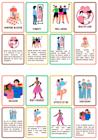
Memory game for health education on puberty blockers for transgender adolescents. Recife, Pernambuco, Brazil, 2024.
Although the game’s final development was carried out by the nurses, the NGO team contributed with suggestions regarding language, aesthetics, and the suitability of the material to the profile of the adolescents served. During the intervention, the adolescents were also encouraged to comment and suggest improvements to the game, and these contributions were recorded for possible future reformulations of the technology.
The educational intervention took place in two in-person meetings, held on different dates, with an average duration of two hours each. In total, 10 transgender adolescents participated. Participation was voluntary, by invitation from the NGO.
The meetings were organized in stages: welcoming the participants; introducing the facilitators and providing background on the topic; playing the memory game in small groups; and a final session for listening, collective evaluation, and sharing insights. The actions were mediated by nurses invited by the NGO, without a direct care link to SUS services at the time of the activity, and had the support of institution staff for the organization of the space and the accompaniment of the adolescents.
The game's functionality followed these rules: 1) the cards were shuffled and placed face down on a table; 2) the players took turns playing. In each turn, a player turned over two cards, and if they matched, they were collected and removed from the game. Otherwise, the cards were turned face down again, and the next player took their turn; 3) the player who managed to form the most pairs by the end of the game was considered the winner. During the game, players were encouraged to briefly discuss the themes of the cards in the game, helping to achieve a more meaningful understanding of puberty blockers, puberty, and gender identity.
For the analysis, participant observation and notes were used, the records of which were described in the field diary. The field notes were organized in a descriptive and interpretive manner and allowed the identification of aspects related to engagement, comprehension of content, group interactions, perceptions about the game, and suggestions for improving educational technology.
RESULTS
The memory game encouraged the active participation of adolescents, which, throughout the meetings, took place through dialogue, the exchange of their experiences, and the resolution of doubts about puberty, bodily transformations, and health care. It was observed that the educational intervention, mediated by the game, made it possible to create a safe and welcoming environment, as the participants felt comfortable sharing their experiences and questions, especially about puberty blockers.
The game stimulated interaction among adolescents, especially regarding the understanding of the different experiences shared among them. At various times, the adolescents complemented each other's statements, demonstrating recognition of similar experiences and validating feelings related to insecurities in the face of bodily changes and the social expectations imposed on trans bodies.
The accessible language, with short sentences and examples close to the reality of young people, made it easier to understand the topic. During the meeting, it was observed that additional questions frequently arose from the cards drawn, a significant phenomenon, as curiosity and the encouragement to problematize the subject became triggers for active learning.
It was noticed that the game’s visual elements, such as the enlarged card size, the vibrant colors of the LGBTQIAPN+ community, the symbols associated with gender and sexual diversity, and the images representing plural bodies, favor the identification of adolescents with the educational technology. The cards, made in an enlarged size and with good legibility, allowed for collective handling and simultaneous viewing by the groups, contributing to the fluidity of the dynamics and continuous engagement during the meetings.
In the mediators' perception, the game favored a more horizontal approach with the participants, reducing barriers initially observed during the welcoming process. In traditional health education approaches, it is observed that many participants showed withdrawal, shame, or difficulty in verbalizing doubts related to puberty, the body, and gender transition processes. During the playful dynamic, however, the mediation through the game allowed these issues to emerge more spontaneously, without the embarrassment often associated with formal presentations. The mediators reported that the game served as a conversation starter, fostering a space for qualified listening, trust, and active participation.
On one occasion, a participant expressed the perception that the game could be considered childish. This observation, however, was not recurrent among the group and was understood as an individual expression related to the different age ranges and maturity levels present among the adolescents. This aspect highlighted the importance of considering the heterogeneity of the youth audience when selecting and adapting educational technologies. Among the main difficulties observed, the different levels of prior knowledge about puberty blockers stood out, which required constant adaptation of the mediation. Some adolescents had fragmented information or information marked by myths and misinformation, while others already demonstrated greater familiarity with the topic.
The meetings also made it possible to identify that the topic of puberty blockers aroused significant interest among transgender adolescents, especially concerning the effects on the body, access criteria, and possibilities of follow-up in health services. Through the game, these issues emerged spontaneously and allowed the mediators to address the topic in a dialogical way, without resorting to traditional presentations.
To overcome these limitations, the nursing professionals made the activity more flexible, expanding the dialogue moments beyond the competitive dynamics of the game and incorporating complementary discussion circles at the end of each round. Practical examples from the adolescents' daily lives, real situations related to access to health services, and experiences shared by the participating group were used, favoring greater identification with the content. The suggestions offered by the adolescents regarding language, aesthetics, and thematic approach were also recorded as input for future reformulations of the educational technology, reinforcing the participatory and collaborative nature of the intervention.
Overall, the results indicated that the memory game acted as a facilitator in the educational process, promoting engagement, interaction, and active listening, as well as contributing to the collective construction of knowledge about health, puberty, and gender identity in the context of transgender adolescence.
DISCUSSION
The use of the memory game as an educational technology has proven to be a powerful strategy for health education with transgender adolescents, as it promotes engagement, interaction, and the collective construction of knowledge about pharmacological interventions aimed at transgender adolescents. Given the need to address a sensitive and little-known topic in an accessible way, stimulating interaction and learning among diverse audiences through a playful and dynamic methodology, the educational game proposal was developed. The construction of educational materials, such as the memory game, has been a recurring practice among nurses, as it is a technology that allows the exchange of experiences and knowledge between participants and mediators, essential aspects for educational processes in health.17,18
Before the intervention, some participants reported a desire to use pubertal blockers. However, they had difficulty understanding how the pharmaceutical items worked, their side effects and benefits, and when they received explanations, these were given in a technical and superficial language, through lectures, making it very difficult to understand the information and resolve doubts about the subject. Consequently, it is observed that the traditional method of health education is not effective, demonstrating that the information delivery often occurs in a monotonous and uninteresting way, as it does not provide opportunities for debate on the problems related to the topic and the active participation of the subjects. Moreover, the use of technical language is not conducive to the individuals’ understanding, especially in popular health education.19
Beyond the game's effectiveness as an educational technology, it is essential to problematize the structural limitations of health education aimed at transgender adolescents. Experience shows that the need for playful strategies emerges not only from pedagogical preferences, but also from historical gaps in the training of health professionals, who are often unprepared to address issues related to gender diversity.20 In this sense, play should not be understood as an isolated solution, but as a device that challenges traditional practices, revealing the urgency of more dialogical, inclusive, and culturally situated educational models. Furthermore, the dependence on specific initiatives, such as actions in NGO, highlights weaknesses in the institutionalization of healthcare for transgender adolescents within the public health system.21
Health education with transgender adolescents therefore demands an approach that goes beyond the informative dimension, incorporating aspects related to citizenship, identity recognition, and addressing structural inequalities.22 The difficulty reported by the participants in accessing health services and discussing their demands shows that the problem lies not only in the absence of educational technologies, but also in institutional, symbolic, and relational barriers that permeate care. Thus, effective educational practices need to be linked to broader changes in health services, including professional training, guaranteeing the use of social names, and building safe and welcoming environments.21
When used as an educational intervention, the game has proven to be an effective strategy for fostering participants’ engagement and motivation. The playful approach allowed for greater interest and engagement from the users, making learning more dynamic and without intimidation. According to the adolescents' reports, the interactive mode of the intervention made it easier to absorb the content, since, while playing, the mediators raised questions based on each correct answer on the game cards to stimulate knowledge among the group, as well as explaining the content covered by the cards and clarifying any doubts the adolescents may have. In this way, the game, as an educational technology, proved to be an effective strategy for breaking down barriers between mediators and participants, favoring a dialogue with a more accessible and collaborative language.19,23
Educational games, as care-educational technologies, enable closer relationships between health professionals and users by reducing communication barriers and promoting more horizontal learning environments.13 From this perspective, the game used in this study acted as a mediating device, shifting the focus from a transmissive logic to a participatory educational practice, in which adolescents assumed an active role in the learning process. This dynamic aligns with conceptions of health education grounded in problem-posing pedagogy, which values listening, dialogue, and the exchange of knowledge.
The combination of healthy competition and skilled mediation proved essential to the success of the activity, especially on a topic involving sensitive issues and, at times, issues laden with prejudice. The experience also highlighted the importance of considering the participants' prior knowledge level, adapting the activities to ensure greater equity in access to information. Regarding the educational action with this game, it was observed that, after the educational intervention, the adolescents were more confident in seeking reliable information about puberty blockers and showed greater awareness of their rights and gender transition options.
Health education with a playful strategy has become an essential tool for promoting self-care and autonomy, especially for vulnerable populations, such as transgender people. By providing clear, accessible, and evidence-based information, this practice strengthens an individual's ability to make decisions about their body and health.19-23 Therefore, health education is not limited to the transmission of information; however, it expands the protagonism of individuals in relation to their care process, in a safe manner and aligned with gender identity.19
The observation that the visual elements of the game, such as colors, symbols, and images representing gender diversity, favored the participants' identification with the material reinforces the importance of culturally sensitive educational technologies. Materials that recognize and validate specific identities and experiences tend to increase engagement and a sense of belonging, especially among transgender adolescents, who are frequently exposed to contexts of invisibility and stigmatization in health services and educational spaces. Thus, the game’s aesthetics were not limited to an accessory aspect, but constituted a central component for the success of the intervention.24-26
The educational intervention facilitated discussion about gender, body, and health between the facilitators and the adolescents, in a space provided by the NGO. It is noteworthy that, according to the adolescents, they have difficulty expressing and discussing this topic in health services. The educational activity took place in an environment frequently used by adolescents and in which there is no judgment or discrimination, being a welcoming and humanized space, allowing participants to express their identities freely and in a supportive manner.
In contrast to this environment, health services and their professionals, who are often not prepared to meet the health demands of transgender people, create an impasse between transgender adolescents and their health care needs, whether due to transphobic practices or the denial of basic rights, such as their chosen name.27 Thus, the space of the educational intervention becomes relevant to provide support to the participants and allow them to express their views and questions in the face of the learning process.
The isolated, though not recurring, observation that the game could be perceived as childish reveals the heterogeneity of the adolescent audience and reinforces the need for continuous adaptation of educational technologies to different age groups, maturity levels, and individual trajectories. Far from representing a weakness of the study, this finding highlights the inherent complexity of health education practices and signals the importance of ongoing evaluation processes that allow for adjustments and revisions to the strategies employed. This perception of infantilization related to the game can be found in some studies, mainly in the field of Nursing. It has been suggested that adolescents participate in and contribute to the construction of educational technology, offering them the possibility of acting as active agents in this process of game construction and learning.24
From a professional practice perspective, the study’s results reinforce the role of Nursing in conducting educational actions aimed at promoting the health of transgender adolescents, especially in conjunction with civil society organizations. The performance of the mediators in the educational process highlights Nursing’s potential to occupy intersectoral spaces, contributing to expanded access to information, the strengthening of comprehensive care, and the reduction of barriers to access to health services.28,29
This report's findings contribute to the advancement of knowledge in Nursing by showing that the use of playful educational technologies, when culturally sensitive and articulated to the demands of the subjects, can strengthen educational practices in health with transgender adolescents. The study broadens the debate on health care for gender-dissident populations and points to ways to develop more inclusive, dialogical, and equity-committed educational interventions.22
CONCLUSION AND IMPLICATIONS FOR PRACTICE
The creation of the game was an innovative health education intervention strategy, contributing to active learning about puberty blockers in transgender adolescents. The intervention enabled adolescents to develop greater autonomy and confidence regarding information about puberty inhibitors, in addition to promoting a space for welcoming, listening, and exchanging experiences between participants and facilitators.
The reports evidenced feelings of emotional and informational support, acceptance, and strengthening of confidence in their own identity, and indicated that the action contributes to broadening the debate on trans health in the community. This experience favored a more humanized and dialogical circulation of knowledge and understanding, reinforcing the importance of educational practices that consider the specificities and needs of this population.
This study’s limitation is not related to subjectivity, but rather to the structural aspects of the proposal. Emerging reflections on the participants' needs stand out in the collective construction of the game, as well as the holding of an expanded number of meetings that allow for a deeper exploration of the theme and the strengthening of interdisciplinarity in the development and conduct of the intervention.
For future actions, it is recommended to expand the educational proposal to other contexts, such as schools and health services, in addition to adapting the game for different age groups and levels of schooling. The relevance of future studies that evaluate the applicability and educational potential of the game in different contexts of care and health education is also highlighted.
ACKNOWLEDGMENTS
None.
DATA AVAILABILITY RESEARCH
All data underlying this study are included in the article.
FINANCIAL SUPPORT
References
-
1 Schoen-Ferreira TH, Aznar-Farias M, Silvares EFM. Adolescência através dos séculos. Psicol Teor Pesqui. 2010;26(2):227-34. https://doi.org/10.1590/S0102-37722010000200004
» https://doi.org/10.1590/S0102-37722010000200004 - 2 World Health Organization. Health for the world’s adolescents: a second chance in the second decade. Geneva: WHO; 2014.
- 3 Lei nº 8.069, de 13 de julho de 1990 (BR). Dispõe sobre o Estatuto da Criança e do Adolescente e dá outras providências. Diário Oficial da União, Brasília (DF), 16 jul 1990.
-
4 Pontes JC, Silva CG, Nakamura E. Transgender “children” and “adolescents”: categories construction among health professionals. Sex Salud Soc. 2020;(35):112-32. https://doi.org/10.1590/1984-6487.sess.2020.35.06.a
» https://doi.org/10.1590/1984-6487.sess.2020.35.06.a -
5 Galvão AL, Oliveira E, Germani ACCG, Luiz OC. Determinantes estruturais da saúde, raça, gênero e classe social: uma revisão de escopo. Saude Soc. 2021;30(2):e200743. https://doi.org/10.1590/s0104-12902021200743
» https://doi.org/10.1590/s0104-12902021200743 -
6 Coleman E, Radix AE, Bouman WP, Brown GR, de Vries ALC, Deutsch MB et al. Standards of care for the health of transgender and gender diverse people, version 8. Int J Transgender Health. 2022;23(Suppl 1):S1-259. https://doi.org/10.1080/26895269.2022.2100644 PMid:36238954.
» https://doi.org/10.1080/26895269.2022.2100644 -
7 Krebs D, Harris RM, Steinbaum A, Pilcher S, Guss C, Kremen J et al. The care of transgender young people. Horm Res Paediatr. 2022;95(5):405-14. https://doi.org/10.1159/000524030 PMid:35272283.
» https://doi.org/10.1159/000524030 -
8 Hembree WC, Cohen-Kettenis PT, Gooren L, Hannema SE, Meyer WJ, Murad MH et al. Endocrine treatment of gender-dysphoric/gender-incongruent persons: an Endocrine Society clinical practice guideline. J Clin Endocrinol Metab. 2017;102(11):3869-903. https://doi.org/10.1210/jc.2017-01658 PMid:28945902.
» https://doi.org/10.1210/jc.2017-01658 -
9 Silva GC, Silva LDB, Vieira GS, Festas JP, Silva APA, Canuto FVS. Vantagens e desvantagens da supressão da puberdade em crianças e adolescentes com disforia de gênero. Rev Cienc Saude Ceuma. 2024;2(2):95-114. https://doi.org/10.61695/rcs.v2i2.41
» https://doi.org/10.61695/rcs.v2i2.41 -
10 van der Miesen AIR, Steensma TD, de Vries ALC, Bos H, Popma A. Psychological functioning in transgender adolescents before and after gender-affirmative care compared with cisgender general population peers. J Adolesc Health. 2020;66(6):699-704. https://doi.org/10.1016/j.jadohealth.2019.12.018 PMid:32273193.
» https://doi.org/10.1016/j.jadohealth.2019.12.018 -
11 Tordoff DM, Wanta JW, Collin A, Stepney C, Inwards-Breland DJ, Ahrens K. Mental health outcomes in transgender and nonbinary youths receiving gender-affirming care. JAMA Netw Open. 2022;5(2):e220978. https://doi.org/10.1001/jamanetworkopen.2022.0978 PMid:35212746.
» https://doi.org/10.1001/jamanetworkopen.2022.0978 -
12 Nietsche EA, Teixeira E, Medeiros HP. Educational technologies in nursing: contributions for teaching and care practice. Rev Bras Enferm. 2014;67(2):293-8. https://doi.org/10.5935/0034-7167.20140040
» https://doi.org/10.5935/0034-7167.20140040 -
13 Teixeira E, Medeiros HP, Nitschke RG. Educational-care technologies: a possibility for nursing care empowerment. Texto Contexto Enferm. 2011;20(spe):49-57. https://doi.org/10.1590/S0104-07072011000500006
» https://doi.org/10.1590/S0104-07072011000500006 -
14 Ferreira LS, Borba JS. A transversalidade da diversidade de gênero e sexualidade na educação em saúde. Rev Educ Pop. 2021;20(1):325-42. https://doi.org/10.14393/REP-2021-54896
» https://doi.org/10.14393/REP-2021-54896 - 15 Carvalho MS, Silva KVP, Oliveira DA. Intervenção educativa mediada por jogo sobre bloqueadores puberais para adolescentes transgêneros. In: Secretaria Estadual de Saúde (PE), editor. Experiências exitosas em saúde da população LGBTQIAPN+ de Pernambuco. Recife: Escola de Governo em Saúde Pública de Pernambuco; 2025. p. 72-5.
- 16 Maia FO. Jogos educativos como estratégia pedagógica para a promoção da saúde. Rev Educ Pesqui Inclusao. 2023;4(1):1-13.
-
17 Simon E, Jezine E, Vasconcelos EM, Ribeiro KSQS. Metodologias ativas de ensino-aprendizagem e educação popular: encontros e desencontros no contexto da formação dos profissionais de saúde. Interface. 2014;18(Suppl 2):1355-64. https://doi.org/10.1590/1807-57622013.0477
» https://doi.org/10.1590/1807-57622013.0477 -
18 Nogueira DL, Sousa MS, Dias MSA, Pinto VPT, Lindsay AC, Machado MMT. Educação em saúde e na saúde: conceitos, pressupostos e abordagens teóricas. Sanare. 2022;21(2). https://doi.org/10.36925/sanare.v21i2.1669
» https://doi.org/10.36925/sanare.v21i2.1669 -
19 Mendes RS, Anunciação KCOS, Fonseca BS, Silva JA, Salvador PTCO. Uso de estratégias inovadoras no ensino da saúde coletiva nas graduações da área da saúde: uma revisão de escopo. Interface. 2024;28:e230225. https://doi.org/10.1590/interface.230225
» https://doi.org/10.1590/interface.230225 -
20 White Hughto JM, Reisner SL, Pachankis JE. Transgender stigma and health: a critical review of stigma determinants, mechanisms, and interventions. Soc Sci Med. 2015;147:222-31. https://doi.org/10.1016/j.socscimed.2015.11.010 PMid:26599625.
» https://doi.org/10.1016/j.socscimed.2015.11.010 -
21 Gridley SJ, Crouch JM, Evans Y, Eng W, Antoon E, Lyapustina M et al. Youth and caregiver perspectives on barriers to gender-affirming health care for transgender youth. J Adolesc Health. 2016;59(3):254-61. https://doi.org/10.1016/j.jadohealth.2016.03.017 PMid:27235374.
» https://doi.org/10.1016/j.jadohealth.2016.03.017 -
22 Cruz PJSC, Silva JC, Danielski K, Brito PNA. Educação popular em saúde: princípios, desafios e perspectivas na reconstrução crítica do país. Interface. 2024;28:e230550. https://doi.org/10.1590/interface.240156
» https://doi.org/10.1590/interface.240156 -
23 Borji-Navan S, Maleki N, Keramat A. Efficacy of digital health interventions used for adolescent sexual health: an umbrella review. Health Sci Rep. 2024;7(12):e70212. https://doi.org/10.1002/hsr2.70212 PMid:39633835.
» https://doi.org/10.1002/hsr2.70212 -
24 Yildiz M, Yildiz M, Kayacik AD. Rising gamification in health education: a bibliometric study. Nurse Educ Pract. 2024;78:103993. https://doi.org/10.1016/j.nepr.2024.103993 PMid:38788617.
» https://doi.org/10.1016/j.nepr.2024.103993 -
25 Mitchell R, Schuster L, Jin HS. Playing alone: can game design elements satisfy user needs in gamified mHealth services? Health Promot Int. 2022;37(2):daab168. https://doi.org/10.1093/heapro/daab168 PMid:34651180.
» https://doi.org/10.1093/heapro/daab168 -
26 Pires MRG, Gottems LBD, Fonseca RMGS. Ludic recreation in the development of health games: theoretical-methodological references in the production of critical subjectivities. Texto Contexto Enferm. 2017;26(4):e2500017. https://doi.org/10.1590/0104-07072017002500017
» https://doi.org/10.1590/0104-07072017002500017 -
27 Nascimento FK, Reis RA, Saadeh A, Demétrio F, Rodrigues ILA, Galera SAF et al. Brazilian transgender children and adolescents: attributes associated with quality of life. Rev Lat Am Enfermagem. 2020;28:e3351. https://doi.org/10.1590/1518-8345.3504.3351 PMid:33174991.
» https://doi.org/10.1590/1518-8345.3504.3351 -
28 Soares NA, Gazzinelli MF, Souza V, Araújo LHL. The role playing game as a pedagogical strategy in nurse training: an experience report on game creation. Texto Contexto Enferm. 2015;24(2):600-8. https://doi.org/10.1590/0104-07072015001072014
» https://doi.org/10.1590/0104-07072015001072014 -
29 Abreu PD, Palha PF, Andrade RLP, Almeida SA, Nogueira JA, Monroe AA. Comprehensive health care for transgender adolescents: contributions to nursing practice. Rev Lat Am Enfermagem. 2022;30(spe):e3811. https://doi.org/10.1590/1518-8345.6276.3810 PMid:36449927.
» https://doi.org/10.1590/1518-8345.6276.3810

 Source: Created by the authors (2024).