 Caregiver burden in older adults and frailty in aged care recipients: a cross-sectional study
Abstract
Objective to compare caregiver burden among aged caregivers considering presence or absence of frailty in the older adults under their care.
Method a cross-sectional and quantitative study conducted with 96 older adults, including 48 caregivers and 48 care recipients, linked to Family Health Units located in areas marked by high social vulnerability in the municipality of São Carlos, São Paulo. The data were collected at the participants' homes using a sociodemographic and care-context characterization questionnaire, the Fried Frailty Phenotype and the Zarit Burden Interview. Descriptive analyses were performed and the Mann-Whitney and Pearson's Chi-square tests were applied.
Results caregivers of frail older adults had a higher mean total burden score (27.96±17.75) when compared with the group caring for non-frail older adults (19.43±14.03), although no statistically significant difference was found (p=0.109).
Conclusion and implications for the practice frailty in aged care recipients did not result in a significantly higher caregiver burden for aged caregivers, but it reinforces the importance of continuous support and health education strategies for caregivers, including guidance on self-care, caregiver burden prevention and strengthening of support networks, especially in contexts marked by high social vulnerability.
Keywords:
Aged; Caregiver Burden; Caregivers; Frailty; Social Vulnerability
Resumo
Objetivo comparar a sobrecarga entre pessoas idosas cuidadoras, considerando a presença ou ausência de fragilidade nas pessoas idosas que recebem cuidados.
Método estudo transversal e quantitativo realizado com 96 pessoas idosas, sendo 48 cuidadoras e 48 receptoras de cuidados, vinculadas a Unidades de Saúde da Família em áreas de alta vulnerabilidade social no município de São Carlos, São Paulo. A coleta de dados ocorreu no domicílio dos participantes, utilizando um questionário de caracterização sociodemográfica e do contexto do cuidado, o Fenótipo de Fragilidade de Fried e o Inventário de Sobrecarga de Zarit. Foram realizadas análises descritivas, sendo aplicados os testes Mann-Whitney e Qui-Quadrado de Pearson.
Resultados os cuidadores de pessoas idosas frágeis possuíam escore total médio de sobrecarga mais elevado (27,96±17,75) quando comparado ao grupo de cuidadores de pessoas idosas não frágeis (19,43±14,03), porém não foi identificada diferença estatisticamente significativa (p=0,109).
Conclusão e implicações para a prática a fragilidade da pessoa idosa cuidada não resultou em sobrecarga significativamente maior para a pessoa idosa cuidadora, mas reforça a importância de estratégias de apoio contínuo e educação em saúde para cuidadores, incluindo orientação em autocuidado, prevenção de sobrecarga e fortalecimento de redes de suporte, especialmente em contextos de alta vulnerabilidade social.
Palavras-chave:
Cuidadores; Fragilidade; Idoso; Sobrecarga do Cuidador; Vulnerabilidade Social
Resumen
Objetivo comparar la sobrecarga entre personas mayores cuidadoras, considerando la presencia o ausencia de fragilidad en las personas mayores que reciben cuidados.
Método estudio transversal y cuantitativo realizado con 96 personas mayores, siendo 48 cuidadoras y 48 receptoras de cuidados, vinculadas a Unidades de Salud de la Familia en áreas de alta vulnerabilidad social en el municipio de São Carlos, San Pablo. La recolección de datos se realizó en el domicilio de los participantes, por medio de un cuestionario de caracterización sociodemográfica y del contexto del cuidado, el Fenotipo de Fragilidad de Fried y el Inventario de Sobrecarga de Zarit. Se realizaron análisis descriptivos y se aplicaron las pruebas de Mann-Whitney y Chi-cuadrado de Pearson.
Resultados los cuidadores de personas mayores frágiles presentaron una puntuación media total de sobrecarga más elevada (27,96±17,75) en comparación con el grupo de cuidadores de personas mayores no frágiles (19,43±14,03), aunque no se identificó una diferencia estadísticamente significativa (p=0,109).
Conclusión e implicaciones para la práctica la fragilidad de la persona mayor cuidada no resultó en una sobrecarga significativamente mayor para la persona mayor cuidadora, pero refuerza la importancia de estrategias de apoyo continuo y educación en salud para los cuidadores, incluyendo orientación sobre autocuidado, prevención de la sobrecarga y fortalecimiento de las redes de apoyo, especialmente en contextos de alta vulnerabilidad social.
Palabras clave:
Anciano; Carga del Cuidador; Cuidadores; Fragilidad; Vulnerabilidad Social
INTRODUCTION
Throughout the aging process, anatomical and functional changes can render the body more susceptible to stressors. When physiological responses are insufficient or inadequate to properly cope with stressful situations, homeostatic imbalance may occur, consequently leading to the development of frailty syndrome.1
Frailty is characterized as a multidimensional clinical syndrome and, although not directly associated with chronological age, it is highly prevalent among older adults. To date, there is no consensus in the literature regarding its definition. It is recognized as a significant Public Health issue due to its high prevalence, substantial social and economic costs and negative impact on the quality of life of the older adults affected and their family members.1,2
Some studies indicate that frail older adults oftentimes require a caregiver to assist with daily activities.3,4 In the national context, this caregiver is generally a family member who provides care in a household setting.5 In recent years and due to significant changes in family structures, there has been an evident increase in the number of older adults who have become caregivers for other aged individuals.6
During the caregiving process, caregivers may experience progressive physical and emotional strain arising from this task, a phenomenon known as caregiver burden.7 Brazilian researchers report that the prevalence of this tpye of burden tends to be higher among caregivers of advanced age,8,9 with low schooling and income levels, and among those who care for their spouses,8 factors commonly present in contexts characterized by high social vulnerability.
Individuals living in settings marked by high social vulnerability may be more exposed to negative health outcomes, taking into account that social conditions can disfavor people.10 As for this aspect, the subject matter under study aligns with the Sustainable Development Goals (SDGs), particularly with SDG 3 (which seeks to ensure healthy lives and promote well-being at all ages) and with SDG 10, focused on reducing inequalities. It is also associated with Brazilian public policies addressing older adults, such as the National Policy for Older Adults (Law No. 8,842/1994), the Statute for Older Adults (Law No. 10,741/2003), the National Health Policy for Older Adults (Ordinance No. 2,528/2006) and the National Care Policy (Law No. 15,069/2024). These policies recognize care as a shared responsibility and establish guidelines for protection, health promotion and social support, particularly relevant when considering aged caregivers in socially vulnerable contexts.
Some studies examining the relationship between caregiver burden among middle-aged caregivers and frailty levels in aged care recipients have shown promising results,11-13 indicating that this type of burden tends to be higher among caregivers of frail older adults when compared to those caring for non-frail older adults.
Nonetheless, a gap remains in the literature concerning this type of burden among caregivers who are themselves older adults and its relationship with the frailty levels of the older adults under their care, especially in contexts marked by high social vulnerability. This gap highlights the need for further research. Studies of this nature are essential, as caregiver burden can compromise both quality of the care provided and the quality of life of those involved. Older adults who assume caregiving roles face the challenge of simultaneously managing their own aging-related demands and the responsibilities of caring for a loved one, thus being exposed to double vulnerability. 14 This condition warrants greater scientific attention.
Therefore, this study aimed at comparing caregiver burden among aged caregivers considering presence or absence of frailty in the older adults under their care. The hypothesis is that aged caregivers who provide care for frail older adults experience higher caregiver burden when compared to those who care for non-frail older adults.
METHODS
This study has an observational and cross-sectional design based on a quantitative research method, following the Strengthening the Reporting of Observational Studies in Epidemiology (STROBE) checklist. It is a section from a larger cross-sectional project that investigated social and health variables such as sleep quality, frailty and caregiver burden, among others. The study was conducted in a municipality from the inland region in the state of São Paulo, following the parameters established by the São Paulo Social Vulnerability Index (Índice Paulista de Vulnerabilidade Social, IPVS) from the SEADE Foundation. At the data collection time, the city had ten Family Health Units (FHUs) located in contexts marked by high social vulnerability. Five FHUs agreed to participate in this study.
The data collection period lasted eight months (from August 2019 to March 2020) and was completed before publication of decrees related to the COVID-19 pandemic and implementation of social distancing measures; therefore, it was not necessary to implement any adjustments to the collection procedures.
Data collection was carried out in partnership with the FHUs, which provided lists with the names and addresses of older adults registered in their respective coverage areas, enabling identification of potential participants. Based on this information, the research team conducted home visits to present the study, verify compliance with inclusion and exclusion criteria and formally invite participation. When agreement was obtained, a new visit was scheduled for the interviews, which were conducted in the participants' own homes, individually and in a private space made available by the residents, lasting a mean of approximately two hours. Data collection was in charge of eight undergraduate and graduate students linked to the research group, previously trained for standardized application of the protocol instruments.
The inclusion criteria for this research were the following: being at least 60 years old; being registered in the territories covered by FHUs located in areas characterized by high social vulnerability according to the IPVS; and being a caregiver or a care recipient for daily activities.
The exclusion criteria consisted in hearing and/or language impairments that hindered applying the research protocol instruments. It should be noted that the measures used were based on self-reports, applied to both older adults and caregivers and according to the set of instruments planned in the study. After approaching the homes and verifying the inclusion and exclusion criteria, the eligible individuals were invited to participate in the study and, upon agreement, had data collection times scheduled. All participants answered the same research protocol instruments, except for the caregiver burden scale, which was exclusively applied to caregivers.
The study sample was of the non-probability type, selected by convenience and according to previously established criteria. The sample from the main study database was selected from a list provided by professionals from the five FHUs, with a total of 168 households with at least one older adult, all of which were visited. From this total, 49 did not express interest in participating in the research, 32 were not found by the researchers after three attempts on different days and times, 18 had moved to a different address, one the older adults in the care dyad had died in three cases and the older adult did not require care in one household, leaving 65 households, with 65 individuals assuming the caregiver role and another 65 acting as care recipients.
For the current analytical section, 17 dyads were excluded due to participants' withdrawals, resulting in absence of complete information regarding the variables of interest on caregiver burden and frailty in aged care recipients. Data from 96 older adults remained for analysis, including 48 caregivers and 48 care recipients. Two groups were assembled for the comparative analyses of caregiver burden scores:
-
A- Group of caregivers for non-frail older adults (n=23): caregivers of individuals with scores between zero and two according to the frailty criteria.15
-
B- Group of caregivers for frail older adults (n=25): caregivers of individuals with scores between three and five according to the aforementioned criteria.
The exposure variables considered were as follows:
-
Sociodemographic variables: instrument developed by the researchers covering the following variables: gender (female/male), age (in years old), marital status (married or with a partner, single, widowed or divorced/separated), education/schooling level (in years), skin color/race (white, brown, black, Asian or Indigenous), religious belief (yes or no; if yes, which one), retirement status (yes or no), personal and family income (in national currency) and whether this income was considered sufficient (yes or no).
-
Care context variables: including kinship relation with the older adult under care (such as spouse, father/mother, father-in-law/mother-in-law, sibling or other), time providing care (in months), number of daily hours devoted to care, participation in preparatory courses to care for older adults (yes or no) and whether there was assistance for this task (yes or no).
-
Frailty: assessed using the Frailty Assessment Scale, a phenotype proposed by Fried15 that comprises: (1) involuntary weight loss during the last year, recorded by the individual as unintentional weight loss in the previous 12 months and number of kilograms lost; (2) fatigue, determined by how often the subject felt that their activities required excessive effort during the last week and/or that they could not carry on with their activities during the last week; (3) diminished grip strength, assessed by the mean of three consecutive handgrip strength measures, expressed in kilograms-force; (4) reduced gait speed, indicated by the mean of three consecutive measures of the time required by the older adult to walk 4.6 meters in a straight line; and (5) reduced caloric expenditure rate, as reported by interviewees regarding decreased physical activities over the last year. Presence of at least three of these phenotype characteristics indicates frailty.15
-
Caregiver burden: measured using the Zarit Burden Scale, which consists of 22 items that assess subjective caregiver burden among family caregivers, measuring the emotional load dimension. It examines how the caregiver role affects different areas of these family members' lives, such as health, social and personal life, financial situation, emotional well-being and interpersonal relationships. Each question offers answer options on a scale from 0 to 4 points. The final scores can range from zero to 88 points; the higher the score, the higher the caregiver burden level perceived.16,17
The data obtained were entered into a database in the Statistical Package for Social Sciences (SPSS) for Windows, version 19.0. The Kolmogorov-Smirnov test was performed to verify whether the “caregiver burden” dependent variable followed normal distribution. This showed that the data did not present such distribution (p=0.005). Thus, non-parametric tests were chosen. Descriptive analyses, including absolute and relative frequency, mean, median and standard deviation, were carried out with the following objectives: to characterize the sociodemographic profile of the sample of aged care recipients living in high social vulnerability regions; to characterize the sociodemographic profile of the sample of aged caregivers living in high social vulnerability regions; to characterize the care profile of older adults in a context marked by high social vulnerability; to characterize the frailty level of aged care recipients; and to characterize the caregivers' perception of their burden. In addition, the Mann-Whitney and Pearson's Chi-Square tests were used to compare this type of burden among caregivers, considering presence or absence of frailty in the aged care recipients. The significance level adopted for the tests was 5% (p<0.05).
The study was approved by the institution's Research Ethics Committee under Opinion No. 3,275,704 on April 22nd, 2019, and according to Certificate of Submission for Ethical Consideration (Certificado de Apresentação de Apreciação Ética, CAAE) 08175419.5.0000.5504, respecting the ethical and legal precepts established in Resolution No. 466/12.
RESULTS
A total of 96 older adults living in high social vulnerability regions were interviewed: 48 caregivers and 48 care recipients. The descriptive data for the continuous sociodemographic variables are presented in Table 1.
Descriptive analyses of the continuous sociodemographic variables for aged care recipients and their caregivers living in a context marked by high social vulnerability (n=96). São Carlos, SP, 2019-2020.
The descriptive data for the categorical sociodemographic variables are shown in Table 2 below.
Descriptive analyses of the categorical sociodemographic variables for aged care recipients and their caregivers living in a context marked by high social vulnerability (n=96). São Carlos, SP, 2019-2020.
In relation to care characteristics, the responsibility of caring for a spouse was the most frequent (89.59%), followed by parents (6.25%), father-in-law/mother-in-law (2.08%) and others (2.08%). Care was mostly performed without training (97.92%), without help (60.42%), over long periods of time and with long daily hours. Most caregivers (62.50%) cared for older adults 24 hours a day, with exclusive and full dedication.
Concerning frailty syndrome, 25 aged care recipients were frail (52.08%). Most older adults met the frailty criterion with respect to decreased physical activity (75.00%) and low handgrip strength (54.17%).
The caregiver burden level in the sample was low. Only 02 (4.16%) caregivers showed severe burden, 05 (10.42%) moderate to severe burden, 17 (35.42%) moderate burden and 24 (50.00%) low burden. The total mean caregiver burden score obtained using the Zarit Burden Scale was 23.88 points (Md=20.50; SD=16.48).
The comparative analyses showed that the group of frail older adults had caregivers with higher mean total caregiver burden scores, 27.96 points (Md=23.00; SD=17.75), when compared to the group of non-frail older adults, 19.43 points (Md=19.00; SD=14.03) (U=365.000; p=0.109). The comparative analyses of proportions also revealed that the most burdened were caregivers of frail older adults (χ2=5.151, df=3, p=0.154), but these differences were not significant (Table 3, Figure 1).
Descriptive and comparative analyses of caregiver burden according to presence or absence of frailty in aged care recipients in a context marked high social vulnerability (n=96). São Carlos, SP, 2019-2020.
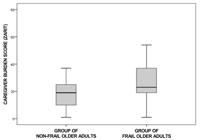
Comparison of the overall caregiver burden scores according to presence or absence of frailty in community-dwelling older adults living in a context marked by high social vulnerability (n=96). São Carlos, SP, 2019-2020.
DISCUSSION
The findings indicated that the group of frail older adults had caregivers with higher mean total caregiver burden scores when compared to the group of non-frail older adults; however, these differences were not statistically significant.
The caregiver and care recipient groups showed similar sociodemographic characteristics, with predominance of women, married individuals, low schooling levels, Catholics and retirees. These findings are in line with the literature on the profile of older adults and caregivers in high social vulnerability contexts.8,18
The predominance of women among primary caregivers reflects a common trend in the literature on informal care.4,19,20 These women oftentimes relinquish their personal, professional and social life, frequently without remuneration and becoming dependent on the income of the person they care for.21 Considering the aged population living in Brazil, women represent approximately 55.7% of the total.22 This prevalence reflects not only their longer life expectancy but also challenges such as lower participation in the paid labor market and greater exposure to socioeconomic vulnerability conditions in old age.23
Individuals who assume caregiving roles in high social vulnerability contexts tend to have lower schooling levels, both compared to caregivers in other contexts and to older adults who do not perform any caregiving functions.24 This educational disparity can lead to frailer health conditions due to limited access to information on preventive care and appropriate medical treatments. Additionally, some caregivers face further challenges related to scarce economic resources and greater exposure to unfavorable environments, which can deteriorate their health and overall well-being.25
In the current study, most caregivers provided care for spouses (followed by parents) for a mean of than 10 years, during approximately 17.79 daily hours and without additional assistance or formal training. These characteristics corroborate the literature and are present in various contexts, including the most vulnerable areas.26,27
The study findings indicate that most of the aged care recipients were frail, with emphasis on criteria related to decreased practice of physical activity and low handgrip strength. Frailty represents a condition characterized by reduced physiological reserve and increased vulnerability to diseases and disabilities, with low physical activity as an important determinant of its prevalence.28
The prevalence of frailty among older adults is associated with factors such as advanced age, female gender, low schooling level, living in rural areas and unfavorable socioeconomic conditions.29 In the current study, the predominance of perceived insufficient income among caregivers and care recipients highlights the urgent need for social and health policies that address these inequalities, promoting improvements in quality of life and support for this population segment.30
In relation to caregiver burden, the mean score was 23.88 points (SD=16.48), with predominance of low burden, followed by moderate. The literature points out that many caregivers experience burden, whether emotional, physical or financial, even at low levels, which reinforces the universal need for support and adequate resources.31
The comparative analyses showed that caregivers of frail older adults had higher mean caregiver burden scores (27.96 points) when compared to caregivers of non-frail older adults (19.43 points). However, these differences were not statistically significant (U=365.000; p=0.109). The absence of statistical significance may be related to the small sample size. Despite this, the results indicate a trend toward higher burden among caregivers of frail older adults, suggesting that frailty may influence perceived caregiver burden even in vulnerability contexts, as pointed out in the literature.32
Some studies indicate that caregivers with lower perceived competence, less social support and devoting more time to care report higher caregiver burden levels.32,33 Such findings reinforce the importance of social support and perceived competence in reducing this type of burden.33 Nonetheless, these results differ from studies that identify significantly higher caregiver burden among caregivers of frail older adults.32,34 The divergences may stem from methodological factors, cultural differences and the small sample size, which may have limited the statistical power of the analyses.
Caregivers' lives undergo significant changes since, with advancing frailty, many previously independent older adults start to need help with basic and/or instrumental activities of daily living.35 A cross-sectional study conducted in the city of Malang with 102 caregivers and 102 care recipients aimed at compare caregiver burden among aged caregivers of other dependent older adults. The results indicated a significant correlation, demonstrating that caregivers' extensive workload exerts direct impacts on their social interactions and personal needs.27 The inability to perform tasks due to multimorbidities can lead to greater care dependence, associated with adverse events that contribute to the frailty condition.36
As already mentioned, although caregivers of frail older adults presented higher burden scale scores, the differences compared to caregivers of non-frail older adults were not statistically significant. This finding suggests that, in high social vulnerability contexts, factors such as low schooling, economic difficulties and lack of support may strongly influence caregiver burden, making differences attributable to older adults' frailty less evident.
CONCLUSION AND IMPLICATIONS FOR THE PRACTICE
The study hypothesis was not confirmed; however, the objective was in fact achieved. In a high social vulnerability context, aged caregivers of frail older adults did not present significantly higher caregiver burden when compared to those caring for non-frail older adults.
Despite its contributions, the study has limitations such as its small and specific sample, its cross-sectional design that may prevent establishing cause-and-effect relationships, and possible inaccuracies in self-reported data. Although validated and widely used instruments in the literature were employed (such as the Zarit Burden Scale and the Fried Frailty Phenotype), the data were collected based on the participants' perceptions, which may introduce information bias, including over- or under-estimation of symptoms and health conditions. Additionally, the recruitment method and voluntary participation may have favored inclusion of more available individuals or those more sensitized to the topic, configuring possible selection bias and limiting generalization of the findings to other caregiver populations.
Nonetheless, such study limitations do not compromise its relevance and reinforce the need for future surveys with longitudinal designs, as well as larger samples and in different social vulnerability contexts, to better understand the relationship between frailty and caregiver burden and how this latter changes with available support and resources. This would enable health professionals, especially gerontologists, to plan more effective actions to mitigate these impacts.
The findings reinforce the importance of targeted actions for aged caregivers, particularly regarding guidance for self-care, care task management and strengthening support networks. In this context, the findings of this study align consistently with the National Care Policy established in 2024, by highlighting the need for its effective implementation through intersectoral and structured actions capable of recognizing, supporting and protecting older adults involved in care relationships, in line with the challenges posed by high social vulnerability contexts.37
ACKNOWLEDGMENTS
None.
DATA AVAILABILITY RESEARCH
The data are available upon request to the corresponding author by e-mail. The database was not deposited in any public repository due to ethical restrictions related to confidentiality and protection of the participants' sensitive data. Access may be granted upon justified request and evaluation by the authors, respecting all ethical research standards.
-
a
Article extracted from the Course Conclusion Paper entitled “Caregiver burden in older adults and frailty levels in aged care recipients: A comparison in a context marked by high social vulnerability”, presented in 2025 to the Gerontology Department of Universidade Federal de São Carlos.
-
FINANCIAL SUPPORT
Conselho Nacional de Desenvolvimento Científico e Tecnológico (CNPq - Process No. 429310/2018-8).
References
-
1 Silva LNL, Assis VV, Galvão ACBA. Fatores associados à síndrome de fragilidade em idosos na atenção básica. J Health Res. 2022;23(3):51-61. https://doi.org/10.47456/rbps.v23i3.35622
» https://doi.org/10.47456/rbps.v23i3.35622 -
2 Chaves ACM, Lemos FF, Grigorini AEO, Machado JCB, Barbosa MT. Síndrome de fragilidade em idosos: prevalência e correlação com características clínicas, cognitivas e funcionais. Braz J Health Rev. 2021;4(3):11506-23. https://doi.org/10.34119/bjhrv4n3-145
» https://doi.org/10.34119/bjhrv4n3-145 -
3 Zarzycki M, Morrison V, Bei E, Seddon D. Cultural and societal motivations for being informal caregivers: a qualitative systematic review and meta-synthesis. Health Psychol Rev. 2023;17(2):247. https://doi.org/10.1080/17437199.2022.2032259 PMid:35081864.
» https://doi.org/10.1080/17437199.2022.2032259 -
4 Minayo MCS. Cuidar de quem cuida de idosos dependentes: por uma política necessária e urgente. Cien Saude Colet. 2021;26(1):7-15. https://doi.org/10.1590/1413-81232020261.30872020 PMid:33533864.
» https://doi.org/10.1590/1413-81232020261.30872020 -
5 Romero DE, Maia LR, Muzy J, Andrade N, Szwarcwald CL, Groisman D et al. O cuidado domiciliar de idosos com dependência funcional no Brasil: desigualdades e desafios no contexto da primeira onda da pandemia de COVID-19. Cad Saude Publica. 2022;38(5):e00216821. https://doi.org/10.1590/0102-311x00216821 PMid:35584434.
» https://doi.org/10.1590/0102-311x00216821 -
6 Sousa GS, Silva RMD, Reinaldo AMDS, Soares SM, Gutierrez DMD, Figueiredo MDLF. “A gente não é de ferro”: Vivências de cuidadores familiares sobre o cuidado com idosos dependentes no Brasil. Cien Saude Colet. 2021;26(1):27-36. https://doi.org/10.1590/1413-81232020261.30172020 PMid:33533848.
» https://doi.org/10.1590/1413-81232020261.30172020 -
7 Liu Z, Heffernan C, Tan J. Caregiver burden: a concept analysis. Int J Nurs Sci. 2020;7(4):438-45. https://doi.org/10.1016/j.ijnss.2020.07.012 PMid:33195757.
» https://doi.org/10.1016/j.ijnss.2020.07.012 -
8 Garcia GMF, Imoto PH, Bernuci MP, Yamagucchi MU, Massuda EM. Sobrecarga de cuidadores informais de idosos. Rev Interdiscip Estud Saúde. 2020;9(1):115-30. https://doi.org/10.33362/ries.v9i1.1724
» https://doi.org/10.33362/ries.v9i1.1724 -
9 Freitas NR. Sobrecarga dos cuidadores de idosos: uma revisão de literatura [dissertação]. Santa Maria: Universidade Federal de Santa Maria; 2021 [citado 2025 nov 13]. Disponível em: https://repositorio.ufsm.br/handle/1/28754
» https://repositorio.ufsm.br/handle/1/28754 -
10 Mah J, Rockwood K, Stevens S, Keefe J, Andrew M. Do interventions reducing social vulnerability improve health in community dwelling older adults? A systematic review. Clin Interv Aging. 2022;17:447-65. https://doi.org/10.2147/CIA.S349836 PMid:35431543.
» https://doi.org/10.2147/CIA.S349836 -
11 Stackfleth R, Diniz MA, Fhon JRS, Vendruscolo TRP, Fabrício-Whebe SCC, Marques S et al. Sobrecarga de trabalho em cuidadores de idosos fragilizados que vivem no domicílio. Acta Paul Enferm. 2012;25(5):768-74. https://doi.org/10.1590/S0103-21002012000500019
» https://doi.org/10.1590/S0103-21002012000500019 -
12 Metin-Gok Z, Karadas C, Balci C, Cankurtaran M. The perceived caregiver burden among Turkish family caregivers providing care for frail older adults. J Transcult Nurs. 2019;30(3):222-30. https://doi.org/10.1177/1043659618790041 PMid:30040049.
» https://doi.org/10.1177/1043659618790041 -
13 Sardella A, Lenzo V, Alibrandi A, Catalano A, Corica F, Quattropani MC et al. A clinical bridge between family caregivers and older adults: the contribution of patients’ frailty and optimism on caregiver burden. Int J Environ Res Public Health. 2021;18(7):3406. https://doi.org/10.3390/ijerph18073406 PMid:33806026.
» https://doi.org/10.3390/ijerph18073406 -
14 Alves EV, Flesch LD, Cachioni M, Neri AL, Tavares S. The double vulnerability of elderly caregivers: multimorbidity and perceived burden and their associations with frailty. Rev Bras Geriatr Gerontol. 2018;21(3):301-11. https://doi.org/10.1590/1981-22562018021.180050
» https://doi.org/10.1590/1981-22562018021.180050 -
15 Fried LP, Tangen CM, Walston J, Newman AB, Hirsch C, Gottdiener J et al. Frailty in older adults: evidence for a phenotype. J Gerontol Ser A. 2001;56(3):M146-56. https://doi.org/10.1093/gerona/56.3.M146
» https://doi.org/10.1093/gerona/56.3.M146 -
16 Scazufca M. Brazilian version of the Burden Interview scale for the assessment of burden of care in carers of people with mental illnesses. Rev Bras Psiquiatr. 2002;24(1):12-7. https://doi.org/10.1590/S1516-44462002000100006
» https://doi.org/10.1590/S1516-44462002000100006 -
17 Zarit S, Reever K, Bach-Peterson J. Relatives of the impaired elderly: correlates of feelings of burden. Gerontologist. 1980;20(6):649-55. https://doi.org/10.1093/geront/20.6.649 PMid:7203086.
» https://doi.org/10.1093/geront/20.6.649 -
18 Pires CG, Borim FSA, Queluz FNFR, Cachioni M, Neri AL, Batistoni SST. Burden, family functioning, and psychological health of older caregivers of older adults: a path analysis. Geriatrics Gerontol Aging. 2022;16:e0220022. https://doi.org/10.53886/gga.e0220022
» https://doi.org/10.53886/gga.e0220022 -
19 Sartori IFG, Almeida No H, Hirdes A. Family caregivers of older adults and physical and psychological health conditions and family support in care. Texto Contexto Enferm. 2023;32:e20230100. https://doi.org/10.1590/1980-265x-tce-2023-0100en
» https://doi.org/10.1590/1980-265x-tce-2023-0100en -
20 Lacerda MA, Silva LLT, Oliveira F, Coelho KR. O cuidado com o idoso fragilizado e a estratégia saúde da família: perspectivas do cuidador informal familiar. Rev Baiana Enferm. 2021;35:e43127. https://doi.org/10.18471/rbe.v35.43127
» https://doi.org/10.18471/rbe.v35.43127 -
21 Harrington CC, Dean-Witt CZ, Cacchione P. Female caregivers’ contextual complexities and familial power structures within Alzheimer’s care. J Women Aging. 2023;35(5):446-64. https://doi.org/10.1080/08952841.2022.2130655 PMid:36288108.
» https://doi.org/10.1080/08952841.2022.2130655 -
22 Instituto Brasileiro de Geografia e Estatística. Censo 2022: número de pessoas com 65 anos ou mais de idade cresceu 57,4% em 12 anos [Internet]. Agência de Notícias IBGE; 2023 [citado 2025 nov 13]. Disponível em: https://agenciadenoticias.ibge.gov.br/agencia-noticias/2012-agencia-de-noticias/noticias/38186-censo-2022-numero-de-pessoas-com-65-anos-ou-mais-de-idade-cresceu-57-4-em-12-anos
» https://agenciadenoticias.ibge.gov.br/agencia-noticias/2012-agencia-de-noticias/noticias/38186-censo-2022-numero-de-pessoas-com-65-anos-ou-mais-de-idade-cresceu-57-4-em-12-anos -
23 Lima So LCS, Mendes ALAC, Lima AAMR, Vieira FC, Mendes MSOC, Cavalcanti TAS et al. Envelhecimento populacional e feminização da velhice no contexto da atenção à saúde do idoso no Brasil. Braz J Health Rev. 2024;7(2):e68369. https://doi.org/10.34119/bjhrv7n2-207
» https://doi.org/10.34119/bjhrv7n2-207 -
24 Mazo GZ, Lecuona DS, Stein F, Souza FA, Mota ID, Gil PR et al. Centenarian caregivers: perception of burden, sociodemographic data and physical activity. Acta Sci Health Sci. 2022;44(1):e58924. https://doi.org/10.4025/actascihealthsci.v44i1.58924
» https://doi.org/10.4025/actascihealthsci.v44i1.58924 -
25 Barragán-Rodríguez A, Gardea-Reséndez M, Kawas-Valle O, Peña-Martínez VM. Psychosocial vulnerability of Mexican informal caregivers in fall-related hip fractures. Med Univ. 2020;22(1):e19000122. https://doi.org/10.24875/RMU.19000122
» https://doi.org/10.24875/RMU.19000122 -
26 Banadinović M, Vočanec D, Lovrenčić IL, Lončarek K, Džakula A. Role and perspectives of informal care: a qualitative study of informal caregivers in the Republic of Croatia. BMJ Open. 2023;13(10):e074454. https://doi.org/10.1136/bmjopen-2023-074454 PMid:37827736.
» https://doi.org/10.1136/bmjopen-2023-074454 -
27 Putri MP, Debora O, Lea E. Elderly’s dependency level correlated with the burden perceived by informal caregivers. J Nurse Midwifery. 2023;10(3):412-8. https://doi.org/10.26699/jnk.v10i3.ART.p412-418
» https://doi.org/10.26699/jnk.v10i3.ART.p412-418 -
28 Sobhani A, Sharifi F, Fadayevatan R, Kamrani AAA, Moodi M, Khorashadizadeh M et al. Low physical activity is the strongest factor associated with frailty phenotype and frailty index: data from baseline phase of Birjand Longitudinal Aging Study (BLAS). BMC Geriatr. 2022;22(1):498. https://doi.org/10.1186/s12877-022-03135-y PMid:35689187.
» https://doi.org/10.1186/s12877-022-03135-y -
29 Zeng X, Meng L, Li Y, Jia N, Shi J, Zhang C et al. Prevalence and factors associated with frailty and pre-frailty in the older adults in China: a national cross-sectional study. Front Public Health. 2023;11:1110648. https://doi.org/10.3389/fpubh.2023.1110648 PMid:37554734.
» https://doi.org/10.3389/fpubh.2023.1110648 -
30 Pavarini SCI, Bregola AG, Luchesi BM, Oliveira NA, Ottaviani AC. Sociodemographic, clinical, and psychosocial factors associated with burden in older caregivers: a cross-sectional study. Dement Neuropsychol. 2023;17:e20220030. https://doi.org/10.1590/1980-5764-dn-2022-0030
» https://doi.org/10.1590/1980-5764-dn-2022-0030 -
31 Sousa GS, Silva RM, Brasil CCP, Ceccon RF, Reinaldo AMS, Minayo MCS. Iniquidades de gênero entre cuidadoras de idosos dependentes. Saude Soc. 2023;32(4):e220325. https://doi.org/10.1590/s0104-12902023220325pt
» https://doi.org/10.1590/s0104-12902023220325pt -
32 Vrettos I, Voukelatou P, Kyvetos A, Makrilakis K, Sfikakis PP, Raptis A et al. The role of frailty among the predictors of depression on informal caregivers of older adults: a mediation analysis. Psychogeriatrics. 2023;23(6):973-84. https://doi.org/10.1111/psyg.13018 PMid:37704194.
» https://doi.org/10.1111/psyg.13018 -
33 Chaparro-Diaz L, Carreño-Moreno SP, Alzate Hernández JS, Acosta-Pardo CA. Relación entre la sobrecarga y el apoyo social percibido en cuidadores de bajos ingresos económicos. Aquichan. 2023;23(1):e2314. https://doi.org/10.5294/aqui.2023.23.1.4
» https://doi.org/10.5294/aqui.2023.23.1.4 -
34 Ding TYG, De Roza JG, Chan CY, Lee PSS, Ong SK, Lew KJ et al. Factors associated with family caregiver burden among frail older persons with multimorbidity. BMC Geriatr. 2022;22(1):160. https://doi.org/10.1186/s12877-022-02858-2 PMid:35227215.
» https://doi.org/10.1186/s12877-022-02858-2 -
35 Søvde BE, Sandvoll AM, Natvik E, Drageset J. Caregiving for frail home-dwelling older people: a qualitative study of family caregivers’ experiences. Int J Older People Nurs. 2024;19(1):e12586. https://doi.org/10.1111/opn.12586 PMid:38009411.
» https://doi.org/10.1111/opn.12586 -
36 Boyer S, Trimouillas J, Cardinaud N, Gayot C, Laubarie-Mouret C, Dumoitier N et al. Frailty and functional dependence in older population: lessons from the FREEDOM Limousin – Nouvelle Aquitaine Cohort Study. BMC Geriatr. 2022;22(1):97. https://doi.org/10.1186/s12877-022-02834-w PMid:35114955.
» https://doi.org/10.1186/s12877-022-02834-w -
37 Lei nº 15.069, de 23 de dezembro de 2024 (BR). Institui a Política Nacional de Cuidados. Diário Oficial da União [periódico na internet], Brasília (DF), 24 dez 2024 [citado 2025 nov 13]. Disponível em: https://www.planalto.gov.br/ccivil_03/_ato2023-2026/2024/lei/L15069.htm
» https://www.planalto.gov.br/ccivil_03/_ato2023-2026/2024/lei/L15069.htm
Edited by
-
ASSOCIATED EDITOR
Márcia de Assunção Ferreira https://orcid.org/0000-0002-6991-7066
-
SCIENTIFIC EDITOR
Marcelle Miranda da Silva https://orcid.org/0000-0003-4872-7252

