 Self-care skills and quality of life in older adults: factors that promote healthy aging
Abstract
Objective to evaluate self-care capacity and quality of life in older adults and their associations with sociodemographic and health variables.
Method this is a quantitative, cross-sectional study with a sample of 302 older adults, in which sociodemographic characteristics, health conditions, and satisfaction with aging were analyzed using instruments such as the WHOQOL-BREF, WHOQOL-OLD, and the Appraisal of Self-Care Agency Scale (ASA-A).
Results these indicate that most older adults had good self-care capacity, associated with better quality of life, especially among those with higher education and a positive self-perception of health. It was observed that factors such as marital status, religious practice, and participation in health programs influence quality of life, although they are not directly related to self-care.
Conclusions and implications for the practice health programs for older adults should integrate preventive practices and social support to ensure active and healthy aging. The research reinforces the importance of integrated approaches that consider both physical, emotional, and social aspects to promote autonomy and well-being in old age.
Keywords:
Self Care; Self-Perception; Aging; Older Adults; Quality of Life
Resumo
Objetivo avaliar a capacidade de autocuidado e a qualidade de vida em idosos e suas associações com variáveis sociodemográficas e de saúde.
Método trata-se de um estudo quantitativo e transversal, realizado com uma amostra de 302 idosos, no qual se analisaram as características sociodemográficas, condições de saúde e satisfação com o envelhecimento, utilizando-se instrumentos como o WHOQOL-BREF, WHOQOL-OLD e a Escala de Autocuidado (ASA-A).
Resultados indicaram que a maioria dos idosos apresentava boa capacidade de autocuidado, a qual se associa a uma melhor qualidade de vida, especialmente entre aqueles que possuem maior escolaridade e uma autopercepção positiva de saúde. Observou-se que fatores como o estado civil, a prática religiosa e a participação em programas de saúde influenciam a qualidade de vida, embora não se relacionem diretamente com o autocuidado.
Conclusões e implicações para a prática os programas de saúde destinados aos idosos devem integrar práticas preventivas e suporte social para assegurar um envelhecimento ativo e saudável. A pesquisa reforça a importância de abordagens integradas, que contemplem tanto os aspectos físicos quanto os emocionais e sociais, para promover a autonomia e o bem-estar na velhice.
Palavras-chave:
Autocuidado; Autopercepção; Envelhecimento; Idosos; Qualidade de Vida
Resumen
Objetivo evaluar las capacidades de autocuidado y la calidad de vida en adultos mayores y su asociación con variables sociodemográficas y de salud.
Método estudio cuantitativo transversal con una muestra de 302 adultos mayores, en el que se analizaron las características sociodemográficas, las condiciones de salud y la satisfacción con el envejecimiento, mediante instrumentos como el WHOQOL-bref, el WHOQOL-OLD y la Escala de Autocuidado (ASA-A).
Resultados estos indican que la mayoría de los adultos mayores presentan buenas capacidades de autocuidado, asociadas con una mejor calidad de vida, especialmente entre aquellos con mayor nivel educativo y una autopercepción positiva de la salud. Se observó que factores como el estado civil, la práctica religiosa y la participación en programas de salud influyen en la calidad de vida, aunque no se relacionan directamente con el autocuidado.
Conclusiones e implicaciones para la práctica los programas de salud para adultos mayores deben integrar prácticas preventivas y apoyo social para asegurar un envejecimiento activo y saludable. La investigación refuerza la importancia de los enfoques integrados que consideran los aspectos físicos, emocionales y sociales para promover la autonomía y el bienestar en la vejez.
Palabras clave:
Autocuidado; Autoimagen; Envejecimiento; Anciano; Calidad de Vida
INTRODUCTION
Contemporary aging represents a global and irreversible phenomenon in which longevity does not necessarily imply greater health or life satisfaction. As we grow older, it becomes increasingly important to adopt self-care practices aimed at promoting well-being and autonomy, especially in old age.1 Self-care involves a set of fundamental capacities related to the knowledge, skills, and practices necessary for the prevention of health problems and the promotion of health. These elements are essential for older adults to maintain their quality of life.1
In this context, the Nursing Theory of Self-Care Deficit (SCDNT),2 is configured as a relevant theoretical framework, as it proposes that self-care is composed of foundational dispositions and capacities, power components, and self-care operations. These elements provide older adults with autonomy and control over their health practices. The SCDNT defines the term "self-care capacity" as the individual’s ability to perform actions for oneself in a deliberate and conscious manner, grounded in acquired knowledge and experience. These capacities are structured into three elements: (i) basic dispositions for learning and performing activities; (ii) power components, which facilitate reasoning and the application of self-care practices; and, finally, (iii) operations that enable the individual to make autonomous decisions for their own health benefit.2
The perspective that living longer involves specific challenges3 reinforces the need for older adults to possess adequate knowledge about self-care. Aging brings its own demands, and self-care proves to be necessary for life years to be experienced with purpose and independence.4 In this sense, self-care must be constituted as a conscious and deliberate practice, requiring informed decision-making and freedom of choice, so that older adults can take ownership of their health-related actions.2
Furthermore, experiences accumulated throughout life1,4,5 are configured as relevant strategies for self-care, especially in the stage of longevity. In this context, self-care is not limited to physical maintenance practices but encompasses continuous processes of adaptation and prevention of chronic diseases, promoting an integrated and satisfactory health condition. Complementarily, self-care capacity should be understood as an essential strategy for promoting healthy longevity, capable of ensuring active, autonomous, and safer aging.6
This study focuses on investigating whether self-care capacities are being effectively applied among older adults, as well as to identify which factors may contribute to or limit the adoption of these practices. Based on these assumptions, this study’s objective was to assess self-care capacities and quality of life in older adults, as well as their associations with sociodemographic and health variables.
METHOD
This is a quantitative, descriptive, cross-sectional study conducted with a simple random sample of older adults residing in two municipalities in southern Minas Gerais, Brazil.
Older adults aged 65 years or older, of both sexes, registered in Primary Health Care (PHC) units in the municipalities were considered eligible for the study. The inclusion criteria required that participants demonstrate verbal communication and comprehension abilities, verified through the Mental Assessment Questionnaire, adapted for Brazil.7
The exclusion criteria included residing in Long-Term Care Institutions for Older Adults (LTCIs), the presence of severe physical frailty, or failure to locate the participant after three pre-scheduled home visit attempts. The sample size calculation was based on the estimated proportion of quality of life among older adults.
A pilot study was conducted with 5% of the final sample size, corresponding to 15 participants, who were not included in the final sample. The pilot aimed to ensure the clarity of the instruments and to estimate the time required for questionnaire administration, allowing for adjustments before the main data collection.
Data collection was carried out directly in the participants’ homes, in a private setting, using the KoboToolbox application, a digital platform that enables secure storage of responses, reduces transcription errors, and facilitates data organization and subsequent analysis. All data were exported to the Statistical Package for the Social Sciences (SPSS), version 29.0.1, for analysis.
Data collection took place between 2024 and 2025. The data collection team consisted of eight previously trained researchers, five from Itajubá and three from Alfenas, composed of undergraduate and graduate Nursing students.
The data collection instruments were:
-
Sociodemographic and Health Questionnaire: included information on age, sex, education level, marital status, religious practice, health conditions, and satisfaction with aging. These variables were explored to identify possible associations with self-care capacities and quality of life scores.
-
World Health Organization Quality of Life – Bref (Abbreviated Version) (WHOQOL-bref): this World Health Organization (WHO) scale contains 26 items that assess quality of life across four domains: physical, psychological, social relationships, and environment. Each item is rated on a scale from 1 to 5, and domain scores are converted to a scale from 0 to 100, in which higher values indicate better quality of life.8,9
-
World Health Organization Quality of Life – OLD (WHOQOL-OLD): this version of the WHOQOL, also developed by the WHO, is adapted for the older population and assesses quality of life related to aging across six facets: sensory functioning, autonomy, past, present, and future activities, social participation, death and dying, and intimacy. Each facet consists of four items, with scores ranging from 4 to 20 for each facet.10
-
Appraisal of Self-Care Agency Scale (ASA-A): culturally adapted and validated for Brazil, this scale consists of 24 items, without division into specific domains, with response options ranging from 1 (“strongly disagree”) to 5 (“strongly agree”). Total scores range from 24 to 120 and were categorized as “poor” (24-48), “fair” (49-72), “good” (73–96), and “very good” (97-120).11
-
Mental Assessment Questionnaire: composed of ten questions on temporal and spatial orientation, this instrument was used to screen participants’ communication and comprehension abilities, to ensure their eligibility.7
For categorical variables, absolute and relative frequencies were calculated; for continuous variables, mean and standard deviation were used.
Given the non-parametric distribution of the data, the Mann-Whitney test was used for comparisons between two groups, and the Kruskal-Wallis test for comparisons among three or more groups, considering a significance level of p < 0.05. Data analysis was conducted using SPSS software, version 29.0.1.
Reporting of results in this stage followed the recommendations of the Strengthening the Reporting of Observational Studies in Epidemiology (STROBE) tool, regarding the quality criteria for observational studies, seeking to address all 22 recommended items.
The study was approved by the Research Ethics Committee (REC) of the Universidade Federal de Alfenas, Minas Gerais (UNIFAL-MG), under opinion number 6.167.526 and CAAE 68405423.2.3003.5547. All participants were informed of the study’s objectives and signed the Free and Informed Consent Term (FICT), in accordance with the guidelines of Resolution No. 466/12 of the Brazilian National Health Council (CNS).
RESULTS
Tables 1and 2 refer to the sociodemographic characteristics, health conditions, and satisfaction with aging.
Sociodemographic characteristics of older adults from the municipalities of Alfenas and Itajubá, Minas Gerais, 2024. (n = 302)
Health characteristics and satisfaction with aging in the municipalities of Alfenas and Itajubá, Minas Gerais, 2024. (n = 302)
In this study, 58.28% of the participants were female; the mean age was 69 years (SD ± 7.038); 55.45% were married (cohabiting/other type of union); 30.8% had incomplete Elementary School; 87.09% had children, with a mean of 2.75 (SD ± 2.128); 72.5% did not have formal or informal work; 88.41% practiced a religion; 59.6% did not engage in physical activity.
It was observed that 63.9% had some type of chronic disease, and 74.17% used medications; self-rated health was perceived as “good” (40.07%); 37.75% of the study participants self-reported their health as “better” when compared to that of other people of the same age. When comparing their health with the previous year, 53.97% perceived it as “same”. It was noted that 70.53% of the older adults interviewed were “satisfied/very satisfied” with aging.
The mean score obtained for self-care capacity was 99.72, with a standard deviation of 13.707, indicating moderate variation in scores among individuals. The median was 101, with an interquartile range of 20, suggesting a distribution centered close to the mean value. Scores ranged from a minimum of 54 to a maximum of 120, with a range of 66 points, and the overall classification assigned was “very good”.
Regarding the classification of self-care capacity, none of the older adults were considered to have a “terrible” capacity (0.0%), and only one was classified as “bad” (0.3%). In contrast, 19.5% of participants were classified as “good”, 34.4% as “very good”, and 44.0% as “excellent”. Overall, 98.0% of the older adults presented a higher level of self-care capacity, while 2.0% were classified as having a lower capacity.
Table 3 presents the associations observed between sociodemographic characteristics, health conditions, and levels of satisfaction with aging in relation to self-care capacity and quality of life among older adults.
Associations between sociodemographic characteristics, health conditions, and satisfaction with aging, and self-care capacity and quality of life among older adults in the municipalities of Alfenas and Itajubá, Minas Gerais, 2024. (n = 302)
The associations between self-care capacities and education level; self-rated health (in general, comparison with the previous year, and in relation to others); and the feeling of satisfaction with aging showed a level of significance (p < 0.05).
The Appraisal of Self-Care Agency Scale (ASA-A), composed of 24 items, showed an internal consistency value of 0.898, as assessed by Cronbach’s alpha coefficient.12
Participants’ responses to the ASA-A indicated a high frequency of positive self-care attitudes. For item 1, 45.70% of participants strongly agreed that they make the necessary changes to maintain their health, while only 0.99% strongly disagreed. For item 2, 40.40% of participants reported checking whether their health practices are appropriate, with 1.32% strongly disagreeing.
Item 3 revealed that 48.68% of respondents strongly agreed that they seek solutions for movement difficulties, with 7.62% strongly disagreeing. In item 4, 69.21% of participants reported maintaining a clean and healthy living environment, and only 0.99% strongly disagreed. For item 5, 55.30% of participants reported taking new actions to remain healthy, while 1.99% strongly disagreed.
Regarding regular self-care, 59.27% of participants strongly agreed that they take care of themselves whenever possible (item 6), with only 0.33% strongly disagreeing. In item 7, 52.98% of participants strongly agreed that they seek the best ways to care for themselves, compared to 0.99% who strongly disagreed. For personal hygiene (item 8), 75.50% of participants reported bathing as needed, while 0.66% strongly disagreed.
In item 9, 46.03% of participants strongly agreed that they try to maintain a healthy weight through diet, and 3.64% strongly disagreed. Item 10 showed that 51.32% of participants set aside time to be with themselves, while 2.98% strongly disagreed.
The habit of exercising and resting was confirmed by 34.11% of participants in item 11, with 16.89% strongly disagreeing. In item 12, 46.03% of participants reported having trusted friends, and 6.29% strongly disagreed. Regarding adequate sleep (item 13), 44.04% of participants strongly agreed that they get enough sleep, and 5.63% strongly disagreed.
Item 14 highlighted that 54.30% of participants were seeking clarification about health information, while 3.31% strongly disagreed. Regarding self-examination (item 15), 49.01% of participants reported regularly examining their bodies, while 5.96% strongly disagreed. In item 16, 42.38% of participants sought information about possible side effects of new medications, compared to 12.25% who strongly disagreed.
Item 17 revealed that 39.07% of participants changed habits to improve their health, while 9.93% strongly disagreed. Personal and family safety (item 18) is a priority for 54.97% of participants, while 0.99% strongly disagreed. In item 19, 43.38% of participants evaluated the effectiveness of their health practices, while 1.32% strongly disagreed.
Regarding time for daily self-care (item 20), 45.70% of participants strongly agreed with setting aside this time, while 1.66% strongly disagreed.
Item 21 indicates that 51.99% of participants reported having the ability to seek health information when necessary, with 1.66% strongly disagreeing. In item 22, 48.34% of participants reported seeking help when they become unable to care for themselves, and 3.31% strongly disagreed.
Item 23 shows that 46.03% of participants reported finding time for themselves, while 1.99% strongly disagreed. Finally, in item 24, 43.71% of participants reported being able to take care of themselves despite physical difficulties, whereas 8.28% strongly disagreed.
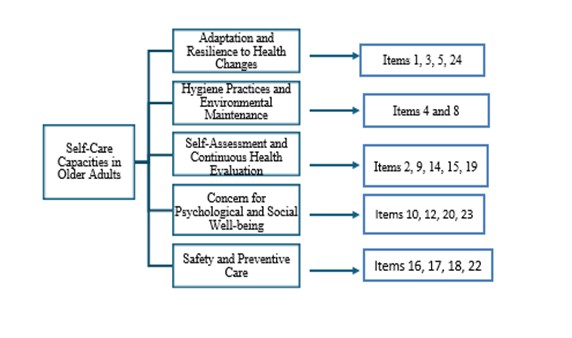
Figure 1 presents the model developed based on the responses of the older adult participants to the ASA-A.
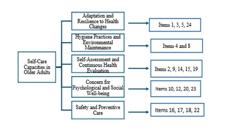
Conceptual model of self-care capacities in older adults: themes identified from responses to the ASA-A.
This conceptual and graphical representation includes the themes that will be used as a framework for the discussion of the results.
DISCUSSION
This study’s findings indicated that different dimensions of self-care among older adults reflect active and adaptive strategies that sustain autonomy, well-being, and resilience, which are essential for quality of life in old age.
Adaptation and resilience to health changes
First, the capacity for adaptation and resilience in the face of health changes plays a fundamental role in the self-care of older adults, highlighting an active disposition toward modifying routines and adopting strategies aimed at preserving functional autonomy.13 This behavior suggests that many older adults recognize the needs imposed by new health conditions and respond proactively, taking control of their health practices in the face of limitations or physical difficulties.14
The willingness to make behavioral adjustments, as demonstrated by the high frequency of positive responses to items related to managing new needs and solving functional problems, suggests that the older population studied possesses active coping strategies that favor the maintenance of physical and mental health.15 This approach to self-care may reflect experiences accumulated throughout life and a resilience capacity built in response to previous challenges, which facilitates adaptation to the inevitable changes associated with aging.15-17 Some studies on successful aging indicate that older adults who maintain an active approach to self-care are able to preserve quality of life and delay functional decline by adapting effectively to physical changes.18-22
The data also highlighted the importance of recognizing the need for autonomous intervention in the face of physical difficulties, as observed in the high percentage of older adults who, despite motor limitations, find ways to maintain their self-care practices.23 This capacity suggests the presence of a positive perception of control over one’s own health, a factor that, according to the literature, significantly contributes to subjective well-being and adherence to self-care practices among older adults.24-27 Moreover, the capacity to adapt health practices may be related to emotional resilience, which allows older adults to maintain independence and face new limitations with optimism and effectiveness.
Therefore, the results suggest that adaptation and resilience capacities constitute essential aspects of self-care among older adults, promoting both autonomy and quality of life, especially as they face the physical challenges inherent to aging.
Hygiene practices and maintenance of the environment
Another central aspect of self-care among older adults, as evidenced by the results, refers to the commitment to personal hygiene practices and to the maintenance of the home environment, which represents an essential dimension for promoting a healthy and safe environment.28 The high frequency of positive responses to items related to cleanliness and hygiene suggests that participants recognize the importance of maintaining adequate conditions at home, which directly impacts both physical health and mental well-being.
Regular personal hygiene practices not only prevent infectious diseases and contribute to improved overall health, but also represent care related to one’s own dignity and self-esteem in old age.29,30 These attitudes may be associated with an increased perception of vulnerability, a characteristic of aging, motivating a preventive approach focused on reducing environmental and infection risks.31 Maintaining a clean home environment, for example, becomes especially relevant in the context of aging, when mobility and the ability to respond to emergencies may be reduced.
Commitment to personal and environmental hygiene may also reflect a broader understanding of self-care, which encompasses maintaining a living environment that supports independence and autonomy.31 Some studies suggest that, for many older adults, these self-care behaviors have symbolic value and contribute to the construction of an identity associated with independence, providing structure to daily routines and promoting life satisfaction in later life.28,32 The findings therefore reinforce that hygiene practices and maintenance of the home environment play an integral role in self-care capacity, supporting both the physical health and emotional well-being of older adults.
Self-assessment and continuous health evaluation
Self-assessment and ongoing health monitoring are central components of self-care among older adults, indicating a significant level of self-knowledge and a commitment to actively monitoring one’s own health status.33 This monitoring habit suggests that many older adults are attentive to subtle changes in their health and seek to understand the effectiveness of their self-care practices, which may indicate a proactive and well-informed approach to emerging health needs.34
This behavior reflects the recognition of the complexity of one’s own body and the signals it presents, which is fundamental for the early detection of problems and for decision-making based on personal and contextual evidence.34 The frequent search for additional information, as evidenced in the results, reflects an attitude of continuous learning and openness to revising health practices in light of new information.
This suggests that participants present a self-care profile in which constant updating and clarification of doubts occupy a central role, contributing to a more assertive approach adapted to their physical and cognitive conditions. The literature indicates that, by prioritizing self-assessment and clarification, older adults promote not only autonomy but also greater confidence in their self-care practices, reducing the risks associated with inadequate practices and favoring the strategic and efficient use of health resources.28 In addition, the regular evaluation of the practices' effectiveness reflects a continuous pursuit of positive and measurable outcomes, a characteristic of self-care among older adults who aim to maintain quality of life and well-being.
Concern for psychological and social well-being
Concern for psychological and social well-being plays a relevant role in self-care among older adults, reflecting an expanded conception of health and quality of life that goes beyond the physical dimension.35 The habit of setting aside time for oneself and the effort to cultivate friendships suggest the valuing of emotional and social self-care, which are fundamental aspects for coping with the challenges of aging with greater resilience and satisfaction.36,37
The presence of a support network, in turn, is associated with a greater sense of security and belonging, which can alleviate feelings of loneliness and isolation - common conditions in old age that negatively impact physical and mental health.38,39 This behavior may also reflect an adaptive strategy in response to the social and emotional changes inherent to aging, indicating that the older adults in the study intentionally seek to strengthen their mental health through the cultivation of interpersonal connections.39
Some studies have shown that, by maintaining and nurturing social relationships, older adults not only preserve a sense of purpose but also build a network of emotional support that contributes to coping with the crises and inevitable losses of old age.40 Dedication to psychological and social well-being can also be understood as a protective factor for functional autonomy, since robust emotional health is associated with better health outcomes, enabling the maintenance of higher levels of independence and reducing the risk of cognitive decline associated with isolation and stress.38,41
Safety and preventive care
Finally, safety and preventive care represent a structuring dimension of self-care among older adults, reflecting a proactive awareness of risk prevention and personal and family protection.1 The high willingness to seek information and support when facing new health problems suggests that participants understand the importance of adopting preventive attitudes, ensuring the continuity of their functionality and autonomy throughout aging. This behavior reflects a self-care strategy oriented toward anticipating and mitigating potential health risks, promoting safer and healthier aging.42
This focus on safety can be interpreted as an adaptive response to the increased vulnerability associated with advancing age, when the risk of falls, domestic accidents, and medical complications becomes more pronounced.43 The search for information about new treatments or possible adverse effects of medications demonstrates a cautious and informed approach, which contributes to the safety of older adults and reduces the risk of harmful health practices. This proactivity in clarifying doubts and making informed decisions is essential to minimize adverse events and prevent complications, especially in a context of polypharmacy common among older adults.1
These findings suggest that self-care capacity among older adults is multifaceted, encompassing adaptive, preventive, and health maintenance dimensions across physical, psychological, and social domains. The demonstrated self-care capacity, including aspects of adaptation, prevention, and continuous health evaluation, reflects the need for an integrated approach that encompasses physical, mental, emotional, and social health, as well as autonomy, personal responsibility, and the development of positive relationships.44
Factors associated with self-care capacity and quality of life in older adults
The significant associations between quality of life and self-care capacity with variables such as education, health perception, marital status, religious practice, and participation in health programs will be presented and discussed below:
The results indicated that variables such as education level, health perception, and satisfaction with the aging process significantly influence self-care capacity and quality of life among older adults.
The association between higher education and better scores reinforces that educational level favors self-care and autonomy, in line with previous findings.45,46 Religious practice, in turn, was associated with quality of life but not with self-care, suggesting that this variable may influence subjective well-being without directly impacting health practices.47,48
Self-perception of health – both overall, in comparison with the previous year, and with individuals of the same age group – was correlated with self-care and quality of life, highlighting its role in the adoption of preventive behaviors, as previously evidenced in the literature.24 Moreover, satisfaction was positively associated with better scores, indicating that acceptance and adaptation contribute to healthy aging.49
The absence of an association between participation in health programs and self-care, contrasted with its association with quality of life, suggests that such programs promote psychological well-being more than they directly influence self-care practices.50 These findings reinforce the importance of integrated approaches in policies and programs aimed at promoting healthy aging.51,52
CONCLUSION AND IMPLICATIONS FOR THE PRACTICE
This study demonstrated that self-care capacities among older adults are influenced by multiple factors, including education level, self-perception of health, and satisfaction with aging. The findings suggest that self-care is not limited to physical health practices but also involves emotional and social aspects, reinforcing the need to adopt integrated approaches aimed at healthy aging. The association between higher education and better self-care scores highlights the importance of educational investments to promote autonomy and well-being throughout life.
The results indicated that health programs targeted at older adults should consider not only preventive practices but also the strengthening of social and emotional support networks, as these factors significantly contribute to quality of life and resilience among older adults. Valuing self-care practices and creating strategies that promote adaptation and independence can improve the health of older adults, resulting in more dignified and healthier aging.
ACKNOWLEDGMENTS
We would like to thank the participants in this study, which included older adults and the interviewers.
FINANCIAL SUPPORT
DATA AVAILABILITY RESEARCH
References
-
1 Araújo SRS, Magalhães JRHR, Frazão CR, Santos GFM, Borba SDP, Borssari LA et al. Safety of the elderly in health services. Seven Editora eBooks. 2024;2:383-401. https://doi.org/10.56238/sevened2024.001-030
» https://doi.org/10.56238/sevened2024.001-030 - 2 Orem DE. Teory self-care develope of nursing. New York: Mosby; 2006.
-
3 Teixeira F, Pestana H, Mesquita A. Indicadores preditivos da capacidade de autocuidado da pessoa idosa – revisão sistemática da literatura. RIAGE. 2024;5. https://doi.org/10.61415/riage.241
» https://doi.org/10.61415/riage.241 -
4 Couto AM, Castro EAB, Caldas CP. Experiences to be a family caregiver of dependent elderly in the home environment. Revista da Rede de Enfermagem do Nordeste. 2016 Apr 1;17(1):76-85. https://doi.org/10.15253/2175-6783.2016000100011
» https://doi.org/10.15253/2175-6783.2016000100011 -
5 Coutinho LSB, Tomasi E. Déficit de autocuidado em idosos: características, fatores associados e recomendações às equipes de Estratégia Saúde da Família. Interface (Botucatu). 2020;24(Supl. 1):e190578. https://doi.org/10.1590/interface.190578
» https://doi.org/10.1590/interface.190578 -
6 Lindolpho MC, Sá SPC, Valente GSC, Reis LB, Silva MHA, Barros NKRO. Self-care and quality of life in elderly caregivers. RSD. 2020;9(9):e183996731. https://doi.org/10.33448/rsd-v9i9.6731
» https://doi.org/10.33448/rsd-v9i9.6731 - 7 Ventura MM, Bottino CM. Avaliação cognitiva em pacientes idosos. In: Papaleo Netto M, editor. Gerontologia: a velhice e o envelhecimento em visão globalizada. São Paulo, Atheneu; 2002. p. 174-189.
-
8 The WHOQOL Group. Development of the World Health Organization WHOQOL-BREF Quality of Life Assessment. Psychol Med. 1998;28(3):551-8. https://doi.org/10.1017/S0033291798006667 PMid:9626712.
» https://doi.org/10.1017/S0033291798006667 -
9 The WHOQOL Group. WHOQOL-bref: introduction, administration, scoring and generic version of assessment [Internet]. Geneva: World Health Organization; 1996 [citado 2025 Jun 11]. 16 p. Disponível em: https://www.who.int/publications/i/item/WHOQOL-BREF
» https://www.who.int/publications/i/item/WHOQOL-BREF -
10 Chachamovich E. Qualidade de vida em idosos: desenvolvimento e aplicação do WHOQOL-OLD e teste do desempenho do instrumento WHOQOL-BREF em uma população idosa brasileira [Internet]. Porto Alegre: Universidade Federal do Rio Grande do Sul; 2005 [citado 2025 Jun 11]. 197 p. Disponível em: https://lume.ufrgs.br/bitstream/handle/10183/5779/000520088.pdf?sequence=1&isAllowed=y
» https://lume.ufrgs.br/bitstream/handle/10183/5779/000520088.pdf?sequence=1&isAllowed=y -
11 Silva JV, Domingues EAR. Adaptação cultural e validação da escala para avaliar as capacidades de autocuidado. Rev Arquivos Ciências Saúde. 2017;24(4):30-6. https://doi.org/10.17696/2318-3691.24.4.2017.686
» https://doi.org/10.17696/2318-3691.24.4.2017.686 -
12 Silva FR, Maria S. Evidence of the psychometric properties of the feelings of the informal primary family caregiver scale. Int J Innov Res Multidiscip Educ. 2024 Oct;03(10). https://doi.org/10.58806/ijirme.2024.v3i10n08
» https://doi.org/10.58806/ijirme.2024.v3i10n08 -
13 Leal AC, Dantas KB, Reis FP, Santos MAA, Lima ES, Corey MT et al. Exploring the nexus of functional autonomy, depression, and resilience among elderly individuals. Cuerpo, Cultura y Movimento. 2024;14(1). https://doi.org/10.15332/2422474X.9885
» https://doi.org/10.15332/2422474X.9885 -
14 Wrosch C, Heckhausen J. Control strategies for managing health threats in older adulthood. Curr Opin Psychol. 2023;55:101750. https://doi.org/10.1016/j.copsyc.2023.101750 PMid:38039949.
» https://doi.org/10.1016/j.copsyc.2023.101750 -
15 Zapater-Fajarí M, Crespo-Sanmiguel I, Pulopulos MM, Hidalgo V, Salvador A. Resilience and psychobiological response to stress in older people: the mediating role of coping strategies. Front Aging Neurosci. 2021;13:63214. https://doi.org/10.3389/fnagi.2021.632141 PMid:33692681.
» https://doi.org/10.3389/fnagi.2021.632141 -
16 Wu YC, Shen SF, Chen LK, Tung HH. A web-based resilience-enhancing program to improve resilience, physical activity and well-being in geriatric population: randomized controlled trial. J Med Internet Res. 2024;26:e53450. https://doi.org/10.2196/53450 PMid:39052335.
» https://doi.org/10.2196/53450 -
17 Musich S, Wang S, Schaeffer JM, Kraemer S, Wicker EW, Yeh CS. The association of increasing resilience with positive health outcomes and quality of life among older adults. Am J Geriatr Psychiatry. 2022 Apr;30(4):S70-1. https://doi.org/10.1016/j.jagp.2022.01.065
» https://doi.org/10.1016/j.jagp.2022.01.065 -
18 Pignolo RJ. Successful aging: the longer one lives, the better one has eaten? Mayo Clin Proc. 2023 Dec;98(12):1751-2. https://doi.org/10.1016/j.mayocp.2023.10.010 PMid:38043990.
» https://doi.org/10.1016/j.mayocp.2023.10.010 -
19 González-González E, Requena C. Practices of self-care in healthy old age: a field study. Geriatrics (Basel). 2023;8(3):54. https://doi.org/10.3390/geriatrics8030054 PMid:37218834.
» https://doi.org/10.3390/geriatrics8030054 -
20 Basnet R, Shakya N. Factors influencing successful aging among older adults. J Nepal Health Res Counc. 2023 Mar 10;20(3):708-11. https://doi.org/10.33314/jnhrc.v20i3.4112 PMid:36974861.
» https://doi.org/10.33314/jnhrc.v20i3.4112 -
21 Marzo RR, Khanal P, Shrestha S, Mohan D, Myint PK, Su TT. Determinants of active aging and quality of life among older adults: systematic review. Front Public Health. 2023 Jun 26;11:1193789. https://doi.org/10.3389/fpubh.2023.1193789 PMid:37435519.
» https://doi.org/10.3389/fpubh.2023.1193789 -
22 Cohen MT, Rosenblum S, Meyer S. Self-tailored successful aging: older adults’ points of view. Innov Aging. 2022 Nov;6(Supplement_1):842. https://doi.org/10.1093/geroni/igac059.3018
» https://doi.org/10.1093/geroni/igac059.3018 -
23 Meynet S, Beaudoin M, Smeding A. Personnes âgées à domicile avec limitations fonctionnelles: étude préliminaire d’une intervention centrée sur le bien-être et l’autonomie. Can J Aging. 2021 Jun;40(2):224-37. https://doi.org/10.1017/S0714980820000379 PMid:33077020.
» https://doi.org/10.1017/S0714980820000379 -
24 De Jesus SR, Aguiar HJR. Self-perception of health among the elderly in the northeast region of Brazil: a population-based study. In: Uniting nowledge: integrated scientific research for global development [Internet]. São José dos Pinhais: Seven Editora; 2023 [citado 2025 Jan. 18]. Disponível em: https://sevenpublicacoes.com.br/editora/article/view/2621
» https://sevenpublicacoes.com.br/editora/article/view/2621 -
25 Lu J, Liu L, Zheng J, Zhou Z. Interaction between self-perceived disease control and self-management behaviours among Chinese middle-aged and older hypertensive patients: the role of subjective life expectancy. BMC Public Health. 2022 Apr 13;22(1):733. https://doi.org/10.1186/s12889-022-12990-8 PMid:35418023.
» https://doi.org/10.1186/s12889-022-12990-8 -
26 Wang Y, Chen T. Perceived control, control strategies, and subjective well-being in the elderly: a longitudinal study of health behavior. Am J Health Behav. 2023 Jun 30;47(3):549-57. https://doi.org/10.5993/AJHB.47.3.12 PMid:37596744.
» https://doi.org/10.5993/AJHB.47.3.12 -
27 Nyende A, Ellis-Hill C, Mantzoukas S. A sense of control and wellbeing in older people living with frailty: a scoping review. J Gerontol Soc Work. 2023 Nov-Dec;66(8):1043-72. https://doi.org/10.1080/01634372.2023.2206438 PMid:37139581.
» https://doi.org/10.1080/01634372.2023.2206438 -
28 Khalid J, Ijaz R, Abdullah A, Safdar S, Nisar A. A comprehensive study on elderly self-care model: integrating functionality, concept analyses, and care needs. Pakistan Journal of Scientific Research. 2024;3(2):217-23. https://doi.org/10.57041/pjosr.v3i2.1055
» https://doi.org/10.57041/pjosr.v3i2.1055 -
29 Wani D, Saragih J, Yunia EA, Purba E. Edukasi pentingnya melakukan perawatan diri dengan pemenuhan personal higien pada lanjut usia. Indonesia Berdaya. 2023 Jul;4(4):1447-52. https://doi.org/10.47679/ib.2023578
» https://doi.org/10.47679/ib.2023578 -
30 Cauchi J, Gerhardt PF, Leaf JB, Weiss MJ. Health and hygiene. In: Cauchi J, Gerhardt PF, Leaf JB, Weiss MJ, editores. Clinician’s Guide to Sexuality and Autism. Cambridge, MA: Academic Press; 2024. p. 53–60. https://doi.org/10.1016/B978-0-323-95743-4.00004-7
» https://doi.org/10.1016/B978-0-323-95743-4.00004-7 -
31 Paramita WK. Systematic review: affecting behaviour of hygiene and health care of the elderly. Journal PROMKES. 2021 Mar 30;9(1):69. https://doi.org/10.20473/jpk.V9.I1.2021.69-78
» https://doi.org/10.20473/jpk.V9.I1.2021.69-78 -
32 Vivarakanon P. Perspectives of self-care experiences of aging individuals living independently: a focused ethnography in the community setting. Glob J Health Sci. 2021;13(6):81. https://doi.org/10.5539/gjhs.v13n6p81
» https://doi.org/10.5539/gjhs.v13n6p81 -
33 Johnsson N, Strandberg S, Tuvesson H, Fagerström C, Ekstedt M, Lindberg C. Delineating and clarifying the concept of self-care monitoring: a concept analysis. Int J Qual Stud Health Well-being. 2023 Jul 28;18(1):2241231. https://doi.org/10.1080/17482631.2023.2241231 PMid:37506372.
» https://doi.org/10.1080/17482631.2023.2241231 -
34 El Menshawy N. Investigating the relevance of monitoring health domains using technology among older adults: health, technology and older adults [dissertação]. Enschede: University of Twente; 2016. Disponível em: https://essay.utwente.nl/70015/
» https://essay.utwente.nl/70015/ -
35 Awad S, Bano S, Aslam MA, Ezzy T, Fatima I, Mansoor M. Understanding the link between social support and psychological well-being in aging communities. J Popul Ther Clin Pharmacol. 2024;31(3):251-7. https://doi.org/10.53555/jptcp.v31i3.4816
» https://doi.org/10.53555/jptcp.v31i3.4816 -
36 Ruperti-Lucero E, López-Granero C, Barrasa A. Healthy aging: impact of social interaction on psychological well-being in older adults: longitudinal study. Preprints. 2023;2023:2023081309. https://doi.org/10.20944/preprints202308.1309.v1
» https://doi.org/10.20944/preprints202308.1309.v1 -
37 Mäki-Opas T. Effective promotion of sustainable wellbeing among older people: the social quality approach. Eur J Public Health. 2023;33(Suppl 2):160-76. https://doi.org/10.1093/eurpub/ckad160.176
» https://doi.org/10.1093/eurpub/ckad160.176 -
38 Gerlach LB, Solway ES, Malani PN. Social Isolation and Loneliness in Older Adults. JAMA. 2024 Jun 18;331(23):2058. https://doi.org/10.1001/jama.2024.3456 PMid:38780951.
» https://doi.org/10.1001/jama.2024.3456 -
39 Liu L. Analysis of the relationship between mental health and social support systems in old age. Academic Journal of Management and Social Sciences. 2023 Oct 11;4(3):10-3. https://doi.org/10.54097/ajmss.v4i3.12391
» https://doi.org/10.54097/ajmss.v4i3.12391 -
40 An H, Kim MK, Lee HM, Yun S, Kim I, Park H. Effects of the social network on health in community‐dwelling older adults: a systematic review. Alzheimers Dement. 2023 Dec;19(S24):e082296. https://doi.org/10.1002/alz.082296
» https://doi.org/10.1002/alz.082296 -
41 Stojanović G, Vlaisavljević Ž, Terzić N, Maričić M, Stojanović D, Paunović V. Social isolation and loneliness among the elderly. Annals of Nursing. 2023 Jan 1;1(4):34-54. https://doi.org/10.58424/annnurs.krv.o5t.mo2
» https://doi.org/10.58424/annnurs.krv.o5t.mo2 -
42 Dantas Oliveira ME, Ribeiro ACM, Oliveira CC, Santos DS, Santos H, Lima NV et al. Envelhecimento saudável: estratégias integradas para a promoção da saúde da pessoa idosa. Anais do 27th Congresso Brasileiro de Periodontologia; 2017 Apr 19-22; São Paulo, SP. Belo Horizonte (MG): Sociedade Brasileira de Periodontologia; 2017. https://doi.org/10.58871/conimaps24.c25
» https://doi.org/10.58871/conimaps24.c25 -
43 Chiriți G, Dimulescu DM. Gait disorders in the elderly and the risk of falls. Romanian Journal of Medical Rehabilitation Physical Medicine and Balneoclimatology. 2024 Apr 12;1(1):49-52. https://doi.org/10.59277/RJMRPMB.2024.1.09
» https://doi.org/10.59277/RJMRPMB.2024.1.09 -
44 Resolução do Conselho de Ministros n.º 14/2024 (PT). Aprova o Plano de Ação do Envelhecimento Ativo e Saudável 2023-2026. Diário da República [Internet], Lisboa, 12 Jan 2024 [citado 2025 Jan. 18]: 1ª Série: 9. Disponível em: https://portugal2030.pt/wp-content/uploads/sites/3/2024/01/rcm14_2024.pdf
» https://portugal2030.pt/wp-content/uploads/sites/3/2024/01/rcm14_2024.pdf -
45 Cenedesi MA Jr, Silva ACB, Santos PHS, Pinto PRF, Saldaña YA, Figueira EL et al. Academic essay on elderly functionality: aspects of autonomy and independence in daily life activities. Rev Contemporânea. 2023 Dec 5;3(12):1. https://doi.org/10.56083/RCV3N12-030
» https://doi.org/10.56083/RCV3N12-030 -
46 Rahaei Z, Mehrjoyan N, Barzegr F, Anbari-Nogyni Z. Is higher health literacy associated with better self-care in the elderly? J Health Literacy. 2020;14(1):1135-43. https://doi.org/10.22038/JHL.2020.53305.1135
» https://doi.org/10.22038/JHL.2020.53305.1135 -
47 Chaga VO, De Almeida NB, Lucas BL, Assis DL. Influence of spirituality on quality of life in community-dwelling elderly: integrative literature review. Int Seven Multidisciplinary J. 2024 Jun 29;3(3):1146. https://doi.org/10.56238/isevmjv3n3-023
» https://doi.org/10.56238/isevmjv3n3-023 -
48 Yoshizawa T, Makram AM, Elsheikh R, Nakamura S, Makram EM, Kubota K et al. Spirituality, quality of life, and health: a japanese cross-sectional study. Eur J Investig Health Psychol Educ. 2024;14(3):767-781. https://doi.org/10.3390/ejihpe14030050 PMid:38534911.
» https://doi.org/10.3390/ejihpe14030050 -
49 Nakamura J, Hong JH, Smith J, Chopik WJ, Chen Y, VanderWeele TJ et al. Associations between satisfaction with aging and health and well-being outcomes among older US adults. JAMA Netw Open. 2022;5(2):e2147797. https://doi.org/10.1001/jamanetworkopen.2021.47797 PMid:35138398.
» https://doi.org/10.1001/jamanetworkopen.2021.47797 -
50 Tang YY, Tang R, Gross JJ. Promoting psychological well-being through an evidence-based mindfulness training program. Front Hum Neurosci. 2019;13:237. https://doi.org/10.3389/fnhum.2019.00237 PMid:31354454.
» https://doi.org/10.3389/fnhum.2019.00237 -
51 Solly K, Pachana NA. An integrative perspective on positive ageing in later life. In: Rieger E, Constanza R, Kubiszewski I, Dugdale P. Toward an integrated science of wellbeing. Oxford: Oxford University Press; 2023. p. 260-83. https://doi.org/10.1093/oso/9780197567579.003.0012
» https://doi.org/10.1093/oso/9780197567579.003.0012 -
52 Weber L, Craveiro I, Colussi CF. Comprehensive and integrated care in healthy aging policies: comparison between Portuguese and Brazilian health systems. Physis. 2023;34:e34042. https://doi.org/10.1590/s0103-7331202434042en
» https://doi.org/10.1590/s0103-7331202434042en