 Validation of a protocol for nursing consultations with children with autism in Primary Health Care
Abstract
Objective to validate a protocol for nursing consultations with children with autism in Primary Health Care.
Method this is a methodological study, focusing on the validation of a protocol consisting of 12 flowcharts according to the 12 activities of life proposed by Roper, Logan and Tierney. The research was carried out between March 2023 and June 2024 using apps, platforms, emails, social networks and the like, for content validation by nursing specialists and appearance validation by information technology specialists.
Results the overall content validity index for content validation was 0.98. The suitability index using the Suitability Assessment of Materials instrument was considered superior and obtained an appearance Content Validity Index of 0.77. After statistical analysis of the validation, the experts' suggestions and recommendations were incorporated to improve the protocol, and it was finally adapted.
Conclusion and implications for practice the protocol was assessed as methodologically adequate due to its ability to guarantee the adequacy of valid material suitable for use by nurses in Primary Health Care.
Keywords:
Primary Health Care; Nursing Care; Nursing; Child Health; Autism Spectrum Disorder
Resumo
Objetivo validar um protocolo para a consulta de Enfermagem à criança com autismo na Atenção Primária à Saúde.
Método trata-se de um estudo metodológico, com enfoque na validação de um protocolo composto por 12 fluxogramas, segundo as 12 atividades de vida propostas por Roper, Logan e Tierney. A pesquisa foi realizada entre os meses de março de 2023 e junho de 2024 por meio de aplicativos, plataformas, e-mails, redes sociais, entre outros, para a validação do conteúdo por especialistas da Enfermagem e para a validação da aparência por especialistas da tecnologia da informação.
Resultados o Índice de Validade de Conteúdo geral de validação de conteúdo foi 0,98. O índice de adequabilidade utilizando o instrumento Suitability Assessment of Materials foi considerado superior e obteve Índice de Validade de Conteúdo de aparência de 0,77. Após a análise estatística da validação, as sugestões e recomendações dos especialistas foram incorporadas para a melhoria do protocolo, passando por adequação final.
Conclusão e implicações para a prática: o protocolo foi avaliado metodologicamente como adequado e apto a ser utilizado por enfermeiros na Atenção Primária à Saúde. A validação do protocolo assegura a prática clínica dos enfermeiros e a qualidade da assistência às crianças com autismo.
Palavras-chave:
Atenção Primária à Saúde; Cuidados de Enfermagem; Enfermagem; Saúde da Criança; Transtorno do Espectro Autista
Resumen
Objetivo validar un protocolo para la consulta de enfermería a niños con autismo en la Atención Primaria de Salud.
Método se trata de un estudio metodológico, centrado en la validación de un protocolo compuesto por 12 diagramas de flujo, según las 12 actividades de la vida diaria propuestas por Roper, Logan y Tierney. La investigación se llevó a cabo entre marzo de 2023 y junio de 2024 mediante aplicaciones, plataformas, correos electrónicos, redes sociales y similares, para la validación del contenido por parte de especialistas en enfermería y la validación de la apariencia por parte de especialistas en tecnología de la información.
Resultados el índice de validez del contenido general de la validación del contenido fue de 0,98. El índice de idoneidad utilizando el instrumento Suitability Assessment of Materials se consideró superior y obtuvo un índice de validez de contenido de apariencia de 0,77. Tras el análisis estadístico de la validación, se incorporaron las sugerencias y recomendaciones de los especialistas para mejorar el protocolo, pasando por una adecuación final.
Conclusión e implicaciones para la práctica el protocolo fue evaluado metodológicamente como adecuado y apto para ser utilizado por enfermeros en la Atención Primaria de Salud. La validación del protocolo garantiza la práctica clínica de los enfermeros y la calidad de la atención a los niños con autismo. La validación del protocolo garantiza la práctica clínica de los enfermeros y la calidad de la asistencia a los niños con autismo.
Palabras-clave:
Atención Primaria de Salud; Atención de Enfermería; Enfermería; Salud Infantil; Trastorno del Espectro Autista
INTRODUCTION
The United Nations (UN) estimates that, worldwide, there are approximately 150 million children with some type of disability, characterized by any structural, functional, or psychological impairment, whether physical or anatomical.1 Among children with disabilities, those with Autism Spectrum Disorder (ASD) stand out.
According to a report from the Centers for Disease Control and Prevention (CDC), one in every 31 children, at eight years of age, in the United States, is diagnosed with ASD,2 which, compared to data from 2021 (1 in 44),3 represents an approximate increase of 42.3%. The 2022 demographic census of the Brazilian Institute of Geography and Statistics (IBGE) identified that 2.4 million people live with an ASD diagnosis, that is, 1.2% of the population, being more prevalent in males (1.5%) than in females (0.9%).4
ASD is characterized as a neurodevelopmental disorder influenced by multiple factors, such as genetic, environmental, and immunological factors, which play a role in its pathogenesis, impairing social interaction, causing deficits in verbal and nonverbal communication, language, and imaginative play, in addition to repetitive and stereotyped behaviors.5
In Brazil, the reception and care of individuals with autism were ratified in 2012 with Law No. 12,764, known as the Berenice Piana Law, which established the National Policy for the Protection of the Rights of Persons with Autism Spectrum Disorder, recognizing them as “persons with disabilities, for all legal purposes”.6 In 2014, the Ministry of Health published the booklet “Guidelines for the Care and Rehabilitation of Persons with Autism Spectrum Disorder”, which recommends comprehensive patient care, reinforcing that actions should be articulated between Primary Health Care (PHC) and the care network of the Unified Health System (SUS).7
Nurses, in the follow-up and periodic assessment of child growth and development in PHC, should rely on protocols to standardize Nursing consultations. In this sense, it is important to develop, construct, and validate instruments that guide clinical practice, making it synonymous with innovation and the development of health technologies.
The national and international literature shows a scarcity of constructed and validated protocols aimed at Nursing consultation for children with ASD, with general guidelines and screening and diagnostic instruments being common, but not a standardized and tested Nursing consultation script for this population.8 In underdeveloped or developing countries, even when follow-up is carried out using low-cost instruments based on reports from parents and caregivers of young children, this still constitutes an important challenge for health systems.9
In this context, one of the main barriers to Nursing consultations guided for patients with ASD is the limited implementation of systematic follow-up and monitoring actions in public health services focused on child mental health, even in the presence of public policies that recommend early monitoring.10 Thus, the need and originality of this study are justified.
Protocols, when properly implemented, strengthen the profession as a science that underpins care, since the decision-making process involves critical thinking in the selection of best practices to achieve desired outcomes;11 they provide greater safety for users and professionals; reduce variability in care actions for children with ASD; and facilitate the development of process and outcome indicators.12
This study is justified by seeking to qualify the care provided to this group of children, based on updated and standardized care practices, in order to improve care in a timely and appropriate manner. Therefore, the validation of a protocol to guide Nursing consultations in PHC may improve the quality of life of these children and their families.
Thus, the study aimed to validate a protocol for Nursing consultation for children with autism in PHC.
METHOD
This is a methodological study for the validation of a protocol. This type of study investigates the methods of obtaining, organizing, and analyzing data, as well as research management for the development, validation, and evaluation of research tools and methods.13
The study was developed by researchers from the Programa de Mestrado Acadêmico em Enfermagem at the Universidade Regional do Cariri (URCA). The research was conducted from March 2023 to June 2024 through virtual means, using applications, platforms, emails, social networks, among others. Law No. 14,874/2024 on research involving human beings was followed,14 and the study was approved by the substantiated opinion of the Research Ethics Committee (REC), under number 5,408,415.
The protocol consists of 12 flowcharts to guide Nursing consultations in PHC, according to the 12 activities of living proposed by the Nursing model of Roper, Logan, and Tierney: 1. Maintaining a safe environment; 2. Communication; 3. Breathing; 4. Feeding; 5. Elimination; 6. Personal hygiene and clothing; 7. Body temperature control; 8. Mobilization; 9. Work and leisure; 10. Sexuality; 11. Rest; 12. Death.15 For this purpose, content and appearance validation were carried out. The selection of content experts took place between October 2023 and February 2024, and the selection of appearance experts occurred between February and May 2024.
Content validation is the determination of the representativeness of items that express a given content, based on expert evaluation, determining whether the content of an instrument meets the requirements for measuring the investigated phenomenon.12
For the selection of these experts, the criteria of Benevides et al.16 were adopted, with the necessary adaptations, recommending that at least two of the following criteria be met: holding a PhD in Nursing with a dissertation in the area of interest (childcare, children with disabilities, ASD, and instrument development); holding a Master’s degree in Nursing with a dissertation in the area of interest; having specialization or residency in Neonatal Nursing or in Family Health and/or Public Health Nursing; having at least three years of experience in PHC; having a scientific publication in the area of interest and/or participating in research groups/projects or societies related to the area of interest.
Appearance validation is the aesthetic representation composed of lines, shapes, colors, and movement of images, which must harmonize with the informational content, and aims to analyze whether there is a clear and understandable presentation of the theme, through agreement between the information and the figures.17 For this purpose, Information Technology (IT) professionals with experience in developing educational materials and expertise in graphic design were sought.
In the content validation, the invitation was initially sent to five Nursing professionals through the Lattes platform. Subsequently, using the snowball technique, eligible participants were asked to indicate other professionals,18 and 30 accepted; however, only eight responded to the form within the established timeframe.
In the appearance validation, using the snowball technique, invitations were sent to 23 IT professionals; however, after the deadline for return, only one responded to the form. In the second and third rounds of resending, there was no response from any invitee. Therefore, the criteria were adjusted to include professionals with an undergraduate degree in the field and at least one year of experience. Thus, a limitation for validation studies of technologies is observed, since the absence of appearance experts would impact the quality of the validation process, by interfering with the criteria for selecting experts with potential impacts on methodological rigor. After the adjustments in the criteria, six experts accepted the invitation.
The invitation was sent via email, including an invitation letter, the Free and Informed Consent Term (FICT), the initial version of the protocol, and validation instruments, constructed using Google Forms. A maximum period of 15 days was established for responses.
The instrument intended for content experts followed the elements suggested by Pasquali19. For the instrument intended for appearance, the American questionnaire Suitability Assessment of Materials (SAM)20 was adapted, which analyzes aspects associated with organization, writing style, appearance, and motivation of the educational material.17
At the end, each expert was able to provide suggestions for improving the material. The number of evaluation rounds depended on the researchers’ analysis regarding the need to use the Delphi technique, commonly used in content validation processes, with the assumption of building consensus among experts’ opinions through successive rounds.21 In this study, only one round was necessary due to the consensus obtained, ranging between adequate and fully adequate. The collected data were organized in Microsoft Excel software.
Regarding the analysis of the protocol content validation and the measurement of reliability to support construct validity, the Content Validity Index (CVI) was calculated, which measures the percentage of experts who agree on certain aspects of the instrument and its items, using a Likert scale with five levels of rating: (1) inadequate, (2) partially adequate, (3) adequate, (4) fully adequate, (5) not applicable.22
A CVI ≥ 80% was considered to ensure the reliability of the instrument. The decision criterion for retaining an item was the agreement of at least 80% of the experts.19 The CVI of each item was calculated by summing the agreement of the items marked by the experts as (3) adequate and (4) fully adequate, divided by the number of experts.23 CVI calculation for the instrument as a whole used the mathematical equation called S-CVI/Ave (CVI average of all items in the instrument).18
To calculate the average scores of the experts’ evaluations using SAM, the following scoring system was assigned: two points for superior; one point for adequate; zero points for not adequate; and N/A for factors that could not be evaluated. The total adequacy score calculation was performed by summing the obtained scores, divided by the total possible scores, and then converted into a percentage. In all cases, the interpretation of the SAM percentage estimate is expressed as 70 to 100% (superior material), 40 to 69% (adequate material), or 0 to 39% (inadequate material).20
RESULTS
Regarding the experts’ profile, it is highlighted that in the content validation, among the eight participants, the majority had more than 12 years of professional training and had been working for eight years or more (75%). In the appearance validation, among the six participants who accepted the invitation, two were Lato sensu specialists and four held undergraduate degrees; one programmer, one game designer, two systems analysts, and two software engineers, with experience ranging from one to 12 years.
Figure 1 presents one of the protocol flowcharts as a representative example.
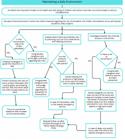
Activity of daily living of the child with ASD: maintaining a safe environment. Crato (CE), Brazil, 2024
The logic and sequence of actions in this flowchart follow the Nursing model of Roper, Logan, and Tierney15, as it is widely used with patients who present functional deficits and who require interventions according to their specific needs, which promote greater independence in performing daily activities. Moreover, the sequence allows the identification of deficits and potentialities, assisting professionals in making the best decisions, with the aim of unifying the guiding framework of prevention and health promotion actions, as well as those related to protection against environmental, occupational, and social risks.
In the validation by content experts, the CVI allowed the evaluation of each item of the instrument in its individual aspect (agreement of one expert) and overall aspect (agreement of all experts). Table 1 presents the elements of the protocol evaluated by the content experts and the overall CVI.
Elements evaluated in the protocol by content experts and the overall CVI assigned. Crato (CE), Brazil, 2024
In items 1 and 5, there was disagreement from one expert, but the CVI remained at 0.90. The other items showed agreement among the experts. Regarding the suggestions, only three experts made contributions, which, after the statistical analysis of the validation, were considered for improving the protocol, which then underwent final adjustments. Chart 1 presents the items evaluated by the experts, along with their recommendations and the respective adaptations made.
Items evaluated by the content experts, recommendations, and adaptations made to the protocol. Crato (CE), Brazil, 2024.
The recommendation regarding item 10 was not considered, as the protocol was intended for use by Nursing professionals, and Social Stories were used by parents of children with ASD. The recommendation regarding item 2 was partially considered, with an adjustment in font size to the maximum extent possible, so as not to compromise the layout or significantly alter the format of the flowcharts. The recommendation regarding item 1 was not considered, since the flowcharts were constructed based on the Nursing model of Roper et al.15, referring to the 12 activities of living.
According to the analysis by the content experts, the protocol presented relevant and valid content with regard to the proposed objective, as evidenced by the adequate CVI (0.98).
In the appearance validation, the experts responded to the SAM questionnaire, consisting of 22 items with scores ranging from zero to two, as shown in Table 2.
Evaluation of adequacy criteria, according to the protocol assessment by appearance experts. Crato (CE), Brazil, 2024
Based on Table 2, it can be observed that most topics were considered “superior” or “adequate” by the appearance experts. In the topics where any item was considered “not adequate” by one or more experts, no suggestions for changes were made. Table 3 presents the total SAM and the individual value of each appearance expert who evaluated the protocol.
It can be observed that all experts classified the protocol as adequate or superior, with percentages ranging from 63 to 100%. Thus, according to the SAM assessment, the material was considered superior (77%).
DISCUSSION
Nursing, in its care practice, has made use of various types of technologies to facilitate the care process, which reinforces the importance of the currently validated technology, generating greater reliability. The use of protocols with systematized guidelines that assist nurses in interventions is an established practice in developed countries. The use of a specific and validated protocol qualifies and systematizes Nursing care, as well as assists in carrying out treatment according to clinical guidelines.24
The scientific literature reveals a scarcity of specific Nursing clinical protocols for consultations with children with ASD. However, some protocols, such as the Protocolo de Avaliação para Crianças com Suspeita de Transtornos do Espectro do Autismo (PRO-TEA), are used to assess the risk of ASD in children, differing from the protocol in this study, which is not used for screening, but rather in consultations with children already diagnosed.25
It is also worth mentioning the protocol for the assessment of pragmatic skills in children with ASD, used to monitor speech therapy interventions, which differs from the protocol in this study as it does not belong to the field of Nursing and is specific to the assessment of pragmatic skills.26
The protocol validation for Nursing consultations with children with ASD made it possible to confirm the reliability of the content, associated with the imminent need to transform care practices provided to children with ASD during Nursing consultations in PHC. In practice, protocols are essential, as they assess the effectiveness and safety of interventions; produce scientifically valid, replicable, and generalizable results; reduce costs; and improve the quality of care.27
Standardization through protocols is currently considered a management tool, as it promotes safe outcomes for productivity. Content and appearance validation become essential, as they aim to make instruments reliable and effective for use in the services for which they are intended.28
The experts’ responses were consistent. The overall CVI for content validation was 0.98, and the appearance CVI was 0.77. For the evaluated material to be considered adequate, it must present a value equal to or greater than 40% in the total SAM score.20 This calculation is performed by summing the total scores obtained and dividing by the total number of items in the questionnaire. The protocol presented 77% in the total SAM score, classifying it as adequate material.
The validated protocol contributes to the possibility of standardizing care practices within the context of PHC. Therefore, it is necessary for nurses to pay attention to developmental milestones and behavioral changes in order to provide comprehensive care to children with ASD and to propose referrals for behavioral interventions in a timely manner.29
The practice of appropriate management of children with ASD reflects humanized care, making it essential for nurses to possess theoretical and scientific knowledge encompassing the main neurodevelopmental disorders, and the instruments that can be used to assess them.30
Instruments such as the Modified Checklist for Autism in Toddlers (M-CHAT) scale and the protocol newly validated in this study assist in Nursing consultations by presenting expected behaviors for each age based on developmental milestones, as well as by assessing the presence of deficits to be investigated in a timely and appropriate manner.31
There is a limitation in the knowledge of health professionals, including nurses, regarding the care of children with ASD and their families, especially in PHC. Although nurses identify signs of alterations in child development, they still face difficulties in conceptualizing autism and, often, are unaware of or do not correctly use instruments for these purposes.32 This may be associated with the mistaken idea that identifying signs and symptoms of ASD is not the nurse’s responsibility, combined with a lack of training and insufficient dissemination of materials that encourage the use of instruments for the detection and treatment of autism.31
The lack of validated metrics and scales for the Brazilian context, as well as barriers to accessing diagnostic and treatment services for ASD, constitute public health issues to be addressed in the country.33 Another factor that may be a barrier is that the topic is not addressed in depth during undergraduate education, which may result in gaps in understanding and lower performance in professional practice.34 Nursing professionals have reported insecurity and apprehension when working with children with ASD.34
Childcare prioritizes promoting health and identifying conditions as early as possible; thus, nurses working in PHC are essential in the care provided to these children.31 It is up to nurses to seek theoretical and practical knowledge for the use of these technologies in consultations with children with ASD, tailoring different needs through flexible and individualized care planning.
The data presented in this study support the conclusion that the results are reliable. However, neither a pre-test nor a pilot usability test of the protocol in clinical practice has yet been carried out; therefore, although the protocol provides support for conducting Nursing consultations, as well as knowledge that enables professionals to structure and plan actions aimed at caring for children with ASD, its effectiveness still needs to be evaluated. Future pilot tests and/or implementation studies are suggested.
CONCLUSION AND IMPLICATIONS FOR THE PRACTICE
This study achieved the proposed objective, resulting in the validation of a protocol aimed at standardizing the flow of health care for children with ASD in Nursing consultations in PHC.
This study’s limitations are related to difficulties in the validation stages, in addition to the low adherence rate of expert professionals and the delay in their responses. There was also greater difficulty related to appearance validation with specialists in the field of information technology, for which, due to the lack of response from the initial invitees, it was necessary to modify the inclusion criteria in order to obtain a sufficient number of experts, resulting in a small number, although considered adequate according to the methodological framework used. Therefore, the validation period exceeded the initially planned timeframe.
However, the protocol was developed within the limits of professional practice, without overlap of functions or violation of the professional practice law, and it can guide the nurse’s performance. Thus, it enables the standardization of care practices within PHC, ensuring greater support for the nurse’s work.
The overall agreement in the experts’ evaluation confirms the validation of an educational material focused on the knowledge gaps of the target audience, combined with simple language and appealing illustrations and layout, which contribute to achieving the objectives of the material.
It is expected that this protocol, together with other tools, will ensure safe practices and processes for nurses and support excellence in care for children with ASD, following its testing.
ACKNOWLEDGMENTS
To the Fundação Cearense de Apoio ao Desenvolvimento Científico e Tecnológico (FUNCAP), the Programa de Mestrado Acadêmico em Enfermagem (PMAE), and the Universidade Regional do Cariri (URCA).
a
FINANCIAL SUPPORT
DATA AVAILABILITY RESEARCH
References
-
1 Silva FP, Silva LF, Góes FG, Nunes MD, Pacheco ST, Fernandes BD. Educational practices in health with families of children with special health nedds: integrative review. R Pesq Cuid Fundam. 2022;14:11222. https://doi.org/10.9789/2175-5361.rpcfo.v14.11222
» https://doi.org/10.9789/2175-5361.rpcfo.v14.11222 -
2 Center of Diseases Control and Prevention. Data and statistics on Autism Spectrum Disorder [Internet]. Atlanta: CDC; 2025 [citado 2025 out 6]. Disponível em: https://www.cdc.gov/autism/data-research/index.html
» https://www.cdc.gov/autism/data-research/index.html -
3 Paiva Jr F. EUA publica nova prevalência de autismo: 1 a cada 44 crianças, com dados do CDC [Internet]. Canal Autismo; 2021 [citado 2025 out 6]. Disponível em: https://www.canalautismo.com.br/noticia/eua-publica-nova-prevalencia-de-autismo-1-a-cada-44-criancas-segundo-cdc/
» https://www.canalautismo.com.br/noticia/eua-publica-nova-prevalencia-de-autismo-1-a-cada-44-criancas-segundo-cdc/ -
4 Instituto Brasileiro de Geografia e Estatística. Censo 2022 identifica 2,4 milhões de pessoas diagnosticadas com autismo no Brasil [Internet]. Brasília; 2025 [citado 2025 set 29]. Disponível em: https://agenciadenoticias.ibge.gov.br/agencia-noticias/2012-agencia-de-noticias/noticias/43464-censo-2022-identifica-2-4-milhoes-de-pessoas-diagnosticadas-com-autismo-no-brasil
» https://agenciadenoticias.ibge.gov.br/agencia-noticias/2012-agencia-de-noticias/noticias/43464-censo-2022-identifica-2-4-milhoes-de-pessoas-diagnosticadas-com-autismo-no-brasil - 5 Napoli SB, Vitale MP, Urinovsky MG, López Luro JJ, Gouguenheim B, Fassero MP et al. Autism spectrum disorder: a functional approach to development. Medicina. 2026;86(1):44-59. PMid:41643077.
- 6 Lei nº 12.764, de 27 de dezembro de 2012 (BR). Institui a Política Nacional de Proteção dos Direitos da Pessoa com Transtorno do Espectro Autista; e altera o § 3º do art. 98 da Lei nº 8.112, de 11 de dezembro de 1990. Diário Oficial da União [periódico na internet], Brasília (DF), 2012 [citado 2025 set 30]. Disponível em: planalto.gov.br/ccivil_03/_ato2011-2014/2012/lei/l12764.htm
-
7 Ministério da Saúde (BR). Diretrizes de Atenção à Reabilitação da Pessoa com Transtorno de Espectro do Autismo (TEA) [Internet]. Brasília; 2014 [citado 2025 set 25]. Disponível em: https://bvsms.saude.gov.br/bvs/publicacoes/diretrizes_atencao_reabilitacao_pessoa_autismo.pdf
» https://bvsms.saude.gov.br/bvs/publicacoes/diretrizes_atencao_reabilitacao_pessoa_autismo.pdf -
8 Amer YS, Alenezi S, Bashiri FA, Alawami AH, Alhazmi AS, Aladamawi AS et al. AGREEing on clinical practice guidelines for autism spectrum disorders in children: a systematic review and quality assessment. Children. 2022;9(7):1050. https://doi.org/10.3390/children9071050 PMid:35884034.
» https://doi.org/10.3390/children9071050 -
9 Giaretta NM, Trufeli SP, Alckmin-Carvalho F, Teixeira MCTV. Implementation of M-Chat for screening of early signs of autism in the brazilian health care system: a feasibility study. Nurs Rep. 2025;15(4):120. https://doi.org/10.3390/nursrep15040120 PMid:40333066.
» https://doi.org/10.3390/nursrep15040120 -
10 Ahmed IA, Senan EM, Rassem TH, Ali MAH, Shatnawi HSA, Alwazer SM et al. Eye tracking-based diagnosis and early detection of autism spectrum disorder using machine learning and deep learning techniques. Electronics. 2022;11(4):530. https://doi.org/10.3390/electronics11040530
» https://doi.org/10.3390/electronics11040530 -
11 Astan PG, Goli R, Maslakpak MH, Rasouli J, Alilu L. The effect of evidence‑based nursing education on nurses’ clinical decision making: A randomized controlled trial. Health Sci Rep. 2022;5(5):e837. https://doi.org/10.1002/hsr2.837 PMid:36189417.
» https://doi.org/10.1002/hsr2.837 -
12 Andrade IA, Guimarães TM, Costa IM, Costa NC, Camelo RM, Lima FM. Construção e validação de instrumento de consulta de enfermagem para pessoas com hemofilia. Cogitare Enferm. 2021;26:e74467. https://doi.org/10.5380/ce.v26i0.74467
» https://doi.org/10.5380/ce.v26i0.74467 -
13 Polit DF, Beck CT. The content validity index: are you sure you know what’s being reported? Critique and recommendations. Res Nurs Health. 2006 Oct;29(5):489-97. https://doi.org/10.1002/nur.20147 PMid:16977646.
» https://doi.org/10.1002/nur.20147 -
14 Lei nº 14.874 de 28 de maio de 2024 (BR). Diário Oficial da União [periódico na internet], Brasília (DF), 2025 [citado 2025 set 29]. Disponível em: https://www.jusbrasil.com.br/legislacao/2525726465/lei-14874-24
» https://www.jusbrasil.com.br/legislacao/2525726465/lei-14874-24 - 15 Roper N, Logan WW, Tiernet AJ. Modelo de enfermagem Roper-Logan-Tierney. Lisboa: Climepsi; 2001.
-
16 Benevides JL, Coutinho JFV, Pascoal LC, Joventino ES, Martins MC, Gubert FA et al. Development and validation of educational technology for venous ulcer care. Rev Esc Enferm USP. 2016;50(2):309-16. https://doi.org/10.1590/S0080-623420160000200018 PMid:27384212.
» https://doi.org/10.1590/S0080-623420160000200018 -
17 Souza AC, Moreira TM, Borges WJ. Desenvolvimento de instrumento para validar aparência de tecnologia educacional em saúde. Rev Bras Enferm. 2020;73:e20190559. https://doi.org/10.1590/0034-7167-2019-0559 PMid:33338125.
» https://doi.org/10.1590/0034-7167-2019-0559 - 18 Polit DF, Beck CT. Fundamentos de pesquisa em enfermagem: avaliação de evidências para a prática da enfermagem. 7. ed. Porto Alegre: Artmed; 2011.
- 19 Pasquali L. Instrumentação psicológica: fundamentos e práticas. Porto Alegre: Artmed; 2010.
- 20 Doak CC, Doak LG, Root J. The literacy problem. In: Doak CC, Doak G, Root J. Teaching patients with low literacy skills. 2nd ed. Philadelphia: J. B. Lippincott; 1996.
-
21 Zarili TF, Castanheira ER, Nunes LO, Sanine PR, Carrapato JF, Machado DF et al. Técnica Delphi no processo de validação do Questionário de Avaliação da Atenção Básica (QualiAB) para aplicação nacional. Saude Soc. 2021;30(2):e190505. https://doi.org/10.1590/s0104-12902021190505
» https://doi.org/10.1590/s0104-12902021190505 -
22 Nascimento KC, Moreira AR, Malfussi LBH, Raulino AR, Mendes NA, Sousa LS. Development and validation of flight nurse competencies in the Brazilian aeromedical contexto. Rev Rene. 2026;27:e96153. https://doi.org/10.36517/2175-6783.20262796153
» https://doi.org/10.36517/2175-6783.20262796153 -
23 Gawthorne J, McCloughen A, Branch J, McPhillips O, Scott D, Curtis K. Applying behaviour change theory to develop an implementation strategy for nurse-initiated protocols in the emergency department. J Adv Nurs. 2026;82(5):5194-205. https://doi.org/10.1111/jan.70169 PMid:40898951.
» https://doi.org/10.1111/jan.70169 -
24 Xu J, Wang S, Zhang Q, Yao Y, Yu J. Effectiveness of nurse-led early mobility protocols on the outcomes of critical care patients: a systematic review and meta-analysis. Nurs Open. 2025;12(5):e70206. https://doi.org/10.1002/nop2.70206 PMid:40371936.
» https://doi.org/10.1002/nop2.70206 -
25 Marques DF, Bosa CA. Protocolo de avaliação de crianças com autismo: evidências de validade de critério. Psicol Teor Pesqui. 2015;31(1):43-51. https://doi.org/10.1590/0102-37722015011085043051
» https://doi.org/10.1590/0102-37722015011085043051 -
26 Fernandes FDM. Assessment of pragmatic abilities of children with Autism Spectrum Disorders. Audiol Commun Res. 2021;26:e2378. https://doi.org/10.1590/2317-6431-2020-2378
» https://doi.org/10.1590/2317-6431-2020-2378 -
27 Saeed M, Abdullah M, Nagina Y, Shahnaz S, Majid KM, Asif U. Exploring the role of evidence-based nursing practices in reducing hospital-acquired infections among surgical patients a systematic review. IJLSS. 2025;3(9):17-24. https://doi.org/10.71000/3zy1kq93
» https://doi.org/10.71000/3zy1kq93 -
28 Saraiva CO, Andrade FB, Chiavone FB, Barbosa ML, Medeiros SG, Souza NL et al. Neonatal patient safety assessment: construction and validation of a protocol and a checklist. Acta Paul Enferm. 2022;35:eAPE0085345. https://doi.org/10.37689/acta-ape/2022AO0085345
» https://doi.org/10.37689/acta-ape/2022AO0085345 -
29 Mendonça AG, Garcia CP, Martins G, Souza MC, Silva CC. Tecnologia em saúde e Transtorno do Espectro Autista na atenção primária em saúde. Rev Cienc Saúde Nova Esperança. 2021;19(1):6-12. https://doi.org/10.17695/rcsne.vol20.n3.p206-213
» https://doi.org/10.17695/rcsne.vol20.n3.p206-213 -
30 Corrêa IS, Gallina F, Schultz LF. Indicadores para triagem do Transtorno do Espectro Autista e sua aplicabilidade na consulta de puericultura: conhecimento das enfermeiras. Revista APS. 2021;24(2):282-95. https://doi.org/10.34019/1809-8363.2021.v24.32438
» https://doi.org/10.34019/1809-8363.2021.v24.32438 -
31 Costa CS, Guarany NR. O reconhecimento dos sinais de autismo por profissionais atuantes nos serviços de puericultura na atenção básica. REVISBRATO. 2021;5(1):31-44. https://doi.org/10.47222/2526-3544.rbto33841
» https://doi.org/10.47222/2526-3544.rbto33841 -
32 Corrêa IS, Gallina F, Souza HL, Marchetti MA, Farias SA, Schultz LF. Triagem para Transtorno do Espectro Autista pela enfermeira na atenção primária: revisão integrativa. Revista Recien. 2022;12(37):293-303. https://doi.org/10.24276/rrecien2022.12.37.293-303
» https://doi.org/10.24276/rrecien2022.12.37.293-303 -
33 Marques LM, Murray C, Fortaleza L, Landeira-Fernandez J, Anunciação L. Psychometric evaluation of two adult autism screening tools in Brazil. Autism Res. 2025;18(9):1840-50. https://doi.org/10.1002/aur.70089 PMid:40686440.
» https://doi.org/10.1002/aur.70089 -
34 Silva GP, Alves SDM, Melo JAL, Freitas RJM. Práctica y conocimientos del personal de enfermería de atención primaria sobre el trastorno del espectro autista: un estudio cualitativo. Aquichan. 2026;25(2):e2523. https://doi.org/10.5294/aqui.2025.25.2.3
» https://doi.org/10.5294/aqui.2025.25.2.3

