 Changes in salivary biomarkers of pain, anxiety, stress, and inflammation related to tooth movement during orthodontic treatment: a systematic review
ABSTRACT
Objective: This systematic review aimed to analyze the literature on changes in endogenous salivary biomarkers of pain, anxiety, stress, and inflammation related to tooth movement during orthodontic treatment of children and adolescents.
Material and Methods: An electronic search was performed in nine databases to identify quasi-experimental studies, without restricting publication language and year. Two reviewers extracted the data and assessed the individual risk of bias using the JBI tools, and the certainty of evidence using the GRADE tool.
Results: The electronic search found 7,038 records, of which 12 met the eligibility criteria and were included in the qualitative synthesis. Most studies had a low risk of bias. Biomarkers were grouped into five categories: electrolytes, enzymes, hormones, immunoglobulins, and mediators. Electrolytes showed decreased Ca2+, Pi3+ and K+ levels, and increased Na+ and Cl- levels. All enzymes (ALP, LDH, MMP8, and MMP9) increased over time. Hormones presented a decrease in leptin and some fluctuations in daily cortisol levels. Immunoglobulins (IgA, IgG, IgM, IgD, and IgE) had no significant changes, and salivary IgA showed divergent results among studies. Mediators (sRANKL, OPG, IL‐1β, and PGE2) showed fluctuations at different treatment stages, mainly after orthodontic activation.
Conclusions: Based on a very low certainty level, orthodontic tooth movement had little to no effect on endogenous salivary biomarkers.
Keywords:
Orthodontics; Saliva; Biomarkers
RESUMO
Objetivo: Esta revisão sistemática teve como objetivo analisar a literatura sobre alterações em biomarcadores salivares endógenos de dor, ansiedade, estresse e inflamação relacionados à movimentação dentária durante tratamento ortodôntico de crianças e adolescentes.
Material e Métodos: Foram realizadas buscas eletrônicas em nove bases de dados para identificar estudos quase-experimentais sobre o tema, sem restrições de idioma e ano de publicação. Dois revisores extraíram os dados e avaliaram o risco individual de viés usando as ferramentas JBI, e a certeza da evidência usando a ferramenta GRADE.
Resultados: A busca eletrônica encontrou 7.038 registros, dos quais 12 atenderam aos critérios de elegibilidade e foram incluídos na síntese qualitativa. A maioria dos estudos apresentou baixo risco de viés. Os biomarcadores foram agrupados em cinco categorias: eletrólitos, enzimas, hormônios, imunoglobulinas e mediadores. Os eletrólitos apresentaram diminuição dos níveis de Ca2+, Pi3+ e K+ e aumento dos níveis de Na+ e Cl-. Todas as enzimas (ALP, LDH, MMP8 e MMP9) aumentaram ao longo do tempo. Os hormônios apresentaram diminuição da leptina e algumas oscilações nos níveis diários de cortisol. As imunoglobulinas (IgA, IgG, IgM, IgD e IgE) não tiveram alterações significativas, e a IgA salivar apresentou resultados divergentes entre os estudos. Os mediadores (sRANKL, OPG, IL-1β e PGE2) apresentaram flutuações nas diferentes fases do tratamento, principalmente após a ativação ortodôntica.
Conclusões: Com base em um nível de certeza muito baixo, a movimentação dentária ortodôntica teve pouco ou nenhum efeito sobre biomarcadores salivares endógenos.
Palavras-chave:
Ortodontia; Saliva; Biomarcadores
INTRODUCTION
The proteomic study of salivary samples is relevant for detecting orthodontic treatment biomarkers and for revealing possible new pathogenetic mechanisms in young and adult patients.1
Regarding orthodontic and orthognathic treatment, salivary proteins can indicate the effectiveness and adverse consequences of orthodontic treatment, such as treatment-induced external root resorption.2 Among eight proteins studied with altered expression during orthodontic tooth movement, four (S100-A9 protein, Ig-J chain, region C of Ig-α1 chain, and CRISP3) have known roles in inflammation and bone resorption, and together they potentially monitor the progression of orthodontic treatment.3
Conversely, analyzing pain-related biomarkers at isolated moments has limitations in measuring temporary pain experiences usually associated with chewing limitations in orthodontic patients.4 However, in clinically healthy individuals, orthodontic treatment modifies the salivary oxidative-antioxidative balance, and the increased concentration of nickel in saliva released by orthodontic appliances is associated with these changes.5 Although orthodontic tooth movement and materials alter some gingival crevicular fluid and saliva biomarkers, the differences do not exceed physiological limits or appear to suggest oxidative damage.6
Patients undergoing orthodontic treatment also show a significant increase in bleeding on probing, MMP8, and MMP9 one week after orthodontic appliance placement, and a decrease one month after periodontal treatment. These parameters evaluate the periodontal status of orthodontic patients.7 Salivary MMP9 accurately predicts the level of periodontal inflammation during orthodontic treatment, which is also associated with malocclusion type.8 Combining periodontal and orthodontic treatments decreased salivary IL-1β values significantly, compared to isolated periodontal therapy, with a perceived reduction in all treated Angle classes and higher benefits for Angle Class III.9
The stress and anxiety responses include hypothalamus-pituitary-adrenal (HPA) axis activation, causing cortisol release.10 Salivary cortisol reflects the amount of cortisol that escapes such binding proteins and enters the salivary glands and saliva, also called bioavailable.11 Tooth movement discomfort during orthodontic treatment may trigger anxiety and stress.12 A previous study demonstrated statistically significant differences in state-trait anxiety levels between pre- and post-rapid maxillary expansion stages.13
Children and adolescents undergoing orthodontic treatment have clinical experiences related to orthodontic movement, such as the perception of pain, anxiety, stress, and inflammation of periodontal tissues. The analysis and consolidation of information on biomolecular changes possibly associated with these clinical phenomena may support the guidance and management of cases and research development to improve orthodontic treatment. However, current evidence is uncertain on the magnitude of changes in salivary biomarker levels or whether these changes occurred during the whole orthodontic treatment.
Therefore, the present review aimed to systematically analyze the literature on changes in salivary biomarkers of pain, anxiety, stress, and inflammation related to tooth movement during orthodontic treatment of children and adolescents.
MATERIAL AND METHODS
PROTOCOL AND REGISTRATION
The protocol was reported according to the Preferred Reporting Items for Systematic Review and Meta-Analysis Protocols (PRISMA-P),14 and registered in the International Prospective Register of Systematic Reviews (PROSPERO) database under number CRD42023428830 (https://www.crd.york.ac.uk/PROSPERO/). This systematic review was reported following the Preferred Reporting Items for Systematic Reviews and Meta-Analyses (PRISMA),15 and conducted according to the Joanna Briggs Institute (JBI) Manual.16
RESEARCH QUESTION AND ELIGIBILITY CRITERIA
This review was designed to answer the following question: “Is tooth movement during orthodontic treatment (intervention) related to changes in endogenous salivary biomarkers of pain, anxiety, stress, and inflammation (outcome) in children and adolescents (population)?”. It followed the PICO framework: P (population), I (intervention), C (comparison), and O (outcome).
Inclusion criteria
-
a) Population: Mixed and permanent dentition patients, including children and adolescents up to 19 years old, according to the WHO.
-
b) Intervention: Any orthodontic treatment related to tooth movement produced by fixed or removable orthodontic appliances.
-
c) Comparison: Children and adolescents who have not undergone orthodontic treatment (comparator group) / Children and adolescents before undergoing orthodontic treatment.
-
d) Outcome: Changes in endogenous salivary biomarkers of pain, anxiety, stress, and inflammation, such as electrolytes, enzymes, hormones, immunoglobulins, and mediators.
-
e) Study design: Quasi-experimental studies (e.g., studies with the same participants evaluated before and after the intervention). That included cross-sectional, longitudinal, and cross-sequential studies with at least one pre-treatment measurement, and no restrictions regarding laboratory data processing and analysis methods.
-
f) There were no restrictions on publication language or year.
Exclusion criteria
-
a) Studies without whole saliva sample collection and analysis (e.g., studies with only gingival crevicular fluid samples).
-
b) Studies with patients with diseases or conditions that represent potential confounding factors in salivary biomarker collection and/or analysis.
-
c) Studies with sample overlapping (in this case, considering the most recent study that best described the methodology and results).
-
d) Books, book chapters, case reports, case series, event papers, editorials, letters to the editor, literature reviews, qualitative studies, and animal studies.
SOURCES OF INFORMATION, SEARCH, AND SELECTION OF STUDIES
The electronic searches were performed on April 2023 in Embase, LILACS (Latin American and Caribbean Health Science Literature), BBO (Brazilian Bibliography of Odontology), MedLine (via PubMed), and SciELO databases. The Scopus and Web of Science citation databases were also searched. The EASY and ProQuest databases partially captured the gray literature. These steps minimized the selection bias. The MedLine search was constantly updated with electronic alerts until September 2023.
The search descriptors were selected according to the MeSH (Medical Subject Headings), DeCS (Health Sciences Descriptors), and Emtree (Embase Subject Headings) resources. The Boolean operators “AND” and “OR” promoted several combinations among the descriptors, respecting the syntax rules of each database. Table 1 shows more details of search strategies and databases.
The results were exported to EndNote Web™ software (Clarivate™ Analytics, Philadelphia, USA), in which duplicates were removed automatically and the remaining ones, manually. The other results were exported to Rayyan QCRI (Qatar Computing Research Institute, Doha, Qatar),17 for the study selection phase. The manual analysis of the gray literature occurred simultaneously and fully using Microsoft Word™ 2010 (Microsoft™ Ltd., Washington, USA).
Two reviewers [R.R. and C.M.M.] performed a calibration exercise before selecting the studies. They discussed the eligibility criteria and applied them to a sample of 20% of the retrieved studies, to determine inter-examiner agreement. The selection started after reaching an adequate level of agreement (Kappa ≥ 0.81) and occurred in two phases.
In the first phase, two eligibility reviewers [R.R. and C.M.M.] methodically analyzed the titles and abstracts of the studies independently. A third examiner investigated and solved disagreements between the reviewers. Titles unrelated to the topic and abstracts were eliminated in this phase, respecting the eligibility criteria. In the second phase, the full texts of the preliminarily eligible studies were obtained and evaluated.
If the full texts were not found, a bibliographic request was made to the library database (COMUT), and an e-mail was sent to the corresponding authors to obtain the texts.
DATA COLLECTION
A calibration exercise was performed before data extraction, to ensure consistency between the reviewers, in which the data from three eligible studies were extracted jointly. After the calibration, two reviewers [R.R. and C.M.M.] independently and blindly extracted the data from the eligible studies. A third reviewer analyzed the conflicts in cases of disagreements in data extraction.
The following data were extracted from the articles: study characteristics (authors, publication year, title, publication journal, impact factor, country/region of study performance, study design, ethical criteria, application of consent and/or permission forms, funding, and conflicts of interest), sample characteristics (number of participants, sex, age, ethnicity, eligibility criteria, study groups, and type of orthodontic appliance and time of use), data collection and processing characteristics (salivary sample collection and analysis methods, salivary biomarkers, and statistical test), and main results (objectives, salivary biomarker changes, and primary outcomes). The impact factor was collected from the 2023 Incites Journal Citation Reports (JCR, Clarivate Analytics) metrics. In case of incomplete or insufficient data, the corresponding authors were contacted via e-mail, up to three times at weekly intervals.
RISK OF BIAS ASSESSMENT
Two reviewers [W.A.V. and L.R.P.] independently assessed the risk of bias in the selected studies using the JBI Critical Appraisal Tools for use in JBI Systematic Reviews - Checklist for Quasi-Experimental Studies.18 Any disagreements were resolved by discussing and consulting with a third reviewer.
SUMMARY MEASURES AND SYNTHESIS OF RESULTS
The data collected from the selected studies were organized in spreadsheets on Microsoft Excel™ 2019 (Microsoft™ Ltd., Washington, USA) and described narratively (qualitative synthesis). The quantitative results of salivary biomarker levels for each assessed time in the selected studies were collected and analyzed. A meta-analysis was planned but not performed, due to the high heterogeneity of studies.
CERTAINTY OF EVIDENCE (GRADE APPROACH)
Two reviewers [W.A.V. and L.R.P.] independently ranked the overall strength of evidence, using the Grading of Recommendations, Assessment, Development, and Evaluation (GRADE) tool.19 The authors followed the adaptations by Murad et al.20 to assess the criteria in systematic reviews without meta-analyses.
RESULTS
STUDY SELECTION
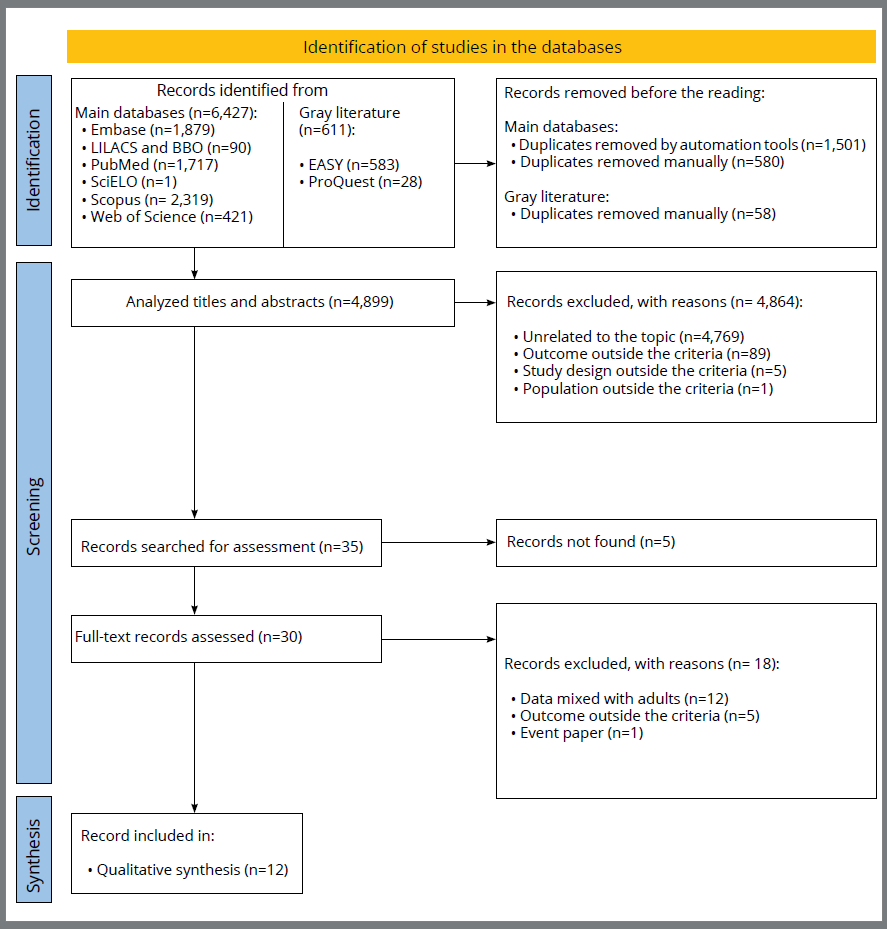
The electronic search identified 7,038 results distributed across nine electronic databases, including the gray literature. After removing duplicates, 4,899 results remained for analysis. A careful reading of titles and abstracts excluded 4,864 results. Five records could not be retrieved for full-text reading.
After reading the full texts, 18 studies were excluded, and 1213,21-31 were included in the qualitative synthesis. Cohen’s Kappa coefficient obtained during study selection was 0.975, indicating an excellent level of inter-reviewer reliability. That corresponds to only 1.25% (61 of 4899) divergences between reviewers. Figure 1 details the study selection process.
STUDY AND SAMPLE CHARACTERISTICS
The articles were published from 1984 to 2023 and performed in ten countries, with five studies in Asia,22,25,26,28,29 two in Europe,30,31 two in a transcontinental Asia-Europe country (Turkey)13,27, two in South America,23,24 and one in Africa.21 The sum of eligible study participants resulted in 249 patients. Age groups in eligible studies ranged from eight29 to 18 years old,24,28,31 and male patients comprised most studies sampling by sex. Only one study did not report the age range,25 and another did not test by sex.29 Three studies23,24,28 included groups of adults, but data collection and synthesis considered only the young group.
Eleven studies13,21-25,27-31 used fixed orthodontic appliances, one used a rapid maxillary expansion appliance,13 and one used a removable appliance.26 Orthodontic treatment lasted from seven days23 to 32 months21 for study analyses.
The data collected on saliva collection methods included three main steps: study participant preparations and saliva sample collection and storage. Two studies lacked preparation data,28,31 and one did not report storage data.13 Each study applied different saliva analysis methods according to each analyzed biomarker. Seven studies23-25,28-31 used ELISA kits for each specific biomarker.
The analyzed biomarkers were salivary IgA in three studies;21,23,29 cortisol in two studies;13,27 immunoglobulins IgG, IgM, IgD, and IgE in one study;21 calcium (Ca2+), phosphate (Pi3+), sodium (Na+), chloride (Cl-), and potassium (K+) in one study;22 soluble receptor activator of nuclear factor Kappa B ligand (sRANKL) and osteoprotegerin (OPG) in one study;24 leptin in one study;25 alkaline phosphatase (ALP) and lactate dehydrogenase (LDH) in one study;26 interleukin-1β (IL-1β) and prostaglandin E2 (PGE2) in one study;28 bone morphogenetic protein 4 (BMP4) in one study;30 and matrix metalloproteinases 8 and 9 (MMP8, MMP9) in one study.31
Table 2 shows the main characteristics of each eligible study.
RISK OF INDIVIDUAL BIAS IN THE STUDIES
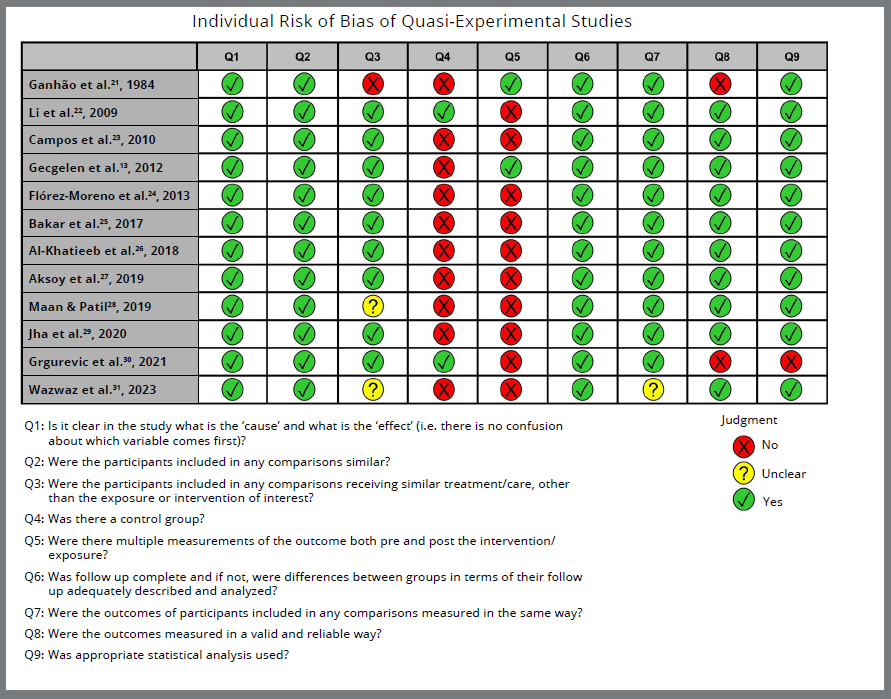
Figure 2 presents the individual assessment of each eligible study. One study21 included a group with a mix of participants without and with dental caries receiving treatment before starting an orthodontic movement, and it was considered different care between participants (Q3, Fig 2). One study28 did not report any preparation protocol before saliva collection, and another31 did not explicitly report the duration of orthodontic treatment; they were considered uncertain (Q3, Fig 2).
Only two studies22, 30 had an actual comparator group (Q4, Fig 2). Two other studies13, 21 had multiple pre- and post-treatment measurements (Q5, Fig 2). One study31 evaluated only five of all study samples (n=16) at each assessment time, and the similarity in measuring participants’ outcomes was considered uncertain (Q7, Fig 2).
One study30 presented significant methodological differences in measuring outcomes, compared to other studies, performing the combined centrifugation of salivary samples (Q8, Fig 2) without presenting quantitative data processed in a static test (Q9, Fig 2).
INDIVIDUAL STUDY FINDINGS
Li et al.22 showed temporary changes in electrolyte concentrations in saliva in the first month of using fixed orthodontic appliances, presenting a decrease in Ca2+, Pi3+, and K+, and an increase in Na+ and Cl-.
Al-Khatieeb et al.26 found significant changes in ALP and LDH levels during the first month of using a removable orthodontic appliance (monoblock). Wazwaz et al.31 demonstrated increased MMP8 and MMP9 levels from the first hour of orthodontic tooth movement, with changes over time, and proteases and collagen-derived peptides associated with inflammatory processes.
Gecgelen et al.13 proposed that rapid maxillary expansion is associated with changes in patients’ anxiety and cortisol, with higher cortisol levels on the first day of orthodontic treatment and altered cortisol patterns during the first 36 days of treatment. Aksoy et al.27 also found higher cortisol results in the early stages of orthodontic therapy. Conversely, Bakar et al.25 showed a constant decrease in leptin levels, a hormone possibly related to tooth movement.
Ganhão et al.21 found small changes in salivary immunoglobulin concentrations, without a significant effect associated with orthodontic treatment, related to the insensitivity of the applied radial immunodiffusion test. Campos et al.23 also presented small changes in salivary IgA levels. They correlated these levels with oral pain intensity reported in children, outlining a possible protective role of salivary IgA in pain perception. In contrast to previous studies, Jha et al.29 considered removable and fixed orthodontic appliances as possible local immunogenic factors, stimulating saliva secretion and slightly higher levels of salivary IgA.
Flórez-Moreno et al.24 related small changes in sRANKL and OPG salivary concentrations to different orthodontic treatment stages, with fluctuating values over eight weeks, significantly increasing the sRANKL/OPG ratio in the eighth week. Maan & Patil28 demonstrated changes in IL-1β and PGE2, with higher levels of inflammatory mediators during the initial phases of orthodontic treatment. Grgurevic et al.30 presented an association between orthodontic appliance placement and BMP4 identification in saliva samples, considering sample size limitations, study duration, and confounding factor assessments among participants.
Only one study30 did not present quantitative results. The others had their main quantitative results organized in a table (Table 3), and were categorized into five groups according to the analyzed biomarkers: (1) Electrolytes, (2) Enzymes, (3) Hormones, (4) Immunoglobulins, and (5) Mediators.
CERTAINTY OF EVIDENCE (GRADE APPROACH)
The certainty of evidence analysis considered biomarker categories (electrolytes, enzymes, hormones, immunoglobulins, and mediators). The outcomes presented a very low certainty level. Table 4 details the individual assessment of each outcome.
DISCUSSION
Relevant findings were obtained after systematically analyzing the literature on changes in endogenous salivary biomarkers of pain, anxiety, stress, and inflammation related to tooth movement during orthodontic treatment in children and adolescents. The results are promising for using different biomarkers to monitor and predict orthodontic stages and adverse effects. However, the literature on salivary biomarkers and orthodontic movement is still scarce compared to gingival crevicular fluid biomarkers.
The first eligible study for this review was published in the 1980s, and the others were developed in the last two decades. This content is still recent, coinciding with findings from other reviews on salivary biomarkers in orthodontics.2,32,33 That may be associated with the overlap of publications on gingival crevicular fluid biomarkers perpetuated for years with extensive and developing literature.34
Each study evaluated different salivary biomarkers, with literature reviews on gingival crevicular fluid biomarkers also reporting heterogeneity.35,36 Thus, the biomarkers were organized according to their nature and biological function, with an evident and coherent presentation in mind. The literature categorizes biomarkers according to their nature,36,37 primary biological function,38,39 orthodontic treatment phases,34 and criteria mixtures.35,36,40
The temporary changes in electrolytes were correlated with the increased mechanosensation from wearing fixed orthodontic appliances, an adaptation of patients’ daily routine during the first month, and changes in saliva flow rate.22 The significant decrease in Ca+, Pi3+, and K+ salivary concentration in the first month22 may present a greater risk of dental caries, affecting the demineralization-remineralization process. Recent systematic reviews suggest associations between oxidative stress41 and unbalanced salivary components42 with dental caries. Therefore, oral environment adaptation before orthodontic treatment and good oral health guidelines must be carried out thoroughly to avoid potential risks. Removable aligners, instead of fixed appliances, can positively influence the reduction of plaque accumulation.43
The increased salivary MMP31 related to inflammatory processes from orthodontic movement can also increase the risk of dental caries. A literature review recently described the relationship of MMP with dentin caries due to dentin collagen matrix degradation.44 Two correlations were proposed regarding the more significant activity of ALP and LDH: the mechanical forces of tooth movement generated by the monoblock appliance or the rapid growth phase of children in late childhood and early puberty. 26 Furthermore, the significant LDH increase in the first hour26 may relate to the latency phase of orthodontic movement, marked by the role of inflammatory mediators of apoptosis.34 Meanwhile, the more discrete and progressive ALP increase26 may represent osteoblasts’ cellular activation and differentiation.34
Salivary cortisol increased on the first day of treatment,13, 27 which continued to change for 36 days.13 Therefore, orthodontic treatment may relate to stress and anxiety, but other biopsychosocial factors should probably be evaluated together, for example, the academic stress of students.45 The significant decrease in leptin25 may be due to its anti-inflammatory capacity inhibited by the inflammatory mediators of tooth movement. Leptin level changes are also associated with overweight and periodontal disease.46 Individualized approaches from the expanded context may be designed with multidisciplinary and multi-professional articulations for each case.
Among salivary immunoglobulin findings, IgA presented controversial results between studies,21,23,29 remaining a biomarker with an uncertain association regarding orthodontic movement. The literature describes salivary IgA as a potential biomarker for pain.47 Thus, salivary IgA changes may interact with oral pain perception in orthodontic patients. Pain and discomfort are expected impacts during orthodontic treatment, with a tendency to adapt over time.48 Therefore, monitoring salivary IgA and assessing oral health-related quality of life may be a promising research field for improving orthodontic treatment.
The significant increase in IL-1β and PGE2 in the early stages28 reflects the initial inflammatory action of orthodontic movement. Higher levels of salivary IL-1β may be associated with higher pain intensity.49 The fluctuations in sRANKL and OPG values during the first eight weeks24 and the presence of salivary BMP430 may be related to the biological phenomena of bone reabsorption and formation. The higher sRANKL/OPG ratio in the eighth week24 represents the protagonism of bone remodeling after the previous phases.34 The literature associates higher RANKL/OPG ratios with higher orthodontic movement speed.49 Hence, these biomarkers potentially monitor phases and predict treatment aspects.
This review has some limitations. First, the methodological heterogeneity of selected studies did not allow a meta-analysis. Despite the reasonable number of selected studies (n=12), only five analyzed the same biomarker: IgA in three studies21,23,29 and cortisol in two13,27 . Even so, they still had different saliva collection times and analysis methods. Second, most studies lacked an actual comparator group and multiple measurements, hampering more robust data analysis and accurate considerations on changes associated with orthodontic tooth movement. Third, most studies often diminished or neglected clinical contexts and possible confounders, reinforcing the need for caution in interpreting results.
Although there was a high heterogeneity among the selected studies, the systematic approach of this review allowed a comprehensive, extensive, cautious, and well-organized data presentation on the topic. That provides a proper acknowledgment of findings to promote evidence-based clinical guidance and orientation, also serving as a literature gap identifier for future studies. It is worth noting that most studies presented a low risk of bias and were well-conducted within their circumstances, such as resources, ethical criteria, sampling, and outcomes.
The salivary levels of stress, pain, anxiety, and inflammation biomarkers are relevant in understanding patients’ physiological responses to orthodontic interventions. These findings may aid clinical routine and allow orthodontists to monitor these parameters with salivary diagnostic tests, which may provide data on their patient’s health status and assist in individualizing treatment plans. Thus, knowing these variations may improve decision-making based on patients’ well-being throughout the treatment.
CONCLUSION
Based on a very low certainty level, orthodontic tooth movement had little to no effect on endogenous salivary biomarkers. Further studies with standardized methods should be performed to improve the understanding of possible confounders and effects of this association.
REFERENCES
- 1 Kaczor-Urbanowicz KE, Deutsch O, Zaks B, Krief G, Chaushu S, Palmon A. Identification of salivary protein biomarkers for orthodontically induced inflammatory root resorption. Proteomics Clin Appl. 2017 Sep;11(9-10).
- 2 Allen RK, Edelmann AR, Abdulmajeed A, Bencharit S. Salivary protein biomarkers associated with orthodontic tooth movement: a systematic review. Orthod Craniofac Res. 2019 May;22 Suppl 1:14-20.
- 3 Ellias MF, Ariffin SH, Karsani SA, Rahman MA, Senafi S, Wahab RMA. Proteomic analysis of saliva identifies potential biomarkers for orthodontic tooth movement. Sci World J. 2012;2012:647240.
- 4 Andrade AS, Szymanski MM, Hashizume LN, Mundstock KS, Goularte JF, Gameiro GH. Evaluation of stress biomarkers and electrolytes in saliva of patients undergoing fixed orthodontic treatment. Minerva Stomatol. 2018 Aug;67(4):172-8.
- 5 Buczko P, Knas M, Grycz M, Szarmach I, Zalewska A. Orthodontic treatment modifies the oxidant-antioxidant balance in saliva of clinically healthy subjects. Adv Med Sci. 2017 Mar;62(1):129-35.
- 6 Atug Özcan SS, Ceylan I, Ozcan E, Kurt N, Dagsuyu IM, Canakçi CF. Evaluation of oxidative stress biomarkers in patients with fixed orthodontic appliances. Dis Markers. 2014;2014:597892.
- 7 Sioustis IA, Martu MA, Aminov L, Pavel M, Cianga P, Kappenberg-Nitescu DC, et al. Salivary metalloproteinase-8 and metalloproteinase-9 evaluation in patients undergoing fixed orthodontic treatment before and after periodontal therapy. Int J Environ Res Public Health. 2021 Feb;18(4):1583.
- 8 Luchian I, Moscalu M, Goriuc A, Nucci L, Tatarciuc M, Martu I, et al. Using salivary MMP-9 to successfully quantify periodontal inflammation during orthodontic treatment. J Clin Med. 2021 Jan;10(3):379.
- 9 Luchian I, Martu I, Ioanid N, Goriuc A, Vata I, Hurjui L, et al. Salivary IL-1ß: a biochemical marker that predicts periodontal disease in orthodontic treatment. Rev Chim. 2016;67(12):2479-83.
- 10 Ramezani M, Simani L, Karimialavijeh E, Rezaei O, Hajiesmaeili M, Pakdaman H. The role of anxiety and cortisol in outcomes of patients with covid-19. Basic Clin Neurosci. 2020;11(2):179-84.
- 11 El-Farhan N, Rees DA, Evans C. Measuring cortisol in serum, urine and saliva - are our assays good enough? Ann Clin Biochem. 2017 May;54(3):308-22.
- 12 Xie L, Ma Y, Sun X, Yu Z. The effect of orthodontic pain on dental anxiety: a review. J Clin Pediatr Dent. 2023 Sep;47(5):32-6.
- 13 Gecgelen M, Aksoy A, Kirdemir P, Doguc DK, Cesur G, Koskan O, et al. Evaluation of stress and pain during rapid maxillary expansion treatments. J Oral Rehabil. 2012 Oct;39(10):767-75.
- 14 Shamseer L, Moher D, Clarke M, Ghersi D, Liberati A, Petticrew M, et al. Preferred reporting items for systematic review and meta-analysis protocols (PRISMA-P) 2015: elaboration and explanation. BMJ. 2015 Jan;350:g7647.
- 15 Page MJ, Moher D, Bossuyt PM, Boutron I, Hoffmann TC, Mulrow CD, et al. PRISMA 2020 explanation and elaboration: updated guidance and exemplars for reporting systematic reviews. BMJ. 2021 Mar;372:n160.
-
16 Aromataris E, Munn Z, editors. JBI manual for evidence synthesis. JBI; 2020 [Access 21 Jul 2024]. Available from: https://doi.org/10.46658/jbirm-20-02
» https://doi.org/10.46658/jbirm-20-02 - 17 Ouzzani M, Hammady H, Fedorowicz Z, Elmagarmid A. Rayyan: a web and mobile app for systematic reviews. Syst Rev. 2016 Dec;5(1):210.
-
18 Tufanaru C, Munn Z, Aromataris E, Campbell J, Hopp L. Systematic reviews of effectiveness. In: Aromataris E, Munn Z, editors. JBI manual for evidence synthesis. JBI, 2020 [Access 21 Jul 2024]. Available from: https://doi.org/10.46658/jbirm-17-03
» https://doi.org/10.46658/jbirm-17-03 - 19 Balshem H, Helfand M, Schünemann HJ, Oxman AD, Kunz R, Brozek J, et al. GRADE guidelines: 3. Rating the quality of evidence. J Clin Epidemiol. 2011 Apr;64(4):401-6.
- 20 Murad MH, Mustafa RA, Schünemann HJ, Sultan S, Santesso N. Rating the certainty in evidence in the absence of a single estimate of effect. Evid Based Med. 2017 Jun;22(3):85-7.
- 21 Ganhão MF, Hattingh J, Preston CB. Effects of orthodontic treatment on plasma and salivary immunoglobulin concentration. J Dent Assoc S Afr. 1984 Nov;39(11):751-4.
- 22 Li Y, Hu B, Liu Y, Ding G, Zhang C, Wang S. The effects of fixed orthodontic appliances on saliva flow rate and saliva electrolyte concentrations. J Oral Rehabil. 2009 Nov;36(11):781-5.
- 23 Campos MJS, Alves CCS, Raposo NRB, Ferreira AP, Vitral RWF. Influence of salivary secretory immunoglobulin A level on the pain experienced by orthodontic patients. Med Sci Monit. 2010 Sep;16(9):CR405-9.
- 24 Flórez-Moreno GA, Isaza-Guzmán DM, Tobón-Arroyave SI. Time-related changes in salivary levels of the osteotropic factors sRANKL and OPG through orthodontic tooth movement. Am J Orthod Dentofacial Orthop. 2013 Jan;143(1):92-100.
- 25 Bakar NA, Kamil W, Al Bayati L, Mustafa BE. Saliva leptin levels in tooth movement during initial stage of orthodontic alignment: a pilot study. Braz J Oral Sci. 2017;16:1-8.
- 26 Al-Khatieeb MM, Rafeeq RA, Saleem AI. Relationship between orthodontic force applied by monoblock and salivary levels of alkaline phosphatase and lactate dehydrogenase enzymes. J Contemp Dent Pract. 2018 Nov;19(11):1346-51.
- 27 Aksoy A, Cesur MG, Dagdeviren BH, Özkaynak YA, Karacin G, Gültekin F. Assessment of pain, anxiety, and cortisol levels during the initial aligning phase of fixed orthodontic treatment. Turk J Orthod. 2019 Mar;32(1):34-40.
- 28 Maan AS, Patil AK. Assessment of salivary interleukin-1ß (IL-1ß), prostaglandin E2 (PGE2) levels and pain intensity in children and adults during initial orthodontic treatment. J Orthod Sci. 2019 Oct;8:16.
- 29 Jha A, Singh R, Jha S, Singh S, Chawla R, Prakash A. Comparative evaluation of salivary immunoglobulin a levels between pedodontic subjects. J Family Med Prim Care. 2020 Apr;9(4):2052-5.
- 30 Grgurevic L, Novak R, Salai G, Trkulja V, Hamzic LF, Popovic VZ, et al. Identification of bone morphogenetic protein 4 in the saliva after the placement of fixed orthodontic appliance. Prog Orthod. 2021 Jul;22(1):19.
- 31 Wazwaz F, Saloom H, Houghton JW, Cobourne MT, Carpenter GH. Salivary peptidome analysis and protease prediction during orthodontic treatment with fixed appliances. Sci Rep. 2023 Jan;13(1):677.
- 32 Kapoor P, Chowdhry A, Bagga DK, Bhargava D, Aishwarya S. MicroRNAs in oral fluids (saliva and gingival crevicular fluid) as biomarkers in orthodontics: systematic review and integrated bioinformatic analysis. Prog Orthod. 2021 Oct;22(1):31.
- 33 Khade DM, Bhad WA, Chavan SJ, Muley A, Shekokar S. Reliability of salivary biomarkers as skeletal maturity indicators: a systematic review. Int Orthod. 2023 Mar;21(1):100716.
- 34 Vansant L, Cadenas De Llano-Pérula M, Verdonck A, Willems G. Expression of biological mediators during orthodontic tooth movement: a systematic review. Arch Oral Biol. 2018 Nov;95:170-86.
- 35 Alhadlaq AM. Biomarkers of orthodontic tooth movement in gingival crevicular fluid: a systematic review. J Contemp Dent Pract. 2015 Jul;16(7):578-87.
- 36 Kumar AA, Saravanan K, Kohila K, Kumar SS. Biomarkers in orthodontic tooth movement. J Pharm Bioallied Sci. 2015 Aug;7(Suppl 2):S325-30.
- 37 Waddington RJ, Embery G. Proteoglycans and orthodontic tooth movement. J Orthod. 2001 Dec;28(4):281-90.
- 38 d'Apuzzo F, Cappabianca S, Ciavarella D, Monsurrò A, Silvestrini-Biavati A, Perillo L. Biomarkers of periodontal tissue remodeling during orthodontic tooth movement in mice and men: overview and clinical relevance. Sci World J. 2013 Apr;2013:105873.
- 39 Aguiar MC, Perinetti G, Capelli J Jr. The gingival crevicular fluid as a source of biomarkers to enhance efficiency of orthodontic and functional treatment of growing patients. Biomed Res Int. 2017;2017:3257235.
- 40 Ariffin SH, Yamamoto Z, Abidin IZ, Wahab RMA, Ariffin ZZ. Cellular and molecular changes in orthodontic tooth movement. ScientificWorldJournal. 2011;11:1788-803.
- 41 Né YGS, Frazão DR, Bittencourt LO, Fagundes NCF, Marañón-Vásquez G, Crespo-Lopez ME, et al. Are dental caries associated with oxidative stress in saliva in children and adolescents? A systematic review. Metabolites. 2022 Sep;12(9):858.
- 42 Hegde MN, Attavar SH, Shetty N, Hegde ND, Hegde NN. Saliva as a biomarker for dental caries: a systematic review. J Conserv Dent. 2019;22(1):2-6.
- 43 Raghavan S, Abu Alhaija ES, Duggal MS, Narasimhan S, Al-Maweri SA. White spot lesions, plaque accumulation and salivary caries-associated bacteria in clear aligners compared to fixed orthodontic treatment. A systematic review and meta- analysis. BMC Oral Health. 2023 Aug;23(1):599.
- 44 Elgezawi M, Haridy R, Almas K, Abdalla MA, Omar O, Abuohashish H, et al. Matrix metalloproteinases in dental and periodontal tissues and their current inhibitors: developmental, degradational and pathological aspects. Int J Mol Sci. 2022 Aug;23(16):8929.
- 45 Špiljak B, Vilibić M, Glavina A, Crnković M, Šešerko A, Lugović-Mihić L. A review of psychological stress among students and its assessment using salivary biomarkers. Behav Sci. 2022 Oct;12(10):400.
- 46 Brum RS, Duarte PM, Canto GL, Flores-Mir C, Benfatti CAM, Porporatti AL, et al. Biomarkers in biological fluids in adults with periodontitis and/or obesity: a meta-analysis. J Indian Soc Periodontol. 2020;24(3):191-215.
- 47 Sobas EM, Reinoso R, Cuadrado-Asensio R, Fernández I, Maldonado MJ, Pastor JC. Reliability of potential pain biomarkers in the saliva of healthy subjects: inter-individual differences and intersession variability. PLoS One. 2016 Dec;11(12):e0166976.
- 48 Vidigal MTC, Mesquita CM, Oliveira MN, Vieira WA, Blumenberg C, Nascimento GG, et al. Impacts of using orthodontic appliances on the quality of life of children and adolescents: systematic review and meta-analysis. Eur J Orthod. 2022 Aug;44(4):359-68.
- 49 Kapoor P, Kharbanda OP, Monga N, Miglani R, Kapila S. Effect of orthodontic forces on cytokine and receptor levels in gingival crevicular fluid: a systematic review. Prog Orthod. 2014 Dec;15(1):65.
-
How to cite:
Rodrigues R, Mesquita CM, Alves HBN, Silva FG, Vieira WA, Aguiar PCS, Flores-Mir C, Paranhos LR, Brito-Júnior RB. Changes in salivary biomarkers of pain, anxiety, stress, and inflammation related to tooth movement during orthodontic treatment: a systematic review. Dental Press J Orthod. 2024;29(6):e242436.