
 Student preferences in the directionality of Spanish–Spanish Sign Language interpreting
Several studies indicate that sign language interpreters show a clear preference for interpreting into sign languages and perceive it to be of higher quality than the opposite direction, despite the fact that it is not their mother tongue and they feel less competent in it. This phenomenon seems to be influenced by various factors, such as work experience and the focus of training, which apparently prioritizes this direction of interpreting. Given the retrospective nature of the professionals' opinions, this study aims to investigate the directionality preferences in Spanish Sign Language (LSE) interpreting from the perspective of future interpreters. To this end, a non-experimental, exploratory-descriptive research was conducted, focusing on students of the Spanish Sign Language and Deaf Community degree at the Universidad Rey Juan Carlos, the only official training of its kind in Spain. Based on the quantitative analysis of a questionnaire administered to 71 individuals, we found that the results reflect the same trends observed in professionals: students prefer interpreting into LSE and perceive it to be of higher quality, even though it is not their dominant language. They also consider classroom practice in interpretation directions to be unbalanced, with greater emphasis on interpreting from Spanish into LSE. The main conclusions highlight the need to delve into the factors that influence preferences, the use and mastery of working languages, actual performance in interpreting, and the correlation between these issues, in order to implement effective improvements in training programs for sign language interpreters.
Keywords
interpreting; Spanish Sign Language; interpreter training
 Thumbnail
 Thumbnail
 Thumbnail
 Thumbnail
 Thumbnail
 Thumbnail
 Thumbnail
 Thumbnail
 Thumbnail
 Fuente: Autores (2026)
 Fuente: Autores (2026)
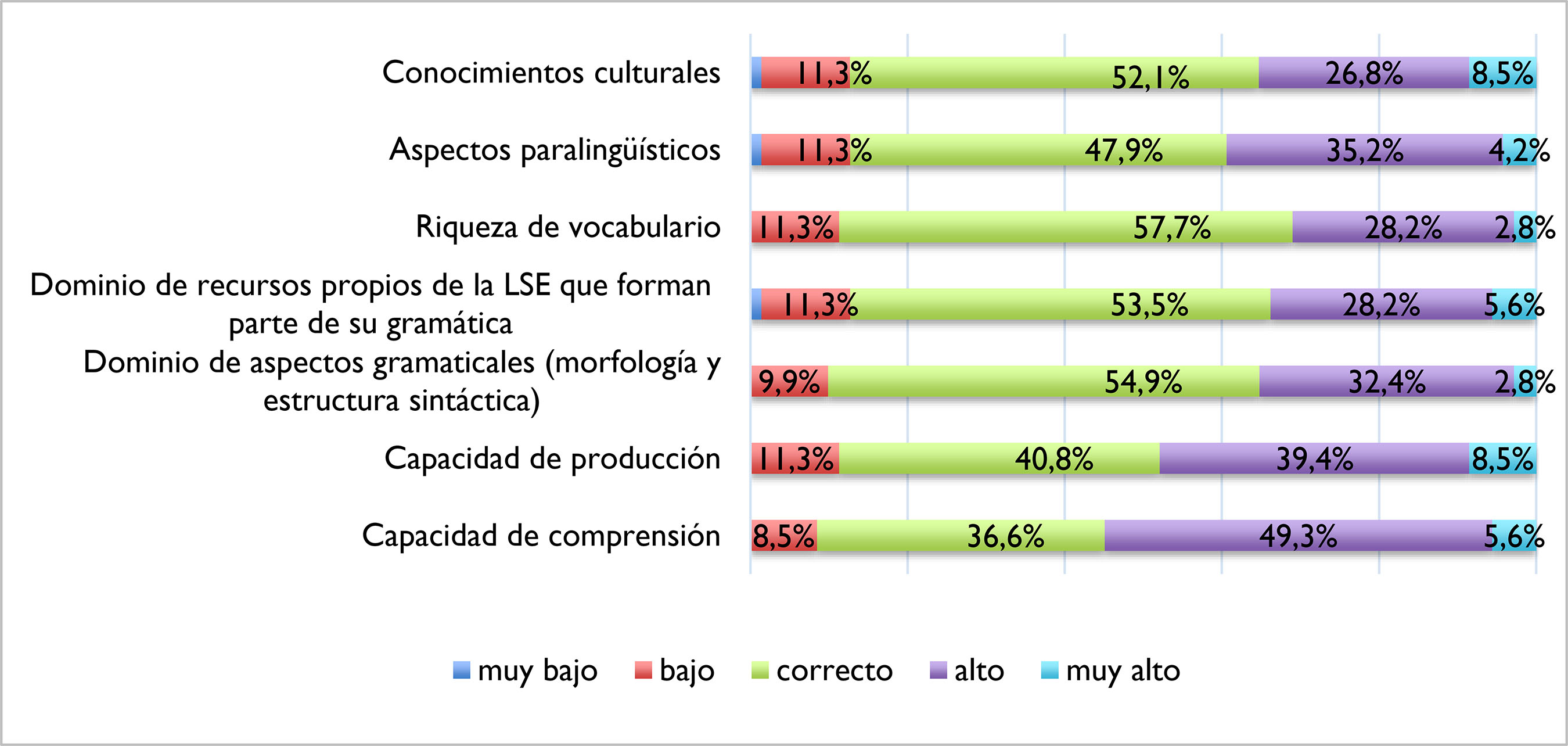 Fuente: Autores (2026)
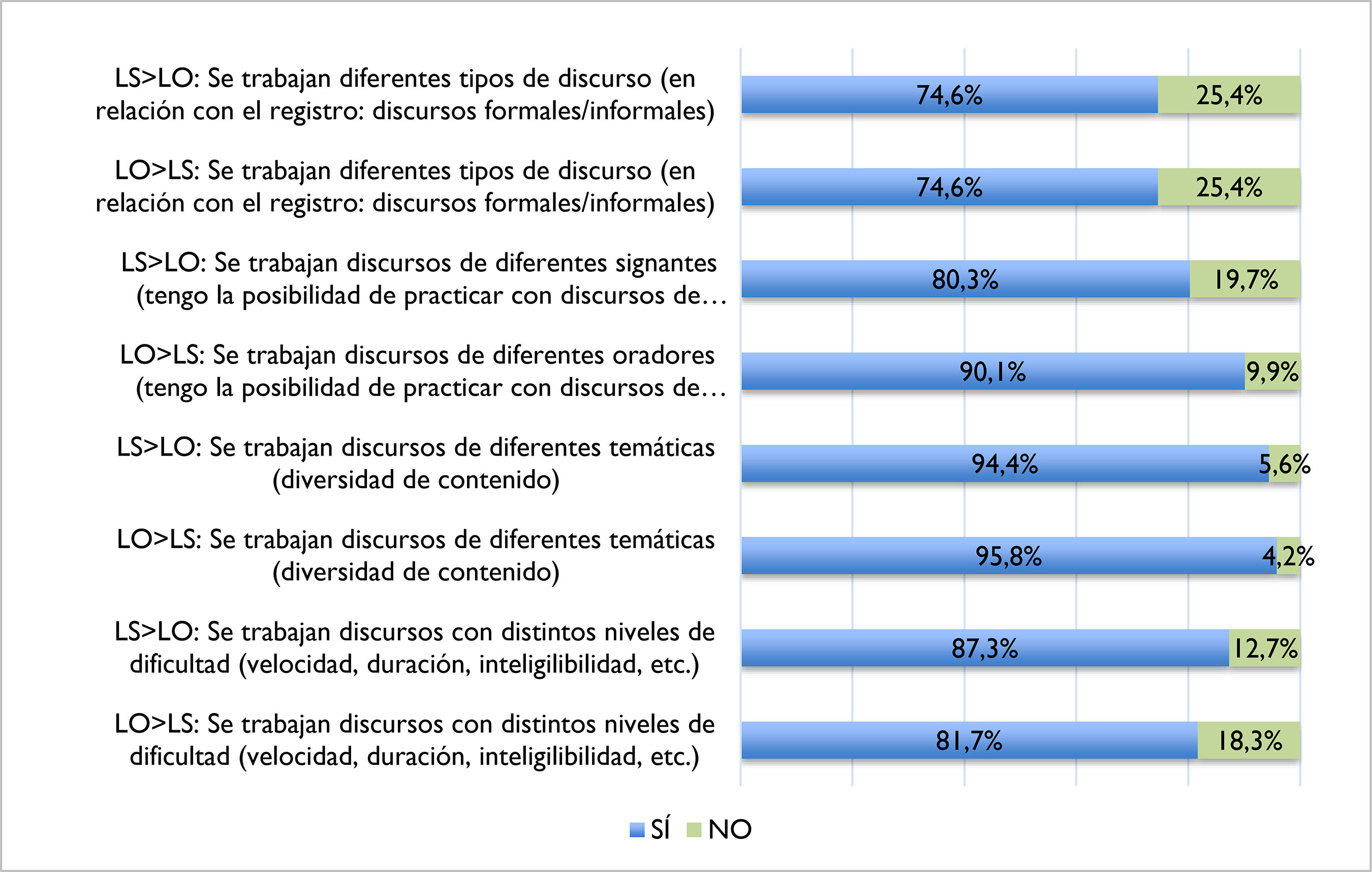 Fuente: Autores (2026)
 Fuente: Autores (2026)
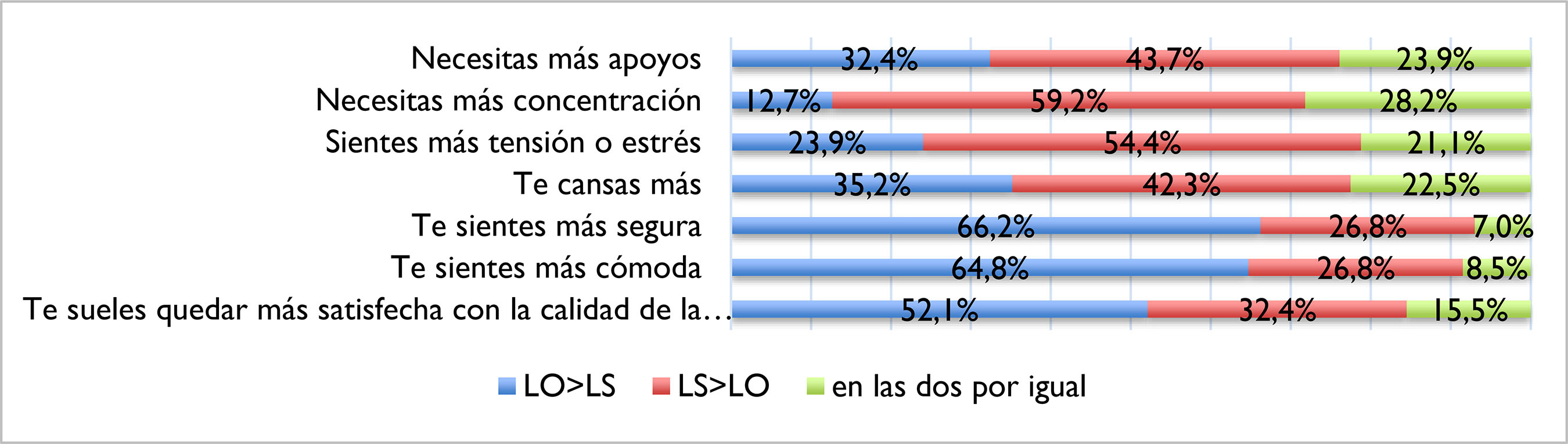 Fuente: Autores (2026)
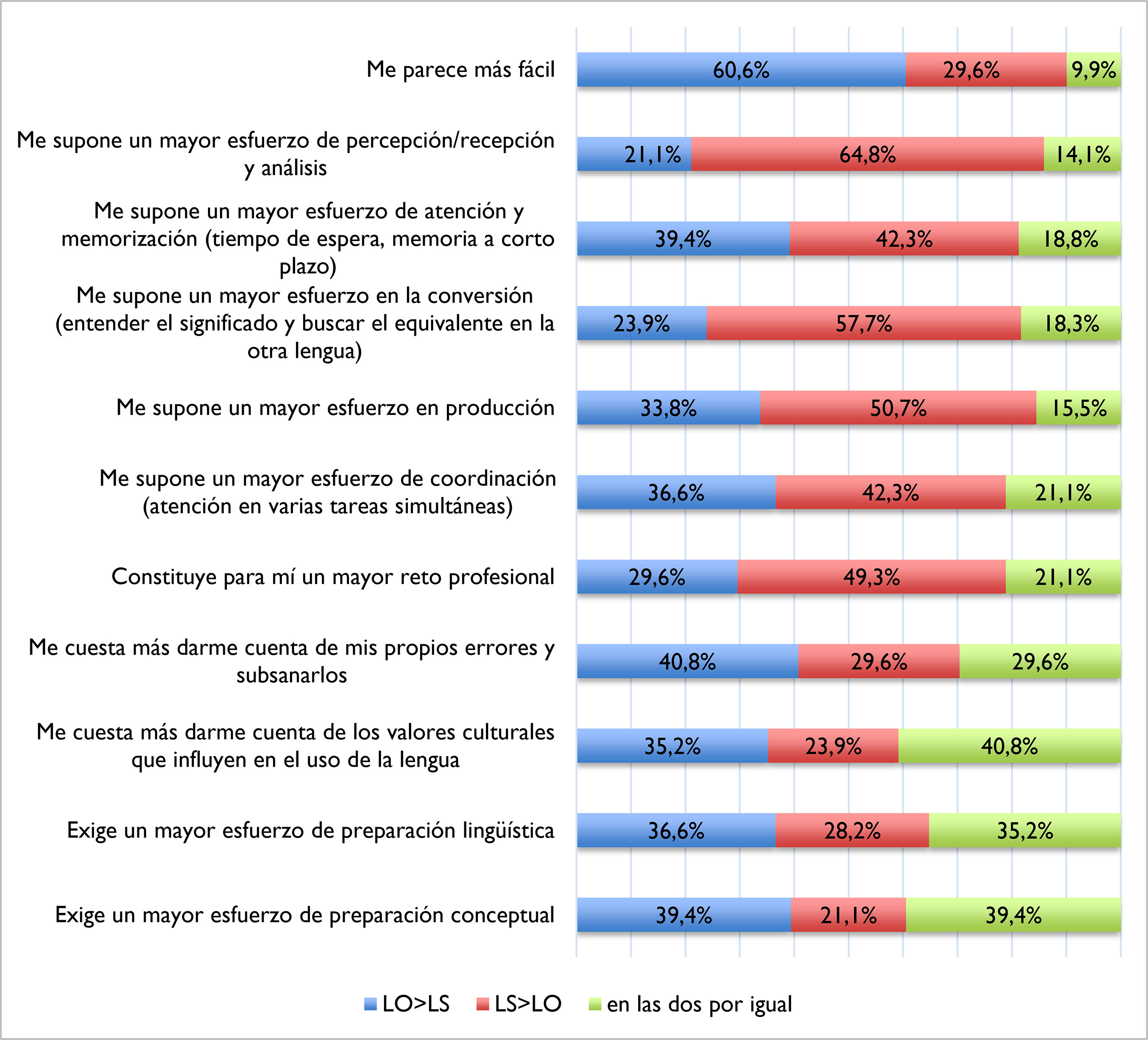 Fuente: Autores (2026)
 Fuente: Autores (2026)
 Fuente: Autores (2026)