
 Regulatory analysis of the integration of oncology pharmaceutical services across the healthcare levels
Abstract
This study analyzes the regulatory mechanisms governing the integration of pharmaceutical services between high-complexity oncology care and primary health care within the Brazilian Unified Health System. The fragmented care levels undermine treatment continuity, particularly for oncology patients who require ongoing follow-up across both settings. A document analysis of federal regulations in effect from 1990 to 2024 was conducted to identify barriers and facilitators to this integration. The findings indicate that, although normative guidelines are in place, significant challenges persist, including unequal access to expensive medicines, the lack of integrated health information systems, and discontinuous pharmacotherapeutic follow-up. The study advocates for shared care, emphasizing greater collaboration among healthcare teams as a strategy to streamline pharmacotherapy management and ensure care continuity. It concludes that updated regulatory frameworks and coordinated practices are essential to overcoming a fragmented system and ensuring comprehensive and equitable care within the Brazilian Unified Health System.
Key words:
Pharmaceutical Services; Oncology; Primary Health Care; Comprehensive Health Care; Unified Health Care
Resumo
Este estudo analisa os mecanismos regulatórios para integrar a assistência farmacêutica entre os serviços de alta complexidade em oncologia e a atenção primária à saúde no Sistema Único de Saúde. A fragmentação entre os níveis de cuidado compromete a continuidade do tratamento, especialmente para pacientes oncológicos, que exigem acompanhamento contínuo em ambos os níveis. Realizou-se uma análise documental de regulamentações federais vigentes de 1990 a 2024, buscando identificar barreiras e facilitadores dessa integração. Os resultados revelam que, embora existam diretrizes normativas, desafios como o acesso desigual a medicamentos de alto custo, a falta de sistemas de informação integrados e a descontinuidade do acompanhamento farmacoterapêutico ainda persistem. O estudo propõe o cuidado compartilhado, com maior colaboração entre as equipes de saúde, como estratégia para otimizar a gestão da farmacoterapia oncológica e assegurar a continuidade do tratamento. Conclui-se que são necessárias novas regulamentações e práticas para superar a fragmentação e garantir uma assistência integral e equitativa no Sistema Único de Saúde.
Palavras-chave:
Assistência Farmacêutica; Oncologia; Atenção Primária à Saúde; Integralidade em Saúde; Sistema Único de Saúde
Resumen
Este estudio analiza los mecanismos regulatorios que rigen la integración de los servicios farmacéuticos entre la atención oncológica de alta complejidad y la atención primaria de salud en el marco del Sistema Único de Salud de Brasil. La fragmentación entre los niveles de atención compromete la continuidad del tratamiento, especialmente en pacientes oncológicos que requieren seguimiento permanente en ambos ámbitos. Se realizó un análisis documental de las normativas federales vigentes entre 1990 y 2024 para identificar barreras y facilitadores de esta integración. Los resultados muestran que, aunque existen directrices normativas, persisten desafíos como el acceso desigual a medicamentos de alto costo, la falta de sistemas de información integrados y la discontinuidad en el seguimiento farmacoterapéutico. El estudio propone un modelo de atención compartida, con mayor colaboración entre equipos de salud, como estrategia para optimizar la farmacoterapia oncológica y garantizar la continuidad del tratamiento. Se concluye que se requieren marcos regulatorios actualizados y prácticas coordinadas para superar la fragmentación del sistema y garantizar una atención integral y equitativa en el Sistema Único de Salud de Brasil.
Palabras clave:
Asistencia Farmacéutica; Oncología; Atención Primaria de Salud; Integralidad en Salud; Sistema Único de Salud
Introduction
Brazilian Pharmaceutical Services (PS) play a crucial role in guaranteeing the right to health and the comprehensive care offered by the Unified Health System (SUS). Since the creation of the National Pharmaceutical Services Policy (PNAF), Brazil has made significant progress in terms of access to medicines and the organization of pharmaceutical services1. However, fragmentation between care levels, especially between highly complex services, such as oncology, and primary care, persists as a critical challenge to care integration and continuity2.
A highly complex service, oncology requires advanced technologies and expensive medicines, as well as strict and specialized pharmacotherapy management. Simultaneously, many oncology patients and cancer survivors require continuous follow-up in PHC services, both for the management of comorbidities and the monitoring of adverse events and treatment continuity2. Therefore, the integration between PS in high-complexity care and PHC emerges as a need to guarantee care continuity and streamline medicine use3.
The regulatory mechanisms that support PS in the SUS, such as Law No. 8,080/1990, the National Policy for Cancer Prevention and Control (PNPCC), and the organization of Health Care Networks (RAS), offer guidelines for coordination between different care levels4,5. However, the practical implementation of these regulations still faces significant barriers, such as a lack of coordination between teams and discontinuous pharmacotherapeutic follow-up between care levels6. These difficulties are particularly evident in areas with less infrastructure, where the fragmented care compromises access to essential medicines7.
To overcome these barriers, the concept of shared care emerges as a key strategy in strengthening the integration of PS. Shared care presupposes collaborative action between different care levels, where healthcare teams from high-complexity services and primary healthcare share responsibility for the patient’s continuous care8. In the context of oncology, this approach is particularly relevant, given that treatments require frequent monitoring and therapeutic adjustments, both in specialized hospitals and in family health units9. The pharmacist, working together with health teams, can promote rational medicines management, avoiding interruptions in treatment and maximizing clinical outcomes10.
This study aims to identify the regulatory mechanisms and contextual factors that facilitate or hinder the integration of PS between high-complexity oncology services and PHC. By exploring regulations, this work seeks to contribute to strengthening the RAS, promoting comprehensive and coordinated care for cancer patients within the SUS.
Methods
This study uses a descriptive approach, with documentary analysis of current federal regulations on the integration of PS within the SUS, specifically between PHC and high-complexity oncology care. Federal regulations, ordinances, resolutions, and normative instructions addressing the analyzed topic were selected. Only current regulations and those addressing the integration of health services, focusing on the articulation between services at different care levels, were considered. The analyzed period encompassed regulations published from January 1990 to June 2024.
Data were collected using three primary sources: the website of the Federal Council of Pharmacy (CFF), the website of the National Cancer Institute (INCA), and the Federal Government’s Health Legislation portal (gov.br). The searches were conducted in August 2024. On the INCA and CFF websites, all available regulations were collected for analysis according to the inclusion criteria. On the Health Legislation portal, we adopted the term “pharmaceutical services” and applied a filter for current regulations to select the documents.
The selected regulations were qualitatively analyzed in order to identify the regulatory mechanisms that facilitate or hinder the integration of PS between high-complexity oncology services and PHC. The analysis aimed to understand how the regulations addressed the pharmaceutical care continuity and what the main gaps and trends were in the normative texts.
The results were organized into three main categories as per their relevance to the integration of pharmaceutical care. The first is called “Integration with the health services”. It encompasses regulations that establish broad guidelines for integrating different care levels within the SUS, focusing on the organization and structuring of the RAS. The second category, “Pharmaceutical services in oncology”, gathers documents that establish specific guidelines for cancer treatment or for pharmaceutical management in this field. Finally, the third category, “Shared Care”, encompasses regulations that encourage cooperation between healthcare teams at different care levels, promoting care continuity. This organization allowed for a detailed analysis of the documents, highlighting the main opportunities and challenges in integrating PS in oncology.
Results and discussion
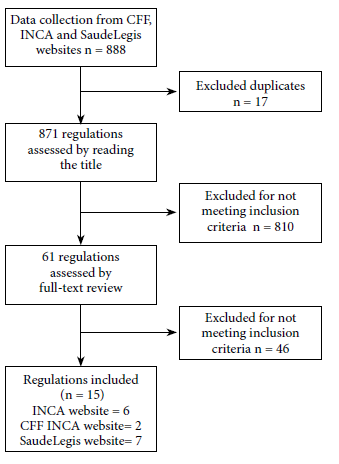
Initially, 888 documents were retrieved. Then, duplicates (n=17) were removed, and the main text of the regulations was read, resulting in the exclusion of 810 documents, most of which addressed service authorization or regulations related to financial resources. This left 61 regulations, which were read in full. Forty-six regulations were excluded for not meeting the inclusion criteria or for not addressing service integration. At the end of this process, 15 regulations were considered eligible for descriptive analysis, as shown in Figure 1.

Selection Flow of Federal Regulations for the Analysis of Pharmaceutical Services in the Unified Health System (1990-2024).
The analysis of the 15 selected regulations, as shown in Chart 1, revealed several challenges in the integration of PHC within the SUS, especially regarding the coordination between PHC and high-complexity oncology services. The organization and categorization of the documents identified important trends and gaps that need to be addressed to ensure care continuity, particularly for cancer patients.
The analysis revealed a reduced volume of documents related to the integration of PS and shared care in the oncology context. This low volume of regulations indicates a weakness in the normative structure, which may compromise the effectiveness of proposals for integration between services and care continuity. The lack of robust regulations specifically focused on oncology can hinder not only the treatment of cancer patients but also the management of care for survivors and those requiring palliative care. This regulatory gap is a challenge, but also an opportunity for developing new guidelines that can strengthen the integration of health services, ensuring that care is continuous and coordinated at all cancer treatment stages.
Integration with the health services
When analyzing the regulations, we observed that most of them (n=10) were directly related to integration with health services, guiding PS and its comprehensiveness within the SUS in a general context. A greater concentration of documents focused on the integration of services was observed between 2012 and 2014 (Figure 2), which reflects governmental efforts during this period to strengthen the articulation of PS within the RAS.

Trend of regulations related to pharmaceutical services in oncology, by category, from 1990 to 2024.
Integration with the health services is a fundamental principle in the SUS, and the regulations analyzed reveal the effort to structure coordinated care networks that guarantee care continuity and quality at all levels, from PHC to high-complexity services. Law No. 8,080/1990, the regulatory framework of the SUS, establishes the basis for this integration, defining that health care must be universal, comprehensive, and organized in regional networks, ensuring that patients have access to the necessary care continuously, regardless of the level of complexity of their treatment4,11.
Ordinance MS/GM No. 3,916/1998, which establishes the National Medicines Policy (PNM), goes beyond guaranteeing the continuous availability of essential medicines. It establishes a broader set of activities, including the selection, programming, acquisition, storage, distribution, quality control, and rational use of medicines, encompassing everything from prescription to dispensing12. In the oncology context, these principles are fundamental, as they ensure that high-cost and complex medicines are continuously available for cancer treatment, as identified by the epidemiological needs of the population13. The PNM also mandates the constant updating of the National List of Essential Medicines (RENAME), another crucial component, as it ensures that medicines with proven efficacy are available throughout the SUS network, reinforcing the integration of federal, state, and municipal levels in medicine management. This coordination between different government levels is essential to guarantee equitable access to innovative cancer treatments, contributing to care continuity and integrated health policies3,14.
Ordinance MS/GM No. 2,048/2009 regulates the RAS, reinforcing the need for coordination between care levels to ensure care continuity. The ordinance highlights the importance of developing clinical protocols and guidelines for emergency care and PS. It also establishes regionalization criteria to organize health services under local realities. The role of the Agreed and Integrated Programming (PPI) is also emphasized as essential for the planning and distribution of resources among the different government levels.
However, PS in oncology still face integration challenges within RAS due to decentralized services and a lack of coordination between care levels. These difficulties impact access to high-cost medicines, with significant disparities within the SUS itself, where innovative cancer treatment medicines are not always available equitably across different services. High-complexity services tend to concentrate these medicines, while other regions with less infrastructure face limited access8.
The literature also points to insufficient oncology-accredited facilities, resulting in significant regional gaps. This situation forces many patients to travel long distances to access treatment, increasing the time until the start of therapy and hindering regular access to medicines15. In addition, many PHC health centers lack pharmacists, which compromises pharmacotherapeutic monitoring and the rational use of medicines16. This lack of professionals leads to fragmented PS, escalating decentralization and affecting care continuity in the management of cancer patients2.
Joint Ordinance MS/SAS/SCTIE No. 1/2012 was an attempt to advance in this direction, proposing guidelines for the qualification of PS in the priority care networks of the SUS, aiming to organize care flows and ensure that medicines are available at all stages of treatment17. This regulation stressed the importance of standardized protocols for managing pharmaceutical care at different care levels. However, the implementation of these protocols continues to face obstacles, such as the lack of integration of information systems and regional inequality in the supply of medicines, especially in areas with less infrastructure and greater travel distances to oncology facilities18,19.
Ordinance MS/SAS No. 253/2012 and Resolution MS/CNS No. 468/2013 reinforce the importance of organizing the flow of medicines and services within the SUS, ensuring that the RAS work in a coordinated manner to guarantee comprehensive care. Both regulations reiterate the need for a regionalized and collaborative approach between healthcare levels, which is essential to ensure that patients receive the necessary medicines according to established protocols. Although there are defined care pathway protocols and high-complexity units are paramount in cancer treatment, PHC should play an essential role in the continuous monitoring of patients and the management of comorbidities and events. However, we observe fragmented care, with limited integration between different care levels. This mismatch directly affects regular access to supportive medicines and the rational use of medicines, especially in regions lacking specialized infrastructure. In these locations, the transfer of patients to high-complexity centers becomes an additional obstacle, compromising not only adherence to treatment but also the link with primary care.
Furthermore, the lack of effective communication between high-complexity services and PHC hinders pharmacotherapeutic care continuity, leading to delays in medicine supply and discontinuity that directly affects the clinical outcomes of cancer patients. Thus, although the protocols clearly establish the responsibilities of the different care levels, the practical implementation of these guidelines still shows significant challenges. Capacity-building and institutional strengthening efforts should be promoted in order to strengthen the coordination between care levels and ensure quality and comprehensive cancer care within the SUS.
Ordinance MS/SAS No. 140/2014 highlighted once again the need to strengthen the regionalization of health services and integrate PS in the treatment of chronic diseases, including cancer. This effort is also reflected in Law No. 13,522/2017, which introduced mechanisms to improve the distribution of high-cost medicines, a fundamental aspect for patients who depend on cancer treatments20,21. Resolution MS/CNS No. 565/2018 and Ordinance MS/GM No. 4,379/2024 reaffirm these commitments, highlighting the importance of consolidating the integration of health services and ensuring that PS are continuous and equitable in all healthcare levels. Despite this regulatory framework, it is still not sufficient to guarantee the effective integration of the care network. The different healthcare levels are unable to coordinate pharmacotherapeutic treatment, resulting in a fragmented vision of care. The lack of integration between services generates duplicated tests, overburdening the system and hiking costs22. These problems can be attributed to the distance between services, the deficient communication between care levels, and the lack of an integrated system in the SUS that connects information and promotes care continuity15.
The challenges of this integration are also reflected in the management of cancer treatment medicines, which often depend on highly complex services to be made available and monitored. The fragmented health services, in which primary, secondary, and tertiary care do not communicate effectively, result in delays in the start of treatments and impair care continuity23. Although referral between care levels are fundamental principles to guarantee comprehensive care, in practice, due to the high demand for services, this method often proves ineffective, leaving patients without the necessary follow-up and disconnected from their treatments24. Furthermore, the lack of integration mechanisms favors lawsuits related to cancer treatment, where patients seek legal action to obtain medicines or treatments not regularly offered by the SUS25,26. The lawsuits becomes a reflection of the structural flaws in the system, highlighting the unequal access to therapies, especially the most innovative and expensive ones27. This situation further aggravates care fragmentation, since judicial demands frequently disregard the budgetary planning and logistics of the health system, generating an administrative overload and affecting the long-term sustainability of the SUS13,27.
The most recent Patient Itinerance Law - Law No. 14,758/2023 -, categorized as shared care, seeks to minimize these problems by proposing new mechanisms to monitor and guide patients throughout their journey in the SUS, especially in complex treatments such as cancer28. This law aims to ensure that cancer patients have a qualified therapeutic itinerary, facilitating the transition between health services. However, new regulatory mechanisms are still needed to integrate the oncology network more effectively29,30. The patient should be connected with PHC, since this integration is crucial for the management of comorbidities and to ensure a coordinated and continuous cancer treatment. Without this connection, comprehensive care is compromised, reinforcing the need for coordination between care levels so that cancer care is truly efficient and complete8,31.
Pharmaceutical Services in Oncology
Policies directly related to PS in oncology are infrequent, with only two regulations. However, they have a significant impact on the organization of oncology facilities. Law No. 12,732/2012, also known as the 60-day Law, was an important milestone in determining that cancer treatment must begin within a maximum of 60 days after diagnosis. This regulation has a direct impact on PS, guaranteeing rapid access to drug treatment within the SUS. Despite its importance, studies show little effectiveness in integrating the network to meet the established deadlines32.
Ordinance MS/GM No. 874/2013 established the National Policy for the Prevention and Control of Cancer in the Healthcare Network for People with Chronic Diseases within the SUS. It establishes guidelines for the organization of oncological care and emphasizes that cancer treatment is a shared responsibility among all health care levels33. It clearly defines the duties of primary, secondary, and tertiary care, creating an integrated network to guarantee continuous and comprehensive care for cancer patients. The Ordinance also reinforces the relevance of coordination between the different operational structures of the SUS to promote coordinated and efficient care, ensuring that patients move appropriately between different care levels according to their needs34.
Regarding PS, the PNPCC explicitly links this service to the organization of care pathways for several cancer types, in accordance with regional plans and the rules for incorporating technologies into the SUS, established by Law No. 12,401/201135. Despite these guidelines, incorporating new medicines for cancer treatment is often slow and bureaucratic, which hinders timely access to therapeutic innovations36. The evaluation by the National Committee for the Incorporation of Technologies in the Unified Health System (CONITEC) and the subsequent development of Clinical Protocols and Therapeutic Guidelines (PCDT) are fundamental but frequently lengthy steps, resulting in challenges to care continuity2.
In 2024, an important milestone was reached with the publication of the Clinical Protocol and Therapeutic Guidelines (PCDT) for breast cancer, developed by CONITEC37. This document updates parameters for the diagnosis, treatment, and follow-up of patients, and reinforces the need for coordination between the different points of the care network38. However, the PCDT still shows gaps regarding operational guidelines for shared care, especially concerning the integration between primary care, specialized care, and PS37. The lack of clear guidelines on each care level’s care flows and responsibilities limits its effectiveness in organizing the care pathway and ensuring treatment continuity39.
Despite clear guidelines, practical challenges remain in ensuring effective integration between care levels within the SUS. One of the main challenges is ensuring that cancer treatment medicines, which are often expensive and highly complex, are regularly and equitably available across all health regions15,40. This depends not only on the implementation of regional plans, but also on the logistics of drug distribution through centralized purchasing and coordination between different care levels13.
Furthermore, there is a need to strengthen coordination between PHC and specialized services, especially regarding home care and palliative care, which are essential for the quality of life of patients in advanced cancer stages. Fragmented services in some regions and the lack of coordination among health professionals can impair care continuity41.
Incorporating new technologies in cancer treatment also represents a challenge, since, although decisions on the introduction of new medicines and treatments into the SUS need to be constantly updated to keep pace with the rapid evolution of science, studies indicate non-compliance with the deadlines stipulated in legislation for the availability of these technologies42,43. This setting is particularly troubling in oncology, where a longer time is observed between incorporation decisions and the adequate availability of cancer medicines, when compared to medicines offered by the Specialized Component of Pharmaceutical Services (CEAF)36.
Shared care
The category of shared care, with only three regulations, represents an underexplored aspect in the process of integrating PS across different care levels. Figure 2 shows a sparse distribution of these regulations over time. Each regulation has an approximate interval of ten-year, which points to an area that still lacks broader regulations to strengthen shared care in PS. Collaborative integration between care levels could ensure more efficient resource management, especially in regions with less infrastructure44,45.
Resolution MS/CNS No. 338/2004, which established the PNAF, highlights the need for integration between different points of care within the SUS, including the management and distribution of essential medicines, which includes oncology medicines. This resolution positioned PS as a strategic element in care continuity, ensuring that patients, regardless of their treatment complexity, have guaranteed access to the necessary medicines. The document underlines the importance of integrated medicine management at all care levels, promoting a continuous flow of information between healthcare teams, which is vital for the efficient monitoring of oncology patients.
Ordinance MS/GM No. 483/2014 complements this perspective by establishing the RAS for chronic diseases, where cancer is one of the conditions addressed. This Ordinance formalizes the role of PHC in coordinating the care of chronic patients, in conjunction with specialized services. It introduces the idea of matrix support, where specialized oncology teams work together with other care levels, offering technical and clinical support for case management. Shared care, therefore, emerges as an essential strategy to ensure that cancer patients are monitored in an integrated manner, even when they require highly complex care3,46,47.
Finally, Law No. 14,758/2023 reinforces the importance of integrated and collaborative care, especially in the context of palliative care. The law establishes that home care services and palliative care teams must work in partnership with hospitals specialized in oncology to ensure care continuity for patients with advanced-stage cancer. The law underscores the need for integrated protocols among services, ensuring that palliative care is provided in coordination with curative or disease-control oncology treatments.
The three regulations analyzed represent an important advance in the concept of shared care within the SUS, mainly by establishing the articulation between care levels as a central strategy to guarantee care continuity. The matrix support proposed by these regulations, which aims to integrate PHC teams and high-complexity services, requires strong coordination between the three care levels to ensure that medicines and clinical follow-up are offered continuously and in an integrated manner. Although provided for in regulations, such as Ordinance MS/GM No. 483/2014, this articulation does not always occur clearly, mainly because there is a lack of integrated information systems that allow the flow of information between care levels48. This aspect is essential for shared care, since PS relies on effective communication among teams to ensure that the patient receives the correct medicine, in the proper dose, and at the appropriate time, regardless of the care level at which they are being treated49.
Furthermore, the documents point to the need for integrated protocols that guide pharmaceutical care in a coordinated manner between PHC and specialized services, especially in the treatment of cancer patients. The lack of coordination among care levels often results in fragmented care, where the cancer patient receives specialized treatment at one level and monitoring of their comorbidities at another, without adequate and assertive communication between the teams2. This situation reinforces the importance of implementing a shared care model where PS functions as an integrating line, ensuring that treatments are monitored continuously and patients do not lose their connection with the RAS50.
Despite their relevance, Decree No. 7,508/2011, Law No. 12,401/2011, and Law No. 14,313/2022 did not appear in our initial searches. However, due to their relevance to the topic of PS in oncology, it becomes necessary to discuss them. Decree No. 7,508/2011 provided guidelines for the regionalization and integration of health services, but in practice, the lack of unified information systems and the fragmented communication between care levels continue to be significant barriers51.
Law No. 12,401/2011, which established CONITEC, brought advances in the process of incorporating technologies into the SUS, but faces challenges in practical implementation. The prolonged evaluation time and bureaucratic procedures delay the availability of oncology medicines, hindering access to therapeutic innovations, which are essential for the treatment of cancer patients52. Law No. 14,313/2022, which allows the use of off-label medicines, is an important advance, but also leaves operational gaps, such as the lack of clear guidelines for risk assessment and professional training53. This situation generates uncertainties in practical implementation and compromises the optimal use of innovative treatments in the SUS36.
This study’s main limitation is the lack of a standardized list of keywords to systematize document retrieval from the consulted government databases, which may hinder the retrieval of all regulations on the analyzed topic. Furthermore, the exclusion of state and municipal guidelines may have overlooked relevant local arrangements for the organization of cancer care. However, the use of multiple sources allowed for a broad retrieval of regulations, enabling an extensive discussion of the topic and fulfilling the study’s objectives.
Final considerations
An analysis of the regulations governing PS and the integration of health services within the SUS reveals significant gaps. Despite ongoing efforts to structure coordinated RAS and ensure care continuity, we observe persistent practical challenges that compromise the full integration of services, particularly regarding access to expensive cancer medicines and effective communication between different levels of care.
Fragmented health services, the lack of standardized protocols, and regional inequality in the supply of innovative medicines are some of the obstacles that prevent the SUS from achieving comprehensive and equitable care for all patients. Decentralized services, while essential for health management, are not yet accompanied by efficient coordination and referral mechanisms, which compromise treatment continuity, especially for cancer patients.
There is a clear need for new regulations or revisions to existing norms that can propose more effective models for integrating health services. The implementation of new mechanisms, such as strengthening patient navigation within the SUS, is fundamental to ensuring that patients, especially those facing complex diseases like cancer, do not get lost in transitions between care levels and keep their connection to PHC. In this sense, the publication of the PCDT for breast cancer in 2024 is a relevant normative advance, but one that still needs to be effectively incorporated into service routines and articulated with concrete actions of shared care.
Furthermore, more studies are needed to evaluate innovative models of shared care, especially in the field of oncology, in order to address the challenges of fragmented services and propose solutions that allow for more effective resource management and continuous, high-quality care for cancer patients. A new sharing model that considers the peculiarities of the SUS and the needs of patients could be an important step towards ensuring the universality, comprehensiveness, and equity advocated by the SUS.
References
- 1 Brasil. Ministério da Saúde (MS). Resolução CNS nº 338, de 6 de maio de 2004. Aprova a Política Nacional de Assistência Farmacêutica. Diário Oficial da União; 2004.
- 2 Silva MJS, Osorio-de-Castro CGS. Organização e práticas da assistência farmacêutica em oncologia no âmbito do Sistema Único de Saúde. Interface (Botucatu) 2019; 23:e180297.
- 3 Nekhlyudov L, O'Malley DM, Hudson SV. Integrating Primary Care Providers in the Care of Cancer Survivors: Gaps in Evidence and Future Opportunities. Lancet Oncol 2017; 18(1):e30-e38.
- 4 Brasil. Lei 8.080, de 19 de setembro de 1990. Dispõe sobre as condições para a promoção, proteção e recuperação da saúde, a organização e o funcionamento dos serviços correspondentes e dá outras providências. Diário Oficial da União 1990; 20 set.
- 5 Brasil. Ministério da Saúde (MS). Portaria nº 2.048, de 3 de setembro de 2009. Aprova o Regulamento do Sistema Único de Saúde (SUS). Diário Oficial da União; 2009.
- 6 Araújo PS, Costa EA, Guerra AA, Ueta JM, Almeida PF, Costa KS. Pharmaceutical care in Brazil's primary health care. Rev Saude Publica 2017; 51(Supl. 2):6s.
- 7 Silva MJS, Lima FLT, O'Dwyer G, Osório-de-Castro CGS. Política de Atenção ao Câncer no Brasil após a Criação do Sistema Único de Saúde. Rev Bras Cancerol 2017; 63(3):177-187.
- 8 Ferreira DN, Aguiar BCS, Estevo KC, Santana VCR, Almeida KGP, Aquino DSD. Contribuições do farmacêutico na assistência farmacêutica a pacientes oncológicos: uma revisão sistemática da literatura. Rev Iberoam Humanid Cienc Educ 2023; 9(10):5620-5627.
- 9 Ke Y, Ng T, Chan A. Survivorship care models for breast cancer, colorectal cancer, and adolescent and young adult (AYA) cancer survivors: a systematic review. Support Care Cancer 2018; 26(7):2125-2141.
- 10 Pereira LRL, Freitas O. A evolução da Atenção Farmacêutica e a perspectiva para o Brasil. Rev Bras Cien Farm 2008; 44:601-612.
- 11 Silva SN, Mello NF, Ribeiro LR, Silva RE, Cota G. Implementation of health technologies in Brazil: analysis of federal guidelines for the public health system. Cien Saude Colet 2024; 29(1):e00322023.
- 12 Brasil. Ministério da Saúde (MS). Portaria nº 3.916, de 30 de outubro de 1998. Aprova a Política Nacional de Medicamentos. Diário Oficial da União; 1998.
- 13 Viana AL, Iozzi FL. Confronting health inequalities: impasses and dilemmas in the regionalization process in Brazil. Cad Saude Publica 2019; 35(Supl. 2):e00022519.
- 14 Crawford-Williams F, Koczwara B, Chan RJ, Vardy J, Lisy K, Morris J, Iddawela M, Mackay G, Jefford M. Defining research and infrastructure priorities for cancer survivorship in Australia: a modified Delphi study. Support Care Cancer 2022; 30(5):3805-3815.
- 15 Silva MJS, O'Dwyer G, Osorio-de-Castro CGS. Cancer care in Brazil: structure and geographical distribution. BMC Cancer 2019; 19(1):987.
- 16 Faraco EB, Guimarães L, Anderson C, Leite SN. The pharmacy workforce in public primary healthcare centers: promoting access and information on medicines. Pharm Pract (Granada) 2020; 18(4):2048.
- 17 Brasil. Ministério da Saúde (MS). Portaria Conjunta nº 1, de 12 de março de 2012. Institui Grupo de Trabalho e estratégias para a qualificação da Assistência Farmacêutica no Sistema Único de Saúde, com foco no serviço farmacêutico nas redes assistenciais prioritárias do Ministério da Saúde. Diário Oficial da União; 2012.
- 18 Vasconcelos DMM, Chaves GC, Azeredo TB, Silva RM. National Medicines Policy in retrospective: a review of (almost) 20 years of implementation. Cien Saude Colet 2017; 22(8):2609-2614.
- 19 Chieffi AL, Barradas RDCB, Golbaum M. Legal access to medications: a threat to Brazil's public health system? BMC Health Serv Res 2017; 17(1):499.
- 20 Rover MRM, Vargas-Peláez CM, Farias MR, Leite SN. Da organização do sistema à fragmentação do cuidado: a percepção de usuários, médicos e farmacêuticos sobre o Componente Especializado da Assistência Farmacêutica. Physis 2016; 26(2):691-711.
- 21 Brasil. Ministério da Saúde (MS). Portaria nº 140/SAS/MS, de 27 de fevereiro de 2014. Redefine os critérios e parâmetros para organização, planejamento, monitoramento, controle e avaliação dos estabelecimentos de saúde habilitados na atenção especializada em oncologia e define as condições estruturais, de funcionamento e de recursos humanos para a habilitação destes estabelecimentos no âmbito do Sistema Único de Saúde (SUS). Diário Oficial da União; 2014.
- 22 Alcântara RG, Milagres CM, Santana SP. Jornada da paciente e levantamento dos custos do acompanhamento do câncer de mama inicial e metastático no Sistema Único de Saúde (SUS). JBES 2022; 14(1):51-55.
- 23 Guedes JBR, Guerra MR, Alvim MM, Leite ICG. Fatores associados à adesão e à persistência na hormonioterapia em mulheres com câncer de mama. Rev Bras Epidemiol 2017; 20:636-649.
- 24 Teixeira AR, Ruiz BM, Cardoso NR, Rennó VF. Adesão ao tratamento com antineoplásicos orais em pacientes com câncer de mama. Rev Bras Cienc Biomed 2021; 1(3):110-121.
- 25 Salha LA, Reis FC, Gonçalves RM, Lima JHDS, Salha NA, Pinto RP, de Menezes JE, Oliveira EP, Ferreira PL, Barbosa MA. Judicialization of health: profile of demands for oncological medicines in a state in the central region of Brazil. Int J Equity Health 2022; 21(1):112.
- 26 Chagas VO, Provin MP, Mota PAP, Guimarães RA, Amaral RG. Institutional strategies as a mechanism to rationalize the negative effects of the judicialization of access to medicine in Brazil. BMC Health Serv Res 2020; 20(1):80.
- 27 Lyra PFCP, Araújo DCSA, Santos Júnior GAD, Sodré-Alves BMC, Jesus EMS, Lyra DP Jr, Quintans LJ Jr. The quality of research on judicialization and its influence on public policies on access to medicines in Brazil: a systematic review. Cien Saude Colet 2021; 26(11):5577-5588.
- 28 Brasil. Lei nº 14.758, de 19 de dezembro de 2023. Institui a Política Nacional de Prevenção e Controle do Câncer no âmbito do Sistema Único de Saúde (SUS) e o Programa Nacional de Navegação da Pessoa com Diagnóstico de Câncer; e altera a Lei nº 8.080, de 19 de setembro de 1990 (Lei Orgânica da Saúde). Diário Oficial da União; 2023.
- 29 Miller J. Utilizing the 2022 Oncology Navigation Standards of Practice to Revise a Mixed Oncology Navigation Practice Model. Semin Oncol Nurs 2024; 40(2):151590.
- 30 Janssen AM, Dam J, Prins J, Buffart LM, Bruin M. Systematic adaptation of the adherence improving self-management strategy to support breast cancer survivors' adherence to adjuvant endocrine therapy: An intervention mapping approach. Eur J Cancer Care (Engl) 2022; 31(6):e13721.
- 31 Piper A, Leon L, Kelly H, Bailey A, Wiley G, Lisy K, Simkiss L, Jefford M. Clinical placement program in cancer survivorship for primary care providers 2017-2019. J Cancer Surviv 2020; 14(1):14-18.
- 32 Lombardo MS, Popim RC. Acesso do paciente à rede oncológica na vigência da "Lei dos Sessenta Dias": revisão integrativa. Rev Bras Enferm 2020; 73:e20190406.
- 33 Brasil. Ministério da Saúde (MS). Portaria nº 874, de 16 de maio de 2013. Institui a Política Nacional para a Prevenção e Controle do Câncer na Rede de Atenção à Saúde das Pessoas com Doenças Crônicas no âmbito do Sistema Único de Saúde (SUS). Diário Oficial da União; 2013.
-
34 SciELO. A complexidade do cuidado em oncologia: desafios atuais e futuros [Internet]. [acessado 2024 set 30]. Disponível em: https://www.scielo.br/j/ape/a/N8JgbN6XwPG3HYrJH8cs7zD/?lang=pt
» https://www.scielo.br/j/ape/a/N8JgbN6XwPG3HYrJH8cs7zD/?lang=pt - 35 Alves MO, Magalhães SCM, Coelho BA. A regionalização da saúde e a assistência aos usuários com câncer de mama. Saude Soc 2017; 26:141-154.
- 36 Capucho HC, Brito A, Maiolino A, Kaliks RA, Pinto RP. Incorporação de medicamentos no SUS: comparação entre oncologia e componente especializado da assistência farmacêutica. Cien Saude Colet 2022; 27(6):2471-2479.
- 37 Brasil. Ministério da Saúde (MS). Protocolo Clínico e Diretrizes Terapêuticas: Câncer de Mama. Relatório de Recomendação. Brasília: MS; 2024.
- 38 Silva RR, Santana MM, Bezerra AFB, Lima JTO, Lyra TM. Integralidade do cuidado à mulher com câncer de mama: desafios na implementação da linha de cuidado em um estado do Nordeste do Brasil. Rev Bras Cancerol 2025; 71:e4866.
- 39 Guckert LE, Borne WWM, Dinkoski JS, Maran LG, Peruci C, Bonfanti MM, Silva MG, Michahouski NN, Zimmermann JE, Silva MPR. Desafios e propostas para o diagnóstico precoce do câncer de mama em mulheres com menos de 50 anos no Brasil. Rev Eletr Acervo Cienc 2025; 25:e20178.
- 40 Souza BC, Figueiredo FWS, Alcantara Sousa LV, Maciel ES, Adami F. Regional disparities in the flow of access to breast cancer hospitalizations in Brazil in 2004 and 2014. BMC Womens Health 2020; 20(1):137.
- 41 Rodrigues LF, Silva JFM, Cabrera M. Cuidados paliativos: percurso na atenção básica no Brasil. Cad Saude Publica 2022; 38:e00130222.
- 42 Silva HP, Petramale CA, Elias FTS. Avanços e desafios da política nacional de gestão de tecnologias em saúde. Rev Saude Publica 2012; 46:83-90.
- 43 Banta D, Almeida RT. The development of health technology assessment in Brazil. Int J Technol Assess Health Care 2009; 25(Supl. 1):255-259.
- 44 Vieira DKR, Silva T, Rocha M, Silva AS. Compartilhamento do cuidado entre os níveis da atenção à saúde: ambulatório especializado e atenção primária à saúde. Rio de Janeiro: Fiocruz/IFF; 2020.
- 45 Banna SC, Gondinho BVC. Assistência em oncologia no Sistema Único de Saúde (SUS). J Manag Prim Health Care 2019; 11(Supl.):e851.
- 46 Ke Y, Fok RWY, Soong YL, Loh KW, Farid M, Low LL, Quah JHM, Vasanwala FF, Low SG, Soh LL, Tan NC, Chan A. Implementing a community-based shared care breast cancer survivorship model in Singapore: a qualitative study among primary care practitioners. BMC Prim Care 2022; 23(1):73.
- 47 Chan RJ, Agbejule OA, Yates PM, Emery J, Jefford M, Koczwara B, Hart NH, Crichton M, Nekhlyudov L. Outcomes of cancer survivorship education and training for primary care providers: a systematic review. J Cancer Surviv 2022; 16(2):279-302.
- 48 Coelho Neto GC, Chioro A. Afinal, quantos Sistemas de Informação em Saúde de base nacional existem no Brasil? Cad Saude Publica 2021; 37:e00182119.
- 49 Castro CP, Campos GWS. Apoio matricial como articulador das relações interprofissionais entre serviços especializados e atenção primária à saúde. Physis 2016; 26(2):455-481.
- 50 Mello AS. O agir pedagógico na construção do apoio matricial: caminhos possíveis no compartilhamento do cuidado [dissertação]. Rio de Janeiro: Universidade do Estado do Rio de Janeiro; 2021.
-
51 Mendes EV. Revisão bibliográfica sobre redes de atenção à saúde [Internet]. [acessado 2024 set 30]. Disponível em: http://bvsms.saude.gov.br/bvs/publicacoes/revisao_bibliografica_redes.pdf
» http://bvsms.saude.gov.br/bvs/publicacoes/revisao_bibliografica_redes.pdf - 52 Campolina AG, Yuba TY, Soárez PC. Decision criteria for resource allocation: an analysis of CONITEC oncology reports. Cien Saude Colet 2022; 27(7):2563-2572.
-
53 Morozowski AC. Impacto das decisões judiciais no orçamento da saúde: uma análise a partir de dados do Ministério da Saúde e da Secretaria de Saúde do Estado do Paraná [Internet]. 2024 [acessado 2024 jul 1]. Disponível em: https://doi.org/10.2139/ssrn.4794644
» https://doi.org/10.2139/ssrn.4794644
The data sources adopted in the research are indicated in the article’s body.

 Source: Authors, 2024.
 Source: Authors.