
 Characterization of pharmaceutical services in the prison system: cross-sectional study
Abstract
This study aimed to characterize pharmaceutical services (PS) in the prison system of Rio Grande do Sul in terms of organization and infrastructure in the context of primary health care. This is a descriptive study, with a cross-sectional design carried out between August and September 2022. Data collection was carried out remotely, using a questionnaire prepared and adapted based on the Pesquisa Nacional sobre Acesso, Utilização e Promoção do Uso Racional de Medicamentos no Brasil (PNAUM - Brazilian National Survey on Access, Use and Promotion of Rational Use of Medications in Brazil). A total of 51 prison units participated in the survey. There is no specific area for the pharmacy in most prison units, with only one place for storing medications. There are no standard operating procedures for PS activities in 78.4% of prison units. In 9.8% of prison units, the presence of a pharmacist was mentioned. No medication storage conditions are monitored in 31.4% of sites. Medication fractionation was reported by 78.4% of prison units. Medications are dispensed in 3.9% of prison units. The PS overview in the prison context reveals important weaknesses and the need to adapt to current regulations.
Key words:
Pharmaceutical services; Pharmacy; Prisons; Comprehensive health care
Resumo
O objetivo do estudo é caracterizar a assistência farmacêutica (AF) no sistema prisional do Rio Grande do Sul em termos de organização e infraestrutura no âmbito da atenção primária à saúde. Trata-se de um estudo descritivo, com desenho transversal, conduzido entre agosto e setembro de 2022. A coleta de dados ocorreu de forma remota, utilizando um questionário elaborado e adaptado com base na Pesquisa Nacional sobre Acesso, Utilização e Promoção do Uso Racional de Medicamentos no Brasil (PNAUM). Um total de 51 unidades prisionais participaram da pesquisa. Não há área específica destinada à farmácia na maioria das unidades prisionais, sendo predominante apenas um local para guarda de medicamentos. Inexistem procedimentos operacionais padrão para atividades de AF em 78,4% das unidades prisionais. Em 9,8% dos estabelecimentos prisionais foi referida a presença de farmacêutico. Nenhuma condição de armazenamento dos medicamentos é monitorada em 31,4% dos locais. O fracionamento de medicamentos foi referido por 78,4% das unidades prisionais. Já a dispensação de medicamentos é realizada em 3,9% das unidades prisionais. O panorama da AF no contexto prisional se revela com importantes fragilidades e necessidade de adequação às regulamentações vigentes.
Palavras-chave:
Assistência farmacêutica; Farmácia; Prisões; Assistência integral à saúde
Resumen
Este artículo tuvo como objetivo caracterizar la Asistencia Farmacéutica (AP) en el sistema penitenciario de Rio Grande do Sul en términos de organización e infraestructura en el ámbito de la atención primaria de salud. Se trata de un estudio descriptivo, con diseño transversal realizado entre agosto y septiembre de 2022. Los datos se recogieron de forma remota mediante un cuestionario diseñado y adaptado con base en la Encuesta Nacional de Acceso, Uso y Promoción del Uso Racional de Medicamentos en Brasil (PNAUM). En la investigación participaron un total de 51 unidades penitenciarias. No existe un área específica designada para farmacia en la mayoría de las unidades penitenciarias, existiendo solo un lugar para almacenar medicamentos. No existen procedimientos operativos estándar para las actividades de AF en el 78,4% de las unidades penitenciarias. Se reportó la presencia de Farmacéutico en el 9,8% de los establecimientos penitenciarios y se controlan las condiciones de almacenamiento de medicamentos en el 31,4% de los locales. El fraccionamiento de medicamentos fue reportado por el 78,4% de las unidades penitenciarias. Los medicamentos se dispensan en el 3,9% de las unidades penitenciarias. El panorama de la AF en el contexto penitenciario revela importantes debilidades y la necesidad de adaptarse a la normativa actual.
Palabras clave:
Asistencia farmacéutica; Farmacia; Centros penitenciarios; Atención integral de salud
Introduction
Health is a right guaranteed to every citizen by the Federal Constitution, and it is the State’s duty to provide universal and equal access to actions and services. In this context, the creation of the Brazilian Health System (SUS - Sistema Único de Saúde) constitutes an important milestone. However, equitable access to health goods and services is not a reality for the population, especially among the most vulnerable groups1,2.
Pharmaceutical services (PS) are part of the therapeutic assistance offered by SUS, presenting a strategic and transversal role in comprehensive care, with medication as an essential input aiming at access and rational use3,4. Although access to medications is considered one of the indicators that measure progress in fulfilling the right to health5, it still remains a global challenge and obviously for SUS, where there are important disparities between regions of the country and population groups6-8.
People deprived of liberty (PDL) represent a portion of society that is highly vulnerable to acquisition, transmission and worsening of diseases, due to inadequate and overcrowded prison structures, drug use, insufficient hygiene and precarious health care9-11. Brazil ranks as 3rd among the countries with the largest prison population in the world, exceeding 800 thousand PDL, and with one of the highest imprisonment rates12. PDL disproportionately face complex and often concomitant health problems such as mental illness, HIV/AIDS, syphilis, hepatitis, tuberculosis as well as non-communicable diseases13.
Despite society’s stigmatized view of PDL, deprivation of liberty does not imply a reduction in individuals’ fundamental rights, as medical, pharmaceutical and dental care has been provided for since the 1980s in the Criminal Execution Law. However, there was an important reorientation of health actions following the establishment of the Brazilian National Policy for Comprehensive Health Care for People Deprived of Liberty in the Prison System (PNAISP - Política Nacional de Atenção Integral à Saúde das Pessoas Privadas de Liberdade no Sistema Prisional) in 2014. PNAISP aims to meet the prison system’s heterogeneity, guaranteeing PDL access and comprehensive care in accordance with SUS logic, with prison units (PU) considered a gateway and point of care for the Health Care Network14,15.
With regard to PS, from PNAISP, standards were established for financing and executing the Pharmaceutic Services Basic Component (CBAF - Componente Básico da Assistência Farmacêutica), with medication supply being based on the Brazilian National List of Essential Medications (RENAME - Relação Nacional de Medicamentos Essenciais). The Ministry of Health (MoH) is responsible for financing CBAF within the scope of PNAISP in the amount of R$17.73 per PDL annually, with execution being decentralized to states or municipalities, as per agreement15.
Studies on PS in prison institutions are globally limited as well as a concentration of research carried out in high-income countries16. Even so, the positive impact of pharmaceutical interventions in the prison environment stands out, through the adoption of safety indicators in prescriptions and improvements in clinical outcomes such as diabetes control, cardiovascular risk reduction and increased compliance with pharmacotherapy17,18.
Implementing the PS model proposed by public health policies requires articulation and synergism between logistical and assistance actions4,19,20. PS in SUS has been the focus of studies, but there is an important gap regarding the topic in the prison context21,22. In light of this, considering PNAISP premises as well as PS role in ensuring comprehensive care and resoluteness of health actions, this study aimed to characterize PS in the prison system in terms of organization and infrastructure at the Primary Health Care (PHC) level.
Methods
This is a descriptive and cross-sectional study, reported in accordance with Strengthening the Reporting of Observational Studies in Epidemiology (STROBE) guidelines23.
The study was developed in the context of the Superintendency of Penitentiary Services (SUSEPE - Superintendência dos Serviços Penitenciários) and the Rio Grande do Sul State Health Department (SES/RS - Secretaria Estadual de Saúde do Rio Grande do Sul), within the scope of prison health, specifically in PS in the Prison System of Rio Grande do Sul (RS). All active PU in RS, located in 78 municipalities, were listed for the study, totaling 101 establishments that make up the ten Regional Penitentiary Police Stations (RPPS). Currently RS has a PPL of approximately 43,521, 41,031 men and 2,490 women24.
To characterize PS, a semi-structured questionnaire was applied, which was developed and adapted based on the Brazilian National Survey on Access, Use and Promotion of Rational Use of Medicines in Brazil (PNAUM) - Component Assessment of Basic PS, a questionnaire for people in charge of PS, with questions focused on PS management, structure, organization, processes and qualification25. The questionnaire was initially submitted to two professionals who work in the prison system, in order to improve question content and suitability, considering the context under study. The finalized research instrument was aimed at professionals directly involved in organization and/or execution of PS activities in each PU, who may or may not be a prison health team member, depending on the different realities of the system. Incompletely filled questionnaires were not included in the study.
Considering the health situation due to the COVID-19 pandemic as well as the different work dynamics in the prison system and logistics, the questionnaires were administered remotely, using an electronic form on Google Forms. Thus, the invitation, guidance for participation in the study and access to the form occurred through individual sending of emails to PU, obtained through the SUSEPE page. Moreover, prior contact was also made with the Technical Coordination of the ten RPPS to inform about the study and promote collaboration in dissemination among PU professionals. Data collection was carried out between August and September 2022.
Considering the ethical criteria, all those invited to the study were initially directed to the online Informed Consent Form (ICF). Thus, only those individuals who registered their acceptance of participation continued with the research. The study was authorized by SES/RS and the Penitentiary Service School (PSS) as well as submitted and approved by the Research Ethics Committees of the Universidade Federal do Rio Grande do Sul (UFRGS) and PSS/SES/RS, under Opinions 5.260.815 and 5.469.526, respectively.
Data were initially organized and tabulated in a spreadsheet using Microsoft Excel. Subsequently, descriptive analyses, absolute and relative frequency distribution were carried out using Jamovi software version 2.2.5.
Results and discussion
A total of 53 (52.47%) responses to the electronic form were received, of which a total of 51 (96.22%) questionnaires were considered for analysis, according to exclusion criteria. The return rate to the study corresponded to 50.5% of the total PU operating in RS. All RPPSs had PU participating in the study (Figure 1).

Representation of prison units observed (n = 51) according to location by Regional Penitentiary Police Station. Rio Grande do Sul, 2022.
Regarding the profile of the PU participating in the study, it was observed that 39.2% have between 100 and 300 inmates; 54.9% of establishments have a Prison Basic Health Unit (PBHU); and 52.9% have a qualified Prison Primary Care team (PPCt) (Table 1). According to Dotta and et al.26, in 2021 there were 45 PPCt in closed PU in RS, representing a coverage of 54.5% of PDL assisted. However, it is worth highlighting that in 2017 there was a greater flexibility in the number of PDL assisted by each team as well as professional staff, which leads to careful observation of real and potential PPCt coverage actions27.
In relation to the profile of professionals working in PS activities in the RS prison system, we observed a high education level, a wide variation in training area, but a greater reference to nursing (56.9%) and a more frequent bond with SUSEPE. The “pharmacy” training area was mentioned by a low percentage (7.8%), making it possible to infer that pharmacists are still professionals little inserted in the context of prison health care (Table 2).
PS has a multidisciplinary character; however, pharmacists are the essential professionals for developing logistical activities and clinical pharmacy assistance actions and surveillance28,29. It is worth highlighting that the Special Staff for Penitentiary Servants of the State of RS provides for the position of senior prison technician with a degree in pharmacy30. This fact reinforces the need for dialogue with public authorities in order to give visibility to this demand and seek the effective inclusion of pharmacists among workers in the prison system.
Table 3 presents data related to PS characterization in PU. Regarding PS structure and organization, it is possible to verify that the area allocated to medications in PU is mainly configured as a place for storage, i.e., just a cabinet and/or shelf (58.8%). This data is in line with what was observed by Cardins et al.31 in a recent qualitative study carried out in penitentiaries in Paraíba, in which it was also found that there was no physical structure to house pharmacy, with medications being stored in drawers and cabinets.
Medication is one of the most used therapeutic resources, but its insertion as an element of the system and essential input for resolution of health care occurred in stages and late in SUS trajectory4,19,32. This fact is especially verified by the reality of poor conditions in the infrastructure of pharmacies in Basic Health Units in the country21,33. However, it should be noted that pharmacy structuring within the scope of SUS is minimally guided by MoH documents, with a description of recommended environments, furniture and equipment, in addition to the minimum area of 14 m2 recommended34,35.
The MoH encourages using a computerized system to support PS management activities, through the free availability of the Brazilian National Pharmaceutical Services Management System (Hórus - Sistema Nacional de Gestão da Assistência Farmacêutica), which is also offered within the scope of PNAISP34,36. However, a small percentage of PU observed (31.4%) reported having a computerized system. This fact reinforces the scenario of lack of data on medications distributed and dispensed, in addition to demand met, financial resources invested, among other indicators of prison PS, exposing the need for reflection and deepening on the real employment circumstances and the effectiveness of this tool in PU.
It was observed that there is a predominance of the lack of a Standard Operating Procedure (SOP) for PS activities (78.4%) in PU, and this is a warning point since the final service provided is directly related to the quality of each procedure. In a national study on PS management in PHC, in approximately 50% of municipalities the lack of SOPs for PS activities was verified, revealing a weakness, since the absence or deficiency in PS processes can trigger subsequent failures that could lead to waste of resources and negatively impact access to medications21.
Although RENAME was established as a basis for CBAF operationalization in the prison context, the availability of a standardized list of medications for consultation in PU was observed in 54.9% of locations. Thus, it is possible to verify that there is still underutilization of the instrument, representing a gap, especially considering that RENAME plays a fundamental role in the stages of medication selection and acquisition, contributing to rationalizing their prescription and use37.
Access to medications results from the interaction between several dimensions, such as availability, which refers to the relationship between the type and quantity of products needed and offered so that medications need to be in accordance with the epidemiological situation, with sufficient, regularity and quality38. In the PU scenario, the diversity and quantity of medications available to meet demand in a timely manner was considered partially adequate (47.1%) and partially sufficient (39.2%). In a study carried out in the United States, which estimated medication distribution in prisons, an important disparity was highlighted between the burden of diseases that affect PDL in relation to medication distribution for their treatment, suggesting the occurrence of underutilization of pharmacological treatment in prisons in relation to the general population and, consequently, representing a potential public health problem39. Nationally, in the general context of PHC, there was inadequate availability of medications for treating chronic diseases and epidemiologically important diseases, such as tuberculosis and congenital syphilis40.
As for medication supply, 88.2% of penal institutions are supplied both by SUSEPE and by the municipality where PU is located. Regarding this aspect, it is highlighted that CBAF financing within the scope of PNAISP is the responsibility of the MoH, and the execution of actions under the responsibility of states or municipalities that join PNAISP and agree in a Bipartite Intermanagement Commission (CIB - Comissão Intergestores Bipartite) to decentralize resources36. However, information details on allocation of resources to the State Health Fund as well as to municipalities through Annual Management Reports and how coordination and interface between SES and SUSEPE occur remain unclear in conducting actions and executing PS resources.
The lack of medications to meet PDL in PU may have more complex contours, given the impossibility of these individuals accessing other alternatives compared to the general population. In PU of RS, 23.5% stated that there was no shortage of medications in the last year, while the most common possible reasons for the lack of medications were scheduling failures (45.1%), insufficient financial resources (33.3%) and problems in the pharmaceutical market (29.4%). According to PNAUM data, according to the perception of those responsible for dispensing medications, 38.0% reported that shortages always or repeatedly occur in PHC dispensing units, with insufficient financial resources (31.4%) and problems in the pharmaceutical market (30.5%) being the main reasons for the occurrence of shortages40.
Given the impossibility of obtaining medications in PS services in primary care, it is evident that 75.6% of users do not receive any guidance; 8.3% are advised to buy medication; and 3.1% are advised to look for it at Farmácia Popular (a drugstore)40. In the prison context of RS, the most frequently mentioned alternatives in this situation were asking the inmates’ family member (82.4%) and waiting for a new shipment of medications (33.3%). It should be noted that in PHC both availability and access to medications are uniquely important, as it is the main entry point into SUS and an important point of attention in health promotion and recovery, in addition to the prevention of some of the most prevalent diseases.
The scenario verified regarding medication shortage is deficient in PU in RS, given the low percentages of items to ensure adequate conservation and storage, in addition to reduced monitoring of storage conditions (Table 3). A similar reality is described by a study conducted in the Portuguese prison system, where medication was stored in an inappropriate location in 46% of establishments, in addition to almost all of them not having air conditioning and not recording temperature and humidity (97%)41. In Brazil, there is also non-compliance with technical and sanitary requirements essential for conservation of pharmaceutical products, highlighting that only 25.8% and 11.9% of dispensing units in PHC have temperature and humidity control, respectively42.
Among the items available to guarantee adequate storage conditions, 100% of PU stated that they had a cabinet with a key for storing controlled medications; however, 23.5% reported that storage took place in a freely accessible location. GM/MS Ordinance 344/199843 determines that substances and medications subject to special control must be kept under a key or other security device in an exclusive location for this purpose and under the responsibility of a pharmacist. However, violation of this regulation in SUS dispensing units is a frequent reality, since in more than 50% of places there is no suitable place for storage as recommended42.
In relation to care when storing medications, it is essential to pay attention to expiration date, and items that are expired or unsuitable for use must be segregated in a separate and identified area for proper disposal44. Regarding this aspect, practically all (98%) of PU observed medication shelf life control. In relation to medication waste management, this occurs mainly through forwarding for disposal in a health unit in the municipality where PU is located (56.9%); however, in 3.9% of PU there is inadequate disposal in common waste. In this regard, it is important to develop awareness actions among drug users and qualify prison professionals for proper disposal with a focus on environmental preservation and public health.
A high percentage of PU in RS (78.4%) reported carrying out medication fractionation. This practice was concerning, considering the deficient conditions observed, in disagreement with the recommendations established by the Brazilian National Health Regulatory Agency (ANVISA - Agência Nacional de Vigilância Sanitária) in its Resolutions on the subject45,46. Medication fractionation in inadequate conditions without a specific area as well as lack of packaging and labeling equipment is a reality found in pharmacies/primary care dispensing units, which can lead to errors in administration and safety risks for patients42.
Physical infrastructure as well as human and material resources must allow the integration of services and the full development of PS actions, aiming to optimize resources, guarantee medication quality, humanization of care, and develop actions that contribute to improving health care conditions47. Hence, we observed that the reality in prison institutions in RS does not favor health care comprehensiveness and resoluteness, since in 70.6% of PU there were no investments in infrastructure in recent years. A small percentage reported some type of qualification/training of professionals involved in PS activities (15.7%) and 9.8% have the presence of a pharmacist. In studies carried out on the institutionalization of PS in primary care in Brazil, the situation was also concerning with a low percentage of actions aimed at professional qualification, with physical structure/human resources being considered unsatisfactory47,48.
In relation to medication dispensing, this service occurs in 3.9% of the prison institutions observed, as medication dispensing/delivery registration is done both manually and computerized. Regarding the frequency of psychotropic medication dispensing/delivery, there was variability between PU; however, the most recurrent frequencies were daily (31.4%) and weekly (25.5%). Furthermore, participants stated that some type of guidance is always (68.6%) or almost always (21.6%) provided when dispensing/delivering medications to inmates (Table 4).
Medication dispensing is a private act of pharmacists, involving the analysis of the technical and legal aspects of prescription, carrying out interventions, delivery under guidance on appropriate use, conservation and disposal, with the aim of ensuring patient safety, and medication access and appropriate use49. The stage of analyzing prescriptions by a pharmacist plays an important role in patient safety and treatment effectiveness, with 22.3% of errors in prescriptions identified in prisons in France, mainly related to the lack of monitoring of medications acting in the system central nervous system, lack of compliance, overdose and non-compliance with therapeutic guidelines50. Despite the relevance of a dispensing service, this is not a reality in prison, as observed in a study carried out in penitentiaries in Paraíba, where medication delivery occurred according to professionals available in each penitentiary and inmate behavior31.
Medication dispensing/delivery registration is generally carried out manually (49.0%), and in 7.8% of PU in RS no registration is made, reinforcing the lack of incorporation of a computerized system in the prison context for PS management. PNAUM data on PS in primary care reveal that medication acquisition, storage and stock control and delivery to users are items covered almost in their entirety where there is a computerized system for PS management. Furthermore, a direct association is also verified between the existence of a computerized system and greater access to medications in the SUS51.
PDL are considered a key population in the phenomenon of medicalization, with a high rate of prescriptions for psychotropic medications being reported compared to the general population52. In this context, the frequency of psychotropic medication delivery/dispensing in the PU observed in the present study varied widely, revealing a gap in the control of these drugs that pose a potential risk of abuse in the prison system. In penitentiaries in northeastern Brazil, it was observed that inmates receive medications regardless of their clinical condition or routine assessment31. It is noteworthy that, in the prison environment, meeting rational medication use assumptions becomes less tangible given the reality faced by health teams who experience a precarious work scenario, with incomplete teams, deficient structure and lack of adequate training53,54.
Guidance to patients when dispensing medications is essential for compliance with therapy and treatment success. Regarding this aspect, among the PU observed, it was mostly mentioned that “always” or “almost always” some type of guidance is provided at the time of medication dispensing/delivery; however, the possible bias in this data is highlighted considering that the presence or even support of a pharmacist is not a reality in the prison context. In Brazil, the proportion of professionals in primary care services who reported providing guidance on medications at the time of delivery was 90.9%. Furthermore, in places that had a full-time pharmacist, professionals presented 1.82% more chance to convey instructions on how to use medications55.
A limitation of this study is the fact that it is impossible to access SUSEPE’s PS management data or the participation of a pharmacist in charge of PS management in the prison context of RS, which could contribute to the articulation and better understanding of the data obtained. Another point refers to the lack of a specific instrument designed to assess PS in the prison system, especially considering large discrepancies in structural, operational and health care aspects between penal institutions in Brazil. It is also important to point out that, given the different realities, particularly with regard to human resources in PU, bias regarding respondents’ understanding of some terms used in the research must be considered. Despite such limitations, the present study presents an unprecedented overview of PS structure and organization in the prison system of RS in the context of PHC, and may contribute to discussions and future qualification actions in prison health management, both state and national.
Final considerations
From the overview verified in the present study, it was possible to identify important weaknesses in PS actions in the prison context of RS, highlighting non-compliance with regulations of minimum infrastructure conditions that ensure medication effectiveness and safety. Furthermore, it is important to highlight the fact that pharmacists are not properly included among the professionals working in the prison system, and this is a critical point in the conduct of PS actions due to the unavailability of pharmaceutical services, which contribute to improving the population’s health outcomes.
It is undeniable that in SUS as a whole there are still problems in the institutionalization for fully implementing the PS model proposed by public health policies. However, important efforts have been undertaken and advances achieved through qualification actions in recent years, especially through the Brazilian National Qualification Program for Pharmaceutical Services within the scope of SUS. With this in mind, considering that PDL disproportionately faces important health problems and that PS is among the actions offered by SUS for comprehensive care, it is essential that managers recognize the prison system as part of the Health Care Network, in order to promote actions that provide practical opportunities for the realization of the right to health and the principle of equity in PDL. Finally, the joint responsibility of the three spheres of management with regard to PS within the scope of PNAISP is emphasized, with greater coordination and synergism between the state and municipalities being imperative for execution of actions.
References
- 1 Stopa SR, Malta DC, Monteiro CN, Szwarcwald CL, Goldbaum M, Cesar CLG. Use of and access to health services in Brazil, 2013 National Health Survey. Rev Saude Publica 2017; 51(Supl. 1):3s.
- 2 Palmeira NC, Moro JP, Getulino FDA, Vieira YP, Soares Junior ADO, Saes MDO. Análise do acesso a serviços de saúde no Brasil segundo perfil sociodemográfico: Pesquisa Nacional de Saúde, 2019. Epidemiol Serv Saude 2022; 31(3):e2022966.
- 3 Brasil. Ministério da Saúde (MS). Lei Federal nº 8.080, de 19 de setembro de 1990. Dispõe sobre as condições para a promoção, proteção e recuperação e o funcionamento dos serviços correspondentes e dá outras providências. Diário Oficial da União 1990; 19 set.
- 4 Brasil. Ministério da Saúde (MS). Resolução nº 338, de 6 de maio de 2004. Dispõe sobre a aprovação da Política Nacional de Assistência Farmacêutica. Diário Oficial da União, 2004; 6 maio.
- 5 World Health Organization (WHO). Measuring medicine prices, availability, affordability and price components. Geneva: WHO; 2008.
- 6 Álvares J, Guerra Junior AA, Araújo VE, Almeida AM, Dias CZ, Ascef BO, Costa EA, Guibu IA, Soeiro OM, Leite SN, Karnikowski MGO, Costa KS, Acúrcio FA. Access to medicines by patients of the primary health care in the Brazilian Unified Health System. Rev Saude Publica 2017; 51(Supl. 2):20s.
- 7 Drummond ED, Simões TC, Andrade FB. Acesso da população brasileira adulta a medicamentos prescritos. Rev Bras Epidemiol 2018; 21:e180007.
- 8 Boing AC, Andrade FB, Bertoldi AD, Peres KGA, Massuda A, Boing AF. Prevalências e desigualdades no acesso aos medicamentos por usuários do Sistema Único de Saúde no Brasil em 2013 e 2019. Cad Saude Publica 2022; 38(6):e00114721.
- 9 Rezende GR, Lago BVD, Puga MA, Bandeira LM, Pompilio MA, Tanaka TS, Cesar GA, Oliveira SMVL, Yassuda RTS, Simionatto S, Weis SMS, Basílio SF, Croda J, Motta-Castro ARC. Prevalence, incidence and associated factors for HBV infection among male and female prisoners in Central Brazil: a multicenter study. Int J Infect Dis 2020; 96:298-307.
- 10 Bai JR, Befus M, Mukherjee DV, Lowy FD, Larson EL. Prevalence and Predictors of Chronic Health Conditions of Inmates Newly Admitted to Maximum Security Prisons. J Correct Health Care 2015; 21(3):255-264.
- 11 Job Neto F, Miranda RB, Coelho RA, Gonçalves CP, Zandonade E, Miranda AE. Health morbidity in Brazilian prisons: a time trends study from national databases. BMJ Open 2019; 9(5):e026853.
-
12 Fair H, Walmsley R. World Prison Population List [Internet]. [cited 2023 fev 3]. Available from: https://www.prisonstudies.org/sites/default/files/resources/downloads/world_prison_population_list_13th_edition.pdf
» https://www.prisonstudies.org/sites/default/files/resources/downloads/world_prison_population_list_13th_edition.pdf - 13 World Health Organization (WHO). Status report on prison health in the WHO European Region. Copenhagen: WHO Regional Office for Europe; 2019.
- 14 Lermen HS, Gil BL, Cúnico SD, Jesus LO. Saúde no cárcere: análise das políticas sociais de saúde voltadas à população prisional brasileira. Physis 2015; 25(3):905-924.
- 15 Brasil. Ministério da Saúde (MS). Política Nacional de Atenção Integral à Saúde das Pessoas Privadas de Liberdade no Sistema Prisional. Brasília: MS; 2014.
- 16 Costa APAM, Queiroz LMD, Soler O. Assistência farmacêutica em sistemas penitenciários: revisão sistemática. Braz J Develop 2020; 6(10):77670-77689.
- 17 Lin CH, Tran NT, Muradian IK, Do NH, Lu QD, Tesema L, Henderson SO. Impact of a Pharmacist-Led Diabetes Clinic in a Correctional Setting. J Pharm Pract 2021; 34(4):596-599.
- 18 Abuzour AS, Magola-Makina E, Dunlop J, O'Brien A, Khawagi WY, Ashcroft DM, Brown P, Keers RN. Implementing prescribing safety indicators in prisons: a mixed methods study. Br J Clin Pharmacol 2022; 88(4):1866-1884.
- 19 Brasil. Ministério da Saúde (MS). Portaria nº 3.916, de 30 de outubro de 1998. Aprova a Política Nacional de Medicamentos. 1998. Diário Oficial da União 1998; 30 out.
- 20 Correr CJ, Otuki MF, Soler O. Assistência farmacêutica integrada ao processo de cuidado em saúde: gestão clínica do medicamento. Rev Pan-Amaz Saude 2011; 2(3):41-49.
- 21 Gerlack LF, Karnikowski MG de O, Areda CA, Galato D, Oliveira AG de, Álvares J, Leite SN, Costa EA, Guibu IA, Soeiro OM, Costa KS, Guerra Junior AA, Acúrcio FA. Management of pharmaceutical services in the Brazilian primary health care. Rev Saude Publica 2017; 51(Supl. 2):15s.
- 22 Souza GS, Costa EA, Barros RD, Pereira MT, Barreto JL, Guerra AA Junior, Acurcio FA, Guibu IA, Álvares J, Costa KS, Karnikowski MGO, Soeiro OM, Leite SN. Characterization of the institutionalization of pharmaceutical services in Brazilian primary health care. Rev Saude Publica 2017;51(Supl. 2):7s
- 23 Vandenbroucke JP, von Elm E, Altman DG, Gøtzsche PC, Mulrow CD, Pocock SJ, Poole C, Schlesselman JJ, Egger M; STROBE Initiative. Strengthening the Reporting of Observational Studies in Epidemiology (STROBE): explanation and elaboration. Int J Surg 2014; 12(12):1500-1524.
-
24 Rio Grande do Sul. Superintendência dos Serviços Penitenciários. Institucional/Presídios - Delegacias Penitenciárias [Internet]. [acessado 2023 abr 3]. Disponível em: Disponível em: http://www.susepe.rs.gov.br/conteudo.php?cod_menu=7
» http://www.susepe.rs.gov.br/conteudo.php?cod_menu=7 - 25 Brasil. Ministério da Saúde (MS). Componente Avaliação dos Serviços de Assistência Farmacêutica Básica: introdução, método e instrumentos. Brasília: MS; 2016.
- 26 Dotta RM, Ely KZ, Schultz ALV, Filho MMS, Nunes OS, Busatto C, Possuelo LG. Equipes de Atenção Primária Prisional e a notificação de tuberculose no Rio Grande do Sul/Brasil. Cien Saude Colet 2022; 27(12):4415-4422.
- 27 Brasil. Ministério da Saúde (MS). Portaria GM/MS nº 2.298, de 9 de setembro de 2021. Dispõe sobre as normas para a operacionalização da Política Nacional de Atenção Integral à Saúde das Pessoas Privadas de Liberdade no Sistema Prisional (PNAISP), no âmbito do Sistema Único de Saúde (SUS). Diário Oficial da União 2021; 10 set.
- 28 Brasil. Assistência Farmacêutica no SUS/Conselho Nacional de Secretários de Saúde. Brasília: CONASS; 2011.
- 29 Manzini F, Alencar LBO, Sales L, Bezerra MB, Campanha P, Macedo R, Mendes SJ, Contezini SNL, Santos SCM, Uehara WHO. O farmacêutico na assistência farmacêutica do SUS: diretrizes para ação. Brasília: Conselho Federal de Farmácia; 2015.
- 30 Rio Grande do Sul. Lei Complementar n.º 13.259, de 20 de outubro de 2009. Dispõe sobre o Quadro Especial de Servidores Penitenciários do Estado do Rio Grande do Sul, da Superintendência dos Serviços Penitenciários - SUSEPE -, criado pela Lei n.º 9.228, de 1º de fevereiro de 1991, e dá outras providências. Diário Oficial do Estado 2009; 21 out.
- 31 Cardins KKB, Freitas CHSM, Costa GMC. Dispensação de medicamentos no sistema prisional: garantia de assistência farmacêutica? Cien Saude Colet 2022; 27(12):4589-4598.
- 32 Brasil. Ministério da Saúde (MS). Portaria nº 4.279, de 30 de dezembro de 2010. Estabelece diretrizes para a organização da Rede de Atenção à Saúde no âmbito do Sistema Único de Saúde (SUS). Diário Oficial da União 2010; 31 dez.
- 33 Monteiro ER, Lacerda JT, Natal S. Avaliação da gestão municipal na promoção do uso racional de medicamentos em municípios de médio e grande porte de Santa Catarina, Brasil. Cad Saude Publica 2021; 37(5):e00112920.
- 34 Brasil. Ministério da Saúde (MS). Diretrizes para estruturação de farmácias no âmbito do Sistema Único de Saúde. Brasília: MS; 2009.
- 35 Brasil. Ministério da Saúde (MS). Portaria nº 1.903, de 4 de setembro de 2013. Altera os artigos 4º, 6º, 10, 25 e o Anexo I da Portaria nº 340/GM/MS, de 4 de março de 2013 que redefine o Componente Construção do Programa de Requalificação de Unidades Básicas de Saúde (UBS). Diário Oficial da União 2013; 4 set.
- 36 Brasil. Ministério da Saúde (MS). Portaria nº 2.765, de 12 de dezembro de 2014. Dispõe sobre as normas para financiamento e execução do Componente Básico da Assistência Farmacêutica no âmbito da Política Nacional de Atenção Integral à Saúde das Pessoas Privadas de Liberdade no Sistema Prisional (PNAISP), e dá outras providências. Diário Oficial da União 2014; 12 dez.
-
37 Pereira RM. Planejamento, programação e aquisição: prever para prover [Internet]. 2016. [acessado 2023 mar 4]. Disponível em: http://www.rets.epsjv.fiocruz.br/sites/default/files/arquivos/biblioteca/fasciculo_10.pdf
» http://www.rets.epsjv.fiocruz.br/sites/default/files/arquivos/biblioteca/fasciculo_10.pdf -
38 Center for Pharmaceutical Management (CPM). Defining and Measuring Access to Essential Drugs, Vaccines, and Health Commodities: Report of the WHO-MSH Consultative Meeting [Internet]. 2000. [cited 2023 jun 11]. Available from: https://www.scienceopen.com/document?vid=6c730f7f-25d6-4ca2-a33f-08bc0c6b9aad
» https://www.scienceopen.com/document?vid=6c730f7f-25d6-4ca2-a33f-08bc0c6b9aad - 39 Curran J, Saloner B, Winkelman TN, Alexander GC. Estimated Use of Prescription Medications Among Individuals Incarcerated in Jails and State Prisons in the US. JAMA Health Forum 2023; 4(4):e230482.
- 40 Nascimento RCRM, Álvares J, Guerra Junior AA, Gomes IC, Costa EA, Leite SN, Costa KS, Soeiro OM, Guibu IA, Karnikowski MGO, Acúrcio FA. Availability of essential medicines in primary health care of the Brazilian Unified Health System. Rev Saude Publica 2017; 51(Supl. 2):10s.
- 41 Guerra LAM, Fresco PFC. Characterization of pharmacy services in Portuguese prisons: a national survey. Int J Prison Health 2013; 9(4):187-195.
- 42 Costa EA, Araújo PS, Pereira MT, Souto AC, Souza GS, Guerra Junior AA, Acúrcio FA, Guibu IA, Alvares J, Costa KS, Karnikowski MGO, Soeiro OM, Leite SN. Technical issues and conservation conditions of medicines in the primary health care of the Brazilian Unified Health System. Rev Saude Publica 2017; 51(Supl. 2):12s.
- 43 Brasil. Ministério da Saúde (MS). Secretaria de Vigilância em Saúde. Portaria nº 344 de 12 de maio de 1998. Aprova o Regulamento Técnico sobre substâncias e medicamentos sujeitos a controle especial. Diário Oficial da União 1998; 12 maio.
- 44 Pinto VA. Armazenamento e distribuição: o medicamento também merece cuidados. Uso Racional de Medicamentos: fundamentação em condutas terapêuticas e nos macroprocessos da Assistência Farmacêutica. Brasília. Organização Pan-Americana da Saúde/Organização Mundial de Saúde - OPAS/OMS. 2016; 12(1):1-7.
- 45 Agência Nacional de Vigilância Sanitária (Anvisa). Resolução de Diretoria Colegiada - RDC nº 80, de 11 de maio de 2006. As farmácias e drogarias poderão fracionar medicamentos a partir de embalagens especialmente desenvolvidas para essa finalidade. Diário Oficial da União 2006; 11 maio.
- 46 Agência Nacional de Vigilância Sanitária (Anvisa). Resolução RDC n° 67, de 8 de Outubro de 2007. Dispõe sobre boas práticas de manipulação de preparação magistrais e oficinais para uso humano em farmácias. Diário Oficial da União 2007; 08 out.
- 47 Leite SN, Manzini F, Álvares J, Guerra Junior AA, Costa EA, Acúrcio FA, Guibu IA, Costa KS, Karnikowski MGO, Soeiro OM, Farias MR. Infrastructure of pharmacies of the primary health care in the Brazilian Unified Health System: Analysis of PNAUM - Services data. Rev Saude Publica 2017; 51(Supl. 2):13s
- 48 Rodrigues PS, Cruz MS, Tavares NUR. Avaliação da implantação do Eixo Estrutura do Programa Nacional de Qualificação da Assistência Farmacêutica no SUS. Saude Debate 2017; 41(Esp.):192-208.
- 49 Conselho Federal de Farmácia (CFF). Serviços farmacêuticos diretamente destinados ao paciente, à família e à comunidade: contextualização e arcabouço conceitual. Brasília: CFF; 2016.
- 50 Lalande L, Bertin C, Rioufol C, Boleor P, Cabelguenne D. Drug management of prisoners: Role of the pharmaceutical staff to ensure patient safety. Annales Pharmaceutiques Francaises 2016; 74(2):146-153.
- 51 Barros RD, Costa EA, Santos DB, Souza GS, Álvares J, Guerra Junior AA, Acúrcio FA, Guibu IA, Costa KS, Karnikowski MGO, Soeiro OM, Leite SN. Access to medicines: relations with the institutionalization of pharmaceutical services. Rev Saude Publica 2017; 51(Supl. 2):8s
- 52 Hassan L, Senior J, Webb RT, Frisher M, Tully MP, While D, Shaw JJ. Prevalence and appropriateness of psychotropic medication prescribing in a nationally representative cross-sectional survey of male and female prisoners in England. BMC Psychiatry 2016; 16(1):346.
- 53 Brito LJS, Henriques SH, Bragança C, Leal, LA. Capacitação em serviço: percepção dos trabalhadores de saúde na assistência em unidades prisionais federais. Esc Anna Nery 2020; 24(1): e20190158.
- 54 Schultz ÁLV, Dotta RM, Stock BS, Dias MTG. A precarização do trabalho no contexto da atenção primária à saúde no sistema prisional. Cien Saude Colet 2022; 27(12):4407-4414.
- 55 Lima MG, Álvares J, Guerra Junior AA, Costa EA, Guibu IA, Soeiro OM, Leite, SN, Karnikowski MGO, Costa KS, Acúrcio FA. Indicators related to the rational use of medicines and its associated factors. Rev Saude Publica 2017; 51(Supl. 2):23s.

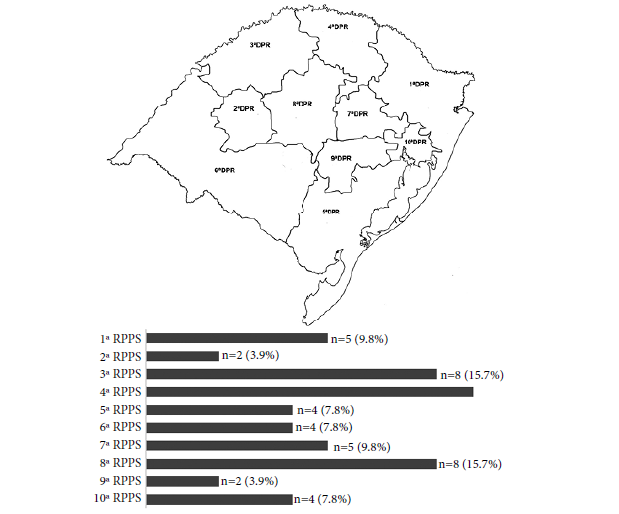 Caption: RPPS = Regional Penitentiary Police Station; 1st RPPS: Vale dos Sinos and Coast; 2nd RPPS: Central Region; 3rd RPPS: Missões and Noroeste; 4th RPPS: Alto Uruguai; 5th RPPS: South; 6th RPPS: Campanha; 7th RPPS: Serra; 8th RPPS: Vale do Rio Pardo; 9th RPPS: Carbonífera; 10th RPPS Porto Alegre.Source: Authors.