
 Assessment of professional training on the topic of accidents and violence in the Unified Health System
Accidents and violence are complex topics and require professional training. We evaluated how the training of SUS professionals on accidents and violence is implemented at different levels: primary care, pre-hospital, hospital, and rehabilitation care. The quantitative data from 531 questionnaires on nine evaluative indicators and qualitative data from 63 interviews derive from evaluative research on implementing the national policy to reduce morbimortality from accidents and violence. Data were analyzed with specific methods and worked on through triangulated methods. Capitals and cities with 100,000 or more inhabitants in the Brazilian regions showed the best results regarding training their professionals. Primary care invested more than other levels in this guideline. Training for prevention and health promotion actions to care for victims and monitor violence and accidents occurs more on the professionals’ initiative than on institutional policy. We conclude that there is a need to strengthen partnerships with educational institutions since graduation and reinforce the institutionalization of ongoing training on the two topics in question.
Key words:
Accidents; Violence; Assessment; Continuing education; Professional training
 Thumbnail
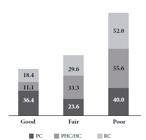
 Source: Authors.