
 “We are not a number on the streets”: an analysis of the inequalities experienced by women with a trajectory on the streets
Abstract
This article addresses the structural elements of the experiences of eight adult women who have lived on the streets in Belo Horizonte, Brazil, in 2021 and 2022. Focus groups and semi-structured interviews were conducted and analyzed using content analysis, focusing on three aspects of their life trajectories: the process of taking to the streets, their experiences on the streets, and prospects. The respondent’s profile is, in general, of a Black woman, with several reasons for taking to the streets, including gender violence. Survival strategies based on the dynamics of social assistance services and access to emergency health services were reported, and prospects were mainly linked to structural issues such as housing and work. The life trajectories of these women revealed the incidence of different forms of oppression that deprive them of social rights, consequently affecting the health-illness-care process. Therefore, for public policies based on integrality and social justice, we should consider issues that affect these women’s trajectories, such as the fragility of their social support network, barriers to access to health care, lack of leisure activities, and reduced autonomy.
Key words:
Homeless population; Women; Gender inequality; Racism; Life trajectory
Resumo
Este artigo aborda os elementos estruturantes da experiência de oito mulheres adultas com trajetória de vida nas ruas do município de Belo Horizonte em 2021 e 2022. Foram realizados grupos focais e entrevistas semiestruturadas, que foram submetidos à análise de conteúdo, centrada em três aspectos das suas trajetórias de vida: processo de ida para as ruas, vivência nas ruas e perspectivas de futuro. O perfil das entrevistadas é, no geral, de mulheres negras, com variadas motivações de ida para as ruas, incluindo a violência de gênero. Foram relatadas estratégias de sobrevivência pautadas nas dinâmicas dos serviços socioassistenciais e no acesso aos serviços de saúde em situações de urgência. As perspectivas para o futuro estavam principalmente vinculadas a questões estruturais, como moradia e trabalho. As trajetórias de vida dessas mulheres revelaram a incidência de diferentes opressões que as privam de direitos sociais, afetando, consequentemente, o processo saúde-doença-cuidado. Logo, para fins de políticas públicas pautadas pela integralidade e pela justiça social, convém considerar questões que tangenciam a trajetória dessas mulheres, como a fragilidade na rede de apoio, as barreiras de acesso à saúde, a ausência de lazer e a diminuição de sua autonomia.
Palavras-chave:
População em situação de rua; Mulheres; Desigualdade de gênero; Racismo; Trajetória de vida
Resumen
Este artículo aborda los elementos estructurantes de la experiencia de ocho mujeres adultas con trayectoria de vida en las calles del municipio de Belo Horizonte, en 2021 y 2022. Se realizaron grupos focales y entrevistas semiestructuradas, analizadas mediante análisis de contenido, centrado en tres aspectos de sus trayectorias de vida: proceso de llegada y experiencia en las calles y perspectivas de futuro. Referente al perfil de las entrevistadas, en general, mujeres negras, con diversas motivaciones para ir a la calle, incluida la violencia de género. Relataron estrategias de supervivencia pautadas a partir de la dinámica de los servicios de asistencia social y acceso a los servicios de salud de urgencia; las perspectivas de futuro estaban vinculadas principalmente a cuestiones estructurales como vivienda y trabajo. Las trayectorias de vida de estas mujeres revelaron la incidencia de diferentes opresiones, privándolas de derechos sociales, afectando el proceso salud-enfermedad-cuidado. A efectos de las políticas públicas basadas en la integralidad y la justicia social, conviene tener en cuenta aspectos que afectan la trayectoria de estas mujeres, como la fragilidad en la red de apoyo, barreras de acceso en salud, ausencia de ocio y disminución de su autonomía.
Palabras clave:
Población en situación de calle; Mujeres; Desigualdad de género; Racismo; Trayectoria de vida
Introduction
People experiencing homelessness (PEH) is not a new situation in Brazil. Its first records date back to the imperial period, when enslaved people who no longer served the interests of production, or later, those who were “freed” and left abandoned entirely, were left to live on the streets1,2. A social situation, PEH have significantly grown in the country and mobilized research and public policies to respond in a coordinated fashion3-5. This issue is interpreted as a synthesis of multiple determinants and therefore requires multifaceted approaches and interventions6, challenging Collective Health to incorporate theoretical and methodological lenses that broaden its understanding.
The capitalist, patriarchal, and racist model of sociability creates settings of inequality and hierarchies that marginalize a significant portion of the population7,8. In Brazil, the historical process of invisibility of this population is reflected in the limited data produced on the PEH, who are mostly Black9. Several studies point to this gap in other countries as well, where it is hard to identify these individuals through demographic censuses10,11.
In Brazil, the first and only National Census and Survey on this population was conducted in 2007. At the time, 31,922 people were identified living on the streets in the 71 cities surveyed12. The Fourth Census on PEH, conducted in Belo Horizonte (BH) in 2022, identified a total of 5,344 PEH, of whom 81.4% identified themselves as Black, and indicated an increase in the number of women compared to previous Censuses13.
Furthermore, the data point to gender inequalities in terms of education level and number of institutionalizations (mental health services and social education system), with the worst levels attributed to women13. On the other hand, a study in Madrid, Spain, found that, although homeless women generally have a higher level of education than men in the same situation, they had access to formal work for only half the time reported by men.
Another source of data on PEH is the Federal Government’s Single Registry for Social Programs (CadÚnico)5, which, until the first half of 2024, identified 300,868 PEH in Brazil, 28,740 in the state of Minas Gerais (MG), and 13,626 in Belo Horizonte4,15. A total of 1,490 (11%) of the total in the municipality were women, and of these, 1,248 (84%) were self-declared Black15.
However, we should underscore that these registration mechanisms still face challenges in entering and updating data on PEH. Therefore, this information must be accompanied by a critical analysis, recognizing the potential for underreporting, considering that some people do not access CadÚnico, while others register but choose not to declare their homelessness. This is a strategy generally adopted by women at risk of losing custody of their children5.
Furthermore, the isolated analysis of social markers (ethnicity/skin color, gender, age/generation, nationality, sexuality, and class), treated as independent variables, was provenly insufficient for understanding these social dynamics and effectively promoting health equity16. In Collective Health, recognizing these overlapped dimensions, we should underscore the relationships of domination that affect the health of individuals and that can, ultimately, define who should live and who can die17,18.
In 2009, the heterogeneity of PEH was recognized with the establishment of the National Policy for People Experiencing Homelessness (PNPSR). However, PEH experience common situations, such as the lack of conventional housing, extreme poverty, and the rupture or fragility of family ties19. Living on the street creates a high level of social vulnerability, with several exposures: violence, food insecurity, precarious conditions for self-care, limited availability of drinking water, and lack of sleep and loving interpersonal relationships. This experience is even more severe for women, who are also exposed to several forms of violence, sexually transmitted infections, and unplanned and/or unwanted pregnancies20.
Therefore, this article aims to address the structuring elements of the experience of adult women with a life trajectory on the streets of Belo Horizonte, interviewed in 2021 and 2022. Based on the experience of these women regarding the process of taking to the streets, their street experiences, and their prospects, we also discuss how the social markers that permeate their experiences constitute the life trajectory and the health-disease-care process of the respondents.
Methods
This article explores the structuring elements of the life trajectories of women with street experience participating in the research developed by the Research Group on Health Policies and Social Protection of Fiocruz Minas, during 2020 and 202221, and approved by the Ethics Committee under CAAE 43259221.6.0000.5091, Opinion Nº 4.610.014. Ten women participated in the research, five of whom were interviewed individually, and the others were distributed in three focus groups (FG).
Two women were interviewed at the Emergency Street Corner, and the other three at an Institutional Shelter. However, two interviews were excluded due to cognitive impairment resulting from psychological distress. The FGs occurred at the following locations: the Urban Occupation of the Street Ministry, which emerged during the pandemic; the Emergency Street Corner and the Street Ministry Shelter/House (Pousadas da Pastoral) - spaces that were also created to meet PEH’s needs during the pandemic.
The interviews and focus groups were transcribed and their content analyzed22 to address the original research objectives. To prepare this article, the content was revisited and analyzed22 based on the interest in exploring the structuring elements of the street life trajectory from the women’s perspective. The analysis was conducted based on three categories: (i) the process of taking to the streets, (ii) living on the streets, and (iii) prospects, as shown in Figure 1.

Results and discussion
This section is organized into three topics, and the respondents’ statements are identified by the original database codes, which consider the type of method and classify the numerical order in which the collection was conducted, namely: GF for focus groups and EPSR for individual interviews.
The database analyzed did not contain sociodemographic records for all participants, and only partial information could be extracted from the interviews. Therefore, we identified that the participants were Black women, including one transgender/trans woman. They were adults (aged 28 to 53), from the states of Minas Gerais, Espírito Santo, and Bahia, and one reported having an incomplete high school education. The length of time living on the streets ranged from 1 to 20 years, and at the time of the study, the participants were in shelters, urban settlements, or beneficiaries of the housing allowance program - meaning they were not sleeping on the streets, although all of them had experienced this. The main elements identified in each of the three aspects of the life trajectory explored in this article are summarized in Chart 1 and will be discussed in the following topics.
This information reveals important aspects of social dynamics when analyzing the role of women living on the streets, most of whom are Black women. Added to this setting of gender inequality is the ethnic-racial dimension that imposes daily gendered racism on them as a barrier to upward social mobility23-26. This perverse intersection articulates race, gender, and class, deepening the situation of disadvantages and inequalities faced by Black women within the framework of neoliberal policies27.
The process of taking to the streets
Understood as something complex and procedural, taking to the streets involves multiple factors that sometimes act together. The women’s accounts revealed structural factors related to financial difficulties in providing for themselves, their families, or their children, dissatisfaction with the role of “caregiver” responsible for keeping family harmony, difficulty finding a job, and the deteriorated financial crisis caused by the emergence of the COVID-19 pandemic (Figure 2, quotes 1, 2, and 3).

Regarding more personal motivations, the respondents said taking to the streets occurred in a context of family conflicts, including gender-based violence, divorce, several heartbreaks, the loss of loved ones in childhood, and a lack of a support network, generating emotional destabilization and hopelessness. The transition to living on the streets unfolded differently among the women, considering their individual life histories. Sometimes it occurred abruptly, representing a break with their previous situation, and other times more gradually, until they realized they were living on the streets (Figure 2, quotes 4, 5, and 6).
These findings corroborate the literature, which generally points to the influence of structural and biographical factors, as well as natural or mass disasters, upon the occurrence of this situation28. Other studies add that, for some people, taking to the streets appears to be the only alternative or last resort in the face of life trajectories permeated by exclusion and social vulnerability. Furthermore, the process of taking to the streets can happen gradually and procedurally based on multiple factors, until the individual becomes linked to the streets more permanently29,30. Thus, their trajectories are not individual deviations, but concrete expressions of an unequal society7 that systematically denies these people full citizenship.
The Fourth Municipal Census highlighted family problems - particularly domestic violence - as the most prevalent reason women took to the streets13. However, these data are presented generally for the category of women without making distinctions regarding gender identities. Barros et al31. highlight the scarce national publications on the health conditions of trans women, while international studies focus on discussing the impact of social vulnerability on their health. This condition is expressed by several factors that feed off each other, generating “a cycle of poverty, stigmatization, exclusion, and illness”31. As a result, they fail to explore the implications that gender issues have on these reasons. Unemployment, family conflicts, and access to housing are also experienced differently depending on gender and other social markers.
When addressing the concept of an unequal society, Theodoro7 highlights how inequalities in Brazil are not only economic and social, but racial and historical, deeply marked by colonial, slavery, and patriarchal legacies. He says the unequal distribution of opportunities and resources is rooted in institutional and cultural mechanisms that naturalize the exclusion of certain social groups. Gonzalez25 and Carneiro32 contribute to this debate by highlighting how race and gender are decisively intertwined in the production of social inequalities. They point out that racism and sexism work together to marginalize Black women, creating a social position marked by subordination and invisibility.
The sociability woven by racism and whiteness creates systematic barriers to access to public services such as education, health, housing, security, and justice, affecting more intensely multiply oppressed populations7,27 - as is the case of women with a life history on the streets. These are structural inequalities that materialize in the trajectories of these women in different ways, primarily through domestic violence, sexual violence, homophobia and transphobia, unemployment, and family conflicts28,33 - factors that, incidentally, are highlighted by them as the primary reasons for taking to the streets.
In this regard, there is a considerable difference in the trajectory of women’s and men’s transition to the streets. In the former case, it generally occurs from breaking out of situations of violence and neglect to which they do not wish to return, but rather to build a new reality. For men, however, transitioning to the streets is usually a prolonged process, and homelessness represents a loss of social status and a desire to return to their previous conditions33,34.
Living on the streets
The participants’ accounts reveal a daily routine characterized by dynamics and rules, particularly those of social assistance services, through which they meet essential daily needs, such as eating, sleeping, bathing, and washing clothes. They also participate in workshops, courses, and leisure and cultural activities - less frequent - and receive social assistance to access benefits, obtain personal documentation, and other needs. These women report waiting in line throughout the day, going from one service to another, whether to secure food or a place in services that offer overnight accommodations.
The research developed by Temponi et al.28 addressed the strategies adopted by homeless women regarding movement through different neighborhoods of the city, aiming at self-protection, access to goods and services, and informal work. Pereira (2023)35 observed this movement dynamic of trans women through different territories, guided by the need for subsistence, protection from police violence, and a preference for remaining in groups as a way to feel safer.
According to Jesus36, trans and transvestite people experience a persistent situation of exclusion, violence, and abjection in Brazil. Considering the dimensions of sexual orientation and gender identity, cis-heteronormativity naturalizes binary patterns, marginalizing dissenting identities. It is not uncommon, therefore, for these women - especially those living on the streets - to develop self-preservation mechanisms in the face of transphobia.
Regarding the use of shelters and hostels, some respondents referred to these places as “home”, where they have been for some time, established their routines, and felt protected. On the other hand, criticism of social assistance services such as shelters, hostels, and Centro Pop stood out. They mention negative aspects that make them prefer to stay on the streets, despite the insecurity, because in these services, they have to deal with episodes of violence, rigid rules and regulations, dissatisfaction with the quality of resources offered (hygiene kits), and restricted entry and exit times. They report feeling safer and more autonomous on the streets (Figure 3, quotes 1 and 2).

In the street context, these inequalities are exacerbated by institutional violence, the denial of fundamental rights, and social stigma. At this point, the respondents emphasize the importance of spaces like the Integrated Women’s Care Center (CIAM) (Figure 3, quotes 3 and 4), a municipal public service focused on serving women in socially vulnerable situations with a history of homelessness, harmful use of alcohol and other drugs, and domestic violence37. According to Pereira35, this perception is shared among trans women who rely on CIAM for support for their daily needs, access to healthcare, and citizenship.
The main health problems reported by the respondents were stroke, asthma, HIV treatment, high blood pressure, urinary tract infections, and mental disorders, including the harmful use of alcohol and other drugs, with a history of follow-up in mental health network services or hospitalization in private clinics (Figure 3, quotes 5, 6, and 7).
Regarding the use of health services, this occurred primarily at the urgent and emergency care levels, with little mention made of disease prevention or health promotion actions. There were reports of positive experiences with health teams and services: Street Clinics (CR), Health Centers, Mental Health Reference Centers (CERSAMs), Testing and Counseling Centers (CTA), and Emergency Care Units (UPAs). However, they highlighted the difficulty in continuing treatment, especially medication. Furthermore, barriers to accessing services persist due to a lack of personal documents and symbolic barriers, which reflect the prejudice some professionals have against PEH. In general, given these difficulties, they reported needing to rely on other professionals in the network to receive care in health services (Figure 3, quotes 8 and 9). These findings corroborate other studies addressing homeless people’s access to health services, highlighting their barriers and facilitators35,38.
Analyzing the life trajectories and health-disease-care process of homeless women requires incorporating social markers as central analytical categories for understanding health inequalities. In this case, social markers operate intersectionally26,27 and, according to Alves39, are expressions of coloniality24, resulting in the dehumanization of Black bodies and racism. This leads to the naturalization of these bodies as unworthy of care and attention, as well as the invisibility of their needs in health services. These social practices hinder these women’s search for care and compromise treatment continuity.
Racial inequities impact the quality of life and life expectancy of the Black population, highlighting the manifestation of racism in different areas.18 Institutional racism, embodied in discriminatory practices, constitutes a barrier to health equity. As homeless Black women experience prejudice, embarrassment, and insecurity in these services, their chances of seeking them again decrease, which can result in increased morbimortality18,32.
With the implementation of the National Policy for Comprehensive Health of the Black Population (PNSIPN)40, the commitment to addressing inequalities within the SUS is reinforced, recognizing that the health inequities experienced by Black people result from socioeconomic and cultural injustices sustained by racism. However, despite advances in institutionalizing the fight against racism within the SUS, the PNSIPN still faces challenges in its implementation in the territories18.
Regarding survival strategies focused on work and income, the women interviewed sought to take vocational courses, aiming for paid work; others received social benefits provided by the federal government, such as Bolsa Família (Family Aid), housing assistance, and emergency aid; they did odd jobs, prostitution, or other informal and temporary work as opportunities arose (assistance in makeup workshops, bartending). Furthermore, some women had previous experience working in “family homes”, from which they had to leave due to illness. They also commented on the difficulty of finding a job with a steady income. As Silva41 observed, faced with the adversities of daily life on the streets, women also encounter conflicts and power struggles, to which they react by activating coping strategies and tactics (Figure 3, quote 10).
Life on the streets poses challenges for women, as they are perceived as less well-suited to living in this environment and thus become “easy” victims of violence. Furthermore, they must deal with a variety of factors that directly affect their relationships with their bodies, sexuality, and, at times, the care of others, such as their children.46 From Vergès’ perspective24, the social place of care is not universal, but profoundly shaped by power relations that make care work invisible, undervalued and unequally distributed - as one of the research participants comments: “I know what it is like to live on the streets, what it is like to live on the streets, I am a woman, right? It is even worse with children, right?” (GF1). While another highlights the challenge of pregnancy and motherhood on the streets: “Oh, girl, I suffered a lot on the streets, with a big belly. I was pregnant at the time” (EPSR2). These experiences reveal the structural mechanisms of intersectional domination27. They are relevant issues for the discussion of health inequities, as they negatively impact health status, whether through difficulty accessing services, continuing care, or increasing the chances of illness and death40.
Prospects - What is post-homelessness made of?
The exploration of this theme focused on stories that evoked feelings of hope, planning, and expectations about the future, life projects, desires, and opportunities for personal fulfillment. The premise is that “health is when hope is allowed”43. Hope for the future is seen as a combination of given conditions, personal, social, and political choices, and the influence of chance and opportunity44.
The prevalence of access to work and housing was associated with the ability to make new plans and have the motivation to improve one’s life. Respondents also linked this access to the possibility of regaining dignity, privacy, autonomy in one’s routine, and taking care of one’s health. These two aspects of life appear, in most interviews, to be practically inseparable. In this regard, they highlight the role of the Belo Horizonte Street Ministry as a key articulator in this process of access to housing and work through solidarity economy initiatives, a space for collective organization in the struggle for housing. They cite some initiatives: Street Ministry through Canto da Rua Emergencial; solidarity economy groups, the Estamos Juntos program, the Planos project, and partnerships with educational institutions for vocational training courses. Other, less frequent, reports focus on personal and professional achievements, as well as reconnecting with family members.
The prevalence of work and housing issues reflects the housing and income insecurity commonly experienced by women with a history of homelessness. As a facet of gendered racism23, often veiled under the myth of racial democracy1,25, it contributes to an unfavorable self-image, influencing women’s motivations, aspirations, and, consequently, their health. Furthermore, it shows the need for intersectoral policies - housing, work and income, education, culture, and leisure - to foster hope as a protective factor for health.
Hasenbalg45 states that post-abolition racial inequality manifests itself in two main aspects: a) the unequal geographic distribution of whites and Blacks in the country and b) the racist practices of the dominant racial group. Both are directly related to the unequal structure of opportunities for social mobility within this racial group. Hasenbalg45 identifies that the least economically developed regions of the country, with fewer educational opportunities, concentrate most of the Black population. We can apply this analysis to the unequal geographic distribution within cities. In these cities, Black populations have historically been pushed to the outskirts, favelas, and the streets, in addition to occupying the most precarious and low-paying jobs, a fact that is also related to inequality in educational attainment25,32,45.
According to Gonzalez25 “it is not hard to conclude about the process of triple discrimination suffered by Black women (regarding race, class, and gender), as well as about their place in the workforce” (p. 56), that the distance from the possibilities of upward social mobility accessible to specific sectors of the middle class and practically non-existent for the Black population. Along these lines, and in defense of a critical decolonial feminism and pedagogy, Vergès24 proposes a multidimensional analysis of oppression, rejecting the idea that race, sexuality, origin, and gender are mutually exclusive categories. In this sense, she questions the naturalization of oppression and the coloniality of power that produce policies of global exclusion through the matrix of state, patriarchy, racism, and capital.
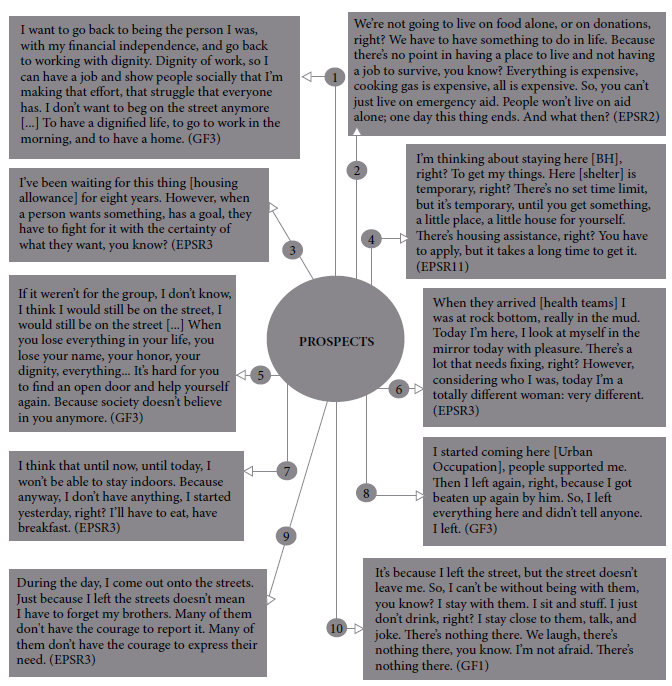
Faced with obstacles to establishing formal employment that could subsidize housing, the Bolsa Habitação (Housing Aid) social benefit also appears as a possibility for renting a home. However, they report that the benefit amount is insufficient for larger families, or they have to seek rentals in peripheral areas because they are more affordable than in the city center. In addition, the long wait time for the benefit to be granted and its status as temporary, requiring other policies for greater sustainability (Figure 4, quotes 1, 2, 3, and 4).

These issues also appear related to health care, as dependence on alcohol and other drugs, as well as mental disorders or other illnesses that hinder independence in daily life, were observed in the reports. Thus, notably, the prospects for improvements in one’s own life involve feeling supported by the coordination of different civil society policies and actions, in this case, especially those developed by the Street Ministry and CIAM, as mentioned previously (Figure 4, quotes 5 and 6).
The reproduction of gender roles established by the patriarchal model was also observed in statements such as “I am the man of my house. I pay my water, my electricity, and my condo fees...everything!” (EPSR2). This leading role in bearing expenses is socially associated with the role of provider, which, in turn, is commonly attributed to men. The woman category reinforces a hegemonic femininity that considers her as an object of desire and pleasure, as a reproducer of life, and that, in the case of homeless women, supposedly, they would not be worthy of a lasting relationship because they do not comply with the social norm of occupying the place of the home as caregivers46. The reproduction of these stereotypes appears in the research developed by Jabur et al.47, in which the street environment is transformed into a home and heteronormative relationships are enacted. On the other hand, although the street is configured as a masculine space, reproducing the patriarchal model, homeless women conquer and occupy their space, becoming leading figures of their very lives29.
Along these lines, Tiene48 reflects on the street as a possibility for breaking with the relations of domination that women experience in domestic and private settings. Assuming that women would be better able to negotiate on the streets, the street would become attractive because it is a collective space, observed by many people, and, therefore, could, to some extent, be safe48. However, inequalities are perpetuated in women’s experiences on the streets and translate into violence and rights violations.
When addressing the expectations of homeless women for their lives, Biscotto et al.42 observed a gap between desire and reality, expressed by the conflict between the desire to leave the streets and, at the same time, the perception of being “trapped” in that social reality. In this regard, race and gender, as social constructs, operate as fundamental pillars in maintaining social hierarchies and structural inequality. The systemic influence of racism and sexism acts as a mechanism of exclusion, hindering the social advancement of Black women24,25,32. In the case of those with a history of street life, prejudice and discrimination compound, preventing concrete opportunities for upward social mobility.
The interviews analyzed also point to a cyclical process of “entries and exits” from the streets, a complexity surrounding “overcoming” the street lifestyle, keeping social ties, and the challenges of forging new paths (Figure 4, quotes 7, 8, 9, and 10). Although little discussed in the literature, the event of the “revolving door to homelessness” was observed more frequently among women, as they had been homeless more often than men14. Several factors may contribute to this: illness or disability without a support network, and cultural issues that attribute to women the need for special assistance and protection, which would help them leave the streets. However, they experience disruptions again, whether through violence or job loss, and return to the streets14, characterizing a complex and challenging cycle of permanence for public policies.
Final considerations
In their street life, women seem to experience deteriorated oppression systems - sexism, ableism, racism, and others. The combination of these systems is expressed both in their life trajectories and in the health-illness-care process. By overlapping the social markers of gender, race, and class, these women tend to be the most excluded from traditional social rights practices. Living with several types of violence, including LGBTphobia, the lack of a support network, barriers to accessing healthcare, the lack of leisure, and a reduced autonomy in daily life are recurring situations experienced by women living on the streets and adversely affect their health. Sometimes, they become ill and face barriers to accessing healthcare while living on the streets, seeking services only at the urgent and emergency care levels, in addition to facing challenges in continuing treatment, especially medication.
The analysis indicates that overlapping inequalities in these women’s life trajectories influence how they experience their own health, establish interpersonal relationships, and develop survival strategies along the way. Three types were observed related to strategies for meeting basic needs (protection, food, shelter), work and income, health, and social assistance: i) individual actions (observing the location to settle, contact with the community that is not part of the PEH, staying sober in certain circumstances or using drugs to “endure” adversity, informal work and prostitution); ii) partnership actions (professional training courses, exchanging information with other women, intermediation of network professionals for access to services); iii) actions to seek institutional and civil society support (CR, CERSAMs, UPAs, CTA, CIAM, social benefits, shelters, Centro Pop, Street Ministry, donations).
Regarding prospects, the analysis points to a complex process surrounding the construction of the post-street era. The event of the “revolving door to the street”, with street entry-exit cycles, highlights the need for intersectoral political action that can be economically and practically sustainable. Notably, expectations for overcoming the situation permeate housing, employment and income, health, education, culture, and leisure policies, among others. In other words, integrated public policies that support these women’s lives off the streets.
The analysis revealed the need to consider the intersectional dimension to understand the life trajectories of women living on the streets and their implications for the health-disease-care process. However, the complexity of this situation challenges the Collective Health to incorporate other theoretical lenses that broaden the understanding and the capacity for innovation in health policies, services, and practices. The intersectional approach is a theoretical and methodological approach that can help us interpret the experiences of women living on the streets and develop public policies based on comprehensive care and social justice.
References
- 1 Nascimento A. O genocidio do negro brasileiro: processo de um racismo mascarado. São Paulo: Perspectivas; 2016.
- 2 Santos ETA, Sarreta FO, Guilherme BCO. A cor das ruas: o racismo e a população em situação de rua no Brasil. PerCursos 2023; 24:e0304.
- 3 Brasil. Ministerio dos Direitos Humanos e da Cidadania (MDHC). População em situação de rua - diagnóstico com base em registros do Governo Federal. Brasília: MDHC; 2023.
-
4 Polos de Cidadania. Informe Descritivo CadUnico [Internet]. 2024 [acessado 2024 out 28]. Disponivel em: https://www.instagram.com/p/C9VlOAcyD_e/?img_index=1
» https://www.instagram.com/p/C9VlOAcyD_e/?img_index=1 - 5 Natalino MAC. A população em situação de rua nos numeros do Cadastro Único. Brasília: Ipea; 2023
- 6 Silva MLL. Mudanças recentes no mundo do trabalho e o fenômeno população em situação de rua no Brasil 1995-2005 [dissertação]. Brasília: UnB; 2006.
- 7 Theodoro M. A sociedade desigual: racismo e branquitude na formação do Brasil. Rio de Janeiro: Zahar; 2022.
- 8 Henning CE. Interseccionalidade e pensamento feminista: as contribuições históricas e os debates contemporâneos acerca do entrelaçamento de marcadores sociais da diferença. Mediacoes Rev de Ciencias Sociais 2015; 20(2):97-128.
- 9 Dias ALF, Migliari W. Incontáveis: invisibilização histórica versus amplificação de múltiplas existências da população em situação de rua no Brasil. In: Gaio D, Diniz APS, organizadores. A população em situação de rua e a questão da moradia. Belo Horizonte: Imprensa Universitária UFMG; 2021. p.58-71.
- 10 Grenier A, Barken R, Sussman T, Rothwell D, Bourgeois-Guerin V, Lavoie JP. A literature review of homelessness and aging: suggestions for a policy and practice-relevant research agenda. Can J Aging 2016; 35(1):28-41.
- 11 Prates JC, Nunes RS, Bulla LC. As refrações da questão social expressas nos processos de rualização no Brasil. Porto Alegre: Rede Unida; 2022.
- 12 Brasil. Ministério do Desenvolvimento Social (MDS). Rua: aprendendo a contar. Pesquisa nacional sobre a população em situação de rua. Brasília: MDS; 2009.
- 13 Garcia FD, Neves MCL, Camargos MCS, Abreu MNS, Barbieri AF. IV Censo: população em situação de rua do município de Belo Horizonte: BH+ Inclusão. Belo Horizonte: Itrium Consultoria, Pesquisa, Treinamento e Edição em Saúde; 2023.
- 14 Vázquez JJ, Panadero S, Pascual I. The particularly vulnerable situation of women living homeless in Madrid (Spain). Span J Psychol 2019; 22:e52.
-
15 Prefeitura de Belo Horizonte. População de rua no Cadastro Único [Internet]. 2024 [acessado 2024 ago 12]. Disponível em: https://dados.pbh.gov.br/dataset/populacao-de-rua/resource/820998ec-7d9b-4caf-a22d-28ae97eb99d9
» https://dados.pbh.gov.br/dataset/populacao-de-rua/resource/820998ec-7d9b-4caf-a22d-28ae97eb99d9 - 16 Barata RB. Como e por que as desigualdades sociais fazem mal à saúde. Rio de Janeiro: Editora Fiocruz; 2009.
- 17 Brandão ER, Alzuguir FCV. Gênero e saúde: uma articulação necessária. Rio de Janeiro: Editora Fiocruz; 2022.
- 18 Rodrigues MP, Pfaffenbach G, Zanatta AB. Iniquidades raciais em saúde no Brasil: uma revisão integrativa. Rev ABPN 2021; 13(37):485-510.
- 19 Brasil. Presidência da República. Decreto nº 7.053, de 23 de dezembro de 2009. Institui a Política Nacional para a População em Situação de Rua. Diário Oficial da União 2009; 24 dez.
- 20 Brasil. Ministério da Saúde (MS). Manual sobre o cuidado à saúde junto à população em situação de rua. Brasília: MS; 2012.
- 21 Martins ALJ, Souza AA, Silva GDM, Dantas ACMTV, Marinho RA, Fernandes LDMM, Oliveira AMC, Magalhães Júnior HM, Paes-Sousa R. Access to health and social protection policies by homeless people during the COVID-19 pandemic: a mixed-methods case study on tailored inter-sector care during a health emergency. Front Public Health 2024;12:1356652.
- 22 Bardin L. Analise de conteúdo. São Paulo: Edições 70; 2016.
- 23 Kilomba G. Racismo Genderizado "(...) você gostaria de limpar nossa casa?" - conectando "raça" e gênero. In: Memórias da plantação: episódios de racismo cotidiano. Rio de Janeiro: Cobogó; 2019.
- 24 Vergès F. Um feminismo decolonial. São Paulo: Ubu Editora; 2020.
- 25 Gonzalez L. Mulher negra. In: Rios F, Lima M, organizadores. Por um feminismo aro-latino-americano. Rio de Janeiro: Zahar; 2020.
-
26 Crenshaw K. A intersecionalidade na discriminação de raça e gênero [Internet]. [acessado 2024 out 13]. Disponível em: https://static.tumblr.com/7symefv/V6vmj45f5/kimberle-crenshaw.pdf
» https://static.tumblr.com/7symefv/V6vmj45f5/kimberle-crenshaw.pdf - 27 Collins PH, Bilge S. Interseccionalidade. São Paulo: Boitempo; 2021.
- 28 Temponi SRN, Ribeiro LP, Pinheiro TMM, Carvalho SM. "Tudo é violência, viver é violência!": representações sociais e vivências de mulheres em situação de rua. Rev Psic Div Saude 2022; 11:e4027.
- 29 Sicari AA, Zanella AV. Pessoas em situação de rua no brasil: revisão sistemática. Psicol Cienc Profissao 2018; 38(4):662-679.
- 30 Santos RA, Gonçalves MCV. A persistência da desigualdade e a população em situação de rua. In: Políticas públicas, educação e diversidade: uma compreensão científica do real. São Paulo: Editora Científica Digital; 2020.
- 31 Barros KCC, Morais AVC, Coelho EAC, Jesus MEF, Araújo RDD, Oliveira JF. Saúde da mulher transgênera em situação de rua. Rev Eletr Acervo Saude 2023; 23(2):1-9.
- 32 Carneiro S. Racismo, sexismo e desigualdade no Brasil. São Paulo: Summus Editorial; 2015.
- 33 Rosa AS, Brêtas ACP. Violence in the lives of homeless women in the city of São Paulo, Brazil. Interface (Botucatu) 2015; 19(53):275-285.
- 34 Prudente TCB, Gontijo DT, Paiva RBC. Desempenho ocupacional de mulheres em situação de rua. Rev Interinst Bras Ter Ocup 2018; 2(1):85-108.
- 35 Pereira ALGG. Mulheres trans em situação de rua: estratégias de cuidado e acesso aos serviços da atenção primária à saúde [dissertação]. Belo Horizonte: Fiocruz Minas; 2023.
- 36 Jesus JG. Identidade de gênero e políticas de afirmação identitária. In: Anais do VI Congresso Internacional de Estudos sobre a Diversidade Sexual e de Gênero da ABEH; 2012.
-
37 Prefeitura de Belo Horizonte. Centro Integrado de Atendimento à Mulher (CIAM) [Internet]. 2024 [acessado 2024 ago 7]. Disponível em: https://prefeitura.pbh.gov.br/seguranca/equipamentos/centro-integrado-de-atendimento-a-mulher
» https://prefeitura.pbh.gov.br/seguranca/equipamentos/centro-integrado-de-atendimento-a-mulher - 38 Fraga PVR, Araújo MCA, Souza AA, Martins ALJ, Dantas ACMTV, Marinho RA, Rodrigues DM, Paes-Sousa R. Entre as ruas e a RAPS: revisão integrativa sobre acesso das pessoas em situação de rua aos serviços de saúde mental. Cien Saude Colet 2025; 30(1):e07752024.
- 39 Alves RSE. Mulheres negras em situação de rua: colonialidade e acesso à saúde. Bol Inst Saude 2023; 24(1):98-103.
- 40 Brasil. Ministério da Saúde (MS). Política Nacional de Saúde Integral da População Negra: uma política para o SUS. Brasília: MS; 2017.
- 41 Silva M. A experiência de mulheres em situação de rua: uma análise interseccional [dissertação]. Hoão Pessoa: UEP; 2019.
- 42 Biscotto PR, Jesus MCP, Silva MH, Oliveira DM, Merighi MAB. Understanding of the life experience of homeless women. Rev Esc Enferm USP 2016; 50(5):749-755.
- 43 Dejours C. Por um novo conceito de saúde. RBSO 1986; 54(14):7-12.
- 44 Minayo MCS. Determinação social, não! Por quê? Cad Saude Publica 2021; 37(12):e00010721.
- 45 Gonzalez L, Hasenbalg C. Lugar de negro. Rio de Janeiro: Zahar; 2022.
- 46 Lizarralde CR. Homelessness: Bodily experiences for thinking gender in Bogotá Rev Estud Fem 2020; 28(2):e60498.
- 47 Jabur P, Tavares B, Silva J, Martins Y. Cozinhando a céu aberto: relatos de vida de moradores de rua em Brasília. Soc Cult 2015; 18(1):79-89.
- 48 Tiene I. Mulher moradora na rua: entre vivências e políticas sociais. Campinas: Alínea; 2004.
The data sources adopted in the research are indicated in the article’s body.

 Source: Authors.
 Source: Authors.
 Source: Authors.
 Source: Authors.