
 Factors associated with the notification of violence among Brazilian adolescents: an analysis of SINAN
Abstract
This study aims to analyze the trend of the notified violence committed against adolescents from 2015 to 2022 and the association between the victim’s characteristics, abuse, and the perpetrators of violence against adolescents in 2022. It used data from the Notifiable Diseases Information System (SINAN). Around 400,000 cases of violence against adolescents were reported. The notifications have been on the rise, except in pandemic years (2020 and 2021). The most frequent victims were girls, the principal place of occurrence was at home, and physical violence was the most common type. Correspondence analysis showed an association between female victims, home as a place of occurrence, psychological violence and threat among male victims, violence on public roads committed by strangers, and use of sharp objects. SINAN becomes a vital instrument for allowing visibility to the topic. Preventing youth violence requires an intersectoral approach.
Keywords:
Adolescent; Notification; Sex Offenses; Alcohol Use; Pandemics
Resumo
O objetivo do estudo é analisar a evolução da notificação das violências praticadas contra os adolescentes entre 2015 e 2022, bem como a associação entre as características da vítima, da agressão e dos agressores da violência contra adolescentes em 2022. Para isso, utilizaram-se os dados do Sistema de Informação de Agravos de Notificação (SINAN). Foram notificadas cerca de 400.000 violências contra adolescentes. Houve aumento de notificações, exceto nos anos da pandemia (2020 e 2021). As vítimas mais frequentes foram as meninas; o principal local de ocorrência foi a residência; a violência física foi o tipo mais comum. A análise de correspondência mostrou associação entre vítimas do sexo feminino, residência como local de ocorrência, violência psicológica e ameaça; entre as vítimas do sexo masculino, violência em via pública, praticada por desconhecidos, utilização de objetos cortantes. O SINAN torna-se um instrumento vital por permitir visibilidade ao tema. A prevenção da violência juvenil requer uma abordagem intersetorial.
Palavras-chave:
Adolescente; Notificação; Delitos sexuais; Consumo de bebidas alcoólicas; Pandemias
Resumen
El estudio tuvo como objetivo analizar la evolución de la notificación de violencia cometida contra adolescentes entre 2015 y 2022 y la asociación entre las características de la víctima, la agresión y los agresores de violencia contra adolescentes en 2022. Se utilizó datos del Sistema de Información de Enfermedades de Notificación Obligatoria (SINAN). Se denunciaron alrededor de 400.000 casos de violencia contra adolescentes. Hubo un aumento de las notificaciones, excepto en los años de la pandemia (2020 y 2021). Las víctimas más frecuentes fueron las niñas, el principal lugar de ocurrencia fue el hogar y la violencia física fue el tipo más común. El análisis de correspondencia mostró una asociación entre las mujeres víctimas, el hogar como lugar de ocurrencia, la violencia psicológica y la amenaza; entre las víctimas masculinas, violencia en la vía pública, cometida por desconocidos, uso de objetos punzantes. El SINAN se convierte en un instrumento vital para permitir la visibilidad del tema. Prevenir la violencia juvenil requiere un enfoque intersectorial.
Palabras clave:
Adolescente; Notificación; Delitos sexuales; Consumo de bebidas alcohólicas; Pandemias
Introduction
Children and adolescents are a highly vulnerable social group, making violence against them is a global public health concern1. Violence against children and adolescents has been defined by the World Health Organization (WHO) as all forms of physical or emotional ill-treatment, sexual abuse, neglect or negligent treatment or commercial or other exploitation, resulting in actual or potential harm to the child’s health, survival, development or dignity in the context of a relationship of responsibility, trust or power2.
Interpersonal violence is one of the leading causes of death among adolescents and young people worldwide3. WHO estimates approximately 176,000 homicides among young people aged 15-29 years occur each year, making violent death the third leading cause of death among people in this age group4. Most victims of juvenile homicide are male, and most perpetrators are also male4. In Brazil, in 2019, around half of the 22,000 homicide involved young people aged 10-24, and homicide rates were eleven times higher among males than among females5.
For every young person killed by violence, many more suffer injuries that require hospital treatment. Globally, it is estimated that one in two children and young people aged 2-17 suffer some type of violence every year6. Emotional violence affects one-third of children, and approximately 120 million girls have suffered some type of forced sexual contact before the age of 206. Studies show that children and adolescents are exposed to violence in their homes, on public roads, and in schools7,8 where they are to dominate, exploit, and oppress9.
Youth homicide and non-fatal violence significantly contribute to the global burden of premature death, injury, and disability. They have severe, often lifelong, impacts on psychological and social development, while also affecting victims’ families, friends, and communities4,10,11. Youth violence increases the costs of health services, social assistance care, and criminal justice, in addition to raising increasing absenteeism and reducing productivity4,7,12.
Considering the importance of adolescents as the present and future of a nation, the Sustainable Development Goals (SDGs) prioritized this group in several goals, including gender equality, of poverty eradication, and promoting peace and justice13. Thus, it is essential to monitor violence against this group, especially considering the commitment to end all forms of violence against girls and women and curb reduce homicide rates.
Since 2011, it has been possible to monitor interpersonal violence through compulsory reports in the Notifiable Diseases Information System (SINAN), implemented by the Brazilian Ministry of Health14. This database monitors factors associated with abuse and includes information about perpetrators, which is unavailable in other databases.
National studies on reports of violence against adolescents are still scarce. To our knowledge, this is the first study to analyze a historical series of SINAN reports on violence against adolescents. We hope this information will guide the development of public policies to achieve the 2030 Agenda goals. This study aims to analyze the trend of reported violence against adolescents from 2015 to 2022 and the association between the characteristics of victims, abuse, and perpetrators of violence against adolescents in 2022.
Methods
This epidemiological study, analyzing a historical series of data, was conducted using SINAN data from 2015 to 2022, with correspondence analysis performed only on notifications from the last year. SINAN consists of notifications that appear on the national list of notifiable diseases (Consolidation Ordinance N°4 of September 28, 2017). These notifications are made by health professionals or those responsible for public or private health establishments, who complete the Individual Notification Form (FNI). The Municipal Health Secretariats are responsible for collecting, digitizing and consolidating the data. The data are then forwarded upwards and concentrated in the Ministry of Health, which makes them publicly available on the DataSUS website15.
For this study, we selected reports of interpersonal violence against individuals aged 10-19 years, as defined as adolescence by WHO, that occurred from 2015 to 2022. The following variables were selected in the FNI: gender (male and female), age group (10-14 years and 15-19 years); ethnicity/skin color (white, black, or other); place of occurrence (home, collective housing, school, sports venue, public road, bar or similar, shops/services, industry/construction, and other); violence type (physical, sexual - sexual harassment or rape -, psychological, torture, and negligence); means of abuse (bodily force/beating, sharp object, blunt object, and threat); probable perpetrator (father, mother, stepfather, stepmother; boyfriend/girlfriend, spouse; acquaintance and stranger); probable perpetrator’s alcohol use (yes or no).
First we analyzed the historical series from 2015 to 2022, constructing time series for the total and by gender, age group, ethnicity/skin color, place of occurrence, violence type, and perpetrator. We then applied correspondence analysis (CA) technique to the 2022 data to identify possible associations between the variables investigated. The CA technique was suitable for this analysis, as it allows for handling a large number of qualitative variables with multiple categories7,16. CA is an exploratory technique that employs contingency tables, also called crosstabs, composed of row and column variables.
In this study, the age group and gender categories comprise the demographic variable, and the notifications-related categories form the abuse variable. Thus, the table consists of two qualitative variables: demographic and abuse. The columns represent the demographic characteristics - age group and gender - while the rows represent abuse-related characteristics, totaling 16 abuse categories and four demographic categories.
The technique uses the Chi-square test of independence to measure the association between its rows and columns. H0 is the independence between the two variables, and H1 is the dependence between them. If hypothesis H0 is rejected, the categories can be reduced into new dimensions. The choice of the number of dimensions depends on the percentage of variation each dimension explains.
CA synthesizes the data’s variability structure into dimensions, with the number of dimensions being fewer than the number of variables1. CA is equivalent to factor analysis, but the results are shown presented graphically. Shorter distances between row and column categories represent stronger associations, while larger distances represent dissociations16. The analysis was performed using SPSS version 25.0.
This study used data from secondary databases in the public domain, so there was no need to seek approval from the Research Ethics Committee.
Results
A total of 400,000 notifications from 2015 to 2022 were analyzed, along with and 57,145 notifications made in 2022 (39,993 in females and 17,152 in males) for CA.
An increasing trend of annual notifications was observed, with a decline in the pandemic years (56,892 notifications in 2019, 42,794 notifications in 2020, and 48,099 notifications in 2021). A return to growth was noted in 2022, with 57,145 notifications, which exceeded the 2019 notifications (56,892). Notifications were consistently higher among girls throughout the period. At the beginning of the period, notifications were more frequent for adolescents aged 15-19. However, during the pandemic, notifications of violence against adolescents aged 10-14 increased, and in 2022, the proportion was similar in both age groups: 10-14 (49.5%) and 15-19 (50.5%). Across all years, notifications were more frequent at home and among Black individuals. The most frequently reported type of violence was physical (Figure 1).
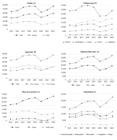
Evolution of reports of violence against Brazilian adolescents aged 10 to 19 by gender, age group, ethnicity/skin color, place of occurrence, violence type, and perpetrators. SINAN, 2015 to 2022.
In 2022, the most frequent types of violence notified were physical (50.3%), sexual (35.1%), and psychological (23.5%) (Table 1). Sexual violence in 2022 was approximately 13 times more frequent among girls (18,651/46.6%) than among boys (1,414 occurrences/8.2%); physical violence predominated among males (10,795/62.9%) (Table 1). The most frequent perpetrators were the father (15.7%), mother (15.9%), boyfriend/girlfriend (6.2%) and spouse (4.4%), acquaintance (20.2%), and stranger (13.2%). Perpetrator’s alcohol use was observed in 19.4% of the cases reported in 2022 (Table 1).
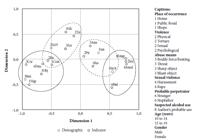
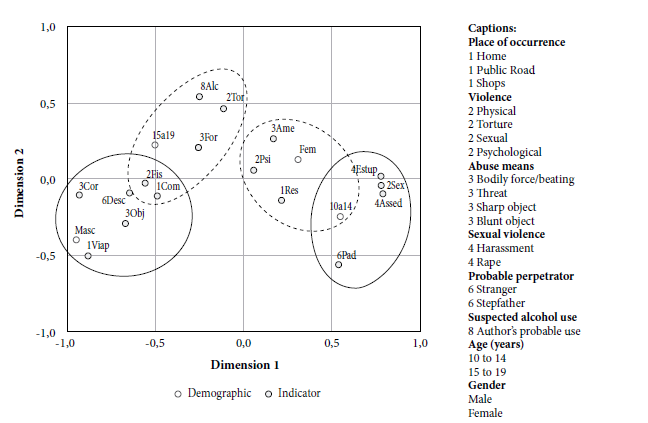
In the CA, two dimensions were sufficient to explain 100% of the data variability, with the first explaining 96.6% and the second 3.4% (p-value < 0.01) (Table 2). Dimension 1 was explained by type of violence (39.4%), occurrence of sexual violence (23.8%), place of occurrence (16.6%), means of abuse (10.9%), probable perpetrator (8.1%), age (48.5%), and gender (51.5%). In Dimension 2, suspected alcohol use by the probable perpetrator (32.5%) contributed the most, followed by place of occurrence (29.7%), means of abuse (19.9%), probable perpetrator (13.7%), age (51.5%), and gender (48.5%) (Table 3).
From the proximity of variables in the CA graph, the associations were: (A) female victims, violence occurring at home, psychological violence, and threats as means of abuse; (B) male victims, violence occurring in public spaces, committed by strangers, using sharp or blunt objects; (C) victims aged 15-19, physical violence and torture, use of physical force, occurrence in shops, alcohol use by the perpetrator; (D) victims aged 10-14, sexual violence/rape, stepfather as the perpetrator (Figure 2).
Discussion
This study analyzed SINAN notifications for violence against adolescents from 2015 to 2022 and is the first to explore a broad time series of SINAN data, highlighting the opportunity to explore these data. Ordinance no. 104 of 2011 established the requirement to immediately notify SINAN of confirmed and suspected cases of violence against vulnerable groups.17 However, the growing number of notifications over time should be interpreted with caution, as it reflects the implementation of Surveillance System. When violence surveillance is effectively implemented, services tend to report more cases, and this increase in reporting does not necessarily indicate higher rates of violence in those locations7. For example, a recent study comparing the prevalence of violence against women identified in the National Health Survey with the reports found in SINAN pointed to a large underreporting of violence against women, especially in states in the North, Northeast, and Midwest, where there are still gaps in care and surveillance is not yet well implemented18.
This study revealed noteworthy trends: the declining notifications during the pandemic, the growing notifications of violence against female adolescents, and the increasing notifications among 10 to 14-year-olds, equaling the proportions among 15 to 19-year-olds. These non-lethal violence trends align with data from the 2019 PNS and 2019 PeNSE surveys, which indicate that women and girls are the most frequent victims of violence, particularly sexual violence7,18-20. However, these finds differ from analyses regarding mortality, which show male victims leading the mortality rates of physical and community violence7,21,22.
Cultural gender differences reflect the patriarchal society and the culture that encourages boys to be aggressive, to play with firearms and swords, fostering competition and disputes. In contrast, girls play with dolls, care for the house, and prepare food7,21-23. The encouragement and greater freedom given to boys also exposes them to a higher risk of violent and accidental deaths in across all age groups7,21,22. Thus, this study proves that reporting occurs more strongly for non-lethal domestic violence, which is more frequent among girls and younger adolescents.
This study highlighted multiple aspects of violence against adolescents. The violence suffered by girls stands out, and the primary type of violence is psychological violence. Several studies have underscored the abuse suffered by girls since childhood and its long-term mental health consequences, including increased number of suicides and hospitalizations in adolescence, substance abuse, self-harm, mood and behavioral disorders (including eating disorders), dissociative symptoms, post-traumatic stress disorder symptoms, and somatizations23.
Being female was associated with violence occurring at home, indicating that home is not a safe place for girls, who suffer from male domination and a patriarchal society from a young age20. Among the youngest victims (10-14 years old), the study indicated an association with sexual violence and the stepfather as the perpetrator. A study based on PeNSE 2019 data found that more than half of schoolchildren who reported being raped experienced their first episode before age 1324.
A study of sexual violence records from at the Forensic Medicine Institute in the State of Alagoas from 2016 to 2018 showed that 86.1% of the 380 victims were children/adolescents with a mean age of 14, and perpetrated by a familiar adult abuser20. Sexual violence against adolescents at such a young age and by someone they know highlights the perverse side of this crime. It occurs when adolescents are most vulnerable, often lacking the maturity to react to violence and heavily dependent on their abuser, making it difficult to report the crime and escape the cycle of violence25,26.
SINAN data revealed that male victims suffer violence in public spaces perpetrated by strangers using sharp objects. These occurrences reflect the lifestyle of men who attend festive activities and crowds in public spaces of greater risk7,21. Victims aged 15-19 were associated with physical violence and torture, physical force, often occurred in shops. The association between males and older age groups correlates with increased risk and excess male mortality, as noted in the literature27.
Alcohol use has been identified in several studies as a risk factor for violence and abuse3,28,29. One of the public policies recommended by the WHO includes prohibiting sales to minors, reducting points of sale, and limiting opening hours30.
The decline in reporting during the pandemic identified in other studies31 can be explained by the closure of health facilities, the overloaded health professionals, reduced demand for care due to difficulties in escaping abuser (often within the household) and the fear of contracting COVID-19 while seeking health care.
Violence against children and adolescents present as are obstacle to their development and is a severe public health issue. The Statute of Children and Adolescents - ECA (Law no. 8.069/1990)32 ensures that the family, the community, society in general, and the government should guarantee, with absolute priority, the realization of rights related to life, health, food, and education, making it essential to advance in protective measures.
A strength of this study is the use of correspondence analysis, which allows analyzing the association between several variables simultaneously. When combined with graphical representation, this method facilitates understanding and disseminating results.
A limitation is that the data on violence are based on reported cases, meaning that the findings may not identify the total number of violence cases and do not help estimate population prevalence/incidence. Underreporting of violence among adolescents may occur due to family members withholding information, adolescents not seeking services out of fear or lack of recognition of the violence, the lack of knowledge of their rights, and the lack of means to defend themselves, besides the lack of preparation of professionals to identify violence and fear of reporting it.
According to the WHO3, preventing youth violence requires a comprehensive approach that recognizes the strong correlation between youth violence rates and economic inequalities. The most impoverished sectors of societies, marked by significant wealth disparities, consistently experience the highest rates of youth violence. Addressing income inequality, increasing economic mobility, and improving access to education, social protection, and employment opportunities are crucial for achieving sustainable progress in violence prevention.
Conclusion
Violence against adolescents is a severe public health issue and predominantly affects girls. Younger adolescents aged 10-14 suffer violence at home, while those aged 15-19 and boys suffer violence on public roads, with alcohol being strongly associated with these incidents. SINAN has become a vital tool for raising awareness of the issue. Ultimately, preventing youth violence requires a comprehensive approach that addresses the social determinants of violence, such as income inequality, rapid demographic and social changes, and low levels of social protection.
References
- 1 World Health Organization (WHO). Global status report on preventing violence against children 2020: executive summary. Geneva: WHO; 2020.
- 2 Krug EG, Dahlberg LL, Mercy JA, Zwi AB, Lozano R. World report on violence and health. Geneva: WHO; 2002.
-
3 World Health Organization (WHO). Adolescent and young adult health [Internet]. [cited 2023 abr 28]. Available from: https://www.who.int/news-room/fact-sheets/detail/adolescents-health-risks-and-solutions
» https://www.who.int/news-room/fact-sheets/detail/adolescents-health-risks-and-solutions -
4 World Health Organization (WHO). Youth violence [Internet]. [cited 2023 out 13]. Available from: https://www.who.int/news-room/fact-sheets/detail/youth-violence
» https://www.who.int/news-room/fact-sheets/detail/youth-violence - 5 Malta DC, Minayo MCS, Cardoso LSM, Veloso GA, Teixeira RA, Pinto IV, Naghavi M. Mortality among Brazilian adolescents and young adults between 1990 to 2019: an analysis of the Global Burden of Disease study. Cien Saude Colet 2021; 26(9):4069-4086.
-
6 Organização Pan-Americana da Saúde (OPAS). Países estão falhando em prevenir violência contra crianças, alertam agências [Internet]. 2020. [cited 2020 jun 18]. Available from: https://www.paho.org/pt/noticias/18-6-2020-paises-estao-falhando-em-prevenir-violencia-contra-criancas-alertam-agencias
» https://www.paho.org/pt/noticias/18-6-2020-paises-estao-falhando-em-prevenir-violencia-contra-criancas-alertam-agencias - 7 Malta DC, Bernal RTI, Pugedo FSF, Lima CM, Mascarenhas MDM, Jorge AO, Melo EM. Violence against adolescents in Brazilian capitals based on a survey conducted at emergency services. Cien Saude Colet 2017; 22(9):2899-2908.
- 8 Leite FMC, Ferrari B, Fiorotti KF, Pedroso MRO, Venturin B, Letourneau N, Tavares FL. Analysis of reported cases of sexual violence in Espírito Santo, southeastern Brazil 2011-2018. BMC Public Health 2023; 23(1):914.
- 9 Minayo MCS. Violência e saúde. Rio de Janeiro: Editora Fiocruz; 2006.
- 10 Pan American Health Organization (PAHO). Plan of action for women's, children's, and adolescents' health 2018-2030. Washington: PAHO; 2018.
- 11 Melo RA, Roque EMST, Freitas LA, Carlos DM, Aragão AS, Ferriani MGC. Protection network in the assistance to children, adolescents and their families in situation of violence. Rev Gaucha Enferm 2020; 41:e20190380.
- 12 World Health Organization (WHO). Global status report on road safety 2023. Geneva: WHO; 2023.
- 13 United Nations (UN). Transforming our world: the 2030 agenda for sustainable development. New York: UN; 2015.
- 14 Malta DC, Reis AAC, Jaime PC, Morais Neto OL, Silva MMA, Akerman M. Brazil's Unified Health System and the National Health Promotion Policy: prospects, results, progress and challenges in times of crisis. Cien Saude Colet 2018; 23(6):1799-1809.
- 15 Brasil. Ministério da Saúde (MS). Viva: Vigilância de violências e acidentes: 2013 e 2014. Brasília: MS; 2017.
- 16 Souza AC, Bastos RR, Vieira MT. Análise de correspondência simples e múltipla para dados amostrais complexos. In: Anais eletrônicos do Simpósio Nacional de Probabilidade e Estatística. Campinas: Universidade Estadual de Campinas; 2010.
- 17 Brasil. Ministério da Saúde (MS). Portaria no 104, de 25 de janeiro de 2011. Define as terminologias adotadas em legislação nacional, conforme o disposto no Regulamento Sanitário Internacional 2005 (RSI 2005), a relação de doenças, agravos e eventos em saúde pública de notificação compulsória em todo o território nacional e estabelece fluxo, critérios, responsabilidades e atribuições aos profissionais e serviços de saúde. Diário Oficial da União 2011; 25 jan.
- 18 Vasconcelos NM, Bernal RTI, Souza JB, Bordoni PHC, Stein C, Coll CVN, Murray J, Malta DC. Underreporting of violence against women: an analysis of two data sources. Cien Saude Colet 2024; 29(10):e07732023.
- 19 Vasconcelos NM, Andrade FMD, Gomes CS, Pinto IV, Malta DC. Prevalence and factors associated with intimate partner violence against adult women in Brazil: National Survey of Health, 2019. Rev Bras Epidemiol 2021; 24(Supl. 2):e210020.
- 20 Torres LAM, Reis ICCV, Barbosa KGN. Estupro na primeira macrorregião do estado de Alagoas: resultados da pesquisa DVEAL, 2016-2018. Scientia Med 2023; 33(1):e44043.
- 21 Minayo MCS. Laços perigosos entre machismo e violência. Cien Saude Colet 2005; 10(1):18-34.
- 22 Minayo MCS, Constantino P. An ecosysthemic vision of homicide. Cienc Saude Colet 2012; 17(12): 3269-3278.
- 23 Robin M, Schupak T, Bonnardel L, Polge C, Couture MB, Bellone L, Shadili G, Essadek A, Corcos M. Clinical stakes of sexual abuse in adolescent psychiatry. Int J Environ Res Public Health 2023; 20(2):1071.
- 24 Vasconcelos NM, Andrade FMD, Pinto IV, Gomes CS, Souza MFM, Reinach S, Stein C, Andrade GN, Malta DC. Prevalence of sexual violence among schoolchildren in Brazil: data from the 2019 National School Health Survey. REME 2022; 26:e-1472.
- 25 Santos MJ, Mascarenhas MDM, Rodrigues MTP, Monteiro RA. Characterization of sexual violence against children and adolescents in school - Brazil, 2010-2014. Epidemiol Serv Saude 2018; 27(2):e2017059.
- 26 Santos MJ, Mascarenhas MDM, Malta DC, Lima CM, Silva MMA. Prevalence of sexual violence and associated factors among primary school students - Brazil, 2015. Cienc Saude Colet 2019; 24(2):535-544.
- 27 Reichenheim ME, Souza ER, Moraes CL, Mello-Jorge MHP, Silva CMFP, Minayo MCS. Violence and injuries in Brazil: the effect, progress made, and challenges ahead. Lancet 2011; 377(9781):1962-1975.
- 28 Malta DC, Oliveira WA, Prates EJS, Mello FCM, Moutinho CS, Silva MAI. Bullying among Brazilian adolescents: evidence from the National Survey of School Health, Brazil, 2015 and 2019. Rev Lat Am Enferm 2022; 30(Esp.):e3679.
- 29 Machado IE, Felisbino-Mendes MS, Malta DC, Velasquez-Melendez G, Freitas MIF, Andreazzi MAR. Parental supervision and alcohol use among Brazilian adolescents: analysis of data from National School-based Health Survey 2015. Rev Bras Epidemiol 2018; 21(Supl. 1):e180005.
- 30 World Health Organization (WHO). Global status report on alcohol and health and treatment of substance use disorders. Geneva: WHO; 2024.
- 31 Souza LJ, Farias RCP. Viole^ncia dome´stica no contexto de isolamento social pela pandemia de covid-19. Serv Soc Soc 2022; 144:213-232.
- 32 Brasil. Presidência da República. Lei nº 8.069, de 13 de julho de 1990. Dispõe sobre o Estatuto da Criança e do Adolescente, e dá outras providências. Diário Oficial da União 1990; 16 jul.

 Source: Authors.
 Source: Authors.