
 “Sexuality and HIV prevention” at stake: dialogues between adolescents at a public school in Rio de Janeiro, Brazil
Abstract
This qualitative research was conducted from 2015 to 2018 and corroborates communication and education initiatives on HIV prevention. With an intersectoral and territorial perspective, the study aims to describe the methodology used in the shared production of an image game, with 36 cards and gameplay rules, built with students from the teacher training course for the initial grades, from a public high school, located in Rio de Janeiro, Brazil. It also aims to discuss how they understand the relationship between sexuality, health and HIV prevention. The Freirean problematization method guided direct observation and interventions in everyday school life. Topics of interest to young people were discussed: strategies for “deconstructing” the biomedical-prescriptive and heteronormative perspective, hegemonic in discourses on sexuality and HIV prevention; female condoms; meanings of the terms HIV-positive, serodifferent, and viral load (CD4 and CD8); testing; PrEP and PEP; drug treatment and side effects. The conclusion is that the methodology adopted enabled peer-to-peer education and the creation of the game “Sexuality and HIV prevention”, in a contextualized and interactive way.
Key words:
Adolescents; Communication and health education; Sexuality; HIV prevention; Educational games
Resumo
Esta pesquisa qualitativa, realizada entre 2015 e 2018, corrobora as iniciativas de comunicação e educação sobre prevenção do HIV. Com a perspectiva intersetorial e territorial, o estudo pretende descrever a metodologia empregada na produção compartilhada de um jogo de imagens, com 36 cartas e regras de jogabilidade, construído com estudantes do curso de formação de professores das séries iniciais de uma escola pública de ensino médio, situada no Rio de Janeiro, Brasil. Também busca discutir como eles/as significam as relações entre sexualidade, saúde e prevenção do HIV. O método da problematização freireano orientou a observação direta e as intervenções no cotidiano escolar. Foram discutidos temas de interesse dos/as jovens: estratégias de “desconstruções” da perspectiva biomédica-prescritiva e heteronormativa, hegemônica nos discursos sobre a sexualidade e prevenção ao HIV; preservativo feminino; significados das terminologias soropositivo para o HIV, sorodiferentes e carga viral (CD4e CD8); testagem; PrEP e PEP; tratamento e efeitos colaterais medicamentoso. Conclui-se que a metodologia adotada viabilizou a educação entre e por pares e a criação do jogo “Sexualidade e prevenção do HIV”, de modo contextualizado e interativo.
Palavras-chave:
Adolescentes; Comunicação e educação em saúde; Sexualidade; Prevenção do HIV; Jogos educativos
Resumen
Esta investigación cualitativa, realizada entre 2015 y 2018, corrobora iniciativas de comunicación y educación sobre prevención del VIH. Con una perspectiva intersectorial y territorial, el estudio tiene como objetivo describir la metodología utilizada en la producción compartida de un juego de imágenes, con 36 cartas y reglas de juego, construido con estudiantes del curso de formación docente de grado inicial de una escuela secundaria pública ubicada en Río de Janeiro, Brasil. Asimismo, busca discutir cómo entienden las relaciones entre sexualidad, salud y prevención del VIH. El método de problematización de Freire guió la observación directa y las intervenciones en la vida escolar cotidiana. Se discutieron temas de interés para los jóvenes: estrategias para “deconstruir” la perspectiva biomédica-prescriptiva y heteronormativa, hegemónica en los discursos sobre sexualidad y prevención del VIH; condón femenino; significados de las terminologías VIH positivo, serodiferente y carga viral (CD4 y CD8); pruebas; PrEP y PEP; Tratamiento farmacológico y efectos secundarios. Se concluye que la metodología adoptada posibilitó la educación entre y por pares y la creación del juego “Sexualidad y prevención del VIH”, de forma contextualizada e interactiva.
Palabras clave:
Adolescentes; Comunicación y educación en salud; Sexualidad; Prevención del VIH; Juegos educativos
Initial clues, starting the game
We recall the words of Renato Russo, who says in the song “Índios”: “They gave us mirrors and we saw a sick world”, not only because of the poet’s brilliance, who marked the youth of the 1980s and 1990s and his fight against AIDS, but also because, based on this memory, we look at the mirror of today, which shows us the juvenilized Human Immunodeficiency Virus (HIV) in Brazil1. Despite advances in prevention biotechnologies offered by the Unified Health System (SUS)2, when comparing 2020 and 2022, the number of HIV cases increased by 17.2%, among which 114,593 (23.4%) were in the 15-24 age group3. Faced with this alarming reality, do we still have a chance to contradict the poet?
This provocation permeated the study of the interrelationships between sexuality and HIV prevention with public high school students in Rio de Janeiro, based on the shared production of a picture game on these topics. The study, by articulating Education and Health, reiterates the importance of interinstitutional and intersectoral partnerships involving adolescents/young people, professionals in these fields, representatives of organized civil society, and the academic community in the HIV prevention agenda4-6.
With this perspective, in this article, we start from the premise that interaction with and among adolescents/young people is central to understanding the grammars and experiences related to sexuality and HIV prevention in youth, paying attention to intersectional markers as determinants of the HIV epidemic4-8. As Foucault9 teaches us, experience is anything that transforms us, which helps us modify what we think and who we are.
Transforming oneself also implies changing how one interacts with others. In this intersubjectivity, attention to the circularity of meanings - to what is said or silenced - allows access to the practices forged in this ethical-aesthetic process.9 This article describes the methodological itinerary employed in the shared development of the image game “Sexuality and HIV Prevention” and presents an analysis of interactions with adolescents, describing how they construct grammars about sexuality and HIV prevention based on their individual and collective experiences.
Methodological paths: dialogues and bricolage
Research background: findings and consequences
This case study presents an intervention research project conducted from 2015 to 2018. Based on an analysis of the micropolitics of sociocultural practices10,11, this work investigated the interrelationships between sexuality, health, and HIV prevention among young people enrolled in public high schools. This study was preceded by research coordinated by the first author from 2011 to 2015, which investigated the meanings of HIV/AIDS prevention in 590 educational materials (booklets, posters, leaflets, and the like) produced by the Unified Health System (SUS) and the organized civil society organizations.
Only 18 of these materials targeted adolescents/young people. Most messages reiterated the biomedical discourse in their approach to prevention (“Use a Condom”), as well as in their references to adolescence and adolescents. Regarding HIV prevention, they endorsed the use of condoms (male and female) and combined prevention (CP), the latter was less common. Converging with this evidence, studies indicate that communication about CP among young people is limited and is a challenge1,6,12,13.
As for discourses on adolescence, it was associated with a “phase of life,” “hormonal changes,” and “anatomical differences” between the sexes; adolescents were represented as “rebellious,” “immature,” or “lacking knowledge” regarding their bodies, sexuality, or prevention technologies. In contrast to this semiosis, more rarely, messages circulated linked to perspectives on sexual and reproductive health and gender studies, alluding to the conception of adolescence and the adolescent as a social construct. The latter, considered a “subject” with “rights and duties”, distinct “sexual orientation”, and “gender identity”, “capable of reflecting” on “desires”, “attitudes”, and “behaviors”, and the former as a “transformation stage”, “discovery”, and “responsibility”.
This discursive and pragmatic evidence justified the definition of the study’s objective and informed the decision to engage with the adolescents to learn about their life stories and understand how they understood the relationships between health, sexuality, and HIV prevention. This dialogue would determine whether the aspects identified in the aforementioned educational materials corresponded to the young people’s experiences, and a communication material aimed at adolescents would be collectively produced.
This methodological choice gained momentum with the discovery of the game Dixit, from the Latin meaning “He said”. Marketed by the company Galápagos, the game involves reasoning, creativity, strategy, and divination, and invites the player to tell a story, without being too obvious, based on a single letter. The cards, with their surreal aesthetic beauty, transport the player to a dreamlike world and invite them to interpret the illustrations in their own way. The encounter with Dixit made us wonder: “Could this hold the key to questioning the truth games9 (“set of rules for producing truth”) that underpinned adolescents’ perceptions of the sociocultural, intersubjective, and biological dimensions involved in the intersections between sexuality and HIV prevention?”
Geographic and interactional territories
Following this idea, in early 2015, through our personal network, we discovered a state school, located in the central region of Rio de Janeiro, which offered high school education for adults, in the evening hours, and a teacher training course for the initial grades (literacy and basic) in full-time hours. The school’s location contributed to greater sociocultural diversity, expressed in the admission of students from several neighborhoods in the municipality and cities in the metropolitan region, with people of different skin colors, gender identities, and social classes (low and middle), attributes that determined the choice of this territory as a place of study.
There were several health research projects at the school, which to some extent facilitated the study’s reception, although there was clear resistance to accepting “yet another study”, because of the perception that some researchers “used” the school as part of their projects (extension/research), without, however, engaging with the school’s demands. Faced with this issue, in conversation with the director, we questioned the conceptual and methodological bases of the study, arguing our perspective that research is an experience in which subjects intervene in the daily life studied, that is, a political action based on reciprocity and respect for otherness9-11,14.
Once this methodological hurdle was addressed, after the project was approved by the appropriate authorities in September 2015, we began ethnographic observation, anchored in gender studies15 and analyses of knowledge-power relations9 (Chart 1). This phase, cross-sectional to the study, continued until 2018. It consisted of observing daily school life, identifying study participants, and mapping discourses and perceptions about sexuality and HIV/AIDS prevention.

Initially, we interacted with school management representatives (principal, student inspector, pedagogical coordinator), teachers, and students of teacher training courses and regular secondary education to define the profile of the study participants. We observed that the participants in the teacher training course were more receptive and willing to participate in the research. Furthermore, this group consisted of adolescents, the target audience for this study. Also, this course hosted extracurricular projects limited to our scope, such as “Papo de Jovem (PPJ)” (fictitious name), which discussed diversity and gender equity, racism, religious intolerance, and discrimination.
In light of these findings, we invited a biology teacher and a history teacher, coordinators of the PPJ project, to participate in the observation and workshop stages. They were aged 50-55. The former identified as Black and gay, the latter as a cisgender and white woman. In addition, we had 30 second-and-third-graders, a total of 60 students, and 20 PPJ members, aged 16-18, with different gender identities/sexual orientations, social class, skin color, and religious beliefs.
PPJ students also acted as multipliers in the Health and Prevention in Schools Program (PSE), still ongoing at the school. At the time, after the political coup that ousted President Dilma Rousseff (2016), there was a clear lack of investment in the PSE and the advancement of an agenda that was resistant to gender debate in schools, including in the context of HIV prevention actions1,16.
Continuing the observation phase, we explored the four-story building to capture the nuances of this setting and the relationships built there. Concomitantly, reading the pedagogical policy plan and curriculum, combined with participation in extracurricular activities, enabled us to identify the frequency and situations in which the topics of sexuality and HIV/AIDS prevention were discussed, and from what perspective. This strategy allowed us to access the discourses, knowledge and practices related to these themes, and also allowed us to explore the institutional and relational territories17 and to uncover the “idealized perspective of researchers” who understood little about the dynamics of this new environment.
The findings from these observations paved the way for the Sexuality, Health, and HIV Prevention Workshop, which was held at the school from 2016 to 2018, on pre-established days and times. In 2016, we began the Workshop with weekly meetings during Biology or after school, with an average of 80 students and two teachers participating in the observation stage. In 2017 and 2018, the meetings were held biweekly with the same group of students and teachers, in addition to the guests: a nurse, cis heterosexual, white, a federal public servant who works in the care of children and adolescents living with HIV, a psychoanalyst and writer, cis heterosexual and white, an activist living with HIV, a gay and white man.
During the workshop, based on Freire’s problematizing method14, we discussed the subjective, sociocultural, and biomedical aspects of sexuality and HIV/AIDS prevention. In an inventive and interactive environment, using different forms of communication (letters, notes, games, narrative texts, discussion groups, drawings, and music), we identified the generating themes, accessed the adolescents’ biographies (perceptions, knowledge, curiosities, beliefs, attitudes, and affections), and constructed a space for emancipatory education14,17,18 (Chart 2).

Workshop on Sexuality, Health, and HIV Prevention: dynamics, themes, objective and activity.
In light of this reflection, in 2018, we developed the card pictures and gameplay rules, which were validated by 40 third-graders and 20 from the PPJ who participated in the workshop, as well as 30 first-graders who were unfamiliar with the game (Charts 3 and 4). This process resulted in the game “Sexuality and HIV Prevention”, with 36 cards and gameplay rules. The methodological approach described above allows for replication of the study in schools and health units, encouraging HIV/AIDS prevention among youth.


The information was recorded in field notebooks. For this article, we conducted a cross-reading of these records and enunciative analysis11,19, identifying statements, expressions, and sentences, and subsequently grouping empirical categories per discursive regularities and rarities, namely: becoming an adolescent, sex/sexuality, gender diversity, and HIV prevention. The section “Sexuality and HIV Prevention: Intersections and Interventions” discusses the circularity and appropriation of these categories in the school context. The interlocutors’ statements are marked by acronyms, indicating their social position, followed by their inclusion number in the study: A:1 adolescent; P:1 teacher; M:1 mother.
Sexuality and HIV prevention at play: intersections and interventions
The school: institutionalities, knowledge, and powers
The Teacher Training School (EFP) (fictitious name) has occupied a leading position in the training of primary school teachers, the former teaching profession, since its inception in the 1960s during the Brazilian civil-military dictatorship. Its modest architecture reflected the history of this region, connecting the present and the past. The first-floor corridor featured memories of its founding - pictures of the first class of teacher training students and awards received, as well as a plaque commemorating the EFP’s 50th anniversary, which reads: “Humanistic ethics, self-discipline, solidarity, respect for the limits necessary for good social coexistence, commitment to free, high-quality public education, and respect for cultural diversity.”
This institutional memory was re-enacted in the political-pedagogical project, and, with some frequency, the humanistic discourse was ratified in the speeches of professionals, students, and their families, referring to school as a “second home”. This native expression, on the one hand, denoted the experience of belonging to that everyday life; on the other, it subtly instilled the role of the family-state in controlling bodies in social spaces. In modern times, the state gradually introduced educational, hygienic, and moral measures to govern knowledge about childhood and youth, displacing the centrality of the family institution in the task of “educating” and “caring” for children and youth20.
This perception simultaneously engendered humanitarian, moral, and disciplinary values in the youth’s education, and the “second home” was sometimes compared to a “barracks”. At the civic ceremony to “incorporate” new students, a ritual similar to a “military decoration”, students wore formal uniforms with the EFP badge, raised the Brazilian, State, and School flags, and sang their respective anthems. Third-graders presented the badge to the new students. This “staged receptiveness” was seen by the young students as “protocol”, because the violence of the hazing of new students and the rigidity of daily relationships revealed the hostility and lack of institutional acceptance. This experience highlights the school’s disciplinary power and its potential to reproduce inequalities16,20,21.
In this context, permeated by different logics and lifestyles, adolescents spent their days immersed in an intense schedule of classes, sports, cultural activities, and occasional breaks. For them, this “disciplinary” routine created an atmosphere of animosity and challenged their engagement in the proposed activities. To circumvent such control, young people put their bodies into motion and orchestrated their affections, creating modes of existence: in the courts and hallways, many of them remained glued to their cell phones, while others ate sweets, danced, painted graffiti, or napped. Dating was frequent: a girl would kiss her crush, another would hug her partner, and a boy would caress his boyfriend. However, every now and then, the student inspector would separate the “couples”, but once the approach was over, the couples would resume their affection.
In our conversation with the inspector, we discovered that the term “duplas” (pairs) referred to same-sex couples. This euphemism made the grammars inscribed in this territory visible and indicated subtle forms of discrimination and prejudice16,21. Young people who identified as gay, bisexual, or lesbian often mentioned feelings of “rejection” and “inequality” from other students and school staff, although they were a minority. The “heteronormatizing, controlling, and disciplinarian” environment21,p.2, combined with some hostile and LGBTphobic practices, has adversely impacted the subjectivity of young people, causing harm to their lives16,21.
The heteronormative discourse15 naturalized in our culture shaped the organization of school space, such as the classic division of bathrooms according to sex. However, this rule was not always respected, due to damaged bathrooms or a lack of water at the school, requiring boys and girls to use the same space, or due to the “will” of the students - when the bathroom was used for “dating”. Young people affirm that the dominant binary logic in EFP disregarded other gender identities and restricted the right to equality.
At the time, the EFP was debating the government regulation22 that included the right “to use bathrooms, locker rooms and other spaces segregated by gender, when available, in per the gender identity of each individual” (art. 6). In art. 7, it emphasized that: “If there are distinctions regarding the use of uniforms and other elements of clothing, the use of clothing per the gender identity of each individual must be permitted”. Despite the relevance of this measure, no intervention occurred in the school environment’s architecture. Somehow, such resistance perpetuates the segregation of the so-called “deviant” bodies and the discourses built on Christian sexual morality9,15.
The 1960s-style uniform reiterated this framework - girls wore blue pleated skirts, although long pants were occasionally permitted, while boys wore blue jeans, and both wore white shirts with the EFP logo. The attempt to homogenize bodies and erase gender diversity did not go unnoticed. Girls often questioned their attire, saying they “didn’t like wearing skirts” and felt “insecure” due to sexist “compliments” they received on the way to and from school.
The determination of how to dress and behave or which environments to visit defined a set of rules and procedures for producing truth about sex-gender-sexuality in everyday school life9,13,15,16,20. Ultimately, it created grammars that generate prohibitions on the bodies that courageously write biographies of their existences, fighting against gender inequities16,21.
Sociability was also constructed by affective identifications and permeated by heteronormative framing, such as the classic division into groups of “boys” and “girls”. The formation of groups linked by religious proximity was noticeable, with reference to Catholic or Evangelical practice prevailing. However, proximity by skin color and social class was neither announced nor explored in depth, constituting a limitation of the study.
Among the youth in the PPJ, the organization into “small groups” was clear, yet embracing diversity of gender, race, and religion. There, dialogue on these topics flowed less tensely, for example, in actions against homophobia and religious intolerance led by a student who identified as a Black, cisgender, Umbanda practitioner, and a Catholic, gay, white man. Students who did not participate in the PPJ avoided commenting when asked about the relationship between sexuality, religion, and HIV prevention. Such topics mobilized resistance, and as a result, several students refused to participate in the study. Despite this silencing, in our fieldwork, we remained attentive to the intersectional “knots” in everyday school life7,8,12,16,21.
Discourses on sexuality, HIV prevention, religion, and racism, interspersed with conservative and progressive perspectives, circulated in the PPJ and Teen Pregnancy projects, in extracurricular activities, and in cultural events (Chart 1). The Biology course, offered in the second year, covered the following topics: sexuality and sex, reproduction, pregnancy and contraception, genetics, diversity and biological sex, prevention of Sexually Transmitted Infections (STIs), and sustainable living. Sex education, taught from a Christian moral perspective, predominated, which can “reinforce the dangerous nature of sexuality”16 and minimize the subjective and sociocultural dimensions intrinsic to knowledge about sex and sexuality17, 21.
In the EFP hallways, murals and posters disseminated information against racism, defending religious tolerance, and gender diversity. Upon entering the second floor, a beautiful human face drawing could be seen, reflecting gender diversity. On one wall of the sports court, a painting of a woman embellished the feminine senses. On another, graffiti depicting a man in a blue suit hitting a couple of gay boys with a book. Some of these scenes were featured on the game cards (Charts 4 and 5).

This graffiti sparked controversy among professionals, students, and parents. One teacher said, “The school cannot encourage violence”; another reiterated, “This is prejudice against evangelical religions”. Yet another teacher argued, “This work shows what happens in reality, and that is our role: to educate citizens”. Agreeing with this opinion, a teacher said, “The images express the work done by the students, what they experience, learn, and consider important to share”. When we asked the PPJ professor about the feat, he emphasized: “The solution was to put a question mark in the book, and let each person construct their own interpretation.” This controversy reveals the need to break the “silencing”, “violence”, and “segregation” limited to the sexuality-gender-religion device and highlights the relevance of this debate in the HIV prevention agenda8,12.
The country’s political climate from 2017 to 2018 reflected the roots of these events. During this period, then-Congressman Jair Messias Bolsonaro of the Liberal Party (PL), with the slogan “God, Country, and Family”, led the race for the Presidency. Furthermore, his campaign endorsed the artificial agenda of “gender ideology”13,16,21, which was orchestrated by the “School Without a Party” movement21 and proposed the removal of gender and sexuality content from the high school curriculum and the mandatory return of religious education.
This messianic agenda was reinforced by conservative discourses that strengthened the idea of the family’s centrality in the dialogue about sexuality with adolescents12. HIV/AIDS prevention policies suffered a progressive disinvestment in campaigns, including the removal of pamphlets that addressed sexual and reproductive health13 from the public sphere. In addition, there was a lack of testing and medication in the SUS1,2,4. In short, as the poet warned us, have we “seen a sick world?”
Adolescence, sexuality, gender norms and HIV prevention: (de)constructions
The institutional and sociopolitical context permeated the students’ experiences, influencing how they understood adolescence and the relationship between sexuality and gender norms. Young people, despite often feeling treated as “children”, felt that adolescence was recognized as a time of “independence” and “responsibility”, as well as “discoveries”, “uncertainties”, and “changes” regarding professional choices or affective-sexual experiences. This reflection, put forward by other scholars1,16,21,23, deconstructs the sociocultural practices that infantilize or disqualify adolescence and adolescents and makes us ask, “To what extent do institutional spaces (schools and health units) create conditions for active and attentive listening to the subjectivities at play in adolescence?”
In interactions with adolescents, we support active listening, embracing the feelings and emotions expressed, especially when faced with sensitive topics such as sexuality, since the psychological, physical and social changes experienced during adolescence affect decisions about sexual health23. Therefore, open and frank dialogue about sexuality is crucial9, as one young woman told us, “Sexuality is being. It is essence. It is the human being. It is life and we need to talk about it and break this taboo! (A-11, 16 years old)”. Another young woman emphasized that the subject flows better among friends than with parents, stating, “It is very challenging to talk about sex with my family (A-27, 15 years old)”; and by a mother interviewed during “Sábado Solidário”, “It’s not because of being a man or a woman, but of style. I have two sons, and the boy prefers to talk about this subject with his older brother (M, 2)”. Students and parents believed that schools mediated the dialogue on sex education, helping to overcome this communication barrier. Despite their disciplinary hierarchies, schools remain strategic environments for questioning discourses that neglect or silence the relationships between sexual and reproductive health, gender diversity, and HIV prevention6,12,16,17,21. Likewise, they foster peer-to-peer education to broaden this debate17,18.
Aligned with the specialized literature1,12,16,18, we found that sexual initiation continues to arouse curiosity among adolescents and guide technical and scientific interventions related to sexual and reproductive health. Although adolescents appeared empowered and confident in their choices, in practice, the initiation of sexual experiences increased “internal pressure” and “conflicts”. Some young women expressed “shame”, “modesty”, and “fear.” One of them told us, “For women, things are more hidden; could that have anything to do with their bodies? (A-30, 16 years old).” Another female narrative endorsed the perception of control over women’s bodies, “We deprive ourselves of knowledge of our own bodies because of social rules about what is right and what is wrong, what it means to be a man and what it means to be a woman. It’s not easy” (A-23, 17 years old).
They say moralistic and reductionist discourses associating female sexual discovery merely with the “breaking of a skin”, crystallize “prejudices concerning virginity”. In this vein, they continued to decipher hegemonic standards of masculinity, according to which “men should lose their virginity as soon as possible as proof of their virility” (A-28, 18 years old) and that “women can delay such a decision” in order to “save themselves for their future husband” (A-03, 16 years old). These discourses, recognized by them as sexist, contradicted what they sought in their romantic and emotional experiences. The deconstruction of gender stereotypes continues to strain the way young people signify their bodies, their desires, and their sexuality16,21-23.
In this discursive thread, the conversation surrounding gender identity and sexual orientation resonated. For some adolescents, “classifying” someone as “gay, lesbian, or cisgender” meant normalizing sexuality. For others, the experience of expressing their sexual orientation - “gay”, “lesbian”, or “bisexual” - was seen as positive. However, we found reports of “insecurity and fear in the face of this discovery” (A-05, 16 years old). The lack of knowledge about how sexual practices occur, whether among cis heterosexuals or among people of the same sex, has fostered “taboos” and “misunderstandings”. We have shown that the sex-gender-sexuality apparatus currently shapes new regimes, grammars, and meanings, as emphasized by Paiva13 and Carrara15.
Discourses about the risk of pregnancy remain a central concern, generating “fear”, proliferating the idea of “sexual abstinence or prohibitions on sex”, and pregnancy is often associated with “interrupted studies”, “lack of family and partner support”. Evidence confirms this recurrent perception among young people1,12,21 and emphasizes that teenage pregnancy is a vulnerable situation24, therefore, “acuity, theoretical, and technical competence” are essential in addressing this issue17.
Perceptions of pregnancy risk appeared linked to discourses on safe sex and HIV prevention, from a biomedical and sociocultural perspective12,16. One of the PPJ interventions featured a display of male and female condoms at the entrance to the EFP, alongside a poster with the message “Prevent HIV: Use a condom”. In the corridors on the second floor, AIDS campaign posters were visible, one of them featuring a photograph of young gay men embracing and holding a condom. In another poster, singer Kelly Key, a teenager who enchanted young people with her hit “Baba Baby”, sensualized the condom and, holding it in her mouth, said: “Show that you’ve grown up. This Carnival, use a condom”. The message implicitly referred to the verse “Baba, the child has grown up”, calling on young people to be responsible and to adhere to safe sex and HIV prevention. At the Workshop, the adolescents’ analysis of these advertisements stimulated dialogue about sex education and self-care, revealing the potential of this type of methodology in educational practices13,19.
Between fluids, secrets, and desires, the subjective dimension shaped safe sex and HIV prevention practices. Many adolescents reported that using a condom “killed the mood” and “pleasure”. In the pleasure-displeasure path, trust in the partner guided the practice of (un)safe sex. Many adolescents, despite being aware of the risk of STIs and pregnancy, said, “Actually, we only have sex [without a condom] with people we like and trust” (A-02, 17 years old). One of the teachers reaffirmed this thought, “Many [young people] use condoms at the beginning of the relationship, but over time, when they trust their partner, they give up this protection”.
Unprotected sex was related to gender norms in the view of one adolescent, as she said, “Girls have sex without a condom to please their partner” (A-31, 18 years old); others associated this situation with “lack of self-love”, “insecurity”, and “fear”. A minority group expressed that unprotected sex was related to the “desire to start a family”, although some adolescents admitted that this topic was not always discussed when “negotiating” condom use. In terms of condom use, the male condom was the most common choice, given that a considerable portion of the adolescents were unfamiliar with the female condom. Among those who were familiar with it, they said they were “not very familiar”, reporting that it was “inconvenient”, “horrible”, and “distracting”. Despite the greater number of women in the EFP, we observed that female condoms were still poorly distributed in schools, which is explained by the difficulty in obtaining them through the SUS (Brazilian Unified Health System).
Despite HIV prevention initiatives in VET, we noticed that the topic was still viewed as sensitive and sometimes silenced. Many students reported being “embarrassed to talk to teachers and parents”, preferring to talk to friends or health professionals:
Most young people are afraid to tell their parents about having sex, and when they find out they have a disease, that fear grows even more. So, no one talks about it. I see that having HIV is forbidden, having sex is forbidden. This has been broken down, but that’s the way it is, let’s say, in large, traditional families (A-25, 17 years old).
The HIV transmission-prevention meanings appeared linked, with unanimous recognition that “using a condom is the best way to prevent HIV and other STIs, as well as pregnancy” (A-09, 18 years old), converging with other scientific evidence1,12,13,21,23,24. They were also aware of needle sharing and vertical transmission “contamination”, the latter of which was more emphasized by PPJ students. Other topics also sparked curiosity, namely, differences between the terminologies HIV-positive, serodiscordant, and serodifferent; meanings of viral load (CD4 and CD8); testing; PrEP, PEP, and PC; and medication side effects. Students stated that little or no knowledge about PrEP, PEP, and PC is related to barriers to accessing services and a lack of investment in mass communication and community-level initiatives; a perception common in other contexts13,21,23. Studies indicate that the lack of representation of adolescents in campaign advertisements may lead to the idea that PrEP is not for them23. Therefore, a holistic approach to the topic and its inclusion in sexual education policies and programs are recommended1,2,13.
For some students, the perception of new treatment possibilities influenced their decision to use condoms or not and constructed representations of HIV as “treatable” and “curable”. Incidentally, they dissociated themselves from the old image of AIDS - a disease that has a face (gays) and kills1. To the tune of the songs “Índios” by Renato Russo and “Ideologia” by Cazuza, chosen by the researchers, the historical aspects of the epidemic were discussed, such as the stigmas associated with people living with HIV and the adoption of new prevention technologies. In order to engage young people in the fight against AIDS, the participants discussed the stigmas associated with people living with HIV and the adoption of new prevention technologies4,23.
Encouraged by this debate, a teenager said that she had already taken the test, amidst tense laughter, she said, “Phew! It was a relief to read negative for HIV” (A-011-, 18 years old), reinforcing the importance of testing as prevention23. We did not hear any testimonies of HIV seropositivity among the students, so it was not possible to infer whether there were infection cases. We found that lack of knowledge about HIV transmission and prevention processes promotes vulnerabilities16,18 and requires factual and contextualized communication5,6,23, so that young people can reflect on their experiences and appropriate the scientific and technical information provided1,13. Therefore, it is important to affirm the semantic, subjective, sociocultural, biomedical and pragmatic achievements of the history of AIDS in the public sphere2,4,8,13,16,21.
(In)conclusions, does the game continue?
This research followed the prerogative of listening and interacting with others as a prerequisite for scientific endeavor. The experiences arising from this meeting revealed that the communicative process built into the development of the game “Sexuality and HIV Prevention” connected researchers, teachers, and young people and contributed to openly, frankly, and contextually addressing topics to be addressed in HIV prevention among young people. These include: the intersections between HIV infection, sexuality, gender norms, and religion; the feelings and pleasures that determine protected (or unprotected) sexual practices; vertical transmission; the right to access testing, PrEP, PEP, and PC; and the effects of medications on young people’s lives.
Communication about HIV prevention in youth encompasses continuity, questioning methodologies and peer/peer education, in order to make explicit the grammars that seek to de-objectify bodies and make visible: the “(defects)effects of color”, the hinges of bodies that transition between sexes and social norms, the faith professed or silenced or even the cry of those who cling tooth and nail to the edges of life.
References
- 1 Knauth DR, Pilecco FB. Prevenção da AIDS e do HIV entre adolescentes e jovens adultos em seis municípios brasileiros. Saude Soc 2024; 33(1):e230789pt.
- 2 Grangeiro A, Ferraz D, Magno L, Zucchi EM, Couto MT, Dourado I. Epidemia de HIV, tecnologias de prevenção e as novas gerações: tendências e oportunidades para a resposta à epidemia. Cad Saude Publica 2023; 39(Supl. 1):e00144223.
- 3 Brasil. Ministério da Saúde (MS). Boletim Epidemiológico HIV e Aids 2023. Brasília: MS; 2023.
- 4 Calazans GJ, Parker R, Terto VJ. Refazendo a prevenção ao HIV na 5ª década da epidemia: lições da história social da Aids. Saude Debate 2022;46(n. esp.):207-222.
- 5 Karan A, Hartford E, Coates T. The potential for political leadership in HIV/AIDS communication campaigns in Sub-Saharan Africa. Glob Health Action 2017; 10(1):1270525.
- 6 Farias IF, Amaral AMR, Martins VH, Santos AK. Comunicação em saúde sobre HIV/Aids: mapeamento bibliométrico de artigos científicos internacionais (2007-2017) e caracterização dos artigos de acesso aberto (2017). Em Questao 2020; 26(3):173-195.
- 7 Nyatsanza T, Wood L. Problematizing official narratives of HIV and AIDS education in Scotland and Zimbabwe. J Soc Asp HIV/AIDS 2017; 14(1):185-192.
- 8 Cazeiro F, Leite JF, Costa AJ. Por uma decolonização do HIV e interseccionalização das respostas à aids. Physis 2023; 33:e33024.
- 9 Foucault M. Ética, sexualidade, política. ditos e escritos V. Rio de Janeiro: Forense Universitária; 2014.
- 10 Aguiar K, Rocha ML. Micropolítica e o Exercício da Pesquisa-intervenção: Referenciais e Dispositivos em Análise. Psicol Cienc Prof 2007; 27(4):648-663.
- 11 Fischer RMB. Trabalhar com Foucault: arqueologia de uma paixão. Belo Horizonte: Autêntica; 2012.
- 12 Paiva V, Antunes MC, Sanchez MN. O direito à prevenção da Aids em tempos de retrocesso: religiosidade e sexualidade na escola. Interface (Botucatu) 2020; 24:e180625.
- 13 Mora C, Nelvo R, Monteiro S. Peças de comunicação governamental sobre profilaxia pré-exposição (PrEP) e pós-exposição (PEP) ao HIV (2016-2019): análise de seu conteúdo e circulação entre homens gays, mulheres trans/travestis e profissionais do sexo. Saude Soc 2022; 31(4):e210855.
- 14 Freire P. Comunicação ou extensão? Rio de Janeiro: Paz e Terra; 1983.
- 15 Carrara S. Moralidades, racionalidades e políticas sexuais no Brasil contemporâneo. Mana 2015; 21(2):323-345.
- 16 Bonfim J, Mesquita MR. Nunca falaram disso na escola: um debate com jovens sobre gênero e diversidade. Psicol Soc 2020; 32:e192744.
- 17 Silva CG, Borba PLO. Encontros com a diferença na formação de profissionais de saúde: juventudes, sexualidades e gêneros na escola. Saude Soc 2018; 27(4):1134-1146.
- 18 Ayres JRCM. Cuidado: trabalho e interação nas práticas de saúde. Rio de Janeiro: CEPESC; UERJ/IMS; ABRASCO; 2009.
- 19 Kelly-Santos A, Monteiro S, Ribeiro AP. Acervo de materiais educativos sobre hanseníase: um dispositivo da memória e das práticas comunicativas. Interface Comun Saude Educ 2010; 14(32):37-51.
- 20 Cezar MRA. As novas práticas de governo na escola: o corpo e a sexualidade entre o centro e as margens. In: Branco GC, Veiga-Neto A, organizadores. Foucault: filosofia & política. Belo Horizonte: Autêntica; 2013.
- 21 Matta TF, Taquette SR, Souza LMBM, Moraes CL. Diversidade sexual na escola: estudo qualitativo com estudantes do ensino médio do município do Rio de Janeiro, Brasil. Cad Saude Publica 2021; 37(11):e00330820.
-
22 Brasil. Conselho Nacional de Combate à Discriminação e Promoção dos Direitos de Lésbicas, Gays, Travestis e Transexuais - CNCD/LGBT. Resolução nº 12, de 16 de janeiro de 2015 [Internet]. 2015 [acessado 2024 out 13]. Disponível em: https://www.gov.br/mdh/pt-br/acesso-a-informacao/participacao-social/old/cncd-lgbt/resolucoes/resolucao-012
» https://www.gov.br/mdh/pt-br/acesso-a-informacao/participacao-social/old/cncd-lgbt/resolucoes/resolucao-012 - 23 Warzywoda S, Fowler JA, Dyda A, Fitzgerald L, Mullens AB, Dean JA. Acesso, adesão e uso da profilaxia pré-exposição por jovens: uma revisão sistemática de barreiras e facilitadores. Ther Adv Infect Dis 2024; 11:20499361241303415.
- 24 Cabral CS, Brandão ER. Gravidez na adolescência, iniciação sexual e gênero: perspectivas em disputa. Cad Saude Publica 2020; 36(8):e00029420
-
Funding
The research was funded by the Fundação de Amparo à Pesquisa do Estado do Rio de Janeiro (Faperj), through Call for Proposals (E_28/2014), and by a Scientific Initiation grant (E_26/200.501/2015) awarded to the second author of this manuscript, who was then an undergraduate student in Collective Health at the Universidade Federal do Rio de Janeiro (UFRJ). In addition, funding was provided by the Vice-Presidency of Education, Information, and Communication through the Open Educational Resources Call for Proposals (REA_2017).
-
Data availability statement
The data sources adopted in the research are indicated in the article’s body.
The data sources adopted in the research are indicated in the article’s body.

 Source: Authors, data collected during field activities between 2015 and 2018.
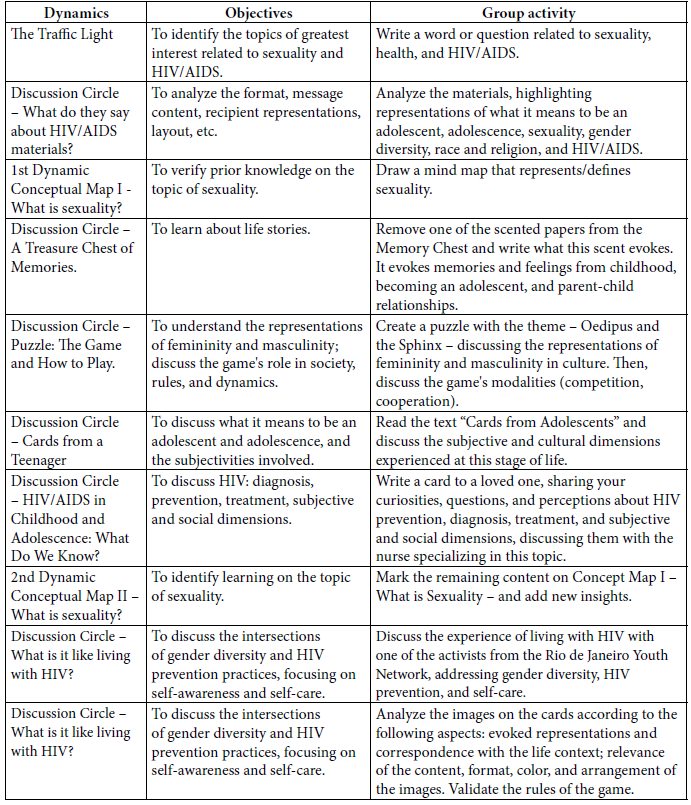 Source: Authors with data from the Sexuality, Health and HIV Prevention Workshop, 2016 to 2018.
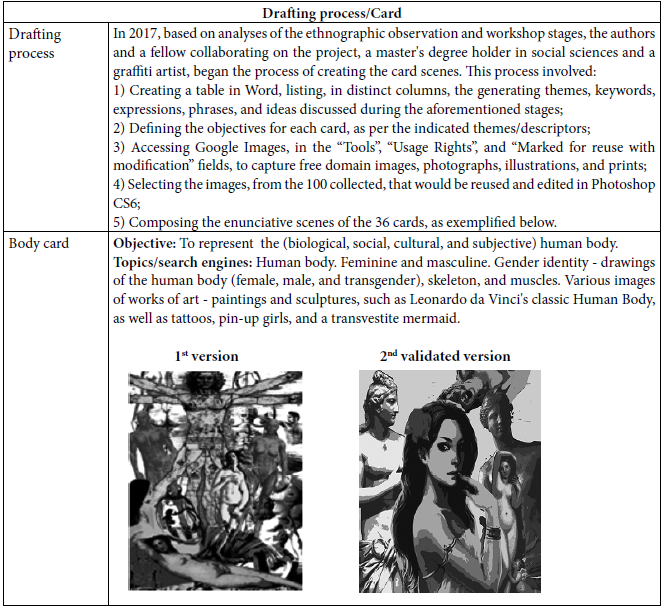 Source: Authors, data collected during field activities from 2015 to 2018.
 Source: Authors, data collected during field activities between 2015 and 2018.
 Source: Authors, data collected during field activities between 2015 and 2018.