
 Racial inequalities in the health behaviors of elderly people in Brazil: data from the National Health Survey 2013 and 2019
Abstract
This article aims to analyze the prevalence of health behaviors and their association with race/ethnicity among elderly people in Brazil included in the National Health Survey 2013 and 2019. Cross-sectional study estimating the prevalence and adjusted prevalence ratios of health behaviors (current and past smoking; alcohol abuse; leisure-time physical activity; fruit and vegetable consumption) by white and black race/ethnicity. Over the period, all positive health behaviors increased significantly in both racial groups. Fruit and vegetable consumption were the most prevalent, while smoking cessation showed the highest increase. However, blacks had lower prevalence and odds of fruit and vegetable consumption and higher odds of current and past smoking. Current smoking was statistically higher in black men, and past smoking was higher in black women. The prevalence of positive health behaviors increased in white and black elderly people. However, racial disparities persist, with significant gaps between racial groups affecting the uniform achievement of positive health levels for all groups of elderly people in Brazil.
Key words:
Elderly People; Smoking; Diet; Alcohol Intake; Racial Health Inequality
Resumo
O objetivo deste artigo é analisar a prevalência de comportamentos de saúde e a associação deles com a cor/raça de pessoas idosas no Brasil incluídos na Pesquisa Nacional Saúde 2013 e 2019. Estudo transversal em que foram estimadas as prevalências e razões de prevalência ajustadas dos comportamentos de saúde (tabagismo atual e passado; uso abusivo de álcool; atividade física no lazer; consumo de frutas e vegetais ou legumes), por cor/raça branca e negra. No período, todos os comportamentos positivos de saúde aumentaram significativamente nos dois grupos raciais. O consumo de frutas, vegetais/legumes foram os mais prevalentes, a cessação do fumo o que mais cresceu. Porém, negros apresentaram menores prevalências e chances de consumo de frutas, vegetais/legumes, e maior de fumo atual e passado. O tabagismo atual foi estatisticamente maior em homens negros e o passado em mulheres negras. A prevalência de comportamentos saudáveis de saúde aumentou em pessoas idosas brancas e negras. Contudo, desigualdades raciais permanecem, com defasagens entre os grupos raciais que afetam a conquista uniforme de níveis mais saudáveis de saúde para todos os grupos de pessoas idosas do Brasil.
Palavras-chave:
Pessoas idosas; Fumo; Dieta; Ingestão de álcool; Desigualdade racial em saúde
Resumen
El objetivo de este artículo es analizar la prevalencia de comportamientos de salud y su asociación con el color/raza de las personas mayores de Brasil incluidas en la Pesquisa Nacional de Salud 2013 y 2019. Estudio transversal en el que se estimaron la prevalencia y las razones de prevalencia ajustadas de los comportamientos saludables (tabaquismo actual y pasado; abuso de alcohol; actividad física en el tiempo libre; consumo de frutas y verduras o legumbres) según el color/raza blanco y negro. A lo largo del periodo, todos los comportamientos positivos para la salud aumentaron significativamente en ambos grupos raciales. El consumo de fruta, verdura/ legumbres fue la conducta más prevalente, y dejar de fumar la que más aumentó. Sin embargo, las personas de raza negra presentaban una menor prevalencia y probabilidad de consumo de fruta / verdura/ legumbres, y una mayor probabilidad de tabaquismo actual y pasado. El tabaquismo actual era estadísticamente mayor en los hombres negros y el tabaquismo pasado en las mujeres negras. La prevalencia de comportamientos saludables para la salud ha aumentado tanto en las personas mayores blancas como en las negras. No obstante, persisten las desigualdades raciales, con brechas entre grupos raciales que afectan a la obtención uniforme de niveles más saludables para todos los grupos de personas mayores en Brasil.
Palabras clave:
Personas mayores; Tabaquismo; Dieta; Consumo de alcohol; Desigualdad racial en salud
Introduction
In recent decades, the fastest-growing population group in Brazil has been that of elderly people (≥65 years). From 2010 to 2022, this grew by 26.7% and they now number more than 22 million in the country1,2. On the other hand, they are still the least studied in terms of their health behaviors, associated risks and factors determining their lifestyles and health3.
Certain health behaviors have been shown to be associated with Chronic Non-Communicable Diseases (NCDs), disability and premature death. NCDs are the diseases that have the greatest impact on the well-being and quality of life of older people today, and probably in the future too. In several countries, analysis of the social and racial conditions of older people has been used to understand the pattern and dynamics of health behaviors and their relationship with NCDs4.
In Brazil, inequalities and exposure to health risk behaviors among the elderly have been decreasing in recent years, with a favorable influence on healthy life expectancy and active aging. However, these inequalities still affect the guarantee of higher and more homogeneous levels of health for all older people in the country3. Older people are still socio-economically vulnerable and experience some of the most unequal population aging compared to other countries in the world, with older black people showing even worse indicators than the rest of the population, as they exhibit additional inequalities that further impact their life and health structures5,6.
The life trajectories of black people throughout the different stages of life up to old age have been marked by the accumulation of individual and contextual vulnerabilities and disadvantages. This reality creates unfavorable conditions, which result in less exposure to resources, equipment and information responsible for ensuring adherence to and maintenance of health behaviors that are recognized as important for life7. In addition, the implementation of public actions and social engagement focused on the needs of older people still has less impact on black men and women, maintaining the historical discrepancy regarding health behaviors and healthy lifestyles already assumed by the majority of older white people6,8.
International studies point to the association of race with health behaviors and mortality, highlighting the importance of socioeconomic and racial contexts in the production and maintenance of specific vulnerabilities that define the relationship between race and health throughout the various life cycles up to old age9,10. In Brazil, the analysis of health behaviors with representative samples of elderly people is often based on gender, age, schooling and place of residence, and until now there have been no studies by color/race. Therefore, the analysis of behaviors related to health factors by color/race may make it possible to monitor changes in the distribution of health behaviors among different groups of elderly Brazilians over the years.
From this perspective, this study has analyzed the prevalence of health behaviors and their association with the color/race of elderly Brazilians interviewed in the National Health Survey 2013 and 2019.
Methods
Cross-sectional study based on data from the National Health Survey (PNS) 2013 and 2019. The PNS is a nationwide population-based household survey. Each year, valid and representative information is collected on the population living in permanent private households in Brazil. The questionnaires collect information on households and all their residents. However, part of the questions are only intended to record the health information of a randomly selected resident (aged ≥18 years in 2013 and ≥15 years in 2019)11,12.
The PNS uses a complex probabilistic sample of a set of units from selected areas (census tracts) in all of Brazil’s Federated Units (UF). The sampling used was probabilistic by conglomerates in three stages of selection, with stratification by the selected areas. The households represent the secondary units, and the tertiary unit was the resident selected from each household from the list of residents, who answered the individual part of the questionnaire. Methodological details can be found in PNS publications11,12.
In this analysis, only individuals aged 65 or over in 2013 (n=7,594) and 2019 (n=15,659) of white and dark skin (brown plus black) were considered. This age group was chosen based on the international definition of elderly people, in order to ensure that these results could be compared with international literature. Socioeconomic, demographic and health behavior variables were used in the analyses. The socioeconomic and demographic variables were: gender (male, female); age group (in groups of years: 65 to 69, 70 to 74, 75 to 79 and ≥80 years); education level (in levels: incomplete elementary school or equivalent, incomplete high school or equivalent, incomplete higher education or equivalent, complete higher education); possession of health insurance (yes, no); macro-region of residence in the country (North, Northeast, Midwest, Southeast and South); type of municipality (capital, metropolitan region excluding capital (MR), interior); level of household income per capita (up to 1/2 minimum wage, 1/2 to 1 minimum wage, 1 to 2 minimum wages, 2 to 3 minimum wages, more than 3 minimum wages). In 2013, the median income at the lowest level was R$ 268.00 and at the highest R$ 3,525.00. In 2019, this median at the lowest level was R$ 440.00 and at the highest R$ 4,927.00.
As for health behaviors the following were assessed: Smoking (yes, no); Current smoking (yes, no) and past smoking (yes, no); Alcohol abuse (yes, no) (consumption of five or more drinks on a single occasion, at least once in the last 30 days); Leisure-time physical activity: active (individuals who practiced at least 150 minutes of light to moderate activity per week or 75 minutes of vigorous activity per week); Diet: consumption of vegetables or legumes (raw or cooked) and fruit on at least five days per week (yes, no).
For both years of the PNS, prevalence rates and their 95% confidence intervals (95%CI) were estimated for socioeconomic and demographic variables and positive health behaviors by color/race. Differences in the distribution of frequencies were verified according to year and considered statistically significant at the 5% level in the absence of overlapping 95%CIs. Pearson’s chi-squared test was used to confirm differences between the two PNS.
The prevalence and respective 95%CI of health behaviors were estimated for each year of the PNS according to white and black color/race. The change in prevalence between the two years of the PNS was presented as an absolute difference. The magnitude of this variation over the period was computed with Generalized Linear Models (GLM), using the Gaussian distribution. The data from the two surveys was aggregated into a single database. Using the weight of the resident selected with calibration, the absolute changes from 2013 to 2019 were calculated for each health behavior evaluated. To calculate the change in prevalence from 2013 to 2019, the effect of the year on the outcome was modeled according to the grouping variable, considering the differences in sample size for each year and all the existing characteristics of the complex sampling plan. The reported percentage prevalence rate was calculated as the exponential of the coefficient minus one and multiplied by 100.
Poisson regression models with robust variance were used to estimate Prevalence Ratios (PR) and 95%CI adjusted for socioeconomic and demographic variables. These models were used to test the association between color/race (black vs. white) and health behaviors according to the year of the PNS, and to compare the associations between the year of the PNS and health behaviors according to racial groups. Finally, an Equiplot graph was drawn up to analyze the prevalence rates and 95%CI of the health behaviors of each racial group according to sex in both years of the PNS.
All the analyses were carried out in the RStudio software version 2023.6.1.524 (R Foundation for Statistical Computing, Boston, United States of America) and incorporate all the characteristics of the complex sampling plan of the 2013 and 2019 PNS.
The PNS were approved by a research ethics committee (process No. 328.159 of 06/26/2013; process no. 3.529.376 of 08/23/2019) and all participants signed an informed consent form13-15.
Results
Data from 7,594 older people were analyzed in 2013 and 15,659 in 2019. In both years of the PNS, elderly white people were the majority. However, the proportion decreased significantly over the period (52.4%; 95%CI: 50.9;53.7 in 2019, compared to 55.9%; 95%CI: 53.8;58.0 in 2013; p=0.001), while that of blacks increased (47.6%; 95%CI: 46.2;49.1 in 2019, compared to 44.1%; 95%CI: 42.0;46.1 in 2013; p=0.001). In each year and racial group, women were in the majority, but there were no changes over the period. In 2013, elderly white people had a higher proportion compared to black people in the oldest age group (≥80 years), but this was not observed in 2019. Elderly white people were a greater proportion in comparison with black people at the highest level of education and income and a lesser proportion at the lowest level of these variables. Between the years, there was even a significant reduction in the worst levels of schooling and an increase in the highest (p<0.05), but favorable changes for blacks were only observed for schooling (p<0.05). The number of health insurance plans held by whites was higher and almost twice that of blacks, and there were no significant changes over the period. In terms of area of residence, whites predominated in the Southeast and were a minority in the North, while blacks predominated in the Northeast and Southeast. Regarding the type of municipality of residence, the majority of the elderly population, regardless of color/race, lived in places in the interior of the country and there were no significant changes over the period (Table 1).
Table 2 shows the prevalence of health behaviors by color/race in the two PNS and their absolute change between 2013 and 2019. In both years, whites and blacks showed consumption of fruit and vegetables or legumes as the most prevalent, followed by smoking cessation. In each year of the PNS, consumption of fruit and vegetables or legumes was significantly higher among whites than among blacks, while current smoking was lower (p<0.05). Alcohol abuse and leisure-time physical activity showed no significant differences. Between the years, in both racial groups there was a statistically significant increase in the prevalence of all the behaviors assessed (p<0.05), except for current smoking, which remained stable, as did the consumption of vegetables or legumes in whites. In the period, the biggest increase was for smoking cessation (whites: 11.0%; 95%CI: 8.0;11.5; blacks: 13.0%; 95%CI: 10.0;17.0) and the smallest for alcohol abuse (whites: 2.0%; 95%CI: 1.0;3.0; blacks: 1.4%; 95%CI: 1.1;3.0) (Table 2).
The prevalence of health behaviors of elderly Brazilians in the two PNS, by color/race and specific to sex, is described in Figure 1. There were similar health behaviors between the sexes. In both years, black men and women had a statistically lower consumption of fruit, vegetables or legumes (p<0.05) than whites, and these differences were even greater among men. With regard to the other behaviors, in each year evaluated, the prevalence of current smoking in black men was statistically higher (p<0.05) than in white men, and past smoking was statistically higher (p<0.05) in black women than in white women (Figure 1).
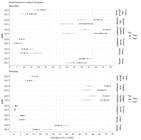
Equiplot graph with the prevalence and 95% Confidence Intervals (95%CI) of health behaviors, according to sex, of white and black elderly people (≥65 years) interviewed in the National Health Survey (NHS) 2013 (n=7,712) and 2019 (n=15,926), Brazil.
In each year of the PNS, the adjusted association of black color/race with each of the health behaviors evaluated was tested. It was found that regardless of confounding factors, blacks were less likely to consume fruit (2013: PR: 0.96; 95%CI: 0.92;0.99; 2019: PR: 0.92; 95%CI: 0.90;0.94), vegetables or legumes (2013: PR: 0.92; 95%CI: 0.87;0.96; 2019: PR: 0.97; 95%CI: 0.95;0.99) than whites. For the other behaviors, only in 2019, blacks had a higher chance of past smoking (PR: 1.12; 95%CI: 1.08;1.17), but also of current smoking (PR: 1.20; 95%CI: 1.02;1.42) than whites (Figure 2).

Prevalence ratios (PR) adjusted for color/race with health behaviors of elderly people (≥65 years) interviewed in the National Health Survey (NHS) 2013 (n=7,594) and 2019 (n=15,659), Brazil.
Finally, within each racial group of elderly people, we tried to verify the crude and adjusted association of the year of the PNS with each of the health behaviors evaluated. In both racial groups, the year 2019 increased the chances of elderly people adopting positive health behaviors compared to 2013, both in the crude and adjusted analysis. In this period, whites and blacks were more likely to stop smoking, to engage in physical activity during leisure time, and to consume fruit and vegetables, even after adjusting for confounding factors (Table 3).
Discussion
The results of this study indicate the continuation of racial inequalities in the health behaviors and socioeconomic conditions of elderly people in Brazil between 2013 and 2019. Elderly black people, compared to white people, continue to be more solely dependent on the SUS, have lower levels of education and income, and live more in regions with worse social and health indicators in the country. This reality has been pointed out by previous studies from Brazil5,6 and other countries1,8 which highlight racial inequalities in old age as a result of social rights denied throughout the various life cycles and which still have repercussions on current living conditions.
Changes were observed in the prevalence and distribution of positive health behaviors among the elderly by color/race. Whites and blacks showed an increase in adherence to positive health behaviors (consumption of fruit, vegetables or legumes, physical activity during leisure time and smoking cessation), but also negative behaviors (alcohol abuse) and stability in current smoking levels. These changes are in line with previous studies which have described an improvement over the years in estimates of positive health behaviors and a worsening of negative ones in the general and elderly Brazilian population, although without taking color/race into account3,16,17. However, blacks still have lower prevalence and chances of consuming fruit and vegetables or legumes, and higher prevalence of current and past smoking. Between the sexes, black men and women consume fewer healthy foods than whites, and these differences are even greater among men.
Dietary patterns provide information on the habits and food consumption of the population and how dietary patterns can change with age. International studies have shown that people’s place of residence has directly affected their diet and nutritional status and that inadequate food choices and physiological changes resulting from age can lead to a reduction in the inclusion of nutritious foods in the diet of elderly people, stimulating an increase in the prevalence of obesity or malnutrition in this age group18,19.
The analysis of adherence to and maintenance of health behaviors in elderly people is important, as it is an indicator of the life trajectory of different cohorts of elderly people and their well-being during the aging process. The improvements in health behaviors observed in this study can be attributed to the implementation of public policies aimed at promoting better living and health conditions in the country20. In recent years, strategies have been adopted to improve people’s quality of life and, consequently, their health. One of these strategies is the Sustainable Development Goals (SDGs), one of the main objectives of which is to ensure quality access to health and promote well-being in all age groups. These policies have played an important role in encouraging healthy behaviors and reducing risk factors for NCDs21.
The persistence of racial inequalities in health behaviours reveals Brazil’s difficulties in equalizing and expanding the achievements induced by recent public health policies towards healthier life dynamics, equally among the different racial groups and for each of the different behaviours assessed. The time lag of the results by race and sex indicated that black men and women have not yet attained the estimates already observed six years earlier by whites of the same sex for some of the estimated measures.
Alcohol abuse among elderly people is a negative behavior that is more resistant to these actions. There are a number of reasons for this. On the one hand, social difficulties (widowhood, loneliness, loss of friends, retirement, isolation and lack of public resources for leisure and recreation) can induce this behavior. On the other hand, cohorts of elderly people may be reaching old age maintaining health behaviors already instituted in the previous life phase and finding it difficult to abandon them in the current phase, as they feel physically independent and have fewer morbidities than previous cohorts3.
Alcohol can also represent the main strategy for recreation, interpersonal relationships and coping with emotional issues among older people22,23. Alcohol consumption, even in moderate amounts, affects the cognitive functioning of older people and can damage family dynamics, resulting in more difficult relationships with family members and neighbors. These interpersonal and family challenges can contribute to unfavorable health outcomes among elderly people24.
In recent decades, there has been a significant reduction in smoking prevalence due to the implementation of stricter anti-smoking policies and cultural changes22,23. However, despite these advances, smoking levels have remained stable in recent years. Some studies have shown an association between smoking and a lower level of education and income, which may explain the results of this study which showed a higher level of current smoking among black people25-28. Some studies have pointed to the association between smoking and cognitive decline18,29, highlighting the need for efforts, especially for specific groups, to reduce underlying socioeconomic disparities associated with smoking30.
Throughout life, racial inequalities in access to proximal determinants of health behaviors (income, education and housing conditions and urban infrastructure) produce a set of deleterious effects on the health of the elderly black population14. In this respect, oral health is an aspect that deserves to be emphasized. There is scientific evidence that oral health is directly related to individual and contextual inequalities. Elderly people with poor oral health may have limitations in their ability to chew raw foods and foods with a consistency that depends on the presence of teeth, such as fruit, legumes and vegetables31,32.
Socioeconomic limitations prevent the adoption of a diet based on fresh and nutritious food, combined with the level of knowledge about the health impacts associated with the inclusion of diets with high calorie content and low nutritional quality33,34. The environments in which people live have socioeconomic differences that define access to urban infrastructure and leisure facilities, the availability of food and drink, as well as influencing the assessment of the relevance of information received that is inherent to establishing healthy habits, which may or may not favor the adherence and maintenance of certain health behaviors by elderly people35,36.
Despite these findings, some limitations should be emphasized. Being a cross-sectional survey, the PNS did not assess the same individuals on adherence to and maintenance of health measures over time. It is possible that the bias on survival (by indicating a healthier scenario between the years) and memory (self-reported health behaviors) affect the results. Between the PNS, changes were made to the questions related to the indicators assessed (in 2013 two questions were asked about vegetables-raw and cooked-and in 2019 only one; and the level of physical activity during leisure time was assessed considering the previous 3 months in 2013 and the previous months in 2019) and comparisons based on them may have been affected.
Another issue is that the size of the elderly population selected in 2019 was larger than in 2013. Such differences may have increased the precision of the estimates in 2019 and indicated statistical differences between the two years. During the second decade of this century, Brazil underwent important political and socioeconomic changes that may have influenced the findings. However, the breadth and national representativeness of the PNS and its regularity over time allow it to be used to identify the prevalence of health behaviors and their association with color/race. Thus, its use represents an opportunity to reveal the persistence of racial inequalities in the country and the groups of elderly people who need still more attention to achieve healthier and similar levels of health.
Conclusions
The prevalence of positive health behaviors has increased among elderly white and black people in Brazil. However, racial inequalities remain, with gaps between racial groups affecting the achievement of healthier levels among all older people. The persistence of the worst prevalence rates and chances of blacks adopting healthier behaviors reveal the deep roots of the inequalities present in Brazil. They also point to the challenges that need to be faced in order to guarantee this fastest-growing population group in the country individual and contextual socioeconomic gains that can be converted into greater adherence to and maintenance of health-promoting behaviors.
Reducing racial inequalities in positive health behaviors among elderly people depends on actions and investments in all age groups, especially those prior to old age, in order to encourage the arrival of healthier people who adhere to health-promoting behaviors. Such strategies can lead to a reduction in morbidity and mortality from NCDs, increase healthy life expectancy and favor the quality of life and well-being of the different cohorts of elderly people.
Acknowledgements
The authors would like to thank the Coordenação de Aperfeiçoamento de Pessoal de Nível Superior - Brasil (CAPES) - Funding Code 001, the Fundação de Amparo à Pesquisa e ao Desenvolvimento Científico e Tecnológico do Maranhão (FAPEMA). BLCA Oliveira is a FAPEMA productivity scholar.
References
- 1 Instituto Brasileiro de Geografia e Estatística (IBGE). Censo Brasileiro de 2010. Rio de Janeiro: IBGE; 2010.
- 2 Instituto Brasileiro de Geografia e Estatística (IBGE). Censo Brasileiro de 2022. Rio de Janeiro: IBGE; 2022.
- 3 Oliveira BLCA, Pinheiro AKB. Mudanças nos comportamentos de saúde em idosos brasileiros: dados das Pesquisa Nacional de Saúde 2013 e 2019. Cien Saude Colet 2023; 28(11):3111-3122.
- 4 Brasil. Ministério da Saúde (MS). Secretaria de Vigilância em Saúde. Departamento de Análise de Situação de Saúde. Plano de ações estratégicas para o enfrentamento das doenças crônicas não transmissíveis (DCNT) no Brasil 2011-2022. Brasília: MS; 2011.
- 5 Oliveira BLCA, Thomaz EBAF, Silva RA. The association between skin color/race and health indicators in elderly Brazilians: a study based on the Brazilian National Household Sample Survey (2008). Cad Saude Publica 2014; 30(7):1438-1452.
- 6 Silva A, Rosa TEC, Batista LE, Kalckmann S, Louvison MCP, Teixeira DSC, Lebrão ML. Iniquidades raciais e envelhecimento: análise da coorte 2010 do Estudo Saúde, Bem-Estar e Envelhecimento (SABE). Rev Bras Epidemiol 2018; 21:e180004.
- 7 LaFave SE, Suen JJ, Seau, Q, Bergman A, Fisher MC, Thorpe Jr RJ, Szanton SL. Racism and Older Black Americans' Health: a Systematic Review. J Urban Health 2022; 99(1):28-54.
- 8 Moura RF, Cesar CLG, Goldbaum M, Okamura MN, Antunes JLF. Fatores associados às desigualdades das condições sociais na saúde de idosos brancos, pardos e pretos na cidade de São Paulo, Brasil. Cien Saude Colet 2023; 28(3):897-907.
- 9 Puka K, Kilian C, Zhu Y, Mulia N, Buckley C, Lasserre AM, Rehm J, Probst C. Can lifestyle factors explain racial and ethnic inequalities in all-cause mortality among US adults? BMC Public Health 2023; 23:1591.
- 10 Wong S, Ponder CS, Melix B. Spatial and racial covid-19 disparities in U.S. nursing homes. Soc Sci Med 2023; 325:115894.
- 11 Souza-Júnior PRB, Freitas MPS, Antonaci GA, Szwarcwald CL. Desenho da amostra da Pesquisa Nacional de Saúde 2013. Epidemiol Serv Saude 2015; 24(2):207-216.
- 12 Stopa SR, Szwarcwald CL, Oliveira MM, Gouvea ECDP, Vieira MLFP, Freitas MPS, Sardinha LMV, Macário EM. National Health Survey 2019: history, methods and perspectives. Epidemiol Serv Saude 2020; 29(5):e2020315.
-
13 Instituto Brasileiro de Geografia e Estatística (IBGE). Pesquisa Nacional de Saúde 2013: percepção do estado de saúde, estilos de vida e doenças crônicas [Internet]. 2014 [acessado 2024 jan 15]. Disponível em: https://biblioteca.ibge.gov.br/visualizacao/livros/liv91110.pdf
» https://biblioteca.ibge.gov.br/visualizacao/livros/liv91110.pdf -
14 Instituto Brasileiro de Geografia e Estatística (IBGE). Pesquisa Nacional de Saúde: 2019: percepção do estado de saúde, estilos de vida, doenças crônicas e saúde bucal: Brasil e grandes regiões [Internet]. 2020 [acessado 2024 jan 16]. Disponível em: https://biblioteca.ibge.gov.br/visualizacao/livros/liv101764.pdf
» https://biblioteca.ibge.gov.br/visualizacao/livros/liv101764.pdf -
15 Instituto Brasileiro de Geografia e Estatística (IBGE). Pesquisa Nacional de Saúde: Aspectos Éticos [Internet] 2021 [acessado 2024 jan 16]. Disponível em: https://www.pns.icict.fiocruz.br/aspectos-eticos/.
» https://www.pns.icict.fiocruz.br/aspectos-eticos - 16 Chen TY, Chang HY. Developmental Patterns of Cognitive Function and Associated Factors among the Elderly in Taiwan. Sci Rep 2016; 6:33486.
- 17 Silva-Junior MF, Osis MJD, Sousa MLR, Batista MJ. Percepção de adultos e idosos sobre os seus comportamentos e sua condição de saúde bucal segundo o seu nível de literacia em saúde. Cad Saude Colet 2023; 31(2):e31020119.
- 18 Bogacka A, Heberlej A, Usarek A, Okoniewska J. Diet and nutritional status of elderly people depending on their place of residence. Roczniki Panstwowego Zakladu Higieny 2019; 70(2):185-193.
- 19 Motadi SA, Khorommbi T, Maluleke L, Mugware A, Mushaph L. Nutritional status and dietary pattern of the elderly in Thulamela Municipality of Vhembe District. Afr J Prim Health Care Fam Med 2022; 14(1):e1-e8.
- 20 Stopa SR, Szwarcwald CL, Oliveira MM, Andrade SSCA. Vigilância das Doenças Crônicas Não Transmissíveis: reflexões sobre o papel dos inquéritos nacionais de saúde do Brasil. Epidemiol Serv Saude 2022; 31(n. esp. 1):e20211048.
-
21 Plataforma Agenda 2030. Agenda 2030 [Internet]. 2019 [acessado 2019 abr 15]. Disponível em: https://odsbrasil.gov.br/home/agenda
» https://odsbrasil.gov.br/home/agenda - 22 Lal R, Pattanayak RD. Alcohol use among the elderly: Issues and considerations. J Geriatr Ment Health 2017; 4(1):4-10.
- 23 Destro JFS, Marín MJS, Otani MAP, Selleti JDN, Higa EFR. Experiences of alcohol-dependent elderly: grounded theory. Rev Esc Enferm USP 2022; 56:e20220064.
- 24 Muhammad T, Govindu M, Srivastana S. Relationship between chewing tobacco, smoking, consuming alcohol and cognitive impairment among older adults in India: a cross- sectional study. BMC Geriatr 2021; 21:85.
- 25 Medeiros PA, Cembranel F, Figueiró TH, Souza BB, Antes DL, Silva DAS, Zanelatto C, d'Orsi, E. Prevalência e simultaneidade de fatores de risco cardiovasculares em idosos participantes de um estudo de base populacional no sul do Brasil. Rev Bras Epidemiol 2019; 22:e190064.
- 26 Oliveira PPV, Pereira VOM, Stopa SR, Freitas PC, Szklo AS, Cavalcante TM, Andrade FMD, Gomes CS, Malta DC. Indicadores referentes à cessação do comportamento de fumar no Brasil, Pesquisa Nacional de Saúde, edições 2013 e 2019. Epidemiol Serv Saude 2022; 31(n. esp. 1):e2021388.
- 27 Bazotti A, Finokiet M, Conti IL, França MTA, Waquil PD. Tabagismo e pobreza no Brasil: uma análise do perfil da população tabagista a partir da POF 2008-2009. Cien Saude Colet 2016; 21(1):45-52.
- 28 Wendt A, Costa CS, Costa FS, Malta DC, Crochemore-Silva I. Análise temporal da desigualdade em escolaridade no tabagismo e consumo abusivo de álcool nas capitais brasileiras. Cad Saude Publica 2021; 37(4):e00050120.
- 29 Cao XP, Xu W, Wang ZT, Tan L, Yu JT. Dietary Components and Nutritional Strategies for Dementia Prevention in the Elderly. Curr Alzheimer Res 2023; 20(4):224-243.
- 30 Hunt LJ, Covinsky KE, Cenzer I, Espejo E, Boscradin WJ, Leutwyler H, Lee AK, Cataldo J. The Epidemiology of Smoking in Older Adults: A National Cohort Study. J Gen Intern Med 2023; 38:1697-1704.
- 31 Milagres CS, Tôrres LHN, Neri AL, Sousa MLR. Condição de saúde bucal autopercebida, capacidade mastigatória e longevidade em idosos. Cien Saude Colet 2018; 23(5):1495-1506.
- 32 Meneses-Gómez EJ, Posada-López A, Agudelo-Suarez AA. Oral health-related quality of life in the elderly population receiving health care at the Public Hospital Network in Medellin, Colombia, and its related factors. Acta Odontol Latinoam 2016; 29(2):151-161.
- 33 Medina LPB, Barros MBA, Sousa NFS, Bastos TF, Lima MG, Szwarcwald CL. Desigualdades sociais no perfil de consumo de alimentos da população brasileira: Pesquisa Nacional de Saúde, 2013. Rev Bras Epidemiol 2019; 22: E190011. SUPL.2.
- 34 Figueiredo Neta JF, Gomes SC, Oliveira BLCA, Henrique TLS, Freitas RWJ, Guedes NG, Pinheiro AKB, Damasceno MMC. Consumo de alimentos marcadores de uma alimentação saudável, segundo os grupos raciais de mulheres no Brasil. Cien Saude Colet 2024; 29(10):e11762023.
- 35 Chen X, Chen H. Differences in preventive behaviors of COVID-19 between urban and rural residents: lessons learned from a cross-sectional study in China. Int J Environ Res Public Health 2020; 17(12):4437.
- 36 Diez Roux AV, Mair C. Neighborhoods and health. Ann N Y Acad Sci 2010; 1186:125-145.
The data sources adopted in the research are indicated in the article’s body.

 Source: Authors.
 Source: Brazil PNS 2013 and 2019