
 Quality of antenatal care and parturition in Brazil: comparison between the 2013 and 2019 National Health Survey
Abstract
The aim is to estimate the prevalence and compare quality indicators of prenatal and childbirth care for Brazilian women. A cross-sectional study with secondary, public, and representative data of the Brazilian population. Women aged 18-49 who responded to the National Health Survey were considered. The prevalence of indicators was estimated with 95% confidence intervals, considering differences between 2013 and 2019. In both periods, high prenatal coverage (> 95%) was observed, predominantly through the Unified Health System (SUS) (> 70%). There was an increase in the prevalence of information about the reference service for childbirth (75.1% to 83.2%) and the performance of the syphilis test (66.4% to 79.8%), although the prevalence is still below ideal. Most women gave birth through the SUS (70%), and the main professional involved in childbirth was the doctor (87%). The presence of companions during childbirth tripled in the evaluated years, but cesarean rates remain high. There have been advances in prenatal and childbirth care in Brazil in the two evaluated periods. However, challenges remain, particularly in the diagnosis and treatment of syphilis, the inclusion of nurses in care, and the reduction of cesarean rates.
Key words:
Prenatal care; Labor; Health care quality; access; and evaluation
Resumo
O objetivo é estimar a prevalência e comparar indicadores de qualidade do pré-natal e parto das mulheres brasileiras. Estudo transversal com dados secundários, públicos e representativos da população brasileira. Foram consideradas mulheres de 18-49 anos respondentes da Pesquisa Nacional de Saúde. Foram estimadas as prevalências dos indicadores com os intervalos de 95% de confiança considerados para avaliar as diferenças entre 2013 e 2019. Em ambos os períodos foi observada alta cobertura do pré-natal (> 95%), predominantemente realizado pelo Sistema Único de Saúde (SUS) (> 70%). Houve aumento na prevalência de informação sobre o serviço de referência para o parto (de 75,1% para 83,2%) e realização do exame de sífilis (de 66,4% para 79,8%), embora a prevalência ainda seja inferior ao ideal. A maioria das mulheres pariu pelo SUS (70%) e o principal profissional envolvido no parto foi o médico (87%). A presença de acompanhantes no parto triplicou nos anos avaliados, porém as taxas de cesárea permanecem elevadas. Houve avanços na assistência ao pré-natal e parto no Brasil nos dois períodos avaliados. No entanto, desafios permanecem, principalmente no diagnóstico e tratamento da sífilis, na inclusão de enfermeiras na assistência e na diminuição das taxas de cesáreas.
Palavras-chave:
Cuidado pré-natal; Trabalho de parto; Qualidade; acesso e avaliação da assistência à saúde
Resumen
El objetivo es estimar la prevalencia y comparar indicadores de calidad de la atención prenatal y del parto entre mujeres brasileñas. Estudio transversal con datos secundarios, públicos y representativos de la población brasileña. Se consideraron mujeres de 18 a 49 años que respondieron a la Encuesta Nacional de Salud. La prevalencia de los indicadores se estimó con intervalos de confianza del 95%, que se utilizaron para evaluar las diferencias entre 2013 y 2019. En ambos períodos, se observó una alta cobertura prenatal (> 95%), proporcionada predominantemente por el Sistema Único de Salud (SUS) (> 70%). Hubo un aumento en la prevalencia de información sobre el servicio de referencia para el parto (75,1% a 83,2%) y la prueba de sífilis (66,4% a 79,8%), aunque la prevalencia aún está por debajo de la ideal. La mayoría de las mujeres dieron a luz por medio del SUS (70%) y el principal profesional involucrado en el parto fue un médico (87%). La presencia de acompañantes de parto se triplicó en los años evaluados, pero las tasas de cesáreas siguen siendo altas. Se observaron avances en la atención prenatal y del parto en Brasil en ambos períodos evaluados. Sin embargo, persisten desafíos, en particular en el diagnóstico y tratamiento de la sífilis, la inclusión del personal de enfermería en la atención y la reducción de las tasas de cesáreas.
Palabras clave:
Atención prenatal; Trabajo de parto; Calidad; acceso y evaluación de la atención de salud
Introduction
The quality of healthcare provided in antenatal care and during labor and childbirth are structural components of women’s health care during pregnancy and the postpartum period. In Brazil, since the implementation of the Unified Health System (SUS) and the Family Health Strategy, several health programs and policies have been developed to improve maternal and child health, such as the Program for Humanization of Childbirth and Birth (PHPN 2000)1. Improvements in the quality of practices adopted in this type of care are associated with better maternal and perinatal outcomes2,3.
In 2011, the Rede Cegonha (“Stork Network”), was the latest governmental strategy launched in an attempt to improve health actions for the mother and newborn. To achieve this objective, this Network advocates a set of practices aimed at antenatal, childbirth, and postpartum care, such as an early initiation of antenatal care and a minimum number of consultations, linking the pregnant woman to the reference maternity hospital and the presence of a family member during labor4. This policy is based on the recommendations of the World Health Organization (WHO) for continued care, including prevention, access, diagnosis, treatment, information, and social support actions5.
Systematic assessments of access to and quality of antenatal care have considered such indicators as the proportion of pregnant women who attended at least one consultation, early start of care, a minimum number of consultations and receipt of the antenatal card, anthropometric measurements, physical examinations, and requests for laboratory tests, among others6-8. However, although antenatal care coverage exceeds 90%, with 73.1% of all women attending more than 6 consultations in Brazil8, the quality of care offered is below the ideal, given that accessibility does not necessarily mean quality in the care provided. This can be confirmed by observing the maternal mortality ratio (MMR), which in 2021 was around 113 deaths or more for every 100,000 live births9. Thus, the MMR in the country exceeds the target set by the Sustainable Development Goals (SDGs) of 30 deaths per 100,000 live births by 203010.
In addition, Cesarean-section rates have increased from 15% in 1970 to more than 50% in 201511. Inadequate antenatal care was also observed in the inadequate completion of pregnant women’s health records12, an inefficient detection and treatment of gestational syphilis13 and insufficient guidance regarding breastfeeding, as well as signs of childbirth and referral services for delivery14. Inequities in antenatal care related to low income and lower education levels are also cited, despite high coverage15,16. However, many of these studies consist of local assessments, which do not allow for the monitoring of care at the national level.
More recently, the Rede Cegonha strategy has been evaluated nationwide, including maternity hospitals where approximately 50% of all births occur in Brazil. The set of studies showed advances, although restricted to the components of childbirth and delivery, such as a greater implementation of obstetric good practices in services in the South and Southeast regions17; a reduction in regional inequities18; in addition to the increase in the prevalence of skin-to-skin contact with the newborn and breastfeeding in the delivery room and during the first 24 hours of life18. By contrast, this evaluation was restricted to public and mixed hospitals that adhered to the strategy, limiting its results in relation to the national scenario. Additionally, it did not include an assessment of the antenatal component, with the last national assessment based on data from the Nascer no Brasil survey conducted in 2011.
Another key aspect refers to the measures to defund SUS in Brazil, such as the limitation of spending on social policies, including health, through Constitutional Amendment Speeding Cap, of No. 95/201619, which may have affected antenatal care, among other healthcare policies. Ministerial reforms, such as the transfer of the Special Secretariat for Women’s Policies to the Ministry of Justice20 and the National Primary Health Care Policy (Política Nacional de Atenção Básica - PNAB), published in 2017, which favored the reduction of community health agents per Family Health Strategy, may also lead to setbacks in the scope of Primary Health Care (PHC) in the country, deepening social inequalities and hindering access to health21.
In view of the political and programmatic changes in the last decade, and especially during the period from 2013 to 2019, continuous monitoring of the quality of care for pregnant women and women in labor has become essential. This is a critical period experienced by the mother and newborn, whose health care could cause repercussions throughout the lives of these individuals22. Thus, the present study aims to estimate the prevalence and compare quality indicators of antenatal and childbirth care for Brazilian women from 2013 to 2019.
Methodology
Type of study, data source, and population
Cross-sectional, descriptive study, with secondary and representative data of the population of Brazilian women of reproductive age, from the National Health Survey (PNS) of 2013 and 2019, available on the Fiocruz website at https://www.pns.icict.fiocruz.br/bases-de-dados/.
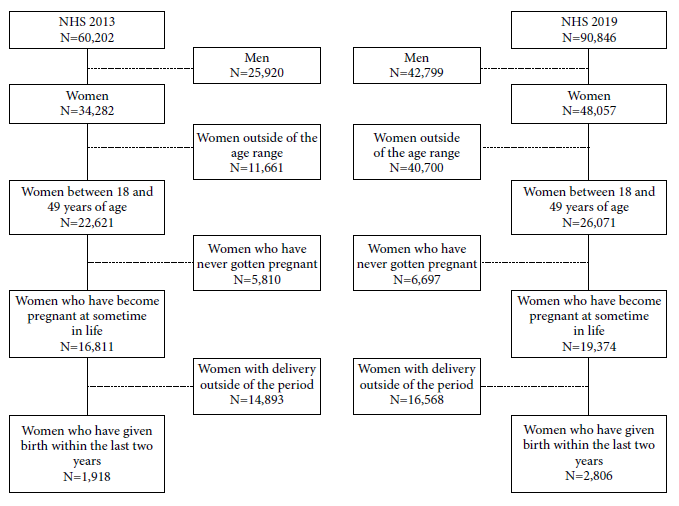
The PNS consists of a population-based survey, which presents an overview of the performance of the national health system, as well as the health conditions of the Brazilian population according to self-reported data. A total of 60,202 and 90,846 individual interviews were conducted in 201323 and 201924, respectively; the PNS sampling plan was detailed in previous studies25. To ensure comparability between the two editions of the PNS, women, aged 18-49 years, were included. The survey questions included those concerning Antenatal Care (Module S), answered by women who had their babies up to two years before data collection in both editions of the survey, totaling a subsample of 1,918 women in 2013 and 2,806 in 2019 (Figure 1).

Study indicators and variables
The questions in the PNS questionnaire that were repeated in both editions of the survey, enabling the comparison, and that refer to natal care and childbirth, were classified into three dimensions: 1) access to antenatal care, 2) quality of antenatal care, and 3) access to and receiving of care during childbirth. To assess the three dimensions, indicators of the quality of antenatal care and childbirth proposed by the WHO5,26, by the protocols of the Ministry of Health27, and by the Rede Cegonha4 were used. Other variables were also added as a complementary measure, as follows.
To assess access to antenatal care, the following indicators were used: antenatal care (yes, no), receipt of antenatal card (yes, no), gestational age at the first antenatal visit (≤ 12 weeks, ≥ 13 weeks), person attending most visits (doctor, nurse, others), and number of visits (≤ 5, ≥ 6)27. The following variables were also used: location of consultations (basic health unit, medical specialty center, public hospital, or private clinic) and consultations through SUS (yes, no). The quality of antenatal care was assessed by the following indicators: information on the reference health service (yes, no, do not know); in how many consultations the patient’s blood pressure was taken; weight; uterine height; auscultation of the fetal heart rate (FHR) (all, some, none); whether or not the breasts were examined (yes, no); if urine and blood tests were performed (yes, no); syphilis detection test or examination (yes, no); receipt of the result of the syphilis detection test or examination (yes, no); receipt of treatment for syphilis (yes, no); request for HIV testing (yes, no); performance of HIV testing (yes, no); and how much time elapsed between the last antenatal consultation and delivery (up to one week, one to two weeks, more than two weeks before, do not know)27.
Access to and receipt of care during childbirth was assessed using the following indicators: type of birth (vaginal, Cesarean-section)5; birth attendant (doctor, nurse, midwife, others); and presence of a family member (yes, no)26. The following variables were also investigated: place of birth (hospital or maternity ward, birthing center, home, others); delivery at the facility indicated during antenatal care (yes, no, no indication); number of facilities sought before admission (one, two, more than two); delivery by the SUS system (yes, no, unsure); and reason for Cesarean-section (previous Cesarean-section, tubal ligation, did not want to feel the pain, more convenient, choice of physician during antenatal care, medical indication due to complications during pregnancy or labor, medical recommendation because the patient did not go into labor).
Covariables
The following sociodemographic variables were used: age (18-29 years, 30-39 years, and 40-49 years); education (PNS 2013: 0-8, 9-11, 12 or more years of study; PNS 2019: 0-9, 10-12, 13 or more years of study); skin color/race (white, black/brown, yellow/indigenous); and region of residence (North, Northeast, Southeast, South, Midwest) to describe the study population.
Data analysis
First, a descriptive analysis of the women who comprised the population of this study was carried out, considering the sociodemographic characteristics of age, education, skin color/race, and region of residence.
Subsequently, the prevalence of indicators and variables was estimated by year of the survey, with their respective 95% confidence intervals (95%CI), which were considered to assess the differences between 2013 and 2019. Furthermore, the percentage of difference (PC%) between the prevalence of indicators and variables was calculated in 2013 and 2019, when there was no overlap of the intervals.
The data from 2013 were analyzed with reweighted weight, ensuring comparability with 2019, as recommended28. A subpopulation analysis was conducted, considered the most appropriate method to evaluate a subgroup of surveys with complex sample29. To obtain the population estimate, the complex sampling design (stratum, cluster, and individual weight) was considered. The analyses were performed using the statistical software Stata, version 14, in the survey module.
Ethical aspects
This study uses publicly available secondary databases from the PNS, exempt from review by a research ethics committee, in accordance with Resolution 466/2012 of the National Health Council. The PNS was approved by the National Research Ethics Commission (CONEP) in July 2013, logged under protocol number 328,159. and in August 2019, logged under protocol number 3,529,376.
Results
Most of the women were between 18 and 29 years of age (61.5% and 53.0% in 2013 and 2019, respectively); 47.4% of the women in 2013 and 49.3% in 2019 reported a medium-level education, followed by a low-level education (36.7% and 26.3% in 2013 and 2019, respectively). Most of the women self-reported themselves as black/brown in both editions of the surveys (2013=59.3% and 2019=62.6%). In 2013, 38.1% lived in the Southeast, 28.5% in the Northeast, 14.8% in the South, 10.3% in the North, and 8.3% in the Midwest, a distribution similar to that of 2019 (36.9%, 29.6%, 12.5%, 11.8%, and 9.2%, respectively) (Table 1).
Nine out of ten women attended antenatal care and received the antenatal card at the appointment, and eight out of ten women attended more than six antenatal appointments in the two years evaluated in this study (Table 2). In 2013, 87.8% started appointments at less than 12 weeks of gestation, while in 2019, 91.0% reported starting antenatal care early. Consultations were predominantly carried out by SUS (2013 = 73.0% and 2019 = 70.9%), primarily in PHC units (2013 = 60.8% and 2019 = 58.3%), followed by private offices and clinics (2013 = 27.4% and 2019 = 30.7%) (Table 2). The professional who most commonly carried out the consultations was the doctor, both in 2013 and 2019 (71.5% and 73.5% respectively), followed by the nurse (27.4% and 25.8%, respectively).
An increase was observed in the prevalence of receiving information about the reference service for childbirth (2013 = 75.1% and 2019 = 83.2%, PC= +10.8%) (Table 3). Regarding the clinical examination performed in antenatal consultations, at least 90% of the women had their blood pressure and weight measured in all consultations, while uterine height and FHR auscultation was measured in some of the consultations in 2013 and 2019 (Table 3). In 2013, 37.1% of the women did not have their breasts examined in any of the consultations, while in 2019 the prevalence of the lack of this examination increased to 63.8% (PC = +12.85%). Also, regarding the quality of antenatal care, more than 90% of the women underwent blood and urine tests, showing a slight reduction (PC = -5.1%) in 2019.
Regarding tests for Sexually Transmitted Infections (STIs), in 2013 the prevalence of women who underwent the syphilis test/examination reached 66.4%. In that year, 98.2% of the women received the test result before delivery, and 1.2% tested positive. Of those who tested positive, 85.4% received treatment. In 2019, 79.8% underwent the syphilis test/ examination, 96.7% received the result before delivery, in which 1.0% tested positive, and of these, 74% reported having received treatment before delivery (Table 3).
In 2013, 89.1% of the women were asked to take an HIV test, and 95.5% of women took it. In 2019, there was an increase, as the test was requested to 90.0% of the women and 99.3% took it (PC = +4.0%). Regarding the time before delivery when the last consultation was conducted, in 2013, 48.3% of the women had a consultation up to 1 week before delivery, while in 2019, the prevalence for the same time interval increased to 62.6% (PC = +29.2%).
Regarding delivery, Cesarean-section was the most prevalent mode of childbirth (2013: 54.7% and 2019: 55.7%), with a slight increase. In 2013 and 2019, 87.6% and 87.4% of the women, respectively, reported that they were seen by doctors. Nurses appear in second place as professionals who provided care during childbirth (9.1% and 9.6%, respectively). Regarding the presence of family members during childbirth, in 2013, 59.9% of the women reported that they had the presence of family members, with an increase to 85.1% in 2019 (PC = +41.7%). The main places where childbirth took place were hospitals/maternity centers (2013 = 97.9% and 2019 = 71.5%, PC = -14.0%), with the prevalence in other establishments increasing in 2019. Childbirth care in the establishment indicated in antenatal care increased from 2013 (62.5%) to 2019 (72.3%), PC = +15.7%. The number of establishments that the majority women sought out before hospital admission was mostly two in 2013 (62.8%) and one in 2019 (67.3%).
The results also showed that most women gave birth through the SUS system (2013 = 70.7% and 2019 = 69.2%). The main reasons for Cesarean-section in 2013 were complications during pregnancy or labor (30.7%), not going into labor (19.6%), and previous Cesarean-section (13.9%), a pattern with little variation in 2019 (36.9%, 15.2%, and 11.7%, respectively).
Discussion
This study allowed us to compare the general overview of the quality of antenatal and childbirth care in Brazil in 2013 and 2019, a period after the implementation of the Rede Cegonha, which in turn was also marked by political and socioeconomic changes that may have affected the quality of this care.
The comparison of the estimates from the two editions of the PNS demonstrated that the high coverage of antenatal care in Brazil was maintained and some advances in the care were provided, with an increase in information from the reference service for childbirth, greater performance of syphilis and HIV tests, and a decrease in the discharge from antenatal care at the end of pregnancy. Regarding childbirth care, an increase was observed in the presence of a family member and more childbirths performed at the reference location, with a decrease in the number of pregnant women going on pilgrimage. However, the study also showed the persistence of some challenges, such as the performance of the syphilis exam or test and treatment of infected women still below the recommended level, even with the increase in the performance of the exam observed during the period, as well as the maintenance of high Cesarean-section rates and a limited role of nurses in antenatal and childbirth care.
Regarding access to antenatal care, seven out of every ten pregnant women in Brazil reported receiving care through SUS, and they reported having had more than six consultations, as recommended by the Ministry of Health5. These results corroborate those demonstrated by the 2012 Nascer no Brasil Survey8, the last specific national survey on the subject in the country.
Since 1988, with the institutionalization of SUS, access to antenatal care in Brazil has increased. The percentage of the start of early antenatal care increased from 59.1% in 1986 to 89.8% in 2013, and the percentage of pregnant women with more than four consultations increased from 86.3% in 1996 to 94.0% in 2013, corroborating our findings30. The same study also demonstrated differences in coverage between urban and rural areas, as well as differences in access by income, which have been attenuated over the years, highlighting the importance of such policies as the Family Health Program and the Bolsa Família Program for reducing social inequalities30. The reduction in regional inequalities was also evidenced in relation to good practices in childbirth care, with an increase in their use in more developed regions and in the care of older, brown, and black women and less educated women, suggesting the effectiveness of the Rede Cegonha strategy in this regard31. It is important to note that the results of the present study indicate a maintenance of the coverage already achieved in the last decade.
The Rede Cegonha also shows a key indicator of the percentage of pregnant women who underwent all recommended tests, among which it is possible to highlight the urine, hematocrit, and hemoglobin tests, together with the rapid tests to detect STIs4. Moreover, the prevalence of women who tested positive for syphilis and received treatment before delivery was insufficient in both periods studied, with a reduction in 2019, highlighting the difficulty of health services to provide adequate treatment and to monitor infected women. Some factors associated with inadequate treatment of syphilis in the current pregnancy have been described in previous studies13,32,33. In addition, there are delays in receiving results, failures in dispensing medication and monitoring treatment, in addition to failures in antenatal care, including delay or absence33. In addition, insufficient structural issues of PHC in the country were also described, such as insufficient tests and medication to treat diseases34.
These findings are aggravated by the increase in gestational and congenital syphilis observed in Brazil in recent years32,35. Given the negative and irreversible outcomes, its increasing prevalence in the country represents a serious public health problem13. On the other hand, it is important to consider that the PNS is a self-reported survey and answers about testing, results, and treatment of syphilis may have been omitted due to the stigma surrounding the disease, in addition to the social desirability bias.
Thus, the loss of basic PHC principles, such as longitudinality, guaranteed mainly by the monitoring of users by the community health agent as part of the Family Health Program, s evident. The 2017 PNAB21 and the new SUS financing model, implemented in 201936, which prioritizes the quantity of procedures performed over quality, are measures to dismantle the health system and tend to worsen health indicators in the country.
In relation to childbirth care, there was an increase in the prevalence of the presence of a family member. This is a right of the pregnant woman, with evidence of benefits for the mother and child37,38. In 2011, only 42.1% of all births had a family member present, while in 2017 it was found that, in the same hospitals, the prevalence of this good practice increased significantly to 82.1%39, results similar to those of the present study. This demonstrates the success of Law No. 11,108/2005, which guarantees the presence of a family member with the woman in childbirth, a measure reaffirmed by Rede Cegonha and reinforces the role of public policies in advancing and improving health care.
In 2019, women were more informed about the reference location for childbirth and performed their childbirth at the indicated location, in addition to the decrease in the pilgrimage of pregnant women searching for hospitalization over the years, demonstrating success in the “Always a Vacancy” (“Vaga Sempre”) model, established by Rede Cegonha4. However, despite this decrease, in 2019, approximately 30% of the women still had to search for two or more hospital services before being admitted. One study carried out in Belo Horizonte demonstrated that women who self-reported having a skin color/race other than white, with a lower level of education and a lower income were at a greater risk of experiencing an unfavorable trajectory for childbirth39. This pilgrimage is characterized as a situation that poses risks to the lives of women and their fetuses if care does not occur in a timely manner40. Thus, despite the improvement observed in the present study, investments in this sense need to be maintained and reinforced. To improve maternal and child health indicators, international experiences have shown that it was necessary to strengthen multidisciplinary teams as regards the providing of care to the mother and child and to expand the number of midwives and obstetric nurses41. The care model led by these professionals shows evidence of increased vaginal birth, maternal satisfaction, and reduced perinatal mortality, and is recommended by the WHO26,42. However, in Brazil, the care provided by these professionals is still low, reaching less than 30% of antenatal care and 10% of childbirth care, as demonstrated by the findings of this study, despite policies that encourage the training and inclusion of these professionals in this type of care43. Nevertheless, a study that evaluated childbirth care practices in public and mixed hospitals that adhered to the Rede Cegonha strategy demonstrated that the inclusion of obstetric nurses has been successful, with greater chances of more physiological and respectful childbirth44.
Another recent study showed an increase in the percentage of births attended by obstetric nurses from 16.2% in 2011 to 32.1% in 2017 in 136 SUS hospitals31. This result may be due to the encouragement of the inclusion of these professionals in childbirth care4. This number was higher than that found in our study, as it included a specific group of hospitals30, with greater adherence to the Rede Cegonha guidelines and, perhaps for this reason, presented a percentage three times higher than that observed with the PNS data. This scenario may have worsened more recently, with the dismantling of the Rede Cegonha and the establishment of the Maternal and Child Care Network in 2022, with a medical-centered focus, disconnected from other spheres of government45. Thus, future studies should continue to monitor the quality of this care, allowing one to assess the consequences of the rupture with policies that are demonstrably beneficial and positive for the health of the Brazilian population. Furthermore, in both editions of the survey, the Cesarean-section rate exceeded 50%, showing an increase in 2019. However, in 1985, the WHO established the recommendation for the ideal Cesarean-section rate, which varies between 10% and 15%46. In addition, the main reasons for performing Cesarean-sections in the country, according to both editions of the survey, are: medical recommendation due to complications, the woman not having gone into labor, the fear of pain, and the patient’s previous cesarean section, which tend to go against scientific evidence47,48.
Therefore, despite all these advances, challenges still remain to ensure a high-level quality of antenatal and childbirth care for Brazilian women. Unfortunately, the country is still far from meeting the SDG targets. To achieve these goals, investment in PHC, as well as greater incentives for the inclusion and work of nurses and community health agents, should be a priority. PHC is the level of care that ensures user engagement, coordination, and long-term care, and is a key point in the care network to improve maternal and child health indicators and to reduce inequities.
Limitations
Because this is a survey with self-reported data, this study is subject to social desirability bias, since subjects may omit information, in turn underestimating the results. Memory bias is also an issue, given that women offer answers about pregnancies that occurred in the two years prior to the survey, despite it being a significant event in the woman’s life.
Another limitation referred to the abstentions concerning the question about gestational age at which antenatal care began in 2019 (n = 1,320), which may be related to memory bias, since the data on antenatal care and childbirth refer to pregnancies in the two years prior to the survey; hence, women may not have answered this question because they did not remember when they began antenatal care. Therefore, it is not possible to provide an absolute affirmation that the early start of antenatal care in the country has undergone variations.
Finally, concerning the indicator of “blood test performance”, it is not possible to know exactly which tests were performed by the women, reducing the accuracy of the analysis. Information on the performance of rapid tests would also provide more information on the quality of antenatal care, but this information, with regard to syphilis, is not included in the 2013 PNS, justified by the fact that this test was fully implemented in PHC after 2013.
Conclusion
This study shows advances by monitoring quality indicators of antenatal care and childbirth in Brazil, with improvements observed in 2019, which may be the result of public policies, with emphasis on the Rede Cegonha. Of note are the maintenance of high coverage and number of consultations; the increase in an early initiation of ante natal care, information on the reference service for childbirth, and the performance of syphilis and HIV tests; as well as a decrease in discharges from antenatal care at the end of pregnancy and the pilgrimage in search of hospital admission. Despite the advances, some challenges remain, such as the diagnosis and treatment of STIs, the inclusion of nurses in maternal and child care, and the high Cesarean-section rates. These findings highlight the need to continue monitoring these indicators at the national level, as well as to resume and strengthen public policies, with emphasis on PHC and the Rede Cegonha.
Acknowledgments
BNS Santos thanks the Programa de Pós-Graduação em Enfermagem da Universidade Federal de Minas Gerais and the Coordenação de Aperfeiçoamento de Pessoal de Nível Superior for the Master’s degree program (CAPES/PROEX).
References
- 1 Mario DN, Rigo L, Boclin KLS, Malvestio LMM, Anziliero D, Horta BL, Wehrmeister FC, Martínez-Mesa J. Qualidade do Pré-Natal no Brasil: Pesquisa Nacional de Saúde 2013. Cien Saude Colet 2019; 24(3):1223-1232.
- 2 Toolan M, Barnard K, Lynch M, Maharjan N, Thapa M, Rai N, Lavender T, Larkin M, Caldwell DM, Burden C, Manandhar DS, Merriel A. A systematic review and narrative synthesis of antenatal interventions to improve maternal and neonatal health in Nepal. AJOG Glob Rep 2022; 2(1):100019.
- 3 Adongo EA, Ganle JK. Predictors of neonatal mortality in Ghana: evidence from 2017 Ghana maternal health survey. BMC Pregnancy Childbirth 2023; 23(1):556.
- 4 Brasil. Ministério da Saúde (MS). Portaria no 1.459, de 24 de junho de 2011. Institui, no âmbito do Sistema Único de Saúde - SUS - a Rede Cegonha. Diário Oficial da União 2011; 25 jun.
-
5 World health organization (WHO). WHO recommendations on antenatal care for a positive pregnancy experience [Internet]. 2016 [cited 2024 jul 18]. Available from: https://www.who.int/publications/i/item/9789241549912
» https://www.who.int/publications/i/item/9789241549912 - 6 Nunes JT, Gomes KRO, Rodrigues MTP, Mascarenhas MDM. Qualidade da assistência pré-natal no Brasil: revisão de artigos publicados de 2005 a 2015. Cad Saude Colet 2016; 24(2):252-261.
- 7 Guimarães WSG, Parente RCP, Guimarães TLF, Garnelo L. Acesso e qualidade da atenção pré-natal na Estratégia Saúde da Família: infraestrutura, cuidado e gestão. Cad Saude Publica 2018; 34(5):e00110417.
- 8 Viellas EF, Domingues RMSM, Dias MAB, Gama SGN, Theme Filha MM, Costa JV, Bastos MH, Leal MC. Prenatal care in Brazil. Cad Saude Publica 2014; 30(Suppl.1):S85-S100.
- 9 Organização Mundial de Saúde (OMS). Declaração Conjunta sobre a Redução da Morbilidade e Mortalidade Materna. Genebra: OMS; 2023.
- 10 Fundo Internacional de Emergência das Nações Unidas para a Infância (UNICEF). Assistência ao parto e nascimento: uma agenda para o século 21. Brasília: UNICEF; 2019.
- 11 Barros FC, Matijasevich A, Maranhão AG, Escalante JJ, Rabello Neto DL, Fernandes RM, Vilella ME, Matos AC, Albuquerque C, Léon RG, Victora CG. Cesarean sections in Brazil: will they ever stop increasing? Rev Panam Salud Publica 2015; 38(3):217-225.
- 12 Camargos LF, Lemos PL, Martins EF, Felisbino-Mendes MS. Avaliação da qualidade dos registros de cartões de pré-natal de mulheres urbanas. Esc Anna Nery 2020; 25(1):e20200166.
- 13 Macêdo VC, Romaguera LMD, Ramalho MOA, Vanderlei LCM, Frias PG, Lira PIC. Sífilis na gestação: barreiras na assistência pré-natal para o controle da transmissão vertical. Cad Saude Colet 2020; 28(4):518-528.
- 14 Domingues RMSM, Hartz ZMA, Dias ABM, Leal MC. Avaliação da adequação da assistência pré-natal na rede SUS do Município do Rio de Janeiro, Brasil. Cad Saude Publica 2012; 28(3):425-437.
- 15 Cesar JA, Black RE, Buffarini R. Antenatal care in Southern Brazil: coverage, trends and inequalities. Prev Med 2021; 145:106432.
- 16 Morón-Duarte LS, Varela AR, Bertoldi AD, Domingues MR, Wehrmeister FC, Silveira MF. Quality of antenatal care and its sociodemographic determinants: results of the 2015 Pelotas birth cohort, Brazil. BMC Health Serv Res 2021; 21(1):1070.
- 17 Bittencourt SDA, Vilela MEA, Marques MCO, Santos AM, Silva CKRT, Domingues RMSM, Reis AC, Santos GLD. Atenção ao parto e nascimento em Maternidades da Rede Cegonha/Brasil: avaliação do grau de implantação das ações. Cien Saude Colet 2021; 26(3):801-821.
- 18 Gomes MEM, Mendes MAS, Esteves-Pereira AP, Bittencourt SDA, Augusto LCR, Lamy-Filho F, Lamy ZC, Magluta C, Moreira ME. Atenção hospitalar ao recém-nascido saudável no Brasil: estamos avançando na garantia das boas práticas? Cien Saude Colet 2021; 26(3):859-874.
- 19 Rossi P, Dweck E. Impactos do novo regime fiscal na saúde e educação. Cad Saude Publica 2016; 32(12):e00194316.
- 20 Gonçalves R, Abreu S. Do Plano Nacional de Políticas para as Mulheres ao "machistério" de Temer. Rev Pol Publ 2018; 22(2):753-771.
- 21 Freire DEWG, Freire AR, de Lucena EHG, Cavalcanti YW. PNAB 2017 and the number of community health agents in primary care in Brazil. Rev Saude Publica 2021; 55:85.
- 22 Trevilato GC, Riquinho DL, Mesquita MO, Rosset I, Silva LGA, Nunes LN. Congenital anomalies from the perspective of social determinants of health. Cad Saude Publica 2022; 38(1):e00037021.
- 23 Souza-Júnior PRB, Freitas MPS, Antonaci GA, Szwarcwald CL. Desenho da amostra da Pesquisa Nacional de Saúde 2013. Epidemiol Serv Saude 2015; 24(2):207-216.
- 24 Instituto Brasileiro de Geografia e Estatística (IBGE). Pesquisa Nacional de Saúde 2019: ciclos de vida. Rio de Janeiro: IBGE; 2021.
- 25 Stopa SR, Szwarcwald CL, Oliveira MM, Gouvea ECDP, Vieira MLFP, Freitas MPS, Sardinha LMV, Macário EM. Pesquisa Nacional de Saúde 2019: histórico, métodos e perspectivas. Epidemiol Serv Saúde 2020; 29(5):e2020315.
- 26 World Health Organization (WHO). WHO recommendations: intrapartum care for a positive childbirth experience. Geneva: WHO; 2018.
- 27 Brasil. Ministério da Saúde (MS). Protocolos da Atenção Básica: Saúde das Mulheres. Brasília: MS; 2016.
-
28 Brasil. Ministério da Saúde (MS). Pesquisa Nacional de Saúde. Informações referentes às tabelas da PNS 2013 e 2019. Nota técnica 01/2020 [Internet]. 2022 [acessado 2024 abr 1]. Disponível em: https://www.ibge.gov.br/estatisticas/sociais/saude/29540-2013-pesquisa-nacional-de-saude.html
» https://www.ibge.gov.br/estatisticas/sociais/saude/29540-2013-pesquisa-nacional-de-saude.html - 29 West BT, Berglund P, Heeringa SG. A closer examination of subpopulation analysis of complex-sample survey data. Stata J 2008; 8(4):520-531.
- 30 França GVA, Restrepo-Méndez MC, Maia MFS, Victora CG, Barros AJD. Coverage and equity in reproductive and maternal health interventions in Brazil: impressive progress following the implementation of the Unified Health System. Int J Equity Health 2016; 15(1):149.
- 31 Leal MC, Esteves-Pereira AP, Vilela MEA, Alves MTSSB, Neri MA, Queiroz RCS, Santos YRP, Silva AAM. Redução das iniquidades sociais no acesso às tecnologias apropriadas ao parto na Rede Cegonha. Cien Saude Colet 2021; 26(3):823-835.
- 32 Soares MAS, Aquino R. Associação entre as taxas de incidência de sífilis gestacional e sífilis congênita e a cobertura de pré-natal no Estado da Bahia, Brasil. Cad Saude Publica 2021; 37(7):e00209520.
- 33 Torres PMA, Reis ARP, Santos AST, Negrinho NBS, Menegueti MG, Gir E. Factors associated with inadequate treatment of syphilis during pregnancy: an integrative review. Rev Bras Enferm 2022; 75(6):e20210965.
- 34 Paula MA, Simões LA, Mendes JC, Vieira EW, Matozinhos FP, Silva TMR. Diagnóstico e tratamento da sífilis em gestantes nos serviços de Atenção Básica. Cien Saude Colet 2022; 27(8):3331-3340.
- 35 Amorim EKR, Matozinhos FP, Araújo LA, da Silva TPR. Trend in cases of gestational and congenital syphilis in Minas Gerais, Brazil, 2009-2019: an ecological study. Epidemiol Serv Saude 2021; 30(4):e2021128.
- 36 Brasil. Ministério da Saúde (MS). Portaria nº 2.979, de 12 de novembro, de 2019. Institui o Programa Previne Brasil, que estabelece novo modelo de financiamento de custeio da Atenção Primária à Saúde no âmbito do Sistema Único de Saúde, por meio da alteração da Portaria de Consolidação nº 6/GM/MS, de 28 de setembro de 2017. Diário Oficial da União 2019; 13 nov.
- 37 Lunda P, Minnie CS, Benadé P. Women's experiences of continuous support during childbirth: a meta-synthesis. BMC Pregnancy Childbirth 2018; 18(1):167.
- 38 Bohren MA, Hofmeyr GJ, Sakala C, Fukuzawa RK, Cuthbert A. Continuous support for women during childbirth. Cochrane Database Syst Rev 2017; 7(7):CD003766.
- 39 Amorim T, Felisbino-Mendes MS, Schreck RSC, Ribeiro SP, Rezende EM, Martins EF. Born in Belo Horizonte: the trajectory of parturient women and their reproductive outcomes. Rev Esc Enferm USP 2019; 53:e03441.
- 40 Moraes LMV, Simões VMF, Carvalho CA, Batista RFL, Alves MTSSBE, Thomaz ÉBAF, Barbieri MA, Alves CMC. Fatores associados à peregrinação para o parto em São Luís (Maranhão) e Ribeirão Preto (São Paulo), Brasil: uma contribuição da coorte BRISA. Cad Saude Publica 2018; 34(11):e00151217.
- 41 Van Lerberghe W, Matthews Z, Achadi E, Ancona C, Campbell J, Channon A, de Bernis L, De Brouwere V, Fauveau V, Fogstad H, Koblinsky M, Liljestrand J, Mechbal A, Murray SF, Rathavay T, Rehr H, Richard F, ten Hoope-Bender P, Turkmani S. Country experience with strengthening of health systems and deployment of midwives in countries with high maternal mortality. Lancet 2014; 384(9949):1215-1225.
- 42 Sandall J, Soltani H, Gates S, Shennan A, Devane D. Midwife-led continuity models versus other models of care for childbearing women. Cochrane Database Syst Rev 2016; 4(4):CD004667.
- 43 Brasil. Ministério da Saúde (MS). Portaria nº 11, de 7 de janeiro de 2015. Redefine as diretrizes para implantação e habilitação de Centro de Parto Normal (CPN), no âmbito do Sistema Único de Saúde (SUS). Diário Oficial da União 2015; 7 jan.
- 44 Gama SGN, Viellas EF, Medina ET, Angulo-Tuesta A, Silva CKRT, Silva SD, Santos YRP, Esteves-Pereira AP. Atenção ao parto por enfermeira obstétrica em maternidades vinculadas à Rede Cegonha, Brasil - 2017. Cien Saude Colet 2021; 26(3):919-929.
-
45 Conselho Nacional de Secretários de Saúde (Conass). Nota conjunta Conass/Conasems: Rede de Atenção Materna e Infantil (Rami) [Internet] 2022 [acessado 2024 abr 2]. Disponível em: https://www.conass.org.br/conjunta-conass-conasems-rede-de-atencao-materna-e-infantil-rami
» https://www.conass.org.br/conjunta-conass-conasems-rede-de-atencao-materna-e-infantil-rami -
46 Organização Mundial da Saúde (OMS). Declaração da OMS sobre Taxas de Cesáreas [Internet]. 2015 [acessado 2024 abr 2]. Disponível em: http://apps.who.int/iris/bitstream/10665/161442/3/WHO_RHR_15.02_por.pdf
» http://apps.who.int/iris/bitstream/10665/161442/3/WHO_RHR_15.02_por.pdf - 47 Brasil. Ministério da Saúde (MS). Manual de gestação de alto risco. Brasília: MS; 2022.
- 48 American College of Obstetricians and Gynecologists (ACOG). Practice Bulletin Nº 184: Vaginal Birth After Cesarean Delivery. Obstet Gynecol 2017; 130(5):e217-e233.

 Source: Authors.